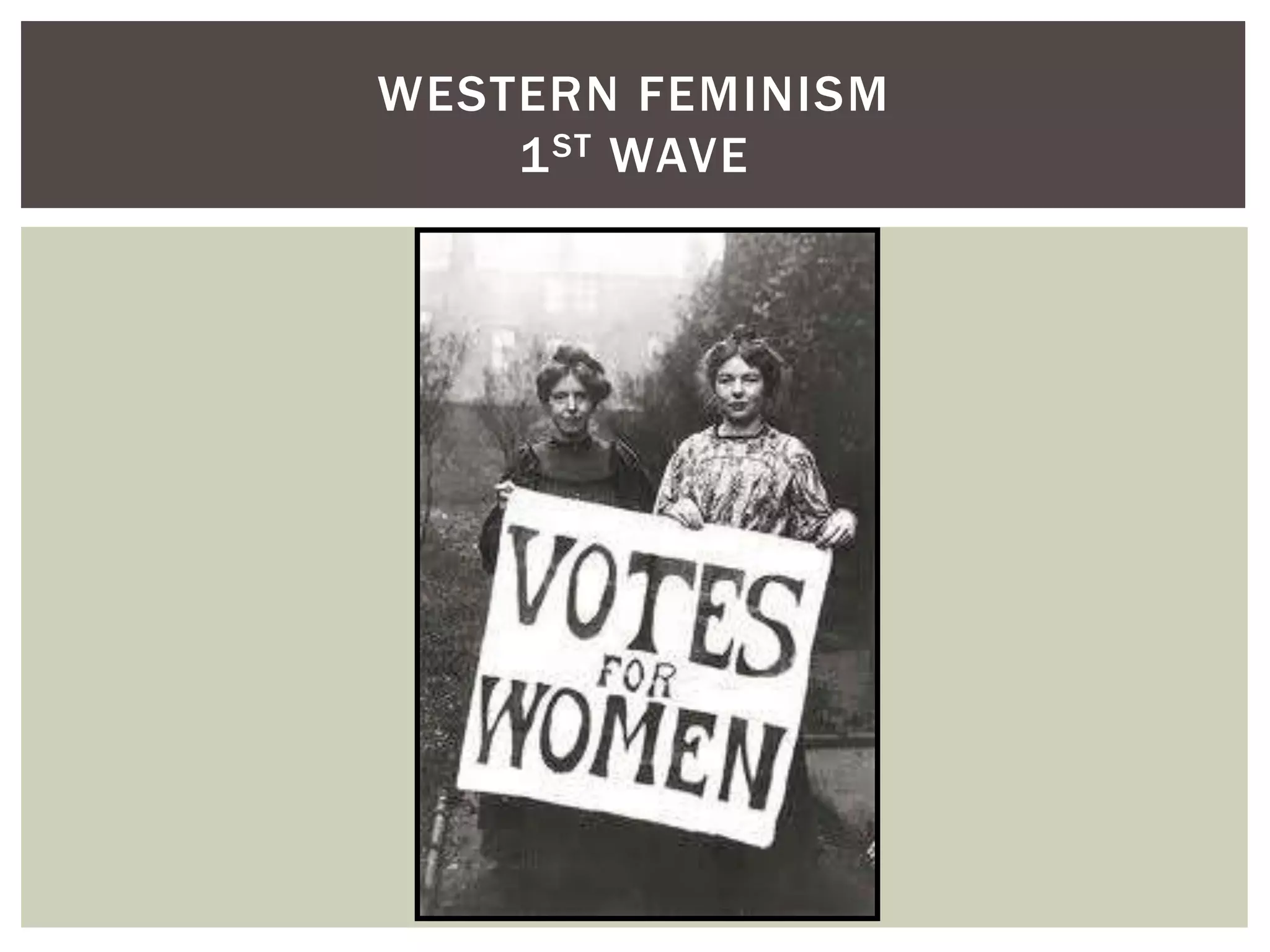
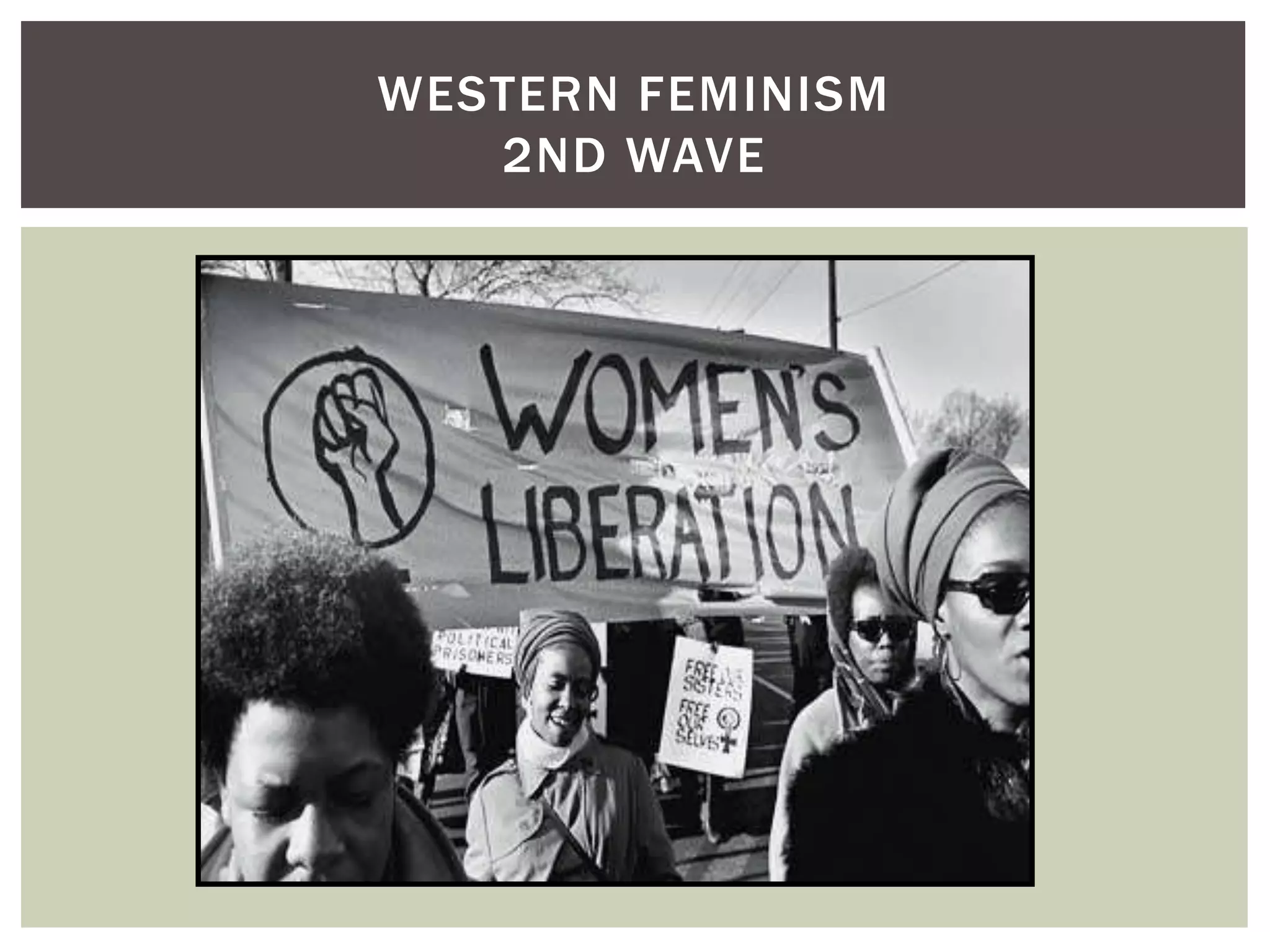
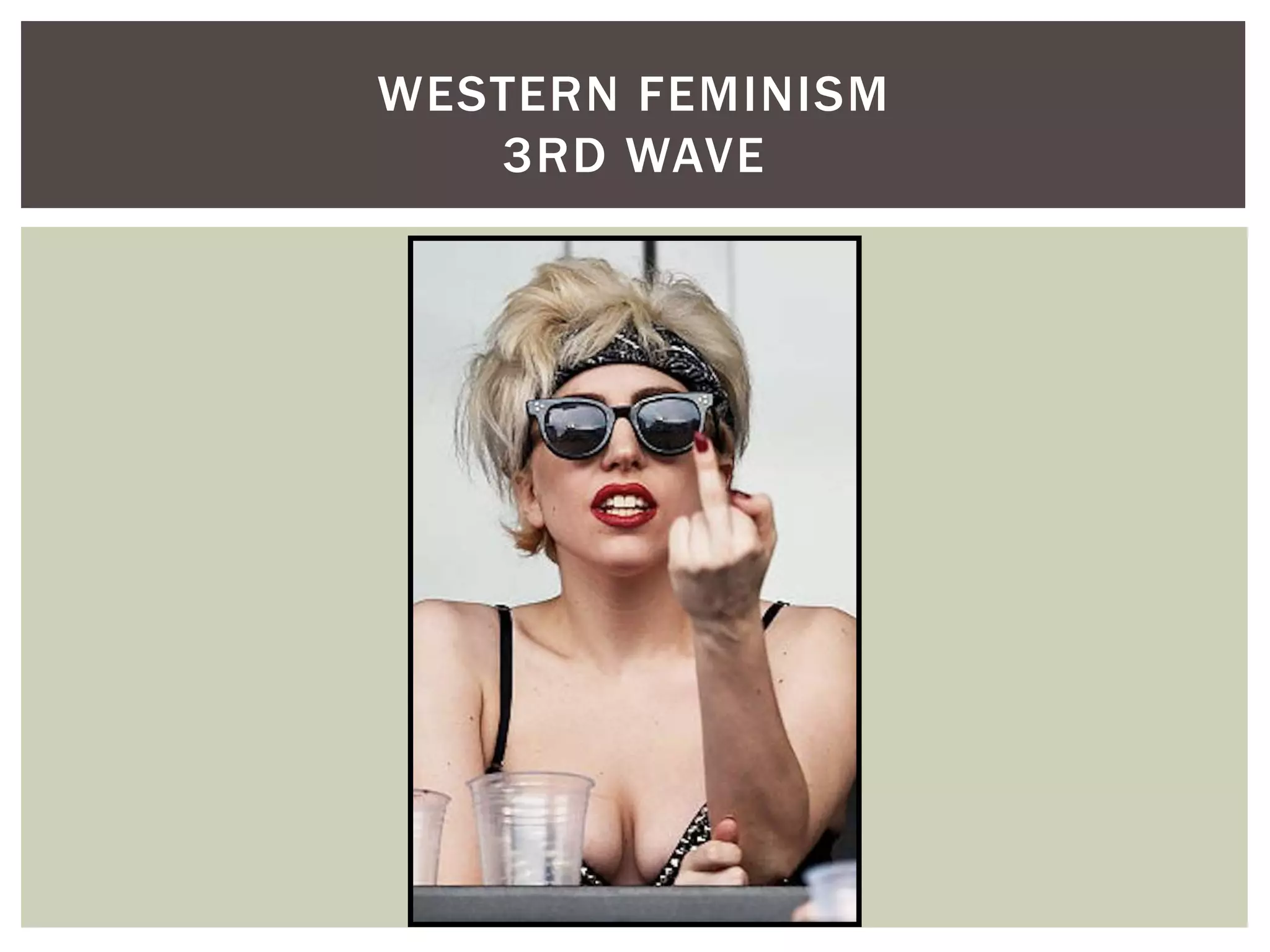
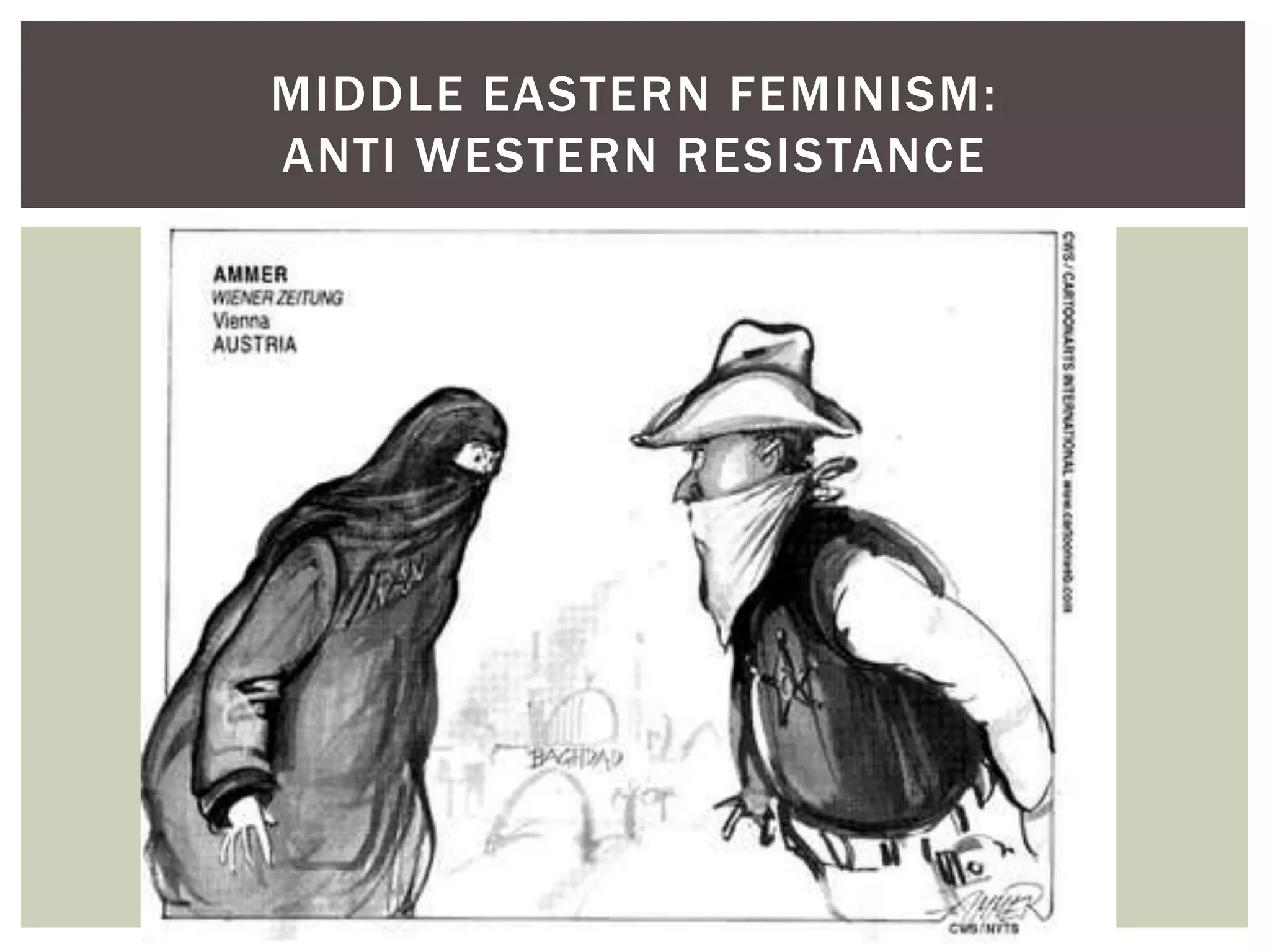
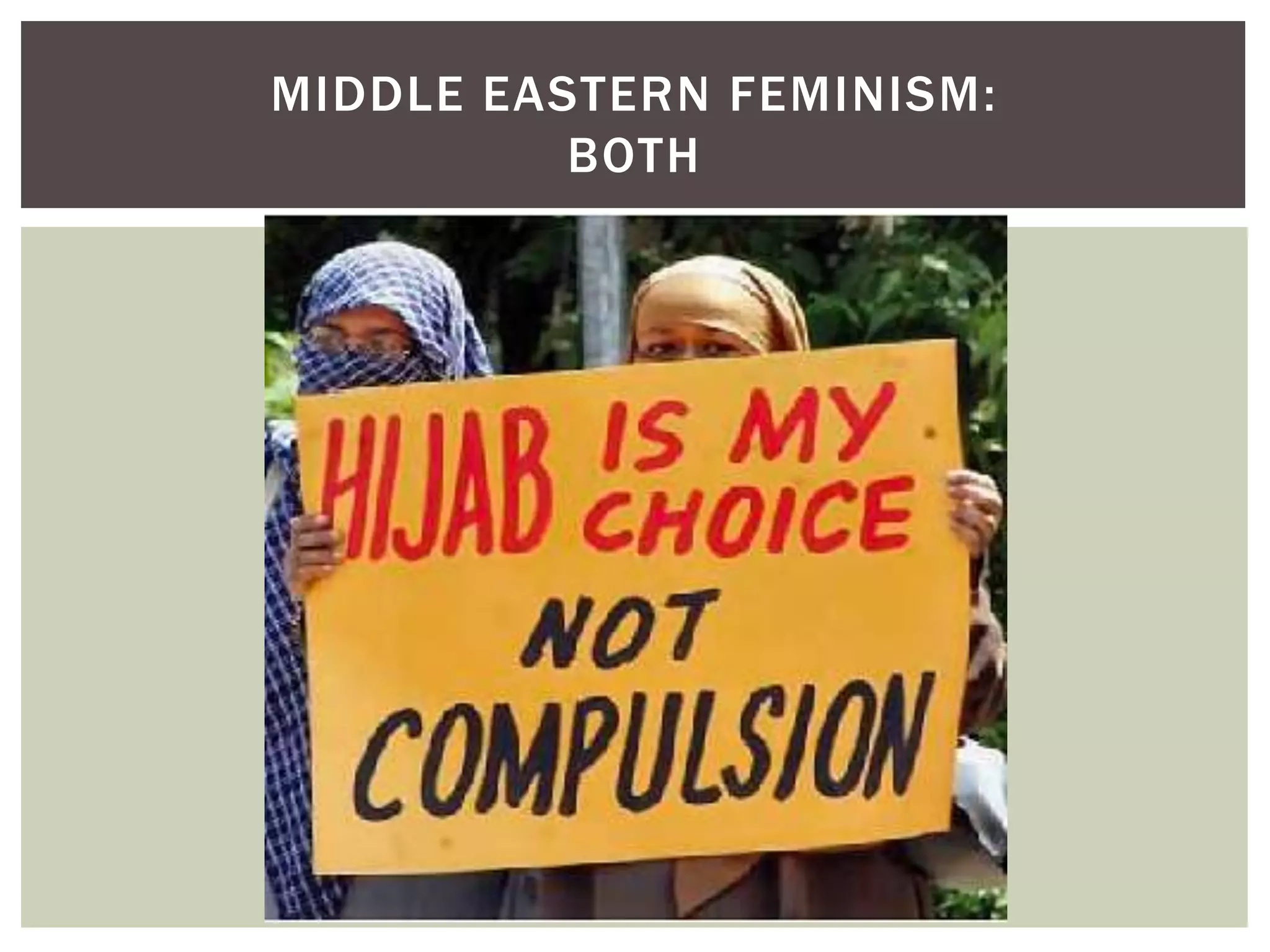
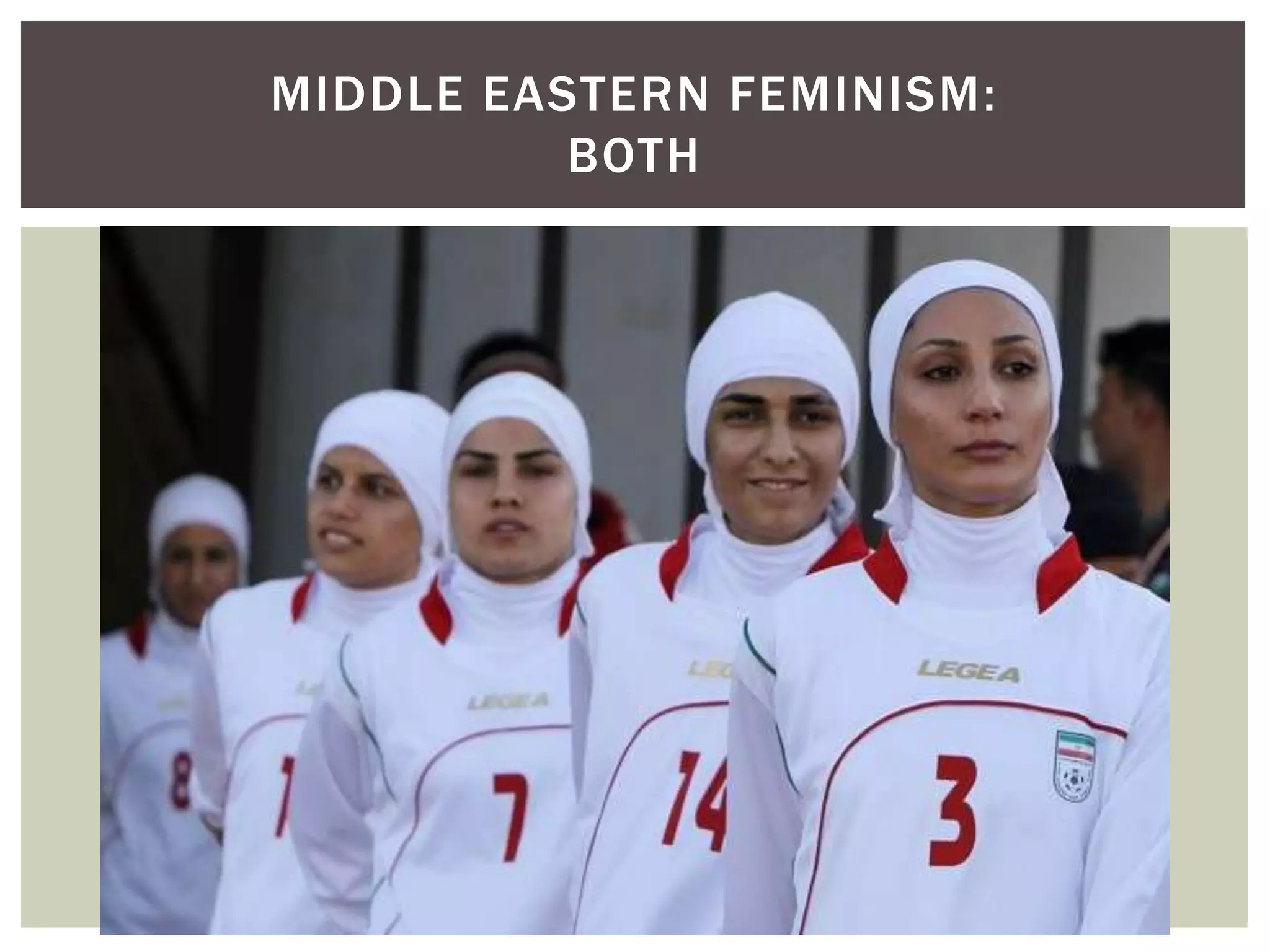
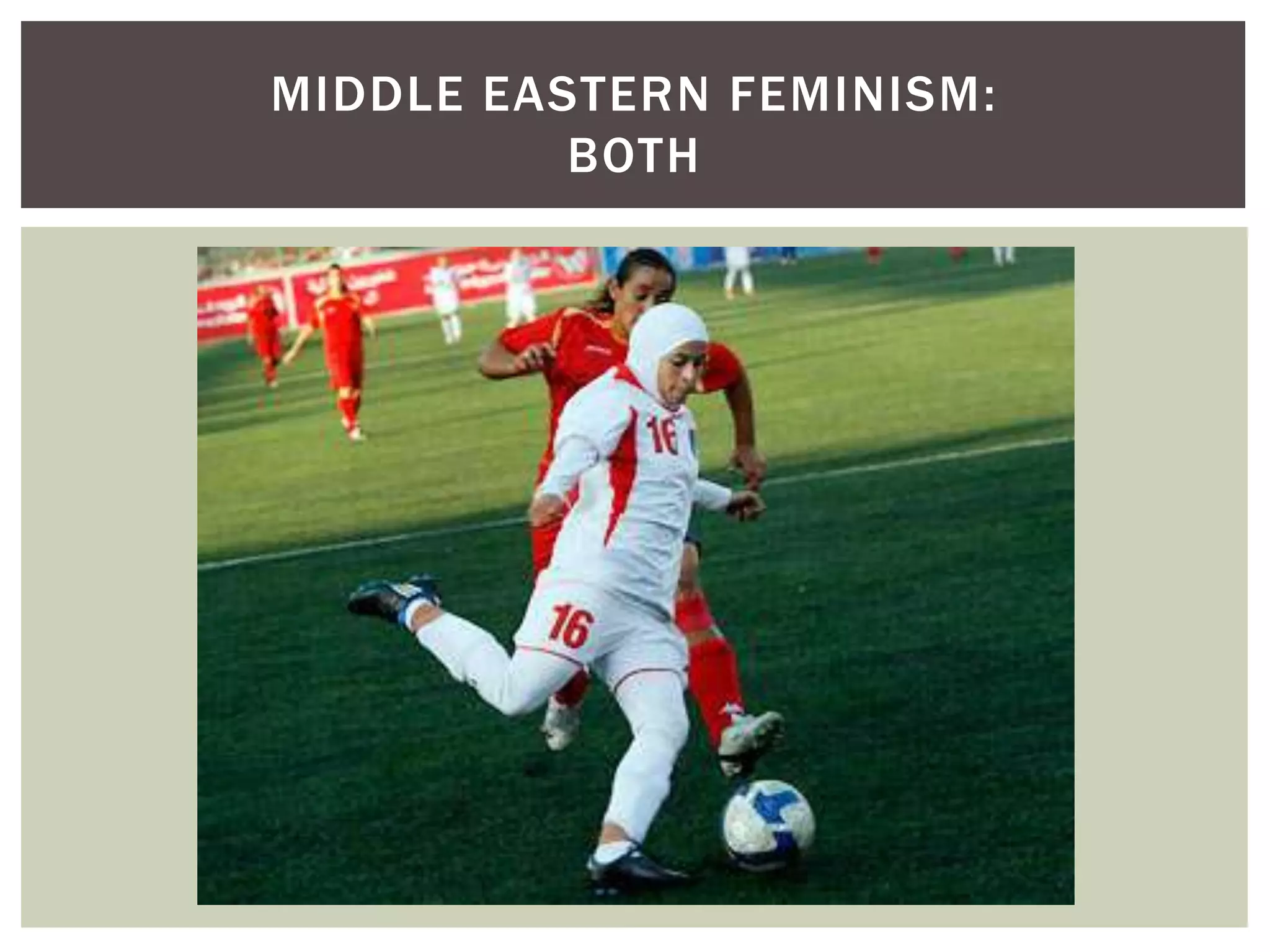
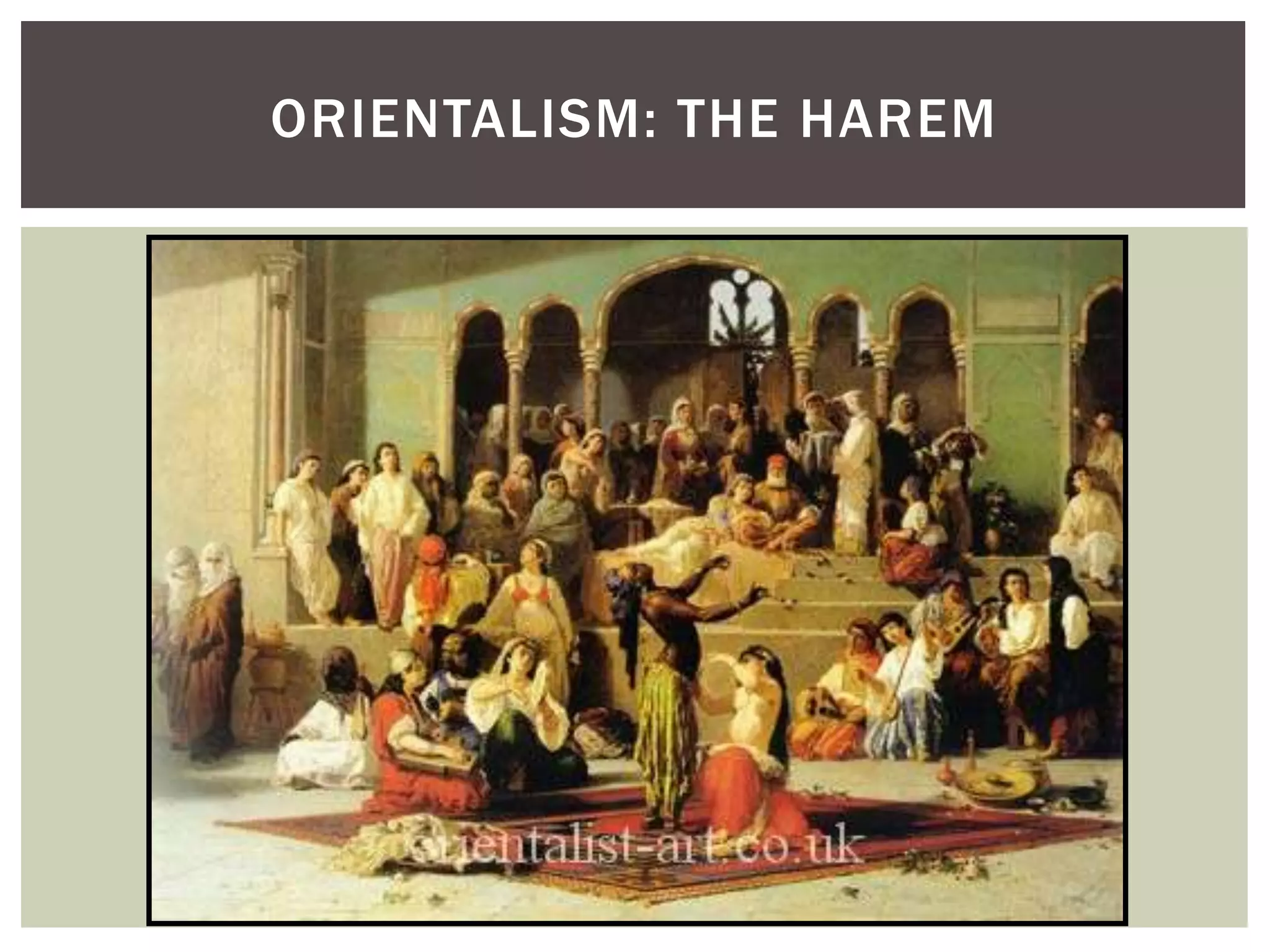
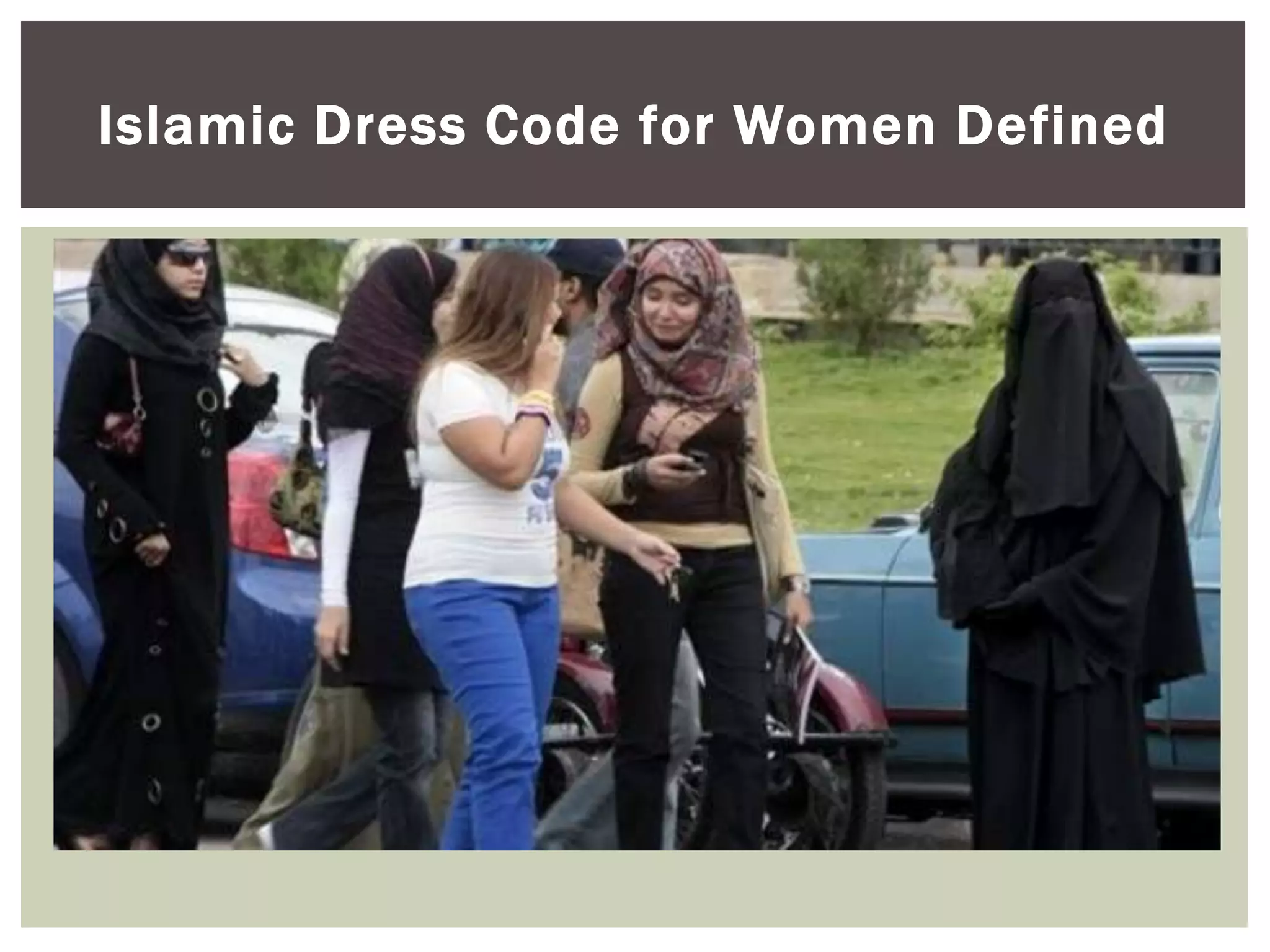
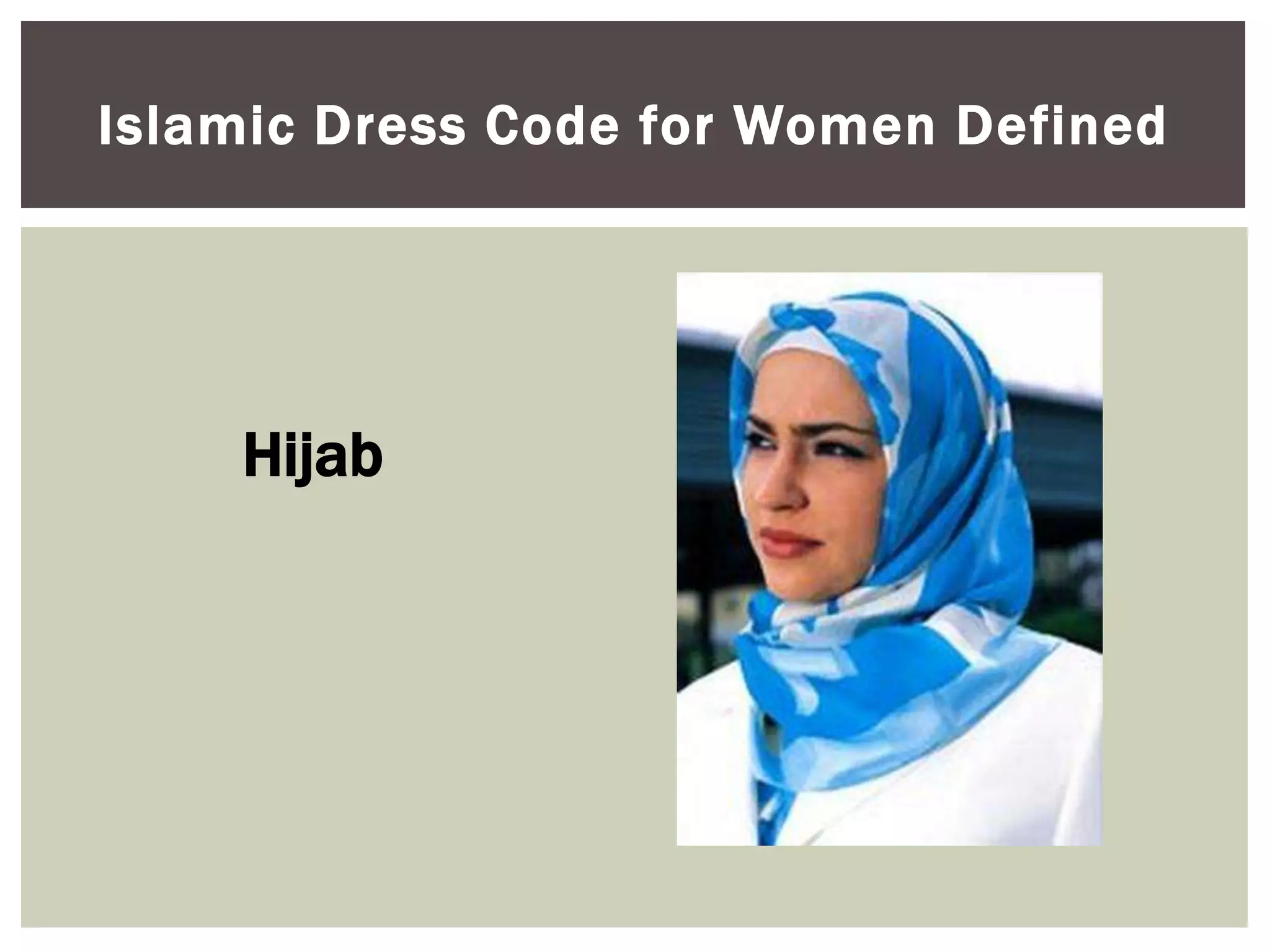
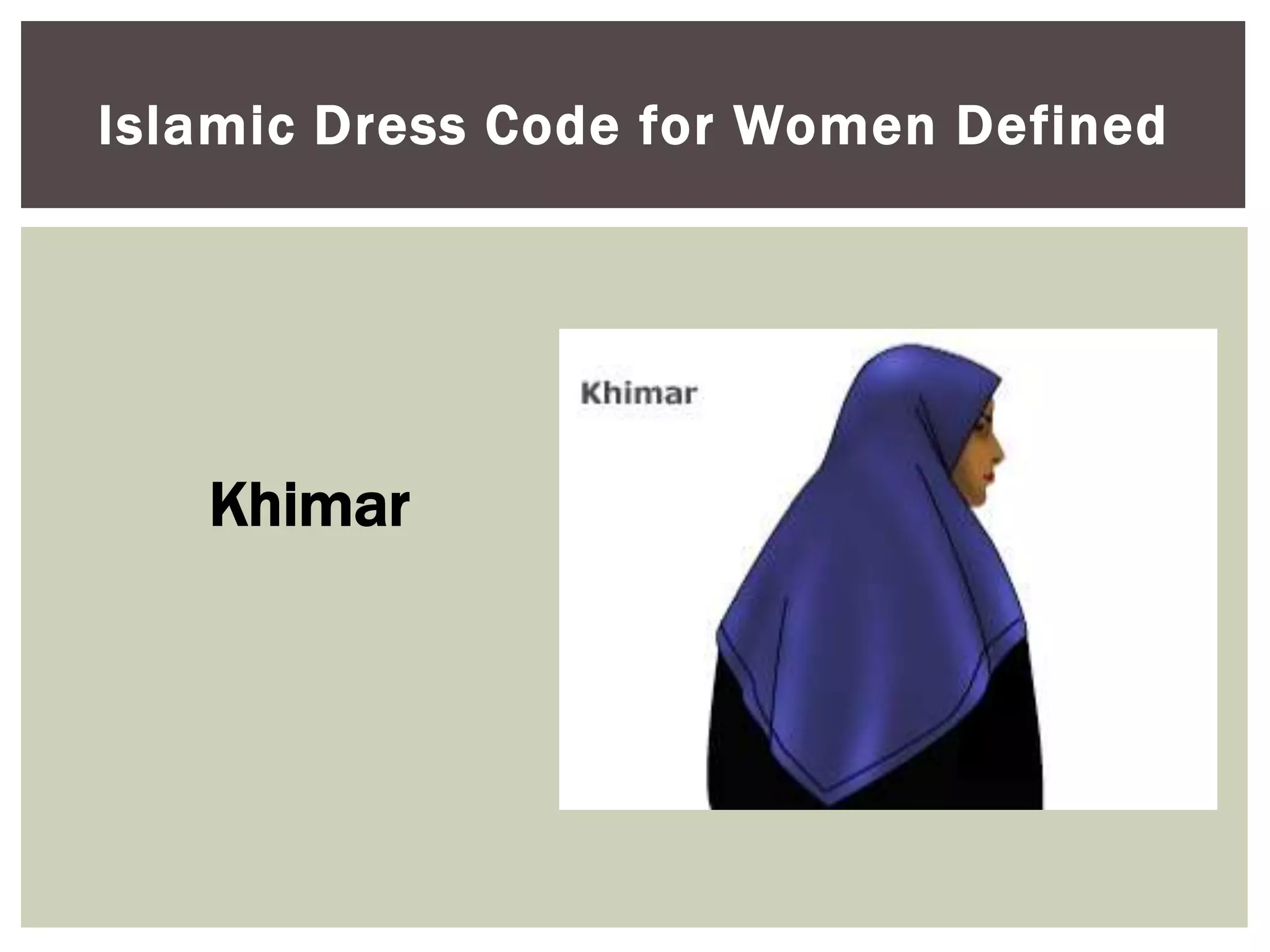
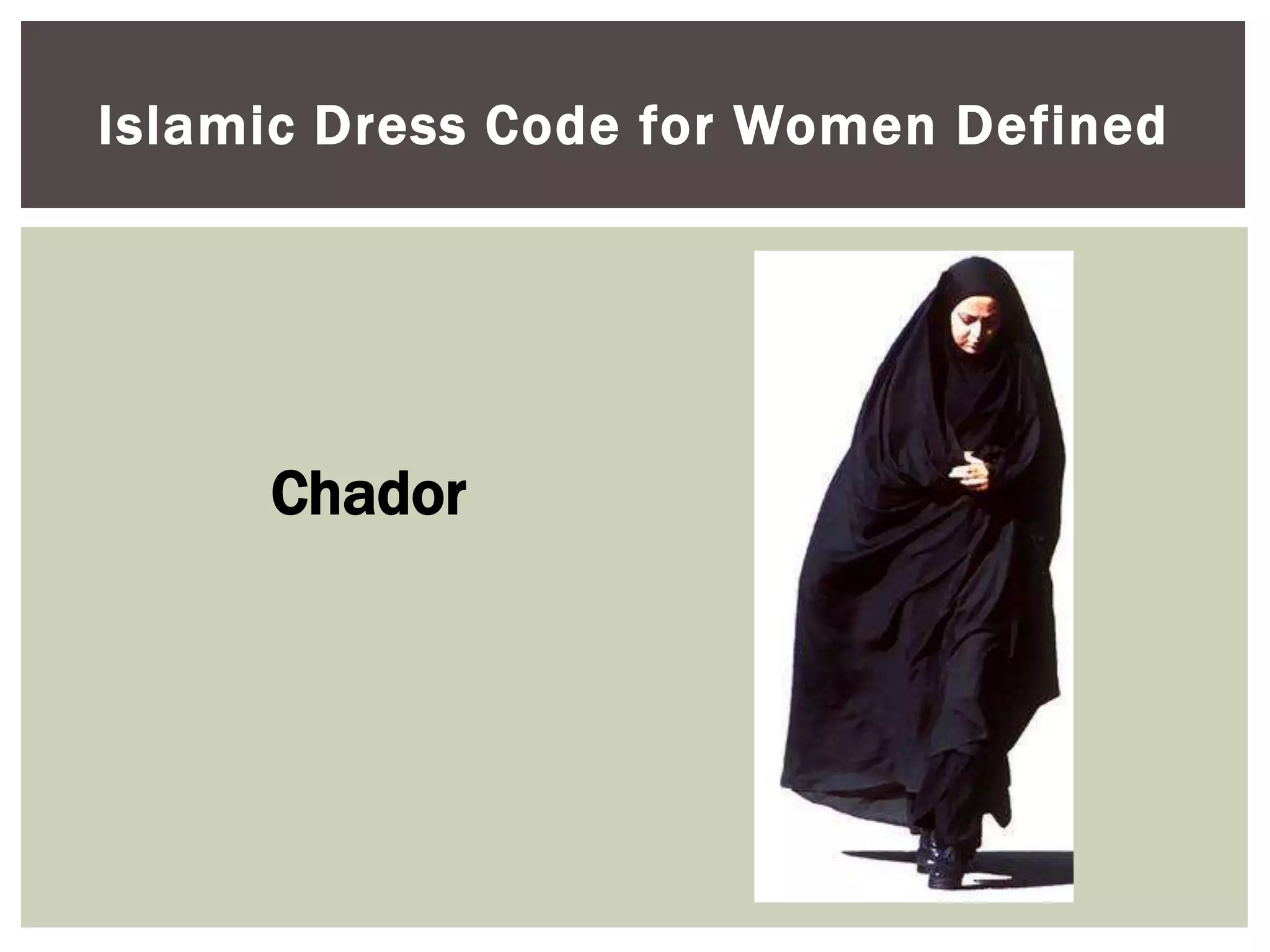
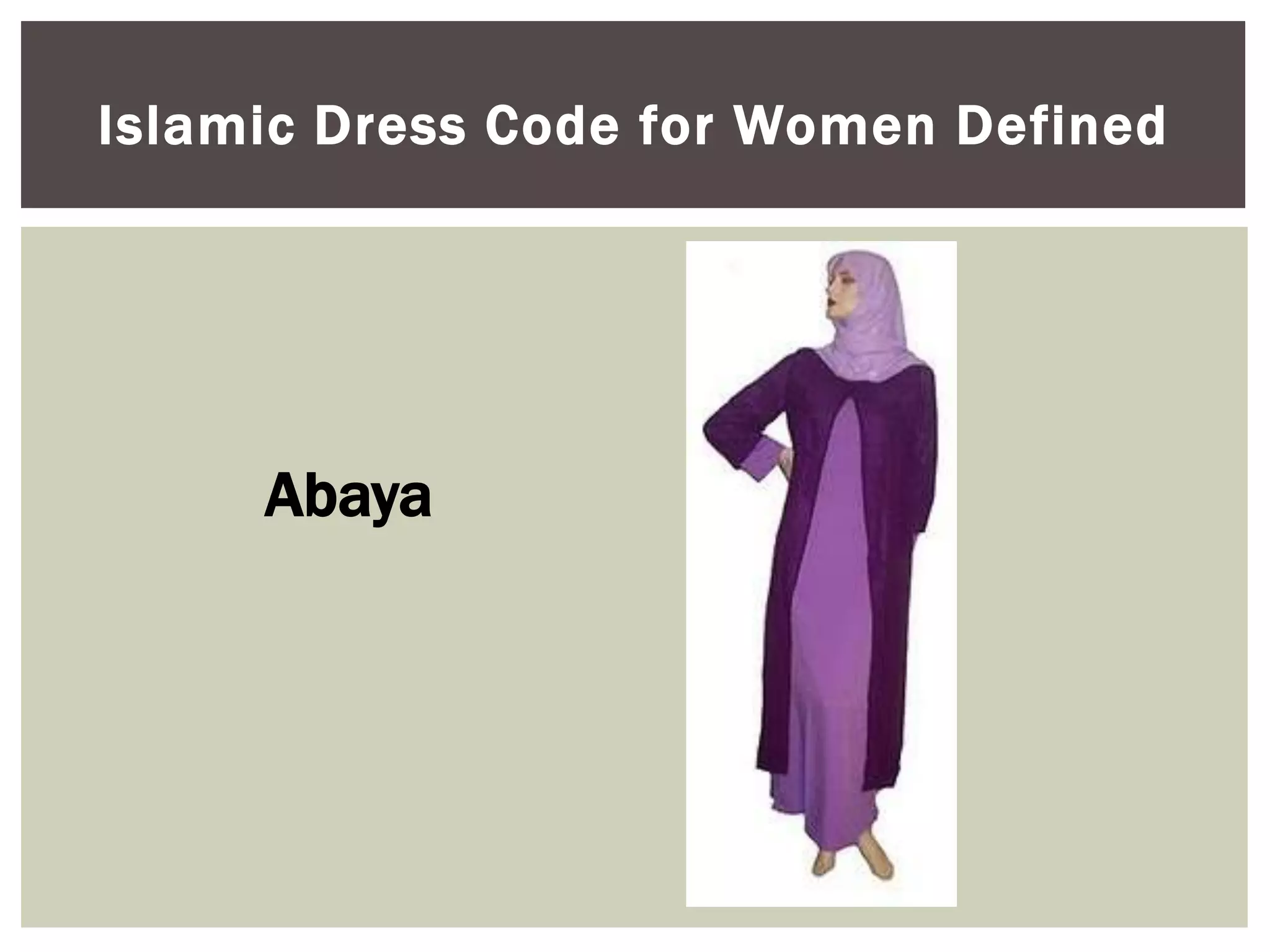
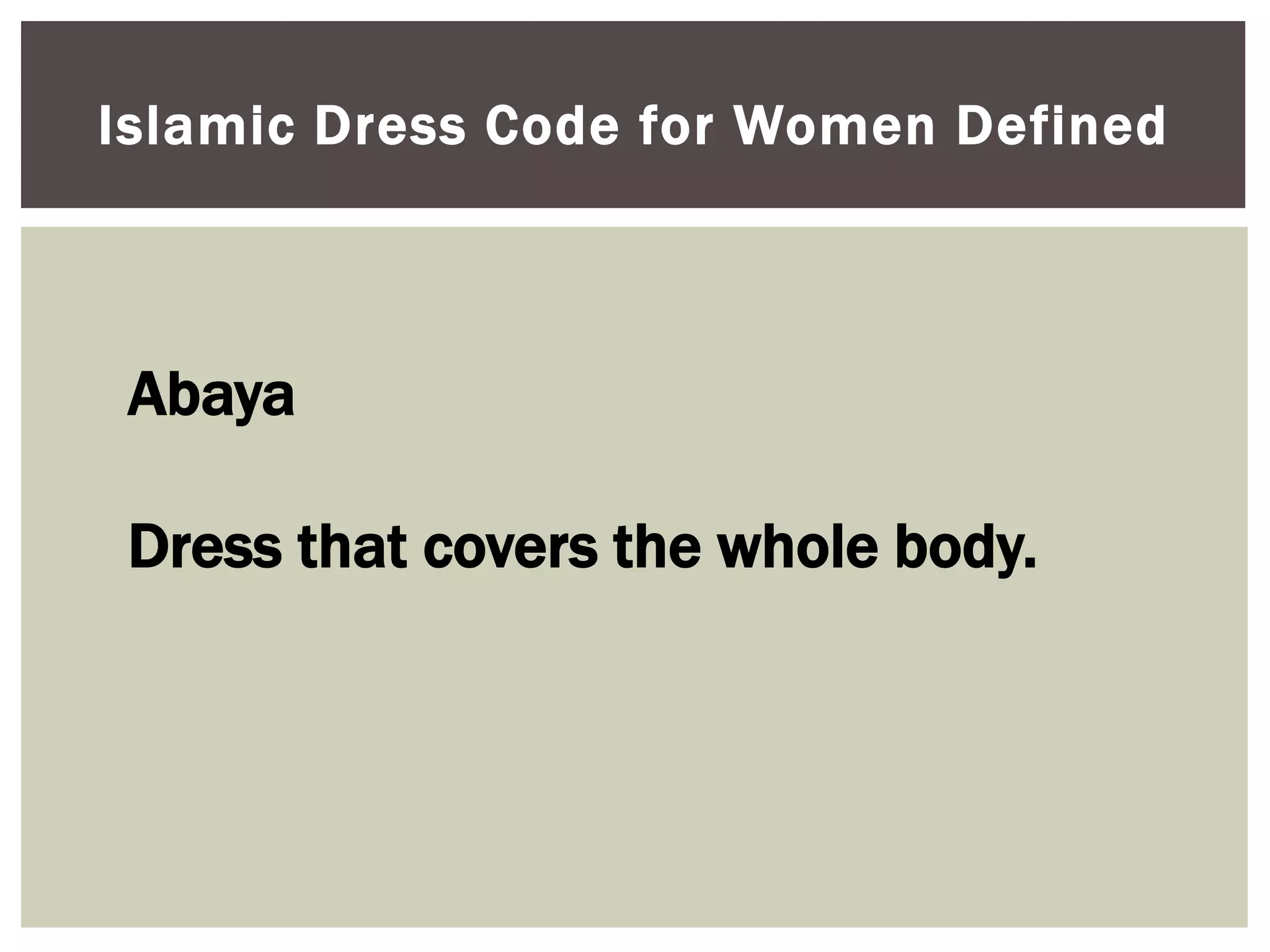
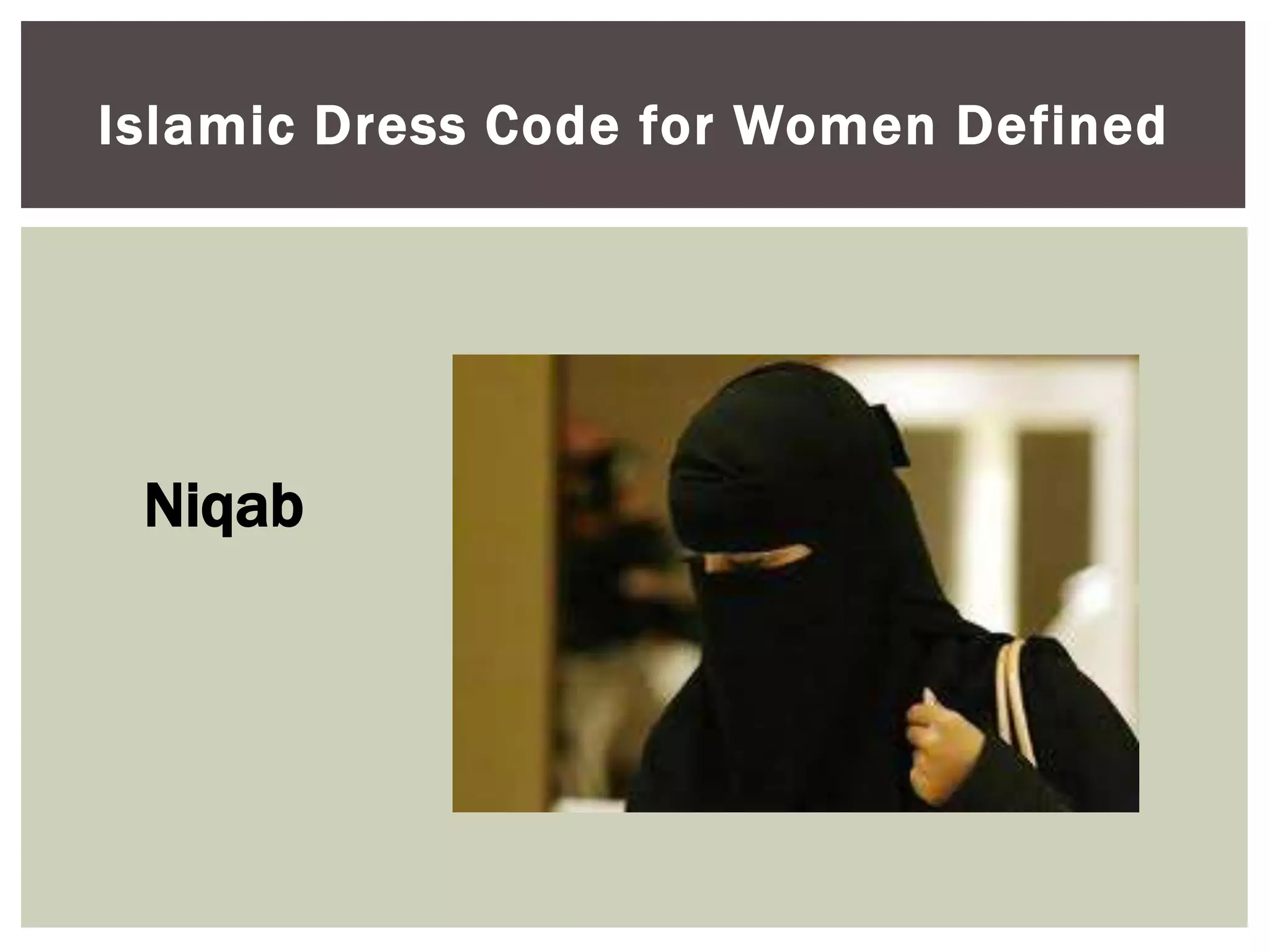
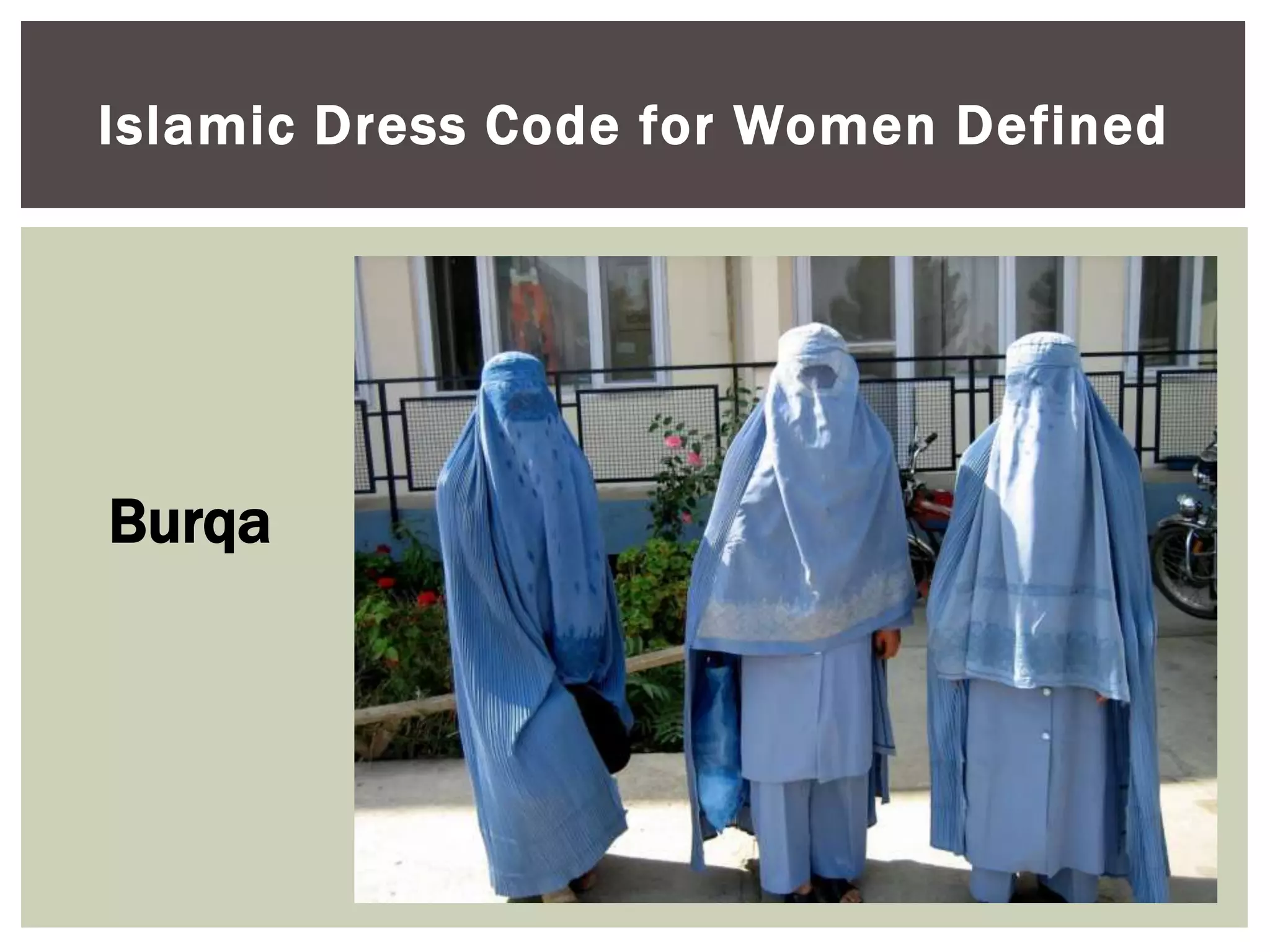
The document discusses the politics of the veil in the Middle East. It begins by defining key terms like hijab, khimar, chador, abaya, niqab, and burqa. It then provides brief histories of these items of Islamic dress and discusses verses from the Quran that relate to dress codes for women. The document also outlines the history of the veil and discusses Western and Middle Eastern feminism in relation to views on the veil, covering perspectives both in support of and resisting its use. It concludes by listing references consulted in creating the document.
![SURA 24:31
“That they [feminine gender] should not display their
beauty and ornaments except what [must ordinarily]
appear thereof; that they should draw their khimar
[headveil] over their bosoms and not display their
beauty except to their husbands, their fathers, their
husbands‟ fathers, their sons, or their women, or the
slaves whom their right hands possess, or male
servants free of physical needs, or underage
children.”](https://image.slidesharecdn.com/veiltermsonlineclass-120726102105-phpapp02/75/Background-Veil-Lecture-23-2048.jpg)
![SURA 4:23
“Prohibited to you [male gender] are your
mothers, daughters, sisters; father‟s
sisters, mother‟s sisters; brother‟s
daughters, sister‟s daughters; “suckling”
mothers, suckling sisters; your wives‟
mothers; your step-daughters under your
guardianship, born of your wives, wives of
your biological sons.”](https://image.slidesharecdn.com/veiltermsonlineclass-120726102105-phpapp02/75/Background-Veil-Lecture-24-2048.jpg)