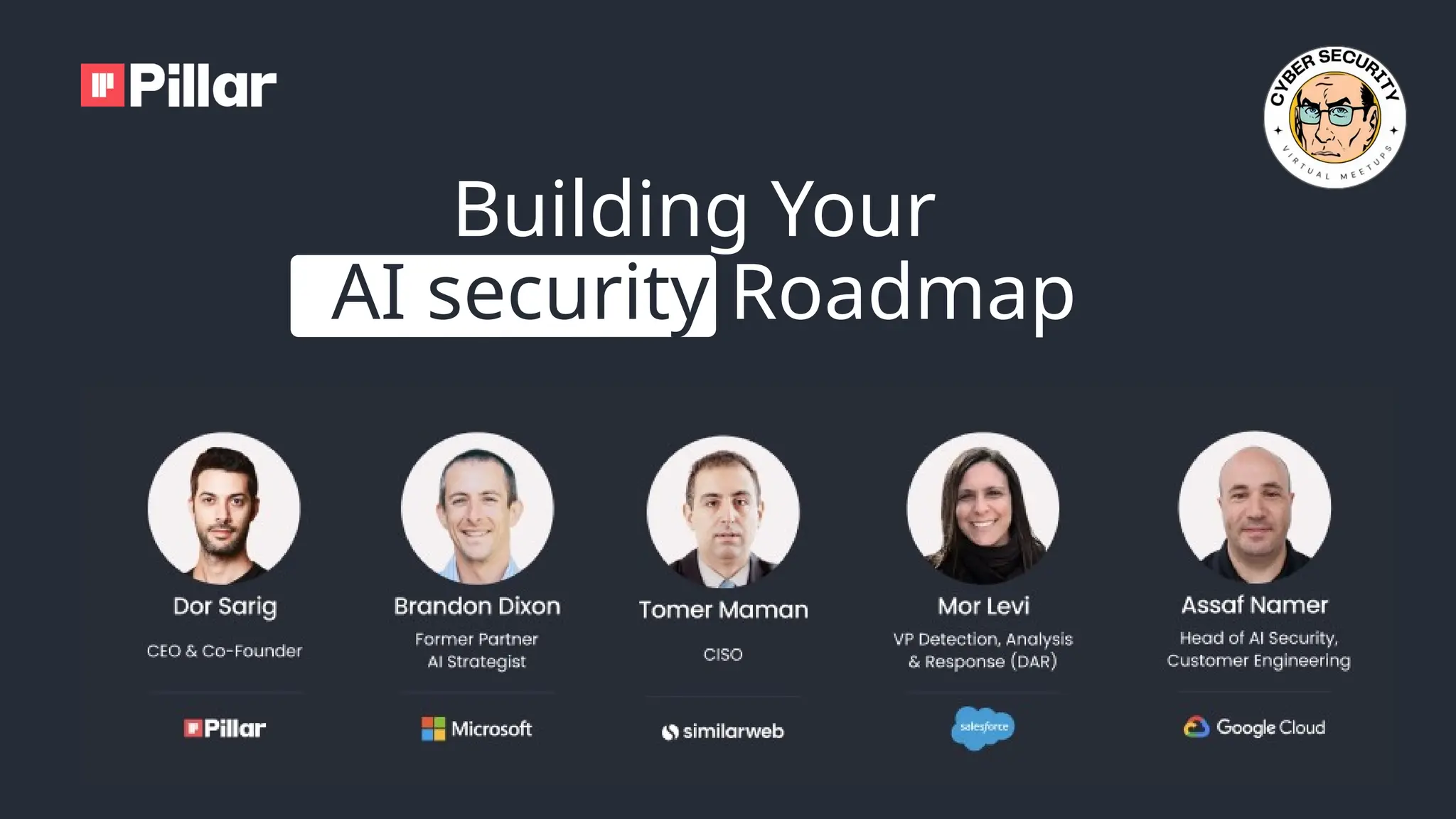


Building Your
AI security Roadmap
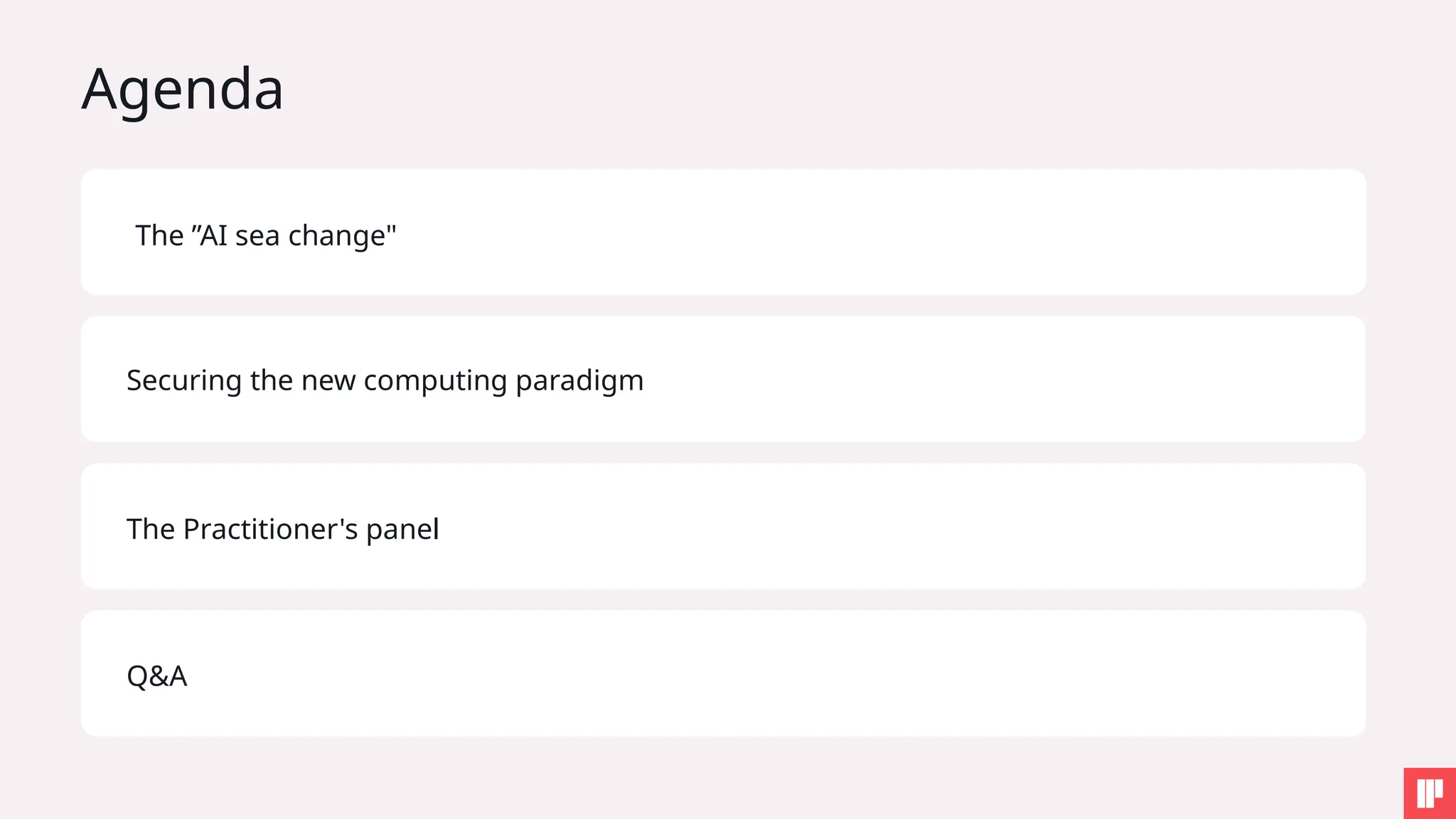
Agenda
The ”AI sea change"
The Practitioner's panel
Q&A
Securing the new computing paradigm
Brandon Dixon, Former Partner AI Strategist, Microsoft
The AI Sea
Change
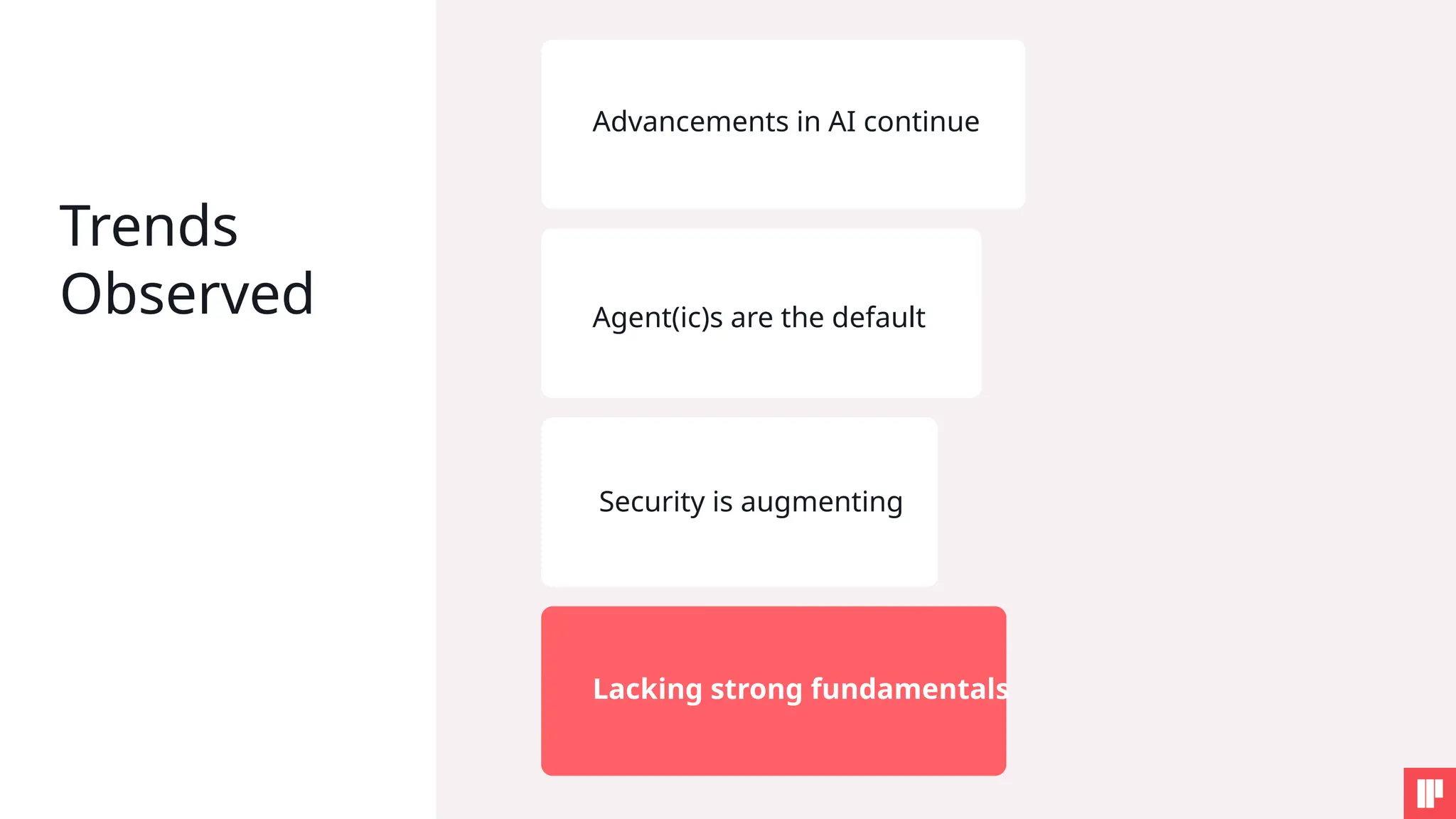
Trends
Observed
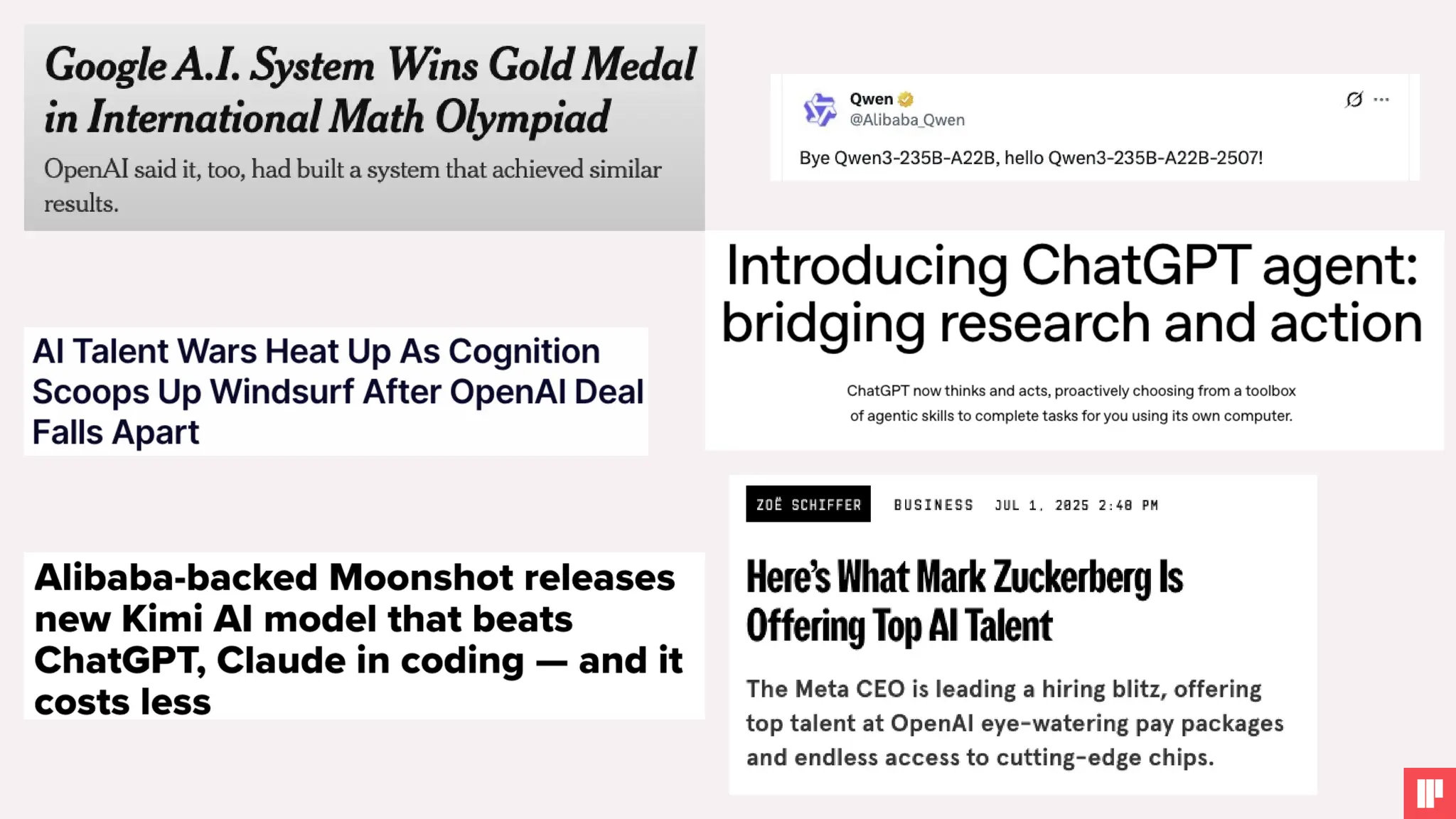
Advancements in AI continue
Agent(ic)s are the default
Security is augmenting
Lacking strong fundamentals
Trends
Observed
Advancements in AI continue
Agent(ic)s are the default
Security is augmenting
Lacking strong fundamentals
Trends
Observed
Advancements in AI continue
Agent(ic)s are the default
Security is augmenting
Lacking strong fundamentals
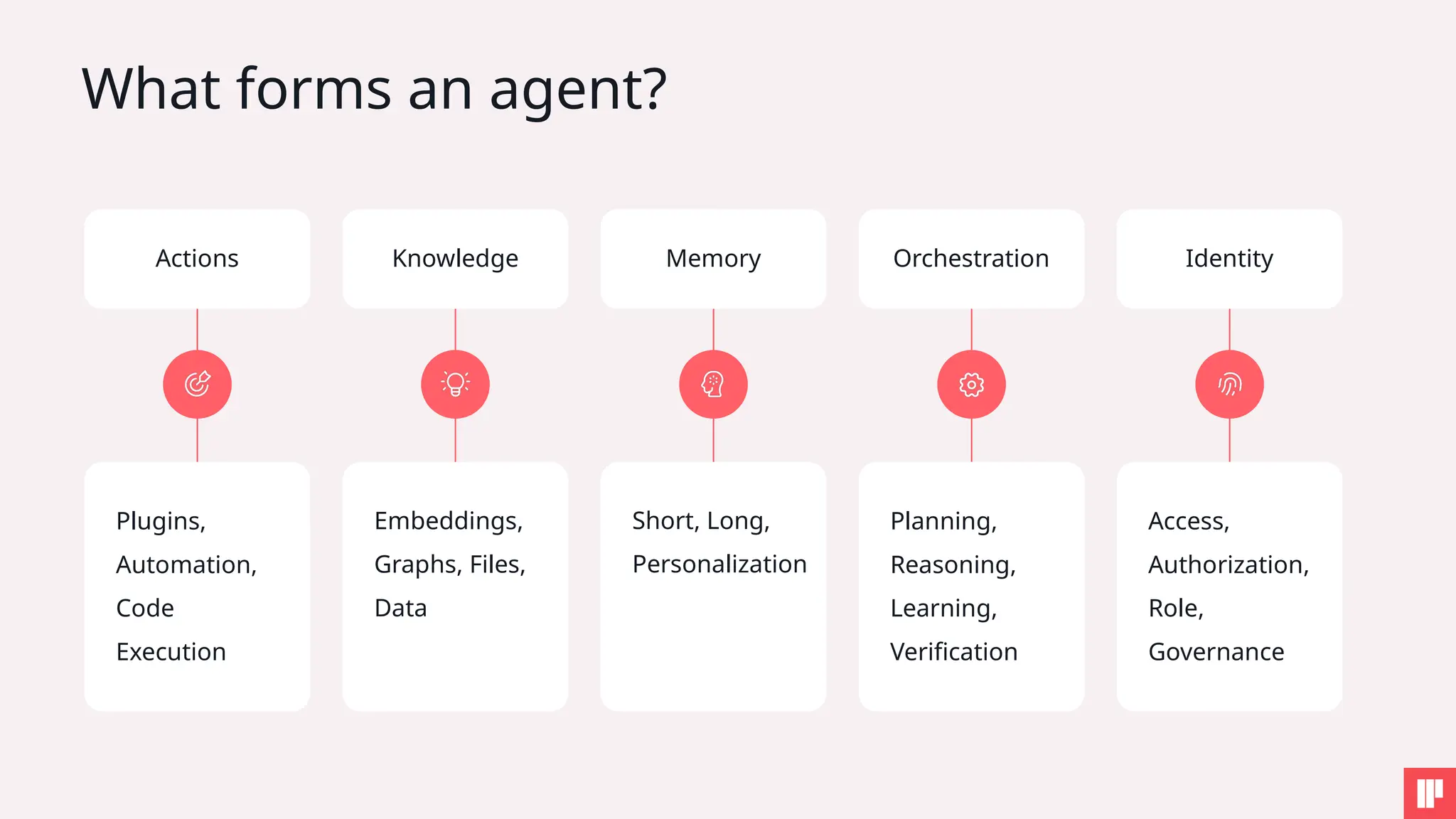
What forms an agent?
Plugins,
Automation,
Code
Execution
Actions
Embeddings,
Graphs, Files,
Data
Knowledge
Short, Long,
Personalization
Memory
Planning,
Reasoning,
Learning,
Verification
Orchestration
Access,
Authorization,
Role,
Governance
Identity
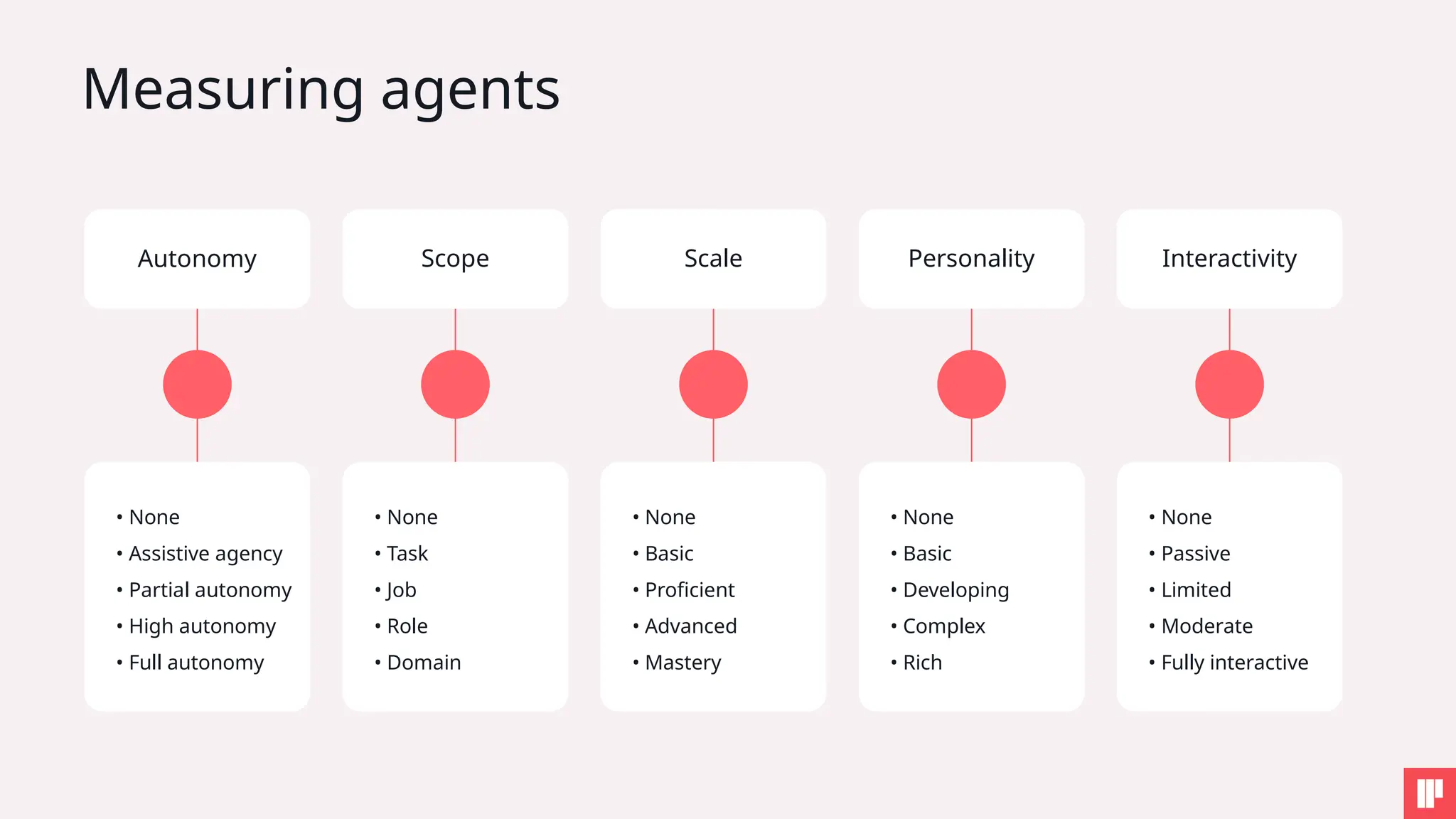
Measuring agents
• None
• Assistive agency
• Partial autonomy
• High autonomy
• Full autonomy
Autonomy
• None
• Task
• Job
• Role
• Domain
Scope
• None
• Basic
• Proficient
• Advanced
• Mastery
Scale
• None
• Basic
• Developing
• Complex
• Rich
Personality
• None
• Passive
• Limited
• Moderate
• Fully interactive
Interactivity
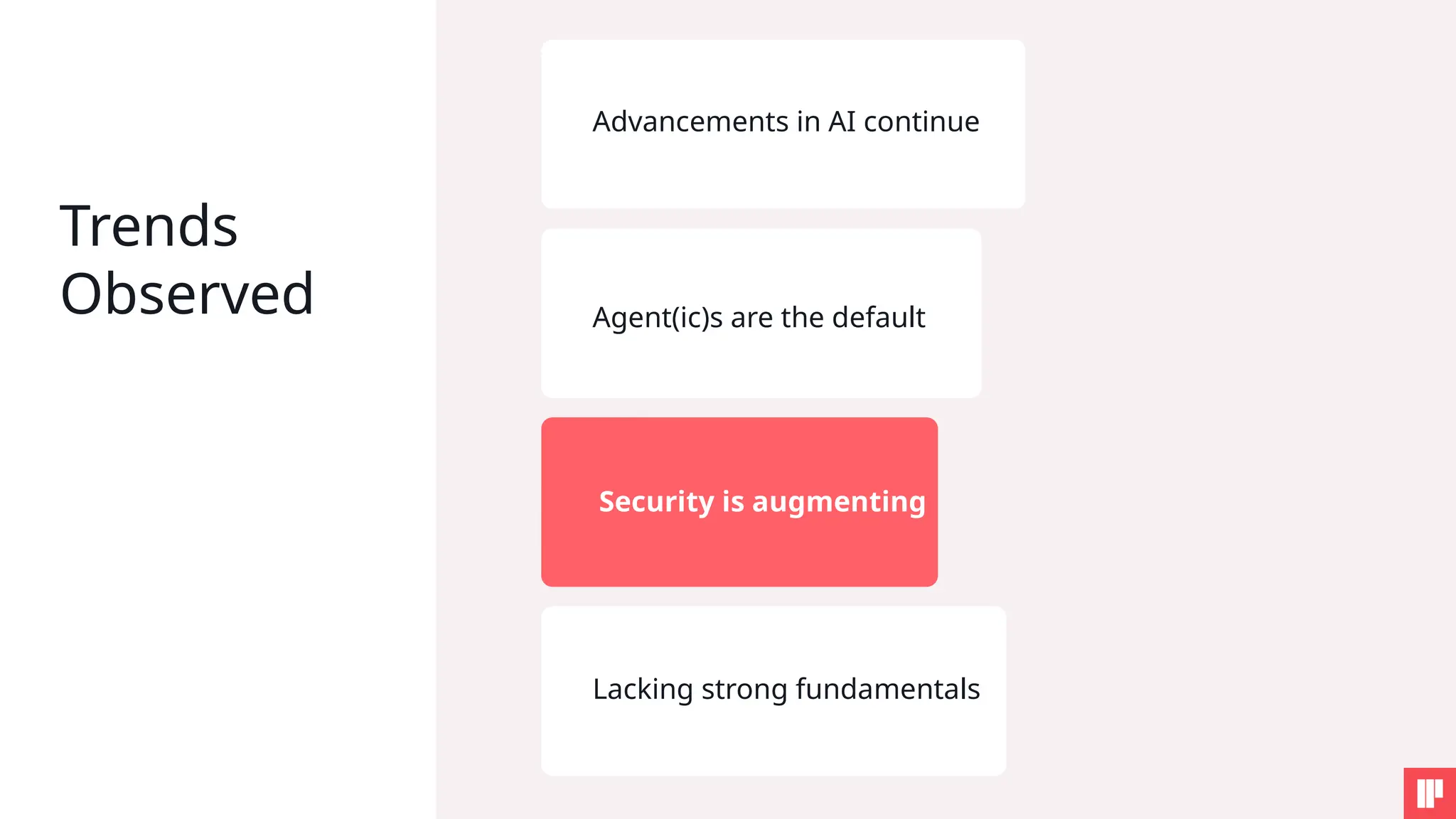
Trends
Observed
Advancements in AI continue
Agent(ic)s are the default
Security is augmenting
Lacking strong fundamentals
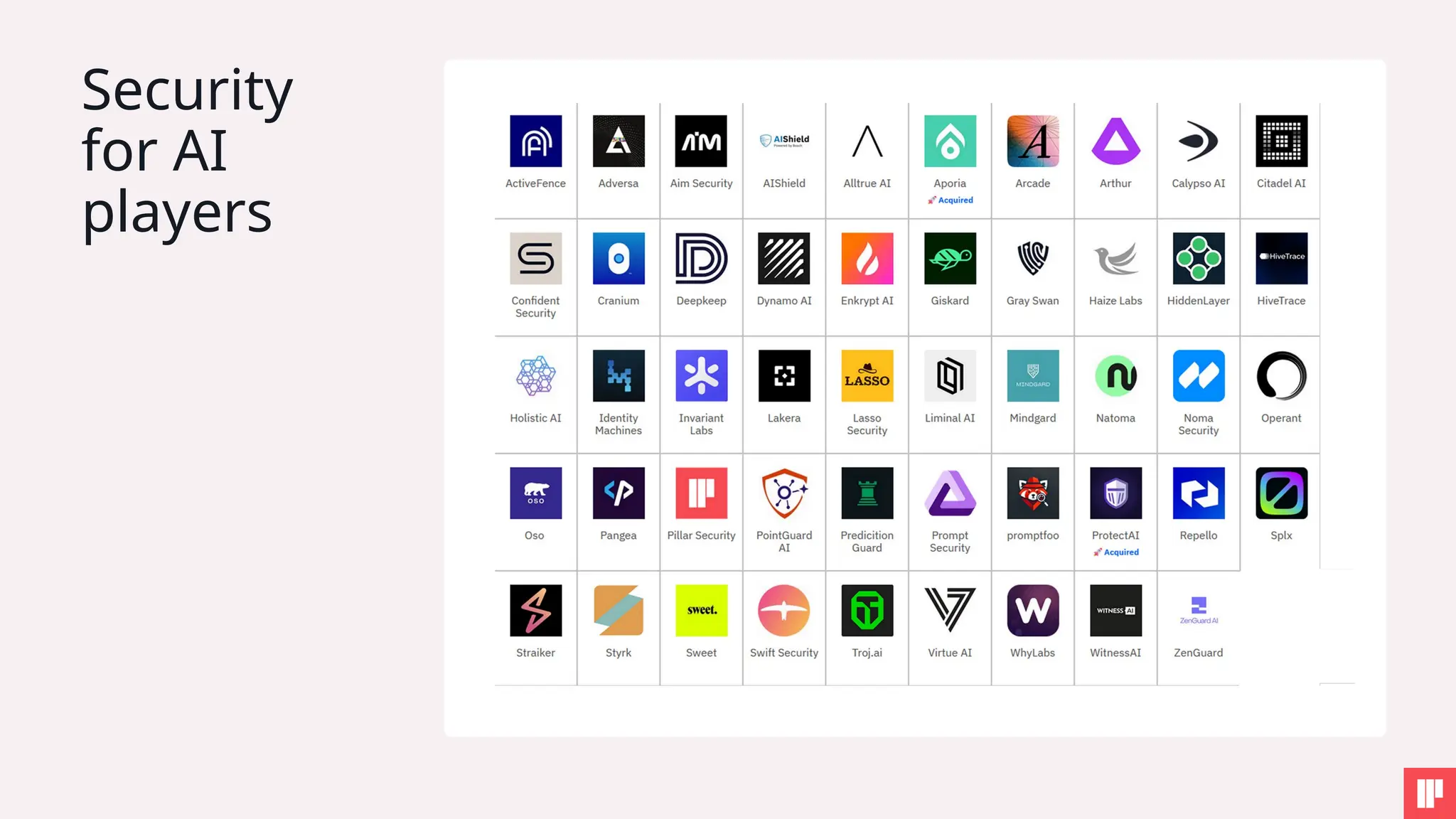
Security
for AI
players
Trends
Observed
Advancements in AI continue
Agent(ic)s are the default
Security is augmenting
Lacking strong fundamentals
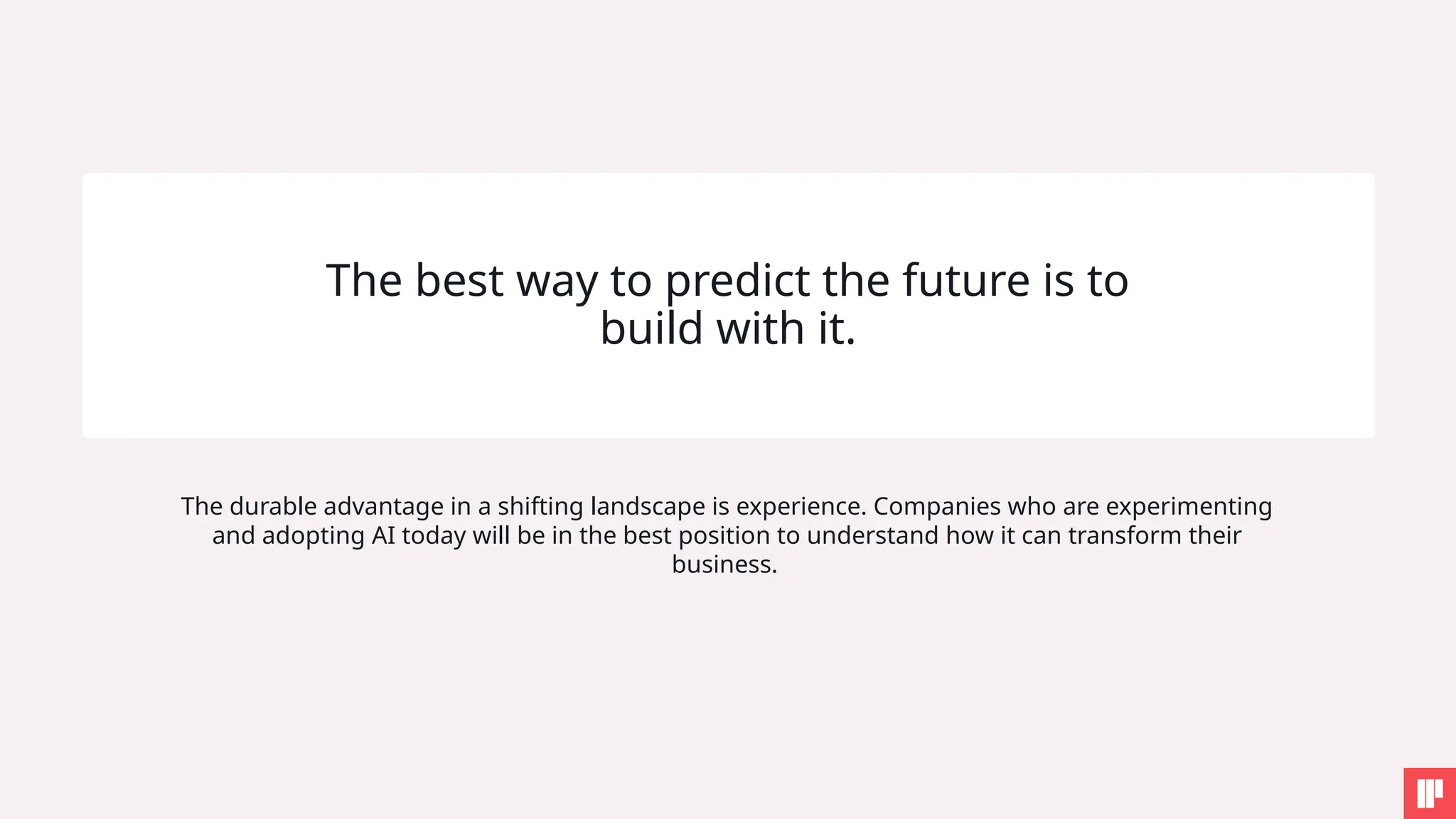
The best way to predict the future is to
build with it.
The durable advantage in a shifting landscape is experience. Companies who are experimenting
and adopting AI today will be in the best position to understand how it can transform their
business.
Dor Sarig, Co-founder & CEO, Pillar Security
Securing the new
computing paradigm
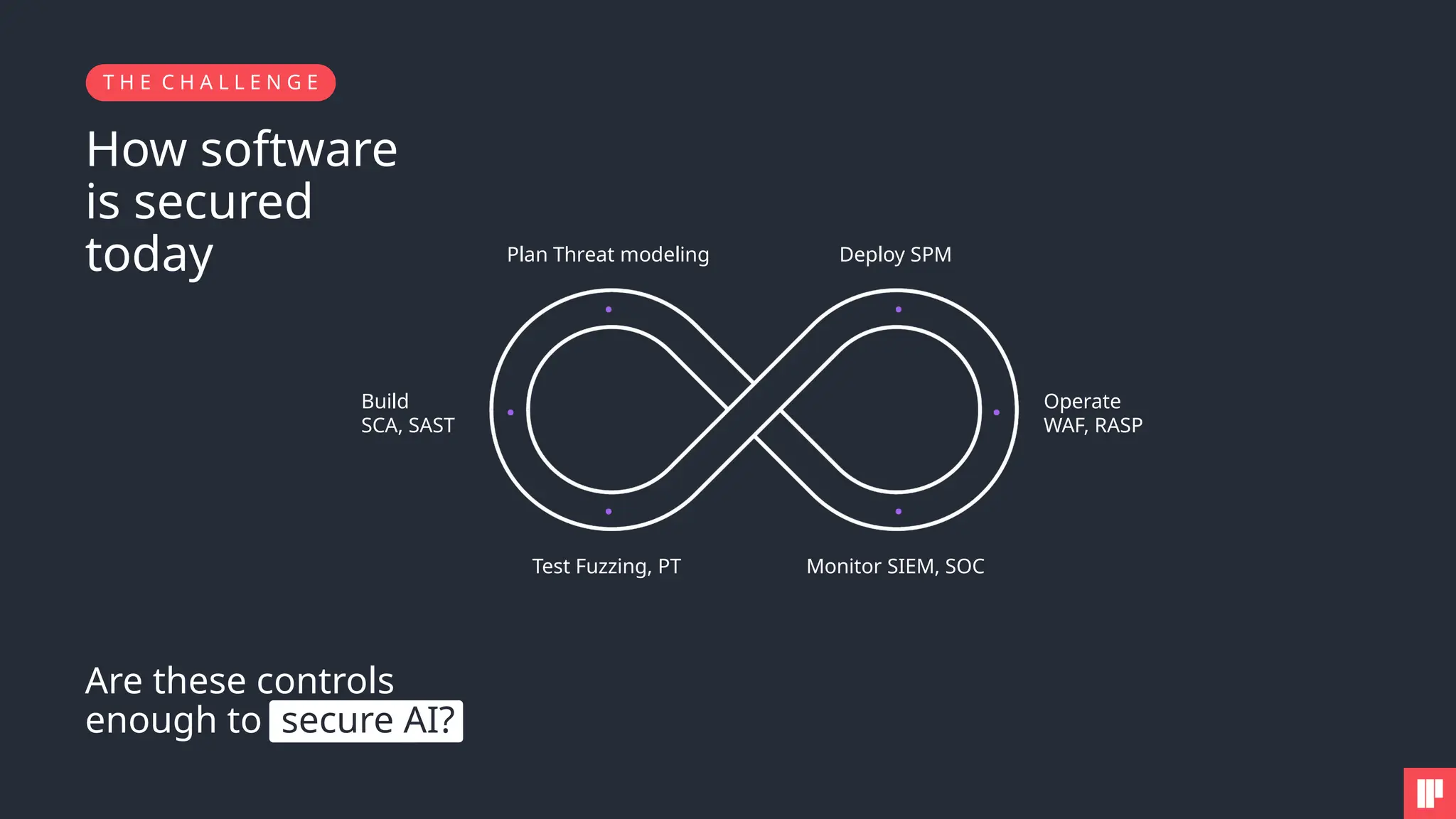
How software
is secured
today
T H E C H A L L E N G E
Are these controls
enough to secure AI?
Plan Threat modeling Deploy SPM
Operate
WAF, RASP
Monitor SIEM, SOC
Test Fuzzing, PT
Build
SCA, SAST
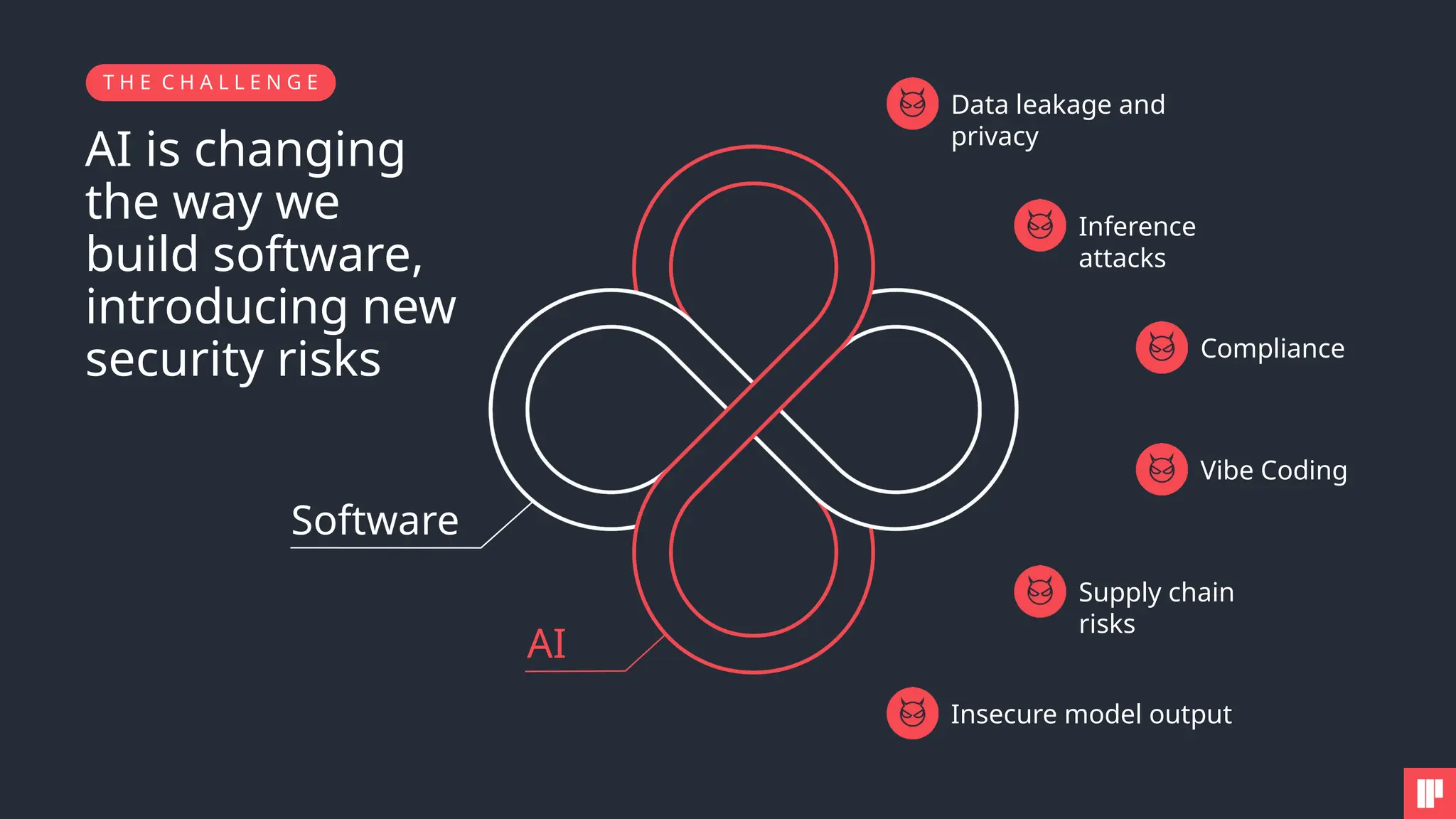
AI is changing
the way we
build software,
introducing new
security risks
Vibe Coding
Software
AI
Inference
attacks
Data leakage and
privacy
Insecure model output
Supply chain
risks
Compliance
T H E C H A L L E N G E
ISO 27001, SOC2, GDPR, S-BOM
GRC Manager
ISO 42001, NIST AI RMF, EU
AI Act, AI-BOM
AI bias/fairness
Data privacy
Model governance
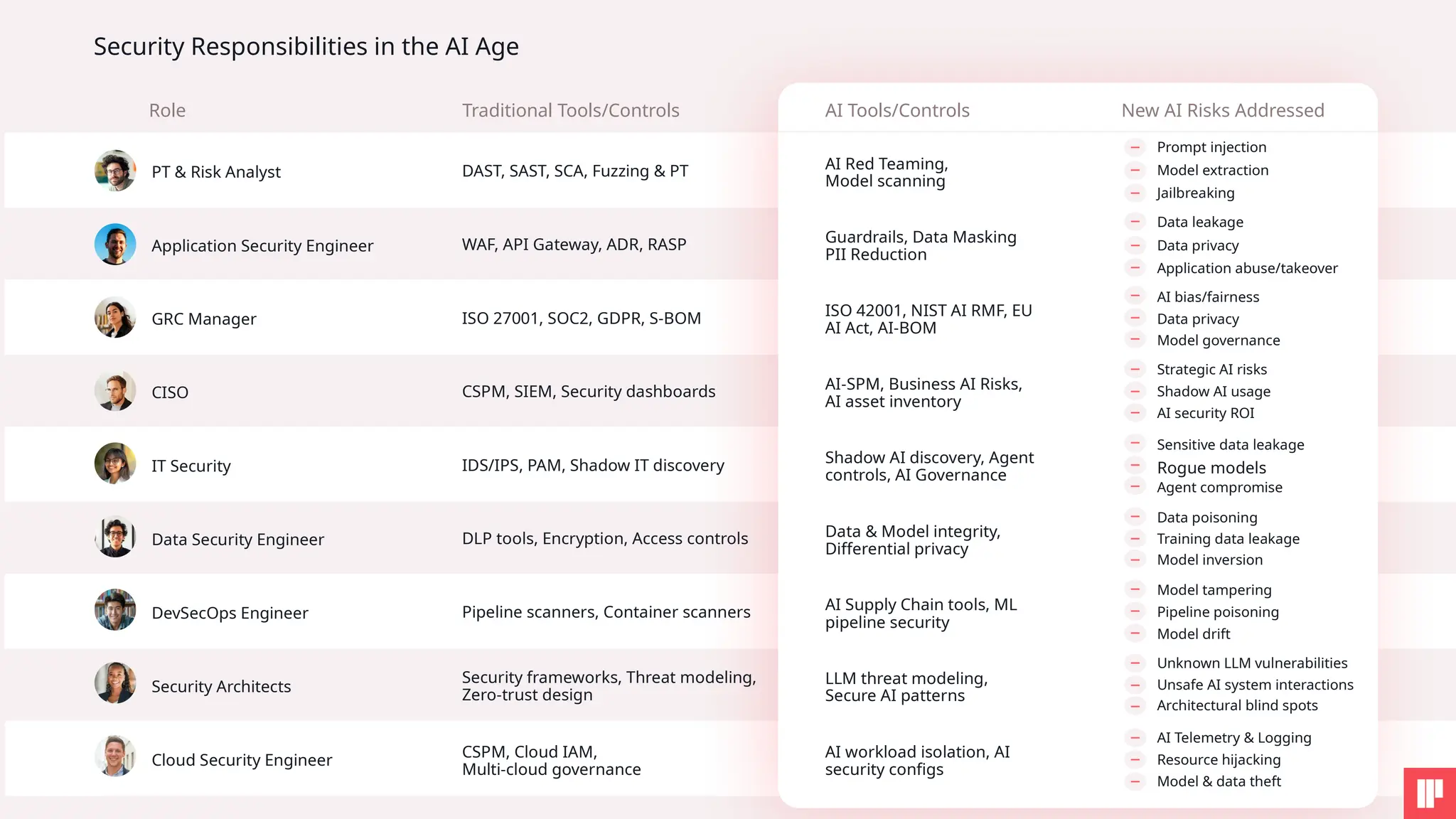
Role
DAST, SAST, SCA, Fuzzing & PT
Traditional Tools/Controls
PT & Risk Analyst
AI Red Teaming,
Model scanning
Prompt injection
AI Tools/Controls New AI Risks Addressed
Model extraction
Jailbreaking
CSPM, SIEM, Security dashboards
CISO
AI-SPM, Business AI Risks,
AI asset inventory
Strategic AI risks
Shadow AI usage
AI security ROI
IDS/IPS, PAM, Shadow IT discovery
DLP tools, Encryption, Access controls
Pipeline scanners, Container scanners
IT Security
Data Security Engineer
DevSecOps Engineer
Shadow AI discovery, Agent
controls, AI Governance
Sensitive data leakage
Rogue models
Agent compromise
Data & Model integrity,
Differential privacy
Data poisoning
Training data leakage
Model inversion
AI Supply Chain tools, ML
pipeline security
Model tampering
Pipeline poisoning
Model drift
WAF, API Gateway, ADR, RASP
Application Security Engineer
Guardrails, Data Masking
PII Reduction
Data leakage
Data privacy
Application abuse/takeover
Security frameworks, Threat modeling,
Zero-trust design
CSPM, Cloud IAM,
Multi-cloud governance
Security Architects
Cloud Security Engineer
LLM threat modeling,
Secure AI patterns
Unknown LLM vulnerabilities
Unsafe AI system interactions
Architectural blind spots
AI workload isolation, AI
security configs
AI Telemetry & Logging
Resource hijacking
Model & data theft
Security Responsibilities in the AI Age
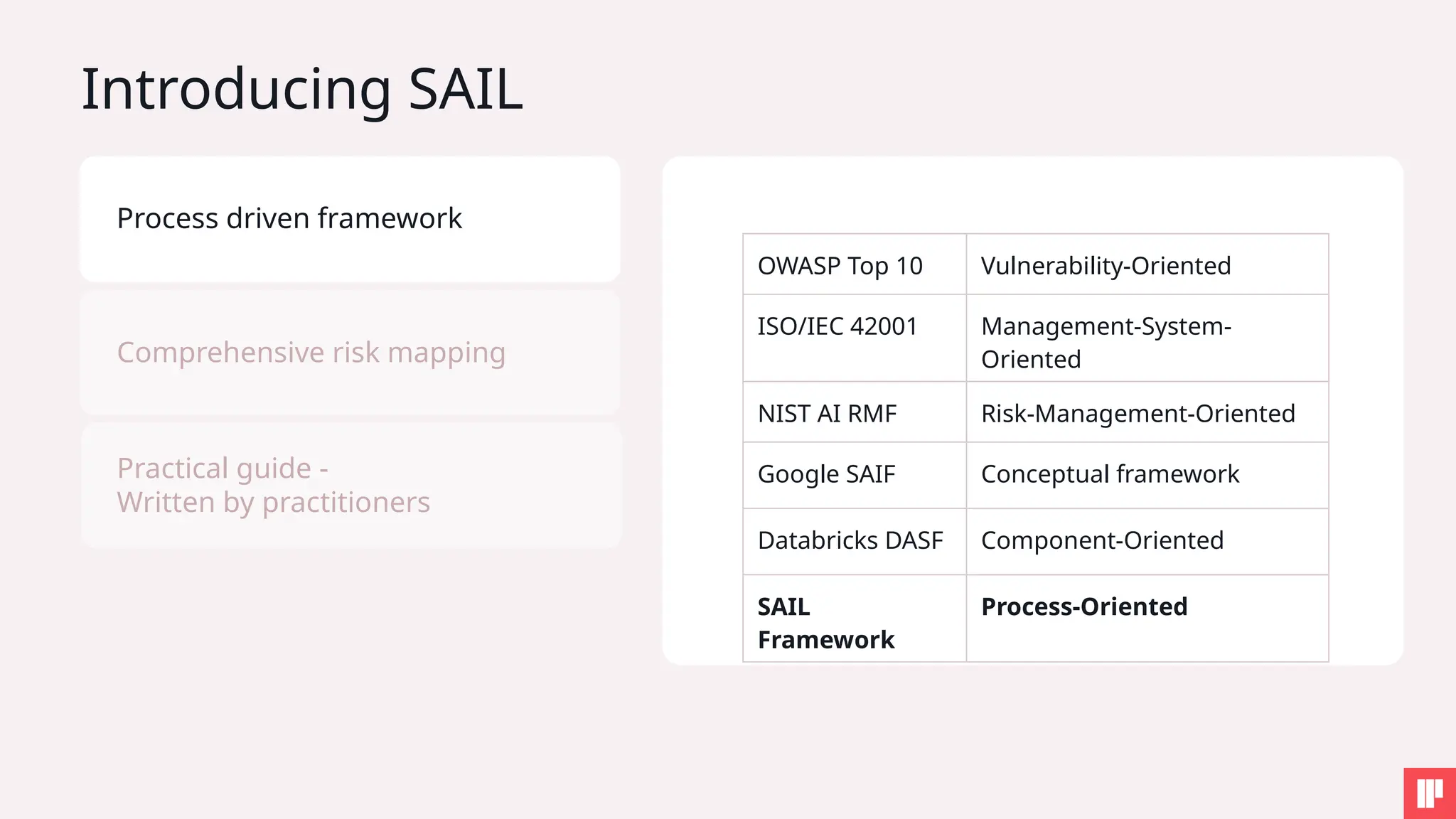
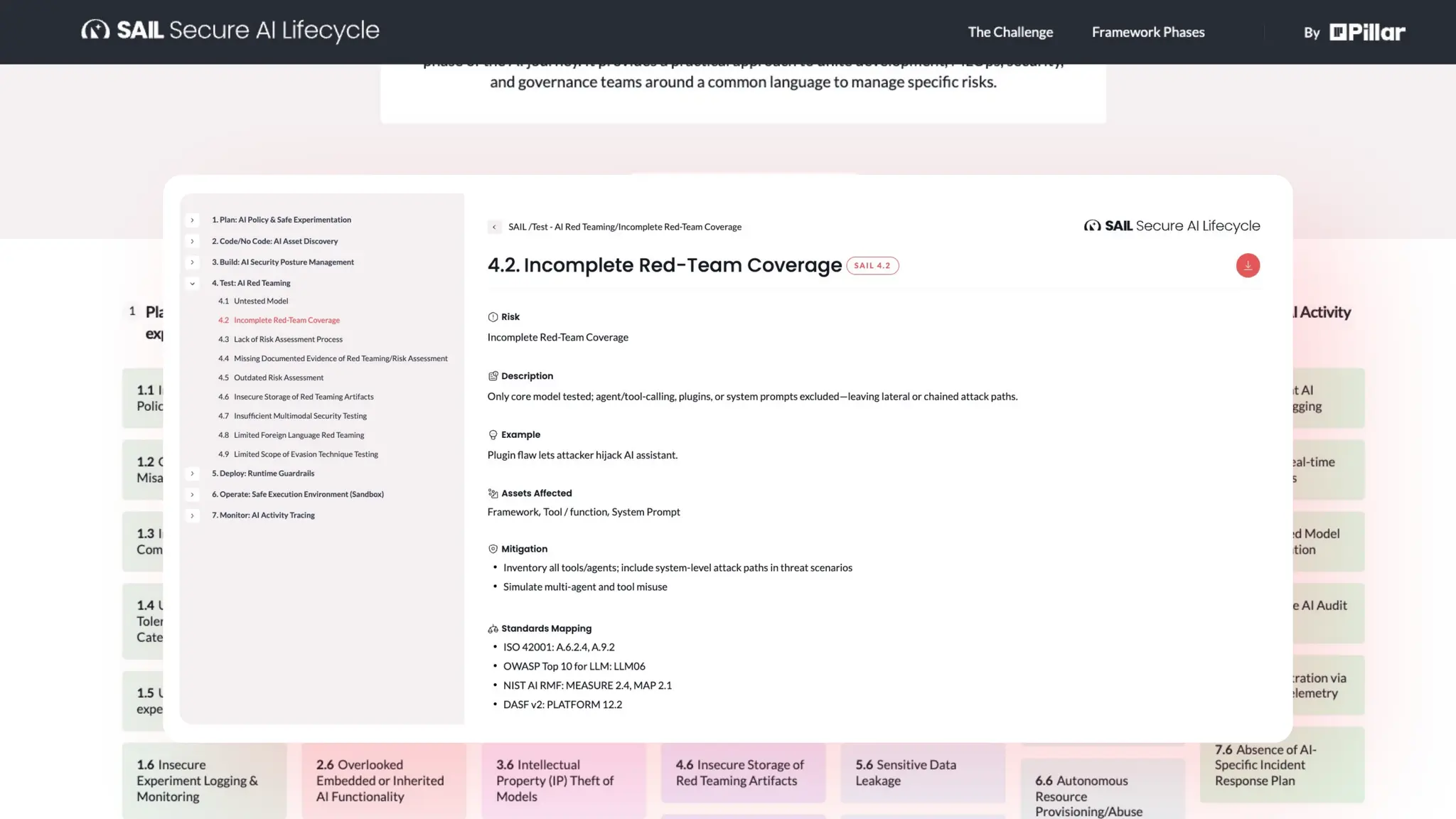
Introducing SAIL
OWASP Top 10 Vulnerability-Oriented
ISO/IEC 42001 Management-System-
Oriented
NIST AI RMF Risk-Management-Oriented
Google SAIF Conceptual framework
Databricks DASF Component-Oriented
SAIL
Framework
Process-Oriented
Comprehensive risk mapping
Process driven framework
Practical guide -
Written by practitioners
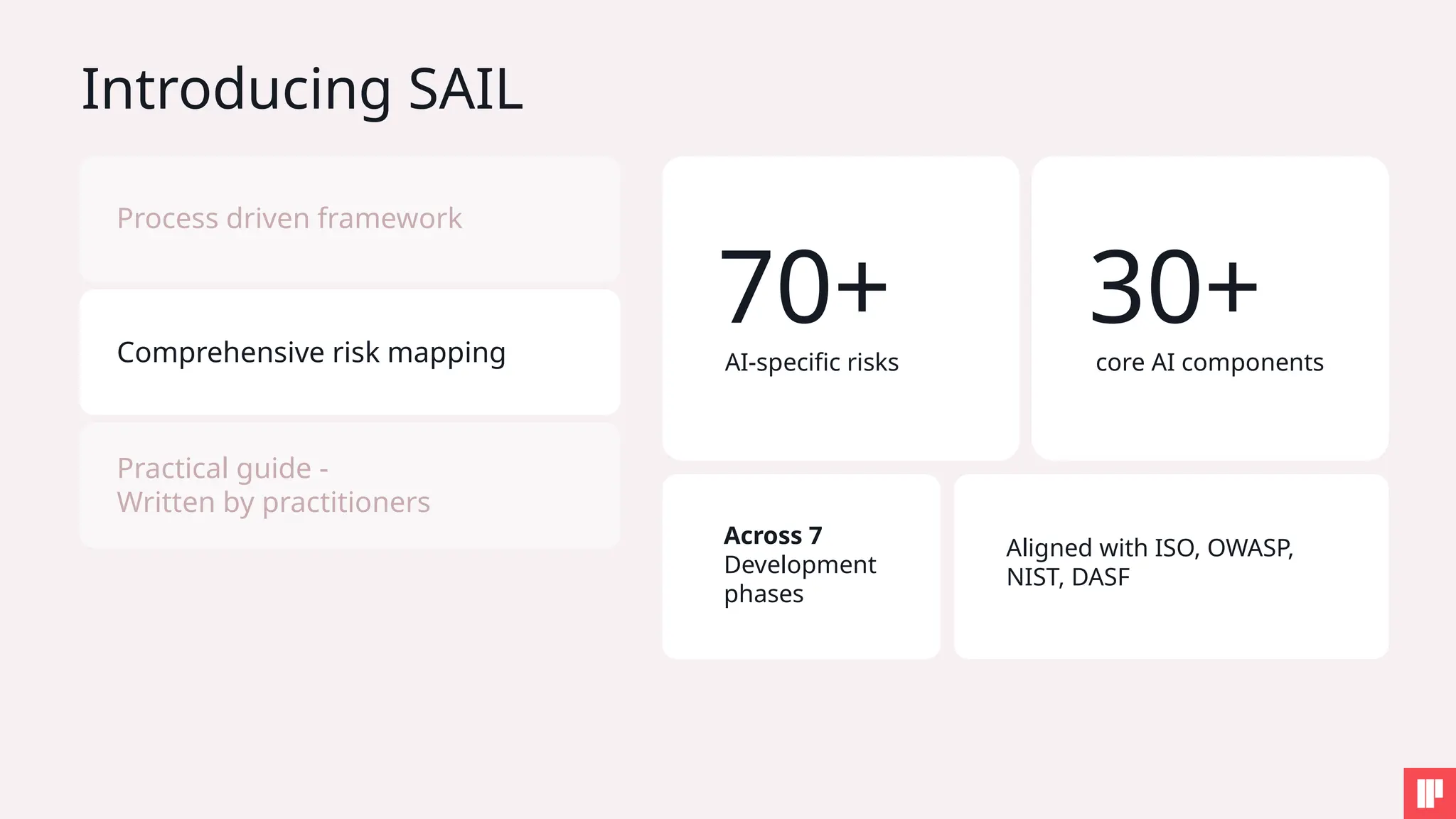
Introducing SAIL
Comprehensive risk mapping
Process driven framework
Practical guide -
Written by practitioners
70+
AI-specific risks
30+
core AI components
Across 7
Development
phases
Aligned with ISO, OWASP,
NIST, DASF
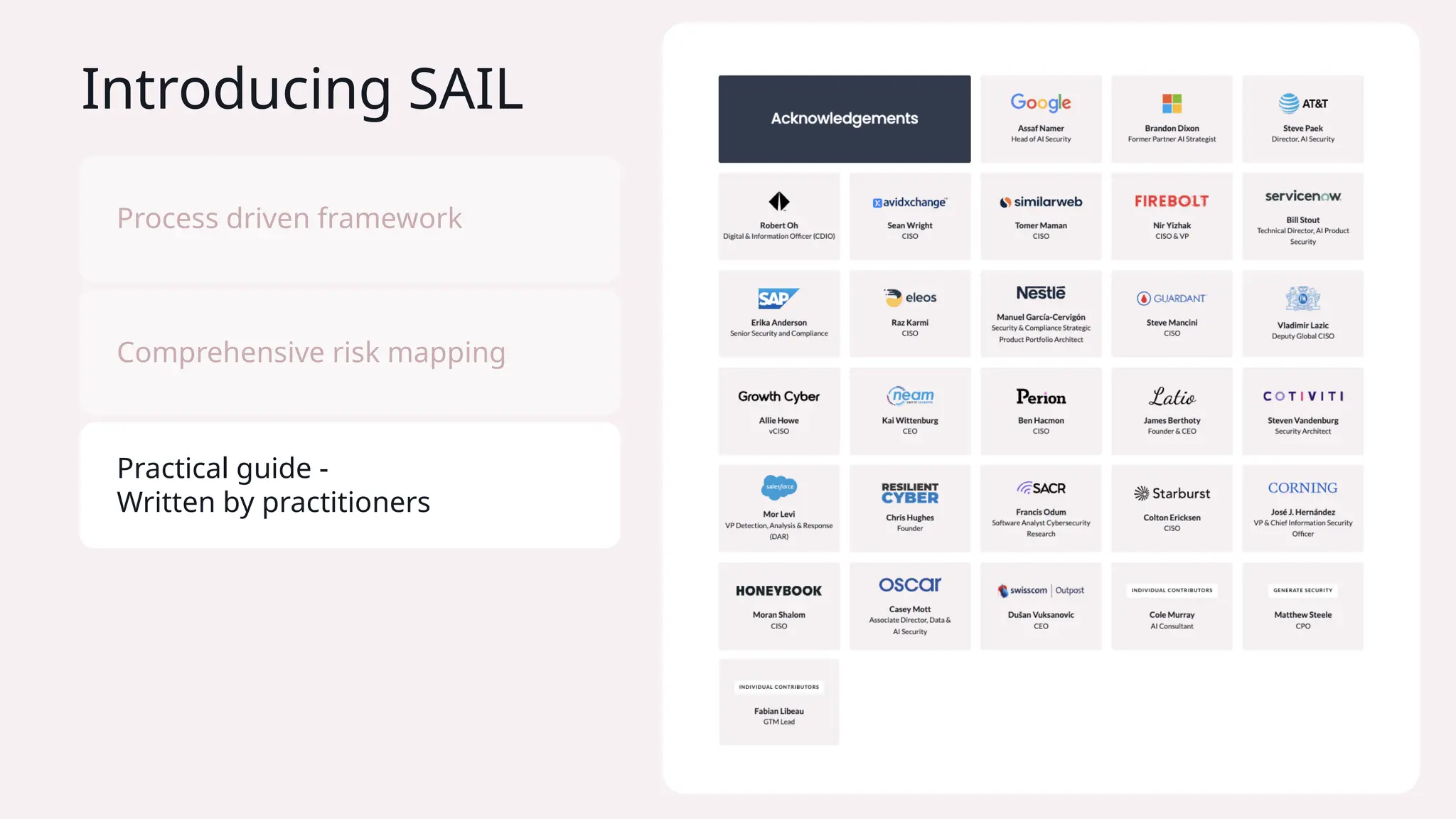
Introducing SAIL
Comprehensive risk mapping
Process driven framework
Practical guide -
Written by practitioners
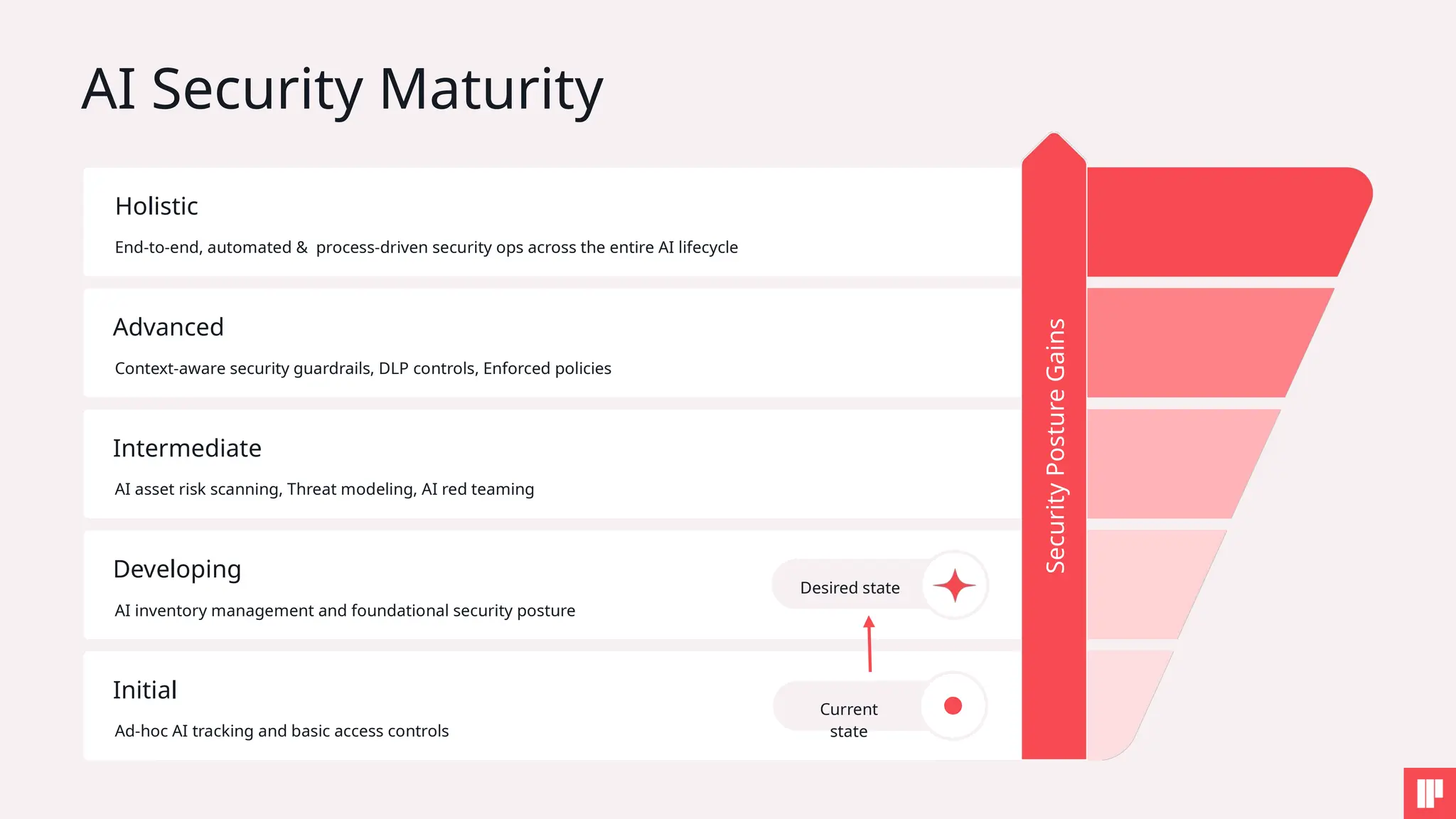
AI Security Maturity
Holistic
Advanced
Intermediate
Developing
Initial
End-to-end, automated & process-driven security ops across the entire AI lifecycle
Context-aware security guardrails, DLP controls, Enforced policies
AI asset risk scanning, Threat modeling, AI red teaming
AI inventory management and foundational security posture
Ad-hoc AI tracking and basic access controls
Security
Posture
Gains
Desired state
Current
state
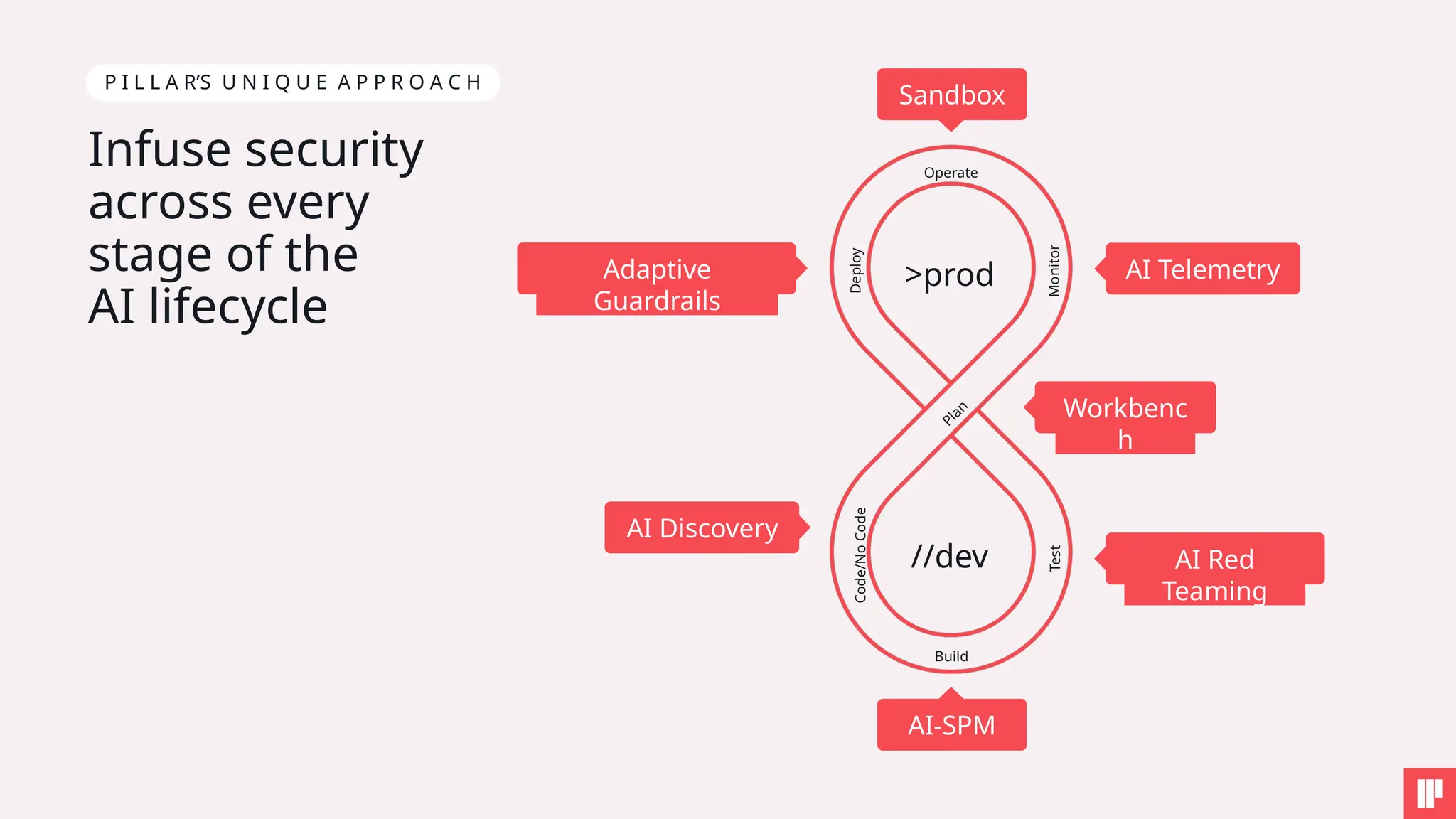
Sandbox
Code/No
Code
Build
Deploy
Operate
Monitor
Test
P
l
a
n
AI Telemetry
Workbenc
h
AI Discovery
Adaptive
Guardrails
AI Red
Teaming
AI-SPM
>prod
//dev
Infuse security
across every
stage of the
AI lifecycle
P I L L A R’S U N I Q U E A P P R O A C H
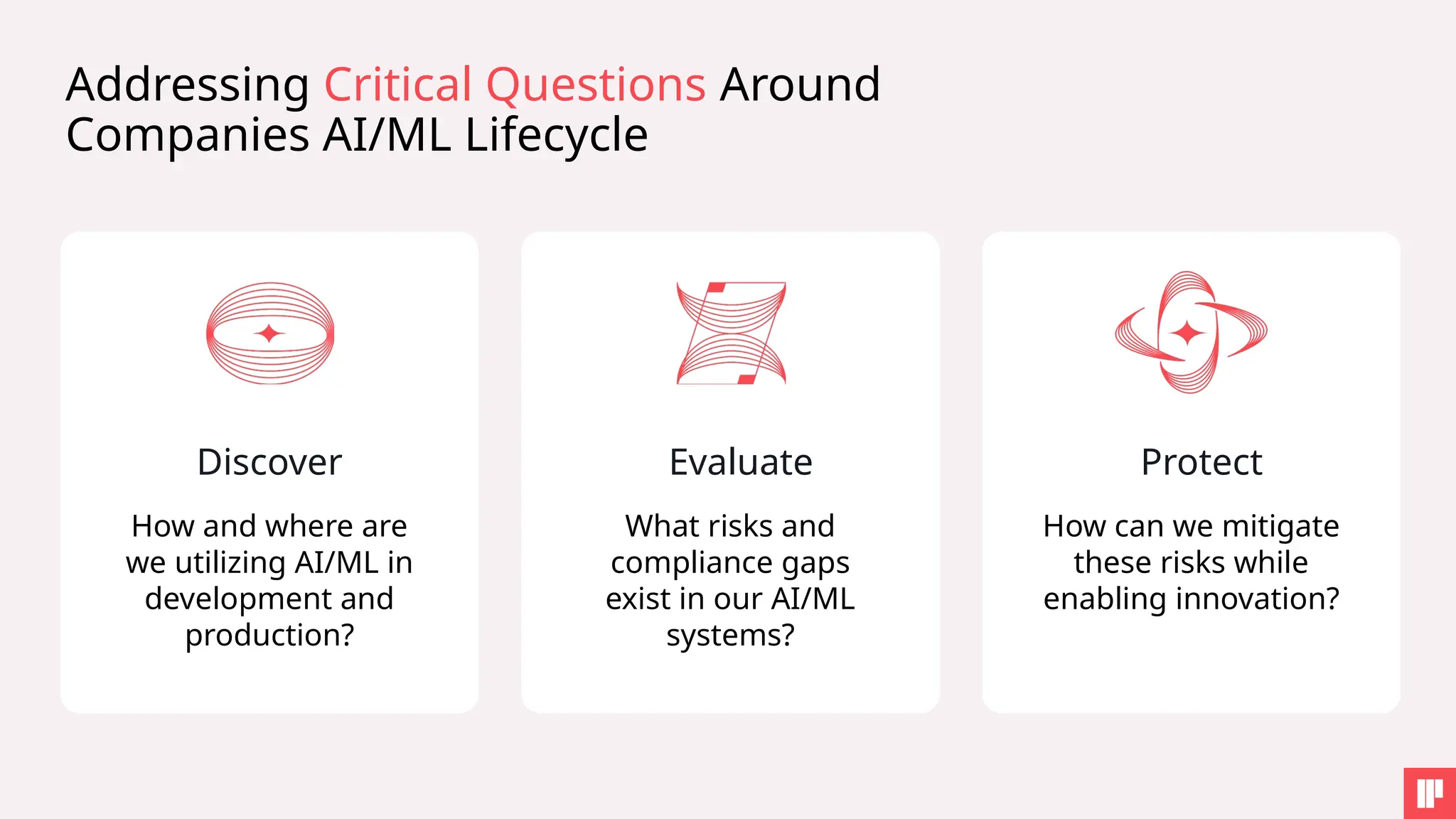
Addressing Critical Questions Around
Companies AI/ML Lifecycle
How and where are
we utilizing AI/ML in
development and
production?
What risks and
compliance gaps
exist in our AI/ML
systems?
How can we mitigate
these risks while
enabling innovation?
Discover Evaluate Protect
From Theory
to Reality
The Practitioner's Panel
Topic 1: Planning, Policy & Discovery
How are you establishing AI governance and visibility at an organizational
level?
What initial actions or tools helped you understand your AI landscape and
risks?
How has your risk strategy evolved to address
unique AI threats?
What are key elements for effective AI red
teaming?
Topic 2: Risk Analysis and Red Teaming
What are some of the key initiatives or
technologies your teams are implementing for
runtime security?
How are you approaching the detection of
emerging threats or ensuring the security and
auditability of autonomous AI agents?
Topic 3: Runtime, Monitoring and Governance
Q&A
Meet us at BlackHat
Thank you.

Webinar_ Building Your Secure AI Roadmap.pptx

  • 1.
  • 2.
    Agenda The ”AI seachange" The Practitioner's panel Q&A Securing the new computing paradigm
  • 3.
    Brandon Dixon, FormerPartner AI Strategist, Microsoft The AI Sea Change
  • 5.
    Trends Observed Advancements in AIcontinue Agent(ic)s are the default Security is augmenting Lacking strong fundamentals
  • 6.
    Trends Observed Advancements in AIcontinue Agent(ic)s are the default Security is augmenting Lacking strong fundamentals
  • 8.
    Trends Observed Advancements in AIcontinue Agent(ic)s are the default Security is augmenting Lacking strong fundamentals
  • 9.
    What forms anagent? Plugins, Automation, Code Execution Actions Embeddings, Graphs, Files, Data Knowledge Short, Long, Personalization Memory Planning, Reasoning, Learning, Verification Orchestration Access, Authorization, Role, Governance Identity
  • 10.
    Measuring agents • None •Assistive agency • Partial autonomy • High autonomy • Full autonomy Autonomy • None • Task • Job • Role • Domain Scope • None • Basic • Proficient • Advanced • Mastery Scale • None • Basic • Developing • Complex • Rich Personality • None • Passive • Limited • Moderate • Fully interactive Interactivity
  • 11.
    Trends Observed Advancements in AIcontinue Agent(ic)s are the default Security is augmenting Lacking strong fundamentals
  • 12.
  • 13.
    Trends Observed Advancements in AIcontinue Agent(ic)s are the default Security is augmenting Lacking strong fundamentals
  • 15.
    The best wayto predict the future is to build with it. The durable advantage in a shifting landscape is experience. Companies who are experimenting and adopting AI today will be in the best position to understand how it can transform their business.
  • 16.
    Dor Sarig, Co-founder& CEO, Pillar Security Securing the new computing paradigm
  • 17.
    How software is secured today TH E C H A L L E N G E Are these controls enough to secure AI? Plan Threat modeling Deploy SPM Operate WAF, RASP Monitor SIEM, SOC Test Fuzzing, PT Build SCA, SAST
  • 18.
    AI is changing theway we build software, introducing new security risks Vibe Coding Software AI Inference attacks Data leakage and privacy Insecure model output Supply chain risks Compliance T H E C H A L L E N G E
  • 19.
    ISO 27001, SOC2,GDPR, S-BOM GRC Manager ISO 42001, NIST AI RMF, EU AI Act, AI-BOM AI bias/fairness Data privacy Model governance Role DAST, SAST, SCA, Fuzzing & PT Traditional Tools/Controls PT & Risk Analyst AI Red Teaming, Model scanning Prompt injection AI Tools/Controls New AI Risks Addressed Model extraction Jailbreaking CSPM, SIEM, Security dashboards CISO AI-SPM, Business AI Risks, AI asset inventory Strategic AI risks Shadow AI usage AI security ROI IDS/IPS, PAM, Shadow IT discovery DLP tools, Encryption, Access controls Pipeline scanners, Container scanners IT Security Data Security Engineer DevSecOps Engineer Shadow AI discovery, Agent controls, AI Governance Sensitive data leakage Rogue models Agent compromise Data & Model integrity, Differential privacy Data poisoning Training data leakage Model inversion AI Supply Chain tools, ML pipeline security Model tampering Pipeline poisoning Model drift WAF, API Gateway, ADR, RASP Application Security Engineer Guardrails, Data Masking PII Reduction Data leakage Data privacy Application abuse/takeover Security frameworks, Threat modeling, Zero-trust design CSPM, Cloud IAM, Multi-cloud governance Security Architects Cloud Security Engineer LLM threat modeling, Secure AI patterns Unknown LLM vulnerabilities Unsafe AI system interactions Architectural blind spots AI workload isolation, AI security configs AI Telemetry & Logging Resource hijacking Model & data theft Security Responsibilities in the AI Age
  • 20.
    Introducing SAIL OWASP Top10 Vulnerability-Oriented ISO/IEC 42001 Management-System- Oriented NIST AI RMF Risk-Management-Oriented Google SAIF Conceptual framework Databricks DASF Component-Oriented SAIL Framework Process-Oriented Comprehensive risk mapping Process driven framework Practical guide - Written by practitioners
  • 21.
    Introducing SAIL Comprehensive riskmapping Process driven framework Practical guide - Written by practitioners 70+ AI-specific risks 30+ core AI components Across 7 Development phases Aligned with ISO, OWASP, NIST, DASF
  • 22.
    Introducing SAIL Comprehensive riskmapping Process driven framework Practical guide - Written by practitioners
  • 24.
    AI Security Maturity Holistic Advanced Intermediate Developing Initial End-to-end,automated & process-driven security ops across the entire AI lifecycle Context-aware security guardrails, DLP controls, Enforced policies AI asset risk scanning, Threat modeling, AI red teaming AI inventory management and foundational security posture Ad-hoc AI tracking and basic access controls Security Posture Gains Desired state Current state
  • 25.
    Sandbox Code/No Code Build Deploy Operate Monitor Test P l a n AI Telemetry Workbenc h AI Discovery Adaptive Guardrails AIRed Teaming AI-SPM >prod //dev Infuse security across every stage of the AI lifecycle P I L L A R’S U N I Q U E A P P R O A C H
  • 26.
    Addressing Critical QuestionsAround Companies AI/ML Lifecycle How and where are we utilizing AI/ML in development and production? What risks and compliance gaps exist in our AI/ML systems? How can we mitigate these risks while enabling innovation? Discover Evaluate Protect
  • 27.
    From Theory to Reality ThePractitioner's Panel
  • 28.
    Topic 1: Planning,Policy & Discovery How are you establishing AI governance and visibility at an organizational level? What initial actions or tools helped you understand your AI landscape and risks?
  • 29.
    How has yourrisk strategy evolved to address unique AI threats? What are key elements for effective AI red teaming? Topic 2: Risk Analysis and Red Teaming
  • 30.
    What are someof the key initiatives or technologies your teams are implementing for runtime security? How are you approaching the detection of emerging threats or ensuring the security and auditability of autonomous AI agents? Topic 3: Runtime, Monitoring and Governance
  • 31.
  • 32.
    Meet us atBlackHat
  • 33.

Editor's Notes

  • #15 What is durable? Been working with the tech daily for nearly 2 years Much of the original knowledge has remained durable Those leaning in now will reap the benefits faster Who wins? Those adopting now will see how AI influences existing biz processes including development and security Using AI now puts you in the best position to understand how it will evolve over time, or where it needs bolstering AI applied strategically yields speed gains Moat is in ability to execute, retool and optimize for a future state
  • #17 This is a small example of one attack vector out of infinite amount of new options to attack and compromise software in the AI age. And this is why we started Pillar. AI is changing the way we build software, introducing new Lifecycle and new security risks. From poisoned training data and in development to jailbreaks and data leakage in production
  • #18 This is a small example of one attack vector out of infinite amount of new options to attack and compromise software in the AI age. And this is why we started Pillar. AI is changing the way we build software, introducing new Lifecycle and new security risks. From poisoned training data and in development to jailbreaks and data leakage in production
  • #27 This understanding is what sparked our journy here at Pillar.
  • #28 Assaf Tomer Mor
  • #29 Tomer Mor Assaf
  • #30 Mor Assaf Tomer
  • #31 This understanding is what sparked our journy here at Pillar.
  • #32 This understanding is what sparked our journy here at Pillar.