Engaging a multi-generational
workforce
Subramanian Kalpathi
Senior Director, KNOLSKAPE
Author, The Millennials: Exploring the world of the largest living generation
Coverage
• Gaining an understanding of the different generations at work today.
• Breaking away from stereotypes about the young and the old –
acknowledging similarities and appreciating differences.
• The significance of era – how the external environment and context
influence our decisions and actions.
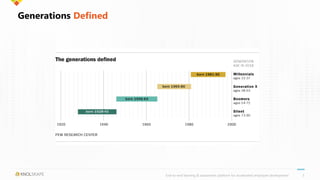
Generations Defined
End-to-end learning & assessment platform for accelerated employee development 3
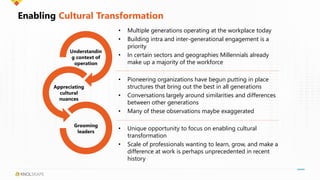
Understandin
g context of
operation
Appreciating
cultural
nuances
Grooming
leaders
• Multiple generations operating at the workplace today
• Building intra and inter-generational engagement is a
priority
• In certain sectors and geographies Millennials already
make up a majority of the workforce
• Pioneering organizations have begun putting in place
structures that bring out the best in all generations
• Conversations largely around similarities and differences
between other generations
• Many of these observations maybe exaggerated
• Unique opportunity to focus on enabling cultural
transformation
• Scale of professionals wanting to learn, grow, and make a
difference at work is perhaps unprecedented in recent
history
Enabling Cultural Transformation
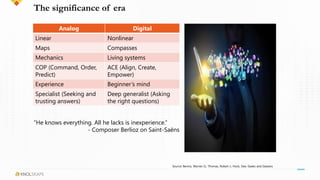
The significance of era
Analog Digital
Linear Nonlinear
Maps Compasses
Mechanics Living systems
COP (Command, Order,
Predict)
ACE (Align, Create,
Empower)
Experience Beginner’s mind
Specialist (Seeking and
trusting answers)
Deep generalist (Asking
the right questions)
Source: Bennis, Warren G.; Thomas, Robert J.; Hock, Dee. Geeks and Geezers
“He knows everything. All he lacks is inexperience.”
- Composer Berlioz on Saint-Saëns
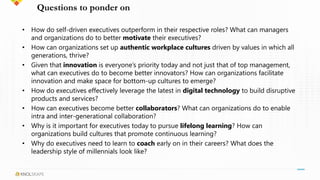
Questions to ponder on
• How do self-driven executives outperform in their respective roles? What can managers
and organizations do to better motivate their executives?
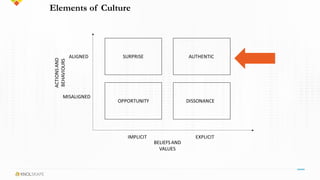
• How can organizations set up authentic workplace cultures driven by values in which all
generations, thrive?
• Given that innovation is everyone’s priority today and not just that of top management,
what can executives do to become better innovators? How can organizations facilitate
innovation and make space for bottom-up cultures to emerge?
• How do executives effectively leverage the latest in digital technology to build disruptive
products and services?
• How can executives become better collaborators? What can organizations do to enable
intra and inter-generational collaboration?
• Why is it important for executives today to pursue lifelong learning? How can
organizations build cultures that promote continuous learning?
• Why do executives need to learn to coach early on in their careers? What does the
leadership style of millennials look like?
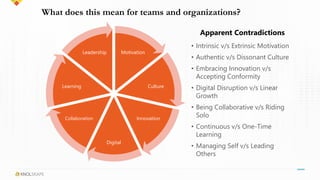
What does this mean for teams and organizations?
Motivation
Culture
Innovation
Digital
Collaboration
Learning
Leadership
• Intrinsic v/s Extrinsic Motivation
• Authentic v/s Dissonant Culture
• Embracing Innovation v/s
Accepting Conformity
• Digital Disruption v/s Linear
Growth
• Being Collaborative v/s Riding
Solo
• Continuous v/s One-Time
Learning
• Managing Self v/s Leading
Others
Apparent Contradictions
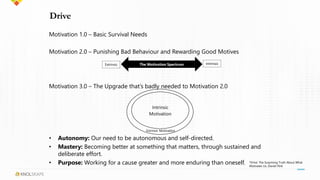
Motivation 1.0 – Basic Survival Needs
Motivation 2.0 – Punishing Bad Behaviour and Rewarding Good Motives
Motivation 3.0 – The Upgrade that’s badly needed to Motivation 2.0
• Autonomy: Our need to be autonomous and self-directed.
• Mastery: Becoming better at something that matters, through sustained and
deliberate effort.
• Purpose: Working for a cause greater and more enduring than oneself.
The Motivation Spectrum IntrinsicExtrinsic
Drive
Intrinsic
Motivation
Extrinsic Motivation
*Drive: The Surprising Truth About What
Motivates Us, Daniel Pink
Elements of Culture
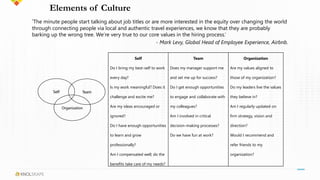
TeamSelf
Organization
Self
Do I bring my best-self to work
every day?
Is my work meaningful? Does it
challenge and excite me?
Are my ideas encouraged or
ignored?
Do I have enough opportunities
to learn and grow
professionally?
Am I compensated well; do the
benefits take care of my needs?
Team
Does my manager support me
and set me up for success?
Do I get enough opportunities
to engage and collaborate with
my colleagues?
Am I involved in critical
decision-making processes?
Do we have fun at work?
Organization
Are my values aligned to
those of my organization?
Do my leaders live the values
they believe in?
Am I regularly updated on
firm strategy, vision and
direction?
Would I recommend and
refer friends to my
organization?
‘The minute people start talking about job titles or are more interested in the equity over changing the world
through connecting people via local and authentic travel experiences, we know that they are probably
barking up the wrong tree. We’re very true to our core values in the hiring process.’
- Mark Levy, Global Head of Employee Experience, Airbnb.
Elements of Culture
Case Study: Make A Difference
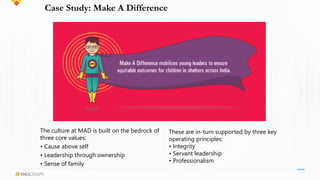
These are in-turn supported by three key
operating principles:
• Integrity
• Servant leadership
• Professionalism
The culture at MAD is built on the bedrock of
three core values:
• Cause above self
• Leadership through ownership
• Sense of family
Case Study: Make A Difference (Contd.)
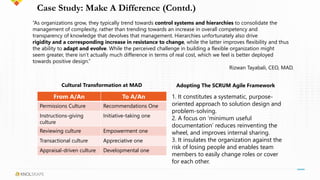
From A/An To A/An
Permissions Culture Recommendations One
Instructions-giving
culture
Initiative-taking one
Reviewing culture Empowerment one
Transactional culture Appreciative one
Appraisal-driven culture Developmental one
“As organizations grow, they typically trend towards control systems and hierarchies to consolidate the
management of complexity, rather than trending towards an increase in overall competency and
transparency of knowledge that devolves that management. Hierarchies unfortunately also drive
rigidity and a corresponding increase in resistance to change, while the latter improves flexibility and thus
the ability to adapt and evolve. While the perceived challenge in building a flexible organization might
seem greater, there isn’t actually much difference in terms of real cost, which we feel is better deployed
towards positive design.”
Rizwan Tayabali, CEO, MAD.
1. It constitutes a systematic, purpose-
oriented approach to solution design and
problem-solving.
2. A focus on ‘minimum useful
documentation’ reduces reinventing the
wheel, and improves internal sharing.
3. It insulates the organization against the
risk of losing people and enables team
members to easily change roles or cover
for each other.
Cultural Transformation at MAD Adopting The SCRUM Agile Framework
Enabling Collaboration
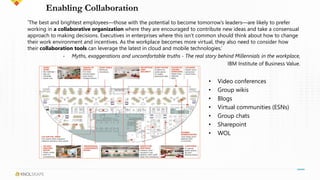
‘The best and brightest employees—those with the potential to become tomorrow’s leaders—are likely to prefer
working in a collaborative organization where they are encouraged to contribute new ideas and take a consensual
approach to making decisions. Executives in enterprises where this isn’t common should think about how to change
their work environment and incentives. As the workplace becomes more virtual, they also need to consider how
their collaboration tools can leverage the latest in cloud and mobile technologies.’
- Myths, exaggerations and uncomfortable truths - The real story behind Millennials in the workplace,
IBM Institute of Business Value.
• Video conferences
• Group wikis
• Blogs
• Virtual communities (ESNs)
• Group chats
• Sharepoint
• WOL
Continuous Learning
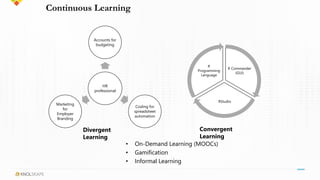
HR
professional
Accounts for
budgeting
Coding for
spreadsheet
automation
Marketing
for
Employer
Branding
R Commander
(GUI)
RStudio
R
Programming
Language
• On-Demand Learning (MOOCs)
• Gamification
• Informal Learning
Divergent
Learning
Convergent
Learning
Case Study: Big Basket
Essence of the Big Basket culture:
• Maniacal focus on customer delight (for both
external and internal customers).
• Taking ownership even if you do not entirely
control the outcomes.
• Speed and a sense of urgency in everything
you do.
• Freedom, but with personal accountability.
‘Tough situations, stretch roles, chaos and uncertainty
offer the best learning opportunities. Being able to
do well in the realm of a start-up is almost synonymous
with demonstrating a mindset of continuous learning.
On the other hand, those who are averse to taking up
tough challenges may be inherently poor learners and
may not be the best fit for such roles.’
- T. N. Hari, CHRO, Big Basket.
Core values:
• Respect for people,
• Transparency,
• Integrity,
• Humility.
Case Study: Big Basket (Contd.)
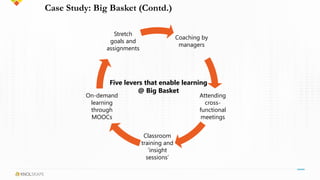
Coaching by
managers
Attending
cross-
functional
meetings
Classroom
training and
‘insight
sessions’
On-demand
learning
through
MOOCs
Stretch
goals and
assignments
Five levers that enable learning
@ Big Basket
Managing Self v/s Leading Others
• Executive coaching has long been the purview of CEOs and top management.
• Senior coaches, many of whom may be experienced industry professionals, work
alongside leaders to help them take better decisions and unlock their true potential.
• Of late, organizations have begun setting up internal coaching practices that groom
youngsters to take on leadership responsibilities. Besides coaching for development,
senior leaders may also mentor the next generation of managers on a range of areas,
including taking on P&L responsibilities.
• Former Chief Learning Officer of Sun Microsystems Karie Willyerd pointed out in a
Harvard Business Review feature that millennials value the benefits of coaching, and
respond positively to frequent feedback and developmental conversations.
• A report by consulting firm PWC elaborates that millennials relish the chance to work
with strong coaches and mentors.
• While millennials may learn a lot by being coached by senior leaders and coaches, first
time millennial managers in particular may benefit through application of such
coaching techniques during their interaction with their own team members, and their
bosses (reverse coaching / mentoring).
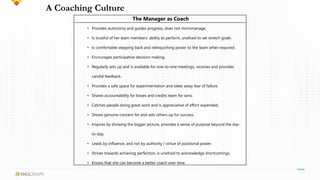
A Coaching Culture
The Manager as Coach
• Provides autonomy and guides progress, does not micromanage.
• Is trustful of her team members’ ability to perform, unafraid to set stretch goals.
• Is comfortable stepping back and relinquishing power to the team when required.
• Encourages participative decision making.
• Regularly sets up and is available for one-to-one meetings, receives and provides
candid feedback.
• Provides a safe space for experimentation and takes away fear of failure.
• Shares accountability for losses and credits team for wins.
• Catches people doing great work and is appreciative of effort expended.
• Shows genuine concern for and sets others up for success.
• Inspires by showing the bigger picture, provides a sense of purpose beyond the day-
to-day.
• Leads by influence, and not by authority / virtue of positional power.
• Strives towards achieving perfection, is unafraid to acknowledge shortcomings.
• Knows that she can become a better coach over time.
In conclusion
• One must refrain from referring to any one cohort of individuals in isolation. A multi-level, 360 degree
approach that incorporates the unique circumstances of individuals, relationships with peers, the support of
mentors, working environment, organizational values and processes, external factors, and so on need to be
factored in.
• Autonomy, mastery and purpose can help foster intrinsic motivation. Organizational processes centered on
continuous feedback, merit-based performance, and transparency can bring out the best in the cohort.
• The case for crafting authentic workplaces: organizational values can translate into several meaningful
outcomes such as customer value added, innovation and workplace agility.
• Continuous innovation is everyone’s prerogative in a services-led economy, and some suitable frameworks can
help executives further their creative energies.
• Community-led setups drive engagement and innovation. Tools such as hackathons can unleash collaboration
between intra and inter-generational teams. Well-crafted physical spaces can maximize serendipitous encounters
between employees.
• The importance of divergent, convergent, and on-demand learning: executives need to be swift learners, and
there are many ways in which organizations can promote cultures of continuous learning.
• It is essential for executives to learn coaching skills early on in their careers. Older workers create the space for
the younger cohort to flourish. Younger executives are given a leg up by members of older generations who
continuously invest in their development.
“If not us, then who? If not now, then when?”
- John E. Lewis
Questions?
The largest brands trust us with their employee development needs
End-to-end learning & assessment platform for accelerated employee development 21
BFSI GICs IT / ITeS Industrials Consumer Telecom Consulting
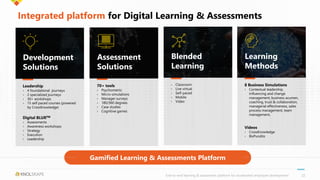
Integrated platform for Digital Learning & Assessments
End-to-end learning & assessment platform for accelerated employee development 22
Leadership
› 4 foundational journeys
› 2 specialized journeys
› 30+ workshops
› 15 self paced courses (powered
by CrossKnowledge)
Digital BLURTM
› Assessments
› Awareness workshops
› Strategy
› Execution
› Leadership
Development
Solutions
› Classroom
› Live virtual
› Self-paced
› Mobile
› Video
Blended
Learning
8 Business Simulations
› Contextual leadership,
Influencing and change
management, business acumen,
coaching, trust & collaboration,
managerial effectiveness, sales
process management, team
management,
Videos
› CrossKnowledge
› BizPunditz
Learning
Methods
70+ tools
› Psychometric
› Micro-simulations
› Manager surveys
› 180/360 degrees
› Case studies
› Cognitive games
Assessment
Solutions
Gamified Learning & Assessments Platform
For more information please write to
Subramanian.k@knolskape.com
marketing@knolskape.com
Twitter
@subu_ks
@KNOLSKAPE
Contact us
Look forward to partnering with you
“To experience is to learn.
Everything else is just information.”
Singapore
SALES & CUSTOMER SUPPORT
India
New Delhi
Mumbai
Bangalore
CORPORATE HEADQUARTERS
Malaysia
Kuala Lumpur
USA
Houston

Webinar – Engaging a multi-generational workforce

  • 1.
    Engaging a multi-generational workforce SubramanianKalpathi Senior Director, KNOLSKAPE Author, The Millennials: Exploring the world of the largest living generation
  • 2.
    Coverage • Gaining anunderstanding of the different generations at work today. • Breaking away from stereotypes about the young and the old – acknowledging similarities and appreciating differences. • The significance of era – how the external environment and context influence our decisions and actions.
  • 3.
    Generations Defined End-to-end learning& assessment platform for accelerated employee development 3
  • 4.
    Understandin g context of operation Appreciating cultural nuances Grooming leaders •Multiple generations operating at the workplace today • Building intra and inter-generational engagement is a priority • In certain sectors and geographies Millennials already make up a majority of the workforce • Pioneering organizations have begun putting in place structures that bring out the best in all generations • Conversations largely around similarities and differences between other generations • Many of these observations maybe exaggerated • Unique opportunity to focus on enabling cultural transformation • Scale of professionals wanting to learn, grow, and make a difference at work is perhaps unprecedented in recent history Enabling Cultural Transformation
  • 5.
    The significance ofera Analog Digital Linear Nonlinear Maps Compasses Mechanics Living systems COP (Command, Order, Predict) ACE (Align, Create, Empower) Experience Beginner’s mind Specialist (Seeking and trusting answers) Deep generalist (Asking the right questions) Source: Bennis, Warren G.; Thomas, Robert J.; Hock, Dee. Geeks and Geezers “He knows everything. All he lacks is inexperience.” - Composer Berlioz on Saint-Saëns
  • 6.
    Questions to ponderon • How do self-driven executives outperform in their respective roles? What can managers and organizations do to better motivate their executives? • How can organizations set up authentic workplace cultures driven by values in which all generations, thrive? • Given that innovation is everyone’s priority today and not just that of top management, what can executives do to become better innovators? How can organizations facilitate innovation and make space for bottom-up cultures to emerge? • How do executives effectively leverage the latest in digital technology to build disruptive products and services? • How can executives become better collaborators? What can organizations do to enable intra and inter-generational collaboration? • Why is it important for executives today to pursue lifelong learning? How can organizations build cultures that promote continuous learning? • Why do executives need to learn to coach early on in their careers? What does the leadership style of millennials look like?
  • 7.
    What does thismean for teams and organizations? Motivation Culture Innovation Digital Collaboration Learning Leadership • Intrinsic v/s Extrinsic Motivation • Authentic v/s Dissonant Culture • Embracing Innovation v/s Accepting Conformity • Digital Disruption v/s Linear Growth • Being Collaborative v/s Riding Solo • Continuous v/s One-Time Learning • Managing Self v/s Leading Others Apparent Contradictions
  • 8.
    Motivation 1.0 –Basic Survival Needs Motivation 2.0 – Punishing Bad Behaviour and Rewarding Good Motives Motivation 3.0 – The Upgrade that’s badly needed to Motivation 2.0 • Autonomy: Our need to be autonomous and self-directed. • Mastery: Becoming better at something that matters, through sustained and deliberate effort. • Purpose: Working for a cause greater and more enduring than oneself. The Motivation Spectrum IntrinsicExtrinsic Drive Intrinsic Motivation Extrinsic Motivation *Drive: The Surprising Truth About What Motivates Us, Daniel Pink
  • 9.
    Elements of Culture TeamSelf Organization Self DoI bring my best-self to work every day? Is my work meaningful? Does it challenge and excite me? Are my ideas encouraged or ignored? Do I have enough opportunities to learn and grow professionally? Am I compensated well; do the benefits take care of my needs? Team Does my manager support me and set me up for success? Do I get enough opportunities to engage and collaborate with my colleagues? Am I involved in critical decision-making processes? Do we have fun at work? Organization Are my values aligned to those of my organization? Do my leaders live the values they believe in? Am I regularly updated on firm strategy, vision and direction? Would I recommend and refer friends to my organization? ‘The minute people start talking about job titles or are more interested in the equity over changing the world through connecting people via local and authentic travel experiences, we know that they are probably barking up the wrong tree. We’re very true to our core values in the hiring process.’ - Mark Levy, Global Head of Employee Experience, Airbnb.
  • 10.
  • 11.
    Case Study: MakeA Difference These are in-turn supported by three key operating principles: • Integrity • Servant leadership • Professionalism The culture at MAD is built on the bedrock of three core values: • Cause above self • Leadership through ownership • Sense of family
  • 12.
    Case Study: MakeA Difference (Contd.) From A/An To A/An Permissions Culture Recommendations One Instructions-giving culture Initiative-taking one Reviewing culture Empowerment one Transactional culture Appreciative one Appraisal-driven culture Developmental one “As organizations grow, they typically trend towards control systems and hierarchies to consolidate the management of complexity, rather than trending towards an increase in overall competency and transparency of knowledge that devolves that management. Hierarchies unfortunately also drive rigidity and a corresponding increase in resistance to change, while the latter improves flexibility and thus the ability to adapt and evolve. While the perceived challenge in building a flexible organization might seem greater, there isn’t actually much difference in terms of real cost, which we feel is better deployed towards positive design.” Rizwan Tayabali, CEO, MAD. 1. It constitutes a systematic, purpose- oriented approach to solution design and problem-solving. 2. A focus on ‘minimum useful documentation’ reduces reinventing the wheel, and improves internal sharing. 3. It insulates the organization against the risk of losing people and enables team members to easily change roles or cover for each other. Cultural Transformation at MAD Adopting The SCRUM Agile Framework
  • 13.
    Enabling Collaboration ‘The bestand brightest employees—those with the potential to become tomorrow’s leaders—are likely to prefer working in a collaborative organization where they are encouraged to contribute new ideas and take a consensual approach to making decisions. Executives in enterprises where this isn’t common should think about how to change their work environment and incentives. As the workplace becomes more virtual, they also need to consider how their collaboration tools can leverage the latest in cloud and mobile technologies.’ - Myths, exaggerations and uncomfortable truths - The real story behind Millennials in the workplace, IBM Institute of Business Value. • Video conferences • Group wikis • Blogs • Virtual communities (ESNs) • Group chats • Sharepoint • WOL
  • 14.
    Continuous Learning HR professional Accounts for budgeting Codingfor spreadsheet automation Marketing for Employer Branding R Commander (GUI) RStudio R Programming Language • On-Demand Learning (MOOCs) • Gamification • Informal Learning Divergent Learning Convergent Learning
  • 15.
    Case Study: BigBasket Essence of the Big Basket culture: • Maniacal focus on customer delight (for both external and internal customers). • Taking ownership even if you do not entirely control the outcomes. • Speed and a sense of urgency in everything you do. • Freedom, but with personal accountability. ‘Tough situations, stretch roles, chaos and uncertainty offer the best learning opportunities. Being able to do well in the realm of a start-up is almost synonymous with demonstrating a mindset of continuous learning. On the other hand, those who are averse to taking up tough challenges may be inherently poor learners and may not be the best fit for such roles.’ - T. N. Hari, CHRO, Big Basket. Core values: • Respect for people, • Transparency, • Integrity, • Humility.
  • 16.
    Case Study: BigBasket (Contd.) Coaching by managers Attending cross- functional meetings Classroom training and ‘insight sessions’ On-demand learning through MOOCs Stretch goals and assignments Five levers that enable learning @ Big Basket
  • 17.
    Managing Self v/sLeading Others • Executive coaching has long been the purview of CEOs and top management. • Senior coaches, many of whom may be experienced industry professionals, work alongside leaders to help them take better decisions and unlock their true potential. • Of late, organizations have begun setting up internal coaching practices that groom youngsters to take on leadership responsibilities. Besides coaching for development, senior leaders may also mentor the next generation of managers on a range of areas, including taking on P&L responsibilities. • Former Chief Learning Officer of Sun Microsystems Karie Willyerd pointed out in a Harvard Business Review feature that millennials value the benefits of coaching, and respond positively to frequent feedback and developmental conversations. • A report by consulting firm PWC elaborates that millennials relish the chance to work with strong coaches and mentors. • While millennials may learn a lot by being coached by senior leaders and coaches, first time millennial managers in particular may benefit through application of such coaching techniques during their interaction with their own team members, and their bosses (reverse coaching / mentoring).
  • 18.
    A Coaching Culture TheManager as Coach • Provides autonomy and guides progress, does not micromanage. • Is trustful of her team members’ ability to perform, unafraid to set stretch goals. • Is comfortable stepping back and relinquishing power to the team when required. • Encourages participative decision making. • Regularly sets up and is available for one-to-one meetings, receives and provides candid feedback. • Provides a safe space for experimentation and takes away fear of failure. • Shares accountability for losses and credits team for wins. • Catches people doing great work and is appreciative of effort expended. • Shows genuine concern for and sets others up for success. • Inspires by showing the bigger picture, provides a sense of purpose beyond the day- to-day. • Leads by influence, and not by authority / virtue of positional power. • Strives towards achieving perfection, is unafraid to acknowledge shortcomings. • Knows that she can become a better coach over time.
  • 19.
    In conclusion • Onemust refrain from referring to any one cohort of individuals in isolation. A multi-level, 360 degree approach that incorporates the unique circumstances of individuals, relationships with peers, the support of mentors, working environment, organizational values and processes, external factors, and so on need to be factored in. • Autonomy, mastery and purpose can help foster intrinsic motivation. Organizational processes centered on continuous feedback, merit-based performance, and transparency can bring out the best in the cohort. • The case for crafting authentic workplaces: organizational values can translate into several meaningful outcomes such as customer value added, innovation and workplace agility. • Continuous innovation is everyone’s prerogative in a services-led economy, and some suitable frameworks can help executives further their creative energies. • Community-led setups drive engagement and innovation. Tools such as hackathons can unleash collaboration between intra and inter-generational teams. Well-crafted physical spaces can maximize serendipitous encounters between employees. • The importance of divergent, convergent, and on-demand learning: executives need to be swift learners, and there are many ways in which organizations can promote cultures of continuous learning. • It is essential for executives to learn coaching skills early on in their careers. Older workers create the space for the younger cohort to flourish. Younger executives are given a leg up by members of older generations who continuously invest in their development. “If not us, then who? If not now, then when?” - John E. Lewis
  • 20.
  • 21.
    The largest brandstrust us with their employee development needs End-to-end learning & assessment platform for accelerated employee development 21 BFSI GICs IT / ITeS Industrials Consumer Telecom Consulting
  • 22.
    Integrated platform forDigital Learning & Assessments End-to-end learning & assessment platform for accelerated employee development 22 Leadership › 4 foundational journeys › 2 specialized journeys › 30+ workshops › 15 self paced courses (powered by CrossKnowledge) Digital BLURTM › Assessments › Awareness workshops › Strategy › Execution › Leadership Development Solutions › Classroom › Live virtual › Self-paced › Mobile › Video Blended Learning 8 Business Simulations › Contextual leadership, Influencing and change management, business acumen, coaching, trust & collaboration, managerial effectiveness, sales process management, team management, Videos › CrossKnowledge › BizPunditz Learning Methods 70+ tools › Psychometric › Micro-simulations › Manager surveys › 180/360 degrees › Case studies › Cognitive games Assessment Solutions Gamified Learning & Assessments Platform
  • 23.
    For more informationplease write to Subramanian.k@knolskape.com marketing@knolskape.com Twitter @subu_ks @KNOLSKAPE Contact us
  • 24.
    Look forward topartnering with you “To experience is to learn. Everything else is just information.” Singapore SALES & CUSTOMER SUPPORT India New Delhi Mumbai Bangalore CORPORATE HEADQUARTERS Malaysia Kuala Lumpur USA Houston