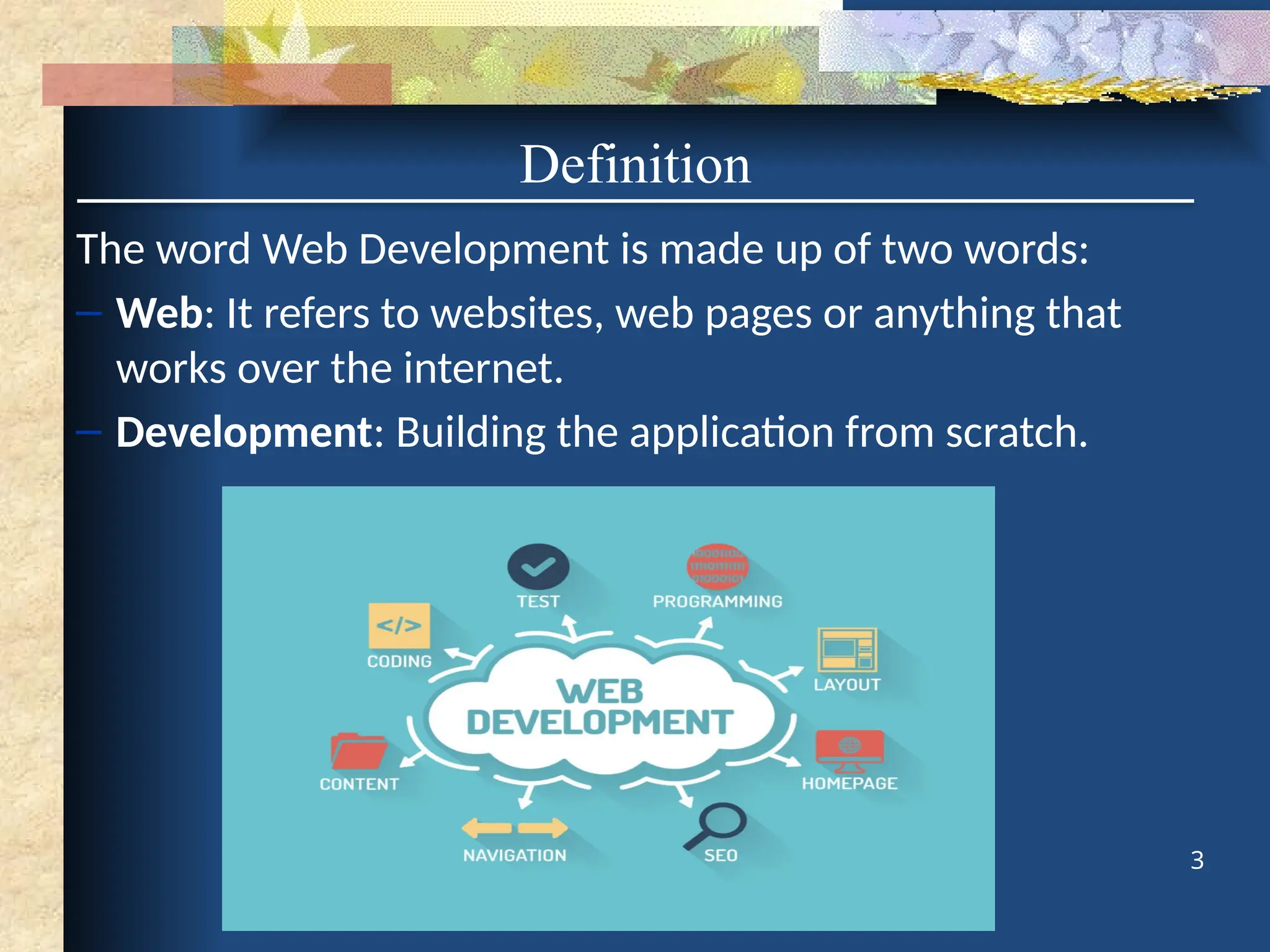
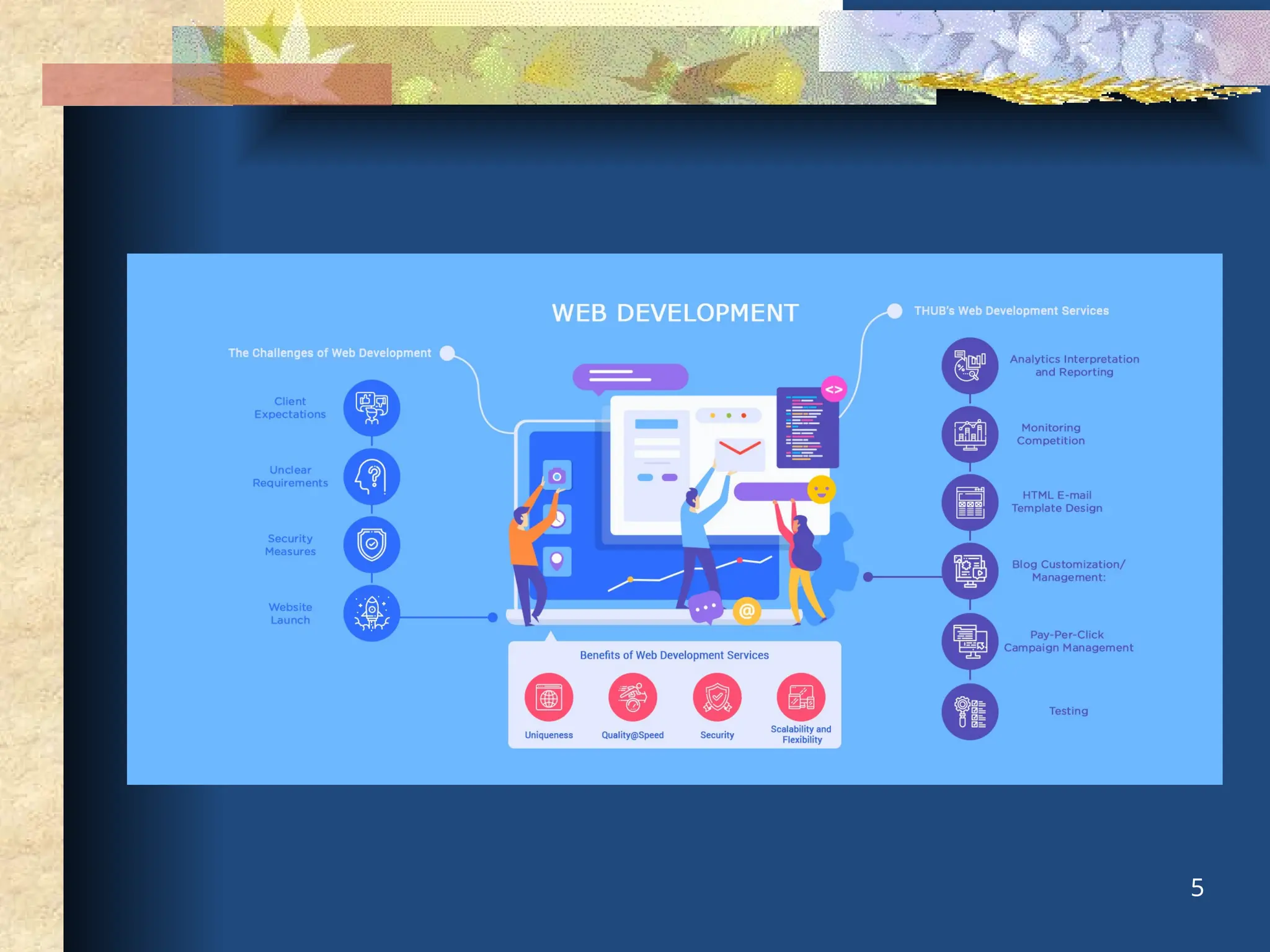
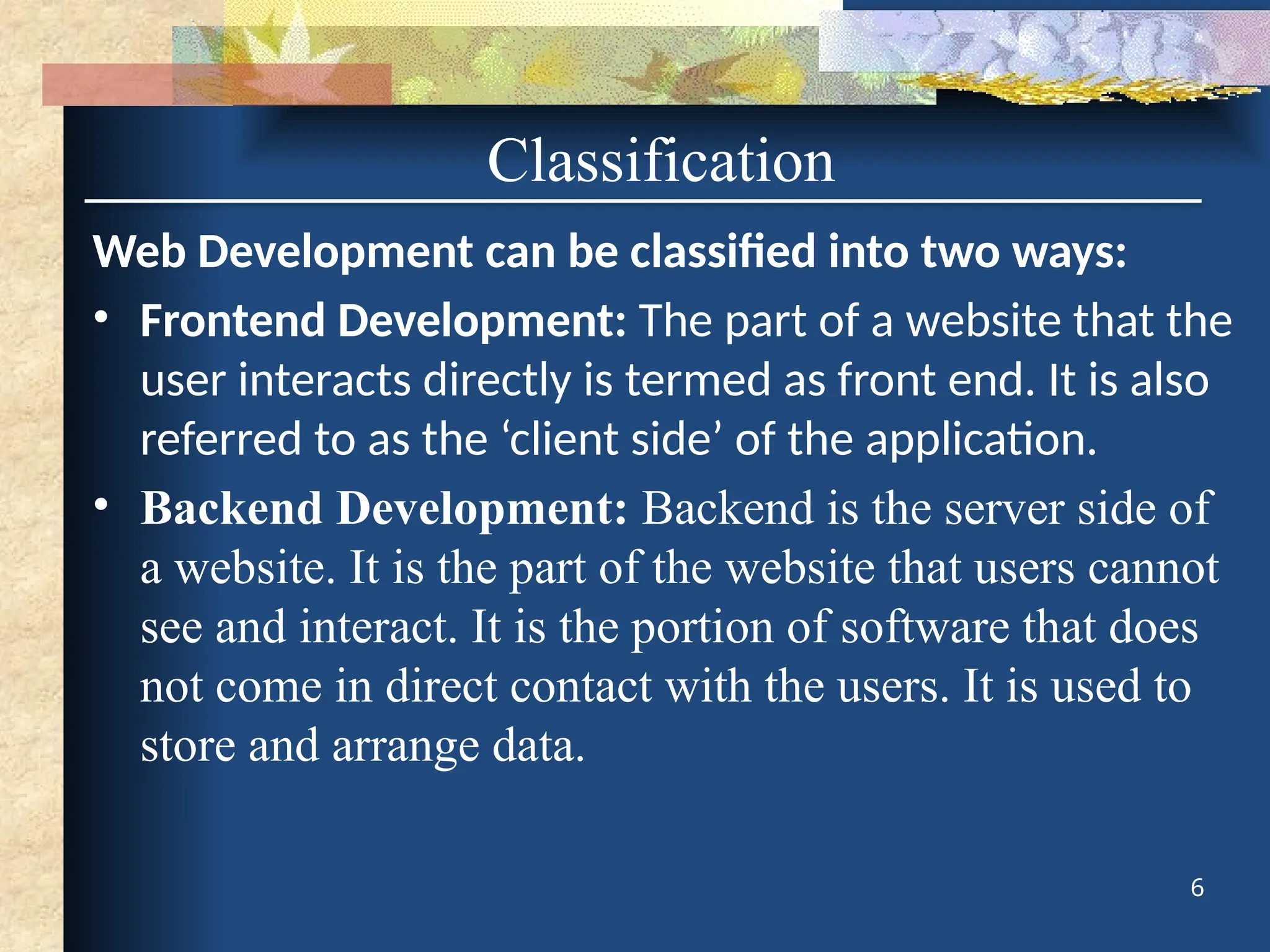
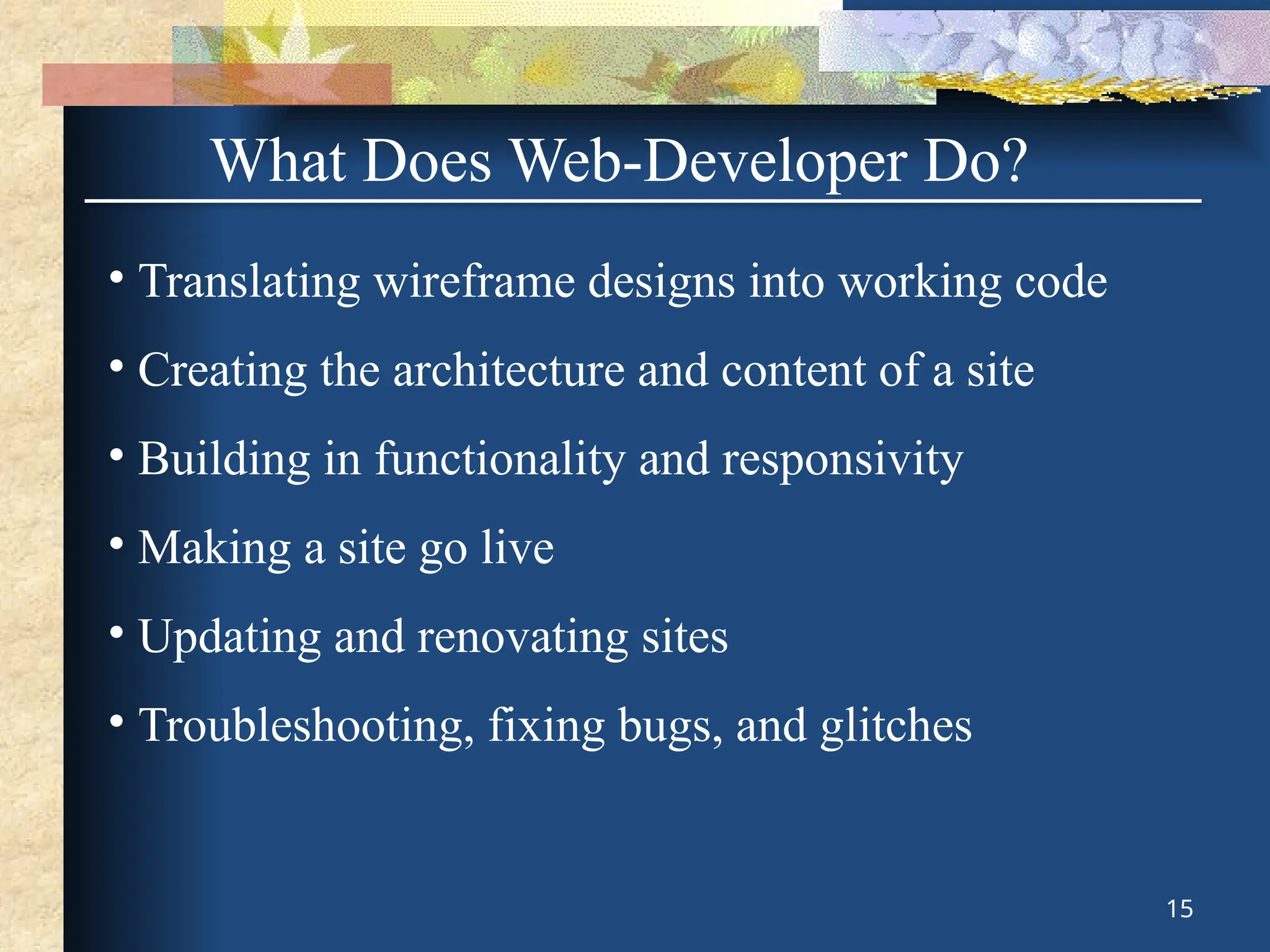
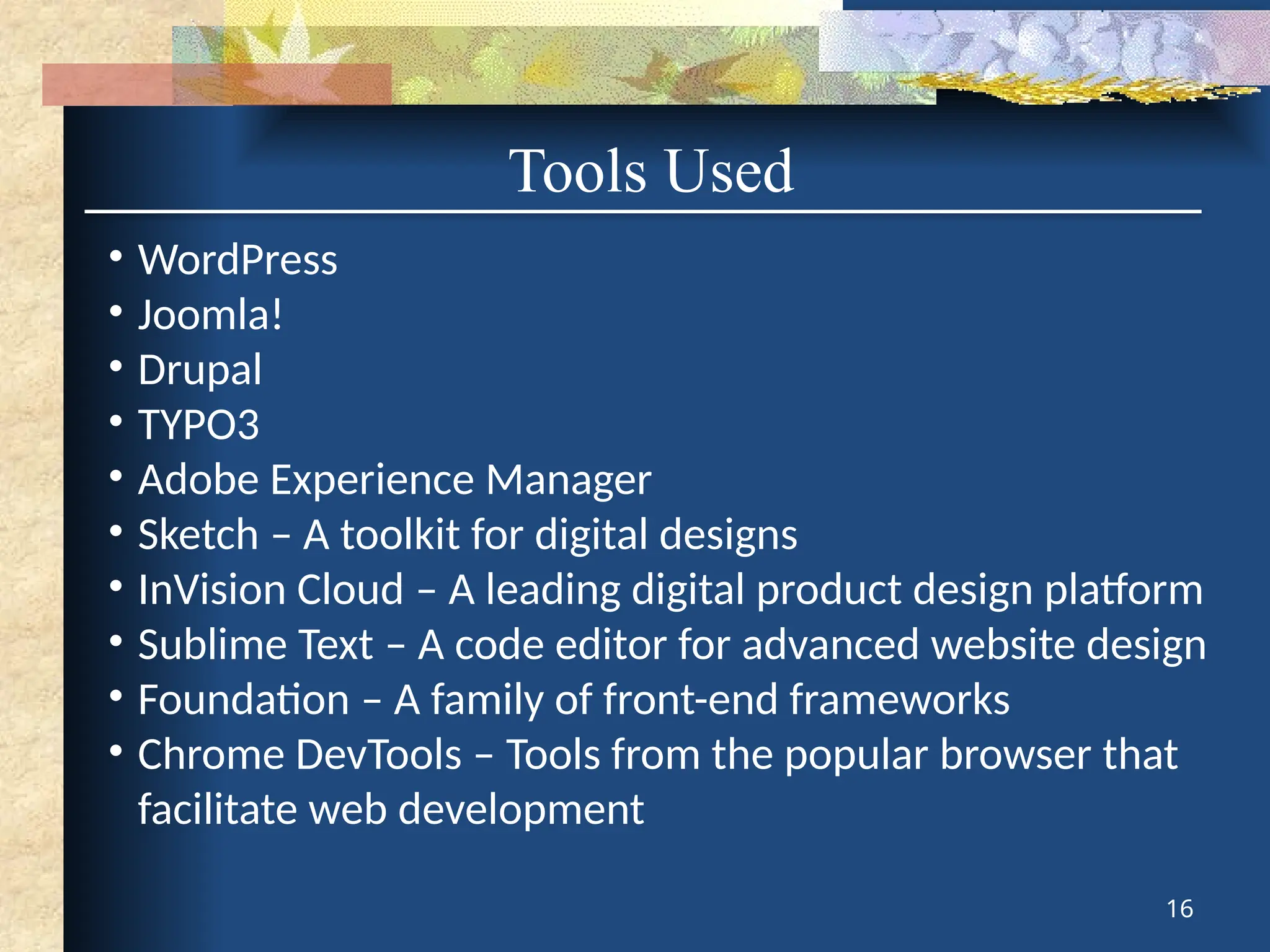
Web development refers to the process of creating and maintaining websites and web applications. It involves several aspects, including web design, front-end and back-end development, server management, and database integration.
Key Areas of Web Development
1. Front-End Development (Client-Side)
Focuses on the visual and interactive aspects of a website.
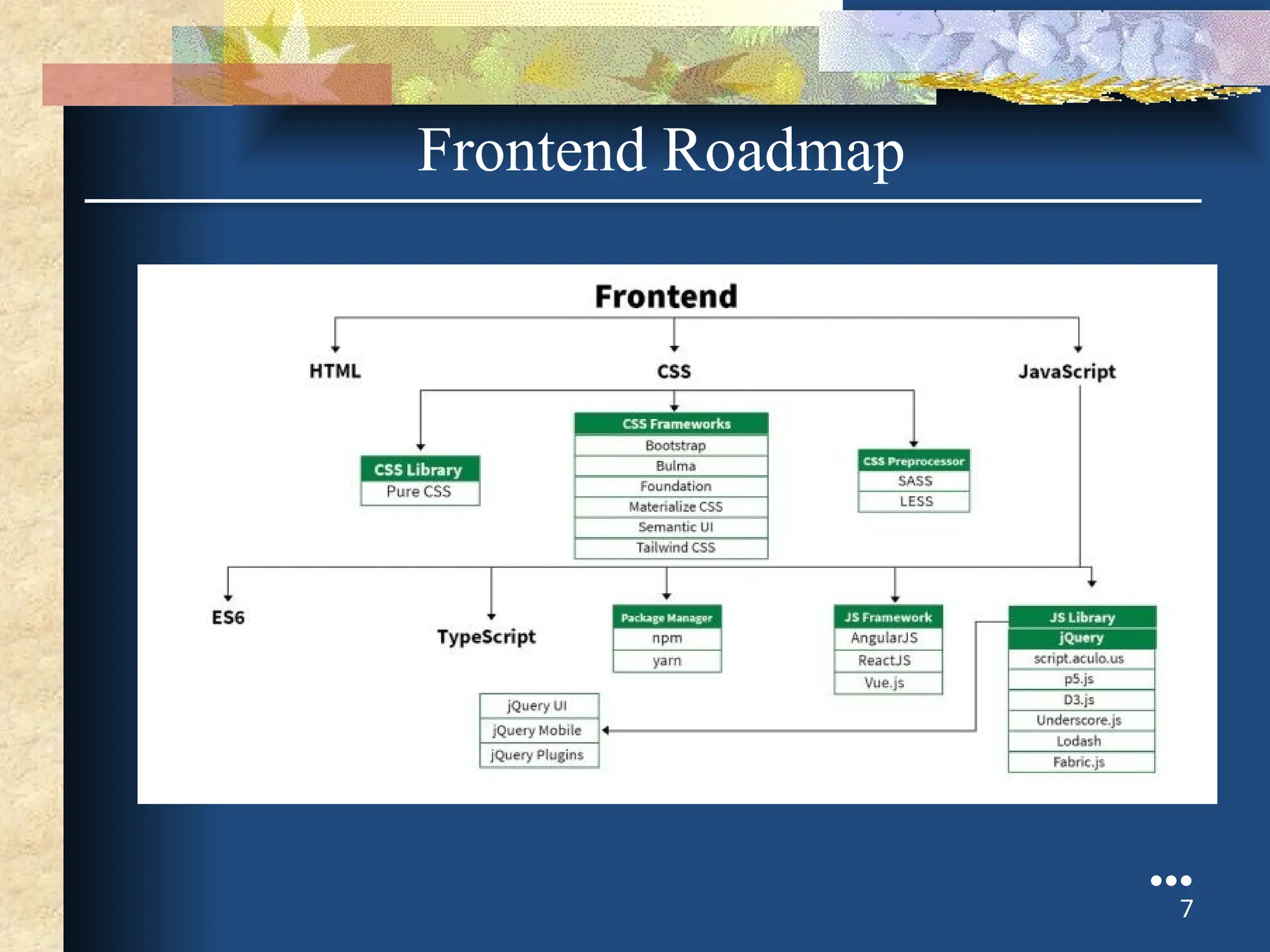
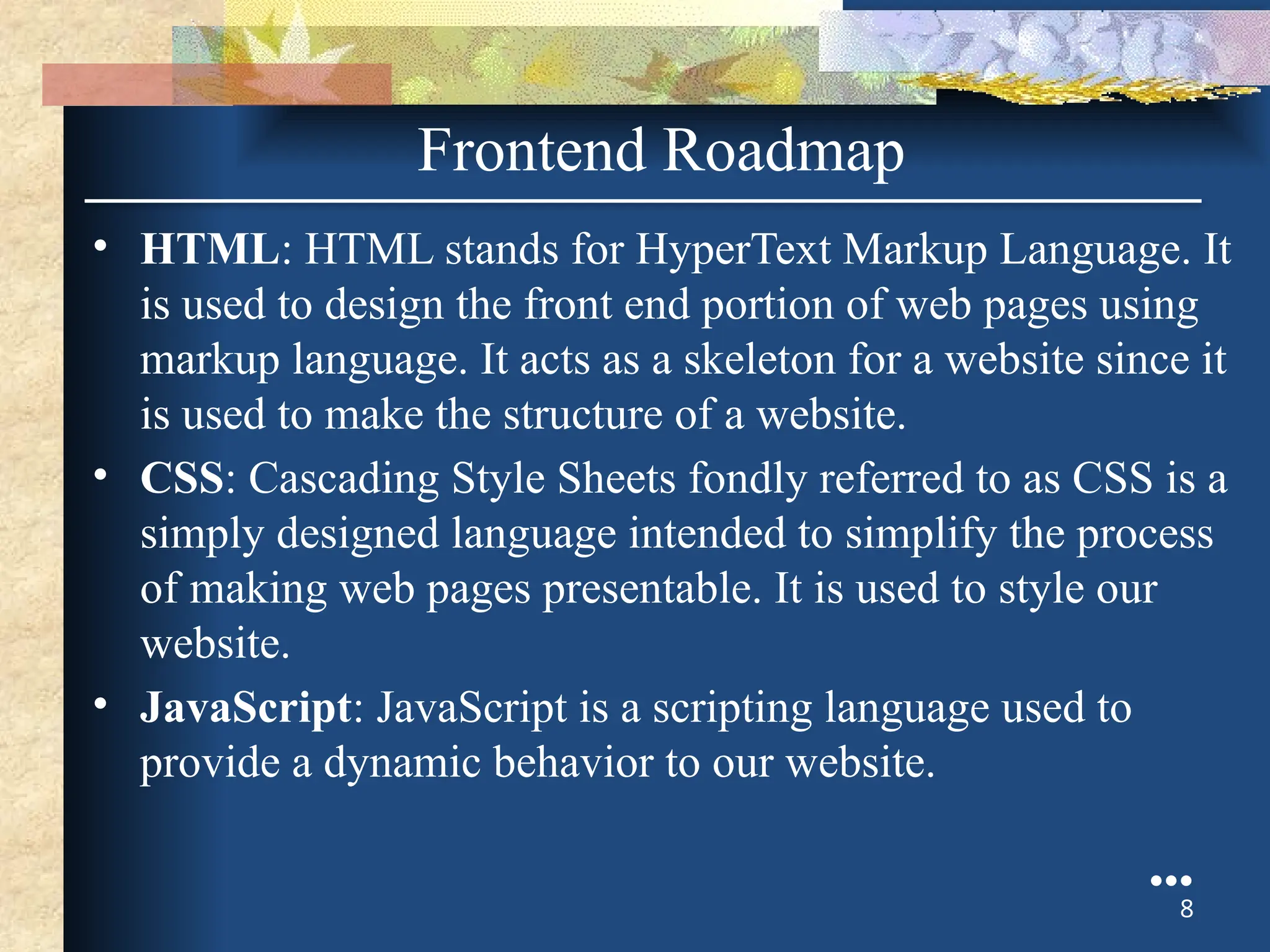
Uses languages like HTML (structure), CSS (styling), and JavaScript (interactivity).
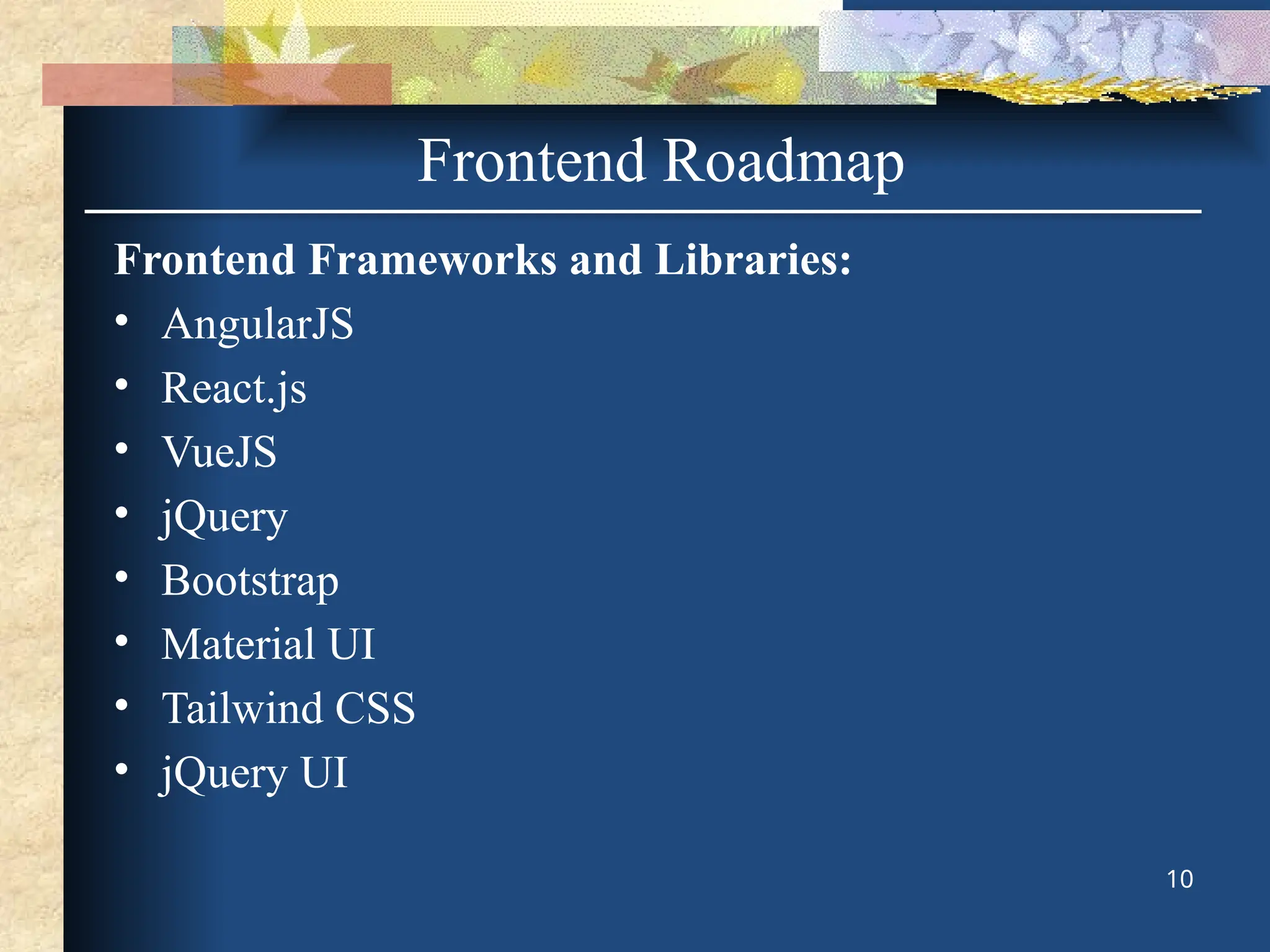
Common frameworks/libraries: React, Angular, Vue.js.
2. Back-End Development (Server-Side)
Handles database operations, authentication, and server logic.
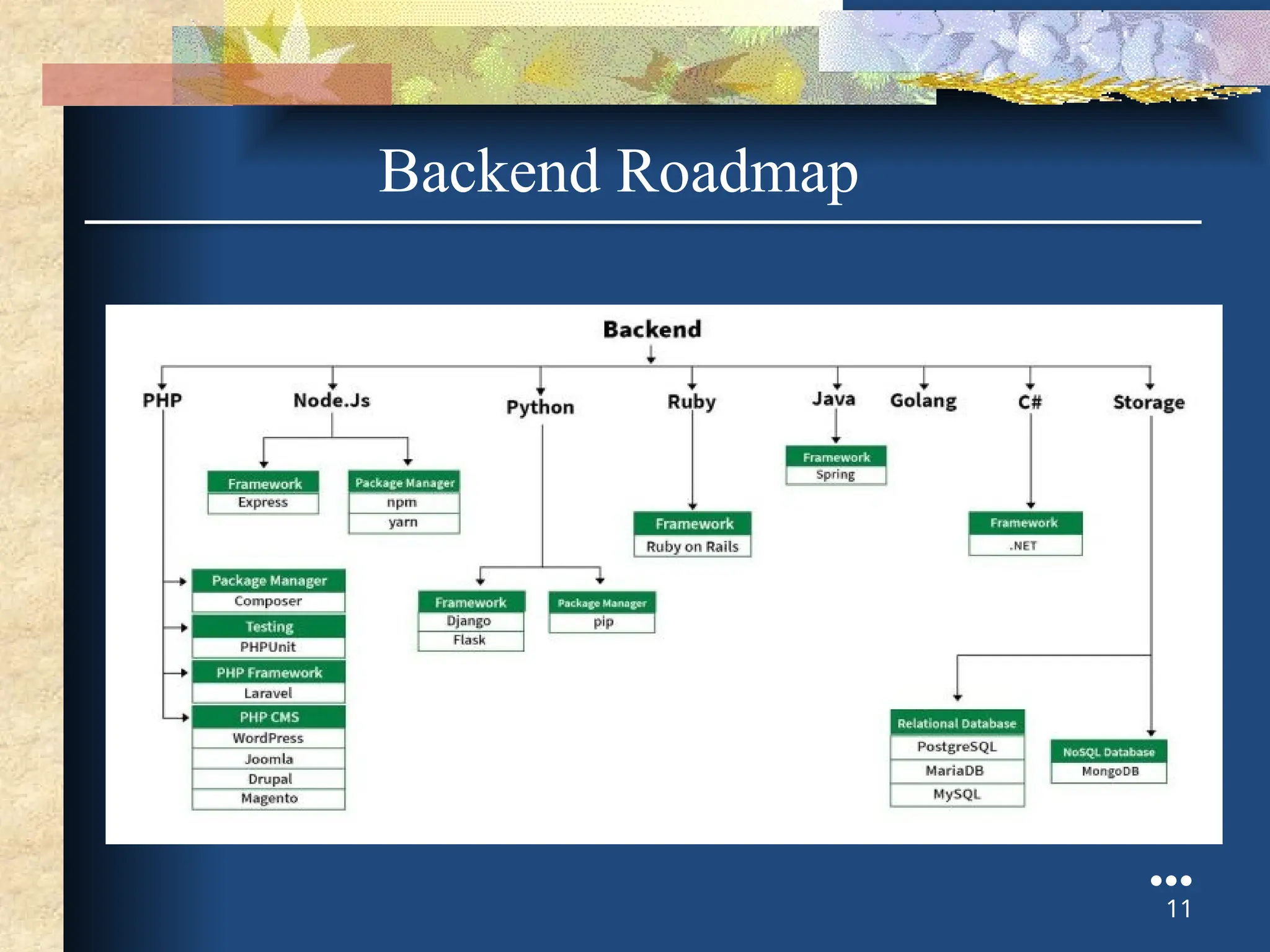
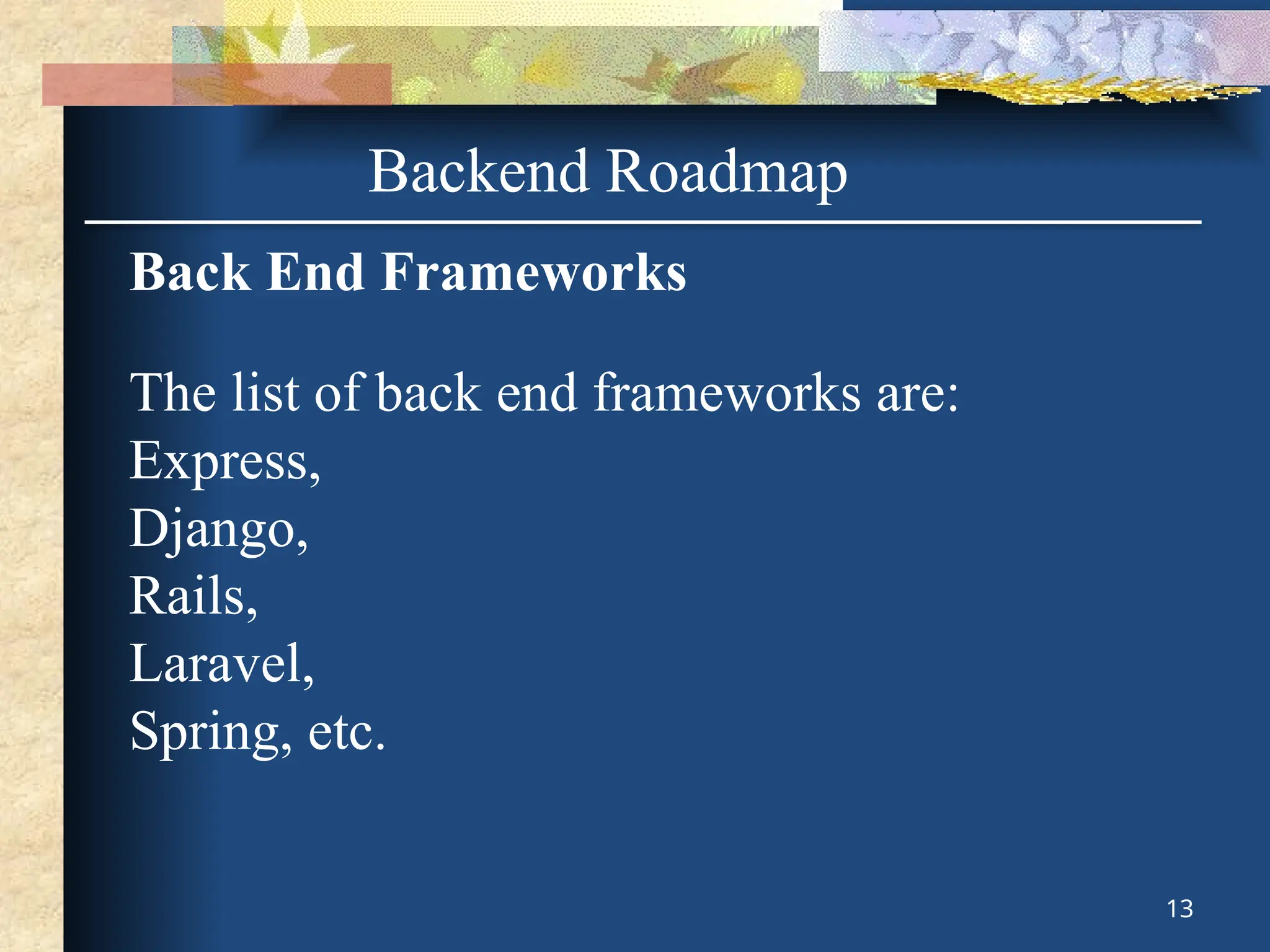
Uses languages like Node.js, Python (Django/Flask), PHP, Ruby on Rails, Java (Spring Boot), or C# (.NET).
Databases: MySQL, PostgreSQL, MongoDB, Firebase.
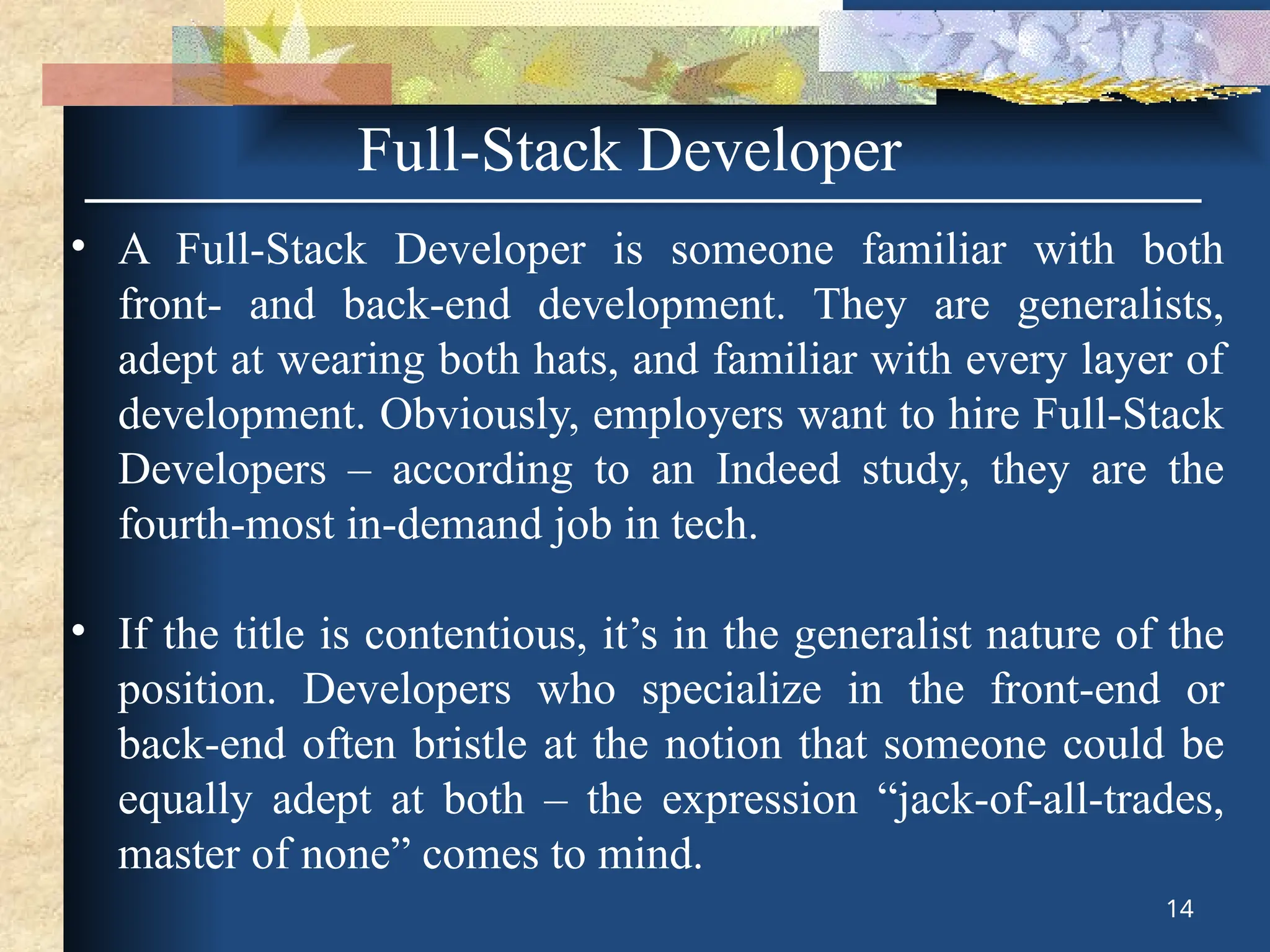
3. Full-Stack Development
Involves both front-end and back-end development.
Full-stack developers work with multiple technologies and frameworks.
4. Web Hosting & Deployment
Websites need to be hosted on servers (e.g., AWS, Google Cloud, Netlify, Vercel, or traditional hosting providers).
Deployment tools like Docker, GitHub Actions, and CI/CD pipelines are used to automate updates.
5. Web Security
Ensuring protection against cyber threats like SQL injection, cross-site scripting (XSS), and DDoS attacks.
Uses security practices like HTTPS, authentication (OAuth, JWT), and firewalls.
Types of Websites & Applications
Static Websites – Simple sites with fixed content (e.g., portfolios, blogs).
Dynamic Websites – Interactive sites with real-time content updates (e.g., social media, e-commerce).
Single Page Applications (SPA) – Load once and update dynamically (e.g., Gmail, Facebook).
Progressive Web Apps (PWA) – Web apps that function like mobile apps (e.g., Twitter Lite).
Career in Web Development
Front-End Developer
Back-End Developer
Full-Stack Developer
Web Designer
DevOps Engineer
UI/UX Designer
Would you like recommendations for free online courses to learn web development?





![Coded Agents – with UiPath SDK + LangGraph [Virtual Hands-on Workshop]](https://cdn.slidesharecdn.com/ss_thumbnails/codedagentsdeck-251215155422-5497c599-thumbnail.jpg?width=640&height=640&fit=bounds)


