Acting on skills locally
Devolved skills budgets and
building skills strategies
Naomi Clayton
June 2015
Cities matter to the UK economy
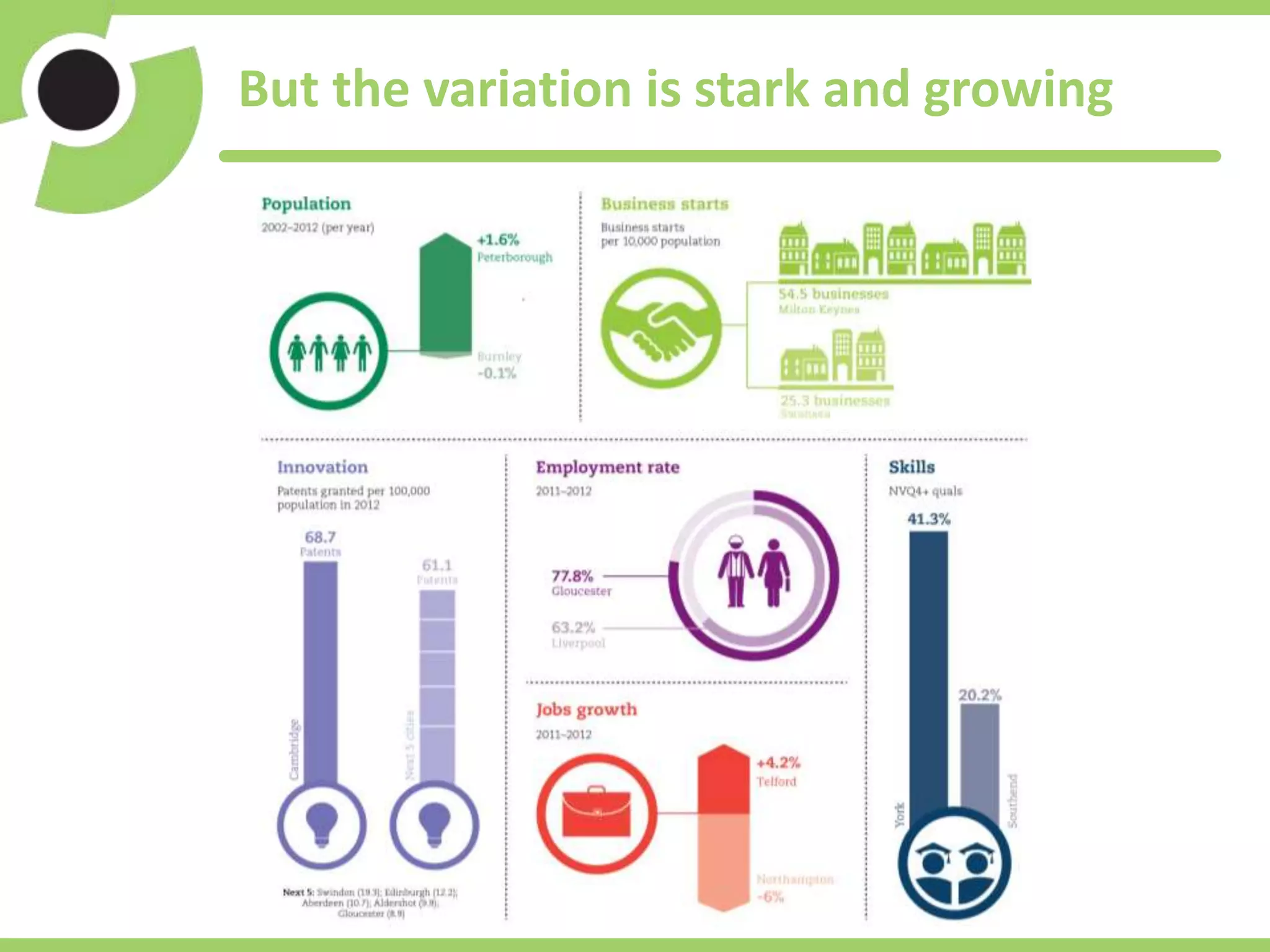
But the variation is stark and growing
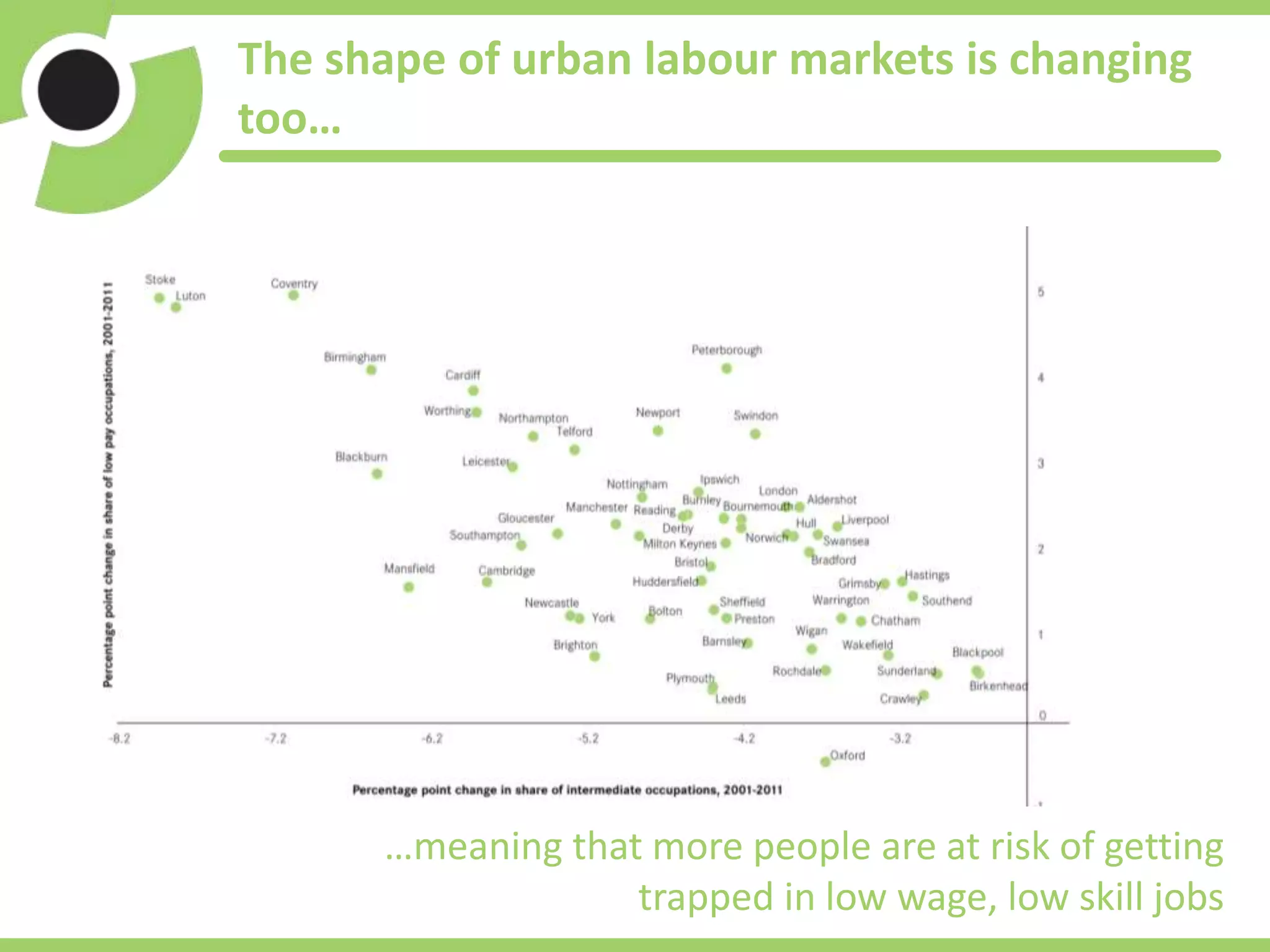
…meaning that more people are at risk of getting
trapped in low wage, low skill jobs
The shape of urban labour markets is changing
too…
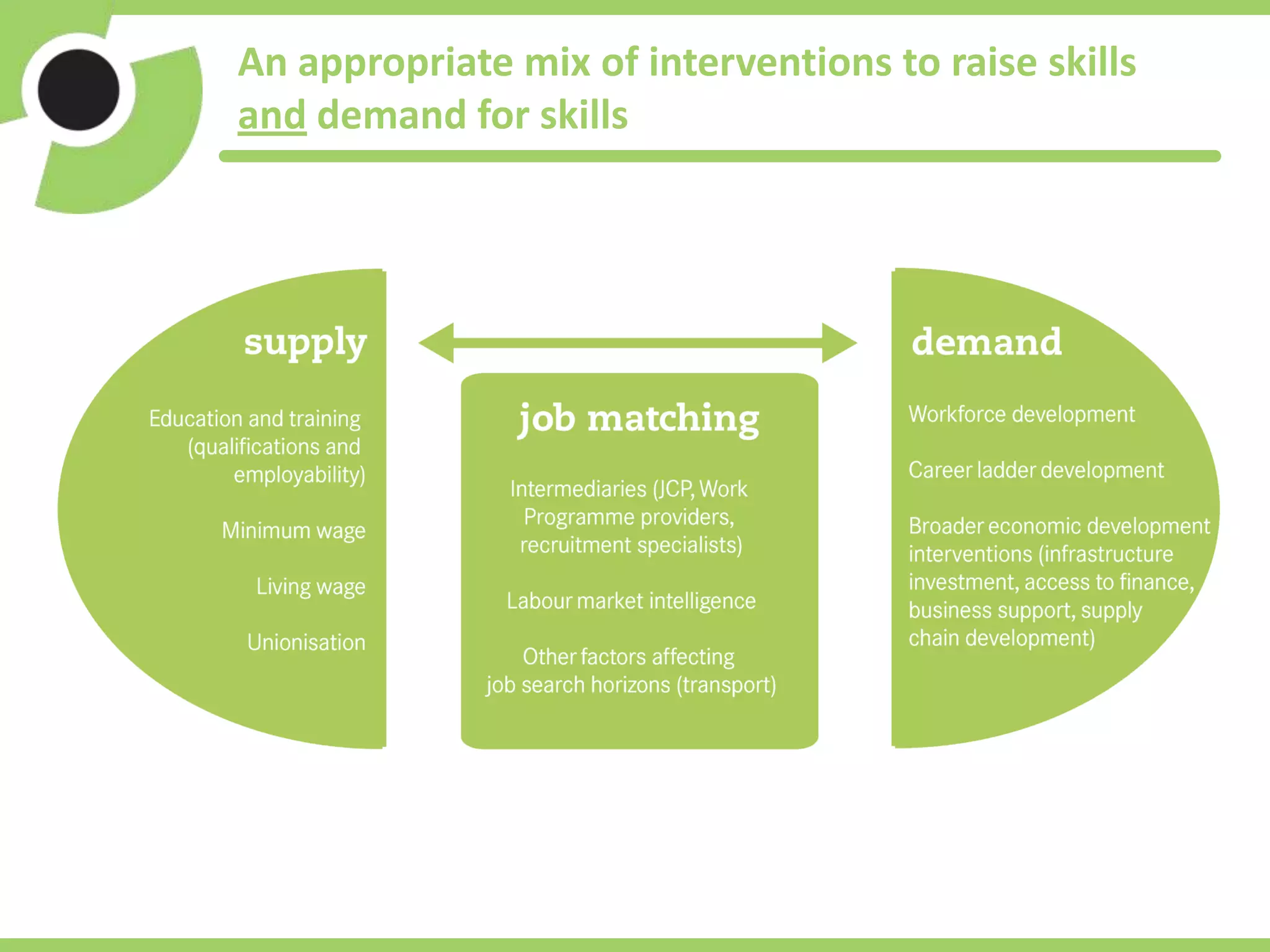
An appropriate mix of interventions to raise skills
and demand for skills
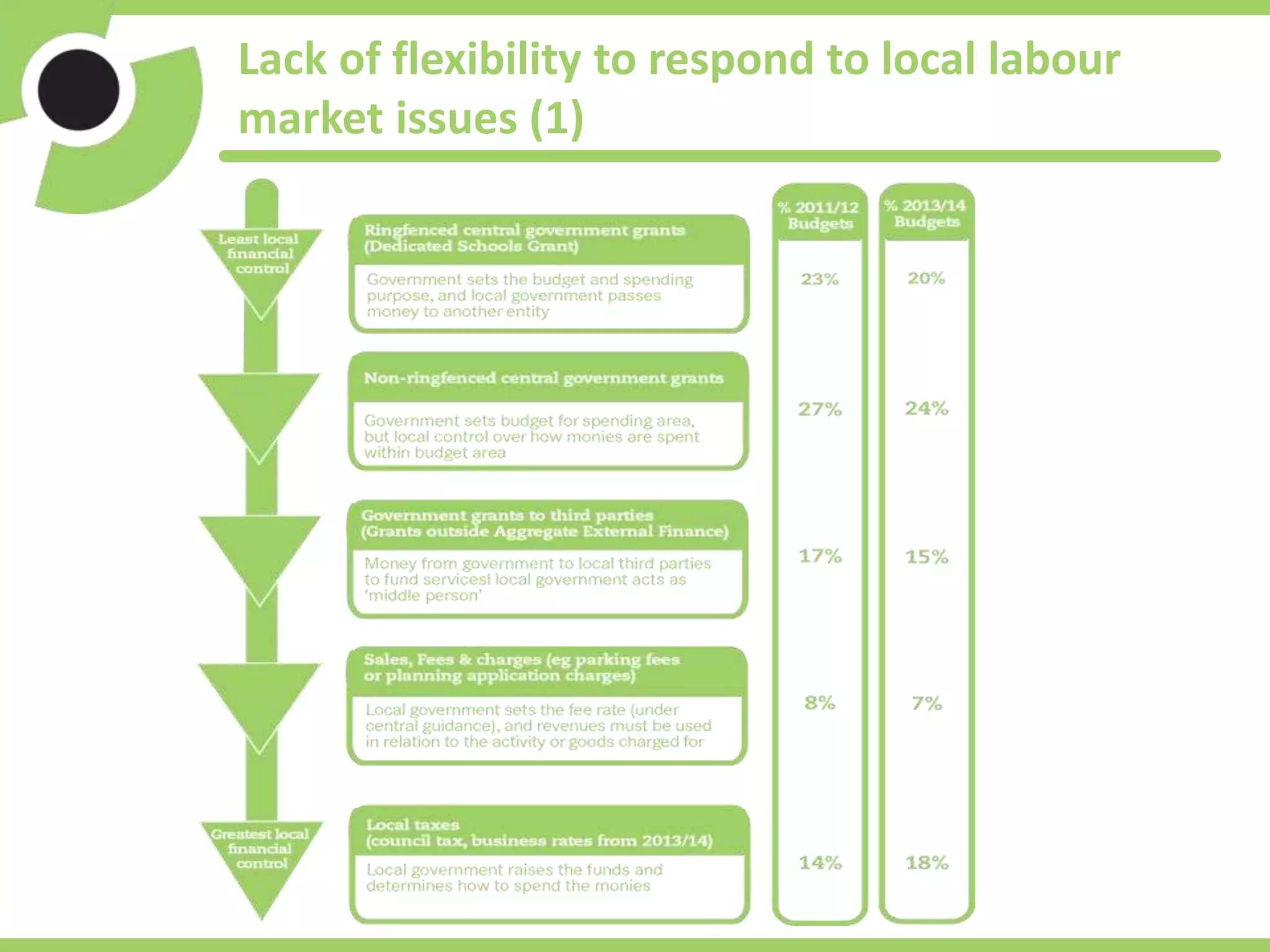
Lack of flexibility to respond to local labour
market issues (1)
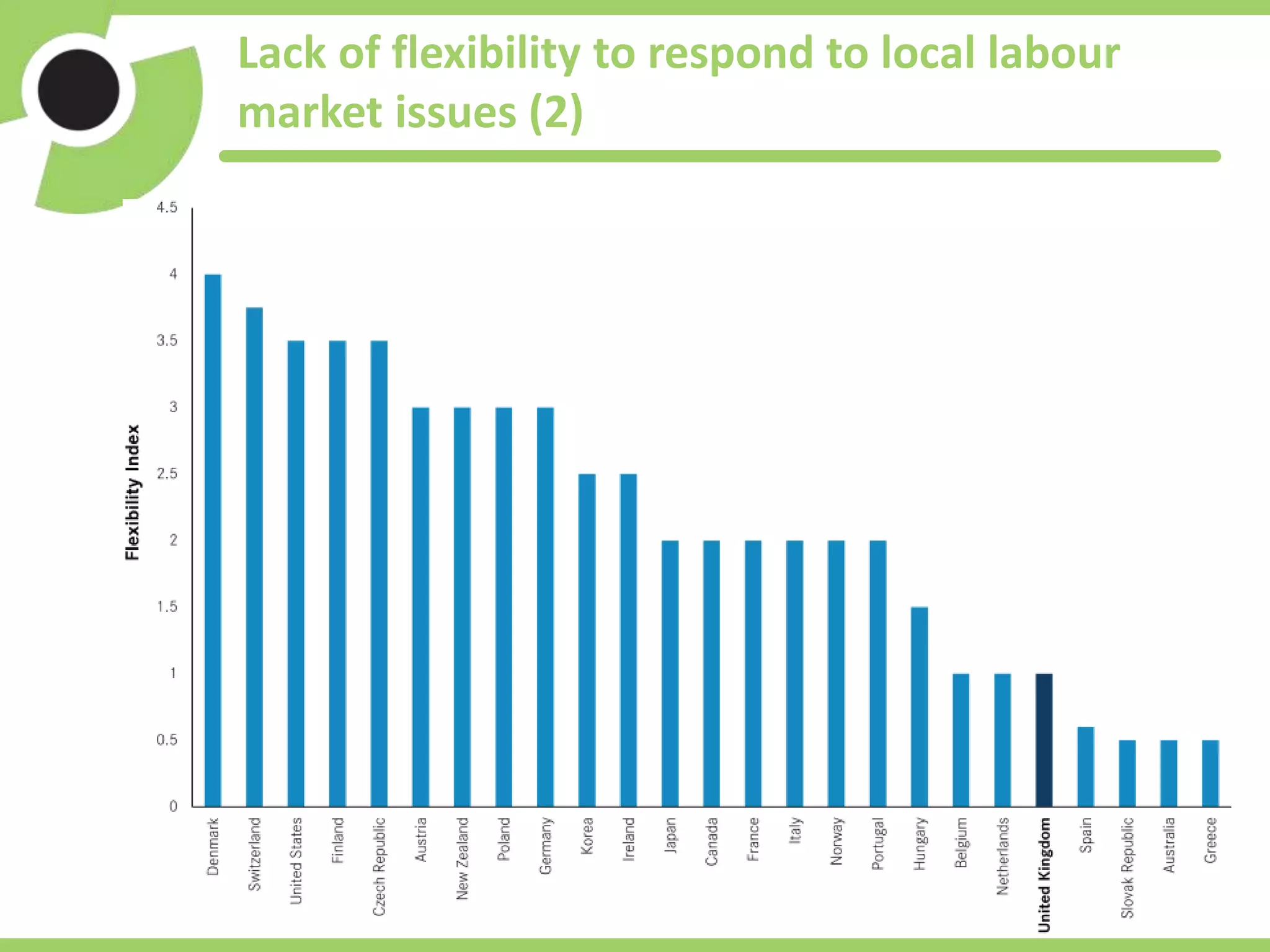
Lack of flexibility to respond to local labour
market issues (2)
Local flexibility in the management of labour market policy: an international
comparison
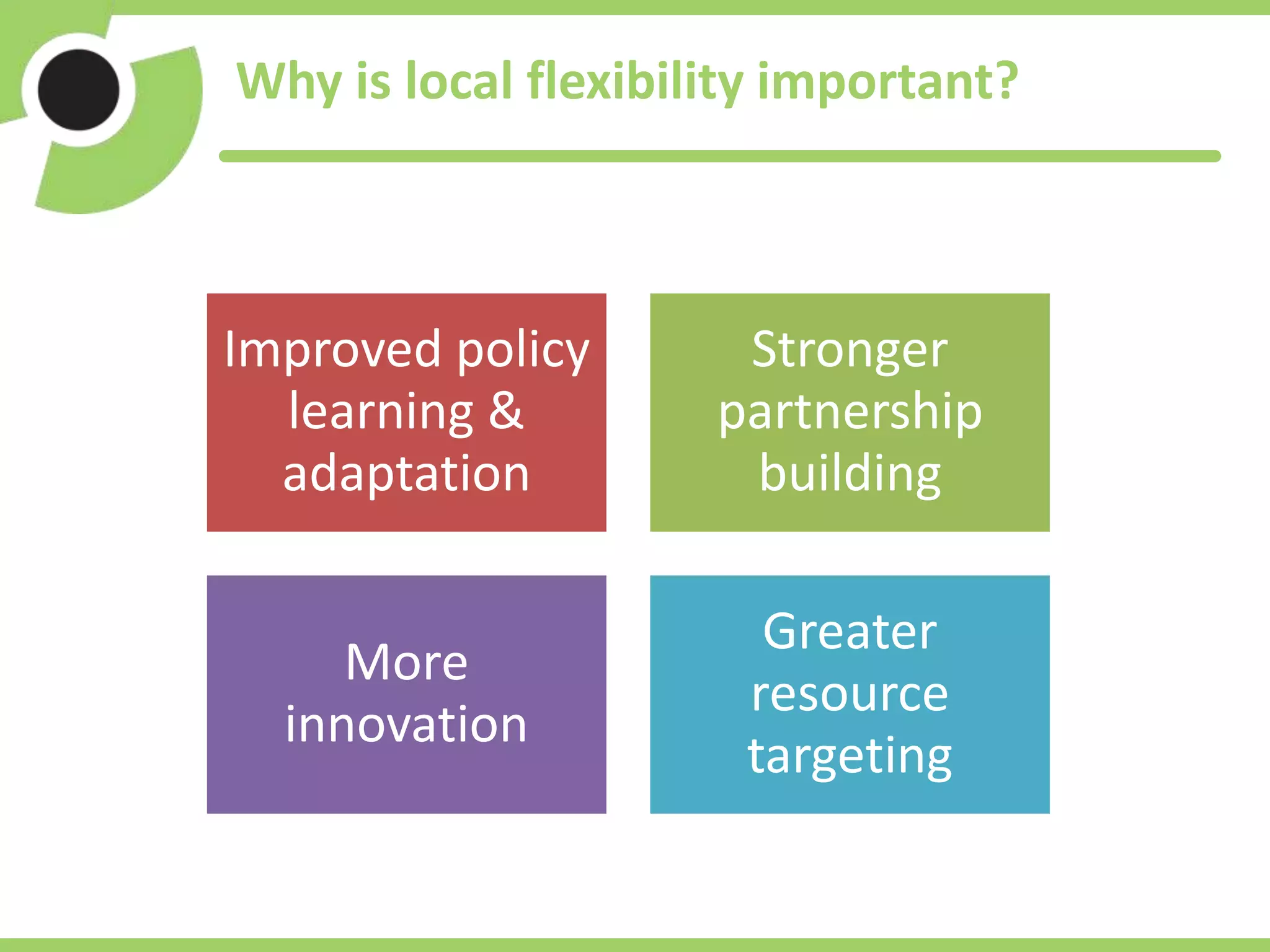
Why is local flexibility important?
Local flexibility in the management of labour market policy: an international
comparison
Improved policy
learning &
adaptation
Stronger
partnership
building
More
innovation
Greater
resource
targeting
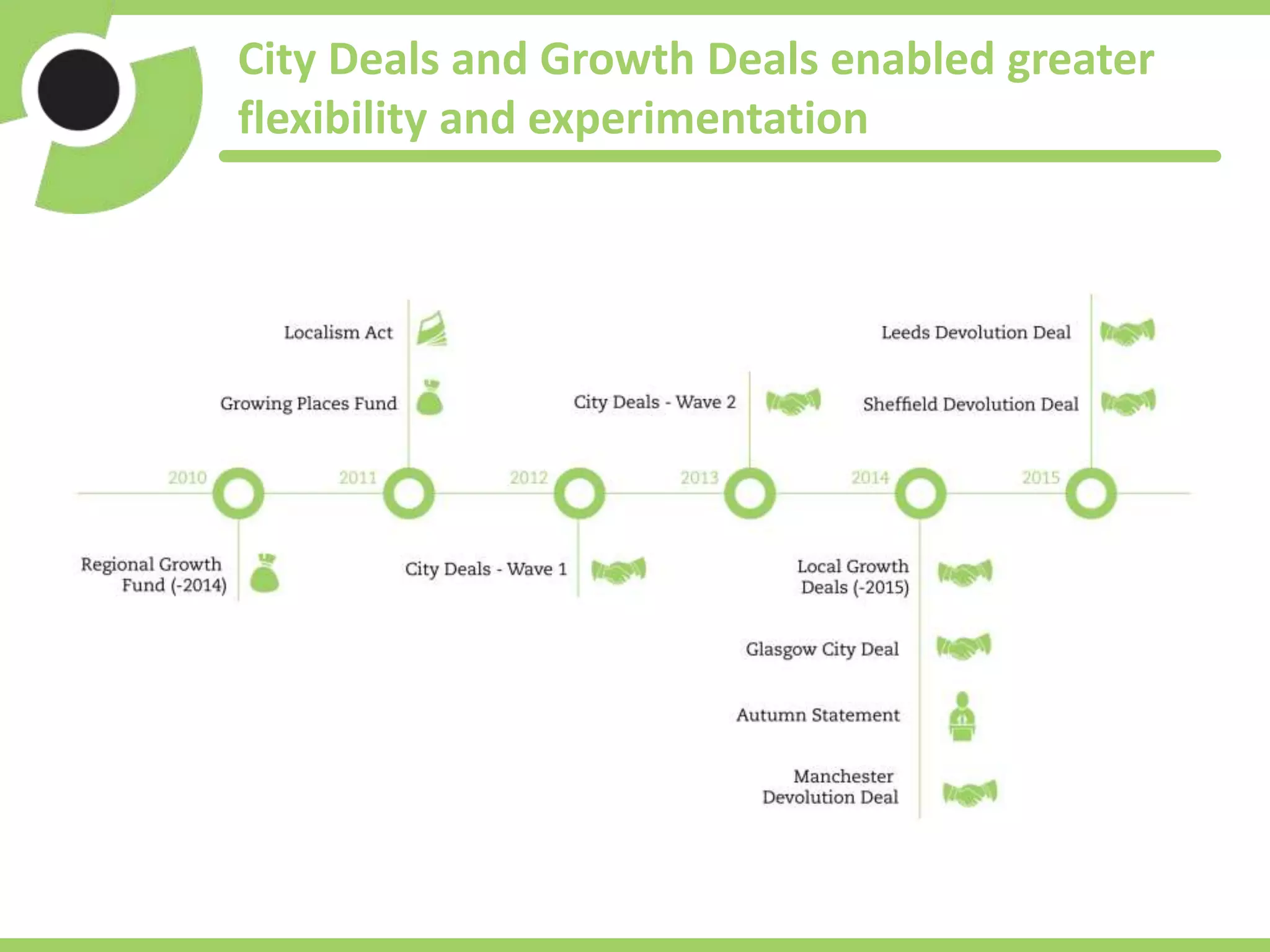
City Deals and Growth Deals enabled greater
flexibility and experimentation
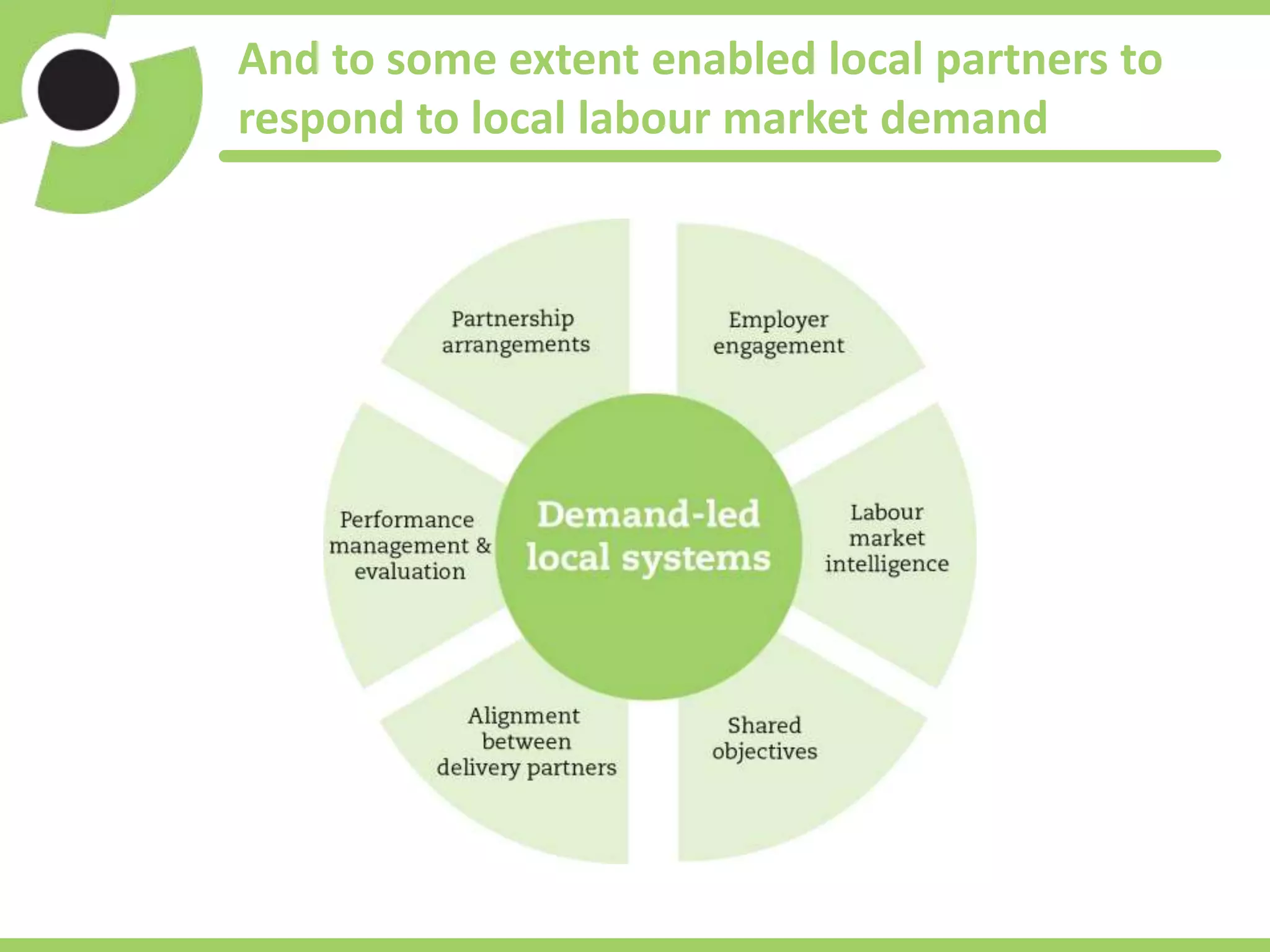
And to some extent enabled local partners to
respond to local labour market demand
From partnerships to labour market
intelligence…
Partnership
arrangements
Employer
engagement
Labour
market
intelligence
As part of Birmingham’s Skills Compact, nine colleges have
agreed to work closely with employers, schools and other
training providers to align careers advice, learning and
preparation for work.
In Sheffield, 15 new apprenticeship frameworks have been
created that respondents feel meet local business needs
more effectively than national apprenticeship
frameworks.
The Education Trust in Stoke uses a ‘red-amber-green’
framework to rank which skills are in highest demand.
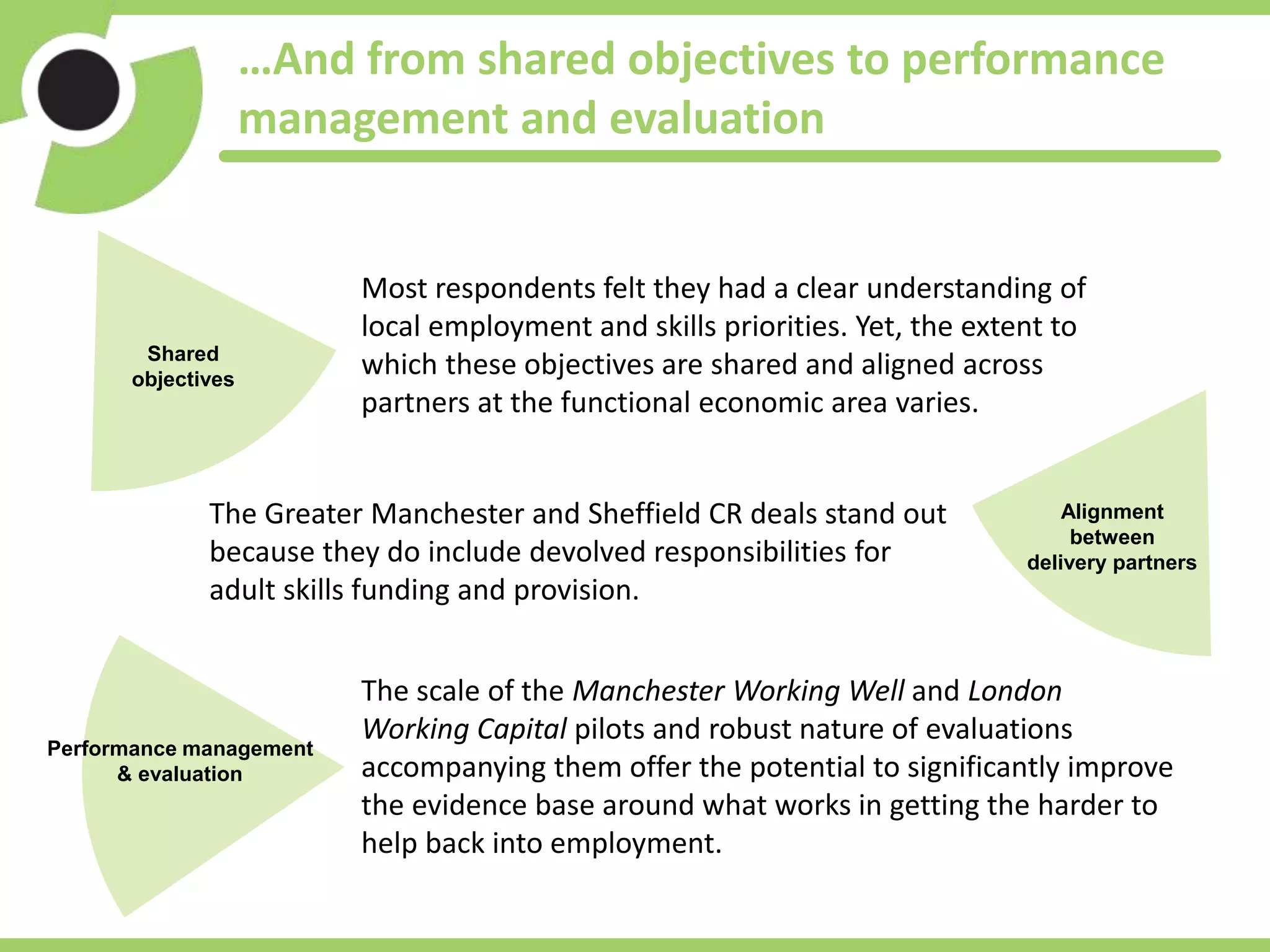
…And from shared objectives to performance
management and evaluation
Performance management
& evaluation
Alignment
between
delivery partners
Shared
objectives
Most respondents felt they had a clear understanding of
local employment and skills priorities. Yet, the extent to
which these objectives are shared and aligned across
partners at the functional economic area varies.
The Greater Manchester and Sheffield CR deals stand out
because they do include devolved responsibilities for
adult skills funding and provision.
The scale of the Manchester Working Well and London
Working Capital pilots and robust nature of evaluations
accompanying them offer the potential to significantly improve
the evidence base around what works in getting the harder to
help back into employment.
Going forward
• Local partners:
• Ensure strong governance models are in place that reflect the scale of the
functional economy and hold partners to account;
• Continue to explore effective ways to engage with local employers and
directly involve them in provision;
• Develop local analytical capacity and capability, making use of labour market
intelligence to its full extent and;
• Implement robust evaluation plans where funding has been secured to
deliver pilot programmes.
• National government:
• Greater coordination of policy and resources at the national level to support
innovation and experimentation
• Ensuring availability of labour market intelligence data on programme
outcomes;
• Setting frameworks for performance management and evaluation and;
• Ensuring that local programmes are not duplicated by equivalent centrally-
led programmes.
Questions?
Naomi Clayton
Centre for Cities
June 2015
@Naomi_Cities

Acting on skills locally Devolved skills budgets and building skills strategies

  • 1.
    Acting on skillslocally Devolved skills budgets and building skills strategies Naomi Clayton June 2015
  • 2.
    Cities matter tothe UK economy
  • 3.
    But the variationis stark and growing
  • 4.
    …meaning that morepeople are at risk of getting trapped in low wage, low skill jobs The shape of urban labour markets is changing too…
  • 5.
    An appropriate mixof interventions to raise skills and demand for skills
  • 6.
    Lack of flexibilityto respond to local labour market issues (1)
  • 7.
    Lack of flexibilityto respond to local labour market issues (2) Local flexibility in the management of labour market policy: an international comparison
  • 8.
    Why is localflexibility important? Local flexibility in the management of labour market policy: an international comparison Improved policy learning & adaptation Stronger partnership building More innovation Greater resource targeting
  • 9.
    City Deals andGrowth Deals enabled greater flexibility and experimentation
  • 10.
    And to someextent enabled local partners to respond to local labour market demand
  • 11.
    From partnerships tolabour market intelligence… Partnership arrangements Employer engagement Labour market intelligence As part of Birmingham’s Skills Compact, nine colleges have agreed to work closely with employers, schools and other training providers to align careers advice, learning and preparation for work. In Sheffield, 15 new apprenticeship frameworks have been created that respondents feel meet local business needs more effectively than national apprenticeship frameworks. The Education Trust in Stoke uses a ‘red-amber-green’ framework to rank which skills are in highest demand.
  • 12.
    …And from sharedobjectives to performance management and evaluation Performance management & evaluation Alignment between delivery partners Shared objectives Most respondents felt they had a clear understanding of local employment and skills priorities. Yet, the extent to which these objectives are shared and aligned across partners at the functional economic area varies. The Greater Manchester and Sheffield CR deals stand out because they do include devolved responsibilities for adult skills funding and provision. The scale of the Manchester Working Well and London Working Capital pilots and robust nature of evaluations accompanying them offer the potential to significantly improve the evidence base around what works in getting the harder to help back into employment.
  • 13.
    Going forward • Localpartners: • Ensure strong governance models are in place that reflect the scale of the functional economy and hold partners to account; • Continue to explore effective ways to engage with local employers and directly involve them in provision; • Develop local analytical capacity and capability, making use of labour market intelligence to its full extent and; • Implement robust evaluation plans where funding has been secured to deliver pilot programmes. • National government: • Greater coordination of policy and resources at the national level to support innovation and experimentation • Ensuring availability of labour market intelligence data on programme outcomes; • Setting frameworks for performance management and evaluation and; • Ensuring that local programmes are not duplicated by equivalent centrally- led programmes.
  • 14.
    Questions? Naomi Clayton Centre forCities June 2015 @Naomi_Cities