




Visual Language 2
Projection made for the edublog
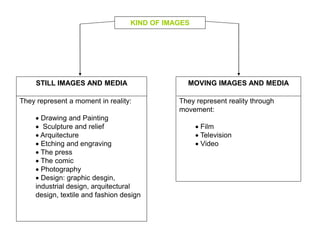
KIND OF IMAGES
STILL IMAGES AND MEDIA
They represent a moment in reality:
 Drawing and Painting
 Sculpture and relief
 Arquitecture
 Etching and engraving
 The press
 The comic
 Photography
 Design: graphic desgin,
industrial design, arquitectural
design, textile and fashion design
MOVING IMAGES AND MEDIA
They represent reality through
movement:
 Film
 Television
 Video
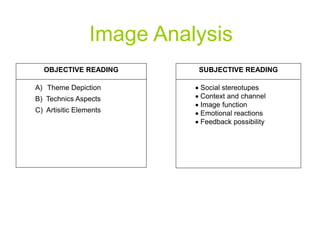
Image Analysis
OBJECTIVE READING
A) Theme Depiction
B) Technics Aspects
C) Artisitic Elements
SUBJECTIVE READING
 Social stereotupes
 Context and channel
 Image function
 Emotional reactions
 Feedback possibility
PAINTING
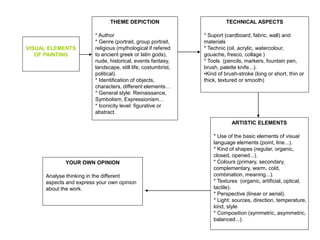
VISUAL ELEMENTS
OF PAINTING
THEME DEPICTION
* Author
* Genre (portrait, group portrait,
religious (mythological if refered
to ancient greek or latin gods),
nude, historical, events fantasy,
landscape, still life, costumbrist,
political).
* Identification of objects,
characters, different elements…
* General style: Reinaissance,
Symbolism, Expressionism…
* Iconicity level: figurative or
abstract.
TECHNICAL ASPECTS
* Suport (cardboard, fabric, wall) and
materials
* Technic (oil, acrylic, watercolour,
gouache, fresco, collage )
* Tools (pencils, markers, fountain pen,
brush, palette knife...).
•Kind of brush-stroke (long or short, thin or
thick, textured or smooth)
ARTISTIC ELEMENTS
* Use of the basic elements of visual
language elements (point, line...).
* Kind of shapes (regular, organic,
closed, opened...).
* Colours (primary, secondary,
complementary, warm, cold,
combination, meaning...).
* Textures (organic, artificial, optical,
tactile).
* Perspective (linear or aerial).
* Light: sources, direction, temperature,
kind, style
* Composition (symmetric, asymmetric,
balanced...).
YOUR OWN OPINION
Analyse thinking in the different
aspects and express your own opinion
about the work.
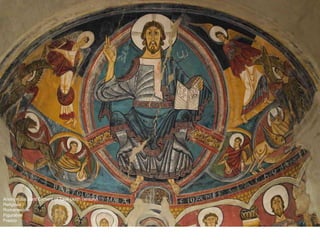
Religious
Anonymous.Sant Climent of Taüll (XIIth century)
Religious
Romanesque
Figurative
Fresco
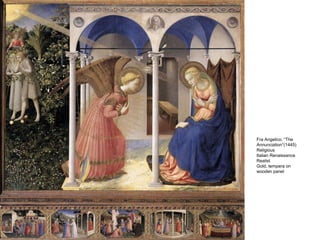
Fra Angelico. “The
Annunciation”(1445)
Religious
Italian Renaissance
Realist
Gold, tempera on
wooden panel
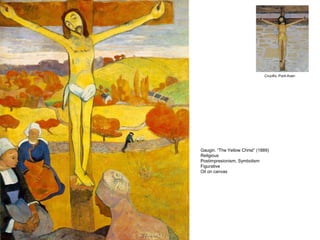
Gaugin. “The Yellow Christ” (1889)
Religious
Postimpresionism, Symbolism
Figurative
Oil on canvas
Crucifix, Pont-Aven
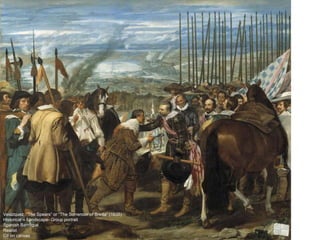
Historical
Velázquez. “The Spears” or “The Surrender of Breda” (1635)
Historical – Landscape- Group portrait
Spanish Barroque
Realist
Oil on canvas
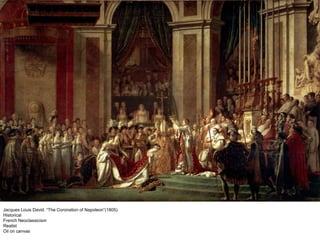
Jacques Louis David. “The Coronation of Napoleon”(1805)
Historical
French Neoclassicism
Realist
Oil on canvas
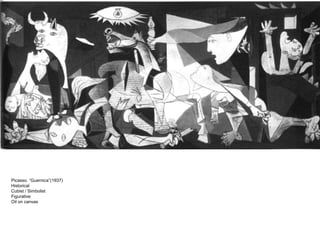
Picasso. “Guernica”(1937)
Historical
Cubist / Simbolist
Figurative
Oil on canvas
Costumbrist
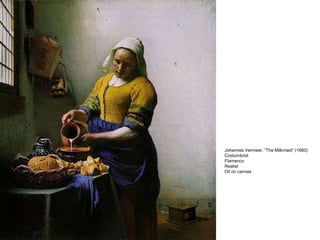
Johannes Vermeer. “The Milkmaid” (1660)
Costumbrist
Flamenco
Realist
Oil on canvas
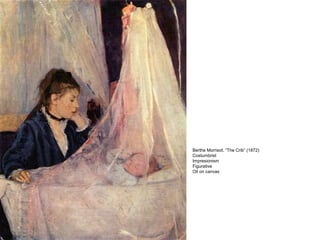
Berthe Morrisot. “The Crib” (1872)
Costumbrist
Impresionism
Figurative
Oil on canvas
Landscape
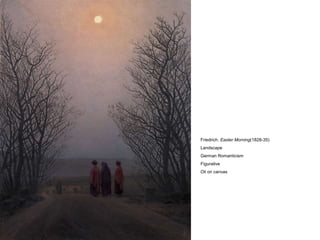
Friedrich. Easter Morning(1828-35)
Landscape
German Romanticism
Figurative
Oil on canvas
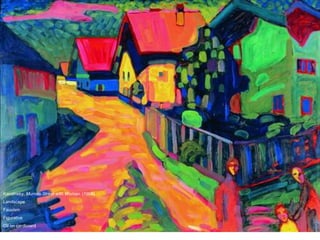
Kandinsky. Murnau Street with Woman. (1908)
Landscape
Fauvism
Figurative
Oil on cardboard
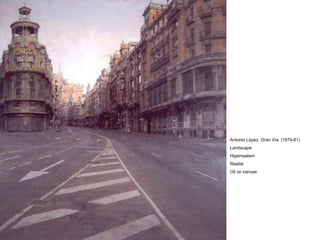
Antonio López. Gran Vía. (1974-81)
Landscape
Hiperrealism
Realist
Oil on canvas
Still Life
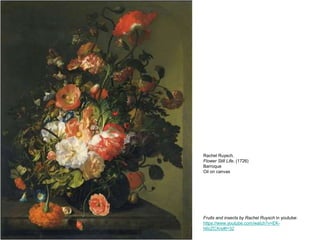
Rachel Ruysch.
Flower Still Life, (1726)
Barroque
Oil on canvas
Fruits and insects by Rachel Ruysch in youtube:
https://www.youtube.com/watch?v=EK-
h6cZCXrs#t=32
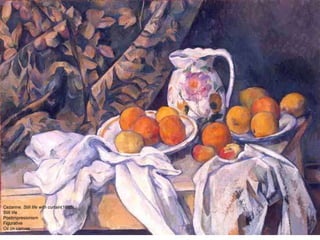
Cezanne. Still life with curtain(1895)
Still life
Postimpresionism
Figurative
Oil on canvas
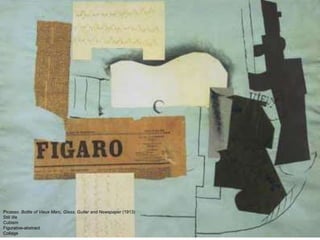
Picasso. Bottle of Vieux Marc, Glass, Guitar and Newspaper (1913)
Still life
Cubism
Figurative-abstract
Collage
Portrait
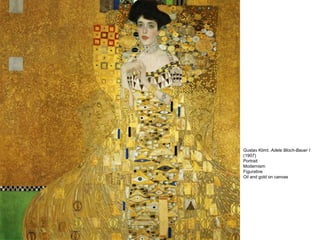
Gustav Klimt. Adele Bloch-Bauer I
(1907)
Portrait
Modernism
Figurative
Oil and gold on canvas
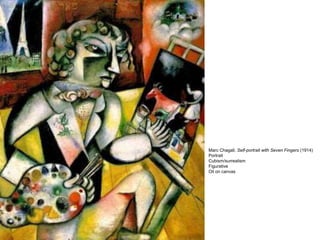
Marc Chagall. Self-portrait with Seven Fingers (1914)
Portrait
Cubism/surrealism
Figurative
Oil on canvas
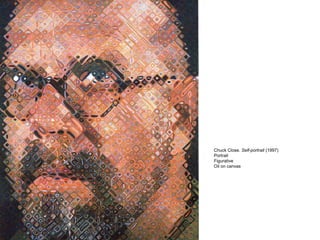
Chuck Close. Self-portrait (1997)
Portrait
Figurative
Oil on canvas
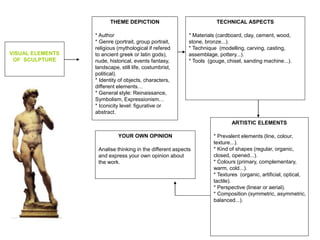
SCULPTURE
VISUAL ELEMENTS
OF SCULPTURE
THEME DEPICTION
* Author
* Genre (portrait, group portrait,
religious (mythological if refered
to ancient greek or latin gods),
nude, historical, events fantasy,
landscape, still life, costumbrist,
political).
* Identity of objects, characters,
different elements…
* General style: Reinaissance,
Symbolism, Expressionism…
* Iconicity level: figurative or
abstract.
TECHNICAL ASPECTS
* Materials (cardboard, clay, cement, wood,
stone, bronze...).
* Technique (modelling, carving, casting,
assemblage, pottery...).
* Tools (gouge, chisel, sanding machine...).
ARTISTIC ELEMENTS
* Prevalent elements (line, colour,
texture...).
* Kind of shapes (regular, organic,
closed, opened...).
* Colours (primary, complementary,
warm, cold...).
* Textures (organic, artificial, optical,
tactile).
* Perspective (linear or aerial).
* Composition (symmetric, asymmetric,
balanced...).
YOUR OWN OPINION
Analise thinking in the different aspects
and express your own opinion about
the work.
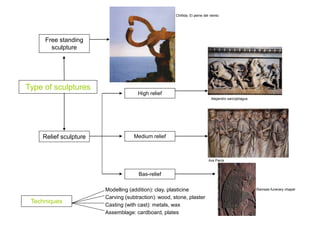
Type of sculptures
Alejandro sarcophagus
Chillida. El peine del viento
Ara Pacis
Ramses funerary chapel
Free standing
sculpture
Relief sculpture
High relief
Medium relief
Bas-relief
Modelling (addition): clay, plasticine
Techniques
Carving (subtraction): wood, stone, plaster
Casting (with cast): metals, wax
Assemblage: cardboard, plates
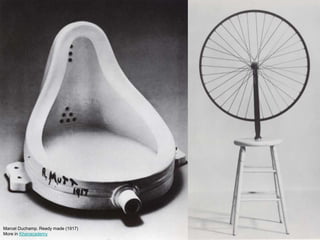
Marcel Duchamp. Ready made (1917)
More in Khanacademy
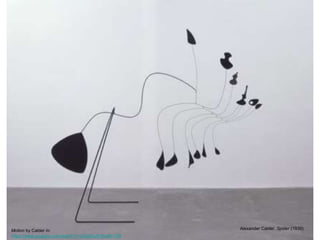
Alexander Calder. Spider (1939)Motion by Calder in:
https://www.youtube.com/watch?v=j3OqfduWdhc#t=138
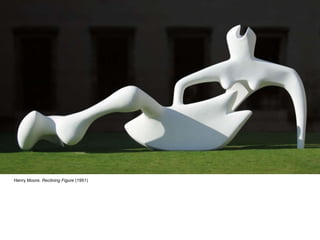
Henry Moore. Reclining Figure (1951)
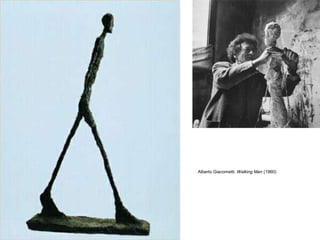
Alberto Giacometti. Walking Man (1960)
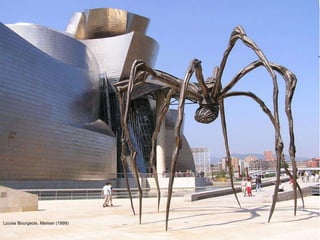
Louise Bourgeois. Maman (1999)
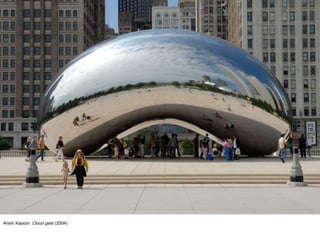
Anish Kapoor. Cloud gate (2004)

Visual language2

  • 1.
    Visual Language 2 Projectionmade for the edublog
  • 2.
    KIND OF IMAGES STILLIMAGES AND MEDIA They represent a moment in reality:  Drawing and Painting  Sculpture and relief  Arquitecture  Etching and engraving  The press  The comic  Photography  Design: graphic desgin, industrial design, arquitectural design, textile and fashion design MOVING IMAGES AND MEDIA They represent reality through movement:  Film  Television  Video
  • 3.
    Image Analysis OBJECTIVE READING A)Theme Depiction B) Technics Aspects C) Artisitic Elements SUBJECTIVE READING  Social stereotupes  Context and channel  Image function  Emotional reactions  Feedback possibility
  • 4.
  • 5.
    VISUAL ELEMENTS OF PAINTING THEMEDEPICTION * Author * Genre (portrait, group portrait, religious (mythological if refered to ancient greek or latin gods), nude, historical, events fantasy, landscape, still life, costumbrist, political). * Identification of objects, characters, different elements… * General style: Reinaissance, Symbolism, Expressionism… * Iconicity level: figurative or abstract. TECHNICAL ASPECTS * Suport (cardboard, fabric, wall) and materials * Technic (oil, acrylic, watercolour, gouache, fresco, collage ) * Tools (pencils, markers, fountain pen, brush, palette knife...). •Kind of brush-stroke (long or short, thin or thick, textured or smooth) ARTISTIC ELEMENTS * Use of the basic elements of visual language elements (point, line...). * Kind of shapes (regular, organic, closed, opened...). * Colours (primary, secondary, complementary, warm, cold, combination, meaning...). * Textures (organic, artificial, optical, tactile). * Perspective (linear or aerial). * Light: sources, direction, temperature, kind, style * Composition (symmetric, asymmetric, balanced...). YOUR OWN OPINION Analyse thinking in the different aspects and express your own opinion about the work.
  • 6.
  • 7.
    Anonymous.Sant Climent ofTaüll (XIIth century) Religious Romanesque Figurative Fresco
  • 8.
    Fra Angelico. “The Annunciation”(1445) Religious ItalianRenaissance Realist Gold, tempera on wooden panel
  • 9.
    Gaugin. “The YellowChrist” (1889) Religious Postimpresionism, Symbolism Figurative Oil on canvas Crucifix, Pont-Aven
  • 10.
  • 11.
    Velázquez. “The Spears”or “The Surrender of Breda” (1635) Historical – Landscape- Group portrait Spanish Barroque Realist Oil on canvas
  • 12.
    Jacques Louis David.“The Coronation of Napoleon”(1805) Historical French Neoclassicism Realist Oil on canvas
  • 13.
    Picasso. “Guernica”(1937) Historical Cubist /Simbolist Figurative Oil on canvas
  • 14.
  • 15.
    Johannes Vermeer. “TheMilkmaid” (1660) Costumbrist Flamenco Realist Oil on canvas
  • 16.
    Berthe Morrisot. “TheCrib” (1872) Costumbrist Impresionism Figurative Oil on canvas
  • 17.
  • 18.
    Friedrich. Easter Morning(1828-35) Landscape GermanRomanticism Figurative Oil on canvas
  • 19.
    Kandinsky. Murnau Streetwith Woman. (1908) Landscape Fauvism Figurative Oil on cardboard
  • 20.
    Antonio López. GranVía. (1974-81) Landscape Hiperrealism Realist Oil on canvas
  • 21.
  • 22.
    Rachel Ruysch. Flower StillLife, (1726) Barroque Oil on canvas Fruits and insects by Rachel Ruysch in youtube: https://www.youtube.com/watch?v=EK- h6cZCXrs#t=32
  • 23.
    Cezanne. Still lifewith curtain(1895) Still life Postimpresionism Figurative Oil on canvas
  • 24.
    Picasso. Bottle ofVieux Marc, Glass, Guitar and Newspaper (1913) Still life Cubism Figurative-abstract Collage
  • 25.
  • 26.
    Gustav Klimt. AdeleBloch-Bauer I (1907) Portrait Modernism Figurative Oil and gold on canvas
  • 27.
    Marc Chagall. Self-portraitwith Seven Fingers (1914) Portrait Cubism/surrealism Figurative Oil on canvas
  • 28.
    Chuck Close. Self-portrait(1997) Portrait Figurative Oil on canvas
  • 29.
  • 30.
    VISUAL ELEMENTS OF SCULPTURE THEMEDEPICTION * Author * Genre (portrait, group portrait, religious (mythological if refered to ancient greek or latin gods), nude, historical, events fantasy, landscape, still life, costumbrist, political). * Identity of objects, characters, different elements… * General style: Reinaissance, Symbolism, Expressionism… * Iconicity level: figurative or abstract. TECHNICAL ASPECTS * Materials (cardboard, clay, cement, wood, stone, bronze...). * Technique (modelling, carving, casting, assemblage, pottery...). * Tools (gouge, chisel, sanding machine...). ARTISTIC ELEMENTS * Prevalent elements (line, colour, texture...). * Kind of shapes (regular, organic, closed, opened...). * Colours (primary, complementary, warm, cold...). * Textures (organic, artificial, optical, tactile). * Perspective (linear or aerial). * Composition (symmetric, asymmetric, balanced...). YOUR OWN OPINION Analise thinking in the different aspects and express your own opinion about the work.
  • 31.
    Type of sculptures Alejandrosarcophagus Chillida. El peine del viento Ara Pacis Ramses funerary chapel Free standing sculpture Relief sculpture High relief Medium relief Bas-relief Modelling (addition): clay, plasticine Techniques Carving (subtraction): wood, stone, plaster Casting (with cast): metals, wax Assemblage: cardboard, plates
  • 32.
    Marcel Duchamp. Readymade (1917) More in Khanacademy
  • 33.
    Alexander Calder. Spider(1939)Motion by Calder in: https://www.youtube.com/watch?v=j3OqfduWdhc#t=138
  • 34.
  • 35.
  • 36.
  • 37.