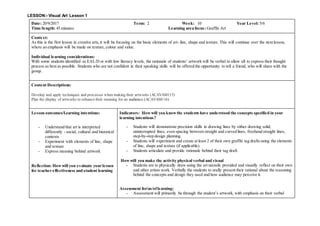
LESSON:- Visual Art Lesson 1
Date: 20/9/2017 Term: 2 Week: 10 Year Level: 5/6
Time/length: 45 minutes Learning area focus: Graffiti Art
Context:
As this is the first lesson in creative arts,it will be focusing on the basic elements of art- line, shape and texture. This will continue over the next lesson,
where an emphasis will be made on texture, colour and value.
Individual learning considerations:
With some students identified as EAL/D or with low literacy levels, the rationale of students’ artwork will be verbal to allow all to express their thought
process as best as possible. Students who are not confident in their speaking skills will be offered the opportunity to tell a friend, who will share with the
group.
Content Descriptions:
Develop and apply techniques and processes when making their artworks (ACAVAM115)
Plan the display of artworks to enhance their meaning for an audience (ACAVAM116)
Lesson outcomes/Learning intentions:
- Understand that art is interpreted
differently - social, cultural and historical
contexts
- Experiment with elements of line, shape
and texture
- Express meaning behind artwork
Reflection: Howwill you evaluate your lesson
for teacher effectiveness and student learning
Indicators: Howwill you knowthe students have understood the concepts specified in your
learning intentions?
- Students will demonstrate precision skills in drawing lines by either drawing solid,
uninterrupted lines, even spacing between straight and curved lines, freehand straight lines,
step-by-step design planning.
- Students will experiment and create at least 2 of their own graffiti tag drafts using the elements
of line, shape and texture (if applicable).
- Students articulate and provide rationale behind their tag draft.
Howwill you make the activity physical verbal and visual
- Students are to physically draw using the art utensils provided and visually reflect on their own
and other artists work. Verbally the students to orally present their rational about the reasoning
behind the concepts and design they used and how audience may perceive it.
Assessment for/as/oflearning:
- Assessment will primarily be through the student’s artwork, with emphasis on their verbal
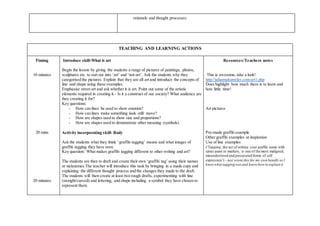
rationale and thought processes.
TEACHING AND LEARNING ACTIONS
Timing
10 minutes
20 mins
20 minutes
Introduce skill-What is art
Begin the lesson by giving the students a range of pictures of paintings, photos,
sculptures etc. to sort out into ‘art’ and ‘not-art’. Ask the students why they
categorised the pictures. Explain that they are all art and introduce the concepts of
line and shape using these examples.
Emphasise street art and ask whether it is art. Point out some of the artistic
elements required in creating it.- Is it a construct of our society? What audience are
they creating it for?
Key questions:
- How can lines be used to show emotion?
- How can lines make something look still/ move?
- How are shapes used to show size and proportions?
- How are shapes used to demonstrate other meaning (symbols)
Activity incorporating skill- Body
Ask the students what they think ‘graffiti tagging’ means and what images of
graffiti tagging they have seen.
Key question: What makes graffiti tagging different to other writing and art?
The students are then to draft and create their own ‘graffiti tag’ using their names
or nicknames.The teacher will introduce this task by bringing in a made copy and
explaining the different thought process and the changes they made to the draft.
The students will then create at least two rough drafts, experimenting with line
(straight/curved) and lettering, and shape including a symbol they have chosen to
represent them.
Resources/Teachers notes
This is awesome,take a look!
http://juliannakunstler.com/art1.php
Does highlight how much there is to learn and
how little time!
Art pictures
Pre-made graffiti example
Other graffiti examples or inspiration
Use of line examples
(‘Tagging, the act of writing your graffiti name with
spray paint or markers, is one of the most maligned,
misunderstood and prosecuted forms of self
expression’) - just wrote this for my own benefit so I
knew what tagging wasand know how to explain it
Cool down
Students are then expected to take turns to share their graffiti tags with others,
explaining their creative process in doing so (oral rationale). Other students will
also have an opportunity to provide feedback and share what they like and
appreciate about it.
For next lesson
● Skill focus is on colour, shading and texture
● Complete their graffiti name tags
● Reflect
Too HARD TO FORMAT! DOING ON OWN
DOCUMENT
LobsterPhone (1936)Salvador Dali
Emphasises luxuries and ‘fatcats’ of the time
Visual arts lesson 1

Visual arts lesson 1

  • 1.
    LESSON:- Visual ArtLesson 1 Date: 20/9/2017 Term: 2 Week: 10 Year Level: 5/6 Time/length: 45 minutes Learning area focus: Graffiti Art Context: As this is the first lesson in creative arts,it will be focusing on the basic elements of art- line, shape and texture. This will continue over the next lesson, where an emphasis will be made on texture, colour and value. Individual learning considerations: With some students identified as EAL/D or with low literacy levels, the rationale of students’ artwork will be verbal to allow all to express their thought process as best as possible. Students who are not confident in their speaking skills will be offered the opportunity to tell a friend, who will share with the group. Content Descriptions: Develop and apply techniques and processes when making their artworks (ACAVAM115) Plan the display of artworks to enhance their meaning for an audience (ACAVAM116) Lesson outcomes/Learning intentions: - Understand that art is interpreted differently - social, cultural and historical contexts - Experiment with elements of line, shape and texture - Express meaning behind artwork Reflection: Howwill you evaluate your lesson for teacher effectiveness and student learning Indicators: Howwill you knowthe students have understood the concepts specified in your learning intentions? - Students will demonstrate precision skills in drawing lines by either drawing solid, uninterrupted lines, even spacing between straight and curved lines, freehand straight lines, step-by-step design planning. - Students will experiment and create at least 2 of their own graffiti tag drafts using the elements of line, shape and texture (if applicable). - Students articulate and provide rationale behind their tag draft. Howwill you make the activity physical verbal and visual - Students are to physically draw using the art utensils provided and visually reflect on their own and other artists work. Verbally the students to orally present their rational about the reasoning behind the concepts and design they used and how audience may perceive it. Assessment for/as/oflearning: - Assessment will primarily be through the student’s artwork, with emphasis on their verbal
  • 2.
    rationale and thoughtprocesses. TEACHING AND LEARNING ACTIONS Timing 10 minutes 20 mins 20 minutes Introduce skill-What is art Begin the lesson by giving the students a range of pictures of paintings, photos, sculptures etc. to sort out into ‘art’ and ‘not-art’. Ask the students why they categorised the pictures. Explain that they are all art and introduce the concepts of line and shape using these examples. Emphasise street art and ask whether it is art. Point out some of the artistic elements required in creating it.- Is it a construct of our society? What audience are they creating it for? Key questions: - How can lines be used to show emotion? - How can lines make something look still/ move? - How are shapes used to show size and proportions? - How are shapes used to demonstrate other meaning (symbols) Activity incorporating skill- Body Ask the students what they think ‘graffiti tagging’ means and what images of graffiti tagging they have seen. Key question: What makes graffiti tagging different to other writing and art? The students are then to draft and create their own ‘graffiti tag’ using their names or nicknames.The teacher will introduce this task by bringing in a made copy and explaining the different thought process and the changes they made to the draft. The students will then create at least two rough drafts, experimenting with line (straight/curved) and lettering, and shape including a symbol they have chosen to represent them. Resources/Teachers notes This is awesome,take a look! http://juliannakunstler.com/art1.php Does highlight how much there is to learn and how little time! Art pictures Pre-made graffiti example Other graffiti examples or inspiration Use of line examples (‘Tagging, the act of writing your graffiti name with spray paint or markers, is one of the most maligned, misunderstood and prosecuted forms of self expression’) - just wrote this for my own benefit so I knew what tagging wasand know how to explain it
  • 3.
    Cool down Students arethen expected to take turns to share their graffiti tags with others, explaining their creative process in doing so (oral rationale). Other students will also have an opportunity to provide feedback and share what they like and appreciate about it.
  • 4.
    For next lesson ●Skill focus is on colour, shading and texture ● Complete their graffiti name tags ● Reflect
  • 5.
    Too HARD TOFORMAT! DOING ON OWN DOCUMENT LobsterPhone (1936)Salvador Dali Emphasises luxuries and ‘fatcats’ of the time