1
“Virtual Display Architecture on Top of
Automotive Grade Hypervisor”
Oleksandr Gabrylchuk
Senior Software Engineer, Engineering
2
Agenda
● Hypervisor types
● Role of Hypervisor in automotive
● VirtIO
● Shared display solution
3
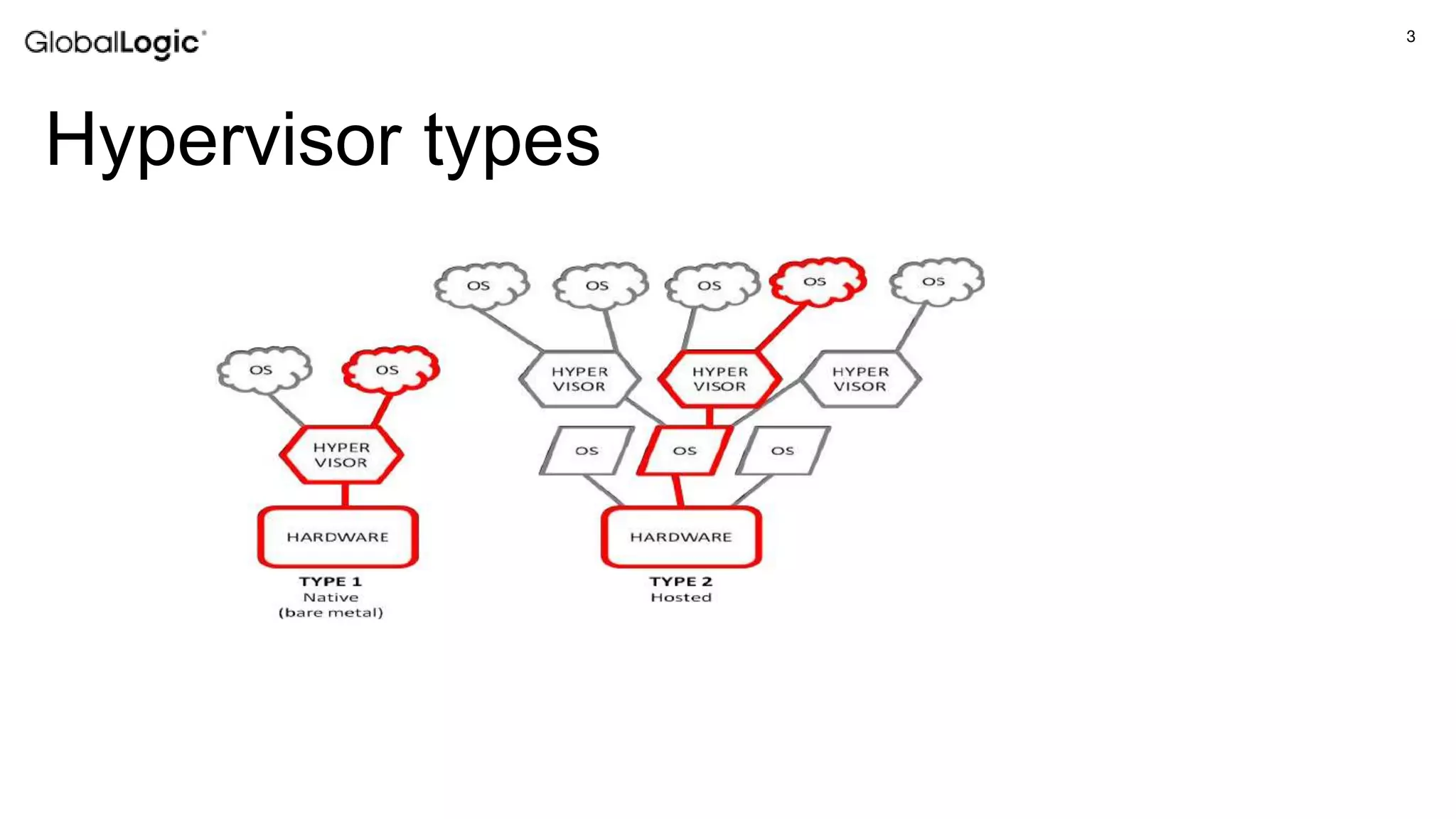
Hypervisor types
4
Role of a hypervisor in automotive
A hypervisor makes it possible to build mix-criticality systems and can integrate safely
and securely:
● Software that is developed according to different quality standards: o Related to safety
(different ASIL levels) o Related to security (different levels of trustworthiness, isolating a
minimal trusted computing base) o Related to reliability
● Software that has different real-time (e.g. RTOS and generic OS) and boot-time
requirements In addition, a hypervisor:
● Enables the use of optimally suited operating systems and frameworks (Linux, Android,
AUTOSAR, RTOS)
● Isolates faults (safety, reliability) and attacks (security) and supports ASIL decomposition
● Enables modular development and modular software updates
● Supports software reuse across platforms and integration of legacy software
5
Visualization challenges
Virtualized IO devices are available for desktop and cloud applications because everyone
uses standardized interfaces (virtio, xen, vmware)
● Disk
● Network
Embedded devices lack the ecosystem that cloud providers build upon
Challenges for virtualized IO devices in automotive
● High effort of SoC specific device virtualization
● Multimedia device virtualization
● Low amount of reusable virtual devices
6
VirtIO
Virtio “De-Facto Standard For Virtual I/O Devices” (Russel 2008)
Standardized since March 2016 (OASIS VIRTIO-v1.0)
Virtio provides interfaces for many devices
● Block Storage
● Network
● Console
● GPU
● Input (hid)
● Crypto device
● vSock
● File Server (9pfs)
● Many more in development (vIOMMU, etc.)
Still missing pieces
● Audio
● Sensors
● Media Acceleration Offload (VPU)
7
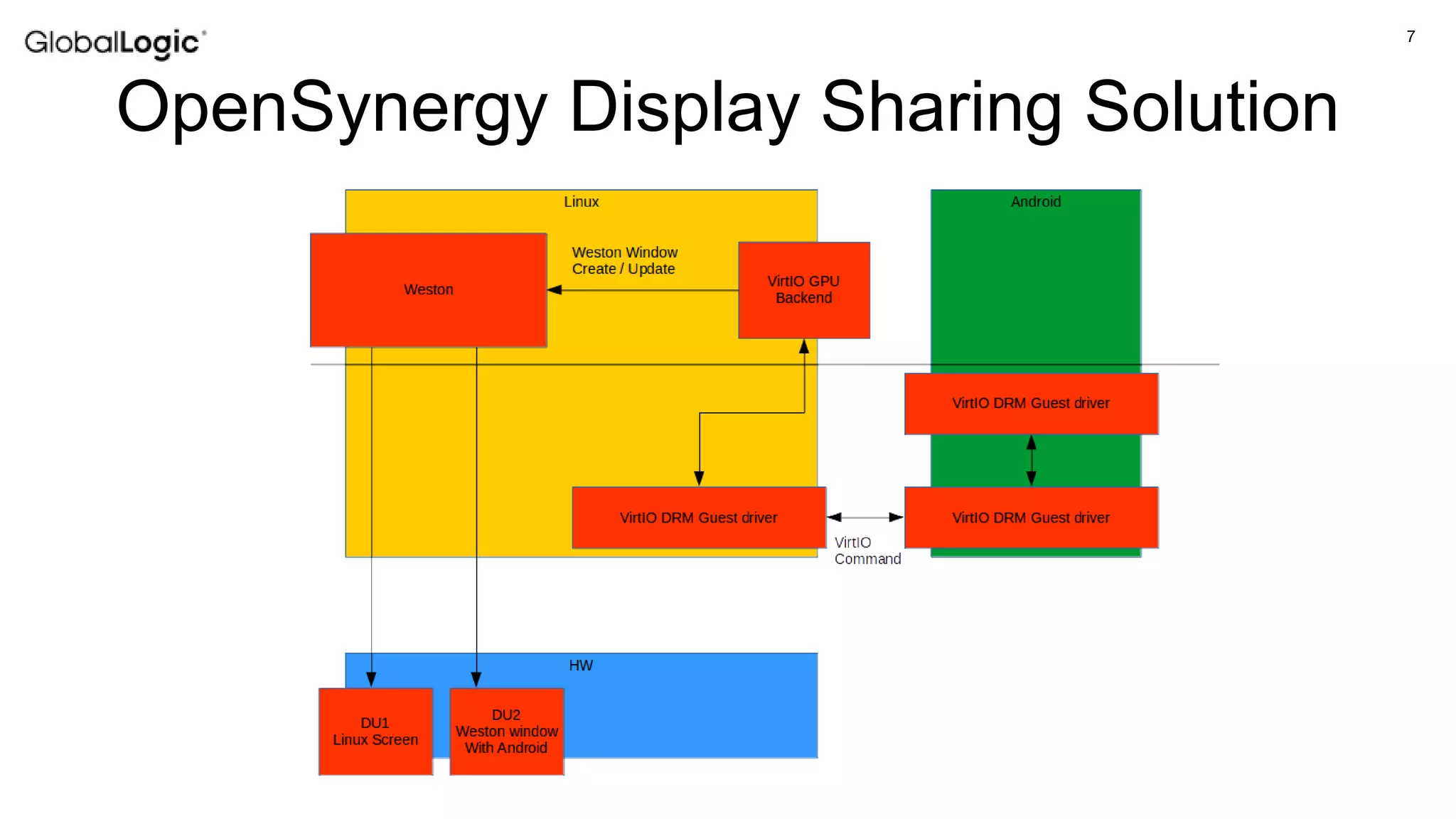
OpenSynergy Display Sharing Solution
8
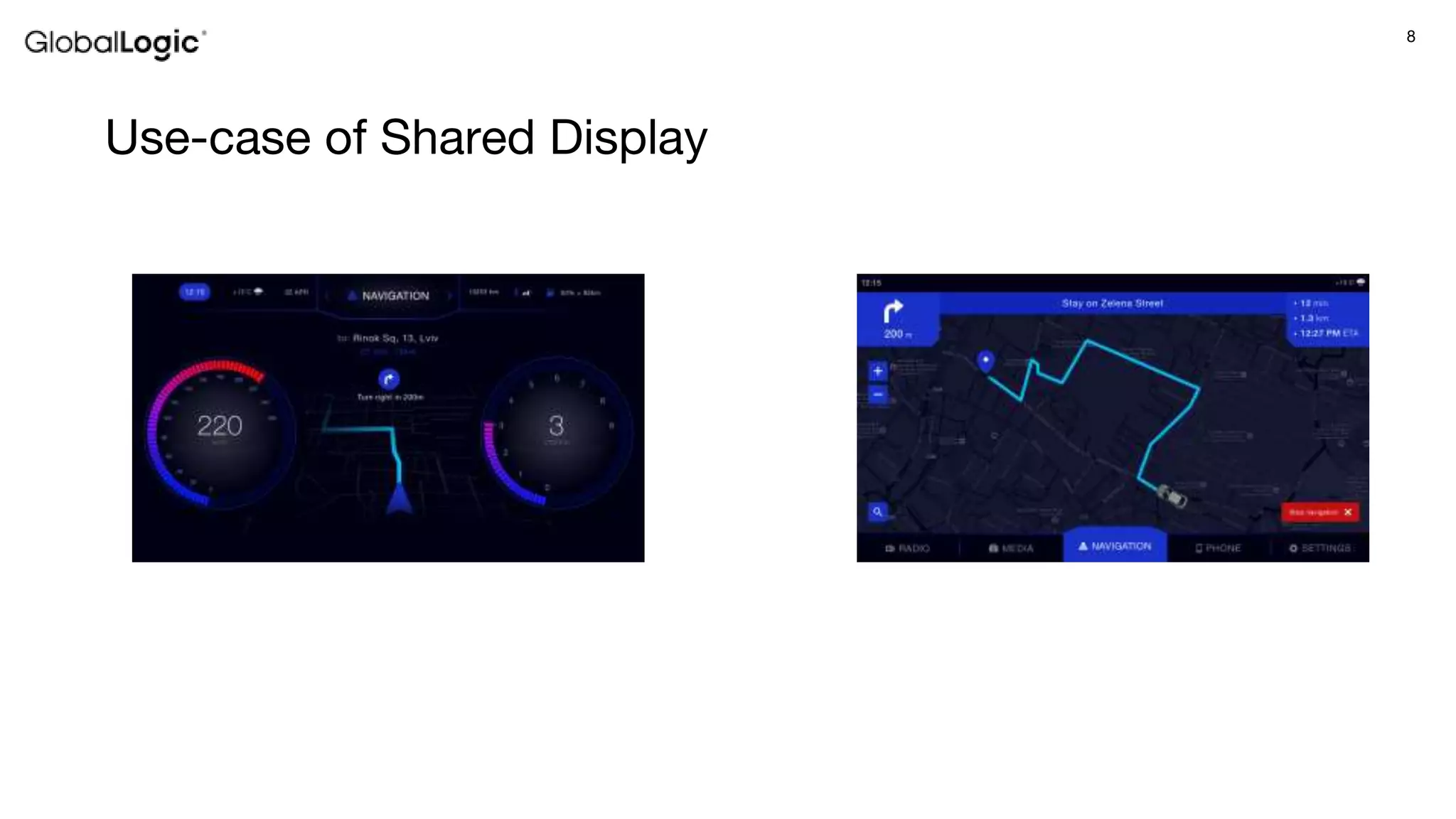
Use-case of Shared Display
9
Challenges
● VirtIO was not used in automotive before
● Used zero-copy approach
● Weston shell xdg shell limitations
● DRM subsystem complexity
● HW platforms limitations
10
Questions?
11
Thank you

“Virtual Display Architecture on Top of Automotive Grade Hypervisor”

  • 1.
    1 “Virtual Display Architectureon Top of Automotive Grade Hypervisor” Oleksandr Gabrylchuk Senior Software Engineer, Engineering
  • 2.
    2 Agenda ● Hypervisor types ●Role of Hypervisor in automotive ● VirtIO ● Shared display solution
  • 3.
  • 4.
    4 Role of ahypervisor in automotive A hypervisor makes it possible to build mix-criticality systems and can integrate safely and securely: ● Software that is developed according to different quality standards: o Related to safety (different ASIL levels) o Related to security (different levels of trustworthiness, isolating a minimal trusted computing base) o Related to reliability ● Software that has different real-time (e.g. RTOS and generic OS) and boot-time requirements In addition, a hypervisor: ● Enables the use of optimally suited operating systems and frameworks (Linux, Android, AUTOSAR, RTOS) ● Isolates faults (safety, reliability) and attacks (security) and supports ASIL decomposition ● Enables modular development and modular software updates ● Supports software reuse across platforms and integration of legacy software
  • 5.
    5 Visualization challenges Virtualized IOdevices are available for desktop and cloud applications because everyone uses standardized interfaces (virtio, xen, vmware) ● Disk ● Network Embedded devices lack the ecosystem that cloud providers build upon Challenges for virtualized IO devices in automotive ● High effort of SoC specific device virtualization ● Multimedia device virtualization ● Low amount of reusable virtual devices
  • 6.
    6 VirtIO Virtio “De-Facto StandardFor Virtual I/O Devices” (Russel 2008) Standardized since March 2016 (OASIS VIRTIO-v1.0) Virtio provides interfaces for many devices ● Block Storage ● Network ● Console ● GPU ● Input (hid) ● Crypto device ● vSock ● File Server (9pfs) ● Many more in development (vIOMMU, etc.) Still missing pieces ● Audio ● Sensors ● Media Acceleration Offload (VPU)
  • 7.
  • 8.
  • 9.
    9 Challenges ● VirtIO wasnot used in automotive before ● Used zero-copy approach ● Weston shell xdg shell limitations ● DRM subsystem complexity ● HW platforms limitations
  • 10.
  • 11.