VIRTUAL BASE CLASS
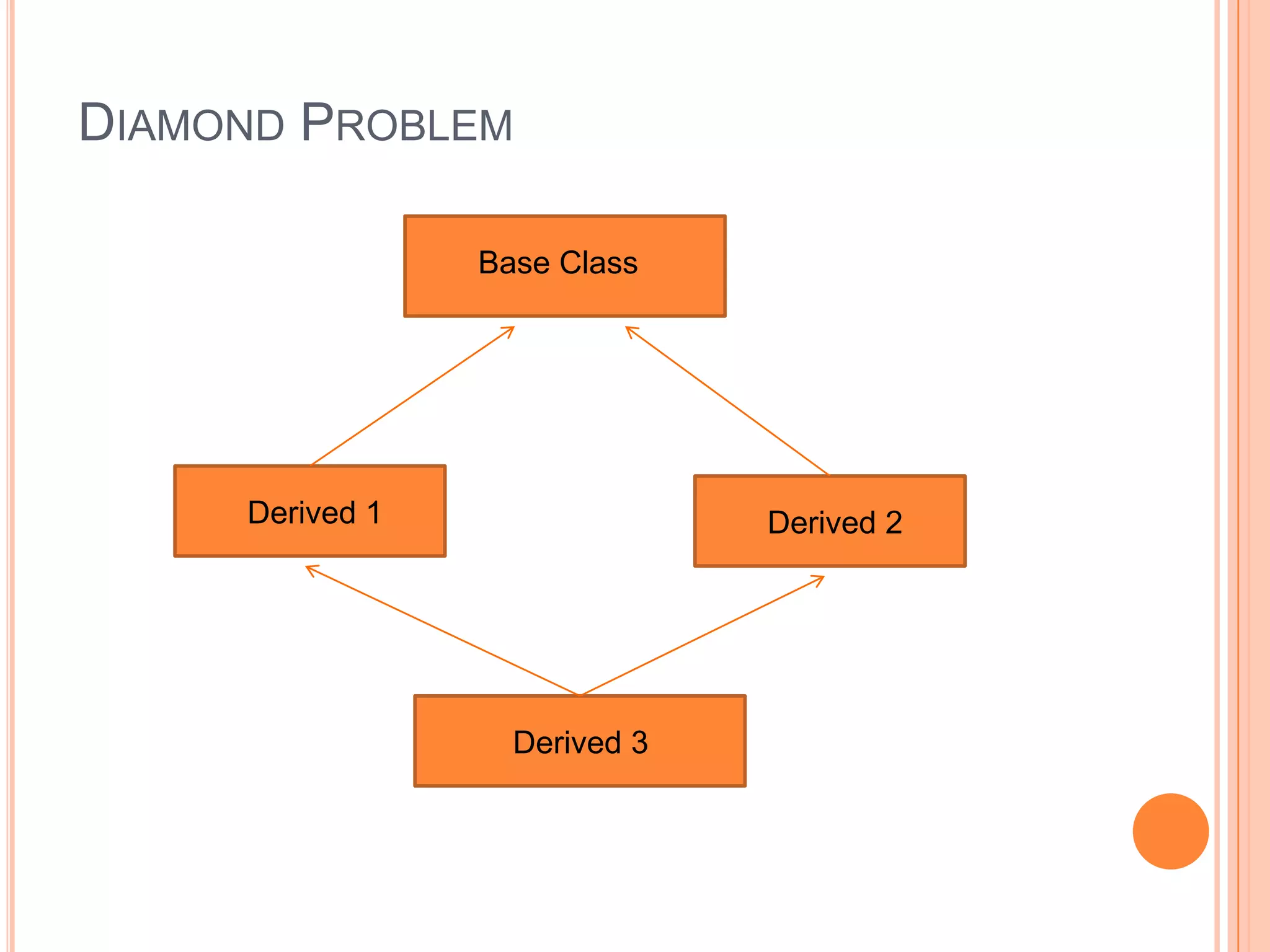
DIAMOND PROBLEM

                 Base Class


     Derived 1                 Derived 2


                   Derived 3
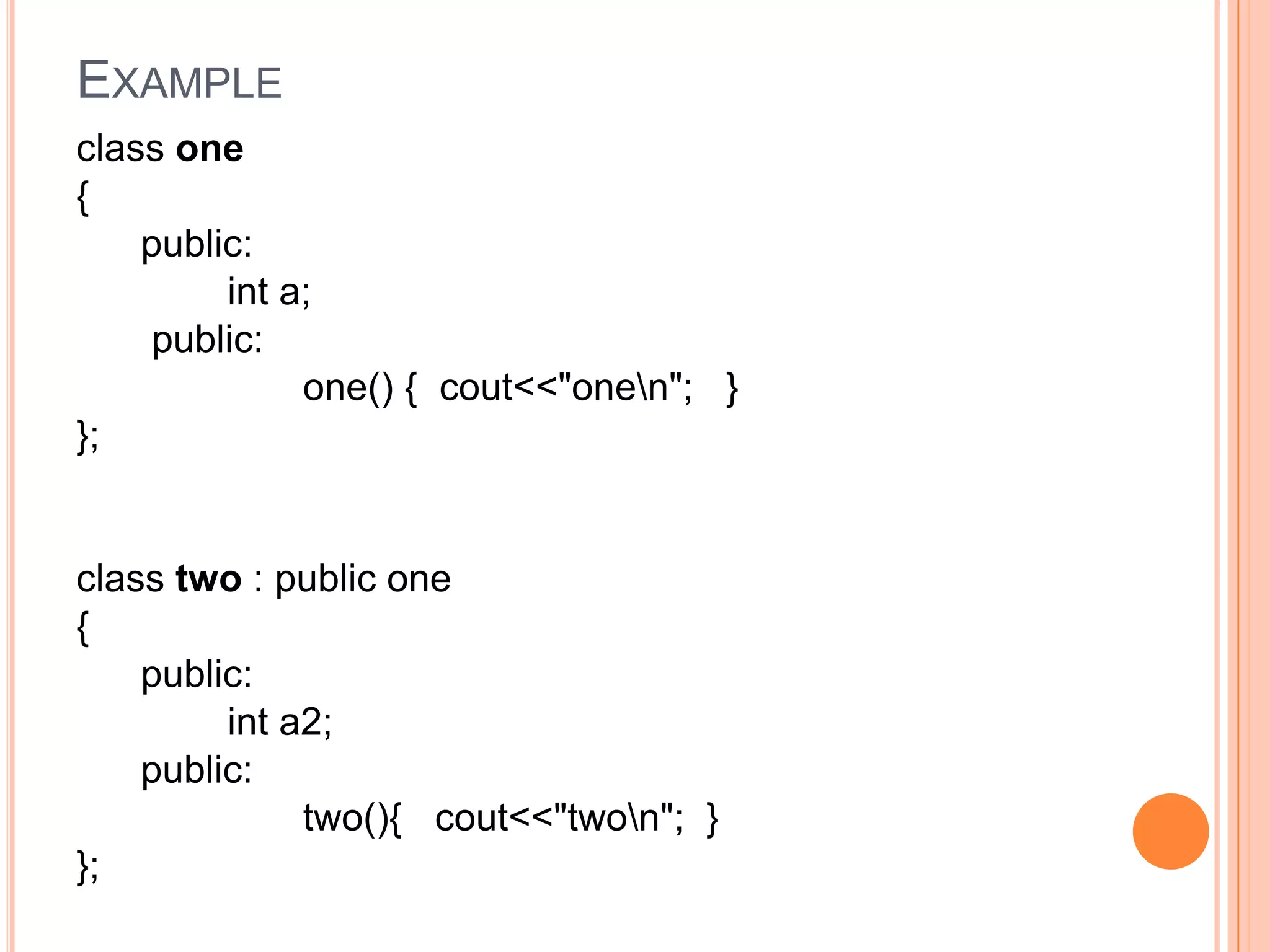
EXAMPLE
class one
{
    public:
         int a;
     public:
              one() { cout<<"onen"; }
};


class two : public one
{
    public:
         int a2;
    public:
              two(){ cout<<"twon"; }
};
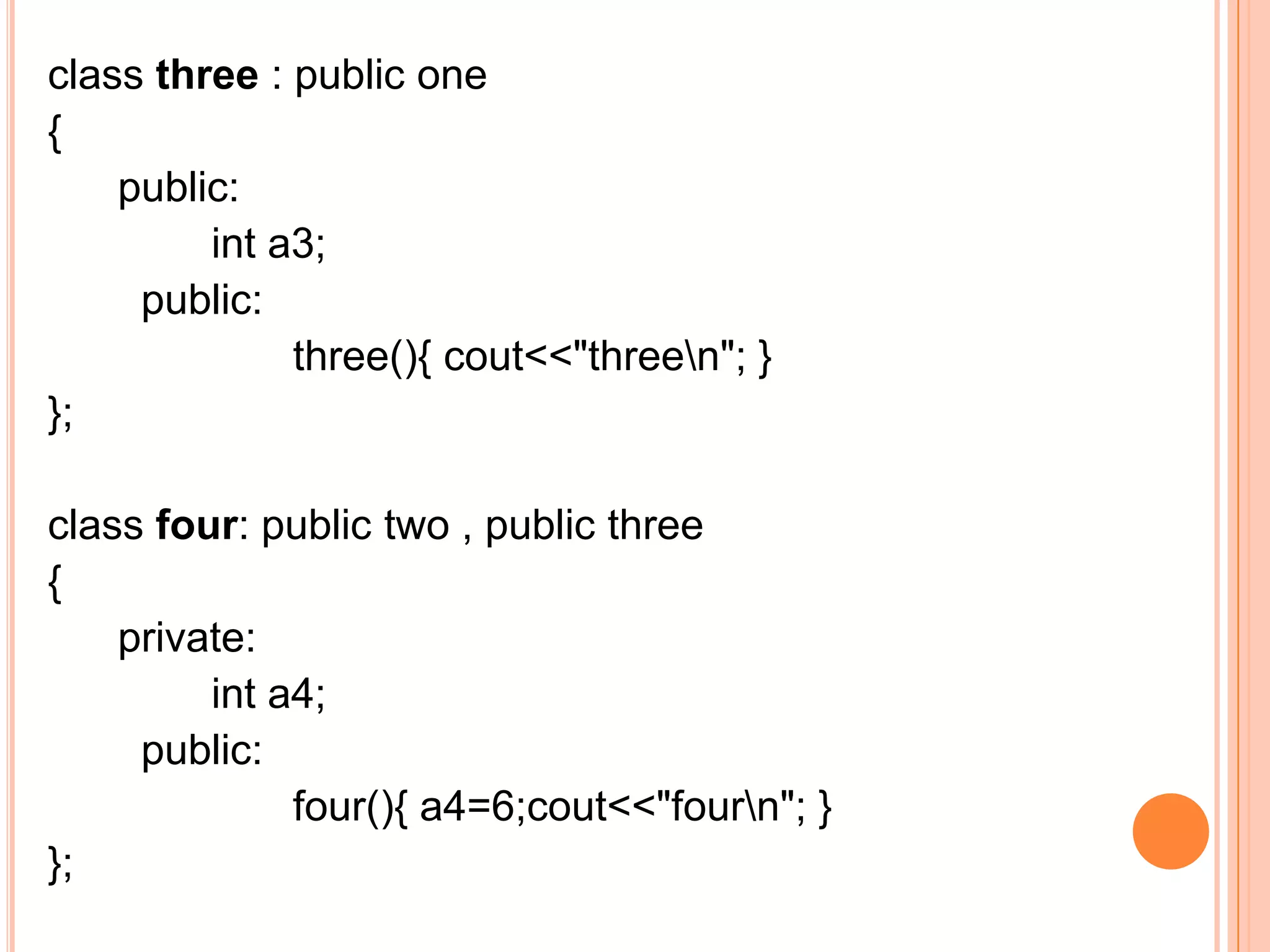
class three : public one
{
    public:
         int a3;
     public:
              three(){ cout<<"threen"; }
};

class four: public two , public three
{
    private:
         int a4;
     public:
              four(){ a4=6;cout<<"fourn"; }
};
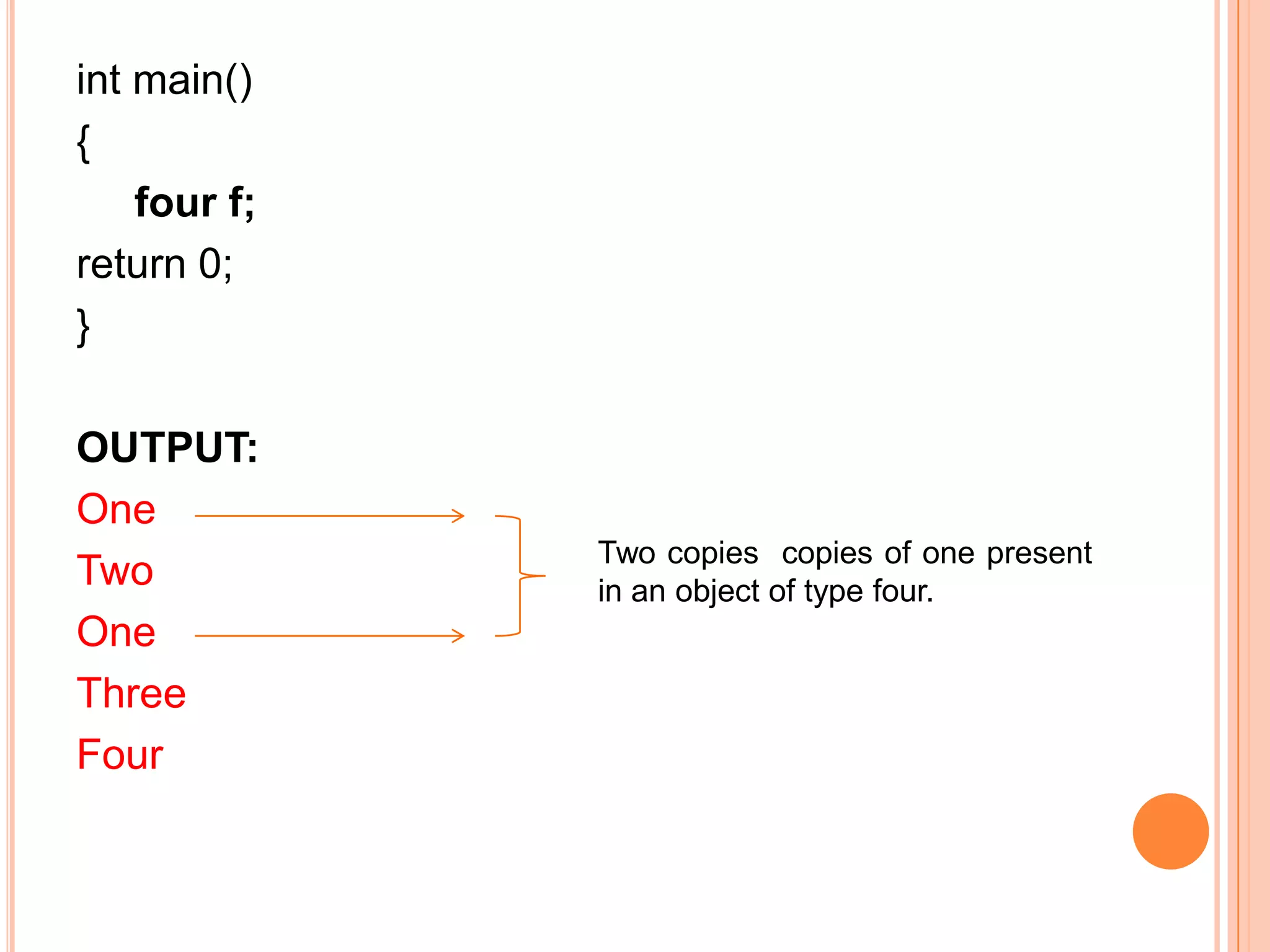
int main()
{
    four f;
return 0;
}

OUTPUT:
One
              Two copies copies of one present
Two           in an object of type four.
One
Three
Four
int main()
{
  four f;
  cout<<f.a; //error : request for member ‘a’ is ambiguous
  return 0;
}

   Ambiguous because variable „a‟ is present twice in the object
    of four, one in two class and one in three class.


   Because there are two copies of „a‟ present in object „f‟, the
    compiler doesn‟t not know which one is being referred.
HOW TO RESOLVE


Two ways:

   Manual Selection.

   Using virtual base class.
MANUAL SELECTION
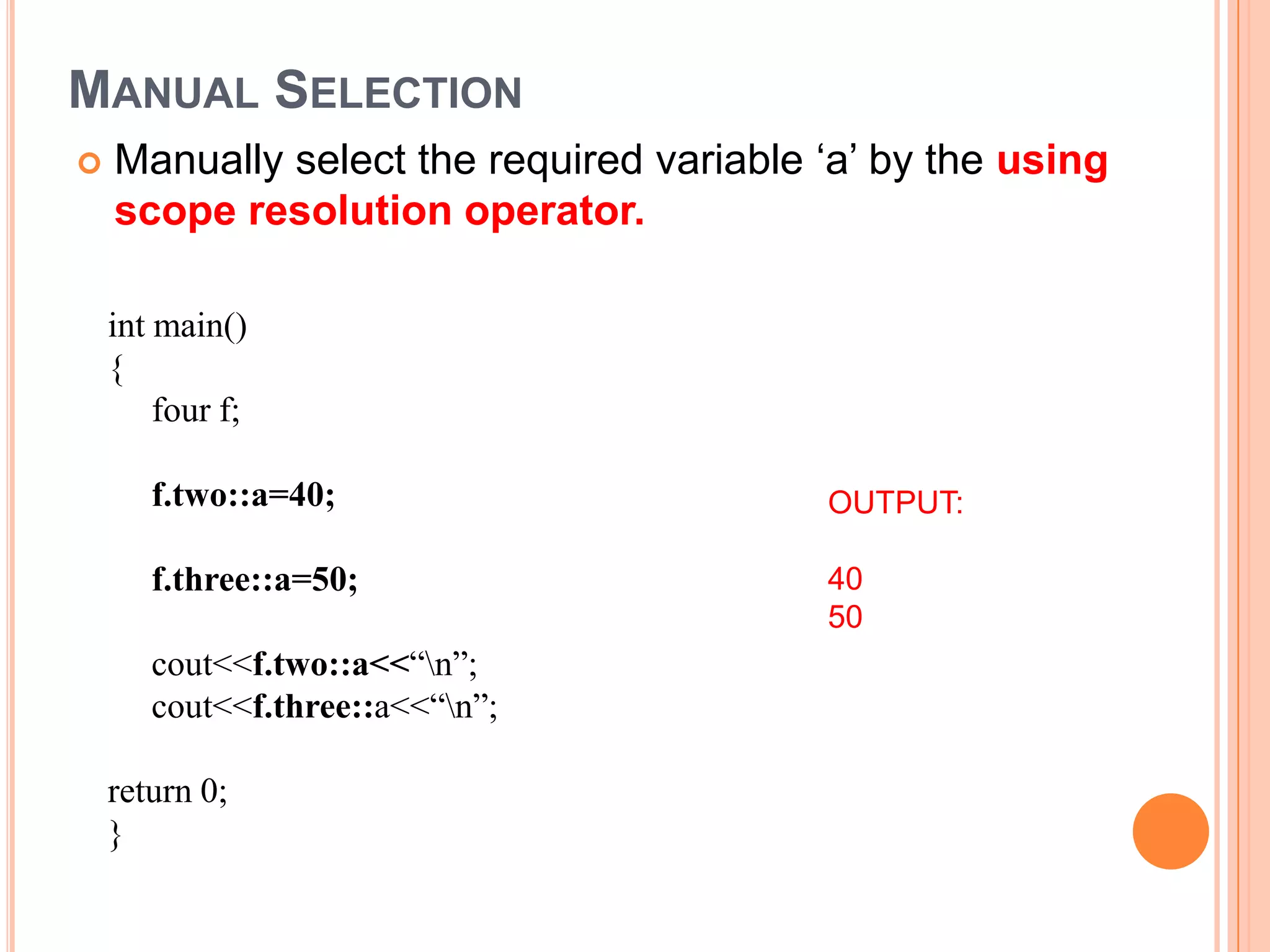
   Manually select the required variable ‘a’ by the using
    scope resolution operator.

    int main()
    {
        four f;

       f.two::a=40;                       OUTPUT:

       f.three::a=50;                     40
                                          50
       cout<<f.two::a<<“n”;
       cout<<f.three::a<<“n”;

    return 0;
    }
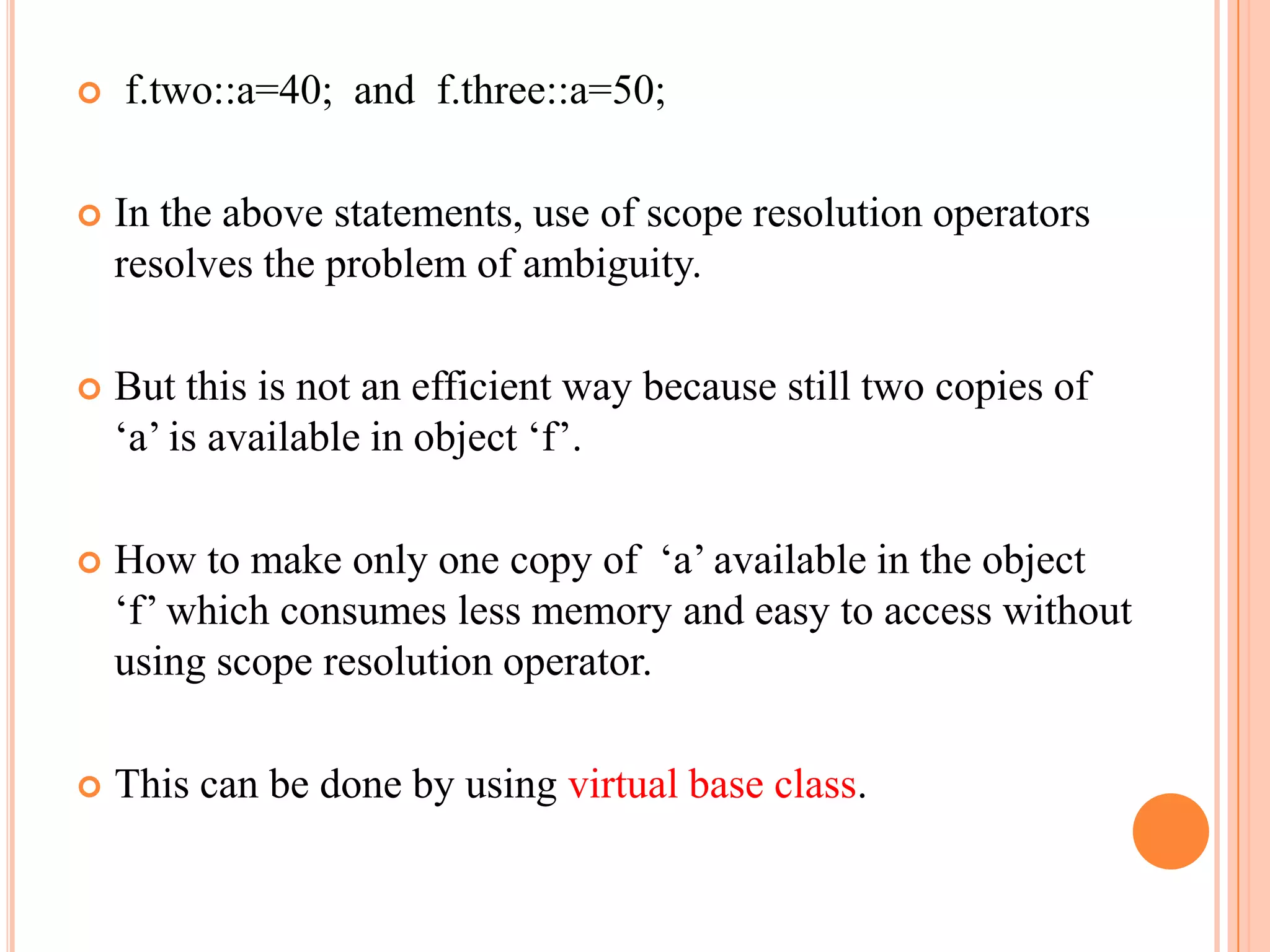
   f.two::a=40; and f.three::a=50;

   In the above statements, use of scope resolution operators
    resolves the problem of ambiguity.

   But this is not an efficient way because still two copies of
    „a‟ is available in object „f‟.

   How to make only one copy of „a‟ available in the object
    „f‟ which consumes less memory and easy to access without
    using scope resolution operator.

   This can be done by using virtual base class.
VIRTUAL BASE CLASS
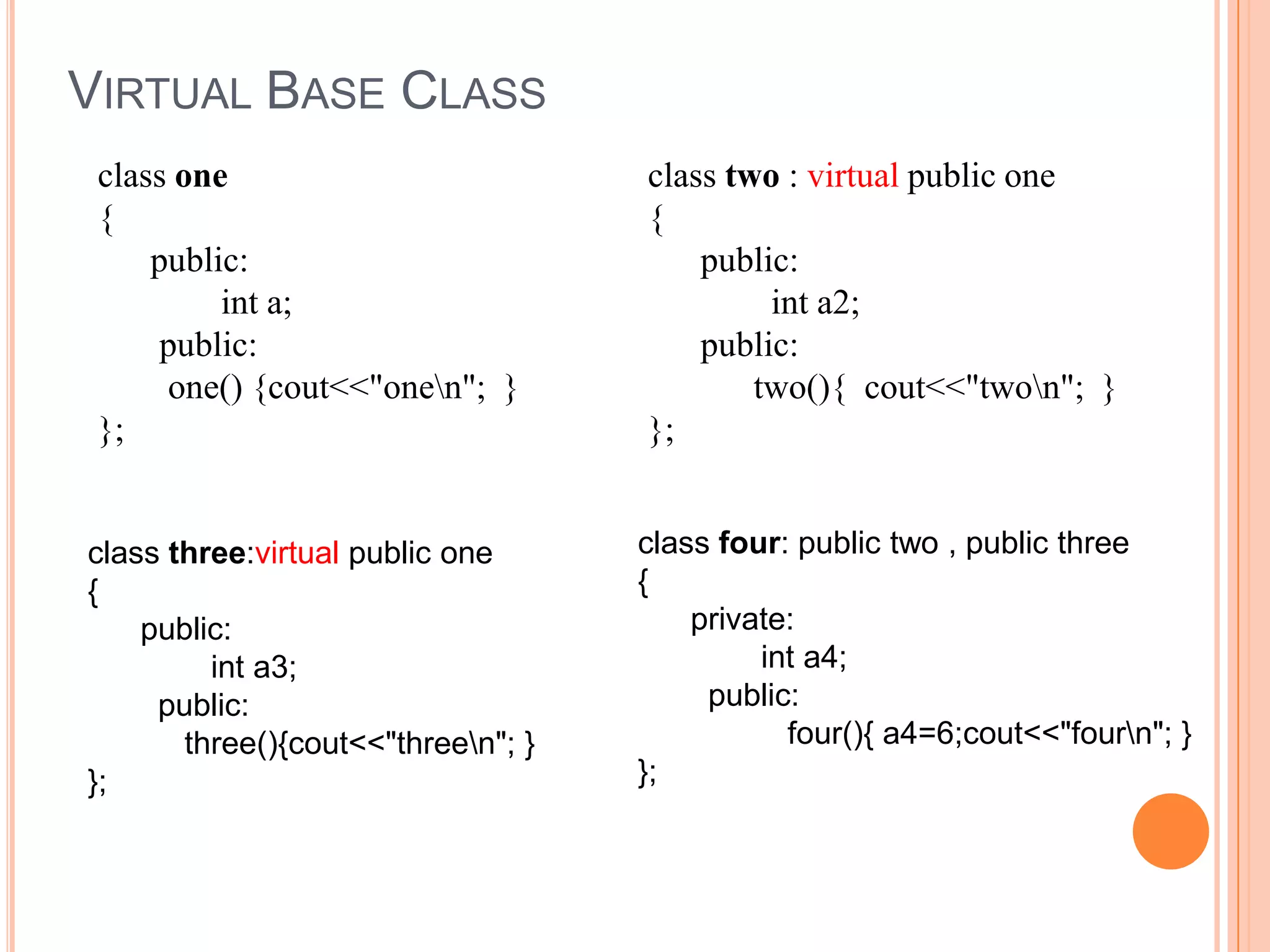
 class one                          class two : virtual public one
 {                                  {
     public:                            public:
          int a;                             int a2;
      public:                           public:
      one() {cout<<"onen"; }               two(){ cout<<"twon"; }
 };                                 };


class three:virtual public one      class four: public two , public three
{                                   {
    public:                             private:
         int a3;                             int a4;
     public:                             public:
       three(){cout<<"threen"; }              four(){ a4=6;cout<<"fourn"; }
};                                  };
int main()
{
    four f;
    return 0;
}


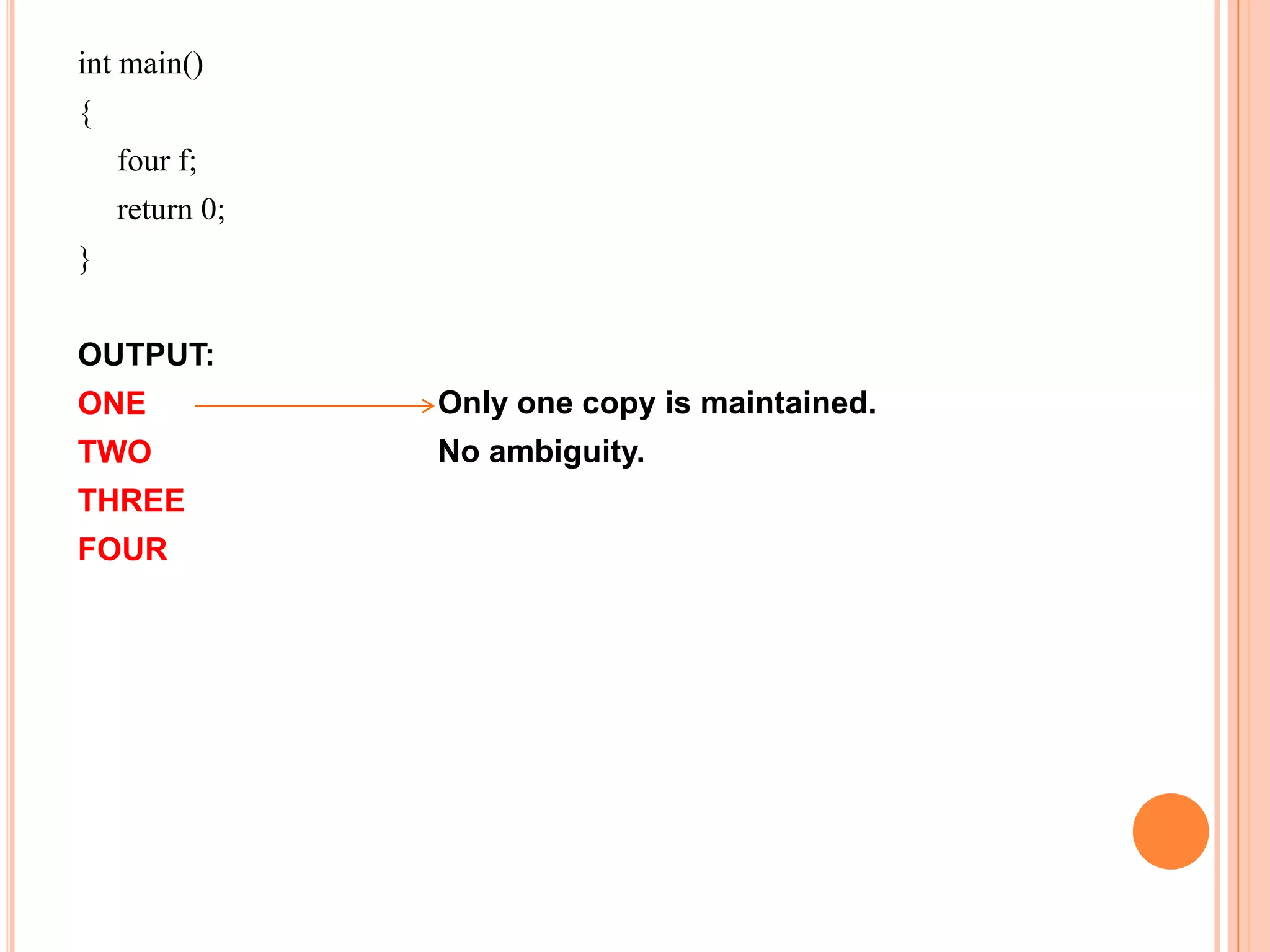
OUTPUT:
ONE             Only one copy is maintained.
TWO             No ambiguity.
THREE
FOUR
int main()
{
    four f;
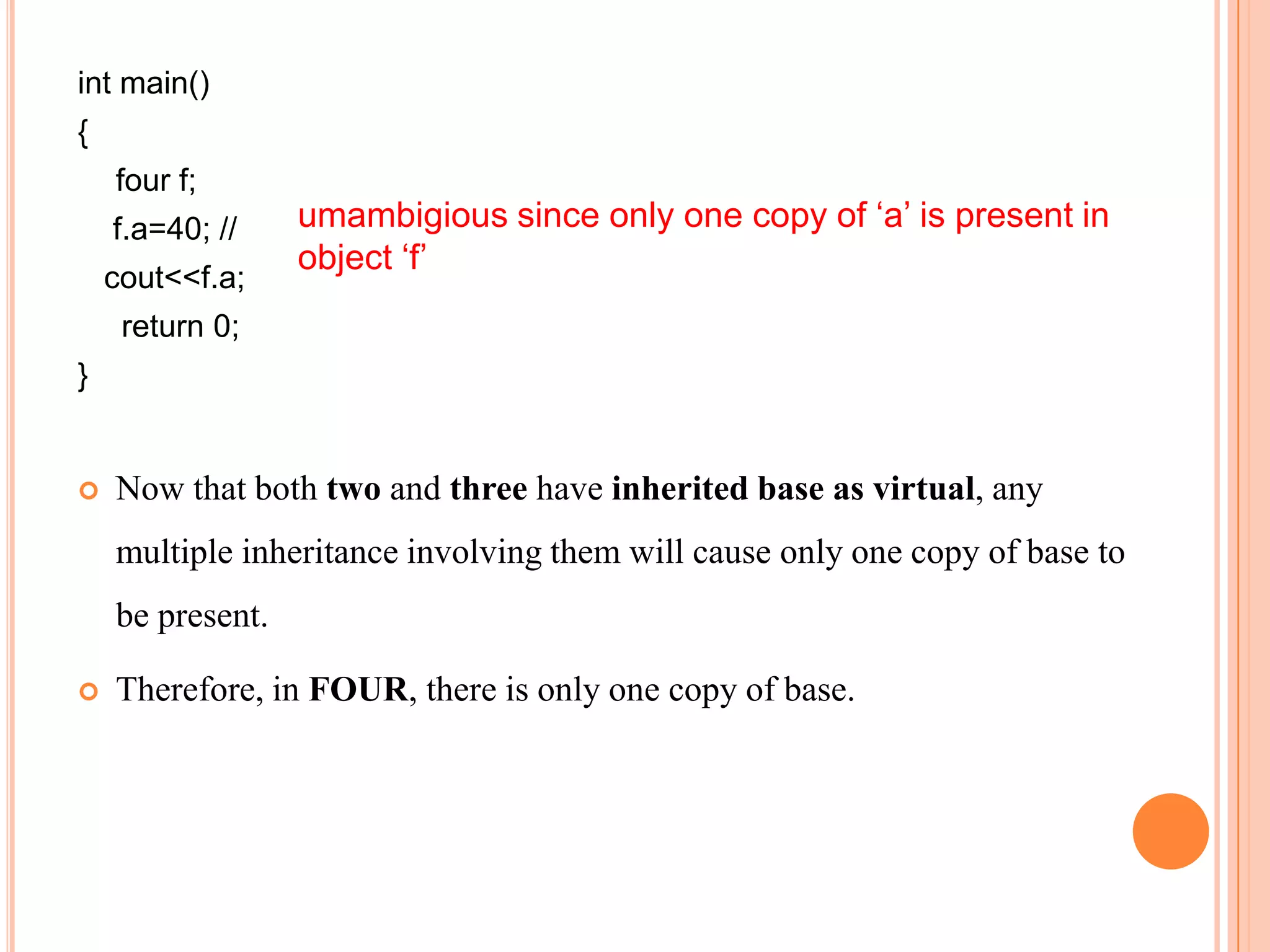
    f.a=40; //    umambigious since only one copy of ‘a’ is present in
                  object ‘f’
    cout<<f.a;
     return 0;
}


   Now that both two and three have inherited base as virtual, any
    multiple inheritance involving them will cause only one copy of base to
    be present.

   Therefore, in FOUR, there is only one copy of base.
THANK YOU

Virtual base class

  • 1.
  • 2.
    DIAMOND PROBLEM Base Class Derived 1 Derived 2 Derived 3
  • 3.
    EXAMPLE class one { public: int a; public: one() { cout<<"onen"; } }; class two : public one { public: int a2; public: two(){ cout<<"twon"; } };
  • 4.
    class three :public one { public: int a3; public: three(){ cout<<"threen"; } }; class four: public two , public three { private: int a4; public: four(){ a4=6;cout<<"fourn"; } };
  • 5.
    int main() { four f; return 0; } OUTPUT: One Two copies copies of one present Two in an object of type four. One Three Four
  • 6.
    int main() { four f; cout<<f.a; //error : request for member ‘a’ is ambiguous return 0; }  Ambiguous because variable „a‟ is present twice in the object of four, one in two class and one in three class.  Because there are two copies of „a‟ present in object „f‟, the compiler doesn‟t not know which one is being referred.
  • 7.
    HOW TO RESOLVE Twoways:  Manual Selection.  Using virtual base class.
  • 8.
    MANUAL SELECTION  Manually select the required variable ‘a’ by the using scope resolution operator. int main() { four f; f.two::a=40; OUTPUT: f.three::a=50; 40 50 cout<<f.two::a<<“n”; cout<<f.three::a<<“n”; return 0; }
  • 9.
    f.two::a=40; and f.three::a=50;  In the above statements, use of scope resolution operators resolves the problem of ambiguity.  But this is not an efficient way because still two copies of „a‟ is available in object „f‟.  How to make only one copy of „a‟ available in the object „f‟ which consumes less memory and easy to access without using scope resolution operator.  This can be done by using virtual base class.
  • 10.
    VIRTUAL BASE CLASS class one class two : virtual public one { { public: public: int a; int a2; public: public: one() {cout<<"onen"; } two(){ cout<<"twon"; } }; }; class three:virtual public one class four: public two , public three { { public: private: int a3; int a4; public: public: three(){cout<<"threen"; } four(){ a4=6;cout<<"fourn"; } }; };
  • 11.
    int main() { four f; return 0; } OUTPUT: ONE Only one copy is maintained. TWO No ambiguity. THREE FOUR
  • 12.
    int main() { four f; f.a=40; // umambigious since only one copy of ‘a’ is present in object ‘f’ cout<<f.a; return 0; }  Now that both two and three have inherited base as virtual, any multiple inheritance involving them will cause only one copy of base to be present.  Therefore, in FOUR, there is only one copy of base.
  • 13.