The independent renewable energy consultants
Feed in Tariff (FIT)- April 2010 Renewable Heat incentive (RHI)- April 2011 Clean Energy Cashback  Renewable energy is profitable!
Feed In Tariff Generate your own electricity. Solar (PV). Wind turbines. Others
How does it work? Get paid for generating electricity regardless. Savings on using electricity generated Paid for “exporting” excess.
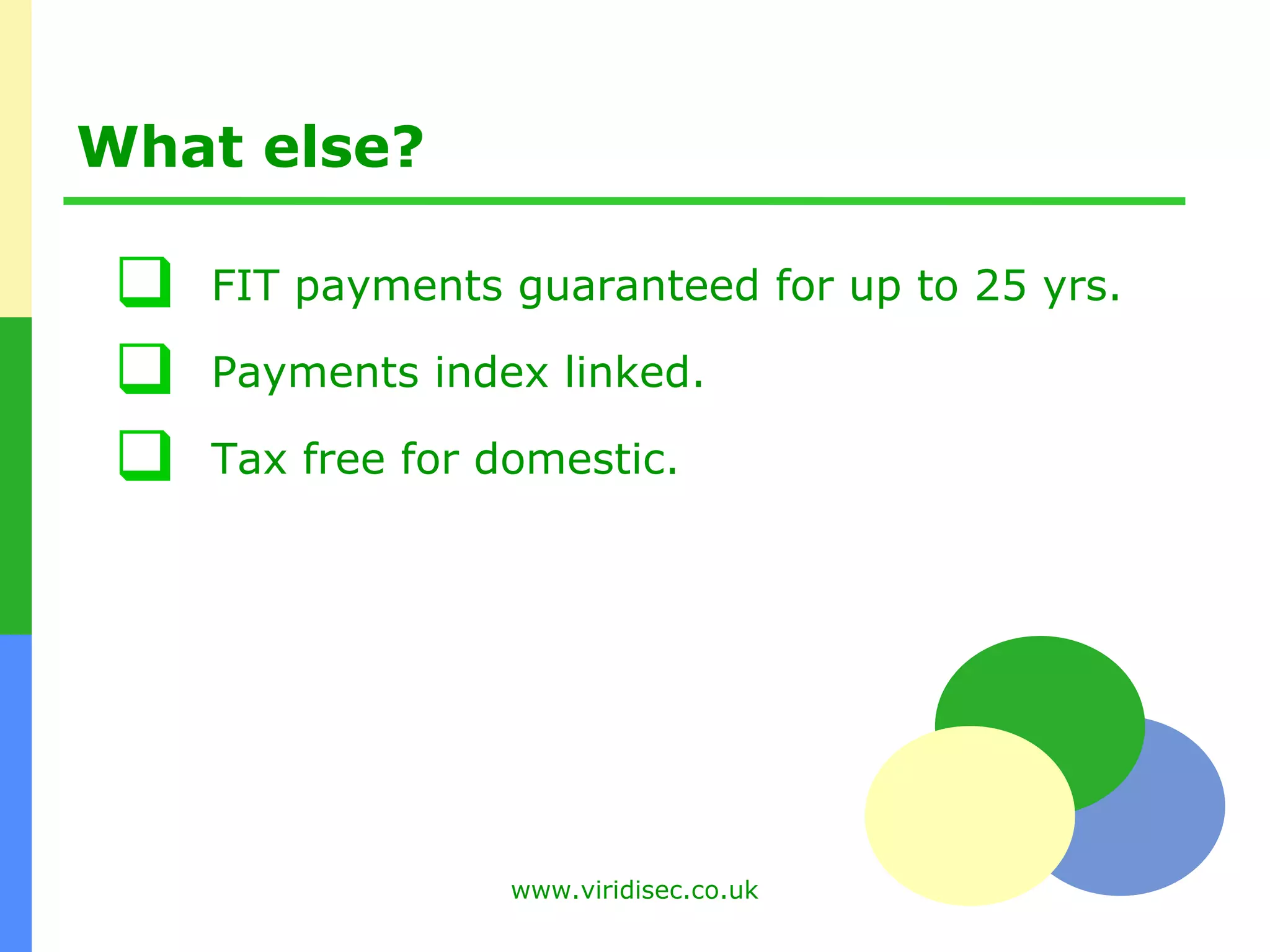
What else? FIT payments guaranteed for up to 25 yrs. Payments index linked. Tax free for domestic.
Grants Forget it!!!
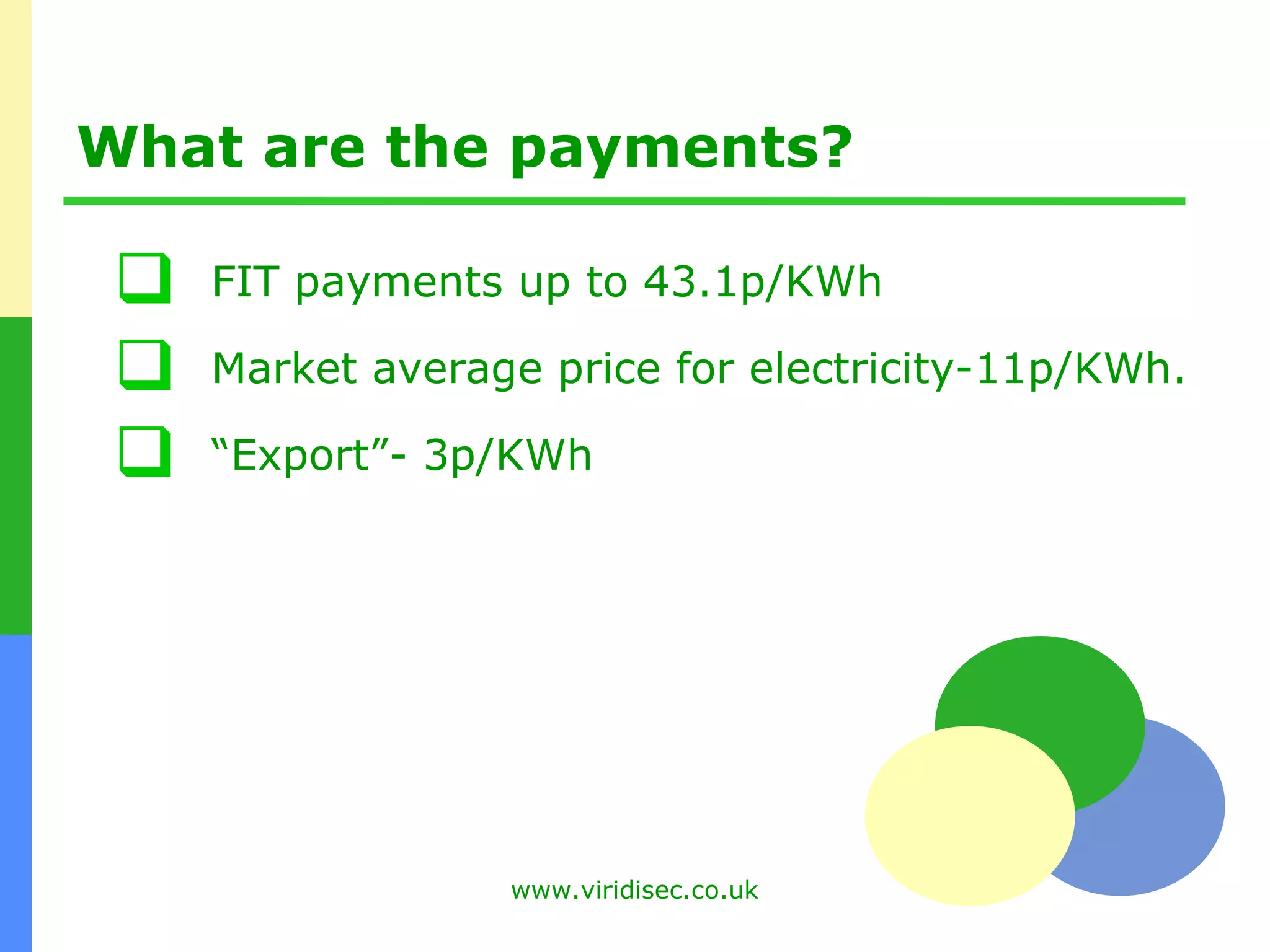
What are the payments? FIT payments up to 43.1p/KWh Market average price for electricity-11p/KWh. “ Export”- 3p/KWh
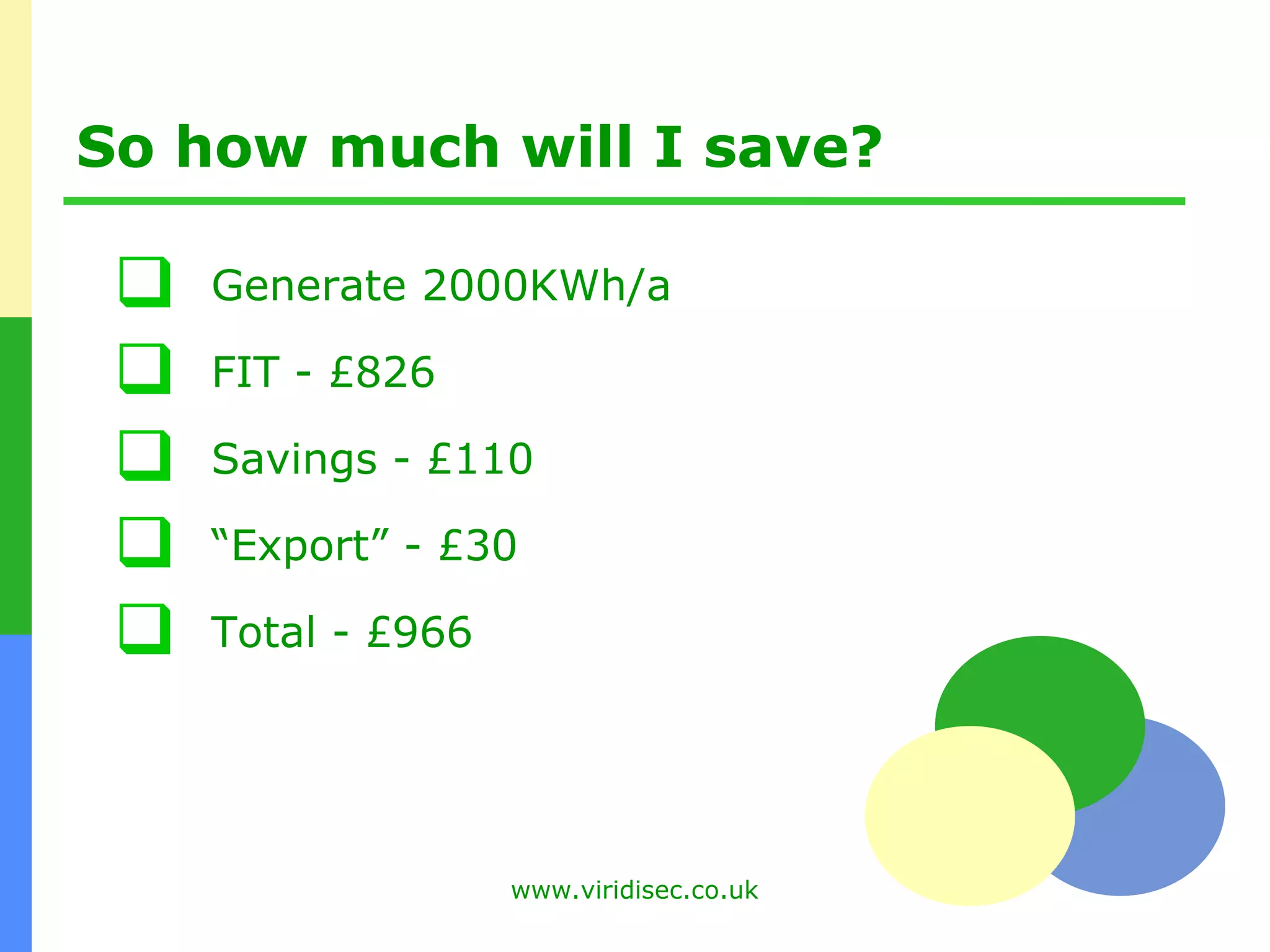
So how much will I save? Generate 2000KWh/a FIT - £826 Savings - £110 “ Export” - £30 Total - £966
How much will it cost me? £12-£13k. VAT- 5%! MCS accredited installer.
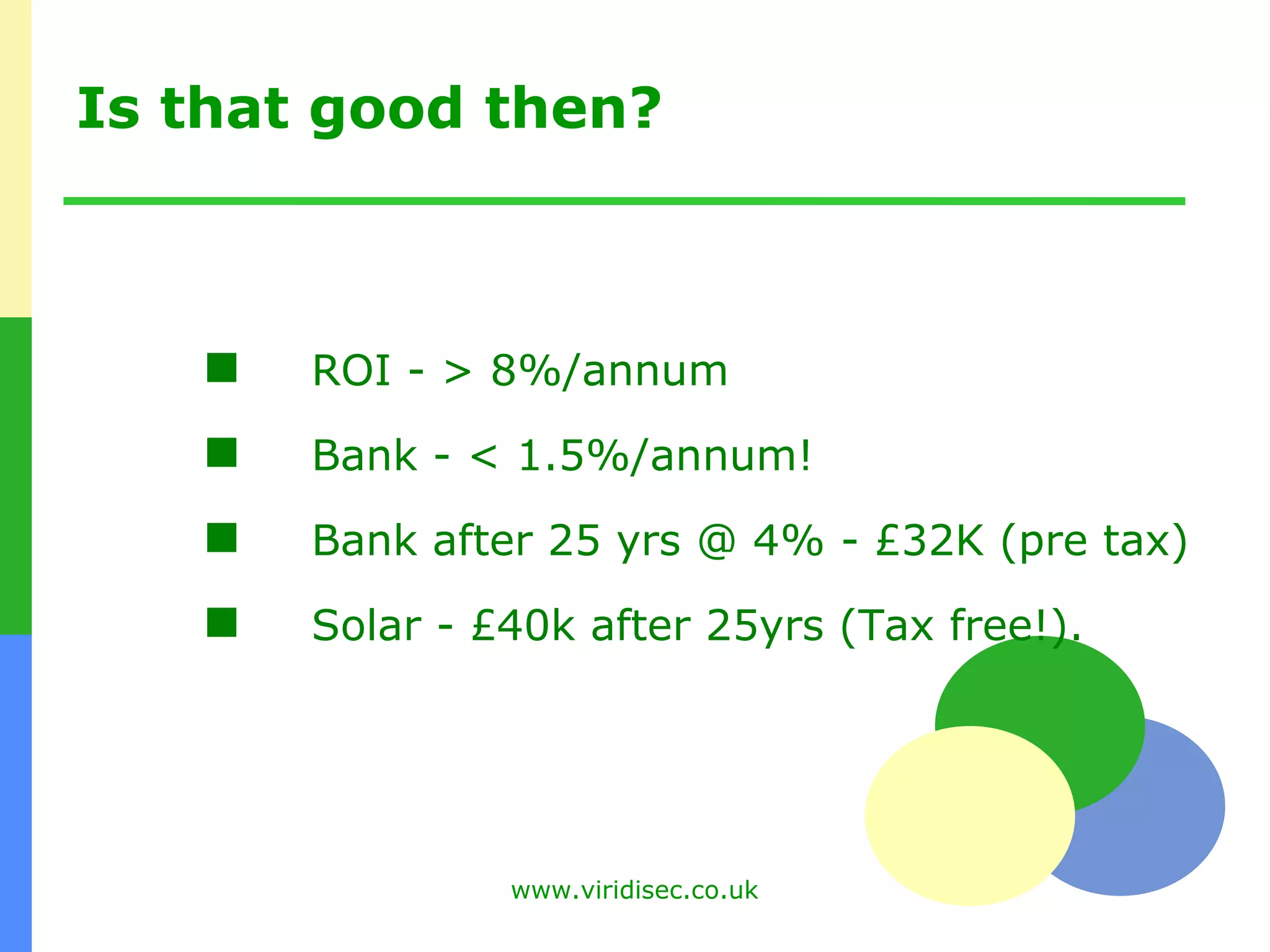
Is that good then? ROI - > 8%/annum Bank - < 1.5%/annum! Bank after 25 yrs @ 4% - £32K (pre tax) Solar - £40k after 25yrs (Tax free!).
Don't take my word for it! Commercial “Roof Renting” Private investors Pension funds
Why are they doing it? Returns are much higher! Cheaper cost per Kwp installed. Guaranteed!!!
Who pays for it? Not the Government! Your energy supplier! You and Me!
How Much will it cost us then? Germany World leaders. Suggested 1.5% - 2%.
What other reasons? PR! Great “green story” Code for Sustainable Homes CRC! Feel good!
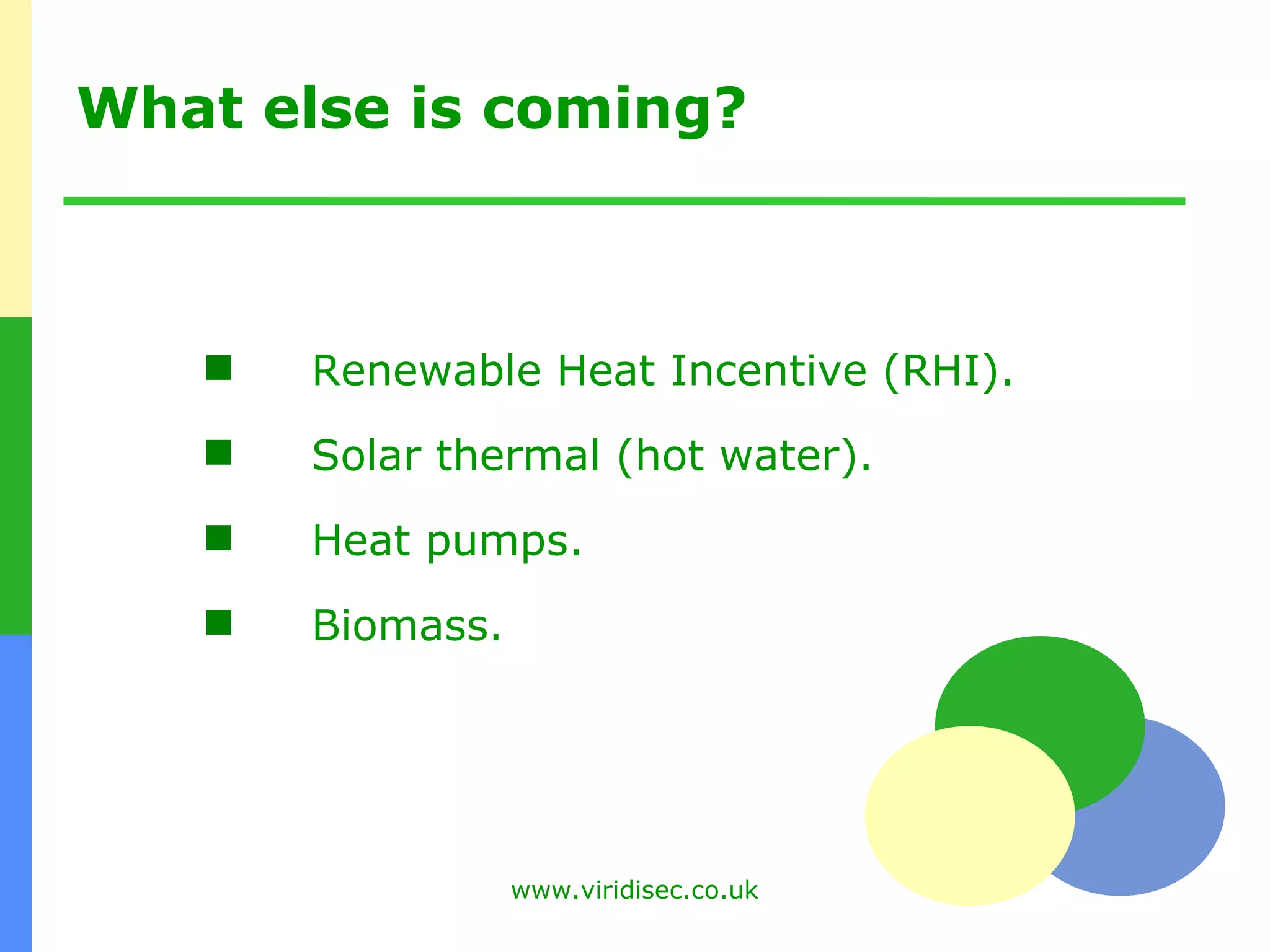
What else is coming? Renewable Heat Incentive (RHI). Solar thermal (hot water). Heat pumps. Biomass.
What's that? Due in April 2011. Similar process. Different levels of payment.
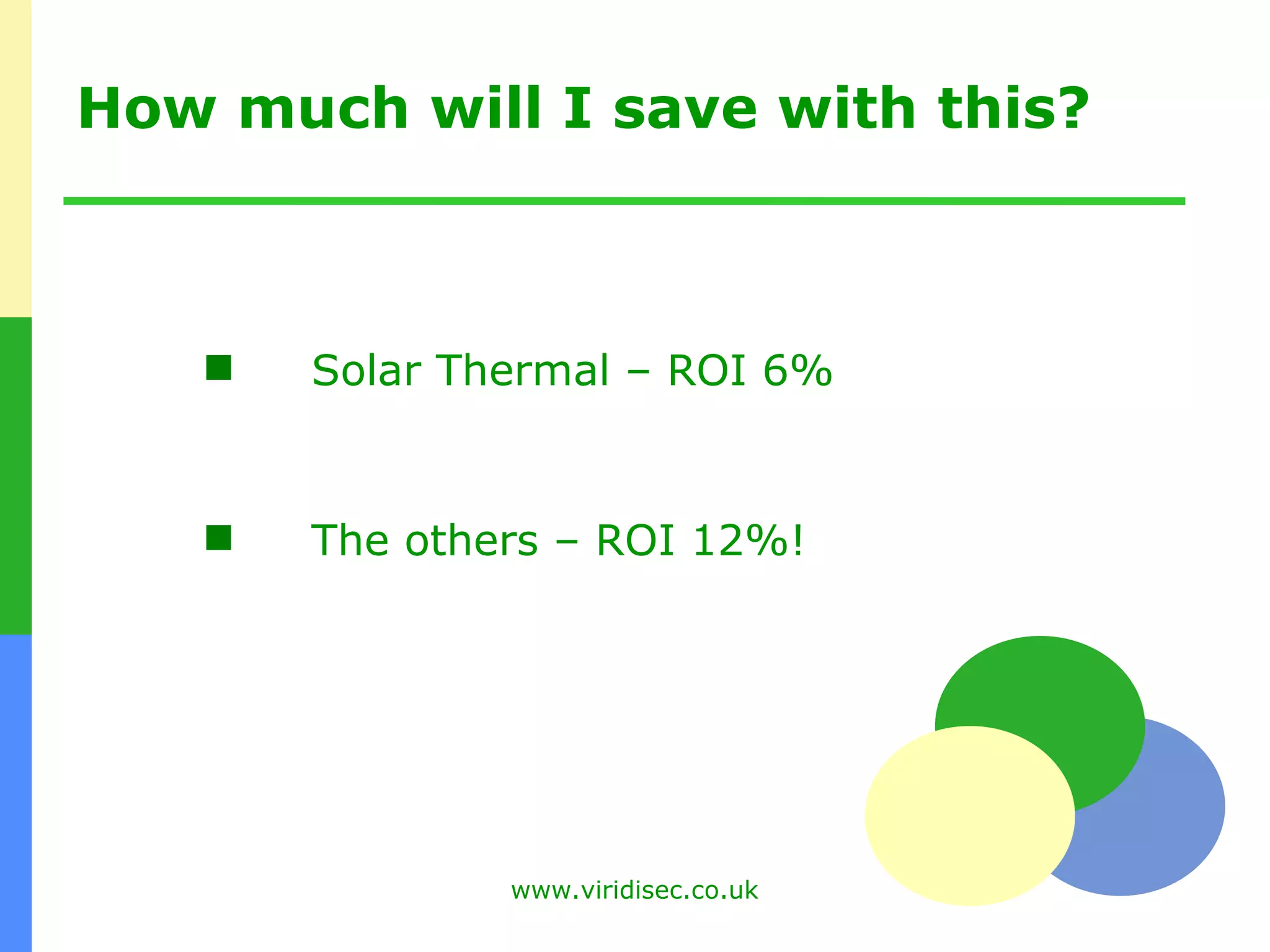
How much will I save with this? Solar Thermal – ROI 6% The others – ROI 12%!
Interested??? Speak to Me!! Barry Nutley (Greenenergychap) 0845 437 4484 www.viridisec.co.uk [email_address]
Presented by Barry Nutley (Greenenergychap)

Viridis pp

  • 1.
    The independent renewableenergy consultants
  • 2.
    Feed in Tariff(FIT)- April 2010 Renewable Heat incentive (RHI)- April 2011 Clean Energy Cashback Renewable energy is profitable!
  • 3.
    Feed In TariffGenerate your own electricity. Solar (PV). Wind turbines. Others
  • 4.
    How does itwork? Get paid for generating electricity regardless. Savings on using electricity generated Paid for “exporting” excess.
  • 5.
    What else? FITpayments guaranteed for up to 25 yrs. Payments index linked. Tax free for domestic.
  • 6.
  • 7.
    What are thepayments? FIT payments up to 43.1p/KWh Market average price for electricity-11p/KWh. “ Export”- 3p/KWh
  • 8.
    So how muchwill I save? Generate 2000KWh/a FIT - £826 Savings - £110 “ Export” - £30 Total - £966
  • 9.
    How much willit cost me? £12-£13k. VAT- 5%! MCS accredited installer.
  • 10.
    Is that goodthen? ROI - > 8%/annum Bank - < 1.5%/annum! Bank after 25 yrs @ 4% - £32K (pre tax) Solar - £40k after 25yrs (Tax free!).
  • 11.
    Don't take myword for it! Commercial “Roof Renting” Private investors Pension funds
  • 12.
    Why are theydoing it? Returns are much higher! Cheaper cost per Kwp installed. Guaranteed!!!
  • 13.
    Who pays forit? Not the Government! Your energy supplier! You and Me!
  • 14.
    How Much willit cost us then? Germany World leaders. Suggested 1.5% - 2%.
  • 15.
    What other reasons?PR! Great “green story” Code for Sustainable Homes CRC! Feel good!
  • 16.
    What else iscoming? Renewable Heat Incentive (RHI). Solar thermal (hot water). Heat pumps. Biomass.
  • 17.
    What's that? Duein April 2011. Similar process. Different levels of payment.
  • 18.
    How much willI save with this? Solar Thermal – ROI 6% The others – ROI 12%!
  • 19.
    Interested??? Speak toMe!! Barry Nutley (Greenenergychap) 0845 437 4484 www.viridisec.co.uk [email_address]
  • 20.
    Presented by BarryNutley (Greenenergychap)

Editor's Notes

  • #2 Frequently, presenters must deliver material of a technical nature to an audience unfamiliar with the topic or vocabulary. The material may be complex or heavy with detail. To present technical material effectively, use the following guidelines from Dale Carnegie Training®.   Consider the amount of time available and prepare to organize your material. Narrow your topic. Divide your presentation into clear segments. Follow a logical progression. Maintain your focus throughout. Close the presentation with a summary, repetition of the key steps, or a logical conclusion.   Keep your audience in mind at all times. For example, be sure data is clear and information is relevant. Keep the level of detail and vocabulary appropriate for the audience. Use visuals to support key points or steps. Keep alert to the needs of your listeners, and you will have a more receptive audience.
  • #3 In your opening, establish the relevancy of the topic to the audience. Give a brief preview of the presentation and establish value for the listeners. Take into account your audience’s interest and expertise in the topic when choosing your vocabulary, examples, and illustrations. Focus on the importance of the topic to your audience, and you will have more attentive listeners.
  • #4 If you have several points, steps, or key ideas use multiple slides. Determine if your audience is to understand a new idea, learn a process, or receive greater depth to a familiar concept. Back up each point with adequate explanation. As appropriate, supplement your presentation with technical support data in hard copy or on disc, e-mail, or the Internet. Develop each point adequately to communicate with your audience.
  • #5 Determine the best close for your audience and your presentation. Close with a summary; offer options; recommend a strategy; suggest a plan; set a goal. Keep your focus throughout your presentation, and you will more likely achieve your purpose.
  • #21 Frequently, presenters must deliver material of a technical nature to an audience unfamiliar with the topic or vocabulary. The material may be complex or heavy with detail. To present technical material effectively, use the following guidelines from Dale Carnegie Training®.   Consider the amount of time available and prepare to organize your material. Narrow your topic. Divide your presentation into clear segments. Follow a logical progression. Maintain your focus throughout. Close the presentation with a summary, repetition of the key steps, or a logical conclusion.   Keep your audience in mind at all times. For example, be sure data is clear and information is relevant. Keep the level of detail and vocabulary appropriate for the audience. Use visuals to support key points or steps. Keep alert to the needs of your listeners, and you will have a more receptive audience.