START
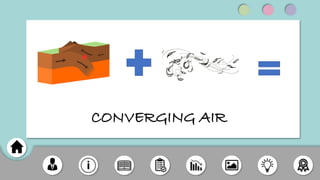
CONVERGING AIR
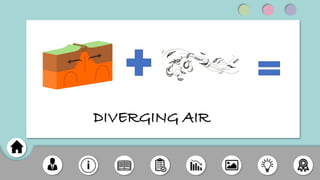
DIVERGING AIR
RISING AIR
SINKING AIR
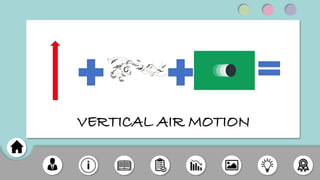
VERTICAL AIR MOTION
VERTICAL AIR
MOTION
Key Terms;
Converging Air
Diverging Air
Rising Air
Sinking Air
Vertical Air Motion
Presented by:
Neil
Fernandez
In this discussion, challenge yourself to attain the
following learning outcomes, the students should be
able to;
 understand how air moves in vertical motion.
 differentiate low pressure from high pressure
system.
 illustrate the (2) Air Pressure system which is the
high and Low pressure and;
 give the four major common trigger action
causing vertical motion of air.
Vertical Air Motion
 The vertical movement of air is called “Air
Current”.
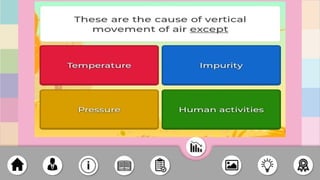
 Air currents can be caused by differences in
temperature, pressure, or impurity
concentration.
 At Low pressure centers, air rises. At High
pressure centers, air sinks toward the surface.
There are two types
of Air Pressure system
in Vertical Motion
The high-pressure system is
relative to the air around it. As
the air starts becoming warm or
cold, it can be said that a high-
pressure system has been
created. The high-pressure
system is composed of air that
is heavy and cool. In the high-
pressure system, the air is not
rising and forming clouds.
Therefore the weather remains
comfortable, and skies stay
clear.
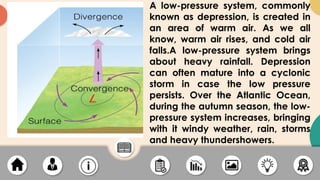
A low-pressure system, commonly
known as depression, is created in
an area of warm air. As we all
know, warm air rises, and cold air
falls.A low-pressure system brings
about heavy rainfall. Depression
can often mature into a cyclonic
storm in case the low pressure
persists. Over the Atlantic Ocean,
during the autumn season, the low-
pressure system increases, bringing
with it windy weather, rain, storms
and heavy thundershowers.
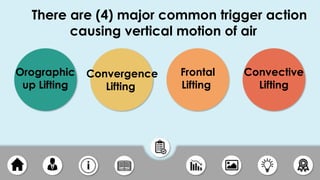
There are (4) major common trigger action
causing vertical motion of air
Frontal
Lifting
Convergence
Lifting
Orographic
up Lifting
Convective
Lifting
Orographic Lifting
 occurs when air is lifted over an
obstacle, like a mountain.
Often, as air masses move
driven by large-scale winds,
they encounter an obstacle
with a slope that will push the
air mass upward.
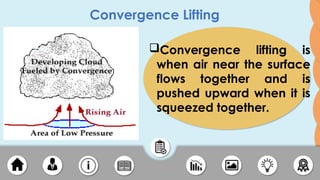
Convergence Lifting
Convergence lifting is
when air near the surface
flows together and is
pushed upward when it is
squeezed together.
Frontal Lifting
Frontal lifting occurs when a
warmer air mass meets a
colder one. Since warm air is
less dense than cold, a warm
air mass approaching a cold
one will ascend over the cold
air.
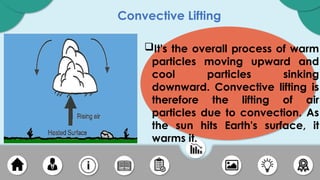
Convective Lifting
It's the overall process of warm
particles moving upward and
cool particles sinking
downward. Convective lifting is
therefore the lifting of air
particles due to convection. As
the sun hits Earth's surface, it
warms it.
THANK YOU
QUIZ TIME!
VERTICAL-AIR-MOTION and its importance.pptx

VERTICAL-AIR-MOTION and its importance.pptx

  • 1.
  • 3.
  • 4.
  • 5.
  • 6.
  • 7.
  • 8.
  • 9.
    Key Terms; Converging Air DivergingAir Rising Air Sinking Air Vertical Air Motion
  • 10.
  • 11.
    In this discussion,challenge yourself to attain the following learning outcomes, the students should be able to;  understand how air moves in vertical motion.  differentiate low pressure from high pressure system.  illustrate the (2) Air Pressure system which is the high and Low pressure and;  give the four major common trigger action causing vertical motion of air.
  • 12.
    Vertical Air Motion The vertical movement of air is called “Air Current”.  Air currents can be caused by differences in temperature, pressure, or impurity concentration.  At Low pressure centers, air rises. At High pressure centers, air sinks toward the surface.
  • 13.
    There are twotypes of Air Pressure system in Vertical Motion
  • 16.
    The high-pressure systemis relative to the air around it. As the air starts becoming warm or cold, it can be said that a high- pressure system has been created. The high-pressure system is composed of air that is heavy and cool. In the high- pressure system, the air is not rising and forming clouds. Therefore the weather remains comfortable, and skies stay clear.
  • 17.
    A low-pressure system,commonly known as depression, is created in an area of warm air. As we all know, warm air rises, and cold air falls.A low-pressure system brings about heavy rainfall. Depression can often mature into a cyclonic storm in case the low pressure persists. Over the Atlantic Ocean, during the autumn season, the low- pressure system increases, bringing with it windy weather, rain, storms and heavy thundershowers.
  • 18.
    There are (4)major common trigger action causing vertical motion of air Frontal Lifting Convergence Lifting Orographic up Lifting Convective Lifting
  • 19.
    Orographic Lifting  occurswhen air is lifted over an obstacle, like a mountain. Often, as air masses move driven by large-scale winds, they encounter an obstacle with a slope that will push the air mass upward.
  • 20.
    Convergence Lifting Convergence liftingis when air near the surface flows together and is pushed upward when it is squeezed together.
  • 21.
    Frontal Lifting Frontal liftingoccurs when a warmer air mass meets a colder one. Since warm air is less dense than cold, a warm air mass approaching a cold one will ascend over the cold air.
  • 22.
    Convective Lifting It's theoverall process of warm particles moving upward and cool particles sinking downward. Convective lifting is therefore the lifting of air particles due to convection. As the sun hits Earth's surface, it warms it.
  • 23.
  • 24.