1
Reference Points
for
Precise Vehicle Placement
Shelton School District
ESD 113
Traffic Safety
Driver Risk Prevention Curriculum
2
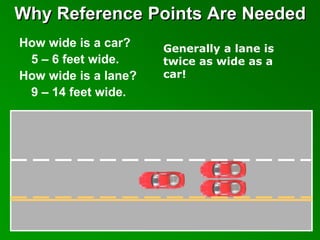
Why Reference Points Are Needed
How wide is a car?
5 – 6 feet wide.
How wide is a lane?
9 – 14 feet wide.
Generally a lane is
twice as wide as a
car!
3
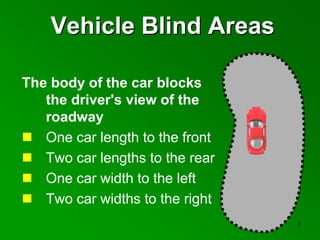
Vehicle Blind Areas
The body of the car blocks
the driver's view of the
roadway
 One car length to the front
 Two car lengths to the rear
 One car width to the left
 Two car widths to the right
4
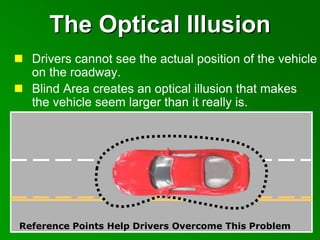
The Optical Illusion
 Drivers cannot see the actual position of the vehicle
on the roadway.
 Blind Area creates an optical illusion that makes
the vehicle seem larger than it really is.
Reference Points Help Drivers Overcome This Problem
5
Reference Points Defined
 A Reference Point is a place
on the vehicle that relates to
some part of the roadway
 Used for precision vehicle
placement
Reference: Mottola, F. R. (1997). “Empower Yourself with Zone Control Driving”
6
Advantages of Reference
Points
 Helps to overcome the optical illusion caused
by the body of the vehicle blocking the
drivers view of the operating space.
 Allows for accurate lane position adjustments.
 Allows drivers to confidently maneuver in
confined places.
 The reference points for one vehicle can be
applied to any vehicle.
7
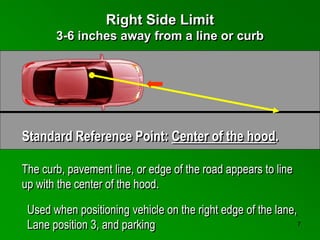
Right Side Limit
3-6 inches away from a line or curb
Used when positioning vehicle on the right edge of the lane,
Lane position 3, and parking
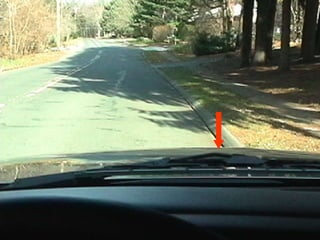
Standard Reference Point: Center of the hood.
The curb, pavement line, or edge of the road appears to line
up with the center of the hood.
8
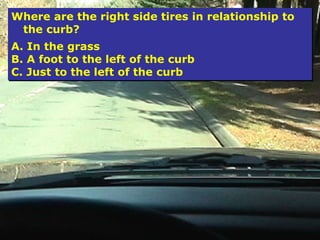
Where are the right side tires in relationship to
the curb?
A. In the grass
B. A foot to the left of the curb
C. Just to the left of the curb
9
10
11
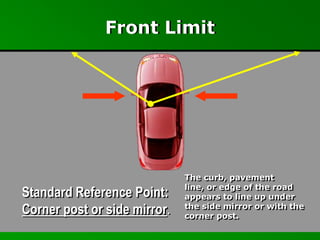
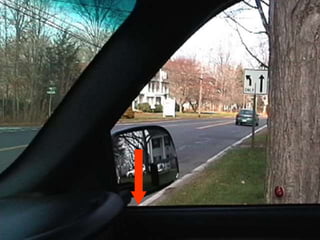
Front Limit
The curb, pavement
line, or edge of the road
appears to line up under
the side mirror or with the
corner post.
Standard Reference Point:
Corner post or side mirror.
12
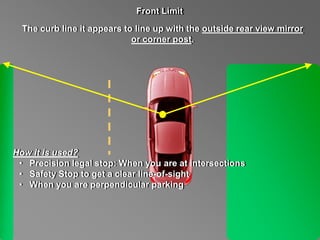
Front Limit
The curb line it appears to line up with the outside rear view mirror
or corner post.
How it is used?
• Precision legal stop: When you are at intersections
• Safety Stop to get a clear line-of-sight
• When you are perpendicular parking
13
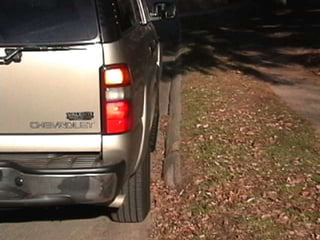
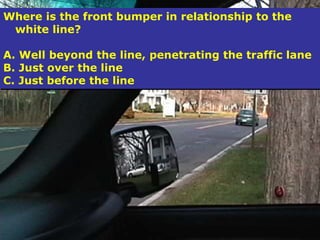
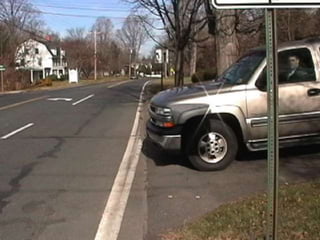
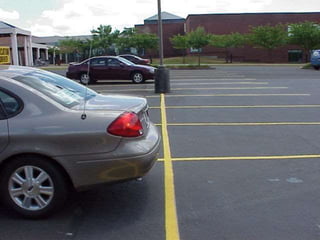
Where is the front bumper in relationship to the
white line?
A. Well beyond the line, penetrating the traffic lane
B. Just over the line
C. Just before the line
14
15
16
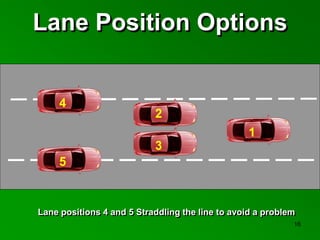
Lane Position Options
Lane positions 4 and 5 Straddling the line to avoid a problem
5
4
2
3
1
17
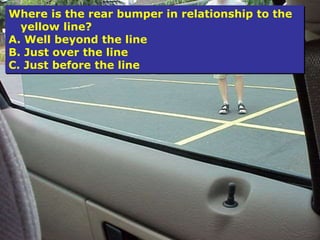
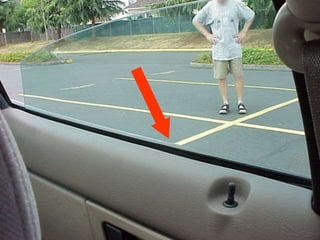
Where is the rear bumper in relationship to the
yellow line?
A. Well beyond the line
B. Just over the line
C. Just before the line
18
19
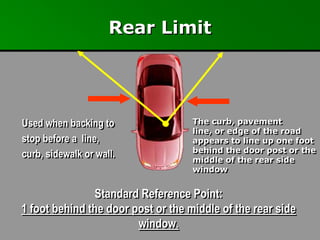
Rear Limit
The curb, pavement
line, or edge of the road
appears to line up one foot
behind the door post or the
middle of the rear side
window
Standard Reference Point:
1 foot behind the door post or the middle of the rear side
window.
Used when backing to
stop before a line,
curb, sidewalk or wall.
20
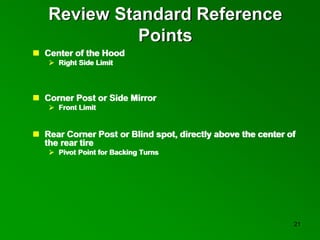
21
Review Standard Reference
Points
 Center of the Hood
 Right Side Limit
 Corner Post or Side Mirror
 Front Limit
 Rear Corner Post or Blind spot, directly above the center of
the rear tire
 Pivot Point for Backing Turns

Vehicle Reference points.ppt

  • 1.
    1 Reference Points for Precise VehiclePlacement Shelton School District ESD 113 Traffic Safety Driver Risk Prevention Curriculum
  • 2.
    2 Why Reference PointsAre Needed How wide is a car? 5 – 6 feet wide. How wide is a lane? 9 – 14 feet wide. Generally a lane is twice as wide as a car!
  • 3.
    3 Vehicle Blind Areas Thebody of the car blocks the driver's view of the roadway  One car length to the front  Two car lengths to the rear  One car width to the left  Two car widths to the right
  • 4.
    4 The Optical Illusion Drivers cannot see the actual position of the vehicle on the roadway.  Blind Area creates an optical illusion that makes the vehicle seem larger than it really is. Reference Points Help Drivers Overcome This Problem
  • 5.
    5 Reference Points Defined A Reference Point is a place on the vehicle that relates to some part of the roadway  Used for precision vehicle placement Reference: Mottola, F. R. (1997). “Empower Yourself with Zone Control Driving”
  • 6.
    6 Advantages of Reference Points Helps to overcome the optical illusion caused by the body of the vehicle blocking the drivers view of the operating space.  Allows for accurate lane position adjustments.  Allows drivers to confidently maneuver in confined places.  The reference points for one vehicle can be applied to any vehicle.
  • 7.
    7 Right Side Limit 3-6inches away from a line or curb Used when positioning vehicle on the right edge of the lane, Lane position 3, and parking Standard Reference Point: Center of the hood. The curb, pavement line, or edge of the road appears to line up with the center of the hood.
  • 8.
    8 Where are theright side tires in relationship to the curb? A. In the grass B. A foot to the left of the curb C. Just to the left of the curb
  • 9.
  • 10.
  • 11.
    11 Front Limit The curb,pavement line, or edge of the road appears to line up under the side mirror or with the corner post. Standard Reference Point: Corner post or side mirror.
  • 12.
    12 Front Limit The curbline it appears to line up with the outside rear view mirror or corner post. How it is used? • Precision legal stop: When you are at intersections • Safety Stop to get a clear line-of-sight • When you are perpendicular parking
  • 13.
    13 Where is thefront bumper in relationship to the white line? A. Well beyond the line, penetrating the traffic lane B. Just over the line C. Just before the line
  • 14.
  • 15.
  • 16.
    16 Lane Position Options Lanepositions 4 and 5 Straddling the line to avoid a problem 5 4 2 3 1
  • 17.
    17 Where is therear bumper in relationship to the yellow line? A. Well beyond the line B. Just over the line C. Just before the line
  • 18.
  • 19.
    19 Rear Limit The curb,pavement line, or edge of the road appears to line up one foot behind the door post or the middle of the rear side window Standard Reference Point: 1 foot behind the door post or the middle of the rear side window. Used when backing to stop before a line, curb, sidewalk or wall.
  • 20.
  • 21.
    21 Review Standard Reference Points Center of the Hood  Right Side Limit  Corner Post or Side Mirror  Front Limit  Rear Corner Post or Blind spot, directly above the center of the rear tire  Pivot Point for Backing Turns

Editor's Notes

  • #2 Revised 7-07
  • #3 When do we use reference points?
  • #4 Reference points help you know where you are in the void area.
  • #7 Where should you practice your reference points?
  • #8 Practice in the parking lot. Where is your reference point on the left side?
  • #9 How would you know you are in lane position 1?
  • #11 What should you use if you do NOT have a hood ornament?
  • #12 Are reference points same on different cars or people with different heights?
  • #17 When would you move to each of these lane positions- Make it easy for students to know these Airplane steward What is lane position 6- How often do you check it? Why?
  • #18 Revised 7-07