Vehicle
Reporting,
Logbook &
Vehicle
documentation.
glory and peace.
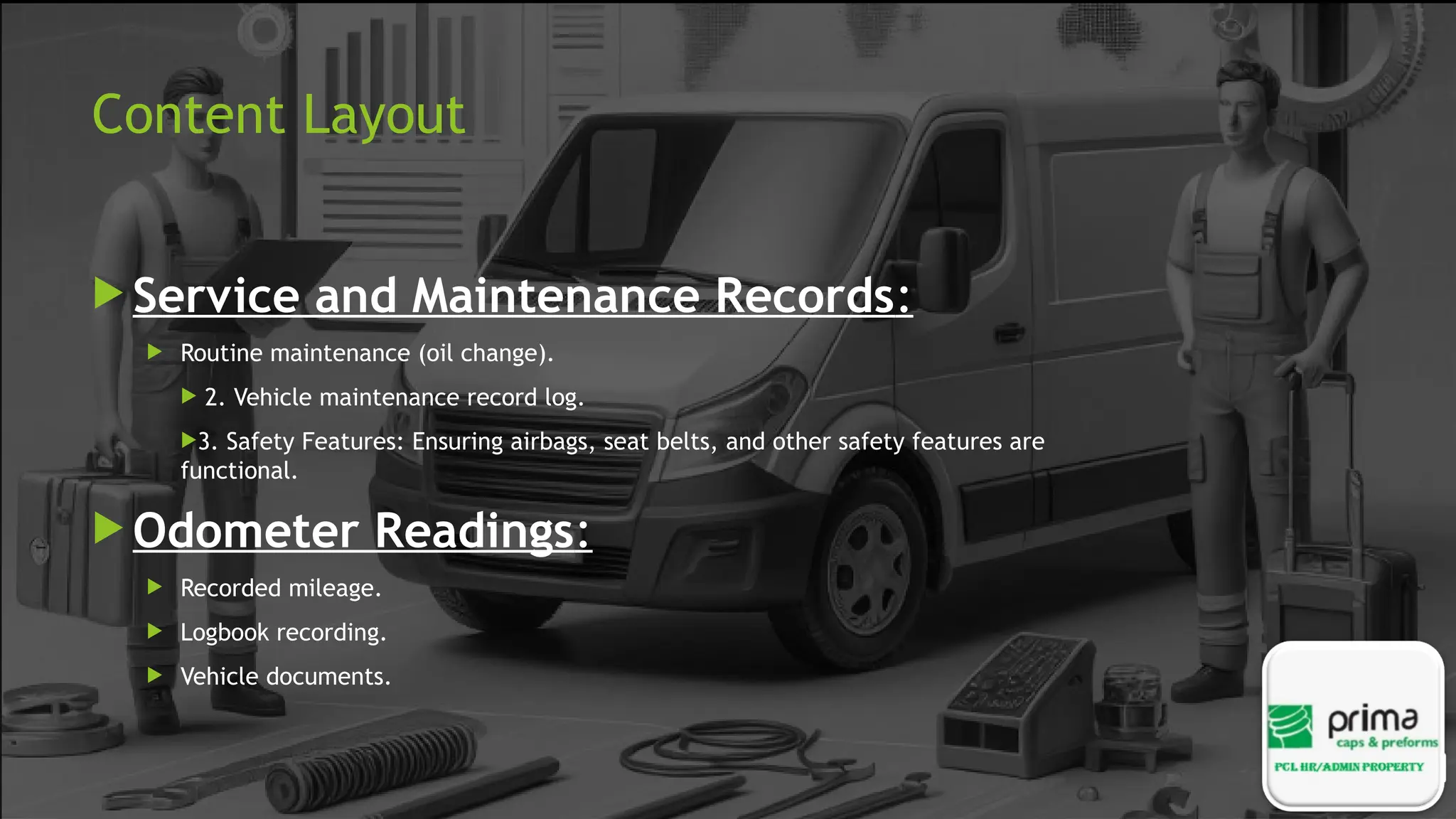
Content Layout
 Service and Maintenance Records:
 Routine maintenance (oil change).
 2. Vehicle maintenance record log.
3. Safety Features: Ensuring airbags, seat belts, and other safety features are
functional.
 Odometer Readings:
 Recorded mileage.
 Logbook recording.
 Vehicle documents.
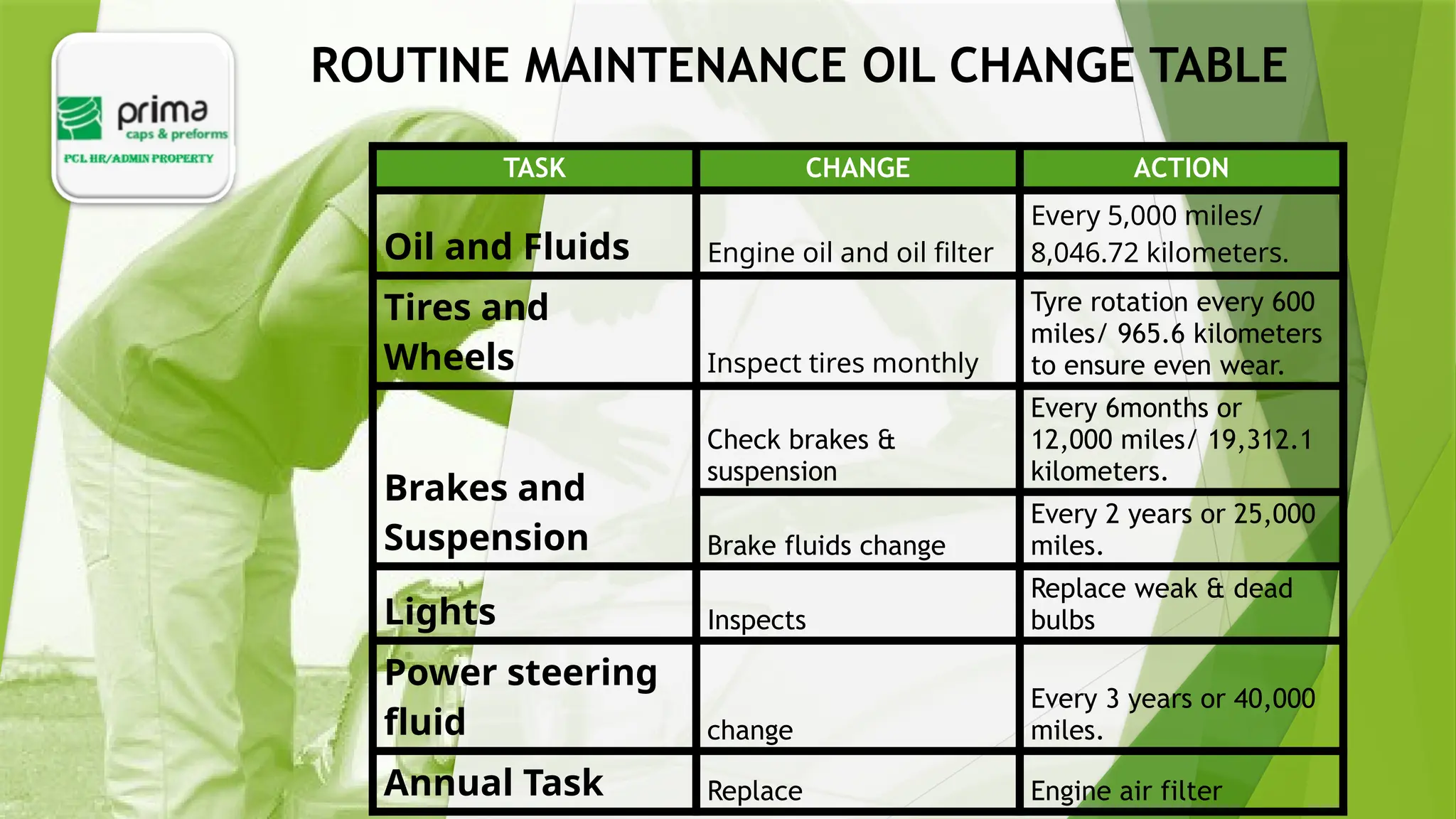
TASK CHANGE ACTION
Oil and Fluids Engine oil and oil filter
Every 5,000 miles/
8,046.72 kilometers.
Tires and
Wheels Inspect tires monthly
Tyre rotation every 600
miles/ 965.6 kilometers
to ensure even wear.
Brakes and
Suspension
Check brakes &
suspension
Every 6months or
12,000 miles/ 19,312.1
kilometers.
Brake fluids change
Every 2 years or 25,000
miles.
Lights Inspects
Replace weak & dead
bulbs
Power steering
fluid change
Every 3 years or 40,000
miles.
Annual Task Replace Engine air filter
ROUTINE MAINTENANCE OIL CHANGE TABLE
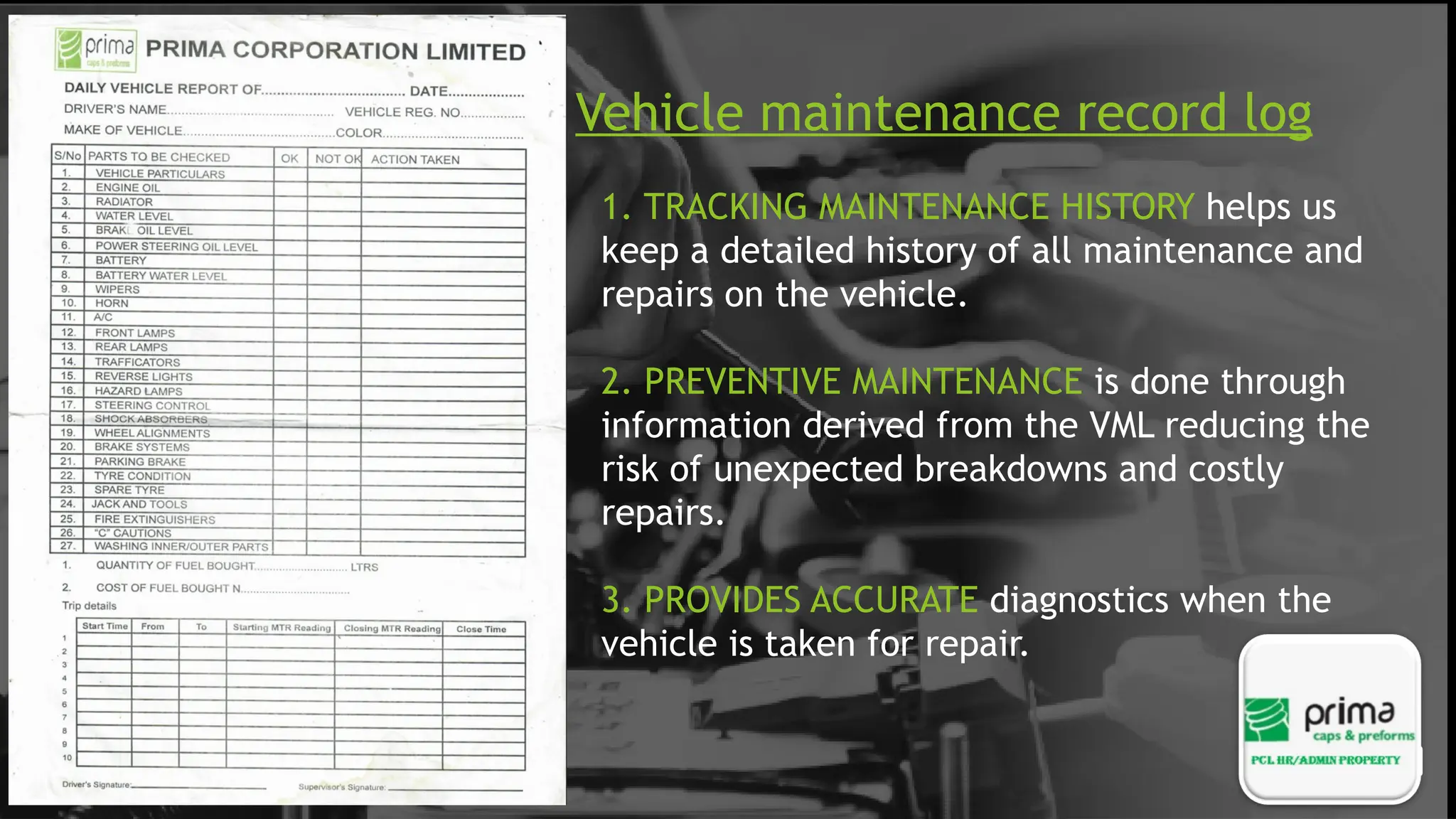
Vehicle maintenance record log
1. TRACKING MAINTENANCE HISTORY helps us
keep a detailed history of all maintenance and
repairs on the vehicle.
2. PREVENTIVE MAINTENANCE is done through
information derived from the VML reducing the
risk of unexpected breakdowns and costly
repairs.
3. PROVIDES ACCURATE diagnostics when the
vehicle is taken for repair.
Drivers Logbook Content
Logbook Key contents
1. Name & date
2. Journey from & To
3. Kilometer from & To
4. Petrol Position.
5. Petrol Purchased
6. Oil Purchased, optional.
7. Time Out & Time In.
8. Remarks
9. Drivers’ phone number
10.Vehicle Number.
Odometer Readings
Four importance of Odometer readings to understand.
• Maintenance & Repairs; Knowing the Odometer
reading helps in scheduling regular maintenance and
predicting potential repairs.
• Fuel Efficiency; Tracking mileage can help you
monitor fuel efficiency.
• Historical record; The reading provides a historical
record for understanding the overall condition and
longevity of the vehicle.
• Vehicle Value; The lower mileage often means less
wear and tear, making the vehicle more valuable.
Safety
features
check
A complete vehicle
safety kit will entail
the following,
1. First Aid kit.
2. Jumper cables.
3. C caution triangle.
4. Spare Tyre and Jack.
5. Flashlights.
6. Towing Rope.
7. Fire Extinguisher.
8. Extra Engine and Fan belts.
Your driver’s
license is the first
document most
road safety
administration
agencies personnel
will ask for
whenever your car
is stopped for
inspection and
document sighting.
Required List of Vehicle documents
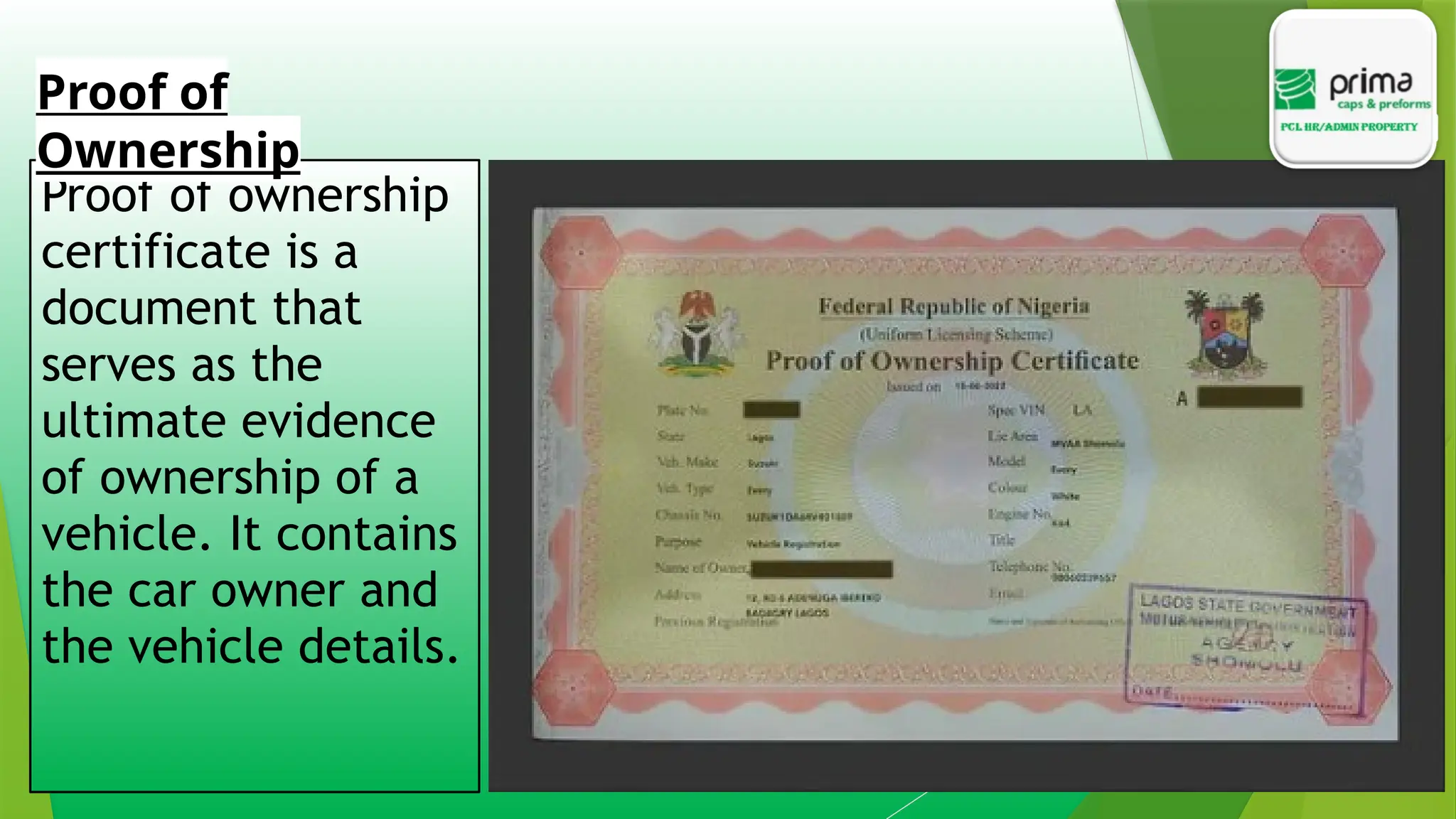
Proof of ownership
certificate is a
document that
serves as the
ultimate evidence
of ownership of a
vehicle. It contains
the car owner and
the vehicle details.
Proof of
Ownership
A vehicle license
is one of the
documents
issued by the
Federal Road
Safety Corps
(FRSC) in
Nigeria for all
vehicles. The
document
carries both
vehicle and
owner details,
and it’s
ROAD WORTHINESS CERTIFICATE
This certificate confirms
that your vehicle has been
certified roadworthy by
the appropriate
government agency, the
FRSC.
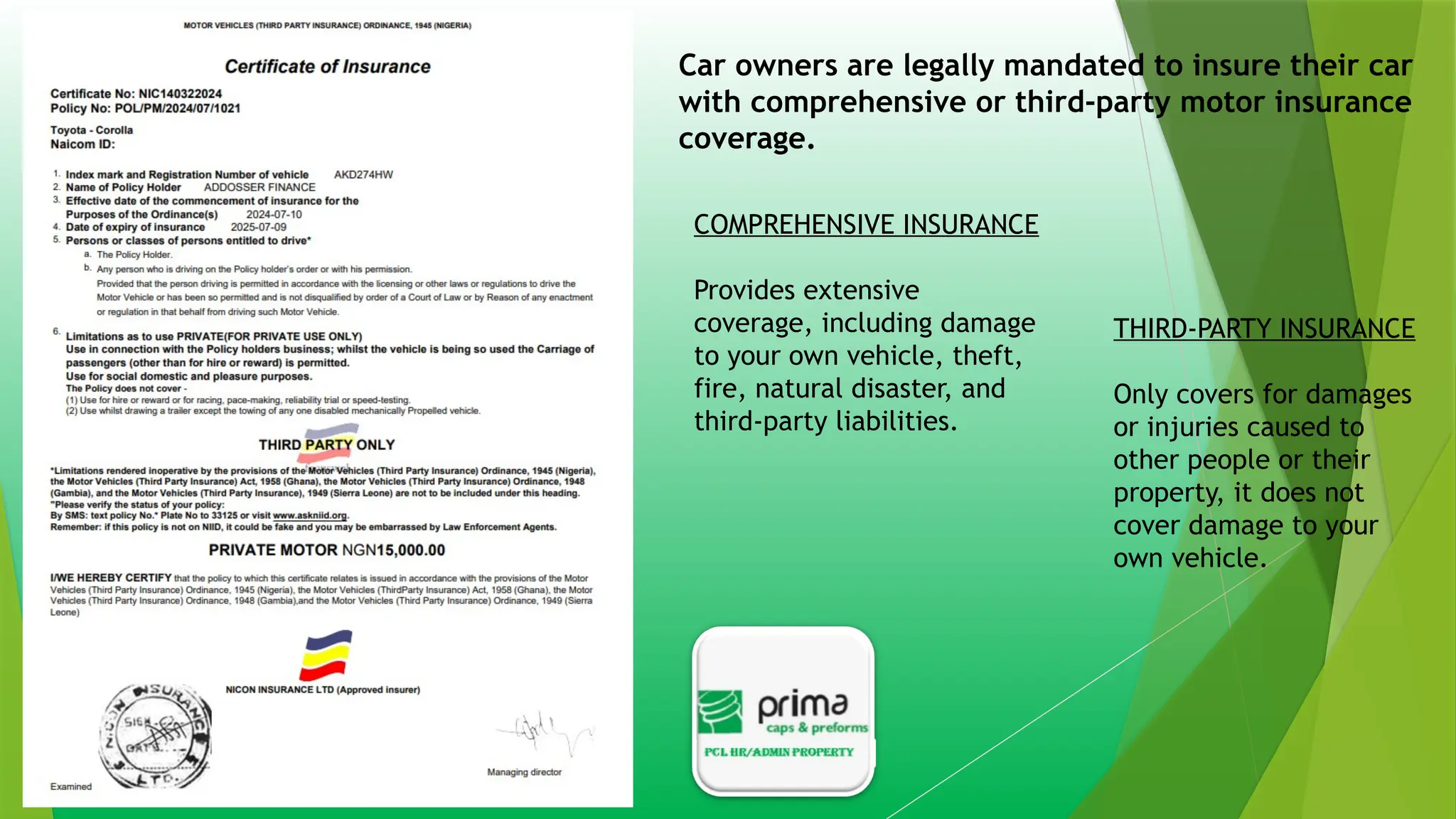
Car owners are legally mandated to insure their car
with comprehensive or third-party motor insurance
coverage.
COMPREHENSIVE INSURANCE
Provides extensive
coverage, including damage
to your own vehicle, theft,
fire, natural disaster, and
third-party liabilities.
THIRD-PARTY INSURANCE
Only covers for damages
or injuries caused to
other people or their
property, it does not
cover damage to your
own vehicle.
CMR, The central motor
registration shows that
your Engine number,
Chassis number, plate
number, vehicle owner’s
name and other related
documents are registered
in the central
computerised system of
the Nigerian police. This is
important in case of theft.
CONCLUSION
By ensuring accurate vehicle reporting
and thorough documentation, we not only
enhance operational efficiency but also
contribute to a safer and more
transparent fleet management system at
Prima Corp Ltd, Let’s drive into a future
where every vehicle is accounted for, and
every journey is documented.
Created by
Aaron Alaba Ileleji
www.primacorpltd.com
Thank you.
END

VEHICLE DEFECT REPORTING AND MAINTENACE LOGBOOK KEEPING.pptx

  • 1.
  • 2.
    Content Layout  Serviceand Maintenance Records:  Routine maintenance (oil change).  2. Vehicle maintenance record log. 3. Safety Features: Ensuring airbags, seat belts, and other safety features are functional.  Odometer Readings:  Recorded mileage.  Logbook recording.  Vehicle documents.
  • 3.
    TASK CHANGE ACTION Oiland Fluids Engine oil and oil filter Every 5,000 miles/ 8,046.72 kilometers. Tires and Wheels Inspect tires monthly Tyre rotation every 600 miles/ 965.6 kilometers to ensure even wear. Brakes and Suspension Check brakes & suspension Every 6months or 12,000 miles/ 19,312.1 kilometers. Brake fluids change Every 2 years or 25,000 miles. Lights Inspects Replace weak & dead bulbs Power steering fluid change Every 3 years or 40,000 miles. Annual Task Replace Engine air filter ROUTINE MAINTENANCE OIL CHANGE TABLE
  • 4.
    Vehicle maintenance recordlog 1. TRACKING MAINTENANCE HISTORY helps us keep a detailed history of all maintenance and repairs on the vehicle. 2. PREVENTIVE MAINTENANCE is done through information derived from the VML reducing the risk of unexpected breakdowns and costly repairs. 3. PROVIDES ACCURATE diagnostics when the vehicle is taken for repair.
  • 5.
    Drivers Logbook Content LogbookKey contents 1. Name & date 2. Journey from & To 3. Kilometer from & To 4. Petrol Position. 5. Petrol Purchased 6. Oil Purchased, optional. 7. Time Out & Time In. 8. Remarks 9. Drivers’ phone number 10.Vehicle Number.
  • 6.
    Odometer Readings Four importanceof Odometer readings to understand. • Maintenance & Repairs; Knowing the Odometer reading helps in scheduling regular maintenance and predicting potential repairs. • Fuel Efficiency; Tracking mileage can help you monitor fuel efficiency. • Historical record; The reading provides a historical record for understanding the overall condition and longevity of the vehicle. • Vehicle Value; The lower mileage often means less wear and tear, making the vehicle more valuable.
  • 7.
    Safety features check A complete vehicle safetykit will entail the following, 1. First Aid kit. 2. Jumper cables. 3. C caution triangle. 4. Spare Tyre and Jack. 5. Flashlights. 6. Towing Rope. 7. Fire Extinguisher. 8. Extra Engine and Fan belts.
  • 8.
    Your driver’s license isthe first document most road safety administration agencies personnel will ask for whenever your car is stopped for inspection and document sighting. Required List of Vehicle documents
  • 9.
    Proof of ownership certificateis a document that serves as the ultimate evidence of ownership of a vehicle. It contains the car owner and the vehicle details. Proof of Ownership
  • 10.
    A vehicle license isone of the documents issued by the Federal Road Safety Corps (FRSC) in Nigeria for all vehicles. The document carries both vehicle and owner details, and it’s
  • 11.
    ROAD WORTHINESS CERTIFICATE Thiscertificate confirms that your vehicle has been certified roadworthy by the appropriate government agency, the FRSC.
  • 12.
    Car owners arelegally mandated to insure their car with comprehensive or third-party motor insurance coverage. COMPREHENSIVE INSURANCE Provides extensive coverage, including damage to your own vehicle, theft, fire, natural disaster, and third-party liabilities. THIRD-PARTY INSURANCE Only covers for damages or injuries caused to other people or their property, it does not cover damage to your own vehicle.
  • 13.
    CMR, The centralmotor registration shows that your Engine number, Chassis number, plate number, vehicle owner’s name and other related documents are registered in the central computerised system of the Nigerian police. This is important in case of theft.
  • 14.
    CONCLUSION By ensuring accuratevehicle reporting and thorough documentation, we not only enhance operational efficiency but also contribute to a safer and more transparent fleet management system at Prima Corp Ltd, Let’s drive into a future where every vehicle is accounted for, and every journey is documented. Created by Aaron Alaba Ileleji www.primacorpltd.com Thank you.
  • 15.