Preventive Maintenance
Is the routine care you give your vehicle to avoid
more serious repairs
Tire Maintenance
• Proper size of tire on your car.
• Never mix different types of tires.
Inflation
Properly inflating the
tires ensures that they
will grip the road evenly
and wear at the same
rate.
 Under inflated = grip the road only at the
outside edges, which cause the tires to
squeal, makes steering more difficult, leads
to heat buildup, decreases fuel economy,
and wears the tires out faster.
 Over inflating = allows only the center of
the tires to grip the road, which leads to a
harder ride, a reduction in the depth of the
tires’ print, and faster wear.
 Check tire pressure at least once a month
or when you stop to get gas.
 Make sure that you do so only when the
tires are cold. Because the heat from friction
with the road causes air in the tires to
expand.
 When you check your regular tires,
remember also to check the spare.
 It is illegal, as well as dangerous, to drive
on tires that are badly worn.
 Most tires have tread-wear indicators that
tell you when they should be replaced.
 If your tires do not have tread-wear
indicators, you should replace the when the
tread wears down to no less than 1/8 inch.
 Look for bulges and embedded nails,
glass, or metal.
 For equal wear, tires should be rotated on
a regular basis, which means switching
them from front to rear.
Fluid Levels
Fluids are the
lifeblood of your
vehicle.
Oil
If you have any reason to
suspect a problem with your
oil or if the oil gauge/indicator
light is activated, stop the
vehicle immediately!
 If you keep driving, you may do
irreparably damage your vehicles engine.
 Running an engine without oil is a sure
death sentence for the engine.
 Check the oil level at least once a
month, more frequently on older cars.
 Change the oil at least every 2 to 3,000
miles.
 The oil level should be checked when
the engine is cool and not running.
Transmission Fluid
 The color of the fluid should be a
bright, cherry red.
 Have a mechanic examine the
transmission if the color is dark
and has a burnt smell.
 Transmission fluid should be
changed every 25,000 to 35,000
miles depending on the type of
vehicle.
Coolant
 Check the level of the coolant in the
radiator overflow tank.
 The engine could become
overheated and damaged if the level of
coolant is insufficient.
 The engine should be running while
the coolant is being added.
Other Fluids
 Make sure that there is enough
battery fluid for your battery.
Make sure that there is also
enough windshield washer
fluid in your car.
Brake Fluid
 Have the fluid level in the dual
master cylinder checked every
time you have the oil changed and
replace it at least once a year.
 Brake fluid attracts water from
condensation and humidity in the
air, causing corrosion in the
master and wheel cylinders and
shortening their lives.
Belts, Hoses, and Wires
BELTS
 Belts should feel tight when you push
down on them. The belt should be
tightened if you can push it down more
than ½ an inch.
 A loose belt can cause electrical system
problems, inefficient cooling, and
problems with power steering and air
conditioning.
HOSES
 Check all the hoses and the hose
connections for leaks.
WIRES
 Check all wires to make sure that they
are not loose, broken, or disconnected.
Also check for cracked insulation on the
wires.
 If there is a problem with the wires,
they should be fixed or replaced.
Brake Pads
The brakes are one
of the most
important features
on your car!!
Test the brakes by stepping on the
brake pedal. You should feel firm
resistance and you should come to
a smooth, direct stop. The pedal
should be well above the floor.
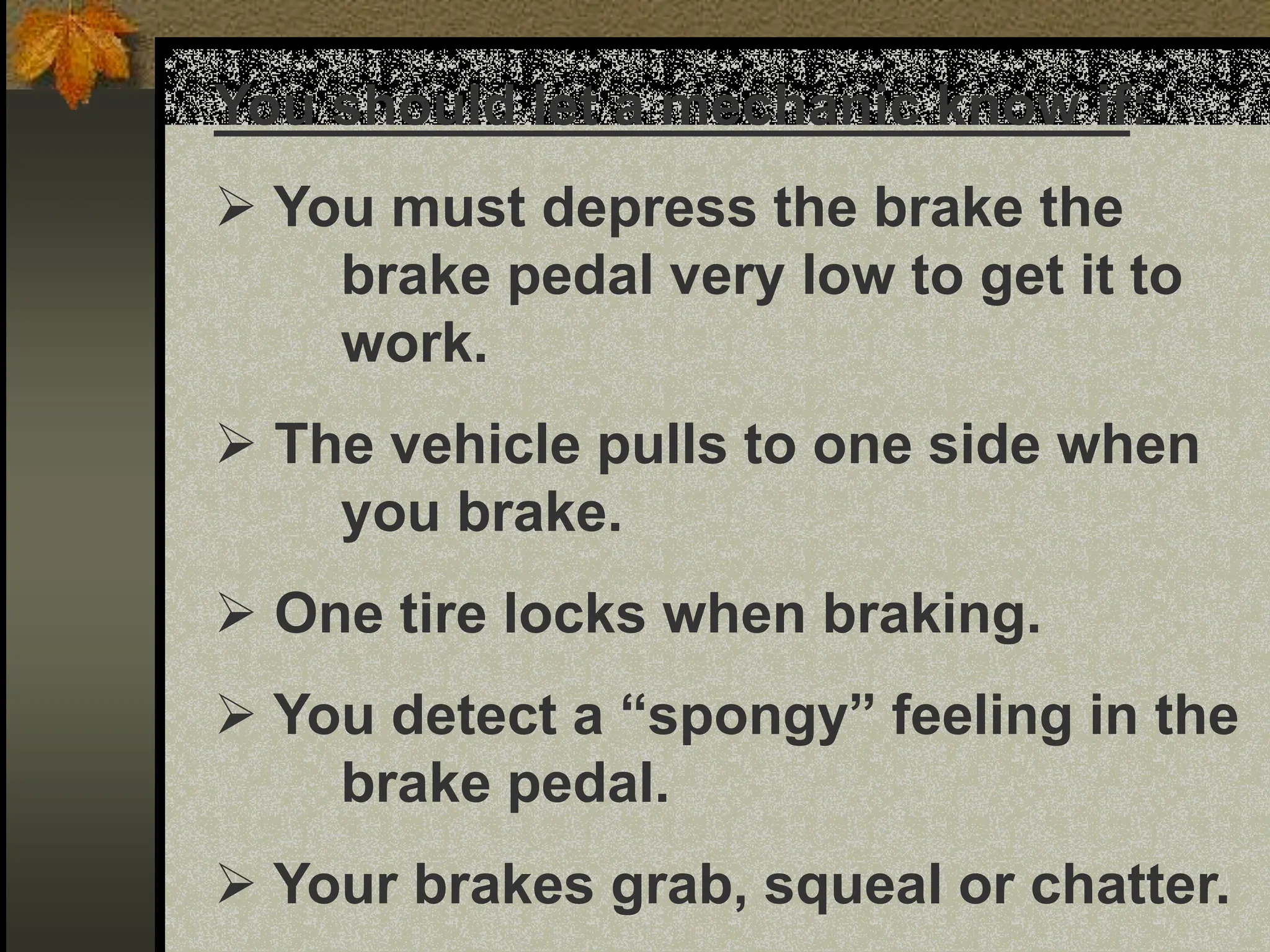
You should let a mechanic know if:
 You must depress the brake the
brake pedal very low to get it to
work.
 The vehicle pulls to one side when
you brake.
 One tire locks when braking.
 You detect a “spongy” feeling in the
brake pedal.
 Your brakes grab, squeal or chatter.
Engine
 The quickest way to diagnose
problems with your engine is
from your exhaust.
 Exhaust changes to a blue or
smoky white color = engine damage.
 Notice a foul, sulfuric odor like
rotten eggs, = a damaged catalytic
converter.
 Overheating can result from the
breakdown of you water pump or
thermostat. Suspicious knocking
noise, stop and turn off the engine.
Steering and
Suspension
Be alert to problems!
 Vibration of the steering wheel.
 Excessive “play” in the wheel.
 Difficulty in steering even though tires are
properly inflated.
 Feel a wobbling.
 Vehicles pulls to one side under normal
conditions.
 Experience considerable sway or bounce when
driving over a bump or turning corners.
 Detect rattling, could be faulty shocks.
Routine Maintenance Schedule
 Every week;
 Check oil, windshield washer
fluid, radiator coolant.
 Every month;
 Check the condition of the tires,
belts, hoses, automatic-
transmission fluid, brake fluid, and
power-steering fluid.
 Once a year;
 Check the air conditioner
refrigerant and shock absorbers.
 Replace the air filter and
windshield wiper blades.
 Flush out the radiator and refill
it with coolant.
 Hose down the undercarriage
to remove dirt and salt after a
cold driving season.
Check the headlight alignment.
http://www.motorist.org/e1.htm
http://www.geocities.com/MotorCity/
Series/2248/
7-evms.ppt

7-evms.ppt

  • 2.
    Preventive Maintenance Is theroutine care you give your vehicle to avoid more serious repairs Tire Maintenance • Proper size of tire on your car. • Never mix different types of tires.
  • 3.
    Inflation Properly inflating the tiresensures that they will grip the road evenly and wear at the same rate.  Under inflated = grip the road only at the outside edges, which cause the tires to squeal, makes steering more difficult, leads to heat buildup, decreases fuel economy, and wears the tires out faster.  Over inflating = allows only the center of the tires to grip the road, which leads to a harder ride, a reduction in the depth of the tires’ print, and faster wear.
  • 4.
     Check tirepressure at least once a month or when you stop to get gas.  Make sure that you do so only when the tires are cold. Because the heat from friction with the road causes air in the tires to expand.  When you check your regular tires, remember also to check the spare.  It is illegal, as well as dangerous, to drive on tires that are badly worn.
  • 5.
     Most tireshave tread-wear indicators that tell you when they should be replaced.  If your tires do not have tread-wear indicators, you should replace the when the tread wears down to no less than 1/8 inch.  Look for bulges and embedded nails, glass, or metal.  For equal wear, tires should be rotated on a regular basis, which means switching them from front to rear.
  • 6.
    Fluid Levels Fluids arethe lifeblood of your vehicle. Oil If you have any reason to suspect a problem with your oil or if the oil gauge/indicator light is activated, stop the vehicle immediately!
  • 7.
     If youkeep driving, you may do irreparably damage your vehicles engine.  Running an engine without oil is a sure death sentence for the engine.  Check the oil level at least once a month, more frequently on older cars.  Change the oil at least every 2 to 3,000 miles.  The oil level should be checked when the engine is cool and not running.
  • 8.
    Transmission Fluid  Thecolor of the fluid should be a bright, cherry red.  Have a mechanic examine the transmission if the color is dark and has a burnt smell.  Transmission fluid should be changed every 25,000 to 35,000 miles depending on the type of vehicle.
  • 9.
    Coolant  Check thelevel of the coolant in the radiator overflow tank.  The engine could become overheated and damaged if the level of coolant is insufficient.  The engine should be running while the coolant is being added.
  • 10.
    Other Fluids  Makesure that there is enough battery fluid for your battery. Make sure that there is also enough windshield washer fluid in your car.
  • 11.
    Brake Fluid  Havethe fluid level in the dual master cylinder checked every time you have the oil changed and replace it at least once a year.  Brake fluid attracts water from condensation and humidity in the air, causing corrosion in the master and wheel cylinders and shortening their lives.
  • 12.
    Belts, Hoses, andWires BELTS  Belts should feel tight when you push down on them. The belt should be tightened if you can push it down more than ½ an inch.  A loose belt can cause electrical system problems, inefficient cooling, and problems with power steering and air conditioning.
  • 13.
    HOSES  Check allthe hoses and the hose connections for leaks. WIRES  Check all wires to make sure that they are not loose, broken, or disconnected. Also check for cracked insulation on the wires.  If there is a problem with the wires, they should be fixed or replaced.
  • 14.
    Brake Pads The brakesare one of the most important features on your car!! Test the brakes by stepping on the brake pedal. You should feel firm resistance and you should come to a smooth, direct stop. The pedal should be well above the floor.
  • 15.
    You should leta mechanic know if:  You must depress the brake the brake pedal very low to get it to work.  The vehicle pulls to one side when you brake.  One tire locks when braking.  You detect a “spongy” feeling in the brake pedal.  Your brakes grab, squeal or chatter.
  • 16.
    Engine  The quickestway to diagnose problems with your engine is from your exhaust.  Exhaust changes to a blue or smoky white color = engine damage.  Notice a foul, sulfuric odor like rotten eggs, = a damaged catalytic converter.  Overheating can result from the breakdown of you water pump or thermostat. Suspicious knocking noise, stop and turn off the engine.
  • 17.
    Steering and Suspension Be alertto problems!  Vibration of the steering wheel.  Excessive “play” in the wheel.  Difficulty in steering even though tires are properly inflated.  Feel a wobbling.  Vehicles pulls to one side under normal conditions.  Experience considerable sway or bounce when driving over a bump or turning corners.  Detect rattling, could be faulty shocks.
  • 18.
    Routine Maintenance Schedule Every week;  Check oil, windshield washer fluid, radiator coolant.  Every month;  Check the condition of the tires, belts, hoses, automatic- transmission fluid, brake fluid, and power-steering fluid.
  • 19.
     Once ayear;  Check the air conditioner refrigerant and shock absorbers.  Replace the air filter and windshield wiper blades.  Flush out the radiator and refill it with coolant.  Hose down the undercarriage to remove dirt and salt after a cold driving season. Check the headlight alignment.
  • 20.