vCIO/vCISO IT and Security Strategy
Monthly Strategy Meetings
by Art Ocain, vCIO/vCISO at Airiam
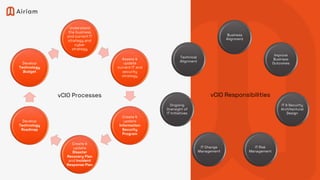
Understand
the business
and current IT
strategy and
cyber
strategy
Assess &
update
current IT and
security
strategy
Create &
update
Information
Security
Program
Create &
update
Disaster
Recovery Plan
and Incident
Response Plan
Develop
Technology
Roadmap
Develop
Technology
Budget
Business
Alignment
Improve
Business
Outcomes
IT & Security
Architectural
Design
IT Risk
Management
IT Change
Management
Ongoing
Oversight of
IT Initiatives
Technical
Alignment
vCIO Processes vCIO Responsibilities
Strategic Planning
IT Strategy
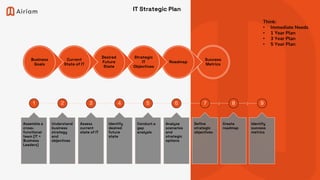
IT Strategic Plan
Think:
• Immediate Needs
• 1 Year Plan
• 3 Year Plan
• 5 Year Plan
1
Assemble a
cross-
functional
team (IT +
Business
Leaders)
2
Understand
business
strategy
and
objectives
3
Assess
current
state of IT
4
Identify
desired
future
state
5
Conduct a
gap
analysis
6
Analyze
scenarios
and
strategic
options
7
Define
strategic
objectives
8
Create
roadmap
9
Identify
success
metrics
Success
Metrics
Roadmap
Strategic
IT
Objectives
Desired
Future
State
Current
State of IT
Business
Goals
Strategic Planning
Information Security Strategy
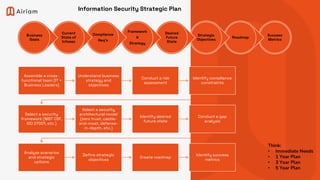
Information Security Strategic Plan
Think:
• Immediate Needs
• 1 Year Plan
• 3 Year Plan
• 5 Year Plan
Assemble a cross-
functional team (IT +
Business Leaders)
Understand business
strategy and
objectives
Conduct a risk
assessment
Identify compliance
constraints
Select a security
framework (NIST CSF,
ISO 27001, etc.)
Select a security
architectural model
(zero trust, castle-
and-moat, defense-
in-depth, etc.)
Identify desired
future state
Conduct a gap
analysis
Analyze scenarios
and strategic
options
Define strategic
objectives
Create roadmap
Identify success
metrics
Success
Metrics
Roadmap
Strategic
Objectives
Desired
Future
State
Framework
&
Strategy
Compliance
Req’s
Current
State of
Infosec
Business
Goals
Cybersecurity
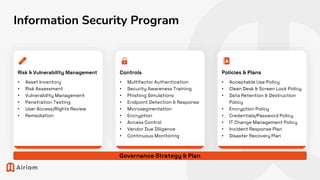
Information Security Program
Risk & Vulnerability Management Controls Policies & Plans
• Asset Inventory
• Risk Assessment
• Vulnerability Management
• Penetration Testing
• User Access/Rights Review
• Remediation
• Multifactor Authentication
• Security Awareness Training
• Phishing Simulations
• Endpoint Detection & Response
• Microsegmentation
• Encryption
• Access Control
• Vendor Due Diligence
• Continuous Monitoring
• Acceptable Use Policy
• Clean Desk & Screen Lock Policy
• Data Retention & Destruction
Policy
• Encryption Policy
• Credentials/Password Policy
• IT Change Management Policy
• Incident Response Plan
• Disaster Recovery Plan
Information Security Program
Governance Strategy & Plan

vCIO vCISO - Information Technology and Security Strategy.pptx

  • 1.
    vCIO/vCISO IT andSecurity Strategy Monthly Strategy Meetings by Art Ocain, vCIO/vCISO at Airiam
  • 2.
    Understand the business and currentIT strategy and cyber strategy Assess & update current IT and security strategy Create & update Information Security Program Create & update Disaster Recovery Plan and Incident Response Plan Develop Technology Roadmap Develop Technology Budget Business Alignment Improve Business Outcomes IT & Security Architectural Design IT Risk Management IT Change Management Ongoing Oversight of IT Initiatives Technical Alignment vCIO Processes vCIO Responsibilities
  • 3.
  • 4.
    IT Strategic Plan Think: •Immediate Needs • 1 Year Plan • 3 Year Plan • 5 Year Plan 1 Assemble a cross- functional team (IT + Business Leaders) 2 Understand business strategy and objectives 3 Assess current state of IT 4 Identify desired future state 5 Conduct a gap analysis 6 Analyze scenarios and strategic options 7 Define strategic objectives 8 Create roadmap 9 Identify success metrics Success Metrics Roadmap Strategic IT Objectives Desired Future State Current State of IT Business Goals
  • 5.
  • 6.
    Information Security StrategicPlan Think: • Immediate Needs • 1 Year Plan • 3 Year Plan • 5 Year Plan Assemble a cross- functional team (IT + Business Leaders) Understand business strategy and objectives Conduct a risk assessment Identify compliance constraints Select a security framework (NIST CSF, ISO 27001, etc.) Select a security architectural model (zero trust, castle- and-moat, defense- in-depth, etc.) Identify desired future state Conduct a gap analysis Analyze scenarios and strategic options Define strategic objectives Create roadmap Identify success metrics Success Metrics Roadmap Strategic Objectives Desired Future State Framework & Strategy Compliance Req’s Current State of Infosec Business Goals
  • 7.
  • 8.
    Risk & VulnerabilityManagement Controls Policies & Plans • Asset Inventory • Risk Assessment • Vulnerability Management • Penetration Testing • User Access/Rights Review • Remediation • Multifactor Authentication • Security Awareness Training • Phishing Simulations • Endpoint Detection & Response • Microsegmentation • Encryption • Access Control • Vendor Due Diligence • Continuous Monitoring • Acceptable Use Policy • Clean Desk & Screen Lock Policy • Data Retention & Destruction Policy • Encryption Policy • Credentials/Password Policy • IT Change Management Policy • Incident Response Plan • Disaster Recovery Plan Information Security Program Governance Strategy & Plan