1
Variable Rate Technology
Show me where the numbers add up.
A Northern Mallee Prospective
By Alistair Murdoch
Farmer
2
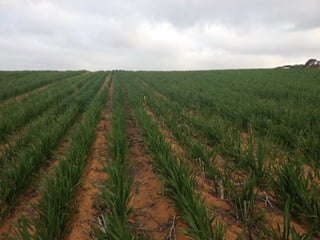
Limited Root Access too Inter- Row Nutrients
3
Introduction
• What we were looking to control with VRT
• How we developed a stable layer.
• Ongoing evaluation of our spatial
management.
• Economics: Our experience
4
Better Allocation of Input $
• A run of poor seasons in the early to mid
2000’s had us questioning our fertiliser
spend.
• Dune – Swale land formation, so large soil
type variability.
• Need to allocate inputs to PAW
• Massive difference in nutrient removal
• Technology was pretty well there.
5
Implementation
Developing a stable layer
• Elevation ?
• We had no yield maps?
• Ground truthing?
• EM 38?
• Gama?
• Limited NDVI?
6
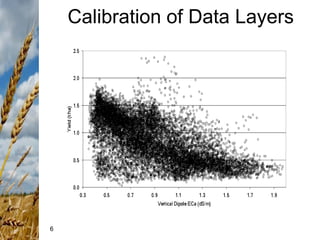
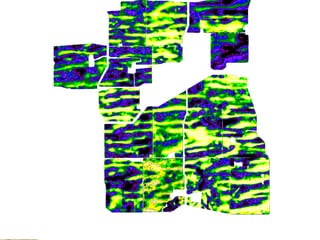
Calibration of Data Layers
7
8
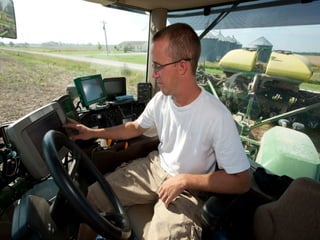
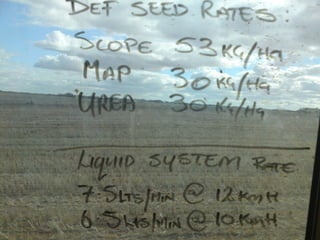
Getting the Data to the Ground
• Having the data file in a readable
format for the task controller.
• Knowing your systems strengths and
weaknesses
• Technology today has data transfer as
a key priority
9
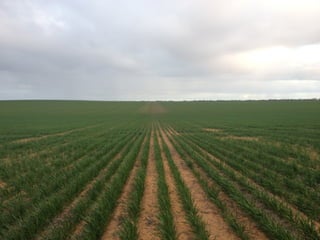
Low NLarge Amounts of Sulphur and Nitrogen Deficiency
10
11
Ongoing Evaluation
• Test strips at planting– 0 and 2X rates
• N Rich stripes
• NDVI and Yield Data
• Ground truthing
• Stacked data.
12
13
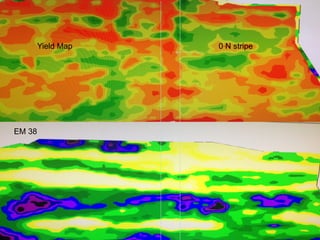
EM 38
Yield Map 0 N stripe
14
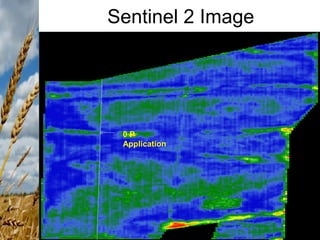
Sentinel 2 Image
15
0 P
Application
16
17
VRT use on-farm Today
• VR Fertiliser and Seed at Sowing
• VR Topdress of N and S with Kuhn
Spreader
• Split sowing of crop types with one
pass
• Some selective sprayer (Skelton Weed
and Couch Grass)
18
19
On Farm Economics
• Early N is Critical on Dunes: 1t/ha
advantage 2015
• P response is as much rotational as P
replacement.
• S Demand is closely linked to soil type.
• Not just macro nutrients that are worth
VR.
20
Take home message
• Identify what you are looking to spatially
manage.
• Reach out to others to determine an
effective entry data layer to get you
started.
• Committing the time to evaluate your
spatial management approach.

Variable Rate Technology in Mallee by Alistair Murdoch

  • 1.
    1 Variable Rate Technology Showme where the numbers add up. A Northern Mallee Prospective By Alistair Murdoch Farmer
  • 2.
    2 Limited Root Accesstoo Inter- Row Nutrients
  • 3.
    3 Introduction • What wewere looking to control with VRT • How we developed a stable layer. • Ongoing evaluation of our spatial management. • Economics: Our experience
  • 4.
    4 Better Allocation ofInput $ • A run of poor seasons in the early to mid 2000’s had us questioning our fertiliser spend. • Dune – Swale land formation, so large soil type variability. • Need to allocate inputs to PAW • Massive difference in nutrient removal • Technology was pretty well there.
  • 5.
    5 Implementation Developing a stablelayer • Elevation ? • We had no yield maps? • Ground truthing? • EM 38? • Gama? • Limited NDVI?
  • 6.
  • 7.
  • 8.
    8 Getting the Datato the Ground • Having the data file in a readable format for the task controller. • Knowing your systems strengths and weaknesses • Technology today has data transfer as a key priority
  • 9.
    9 Low NLarge Amountsof Sulphur and Nitrogen Deficiency
  • 10.
  • 11.
    11 Ongoing Evaluation • Teststrips at planting– 0 and 2X rates • N Rich stripes • NDVI and Yield Data • Ground truthing • Stacked data.
  • 12.
  • 13.
  • 14.
  • 15.
    Sentinel 2 Image 15 0P Application
  • 16.
  • 17.
    17 VRT use on-farmToday • VR Fertiliser and Seed at Sowing • VR Topdress of N and S with Kuhn Spreader • Split sowing of crop types with one pass • Some selective sprayer (Skelton Weed and Couch Grass)
  • 18.
  • 19.
    19 On Farm Economics •Early N is Critical on Dunes: 1t/ha advantage 2015 • P response is as much rotational as P replacement. • S Demand is closely linked to soil type. • Not just macro nutrients that are worth VR.
  • 20.
    20 Take home message •Identify what you are looking to spatially manage. • Reach out to others to determine an effective entry data layer to get you started. • Committing the time to evaluate your spatial management approach.