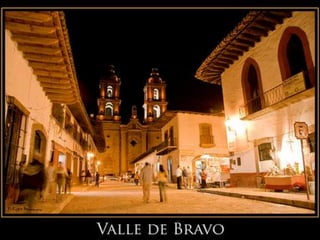
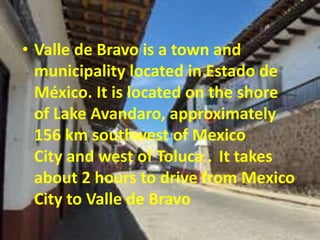
• Valle de Bravo is a town and
  municipality located in Estado de
  México. It is located on the shore
  of Lake Avandaro, approximately
  156 km southwest of Mexico
  City and west of Toluca . It takes
  about 2 hours to drive from Mexico
  City to Valle de Bravo
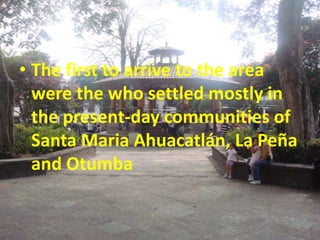
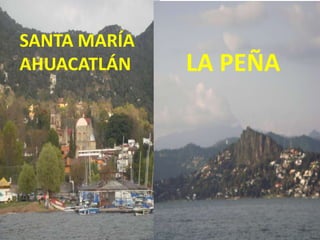
• The first to arrive to the area
  were the who settled mostly in
  the present-day communities of
  Santa Maria Ahuacatlán, La Peña
  and Otumba
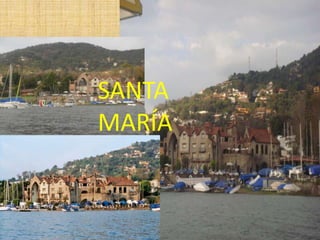
SANTA MARÍA
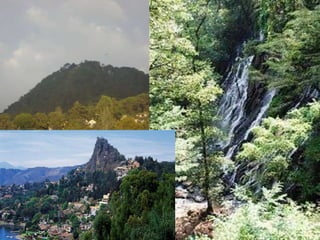
AHUACATLÁN    LA PEÑA
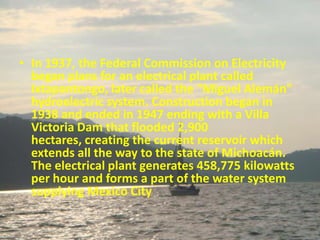
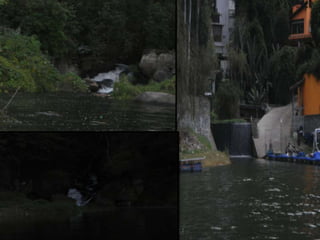
• In 1937, the Federal Commission on Electricity
  began plans for an electrical plant called
  Ixtapantongo, later called the "Miguel Alemán"
  hydroelectric system. Construction began in
  1938 and ended in 1947 ending with a Villa
  Victoria Dam that flooded 2,900
  hectares, creating the current reservoir which
  extends all the way to the state of Michoacán.
  The electrical plant generates 458,775 kilowatts
  per hour and forms a part of the water system
  supplying Mexico City
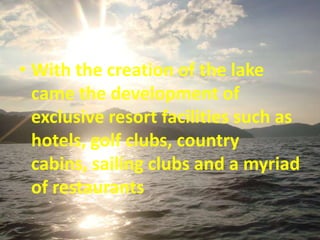
• With the creation of the lake
  came the development of
  exclusive resort facilities such as
  hotels, golf clubs, country
  cabins, sailing clubs and a myriad
  of restaurants
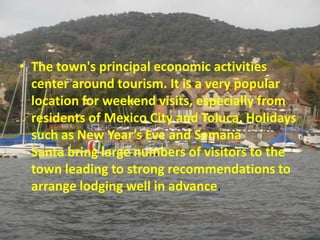
• The town's principal economic activities
  center around tourism. It is a very popular
  location for weekend visits, especially from
  residents of Mexico City and Toluca. Holidays
  such as New Year’s Eve and Semana
  Santa bring large numbers of visitors to the
  town leading to strong recommendations to
  arrange lodging well in advance.
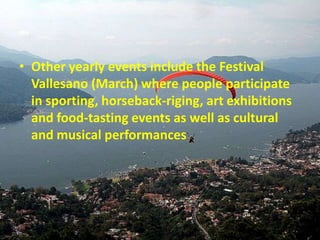
• Other yearly events include the Festival
  Vallesano (March) where people participate
  in sporting, horseback-riging, art exhibitions
  and food-tasting events as well as cultural
  and musical performances
• the largest annual celebration is the
  cultural festival known as the Festival de
  las Almas (Festival of the Souls) which has
  occurred each of the last five years in late
  September or early October.
• events centered on film, dance, art
  exhibitions, music, literature, workshops
  and theater, as well as Day of the
  Dead altars.
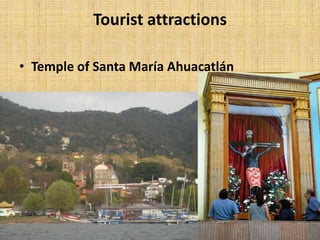
Tourist attractions

• Temple of Santa María Ahuacatlán
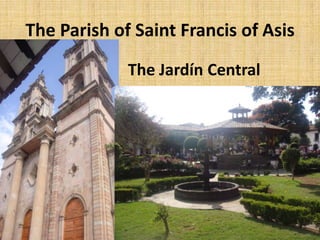
The Parish of Saint Francis of Asis
             The Jardín Central
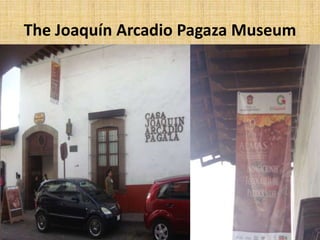
The Joaquín Arcadio Pagaza Museum
SANTA
MARÍA
valle de bravo

valle de bravo

  • 2.
    • Valle deBravo is a town and municipality located in Estado de México. It is located on the shore of Lake Avandaro, approximately 156 km southwest of Mexico City and west of Toluca . It takes about 2 hours to drive from Mexico City to Valle de Bravo
  • 3.
    • The firstto arrive to the area were the who settled mostly in the present-day communities of Santa Maria Ahuacatlán, La Peña and Otumba
  • 4.
  • 5.
    • In 1937,the Federal Commission on Electricity began plans for an electrical plant called Ixtapantongo, later called the "Miguel Alemán" hydroelectric system. Construction began in 1938 and ended in 1947 ending with a Villa Victoria Dam that flooded 2,900 hectares, creating the current reservoir which extends all the way to the state of Michoacán. The electrical plant generates 458,775 kilowatts per hour and forms a part of the water system supplying Mexico City
  • 7.
    • With thecreation of the lake came the development of exclusive resort facilities such as hotels, golf clubs, country cabins, sailing clubs and a myriad of restaurants
  • 8.
    • The town'sprincipal economic activities center around tourism. It is a very popular location for weekend visits, especially from residents of Mexico City and Toluca. Holidays such as New Year’s Eve and Semana Santa bring large numbers of visitors to the town leading to strong recommendations to arrange lodging well in advance.
  • 9.
    • Other yearlyevents include the Festival Vallesano (March) where people participate in sporting, horseback-riging, art exhibitions and food-tasting events as well as cultural and musical performances
  • 10.
    • the largestannual celebration is the cultural festival known as the Festival de las Almas (Festival of the Souls) which has occurred each of the last five years in late September or early October. • events centered on film, dance, art exhibitions, music, literature, workshops and theater, as well as Day of the Dead altars.
  • 11.
    Tourist attractions • Templeof Santa María Ahuacatlán
  • 12.
    The Parish ofSaint Francis of Asis The Jardín Central
  • 14.
    The Joaquín ArcadioPagaza Museum
  • 15.