Title Page
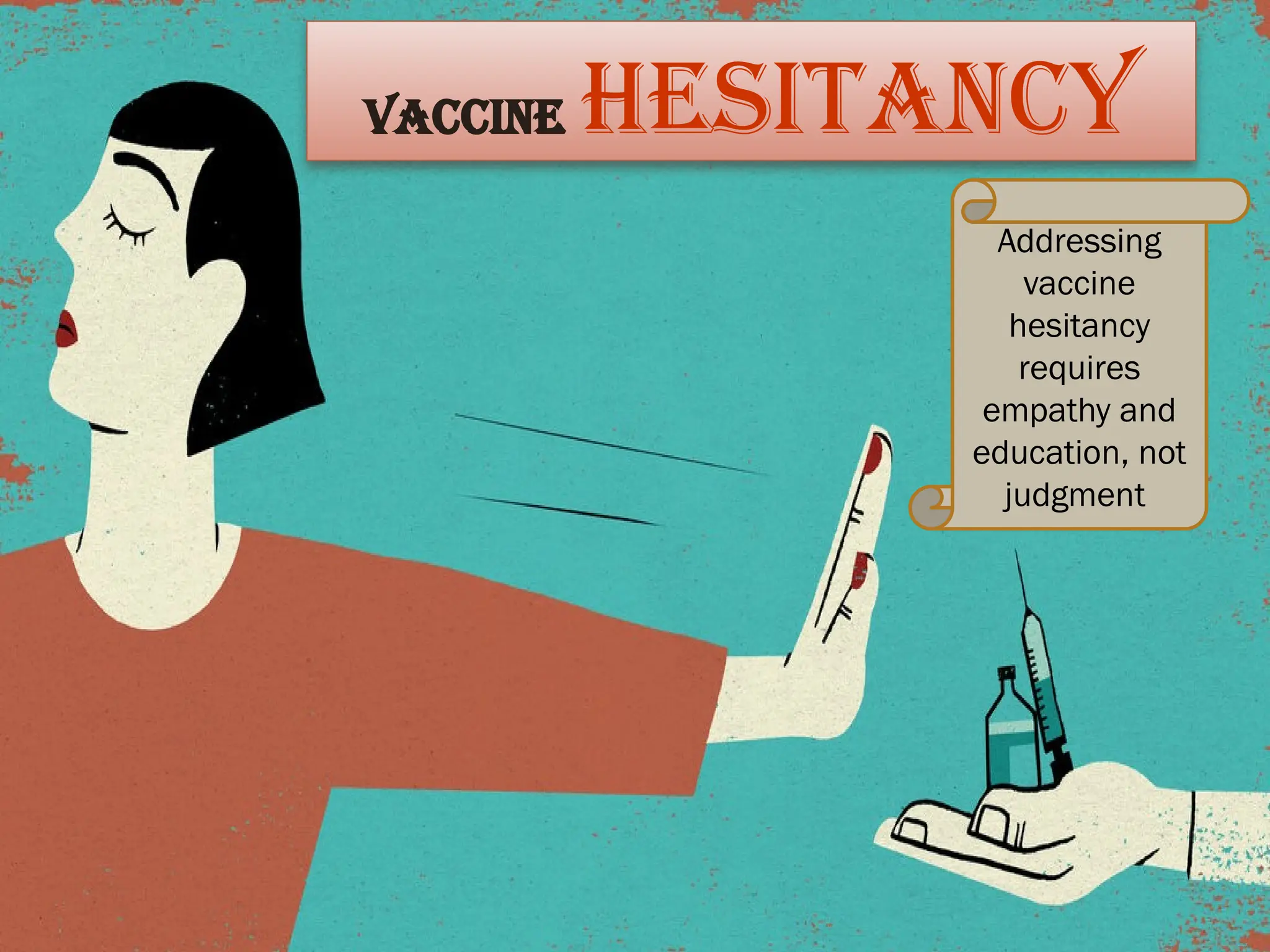
VACCINE
HESITANCY
Made by students 1011 group
OM GAUR
Ashwin Kumar Sadh
Thamilarasan Gandhi
Murali Kumar Selvi Thojha
Checked by: Assoc. Prof., PhD, Bitenova
Bagdat
KARAGANDA 2024
KARAGANDA MEDICAL UNIVERSITY
DEPARTMENT: SOCIAL RESEARCH
VACCINE HESITANCY
Addressing
vaccine
hesitancy
requires
empathy and
education, not
judgment
Understanding Vaccine Hesitancy
Definition
of Vaccine
Hesitancy
Importanc
e of
Vaccine in
public
health
Causes of
Vaccine
Hesitancy
Demograp
hics of
Hesitancy
Impacts of
vaccine
Hesitancy
Local
survey on
vaccine
hesitancy
Survey
Conclusion
Reference
s
Vaccine hesitancy refers to the reluctance or
refusal to vaccinate despite the availability of
vaccines. It can stem from various factors,
including misinformation, distrust in healthcare
systems, fear of side effects, or cultural beliefs.
This hesitancy can lead to lower vaccination rates
and increased vulnerability to preventable
diseases.
DEFINITION OF VACCINE HESITANCY
 We are presenting this topic because of following reasons
 Public Health Impact : Vaccine hesitancy poses a significant threat to public
health by undermining vaccination efforts and contributing to outbreaks of
preventable diseases.
 Current Relevance : With the COVID-19 pandemic, vaccine hesitancy
has gained increased attention, making it a important topic for
discussion.
 Understanding Behavior : Exploring the reasons behind vaccine
hesitancy can help identify strategies to address concerns and improve
vaccination rates.
 Promoting Education : Raising awareness about the importance of
vaccines can empower individuals to make informed health decisions.
 Interdisciplinary Approach: The topic intersects with psychology,
sociology, and health communication, offering a comprehensive
view of the factors influencing vaccine acceptance
Importance of Vaccine in public health
 Vaccines are a cornerstone of public health,
playing a vital role in preventing the spread of
infectious diseases, protecting individuals and
communities, and saving countless lives.
1. Disease Prevention:
Vaccines prevent infectious
diseases, reducing morbidity
and mortality rates.
Key Importance of Vaccines:
2. Eradication of Diseases:
Vaccines have contributed to the
global eradication of smallpox and
the near eradication of polio.
3. Reduction of Disease
Transmission: Vaccines reduce
the transmission of infectious
diseases, protecting not only the
individual but also the community.
4. Protection of Vulnerable
Populations: Vaccines safeguard
vulnerable populations, such as
pregnant women, older adults, and
those with chronic medical conditions.
5. Improved Quality of Life: By
preventing infectious diseases, vaccines
improve overall quality of life, enabling
individuals to lead healthier, more
productive lives.
Importance of Vaccine in public health
Causes of Vaccine Hesitancy
Vaccine hesitancy is a complex issue, driven by various factors. Here are
some of the main causes:
2. Misinformation and Misconceptions
• Misconceptions about vaccine safety
• Lack of understanding about vaccine
development
1. Trust and Confidence Issues
• Lack of trust in government and
public health institutions
• Concerns about pharmaceutical
companies
4. Cultural and Social Influences
• Cultural or religious objections
• Media and online misinformation
3. Access and Convenience Issues
• Accessibility and availability
• Cost and affordability
Demographics of Hesitancy
Vaccine hesitancy affects various
demographic groups, with some
populations more likely to
experience hesitancy than others.
Here's a breakdown of the
demographics of vaccine hesitancy:
 Education
1. Higher education: Individuals with
higher education levels may be more
likely to express vaccine hesitancy due to
increased access to misinformation and a
greater sense of personal autonomy.
2. Lower education: Those with lower
education levels may be more likely to
experience vaccine hesitancy due to
limited access to accurate information
and healthcare services
Income and Socioeconomic Status
1. Lower-income households: May face barriers
to accessing vaccination services, leading to
increased vaccine hesitancy.
2. Higher-income households: May be more
likely to express vaccine hesitancy due to
increased access to misinformation and a
greater sense of personal autonomy.
Demographics of Hesitancy
Impacts of vaccine Hesitancy
1. Increased Spread of Diseases: Lower vaccination
rates weaken herd immunity, causing preventable
diseases to resurge and spread, leading to outbreaks
and epidemics.
2. Healthcare System Strain: It burdens healthcare
resources with more cases of preventable diseases,
increasing treatment costs and pressure on medical
staff.
3. Economic Costs: More illness leads to lost productivity
and higher healthcare expenses for disease
management.
4. Undermines Public Health Progress: Slows efforts
to eradicate diseases and creates setbacks in global
vaccination goals.
5. Public Misinformation: Spreads false information
and erodes trust in health institutions and science,
making future health interventions more challenging.
Local survey on Vaccine Hesitancy – FAQs
Link to our survey:
https://
docs.google.com/forms/d/e/1FAIpQLSc5snH8SzzEdOHKLjXwiLlyUeEerIy-SYoI99-
7HdztC0Y5Xw/viewform?usp=sf_link
• Do you feel hesitancy towards vaccination ?
•Did you get vaccinated during COVID-19
pandemic?
•What do you think can encourage you to get
vaccinated ?
The survey revealed that majority of the people were hesitant
towards vaccination. They had various doubts regarding
vaccination, including safety and cost.
SURVEY RESULTS
One of the recent major pandemic was the COVID-19.
Majority of people did not get vaccinated due to hesitation and
doubts. This could be one of the major reasons that the waves of the
pandemic were observed for as long as 2 years.
SURVEY RESULTS
We asked nearly 40 people, what could help them overcome their
hesitation and get vaccinated, most of whom, preferred assurance
safety and efficacy of vaccination. Many of them insisted on
having reliable information from trusted sources to be necessitated.
SURVEY RESULTS
CONCLUSION OF THE SURVEY
• Majority of the people we surveyed, were vaccine hesitant.
• One of their concerns, were that whether the vaccines have any
impact on their health. Most of them agreed that vaccines are
good for health, even if they were hesitant to it.
• In a major pandemic, like COVID-19, vaccine hesitancy had
significantly dominated our society. Many people, who were not
even hesitant, avoided vaccination due to various factors like:
safety or side effects, lack of trust in health authorities, false
information from various sources, and many other reasons.
• Even if people were hesitant to vaccination, they shared their
thoughts on factors such as assurance of safety and efficacy of
vaccines, reliable information and better access to vaccines
could encourage them to get vaccinated. Moreover, they
would recommend their relatives to get vaccinated, in case of
future pandemics.
CONCLUSION OF THE SURVEY
REFERENCES
Here are some reputable reference websites
related to vaccine hesitancy and public
health
1. World Health Organization (WHO)
Vaccine hesitancy: A growing challenge for im
munization
programmes
2. Centers for Disease Control and Prevention
(CDC)
Vaccine hesitancy
3. National Institute of Allergy and Infectious
Diseases (NIAID)
Vaccine Hesitancy: Drivers and How the Allerg
y Community Can Help - PMC
4. Vaccine Safety Net (WHO)
Regulation and Prequalification
5. Immunization Action Coalition (IAC)
Vaccine Confidence & Addressing Concerns |
Immunize.org
Thank you for
your
attention!

Vaccine Hesitancy[1] MBBS ABroad study.pptx

  • 1.
    Title Page VACCINE HESITANCY Made bystudents 1011 group OM GAUR Ashwin Kumar Sadh Thamilarasan Gandhi Murali Kumar Selvi Thojha Checked by: Assoc. Prof., PhD, Bitenova Bagdat KARAGANDA 2024 KARAGANDA MEDICAL UNIVERSITY DEPARTMENT: SOCIAL RESEARCH
  • 2.
  • 3.
    Understanding Vaccine Hesitancy Definition ofVaccine Hesitancy Importanc e of Vaccine in public health Causes of Vaccine Hesitancy Demograp hics of Hesitancy Impacts of vaccine Hesitancy Local survey on vaccine hesitancy Survey Conclusion Reference s
  • 4.
    Vaccine hesitancy refersto the reluctance or refusal to vaccinate despite the availability of vaccines. It can stem from various factors, including misinformation, distrust in healthcare systems, fear of side effects, or cultural beliefs. This hesitancy can lead to lower vaccination rates and increased vulnerability to preventable diseases. DEFINITION OF VACCINE HESITANCY
  • 5.
     We arepresenting this topic because of following reasons  Public Health Impact : Vaccine hesitancy poses a significant threat to public health by undermining vaccination efforts and contributing to outbreaks of preventable diseases.  Current Relevance : With the COVID-19 pandemic, vaccine hesitancy has gained increased attention, making it a important topic for discussion.  Understanding Behavior : Exploring the reasons behind vaccine hesitancy can help identify strategies to address concerns and improve vaccination rates.  Promoting Education : Raising awareness about the importance of vaccines can empower individuals to make informed health decisions.  Interdisciplinary Approach: The topic intersects with psychology, sociology, and health communication, offering a comprehensive view of the factors influencing vaccine acceptance
  • 6.
    Importance of Vaccinein public health  Vaccines are a cornerstone of public health, playing a vital role in preventing the spread of infectious diseases, protecting individuals and communities, and saving countless lives. 1. Disease Prevention: Vaccines prevent infectious diseases, reducing morbidity and mortality rates. Key Importance of Vaccines:
  • 7.
    2. Eradication ofDiseases: Vaccines have contributed to the global eradication of smallpox and the near eradication of polio. 3. Reduction of Disease Transmission: Vaccines reduce the transmission of infectious diseases, protecting not only the individual but also the community. 4. Protection of Vulnerable Populations: Vaccines safeguard vulnerable populations, such as pregnant women, older adults, and those with chronic medical conditions. 5. Improved Quality of Life: By preventing infectious diseases, vaccines improve overall quality of life, enabling individuals to lead healthier, more productive lives. Importance of Vaccine in public health
  • 8.
    Causes of VaccineHesitancy Vaccine hesitancy is a complex issue, driven by various factors. Here are some of the main causes: 2. Misinformation and Misconceptions • Misconceptions about vaccine safety • Lack of understanding about vaccine development 1. Trust and Confidence Issues • Lack of trust in government and public health institutions • Concerns about pharmaceutical companies 4. Cultural and Social Influences • Cultural or religious objections • Media and online misinformation 3. Access and Convenience Issues • Accessibility and availability • Cost and affordability
  • 9.
    Demographics of Hesitancy Vaccinehesitancy affects various demographic groups, with some populations more likely to experience hesitancy than others. Here's a breakdown of the demographics of vaccine hesitancy:  Education 1. Higher education: Individuals with higher education levels may be more likely to express vaccine hesitancy due to increased access to misinformation and a greater sense of personal autonomy. 2. Lower education: Those with lower education levels may be more likely to experience vaccine hesitancy due to limited access to accurate information and healthcare services
  • 10.
    Income and SocioeconomicStatus 1. Lower-income households: May face barriers to accessing vaccination services, leading to increased vaccine hesitancy. 2. Higher-income households: May be more likely to express vaccine hesitancy due to increased access to misinformation and a greater sense of personal autonomy. Demographics of Hesitancy
  • 11.
    Impacts of vaccineHesitancy 1. Increased Spread of Diseases: Lower vaccination rates weaken herd immunity, causing preventable diseases to resurge and spread, leading to outbreaks and epidemics. 2. Healthcare System Strain: It burdens healthcare resources with more cases of preventable diseases, increasing treatment costs and pressure on medical staff. 3. Economic Costs: More illness leads to lost productivity and higher healthcare expenses for disease management. 4. Undermines Public Health Progress: Slows efforts to eradicate diseases and creates setbacks in global vaccination goals. 5. Public Misinformation: Spreads false information and erodes trust in health institutions and science, making future health interventions more challenging.
  • 12.
    Local survey onVaccine Hesitancy – FAQs Link to our survey: https:// docs.google.com/forms/d/e/1FAIpQLSc5snH8SzzEdOHKLjXwiLlyUeEerIy-SYoI99- 7HdztC0Y5Xw/viewform?usp=sf_link • Do you feel hesitancy towards vaccination ? •Did you get vaccinated during COVID-19 pandemic? •What do you think can encourage you to get vaccinated ?
  • 13.
    The survey revealedthat majority of the people were hesitant towards vaccination. They had various doubts regarding vaccination, including safety and cost. SURVEY RESULTS
  • 14.
    One of therecent major pandemic was the COVID-19. Majority of people did not get vaccinated due to hesitation and doubts. This could be one of the major reasons that the waves of the pandemic were observed for as long as 2 years. SURVEY RESULTS
  • 15.
    We asked nearly40 people, what could help them overcome their hesitation and get vaccinated, most of whom, preferred assurance safety and efficacy of vaccination. Many of them insisted on having reliable information from trusted sources to be necessitated. SURVEY RESULTS
  • 16.
    CONCLUSION OF THESURVEY • Majority of the people we surveyed, were vaccine hesitant. • One of their concerns, were that whether the vaccines have any impact on their health. Most of them agreed that vaccines are good for health, even if they were hesitant to it.
  • 17.
    • In amajor pandemic, like COVID-19, vaccine hesitancy had significantly dominated our society. Many people, who were not even hesitant, avoided vaccination due to various factors like: safety or side effects, lack of trust in health authorities, false information from various sources, and many other reasons. • Even if people were hesitant to vaccination, they shared their thoughts on factors such as assurance of safety and efficacy of vaccines, reliable information and better access to vaccines could encourage them to get vaccinated. Moreover, they would recommend their relatives to get vaccinated, in case of future pandemics. CONCLUSION OF THE SURVEY
  • 18.
    REFERENCES Here are somereputable reference websites related to vaccine hesitancy and public health 1. World Health Organization (WHO) Vaccine hesitancy: A growing challenge for im munization programmes 2. Centers for Disease Control and Prevention (CDC) Vaccine hesitancy 3. National Institute of Allergy and Infectious Diseases (NIAID) Vaccine Hesitancy: Drivers and How the Allerg y Community Can Help - PMC 4. Vaccine Safety Net (WHO) Regulation and Prequalification 5. Immunization Action Coalition (IAC) Vaccine Confidence & Addressing Concerns | Immunize.org Thank you for your attention!