Using DiSC for
Leadership
Development
Joseph Rios,
Director, Membership Development
Tau Delta Phi Fraternity ● jrios@taudelt.net
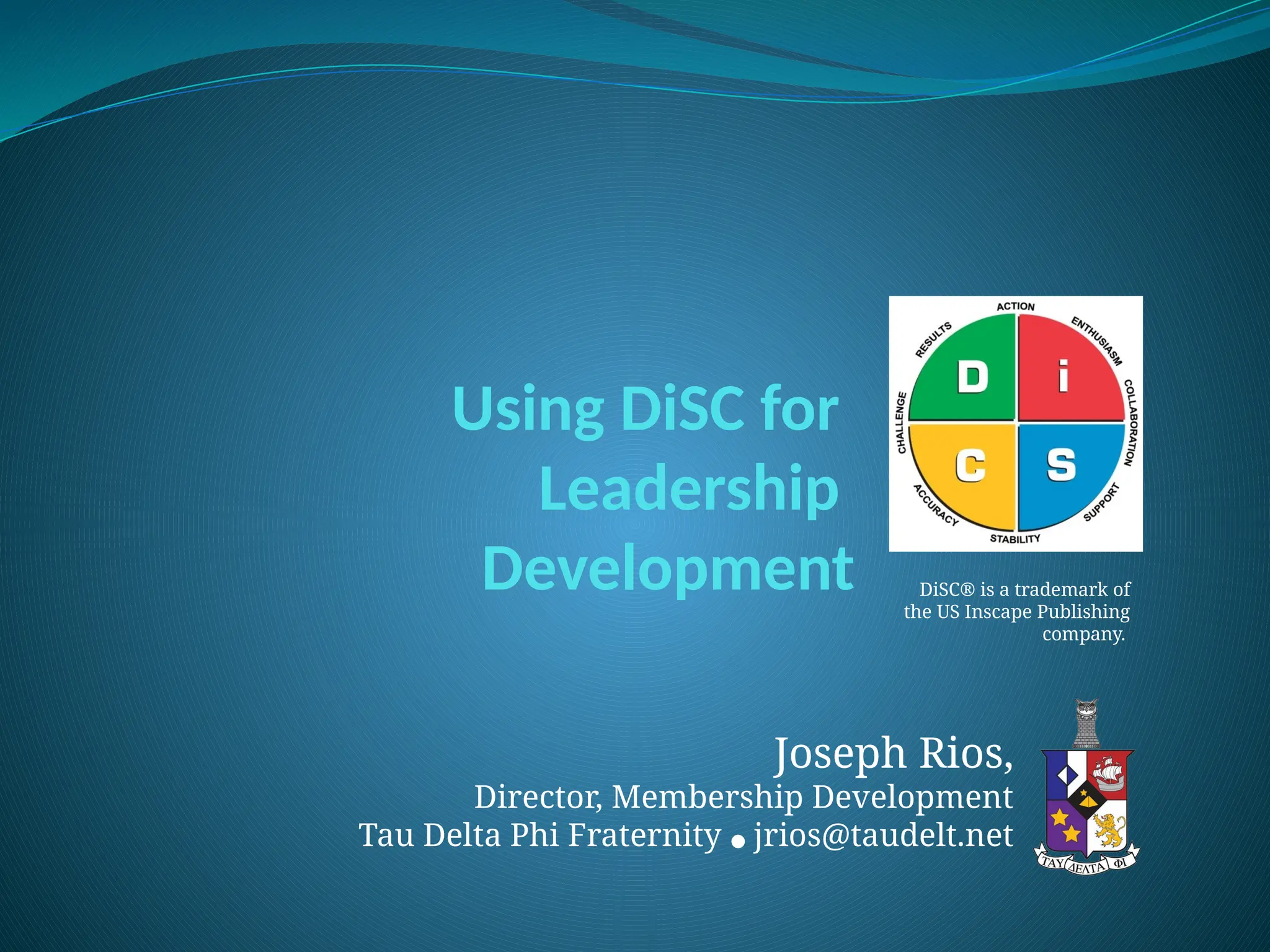
DiSC® is a trademark of
the US Inscape Publishing
company.
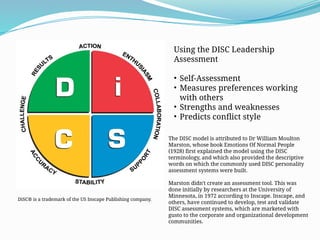
Using the DISC Leadership
Assessment
• Self-Assessment
• Measures preferences working
with others
• Strengths and weaknesses
• Predicts conflict style
The DISC model is attributed to Dr William Moulton
Marston, whose book Emotions Of Normal People
(1928) first explained the model using the DISC
terminology, and which also provided the descriptive
words on which the commonly used DISC personality
assessment systems were built.
Marston didn't create an assessment tool. This was
done initially by researchers at the University of
Minnesota, in 1972 according to Inscape. Inscape, and
others, have continued to develop, test and validate
DISC assessment systems, which are marketed with
gusto to the corporate and organizational development
communities.
DiSC® is a trademark of the US Inscape Publishing company.
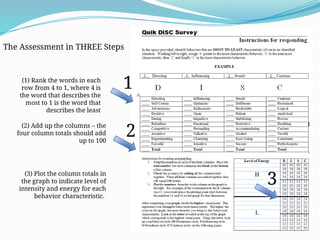
The Assessment in THREE Steps
(1) Rank the words in each
row from 4 to 1, where 4 is
the word that describes the
most to 1 is the word that
describes the least
1
2
(2) Add up the columns – the
four column totals should add
up to 100
(3) Plot the column totals in
the graph to indicate level of
intensity and energy for each
behavior characteristic.
3
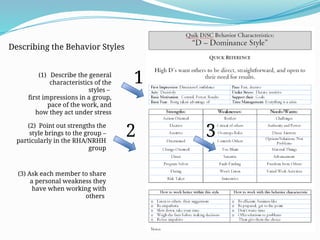
Describing the Behavior Styles
(1) Describe the general
characteristics of the
styles –
first impressions in a group,
pace of the work, and
how they act under stress
1
2
(2) Point out strengths the
style brings to the group –
particularly in the RHA/NRHH
group
(3) Ask each member to share
a personal weakness they
have when working with
others
3
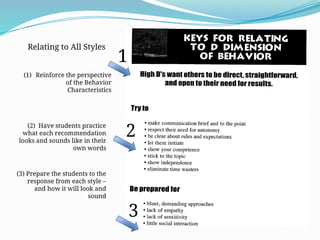
Relating to All Styles
(1) Reinforce the perspective
of the Behavior
Characteristics
1
2
(2) Have students practice
what each recommendation
looks and sounds like in their
own words
(3) Prepare the students to the
response from each style –
and how it will look and
sound
3

Using the DISC for Leadership Development.pptx

  • 1.
    Using DiSC for Leadership Development JosephRios, Director, Membership Development Tau Delta Phi Fraternity ● jrios@taudelt.net DiSC® is a trademark of the US Inscape Publishing company.
  • 2.
    Using the DISCLeadership Assessment • Self-Assessment • Measures preferences working with others • Strengths and weaknesses • Predicts conflict style The DISC model is attributed to Dr William Moulton Marston, whose book Emotions Of Normal People (1928) first explained the model using the DISC terminology, and which also provided the descriptive words on which the commonly used DISC personality assessment systems were built. Marston didn't create an assessment tool. This was done initially by researchers at the University of Minnesota, in 1972 according to Inscape. Inscape, and others, have continued to develop, test and validate DISC assessment systems, which are marketed with gusto to the corporate and organizational development communities. DiSC® is a trademark of the US Inscape Publishing company.
  • 3.
    The Assessment inTHREE Steps (1) Rank the words in each row from 4 to 1, where 4 is the word that describes the most to 1 is the word that describes the least 1 2 (2) Add up the columns – the four column totals should add up to 100 (3) Plot the column totals in the graph to indicate level of intensity and energy for each behavior characteristic. 3
  • 4.
    Describing the BehaviorStyles (1) Describe the general characteristics of the styles – first impressions in a group, pace of the work, and how they act under stress 1 2 (2) Point out strengths the style brings to the group – particularly in the RHA/NRHH group (3) Ask each member to share a personal weakness they have when working with others 3
  • 5.
    Relating to AllStyles (1) Reinforce the perspective of the Behavior Characteristics 1 2 (2) Have students practice what each recommendation looks and sounds like in their own words (3) Prepare the students to the response from each style – and how it will look and sound 3