Darfur Low-Smoke Stoves project
Carbon Finance: Impacts Monitoring and Optimization
LPG stoves in North Darfur, Sudan
The Facts
 95% of Sudan’s population uses solid fuels: firewood, charcoal, etc.
 For 10 trees cut down only 1 is regrown
 Scarcity of biomass: travel 180 km + price increased by 500% since 2008
 Gas stoves + cylinder: equivalent to 2/3 monthly salary
 No consumer finance
 Partnership: private organisation, international and local NGOs
 Run by the community
 Micro-finance and local women-led management
 Eliminates the financial barrier to clean LPG stoves
 Funded by the sale of carbon credits
The Project
Project Structure
Carbon Finance Project Funding
Result-based financing
Carbon
Clear
Practical
Action
Low-Smoke Stoves project
££
££
Gold Standard
Carbon Credits
Client 1
Client 2
Client 3
…
£
£
£
£
££
£
Impacts Monitoring Report
Shabaka
Micro
fund
Reasons for Offsetting Carbon Emissions
September 2014:
Study by Imperial College London
University’s Centre for
Environmental Policy (CEP)
Research investigated 72 of the
larger companies participating in
voluntary carbon offsetting
programmes
Less Reporting, More Monitoring
 Maintenance of Beneficiary/Sale Database
 Quarterly Kitchen Surveys
 Monthly Micro-Finance Records
 Yearly Usage Survey
 Biennial Water Boiling Tests
 Biennial Leakage Assessment
 Kitchen Performance Tests
Measuring Impacts: a Few Findings
 7,500 stoves distributed
 Carbon Emissions: 75,000+ tCO2 avoided
 Indoor Air Pollution: 99% acknowledge significant
indoor air improvement
 Empowering Women: 41% of husbands get involved
with cooking activities
 Energy Poverty: from 627 MJ to 833 MJ /capita / year
 Reduce Deforestation: saving 3,000 tons wood/year
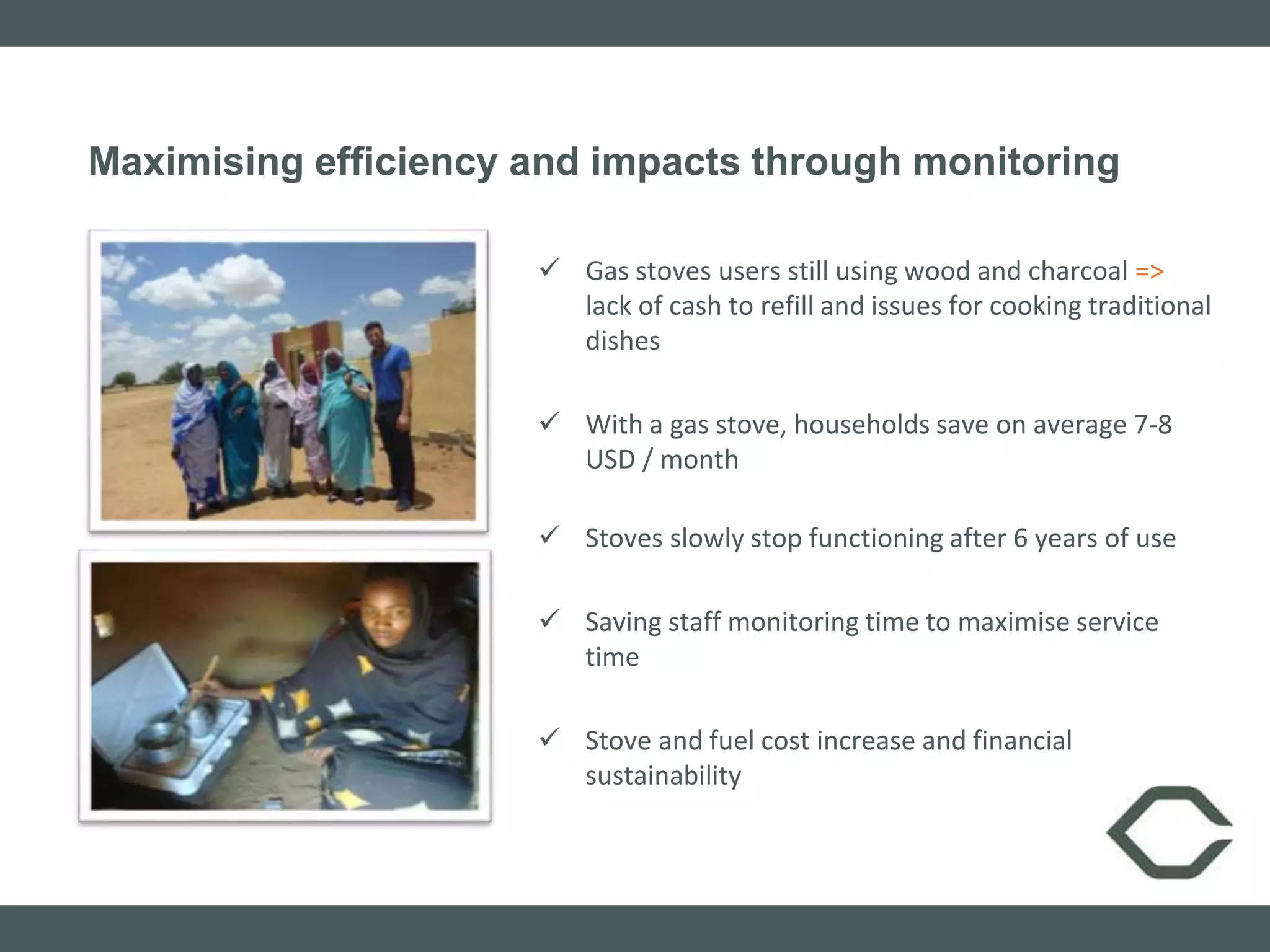
Maximising efficiency and impacts through monitoring
 Gas stoves users still using wood and charcoal =>
lack of cash to refill and issues for cooking traditional
dishes
 With a gas stove, households save on average 7-8
USD / month
 Stoves slowly stop functioning after 6 years of use
 Saving staff monitoring time to maximise service
time
 Stove and fuel cost increase and financial
sustainability
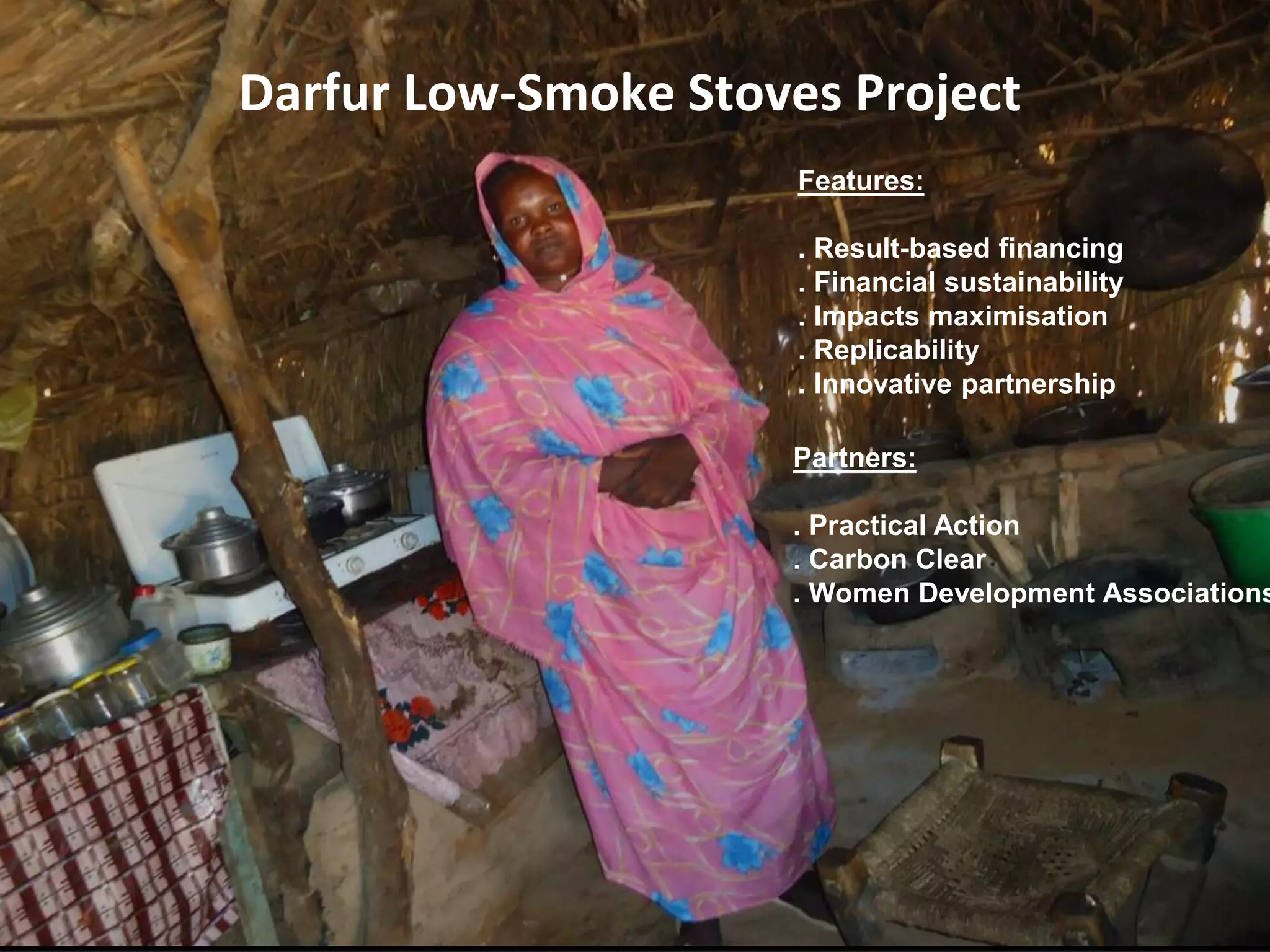
Darfur Low-Smoke Stoves Project
Features:
. Result-based financing
. Financial sustainability
. Impacts maximisation
. Replicability
. Innovative partnership
Partners:
. Practical Action
. Carbon Clear
. Women Development Associations

Using carbon finance for energy access projects

  • 1.
    Darfur Low-Smoke Stovesproject Carbon Finance: Impacts Monitoring and Optimization
  • 2.
    LPG stoves inNorth Darfur, Sudan The Facts  95% of Sudan’s population uses solid fuels: firewood, charcoal, etc.  For 10 trees cut down only 1 is regrown  Scarcity of biomass: travel 180 km + price increased by 500% since 2008  Gas stoves + cylinder: equivalent to 2/3 monthly salary  No consumer finance  Partnership: private organisation, international and local NGOs  Run by the community  Micro-finance and local women-led management  Eliminates the financial barrier to clean LPG stoves  Funded by the sale of carbon credits The Project
  • 3.
  • 4.
    Carbon Finance ProjectFunding Result-based financing Carbon Clear Practical Action Low-Smoke Stoves project ££ ££ Gold Standard Carbon Credits Client 1 Client 2 Client 3 … £ £ £ £ ££ £ Impacts Monitoring Report Shabaka Micro fund
  • 5.
    Reasons for OffsettingCarbon Emissions September 2014: Study by Imperial College London University’s Centre for Environmental Policy (CEP) Research investigated 72 of the larger companies participating in voluntary carbon offsetting programmes
  • 6.
    Less Reporting, MoreMonitoring  Maintenance of Beneficiary/Sale Database  Quarterly Kitchen Surveys  Monthly Micro-Finance Records  Yearly Usage Survey  Biennial Water Boiling Tests  Biennial Leakage Assessment  Kitchen Performance Tests
  • 7.
    Measuring Impacts: aFew Findings  7,500 stoves distributed  Carbon Emissions: 75,000+ tCO2 avoided  Indoor Air Pollution: 99% acknowledge significant indoor air improvement  Empowering Women: 41% of husbands get involved with cooking activities  Energy Poverty: from 627 MJ to 833 MJ /capita / year  Reduce Deforestation: saving 3,000 tons wood/year
  • 8.
    Maximising efficiency andimpacts through monitoring  Gas stoves users still using wood and charcoal => lack of cash to refill and issues for cooking traditional dishes  With a gas stove, households save on average 7-8 USD / month  Stoves slowly stop functioning after 6 years of use  Saving staff monitoring time to maximise service time  Stove and fuel cost increase and financial sustainability
  • 9.
    Darfur Low-Smoke StovesProject Features: . Result-based financing . Financial sustainability . Impacts maximisation . Replicability . Innovative partnership Partners: . Practical Action . Carbon Clear . Women Development Associations