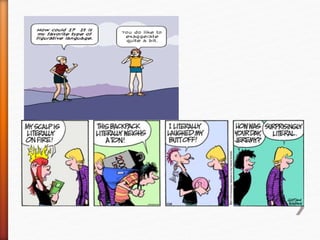
Figurative Language 
» Figurative language is language that uses words or 
expressions with a meaning that is different from the 
literal interpretation. When a writer uses literal 
language, he or she is simply stating the facts as they 
are. Figurative language, in comparison, uses 
exaggerations or alterations to make a particular 
linguistic point. Figurative language is very common in 
poetry, but is also used in prose and nonfiction writing 
as well. 
» There are many different types of figurative language. 
For example, it often includes the use of a specific 
type of word or word meaning:
Simile 
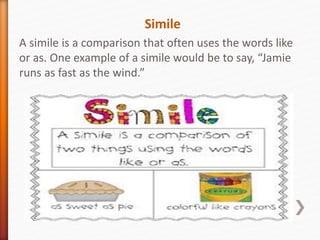
A simile is a comparison that often uses the words like 
or as. One example of a simile would be to say, “Jamie 
runs as fast as the wind.”
Metaphor 
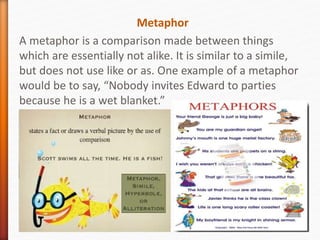
A metaphor is a comparison made between things 
which are essentially not alike. It is similar to a simile, 
but does not use like or as. One example of a metaphor 
would be to say, “Nobody invites Edward to parties 
because he is a wet blanket.”
Personification 
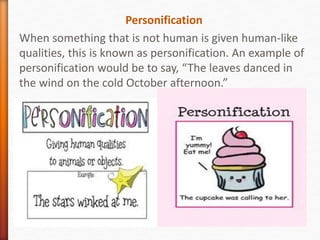
When something that is not human is given human-like 
qualities, this is known as personification. An example of 
personification would be to say, “The leaves danced in 
the wind on the cold October afternoon.”
Hyperbole 
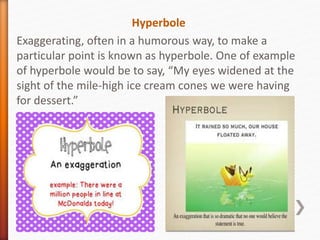
Exaggerating, often in a humorous way, to make a 
particular point is known as hyperbole. One of example 
of hyperbole would be to say, “My eyes widened at the 
sight of the mile-high ice cream cones we were having 
for dessert.”
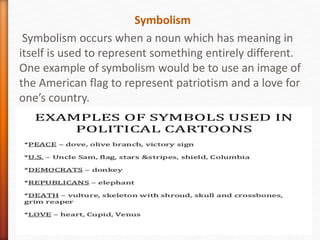
Symbolism 
Symbolism occurs when a noun which has meaning in 
itself is used to represent something entirely different. 
One example of symbolism would be to use an image of 
the American flag to represent patriotism and a love for 
one’s country.
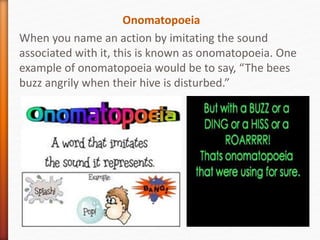
Onomatopoeia 
When you name an action by imitating the sound 
associated with it, this is known as onomatopoeia. One 
example of onomatopoeia would be to say, “The bees 
buzz angrily when their hive is disturbed.”
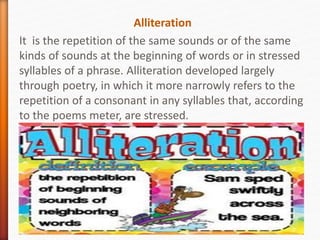
Alliteration 
It is the repetition of the same sounds or of the same 
kinds of sounds at the beginning of words or in stressed 
syllables of a phrase. Alliteration developed largely 
through poetry, in which it more narrowly refers to the 
repetition of a consonant in any syllables that, according 
to the poems meter, are stressed.
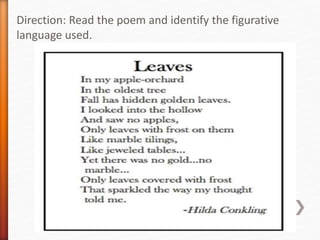
Direction: Read the poem and identify the figurative 
language used.
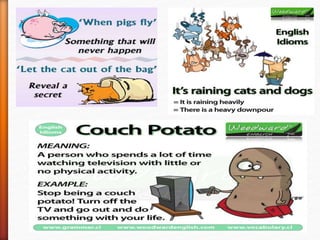
Idiom 
……is a phrase where the words together have a meaning 
that is different from the dictionary definitions of the 
individual words 
An idiom is an expression used by a particular group of 
people with a meaning that is only known through 
common use. One example of an idiom would be to say, 
“I’m just waiting for him to kick the bucket.” Many idioms 
that are frequently used are also considered clichés.
Smart Idioms 
A hot potato 
Speak of an issue (mostly current) which many people are talking about and 
which is usually disputed 
A penny for your thoughts 
A way of asking what someone is thinking 
Actions speak louder than words 
People's intentions can be judged better by what they do than what they say. 
Add insult to injury 
To further a loss with mockery or indignity; to worsen an unfavorable 
situation. 
An arm and a leg 
Very expensive or costly. A large amount of money. 
At the drop of a hat 
Meaning: without any hesitation; instantly.
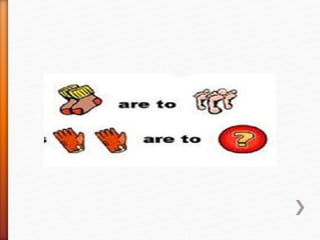
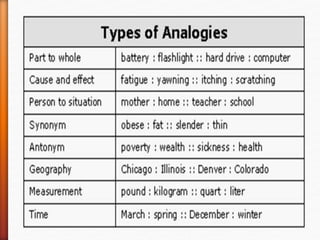
Analogy 
Understanding the meaning of an analogy is key to the 
success of the analogy in communication. Some 
analogies will be understood by most people that speak 
the same language. Within small social groups of 
people, there are often shared analogies that bind the 
group together. Other analogies are only understood by 
people living in a certain region or country.
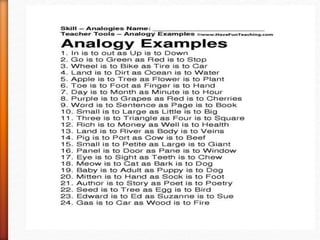
Give examples of analogy
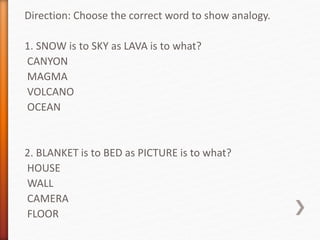
Direction: Choose the correct word to show analogy. 
1. SNOW is to SKY as LAVA is to what? 
CANYON 
MAGMA 
VOLCANO 
OCEAN 
2. BLANKET is to BED as PICTURE is to what? 
HOUSE 
WALL 
CAMERA 
FLOOR
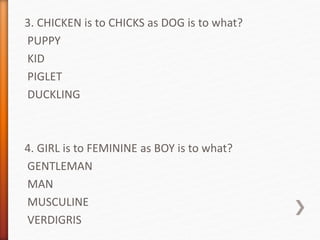
3. CHICKEN is to CHICKS as DOG is to what? 
PUPPY 
KID 
PIGLET 
DUCKLING 
4. GIRL is to FEMININE as BOY is to what? 
GENTLEMAN 
MAN 
MUSCULINE 
VERDIGRIS
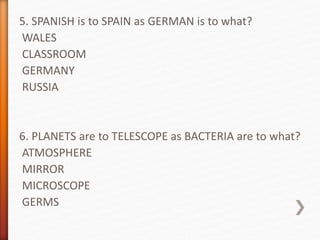
5. SPANISH is to SPAIN as GERMAN is to what? 
WALES 
CLASSROOM 
GERMANY 
RUSSIA 
6. PLANETS are to TELESCOPE as BACTERIA are to what? 
ATMOSPHERE 
MIRROR 
MICROSCOPE 
GERMS
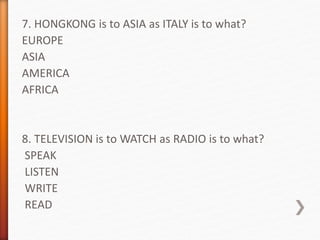
7. HONGKONG is to ASIA as ITALY is to what? 
EUROPE 
ASIA 
AMERICA 
AFRICA 
8. TELEVISION is to WATCH as RADIO is to what? 
SPEAK 
LISTEN 
WRITE 
READ
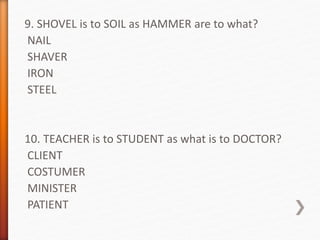
9. SHOVEL is to SOIL as HAMMER are to what? 
NAIL 
SHAVER 
IRON 
STEEL 
10. TEACHER is to STUDENT as what is to DOCTOR? 
CLIENT 
COSTUMER 
MINISTER 
PATIENT

Using appropriate language

  • 3.
    Figurative Language »Figurative language is language that uses words or expressions with a meaning that is different from the literal interpretation. When a writer uses literal language, he or she is simply stating the facts as they are. Figurative language, in comparison, uses exaggerations or alterations to make a particular linguistic point. Figurative language is very common in poetry, but is also used in prose and nonfiction writing as well. » There are many different types of figurative language. For example, it often includes the use of a specific type of word or word meaning:
  • 4.
    Simile A simileis a comparison that often uses the words like or as. One example of a simile would be to say, “Jamie runs as fast as the wind.”
  • 5.
    Metaphor A metaphoris a comparison made between things which are essentially not alike. It is similar to a simile, but does not use like or as. One example of a metaphor would be to say, “Nobody invites Edward to parties because he is a wet blanket.”
  • 6.
    Personification When somethingthat is not human is given human-like qualities, this is known as personification. An example of personification would be to say, “The leaves danced in the wind on the cold October afternoon.”
  • 7.
    Hyperbole Exaggerating, oftenin a humorous way, to make a particular point is known as hyperbole. One of example of hyperbole would be to say, “My eyes widened at the sight of the mile-high ice cream cones we were having for dessert.”
  • 8.
    Symbolism Symbolism occurswhen a noun which has meaning in itself is used to represent something entirely different. One example of symbolism would be to use an image of the American flag to represent patriotism and a love for one’s country.
  • 9.
    Onomatopoeia When youname an action by imitating the sound associated with it, this is known as onomatopoeia. One example of onomatopoeia would be to say, “The bees buzz angrily when their hive is disturbed.”
  • 10.
    Alliteration It isthe repetition of the same sounds or of the same kinds of sounds at the beginning of words or in stressed syllables of a phrase. Alliteration developed largely through poetry, in which it more narrowly refers to the repetition of a consonant in any syllables that, according to the poems meter, are stressed.
  • 11.
    Direction: Read thepoem and identify the figurative language used.
  • 12.
    Idiom ……is aphrase where the words together have a meaning that is different from the dictionary definitions of the individual words An idiom is an expression used by a particular group of people with a meaning that is only known through common use. One example of an idiom would be to say, “I’m just waiting for him to kick the bucket.” Many idioms that are frequently used are also considered clichés.
  • 13.
    Smart Idioms Ahot potato Speak of an issue (mostly current) which many people are talking about and which is usually disputed A penny for your thoughts A way of asking what someone is thinking Actions speak louder than words People's intentions can be judged better by what they do than what they say. Add insult to injury To further a loss with mockery or indignity; to worsen an unfavorable situation. An arm and a leg Very expensive or costly. A large amount of money. At the drop of a hat Meaning: without any hesitation; instantly.
  • 16.
    Analogy Understanding themeaning of an analogy is key to the success of the analogy in communication. Some analogies will be understood by most people that speak the same language. Within small social groups of people, there are often shared analogies that bind the group together. Other analogies are only understood by people living in a certain region or country.
  • 19.
  • 20.
    Direction: Choose thecorrect word to show analogy. 1. SNOW is to SKY as LAVA is to what? CANYON MAGMA VOLCANO OCEAN 2. BLANKET is to BED as PICTURE is to what? HOUSE WALL CAMERA FLOOR
  • 21.
    3. CHICKEN isto CHICKS as DOG is to what? PUPPY KID PIGLET DUCKLING 4. GIRL is to FEMININE as BOY is to what? GENTLEMAN MAN MUSCULINE VERDIGRIS
  • 22.
    5. SPANISH isto SPAIN as GERMAN is to what? WALES CLASSROOM GERMANY RUSSIA 6. PLANETS are to TELESCOPE as BACTERIA are to what? ATMOSPHERE MIRROR MICROSCOPE GERMS
  • 23.
    7. HONGKONG isto ASIA as ITALY is to what? EUROPE ASIA AMERICA AFRICA 8. TELEVISION is to WATCH as RADIO is to what? SPEAK LISTEN WRITE READ
  • 24.
    9. SHOVEL isto SOIL as HAMMER are to what? NAIL SHAVER IRON STEEL 10. TEACHER is to STUDENT as what is to DOCTOR? CLIENT COSTUMER MINISTER PATIENT