The life used
to be different
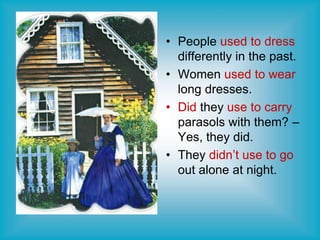
• People used to dress
differently in the past.
• Women used to wear
long dresses.
• Did they use to carry
parasols with them? –
Yes, they did.
• They didn’t use to go
out alone at night.
• Used to is used to talk about past
habits or things that do not happen
any more. It has the same form in all
persons, singular and plural. It is
followed by infinitive.
• e.g. Peter used to eat a lot of sweets.
( Peter doesn’t eat many sweets any
more)
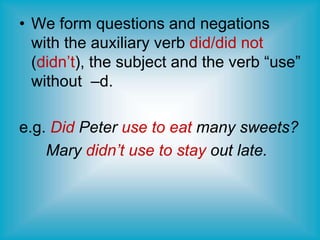
• We form questions and negations
with the auxiliary verb did/did not
(didn’t), the subject and the verb “use”
without –d.
e.g. Did Peter use to eat many sweets?
Mary didn’t use to stay out late.
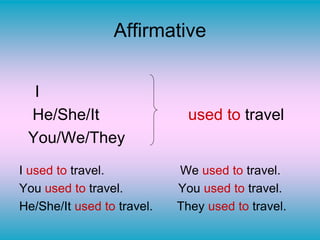
Affirmative
I
He/She/It used to travel
You/We/They
I used to travel. We used to travel.
You used to travel. You used to travel.
He/She/It used to travel. They used to travel.
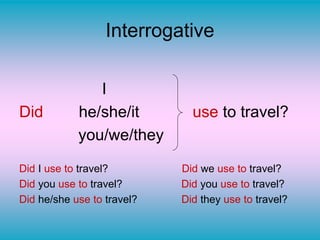
Interrogative
I
Did he/she/it use to travel?
you/we/they
Did I use to travel? Did we use to travel?
Did you use to travel? Did you use to travel?
Did he/she use to travel? Did they use to travel?
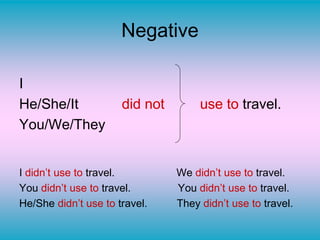
Negative
I
He/She/It did not use to travel.
You/We/They
I didn’t use to travel. We didn’t use to travel.
You didn’t use to travel. You didn’t use to travel.
He/She didn’t use to travel. They didn’t use to travel.
Tim used to live in a flat.
e. g. T: I
S1: I used to live in a flat.
Did Tim use to play tennis?
e.g. T: you
S1: Did you use to play tennis?
Ann didn’t use to go to work by
car.
e.g. T: she
S1: She didn’t use to go to work by car.
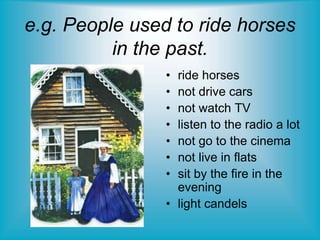
• ride horses
• not drive cars
• not watch TV
• listen to the radio a lot
• not go to the cinema
• not live in flats
• sit by the fire in the
evening
• light candels
e.g. People used to ride horses
in the past.
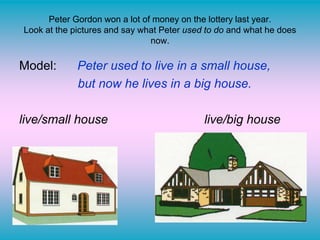
Peter Gordon won a lot of money on the lottery last year.
Look at the pictures and say what Peter used to do and what he does
now.
Model: Peter used to live in a small house,
but now he lives in a big house.
live/small house live/big house
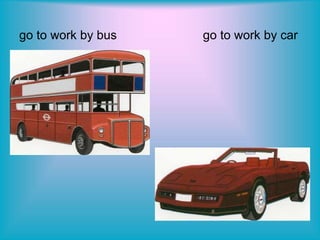
go to work by bus go to work by car
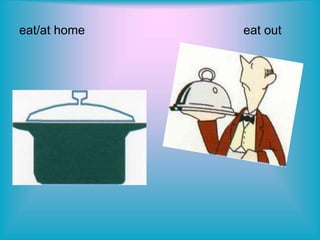
eat/at home eat out
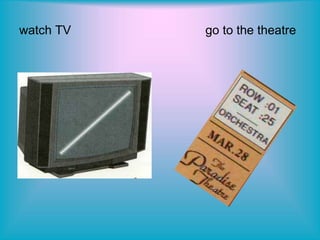
watch TV go to the theatre
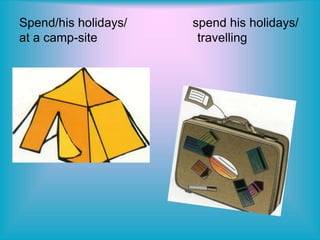
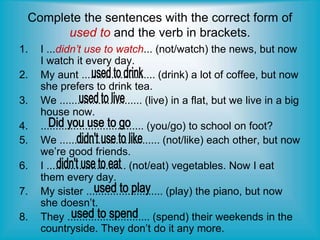
Spend/his holidays/ spend his holidays/
at a camp-site travelling
Complete the sentences with the correct form of
used to and the verb in brackets.
1. I ...didn’t use to watch... (not/watch) the news, but now
I watch it every day.
2. My aunt ......................... (drink) a lot of coffee, but now
she prefers to drink tea.
3. We ............................ (live) in a flat, but we live in a big
house now.
4. ................................... (you/go) to school on foot?
5. We .................................. (not/like) each other, but now
we’re good friends.
6. I ........................... (not/eat) vegetables. Now I eat
them every day.
7. My sister .......................... (play) the piano, but now
she doesn’t.
8. They ............................ (spend) their weekends in the
countryside. They don’t do it any more.
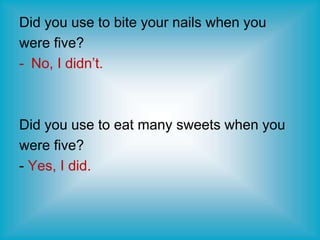
Did you use to bite your nails when you
were five?
- No, I didn’t.
Did you use to eat many sweets when you
were five?
- Yes, I did.
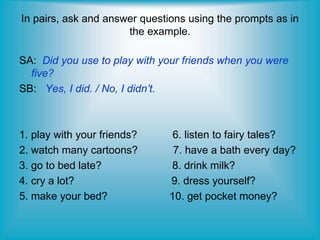
In pairs, ask and answer questions using the prompts as in
the example.
SA: Did you use to play with your friends when you were
five?
SB: Yes, I did. / No, I didn’t.
1. play with your friends? 6. listen to fairy tales?
2. watch many cartoons? 7. have a bath every day?
3. go to bed late? 8. drink milk?
4. cry a lot? 9. dress yourself?
5. make your bed? 10. get pocket money?
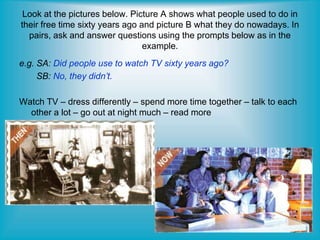
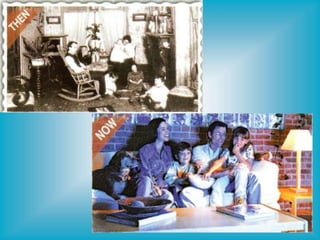
Look at the pictures below. Picture A shows what people used to do in
their free time sixty years ago and picture B what they do nowadays. In
pairs, ask and answer questions using the prompts below as in the
example.
e.g. SA: Did people use to watch TV sixty years ago?
SB: No, they didn’t.
Watch TV – dress differently – spend more time together – talk to each
other a lot – go out at night much – read more
Now, using the pictures and the notes from the previous
activity, complete the text below.
Life was different sixty years ago. People 1)........................
(not/have) the things we have nowadays. First of all, they
2) ............................. (not/watch) TV and they 3) ................
(talk) to each other a lot. Nowadays, people 4) ....................
(not/talk) to each other much because they 5) .....................
(spend) a lot of time watching TV. Sixty years ago, people
6) ....................... (dress) differently. For example, women
7) ....................... (wear) longer dresses and men usually 8)
...................... (wear) a suit and a tie on Sundays.
Used to b12

Used to b12

  • 1.
    The life used tobe different
  • 2.
    • People usedto dress differently in the past. • Women used to wear long dresses. • Did they use to carry parasols with them? – Yes, they did. • They didn’t use to go out alone at night.
  • 3.
    • Used tois used to talk about past habits or things that do not happen any more. It has the same form in all persons, singular and plural. It is followed by infinitive. • e.g. Peter used to eat a lot of sweets. ( Peter doesn’t eat many sweets any more)
  • 4.
    • We formquestions and negations with the auxiliary verb did/did not (didn’t), the subject and the verb “use” without –d. e.g. Did Peter use to eat many sweets? Mary didn’t use to stay out late.
  • 5.
    Affirmative I He/She/It used totravel You/We/They I used to travel. We used to travel. You used to travel. You used to travel. He/She/It used to travel. They used to travel.
  • 6.
    Interrogative I Did he/she/it useto travel? you/we/they Did I use to travel? Did we use to travel? Did you use to travel? Did you use to travel? Did he/she use to travel? Did they use to travel?
  • 7.
    Negative I He/She/It did notuse to travel. You/We/They I didn’t use to travel. We didn’t use to travel. You didn’t use to travel. You didn’t use to travel. He/She didn’t use to travel. They didn’t use to travel.
  • 8.
    Tim used tolive in a flat. e. g. T: I S1: I used to live in a flat.
  • 9.
    Did Tim useto play tennis? e.g. T: you S1: Did you use to play tennis?
  • 10.
    Ann didn’t useto go to work by car. e.g. T: she S1: She didn’t use to go to work by car.
  • 11.
    • ride horses •not drive cars • not watch TV • listen to the radio a lot • not go to the cinema • not live in flats • sit by the fire in the evening • light candels e.g. People used to ride horses in the past.
  • 12.
    Peter Gordon wona lot of money on the lottery last year. Look at the pictures and say what Peter used to do and what he does now. Model: Peter used to live in a small house, but now he lives in a big house. live/small house live/big house
  • 13.
    go to workby bus go to work by car
  • 14.
  • 15.
    watch TV goto the theatre
  • 16.
    Spend/his holidays/ spendhis holidays/ at a camp-site travelling
  • 17.
    Complete the sentenceswith the correct form of used to and the verb in brackets. 1. I ...didn’t use to watch... (not/watch) the news, but now I watch it every day. 2. My aunt ......................... (drink) a lot of coffee, but now she prefers to drink tea. 3. We ............................ (live) in a flat, but we live in a big house now. 4. ................................... (you/go) to school on foot? 5. We .................................. (not/like) each other, but now we’re good friends. 6. I ........................... (not/eat) vegetables. Now I eat them every day. 7. My sister .......................... (play) the piano, but now she doesn’t. 8. They ............................ (spend) their weekends in the countryside. They don’t do it any more.
  • 18.
    Did you useto bite your nails when you were five? - No, I didn’t. Did you use to eat many sweets when you were five? - Yes, I did.
  • 19.
    In pairs, askand answer questions using the prompts as in the example. SA: Did you use to play with your friends when you were five? SB: Yes, I did. / No, I didn’t. 1. play with your friends? 6. listen to fairy tales? 2. watch many cartoons? 7. have a bath every day? 3. go to bed late? 8. drink milk? 4. cry a lot? 9. dress yourself? 5. make your bed? 10. get pocket money?
  • 20.
    Look at thepictures below. Picture A shows what people used to do in their free time sixty years ago and picture B what they do nowadays. In pairs, ask and answer questions using the prompts below as in the example. e.g. SA: Did people use to watch TV sixty years ago? SB: No, they didn’t. Watch TV – dress differently – spend more time together – talk to each other a lot – go out at night much – read more
  • 21.
    Now, using thepictures and the notes from the previous activity, complete the text below. Life was different sixty years ago. People 1)........................ (not/have) the things we have nowadays. First of all, they 2) ............................. (not/watch) TV and they 3) ................ (talk) to each other a lot. Nowadays, people 4) .................... (not/talk) to each other much because they 5) ..................... (spend) a lot of time watching TV. Sixty years ago, people 6) ....................... (dress) differently. For example, women 7) ....................... (wear) longer dresses and men usually 8) ...................... (wear) a suit and a tie on Sundays.