The	
  Effects	
  of	
  Climate	
  Change	
  and	
  
  Peak	
  Oil	
  on	
  Marine	
  Shipping,	
  
  Naviga>on	
  and	
  Hydrography	
  
                      MJ	
  Casey	
  
               IIC	
  Technologies	


                                                      1	
  
Summary	
  

•  We	
  live	
  in	
  a	
  globalized	
  world	
  where	
  cheap,	
  fast	
  
   and	
  reliable	
  marine	
  transporta>on	
  is	
  essen>al	
  
•  Post	
  Kyoto	
  Global	
  Climate	
  Change	
  regula>ons	
  
   will	
  address	
  marine	
  targets	
  for	
  Greenhouse	
  
   Gas	
  (GSG)	
  emissions	
  
•  Oil	
  is	
  in	
  finite	
  supply	
  and	
  we	
  are	
  likely	
  near	
  the	
  
   peak	
  of	
  produc>on;	
  we	
  can	
  expect	
  fuel	
  prices	
  
   to	
  steadily	
  climb	
  

                                                                                         2	
  
Trade	
  is	
  Globalized	
  

•  JIT	
  means	
  no	
  inventory	
  
•  Networked	
  trade	
  is	
  
   endemic	
  
•  We	
  are	
  all	
  involved	
  
•  Going	
  back	
  to	
  old	
  style	
  
   trade	
  is	
  not	
  an	
  op>on	
  
•  The	
  world	
  is	
  totally	
  
   dependent	
  upon	
  air	
  and	
  
   sea	
  cargo	
  carriers	
  

                                                   3	
  
Interna5onal	
  Nature	
  of	
  Auto	
  Manufacturing	
  

                               Dodge	
  Journey:	
  43%	
  US	
  parts	


                                               Ford	
  Expedi>on:	
  50%	


                       Jaguar	
  Vanden	
  Plas	
  Sedan:	
  20%	


                                                                               4	
  
Globaliza5onCheap,	
  Reliable	
  Seaborne	
  Trade	


                                                           5	
  
Turning	
  Back	
  Will	
  Be	
  Difficult	


Machine	
  Tool	
  
Produc5on	
  is	
  
   Down	
  

                                               6	
  
Kyoto	
  and	
  Interna5onal	
  Shipping	
  

•  under	
  the	
  Kyoto	
  Protocol	
  emissions	
  from	
  
   interna>onal	
  mari>me	
  transport	
  are	
  not	
  
   included	
  in	
  na>onal	
  inventories	
  or	
  na>onal	
  
   emissions	
  reduc>on	
  targets	
  
•  The	
  Interna>onal	
  Mari>me	
  Organiza>on	
  (IMO)	
  
   and	
  the	
  Interna>onal	
  Civil	
  Avia>on	
  
   Organiza>on	
  (ICAO)	
  are	
  working	
  to	
  build	
  an	
  
   interna>onal	
  consensus	
  on	
  addressing	
  their	
  
   respec>ve	
  sector’s	
  CO2	
  and	
  other	
  emissions	
  

                                                                      7	
  
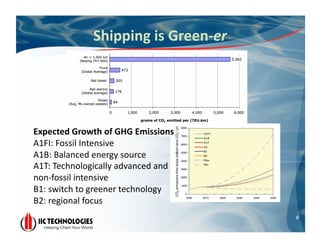
Shipping	
  is	
  Green-­‐er	


Expected	
  Growth	
  of	
  GHG	
  Emissions	
  
A1FI:	
  Fossil	
  Intensive	
  
A1B:	
  Balanced	
  energy	
  source	
  
A1T:	
  Technologically	
  advanced	
  and	
  
non-­‐fossil	
  intensive	
  
B1:	
  switch	
  to	
  greener	
  technology	
  
B2:	
  regional	
  focus	
  
                                                       8	
  
Most	
  Finite	
  Resources	
  Produc5on	
  Follow	
  
                   Logis5c	
  Curve	


    UK	
  Coal	
  Produc5on	


                                                         9	
  
The	
  Rise	
  and	
  Fall	
  of	
  Oil	
  Produc5on	
  

                                                                         Romania	
  (‘75)	


                      Texas	
  (‘72)	
         Mexico	
  (‘04)	
  
Alaska	
  (‘88)	


                                                               ‘04	
  
                                   (‘00)	
                                               ‘08	


                                                                         Saudi	
  Arabia	
  (??)	
  

                                                                                                       10	
  
M.	
  King	
  Hubbert	
  and	
  “Peak	
  Oil”	


                                                    11	
  
Summary	
  to	
  here	
  

•  Shipping	
  is	
  essen>al	
  
•  GHG	
  Emissions	
  Regula>ons	
  will	
  be	
  applied	
  to	
  
   Interna>onal	
  Shipping	
  
•  Oil,	
  in	
  ever	
  decreasing	
  supply,	
  will	
  rise	
  in	
  price	
  

     Shipping	
  needs	
  alterna>ve	
  energy	
  sources	


                                                                                    12	
  
Post	
  Kyoto	
  GHG	
  Emissions	
  Regula5ons	


•  Size	
  of	
  current	
  
   interna>onal	
  shipping	
  
   GHG	
  emissions	
  
•  Op>ons	
  to	
  reduce	
  GHG	
  
   emissions	
  
•  Guidelines	
  for	
  new-­‐
   builds	
  to	
  reduce	
  GHG	
  
   emissions	


                                                             13	
  
Energy	
  Loss	
  at	
  Sea	


Only	
  28%	
  of	
  energy	
  goes	
  into	
  propulsion	
  

                                                                14	
  
Op5mizing	
  Superstructure,	
  Hull	
  and	
  Prop	


                                                          15	
  
Wind,	
  Solar	
  
SkySails	
  on	
  MV	
  Beluga	


                                         Flebner	
  rotors	
  on	
  ENERCON	
  E-­‐Ship-­‐1	


                          MV	
  Auriga-­‐Leader	
  Toyota	
  Car	
  Carrier	
  
                                                                                                  16	
  
Alterna5ve	
  Fuels	


70MW	
  Hyperion	
  Nuclear	


      2030??	
  
                                  Synthe>c	
  Fischer-­‐Tropsch	
  
                                                                      17	
  
Leading	
  Contender:	
  	
  LNG	


                             DNV	
  suggest	
  by	
  2020	
  
                             all	
  newbuilds	
  will	
  
                             specify	
  LNG	
  tanks	
  and	
  
                             dual	
  fuel	
  engines	


                                                             18	
  
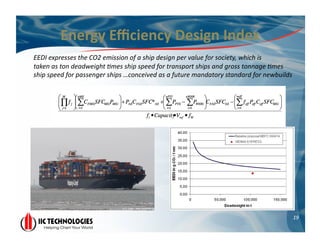
Energy	
  Efficiency	
  Design	
  Index	
  
EEDI	
  expresses	
  the	
  CO2	
  emission	
  of	
  a	
  ship	
  design	
  per	
  value	
  for	
  society,	
  which	
  is	
  
taken	
  as	
  ton	
  deadweight	
  Qmes	
  ship	
  speed	
  for	
  transport	
  ships	
  and	
  gross	
  tonnage	
  Qmes	
  
ship	
  speed	
  for	
  passenger	
  ships	
  …conceived	
  as	
  a	
  future	
  mandatory	
  standard	
  for	
  newbuilds	


                                                                                                                             19	
  
Opera5onal	
  Changes	
  

•  Vessel	
  Speed	
  Reduc>on	
  
•  Beber	
  Voyage	
  Planning	
  
•  Beber	
  Logis>cs	


                                        20	
  
Speed	
  Reduc5on	


                        21	
  
Role	
  of	
  the	
  Hydrographic	
  Community	
  
    To	
  reframe	
  the	
  nau>cal	
  chart	
  and	
  associated	
  
       publica>ons	
  as	
  aids	
  to	
  energy	
  efficiency	
  
                                    …	
  

Focus	
  on	
  minimizing	
  the	
  energy	
  expended	
  by	
  ships	
  
though	
  high	
  resolu>on	
  current	
  surveys	
  and	
  models	
  
                                    …	
  

  Focus	
  on	
  improved	
  shipping	
  efficiency	
  through	
  
 improved	
  under-­‐keel-­‐clearance	
  depth	
  and	
  air-­‐gap	
  
                        forecas>ng	
  
                                    …	
  

       Aid	
  the	
  mariner	
  in	
  op>mizing	
  the	
  voyage	


                                                                            22	
  
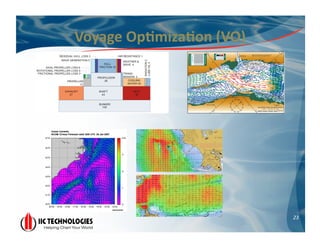
Voyage	
  Op5miza5on	
  (VO)	


                                   23	
  
VO	
  (2):	
  Air	
  Gap	


                               24	
  
VO	
  (3):	
  DUKC	


    Porto	
  de	
  Lisboa	


Dynamic	
  Under	
  Keel	
  Clearance	


                                                         25	
  
VO	
  (4):	
  Ice	
  Coverage	


                                    26	
  
Northern	
  Route	


A	
  Substan>al	
  
Reduc>on	
  in	
  GHG	
  
Emissions	
  	
  
(approx.	
  19,000	
  T)	
  

GHG	
  Emission	
                   13,000	
  T	
  
savings	
  per	
  year	
  
20,000,000	
  T	
  
                                                      32,000	
  T	


                                                                        27	
  
Summary	
  

•  Shipping	
  is	
  essen>al	
  but	
  will	
  come	
  under	
  
   pressure	
  to	
  reduce	
  GHG	
  emissions	
  and	
  reduce	
  
   costs	
  
•  The	
  hydrographic	
  community	
  can	
  play	
  a	
  part	
  
   increasing	
  shipping	
  efficiency	
  through	
  an	
  
   extension	
  of	
  well	
  known	
  technologies	
  and	
  
   innova>ve	
  methods	
  yet	
  to	
  be	
  discovered	


                                                                       28	
  
Thank You!


             29	
  

Climate Change, Peak Oil and Their Effects on Hydrography

  • 1.
    The  Effects  of  Climate  Change  and   Peak  Oil  on  Marine  Shipping,   Naviga>on  and  Hydrography   MJ  Casey   IIC  Technologies   1  
  • 2.
    Summary   •  We  live  in  a  globalized  world  where  cheap,  fast   and  reliable  marine  transporta>on  is  essen>al   •  Post  Kyoto  Global  Climate  Change  regula>ons   will  address  marine  targets  for  Greenhouse   Gas  (GSG)  emissions   •  Oil  is  in  finite  supply  and  we  are  likely  near  the   peak  of  produc>on;  we  can  expect  fuel  prices   to  steadily  climb   2  
  • 3.
    Trade  is  Globalized   •  JIT  means  no  inventory   •  Networked  trade  is   endemic   •  We  are  all  involved   •  Going  back  to  old  style   trade  is  not  an  op>on   •  The  world  is  totally   dependent  upon  air  and   sea  cargo  carriers   3  
  • 4.
    Interna5onal  Nature  of  Auto  Manufacturing   Dodge  Journey:  43%  US  parts   Ford  Expedi>on:  50%   Jaguar  Vanden  Plas  Sedan:  20%   4  
  • 5.
  • 6.
    Turning  Back  Will  Be  Difficult   Machine  Tool   Produc5on  is   Down   6  
  • 7.
    Kyoto  and  Interna5onal  Shipping   •  under  the  Kyoto  Protocol  emissions  from   interna>onal  mari>me  transport  are  not   included  in  na>onal  inventories  or  na>onal   emissions  reduc>on  targets   •  The  Interna>onal  Mari>me  Organiza>on  (IMO)   and  the  Interna>onal  Civil  Avia>on   Organiza>on  (ICAO)  are  working  to  build  an   interna>onal  consensus  on  addressing  their   respec>ve  sector’s  CO2  and  other  emissions   7  
  • 8.
    Shipping  is  Green-­‐er   Expected  Growth  of  GHG  Emissions   A1FI:  Fossil  Intensive   A1B:  Balanced  energy  source   A1T:  Technologically  advanced  and   non-­‐fossil  intensive   B1:  switch  to  greener  technology   B2:  regional  focus   8  
  • 9.
    Most  Finite  Resources  Produc5on  Follow   Logis5c  Curve   UK  Coal  Produc5on   9  
  • 10.
    The  Rise  and  Fall  of  Oil  Produc5on   Romania  (‘75)   Texas  (‘72)   Mexico  (‘04)   Alaska  (‘88)   ‘04   (‘00)   ‘08   Saudi  Arabia  (??)   10  
  • 11.
    M.  King  Hubbert  and  “Peak  Oil”   11  
  • 12.
    Summary  to  here   •  Shipping  is  essen>al   •  GHG  Emissions  Regula>ons  will  be  applied  to   Interna>onal  Shipping   •  Oil,  in  ever  decreasing  supply,  will  rise  in  price   Shipping  needs  alterna>ve  energy  sources   12  
  • 13.
    Post  Kyoto  GHG  Emissions  Regula5ons   •  Size  of  current   interna>onal  shipping   GHG  emissions   •  Op>ons  to  reduce  GHG   emissions   •  Guidelines  for  new-­‐ builds  to  reduce  GHG   emissions   13  
  • 14.
    Energy  Loss  at  Sea   Only  28%  of  energy  goes  into  propulsion   14  
  • 15.
  • 16.
    Wind,  Solar   SkySails  on  MV  Beluga   Flebner  rotors  on  ENERCON  E-­‐Ship-­‐1   MV  Auriga-­‐Leader  Toyota  Car  Carrier   16  
  • 17.
    Alterna5ve  Fuels   70MW  Hyperion  Nuclear   2030??   Synthe>c  Fischer-­‐Tropsch   17  
  • 18.
    Leading  Contender:    LNG   DNV  suggest  by  2020   all  newbuilds  will   specify  LNG  tanks  and   dual  fuel  engines   18  
  • 19.
    Energy  Efficiency  Design  Index   EEDI  expresses  the  CO2  emission  of  a  ship  design  per  value  for  society,  which  is   taken  as  ton  deadweight  Qmes  ship  speed  for  transport  ships  and  gross  tonnage  Qmes   ship  speed  for  passenger  ships  …conceived  as  a  future  mandatory  standard  for  newbuilds   19  
  • 20.
    Opera5onal  Changes   • Vessel  Speed  Reduc>on   •  Beber  Voyage  Planning   •  Beber  Logis>cs   20  
  • 21.
  • 22.
    Role  of  the  Hydrographic  Community   To  reframe  the  nau>cal  chart  and  associated   publica>ons  as  aids  to  energy  efficiency   …   Focus  on  minimizing  the  energy  expended  by  ships   though  high  resolu>on  current  surveys  and  models   …   Focus  on  improved  shipping  efficiency  through   improved  under-­‐keel-­‐clearance  depth  and  air-­‐gap   forecas>ng   …   Aid  the  mariner  in  op>mizing  the  voyage   22  
  • 23.
  • 24.
    VO  (2):  Air  Gap   24  
  • 25.
    VO  (3):  DUKC   Porto  de  Lisboa   Dynamic  Under  Keel  Clearance   25  
  • 26.
    VO  (4):  Ice  Coverage   26  
  • 27.
    Northern  Route   A  Substan>al   Reduc>on  in  GHG   Emissions     (approx.  19,000  T)   GHG  Emission   13,000  T   savings  per  year   20,000,000  T   32,000  T   27  
  • 28.
    Summary   •  Shipping  is  essen>al  but  will  come  under   pressure  to  reduce  GHG  emissions  and  reduce   costs   •  The  hydrographic  community  can  play  a  part   increasing  shipping  efficiency  through  an   extension  of  well  known  technologies  and   innova>ve  methods  yet  to  be  discovered   28  
  • 29.