Mr.Yogesh A Dengale
MSc Nursing Student
UNIVERSALUNIVERSAL
BIOSAFETYBIOSAFETY
PRECAUTIONSPRECAUTIONS
All patients are considered to be possible carriers of
blood born pathogens
Hence universal precautions are applied to all
Universal precautions are required for doctors, nurses,
health care workers who come in contact with patients
and bodily fluids
Safe or good clinical practices applied
‘universally’ in caring for all patients, regardless
of the diagnosis in order to minimize or avoid
exposure to infection
Hand washing
Decontamination of equipment and devices
 Use and disposal of needles and sharps safely
 Wearing protective items
 Prompt cleaning up of blood and body fluid spills
Systems for safe collection of waste and disposal
5
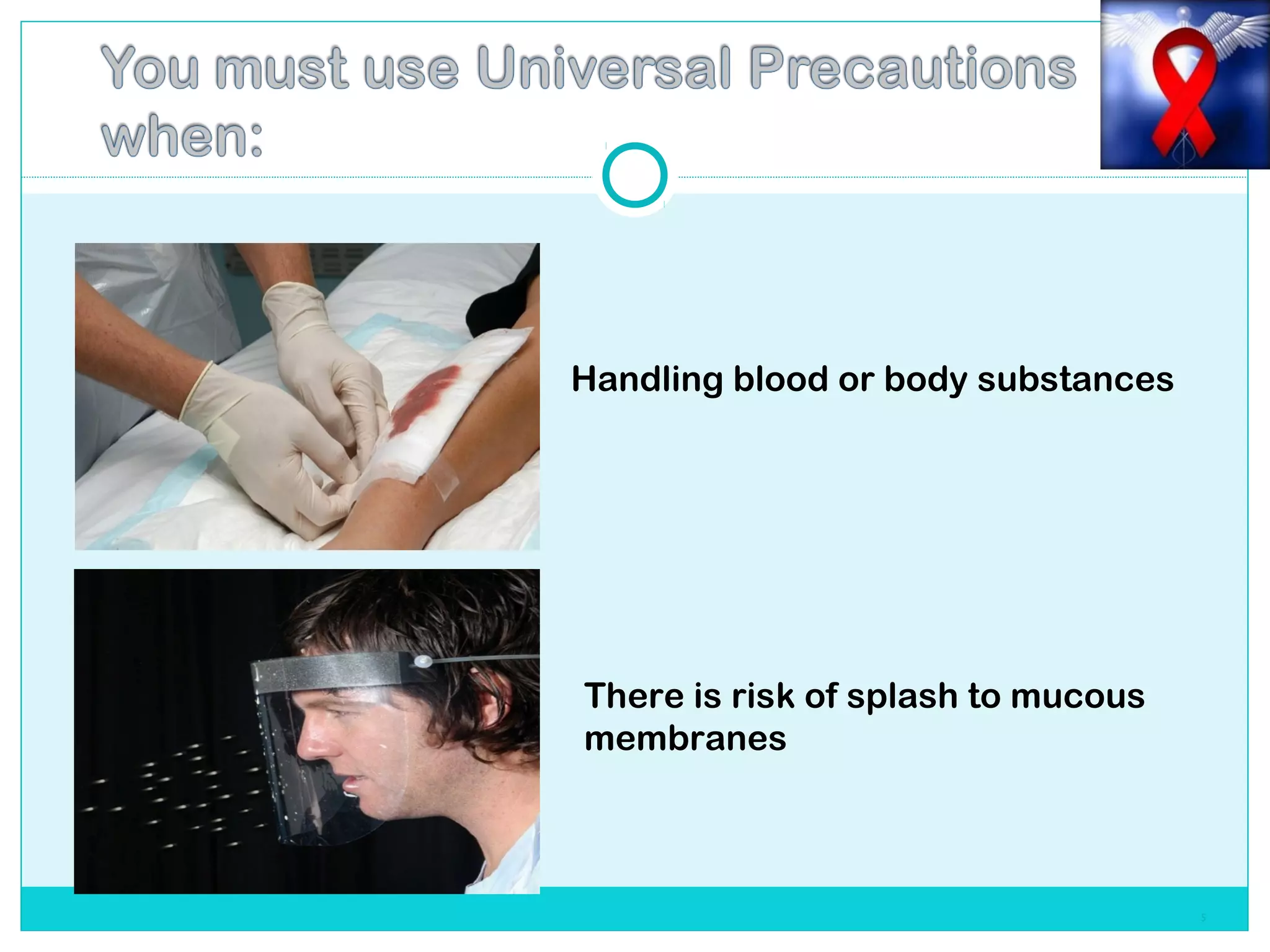
There is risk of splash to mucous
membranes
Handling blood or body substances
6
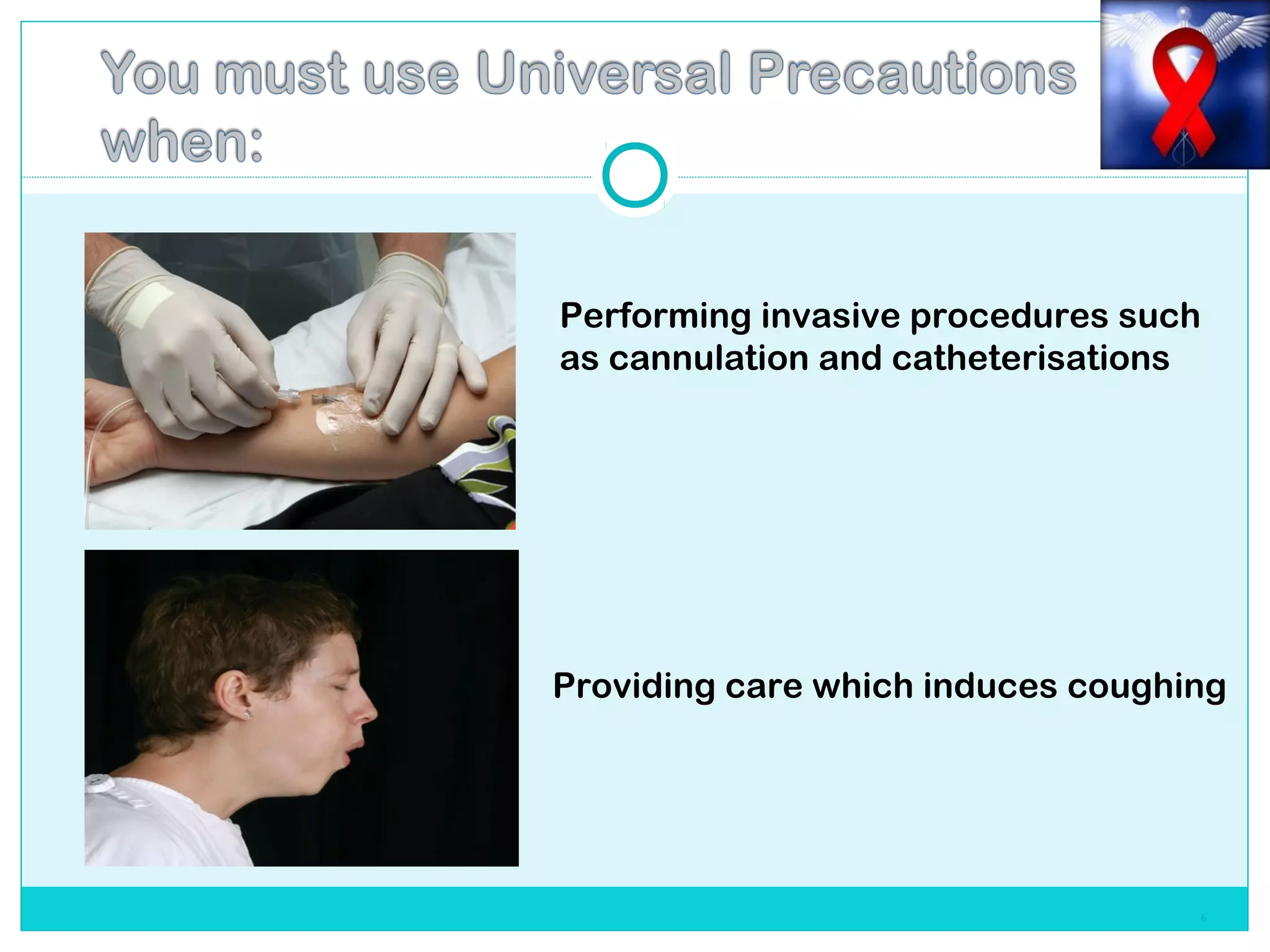
Providing care which induces coughing
Performing invasive procedures such
as cannulation and catheterisations
7
There is risk of hands being
contaminated with blood or body
substances
Before and after patient contact,
perform hand hygiene
8
Hand hygiene practices including
washing of hands before and after
each patient contact
Cover any cuts before commencing
work
9
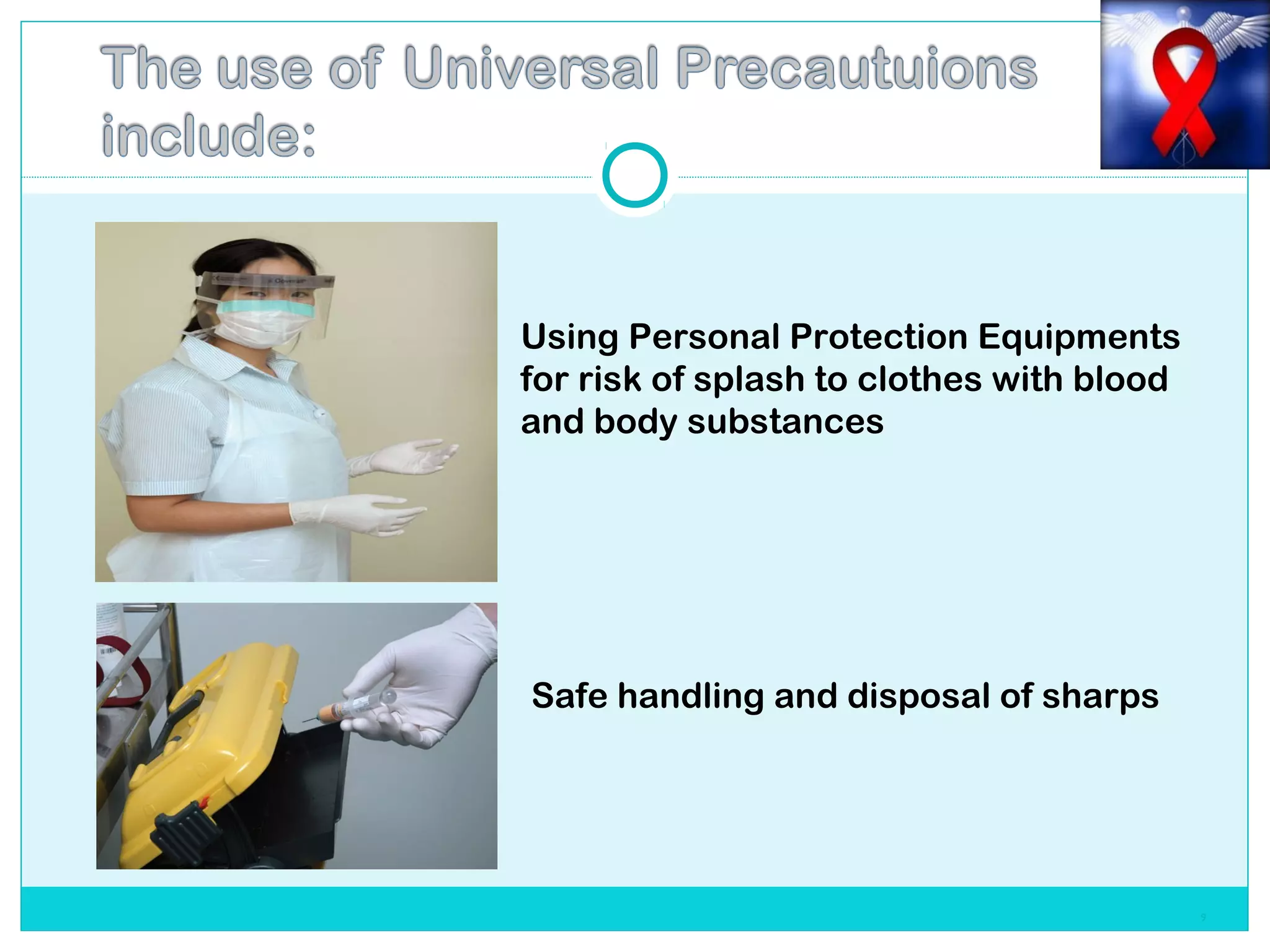
Using Personal Protection Equipments
for risk of splash to clothes with blood
and body substances
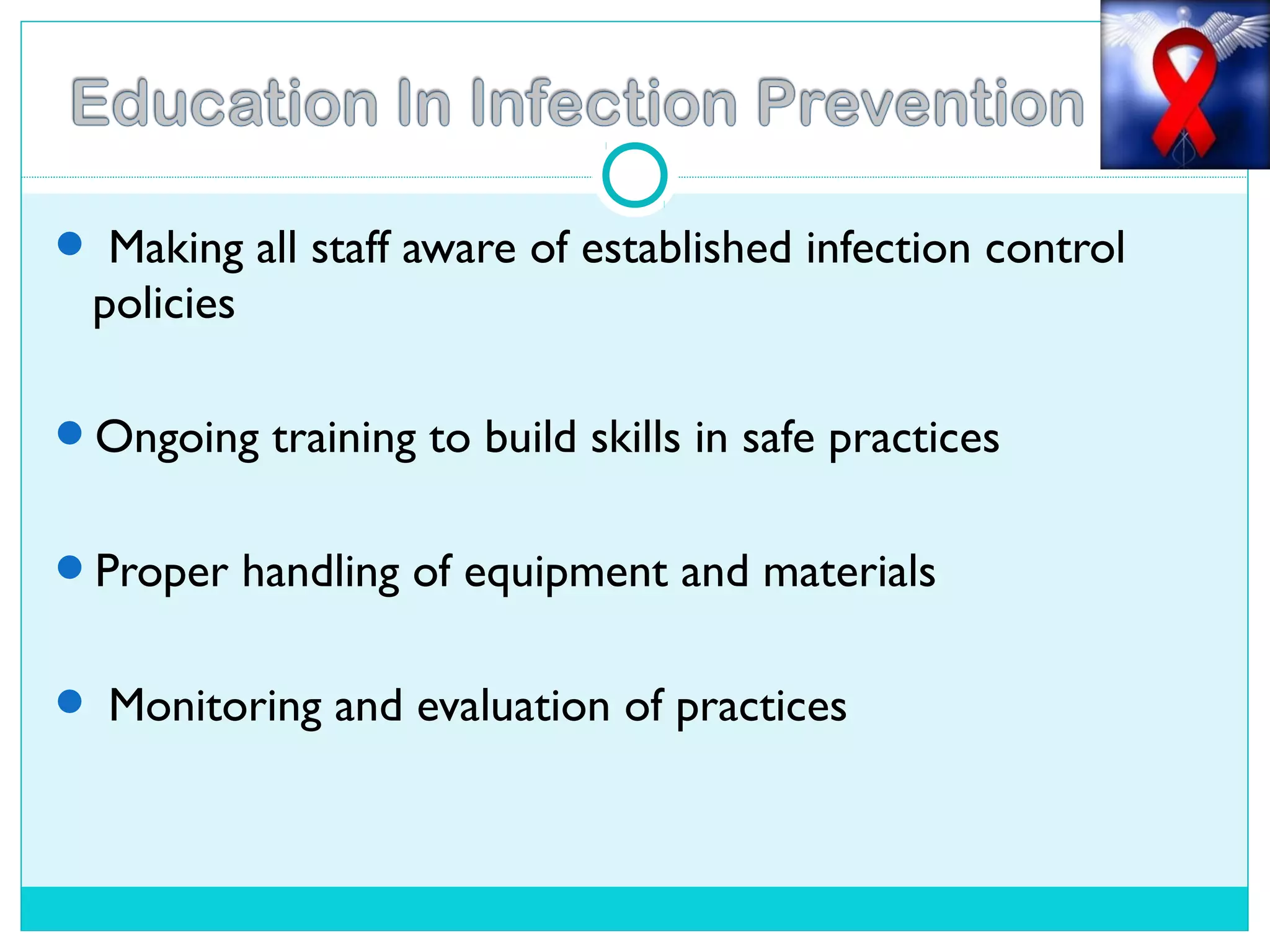
Safe handling and disposal of sharps
10
 The use of aseptic technique
 Getting vaccinated and check your immunity to
vaccine preventable diseases
 Reporting all occupational exposures
 Keeping a clean environment
 Hand washing
 Assessment of condition of protective equipment
 Safe disposal of waste materials
 Ensuring that appropriate cleaning and disinfecting agents
are available
 Decontamination of instruments and equipment
 Monitoring of integrity of skin
 Making all staff aware of established infection control
policies
Ongoing training to build skills in safe practices
Proper handling of equipment and materials
 Monitoring and evaluation of practices
 Indicator – I
Indicator -II
Indicator -III
Indicator -IV
Indicator -V
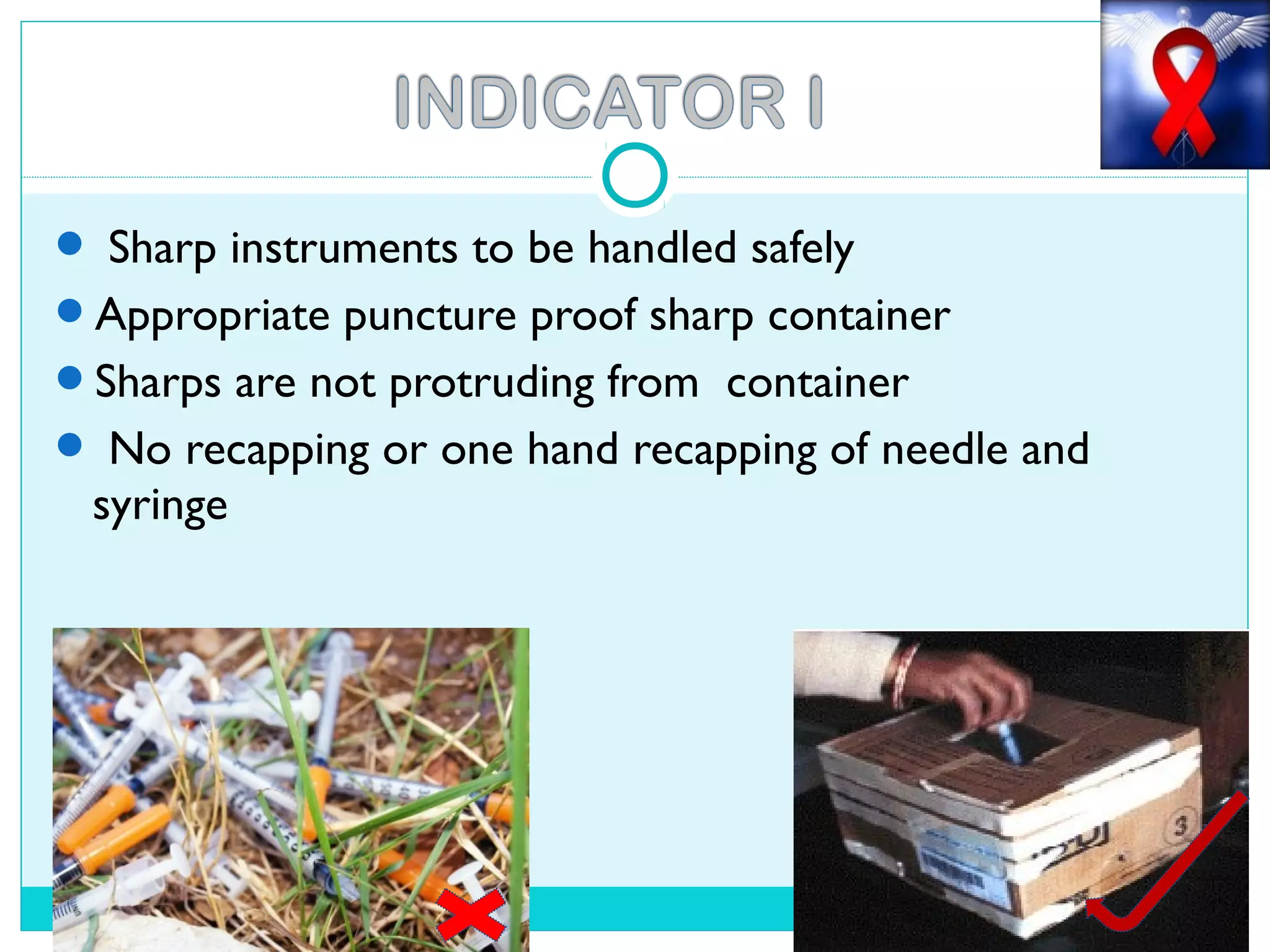
 Sharp instruments to be handled safely
Appropriate puncture proof sharp container
Sharps are not protruding from container
 No recapping or one hand recapping of needle and
syringe
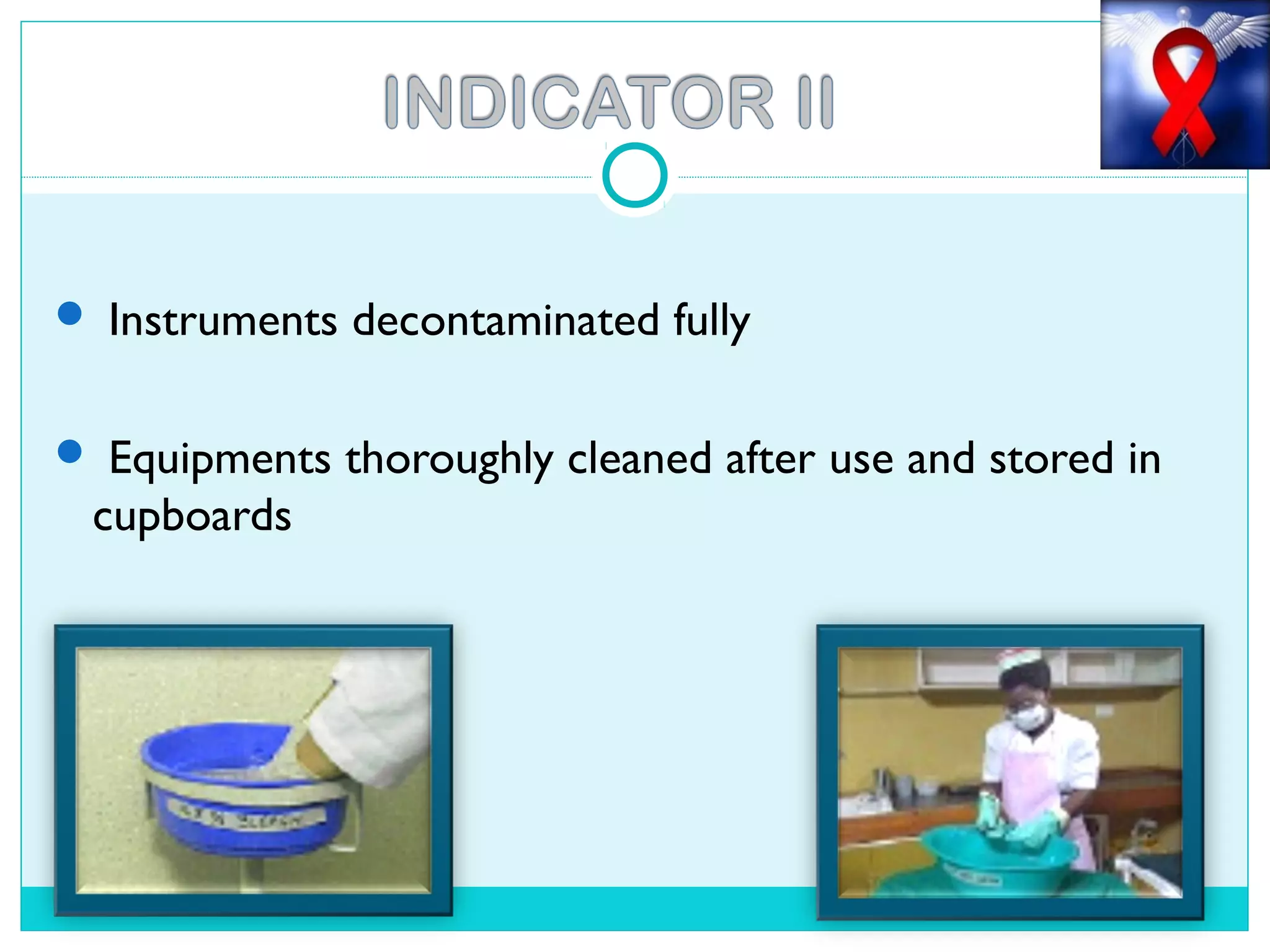
 Instruments decontaminated fully
 Equipments thoroughly cleaned after use and stored in
cupboards
 Hands are washed appropriately to prevent cross
infection (MOST EFFECTIVE METHOD)
 Wash hands with soap and water-
after contact with body fluids
 removal of gloves
 contact with patients
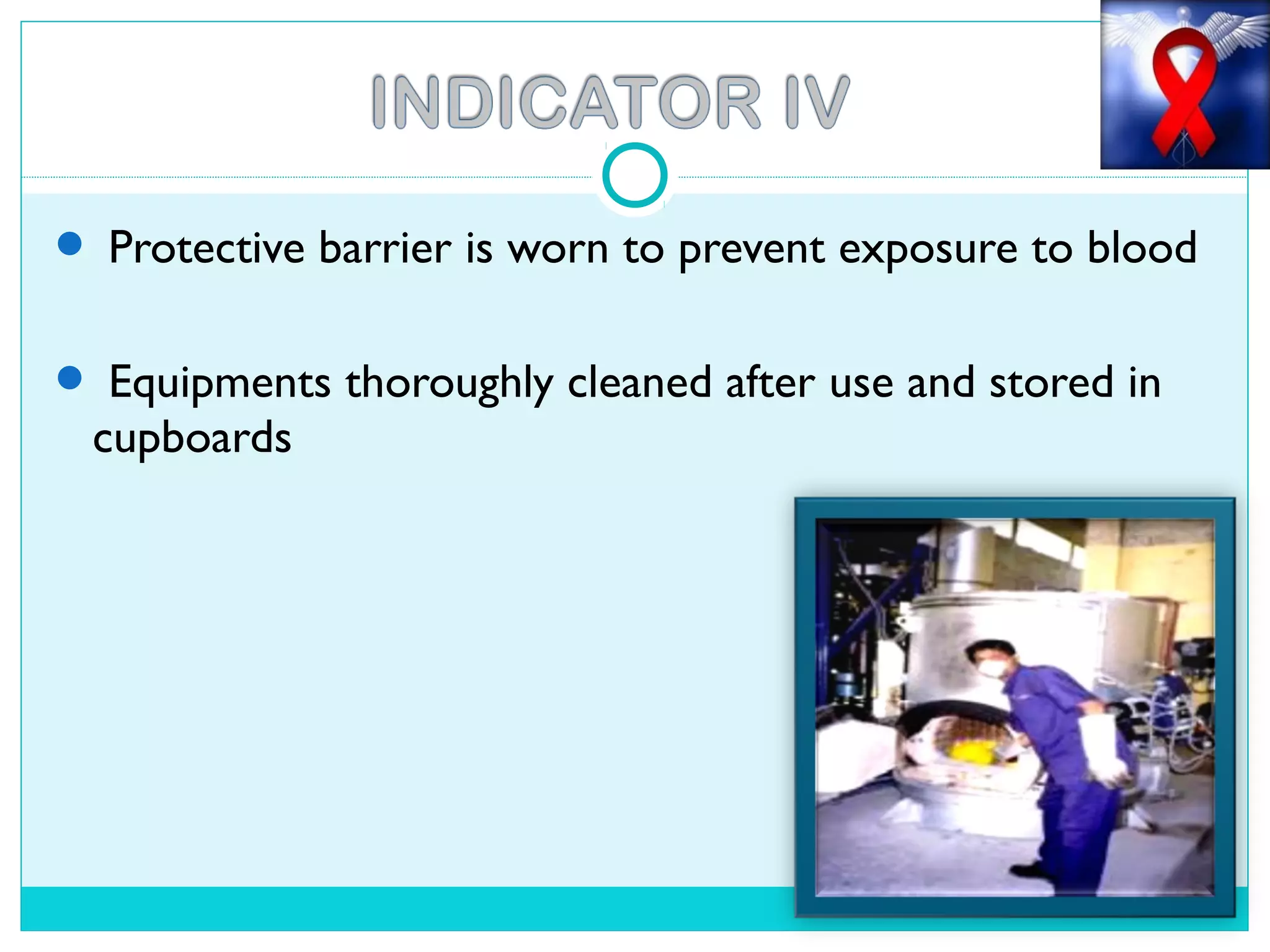
 Protective barrier is worn to prevent exposure to blood
 Equipments thoroughly cleaned after use and stored in
cupboards
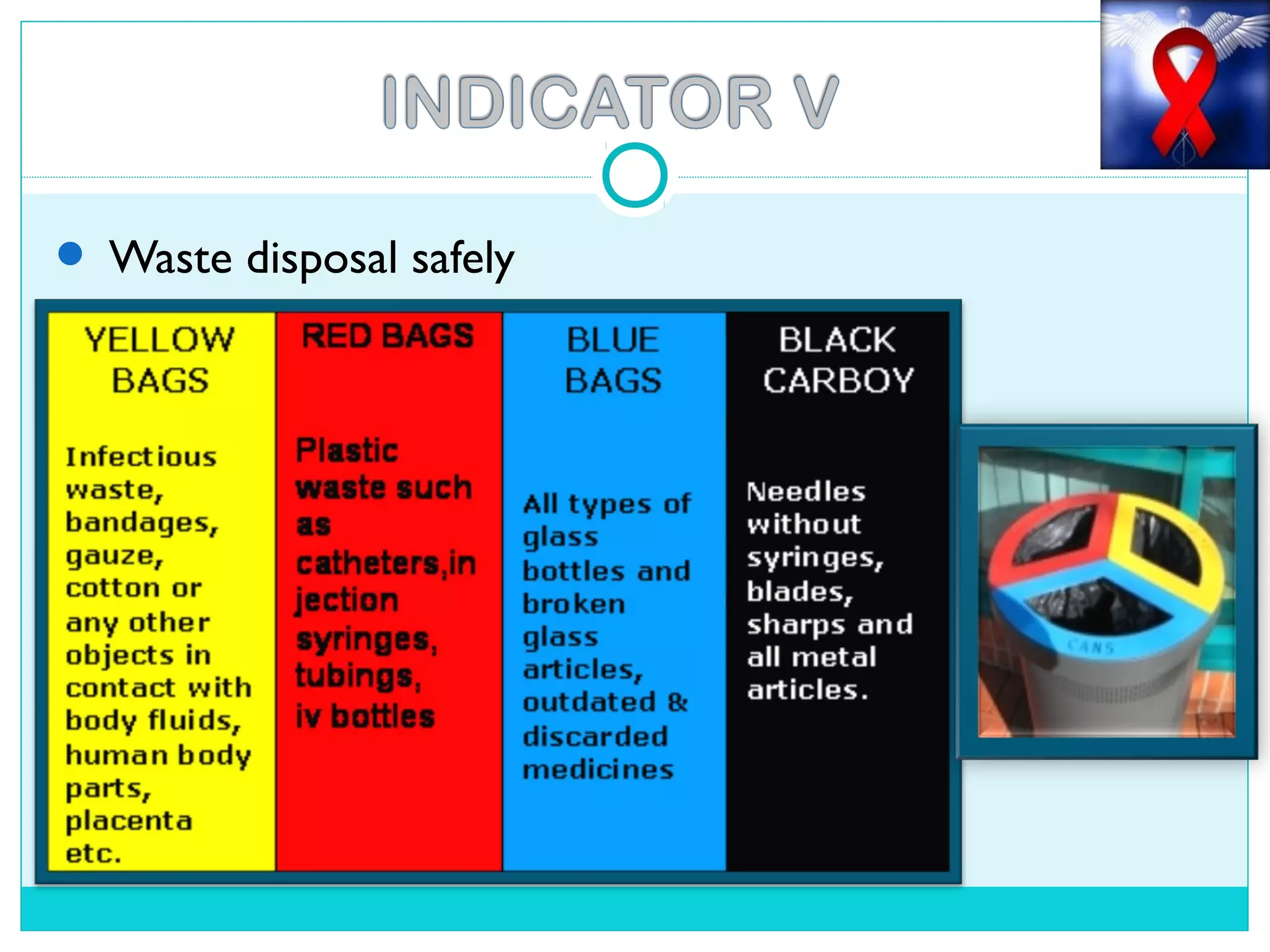
 Waste disposal safely
Use a puncture proof‐
container for storage
and/or disposal
Do not recap a needle
before disposal unless using
one hand technique‐
GlovesGloves
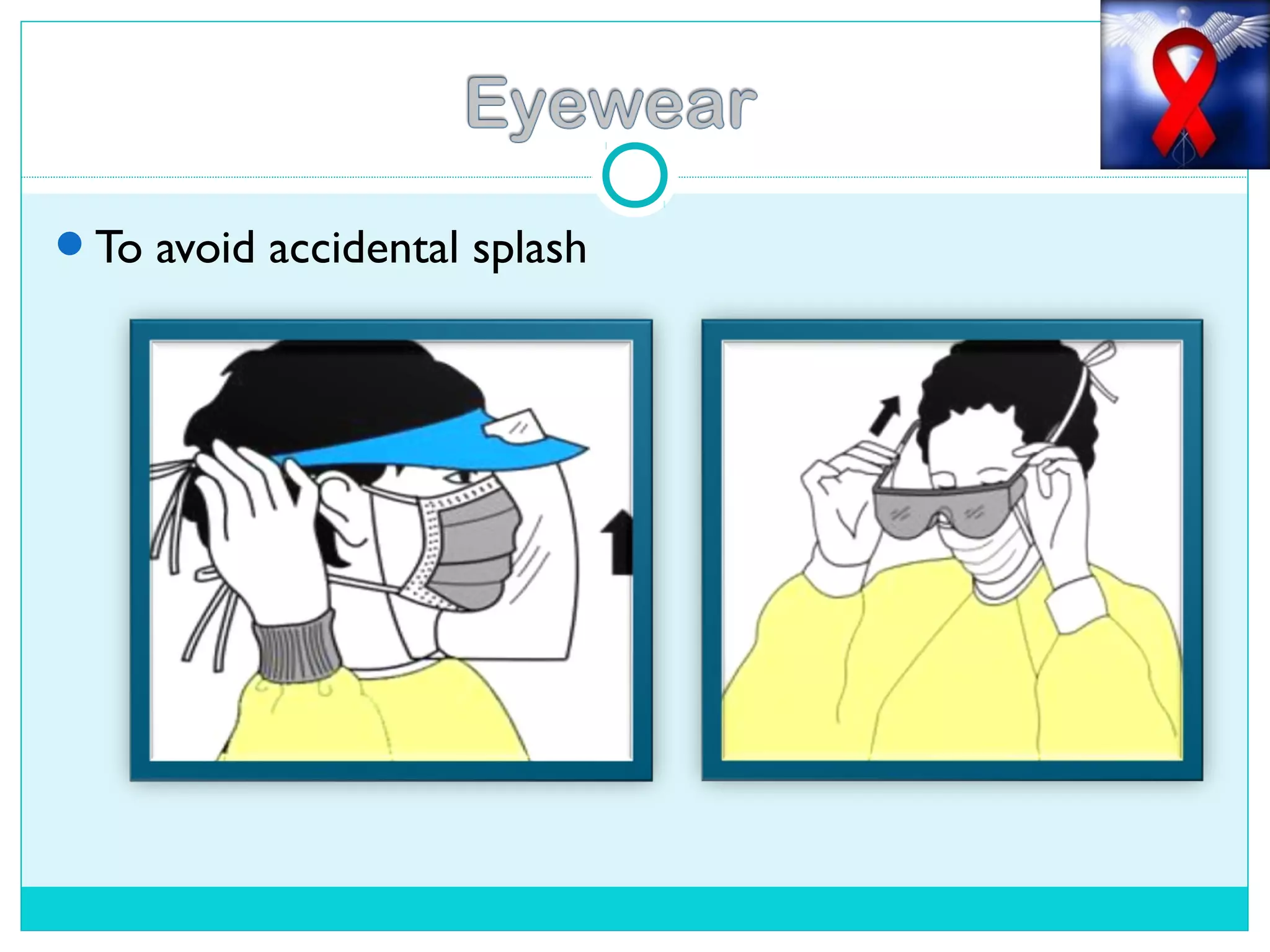
To avoid accidental splash
• Gloves
• Face shield or goggles
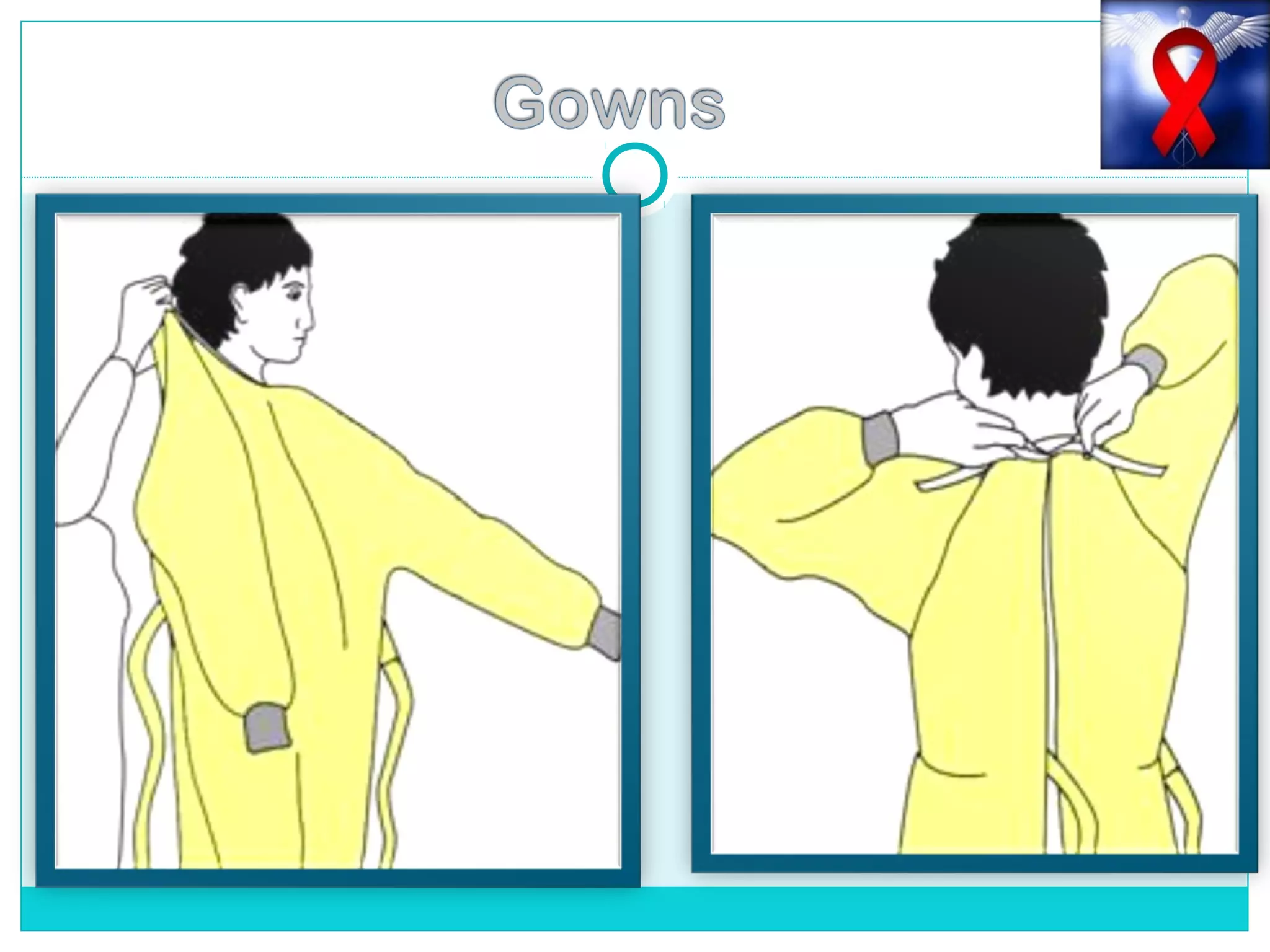
• Gown
• Mask or respirator
DON’T
BE
SCARED
OF HIV
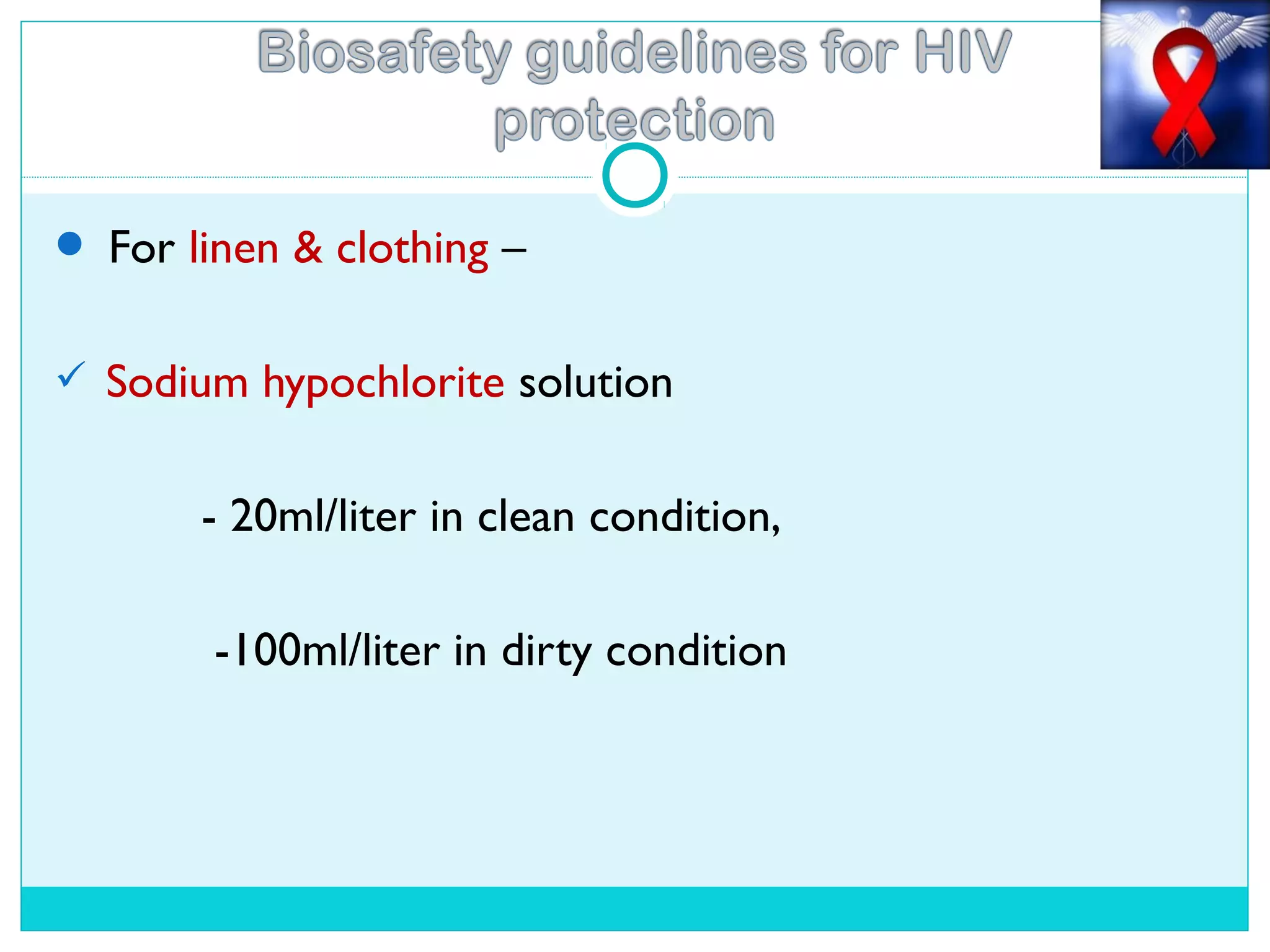
 For linen & clothing –
 Sodium hypochlorite solution
- 20ml/liter in clean condition,
-100ml/liter in dirty condition
For furniture spills & equipments-
 Cetrimide (Savlon) 10ml + 1Lit of water
For Hand Wash – 70% ethyl alcohol
Cleaning
Removes high proportion of micro organisms
and contaminants
Disinfections
Eliminates most recognized pathogenic micro
organisms, inactivates HIV
Sterilization
Destroys all micro organisms, inactivates HIV
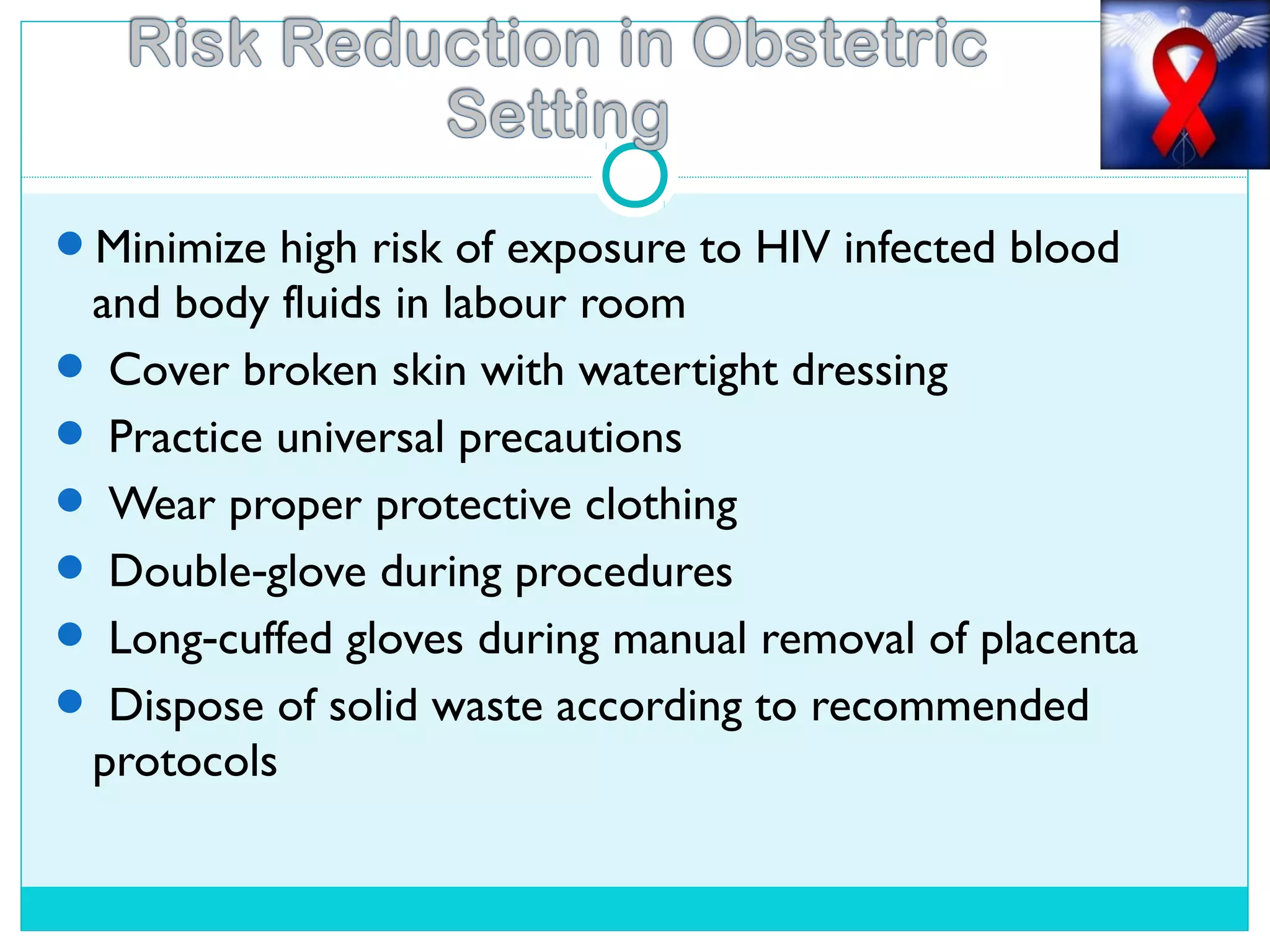
Minimize high risk of exposure to HIV infected blood
and body fluids in labour room
 Cover broken skin with watertight dressing
 Practice universal precautions
 Wear proper protective clothing
 Double glove during procedures‐
 Long cuffed gloves during manual removal of placenta‐
 Dispose of solid waste according to recommended
protocols
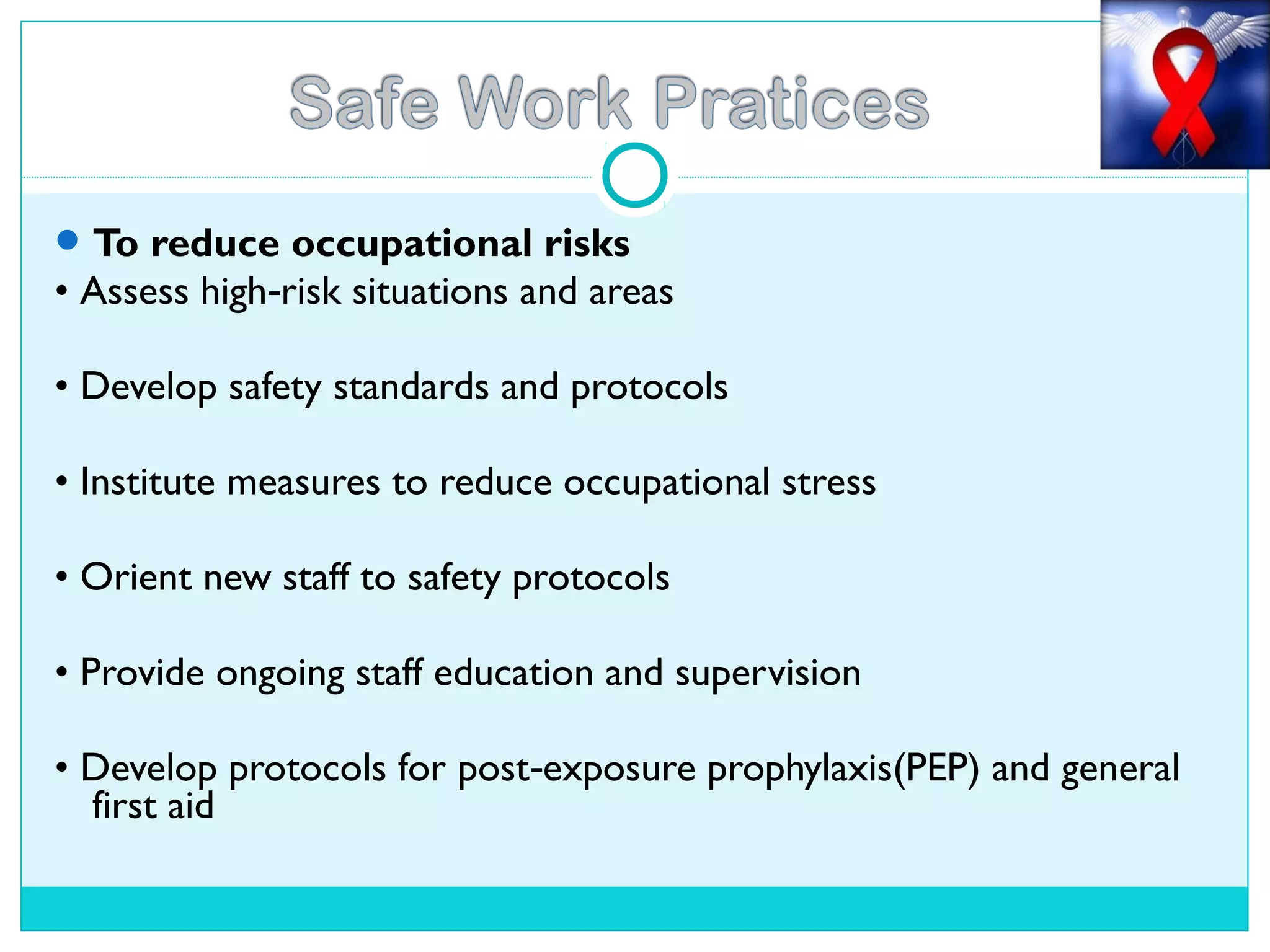
To reduce occupational risks
• Assess high risk situations and areas‐
• Develop safety standards and protocols
• Institute measures to reduce occupational stress
• Orient new staff to safety protocols
• Provide ongoing staff education and supervision
• Develop protocols for post exposure prophylaxis(PEP) and general‐
first aid
Prevention is better than cure
Universal precautions are must
Always follow safe work practices
Universal bi osafety precautions

Universal bi osafety precautions

  • 1.
    Mr.Yogesh A Dengale MScNursing Student UNIVERSALUNIVERSAL BIOSAFETYBIOSAFETY PRECAUTIONSPRECAUTIONS
  • 2.
    All patients areconsidered to be possible carriers of blood born pathogens Hence universal precautions are applied to all Universal precautions are required for doctors, nurses, health care workers who come in contact with patients and bodily fluids
  • 3.
    Safe or goodclinical practices applied ‘universally’ in caring for all patients, regardless of the diagnosis in order to minimize or avoid exposure to infection
  • 4.
    Hand washing Decontamination ofequipment and devices  Use and disposal of needles and sharps safely  Wearing protective items  Prompt cleaning up of blood and body fluid spills Systems for safe collection of waste and disposal
  • 5.
    5 There is riskof splash to mucous membranes Handling blood or body substances
  • 6.
    6 Providing care whichinduces coughing Performing invasive procedures such as cannulation and catheterisations
  • 7.
    7 There is riskof hands being contaminated with blood or body substances Before and after patient contact, perform hand hygiene
  • 8.
    8 Hand hygiene practicesincluding washing of hands before and after each patient contact Cover any cuts before commencing work
  • 9.
    9 Using Personal ProtectionEquipments for risk of splash to clothes with blood and body substances Safe handling and disposal of sharps
  • 10.
    10  The useof aseptic technique  Getting vaccinated and check your immunity to vaccine preventable diseases  Reporting all occupational exposures  Keeping a clean environment
  • 11.
     Hand washing Assessment of condition of protective equipment  Safe disposal of waste materials  Ensuring that appropriate cleaning and disinfecting agents are available  Decontamination of instruments and equipment  Monitoring of integrity of skin
  • 12.
     Making allstaff aware of established infection control policies Ongoing training to build skills in safe practices Proper handling of equipment and materials  Monitoring and evaluation of practices
  • 13.
     Indicator –I Indicator -II Indicator -III Indicator -IV Indicator -V
  • 14.
     Sharp instrumentsto be handled safely Appropriate puncture proof sharp container Sharps are not protruding from container  No recapping or one hand recapping of needle and syringe
  • 15.
     Instruments decontaminatedfully  Equipments thoroughly cleaned after use and stored in cupboards
  • 16.
     Hands arewashed appropriately to prevent cross infection (MOST EFFECTIVE METHOD)  Wash hands with soap and water- after contact with body fluids  removal of gloves  contact with patients
  • 17.
     Protective barrieris worn to prevent exposure to blood  Equipments thoroughly cleaned after use and stored in cupboards
  • 18.
  • 19.
    Use a punctureproof‐ container for storage and/or disposal Do not recap a needle before disposal unless using one hand technique‐
  • 21.
  • 24.
  • 25.
    • Gloves • Faceshield or goggles • Gown • Mask or respirator
  • 26.
  • 27.
     For linen& clothing –  Sodium hypochlorite solution - 20ml/liter in clean condition, -100ml/liter in dirty condition
  • 28.
    For furniture spills& equipments-  Cetrimide (Savlon) 10ml + 1Lit of water
  • 29.
    For Hand Wash– 70% ethyl alcohol
  • 30.
    Cleaning Removes high proportionof micro organisms and contaminants Disinfections Eliminates most recognized pathogenic micro organisms, inactivates HIV Sterilization Destroys all micro organisms, inactivates HIV
  • 31.
    Minimize high riskof exposure to HIV infected blood and body fluids in labour room  Cover broken skin with watertight dressing  Practice universal precautions  Wear proper protective clothing  Double glove during procedures‐  Long cuffed gloves during manual removal of placenta‐  Dispose of solid waste according to recommended protocols
  • 33.
    To reduce occupationalrisks • Assess high risk situations and areas‐ • Develop safety standards and protocols • Institute measures to reduce occupational stress • Orient new staff to safety protocols • Provide ongoing staff education and supervision • Develop protocols for post exposure prophylaxis(PEP) and general‐ first aid
  • 34.
    Prevention is betterthan cure Universal precautions are must Always follow safe work practices