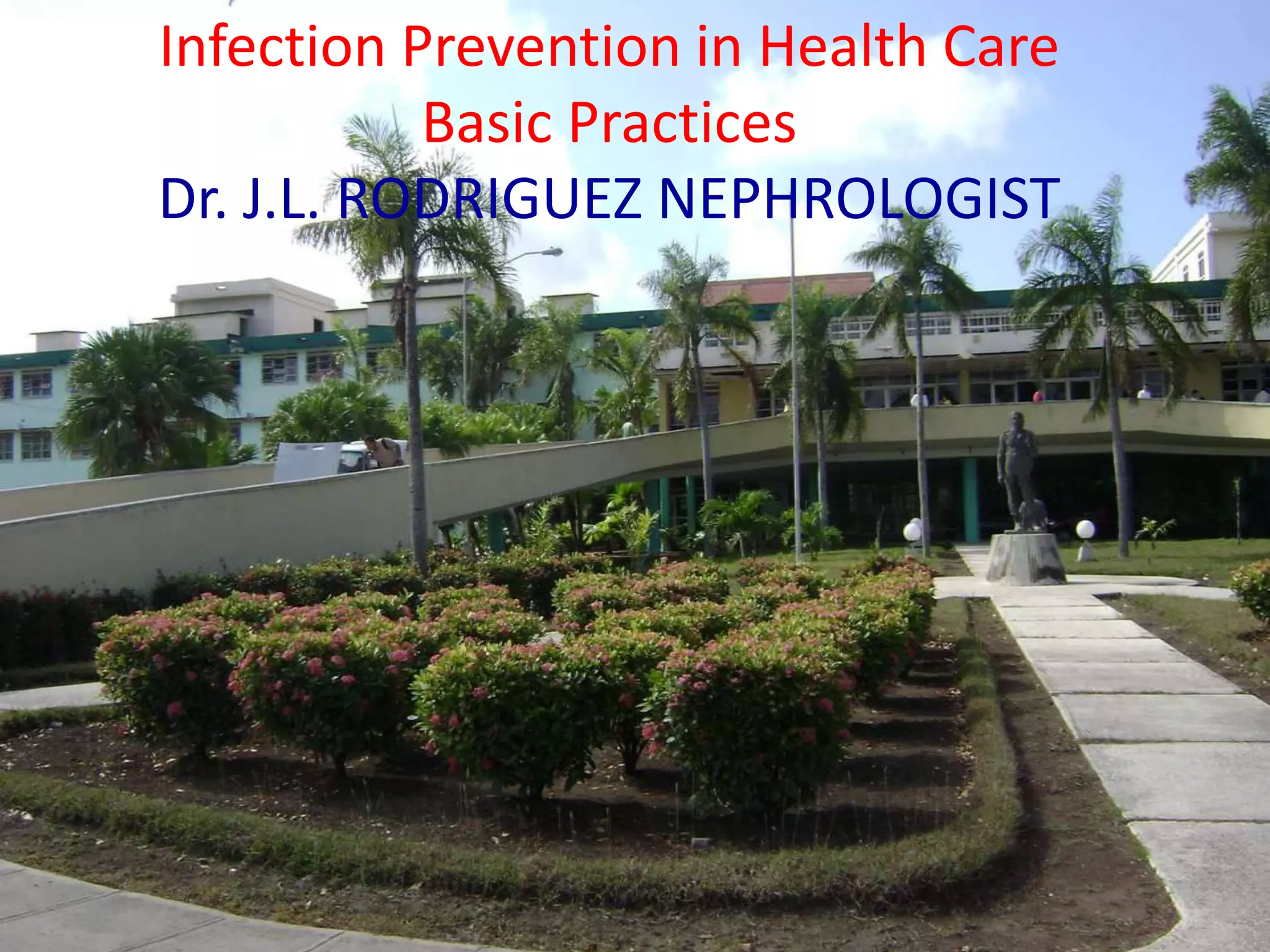
Infection Prevention
in Health Care
Basic Practices
Dr. J.L. RODRIGUEZ NEPHROLOGIST
Dr.T.V.Rao MD 1
Infection Prevention in Health Care
Basic Practices
Dr. J.L. RODRIGUEZ NEPHROLOGIST
Teaching and Learning Module
ONE
• The Programme Created for
Schedule of training module at
Nurses Staff, Oshakati Hospital, as
a part of Infection Control
Programme organised by Infection
Control Committee .
2
3
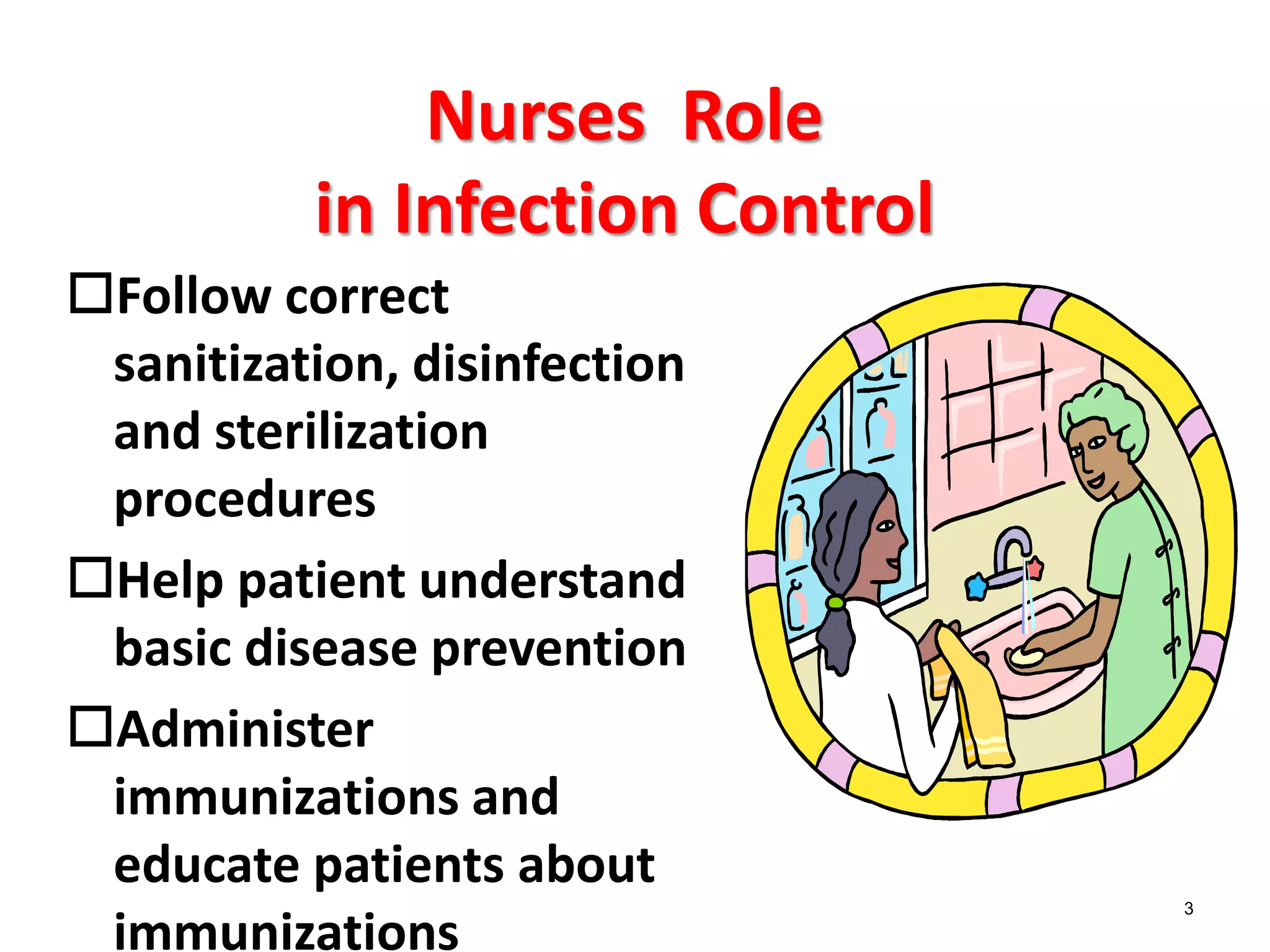
Nurses Role
in Infection Control
Follow correct
sanitization, disinfection
and sterilization
procedures
Help patient understand
basic disease prevention
Administer
immunizations and
educate patients about
immunizations
4
Three Levels of Infection
Control
Sanitization – cleaning
and scrubbing
instruments and
equipment to remove
contaminated materials
and microorganisms
Disinfection – second
level used on
instruments and
equipments that come
in contact with intact
mucous membrane
Sterilization – complete destruction of all microorganisms-
pathogenic, beneficial, and harmless- surface of instrument
and equipment
5
Sanitization Methods
Collecting instruments – place in
container with water and neutral pH
detergent until you can get to them.
Use utility gloves always and mask,
eye protection and protective clothing
if blood, body fluids or tissue are
present
6
Sanitization Methods (cont.)
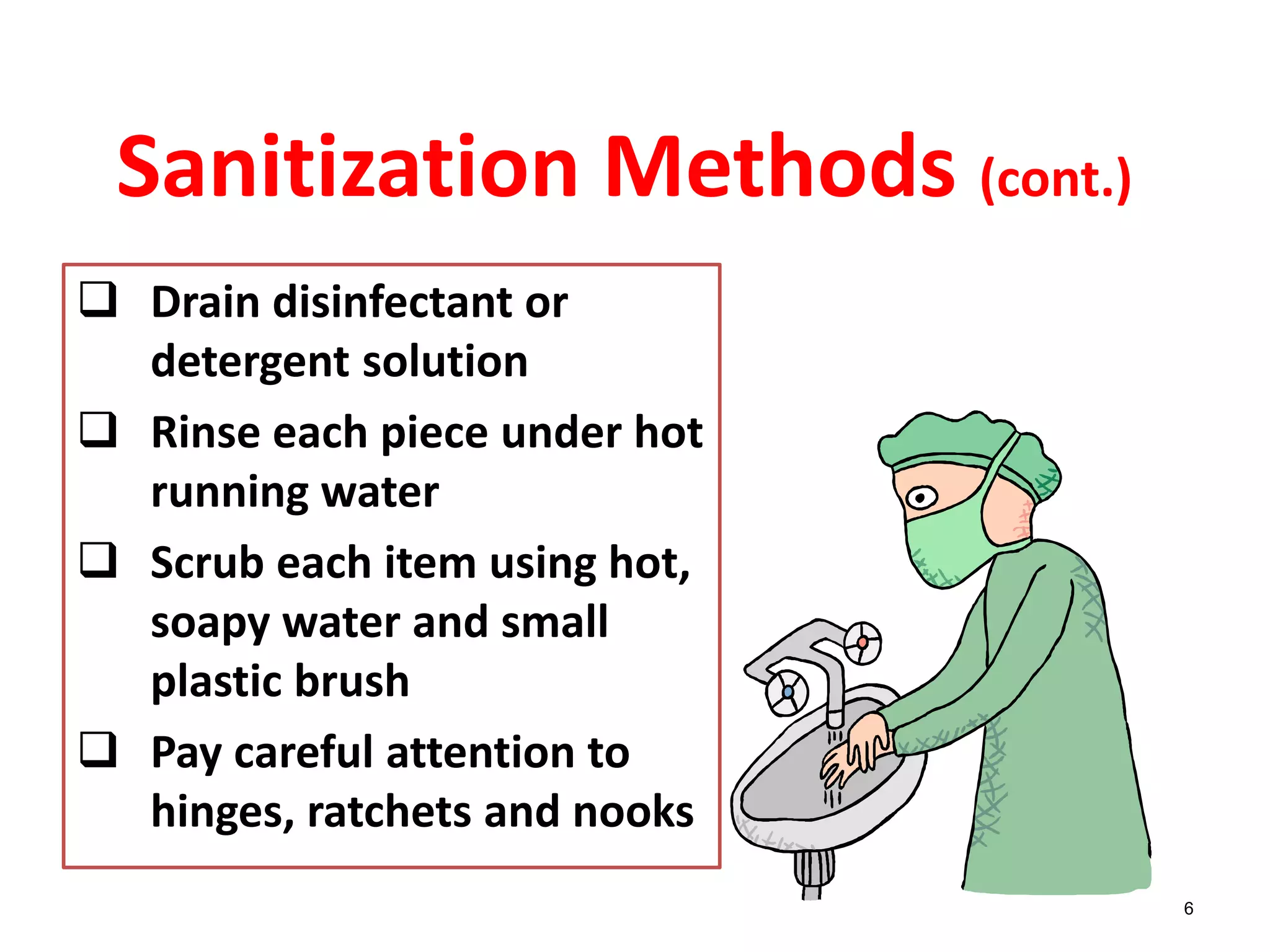
 Drain disinfectant or
detergent solution
 Rinse each piece under hot
running water
 Scrub each item using hot,
soapy water and small
plastic brush
 Pay careful attention to
hinges, ratchets and nooks
Standard Precautions
• Apply standard precautions to all
patients regardless of their
diagnosis, and to all
contaminated equipments and
materials.
• Use judgment in determining
which protective barriers are
necessary. 7
8
Sanitization Methods (cont.)
Rinse instruments individually and
place each one on a clean towel.
Roll all instruments in the towel to
remove moisture
Place instruments either in trays or
bins for storage or wrap for
sterilization
9
Disinfection
Wear gloves when handling instruments.
Disinfection solution must cover every
surface.
Used if instrument does not penetrate a
patient’s skin or mucous membranes
Enamelware
Endotracheal tubes
Glassware
Laryngoscopes and nasal specula
Dr.T.V.Rao MD
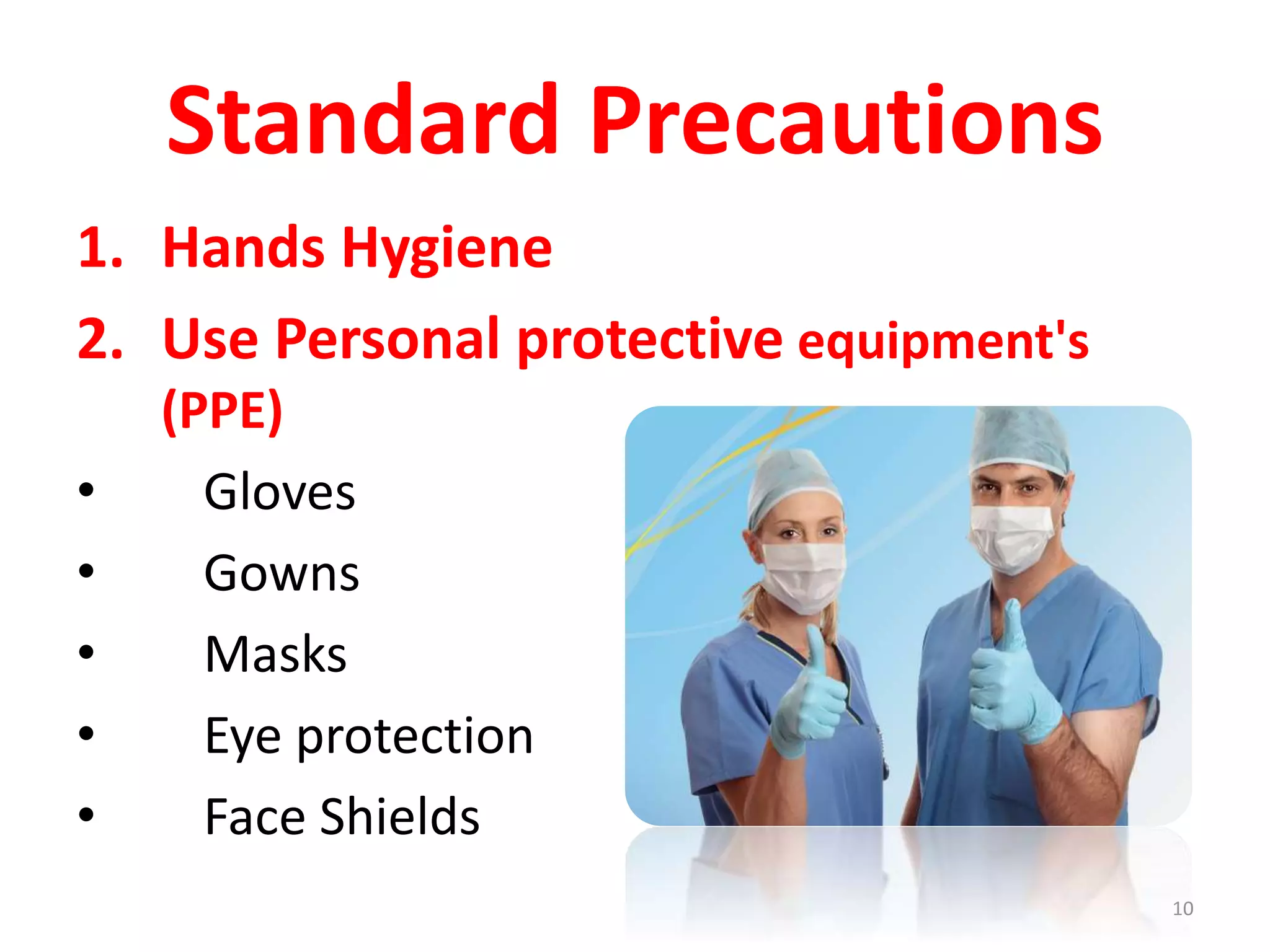
Standard Precautions
1. Hands Hygiene
2. Use Personal protective equipment's
(PPE)
• Gloves
• Gowns
• Masks
• Eye protection
• Face Shields
10
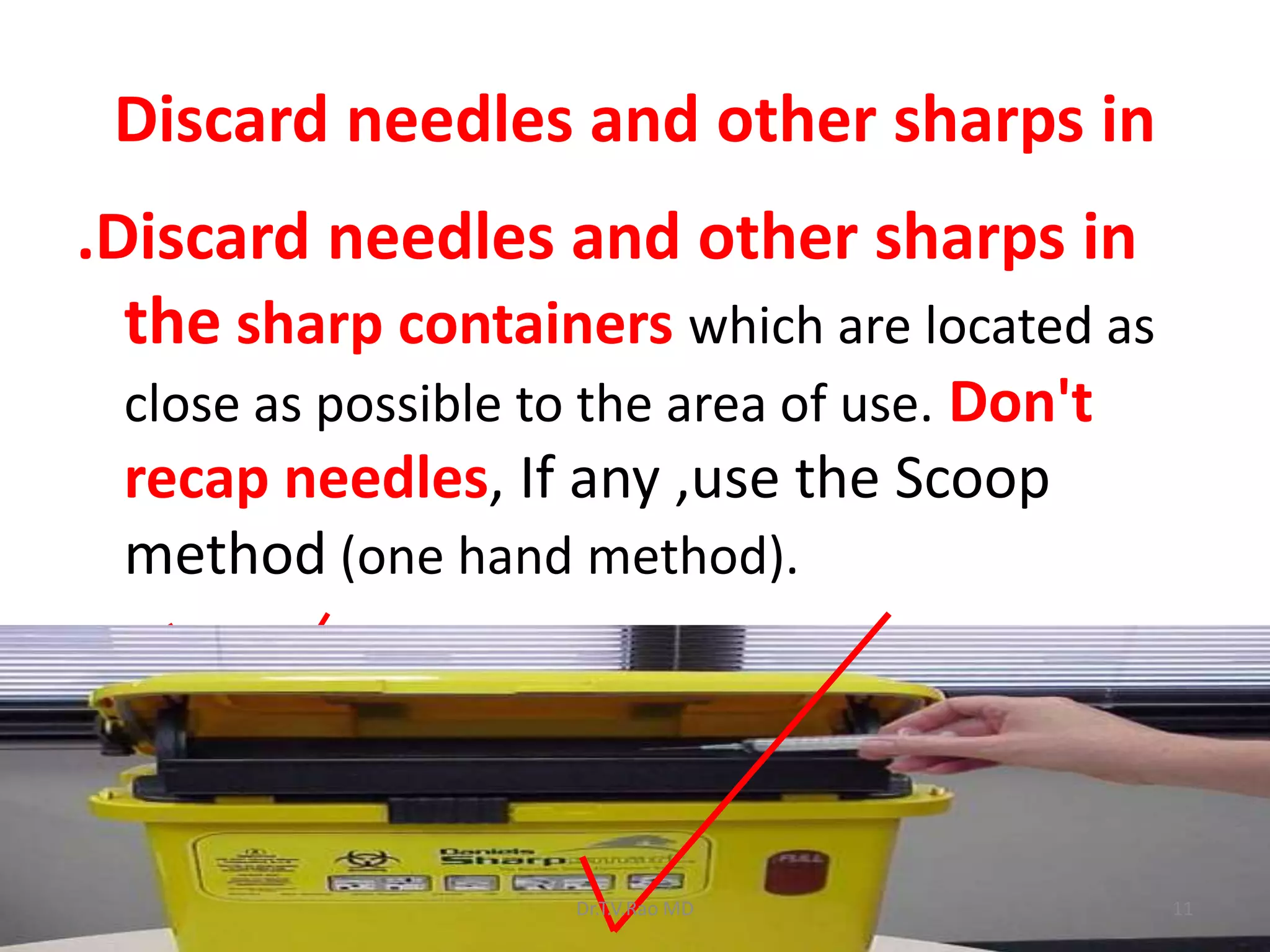
Discard needles and other sharps in
.Discard needles and other sharps in
the sharp containers which are located as
close as possible to the area of use. Don't
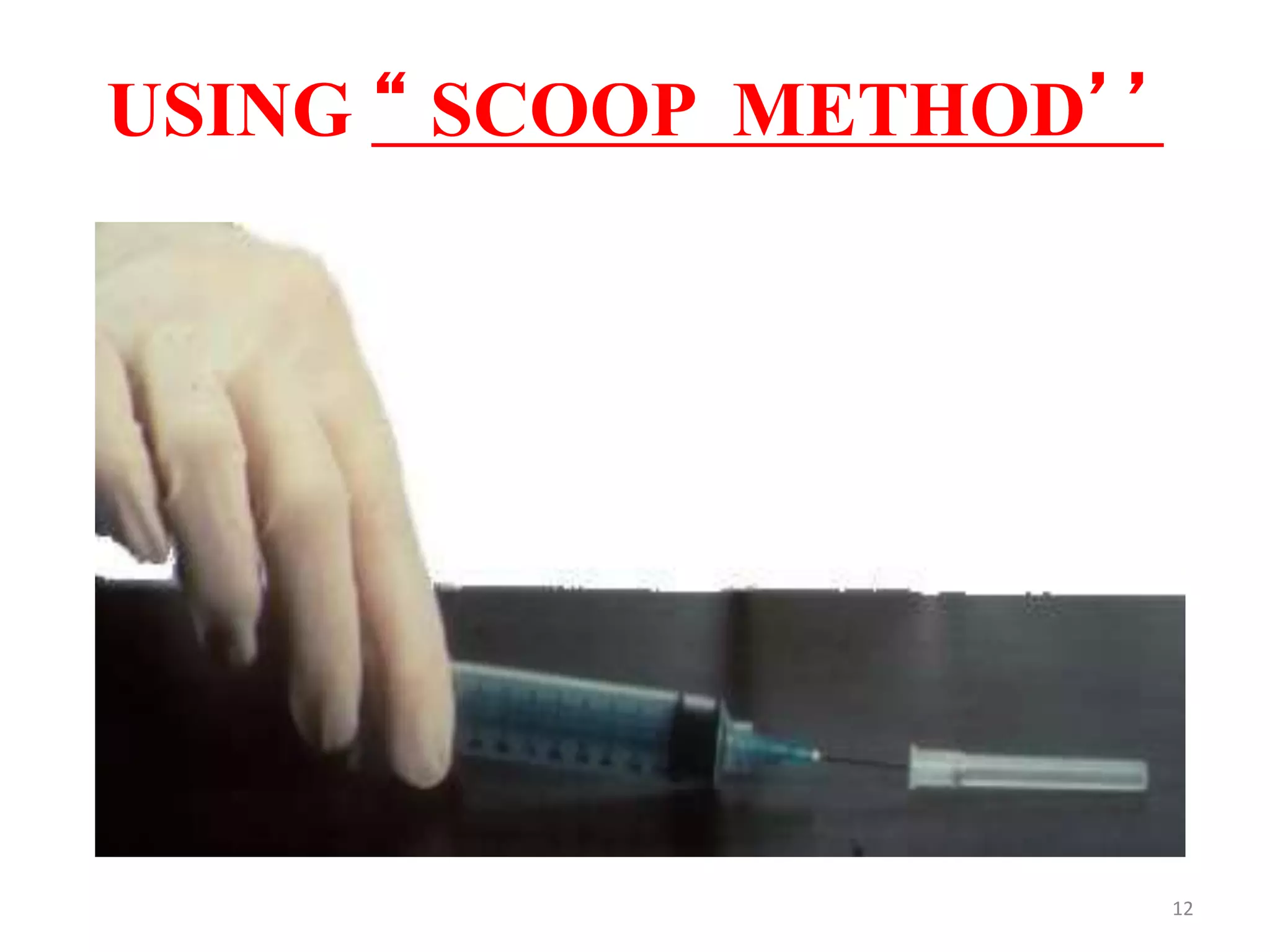
recap needles, If any ,use the Scoop
method (one hand method).
Dr.T.V.Rao MD 11
USING “ SCOOP METHOD’’
12
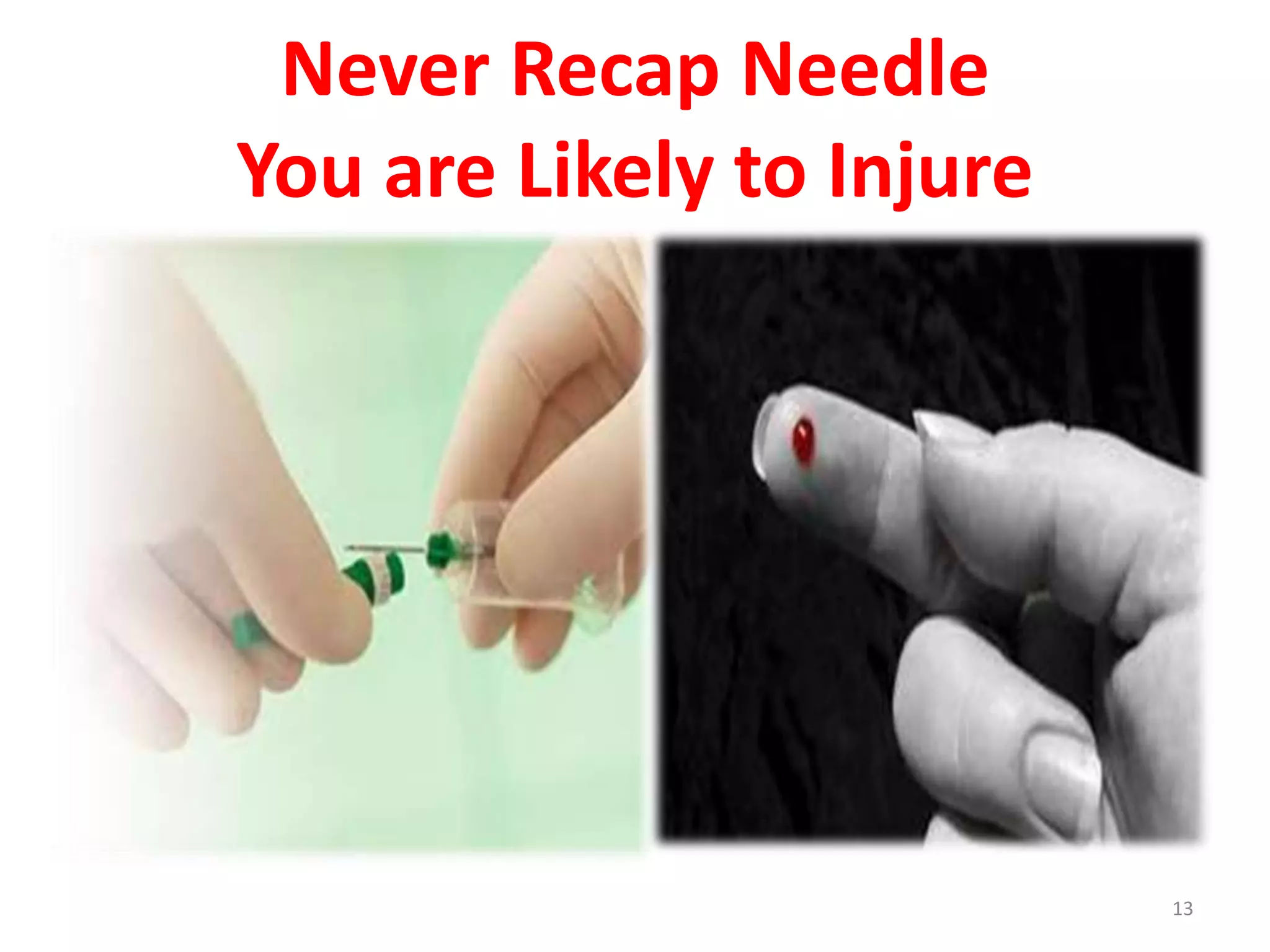
Never Recap Needle
You are Likely to Injure
13
Sharps containers
• Should be easily accessible
• At or below the level of the eyes
• Kept away from the pathways
• Not to be kept on the grounds.
• Should Not be overfilled more than 3/4
full.
• Never to be shake to get more space
 14
CLEANING SPILLS (e.g. Blood & body fluids)
• Wear gloves and other PPE
• Absorb: Wipe up the spill with an
absorbent towel.Clean with detergent.
• Apply disinfectant to the contaminated
area using sodium hypochlorite( Clorox
1: 10= 1 volume+9 water volumes)
contact time 5-10min.
• Absorb Clorox and wash with water.
15
Hand Hygiene
•Alcohol-based Hand Rub
•Use of gloves does NOT
replace hand washing.
•Gloves must be changed in-
between patients.
16
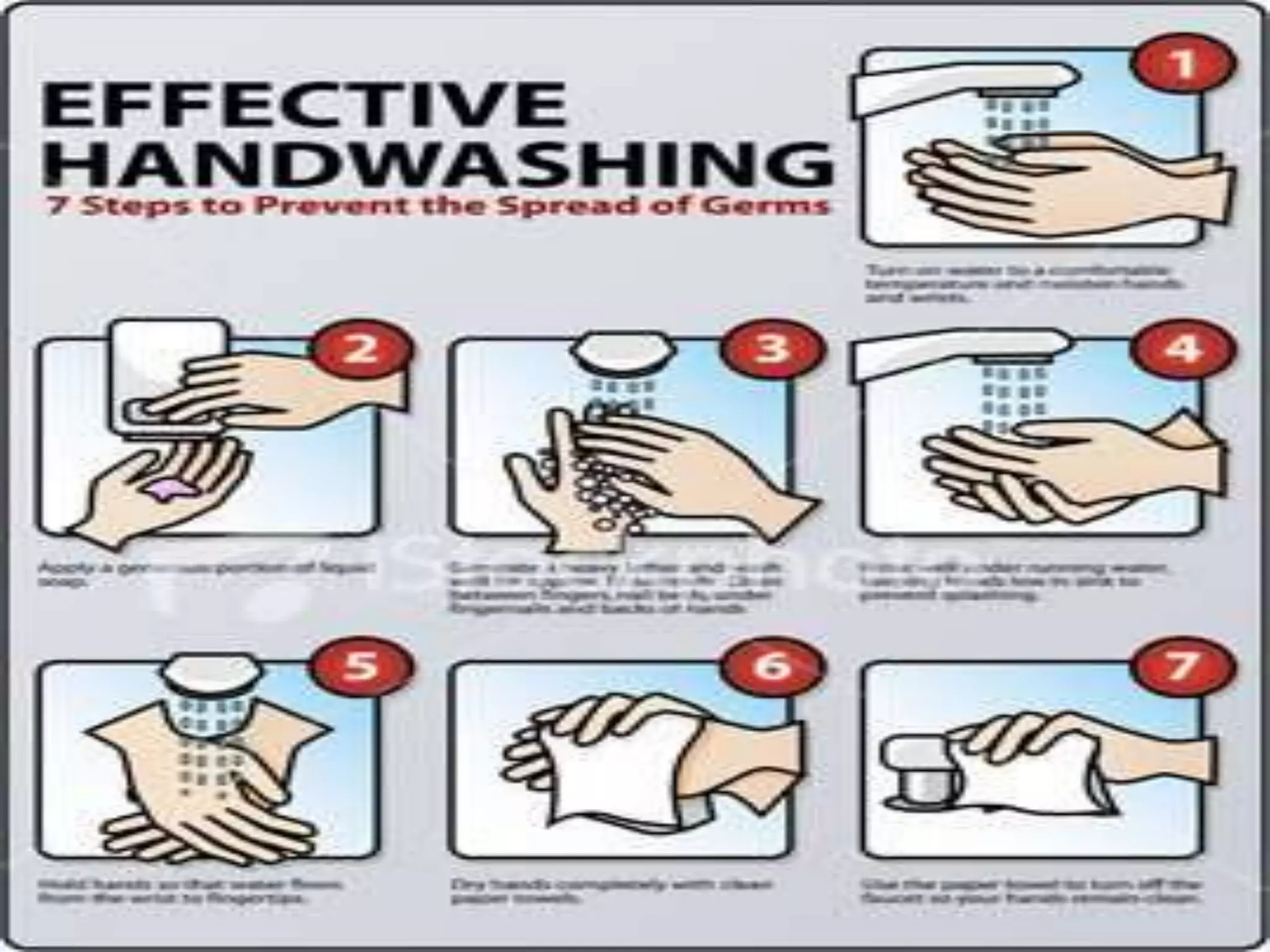
HAND WASHING
• When to wash your hands :
• If hands are visibly dirty .
• Soiled hands with blood or body
fluids.
• After contact with: blood ,body
fluids, secretions or mucus
membranes.
17
When to wash your hands?
• After contact with intact or non-
intact skin.
• After handling items potentially
contaminated (equipments)
• In-between patients .
• After removing gloves.
• After using bathroom.
18
When to wash hands
• Before direct contact with
patient.
• Before donning (sterile) gloves.
• Before preparing or handling
medications.
• Before handling clean dressing.
19
When to use alcohol-based hand
rub
• If hands are NOT visibly soiled
alcohol rub could be used
instead of hand washing.
• If hand are visibly soiled
(contaminated) ,they should be
washed first.
20
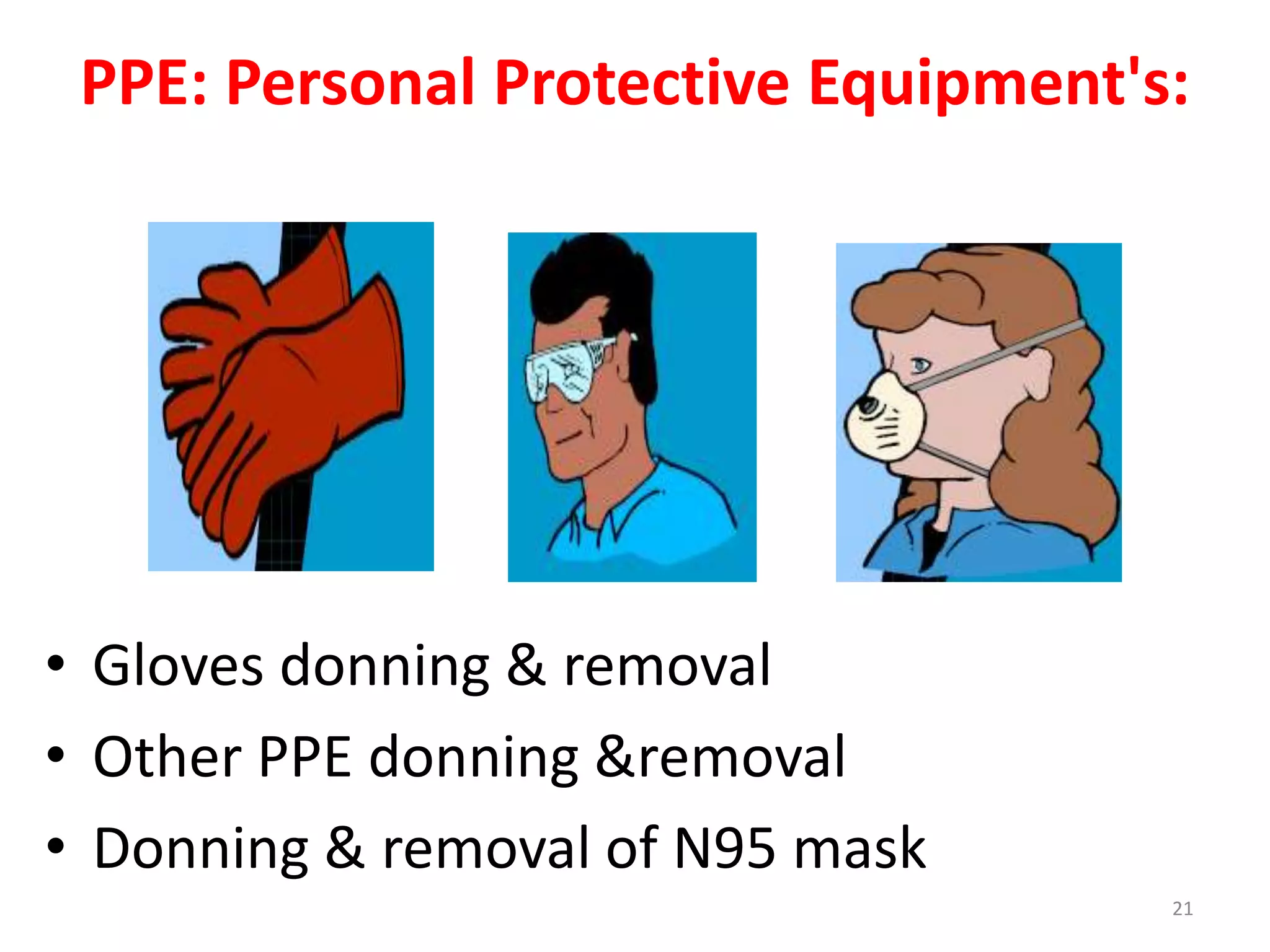
PPE: Personal Protective Equipment's:
• Gloves donning & removal
• Other PPE donning &removal
• Donning & removal of N95 mask
21
Transmission-Based Precautions
• Used in addition to Standard
Precautions for Specified Patients
• Designed for the Care of Patients known
or suspected to be infected by
epidemiologically important pathogens
spread by: airborne, droplet, or contact
transmission.
22
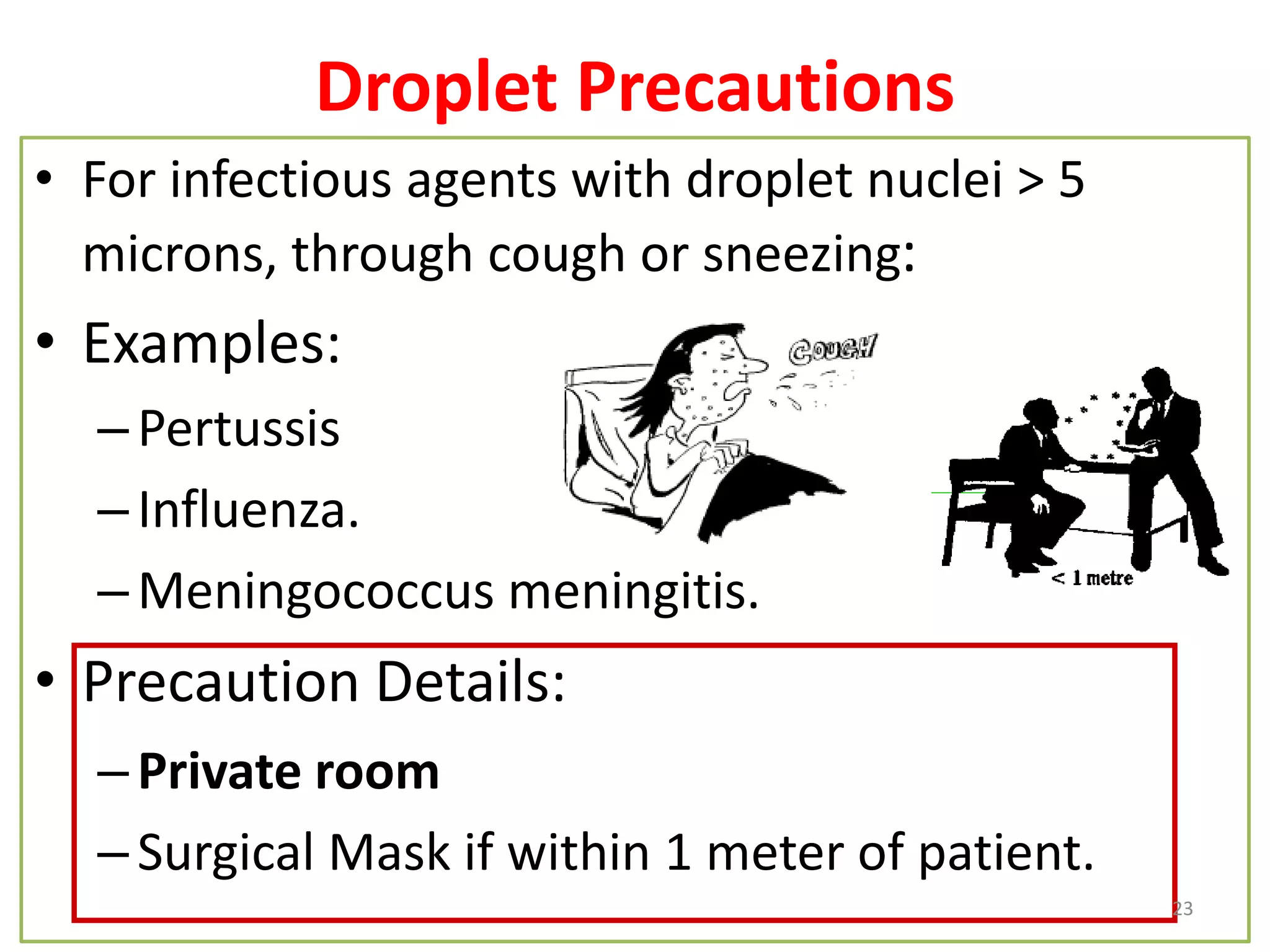
Droplet Precautions
• For infectious agents with droplet nuclei > 5
microns, through cough or sneezing:
• Examples:
–Pertussis
–Influenza.
–Meningococcus meningitis.
• Precaution Details:
–Private room
–Surgical Mask if within 1 meter of patient.
23
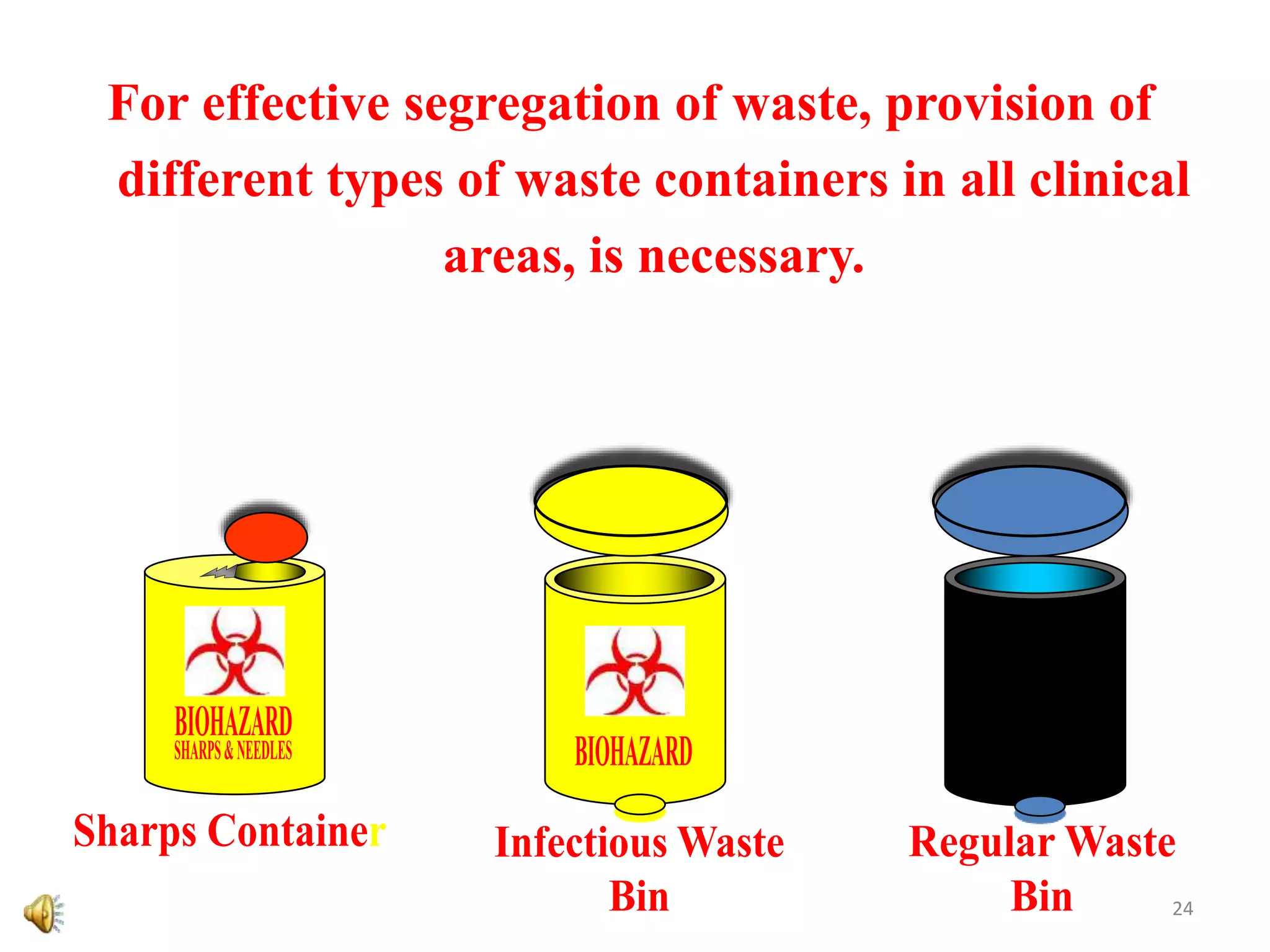
For effective segregation of waste, provision of
different types of waste containers in all clinical
areas, is necessary.
24
Dr.T.V.Rao MD 25
Never Forget Simple Washing
Saves Many Lives
26
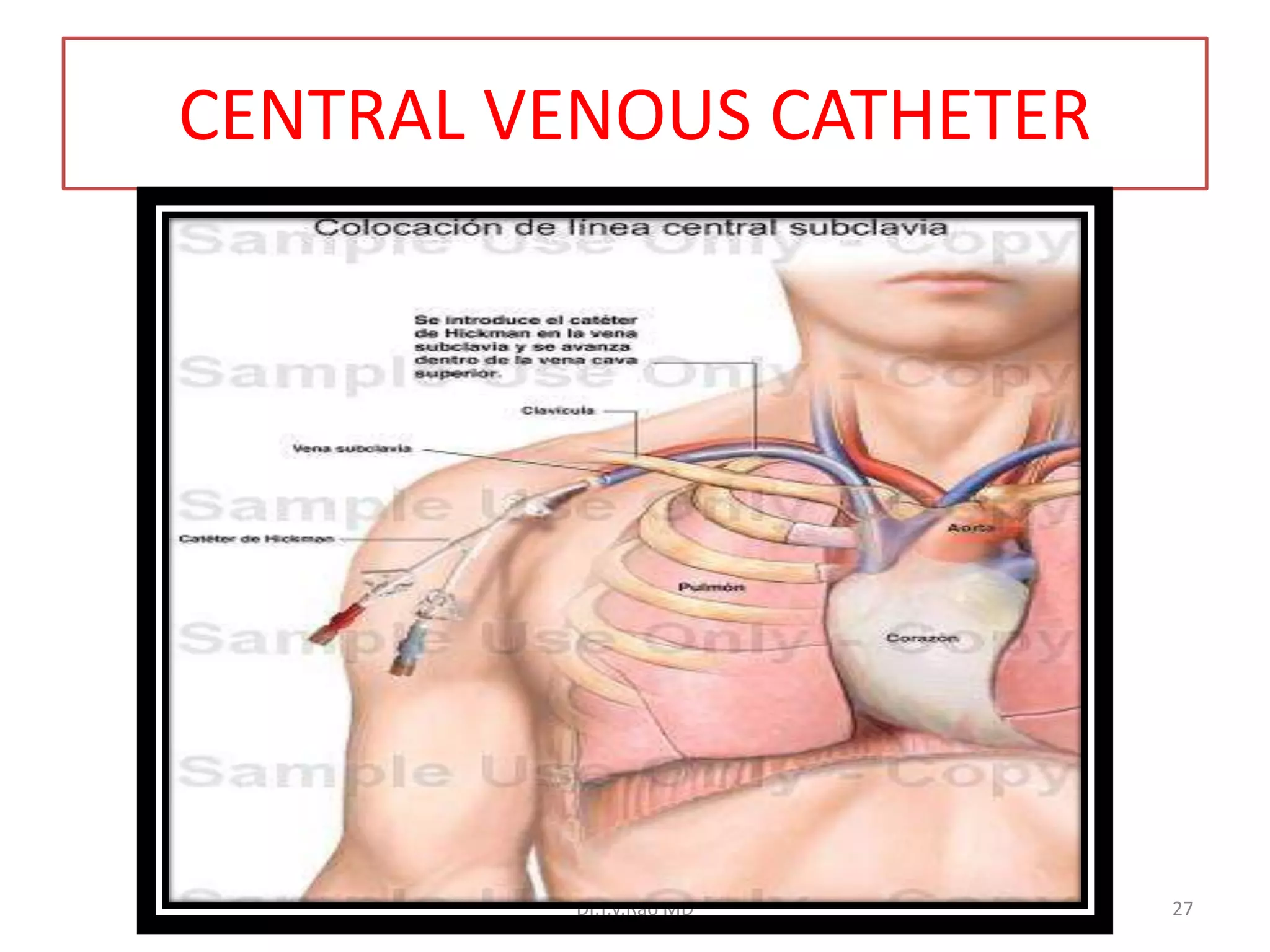
CENTRAL VENOUS CATHETER
Dr.T.V.Rao MD 27
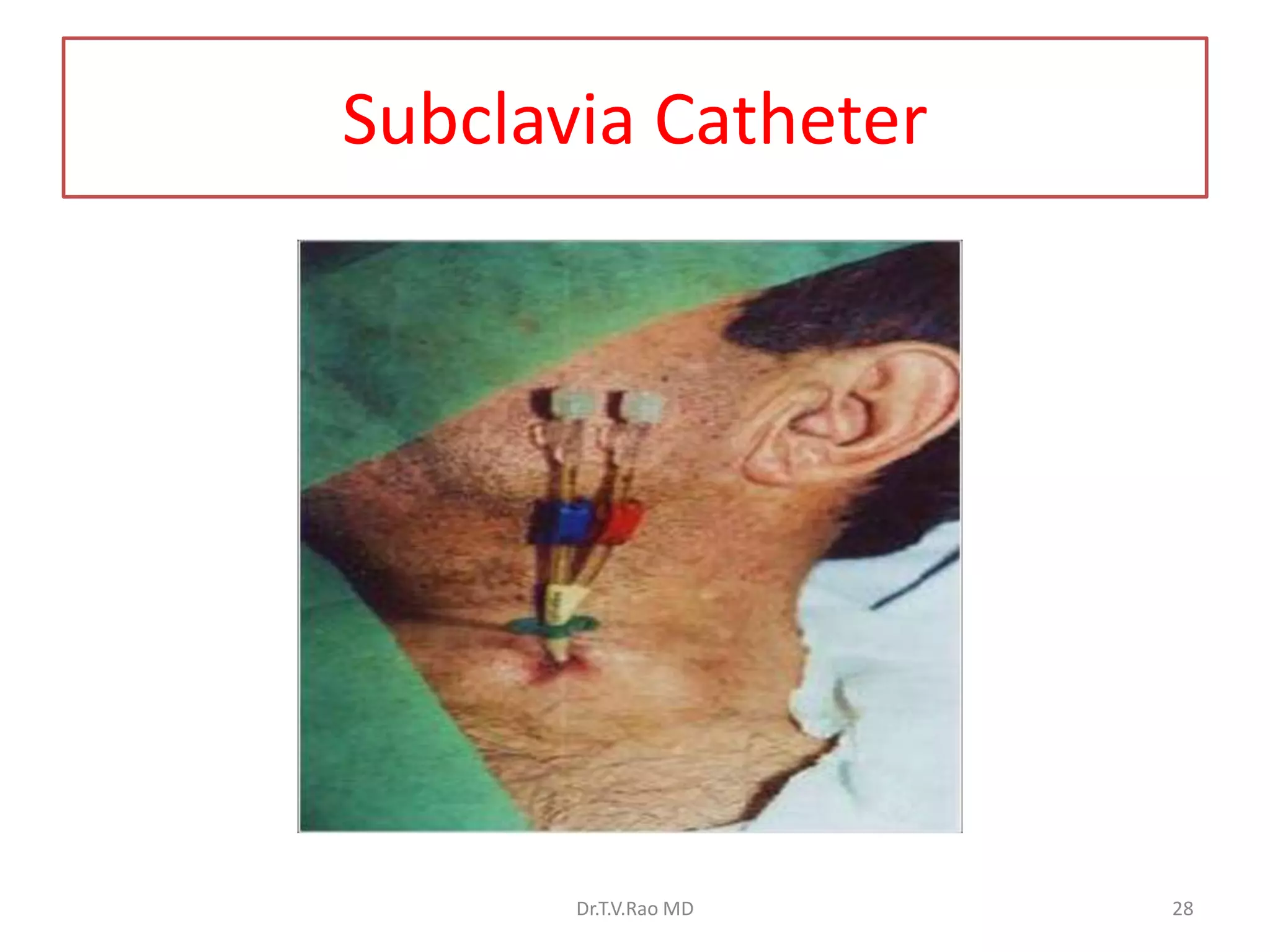
Subclavia Catheter
Dr.T.V.Rao MD 28
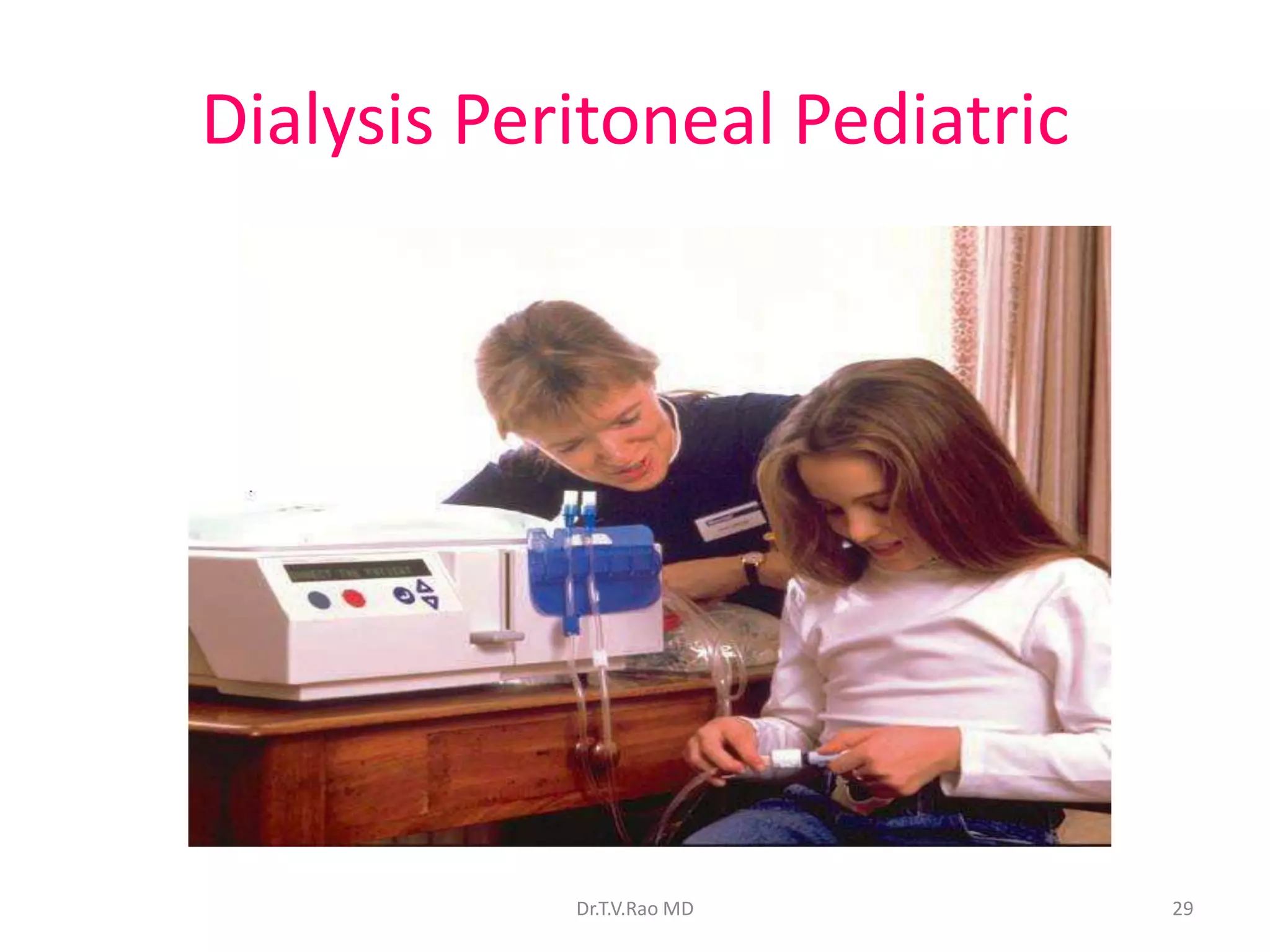
Dialysis Peritoneal Pediatric
Dr.T.V.Rao MD 29
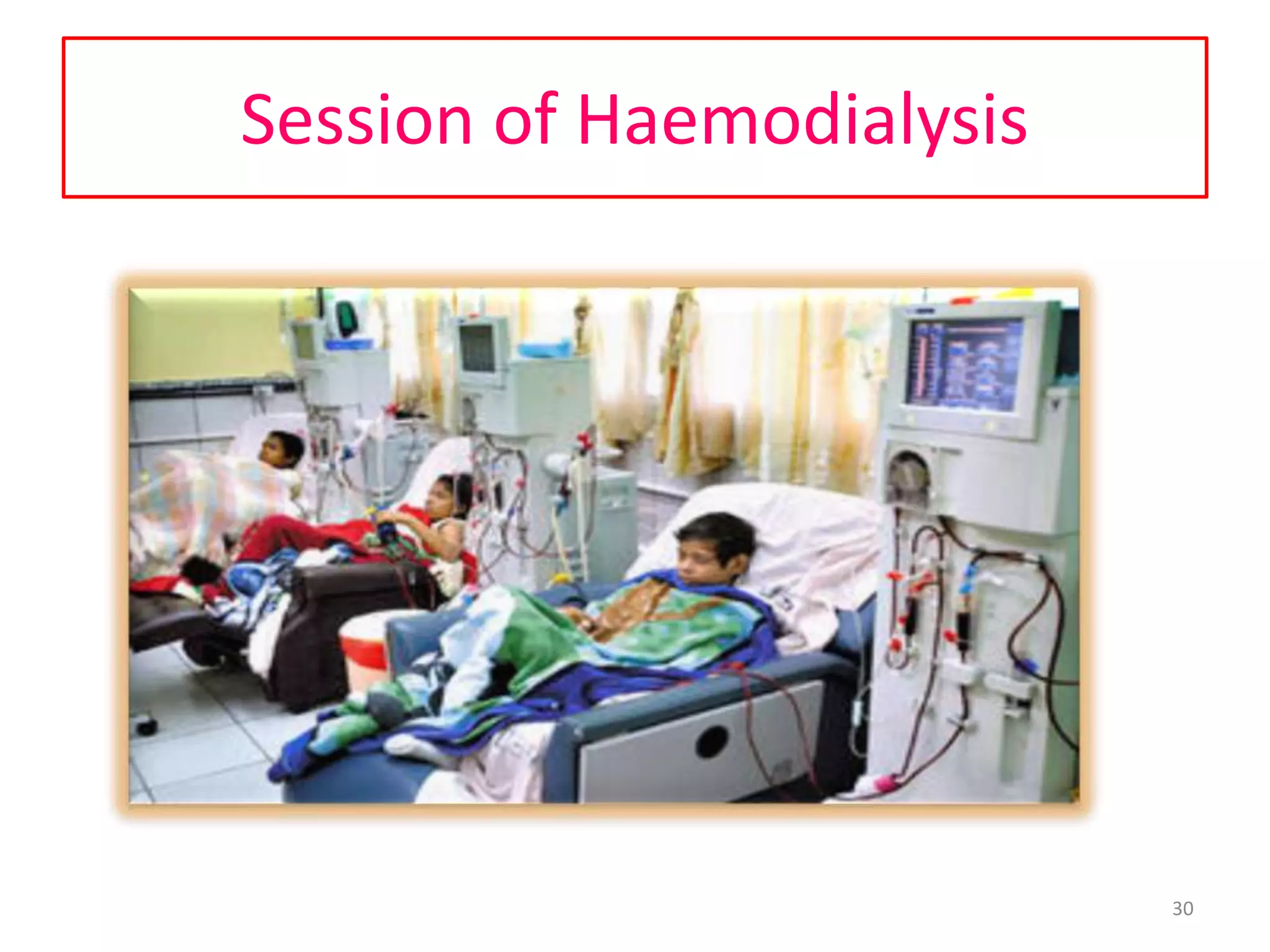
Session of Haemodialysis
30
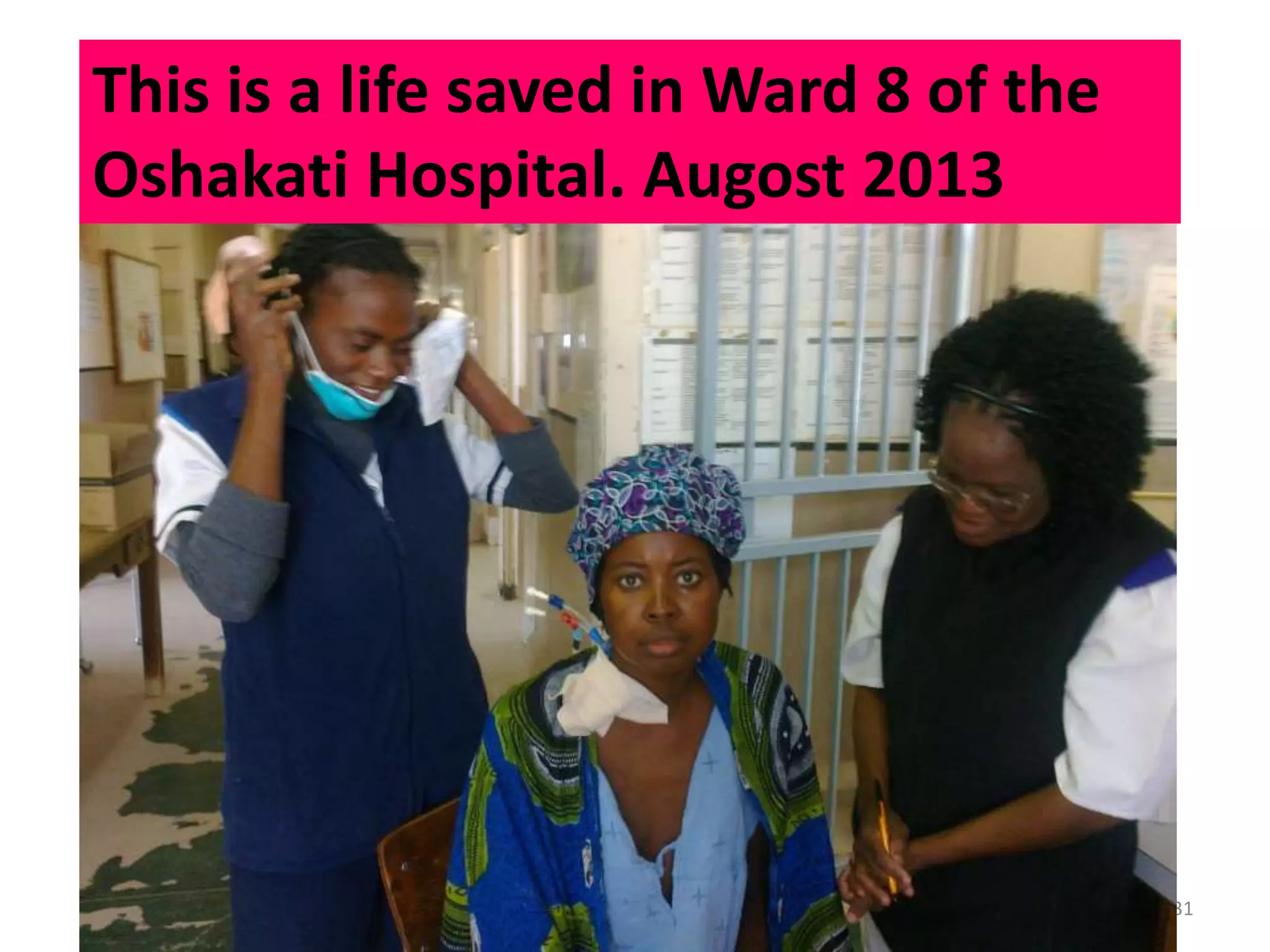
Dr.T.V.Rao MD 31
This is a life saved in Ward 8 of the
Oshakati Hospital. Augost 2013
Dr.T.V.Rao MD 32
Often what appears to be, in the
end it is not.
Programme
Created by Dr.J.L. Rodriguez
Nephrologist for Benefit of Nursing
Staff in Health Care. Oshakati Hospital.
Web: http://medicablogs.diariomedico.com/jlrodriguez/
• Email
• jlrodriguez5106@yahoo.es
33

Infection prevention.phpapp01ppt

  • 1.
    Infection Prevention in HealthCare Basic Practices Dr. J.L. RODRIGUEZ NEPHROLOGIST Dr.T.V.Rao MD 1 Infection Prevention in Health Care Basic Practices Dr. J.L. RODRIGUEZ NEPHROLOGIST
  • 2.
    Teaching and LearningModule ONE • The Programme Created for Schedule of training module at Nurses Staff, Oshakati Hospital, as a part of Infection Control Programme organised by Infection Control Committee . 2
  • 3.
    3 Nurses Role in InfectionControl Follow correct sanitization, disinfection and sterilization procedures Help patient understand basic disease prevention Administer immunizations and educate patients about immunizations
  • 4.
    4 Three Levels ofInfection Control Sanitization – cleaning and scrubbing instruments and equipment to remove contaminated materials and microorganisms Disinfection – second level used on instruments and equipments that come in contact with intact mucous membrane Sterilization – complete destruction of all microorganisms- pathogenic, beneficial, and harmless- surface of instrument and equipment
  • 5.
    5 Sanitization Methods Collecting instruments– place in container with water and neutral pH detergent until you can get to them. Use utility gloves always and mask, eye protection and protective clothing if blood, body fluids or tissue are present
  • 6.
    6 Sanitization Methods (cont.) Drain disinfectant or detergent solution  Rinse each piece under hot running water  Scrub each item using hot, soapy water and small plastic brush  Pay careful attention to hinges, ratchets and nooks
  • 7.
    Standard Precautions • Applystandard precautions to all patients regardless of their diagnosis, and to all contaminated equipments and materials. • Use judgment in determining which protective barriers are necessary. 7
  • 8.
    8 Sanitization Methods (cont.) Rinseinstruments individually and place each one on a clean towel. Roll all instruments in the towel to remove moisture Place instruments either in trays or bins for storage or wrap for sterilization
  • 9.
    9 Disinfection Wear gloves whenhandling instruments. Disinfection solution must cover every surface. Used if instrument does not penetrate a patient’s skin or mucous membranes Enamelware Endotracheal tubes Glassware Laryngoscopes and nasal specula Dr.T.V.Rao MD
  • 10.
    Standard Precautions 1. HandsHygiene 2. Use Personal protective equipment's (PPE) • Gloves • Gowns • Masks • Eye protection • Face Shields 10
  • 11.
    Discard needles andother sharps in .Discard needles and other sharps in the sharp containers which are located as close as possible to the area of use. Don't recap needles, If any ,use the Scoop method (one hand method). Dr.T.V.Rao MD 11
  • 12.
    USING “ SCOOPMETHOD’’ 12
  • 13.
    Never Recap Needle Youare Likely to Injure 13
  • 14.
    Sharps containers • Shouldbe easily accessible • At or below the level of the eyes • Kept away from the pathways • Not to be kept on the grounds. • Should Not be overfilled more than 3/4 full. • Never to be shake to get more space 14
  • 15.
    CLEANING SPILLS (e.g.Blood & body fluids) • Wear gloves and other PPE • Absorb: Wipe up the spill with an absorbent towel.Clean with detergent. • Apply disinfectant to the contaminated area using sodium hypochlorite( Clorox 1: 10= 1 volume+9 water volumes) contact time 5-10min. • Absorb Clorox and wash with water. 15
  • 16.
    Hand Hygiene •Alcohol-based HandRub •Use of gloves does NOT replace hand washing. •Gloves must be changed in- between patients. 16
  • 17.
    HAND WASHING • Whento wash your hands : • If hands are visibly dirty . • Soiled hands with blood or body fluids. • After contact with: blood ,body fluids, secretions or mucus membranes. 17
  • 18.
    When to washyour hands? • After contact with intact or non- intact skin. • After handling items potentially contaminated (equipments) • In-between patients . • After removing gloves. • After using bathroom. 18
  • 19.
    When to washhands • Before direct contact with patient. • Before donning (sterile) gloves. • Before preparing or handling medications. • Before handling clean dressing. 19
  • 20.
    When to usealcohol-based hand rub • If hands are NOT visibly soiled alcohol rub could be used instead of hand washing. • If hand are visibly soiled (contaminated) ,they should be washed first. 20
  • 21.
    PPE: Personal ProtectiveEquipment's: • Gloves donning & removal • Other PPE donning &removal • Donning & removal of N95 mask 21
  • 22.
    Transmission-Based Precautions • Usedin addition to Standard Precautions for Specified Patients • Designed for the Care of Patients known or suspected to be infected by epidemiologically important pathogens spread by: airborne, droplet, or contact transmission. 22
  • 23.
    Droplet Precautions • Forinfectious agents with droplet nuclei > 5 microns, through cough or sneezing: • Examples: –Pertussis –Influenza. –Meningococcus meningitis. • Precaution Details: –Private room –Surgical Mask if within 1 meter of patient. 23
  • 24.
    For effective segregationof waste, provision of different types of waste containers in all clinical areas, is necessary. 24
  • 25.
  • 26.
    Never Forget SimpleWashing Saves Many Lives 26
  • 27.
  • 28.
  • 29.
  • 30.
  • 31.
    Dr.T.V.Rao MD 31 Thisis a life saved in Ward 8 of the Oshakati Hospital. Augost 2013
  • 32.
    Dr.T.V.Rao MD 32 Oftenwhat appears to be, in the end it is not.
  • 33.
    Programme Created by Dr.J.L.Rodriguez Nephrologist for Benefit of Nursing Staff in Health Care. Oshakati Hospital. Web: http://medicablogs.diariomedico.com/jlrodriguez/ • Email • jlrodriguez5106@yahoo.es 33