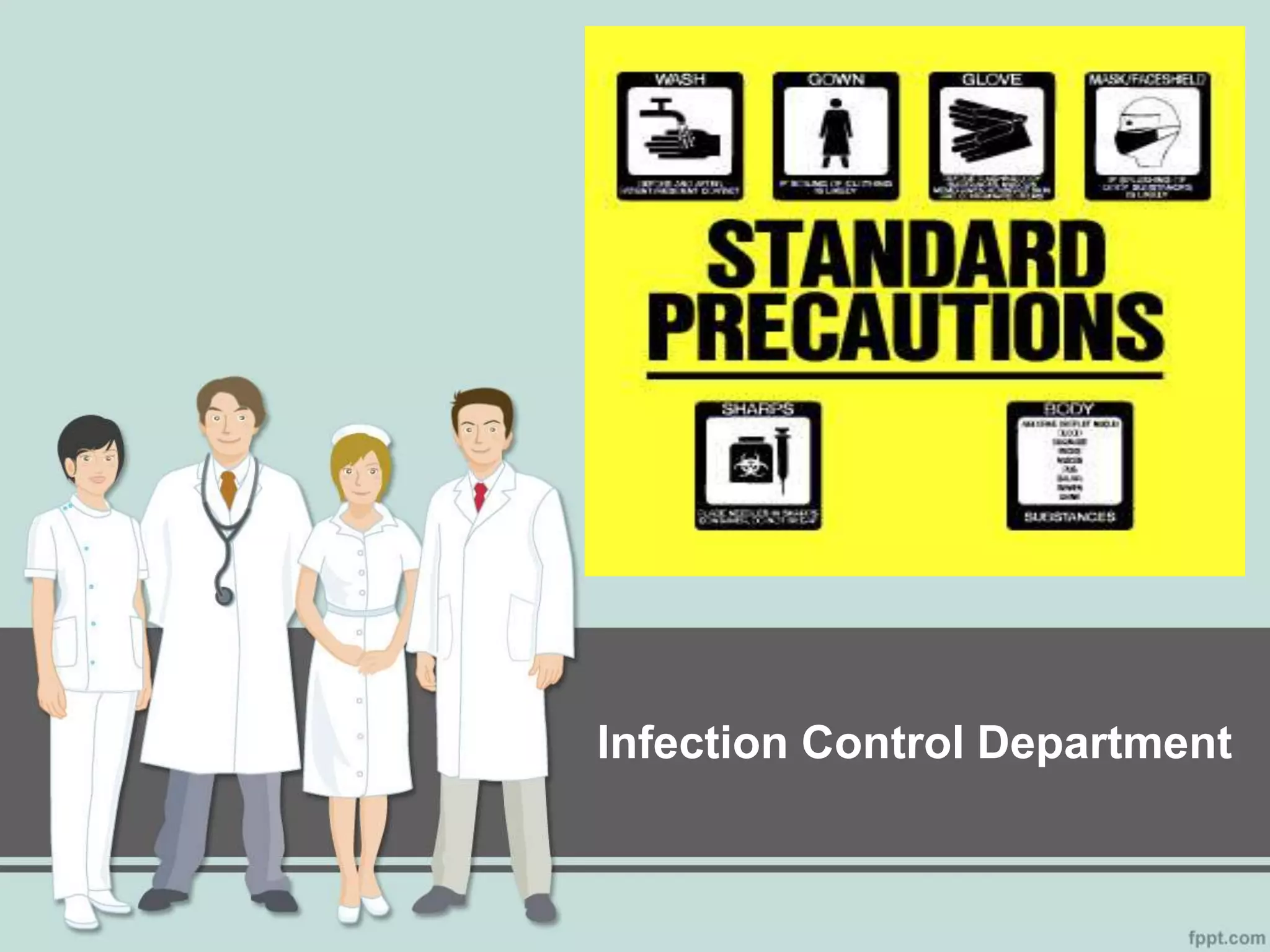
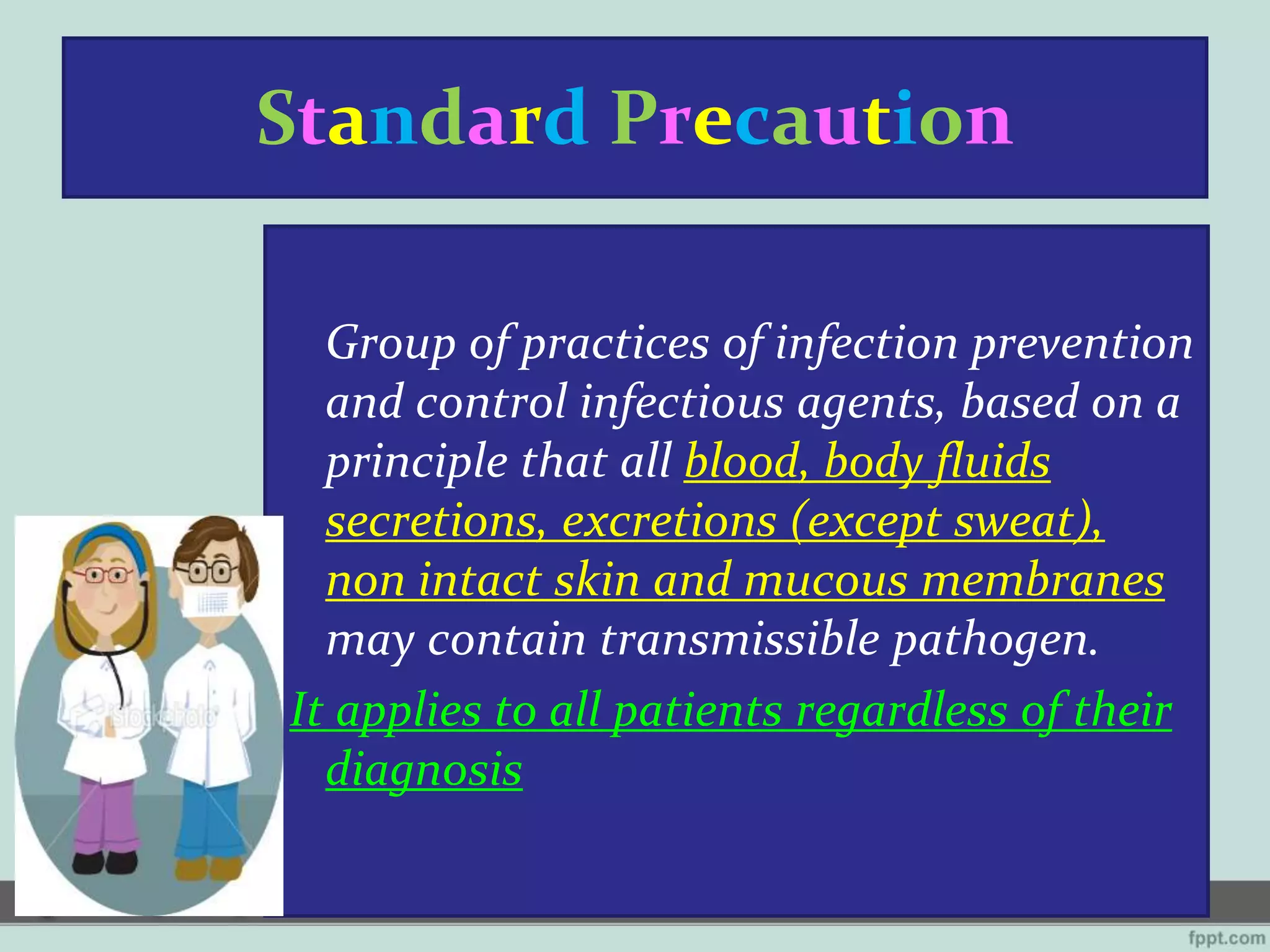
Infection Control Department
Standard Precaution
Group of practices of infection prevention
and control infectious agents, based on a
principle that all blood, body fluids
secretions, excretions (except sweat),
non intact skin and mucous membranes
may contain transmissible pathogen.
It applies to all patients regardless of their
diagnosis
Elements of Standard
Precaution
1. Hand Hygiene
2. Gown
3. Mask
4. Face Protection
5. Gloves
6. Safe injection
practices
7. Patient Care
Equipment/ Devices
8. Environmental Control
9. Textile and laundry
10. Worker Safety
11. Patient Placement and
Transport
12. Respiratory Hygiene /
Cough Etiquette
13. Infection Control
Practices for Lumbar
Puncture
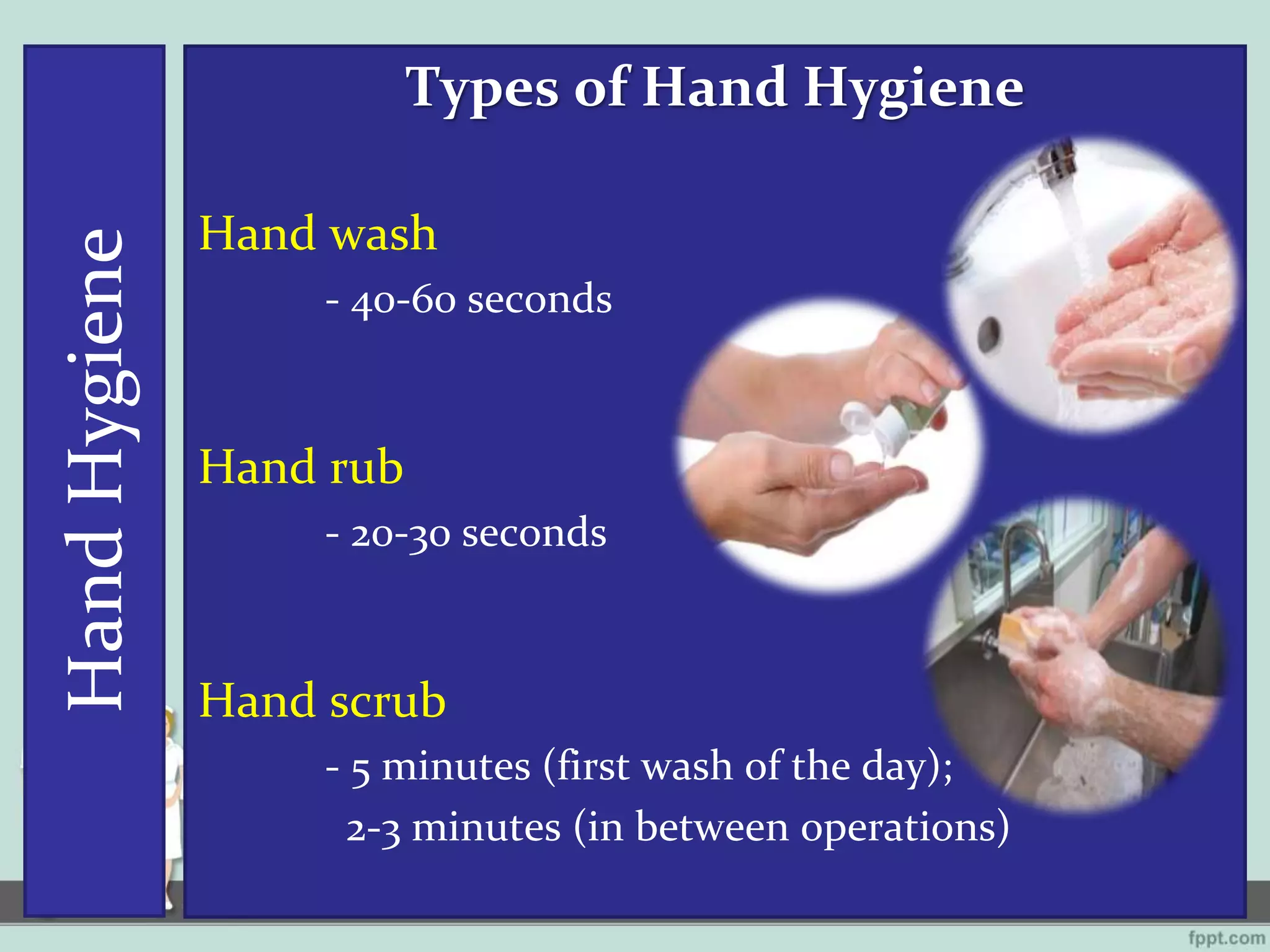
HandHygiene Types of Hand Hygiene
Hand wash
- 40-60 seconds
Hand rub
- 20-30 seconds
Hand scrub
- 5 minutes (first wash of the day);
2-3 minutes (in between operations)
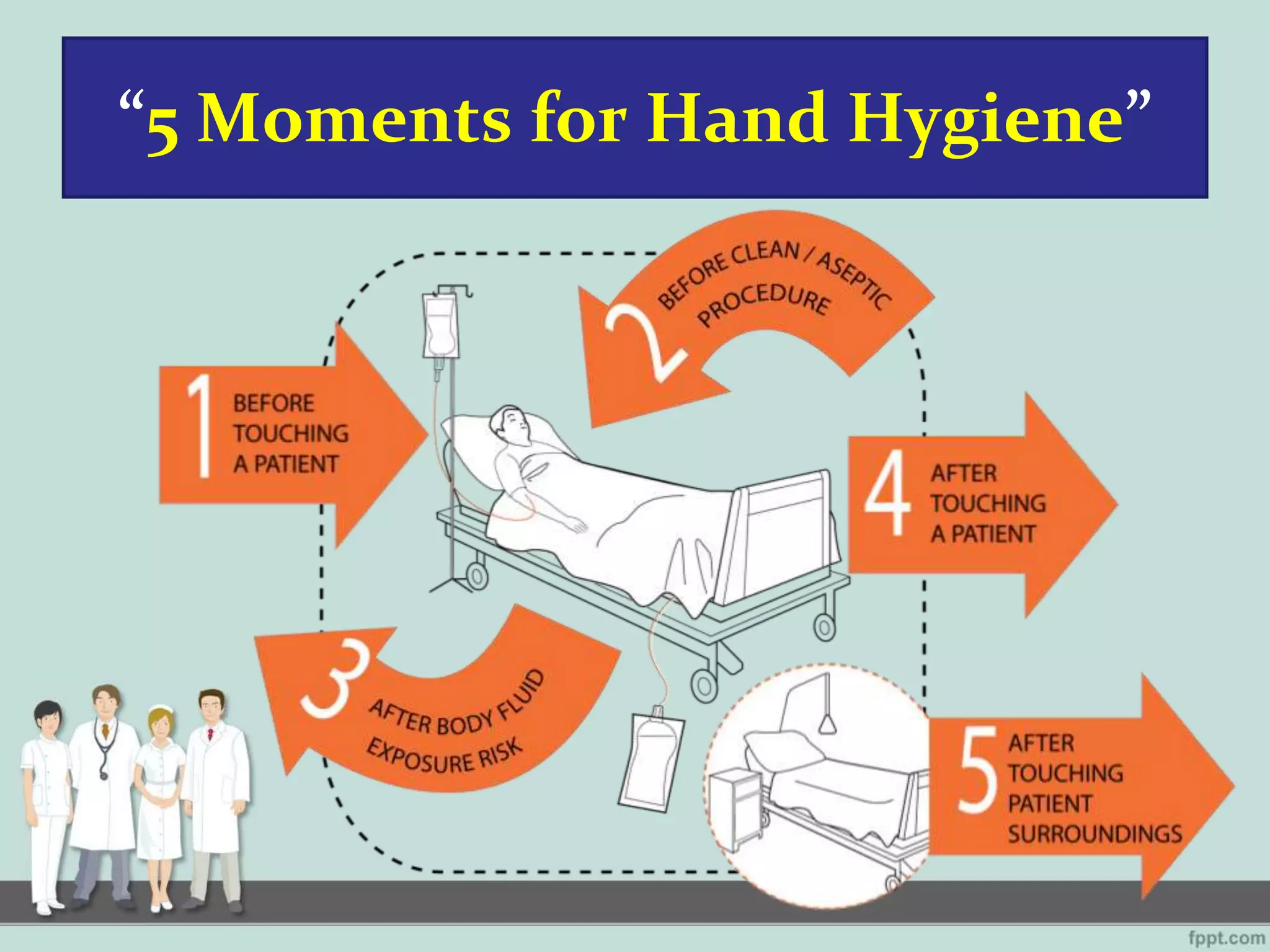
“5 Moments for Hand Hygiene”
Personal Protective Equipment
(PPE)
“A variety of barriers to protect HCW’s
mucous membranes, airways, skin, and
clothing
(whenever blood/body fluids splashes are
expected)”
PersonalProtectiveEquipment
(PPE)
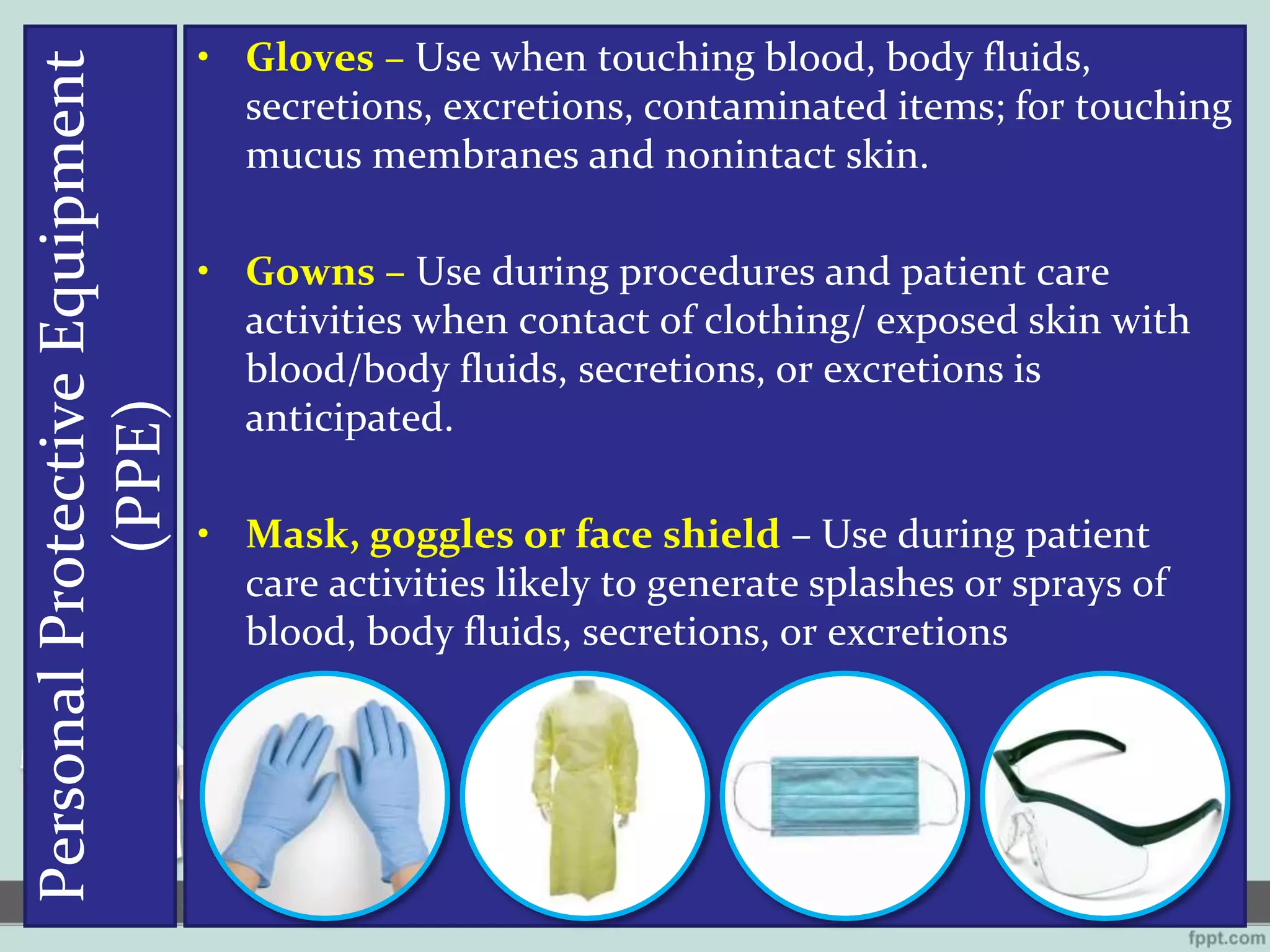
• Gloves – Use when touching blood, body fluids,
secretions, excretions, contaminated items; for touching
mucus membranes and nonintact skin.
• Gowns – Use during procedures and patient care
activities when contact of clothing/ exposed skin with
blood/body fluids, secretions, or excretions is
anticipated.
• Mask, goggles or face shield – Use during patient
care activities likely to generate splashes or sprays of
blood, body fluids, secretions, or excretions
Textile and Laundry
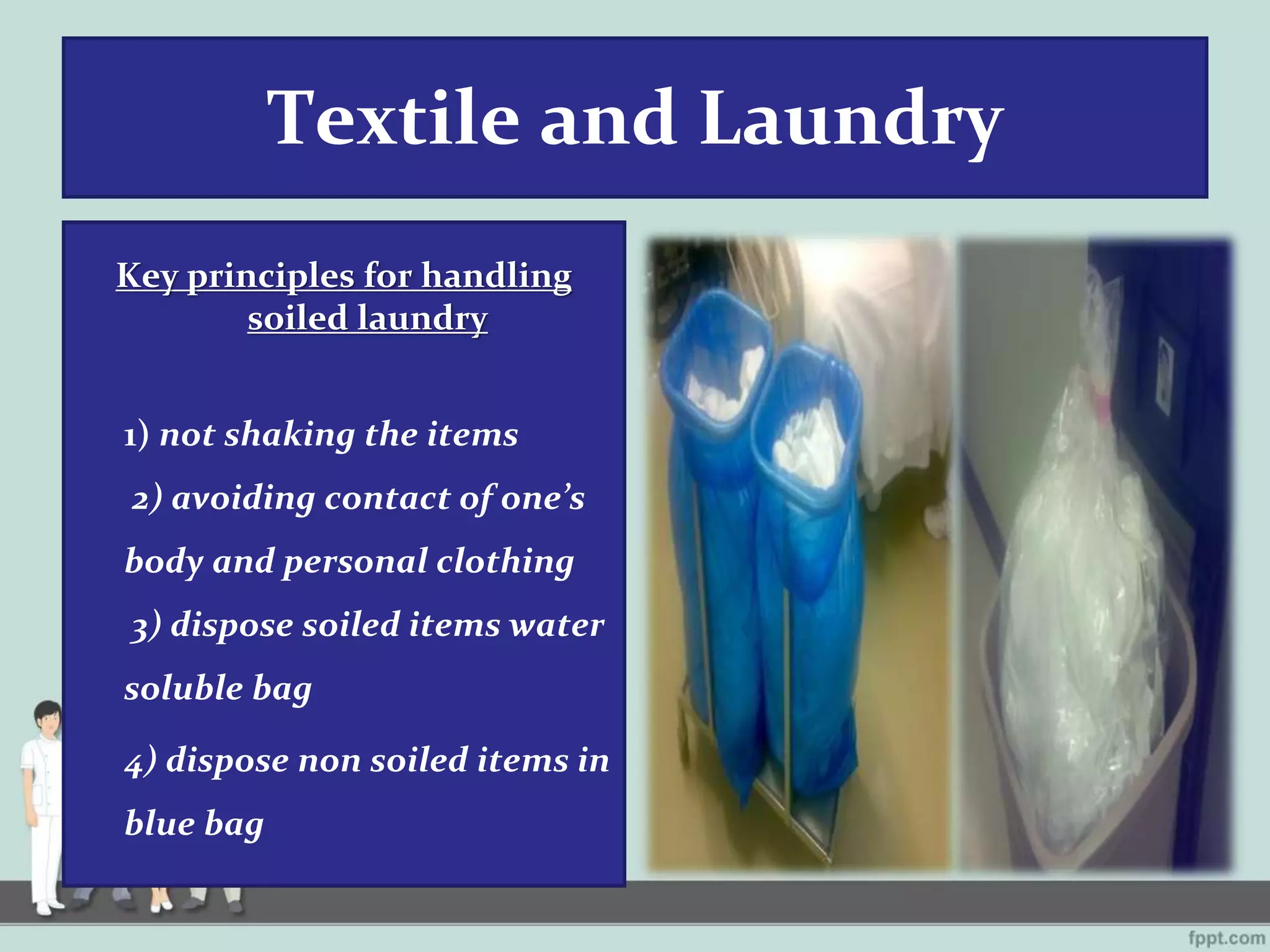
Key principles for handling
soiled laundry
1) not shaking the items
2) avoiding contact of one’s
body and personal clothing
3) dispose soiled items water
soluble bag
4) dispose non soiled items in
blue bag
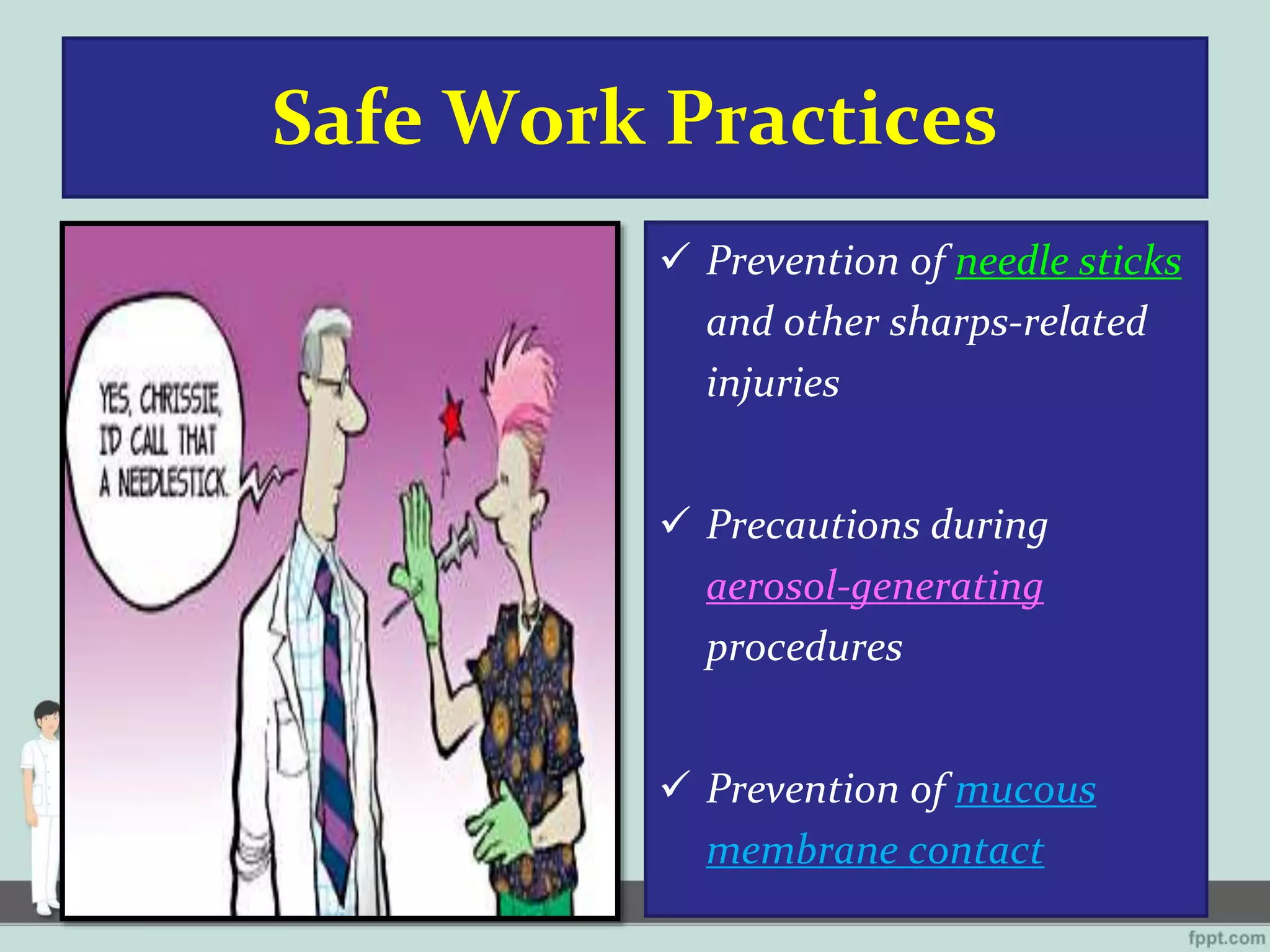
Safe Work Practices
 Prevention of needle sticks
and other sharps-related
injuries
 Precautions during
aerosol-generating
procedures
 Prevention of mucous
membrane contact
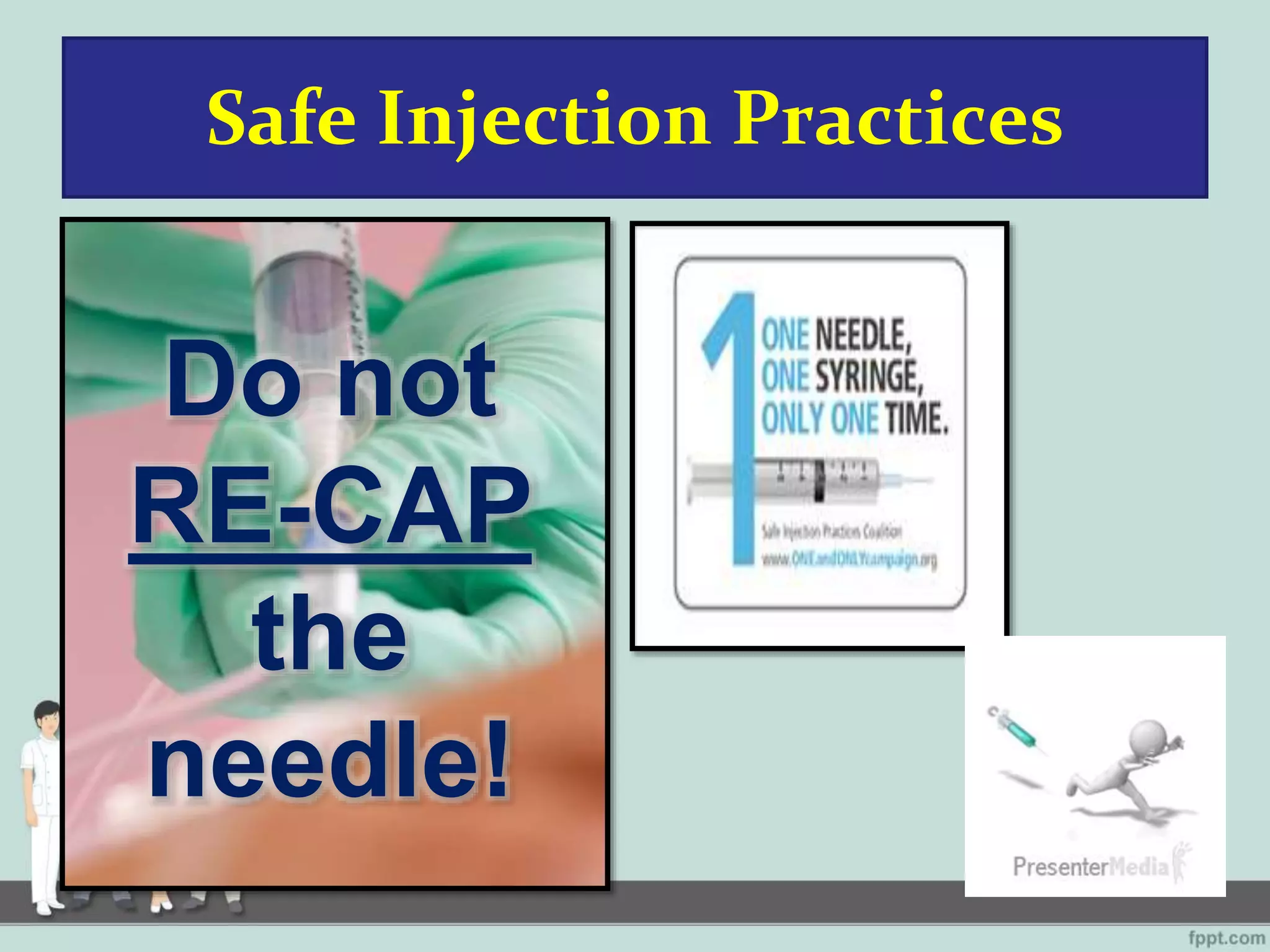
Safe Injection Practices
Do not
RE-CAP
the
needle!
Needles / Sharps :
*Disposed immediately after use in puncture
resistant container
*Not placed on environmental surfaces
*Not recapped if recapping is essential use
one hand technique (scoop)
*Close sharp container when ¾ full and 7
days maximum.
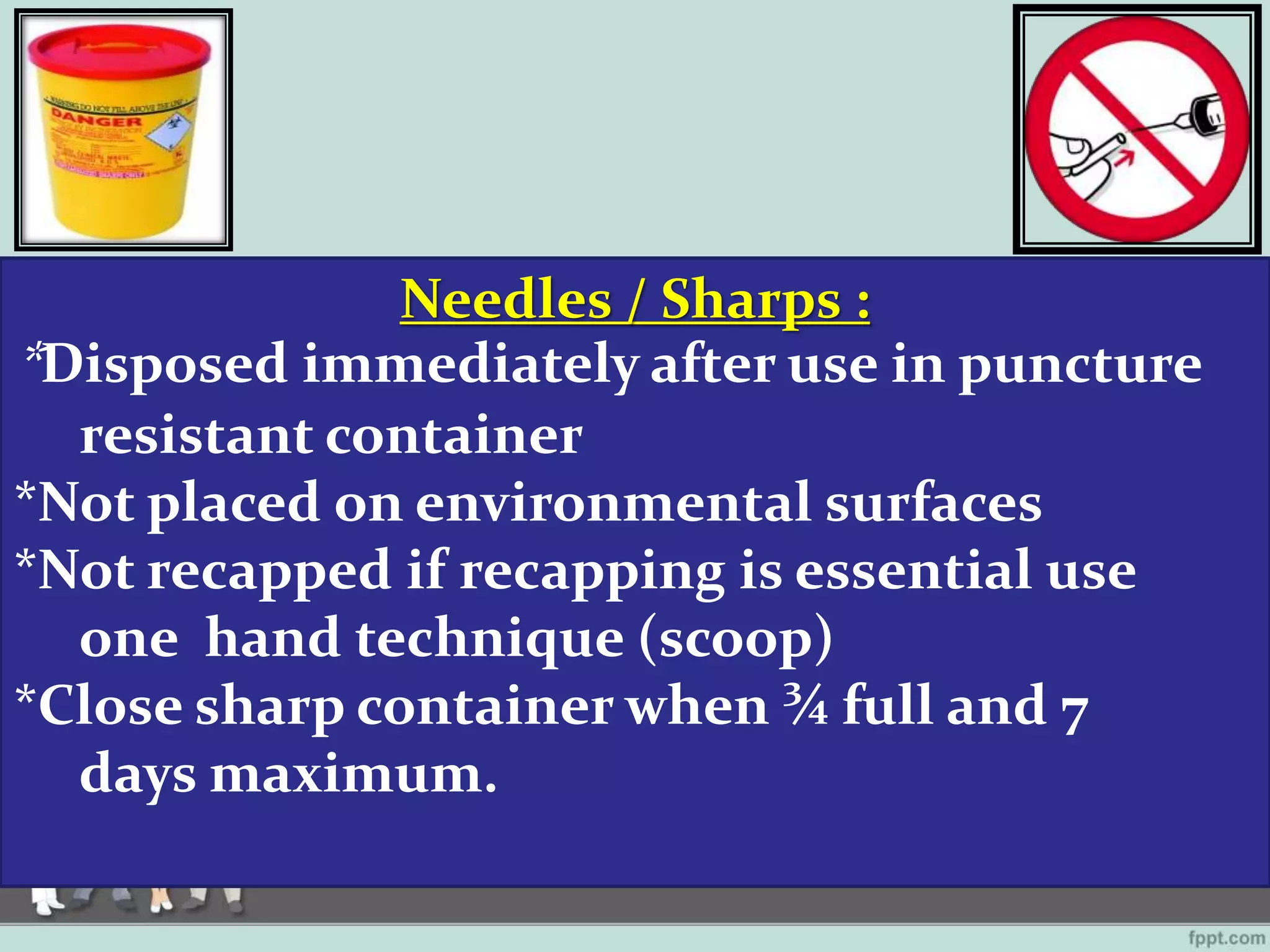
Never reuse needles, syringes, or
lancets.
Never administer medications from
the same syringe to more than one
patient, even if the
needle is changed or you are injecting
through an intervening length of IV
tubing.
Do not enter a medication vial, bag, or
bottle with a used syringe or needle.
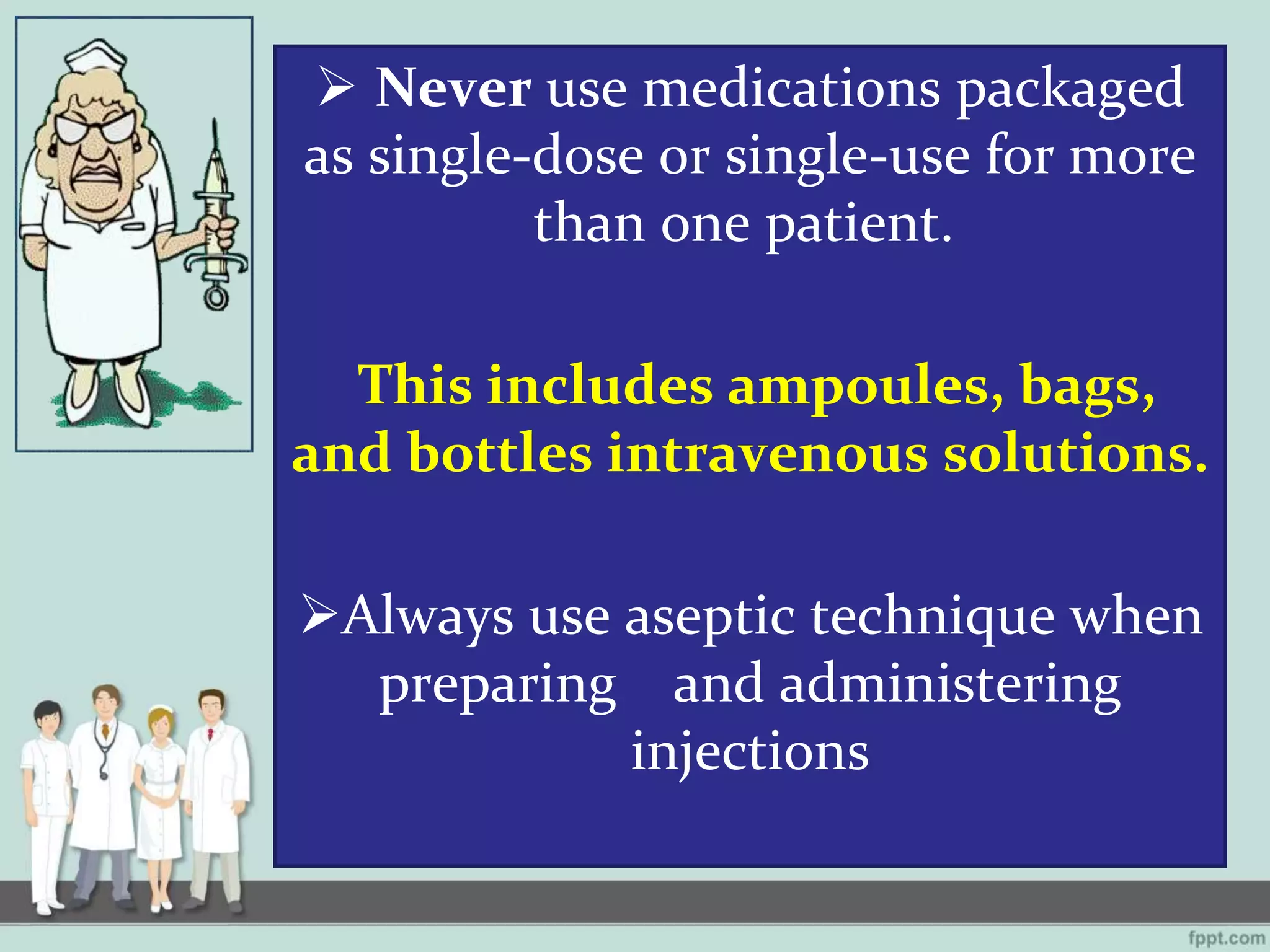
 Never use medications packaged
as single-dose or single-use for more
than one patient.
This includes ampoules, bags,
and bottles intravenous solutions.
Always use aseptic technique when
preparing and administering
injections
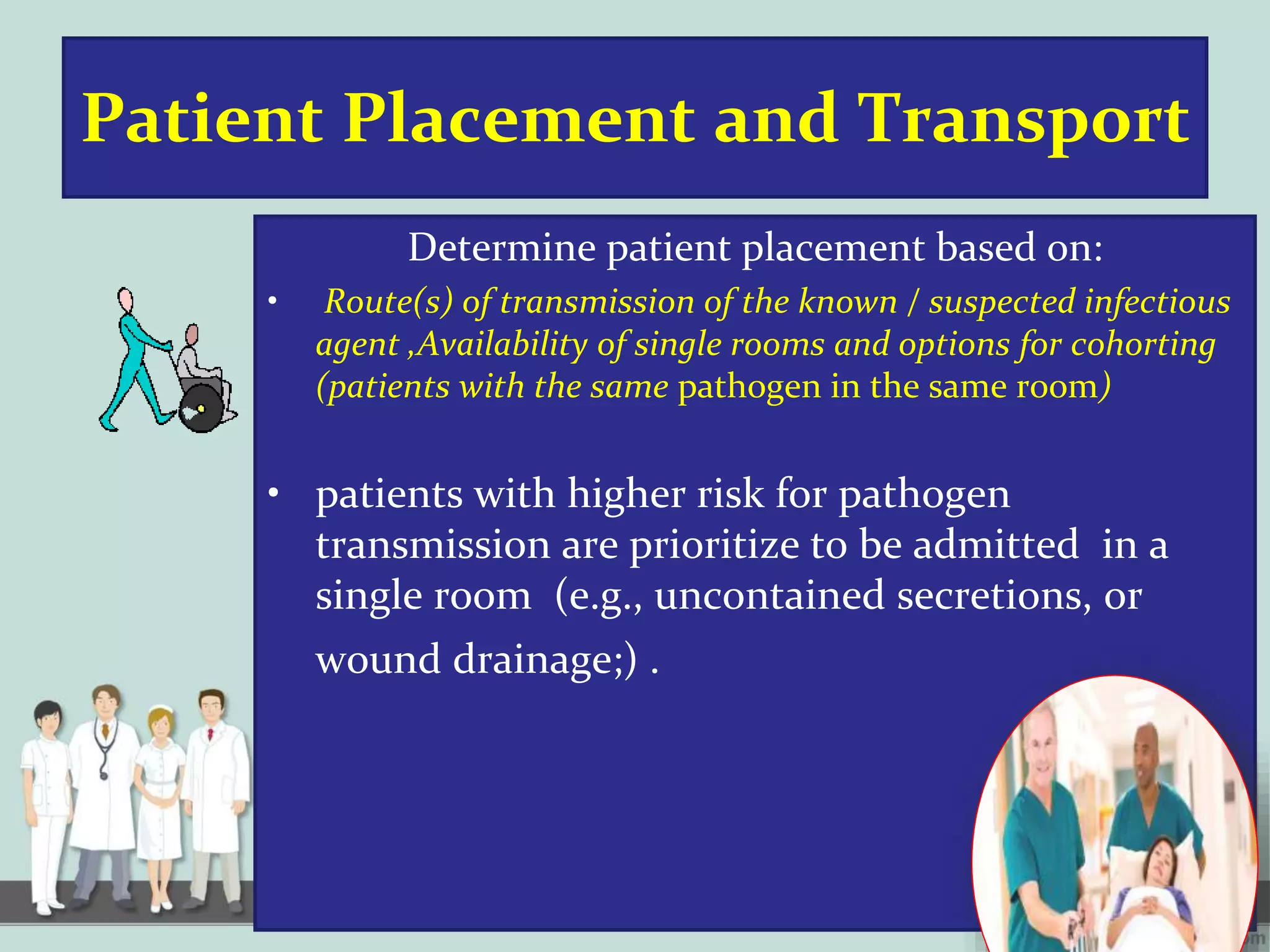
Patient Placement and Transport
Determine patient placement based on:
• Route(s) of transmission of the known / suspected infectious
agent ,Availability of single rooms and options for cohorting
(patients with the same pathogen in the same room)
• patients with higher risk for pathogen
transmission are prioritize to be admitted in a
single room (e.g., uncontained secretions, or
wound drainage;) .
Patient Placement and Transport
Healthcare worker transporting a
patient with transmissible infection
should contain the site of infection e.g.
apply a dressing over a surgical site
infection & offer a surgical mask for a
coughing patient. Health care workers
should not wear PPE in hospital corridors
Respiratory Hygiene / Cough
Etiquette
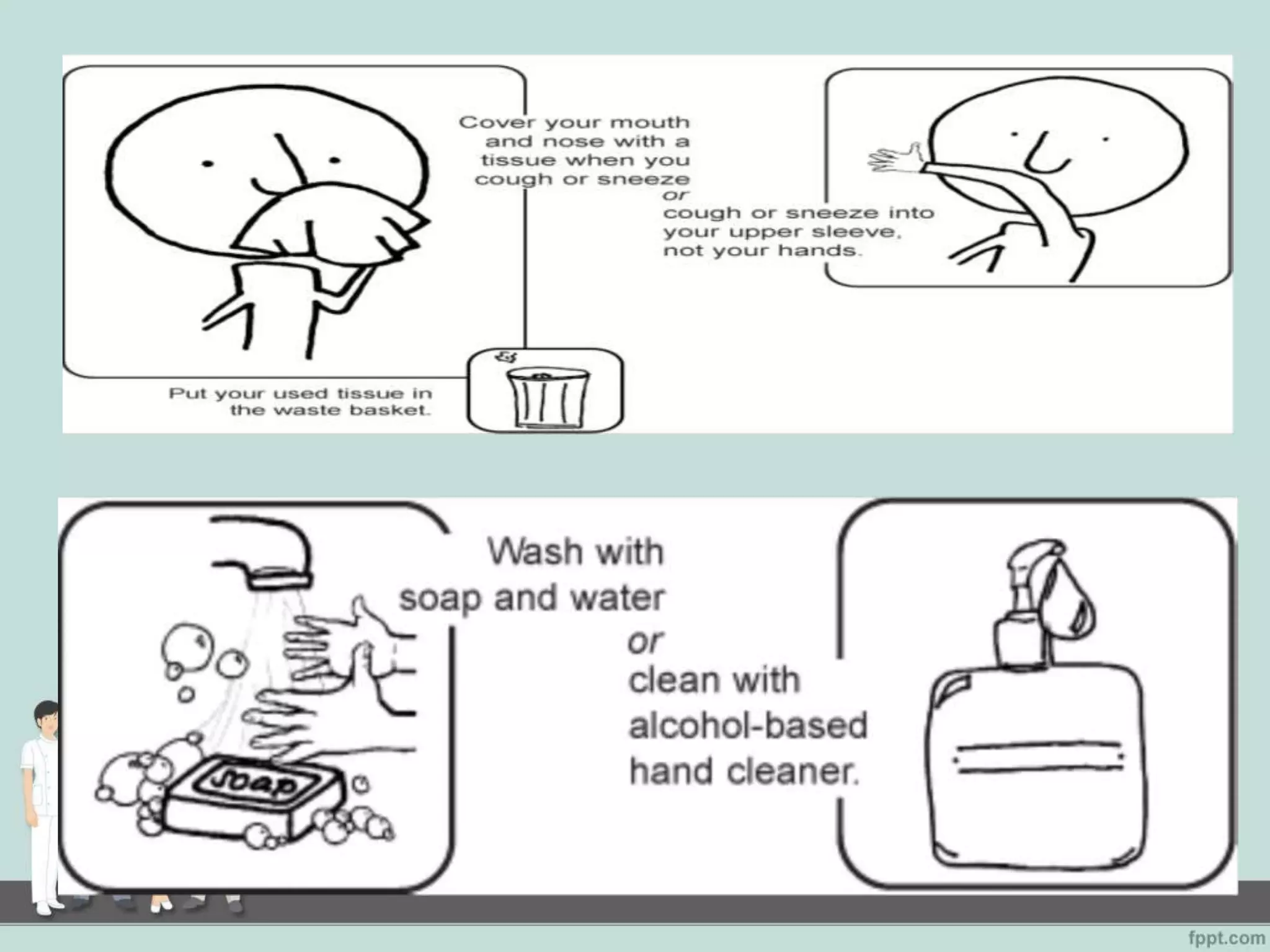
• A measures to contain respiratory secretions in patients
and accompanying individuals who have signs and
symptoms of a respiratory infection.
Cover the mouths/noses when coughing or sneezing.
Use and dispose of tissues.
Perform hand hygiene if hands have been in contact
with respiratory secretions.
RespiratoryHygiene/Cough
Etiquette
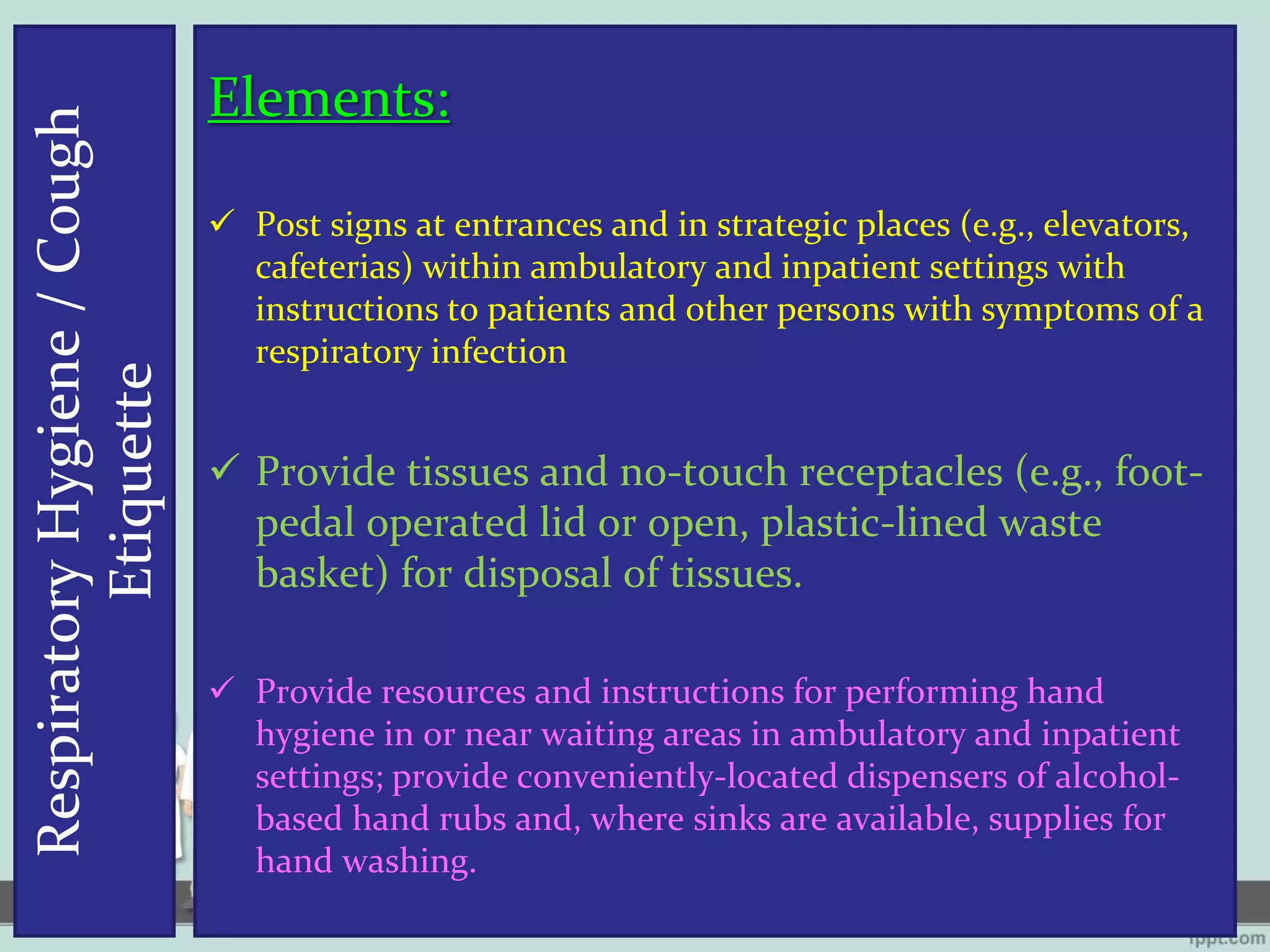
Elements:
 Post signs at entrances and in strategic places (e.g., elevators,
cafeterias) within ambulatory and inpatient settings with
instructions to patients and other persons with symptoms of a
respiratory infection
 Provide tissues and no-touch receptacles (e.g., foot-
pedal operated lid or open, plastic-lined waste
basket) for disposal of tissues.
 Provide resources and instructions for performing hand
hygiene in or near waiting areas in ambulatory and inpatient
settings; provide conveniently-located dispensers of alcohol-
based hand rubs and, where sinks are available, supplies for
hand washing.
Patient Care Equipment and
instruments/devices
 All patient care equipment that is soiled with blood, body
fluids, secretions or excretions shall be handled in a manner
that will prevent skin and mucous membrane exposures.
 Wear PPE (e.g., gloves, gown), according to the level of
anticipated contamination, when handling patient-care
equipment and instruments/devices that is visibly soiled or
may have been in contact with blood or body fluids.
19
Patient Care Equipment and instruments/devices-(cont’d)
 Remove organic material from critical and semi-critical
instrument/devices, using recommended cleaning agents
before high level disinfection and sterilization to enable
effective disinfection and sterilization processes.
 Single use, disposable items must be disposed of properly.
 Make sure that reusable equipment has been cleaned and
reprocessed appropriately, prior to use on another patient.
20
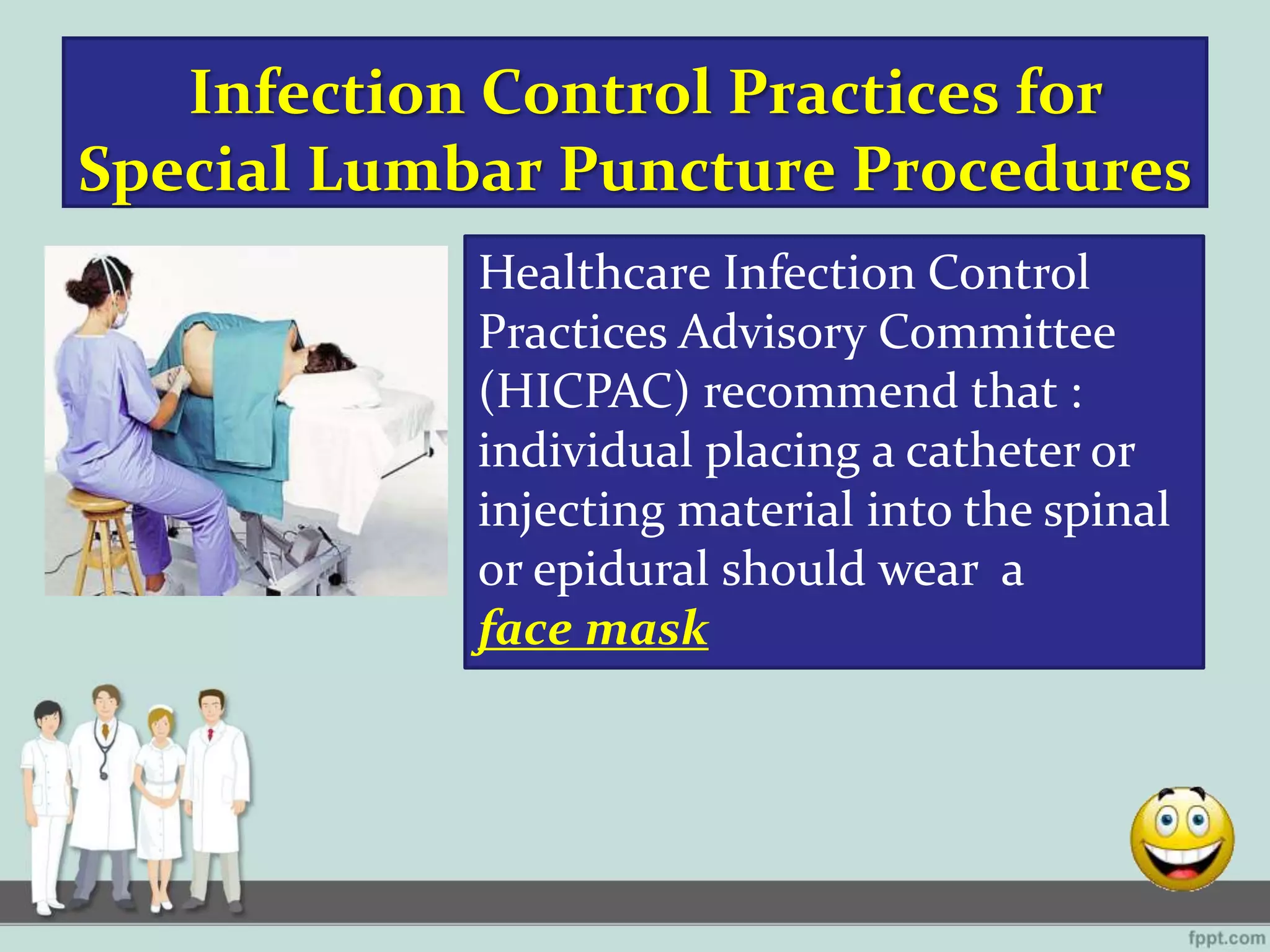
Infection Control Practices for
Special Lumbar Puncture Procedures
Healthcare Infection Control
Practices Advisory Committee
(HICPAC) recommend that :
individual placing a catheter or
injecting material into the spinal
or epidural should wear a
face mask

Standard precaution

  • 1.
  • 2.
    Standard Precaution Group ofpractices of infection prevention and control infectious agents, based on a principle that all blood, body fluids secretions, excretions (except sweat), non intact skin and mucous membranes may contain transmissible pathogen. It applies to all patients regardless of their diagnosis
  • 3.
    Elements of Standard Precaution 1.Hand Hygiene 2. Gown 3. Mask 4. Face Protection 5. Gloves 6. Safe injection practices 7. Patient Care Equipment/ Devices 8. Environmental Control 9. Textile and laundry 10. Worker Safety 11. Patient Placement and Transport 12. Respiratory Hygiene / Cough Etiquette 13. Infection Control Practices for Lumbar Puncture
  • 4.
    HandHygiene Types ofHand Hygiene Hand wash - 40-60 seconds Hand rub - 20-30 seconds Hand scrub - 5 minutes (first wash of the day); 2-3 minutes (in between operations)
  • 5.
    “5 Moments forHand Hygiene”
  • 6.
    Personal Protective Equipment (PPE) “Avariety of barriers to protect HCW’s mucous membranes, airways, skin, and clothing (whenever blood/body fluids splashes are expected)”
  • 7.
    PersonalProtectiveEquipment (PPE) • Gloves –Use when touching blood, body fluids, secretions, excretions, contaminated items; for touching mucus membranes and nonintact skin. • Gowns – Use during procedures and patient care activities when contact of clothing/ exposed skin with blood/body fluids, secretions, or excretions is anticipated. • Mask, goggles or face shield – Use during patient care activities likely to generate splashes or sprays of blood, body fluids, secretions, or excretions
  • 8.
    Textile and Laundry Keyprinciples for handling soiled laundry 1) not shaking the items 2) avoiding contact of one’s body and personal clothing 3) dispose soiled items water soluble bag 4) dispose non soiled items in blue bag
  • 9.
    Safe Work Practices Prevention of needle sticks and other sharps-related injuries  Precautions during aerosol-generating procedures  Prevention of mucous membrane contact
  • 10.
    Safe Injection Practices Donot RE-CAP the needle!
  • 11.
    Needles / Sharps: *Disposed immediately after use in puncture resistant container *Not placed on environmental surfaces *Not recapped if recapping is essential use one hand technique (scoop) *Close sharp container when ¾ full and 7 days maximum.
  • 12.
    Never reuse needles,syringes, or lancets. Never administer medications from the same syringe to more than one patient, even if the needle is changed or you are injecting through an intervening length of IV tubing. Do not enter a medication vial, bag, or bottle with a used syringe or needle.
  • 13.
     Never usemedications packaged as single-dose or single-use for more than one patient. This includes ampoules, bags, and bottles intravenous solutions. Always use aseptic technique when preparing and administering injections
  • 14.
    Patient Placement andTransport Determine patient placement based on: • Route(s) of transmission of the known / suspected infectious agent ,Availability of single rooms and options for cohorting (patients with the same pathogen in the same room) • patients with higher risk for pathogen transmission are prioritize to be admitted in a single room (e.g., uncontained secretions, or wound drainage;) .
  • 15.
    Patient Placement andTransport Healthcare worker transporting a patient with transmissible infection should contain the site of infection e.g. apply a dressing over a surgical site infection & offer a surgical mask for a coughing patient. Health care workers should not wear PPE in hospital corridors
  • 16.
    Respiratory Hygiene /Cough Etiquette • A measures to contain respiratory secretions in patients and accompanying individuals who have signs and symptoms of a respiratory infection. Cover the mouths/noses when coughing or sneezing. Use and dispose of tissues. Perform hand hygiene if hands have been in contact with respiratory secretions.
  • 18.
    RespiratoryHygiene/Cough Etiquette Elements:  Post signsat entrances and in strategic places (e.g., elevators, cafeterias) within ambulatory and inpatient settings with instructions to patients and other persons with symptoms of a respiratory infection  Provide tissues and no-touch receptacles (e.g., foot- pedal operated lid or open, plastic-lined waste basket) for disposal of tissues.  Provide resources and instructions for performing hand hygiene in or near waiting areas in ambulatory and inpatient settings; provide conveniently-located dispensers of alcohol- based hand rubs and, where sinks are available, supplies for hand washing.
  • 19.
    Patient Care Equipmentand instruments/devices  All patient care equipment that is soiled with blood, body fluids, secretions or excretions shall be handled in a manner that will prevent skin and mucous membrane exposures.  Wear PPE (e.g., gloves, gown), according to the level of anticipated contamination, when handling patient-care equipment and instruments/devices that is visibly soiled or may have been in contact with blood or body fluids. 19
  • 20.
    Patient Care Equipmentand instruments/devices-(cont’d)  Remove organic material from critical and semi-critical instrument/devices, using recommended cleaning agents before high level disinfection and sterilization to enable effective disinfection and sterilization processes.  Single use, disposable items must be disposed of properly.  Make sure that reusable equipment has been cleaned and reprocessed appropriately, prior to use on another patient. 20
  • 21.
    Infection Control Practicesfor Special Lumbar Puncture Procedures Healthcare Infection Control Practices Advisory Committee (HICPAC) recommend that : individual placing a catheter or injecting material into the spinal or epidural should wear a face mask