First and second
conditional
First conditional: form
Two clauses: if clause + result clause
IF CLAUSE : IF + SUBJECT + PRESENT SIMPLE + OBJECT,
RESULT CLAUSE : SUBJECT + WILL + INFINITIVE + OBJECT
First conditional: use
It describes a particular situation and its posible result in
the future.
First conditional: use
An action in the future will only happen if a certain
condition is fulfilled by that time.
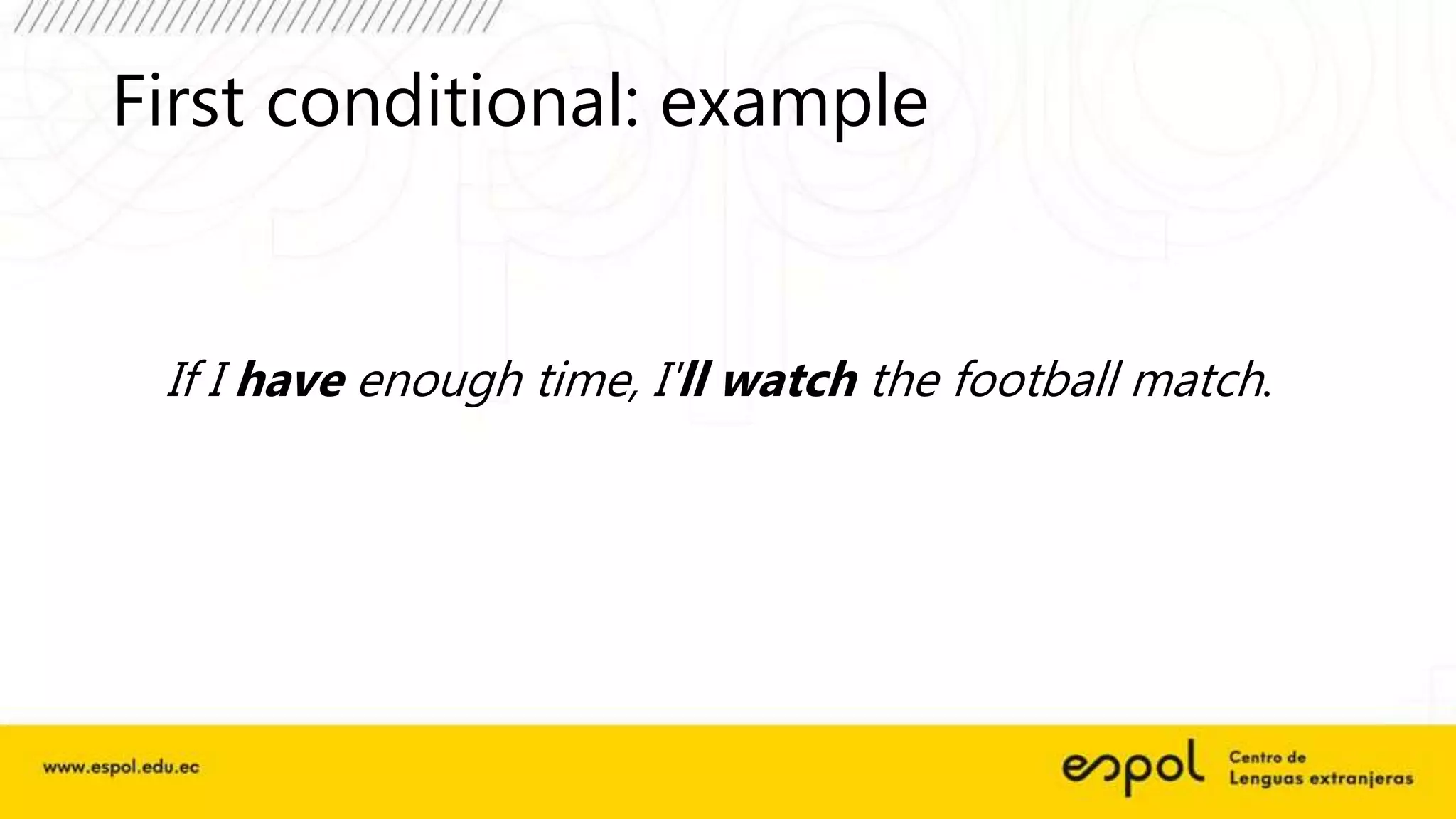
First conditional: example
If I have enough time, I'll watch the football match.
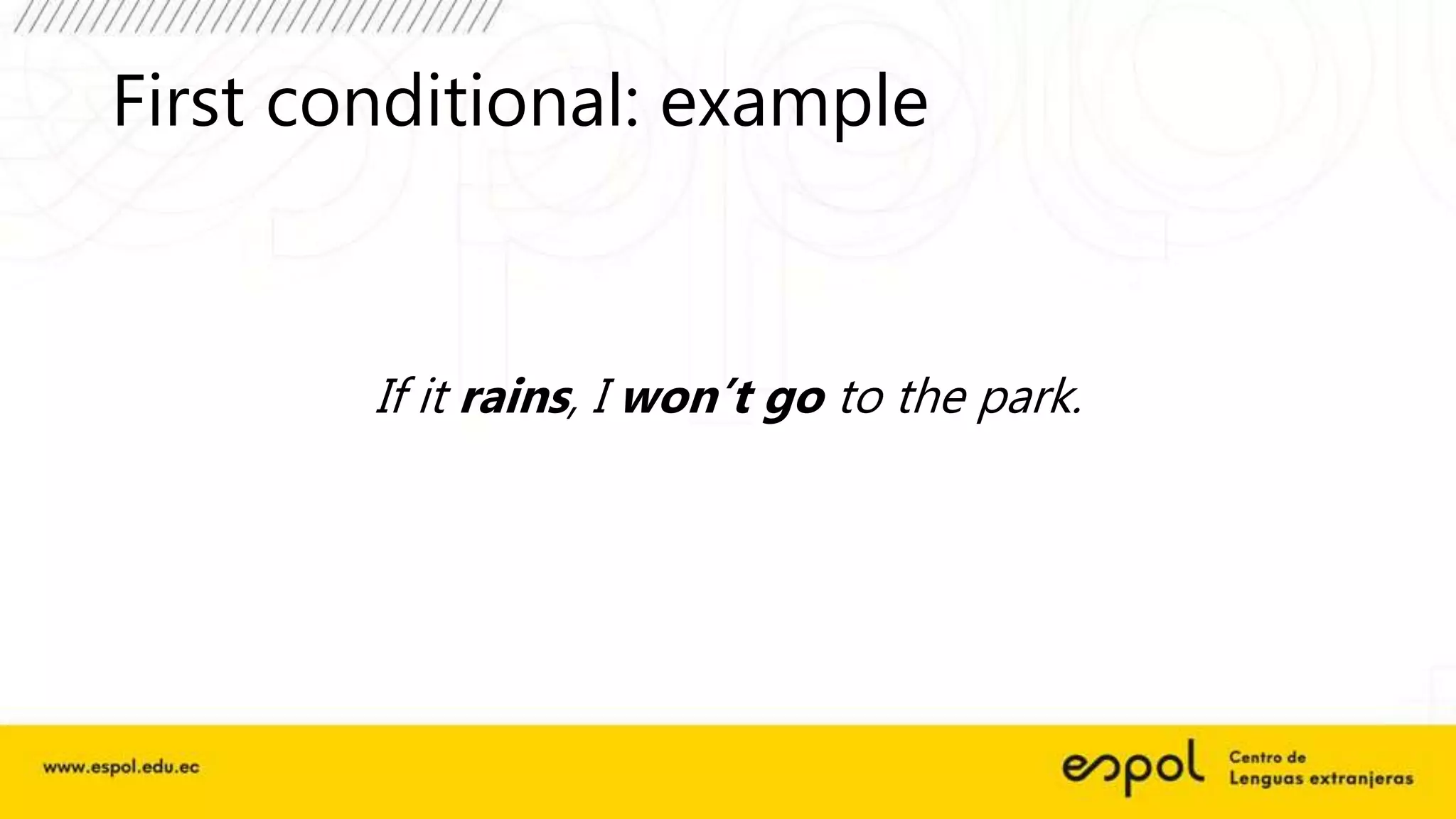
First conditional: example
If it rains, I won’t go to the park.
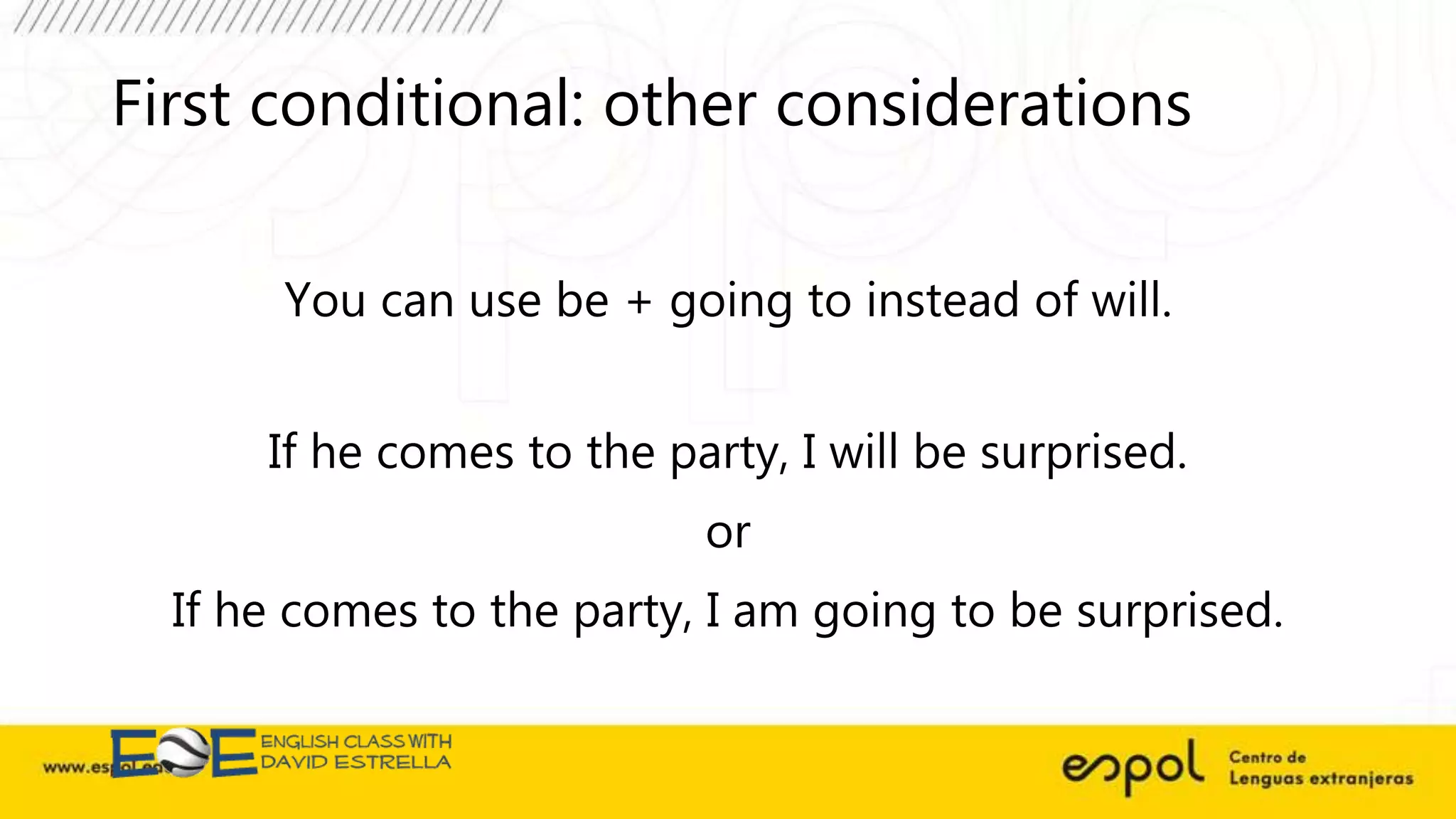
First conditional: other considerations
You can use be + going to instead of will.
If he comes to the party, I will be surprised.
or
If he comes to the party, I am going to be surprised.
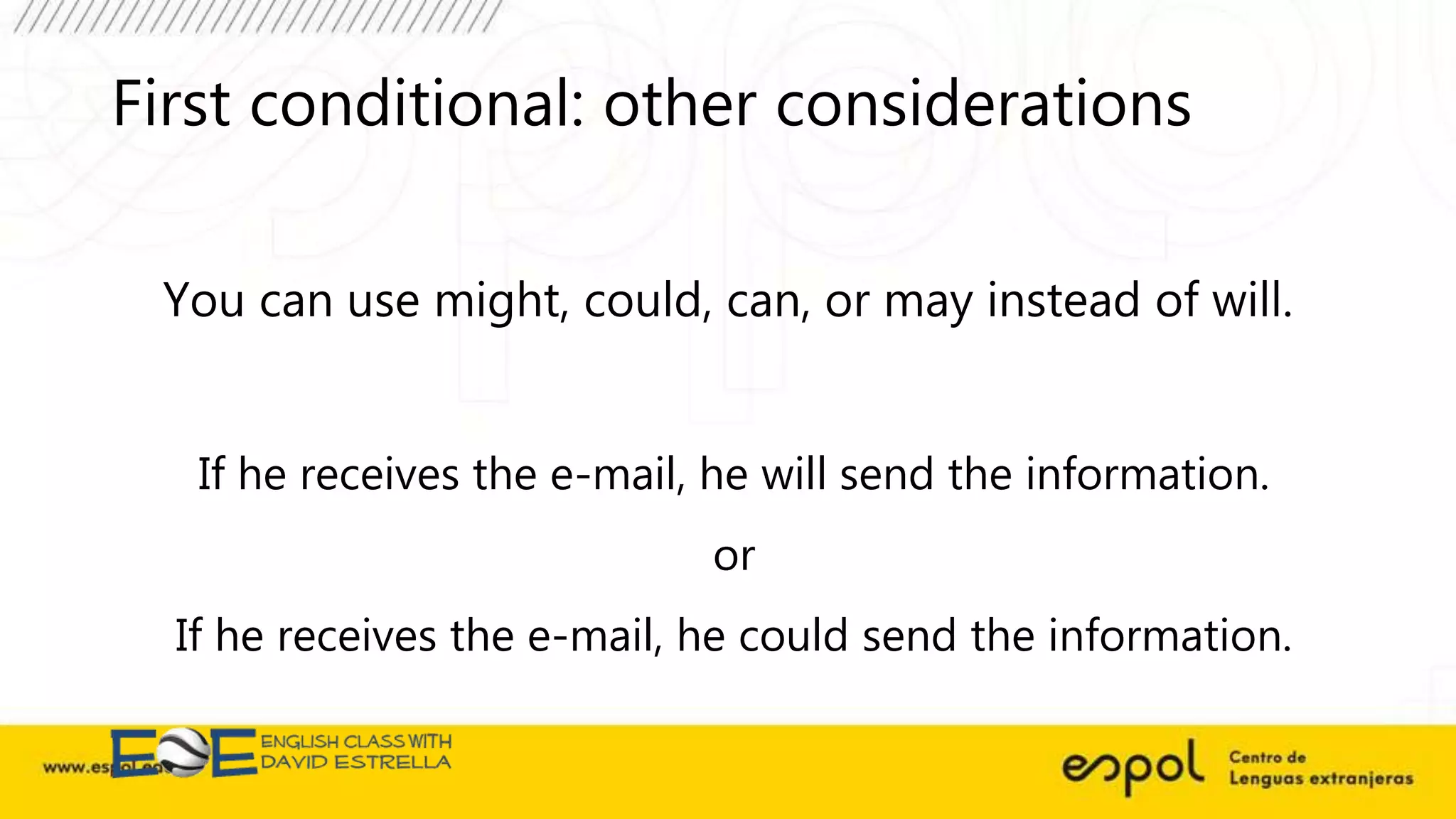
First conditional: other considerations
You can use might, could, can, or may instead of will.
If he receives the e-mail, he will send the information.
or
If he receives the e-mail, he could send the information.
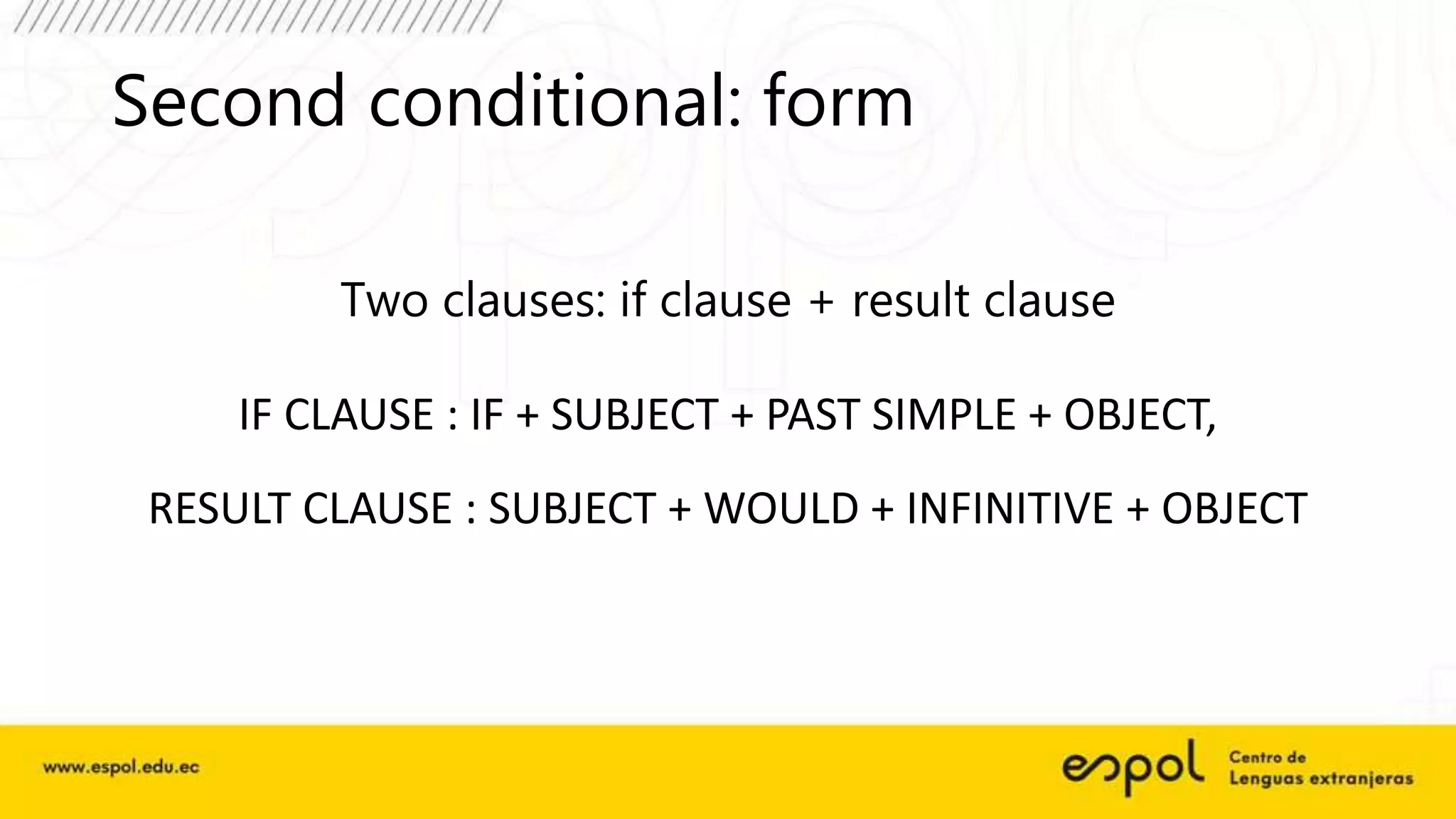
Second conditional: form
Two clauses: if clause + result clause
IF CLAUSE : IF + SUBJECT + PAST SIMPLE + OBJECT,
RESULT CLAUSE : SUBJECT + WOULD + INFINITIVE + OBJECT
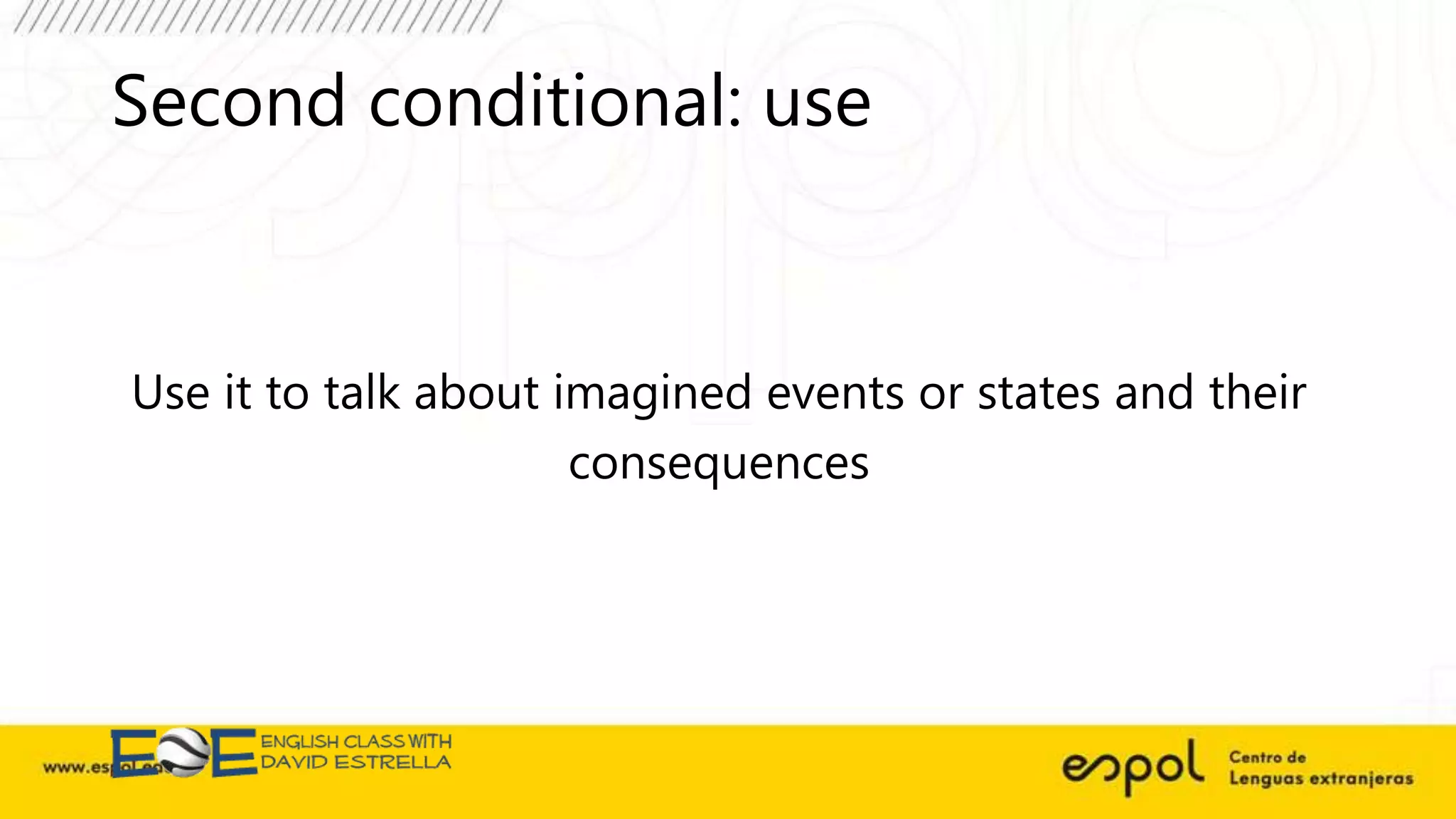
Second conditional: use
Use it to talk about imagined events or states and their
consequences
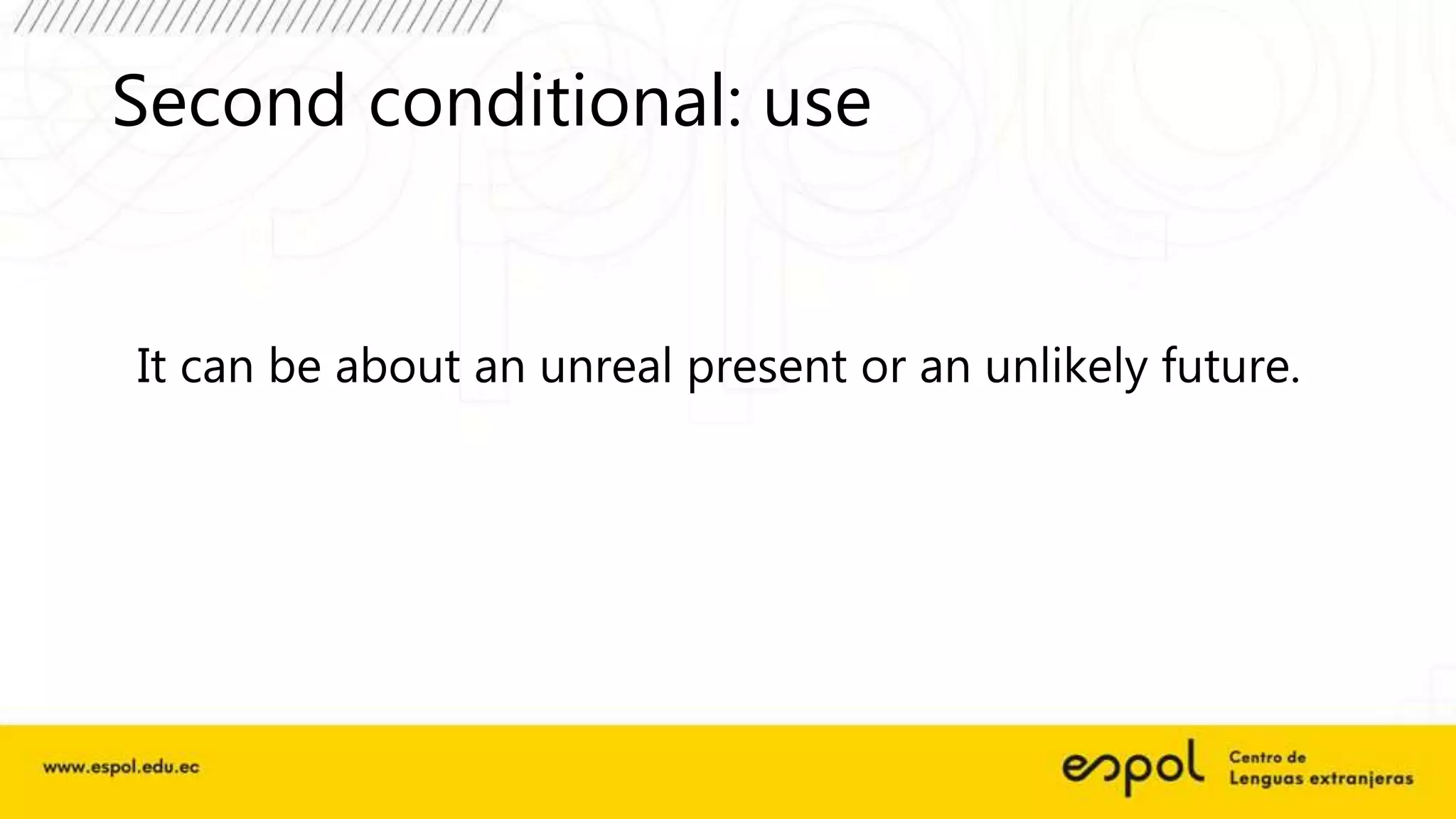
Second conditional: use
It can be about an unreal present or an unlikely future.
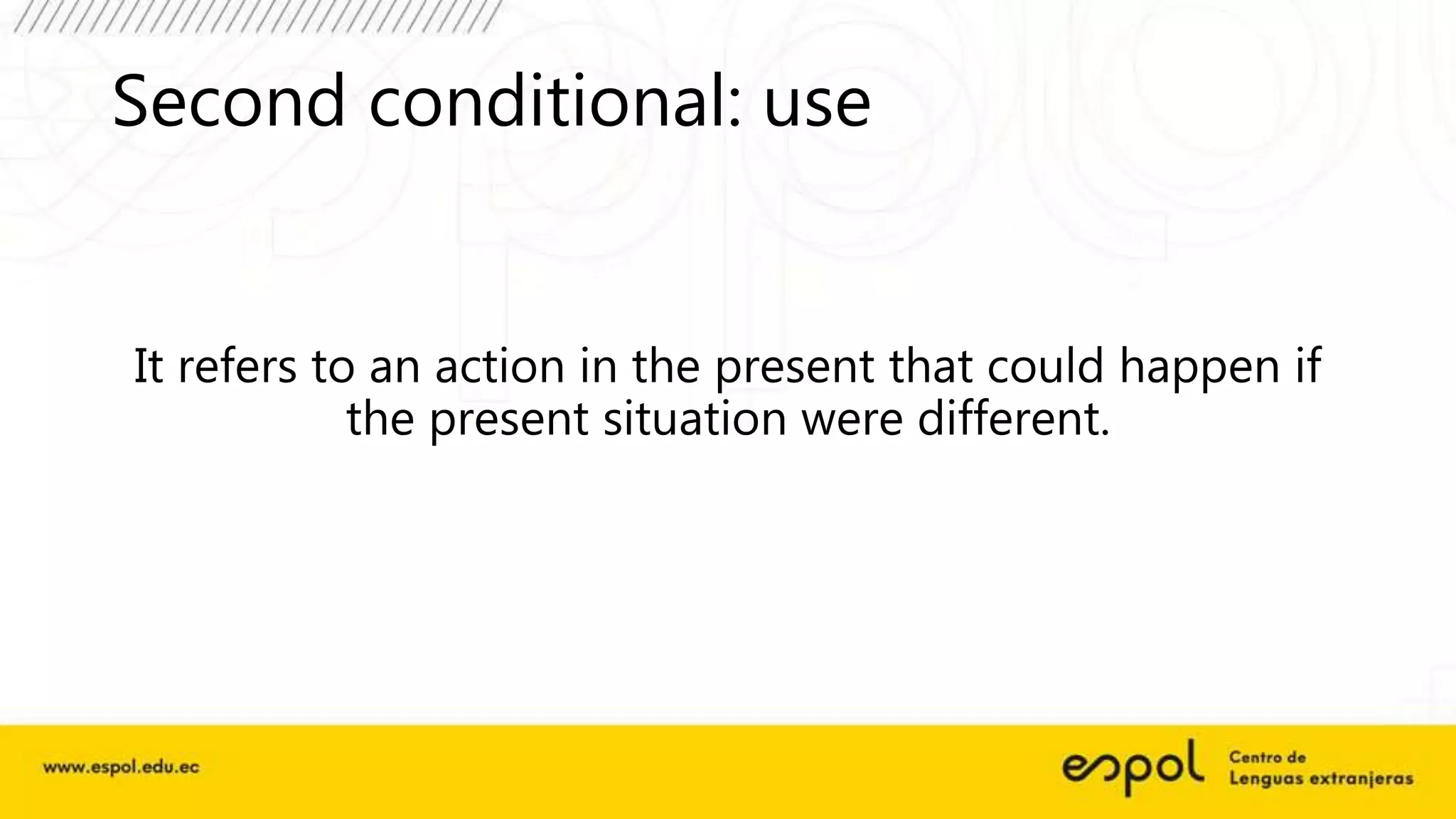
Second conditional: use
It refers to an action in the present that could happen if
the present situation were different.
Second conditional: examples
If I were a millionaire, I would buy a castle.
Second conditional: examples
If I had her number, I would call her.
Second conditional: other considerations
Use the phrase “if I were you” to give advice.
If I were you, I would wear a helmet.
Second conditional: other considerations
You can use might, could, can, or may instead of would.
If I traveled abroad, I would stay in a luxurious hotel.
First & Second conditionals:
other considerations
You can write the if clause, a comma, and then the result
clause.
OR
You can write the result clause and then the if clause.
The meaning is the same
First & Second conditionals:
other considerations
If veronica ate all the cupcakes, she would be sick.
OR
Veronica would be sick if she ate all the cupcakes.

Unit 8 a first & second conditional

Editor's Notes

  • #5 We don't know for sure whether the condition actually will be fulfilled or not, but the conditions seem rather realistic, so we think it is likely to happen.
  • #6 I may have time to watch the match but I'm not sure about it.
  • #7 It might rain, but I'm not sure about it.
  • #11 Often called the "unreal" conditional because it is used for unreal impossible or improbable situations.
  • #12 This conditional provides an imaginary result for a given situation. It is very unlikely that the condition will be fulfilled.
  • #13 I don't really expect the situation to change because it is very unlikely.
  • #14 it is very unlikely that I can buy a castle because I don’t have the money, but I can imagine it.
  • #15 it is very unlikely that I can call her because I don’t have her number.