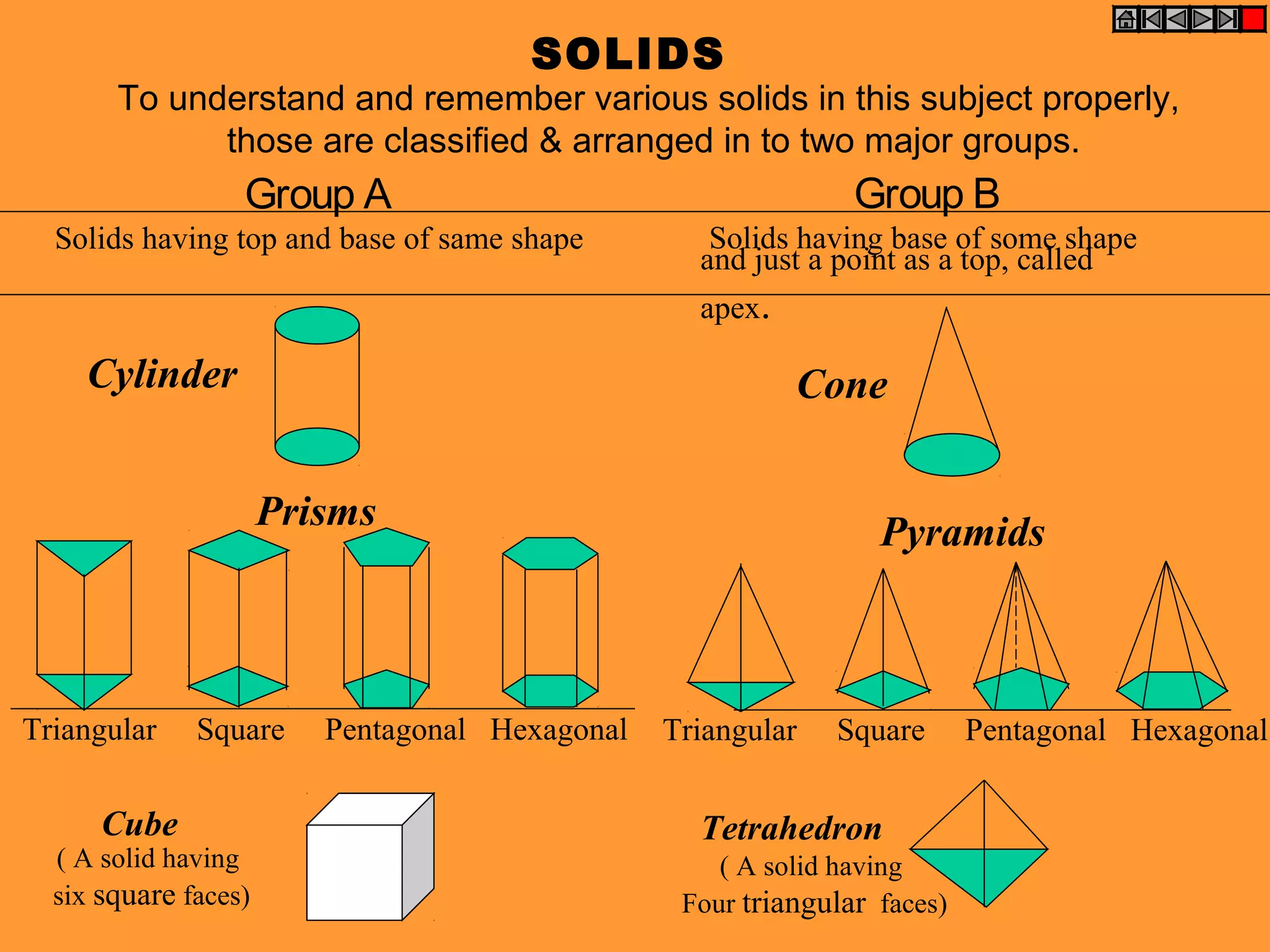
1. The document classifies solids into two groups - Group A solids have bases and tops of the same shape, while Group B solids have a base of some shape and just a point as a top.
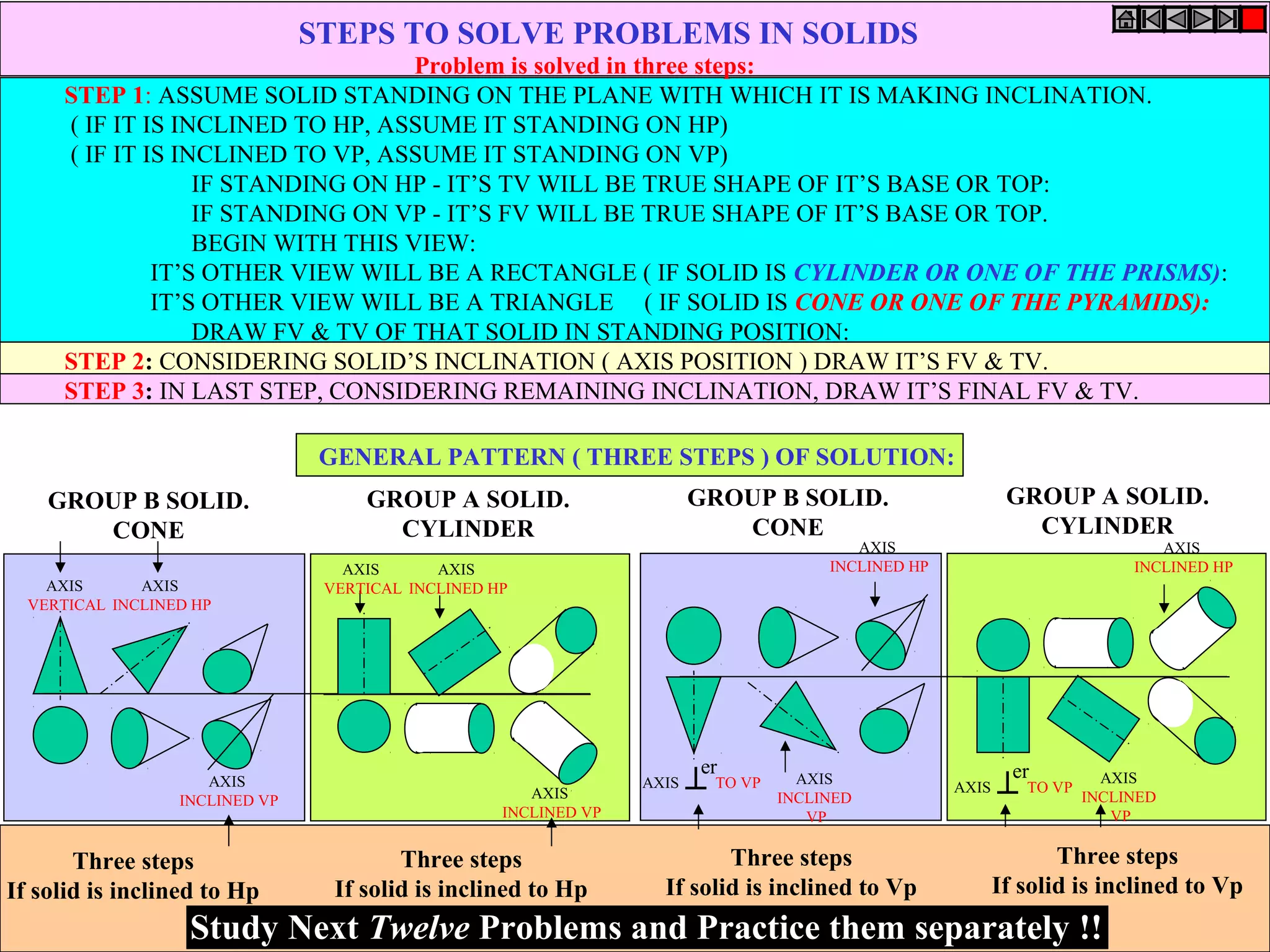
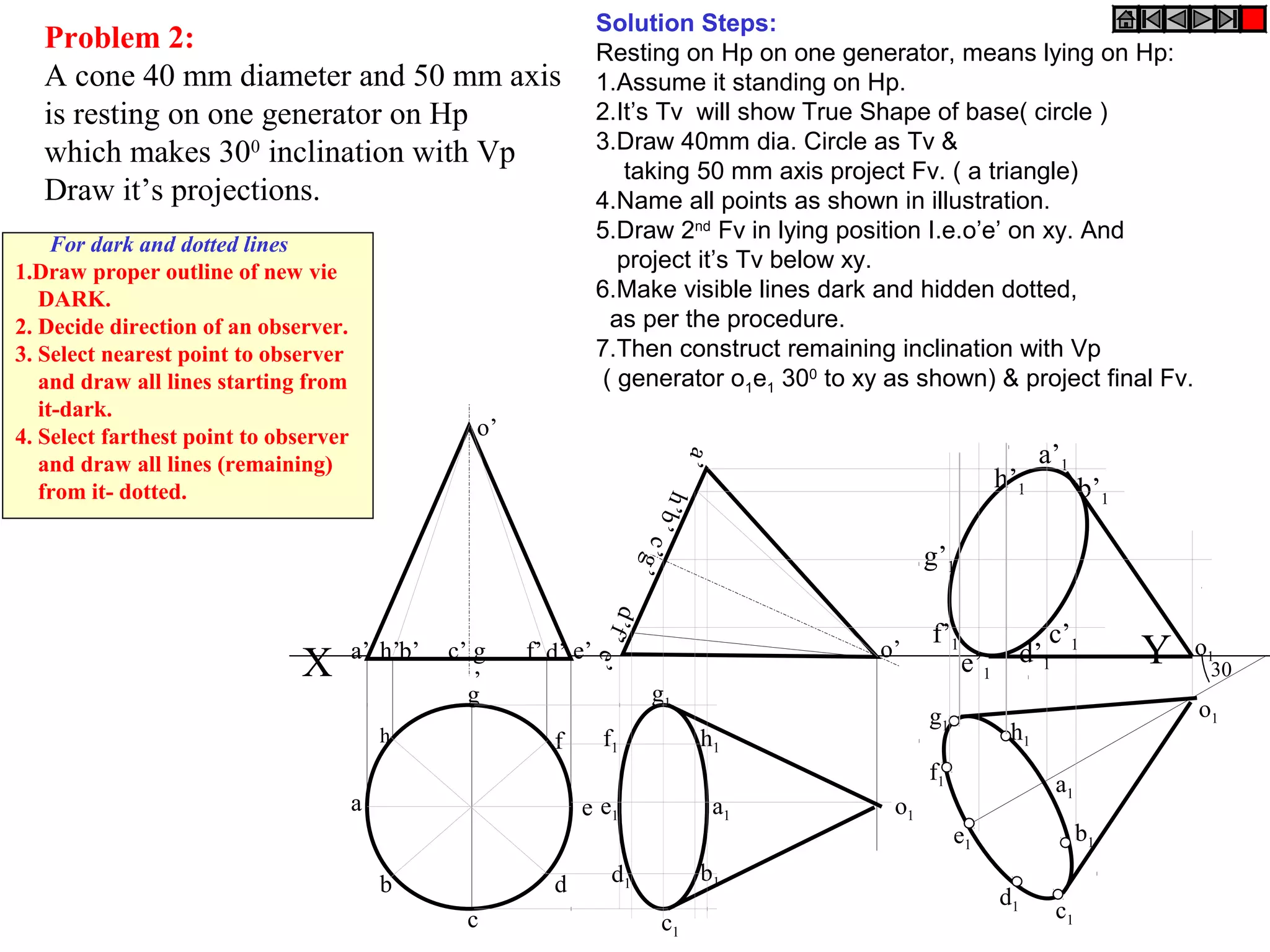
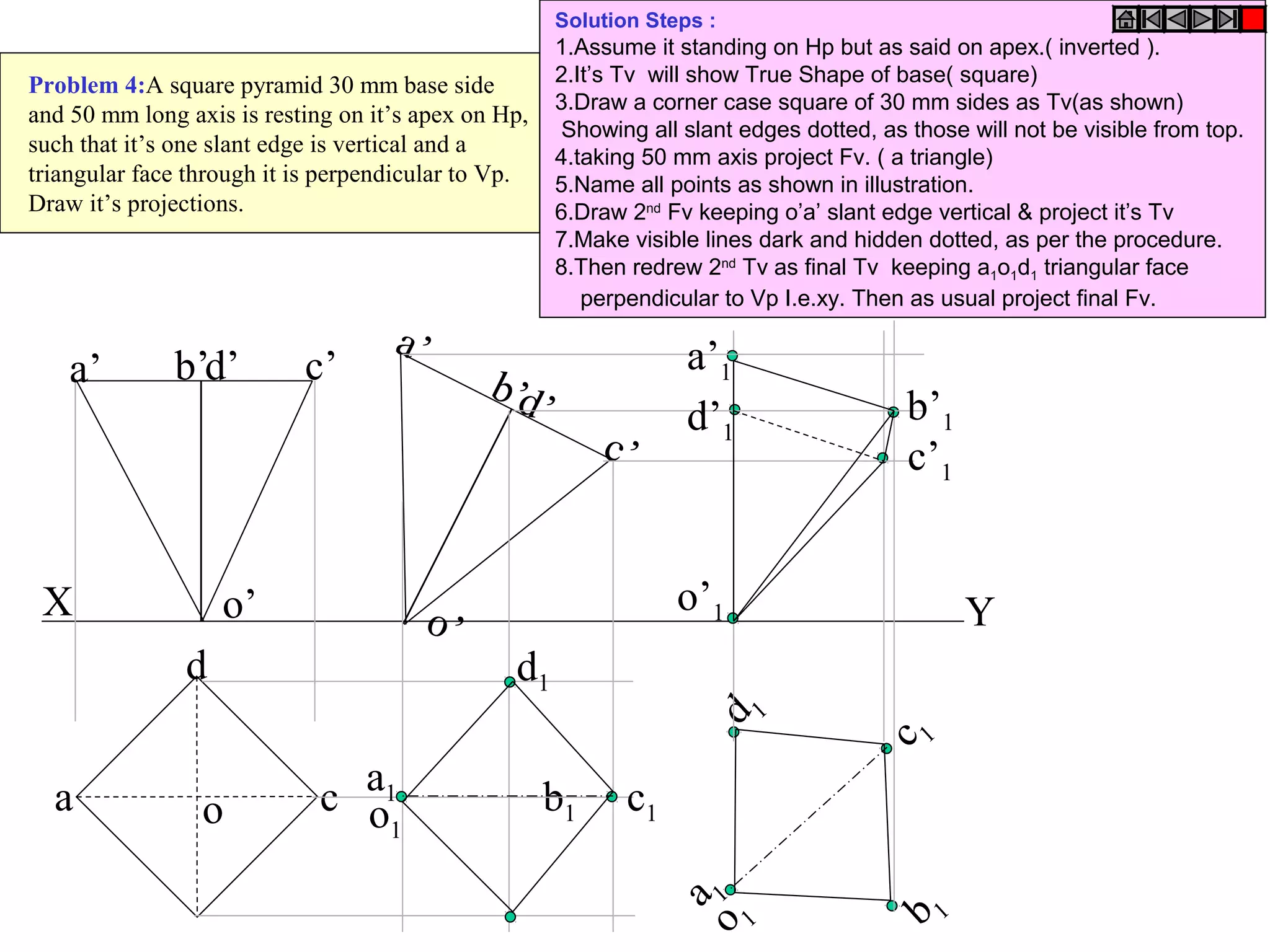
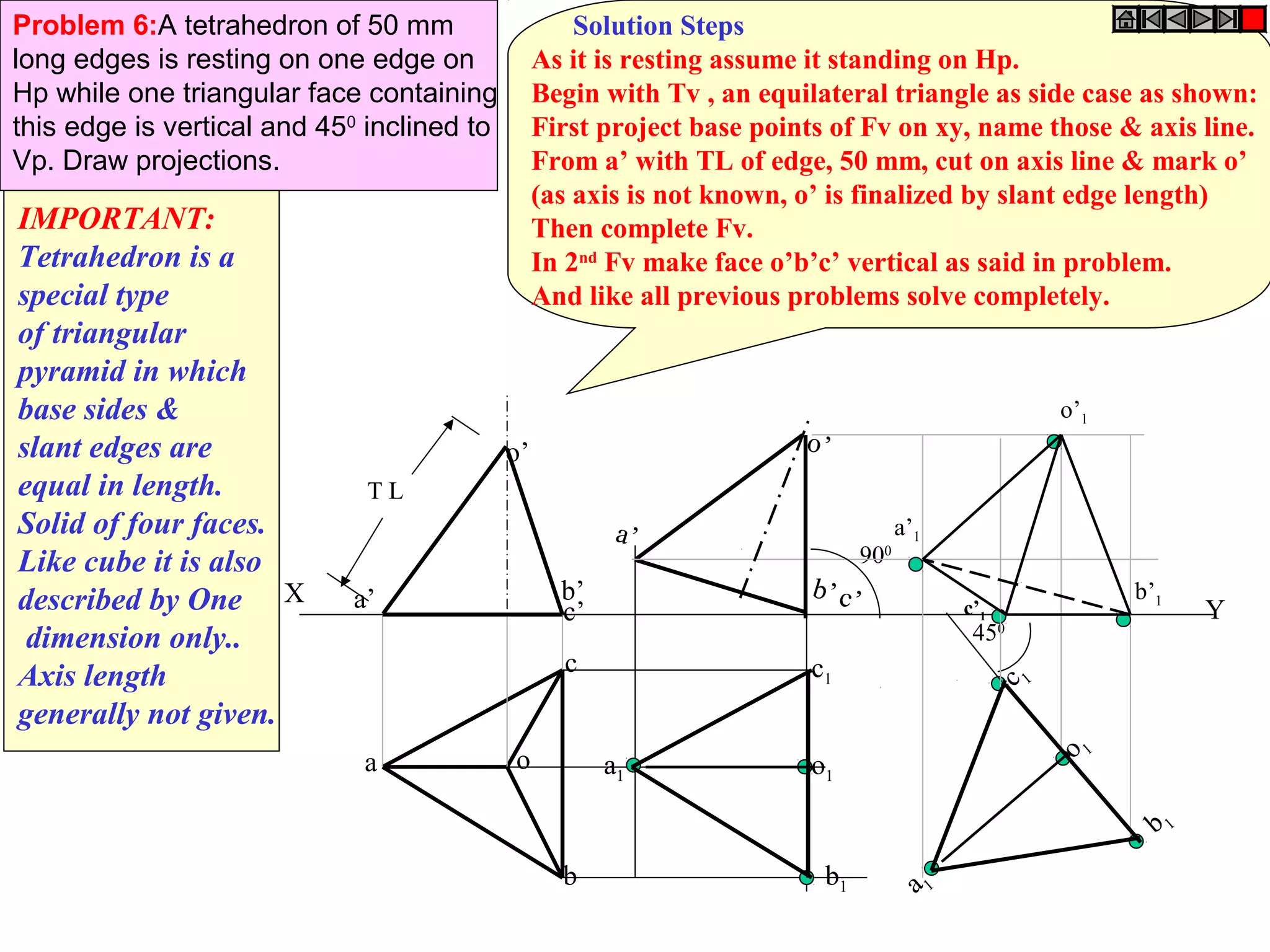
2. Problems involving solids are solved in three steps: 1) assume the solid is standing on its base plane, 2) consider the solid's inclination, 3) consider any remaining inclination to draw the final views.
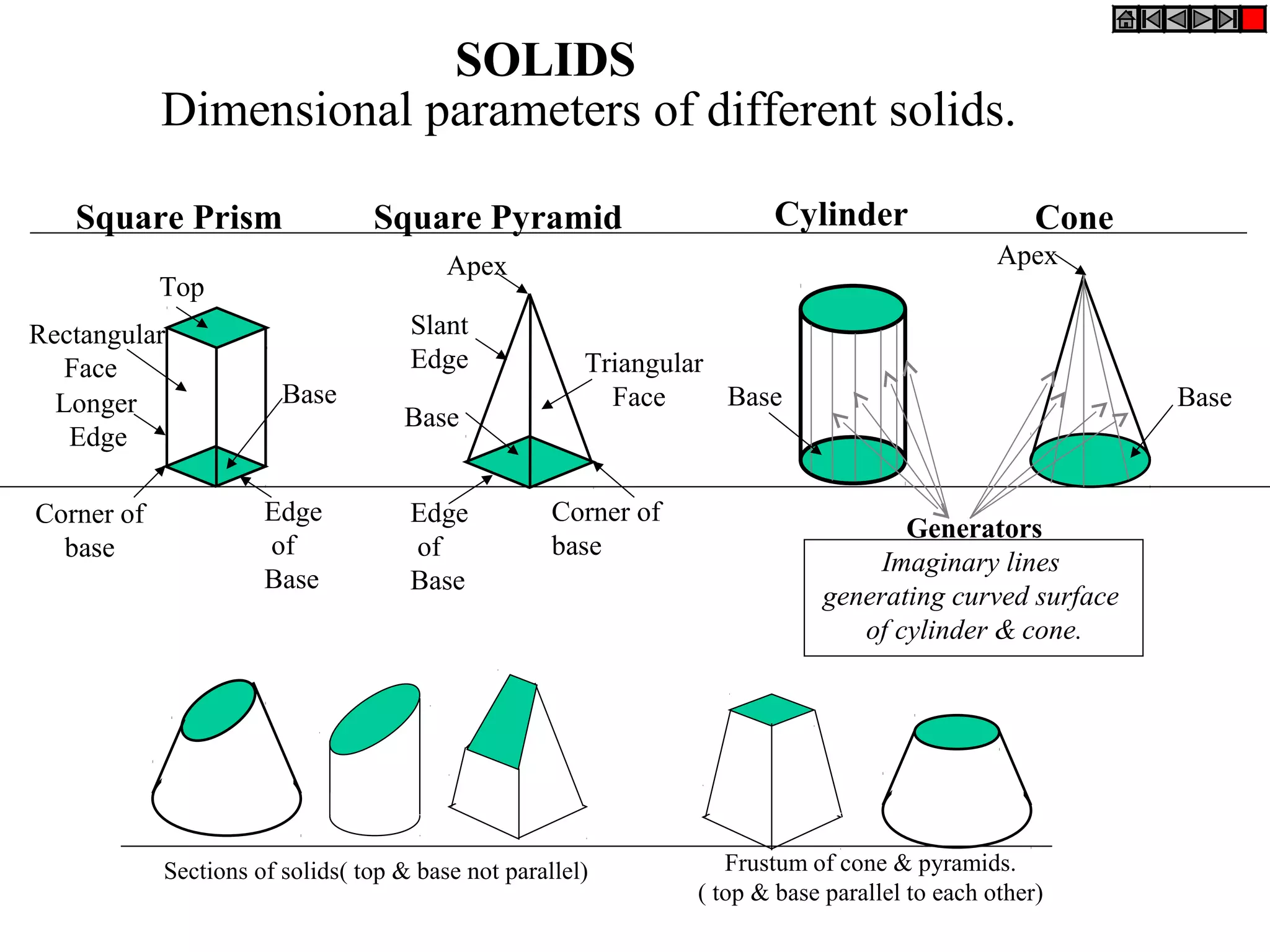
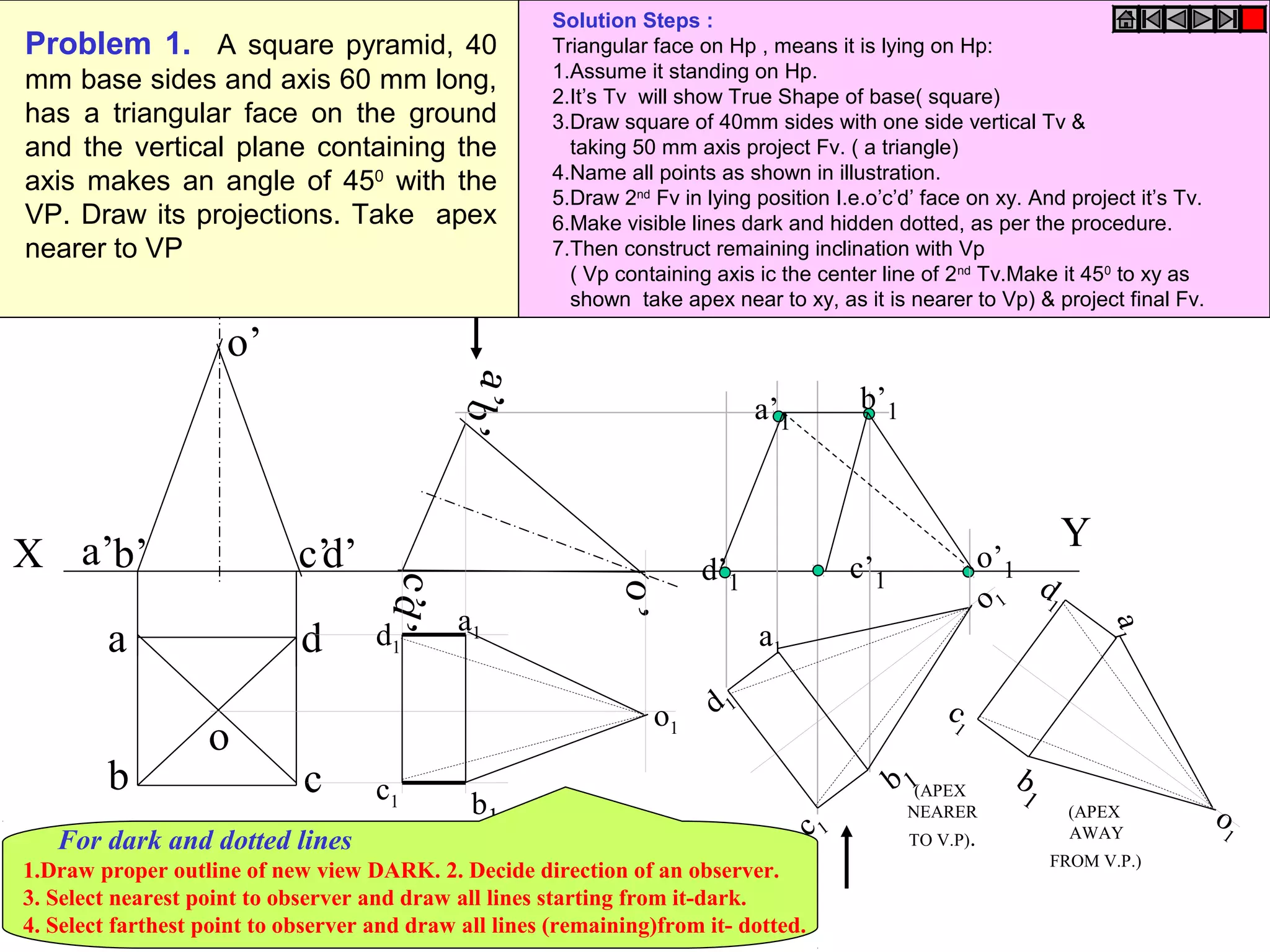
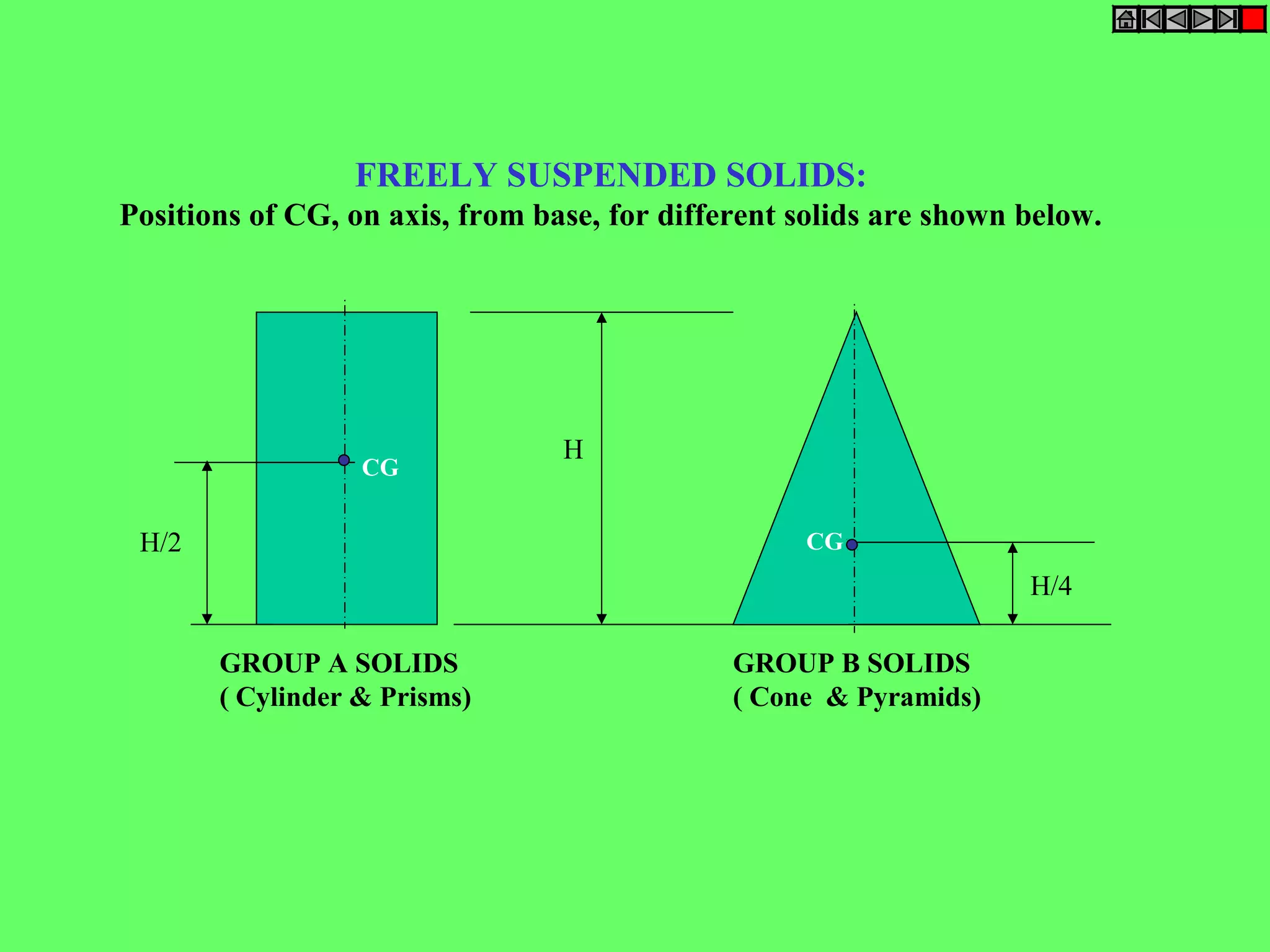
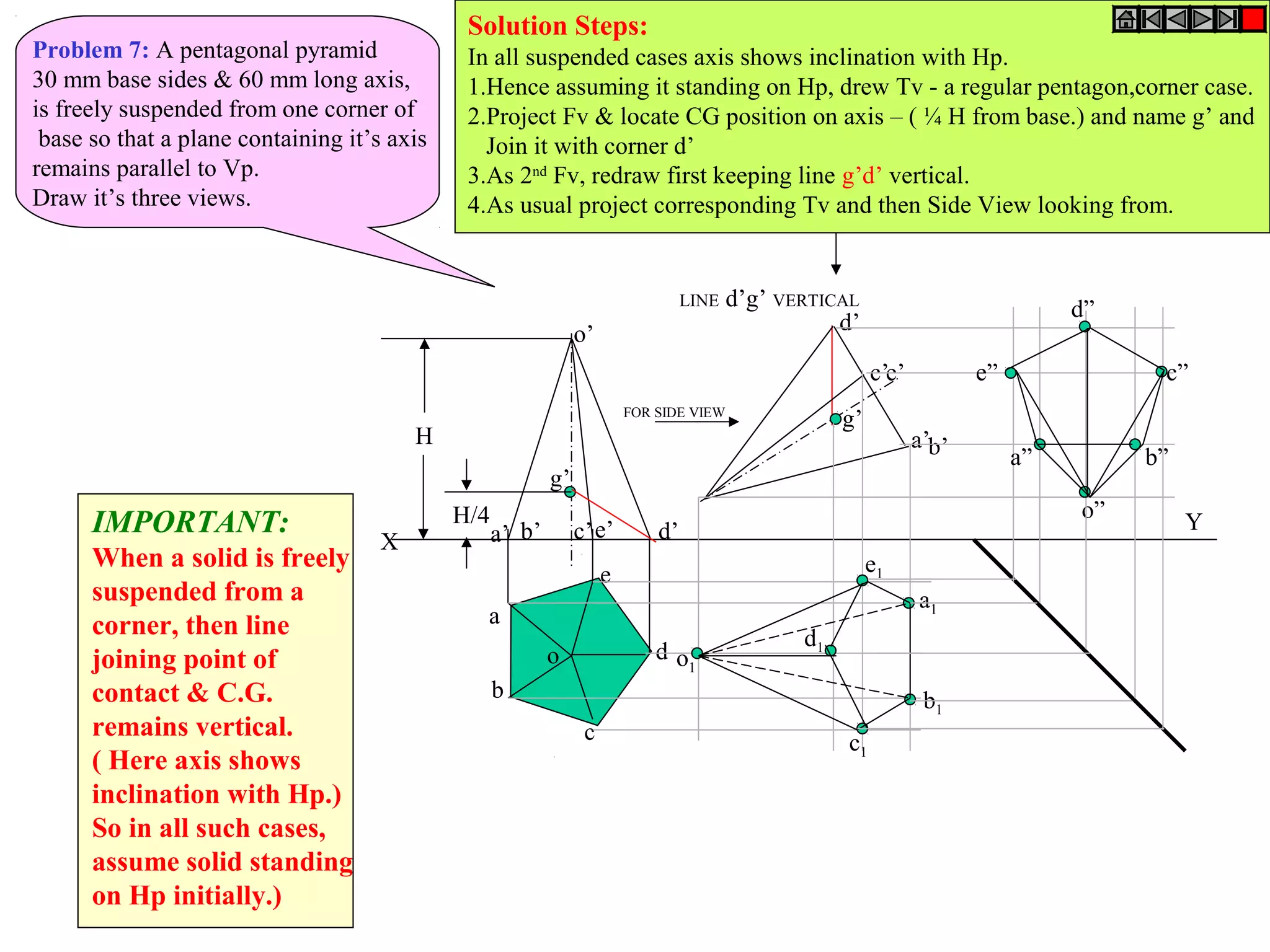
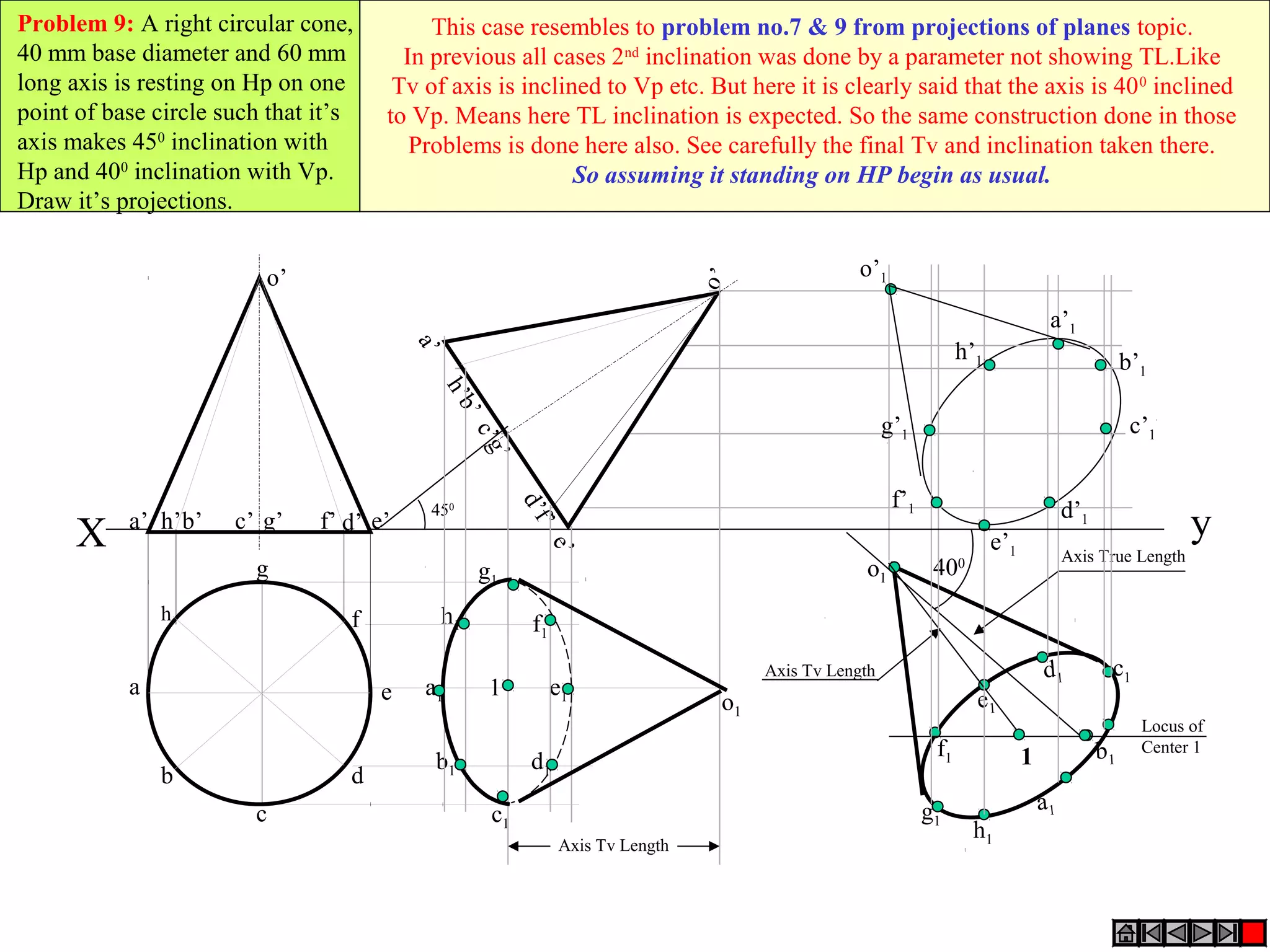
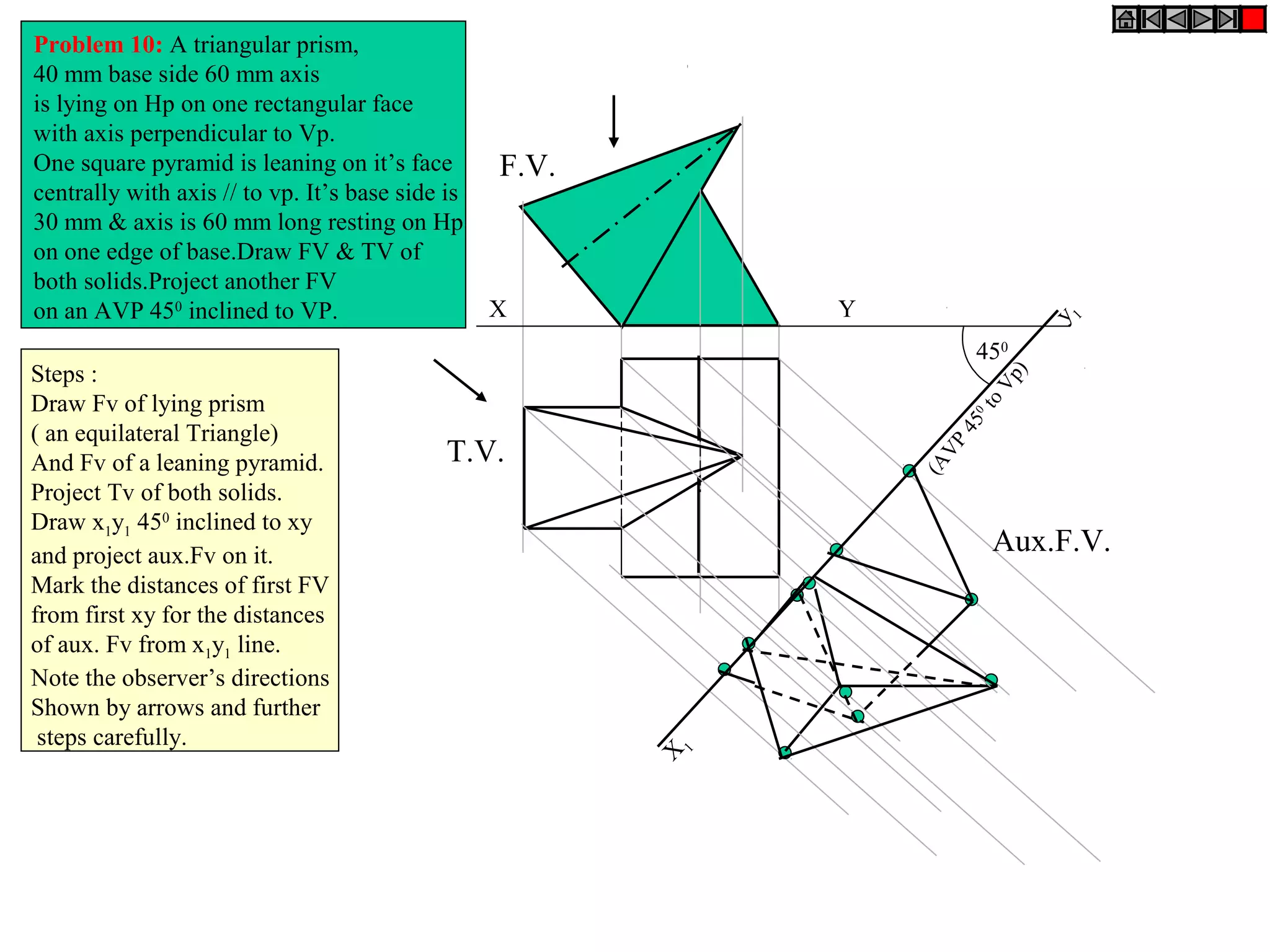
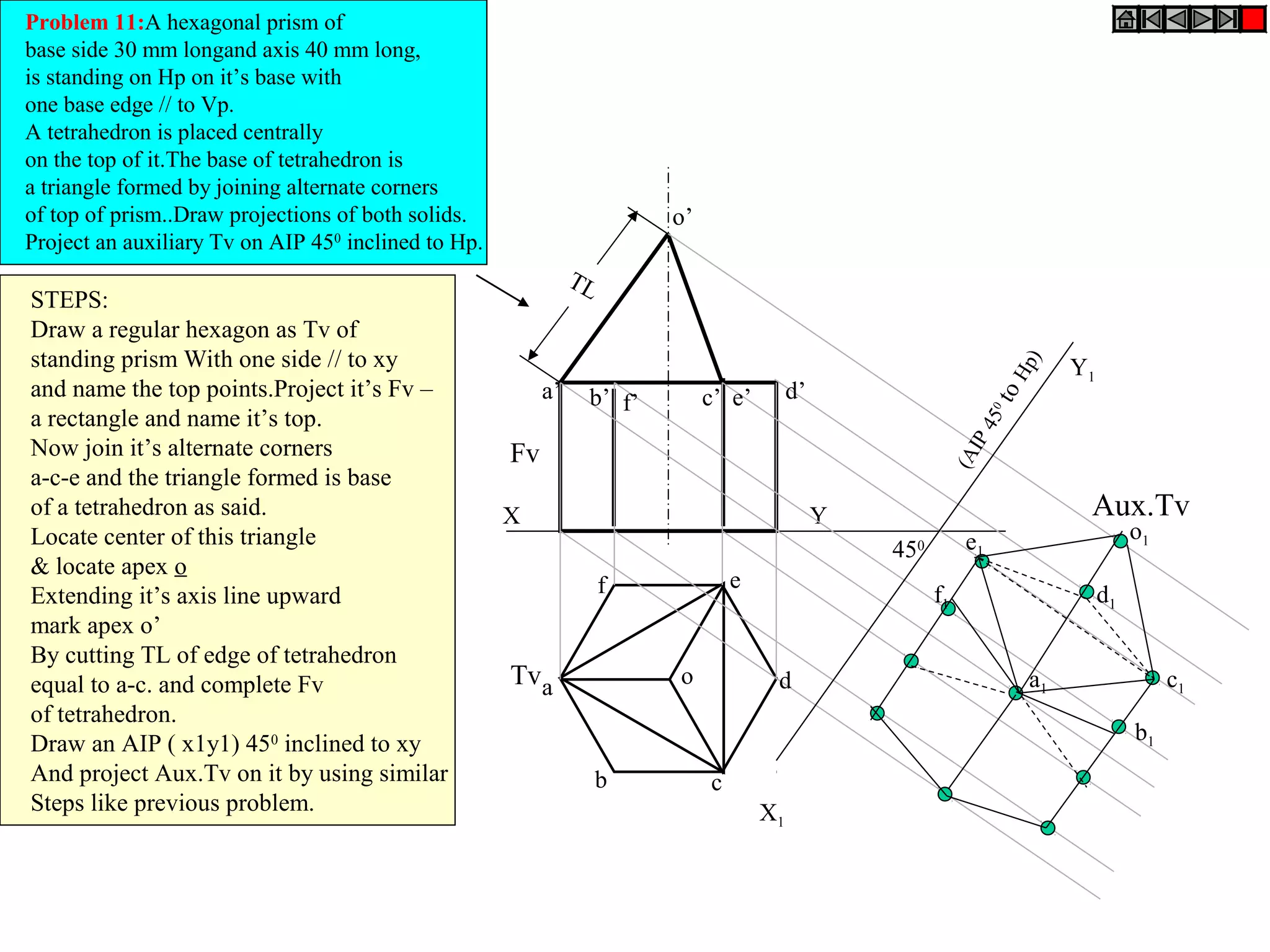
3. Key solids discussed include cylinders, cones, prisms, pyramids, tetrahedrons, and their dimensional parameters, positions of centers of gravity, and examples of how to draw their projections when resting, inclined, or freely suspended.


![Projectionofsolids(thedirectdata[1].com)](https://cdn.slidesharecdn.com/ss_thumbnails/projectionofsolidsthedirectdata1-170802182501-thumbnail.jpg?width=640&height=640&fit=bounds)


