ICT in Healthcare
Unit 3
Contents
Artificial Intelligence (AI)
Automation Technologies in health care
3D printing applications in medical Engineering
Micro 3D printing and Application in Microfluidics
Artificial Intelligence (AI)
What is Artificial Intelligence?
According to the father of Artificial Intelligence, John McCarthy, it is “The science
and engineering of making intelligent machines, especially intelligent computer
programs”.
● Artificial Intelligence is a way of making a computer, a computer-controlled
robot, or a software think intelligently, in the similar manner the intelligent
humans think.
● AI is accomplished by studying how human brain thinks, and how humans
learn, decide, and work while trying to solve a problem, and then using the
outcomes of this study as a basis of developing intelligent software and
systems.
Programming Without and With AI
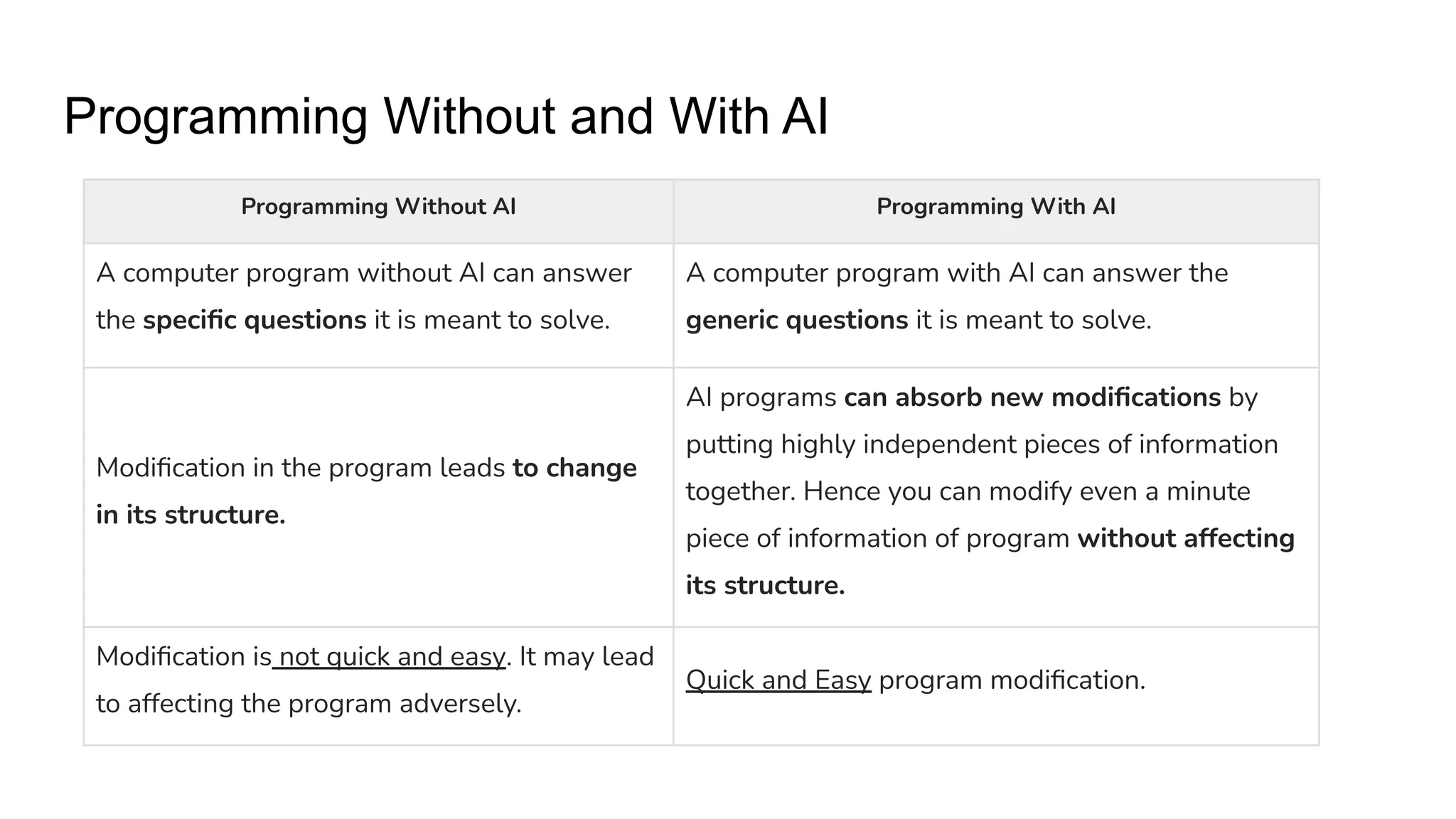
Programming Without AI Programming With AI
A computer program without AI can answer
the specific questions it is meant to solve.
A computer program with AI can answer the
generic questions it is meant to solve.
Modification in the program leads to change
in its structure.
AI programs can absorb new modifications by
putting highly independent pieces of information
together. Hence you can modify even a minute
piece of information of program without affecting
its structure.
Modification is not quick and easy. It may lead
to affecting the program adversely.
Quick and Easy program modification.
Applications of AI
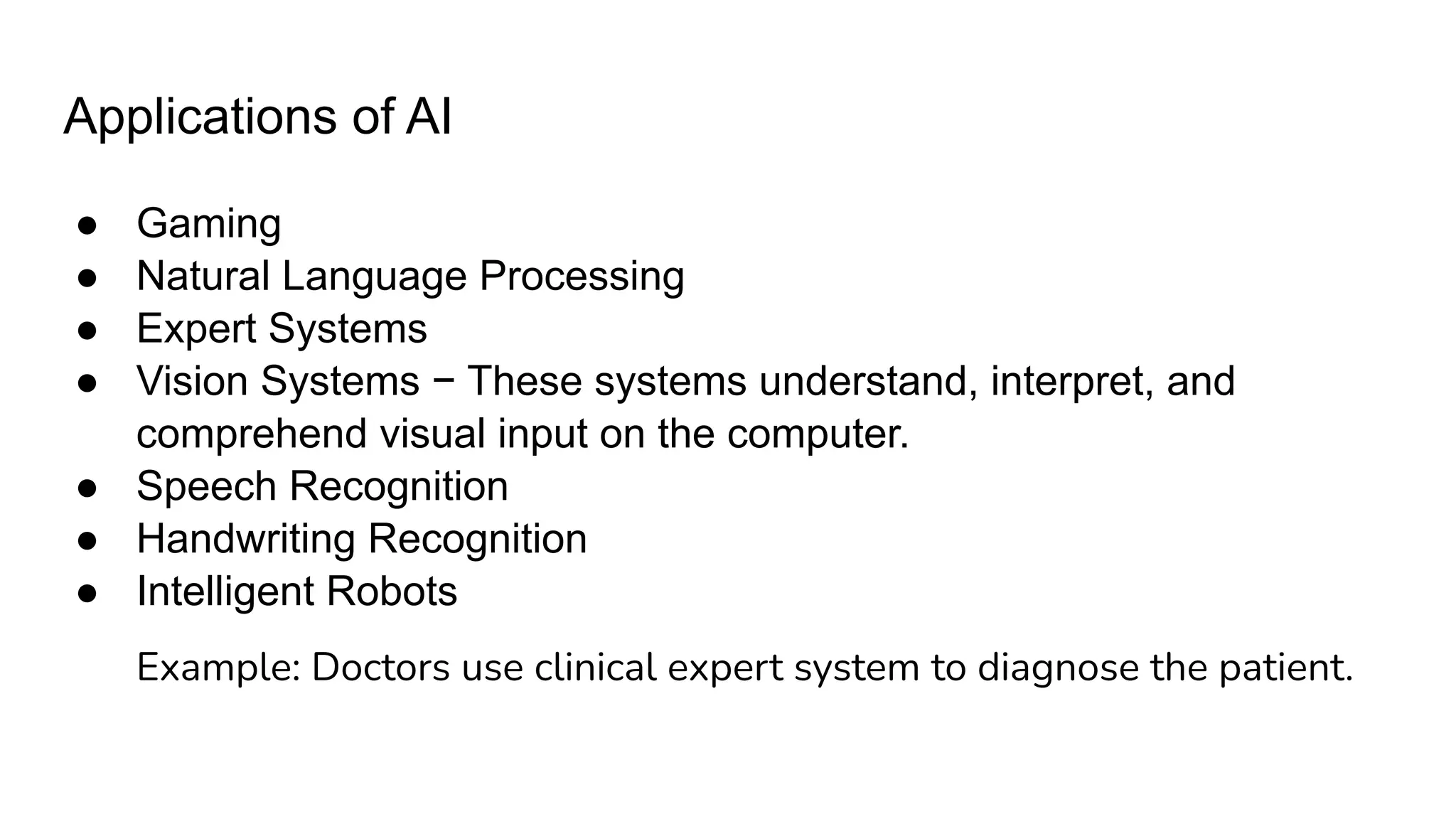
● Gaming
● Natural Language Processing
● Expert Systems
● Vision Systems − These systems understand, interpret, and
comprehend visual input on the computer.
● Speech Recognition
● Handwriting Recognition
● Intelligent Robots
Example: Doctors use clinical expert system to diagnose the patient.
AI with Python
import numpy as np
from sklearn.preprocessing import Binarizer
input_data = np.array([[2.1, -1.9, 5.5],
[-1.5, 2.4, 3.5],
[0.5, -7.9, 5.6],
[5.9, 2.3, -5.8]])
data_binarized =Binarizer(threshold = 0.5).transform(input_data)
print("nBinarized data:n", data_binarized)
References:
1) https://datascience-enthusiast.com/DL/Building-your-Deep-Neural-Network-Step-by-Step.html
2) Understanding Machine Learning from theory to algorithm
3) Neural network from scratch: https://nnfs.io/
Automation Technologies in health care
Intelligent automation, such as robotic process automation (RPA), machine
learning (ML), and artificial intelligence (AI), has the potential to transform
personnel from data routers to critical thinkers, with greater capacity for high-value
jobs and medical care that requires a human touch.
Benefits of healthcare automation in administration
Healthcare leaders already know that automation works. According to healthcare
industry research organization CAQH (Council for Affordable Quality Healthcare),
the industry has reduced administrative costs by $122 billion as a result of
automation and could save an additional $16 billion by fully automating some
common tasks.
1. Patient billing and scheduling
2. Staff support
3. Electronic Health Records (EHRs).
5. Data security and blockchain
3D printing applications in medical Engineering
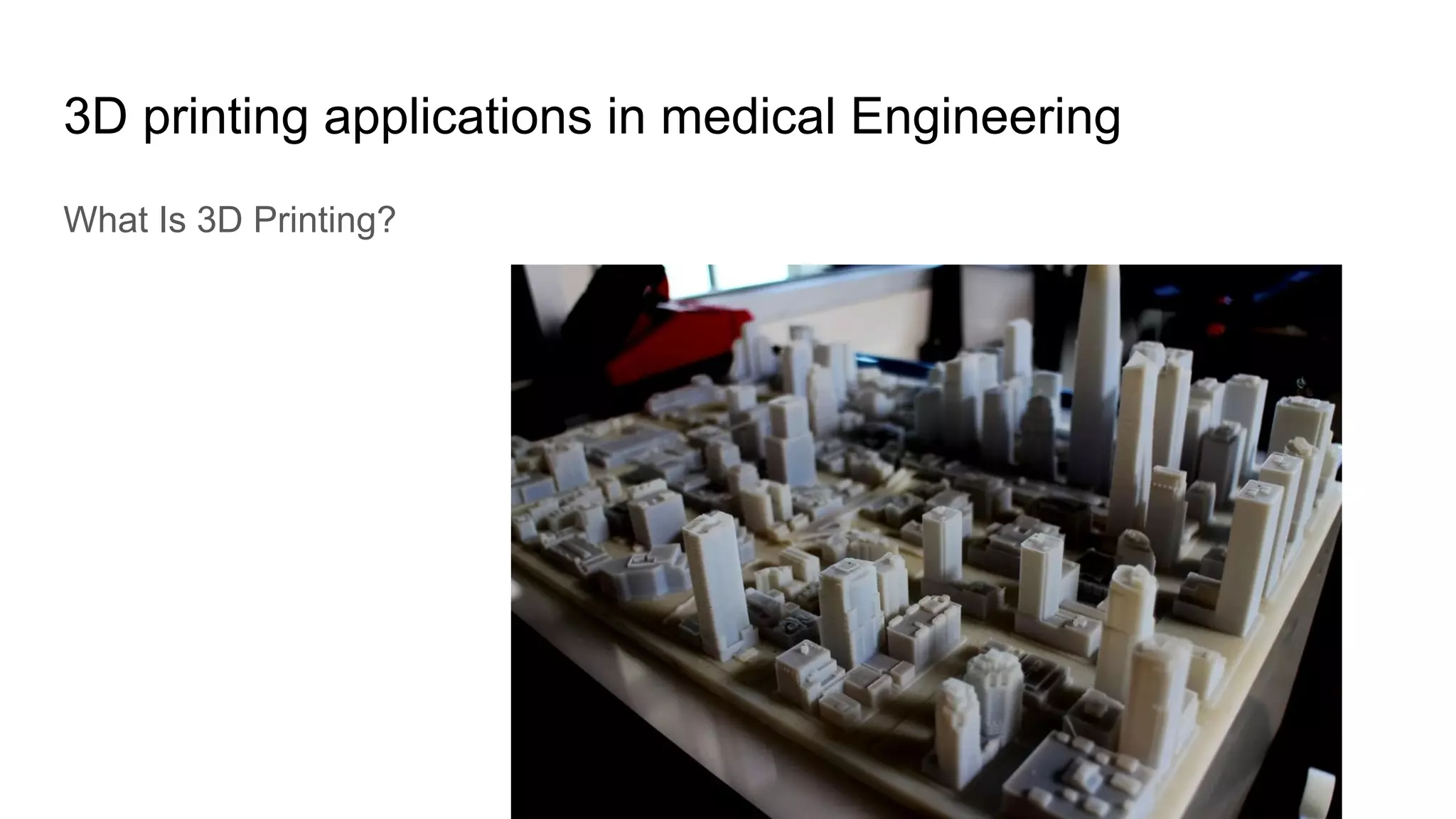
What Is 3D Printing?
3D Printer
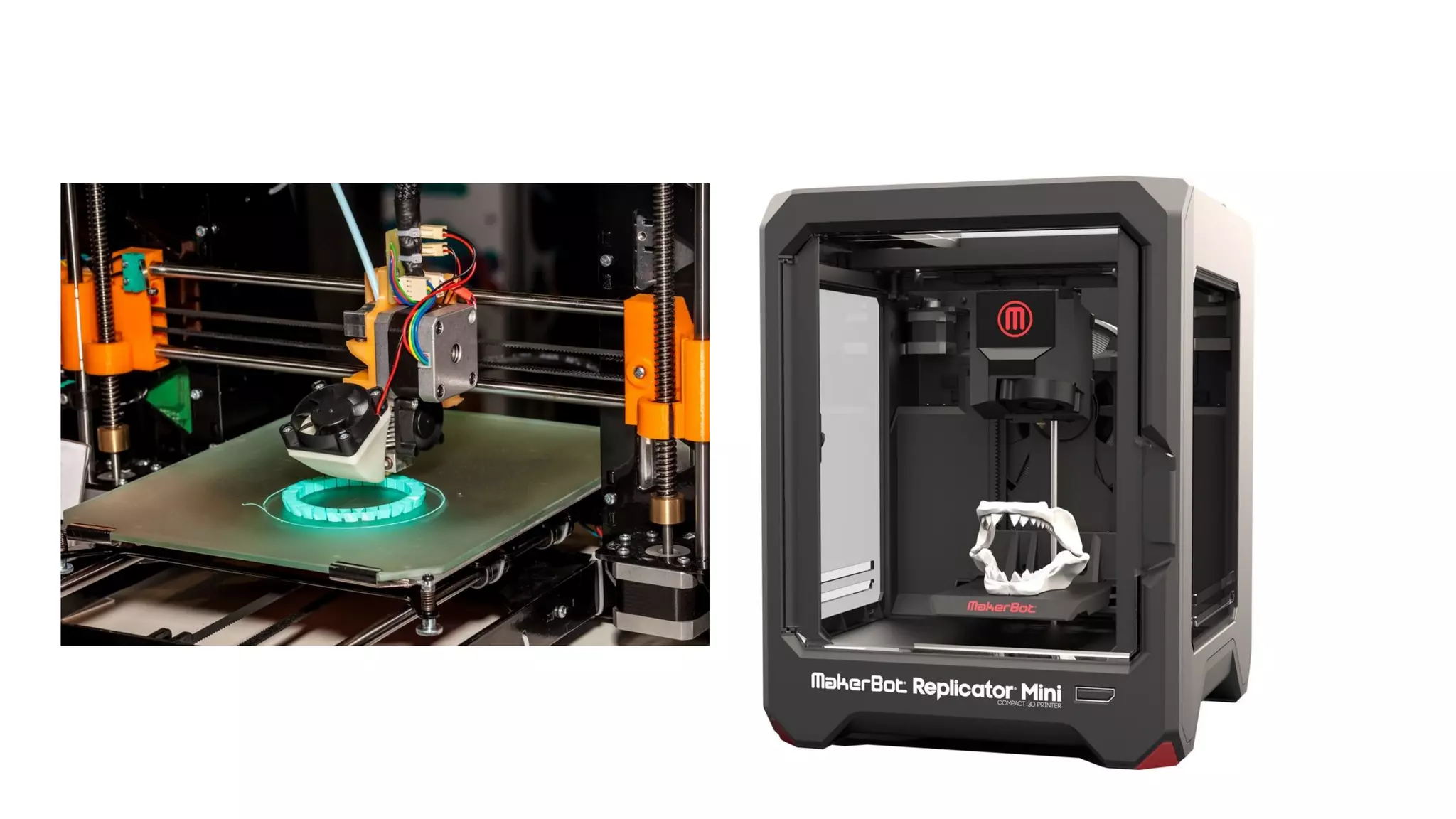
A 3D Printer is a manufacturing tool used to create three-dimensional artifacts that
have been designed on a computer.
3D printers have a wide range of shapes, sizes, and types, but in essence they
are all computer controlled additive manufacturing machines.
Similar to how paper printers lay down ink in one layer to create an image, 3D
printers lay down or cure material layer by layer to create a three-dimensional
object.
Tools for 3D artifacts design
Blender:
Blender is a free, open-source 3D creation suite.
It is used to create animated films, visual effects, art, 3D printed models, motion
graphics, interactive 3D applications, virtual reality, or computer games
More Details: https://www.blender.org/support/
Micro 3D printing and Application in Microfluidics
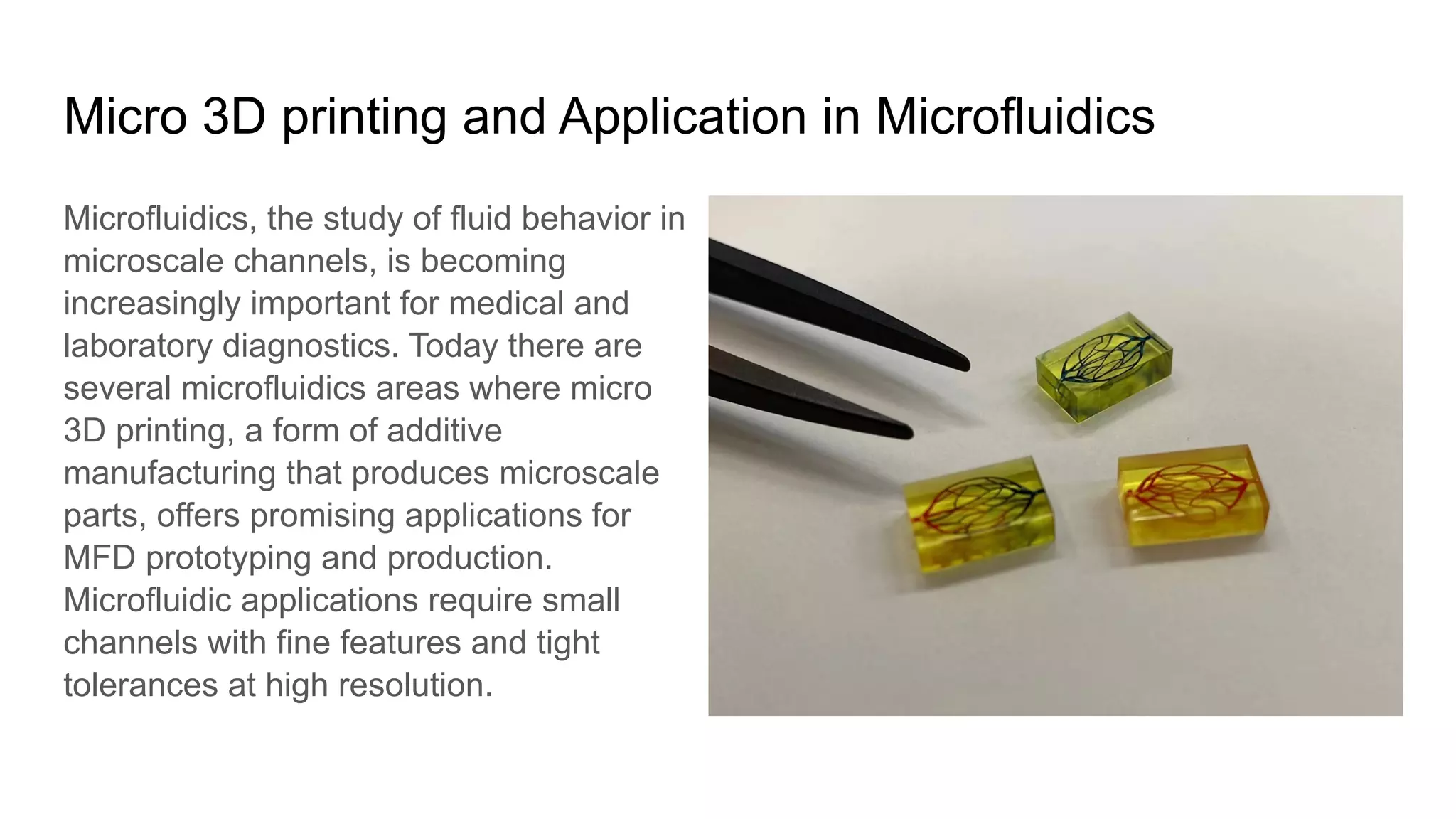
Microfluidics, the study of fluid behavior in
microscale channels, is becoming
increasingly important for medical and
laboratory diagnostics. Today there are
several microfluidics areas where micro
3D printing, a form of additive
manufacturing that produces microscale
parts, offers promising applications for
MFD prototyping and production.
Microfluidic applications require small
channels with fine features and tight
tolerances at high resolution.
Applications
1. Medical Devices
2. Electronics
3. Microfluidics
4. Micro Mechanical Devices
5. Education / Research
Medical Devices
Traditionally, micro injection molding or CNC machining have been
used to produce very small parts.
Issues with these methods include:
● Tooling turnaround times can be long
● Tooling costs are significant
BMF’s projection micro stereolithography (PμSL) technology:
● Prints small parts rapidly, in biomedical plastics, and with 2
μm resolution and +/- 10 μm accuracy at scale
● Reduces the amount of assembly steps for manufacturers
● Facilitates medical device designs for improved deployment
and removal
● Supports product designs that speed assembly

Unit 3 (1) (1).pdf

  • 1.
  • 2.
    Contents Artificial Intelligence (AI) AutomationTechnologies in health care 3D printing applications in medical Engineering Micro 3D printing and Application in Microfluidics
  • 3.
    Artificial Intelligence (AI) Whatis Artificial Intelligence? According to the father of Artificial Intelligence, John McCarthy, it is “The science and engineering of making intelligent machines, especially intelligent computer programs”. ● Artificial Intelligence is a way of making a computer, a computer-controlled robot, or a software think intelligently, in the similar manner the intelligent humans think. ● AI is accomplished by studying how human brain thinks, and how humans learn, decide, and work while trying to solve a problem, and then using the outcomes of this study as a basis of developing intelligent software and systems.
  • 4.
    Programming Without andWith AI Programming Without AI Programming With AI A computer program without AI can answer the specific questions it is meant to solve. A computer program with AI can answer the generic questions it is meant to solve. Modification in the program leads to change in its structure. AI programs can absorb new modifications by putting highly independent pieces of information together. Hence you can modify even a minute piece of information of program without affecting its structure. Modification is not quick and easy. It may lead to affecting the program adversely. Quick and Easy program modification.
  • 5.
    Applications of AI ●Gaming ● Natural Language Processing ● Expert Systems ● Vision Systems − These systems understand, interpret, and comprehend visual input on the computer. ● Speech Recognition ● Handwriting Recognition ● Intelligent Robots Example: Doctors use clinical expert system to diagnose the patient.
  • 6.
    AI with Python importnumpy as np from sklearn.preprocessing import Binarizer input_data = np.array([[2.1, -1.9, 5.5], [-1.5, 2.4, 3.5], [0.5, -7.9, 5.6], [5.9, 2.3, -5.8]]) data_binarized =Binarizer(threshold = 0.5).transform(input_data) print("nBinarized data:n", data_binarized) References: 1) https://datascience-enthusiast.com/DL/Building-your-Deep-Neural-Network-Step-by-Step.html 2) Understanding Machine Learning from theory to algorithm 3) Neural network from scratch: https://nnfs.io/
  • 7.
    Automation Technologies inhealth care Intelligent automation, such as robotic process automation (RPA), machine learning (ML), and artificial intelligence (AI), has the potential to transform personnel from data routers to critical thinkers, with greater capacity for high-value jobs and medical care that requires a human touch.
  • 8.
    Benefits of healthcareautomation in administration Healthcare leaders already know that automation works. According to healthcare industry research organization CAQH (Council for Affordable Quality Healthcare), the industry has reduced administrative costs by $122 billion as a result of automation and could save an additional $16 billion by fully automating some common tasks. 1. Patient billing and scheduling 2. Staff support 3. Electronic Health Records (EHRs). 5. Data security and blockchain
  • 9.
    3D printing applicationsin medical Engineering What Is 3D Printing?
  • 10.
    3D Printer A 3DPrinter is a manufacturing tool used to create three-dimensional artifacts that have been designed on a computer. 3D printers have a wide range of shapes, sizes, and types, but in essence they are all computer controlled additive manufacturing machines. Similar to how paper printers lay down ink in one layer to create an image, 3D printers lay down or cure material layer by layer to create a three-dimensional object.
  • 12.
    Tools for 3Dartifacts design Blender: Blender is a free, open-source 3D creation suite. It is used to create animated films, visual effects, art, 3D printed models, motion graphics, interactive 3D applications, virtual reality, or computer games More Details: https://www.blender.org/support/
  • 13.
    Micro 3D printingand Application in Microfluidics Microfluidics, the study of fluid behavior in microscale channels, is becoming increasingly important for medical and laboratory diagnostics. Today there are several microfluidics areas where micro 3D printing, a form of additive manufacturing that produces microscale parts, offers promising applications for MFD prototyping and production. Microfluidic applications require small channels with fine features and tight tolerances at high resolution.
  • 14.
    Applications 1. Medical Devices 2.Electronics 3. Microfluidics 4. Micro Mechanical Devices 5. Education / Research
  • 15.
    Medical Devices Traditionally, microinjection molding or CNC machining have been used to produce very small parts. Issues with these methods include: ● Tooling turnaround times can be long ● Tooling costs are significant BMF’s projection micro stereolithography (PμSL) technology: ● Prints small parts rapidly, in biomedical plastics, and with 2 μm resolution and +/- 10 μm accuracy at scale ● Reduces the amount of assembly steps for manufacturers ● Facilitates medical device designs for improved deployment and removal ● Supports product designs that speed assembly