THE STATE OF THE WORLD’S CHILDREN 2011


                                                                             THE STATE OF THE WORLD’S CHILDREN 2011
United Nations Children’s Fund
3 United Nations Plaza
New York, NY 10017, USA
Email: pubdoc@unicef.org
Website: www.unicef.org


                                                                             ADOLESCENCE: AN AGE OF OPPORTUNITY
                                                                                                                      Adolescence
                                                                                                                      An Age of Opportunity
US $25.00
ISBN: 978-92-806-4555-2
Sales no.: E.11.XX.1


                                            Scan this QR code or go to the
© United Nations Children’s Fund (UNICEF)    UNICEF publications website
February 2011                                www.unicef.org/publications
Photo Credits

                                                                                                      Chapter opening photos                       Chapter 3 – (pages 42–59)*
                                                                                                      Chapter 1: © UNICEF/NYHQ2009-2036/Sweeting   © UNICEF/NYHQ2005-2242/Pirozzi
                                                                                                      Chapter 2: © UNICEF/BANA2006-01124/Munni     © UNICEF/NYHQ2005-1781/Pirozzi
                                                                                                      Chapter 3: © UNICEF/NYHQ2009-2183/Pires      © UNICEF/NYHQ2006-2506/Pirozzi
                                                                                                      Chapter 4: © UNICEF/MLIA2009-00317/Dicko     © UNICEF/NYHQ2006-1440/Bito
                                                                                                                                                   © UNICEF/AFGA2009-00958/Noorani
                                                                                                      Chapter 1 – (pages 2–15)*                    © UNICEF/NYHQ2009-1021/Noorani
                                                                                                      © UNICEF/NYHQ2009-1811/Markisz               © UNICEF/NYHQ2004-0739/Holmes
                                                                                                      © UNICEF/NYHQ2009-1416/Markisz
                                                                                                      © UNICEF/NYHQ2010-0260/Noorani               Chapter 4 – (pages 62–77)*
                                                                                                      © UNICEF/NYHQ2007-0359/Thomas                © UNICEF/NYHQ2007-1753/Nesbitt
                                                                                                      © UNICEF/PAKA2008-1423/Pirozzi               © UNICEF/NYHQ2004-1027/Pirozzi
                                                                                                      © UNICEF/NYHQ2009-0970/Caleo                 © UNICEF/NYHQ2008-0573/Dean
                                                                                                      © UNICEF/MENA00992/Pirozzi                   © UNICEF/NYHQ2005-1809/Pirozzi
                                                                                                                                                   © US Fund for UNICEF/Discover the Journey
                                                                                                      Chapter 2 – (pages 18–39)*                   © UNICEF/NYHQ2007-2482/Noorani
                                                                                                      © UNICEF/NYHQ2009-2213/Khemka                © UNICEF/NYHQ2006-0725/Brioni
                                                                                                      © UNICEF/NYHQ2009-2297/Holt
                                                                                                      © UNICEF México/Beláustegui                  *Photo credits are not included for Perspectives,
                                                                                                                                                    Adolescent voices and Technology panels.


© United Nations Children’s Fund (UNICEF)                           United Nations Children’s Fund
February 2011                                                       3 United Nations Plaza
                                                                                                      UNICEF Offices                               UNICEF The Americas and Caribbean
                                                                    New York, NY 10017, USA
                                                                                                                                                   Regional Office
Permission to reproduce any part of this publication is required.   Email: pubdoc@unicef.org
                                                                                                      UNICEF Headquarters                          Avenida Morse
Please contact:                                                     Website: www.unicef.org
                                                                                                      UNICEF House                                 Ciudad del Saber Clayton
Division of Communication, UNICEF
3 United Nations Plaza, New York, NY 10017, USA                     Cover photo                       3 United Nations Plaza                       Edificio #102
Tel: (+1-212) 326-7434                                              © UNICEF/NYHQ2006-1326/Versiani   New York, NY 10017, USA                      Apartado 0843-03045
Email: nyhqdoc.permit@unicef.org                                                                                                                   Panama City, Panama
                                                                                                      UNICEF Regional Office for Europe
Permission will be freely granted to educational or                                                   Palais des Nations                           UNICEF East Asia and the Pacific
non-profit organizations. Others will be requested                                                    CH-1211 Geneva 10, Switzerland               Regional Office
to pay a small fee.                                                                                                                                P.O. Box 2-154
                                                                                                      UNICEF Central and Eastern Europe/           19 Phra Atit Road
Commentaries represent the personal views                                                             Commonwealth of Independent                  Bangkok 10200, Thailand
of the authors and do not necessarily reflect                                                         States Regional Office
positions of the United Nations Children’s Fund.                                                      Palais des Nations                           UNICEF Middle East and North Africa
                                                                                                      CH-1211 Geneva 10, Switzerland               Regional Office
The essays presented here are a selection of those
                                                                                                                                                   P.O. Box 1551
received in mid-2010; the full series is available on                                                 UNICEF Eastern and Southern Africa
the UNICEF website at <www.unicef.org/sowc2011>
                                                                                                                                                   Amman 11821, Jordan
                                                                                                      Regional Office
                                                                                                      P.O. Box 44145                               UNICEF South Asia Regional Office
For any corrigenda found subsequent to printing, please visit
                                                                                                      Nairobi 00100, Kenya                         P.O. Box 5815
our website at <www.unicef.org/publications>
                                                                                                                                                   Lekhnath Marg
                                                                                                      UNICEF West and Central Africa               Kathmandu, Nepal
For any data updates subsequent to printing, please visit
<www.childinfo.org>
                                                                                                      Regional Office
                                                                                                      P.O. Box 29720 Yoff                          Further information is available at
ISBN: 978-92-806-4555-2                                                                               Dakar, Senegal                               our website <www.unicef.org>.
Sales no.: E.11.XX.1
THE STATE OF THE
WORLD’S CHILDREN
2011
Acknowledgements
     This report was produced with the invaluable guidance and contributions of many individuals, both inside and outside
     of UNICEF. Important contributions for country panels were received from the following UNICEF field offices:
     Côte d’Ivoire, Ethiopia, Haiti, India, Jordan, Mexico, Philippines, Ukraine and the US Fund for UNICEF. Input was
     also received from UNICEF regional offices and the World Health Organization’s Adolescent Health and Development
     Team. Special thanks also to UNICEF’s Adolescent Development and Participation Unit for their contributions,
     guidance and support. And thanks to adolescents from around the world who contributed quotations and other
     submissions for the print report and the website.

     The State of the World’s Children 2011 invited adult and adolescent contributors from a variety of stakeholder
     groups to give their perspectives on the distinct challenges adolescents face today in protection, education, health and
     participation. Our gratitude is extended to the contributors presented in this report: His Excellency Mr. Anote Tong,
     President of the Republic of Kiribati; Her Royal Highness Princess Mathilde of Belgium; Her Highness Sheikha Mozah
     bint Nasser Al Missned; Emmanuel Adebayor; Saeda Almatari; Regynnah Awino; Meenakshi Dunga; Lara Dutta; Maria
     Eitel; Brenda Garcia; Urs Gasser; Nyaradzayi Gumbonzvanda; Colin Maclay; Cian McLeod; Paolo Najera; John Palfrey;
     Aown Shahzad; and Maria Sharapova. These essays represent a selection of the full series of Perspectives available at
     <www.unicef.org/sowc2011>.

     Special thanks also to Ayman Abulaban; Gloria Adutwum; Rita Azar; Gerrit Beger; Tina Bille; Soha Bsat Boustani;
     Marissa Buckanoff; Abubakar Dungus; Abdel Rahman Ghandour; Omar Gharzeddine; Shazia Hassan; Carmen Higa;
     Donna Hoerder; Aristide Horugavye; Oksana Leshchenko; Isabelle Marneffe; Francesca Montini; Jussi Ojutkangas;
     and Arturo Romboli for their assistance with the Perspectives essay series and Technology panels. Special thanks also
     to Meena Cabral de Mello of WHO’s Adolescent Health and Development Team for her assistance with the panel on
     adolescent mental health.

     EDITORIAL AND RESEARCH                                         STATISTICAL TABLES
     David Anthony, Editor; Chris Brazier, Principal Writer;        Tessa Wardlaw, Associate Director, Statistics and
     Maritza Ascencios; Marilia Di Noia; Hirut Gebre-               Monitoring Section, Division of Policy and Practice;
     Egziabher; Anna Grojec; Carol Holmes; Tina Johnson;            Priscilla Akwara; David Brown; Danielle Burke;
     Robert Lehrman; Céline Little; Charlotte Maitre;               Xiaodong Cai; Claudia Cappa; Liliana Carvajal;
     Meedan Mekonnen; Kristin Moehlmann; Baishalee                  Archana Dwivedi; Anne Genereaux; Rouslan Karimov;
     Nayak; Arati Rao; Anne Santiago; Shobana Shankar;              Rolf Luyendijk; Nyein Nyein Lwin; Colleen Murray;
     Julia Szczuka; Jordan Tamagni; Judith Yemane                   Holly Newby; Elizabeth Hom-Phathanothai;
                                                                    Khin Wityee Oo; Danzhen You
     PRODUCTION AND DISTRIBUTION
     Jaclyn Tierney, Production Officer; Edward Ying, Jr.;
                                                                    PROGRAMME, AND POLICY AND
     Germain Ake; Fanuel Endalew; Eki Kairupan; Farid               COMMUNICATION GUIDANCE
     Rashid; Elias Salem
                                                                    UNICEF Programme Division, Division of Policy and
                                                                    Practice, Division of Communication, and Innocenti
     TRANSLATION                                                    Research Centre, with particular thanks to Saad Houry,
     French edition: Marc Chalamet                                  Deputy Executive Director; Hilde Frafjord Johnson,
     Spanish edition: Carlos Perellón                               Deputy Executive Director; Nicholas Alipui, Director,
                                                                    Programme Division; Richard Morgan, Director, Division
     MEDIA AND OUTREACH                                             of Policy and Practice; Khaled Mansour, Director,
     Christopher de Bono; Kathryn Donovan; Erica Falkenstein;       Division of Communication; Maniza Zaman, Deputy
     Janine Kandel; Céline Little; Lorna O’Hanlon                   Director, Programme Division; Dan Rohrmann, Deputy
                                                                    Director, Programme Division; Susan Bissell, Associate
     INTERNET BROADCAST AND IMAGE SECTION                           Director, Programme Division; Rina Gill, Associate
                                                                    Director, Division of Policy and Practice; Wivina
     Stephen Cassidy; Matthew Cortellesi; Keith Musselman;
                                                                    Belmonte, Deputy Director, Division of Communication;
     Ellen Tolmie; Tanya Turkovich
                                                                    Catherine Langevin-Falcon; Naseem Awl; Paula
                                                                    Claycomb; Beatrice Duncan; Vidar Ekehaug; Maria
     DESIGN AND PRE-PRESS PRODUCTION                                Cristina Gallegos; Victor Karunan; and Mima Perisic.
     Prographics, Inc.
                                                                    PRINTING
                                                                    Hatteras Press


ii   THE STATE OF THE WORLD’S CHILDREN 2011
Foreword
Last year, a young woman electrified a United Nations                                  cause of death for teenage girls; the pressures that keep
consultation on climate change in Bonn, simply by asking                               70 million adolescents out of school; exploitation, violent
the delegates, “How old will you be in 2050?”                                          conflict and the worst kind of abuse at the hands of adults.

The audience applauded. The next day, hundreds of                                      It also examines the dangers posed by emerging trends
delegates wore T-shirts emblazoned with that question –                                like climate change, whose intensifying effects in many
including the Chair, who admitted that in 2050 he would                                developing countries already undermine so many adoles-
be 110, and not likely to see the results of our failure to                            cents’ well-being, and by labour trends, which reveal a
act. The young woman’s message was clear: The kind of                                  profound lack of employment opportunities for young
world she will live in someday relies both on those who                                people, especially those in poor countries.
inherit it and on those who bequeath it to them.
                                                                                       Adolescence is not only a time of vulnerability, it is also an
The State of the World’s Children 2011 echoes and builds on                            age of opportunity. This is especially true when it comes to
this fundamental insight. Today, 1.2 billion adolescents stand                         adolescent girls. We know that the more education a girl
at the challenging crossroads between childhood and the adult                          receives, the more likely she is to postpone marriage and
world. Nine out of ten of these young people live in the de-                           motherhood – and the more likely it is that her children
veloping world and face especially profound challenges, from                           will be healthier and better educated. By giving all young
obtaining an education to simply staying alive – challenges                            people the tools they need to improve their own lives, and
that are even more magnified for girls and young women.                                by engaging them in efforts to improve their communities,
                                                                                       we are investing in the strength of their societies.
In the global effort to save children’s lives, we hear too little
about adolescence. Given the magnitude of the threats to                               Through a wealth of concrete examples, The State of
children under the age of five, it makes sense to focus invest-                        the World’s Children 2011 makes clear that sustainable
ment there – and that attention has produced stunning suc-                             progress is possible. It also draws on recent research to
cess. In the last 20 years, the number of children under five                          show that we can achieve that progress more quickly and
dying every day from preventable causes has been cut by one                            cost-effectively by focusing first on the poorest children
third, from 34,000 in 1990 to around 22,000 in 2009.                                   in the hardest-to-reach places. Such a focus on equity will
                                                                                       help all children, including adolescents.
Yet consider this: In Brazil, decreases in infant mortality be-
tween 1998 and 2008 added up to over 26,000 children’s                                 How can we delay? Right now, in Africa, a teenager weighs
lives saved – but in that same decade, 81,000 Brazilian                                the sacrifices she must make to stay in the classroom. An-
adolescents, 15–19 years old, were murdered. Surely, we do                             other desperately tries to avoid the armed groups that may
not want to save children in their first decade of life only to                        force him to join. In South Asia, a pregnant young woman
lose them in the second.                                                               waits, terrified, for the day when she will give birth alone.

This report catalogues, in heart-wrenching detail, the array                           The young woman who asked the question in Bonn, along
of dangers adolescents face: the injuries that kill 400,000 of                         with millions of others, waits not only for an answer, but
them each year; early pregnancy and childbirth, a primary                              for greater action. By all of us.
                         © UNICEF/NYHQ2010-0697/Markisz


                                                          Anthony Lake
                                                          Executive Director, UNICEF


                                                                                                                                            FOREWORD    iii
CONTENTS
     Acknowledgements ..............................................................................ii          Panels
                                                                                                                COUNTRY
     Foreword
     Anthony Lake, Executive Director, UNICEF .......................................iii                        Haiti: Building back better together with young people .................. 5

                                                                                                                Jordan: Ensuring productive work for youth .................................. 13


     1        The Emerging Generation ....................................vi                                    India: Risks and opportunities for the world’s
                                                                                                                largest national cohort of adolescents ............................................ 23

     The complexities of defining adolescence .........................................8                        Ethiopia: Gender, poverty and the challenge for adolescents ...... 35
     Adolescents and adolescence in the international arena ...............12
                                                                                                                Mexico: Protecting unaccompanied migrant adolescents............. 39

                                                                                                                Ukraine: Establishing a protective environment


     2
                                                                                                                for vulnerable children ...................................................................... 44
              Realizing the Rights of Adolescents ...........16
                                                                                                                The Philippines: Strengthening the participation
                                                                                                                rights of adolescents ......................................................................... 48
     Health in adolescence ....................................................................... 19
     Survival and general health risks..................................................... 19                  United States: The Campus Initiative – Advocating
                                                                                                                for children’s rights at colleges and universities ............................ 73
     Nutritional status ............................................................................... 21
     Sexual and reproductive health matters ......................................... 22                        Côte d’Ivoire: Violent conflict and the vulnerability
                                                                                                                of adolescents .................................................................................... 77
     HIV and AIDS ..................................................................................... 24
     Adolescent-friendly health services ................................................. 26
                                                                                                                TECHNOLOGY
     Education in adolescence ................................................................. 26
     Gender and protection in adolescence............................................ 31                        Digital natives and the three divides to bridge,
                                                                                                                by John Palfrey, Urs Gasser, Colin Maclay and Gerrit Beger........ 14
     Violence and abuse ........................................................................... 31
     Adolescent marriage ......................................................................... 33           Young people, mobile phones and the rights of adolescents,
                                                                                                                by Graham Brown ............................................................................. 36
     Female genital mutilation/cutting .................................................... 33
     Child labour ........................................................................................ 33   Digital safety for young people: Gathering
                                                                                                                information, creating new models and understanding
     Initiatives on gender and protection................................................ 34
                                                                                                                existing efforts, by John Palfrey, Urs Gasser,


     3
                                                                                                                Colin Maclay and Gerrit Beger ......................................................... 50

              Global Challenges for Adolescents ............. 40                                                Map Kibera and Regynnah’s empowerment,
                                                                                                                by Regynnah Awino and the Map Kibera ....................................... 70
     Climate change and the environment ............................................. 42
     Poverty, unemployment and globalization ..................................... 45                           FOCUS ON
     Juvenile crime and violence ............................................................. 52
                                                                                                                Early and late adolescence ................................................................. 6
     Conflict and emergency settings ..................................................... 57
                                                                                                                Demographic trends for adolescents: Ten key facts ...................... 20


     4
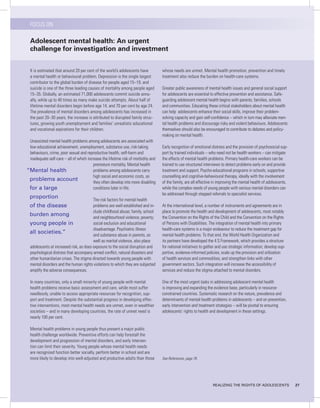
                                                                                                                Adolescent mental health: An urgent challenge
                                                                                                                for investigation and investment ..................................................... 27
              Investing in Adolescents ..................................... 60
                                                                                                                Inequality in childhood and adolescence in rich countries –
     Improve data collection and analysis .............................................. 63                     Innocenti Report Card 9: The children left behind ......................... 30

     Invest in education and training ...................................................... 64                 Migration and children: A cause for urgent attention.................... 56
     Institutionalize mechanisms for youth participation ...................... 68
                                                                                                                Preparing adolescents for adulthood and citizenship .................... 66
     A supportive environment ................................................................ 71
     Addressing poverty and inequity ..................................................... 72                   Working together for adolescent girls: The United Nations
                                                                                                                Adolescent Girls Task Force ............................................................. 75
     Working together for adolescents.................................................... 75


iv   THE STATE OF THE WORLD’S CHILDREN 2011
THE STATE OF THE WORLD’S CHILDREN 2011

Adolescence: An Age of Opportunity
Essays                                                                                                   2.3 Anaemia is a significant risk for adolescent girls (15–19)
                                                                                                             in sub-Saharan Africa and South Asia ...................................... 21
PERSPECTIvES
                                                                                                         2.4 Underweight is a major risk for adolescent girls (15–19)
Her Royal Highness Princess Mathilde of Belgium,
                                                                                                             in sub-Saharan Africa and South Asia ...................................... 21
Adult responsibility: Listen to adolescents’ voices .......................... 9

Nyaradzayi Gumbonzvanda, Facing the challenge:                                                           2.5 Young males in late adolescence (15–19) are more
Reproductive health for HIV-positive adolescents.......................... 28                                likely to engage in higher risk sex than females of the
                                                                                                             same age group .......................................................................... 24
Maria Sharapova, Chernobyl 25 years later:
Remembering adolescents in disaster ............................................ 38                      2.6 Young women in late adolescence (15–19) are more likely to
                                                                                                             seek an HIV test and receive their results than young men
President Anote Tong of the Republic of Kiribati,                                                            of the same age group ............................................................... 25
The effects of climate change in Kiribati:
A tangible threat to adolescents ...................................................... 47
                                                                                                         2.7 Marriage by age of first union in selected
Emmanuel Adebayor, Advocacy through sports:                                                                  countries with available disaggregated data............................ 34
Stopping the spread of HIV among young people......................... 54
                                                                                                         3.1 Word cloud illustrating key international youth
Her Highness Sheikha Mozah bint Nasser Al Missned,                                                           forums on climate change.......................................................... 45
Releasing the potential of adolescents: Education
reform in the Middle East and North Africa region ....................... 58
                                                                                                         3.2 Global trends in youth unemployment ..................................... 46
Lara Dutta, Doing our part: Mass media’s responsibility
to adolescents .................................................................................... 69   References.................................................................................. 78
Maria Eitel, Adolescent girls: The best investment
you can make ..................................................................................... 74    Statistical Tables ............................................................... 81
                                                                                                         Under-five mortality rankings........................................................... 87
ADOLESCENT vOICES
                                                                                                         Table 1. Basic indicators ................................................................... 88
Paolo Najera, 17, Costa Rica, Keeping the flame alive:                                                   Table 2. Nutrition ............................................................................... 92
Indigenous adolescents’ right to education and health services ... 11
                                                                                                         Table 3. Health ................................................................................... 96
Meenakshi Dunga, 16, India, Act responsibly:                                                             Table 4. HIV/AIDS ............................................................................. 100
Nurse our planet back to health ....................................................... 32
                                                                                                         Table 5. Education ........................................................................... 104
Brenda Garcia, 17, Mexico, Reclaim Tijuana:                                                              Table 6. Demographic indicators ................................................... 108
Put an end to drug-related violence ................................................ 53
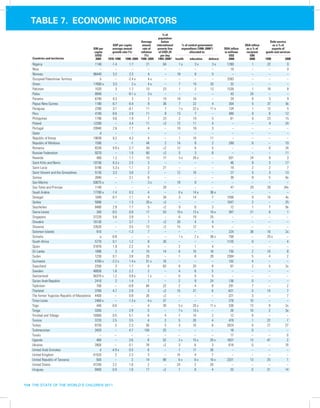
                                                                                                         Table 7. Economic indicators.......................................................... 112
Cian McLeod, 17, Ireland, Striving for equity:                                                           Table 8. Women ............................................................................... 116
A look at marginalized adolescents in Zambia ............................... 57
                                                                                                         Table 9. Child protection ................................................................. 120
Saeda Almatari, 16, Jordan/United States,                                                                Table 10. The rate of progress........................................................ 126
Unrealistic media images: A danger to adolescent girls ............... 65
                                                                                                         Table 11. Adolescents...................................................................... 130
Syed Aown Shahzad, 16, Pakistan, From victims to activists:                                              Table 12. Equity................................................................................ 134
Children and the effects of climate change in Pakistan ................. 76


Figures

2.1 Adolescent population (10–19 years) by region, 2009 ............. 20


2.2 Trends in the adolescent population, 1950–2050 ..................... 20


                                                                                                                                                                                                CONTENTS          v
A keener focus on the development
and human rights of adolescents
would both enhance and accelerate
the fight against poverty, inequality
and gender discrimination. Hawa,
12 (at left), recently re-enrolled in
school following the intervention of
the National Network of Mothers’
Associations for Girls, which advocates
for girls’ education, Cameroon.


CHAPTER 1


The Emerging
Generation
THE STATE OF THE WORLD’S CHILDREN 2011
GLOBAL CHALLENGES FOR ADOLESCENTS   1
CHALLENGES AND O
    Adolescence is an age of opportunity for children, and a pivotal time for us to
    build on their development in the first decade of life, to help them navigate risks
    and vulnerabilities, and to set them on the path to fulfilling their potential.
    The world is home to 1.2 billion individuals aged 10–19         In this context, the conventional wisdom might dictate that
    years.1 These adolescents have lived most or all of their       most resources be devoted to children and young people in
    lives under the Millennium Declaration, the unprecedented       the first decade of their lives. After all, that is when they
    global compact that since 2000 has sought a better world        are most vulnerable to death, disease and undernutrition;
    for all.                                                        when the effects of unsafe water and poor sanitation pose
                                                                    the greatest threat to their lives; and when the absence of
    Many of their number have benefited from the gains in           education, protection and care can have the most pernicious
    child survival, education, access to safe water, and other      lifetime implications.
    areas of development that stand as concrete successes of
    the drive to meet the Millennium Development Goals, the         In contrast, adolescents are generally stronger and
    human development targets at the core of the Declaration.       healthier than younger children; most have already ben-
    But now they have arrived at a pivot-                                            efited from basic education; and many
    al moment in their lives – just as the                                           are among the hardest and, potentially,
    world as a whole is facing a critical
                                               “I want to participate in             most costly to reach with essential
    moment in this new millennium.              developing my country                services and protection. It hardly seems
                                                                                     judicious, in these fiscally straitened
    In just three years, confidence in          and promoting human                  times, to focus greater attention on
    the world economy has plummeted.            rights for people all                them.
    Unemployment has risen sharply, and
    real household incomes have fallen or       over the world.”                      Such reasoning, though seemingly
    stagnated. At the time of writing, in                                             sound in theory, is flawed for several
                                                 Amira, 17, Egypt
    late 2010, the global economic out-                                               reasons, all stemming from one critical
    look remains highly uncertain, and                                                notion: Lasting change in the lives of
    the possibility of a prolonged economic malaise, with nega-     children and young people, a critical underlying motiva-
    tive implications for social and economic progress in many      tion of the Millennium Declaration, can only be achieved
    countries, developing and industrialized alike, still looms.    and sustained by complementing investment in the
                                                                    first decade of life with greater attention and resources
    This economic turmoil and uncertainty have raised the           applied to the second.
    spectre of fiscal austerity, particularly in some industrial-
    ized economies, resulting in a more stringent approach to       The imperative of investing in adolescence
    social spending and overseas development assistance. In         The arguments for investing in adolescence are fivefold.
    developing countries, too, public finances have tightened,      The first is that it is right in principle under existing human
    and social spending, including investments in child-related     rights treaties including the Convention on the Rights of the
    areas, has come under greater scrutiny.                         Child, which applies to around 80 per cent of adolescents,


2   THE STATE OF THE WORLD’S CHILDREN 2011
D OPPORTUNITIES
  and the Convention on the Elimination of All Forms of           most marginalized households and communities – fail to
  Discrimination against Women, which applies to all adoles-      complete their studies or else finish with insufficient skills,
  cent females.                                                   especially in those high-level competencies increasingly
                                                                  required by the modern globalized economy.
  Second, investing in adolescence is the most effective
  way to consolidate the historic global gains achieved in        This skills deficit is contributing to bleak youth employ-
  early and middle childhood since 1990. The 33 per cent          ment trends. The global economic crisis has produced a
  reduction in the global under-five mortality rate, the near-
  elimination of gender gaps in primary school enrolment
  in several developing regions and the considerable gains
  achieved in improving access to primary schooling, safe
  water and critical medicines such as routine immuniza-
  tions and antiretroviral drugs – all are testament to the
  tremendous recent progress achieved for children in early
  and middle childhood.2

  But the paucity of attention and resources devoted to ado-
  lescents is threatening to limit the impact of these efforts
  in the second decade of an individual’s life. Evidence from
  around the world shows just how precarious that decade
  can be: 81,000 Brazilian adolescents, 15–19 years old, were
  murdered between 1998 and 2008.3 Global net attendance
  for secondary school is roughly one third lower than for
  primary school.4 Worldwide, one third of all new HIV cases
  involve young people aged 15–24.5 And in the developing
  world, excluding China, 1 in every 3 girls gets married
  before the age of 18.6 When confronted with these facts, it
  is hard to avoid the question: Are our efforts in support of
  children’s rights and well-being limited by a lack of support
  for adolescents?

  Third, investing in adolescents can accelerate the fight
  against poverty, inequity and gender discrimination.
  Adolescence is the pivotal decade when poverty and ineq-
  uity often pass to the next generation as poor adolescent
  girls give birth to impoverished children. This is particu-     A stronger focus on the second decade of life is imperative to meeting international
  larly true among adolescents with low levels of education.      commitments to children and creating a more peaceful, tolerant and equitable world.
                                                                  Young students in a secondary school that promotes gender equality, diversity, a culture
  Almost half the world’s adolescents of the appropriate age
                                                                  of peace and respect for human rights; improves social and study skills and self-esteem
  do not attend secondary school.7 And when they do attend,       among students; and encourages the participation of parents and other community
  many of them – particularly those from the poorest and          members, Colombia.


                                                                                                                     THE EMERGING GENERATION                 3
large cohort of unemployed youth, which in 2009 stood                                         The poorest adolescent girls are also those most likely
    at around 81 million worldwide.8 For those who are                                            to be married early, with rates of child marriage roughly
    employed, decent work is scarce: In 2010, young people                                        three times higher than among their peers from the rich-
    aged 15–24 formed around one quarter of the world’s                                           est quintile of households. Girls who marry early are also
    working poor.9 In a recent survey of international com-                                       most at risk of being caught up in the negative cycle of
    panies operating in developing countries, more than 20                                        premature childbearing, high rates of maternal mortality
    per cent considered the inadequate education of workers to                                    and morbidity and high levels of child undernutrition.
    be a significant obstacle to higher levels of corporate invest-                               And there is firm evidence to suggest that undernutrition
    ment and faster economic growth.10                                                            is among the foremost factors that undermine early child-
                                                                                                  hood development.12
    The intergenerational transmission of poverty is most appar-
    ent among adolescent girls. Educational disadvantage and                                      Adopting a life-cycle approach to child development, with
    gender discrimination are potent factors that force them into                                 greater attention given to the care, empowerment and pro-
    lives of exclusion and penury, child marriage and domestic                                    tection of adolescents, girls in particular, is the soundest
    violence. Around one third of girls in the developing world,                                  way to break the intergenerational transmission of poverty.
    excluding China, are married before age 18; in a few coun-                                    Time and again, evidence shows that educated girls are less
    tries, almost 30 per cent of girls under 15 are also married.11                               likely to marry early, less likely to get pregnant as teenag-
                                                                                                  ers, more likely to have correct and comprehensive knowl-
                                                                                                  edge of HIV and AIDS and more likely to have healthy
                                                                                                  children when they eventually become mothers. When it is
                                                                                                  of good quality and relevant to children’s lives, education
                                                                                                  empowers like nothing else, giving adolescents, both female
                                                                                                  and male, the knowledge, skills and confidence to meet the
                                                                                                  global challenges of our times.

                                                                                                  The urgent need to confront these challenges is the fourth
                                                                                                  reason for investing in adolescence. Rich and poor alike,
                                                                                                  adolescents will have to deal with the intergenerational
                                                                                                  implications of the current economic turmoil, including the
                                                                                                  structural unemployment that may persist in its wake. They
                                                                                                  will have to contend with climate change and environmen-
                                                                                                  tal degradation, explosive urbanization and migration,
                                                                                                  ageing societies and the rising cost of health care, the HIV
                                                                                                  and AIDS pandemic, and humanitarian crises of increasing
                                                                                                  number, frequency and severity.

                                                                                                  Far more so than adults, adolescents are disproportionately
                                                                                                  represented in countries where these critical challenges are
                                                                                                  likely to be most pressing: those with the lowest incomes,
                                                                                                  the highest levels of political instability and the fastest rates
                                                                                                  of urban growth; those most exposed to civil strife and nat-
                                                                                                  ural disasters and most vulnerable to the ravages of climate
                                                                                                  change. The adolesecents of these countries will need to
                                                                                                  be equipped with the skills and capacities to address such
                                                                                                  challenges as they arise throughout the century.

    The well-being and the active participation of adolescents are fundamental to the
    effectiveness of a life-cycle approach that can break the intergenerational transmission
                                                                                                  The fifth and final argument for investing in adolescence
    of poverty, exclusion and discrimination. A girl asks a question at a special assembly held   relates to the way adolescents are portrayed. This quintile
    at the Young Women’s Leadership School of East Harlem, New York City, USA.                    of the global populace is commonly referred to as the ‘next


4   THE STATE OF THE WORLD’S CHILDREN 2011
COUNTRY: HAITI


 Building back better together with young people

                                  On 12 January 2010, the central region of Haiti was         cultural preservation, education and food and water
                                  devastated by the strongest earthquake the country          security. It prioritizes the needs of pregnant women as
                                  had experienced in more than 200 years. Over 220,000        well as children’s education and health.
                                  people were killed, 300,000 were injured and 1.6
                                  million were displaced and forced to seek shelter in        A particularly notable aspect of the rebuilding process
                                  spontaneous settlements. Children, who make up              so far has been the significant role played by young
                                  nearly half the country’s total population, have suf-       people. Youth groups were critical as responders in
                                  fered acutely in the earthquake’s aftermath. UNICEF         search and rescue, first aid and essential goods trans-
                                  estimates that half of those displaced are children, and    port immediately following the earthquake. Since then,
                                  500,000 children are considered extremely vulnerable        they have been important community-based helpers,
                                  and require child protection services.                      imparting health information and building infrastructure.
 Stanley carries his 2-year-old
                                                                                              The Ecoclubes group, with chapters in the Dominican
 cousin, Marie Love, near         Almost a quarter (23 per cent) of Haiti’s population is     Republic and Haiti, has been using Pan American
 their family’s makeshift         between the ages of 10 and 19, and their situation was      Health Organization/World Health Organization materi-
 tent shelter in the Piste        extremely difficult even before the earthquake. As the      als to provide information on malaria prevention to low-
 Aviation neighbourhood           poorest nation in the Western Hemisphere, Haiti lagged      literacy communities. The Water and Youth Movement
                                  well behind the rest of Latin America and the Caribbean     initiated a campaign to raise $65,000 to train and equip
 of Port-au-Prince, Haiti.
                                  in many indicators, and even behind other least devel-      six poor communities with water pumps.
                                  oped countries throughout the world. For example, net
“A notable                        secondary school attendance in 2005–2009 stood at           In addition, UNICEF, Plan International and their part-
                                  just 20 per cent (18 per cent for boys and 21 per cent      ners facilitated the voices of 1,000 children in the Post
 aspect of
                                  for girls), compared to around 70 per cent for the region   Disaster Needs Assessment (PDNA) process. Child-
 the rebuilding                   as a whole and roughly 28 per cent for the world’s least    friendly focus group discussions were held throughout
                                  developed countries. Adolescent marriage and preg-          nine of the country’s departments. Adolescents and
 process so far
                                  nancy rates are substantially higher than in other coun-    youth who took part raised issues of gender, disability,
 has been the                     tries in the region. Among 20- to 24-year-old women         vulnerability, access to services, disaster risk reduction,
                                  surveyed in 2005–2006, nearly one third had married         and participation in decision-making and accountability
 significant role
                                  by age 18 and 48 per cent by age 20; 30 per cent gave       mechanisms for the PDNA.
 played by young                  birth for the first time before the age of 20.
                                                                                              Through partnerships that include young people,
 people.”
                                  These poor education, health and protection outcomes        programmes have been initiated to vaccinate children,
                                  are a direct result of lack of access to services and       facilitate their return to school, raise awareness of
                                  basic necessities such as water and food due to pov-        HIV and AIDS, encourage holistic community develop-
                                  erty, political instability, violence and gender-based      ment and promote sanitation. However, these and
                                  discrimination. Natural disasters have been a recurring     future efforts will require continued financial and
                                  challenge, but the recent earthquake destroyed infra-       moral commitment to overcome the host of challenges
                                  structure and lives on an unprecedented scale.              still to be tackled. One of these is meeting the press-
                                                                                              ing needs of the most disadvantaged, such as those
                                  The Government has developed an Action Plan for             who lost limbs in the earthquake.
                                  National Recovery and Development of Haiti, with
                                  the goal of addressing both short-term and long-term        Going forward, it will be critical to listen and respond
                                  needs. Working with international partners, who             to the voices of Haiti’s young people of all ages, in order
                                  pledged US$5.3 billion in the first 18 months following     to meet their needs, enable them to make the transition
                                  the earthquake and nearly $10 billion over the next         to adulthood in such turbulent times – regardless of
                                  three years, the Government is committed to rebuilding      their poverty status, urban or rural location, gender or
                                  the country to be better than its pre-earthquake state.     ability – and rebuild a stronger, more equitable Haiti.
                                  The plan focuses on all aspects of redevelopment,
                                  from physical infrastructure and institution-building to    See References, page 78.


                                                                                                                         THE EMERGING GENERATION            5
FOCUS ON

    Early and late adolescence


                                                                                     with the full support of nurturing adults at home, at school and in the com-
                                         Rim Un Jong, 10, sits in a
                                                                                     munity. Given the social taboos often surrounding puberty, it is particularly
                                         fourth-grade mathematics class
                                                                                     important to give early adolescents all the information they need to protect
                                         at Jongpyong Primary School                 themselves against HIV, other sexually transmitted infections, early preg-
                                         in the eastern province of                  nancy, sexual violence and exploitation. For too many children, such knowl-
                                         South Hamgyong, Democratic                  edge becomes available too late, if at all, when the course of their lives has
                                         People’s Republic of Korea.                 already been affected and their development and well-being undermined.

                                                                                     Late adolescence (15–19 years)

                                                                                     Late adolescence encompasses the latter part of the teenage years, broadly
                                                                                     between the ages of 15 and 19. The major physical changes have usually
                                                                                     occurred by now, although the body is still developing. The brain contin-
                                                                                     ues to develop and reorganize itself, and the capacity for analytical and
                                                                                     reflective thought is greatly enhanced. Peer-group opinions still tend to be
    The manifest gulf in experience that separates younger and older adoles-         important at the outset, but their hold diminishes as adolescents gain more
    cents makes it useful to consider this second decade of life as two parts:       clarity and confidence in their own identity and opinions.
    early adolescence (10–14 years) and late adolescence (15–19 years).
                                                                                     Risk-taking – a common feature of early to middle adolescence, as individu-
    Early adolescence (10–14 years)                                                  als experiment with ‘adult behaviour’ – declines during late adolescence, as
                                                                                     the ability to evaluate risk and make conscious decisions develops. Never-
    Early adolescence might be broadly considered to stretch between the ages        theless, cigarette smoking and experimentation with drugs and alcohol are
    of 10 and 14. It is at this stage that physical changes generally commence,      often embraced in the earlier risk-taking phase and then carried through into
    usually beginning with a growth spurt and soon followed by the develop-          later adolescence and beyond into adulthood. For example, it is estimated
    ment of the sex organs and secondary sexual characteristics. These external      that 1 in 5 adolescents aged 13–15 smokes, and around half of those who
    changes are often very obvious and can be a source of anxiety as well            begin smoking in adolescence continue to do so for at least 15 years. The
    as excitement or pride for the individual whose body is undergoing               flip side of the explosive brain development that occurs during adolescence
    the transformation.                                                              is that it can be seriously and permanently impaired by the excessive use of
                                                                                     drugs and alcohol.
    The internal changes in the individual, although less evident, are equally
    profound. Recent neuroscientific research indicates that in these early          Girls in late adolescence tend to be at greater risk than boys of negative
    adolescent years the brain undergoes a spectacular burst of electrical and       health outcomes, including depression, and these risks are often magnified
    physiological development. The number of brain cells can almost double in        by gender-based discrimination and abuse. Girls are particularly prone to
    the course of a year, while neural networks are radically reorganized, with a    eating disorders such as anorexia and bulimia; this vulnerability derives in
    consequent impact on emotional, physical and mental ability.                     part from profound anxieties over body image that are fuelled by cultural and
                                                                                     media stereotypes of feminine beauty.
    The more advanced physical and sexual development of girls – who enter
    puberty on average 12–18 months earlier than boys – is mirrored by similar       These risks notwithstanding, late adolescence is a time of opportunity,
    trends in brain development. The frontal lobe, the part of the brain that        idealism and promise. It is in these years that adolescents make their way
    governs reasoning and decision-making, starts to develop during early            into the world of work or further education, settle on their own identity and
    adolescence. Because this development starts later and takes longer in           world view and start to engage actively in shaping the world around them.
    boys, their tendency to act impulsively and to be uncritical in their thinking
    lasts longer than in girls. This phenomenon contributes to the widespread        See References, page 78.
    perception that girls mature much earlier than boys.

    It is during early adolescence that girls and boys become more keenly aware
    of their gender than they were as younger children, and they may make
    adjustments to their behaviour or appearance in order to fit in with perceived
    norms. They may fall victim to, or participate in, bullying, and they may also
    feel confused about their own personal and sexual identity.

    Early adolescence should be a time when children have a safe and clear
    space to come to terms with this cognitive, emotional, sexual and psycho-
    logical transformation – unencumbered by engagement in adult roles and


6   THE STATE OF THE WORLD’S CHILDREN 2011
generation’ of adults, the ‘future generation’ or simply ‘the     development, addressing inequity in adolescence is equally
future’. But adolescents are also firmly part of the present –    important and challenging.
living, working, contributing to households, communities,
societies and economies.                                          It is in this phase of life, the second decade, that inequi-
                                                                  ties often appear most glaringly. Disadvantage prevents the
No less than young children do they deserve protection            poorest and most marginalized adolescents from furthering
and care, essential commodities and services, opportuni-          their education with secondary schooling, and it exposes
ties and support, as well as recognition                                              them, girls in particular, to such protec-
of their existence and worth. Indeed,                                                 tion abuses as child marriage, early sex,
in some contexts – particularly with          “Children should not                    violence and domestic labour – thus
regard to child protection risks such                                                 curtailing their potential to reach their
as child marriage, commercial sexual           feel afraid or in danger               full capacity.
exploitation and children in conflict
                                               at home or in school.”
with the law – adolescents, out of all                                                 If denied their rights to quality educa-
children, may have the greatest needs.          Victor, 11, Mexico                     tion, health care, protection and par-
Yet these are precisely the areas where                                                ticipation, adolescents are very likely
investment and assistance for children                                                 to remain or become impoverished,
are often most lacking and where the least attention is paid,     excluded and disempowered – increasing, in turn, the risk
in some cases as a result of political, cultural and societal     that their children will also be denied their rights.
sensitivities. Given the strong link between protection,
education and child survival, it is clear that investing in       For these reasons, and in support of the second International
adolescents, and particularly adolescent girls, is imperative     Year of Youth, which began on 12 August 2010, UNICEF
to addressing violence, abuse and exploitation of children        has dedicated the 2011 edition of its flagship report
and women in earnest.                                             The State of the World’s Children to adolescents and
                                                                  adolescence.
These facts point to an undeniable truth: Both now and in
the coming decades, the fight against poverty, inequality and     The report begins with a brief discussion of the concept
gender discrimination will be incomplete, and its effective-      of adolescence and explains why a stronger focus on the
ness compromised, without a stronger focus on adolescent          second decade of life is imperative to meeting international
development and participation.                                    commitments to children and creating a more peaceful,
                                                                  tolerant and equitable world. It then explores the historical
This truth is known and accepted by many. In the push to          context of adolescence, underscoring the growing interna-
meet the Millennium Development Goals and other aspects           tional recognition of its relative social importance.
of the Millennium Declaration, however, there is a risk
that the needs of adolescents are not being given sufficient      The second chapter presents an in-depth appraisal of the
consideration. And their voices, though heard, are rarely         global state of adolescents, exploring where they live and the
heeded.                                                           particular challenges they face in survival and health, educa-
                                                                  tion, protection and equality.
Adolescents have long demanded that we keep the promise
made in the 2000 Millennium Declaration to create a world         The third chapter assesses the risks to their present and
of tolerance, security, peace and equity – a world fit for chil-  future well-being posed by emerging trends in economics
dren, adolescents, young people – indeed for all of us.           and employment, by climate change, demographic shifts,
                                                                  juvenile crime and violence, and threats to peace and
In recent months, UNICEF has begun to refocus its work            security.
towards achieving the Goals by redoubling its efforts in
pursuit of equity for children, giving priority to those          In its final chapter, The State of the World’s Children
most disadvantaged within countries and communities.              2011 explores ways of empowering adolescents and
While much of the initial drive of the refocus has centred        young people, preparing them for adulthood and citizen-
on promoting greater equity in young child survival and           ship and investing in their well-being, holistic develop-


                                                                                                      THE EMERGING GENERATION      7
ment and active participation. Disaggregated data from           alcohol consumption. A related idea is that of the ‘age of
    international household surveys, supplemented where              majority’: the legal age at which an individual is recog-
    appropriate by national sources, provide a rich vein of          nized by a nation as an adult and is expected to meet all
    hitherto little-used information on adolescents – mostly         responsibilities attendant upon that status. Below the age
    those in late adolescence (15–19 years) – that constitutes       of majority, an individual is still considered a ‘minor’. In
    a central feature of the report. The voices of adolescents       many countries, the age of majority is 18, which has the
    offering their own perspectives on the state of their world      virtue of being consonant with the upper threshold of the
    permeate the entire report.                                      age range for children under Article 1 of the Convention
                                                                     on the Rights of the Child.

    The complexities of defining adolescence                         In other countries, this threshold varies widely. One of the
    Adolescence is difficult to define in precise terms, for sev-    lowest national ages of majority is applied to girls in Iran,
    eral reasons. First, it is widely acknowledged that each indi-   who reach this threashold at just 9 years old, compared
    vidual experiences this period differently depending on her      with 15 for Iranian boys.15 For those countries with ages
    or his physical, emotional and cognitive maturation as well      of majority below 18, the Committee on the Rights of the
    as other contingencies. Reference to the onset of puberty,       Child, the monitoring body for the Convention, encourages
    which might be seen as a clear line of demarcation between       States parties to review this threshold and to increase the
    childhood and adolescence, cannot resolve the difficulty of      level of protection for all children under 18.
    definition.
                                                                     The age of majority is not, however, the only complicat-
    Puberty occurs at significantly different points for girls       ing factor in defining adolescence with regard to different
    and boys, as well as for different individuals of the same       national jurisdictions, as it often bears no relation to the
    sex. Girls begin puberty on average 12–18 months earlier
    than boys; the median age of girls’ first period is 12 years,
    while boys’ first ejaculation generally occurs around age
    13. Girls, however, can experience the menarche as early
    as 8 years old. Evidence shows, moreover, that puberty is
    beginning earlier than ever before – the age of puberty for
    both girls and boys has declined by fully three years over
    the past two centuries, largely due to higher standards of
    health and nutrition.13

    This means that girls in particular, but also some boys,
    are reaching puberty and experiencing some of the key
    physiological and psychological changes associated with
    adolescence before they are considered adolescents by the
    United Nations (defined as individuals 10–19 years old).
    By the same token, it is not uncommon for boys to enter
    puberty at the age of 14 or even 15, by which point they
    will have been effectively treated as adolescents within a
    school year group for at least two years, associating with
    boys and girls who are much bigger physically and more
    developed sexually.14

    The second factor that complicates any definition of
    adolescence is the wide variation in national laws setting
    minimum age thresholds for participation in activities
                                                                     Adolescence is a pivotal decade in an individual’s life that requires special attention and
    considered the preserve of adults, including voting, mar-        protection. A 12-year-old girl collects water. Since a tap was installed at the doorstep of
    riage, military participation, property ownership and            her family’s house, she says that she has more time to do her homework, Pakistan.


8   THE STATE OF THE WORLD’S CHILDREN 2011
PERSPECTIVE

Adult responsibility:
Listen to adolescents’ voices

                          In the 20 years since the Convention on the Rights of          Adolescents do not consider themselves as ‘future
                          the Child entered into force, the global community has         adults’; they want to be taken seriously now. Article 13
                          pledged to safeguard children’s rights in education,           of the Convention stipulates that children are free to
                          health, participation and protection. These rights entail      express their ideas and opinions, through any channel
                          moral and legal obligations. Governments the world             of their choice. Exercising this right not only cultivates
                          over are held accountable through the Committee on             self-confidence but also helps prepare them for the
                          the Rights of the Child for the welfare of their children.     active role of citizen.

                          Considerable progress has been made across the world           Equally important, education encourages children to
                          in reducing mortality, improving access to basic health        communicate and make their voices heard. Parents,
by Her Royal Highness
                          care and ensuring schooling for children during their          friends and family members play an essential part in
Princess Mathilde of
                          first decade of life. These accomplishments have paved         stimulating adolescents’ educational growth, as learn-
Belgium, Honorary Chair   the way for promising strides in adolescence. We have          ing extends beyond the classroom. A parent’s role as
of UNICEF Belgium and     seen increased secondary school enrolment, albeit from         mentor should not be underestimated; it deserves more
UNICEF and UNAIDS         a low base; a decline in early marriage and female gen-        support and appreciation.
Special Representative    ital mutilation/cutting; and an increase in knowledge
                          of HIV transmission. Thanks to global and local efforts        I am heartened to hear young peoples’ responses to
for Children and AIDS
                          to raise awareness, encourage dialogue and build               UNICEF Belgium’s What Do You Think? project. This
                          policy, adolescents are better protected from abuse and        effort sheds light on marginalized children: those who
                          exploitation. Still, for millions of adolescents, daily life   are disabled, live in institutions and hospitals, and
                          remains a struggle.                                            suffer from poverty. I discovered during my visits with
“Adolescents                                                                             these children that their stories are not, as one might
                          A happy upbringing – with opportunities to learn, play         expect, expressions of despair. On the contrary, many
 do not consider          and feel safe – is still a distant prospect for many.          articulate extraordinary hope for the future and eager-
 themselves as            Instead, millions of teenagers face hazardous employ-          ness to participate in the shaping of their world.
                          ment, early pregnancy and participation in armed
 ‘future adults’;         conflict. Burdened with adult roles and deprived of their      Listening to adolescents is the only way we will
 they want to be          rights as children, adolescents are exposed to protec-         understand what they expect from us. This is a critical
                          tion abuses. Denying this age group their childhood            time in a person’s growth. Let us pay close attention
 taken seriously          heightens their risk of exploitation in labour, social         to the particular needs and concerns of adolescents.
 now.”                    isolation associated with early marriage, and mortality        Let us create opportunities for them to participate in
                          or morbidity for adolescent girls from pregnancy- and          society. Let us allow them freedom and opportunity to
                          childbirth-related complications. The enormous chal-           mature into healthy adults. As the 2015 deadline for
                          lenge of protecting adolescents at this vital time in          the Millennium Development Goals draws near, every
                          their lives should not be underestimated – and adults          effort must be made to ensure the equal well-being of
                          have a crucial part to play in meeting it.                     children worldwide. Their hopes and dreams are still
                                                                                         very much alive. It is up to us to enable adolescents
                          Adolescents currently make up 18 per cent of the               to reach their full potential. Let us work together with
                          world’s population, but they receive far less attention        them to make life a positive adventure.
                          on the world stage than their numbers merit. Parents,
                          family members and local communities bear a respon-            Her Royal Highness Princess Mathilde of Belgium is
                          sibility to promote and protect adolescent development.        especially committed to children affected by and living
                          Implementing laws and pursuing concrete objectives             with HIV. In her roles as Honorary Chair of UNICEF
                          such as the Millennium Development Goals are impor-            Belgium and UNICEF and UNAIDS Special Representative
                          tant ways of building momentum towards investment              for Children and AIDS, HRH Princess Mathilde has
                          in adolescents. But if we really want these initiatives to     undertaken field trips to Africa and Asia to promote the
                          be effective, we must invite young people to be part of        well-being of vulnerable people and generate awareness
                          the solution and ensure their voices are heard.                of children’s rights.


                                                                                                                    THE EMERGING GENERATION           9
age at which individuals are legally able to perform cer-                                  The third difficulty in defining adolescence is that, irre-
     tain tasks that might be associated with adulthood. This                                   spective of the legal thresholds demarcating childhood
     ‘age of licence’ may vary from activity to activity, and                                   and adolescence from adulthood, many adolescents and
     there is certainly no internationally applicable standard.                                 young children across the world are engaged in adult
     In the United States, for example, where the age of major-                                 activities such as labour, marriage, primary caregiving
     ity is 18, adolescents can legally drive a car at 16 in most                               and conflict; assuming these roles, in effect, robs them of
     states. In contrast, young US adults are generally unable                                  their childhood and adolescence. In practice, the legal age
     to purchase alcoholic drinks until they are 21.16                                          of marriage is widely disregarded, normally to allow men
                                                                                                to marry girls who are still minors. In many countries and
     The age at which marriage is first possible may also diverge                               communities, child marriage (defined by UNICEF as mar-
     significantly from the age of majority. In many countries, a                               riage or union before age 18), adolescent motherhood,
     distinction is drawn between the age at which anyone may                                   violence, abuse and exploitation can in effect deprive girls
     legally marry and an earlier age at which it is only possible                              especially, but also boys, of any adolescence at all. Child
     to marry with parental or court permission. This is the case,                              marriage in particular is associated with high levels of
     for example, in Brazil, Chile, Croatia, New Zealand and                                    violence, social marginalization and exclusion from pro-
     Spain, where the marriageable age is normally 18 but can                                   tection services and education. A similar situation occurs
     be reduced, with parental or court permission, to 16. Many                                 with child labour, in which an estimated 150 million chil-
     other nations have set a different marriageable age for males                              dren aged 5–14 are engaged.18
     and females, normally allowing girls to marry at a younger
     age than boys. In the world’s two most populous countries,                                 Weak national birth registration complicates efforts to
     for example, the marriageable age for men is higher than                                   enforce minimum age thresholds; just 51 per cent of chil-
     that for women – 22 for men and 20 for women in China,                                     dren in the developing world (excluding China) were reg-
     and 21 for men and 18 for women in India. In other coun-                                   istered at birth for the period 2000–2009.19 Without such
     tries, such as Indonesia, minors are no longer bound by the                                registration, which is a right under the Convention on the
     age of majority once they get married.17                                                   Rights of the Child, it is almost impossible to fully protect


     Young people can be instrumental in addressing pressing issues and sharing their recommendations with the global community. On 6 July 2009, youth delegates discuss
     global issues during a working group session at the J8 Summit in Rome, Italy.


10   THE STATE OF THE WORLD’S CHILDREN 2011
ADOLESCENT VOICES

 Keeping the flame alive:
 Indigenous adolescents’ right to education and health services

                          When I look at the prospects my Térraba people face,       elsewhere. I feel sad that they have been denied their
                          my heart sinks for our dying land and drying river.        right to education and to achieve their full potential.
                          While I do not know much of the world, I know what
                          is right and wrong, and I know this harsh reality is not   Skin tone matters in Costa Rica. If equity existed
                          their fault. The flame of resistance passed on from my     here, girls in my village would have the same oppor-
                          great-grandfather to my grandfather, to my father and      tunities as the girls from other regions of the country
                          to me, symbolizes our desire to keep our community         – like better access to technology and secondary
                          alive. My hope is that our indigenous culture and          school. They would be equipped to promote and
                          language will endure.                                      protect our culture.
 by Paolo Najera, 17,
 Indigenous Térraba,      The problem is, my brothers are afraid to live as          I hope for a time when people will be truly interested
                          Térraba Indians. Outside pressures, like teasing,          in listening to and providing for indigenous people, a
 Costa Rica
                          discrimination and disregard for our basic rights have     time when I would not be one of the few indigenous
                          nearly brought our centuries-old struggle for survival     youth to write an essay such as this one, hoping that
                          to its breaking point. In addition, the country’s eight    it be read and understood. With real equity we would
“We just ask for          indigenous communities,* including mine, have not          have permanent health centres in indigenous territo-
 respect for our          been given adequate schools or proper health centres,      ries, and our secondary education would include les-
                          nor has the integrity of our land been respected.          sons in our own culture and language as part of the
 basic human rights                                                                  core curriculum. In spite of being pushed to forget
 – the respect that       We want our lifestyle to be protected and our territory    our language and to be ashamed of our way of
                          not to be invaded by industrial companies that destroy     life, we hold on to our dreams and our will to be
 every human being        the harmony we have preserved – harmony paid for           indigenous Térraba.
 deserves in this         with the bloodshed our people have suffered. This,
                          however, does not mean we want to be excluded              Paolo Najera was recently forced to leave school
 world.”                  from the world. We just ask for respect for our basic      because of the effects of the economic crisis on his com-
                          human rights – the respect that every human being          munity and family. Paolo’s aim is to work in development
                          deserves in this world. We ask to be seen and              in order to improve life for indigenous communities, such
                          listened to.                                               as his own, in Costa Rica.

                          Thanks to my beloved Térraba school, I am proud to
                          be one of the first and few of my indigenous group to           *Costa Rica has eight officially recognized
                          attain higher education and attend university in my             indigenous peoples – the Bribris, Cabécares,
                          country. The education system in Costa Rica is insuf-           Brunkas, Ngobe or Guaymi, Huetares,
                          ficient, and it is worse still for indigenous communi-          Chorotegas, Malekus and Teribes or Térrabas
                          ties. Inequality is pervasive in the classroom, and the         – about half of whom live in 24 indigenous
                          system seeks to preserve neither our identity nor our           territories. They make up an indigenous
                          existence as Indians. I see the Government’s lack of            population of 63,876 (1.7 per cent of the
                          investment in indigenous culture reflected in teachers          country’s total population). The Térraba,
                          giving lessons using outdated materials or teaching             descendants of Teribes from the Atlantic
                          under a tree. I think the Government does not see               coast of Panama forced by missionaries
                          the assets education can bring to our country, nor the          to migrate to Costa Rica in the late 17th
                          benefit of investing in education for indigenous youth.         century, are the second-smallest of these
                                                                                          groups, with a population of 621 according
                          In order to provide quality education, our teachers             to the national census of 2000. Their territory
                          must be provided with proper classrooms and new                 is located in the Boruca-Terre reserve, in the
                          textbooks. If only the children in my village could             canton of Buenos Aires, in the southern part
                          access the world through a computer as do children              of Costa Rica.


                                                                                                               THE EMERGING GENERATION           11
the rights of adolescents or to prosecute cases of unlawful     Such precepts were first expressed in the international
     premature entry into adult roles such as marriage, labour       arena in the first half of the 20th century, through trea-
     and military service, when the exact age of the child or        ties that sought to protect children from exploitative and
     adolescent plaintiff cannot be determined.                      harmful labour. The first conventions drawn up by the
                                                                     International Labour Organization after the First World
     Adolescents and adolescence in the                              War had the goal of protecting child labourers, most
     international arena                                             of whom were over the age of 10. These included the
     Although there is no internationally accepted definition        International Labour Office (ILO) Convention No. 6,
     of adolescence, the United Nations defines adolescents          Night Work of Young Persons (Industry) Convention of
     as individuals aged 10–19: in effect, those in the second       1919, and ILO Convention No. 10, the Minimum Age
     decade of their lives.20 This is the definition that applies    (Agriculture) Convention of 1921. The first convention
     to much of the analysis and policy advocacy presented in        cited here stipulated 16 as the age limit for work in speci-
     this report. While the term ‘adolescents’ is not mentioned      fied hazardous industrial settings, while the second placed
     in international conventions, declarations or treaties, all     clear limits on children’s participation in public and pri-
     adolescents have rights under the Universal Declaration of      vate work settings. Most other international legislation
     Human Rights and other major human rights covenants             introduced between the world wars did not, however,
     and treaties. Most of them are also covered under the           explicitly specify rights for children or adolescents as
     Convention on the Rights of the Child, and adolescent girls     distinct from those of adults.
     are also protected under the Convention on the Elimination
     of All Forms of Discrimination against Women (CEDAW),           After the Second World War, the burgeoning movement
     the Beijing Platform for Action, and regional instruments       for children’s rights focused its attention on gaining special
     such as the Protocol to the African Charter on Human and        recognition for children and adolescents within the newly
     People’s Rights on the Rights of Women in Africa.               formed United Nations. This was achieved in 1959 with the
                                                                     Declaration of the Rights of the Child, which was signifi-
     Defining adolescence as the second decade of an individu-       cant in establishing legal provisions to safeguard children’s
     al’s life makes it possible to collect age-based data for the   well-being rather than presuming that this could simply be
     purpose of analysing this transitional period. Today, it is     met under the general principles of the major human rights
     widely acknowledged that adolescence is a phase separate        instruments. Children’s welfare, rather than their political,
     from both early childhood and adulthood, a period that          economic, civic and social rights, was the principal motiva-
     requires special attention and protection. This was not the     tion behind the push for the Declaration.
     case for most of human history.
                                                                     Two decades later, the UN declared 1979 to be the
     Widespread acceptance of the importance of adolescence          International Year of the Child, and this was swiftly fol-
     is relatively recent. Indeed, many societies and communi-       lowed by the first International Youth Year, in 1985. These
     ties still barely demarcate the line between childhood and      initiatives raised the profile of global efforts to promote
     adulthood. Adolescents, and often even younger children,        and protect the interests of children and young people. At
     are expected to work, pay their own way and even bear           the same time, advocates for children were busy drawing
     arms. In this sense, they are regarded as smaller, less-        up an overarching human rights treaty for children by
     developed adults.                                               which all States parties would be bound. The Convention
                                                                     on the Rights of the Child, a decade in the drafting, was
     In other societies, however, the transition from childhood      finally adopted by the United Nations General Assembly
     to adulthood has been, or still is, marked by some rite of      on 20 November 1989.
     passage, acknowledging the moment when the individual
     is expected to assume the independence, responsibilities,       The treaty fulfilled all those hopes with its comprehensive-
     expectations and privileges attached to full adulthood.         ness and far-sightedness. The rights of all young children
     Integral to the notion of a rite of passage is the sense that   and adolescents under age 18 were expressed in such a
     childhood is a separate space and time from the rest of         way as to not only protect their welfare but also give them
     human life, one that needs to be treated with special care      a central place as rights holders, providing an ethical basis
     and consideration.                                              for their active participation in all aspects of their lives.


12   THE STATE OF THE WORLD’S CHILDREN 2011
COUNTRY: JORDAN


 Ensuring productive work for youth

                                  Jordan is a lower-middle-income country with an          For instance, the National Social and Economic
                                  average gross national income per capita in 2009         Development Plan for 2004–2006 aimed at reduc-
                                  of US$3,740. Owing to the country’s limited natural      ing poverty and unemployment. Section I of the plan
                                  resources, its economy is dominated by commerce          emphasized the need to address human resource
                                  and services, which account for more than 70 per         development, including public education, higher educa-
                                  cent of gross domestic product (GDP) and more than       tion, vocational and technical training and youth care.
 Adolescents attend a             75 per cent of jobs. Over the past decade, the country   Its successor, the National Agenda for 2006–2015,
 computer-skills training         has enjoyed unprecedented growth, with real GDP          focuses on reforming institutional frameworks. The
 session at a social centre for   growth averaging 6.4 per cent yearly between 2003        Government has also strengthened collaborative
 youth in Amman, Jordan.          and 2007. This has been accompanied by improve-          efforts with partner and donor agencies. One example
                                  ments in social development indicators, particularly     is the development of an Internet-based labour market
                                  health and education.                                    information system with the support of the Canadian
“Almost 60                                                                                 International Development Agency. Managed by the
                                  Nevertheless, Jordan still faces some key challenges.    National Centre for Human Resources Development,
 per cent of the
                                  There is significant income disparity: Almost 14 per     the project links employers with job seekers and also
 job seekers in                   cent of the population lives below the poverty line,     has a professional career-counselling component.
                                  and between 1995 and 2007 the lowest 40 per cent
 Jordan are below
                                  of income earners earned less than a fifth (18 per       Partner agencies have also taken steps to increase
 the age of 25.”                  cent) of the total income in the country. There are      employment opportunities among young people. For
                                  also high rates of unemployment, particularly among      instance, Mustaqbali (‘My Future’ in Arabic) was
                                  the young. While Jordan’s overall unemployment rate      launched jointly by UNICEF and Save the Children
                                  is 15 per cent, the rate among young people is almost    in 2009 to increase opportunities for adolescents
                                  32 per cent. Nearly 70 per cent of the population is     between the ages of 15 and 19 to learn and develop
                                  under the age of 30, and adolescents accounted for       skills that will ultimately enable them to improve
                                  almost 22 per cent of the total population in 2009.      their livelihoods and household economic security. It
                                  With an annual growth rate of 3.3 per cent between       delivers an integrated package of career exploration
                                  2000 and 2009, Jordan’s population is one of the         and preparedness activities to adolescents at vari-
                                  fastest growing in the world.                            ous youth and women’s centres, and also includes
                                                                                           a community awareness component specifically for
                                  According to a 2005 study by the European Training       parents of adolescents, as well as sensitization ses-
                                  Foundation, almost 60 per cent of the job seekers in     sions with private sector employers. The project has
                                  Jordan are below the age of 25. The main causes          been implemented in a number of regions, as well as
                                  of youth unemployment are lack of career guidance        at the Jerash camp for Palestinian refugees (known
                                  counselling, lack of opportunities to find satisfying    locally as the Gaza camp), and has reached more
                                  work following graduation, the difficulty of obtaining   than 250 adolescents, half of them girls. Currently,
                                  jobs compatible with qualifications, the mismatch        discussions are ongoing with various stakeholders,
                                  between the skills of graduates and the needs of         including the Government, to scale up the programme
                                  employers, social and cultural obstacles to the full     at a national level.
                                  integration of women into the labour market and the
                                  wider international economic situation. The risk of      Addressing unemployment and poverty remains a
                                  being unemployed is greater for women, despite their     critical concern for Jordan. A key part of any solution
                                  higher educational achievements. Currently, less than    to this problem will be increasing the participation of
                                  12 per cent of women participate in the economic         women in the labour market. Preparing young people
                                  sector, putting Jordan close to the bottom of the list   for employment and creating opportunities in the
                                  of Arab countries in female economic participation.      public and private sectors will have both economic
                                                                                           and social returns.
                                  The Government of Jordan has engaged in a number
                                  of policy initiatives to address these challenges.       See References, page 78.


                                                                                                                      THE EMERGING GENERATION        13
The Convention was sufficiently inspiring and all-                         provided an opportunity to dispel the notion that adolescents
     encompassing that in merely two decades from its                           are incapable of making a contribution to the international
     adoption it has been ratified by all but two of the world’s                development agenda in general on issues related to them spe-
     nations, becoming the most widely supported human rights                   cifically. At this global event, adolescents made their voices and
     treaty in history. Its two Optional Protocols, both adopted                opinions heard on issues affecting them and were instrumental
     by the United Nations in 2000, sought to further strengthen                in the formulation of the final outcome document.
     the rights of children by specifying provisions to protect
     them from involvement in situations of armed conflict and                  This participatory process was replicated during the 2002 UN
     from trafficking, slavery, prostitution and pornography.                   General Assembly Special Session on Children, which brought
                                                                                more than 400 adolescents from 150 countries to New York to
     Adolescent participation in key international forums                       exchange experiences and make demands of world leaders in
     has increased steadily in recent decades                                   a three-day Children’s Forum. Five years later, adolescents par-
     Prior to the adoption of the Convention, adolescents’ partici-             ticipated in the follow-up to the Special Session, and they also
     pation in international development and human rights forums                made presentations at the commemorative event celebrating the
     was almost non-existent. The 1990 World Summit for Children                20th anniversary of the Convention on 20 November 2009.


         TECHNOLOGY


         Digital natives and the three divides to bridge

         by John Palfrey, Urs Gasser      While we use the term ‘digital natives’ to describe        remains highly inequitable, with rates in Africa, for
         and Colin Maclay of the          the generation born after roughly 1980, not all young      instance, far below those in Europe.
                                          people fall into this category. Digital natives share
         Berkman Center for Internet
                                          a common global culture defined less by age than           There are signs that committed investment may
         & Society, Harvard University,
                                          by their experience growing up immersed in digital         shrink the access divide. For example, Botswana is
         and Gerrit Beger of UNICEF.      technology. This experience affects their interaction      developing one of the highest rates of technology
                                          with information technologies and information itself,      penetration in sub-Saharan Africa; the Communica-
                                          as well as the ways they relate with one another,          tions Ministry stated in 2010 that there was “over
                                          other people and institutions.                             100 per cent” mobile coverage (though broadband
                                                                                                     household Internet access continues to lag behind).
                                          Reaping the benefits of digital tools, therefore,          Meanwhile, President Paul Kagame of Rwanda
                                          means more than just being born in a certain period        has committed to making his country a leader in
                                          or having access to a laptop. For adolescents to           economic development through investment in new
                                          realize the full promise of new technologies, three        technologies and Internet infrastructure.
                                          divides must be bridged. The first has to do with
                                          basic access to these technologies and related             While necessary, such efforts are not sufficient.
                                          infrastructure, such as electricity; the second involves   There is also a participation gap between those with
                                          the skills needed to use the technologies once they        sophisticated skills in using digital media and those
                                          become accessible; and the third stems from our            without. In the developing world, many youth rely
                                          limited understanding of how young people navigate         on mobile devices rather than fixed line connections
                                          the online world. Each of these divides exists in every    with faster speeds. Basic literacy is also an issue.
                                          society, but their effects are felt most acutely in the
                                          developing world.                                          Digital literacy – the ability to navigate a digitally
                                                                                                     mediated world – further separates youth who are
                                          Over the past decade, access to the Internet, mobile       likely to benefit from digital technologies from those
                                          devices and digital media has increased at a rapid         who are not. Young people who do not have access
                                          rate. Approximately a quarter of the world’s 6.8           to the Internet at home or in schools – and who lack
                                          billion people have access to the Internet, and 86         the support that comes from teachers and parents
                                          per cent can connect to the world’s communications         equipped with strong digital skills – will not develop
                                          networks through mobile devices. Yet such access           the necessary social, learning and technical skill sets


14   THE STATE OF THE WORLD’S CHILDREN 2011
Over the past two to three decades, the international                               The world is now waking up to the central importance
community has paid increasing attention to the particular                           of the rights of adolescents – and to humanity’s need to
needs of adolescents. This reflects a keener understanding                          harness the idealism, energy and potential of the emerging
of participation as a right of all children and especially                          generation. But even existing international commitments
of adolescents. It also underscores a growing acknowl-                              will not be met unless there is a much greater concentra-
edgement that advances in health and education achieved                             tion of resources, strategic planning and political will
in early and middle childhood must be consolidated in                               towards the cause of adolescent rights.
adolescence so as to effectively address the intergenera-
tional transmission of poverty and inequality. In part, this                        Adolescents are as worthy of care and protection as young
sharper focus has been forced by the global challenges –                            children, and as worthy of consideration and participa-
such as the AIDS pandemic, massive global youth unem-                               tion as adults. Now is the moment for the world to recog-
ployment and underemployment, demographic shifts and                                nize both what it owes to them and the singular dividends
climate change – that have emerged as major threats to                              that investing in this age of opportunity can generate – for
the present and future for millions of adolescents and                              the adolescents themselves and for the societies in which
young people.                                                                       they live.


for success in a wired global economy. Without the        frequent use of new media contributes significantly
opportunity to become familiar with electronic me-        to the development of both technological and social
dia, adolescents may have trouble navigating social       skills. Electronic media also provide an opportunity    “ Our challenge as
interactions in online communities or recognizing         for intense, self-directed, interest-driven study.
biased, unreliable information.
                                                                                                                   a global society is
                                                          The benefits of far-reaching digital technologies        to design and build
The third divide is the lack of knowledge about how       extend beyond learning to promoting creativity,
young people use digital media across societies. In       entrepreneurship and activism. Adolescents and           online experiences for
some countries – such as the United Kingdom, the          young people are using these technologies to             adolescents and young
United States and parts of East Asia – both quantita-     express themselves through videos, audio record-
tive and qualitative data exist about the ways in which   ings and games. They are creating inspiring political    people that help them
young people use new technologies, and these data         movements, watchdog groups and new modes of              seize the opportunities
have begun to reveal how electronic media are chang-      organizing that combine the online and the offline.
ing practices among youth. Beyond basic information       As they become young adults, some of them are            – while mitigating the
on access, however, such data are scarce in most parts    inventing new businesses and technologies that           challenges – of life that
of the world. One challenge is that youth technology      create jobs and opportunities. They teach one
practices have only recently become subjects of re-       another as they build out into the global cyber          are partially mediated
search, especially outside of a few parts of the world.   environment.                                             by digital technologies.”
It is clear, however, that engagement with digital        Our challenge as a global society is to design and
technologies is transforming learning, socializing        build online experiences for adolescents that help
and communication among youth who are able to             them seize the opportunities – while mitigating the
access and use them. For these individuals, activities    challenges – of life that are partially mediated by
like content generation, remixing, collaboration and      digital technologies. If the three divides of digital
sharing are important aspects of daily life. Many of      access can be bridged, new interfaces and experi-
these activities are ‘friendship-driven’, serving to      ences will expand adolescents’ minds, connect them
maintain relationships with people already known          to people around the world and enable them to
offline. Others are ‘interest-driven’, allowing youth     participate in the making and sharing of knowledge
to develop expertise in specialized skill sets such as    in the information economy.
animation or blogging. In either context, the casual,


                                                                                                                          THE EMERGING GENERATION   15
Adolescents are often considered
     the next generation of actors on
     the social and economic stage;
     therefore all societies would
     benefit from harnessing their
     energy and skills. A16-year-old
     girl leads an adolescent girls’
     hygiene-monitoring group
     that is transforming the slum
     neighbourhood she lives in,
     Comilla, Bangladesh.


     CHAPTER 2


     Realizing the Rights
     of Adolescents
16   THE STATE OF THE WORLD’S CHILDREN 2011
GLOBAL CHALLENGES FOR ADOLESCENTS   17
CHALLENGES AND O
     Realizing the rights of adolescents and advancing their development requires
     a keen understanding of their current circumstances. Using the latest available
     data from international surveys, supplemented by national sources and research
     studies where appropriate, this chapter examines the state of adolescent health
     and education before looking at gender and protection issues.
     At the international level, the evidence base on middle child-    growing and sustained commitment of international and
     hood (5–9 years) and adolescents (10–19 years) is consider-       national stakeholders to education, increasingly for girls as
     ably thinner than it is for early childhood (0–4 years). This     well as boys.
     relative paucity of data derives from several factors. The
     survival and health care of children under five years – the       The evidence base at the international level on secondary
     time of greatest mortality risk for individuals – has been at     education, is far narrower. Sufficient data do not exist to
     the cornerstone of international efforts to protect and care      determine the share of secondary-school-age children who
     for children for more than six decades. In recent decades,        complete education at this level globally, or to assess the
     vast leaps have taken place in the collection of health data,     quality of the education they receive. And as with health,
     driven by the child survival revolution of the 1980s, the 1990    not many developing countries can provide comprehensive
     World Summit for Children, the Convention on the Rights           disaggregated data on key quantitative and qualitative
     of the Child and the push for the MDGs. Consequently,             indicators.
     national and international health information systems for
     children mostly focus on the early years, concentrating on        Child protection is the third field in which the availability
     such indicators as neonatal deaths, infant immunization and       of data is fundamental to understanding how vulnerable
     underweight prevalence among under-fives.                         adolescents are to violence, abuse, exploitation, neglect and
                                                                       discrimination. It is heartening that since UNICEF and oth-
     Health information on adolescents, by contrast, is not            ers began to adapt the 1980s concept of ‘children in espe-
     widely available in many developing countries apart from          cially difficult circumstances’ into the more holistic concept
     indicators on sexual and reproductive health collected            of child protection, we now have many more key protection
     by major international health surveys, particularly in the        indicators. Thanks to the USAID-supported Demographic
     context of HIV and AIDS. Where health data on adoles-             and Health Surveys (DHS) and the UNICEF-supported
     cence are available, it is often not disaggregated by sex,        Multiple Indicator Cluster Surveys (MICS) in particular –
     age cohort or other factors that could give much-needed           but also to national systems – data are available on child
     details on the situation of adolescents.                          labour, child marriage, birth registration and female genital
                                                                       mutilation/cutting. More recently, through both expanded
     Education presents a similar story. The decades-long inter-       household surveys and targeted studies, data have emerged
     national drive for universal primary education and, more          on other child protection concerns such as violence.
     recently, for early childhood development has fostered the
     development of indicators and analysis of education in the        But the scope for more and better information on child pro-
     first decade of life. This is most welcome, and it reflects the   tection remains vast. Many aspects of this most vulnerable of


18   THE STATE OF THE WORLD’S CHILDREN 2011
D OPPORTUNITIES
  areas for adolescents are still hidden from view, partly owing    nutrition, which yield physiological benefits that persist
  to intractable difficulties associated with the collection of     into adolescence.
  such information in circumstances often involving secrecy
  and illegality. Furthermore, the international household sur-     Those children who reach adolescence have already negoti-
  veys from which much of the data on adolescents is derived        ated the years of greatest mortality risk. While the survival of
  do not, by definition, capture adolescent males and females       children in their earliest years is threatened on many fronts
  living outside the household – in institutions, for example, or   – for example, by birth complications, infectious diseases and
  on the streets, in slums or in informal peri-urban settlements    undernutrition – mortality rates for adolescents aged 10–14
  where records do not exist.                                                          are lower than for any other age cohort.
                                                                                       Rates for young people aged 15–24, while
  Oft-quoted estimates of the number of chil-                                          slightly higher, are still relatively low. Girls
  dren associated with or affected by armed
                                                   “Adolescents need                   have lower rates of mortality in adoles-
  conflict and child trafficking and of those       the opportunity to                 cence than boys, though the difference is
  in conflict with the law – to name but three                                         much more marked in industrialized coun-
  areas – are outdated, not fully reliable and      assert themselves,                 tries than in developing countries.1
  generally believed to vastly underestimate        express themselves,
  the true scope of the abuse.                                                     Yet in 2004 almost 1 million children
                                                    to flourish.”                  under age 18 died of an injury.2 Risks to
  This pattern of data collection is beginning                                     adolescent survival and health stem from
                                                  Mamadou, 19, Senegal
  to change. Enhanced national surveys and                                         several causes, including accidents, AIDS,
  censuses, along with international house-                                        early pregnancy, unsafe abortions, risky
  hold surveys such as MICS and DHS, are                                           behaviours such as tobacco consumption
  providing an increasingly rich vein of evidence on the situ-  and drug use, mental health issues and violence. These risks
  ation of adolescents and young people on a wide range of      are addressed below, with the exception of violence, which is
  issues. Recent work by the UNESCO Institute of Statistics,    tackled later on in the section on gender and protection.
  the Education for All Initiative and other mechanisms are
  providing a stronger evidence base on education than
  before. Analysis of this new data is enriching our under-     Survival and general health risks
  standing of the state of adolescents worldwide and will       Accidents are the greatest cause of mortality
  enhance the international community’s ability to realize      among adolescents
  their rights.                                                     Injuries are a growing concern in public health in relation
                                                                    to younger children and adolescents alike. They are the
                                                                    leading cause of death among adolescents aged 10–19,
  Health in adolescence                                             accounting for almost 400,000 deaths each year among
  Healthier adolescents today, despite lingering risks
                                                                    this age group. Many of these deaths are related to road
  Despite popular perceptions to the contrary, adolescents          traffic accidents.3
  across the world are generally healthier today than in
  previous generations. This is in large measure a legacy of        Fatalities from injuries among adolescents are highest
  greater attention to and investment in early childhood,           among the poor, with low- and middle-income countries
  higher rates of infant immunization and improved infant           experiencing the greatest burden. Road traffic accidents


                                                                                              REALIzING THE RIGHTS OF ADOLESCENTS         19
FOCUS ON

                          Demographic trends for adolescents:
                          Ten key facts

                                                                                                            • In 2009, there were 1.2 billion adolescents aged 10–19 in the world,
  Figure 2.1: Adolescent population (10–19 years) by region, 2009                                             forming 18 per cent of world population. Adolescent numbers have
                                                                          Eastern and                         more than doubled since 1950.
                                                     CEE/CIS             Southern Africa
                                                    58 million             91 million
                           Industrialized                                                                   • The vast majority of adolescents – 88 per cent – live in developing
                             countries
                            118 million                                              West and                 countries. The least developed countries are home to roughly 1 in
                                                                                   Central Africa
                                                                                    94 million                every 6 adolescents.
                  Latin America
                  and Caribbean                                                        Middle East and
                   108 million                                                          North Africa        • More than half the world’s adolescents live in either the South Asia
                                                                                         84 million
                                                                                                              or the East Asia and Pacific region, each of which contains roughly
                                                                                                              330 million adolescents.

                                                                                                            • On current trends, however, the regional composition of adolescents
                                                                                                              is set to alter by mid-century. In 2050, sub-Saharan Africa is projected
                                                                                                              to have more adolescents than any other region, marginally surpassing
           East Asia and Pacific                                                South Asia
                329 million                                                     335 million                   the number in either of the Asian regions.

  Source: United Nations, Department of Economic and Social Affairs,                                        • India has the largest national population of adolescents (243 million),
  Population Division, World Population Prospects: The 2008 Revision,
  <www.esa.un.org/unpd/wpp2008/index.htm>, accessed October 2010.                                             followed by China (207 million), United States (44 million), Indonesia
                                                                                                              and Pakistan (both 41 million).

                                                                                                            • Adolescents account for only 12 per cent of people in the industrialized
  Figure 2.2: Trends in the adolescent population, 1950–2050                                                  world, reflecting the sharp ageing of Europe and Japan in particular. In
                    1400                                                                                      contrast, adolescents account for more than 1 in every 5 inhabitants of
                                                                                                              sub-Saharan Africa, South Asia and the least developed countries.
                    1200
                                                                                                            • Adolescent boys outnumber girls in all regions with data available,
Population in millions


                    1000                                                                                      including the industrialized countries. Parity is closest in Africa, with
                                                                                                              995 girls aged 10–19 for every 1,000 boys in Eastern and Southern
                         800
                                                                                                              Africa and 982 girls per 1,000 boys in West and Central Africa, while
                         600                                                                                  the gender gap is greatest in both Asian regions.

                         400                                                                                • At the global level, adolescents’ share of the total population
                                                                                                              peaked in the 1980s at just over 20 per cent.
                         200
                                                                                                            • Although adolescent numbers will continue to grow in absolute terms
                           0
                               1950   1960   1970   1980   1990   2000   2010   2020   2030   2040   2050
                                                                                                              until around 2030, adolescents’ share of the total population is already
                          World                                             Least developed countries
                                                                                                              declining in all regions except West and Central Africa and will steadily
                          Developing countries                              Industrialized countries
                                                                                                              diminish all over the world through 2050.

  Source: United Nations, Department of Economic and Social Affairs,                                        • One trend that will continue to intensify in the coming decades is
  Population Division, World Population Prospects: The 2008 Revision,
  <www.esa.un.org/unpd/wpp2008/index.htm>, accessed October 2010.                                             that ever more adolescents will live in urban areas. In 2009, around
                                                                                                              50 per cent of the world’s adolescents lived in urban areas. By 2050,
                                                                                                              this share will rise to almost 70 per cent, with the strongest increases
                                                                                                              occurring in developing countries.


                                                                                                            See References, page 78.


    20                    THE STATE OF THE WORLD’S CHILDREN 2011
are a regular threat in urban areas, and rising affluence –                     It is estimated that half the 150 million adolescents who con-
with attendant increases in traffic volume – may account                        tinue smoking will in the end die from tobacco-related causes.5
for the higher road fatalities recently seen in Asia and the                    Risky behaviours often overlap: A 2007 UNICEF report on
eastern Mediterranean. Boys are more prone than girls                           child poverty in Organisation for Economic Co-operation and
to injury and death from such accidents as well as from                         Development (OECD) countries indicated that adolescents
violence stemming from chance encounters or organized                           who smoke are three times more likely to use alcohol regu-
gang conflict. Because the rate of urbanization is most                         larly and eight times more likely to use cannabis.6
rapid in the poorest regions of sub-Saharan Africa and
South Asia – which are also the areas with the greatest
share of adolescents in the population – averting injuries                      Nutritional status
in the second decade of life must become a major interna-                       Adolescent females are more prone to nutritional
tional health objective.4                                                       difficulties than adolescent males
                                                                                In early childhood (0–4 years), the available international
Tobacco consumption and drug and alcohol use are                                evidence suggests that differences in nutritional status
growing health risks for adolescents                                            between girls and boys are statistically negligible in all
In part, injuries arise from a propensity to take risks that                    regions except South Asia.7 As the years pass, however,
is a common feature of adolescence, connected with the                          girls run a greater risk than boys of nutritional difficulties,
psychological need to explore boundaries as part of the                         notably anaemia. Data from 14 developing countries show
development of individual identity. Such readiness to take                      a considerably higher incidence of anaemia among female
risks leads many adolescents to experiment with tobacco,                        adolescents aged 15–19 as compared to their male counter-
alcohol and other addictive drugs without sufficient under-                     parts in all but one country.8
standing of the potential damage to health or of other long-
term consequences of addiction, such as being drawn into                        In nine countries – all, aside from India, in West and Central
crime to pay for a habit.                                                       Africa – more than half of girls aged 15–19 are anaemic.9
                                                                                India also has the highest underweight prevalence among
The most common addiction is cigarette smoking, a habit that                    adolescent girls among the countries with available data,
almost all tobacco users form while in their adolescent years.                  at 47 per cent. The implications for adolescent girls in this


Figure 2.3: Anaemia is a significant risk for adolescent                        Figure 2.4: Underweight is a major risk for adolescent
girls (15–19) in sub-Saharan Africa and South Asia                              girls (15–19) in sub-Saharan Africa and South Asia
Prevalence of anaemia among adolescent girls aged 15–19 in a                    Percentage of adolescent girls aged 15–19 who are underweight*
subset of high-prevalence countries with available data                         in a subset of high-prevalence countries with available data
80                                                                              50

70                                                                                     47
      68        66                                                              40
60                        63                                                                   40
                                59
                                         57        56                                                  35
50                                                                                                            34      34      33
                                                          52   51   51          30
                                                                           49                                                      30
40                                                                                                                                       29        28      27

30                                                                              20

20
                                                                                10
10

 0                                                                               0
      i

                l

                      na


                               n


                                         o


                                                a

                                                                   Fa ina


                                                                          a

                                                                          a


                                                                                                                                         ad


                                                                                                                                                   a

                                                                                                                                                        Fa ina
                                                                                     ia

                                                                                             ea


                                                                                                     h

                                                                                                                    er


                                                                                                                      l

                                                                                                                     ia

                                                                                                                     ia
      al

            ga


                                                                   an lic


                                                                                                                   ga
                                              di


                                                                       ne

                                                             te Leo err
                               ni

                                     ng


                                                                                                                                                 di
                                                                                                    es
                                                                                     d


                                                                                                                 op


                                                                                                                  ib
                                                                      so


                                                           of Re ne


                                                                       ia


                                                                                                                 ig


                                                                                                                                                           so
     M


                     ha


                                                                                            itr


                                                                                                                                        Ch
                                                                 nz b
           ne


                                              In

                                                                     rk
                           Be


                                                                                                                                              bo


                                                                                                                                                          rk
                                                                                  In


                                                                                                               ne
                                                                    ui


                                                                                                  ad


                                                                                                              am
                                    Co


                                                                    Si


                                                                                                         N
                                                               Ta pu


                                                                                                              hi
                                                                                         Er
                 G


                                                   Bu


                                                                                                                                                   Bu
       Se


                                                                  G


                                                                                                            Se


                                                                                                                                             m
                                                                                                 l


                                                                                                            Et
                                                                                              ng


                                                                                                            N


                                                                                                                                         Ca
                                                                                             Ba
                                                               d
                                                          ni
                                                        U


*The horizontal line at the 40 per cent mark represents the threshold at        * Defined as a body mass index of 18.5 or less.
 which anaemia is considered a severe national public health issue.             Source: DHS and other national surveys, 2002–2007.
Source: DHS and national surveys, 2003–2009.


                                                                                                                   REALIzING THE RIGHTS OF ADOLESCENTS           21
country are particularly serious, given that in the period            underscore the importance of making high-quality sexual
     2000–2009, around 47 per cent of Indian women aged                    and reproductive health services and knowledge available
     20–24 were married by age 18.10 Adolescent pregnancy is               to adolescent girls and boys alike from an early age.15
     a regular consequence of child marriage, and underweight
     mothers have a higher risk of maternal death or morbidity.            Early pregnancy, often as a consequence of early
                                                                           marriage, increases maternity risks
     Obesity is a growing and serious concern in both indus-               The third challenge is empowering adolescent girls in
     trialized countries and the developing world. Data from a             particular with the knowledge of sexual and reproductive
     subset of 10 developing countries show that the percentage            health, owing to the gender-related protection risks they
     of girls aged 15–19 who are overweight (i.e., those with a            face in many countries and communities. Child marriage,
     body mass index above 25.0) ranges between 21 and 36                  often deemed by elders to protect girls – and, to a much
     per cent.11 Among the OECD countries, the highest                     lesser extent, boys – from sexual predation, promiscuity
     levels of obesity in 2007 were found in the four southern             and social ostracism, in fact makes children more likely to
     European countries of Greece, Italy, Spain and Portugal,              be ignorant about health and more vulnerable to school
     together with the mainly Anglophone nations of Canada,                dropout. Many adolescent girls are required to marry early,
     the United Kingdom and the United States.12                           and when they become pregnant, they face a much higher
                                                                           risk of maternal mortality, as their bodies are not mature
                                                                           enough to cope with the experience.
     Sexual and reproductive health matters
     Girls are more likely to have engaged in early sex in                 The younger a girl is when she becomes pregnant, whether
     adolescence but also less likely to use contraception                 she is married or not, the greater the risks to her health. In
     Investing in sexual and reproductive health knowledge and             Latin America, for example, a study shows that girls who
     services for early adolescents is critical for several reasons. The   give birth before the age of 16 are three to four times times
     first is that some adolescents are engaging in sexual relations       more likely to suffer maternal death than women in their
     in early adolescence; international household survey data rep-        twenties. Complications related to pregnancy and child-
     resentative of the developing world, excluding China, indicate        birth are among the leading causes of death worldwide for
     that around 11 per cent of females and 6 per cent of males            adolescent girls between the ages of 15 and 19.16
     aged 15–19 claim to have had sex before the age of 15.13
                                                                           For girls, child marriage is also associated with an increased
     Latin America and the Caribbean is the region with the                risk of sexually transmitted infections and unwanted pregnan-
     highest proportion of adolescent females claiming to have             cies. Research suggests that adolescent pregnancy is related
     had their sexual debut before age 15, at 22 per cent (there           to factors beyond girls’ control. One study undertaken in
     are no equivalent figures for young men for this region).             Orellana, an Ecuadorian province in the Amazon basin,
     The lowest reported levels of sexual activity for both boys           where nearly 40 per cent of girls aged 15–19 are or have been
     and girls under 15 occur in Asia.14                                   pregnant, found that the pregnancies had much less to do
                                                                           with choices made by the girls themselves than with structural
     The second reason concerns the alarming and consistent                factors such as sexual abuse, parental absence and poverty.17
     disparity in practice and knowledge of sexual and repro-
     ductive health between adolescent males and adolescent                Unsafe abortions pose high risks for adolescent girls
     females. Adolescent males appear more likely to engage                A further serious risk to health that arises as a consequence of
     is risky sexual behaviour than adolescent females. In 19              adolescent sexual activity is unsafe abortion, which directly
     selected developing countries with available data, males              causes the deaths of many adolescent girls and injures many
     aged 15–19 were consistently more likely than females to              more. A 2003 study by the World Health Organization
     have engaged in higher-risk sex with non-marital, non-                estimates that 14 per cent of all unsafe abortions that take
     cohabiting partners in the preceding 12 months. The data              place in the developing world – amounting to 2.5 million
     also suggest, however, that boys are more likely than girls           that year – involve adolescents under age 20.18 Of the unsafe
     to use a condom when they engage in such higher-risk                  abortions that involve adolescents, most are conducted by
     sex – despite the fact that girls are at greater risk of sexu-        untrained practitioners and often take place in hazardous
     ally transmitted infections, including HIV. These findings            circumstances and unhygienic conditions.19


22   THE STATE OF THE WORLD’S CHILDREN 2011
COUNTRY: INDIA

 Risks and opportunities for the world’s largest national
 population of adolescent girls
                            India is home to more than 243 million adolescents,        improve the survival and development of children and
                            who account for almost 20 per cent of the country’s        adolescents. One such effort is the adolescent anae-
                            population. Over the past two decades, rapid econom-       mia control programme, a collaborative intervention
                            ic growth – with real gross domestic product averag-       supported by UNICEF that began in 2000 in 11 states.
                            ing 4.8 per cent between 1990 and 2009 – has lifted        The main objective of the programme is to reduce the
                            millions of Indians out of poverty; this, combined with    prevalence and severity of anaemia in adolescent girls
                            government programmes, has led to the improved             through the provision of iron and folic acid supple-
                            health and development of the country’s adolescents.       ments (weekly), deworming tablets (bi-annually) and
                            However, many challenges remain for India’s youthful       information on improved nutrition practices. The pro-
                            population, particularly for girls, who face gender        gramme uses schools as the delivery channel for those
                            disparities in education and nutrition, early marriage     attending school and community Anganwadi Centres,
                            and discrimination, especially against those belonging     through the Integrated Child Development Services
 Khamma Devi, an            to socially excluded castes and tribes.                    programme, for out-of-school girls. The programme
 advocate for women in                                                                 currently reaches more than 15 million adolescent
 the community, explains    India ranked 119 out of 169 country rankings in the        girls and is expected to reach 20 million by the end of
 the ill effects of child   United Nations Development Programme’s gender              2010. Attention has also been given to child protection
                            inequality index (GII) in 2010. While the country has      issues. In 2007, the Government enacted the Prohibi-
 marriage to girls and
                            made significant progress towards gender parity in         tion of Child Marriage Act, 2006 to replace the earlier
 women in Himmatpura        primary education enrolment, which stands at 0.96,         Child Marriage Restraint Act, 1929. The legislation
 Village, India.            gender parity in secondary school enrolment remains        aims to prohibit child marriage, protect its victims and
                            low at 0.83. Adolescent girls also face a greater          ensure punishment for those who abet, promote or
                            risk of nutritional problems than adolescent boys,         solemnize such marriages. However, implementation
“Ensuring the               including anaemia and underweight. Underweight             and enforcement of the law remain a challenge.
                            prevalence among adolescent girls aged 15–19 is
 nutritional, health        47 per cent in India, the world’s highest. In addition,    Non-governmental organizations such as the Centre
 and educational            over half of girls aged 15–19 (56 per cent) are anae-      for Health Education, Training and Nutrition Aware-
                            mic. This has serious implications, since many young       ness (CHETNA) work closely with the Government
 needs of its               women marry before age 20 and being anaemic or             and civil society to improve the health and nutrition
 adolescent                 underweight increases their risks during pregnancy.        of children, youth and women, including socially
                            Anaemia is the main indirect cause of maternal             excluded and disadvantaged groups. CHETNA also
 population,                mortality, which stood at 230 maternal deaths per          works to bring awareness of gender discrimination
 particularly girls,        100,000 live births in 2008. Such nutritional depriva-     issues to communities, particularly to boys and men,
                            tions continue throughout the life cycle and are often     and provides support for comprehensive gender-
 remains a key              passed on to the next generation.                          sensitive policies at state and national levels.
 challenge for
                            Although the legal age for marriage is 18, the major-      Ensuring the nutritional, health and educational
 India.”                    ity of Indian women marry as adolescents. Recent           needs of its adolescent population, particularly girls,
                            data show that 30 per cent of girls aged 15–19 are         remains a key challenge for India. Widening dis-
                            currently married or in union, compared to only 5          parities, gender discrimination and the social divide
                            per cent of boys of the same age. Also, 3 in 5 women       among castes and tribes are also among the barriers
                            aged 20–49 were married as adolescents, compared           to advancing the development and protection rights of
                            to 1 in 5 men. There are considerable disparities          young people. Increased investment in the country’s
                            depending on where girls live. For instance, while         large adolescent population will help prepare them
                            the prevalence of child marriage among urban girls         to be healthy and productive citizens. As these young
                            is around 29 per cent, it is 56 per cent for their rural   people reach working age in the near future, the
                            counterparts.                                              country will reap the demographic dividend of having
                                                                                       a more active, participatory and prosperous society.
                            The Government of India, in partnership with other
                            stakeholders, has made considerable efforts to             See References, page 78.


                                                                                                   REALIzING THE RIGHTS OF ADOLESCENTS            23
Gathering accurate data on adolescent abortions is almost             makes this disease a prominent cause of death for women
     impossible given the level of secrecy and shame surround-             aged 15–29 worldwide, as well as one of the leading causes
     ing the procedure, but the number has been estimated at               of death for men in this age group.22
     1 million–4 million per year.20 Many of the girls and women
     who seek abortions do so because they have had insuf-                 Many new HIV cases worldwide involve young people aged
     ficient control over their own fertility, whether because of          15–24. In four of the world’s seven regions, young females
     poverty, ignorance, problems with male partners or lack of            are more likely to be living with HIV than young males
     access to contraception.                                              – around twice as likely. In Eastern and Southern African
                                                                           countries with adult HIV prevalence of 10 per cent or higher,
                                                                           prevalence among girls and women aged 15–24 is two to
     HIv and AIDS                                                          three times higher than it is for their male peers.23
     HIv and AIDS are life-threatening challenges for
     adolescents in high-prevalence countries                              The risk of HIv infection is considerably higher
     Preventing the transmission of HIV is one of the most impor-          among adolescent girls than adolescent boys
     tant challenges for adolescent survival and health. Although          Adolescent girls are at far greater risk of contracting
     AIDS is estimated to be only the eighth leading cause of              HIV than boys, as data from six countries in Eastern and
     death among adolescents aged 15–19, and the sixth leading             Southern Africa show. In Lesotho, for example, population
     cause among 10–14-year-olds, it takes a disproportionately            based survey data show that HIV prevalence among males
     high toll in high-prevalence countries.21 It is the sheer scale       aged 15–19 was around 2 per cent in 2004, compared with
     of the AIDS epidemic in Eastern and Southern Africa that              8 per cent for girls of the same age. The risks of HIV preva-


     Figure 2.5: Young males in late adolescence (15–19) are more likely to engage in higher risk sex than females of the
     same age group
     Percentage of young people aged 15–19 who had higher-risk sex with a non-marital, non-cohabitating partner in
     the last 12 months in selected countries

                       South Africa                                                                                                 95
                                                                                                                                              99
                           Namibia                                                                                       84
                                                                                                                                          98
                                                                                                                    82
                         Swaziland                                                                                                        98
                               Haiti                                                                           71
                                                                                                                                              99
                                                                                                              70
                            Ukraine                                                                                                  96
                            Guyana                                                                 59
                                                                                                                                     96
                                                                                              56
                              Kenya                                                                                                       98
                           Moldova                                                       54
                                                                                                                                 94
                           Lesotho                                                           54
                                                                                                                                         97
                   United Republic                                                 49
                       of Tanzania                                                                                                  95
                            Zambia                                                 48
                                                                                                                                    94
                            Uganda                                            44
                                                                                                                                 94
               Dominican Republic                                         43
                                                                                                                                     96
                             Malawi                                 29
                                                                                                                               92
          Central African Republic                                  28
                                                                                                                     83
                         Zimbabwe                              24
                                                                                                                                         97
                          Viet Nam          4
                                                                                        52
                                                                                                                              Female
                         Cambodia 1
                                                                                                              70              Male
                               India 1
                                                                                                         63
                                       0%                 20             40                             60          80                         100

     Source: DHS, MICS and national surveys, 2003–2009.


24   THE STATE OF THE WORLD’S CHILDREN 2011
lence for both sexes continue to rise for the following two                      adolescents and young people high-quality reproductive
five-year cohorts (20–24 years and 25–29 years).24                               health services, and ensuring that they have sound knowl-
                                                                                 edge of sexually transmitted infections, empowers them
The higher incidence of the virus among girls and women is                       in their choices and behaviours. Making such services
not solely a result of their greater physiological susceptibility.               and knowledge available in early adolescence, particularly
In many settings, adolescent girls and young women face a                        for girls, is imperative; by late adolescence, the risk of
high risk of sexual violence and rape, both inside and out-                      infection for young people in high-prevalence countries is
side of marriage. Child marriage, though often intended by                       already considerable.
families to shield girls and young women from physical and
sexual risks, often fails to protect them from HIV and other                     Encouragingly, efforts to enhance knowledge of HIV across
sexually transmitted diseases because condom use tends to be                     the developing world are beginning to bear fruit. Analysis
lower in long-term relationships. Moreover, the available evi-                   of 11 developing countries with available trend data shows
dence indicates that adolescent girls in child marriages, and                    that in 10 countries adolescent girls were more likely to
women in general, have less say than their partners over the                     know where to go for an HIV test in the latter half of the
use of contraception or over whether sex takes place at all.                     2000s than they were in the early years of the decade.25
                                                                                 Testing remains low, however, among both sexes. In
Enhancing HIv services and knowledge is essential                                contrast to testing, when it comes to comprehensive
to empowering and protecting adolescents                                         knowledge about HIV prevention, adolescent males con-
Investment in HIV prevention and treatment is critical                           sistently edge ahead of their female counterparts; and
to reversing the spread of HIV in adolescence. Offering                          closing this divide is a particular challenge. For both

Figure 2.6: Young women in late adolescence (15–19) are more likely to seek an HIV test and receive their results
than young men of the same age group
Percentage of young people aged 15–19 years who have been tested for HIV in the last 12 months and received results
in selected countries

                                                                                                                            22
                       Zambia                                               10
                         Kenya                                                                                18
                                                                                            13
              United Republic                                                                         15
                  of Tanzania                                                     11
                                                                                                 14
                        Malawi                                                    11
                                                                                            13
                      Namibia
                                                            6
                                                                                       12
          Dominican Republic
                                                        5
                                                                            10
                    Swaziland               2
                                                                        9
                       Uganda                           5
                                                                        9
                       Guyana                       4
                                                                    8
                       Ukraine                          5
                                                                7
                  South Africa                          5
                                                            6
                      Moldova                               6
                                                        5
                    Zimbabwe                    3
                                                    4
                           Haiti            2
                                                3
                       Lesotho          1
                                            2
                          India         1
                                            2                                                                                    Female
                    Cambodia            1
                                        1                                                                                        Male
                     Viet Nam           1

                                   0%                   5                    10                        15             20                  25

Source: DHS, MICS and national surveys, 2003–2009.


                                                                                                            REALIzING THE RIGHTS OF ADOLESCENTS   25
sexes, there is still a considerable gap between knowing          dence to make informed decisions about their health and
     about HIV and actually changing practices; this stems             safety – decisions that may have life-long consequences.
     partly from the difficulty of addressing social and cul-          In order to protect young people from health threats
     tural mores.                                                      such as disease, sexually transmitted infections, early
                                                                       and unwanted pregnancy, HIV transmission and drug
     Disability in adolescence                                         and alcohol abuse, communities must address their par-
     Nobody knows how many adolescents are affected by                 ticular needs, and governments must invest in establishing
     physical or mental disability. Adolescents with disabilities      adolescent-friendly health care services in hospitals, clin-
     are likely to suffer forms of discrimination, exclusion and       ics and youth centres.
     stigmatization similar to those endured by younger chil-
     dren. Disabled adolescents are often segregated from soci-        Studies show that adolescents avoid health care services
     ety and regarded as passive victims or objects of charity.        – effectively nullifying preventive care – and distrust
     They are also vulnerable to physical violence and abuse of        staff. They can be put off by the long waits, distance
     all kinds. They are substantially less likely to be in school,    to health facilities or unwelcoming services, or they
     and even if they are, they may suffer below-average tran-         may feel too ashamed to ask for the money to cover
     sition rates. This lack of educational opportunities may          the cost of their visit. Creating a welcoming, private
     contribute to long-term poverty.                                  space, where adolescents feel comfortable and are able
                                                                       to obtain prescriptions and counselling, is crucial to
     An equity-based approach to disability – together with the        realizing their right to adequate health care services.
     assertive campaigning of disability-rights organizations –        Adolescent-friendly health facilities should be physically
     has led to a sharp change in perceptions. This approach,          accessible, open at convenient times, require no appoint-
     founded on human rights, emphasizes the barriers and              ments, offer services for free and provide referrals to
     bottlenecks that exclude children and adolescents living          other relevant services. In addition, cultural, genera-
     with disabilities. Such barriers include retrograde attitudes,    tional and gender-specific barriers must be broken down
     government policies, the structure of public institutions and     to make way for an open dialogue between adolescents
     lack of access to transport, buildings and other resources        and trained staff who can provide effective treatment
     that should be available to all.                                  and counselling.

     This evolution of attitudes is having an increasing effect
     on policy and practice in almost every country of the             Education in adolescence
     world. A seal was set on it by the Convention on the              In most countries with universal or near-universal pri-
     Rights of Persons with Disabilities, which was adopted            mary education and well-developed education systems,
     by the United Nations General Assembly in December                many children make the transition to secondary education
     2006.26                                                           in early adolescence. At the global level, however, univer-
                                                                       sal primary education has not yet been achieved, despite
     Nevertheless, adolescents with disabilities still all too often   significant progress towards it over the last decade.
     suffer discrimination and exclusion. Disability issues can-       Achieving higher rates of primary education is fundamen-
     not be considered in isolation but must factor into all areas     tal to strengthening the numbers of early adolescents who
     of provision for adolescents.                                     are ready to make the jump to secondary school at the
                                                                       appropriate age.

     Adolescent-friendly health services                               Net primary enrolment in developing countries stood at
     Adolescents face health challenges that paediatric and            90 per cent for boys and 87 per cent for girls in the period
     adult physicians alike are often ill-equipped to handle.          2005–2009, with much lower levels of 81 per cent and
     Rapid physical and emotional growth, as well as the fre-          77 per cent respectively in sub-Saharan Africa, the most
     quently conflicting and influential cultural messages they        disadvantaged region.27 Many millions of adolescents across
     receive from the outside world, account for the unique            the world have not completed a full course of quality
     nature of their health concerns. Without proper education         primary education that would prepare them to participate
     and support, adolescents lack the knowledge and confi-            in secondary education.


26   THE STATE OF THE WORLD’S CHILDREN 2011
FOCUS ON

  Adolescent mental health: An urgent
  challenge for investigation and investment


  It is estimated that around 20 per cent of the world’s adolescents have          whose needs are unmet. Mental health promotion, prevention and timely
  a mental health or behavioural problem. Depression is the single largest         treatment also reduce the burden on health-care systems.
  contributor to the global burden of disease for people aged 15–19, and
  suicide is one of the three leading causes of mortality among people aged        Greater public awareness of mental health issues and general social support
  15–35. Globally, an estimated 71,000 adolescents commit suicide annu-            for adolescents are essential to effective prevention and assistance. Safe-
  ally, while up to 40 times as many make suicide attempts. About half of          guarding adolescent mental health begins with parents, families, schools
  lifetime mental disorders begin before age 14, and 70 per cent by age 24.        and communities. Educating these critical stakeholders about mental health
  The prevalence of mental disorders among adolescents has increased in            can help adolescents enhance their social skills, improve their problem-
  the past 20–30 years; the increase is attributed to disrupted family struc-      solving capacity and gain self-confidence – which in turn may alleviate men-
  tures, growing youth unemployment and families’ unrealistic educational          tal health problems and discourage risky and violent behaviours. Adolescents
  and vocational aspirations for their children.                                   themselves should also be encouraged to contribute to debates and policy-
                                                                                   making on mental health.
 Unassisted mental health problems among adolescents are associated with
 low educational achievement, unemployment, substance use, risk-taking             Early recognition of emotional distress and the provision of psychosocial sup-
 behaviours, crime, poor sexual and reproductive health, self-harm and             port by trained individuals – who need not be health workers – can mitigate
 inadequate self-care – all of which increase the lifetime risk of morbidity and   the effects of mental health problems. Primary health-care workers can be
                                         premature mortality. Mental health        trained to use structured interviews to detect problems early on and provide
“Mental health                           problems among adolescents carry          treatment and support. Psycho-educational programs in schools, supportive
                                         high social and economic costs, as        counselling and cognitive-behavioural therapy, ideally with the involvement
 problems account                        they often develop into more disabling    of the family, are all effective in improving the mental health of adolescents,
 for a large                             conditions later in life.                 while the complex needs of young people with serious mental disorders can
                                                                                   be addressed through stepped referrals to specialist services.
 proportion                             The risk factors for mental health
 of the disease                         problems are well established and in-      At the international level, a number of instruments and agreements are in
                                        clude childhood abuse; family, school      place to promote the health and development of adolescents, most notably
 burden among                           and neighbourhood violence; poverty;       the Convention on the Rights of the Child and the Convention on the Rights
 young people in                        social exclusion and educational           of Persons with Disabilities. The integration of mental health into primary
                                        disadvantage. Psychiatric illness          health-care systems is a major endeavour to reduce the treatment gap for
 all societies.”                        and substance abuse in parents, as         mental health problems. To that end, the World Health Organization and
                                        well as marital violence, also place       its partners have developed the 4 S Framework, which provides a structure
 adolescents at increased risk, as does exposure to the social disruption and      for national initiatives to gather and use strategic information; develop sup-
 psychological distress that accompany armed conflict, natural disasters and       portive, evidence-informed policies; scale up the provision and utilization
 other humanitarian crises. The stigma directed towards young people with          of health services and commodities; and strengthen links with other
 mental disorders and the human rights violations to which they are subjected      government sectors. Such integration will increase the accessibility of
 amplify the adverse consequences.                                                 services and reduce the stigma attached to mental disorders.

  In many countries, only a small minority of young people with mental             One of the most urgent tasks in addressing adolescent mental health
  health problems receive basic assessment and care, while most suffer             is improving and expanding the evidence base, particularly in resource-
  needlessly, unable to access appropriate resources for recognition, sup-         constrained countries. Systematic research on the nature, prevalence and
  port and treatment. Despite the substantial progress in developing effec-        determinants of mental health problems in adolescents – and on prevention,
  tive interventions, most mental health needs are unmet, even in wealthier        early intervention and treatment strategies – will be pivotal to ensuring
  societies – and in many developing countries, the rate of unmet need is          adolescents’ rights to health and development in these settings.
  nearly 100 per cent.

  Mental health problems in young people thus present a major public
  health challenge worldwide. Preventive efforts can help forestall the
  development and progression of mental disorders, and early interven-
  tion can limit their severity. Young people whose mental health needs
  are recognized function better socially, perform better in school and are
  more likely to develop into well-adjusted and productive adults than those       See References, page 78.


                                                                                                                   REALIzING THE RIGHTS OF ADOLESCENTS               27
PERSPECTIVE

          Facing the challenge:
          Reproductive health for HIV-positive adolescents

                                        In recent years, the global community has made                 adolescents is still scarce. Health-care systems and
                                        great strides to protect children and facilitate access        family support networks lack the means to break down
                                        to education and health services for HIV-positive              such information to show its relevance to a particular
                                        children and orphans. Organizations such as UNICEF,            age group or gender. “Aunt, should I stop taking the
                                        faith-based organizations and women’s networks                 medicine now that I have started my period?” asks
                                        such as the World Young Women’s Christian                      15-year-old Tendai from Zimbabwe. Tendai was born
                                        Association (YWCA) have directed resources to train            HIV-positive and worries that taking medication during
                                        caregivers in social protection policies and to defend         her period could result in side effects or adversely
                                        children’s rights to information and dignity.                  affect the chance of her having a child later in life.
                                                                                                       Local health-care workers and caregivers need training
          by Nyaradzayi Gumbonzvanda,   Many of those living with HIV are adolescents. These           to provide answers to such questions about the fertility
          General Secretary, World      young people do not fit any one model: They are in             risks for HIV-positive adolescents. Providing education
                                        school, out of school, living with foster parents, in stable   and accessible information to people living with HIV is
          Young Women’s Christian
                                        families, heading families or seeking employment.              pivotal to eliminating the epidemic.
          Association                   But all of them deserve a nurturing environment and
                                        coherent support to make informed decisions about              The third challenge is developing relationships.
                                        their particular condition. In the last two years, the         Whether with friends or family, relationships are
                                        World YWCA conducted a series of dialogues with                fraught with difficulty for young people living with
                                        HIV-positive adolescent girls on the particular issues         HIV. UNICEF recently organized a dialogue with HIV-
                                        they face. We discovered three key challenges that             positive adolescents in Zimbabwe. These wonderful,
        “Most adolescents               adolescents living with HIV contend with: disclosure,          bright voices brought painful and piercing messages.
          living with HIV               education and developing relationships.                        Conscious of their HIV status, adolescents fear they may
                                                                                                       never experience a sustainable romantic relationship.
          struggle for                  First, in terms of disclosure, many children and young         If they are blessed with a loving and understanding
          recognition, rights,          people are not informed of their HIV-positive status.          partner, will the partner’s family accept them? If so, how
                                        Caregivers may not be prepared to tell them for a              do they go about conceiving a child? In such resource-
          protection and                variety of reasons. Parents may feel an overwhelm-             poor countries, what are the risks and options?
          support.”                     ing guilt for unintentionally ‘infecting’ their child, for
                                        example, or they may dread answering questions                 It is the duty of governments to make sure medication
                                        about how HIV is transmitted. They may also wonder             and services such as counselling are available to
                                        whether their child will be able to live a ‘normal’ life,      all those living with HIV, including young people.
                                        knowing she or he is HIV-positive, or have fulfilling          International organizations such as Save the Children
                                        relationships (sexual or otherwise) in the future.             and community groups such as Rozaria Memorial Trust
                                        Counselling for both caregiver and child is indispens-         must join hands to enable HIV-positive adolescents to
                                        able when handling disclosure.                                 enjoy all their rights, especially their right to sexual
                                                                                                       and reproductive health. Most adolescents living
                                        Some adolescents know their status but do not                  with HIV struggle for recognition, rights, protection
                                        disclose it to others because they fear rejection or           and support. They seek advice and information, not
                                        exclusion. Both circumstances put young people                 judgement. The sooner these adolescents’ questions
                                        at risk of transmitting HIV to others. In order to             are answered, the sooner they will be empowered
                                        stop the spread of this virus, we must counteract              with the confidence that only knowledge can provide.
                                        prevailing stigma. It is imperative that policies
                                        and programmes – especially those established by               As World YWCA General Secretary, Nyaradzayi
                                        governments – provide safe spaces for adolescents              Gumbonzvanda leads a global network of women
                                        to feel comfortable disclosing their status, secure in         in 106 countries, reaching 25 million women and
                                        the knowledge that they will be supported.                     girls. She previously served as Regional Director for
                                                                                                       the United Nations Development Fund for Women
                                        The second challenge is that comprehensive                     (UNIFEM) and as a human rights officer with UNICEF
                                        information on reproductive health for HIV-positive            in Liberia and Zimbabwe.


28   THE STATE OF THE WORLD’S CHILDREN 2011
More than 70 million adolescents of lower secondary             higher than the cost of primary schooling and therefore more
age are out of school, with sub-Saharan Africa the              difficult for families to afford; secondary schools are further
most affected region                                            from home, often requiring transportation; and the conflict
The overwhelming focus on achieving universal primary           between educational aspirations and the potential income
education by 2015 may have led to the educational chal-         that could be earned by a working adolescent is greater.
lenge for adolescents being understated. Reports repeat-
edly talk about the ‘number of children out of school’ but      Across the developing world, girls still lag behind
refer only to the number of children of primary age who         boys in secondary school attendance
are out of school – currently 69 million.28 Yet there are       At the global level, girls still lag behind boys in secondary
virtually equal numbers of adolescents of lower secondary       school participation, with net enrolment at 53 per cent for
age – almost 71 million,29 which is around one in five of       boys and 48 per cent for girls for the period 2005–2009.
that total age group – who are also out of school, either       Although girls lag behind boys generally, their disadvantage
because they have not completed their primary schooling         is not wholesale. Girl disadvantage is highest in the least
or because they have been unable to make the transition         developed countries, particularly in sub-Saharan Africa and
to lower secondary school – or because they have simply         South Asia. However, in the East Asia and Pacific and the
dropped out of secondary education. Taking account of           Latin America and Caribbean regions, net attendance in
adolescents, therefore, doubles the worldwide problem of        secondary school is higher for girls than boys.34
children out of school. Of these out-of-school adolescents,
54 per cent are girls. The region most affected in this         Adolescent girls and boys face different challenges to
respect is sub-Saharan Africa, with 38 per cent of adoles-      school attendance. Girls, especially poor girls, are less
cents out of school.30                                          likely to attend secondary school due to the compound-
                                                                ing forms of disadvantage and discrimination they face,
There is a growing need to focus on the transition from         including domestic labour, child marriage, ethnic or social
primary to lower secondary school, which often proves           exclusion and early pregnancy.35 Boys may face psychoso-
particularly difficult in developing countries. Some chil-      cial challenges to school attendance. Adolescent boys tend
dren are not transitioning to secondary school at typical       to report lower satisfaction with school than girls.36 Studies
ages while other children drop out entirely. For example,       show that teenage boys tend to spend less time in academic
of lower-secondary-age adolescents in sub-Saharan Africa,       activities than girls, while lack of family involvement and
39 per cent are still in primary school, repeating earlier      the influence of their peer group may also adversely affect
grades or catching up after a late start. In sub-Saharan        boys’ levels of satisfaction and adjustment to school.
Africa, 64 per cent of primary school students transition to
secondary school.31 Of those adolescents who do transition      Secondary education is critical to adolescent
to secondary school, many do not make it to the upper           empowerment, development and protection
secondary. For developing countries, the upper secondary        Girls’ secondary education remains critical to their devel-
gross enrolment ratio stood at just 48 per cent in 2007,        opment. The existence of secondary schools tends to
compared with 75 per cent at the lower secondary level.32       improve not only enrolment and completion in primary
                                                                schools but also the quality of the education they provide.
As more sub-Saharan African countries are reaching uni-         Secondary education contributes to greater civic participa-
versal primary education, they are expanding their educa-       tion and helps to combat youth violence, sexual harass-
tion goals to universal basic education, which includes an      ment and human trafficking. It results in a range of long-
element of lower secondary as well as primary schooling.        term health benefits, including lower infant mortality, later
Ghana, for example, in 2007 established basic education         marriage, reduced domestic violence, lower fertility rates
to include 11 years of schooling, including two years of        and improved child nutrition. It functions as a long-term
kindergarten, six years of primary school and three years       defence against HIV and AIDS, and also acts to reduce
of junior high school.33                                        poverty and foster social empowerment.37

The barriers to school attendance at secondary level are        Many countries in the developing world have made signifi-
largely similar to those at the primary level, but often even   cant progress in enrolling more girls in secondary school
more entrenched. The cost of secondary schooling is often       since 1990, though the goal of gender parity remains


                                                                                         REALIzING THE RIGHTS OF ADOLESCENTS      29
FOCUS ON

      Inequality in childhood and adolescence in rich countries –
      Innocenti Report Card 9: The children left behind

       In comparison with those in the rest of the world, children in the wealthiest
       countries enjoy a very high standard of living – but not all benefit equally          Risks and consequences of inequality in the OECD
       from the relative prosperity of their nations.
                                                                                             Efforts to prevent children from falling behind are right in principle,
       Over the past decade, the UNICEF Innocenti Research Centre’s Report Card              as they meet the basic tenet of the Convention that every child has
       series on child well-being in the Organisation for Economic Co-operation and          the right to develop to her or his full potential. But they are also right
       Development (OECD) countries has emphasized the importance of measuring               in practice; based on hundreds of studies in OECD countries, the
       the well-being of children in industrialized countries. The latest in the series,     costs of young children and adolescents falling behind are grave,
       Report Card 9, asks, How far behind are the least advantaged children being           and include the greater likelihood of:
       allowed to fall?
                                                                                             • low birthweight
      Analysing three dimensions of the lives of adolescents – material well-                • parental stress and lack of parental time
      being, education and health – the report ranks 24 OECD countries according             • chronic stress for the child, possibly linked to long-term health
      to how successfully they practice the ‘no child left behind’ ethos. Denmark,               problems and reduced memory capacity
                                              Finland, the Netherlands and                   • food insecurity and inadequate nutrition
                                              Switzerland appear at the top of the           • poor health outcomes, including obesity, diabetes, chronic
     “Poverty and                             league table, while Greece, Italy and              asthma, anaemia and cardiovascular disease
      disadvantage                            the United States are shown to have            •   more frequent visits to hospitals and emergency wards
                                              the highest levels of inequality for           •
      in childhood                            children.
                                                                                                 impaired cognitive development
                                                                                             •   lower educational achievement
      are closely and                                                                        •   lower rates of return on investments in education
                                                 By measuring economically
      consistently                                                                           •   reduced linguistic ability
                                                 advanced countries against one
                                                                                             •   lower skills and aspirations
      associated with                            another, the Report Card creates a
                                                                                             •   lower productivity and adult earnings
                                                 meaningful comparison, revealing
      many practical costs                                                                   •   unemployment and welfare dependence
                                                 the real potential for improvement
                                                                                             •   behavioural difficulties
      and consequences.”                         to reach the standards of other
                                                                                             •   involvement with the police and courts
                                                 OECD countries.
                                                                                             •   teenage pregnancy
       The cost of inequality                                                                •   alcohol and drug dependence.

                                                                                             Source: UNICEF Innocenti Research Centre, Report Card 9, The children
       Allowing a child to suffer avoidable setbacks in the most formative stages            left behind – A league table of inequality in child well-being in the
       of development is a breach of the most basic principle of the Convention on           world’s rich countries, UNICEF IRC, Florence, 2010, p. 26.

       the Rights of the Child – that every child has a right to develop to his or her
       full potential.
                                                                                           Many families succeed in overcoming the odds and raising children who do
       According to the report, poverty and disadvantage in childhood are                  not fall into any of the above categories. But Report Card 9 demonstrates
       also closely and consistently associated with many practical costs and              that, on average, children who fall far behind their peers in their early years
       consequences. These include poorer health outcomes, including a greater             are likely to find themselves at ‘a marked and measurable disadvantage’ –
       probability of low birthweight, obesity, diabetes, chronic asthma, anaemia          through no fault of their own. And a society that aspires to fairness ’cannot
       and cardiovascular disease. Early disadvantage is linked to inadequate              be unconcerned that accidents of birth should so heavily circumscribe the
       nutrition and compromised physical development as well as impaired                  opportunities of life’.
       cognitive and linguistic progress.
                                                                                           Principle and practice argue as one, concludes Report Card 9. Preventing
       The least advantaged children are also more likely to experience food               millions of individual children from falling behind in different dimensions
       insecurity and parental stress (including lack of parental time), and to have       of their lives will not only better fulfil their rights, but also enhance the
       higher allostatic loads due to recurrent stress. Further on in life, there is a     economic and social prospects of their nations. Conversely, when large
       greater probability of behavioural difficulties, lower skills and aspirations,      numbers of children and young people are allowed to fall well below the
       lower levels of education and reduced adult earnings. Other risks include           standards enjoyed by their peers, both they and their societies pay a
       a higher incidence of unemployment and welfare dependence, teenage                  heavy price.
       pregnancy, involvement with the police and courts, and alcohol and drug
       addiction (see adjacent column for full list).                                      See References, page 78.


30    THE STATE OF THE WORLD’S CHILDREN 2011
elusive. The gender gap is widest in sub-Saharan Africa and         is primarily boys, for example, who are forcibly recruited
South Asia.38                                                       as child combatants or who are required to perform the
                                                                    most physically punishing forms of child labour.
The global economy’s increasing emphasis on knowledge-
based skills means that the educational experience of ado-          Any examination of, or action on child protection – par-
lescents in the developing world is coming more under the           ticularly in relation to the adolescent years – must consider
microscope. The foundation for providing young people with          the gender dimension. The other side of the coin is that
the skills they need to make the most of the opportunities in       addressing violence, abuse and exploitation of adolescents
the modern economy remains basic education. Such educa-             is vital to promoting gender equality and challenging the
tion, however, needs to teach students how to think and how         underlying discrimination that perpetuates it.
to solve problems creatively rather than simply passing on
knowledge. Technical and vocational education also needs to
be improved, and not treated as a second-best option for the        violence and abuse
less academic. It is also vital to extend the opportunity to par-   violence and sexual abuse, particularly against girls,
ticipate first in basic education and subsequently in technical     are commonplace and too frequently tolerated
and vocational courses to adolescents from marginalized             Acts of violence take place within the home, at school, and
groups within society. Flexible ‘catch-up’ programmes can           in the community; they can be physical, sexual or psycholog-
often reach these adolescents, especially if these are incorpo-     ical. The full scale of violence against adolescents is impos-
rated into national poverty reduction initiatives.39                sible to measure, given that most abuses occur in secret and
                                                                    remain unreported. Data from 11 countries with available
This equitable dimension is fundamental. The most vulner-           estimates show a wide variation in levels of violence against
able adolescents – those affected, for example, by poverty,         adolescent females aged 15–19; in every country assessed,
HIV and AIDS, drug use, disability or ethnic disadvantage –         however, it remains an important problem.41
are unlikely to be reached by the ‘standard’ offer of second-
ary schooling.40 They will need to be approached through a          In addition to enduring violence from adults, however,
range of strategies, including non-formal education, outreach       adolescents are also much more likely to encounter violence
and peer education, and the sensitive provision of education        from their peers than at any other stage in life. Acts of physi-
within a context of treatment, care and support.                    cal violence reach a peak during the second decade of life,
                                                                    with some adolescents using it to gain the respect of their
                                                                    peers or to assert their own independence. Most of this vio-
Gender and protection in adolescence                                lence tends to be directed towards other adolescents.
Many of the key threats to children from violence, abuse
and exploitation are at their height during adolescence.            For many young people, the experience of physical violence,
It is primarily adolescents who are forced into conflict as         whether as victim or as perpetrator, is largely confined to
child combatants, or to work in hazardous conditions as             the teenage years and diminishes as they enter adulthood.
child labourers. Millions of adolescents are subjected to           Certain groups of adolescents are particularly vulnerable
exploitation, or find themselves in conflict with criminal          to physical violence, including those with disabilities, those
justice systems. Others are denied their rights to protection       living on the streets, those in conflict with the law, and
by inadequate legal systems or by social and cultural norms         refugee and displaced children.
that permit the exploitation and abuse of children and
adolescents with impunity.                                          Sexual violence and abuse occur in many different forms
                                                                    and may happen anywhere: at home, in school, at work, in
Threats to adolescent protection rights are exacerbated             the community or even in cyberspace. Although boys are
by gender discrimination and exclusion. Genital mutila-             also affected, studies show that the majority of the victims
tion/cutting, child marriage, sexual violence and domestic          of sexual abuse are girls. Adolescents may be lured into
servitude are four abuses estimated to affect a far greater         commercial sexual exploitation under the pretence of being
number of adolescent females than adolescent males. But             offered education or employment, or in exchange for cash.
there are also human rights abuses that largely befall ado-         Or they may become involved due to family pressure, or
lescent boys because of assumptions about their gender; it          the need to support their families, themselves, or both.


                                                                                             REALIzING THE RIGHTS OF ADOLESCENTS       31
ADOLESCENT VOICES

          Act responsibly:
          Nurse our planet back to health

                                         What can I say about climate change that hasn’t          My brother and I fight every morning because I insist
                                         already been written, read or discussed? In school       he take a five-minute shower, using 10–25 gallons of
                                         we learn about global warming daily from our             water, instead of a 70-gallon bath. As in the butterfly
                                         textbooks; we attend lectures and presentations. The     effect, our daily actions – even minute ones – have
                                         earth is a sick patient whose temperature is slowly      far-reaching consequences. They determine whether
                                         rising. Her condition is worsening. So what can          life on Earth will perish or flourish. Closing the tap
                                         I – a 16-year-old who can’t decide what to have for      while we brush our teeth saves up to 30 litres of
                                         lunch – say or do to make a difference? You might        water per day. Biking or walking just twice a week
                                         be surprised.                                            can reduce CO2 emissions by 1,600 pounds per
          by Meenakshi Dunga,                                                                     year. Properly insulating our houses, thereby using
          16, India                      Although we are the caretakers of the planet,            less energy to heat and cool them, also makes a
                                         we have become too engrossed in our personal             tremendous difference.
                                         lives and our desire to succeed. Oblivious to the
                                         wounded world around us, we neglect our duties and       These small steps will help the earth, a patient who
        “We have to wake
                                         responsibilities to the environment. We are quick to     is struggling and who, I think, is eager to get well
          up and realize                 remember money owed to us and easily recall when         soon. We have to wake up and realize that we are
                                         the teacher was away, but we can’t be bothered to        accountable not only to ourselves but also to Mother
          that we are
                                         unplug appliances to save energy or plant a tree. We     Nature and future generations. Adolescents: Be
          accountable not                can climb Mount Everest, cure illnesses and land         more alert, active and engaged. I will continue to
                                         on the moon, but we can’t remember to turn off the       spread awareness to family members, friends and
          only to ourselves
                                         light when we leave a room or to throw trash in the      neighbours. We must respect our environment and
          but also to                    bin or separate it for recycling.                        keep it clean and safe. Who knows? One day, our
                                                                                                  patient might be cured, begin to thrive and become
          Mother Nature
                                         Many wake-up calls later, we remain asleep – or          a greener, more beautiful place to live.
          and future                     perhaps we choose not to be roused, thinking that
                                         other people will deal with the problem. But they        Meenakshi Dunga lives in Dwarka, New Delhi.
          generations.”
                                         won’t. Gandhi said, “We need to be the change we         Following her graduation, she plans to study
                                         wish to see in the world.” This is our planet, and it    medicine in India and become the best surgeon she
                                         is up to us to care for it. Nursing our planet back to   can be. Meenakshi also enjoys singing, listening to
                                         health is our responsibility, for the greater good.      music and caring for the environment.


     Poverty, social and economic exclusion, low educational                   lence than boys; these abuses reinforce male dominance in
     level and lack of information about the risks attached                    the household and community, and concurrently impede
     to commercial sexual exploitation, increase adolescents’                  female empowerment. Evidence from 11 developing coun-
     vulnerability to sexual abuse. The driving factor behind                  tries with available data show a broad spread of experi-
     commercial sexual exploitation of children, however,                      ence of sexual or physical violence against adolescent
     is demand. While foreign tourists are often involved,                     females aged 15–19, reaching a height of 65 per cent in
     research shows that the vast majority of the demand is                    Uganda.42
     actually local.
                                                                               The widespread acceptance of spousal violence as a normal
     The gender dimension of protection abuses in                              feature of life, particularly by young women, is a grave
     adolescence is pronounced                                                 cause for concern. The latest international household
     The gender dimensions of violence and abuse – physical,                   data for 2000–2009 show that on average more than
     sexual and psychological – against adolescents are critical.              50 per cent of adolescent females aged 15–19 in the
     Girls experience higher rates of domestic and sexual vio-                 developing world (excluding China) consider that a


32   THE STATE OF THE WORLD’S CHILDREN 2011
husband is justified in hitting or beating his wife under        and baby. It also reduces girls’ capacity to enjoy normal,
certain circumstances, such as if she burns the food or          healthy sexual development.
refuses to have sex.43
                                                                 The prevalence of FGM/C is declining – it is measur-
Similar attitudes are prevalent among adolescent males           ably less common among younger women than older,
of the same age cohort. In two thirds of the 28 countries        and among daughters compared with their mothers. But
with available data on this indicator, more than one third       progress is slow, and millions of girls remain threatened
of adolescent males aged 15–19 considered a husband              by the practice.
justified in hitting or beating his wife under certain circum-
stances.44 Prevailing notions of masculinity and feminity
reinforce these attitudes.
                                                                 Child labour
                                                                 Child labour is declining, but still affects a large
                                                                 number of adolescents
Adolescent marriage                                              Around 150 million children aged 5–14 are currently
Most adolescent marriages take place after age 15                engaged in child labour, with incidence highest in sub-
but before age 18                                                Saharan Africa.48 Adolescents who work excessive hours or
Adolescent marriage – defined here as a marriage or union        in hazardous conditions are unlikely to be able to complete
where one or more of the spouses is age 19 or younger – is       their education, severely curtailing their ability to escape
most common in South Asia and sub-Saharan Africa. New            from poverty. The evidence shows that the prevalence of
figures from 31 countries in these two regions show that         child labour has been falling in recent years, and that the
most adolescent marriages take place between the ages of 15      incidence of hazardous child labour is declining sharply.49
and 18. In three countries – Bangladesh, Chad and the Niger      But it continues to blight the life chances and well-being of
– around one third of women aged 20–24 were married by           adolescents in much of the developing world.
the age of 15.45
                                                                 Better data have revealed the extent to which lower rates of
While the impact of child marriage on girls’ health and          school enrolment and attainment in the developing world
education has been noted earlier in this report, the psy-        relate to child labour. The data also show the gender dis-
chosocial effects are also enormous. Girls are likely to         crimination prevalent in child labour, especially domestic
find themselves in a position of powerlessness within the        labour by adolescents. Although aggregate numbers sug-
household of their husband’s family, with no clear access        gest that more boys than girls are involved in child labour,
to friends of the same age or other sources of support.          it is estimated that roughly 90 per cent of children involved
This powerlessness means they are more vulnerable to             in domestic labour are girls.50
abuse and may also have to bear an excessive burden of
domestic work.                                                   Adolescents are also victims of trafficking
                                                                 The extent to which adolescents, especially females, are vul-
                                                                 nerable to protection abuses is being increasingly documented
Female genital mutilation/cutting                                through household surveys and targeted studies. Nonetheless,
The prevalence of female genital mutilation/cutting              many forms of protection risk remain largely invisible, owing
(FGM/C), though declining, is still widespread in                either to their clandestine nature or to the difficulty encoun-
29 countries                                                     tered by adolescents in reporting these issues.
More than 70 million girls and women aged 15–49
have undergone female genital mutilation/cutting                 Trafficking is such an illegal and clandestine activity that
(FGM/C), usually by the onset of puberty. 46 Of                  statistics purporting to show the number of children and
the 29 countries where FGM/C prevalence is higher than           adolescents affected are likely to be unreliable. Adolescents
1 per cent, only Yemen is outside the African continent.47       may be trafficked into forced labour, marriage, prostitution
Such cutting is extremely dangerous, especially when – as        or domestic work. They may be transported across bor-
is common – it takes place in an unsanitary environment.         ders, though it is more common for the trafficking to take
It can do significant long-term damage and heightens the         place within countries. The number of countries with spe-
risk of complications during childbirth for both mother          cific anti-trafficking laws has more than doubled over the


                                                                                          REALIzING THE RIGHTS OF ADOLESCENTS      33
past decade, though not all of them have actually brought                                                           the prevalence of FGM/C. The community sensitization
       prosecutions against offenders.51                                                                                   initiative also involves raising awareness of the negative
                                                                                                                           implications of child marriage.53

       Initiatives on gender and protection                                                                                In Ethiopia, as a result of the Kembatta Mentti Gezzima-
       Experience shows that programmes that cut across sectors,                                                           Tope (KMG) programme, which facilitated community dia-
       promote discussion, debate and broad participation and                                                              logue and collective community decisions around FGM/C
       successfully, over time, generate consensus around human                                                            and alternatives, most families in the zone abandoned
       rights principles and corresponding social change, can lead                                                         FGM/C. Whereas before the programme, which took place
       to a decrease in harmful practices that predominantly affect                                                        in 2008, 97 per cent of villagers were in favour of FGM/C,
       women and girls. This directly results in greater equality                                                          after it 96 per cent accepted that it should be abandoned.
       between men and women, reduced child mortality and                                                                  Just as vitally, 85 per cent of villagers believed that uncut
       improved maternal health.                                                                                           girls were no longer “despised” in their communities.54

       In Uganda, for example, Raising Voices and the Centre                                                               Around 60 per cent of programmes combating child mar-
       for Domestic Violence Prevention supported community                                                                riage are based on community sensitization of this kind.
       initiatives designed to challenge gender norms and pre-                                                             Other programmes aim to educate girls directly about the
       vent violence against women and children. Their activities                                                          disadvantages of early marriage and offer incentives not to
       included raising awareness on domestic violence, building                                                           engage in it. The Government of Bangladesh, for example,
       networks of support and action within the community and                                                             has since 1994 been offering secondary school scholarships
       professional sectors, supporting community activities such                                                          to girls who postpone marriage,55 while in the Indian state
       as discussions, door-to-door visits and theatre, and using                                                          of Maharashtra, girls’ participation in a life-skills educa-
       media such as radio, television and newspapers to promote                                                           tion course has been demonstrated to delay their marriage
       women’s rights.52                                                                                                   by a year.56

       In Senegal, a community empowerment programme sup-                                                                  In other Indian states – Andhra Pradesh, Haryana,
       ported by Tostan, a non-governmental organization that                                                              Karnataka, Madhya Pradesh, Punjab, Rajasthan and Tamil
       engages local facilitators to lead sensitization and awareness-                                                     Nadu – both girls and their families are offered financial
       raising sessions in villages, led to a 77 per cent decrease in                                                      incentives to delay marriage until the age of 18.57


       Figure 2.7: Marriage by age of first union in selected countries with available disaggregated data

                                                      100
     first married or in union by ages 15, 18 or 20
     Percentage of women aged 20–24 who were


                                                              Married or in union at age 18 or after but before age 20
                                                                                                                                                                                85 86 86
                                                      80      Married or in union at age 15 or after but before age 18                                                     79
                                                              Married or in union before age 15                                                                       75
                                                                                                                                                                 71
                                                                                                                                                         67
                                                                                                                                          62 62 63 63 64
                                                      60                                                                         58 59 61
                                                                                                                         55 56
                                                                                                        49 50 51 51
                                                                                                44 44
                                                      40                                   39
                                                                                      36
                                                                                 32
                                                                            29
                                                                       25
                                                      20
                                                                  16
                                                            13 13

                                                       0
                                                                                               i
                                                                                              a


                                                                                          ad
                                                                                           er
                                                                      of tic en n
                                                                                   G a


                                                                           Ba ui l
                                                                                Le na


                                                                                  Co on


                                                                                 N ia


                                                                                           ea
                                                                                    Be a


                                                                                        o c


                                                                                   la a
                                                                          Si aga ia
                                                                              pe nda


                                                                                             o
                                                                                  i L ia


                                                                                   G an


                                                                            e ep al


                                                                                    N a
                                                                                   nz a
                                                                                Rw ka


                                                                                Pa rde


                                                                                   Er ia


                                                                                          sh
                                                                                 az a


                                                                                    Le r
                                                                         ic Eth ne
                                                                                  Li o


                                                                                           al
                                                                                 G a
                                                                               N nd


                                                                               ra ca
                                                                                   ng bli


                                                                                         di
                                                                                        ny


                                                                                            i


                                                                              ng ne
                                                                                        nd
                                                                               Ta pi
                                                                                           c


                                                                        ra S ni
                                                                                         th


                                                                                       ep
                                                                                          r
                                                                                       ng


                                                                                        er


                                                                                         b
                                                                              Sr ib


                                                                          th R eg


                                                                                       an


                                                                                        ig
                                                                                      an


                                                                                       M
                                                                            Sw fri


                                                                                       itr


                                                                                      de


                                                                                      Ch
                                                                                      ha
                                                                                       st


                                                                                        o
                                                                                      ab


                                                                                      be


                                                                                      In
                                                                           M Zam


                                                                            of io
                                                                                       s
                                                                                     ila


                                                                                    so
                                                                                    Ve


                                                                              Co u
                                                                                    Ke
                                                                                  am


                                                                                    ig
                                                                            Ca a


                                                                                    ga


                                                                                     N
                                                                                    ki
                                                                                    A


                                                                                U
                                                                                h
                                       ut


                                                                             ad
                                                                            er
                      So


                                                                      bl
                                                                     oc


                                                                   pu
                                                                  em


                                                                Re
                                                                D


                                                              d
                                                           te


       Source: DHS and other national surveys, 2000–2009.
                                                        ni
                                                      U


34    THE STATE OF THE WORLD’S CHILDREN 2011
COUNTRY: ETHIOPIA


 Gender, poverty and the challenge for adolescents

                              Although Ethiopia remains one of the poorest                 cities and attend school are the most likely to benefit
                              countries in the world, its economy has been grow-           from development initiatives. A survey conducted
                              ing, and many programmes to improve the health               in Addis Ababa in 2004 that asked boys and girls
                              and education of children have shown success. The            aged 10–19 about their use of reproductive health
                              country is on track to reach Millennium Develop-             programmes found that boys in the city’s poorer sec-
                              ment Goals 4 and 5 to reduce child mortality and             tions were significantly more likely than girls to be in
                              improve maternal health. Enrolment rates in primary          school or to live with one or both parents; they also
                              school increased from 2008 to 2009, and girls’ par-          enjoyed greater mobility and better access to services.
                              ticipation in education has improved. In the global          Although older boys and girls were more likely to use
                              economic recession, the Government has taken                 programmes than their younger counterparts, younger
 A woman carrying her         steps to maintain budget allocations for the benefit         boys were more likely than older girls to use them,
 baby daughter on her         of the poor. Yet environmental challenges such as            showing that age did not correct for gender disparity.
 back stands in her home,     drought and subsequent water shortages, along                A major obstacle for girls was their heavier workload,
 Ethiopia. Nurse Midwife      with poverty and violence against girls and women,           particularly in domestic settings, as compared to boys
                              present obstacles to development and threaten to             who worked in manual labour or trades.
 Association and health
                              reverse the progress that the nation has made.
 extension workers                                                                         The Ethiopian Ministry of Youth and Sport, working with
 are integrating the          Ethiopia’s population is young; over 50 per cent was         regional and local governments as well as international
 abandonment of FGM/C         under 18 in 2009. It is one of seven countries worldwide     partners, initiated the Berhane Hewan (‘Light for Eve’ in
 into existing maternal and   that account for half of all adolescent births (the others   Amharic) programme in 2004 to prevent early marriage
                              are Bangladesh, Brazil, the Democratic Republic of the       and support married adolescent girls by focusing on
 child health clinics and
                              Congo, India, Nigeria and the United States). In a coun-     three areas: mentorship by adult women, continua-
 programmes.                  try where most people survive on subsistence agricul-        tion of school, and livelihood training for out-of-school
                              ture, children are valued for their labour as well as for    girls. Over the course of two years the programme,
                              the emotional and physical support they give parents,        which targeted girls aged 10–19 in the Amhara region,
“Ethiopia’s
                              and many rural communities perceive large numbers of         increased girls’ friendship networks, school attendance,
 population is                children as a social and religious boon. In urban areas,     age at marriage, knowledge of reproductive health and
                              however, fertility levels have dropped due to a number       contraceptive use. The intervention owed its success
 young; over
                              of factors including decreasing poverty and improved         in large part to its attention to the complex social and
 50 per cent was              access to medical services, including contraception.         economic drivers of girls’ isolation and disadvantage.
                                                                                           Following an 18-month pilot period, the project is being
 under 18 in 2009.”           The Population Council has found that 85 per cent of         expanded to other parts of the region.
                              adolescents in Ethiopia live in rural areas, where educa-
                              tion levels tend to be much lower, particularly for girls.   Further programmes need to be designed with an
                              Some regions have very high rates of early marriage,         understanding of local cultural perceptions and social
                              and almost 70 per cent of young married girls inter-         dynamics, especially those that create multiple forms
                              viewed in the Amhara region had experienced sexual           of disadvantage for Ethiopia’s adolescent girls and
                              debut before they began menstruation. A substantial          rural youth. Many of the basic needs and rights of ado-
                              number of adolescents do not live with their parents,        lescents are not being met, and when economic and
                              especially in urban areas; one third of girls between        environmental constraints combine, the situation wors-
                              10 and 14 in cities live with neither parent. Nationally,    ens. A recent study of food insecurity in the Jimma
                              there are between 150,000 and 200,000 children living        region, for example, found that girls in food-insecure
                              and working on the streets, where the girls among them       households suffered more than boys. It is clear that
                              face sexual abuse by adults, rape, unwanted pregnancy,       investments must be targeted and should begin with
                              early motherhood and the risk of HIV infection.              efforts to ensure a decent standard of living for all the
                                                                                           country’s girls and boys, no matter their ethnic origin,
                              Programmes tend not to reach the most vulnerable             place of residence or class.
                              children – rural youth, married girls and out-of-school
                              adolescents. Rather, older, unmarried boys who live in       See References, page 78.


                                                                                                         REALIzING THE RIGHTS OF ADOLESCENTS           35
Yet other initiatives against child marriage take a legal                 ing punitive legal action without addressing the underlying
     route. In Ethiopia, for example, the organization Pathfinder              causes of the violence may have unintended consequences,
     International takes action against proposed child marriages               such as pushing the problem further underground.
     that come to its notice, employing a network of local
     partners to try to persuade the parents concerned not to                  For this reason it is essential to take steps to raise the
     go ahead. If this strategy is unsuccessful, the organization              awareness of boys and men about gender relations and
     joins with the Ethiopian Women Lawyers’ Association in                    power. Program H, developed by four Latin American
     launching legal action aimed at stopping the ceremony.58                  non-governmental organizations, trains facilitators to
                                                                               help young men consider the drawbacks attached to tradi-
     Initiatives to counter violence and sexual abuse cannot                   tional gender roles and the unhealthy behaviour attached
     confine themselves to legal protection. Much of the sexual                to them. The aim of the programme is to foster more
     violence experienced by adolescent girls is at the hands                  equitable relationships between men and women, and an
     of their male partner and may not therefore come to the                   evaluation of its effects in Brazil indicated that it had been
     notice of the police or other authorities. In addition, tak-              successful in encouraging such gender-equitable behav-


          TECHNOLOGY


          Young people, mobile phones and the rights of adolescents

          by Graham Brown,               With only five years left to meet the Millennium           Although it was long thought that low-cost laptops
          Co-founder, mobileYouth        Development Goals, much remains to be done to              would unlock the world of cheap mass communica-
                                         ensure equitable access to technological advances          tions for youth in developing markets, the mobile
                                         in underserved and hard-to-reach communities, espe-        phone has become the de facto access channel
                                         cially among young people. Working at mobileYouth,         to the Internet in places where there is low PC
                                         I have seen how adolescents are using mobile tech-         penetration. In South Africa, for example, mobile
                                         nology in new and groundbreaking ways. Emerging            phone subscriptions among youth outstrip PC
                                         markets dominate the growth of this technology.            ownership by as much as 123 per cent.
                                         Alongside the throng of street urchins and trinket
                                         sellers in Chennai, India – to take just one example       Back in 1996, nobody imagined that Short Message
                                         – local schoolchildren surround a makeshift stall. You     Service (SMS), a format that limits messages to 160
                                         might mistake it for an ice cream vendor, but this stall   characters, could be of any use apart from receiving
                                         is actually selling mobile phones. In a country where      a simple test signal from your mobile carrier. How
                                         the average gross domestic product per capita is           wrong we were. By experimenting with and exploit-
                                         around $225 a month and Internet access via personal       ing the medium, young people evolved the format
                                         computers (PCs) is the exception, it is no coincidence     before returning it to the commercial world. While
                                         that youth (defined here as those aged 5–29) have          we struggled to conceive of a successor to SMS,
                                         gravitated towards mobile phones, which cost as little     investing heavily in picture messaging (MMS) and
                                         as $10 and offer call rates that approach zero.            similar services, youth once again arrived at the
                                                                                                    answer without industry intervention. They adopted,
                                         Three of the five markets with the highest numbers         adapted and converted services originally intended
                                         of mobile accounts among young people are devel-           for business – such as BlackBerry Messenger – into
                                         oping countries: Brazil, China and India (Japan and        their own medium, not only to communicate among
                                         the United States are the other two). By 2012,             themselves but also to advance social campaigns.
                                         the number of subscribers below the age of 30 in
                                         South Asia is projected to rise by 30 per cent, to         Young people are keen to take up new content
                                         380 million, sub-Saharan Africa is expected to have        formats, with adolescents in particular having
                                         108 million subscribers under 30, and Latin America,       the time to explore and exploit new technologies.
                                         188 million. This increased connectivity offers an         SMS, in turn, is being challenged by mobile Instant
                                         opportunity for young people to access knowledge           Messaging (IM), which is becoming the platform
                                         and fulfil their right to information.                     of choice owing to the increasing number of users,


36   THE STATE OF THE WORLD’S CHILDREN 2011
iour and attitudes in young men aged 14–25 as compared
with a control group.59

As this suggests, gender equality is not only about women
and girls. Adolescent boys and young men are often at
risk of protection abuses on the basis of gender. Gender
equality requires the committed participation of all – men
and boys, women and girls – to eradicate discrimination
based on sex and age. A world in which adolescent girls
and boys are adequately protected will also be a world
that has seriously confronted the entrenched gender dis-
crimination that is at the root of so much abuse.


lower costs, popularity in emerging markets and the      made possible through mobile phone technology.
widespread growth of mobile Internet everywhere.         Directed onto the right track, such movements could
Brazil has 18 million mobile IM users, representing      create cost-effective and easily deployed platforms
23 per cent of the country’s mobile youth. In India,     for social change. Imagine, for example, the millions    “ The mobile phone
87 million – 31 per cent of mobile youth – claim to      of girls under 18 living in rural India: How many of
                                                                                                                     has become the
be mobile IM users.                                      them – if armed with a mobile phone and supported
                                                         by youth non-governmental organizations – have              de facto access
In the slums of Cape Town, South Africa, against         the potential to become advocates who proclaim an
                                                                                                                     channel to the
a backdrop of gang violence, social entrepreneurs        alternative message of hope? The world’s mobile
like Marlon Parker – founder of the non-profit           youth will not only change the nature of mobile             Internet in places
Reconstructed Living Labs (RLabs) – show how             markets; they will also transform the development
                                                                                                                     where there is low
technology can empower adolescents to change             community’s outreach to promote social change and
their lives. For example, Jason, aged 19, has spent      realize adolescents’ rights.                                PC penetration.”
the last four years transforming himself from petty
thief to community role model using mobile chat,         Graham Brown is one of the founders of mobileYouth
Facebook and texting. In conjunction with Drug           <www.mobileyouth.org/>, the the world’s largest
Awareness Week in South Africa, RLabs and Mxit           aggregator of data on youth mobile phone use. He
– South Africa’s leading mobile social network –         hosts the youth marketing stream on Upstart Radio
recently launched a live Drug Counselling Portal         and mobileYouth’s own TV channel. A widely pub-
called Angel, which offers young people 24-hour          lished writer on issues related to young people and
mobile access to information and support. Since its      mobile technology, Mr. Brown is also a judge on the
inception, the portal has attracted more than 23,000     Mobile Marketing Association’s Award Panel and an
users, filling a gap in social services important for    advisor to the Global Youth Marketing Forum held in
young people and children.                               India in 2010.

The landscape has shifted significantly in less than a
generation. We can no longer rely on specific orga-
nizations to be the sole agents of change; the speed
at which issues arise and crises strike requires that
we supplement more traditional modes of organizing
with the kinds of youth-led grass-roots movements


                                                                                                                 REALIzING THE RIGHTS OF ADOLESCENTS   37
PERSPECTIVE

          Chernobyl 25 years later:
          Remembering adolescents in disaster

                                       In 2011, the world marks the 25th anniversary of        International Chernobyl Research and Information
                                       the disaster at Chernobyl, the worst nuclear power      Network to provide the affected population with
                                       plant accident in history. The region, however, has     information on how to pursue healthy and productive
                                       yet to fully recover from this catastrophe. While       lives. Psychosocial support has been particularly
                                       adolescents currently living in Belarus, Ukraine and    important for young people. In my capacity as UNDP
                                       the Russian Federation – the three countries most       Goodwill Ambassador, I have focused on seven
                                       affected by the fallout – were not yet born when        UNDP initiatives in the three Chernobyl-affected
                                       parts of the nuclear power station exploded, they       countries, aiming to improve young people’s self-
                                       bear the scars of the tragedy.                          confidence, to restore a sense of hope and to
                                                                                               encourage them to take control of their lives.
                                       Although we may never know the full extent of the
          by Maria Sharapova,
                                       harm done, approximately 5,000 cases of thyroid         We opened music schools in rural areas of
          professional tennis          cancer have since been diagnosed among those            Belarus. Children from the city of Chechersk took
          player and Goodwill          who were under 18 years old at the time of the          up community activities such as cleaning springs,
          Ambassador for               blast, and around 350,000 people – including my         making bird feeders and planting bushes. A newly
          the United Nations           family – were uprooted from their towns and villages.   established ‘Fairytale Room’ at the Chechersk
          Development Programme        Emergency workers risked their lives in responding      Central Rayon Hospital now provides therapy in
                                       to the accident, and millions were left traumatized     the form of healing and inspirational activities like
                                       by lingering fears about their health and livelihood.   interactive games and mini-circuses. In the Russian
        “We believe in                 Young people, in particular, now face limited           Federation, a modern sports facility was built at
                                       opportunities and suffer from mental health problems    the Novocamp summer camp to boost the physical
          your ability and             that threaten their social and economic welfare.        and mental well-being of adolescents. A network
          your right to                                                                        of rural youth centres was established in Ukraine
                                       Even 25 years later, the psychological impact           to bring computer skills to rural teens. We also
          realize your                 manifests itself in the residents’ belief in a          launched a Scholarship Programme in Belarus that
          full potential,              shortened life expectancy, in radiophobia (fear         enables students to pursue higher education at the
                                       of radiation as a psychological consequence of a        Belarusian State Academy of Arts and the Belarusian
          and we pledge                traumatic experience) and in a lack of initiative       State University.
          our support as               resulting from their designation as ‘victims’ rather
                                       than ‘survivors’. In turn, young people lead            I have great faith in the young people of this area.
          you move into                unhealthy lifestyles, resort to drugs and alcohol       My goal is to impart a message of optimism to
          adulthood.”                  and suffer from a lack of confidence in their           adolescents who suffer from the consequences of
                                       ability to succeed and excel.                           the Chernobyl fallout and to help restore a healthy
                                                                                               and productive environment. I would also like to tell
                                       I have always wanted to contribute to the recovery      young people in this and other regions affected by
                                       of this region – a place to which I have a deep and     disasters, whether natural or human-made – such
                                       personal connection. As a global community, we          as Hurricane Katrina, the Indian Ocean tsunami,
                                       must provide the region’s young people with the         the earthquake in Haiti and, most recently, the oil
                                       tools they need to reach their full potential, and we   spill in the Gulf of Mexico – that the world has not
                                       must help its communities get back on their feet        forgotten you or your struggle. We believe in your
                                       and overcome the stigma that hangs over the area.       ability and your right to realize your full potential,
                                       Providing adolescents with educational and social       and we pledge our support as you move into
                                       opportunities and positive reinforcement is one         adulthood.
                                       way to move forward.
                                                                                               Maria Sharapova is a professional Russian tennis
                                       Organizations such as the International Atomic          player who has won 3 Grand Slam titles. She was
                                       Energy Agency, the World Health Organization,           named Goodwill Ambassador for UNDP in 2007 and
                                       UNICEF and the United Nations Development               has focused specifically on the Chernobyl Recovery
                                       Programme (UNDP) have teamed up with the                and Development Programme.


38   THE STATE OF THE WORLD’S CHILDREN 2011
COUNTRY: MExICO


 Protecting unaccompanied migrant adolescents

                             Mexico is the fifth largest country in the Americas        national Organization for Migration (IOM), the United
                             and ranks eleventh in the world in terms of popula-        Nations Development Fund for Women and the United
                             tion. Given it’s location between the United States        Nations Refugee Agency. It develops public policies
                             of America and the rest of Latin America, it is a          and coordinates programmes oriented to the protec-
                             point of origin, transit and destination for migrants,     tion of this highly vulnerable population.
                             experiencing both internal (rural to urban) and external
                             (cross-border) migration. In 2009, around 78 per cent      Such efforts have resulted in the development of
                             of Mexicans were living in urban areas. Increased          a new model for the protection of unaccompanied
                             urbanization has been spurred by migration to the          migrant adolescents and children, and in 2009 the
                             northern border states, where the rapid growth of the      Mexican Congress increased the national budget
 A Mexican immigration       maquila industry has attracted workers, and to tourist     allocation for its implementation. The Government,
 officer questions a         centres such as Cancun on the Caribbean coast. Large       in partnership with UNICEF and other stakeholders,
                             numbers of Mexicans have also crossed borders, most        has also made considerable efforts to ensure that
 repatriated migrant
                             notably to the United States, where an estimated           the rights of adolescents and children in migration
 child in Tijuana, Mexico.   10.3 million first-generation Mexican immigrants           are taken up in international forums. Consequently,
                             were living in 2004.                                       regional guidelines for the protection of unaccompa-
                                                                                        nied migrant children were approved in 2009 at the
                             Recently, ensuring the rights of young people in the       Regional Conference on Migration. The guidelines
                             context of migration has become a challenge for            are applicable in 11 countries of North and Central
“Protecting                  Mexico. Children and adolescents migrating alone           America as well as the Dominican Republic.
                             make up one of the least visible faces of migra-
 adolescents from
                             tion. These young people, the majority of whom are         Specific actions have also been taken to respond to
 discrimination              adolescents aged 12–17, are on the move for various        the immediate needs of repatriated adolescents and
                             reasons, seeking to reunite with their families, to        children, such as setting up special care units in the
 based on nationality
                             earn income or to escape violence and exploitation.        northern border areas of Mexico. Bilateral efforts are
 or migration                During their journeys, adolescents are vulnerable to       also under way between Mexico, as the transit and
                             exploitation by unscrupulous persons and may fall prey     destination country, and countries of migrant origin,
 status and from
                             to trafficking for labour or sexual purposes or be sub-    such as Guatemala.
 administrative              jected to physical and sexual abuse. They are regularly
                             exposed to humiliating and confusing situations that       Globally, considerable challenges still remain in the
 detention will
                             can leave deep scars. Within the last two years, over      endeavour to ensure the rights of migrant adolescents
 be pivotal.”                58,000 adolescents and children – close to 34,000 of       and children. Overall, a fundamental challenge is the
                             whom were unaccompanied – were repatriated from            general absence of a child perspective within migra-
                             the United States to Mexico. Mexico, in turn, repatri-     tion laws and policies and the corresponding lack
                             ated almost 9,000 adolescents and children to their        of a migrant perspective within childhood policies.
                             countries of origin.                                       Specific issues such as access to justice, family reuni-
                                                                                        fication and international special protection still need
                             The Government of Mexico has taken determined              to be addressed. Protecting adolescents from discrimi-
                             steps to address issues related to migrant adolescents     nation based on nationality or migration status and
                             and children. The Inter-Institutional Panel on Unac-       from administrative detention will be pivotal. Lastly,
                             companied Child and Adolescent Migrants and Migrant        the migratory circuit must be dealt with in a more
                             Women, set up in March 2007, has been instrumental in      comprehensive way in order to tackle the root causes
                             advancing this agenda. The panel brings together some      of migration and to ensure that adolescents do not see
                             17 institutions, ranging from public authorities such as   themselves as forced to migrate, but instead are able
                             the National Family Development System, the Ministry       to make choices that serve their best interests.
                             of Foreign Affairs and the National Migration Institute,
                             to international agencies such as UNICEF, the Inter-       See References, page 78.


                                                                                                   REALIzING THE RIGHTS OF ADOLESCENTS             39
Adolescents are deeply concerned
     about climate change and should be
     encouraged to be integral partners
     along with adults in decision-making.
     On 4 December 2009, youth delegates
     held up a copy of their finalized
     Declaration during the closing ceremony
     of the Children’s Climate Forum in
     Copenhagen, Denmark.


     CHAPTER 3


     Global
     Challenges for
     Adolescents
40   THE STATE OF THE WORLD’S CHILDREN 2011
CHALLENGES AND O
     This chapter considers some of the key global challenges that are shaping
     today’s world – including environmental sustainability, peace and security, and
     key economic and social trends – and assesses their potential impact on
     and relevance for adolescents.
     Climate change and the environment                                                              education and development. For instance, families who lose
     Along with severe pollution and loss of biodiversity, cli-                                      their livelihood to drought may no longer be able to afford
     mate change is the most urgent and alarming threat to the                                       sending children to school or paying for health care.1
     environment. Contributing to environmental degradation,
     loss of vital natural resources and the conditions that                                         Climate change is not just an ‘environmental’ issue. It
     undermine food and water security, it disrupts the very                                         requires collective action that brings together sustainable
     context in which adolescents live and develop.                                                  development, energy security, and actions to safeguard
                                                                                                     children’s health and well-being. While children and young
     Climate change and increased frequency and severity of                                          people are most seriously affected by the accelerating
     humanitarian crises have the potential to adversely impact                                      deterioration of the environment, they can become
     not only young people’s health and nutrition, but also their                                    effective agents of change for the long-term protection and
                                                                                                     stewardship of the earth if they are provided with knowledge
                                                                                                     and opportunity. Some community-based monitoring and
                                                                                                     advocacy activities already involve young people in efforts
                                                                                                     to improve living conditions in their environments.

                                                                                                     Natural disasters are increasingly frequent, and they most
                                                                                                     severely effect those developing countries that lack the
                                                                                                     resources to restore ‘normality’ quickly. At times of crisis,
                                                                                                     children and adolescents are most vulnerable. While the
                                                                                                     youngest are most likely to perish or succumb to disease,
                                                                                                     all children and young people suffer as a result of food
                                                                                                     shortages, poor water and sanitation, interrupted educa-
                                                                                                     tion and family separation or displacement.2

                                                                                                     Two other facts are clear. The first is that this generation
                                                                                                     of adolescents will bear a major portion of the burden
                                                                                                     and cost of mitigating and adapting to climate change.
                                                                                                     Adolescents will be harder hit than adults simply because
                                                                                                     88 per cent of them live in developing countries, which are
     If water, food and fuel insecurity intensify as a result of climate change, adolescents,
                                                                                                     projected to suffer disproportionately from the effects of
     most often girls, can expect to bear the brunt of the additional time it will take to acquire
     drinking water. A 16-year-old girl carries a jug of water across the sand towards her           rising global average temperatures. An estimated 46 devel-
     family’s nomadic compound in the Sahara Desert, Morocco.                                        oping and transition countries are considered to be at high


42   THE STATE OF THE WORLD’S CHILDREN 2011
D OPPORTUNITIES
  risk of climate change worsening already existing problems     caused a stir when she posed the following question to
  and heightening the possibility of conflict; a further 56      the delegates: “How old will you be in 2050?” Her inter-
  countries face a lower but still marked risk of climate-       vention won a round of applause. By the following day,
  exacerbated strife.                                            hundreds of people in Bonn were wearing T-shirts embla-
                                                                 zoned with that question – including the Chair himself,
  Adolescents are deeply concerned about                         who started the next day’s session stating that he would
  climate change                                                 be 110 in 2050 but that his children would then be in
  The second is adolescents’ passionate concern for the issue.   their fifties. The question encapsulated young people’s
  Adolescents are extremely conscious that their own future,     acute sense that climate change is an issue that demands
  as well as future generations, will be severely jeopardized    an intergenerational response involving adolescents as
  by climate change. The advent of the                                            integral partners along with adults in
  United Nations Framework Convention                                             decision-making.5, 6
  on Climate Change (UNFCCC) has
  spurred the already vibrant dialogue and
                                                “To build a green                  Adolescents and young people are calling
  advocacy among adolescent and young            world, we must                    for urgent action on climate change. At
  people across the globe on this issue.                                           both the 2008 UN Summit on Climate
                                                 give priority to tree             in New York and COP 15, delegations
  In particular, since the 11th Conference       plantation and eco-               of youth and adolescents appealed to
  of the Parties (COP) – the govern-                                               world leaders to act more quickly and
  ing body of the UNFCCC – held in               living practices.”                comprehensively to stem the rising tide of
  Montreal in 2005, youth involvement                                              carbon emissions. An online space, Unite
                                                 Abu Bakkor, 10, Bangladesh
  in the UNFCC process has intensi-                                                for Climate, has been developed by UN
  fied. In 2008, the UN established the                                            agencies and other international organiza-
  Joint Framework Initiative on Children,                                          tions to enable children, young people and
  Youth and Climate Change, which has spurred the integra-        experts to collaborate on climate issues. Time and again,
  tion of efforts for and by adolescents and youth on climate     their discourse has urged governments to take bold and
  change at the international level.                              decisive action.

  The year 2009 also saw considerable youth engagement           Consideration of the impact on adolescents and children
  in global climate change issues, with youth officially rec-    should be an integral part of all international frameworks
  ognized as a civil society actor in the UNFCCC negotiat-       and national programmes established to counter climate
  ing process.3 In that same year, children and youth from       change. But merely considering the needs and interests of
  some 110 countries participated in a discussion of the         young people is insufficient, since their participation is also
  challenges of climate change at the TUNZA International        urgently required. All national and local initiatives aimed
  Children and Youth Conference organized by the United          at adapting to climate change or at reducing disaster risks
  Nations Environment Programme and held in Daejeon,             should involve adolescents from the outset.7 Incorporating
  Republic of Korea.4                                            adolescents’ perspectives and knowledge and encouraging
                                                                 their participation in disaster risk reduction and climate
  At the UN Climate Change Talks, held in March–April            change adaptation strategies is not just a matter of principle
  2009 in Bonn, a young woman from the United Kingdom            – it is an imperative.


                                                                                         GLOBAL CHALLENGES FOR ADOLESCENTS         43
COUNTRY: UKRAINE


          Establishing a protective environment for vulnerable children

                                        Ukraine has undergone a period of profound trans-           adolescents live and work on the streets. This puts
                                        formation since the collapse of the Soviet Union in         them in a particularly risky situation, vulnerable to
                                        1991. Despite a deep recession in the late 1990s, the       sexual and labour exploitation and violence, as well
                                        country’s economic growth between 2001 and 2008             as to HIV risk behaviour and infection. Additionally,
                                        – an average annual 7.5 per cent – was among the            many adolescents on the streets face a high level of
                                        highest in Europe. Education and health indicators for      exclusion from education, health care and legal and
                                        children and adolescents continue to be the best in         social services.
                                        the Central and Eastern Europe and Commonwealth
                                        of Independent States (CEE/CIS) region. Literacy is         Addressing the increasing prevalence of the HIV
                                        almost universal, and the net secondary enrolment           epidemic and protecting adolescents has become
                                        ratio for both girls and boys was almost 85 per cent        a major concern for Ukraine. Collaborative efforts
                                        in 2009. The under-five mortality rate has continued        between the Government and partner agencies are
          A 17-year-old volunteer       to decline, from 21 deaths per 1,000 live births in         under way. For instance, since 2007 UNICEF has
          helps a girl complete a       1990 to 15 per 1,000 in 2009.                               provided assistance to the Government in building an
          questionnaire during an                                                                   evidence base on most-at-risk adolescents, strength-
          HIV/AIDS awareness            Yet Ukraine remains one of the poorest countries in         ening the capacity of local research institutions
                                        Eastern Europe and disparities are widening. As in          and developing national norms and standards and
          campaign to promote
                                        other transition countries, large families, women and       evidence-based programming on HIV prevention for
          healthy lifestyles,           children are the most affected by poverty.                  these young people.
          Ukraine.
                                        An urgent challenge is the continuing spread of             The intervention also supported the integration of
                                        the HIV epidemic and the particular vulnerability of        most-at-risk adolescents into the National AIDS
                                        adolescents to HIV infection and other risks. Ukraine       Programme 2009–2013, which set a national cover-
        “The under-five
                                        has the highest HIV infection level in Europe, with an      age target of 60 per cent for at-risk groups (defined
          mortality rate                adult prevalence rate of 1.1 per cent. While injecting      as “injecting drug users, orphans, homeless children,
                                        drug use remains the primary route of HIV transmis-         detained or incarcerated children, children from fami-
          has continued to
                                        sion, sexual transmission is growing.                       lies in crisis, sex workers, men who have sex with
          decline, from 21                                                                          men, migrants and other similar groups”). The 2006
                                        Children and young people – particularly those living       State Programme on Homelessness and Neglect of
          deaths per 1,000              on the street, orphans, those in correctional facilities,   Children also lays out the Government’s commitment
          live births in 1990           and those in families or communities where drug             to protecting children and adolescents and preventing
                                        use is common – constitute a group whose risk of            drug abuse among the most-at-risk groups.
          to 15 per 1,000               contracting HIV is particularly high. A recent study
          in 2009.”                     indicates that young people account for a significant       Ukraine still has much do to address the critical
                                        number of infections among injecting drug users in          needs and concerns of its young population and the
                                        Ukraine as well as the CEE/CIS in general. Baseline         HIV epidemic in general. Concerted efforts, including
                                        research conducted among young people by UNICEF             a comprehensive HIV and AIDS information, educa-
                                        and partners shows that almost 15.5 per cent of             tion and communication strategy at the national and
                                        those surveyed reported injecting drugs; almost three       sub-national levels, are needed to safeguard the
                                        quarters had experienced sexual debut (most prior to        rights of most-at-risk adolescent girls and boys and
                                        age 15); roughly half of females reported receiving         provide them with access to essential services and
                                        money, gifts or a reward for sexual intercourse; and        protection from violence, abuse and exploitation.
                                        condom use was low.
                                                                                                    See References, page 78.
                                        Many Ukrainian adolescents between the ages of 10
                                        and 19 live in unsafe environments. Although official
                                        figures are lacking, a large number of most-at-risk


44   THE STATE OF THE WORLD’S CHILDREN 2011
Poverty, unemployment                                                        the world’s adolescents of appropriate age do not attend
                                                                             secondary school. And when they do attend, many of them
and globalization                                                            fail to complete their studies or finish with insufficient skills
Adolescents are often seen as the next generation of actors                  – especially those high-level competencies that are increas-
on the social and economic stage. While it is true that the                  ingly required by the modern globalized economy.
future economic development of nations depends on har-
nessing their energy and developing their skills, this view                  This skills deficit is contributing to bleak youth economic
does not take account of the social and economic contribu-                   employment trends. In August 2010, the International
tion that many adolescents and young people make today.                      Labour Organization released the latest edition of Global
It also fails to acknowledge that many young people are                      Employment Trends for Youth, whose central theme was
struggling to find adequate employment that can provide                      the impact of the global economic crisis on youth aged
them with a safe foothold above the poverty line – and that                  15–24. In its introduction, the report summarized some key
their prospects of attaining such security have worsened                     long-term trends in youth participation in the labour force
amid the global economic malaise that has taken hold since                   between 1998 and 2008. Youth unemployment is a signifi-
2007. Most young people in general are in a better position                  cant concern in almost every national economy. Prior to the
to take advantage of global development than any previous                    crisis, youth unemployment rates were falling and stood at
generation, due in part to improved levels of education and                  just over 12 per cent in 2008. At the same time, the youth
better health. However, many of them remain excluded                         population has grown at a faster pace than the available
from the opportunities afforded by globalization.                            employment opportunities.

Lack of appropriate skills and a dearth of work                              In 2008, youth were almost three times as likely to be
opportunities are denying adolescents and youth a                            unemployed as adults, and suffered disproportionately
future of stable, productive work                                            from a deficit of decent work. This is unfortunate not least
Adolescence is a time when poverty and inequity pass                         because decent work can provide adolescent girls and boys
to the next generation. This is particularly true among                      with opportunities to develop and apply skills, responsibili-
adolescents with low levels of education. Almost half of                     ties and resources that will be useful throughout their lives.


Figure 3.1: Word cloud illustrating key international
                                                                                                   EUROPEAN YOUTH FORUM
                                                                                                                     UNICEF’S CLIMATE AMBASSADOR PROGRAM

youth forums on climate change


                                                                                                                                                                                                                        YOUTH AT THE COMMISSION FOR SUSTAINABLE DEVELOPMENT
                                                                                                                                                                        INTERNATIONAL ORGANIZATION OF LA FRANCOPHOINE
                                                                                                                                                                        CHINA YOUTH CLIMATE CHANGE ACTION NETWORK
                                                                                                                     INDIAN YOUTH CLIMATE NETWORK


                                       AFRICAN YOUTH INITIATIVE FOR CLIMATE CHANGE
                          INTERGENERATIONAL INQUIRY SIDE EVENTS AT COP SESSIONS                                                                            UNEP/TUNZA
YOUTH PARTICIPATION IN INTERNATIONAL FORUMS
                                                                   YOUNGO CONSTITUENCY AT THE UNFCCC
                                            PROJECT SURVIVAL PACIFIC


                                                                                  ENERGY ACTION COALITION
Source: Derived from United Nations,
Growing Together in a Changing
Climate: The United Nations, young
people and climate change, UN, 2009.


                                                                                                                 GLOBAL CHALLENGES FOR ADOLESCENTS                                                                                                                            45
Almost one quarter of the world’s working poor were young
                                                                                                   people in 2008; moreover, these 150-million-plus young poor
                                                                                                   workers tended to be predominantly engaged in agriculture,
                                                                                                   which left little time for them to gain the skills and educa-
                                                                                                   tion that could improve their earnings potential and future
                                                                                                   productivity. While education and demographic trends were
                                                                                                   easing pressures on youth in regional markets for most of
                                                                                                   the first decade of this century, the youth labour force con-
                                                                                                   tinued to expand in the most impoverished regions of sub-
                                                                                                   Saharan Africa and South Asia. Across the world, however,
                                                                                                   youth employment trends were fairly bleak, particularly in
                                                                                                   CEE/CIS and the Middle East and North Africa regions.

                                                                                                   The economic crisis has resulted in the largest cohort of
                                                                                                   unemployed youth ever, estimated at around 81 million
                                                                                                   worldwide in 2009. Moreover, the ILO report indicated that
                                                                                                   youth unemployment has proved much more vulnerable to
                                                                                                   the crisis than adult unemployment. This bodes ill for the
                                                                                                   new entrants to the global labour market – particularly young
                                                                                                   women, who typically experience more difficulty than young
                                                                                                   men in finding work. In most developing regions, the gap
                                                                                                   between male and female unemployment rates has widened
                                                                                                   during the crisis. Going forward, youth unemployment rates
                                                                                                   and numbers are only expected to begin to decline in 2011,
                                                                                                   but the projected recovery will be slower than for adults.8

                                                                                                   Throughout the world, a major difficulty in tackling youth
     Vocational training enables adolescents and young people to acquire marketable skills.
     A 16-year-old boy makes a sandwich while his instructor watches during a cooking class        unemployment is that many adolescents who have been to
     at the Wan Smolbag Theatre Centre in Tagabe, a suburb of Port Vila, Vanuatu.                  school are emerging with insufficient skills – especially those


     Figure 3.2: Global trends in youth unemployment
                                                                                              12
             Sub-Saharan Africa                                                                          14
                                                                                                                                            24
                       North Africa                                                                                                                   27
                                                                                                                                       23
                       Middle East
                                                                                                                                       23
                     Latin America                                                                       14                                                2009
                    and Caribbean                                                                                  16
                                                                                    10
                        South Asia                                              9
                                                                                                                                                           1998
                  South-East Asia                                                                             15
                      and Pacific                                                             12
                                                                                9
                          East Asia                                             9
     Central and South-Eastern                                                                                                    21
      Europe (non EU) and CIS                                                                                                          23
        Developed economies                                                                                             18
          and European Union                                                                             14
                                                                                                    13
                              World                                                           12
                                      0                       5                      10                     15               20                  25               30
                                                                                                   Youth unemployment rate, %

     Source: International Labour Organization, Global Trends in Youth Employment, ILO, Geneva, 2010, Annex 1, Table A5.


46   THE STATE OF THE WORLD’S CHILDREN 2011
PERSPECTIVE

 The effects of climate change in Kiribati:
 A tangible threat to adolescents


                           For adolescents in the Republic of Kiribati, climate        the highest attainable standard of health are being
                           change is not up for debate – it is real and it is          threatened. Climate change also jeopardizes the
                           happening now. Our young people feel its impact             sustainable development agenda established by
                           whenever high tides flood their houses; they taste          the Millennium Development Goals.
                           its effects as their drinking water becomes salty.
                           Rising sea levels, which have already brought pools         When I speak with teenagers in Kiribati about
                           of brackish water to the doorsteps of many homes,           global warming and its effects, it is clear that their
                           are consuming our tiny islets, contaminating our veg-       knowledge of the issue varies significantly depend-
                           etable gardens and poisoning our freshwater wells.          ing on where they live. For those who live in remote
                                                                                       atolls, limited access to information may lead to
 by His Excellency         Kiribati is a Pacific island country with a total land      confusion and anxiety. We cannot afford this. We
 Mr. Anote Tong,           area of 811 square kilometres. We have 33 atolls and        need to ensure that every child and adolescent in
 President of the          reef islands, which are home to over 97,000 people –        Kiribati is provided with the means to partake in this
 Republic of Kiribati      nearly half of whom are children. Global warming will       vital debate. Investing in information communication
                           change the lives of our young people in more ways           technology across the country will enable us to teach,
                           than we can imagine. In 30 to 40 years, their nation,       learn and share information on climate change and
                           their home may no longer be habitable – it may not          its related issues much more quickly. As the ones
                           even exist. It is time to face facts. We need to act        facing the brunt of this global challenge, our children
                           swiftly and decisively to minimize the adverse impact       and adolescents must be at the forefront of tackling
“Climate change            that climate change is having and will continue to          the problem. Adolescents in particular are often quick
                           have on Kiribati.                                           to grasp problems and apply great energy and enthu-
 is eating away                                                                        siasm to finding solutions. They are our future and
 [adolescents’]            Global warming destroys our ability to grow the vari-       they need to be empowered to take action.
                           ety of foods required to provide our children with a
 future and                balanced and nutritious diet. Resources are diverted        This year, we celebrated 31 years of independence.
 putting their             away from their education and health as expenses            It is my fervent hope that our children, grandchildren
                           to maintain basic infrastructure increase due to the        and future generations will be able to celebrate many
 physical                  encroaching sea. Climate change is eating away their        more years of independence in Kiribati. As a small
 and mental                future and putting their physical and mental develop-       island developing state (SIDS), we cannot afford the
                           ment at risk. Failure to react to climate change now        needed investments or solve the issue alone. This is
 development               will result in high cultural, social and financial costs.   a call to action for families, communities and govern-
 at risk.”                 For low-lying countries, such as Kiribati, which are at     ments of developed nations to partner with us as we
                           the frontline of climate change, the threat it poses is     work to give our children and adolescents a chance
                           real and immediate. The economic disruption could           to have a future. Let us re-examine the impact on our
                           be catastrophic, even requiring the population to           shared environment of what we are all doing right
                           relocate to other countries.                                now and determine how we can collectively tackle
                                                                                       the challenges of climate change together with our
                           While the Convention on the Rights of the Child – the       children and adolescents. Let us begin today.
                           only United Nations Convention to have been ratified
                           by every independent Pacific island country – does          Mr. Anote Tong, President of the Republic of Kiribati
                           not explicitly mention the right to be protected from       since July 2003, is serving his second term. He holds
                           natural disaster, climate change directly affects           a Master of Science degree from the London School of
                           children’s right to life, survival and development. As      Economics. His professional experience includes work
                           the Convention states, every child has the right to a       at the University of the South Pacific and the Pacific
                           standard of living adequate for her or his physical,        Islands Forum Secretariat, as well as senior civil service
                           mental, spiritual, moral and social development. Our        positions in the Government of the Republic of Kiribati
                           children’s right to preserve their identity, including      before he went into politics in 1994. From 1994 to 1996,
                           their nationality, and their right to the enjoyment of      he was the Minister of Natural Resources Development.


                                                                                                 GLOBAL CHALLENGES FOR ADOLESCENTS                  47
COUNTRY: THE PHILIPPINES


          Strengthening the participation rights of adolescents

                                        The Philippines lies in the Pacific Ring of Fire, a        Rights of the Child into national laws. For instance, the
                                        region of high volcanic and seismic activity, making       Special Protection of Children Against Child Abuse,
                                        it one of the most risk-prone countries in the world.      Exploitation and Discrimination Act of 1991 recognizes
                                        Recurrent natural disasters, together with periodic        the ‘best interests’ principle with explicit reference
                                        bouts of conflict and social unrest, are among the         to the Convention. The Juvenile Justice and Welfare
                                        challenges the country faces in advancing the rights       Act of 2006 reaffirms this principle and calls for the
                                        and development of adolescents. Yet the Philippines        participation of children in programme and policy for-
                                        has made considerable progress towards meeting             mation and implementation relating to the Act. There
                                        most of the Millennium Development Goals – in              is no comprehensive national youth strategy.
                                        poverty reduction, child mortality, gender equality,
                                        combating HIV and AIDS, and access to safe drinking        The Government has developed a number of policies
          Youth reporters record        water and sanitary facilities. The net primary school      that support young people’s civic engagement, in-
          a segment for Kabataan        enrolment ratio for girls was 93 per cent in 2008,         cluding an article in the Constitution of 1987 and the
          News Network,                 exceeding that of boys, for whom it was 91 per cent.       Youth in Nation Building Act of 1995, along with in-
          Philippines.                  The Philippines ranked sixth in the world in providing     stitutional mechanisms to implement these policies.
                                        equal opportunities for women according to the             Youth civic engagement programmes, integrated into
                                        World Economic Forum’s Gender Gap Index in 2007.           school curricula, address a wide variety of issues.
                                                                                                   These programmes are often run by youth-led orga-
                                        Over the past decades, the country has made the            nizations. For example, the Sangguniang Kabataan
        “In 2009, the                   transition from a mainly rural to a predominantly urban    (National Youth Council) provides various incentives
                                        society. Around half of the population live in urban       and support mechanisms for decentralized youth
         country was
                                        areas, with the metropolitan area of Manila, the capi-     participation. The representatives, aged 15–21, are
         home to almost                 tal, accommodating the largest share of rural-to-urban     elected by other young people at the local level.
                                        migrants. In 2009, the country was home to almost
         20 million
                                        20 million adolescents between the ages of 10 and 19.      Other adolescent participation initiatives are also
         adolescents                    Real growth in the gross domestic product averaged         under way. The Kabataan News Network (KNN), for
                                        5.8 per cent in 2003–2007, helping to improve the          instance, is a network of young people from around
         between the
                                        lives of many. Inflows of remittances from Filipinos       the country, with different ethnic and religious
         ages of 10                     working overseas have been an important driver of the      backgrounds, who engage in the media. These young
                                        economy. It is estimated that around 10 per cent of the    people have produced their own nationwide TV
         and 19.”
                                        population live abroad, making the Philippines the third   programme, KNN – a first for the Philippines. In addi-
                                        largest migrant-sending country, after China and India.    tion, the Philippines hosted the first ASEAN meeting
                                                                                                   of adolescents in October 2010, a landmark in young
                                        There are still significant challenges to sustaining and   people’s participation in South-East Asia.
                                        amplifying the advances that have been made. Grow-
                                        ing disparities and inequalities are apparent across       Progress towards realizing the rights and development
                                        and within the country’s provinces. According to the       of adolescents is encouraging, but more concerted
                                        country’s 2009 report under the aegis of UNICEF’s          efforts will be critical to increasing their meaningful
                                        ongoing Global Study on Child Poverty and Disparities,     and positive participation. The country still confronts
                                        poverty increased from 24.4 per cent in 2003 to 26.9       many challenges – particularly in addressing dispari-
                                        per cent in 2009. Two out of three poor people live in     ties and inequalities among the regions, and ensuring
                                        rural areas. The other third live in the country’s mega-   progressive legislation, such as the Juvenile Justice
                                        cities, where they face overcrowding, inadequate           and Welfare Act, is fully implemented. Maintaining
                                        sanitation and limited access to basic health services.    political stability and security throughout the country,
                                                                                                   including protecting young people from involvement in
                                        The Government of the Philippines has taken steps          armed conflict, will be crucial to further improving the
                                        to realize the fundamental rights of children and ado-     lives of adolescents in the years ahead.
                                        lescents and has incorporated the Convention on the        See References, page 78


48   THE STATE OF THE WORLD’S CHILDREN 2011
high-level competencies that are increasingly required by the       protest as well as susceptibility to fundamentalism or crime.
modern globalized economy. In the developing world, while           The World Programme of Action for Youth in 2007 recog-
primary enrolment has risen significantly in the developing         nized that while the global economic boom that lasted for
world, this has not always been matched by attainment levels,       much of the 1990s and 2000s had many positive impacts
and there are still far too few places available in secondary       for young people, such as the cross-fertilization of ideas
schools, as chapter 2 attests. Standardized tests have shown        and the internationalization of opportunity for those with
that many pupils completing primary school in developing            the necessary skills, it has excluded many young people
countries have not reached the same levels of knowledge and         in developing countries from its potential benefits. Today
skills as those in industrialized countries, prompting concerns     many still lack the education or the skills to meet the
about the quality of the basic edu-                                                             demands of the global economy
cation being offered. More than                                                                 and cannot take advantage of
20 per cent of companies in devel-                                                              either the enhanced information
oping countries surveyed – includ-                                                              or the economic opportunities
ing Algeria, Bangladesh, Brazil,                                                                that globalization offers.
China and Zambia – consider the
inadequate education of workers                                                                 Now is the time to invest in
to be a significant obstacle to                                                                 the skills of adolescents
higher levels of investment and                                                                        The need for concerted inter-
faster economic growth.9                                                                               national action to confront
                                                                                                       these problems has long been
In many developing countries the                                                                       recognized. In 1995, govern-
lack of formal employment oppor-                                                                       ments focused particularly on
tunities is a long-established reality.                                                                youth unemployment in the
In the absence of productive full-                                                                     Copenhagen Declaration and
time employment, many adoles- Young people can use their knowledge and skills to contribute in         Programme of Action adopted
cents and young adults wrestle with their homes, schools and communities. Adolescent girls learn to do at the conclusion of the World
underemployment – taking bits and embroidery in a home-based school in the Khairkhana neighbourhood    Summit for Social Development.
                                        of Kabul, Afghanistan.
pieces of casual work where they                                                                       The UN Millennium Declaration
can, or else engaging in the infor-                                                                    in 2000 explicitly committed
mal economy. This may involve working for low pay in governments to pursue strategies aimed at providing young
exploitative conditions for employers who do not observe people with productive work opportunities.
national labour, health and safety standards. Alternatively, it
may involve engaging in petty commerce on the street, which The Youth Employment Network (YEN) – comprising the
entails a precarious day-to-day subsistence and can operate UN, the International Labour Organization and the World
on the margins of more dangerous and illegal activities, from Bank – was set up to help them fulfil that commitment.
organized crime to prostitution.                                      In 2001, a team of youth employment experts appointed
                                                                      by the then UN Secretary-General, Kofi Annan, made
Such unemployment or underemployment is a depressing recommendations in four key policy areas – employabil-
waste of young people’s energy and talents. At a time when ity, entrepreneurship, equal opportunities for young men
they should be learning new skills and adapting themselves and women, and employment creation – and the YEN is
to the needs of their community and society – while earning now working with many countries to devise or implement
themselves a living wage that offers the prospect of a secure national action plans addressing them.
future – their first experience of work is all too often one of
disillusionment and rejection that locks them into poverty.           Countries across the developing world have taken up the
                                                                      challenge of tackling youth unemployment, primarily by
This represents a double disadvantage to society. Not only is it establishing initiatives to enhance skills. Using the YEN rec-
failing to make productive use of the capacities of the young, ommendations, Uganda’s Ministry of Education and Sports,
but the failure to do so may foster desperation and disen- the Kampala City Council and Germany’s international
chantment, which can result in social fracture and political development agency (GTZ) developed a curriculum to


                                                                                              GLOBAL CHALLENGES FOR ADOLESCENTS         49
complement formal schooling that teaches young people                  Despite the current economic storm clouds, there is no
     reading, writing and arithmetic skills while teaching                  better time than the present to invest in developing the
     them about their rights and giving them practical skills               skills of adolescents and job opportunities for young peo-
     to improve their employment prospects. In El Salvador,                 ple. The slowing of fertility rates worldwide represents a
     the Ministry of Education and Labour, non-governmental                 demographic opportunity for many developing countries.
     organizations and GTZ targeted young rural women in                    A large number of developing countries, particularly low-
     particular to offer the skills, personal development and               income nations, are approaching a period – long past in
     vocational and other training needed to promote employ-                the industrialized countries and even some middle-income
     ment. Among the national strategies adopted elsewhere                  countries – when lower birth rates combine with higher
     have been youth entrepreneurship and leadership training,              numbers of adolescents and youth than ever before to
     microcredit schemes, the establishment of new careers                  make the productive workforce an extremely large pro-
     guidance services and the promotion of information and                 portion of the total population. While the number of
     communication technology (ICT) skills.10                               dependents relative to the working population is falling,


          TECHNOLOGY

          Digital safety for young people:
          Gathering information, creating new models and understanding existing efforts

          by Colin Maclay,              One of the most profound changes in the past            These developments are exciting and offer possibili-
          Gerrit Beger, Urs Gasser      decade has been the widespread – although uneven        ties for transforming learning, civic engagement,
                                        – proliferation of information and communications       innovation, entrepreneurship and much more. But
          and John Palfrey
                                        technologies.                                           they also pose risks.

                                        Social network sites, mobile phone operators            A growing concern for parents, educators and others
                                        and other private actors are implementing savvy         involved with the welfare and well-being of children
                                        methods designed to appeal to youth in develop-         and adolescents is related to young people’s ability
                                        ing countries. The following events are particularly    to use these tools safety and effectively. In addition,
                                        interesting:                                            the explosive growth of ICT also presents challenges
                                                                                                to young people’s privacy, freedom of expression
                                        •   Orkut, Google’s social network site, was voted      and physical and psychological well-being – and
                                            MTV India’s Youth Icon of 2007.                     there remain fundamental knowledge gaps regarding
                                        •   In response to the overwhelming presence of         their impact. Despite agreement that risks for young
                                            Orkut in India, Facebook made its social network    people exist, these have largely gone both unexam-
                                            site available in Bengali, Hindi, Malayalam,        ined and unaddressed in developing countries. At the
                                            Punjabi, Tamil and Telugu, to target Indian youth   same time, a mixture of genuine concern, powerful
                                            who are not fluent in English.                      anecdote, traditional culture and diverse political
                                        •   Facebook has also been available in Swahili since   forces is driving interventions in the name of child
                                            the summer of 2009, targeting 110 million people    safety and may lead to ineffective or even counter-
                                            in Africa.                                          productive policies.
                                        •   Facebook Zero was launched in May 2010 as a
                                            mobile site free of data charges and available in   Effective problem solving begins with the definition
                                            45 countries – 10 in Africa – where access to the   and exploration of the problem in question. While
                                            Internet can be slow and costly.                    it may seem straightforward, a comprehensive and
                                        •   Other sophisticated information and communica-      uniform concept of what safety means in the online
                                            tion technology innovations include Mxit, the       context is lacking. In addition, the interpretation and
                                            number one social network site in South Africa;     relative prevalence of risks varies. In developing
                                            and Sembuse, in East Africa, the first mobile       nations, for instance, while some forms of aggres-
                                            network site to allow the cheap sending of          sive behaviour may be less common, certain sexual
                                            messages up to 1,000 characters (compared to        risks – whether sex tourism, trafficking of children
                                            only 160 for regular short text messaging).         or production of child pornography – are likely to


50   THE STATE OF THE WORLD’S CHILDREN 2011
a window for possible economic development of at least                               be left adrift by globalization. The panels on youth and
two decades opens, and many developing countries are                                 technology presented throughout this report highlight that
just about to enter this phase. Some studies indicate that                           adolescents and young people are particularly receptive
much of the success of East Asian economies in recent                                to new technology and adapt to its demands with alacrity
years derived from reaping this demographic dividend,                                when they are given the chance.
which depends nevertheless on investment in human capi-
tal at the right time.11                                                             The poor in many developing countries, however, remain
                                                                                     largely excluded from ICT and its benefits. A vast digital
Information and communications technology can                                        divide continues to exist not only between the industrialized
accelerate skills and knowledge acquisition                                          and the developing world – particularly the least developed
ICT offers the potential to remove barriers to education                             nations – but also between rich and poor within countries.
and literacy and to hand adolescents a key to unlock many                            Access to ICT is also much more problematic for disabled
of the benefits of the modern knowledge economy and not                              adolescents and those from marginalized communities or


be more pressing. Coming to terms with a uniform           in particular; and awareness-raising and educational
concept of safety and arriving at ways to discuss and      campaigns targeted at parents, teachers and chil-
track the varying risks and behaviours are essential.      dren. Within these broad categories, differences
Refining these risks to children’s rights to protection    exist with regard to the actual design and use of the
from violence, abuse and exploitation from online          instruments, including the procedural safeguards that
sources is essential.                                      should accompany them.

A range of factors – including the setting and means       The transfer of ’solutions‘ from one context to
of access, usage patterns, attitudes and skill lev-        another calls for a careful analysis of the institu-
els – is important in mapping risks and designing          tional framework and of the interplay among the            “Effective problem
responses. Also important are factors such as age,         factors outlined above, including a comprehensive
                                                                                                                       solving begins
gender and socio-economic status, as well as peer          stakeholder analysis. Addressing knowledge deficits
behaviour and mediation by caregivers. Whether a           requires more research and capacity-building, both          with the definition
child accesses the Internet from home, school or a         in developing and developed nations, including field
                                                                                                                       and exploration
cybercafe, for instance, has significant implications      experiments and meaningful engagement with young
for supervision, just as the speed of access and           people. Programmes that genuinely try to improve            of the problem
type of device (i.e., mobile versus computer) affect       the safety of children and young people in a digital
                                                                                                                       in question.”
usage and risks. Information fluency and related           context must be separated from the merely rhetori-
digital skills to evaluate online materials and perform    cal, lest policymakers use the cover of protecting
research are also the basis for identifying predators,     children to accomplish other goals such as broadly
avoiding risky situations and safely sharing personal      limiting access to information.
information. These factors do not exist in isolation but
interact with the broader technological, economic,         Colin Maclay, Urs Gasser and John Palfrey work at
institutional, educational and cultural context.           the Berkman Center for Internet & Society, Harvard
                                                           University, while Gerrit Beger heads the Division of
Current approaches to increasing digital safety for        Communications Youth Section at UNICEF. The Berkman
children and young people typically consist of some        Center, which was founded to explore cyberspace and
combination of new or improved national legislation        help pioneer its development, represents a network of
against child pornography and stronger law enforce-        faculty, students, fellows, entrepreneurs, lawyers and
ment; filtering technologies at the individual access      virtual architects working to identify and engage with
point as well as the network level to screen out child     the challenges and opportunities it offers.
sexual abuse images or other forms of pornography


                                                                                                                    GLOBAL CHALLENGES FOR ADOLESCENTS   51
the economic opportunities so badly needed by adolescents
                                                                                             and young people entering the job market.12, 13


                                                                                             Juvenile crime and violence
                                                                                             Adolescents are sometimes perceived as a threat to commu-
                                                                                             nity peace and security. This view is by no means confined
                                                                                             to the scaremongering or routine stereotyping of youth
                                                                                             in the mass media; the UN High-level Panel on Threats,
                                                                                             Challenges and Change, for example, considers that the
                                                                                             combination of a booming adolescent population with
                                                                                             unemployment and urbanization can raise the risk of civil
                                                                                             strife.


                                                                                             The suggestion is that if adolescents are not produc-
                                                                                             tively employed or feel disaffected from society, particu-
                                                                                             larly males, they more likely to express their frustrations
                                                                                             through violence. But despite the difficulties of making the
                                                                                             transition to adulthood, the fact is that the vast majority of
     Information and communication technology offers the potential to remove barriers        young people function as stable members of society going
     to education and literacy. Young women who are youth volunteers learn computer skills
                                                                                             peacefully about their affairs.14
     at a computer and literacy training centre run by the Afghan Red Crescent Society.

     ethnic minorities. And in some societies adolescent girls                               In practice, while a small proportion of adolescents develop
     may also find it more difficult than boys to gain access to                             bad habits of drug abuse, violent behaviour and criminality
     the technology itself and the training necessary to harness                             that adversely condition the course of their adult lives, the
     it, owing to factors similar to those that tend to exclude                              overwhelming majority move on to an adulthood in which
     girls from education and equal participation in household                               they accept the prevailing codes of conduct and themselves
     and community life.                                                                     come to be concerned about the criminal behaviour of later
                                                                                             generations. According to the United Nations Guidelines
     Social protection is also a critical area                                               for the Prevention of Juvenile Delinquency (the Riyadh
     for investment                                                                          Guidelines), “youthful behaviour or conduct that does not
     Another area of necessary investment in adolescents is the                              conform to overall social norms and values is often part of
     provision of social protection, especially child-sensitive                              the maturation and growth process and tends to disappear
     social protection. In industrialized countries this is a com-                           spontaneously in most individuals with the transition to
     mon mechanism for ensuring that the poorest and most                                    adulthood.”15
     marginalized sectors of the population – and especially
     their children – receive sufficient support to meet their                               As with every other age group in society, adolescents are
     basic needs. It encompasses social insurance, basic services                            infinitely varied in their characteristics, life situations and
     and labour market regulation.                                                           attitudes. In the literature about young people and violence,
                                                                                             there is generally a marked absence of material pointing to
     In developing countries, the social assistance aspect of                                the positive contributions to society made by adolescents, or
     social protection has a primary, broad role in reducing                                 reference to the vast majority who do not become involved
     poverty and is a key component of development policy. In                                in violence of any kind.
     developing countries with the relevant experience, there
     is increasing evidence that social protection programmes                                In today’s world, the word ‘juvenile’ is being seen followed
     can not only improve children’s health, nutrition and edu-                              by the word ‘delinquency’ to a disturbing degree. Clearly
     cational achievement but also reduce the danger of abuse                                adolescence is an uncertain period that can put some young
     and exploitation. Social protection is vital if countries are                           people in conflict with the law and endanger their health
     to break the intergenerational cycle of poverty and offer                               and well-being. Moreover, there are global trends that


52   THE STATE OF THE WORLD’S CHILDREN 2011
ADOLESCENT VOICES

 Reclaim Tijuana:
 Put an end to drug-related violence

                          Growing up in Tijuana, I often heard stories of the time     citizens. The drug trafficking trade has the power to
                          when it was considered the Mexican Promised Land.            silence people. In my opinion, young people in Tijuana
                          This frontier city on the Mexico-United States border        no longer expect change; they have lost hope. It is
                          offered hope to settlers from other parts of the country,    hard for citizens to trust authority when they hear
                          like my grandparents, who sought a better standard of        that part of the police force has been involved in the
                          living. As it grew, Tijuana turned into one of the most      drug trafficking.
                          prosperous cities in Mexico. I was told that school
                          attendance and employment rates soared, people felt          People get used to violence; they end up accepting
                          safe and tourists from the United States would crowd         it. I hear teenagers and parents say that violence in
 by Brenda Garcia, 17,    the main shopping street, Avenida Revolución, on             Tijuana is ‘normal’. When they hear about a new mur-
                          weekends.                                                    der, they say “that is not news.” The drug trade even
 Mexico
                                                                                       transforms dreams. Some teenage boys are fascinated
                          As I grew up and started reading local newspapers,           by the illusion of glamour it offers and call themselves
                          I realized that bad things were happening. Over the          mangueras, which means aspiring gangsters. They say
“The drug                 last few years, a wave of violent crime related to drug      their dream is to become a drug dealer so that they
                          trafficking has hit Tijuana as well as other Mexican         have money to attract women and buy cars. What hap-
 trafficking
                          cities. Kidnapping, torture, murder, persecution, threats,   pened to people like my grandparents, who wanted a
 trade has                military intervention, innocent lives destroyed – all in     better, safer life for their children?
                          the place I call home. Tijuana today is one of the most
 the power
                          dangerous places in the country. This has ruined the     I know that we often blame the government when
 to silence               tourism industry and caused a dramatic loss of jobs.     things go wrong, but we must do more than complain
                                                                                   or throw up our hands. We need honest law enforce-
 people.”
                          In the last year, we have seen some progress: Key drug ment officials and a responsive criminal justice system.
                          cartel leaders have been arrested and the drug trade’s   In order to move forward, we need to restore public
                          influence has diminished. However, with the cartels’     confidence and hope in the local community. It is time
                          activities disrupted, violence has increased and may get to reclaim the city of Tijuana.
                          worse before it gets better. Confronted with the global
                          economic downturn, and upsurge in violence, some         Brenda Garcia grew up in Tijuana, Mexico. She is
                          Mexicans have migrated to the United States. While       a university student and speaks Spanish, English,
                          many residents are terrified and avoid leaving their     Italian and some Portuguese. She plans to major
                          homes, others say it is an issue between gangsters and in international security and conflict resolution.
                          does not concern them. Yet how can we look the other
                          way when we learn of shootings in hospitals or outside
                          kindergartens?

                          There is a difference between apathy and ignorance. I
                          was ignorant. I thought Tijuana was a peaceful city and
                          that the media’s stories were exaggerations. However,
                          once you learn that your neighbour has been shot or
                          that a close friend has lost his father, you stop and
                          think: How can we end this?

                          Many residents feel that Tijuana’s lack of adequate
                          law enforcement has allowed violence to grow.
                          Consequently, the community has lost faith in its rep-
                          resentatives. This makes people – both young and old
                          – feel helpless and discourages them from being active


                                                                                                  GLOBAL CHALLENGES FOR ADOLESCENTS               53
PERSPECTIVE

         Advocacy through sports:
         Stopping the spread of HIV among young people


                                         As a youngster growing up in Lomé, Togo, my pas-           young age. Only 1 in 7 young women in Togo under-
                                         sion and love for football were fuelled by my desire       stands the ways in which HIV can be transmitted.
                                         to play with my friends, to compete, win and, of
                                         course, sometimes lose. Today, my profession gives         During my first year as a Goodwill Ambassador, I
                                         me the chance to see people of varied backgrounds,         learned that giving clear and sound information on
                                         religions and faiths come together to watch the            HIV prevention, treatment, care and support is one
                                         exciting game of football. In doing so, they celebrate     thing – but changing peoples’ attitudes, beliefs and
                                         diversity from all corners of the earth. Sports and        behaviour towards those who are infected or seen
                                         games possess the unique virtue of cutting across          as vulnerable to HIV infection is a much bigger chal-
                                         cultural and generational gaps. While young people         lenge. Many who are living with HIV still encounter
          by Emmanuel Adebayor,
                                         may at times find it hard to communicate with              discrimination or are reluctant to approach counselling
          professional football player   adults, engaging in sports allows families, friends        centres, accept advice on preventing mother-to-child
          and Goodwill Ambassador        and, perhaps, even adversaries a window to put             transmission or seek antiretroviral treatment for fear
          for the Joint United Nations   aside differences and cheer in unison.                     of social alienation. In sub-Saharan Africa, 12 million
          Programme on HIV/AIDS                                                                     children have been orphaned by AIDS. In Togo alone,
          (UNAIDS)                       I am grateful to have a career in football and to          88,000 have lost one or both parents to the epidemic,
                                         participate in top-level clubs. Throughout the time        and 94 per cent of those do not receive any medical,
                                         that I have played, however, I have carried with me        educational or psychological support.
                                         the awareness that my homeland – while culturally
        “Only 1 in 7 young               rich and vibrant – was suffering from the effects of       If young people are to have a chance at living up to
                                         poverty, ill health and lack of access to education. I     their full potential, they urgently need to know how
          women in Togo                  witnessed first-hand the effects of HIV on Africa. I       to protect themselves from HIV infection and where
          understands                    noticed the singular hardships that confront young         to find counselling and treatment. This is our only
                                         people living with HIV, especially those who are mar-      chance to halt the spread of HIV. I hope to inspire
          the ways in                    ginalized, who live a life of poverty and despair, and     adolescents around the world to speak out on the
          which HIV can                  those most at risk: adolescent girls. In sub-Saharan       issues surrounding HIV with the same ardour that I
                                         Africa, girls account for an overwhelming majority of      and other advocates do.
          be transmitted.”               all infections in young people. Their voices often go
                                         unheard. These same young people face stigma,              With the increasing global popularity of football,
                                         discrimination and exclusion.                              sports play an important role as a vehicle for change.
                                                                                                    HIV can be prevented if each person plays his or her
                                         Motivated by what I had seen, I teamed up with             part in stopping its spread. I have faced hardships in
                                         UNAIDS in 2008 to spread global awareness about            life, like everyone else, but I have also been fortunate
                                         HIV – particularly to young people, as the majority of     to have enjoyed success on the football pitch. I see
                                         our football fans are young. I seized the opportunity      the power of young people every time I play. There
                                         to promote a cause in need of special attention.           are more young people on this planet now than ever
                                         Thanks to UNAIDS, I have the chance to pass on a           before. Their energy and dynamism present a tremen-
                                         life-saving message to young people who may not            dous opportunity for change. We owe it to them to
                                         have access to the information I have regarding HIV.       overcome HIV, so that future young people can live in
                                         We must all do our part.                                   an HIV-free world.

                                         HIV stands out, not only because of the number of          Emmanuel Adebayor is a Togolese professional football
                                         people living with the virus, but because we know          player titled African Footballer of the Year in 2008. He
                                         how to prevent it. Of the 2.5 million HIV-positive chil-   was named Goodwill Ambassador for the Joint United
                                         dren under age 15 in the world, more than 90 per cent      Nations Programme on HIV/AIDS (UNAIDS) in 2009 and
                                         are in sub-Saharan Africa. At last count, there were       continues to use his popularity to raise awareness about
                                         120,000 people living with HIV in Togo in a population     the epidemic globally, particularly the importance of
                                         of just 6.6 million. Many of them were infected at a       preventing new infections among young people.


54   THE STATE OF THE WORLD’S CHILDREN 2011
are exacerbating those risks, including rapid population          tern or likelihood of criminality. Territorial gang members
growth and urbanization, social exclusion and the rising          commit many more crimes than adolescents who do not
incidence of drug abuse. Yet juvenile crime or violence is        belong to gangs, with the most frequent offences involving
only part of the story. It is important to recall that many       violence and extortion.
adolescents come into contact with the law as victims.
                                                                  Juvenile crime is much more likely to be committed by
Whatever the circumstances, effective social work with            males than females. In part this is because in some cultures
youthful offenders and victims is generally lacking in many       girls are more restricted by their families and the society at
national and local settings. Worldwide, UNICEF estimates          large as to what they can do, and many cultures are more
that at any given moment more than 1 million children are         tolerant of deviant behaviour among boys than among girls.
detained by law enforcement officials.16 And this is likely       In addition, aggression is often an established part of the
an underestimate. In the 44 countries with available data,        construction of masculine identity in male-dominated societ-
around 59 per cent of detained children had not been sen-         ies. Though gang culture often does involve the rejection of
tenced.17 A 2007 report studying El Salvador, Guatemala,          some established adult values, it tends uncritically to import
Jamaica, and Trinidad and Tobago found that adolescents           and apply very rigid gender roles.
15–18 years old – particularly boys – are the most at risk
from armed violence and confirmed that children are much          The majority of adolescents who come into conflict
more frequently the victims of armed violence rather than         with the law are still children, whose rights under
the aggressors.18 In prisons and institutions across the          the Convention must be protected and respected
world, adolescents are often denied the right to medical           The problem of juvenile crime tends to be exacerbated
care, education and opportunities for individual develop-          by economic decline and focused especially in the poorer
ment.19 Detention also exposes children to                                             areas of big cities. Juvenile crime is
serious forms of violence, such as torture,                                            primarily an urban problem. It also
brutality, sexual abuse and rape, as well as     “I wish for peace                     has a relationship with the consumer
poor conditions.20                                                                     lifestyle portrayed by the mass media,
                                                  and stability on the                 which creates a desire for products and
The most disadvantaged adolescents
are at greatest risk of coming into
                                                  African continent.”                  experiences that are materially inacces-
                                                                                       sible to whole sectors of the population
conflict with the law                               Kingford, 19, Ghana                unless they resort to illegal activities.
The adolescents most at risk of com-                                                   Drug abuse is also a major factor
ing into conflict with the law are often                                               driving juvenile crime, as addiction is
the product of difficult family circumstances that might           virtually impossible to finance with the incomes available
include poverty, family breakdown, parental abuse or               to adolescents. Adolescents from disadvantaged groups,
alcoholism. A large number of juvenile offences are actu-          including ethnic minorities and migrants, are dispropor-
ally ‘status offences’ – actions, such as truancy or running       tionately likely to offend.21
away from home, that would be acceptable behaviour in an
adult and are only outlawed on the basis of age. Another           Most adolescents who come into conflict with the law are
very large body of crimes, however, is much more serious           still children, and they need to receive special treatment
and tends to emerge from adolescents’ involvement in               from the criminal justice system that reflects their status.
gangs. At their worst, gangs can act as precursors of adult        There are still too many countries where adolescents are
criminal groups and can effectively involve a ‘career choice’      simply absorbed into the adult justice system, both to be
of criminality.                                                    tried and to serve any eventual sentence. Adolescents who
                                                                   spend periods of pre-trial detention or serve prison sentenc-
Adolescents in gangs, or groups tend to be hierarchi-              es alongside adults are much less likely to be reintegrated
cally organized but tight-knit, with a rigid internal code of      into society when they are released and much more likely
behaviour. Many use violence as a routine mechanism for            to revert to criminal behaviour.
resolving interpersonal conflict, and this culture of violence
is likely to spill over and influence members’ behaviour           While incarceration is clearly unavoidable in some circum-
towards people outside the group as well, establishing a pat-      stances, it is essential to explore alternatives to custodial


                                                                                          GLOBAL CHALLENGES FOR ADOLESCENTS        55
FOCUS ON

     Migration and children: A cause for urgent attention

                                            Today, it is estimated that approximate-       The urgent need for a child and adolescent perspective in
                                            ly 214 million migrants live outside           migration policies
                                            their countries of birth. This figure
                                            includes 33 million young children and         A rights-based approach to migration is urgently required to reinforce the
                                            adolescents under the age of 20 who            steady build-up of support and attention to migration issues at the interna-
                                            have migrated either with their parents        tional and national levels. This approach must begin by addressing the root
                                            or unaccompanied. There are also many          causes of migration (e.g., poverty, inequality, discrimination, instability) in
                                            other children and adolescents who             the country of origin, and it should incorporate policies specifically targeted
                                            are directly or indirectly affected by         for young children and adolescents, girls and young women, and vulnerable
                                            migration, including those left in the         populations, including those left behind when family members migrate.
     An official from the Ministry          country of origin when one or both of
     of Labour and Social Welfare           their parents emigrate.                        The absence of a child and adolescent perspective in migration-related
     in Thailand reviews a logbook                                                         detention, deportation and repatriation policies, and in fulfilling the economic,
                                            Figures from the recently created Unit-        social and cultural rights of children is widely evident in both industrialized
     of migrant workers and vic-
                                            ed Nations Global Migration Database           and developing countries. Urgent action is required to ensure that migration
     tims of trafficking who have                                                          policies meet the principles of the Convention and other human rights treaties
                                            show that in industrialized countries,
     been officially repatriated to         adolescents aged 10–19 account for             and that, in all cases, the best interests of the child are paramount.
     the Lao People’s Democratic            around 53 per cent of international
     Republic.                              migrants under 20. Overall, however,           Encouragingly, across the world, governments and their partners are increas-
                                            developing countries tend to host a            ingly working on research, policies and programmes aimed at promoting
                                            greater number of migrants under 20,           and protecting the rights of children and adolescents affected by migration.
                                            of which around 68 per cent are                Though much more remains to be done, the examples that follow illus-
                                            adolescents aged 10–19.                        trate what can be achieved when political will is combined with adequate
                                                                                           resources and sound strategies.
     There are wide geographical variations in migration trends for young children
     and adolescents. For instance, migrants under the age of 20 constitute the            • In the Philippines, the Government has devised policies and institutions
     largest group of the total migrant population in Africa (28 per cent). They             such as the Overseas Workers Welfare Administration, which manages
     also make up a substantial percentage of migrants in Asia and Oceania                   a trust fund that supports health care, welfare assistance education and
     (20 per cent), the Americas (11 per cent) and Europe (11 per cent).                     training programmes for migrant workers and families. The Philippines
                                                                                             Overseas Employment Administration is also working to protect the rights
     A gender gap exists among the global migrant population under 20, with                  of migrants and of families left behind.
     94 migrant girls for every 100 migrant boys. This trend is in line with the
     global gender balance for that age cohort. In industrialized countries, how-          • In Mexico, the National Family Development System (NFDS) and the Na-
     ever, migrant girls outnumber boys, with 100 girls for every 98 migrant boys            tional Migration Institute (NMI) jointly operate eight care units in northern
     under 20. This gap is sharply reversed in developing countries, with only               border states to provide essential services, rest and communication with
     80 migrant girls under 20 for every 100 boys of the same age.                           families for repatriated children. In conjunction with non-governmental
                                                                                             organizations, the NFDS also provides a network of 27 transitory shelters
     The risks of adolescent migration                                                       to protect unaccompanied children and adolescents. A special corps of
                                                                                             child protection officers, currently numbering over 300, has been estab-
     Young children and adolescents – especially those who are undocumented or               lished within the NMI since 2008; the corps has recorded higher rates of
     have been separated from their families – are particularly vulnerable to viola-         detection of and response to trafficking, sexual exploitation and violence
     tions of human rights and protection abuses directly or indirectly related to           and abuse against these children.
     migration and migration policies and regulation. The United Nations Special
     Rapporteur on the Human Rights of Migrants has underscored the exceptional            • In Albania, a programme launched by the Government and the UN, and
     vulnerability of children across the spectrum of migration. A fundamental               supported by Spain’s Millennium Development Goals Achievement Fund,
     concern is that young children and adolescents crossing borders may not                 aims to provide job opportunities and streamline national strategies for
     be entitled to the same protection and rights as those who reside in a given            youth employment and migration. Through labour programmes targeting
     country, leaving them at greater risk of invisibility, discrimination and exploita-     at-risk youth, this programme specifically aims to reach youth employees
     tion. And while it is often reported that many migrants are not necessarily             in two regions, Shkodra and Kukes, which are characterized by high levels
     among the poorest in their countries of transit or destination, it is also true         of informal employment and youth migration. In addition, it seeks to
     that they often disproportionately face discrimination and exclusion in their           foster ties between communities of origin and expatriate Albanians,
     countries of origin, transit or destination – or all three.                             using social media and web-based tools.

                                                                                           See References, page 78.


56   THE STATE OF THE WORLD’S CHILDREN 2011
sentencing wherever possible, including counselling, proba-              not as vulnerable as young children to death and disease
tion and community service, as well as restorative justice               produced by conflict, this group is at greater risk in other
that involves the child, family, community and victim and                ways. Adolescents may be targeted for recruitment by
promotes restitution and reconciliation.22 The ultimate aim              military groups, whether to carry weapons and participate
must always be that of reintegration, of encouraging young               in atrocities or to act in effect as sexual and other types of
people towards responsible citizenship.                                  slaves. Although the activities may involve violence, adoles-
                                                                         cents may also become involved because of their growing
                                                                         interest in actively participating in politics.
Conflict and emergency settings
A lack of peace and security exacerbates the                             In emergencies, adolescents, particularly girls, are often
difficulties of growing into adulthood                                   forced to discontinue their education, owing to disrup-
Conflict is one situation of violence that has clear and                 tion, economic considerations or because they have to care
unequivocal risks for all adolescents. Although they are                 for younger siblings in the absence of parents. They may


     ADOLESCENT VOICES

     Striving for equity:
     A look at marginalized adolescents in Zambia

                                  Although I believe we are closer than ever to living in    HIV, it is fundamental that all adolescents learn about
                                  an equitable world, societies must still work towards      prevention and treatment. Although school enrolment
                                  changing social norms that allow discrimination, mar-      of girls has increased in developing countries, it is still
                                  ginalization and exclusion. This is most apparent when     not equal to that of boys. In Zambia, when a family
                                  we consider disabled children, girls’ education and        member is HIV-positive, the family’s financial resources
                                  children living with HIV.                                  shift from education to health. As girls are responsible
                                                                                             for the traditionally female tasks – cooking, cleaning
                                  In November 2009, I had the opportunity to volunteer       and nursing – they are expected to drop out of school
                                  for a couple of weeks in a home for disabled children in   to care for the sick.
     by Cian McLeod, 17,          Mongu, Zambia, and I gained a vivid insight into their
     Ireland                      lives. I was shocked by the marginalization of these       Globally, nearly 5 million young people were living with
                                  children, as they are among the most cheerful and          HIV in 2008. In Zambia, if a girl or boy is thought to be
                                  playful I have ever met. As in many other countries,       infected with HIV, she or he is no longer sent to school.
                                  disabled children in Zambia are sometimes sent away        This lack of education leads to a vicious cycle of gender
   “Girls who are                 and even disowned. They may be left unattended and         inequality, increased HIV infection and poverty. When
                                  uncared for; they may also receive less food.              girls and women are not given access to education,
     disabled run a                                                                          they cannot gain independence from men; when girls
     greater risk of              Disabled children are often excluded from school           do not learn about HIV prevention, they are more likely
                                  because the education system makes no allowance for        to be exposed to the virus.
     physical and                 them. In addition, their parents do not recognize their
     mental abuse.”               right to education or development. They are denied         It is evident that we do not yet live in a fair and
                                  the chance to learn the skills they need to work and       non-discriminatory world: The rights of marginalized
                                  achieve independence as adults.                            children need to be better protected. It is the responsi-
                                                                                             bility of adolescents to focus our endeavours towards
                                  Gender inequality is evident as well. Girls who are dis-   creating a more equitable society in our lifetime.
                                  abled run a greater risk of physical and mental abuse.
                                  Girls are not valued, and neither is their education. I    Cian McLeod lives in Balbriggan, Ireland. He is involved in
                                  see the rise in HIV and AIDS as a direct result of this    his community’s sports development programme and peer
                                  social outlook.                                            mentoring. His experience volunteering in Mongu was
                                                                                             with the Sporting Fingal Zambian Mission. Cian’s goal is to
                                  Education plays a vital role in the prevention of sexual   work as an economist for developing countries. He would
                                  transmitted infections. In order to halt the spread of     like to make the world a fairer place.


                                                                                                        GLOBAL CHALLENGES FOR ADOLESCENTS                  57
PERSPECTIVE

          Releasing the potential of adolescents:
          Education reform in the Middle East and North Africa region

                                       On 12 August 2010, the second United Nations                 disciplines. In today’s rapidly changing technological
                                       International Year of Youth commenced. We stake-             world, young people need to learn critical thinking,
                                       holders and advocates for children must therefore turn       writing skills and flexibility – areas virtually absent
                                       our attention to the problems adolescents face today.        from our curricula at present. If we do not reform
                                       In the Middle East and North Africa region, these are        our current practice and aim to transform today’s
                                       particularly serious in the areas of education and           adolescents into creative, productive and diligent
                                       future employment.                                           contributors, our economies will not be able to
                                                                                                    compete globally.
                                       The region is also experiencing an unprecedented
                                       youth bulge. In the next 10 years, 65 per cent of the        My work with the United Nations Alliance of
          by Her Highness Sheikha
                                       population will be 24 years old or younger. In addi-         Civilizations inspired me to launch Silatech, a regional
          Mozah bint Nasser
                                       tion to the demographic pressure, young people are           youth initiative whose name derives from the Arabic
          Al Missned, UNESCO           finding it increasingly difficult to break into the labour   term ‘your connection’. Particularly active in the
          Special Envoy for Basic      market, especially with the larger number of new             Gulf countries, the initiative aims to partner young
          and Higher Education         entrants every year. The region has a rapidly growing        people with leaders, corporations and organizations
                                       labour force, and both unemployment and underem-             globally to promote opportunities for innovation and
                                       ployment are major concerns for young people trying          enterprise. In order to release the potential of the
                                       to provide for themselves and their families. By the         next workforce – adolescents – we must ensure that
                                       time a 13-year-old today turns 23, as many as 100            their education properly prepares them for a career.
        “In order to                   million jobs will be needed to accommodate these             If we do not invest in this generation, I believe that
                                       rising numbers. That means creating 6.5 million jobs         the devastating cycle of unemployment will continue.
          release the                  per year.                                                    Adolescents represent a tremendous asset for our
          potential of the                                                                          future, and this historic opportunity to empower them
                                       While the Gulf countries have experienced a surge            and help them flourish must not be missed.
          next workforce –             of wealth during recent decades, this has not been
          adolescents – we             entirely beneficial for our young people. Many ado-          Her Highness Sheikha Mozah bint Nasser Al Missned
                                       lescents have grown accustomed to a materialistic            serves as Chairperson of the Qatar Foundation for
          must ensure that             lifestyle that distracts them from reaching their full       Education, Science and Community Development; Vice
          their education              potential. Likewise, the seduction of consumerism            Chair of the Supreme Education Council; President
                                       traps adolescents in an endless quest for posses-            of the Supreme Council for Family Affairs; and
          properly prepares            sions and encourages them to disregard their role as         Chairperson of the Sidra Medical and Research Center
          them for a career”           citizens responsible for community involvement and           project. She established the Silatech initiative to help
                                       positive self-development. Moreover, the labour mar-         generate new jobs and opportunities for young people
                                       ket cannot support the current youth bulge, impeding         in the Arab world.
                                       young people’s ability to achieve financial indepen-
                                       dence. Unable to find work, they extend their studies,
                                       in turn delaying marriage and parenthood.

                                       Acknowledging that our youth are consumers rather
                                       than producers is alarming, but it is not their fault
                                       alone. The education system in Arab countries is
                                       partly responsible for the soaring unemployment rate,
                                       because it focuses more on granting diplomas than on
                                       effectively training students in practical skills. It does
                                       not prepare young people for the global job market,
                                       as it neither encourages versatility nor enables them
                                       to apply a diverse set of abilities across a number of


58   THE STATE OF THE WORLD’S CHILDREN 2011
be stranded in poverty by conflict or other emergencies,            often the best means of ensuring their protection – though
unable to pursue a livelihood, and they are often at greater        care clearly has to be taken when adolescents are politically
risk of sexual violence and exploitation.23 They may be             outspoken in conflict and post-conflict situations.
lured or dragged into participation in criminal activities as
a way of coping with the material and emotional uncertain-          Adolescent participation in challenging situations can be
ties of their lives.24                                              both a means and an end. It can allow young people to
                                                                    develop their problem-solving and negotiating skills while
The risks adolescents face, and the contributions                   fostering a wider atmosphere of tolerance, democratic prac-
they make in conflict and emergency settings,                       tice and non-violence. There is a virtuous circle within reach
deserve great recognition                                           here: Just as adolescents are more likely to flourish and
The past two decades has witnessed a growing recognition of         realize their potential in conditions of peace and security, so
the impact of armed conflict on children and youth, and             those conditions of peace and security are more likely to be
a strengthening international response to the issue. The            attained if young people are encouraged to play a full part.
Convention on the Rights of the Child stipulates that chil-
dren under age 15 should not take a direct part in hostilities
and should be protected from the effects of armed conflict.
This legal safeguard was then extended and reinforced in
the Optional Protocol on the Involvement of Children in
Armed Conflict, adopted by the UN General Assembly in
2000 and which entered into force in 2002. The Optional
Protocol raised the minimum age for recruitment into
military service to 18 and criminalized the recruitment of
children under 18 by rebel groups.

The bar was raised even farther in 2007, when representa-
tives of 59 countries committed themselves to ending the
unlawful recruitment and use of children and adolescents in
armed conflicts in what were called the Paris Commitments
and Principles. As of the beginning of 2010, 84 countries
had endorsed the Commitments.

Adolescents are not only victims and witnesses to conflict,
however; given the chance, they can also be an integral part
of its resolution and societal renewal. Ever since the first
International Youth Year was designated in 1985 with a theme
of ‘Participation, Development and Peace’, UN organizations
have regularly attempted to stress the positive contribution
adolescents and youth have made to resolving social problems
and the even greater contribution they could make.

During the two-and-a-half decades that have ensued between
the first and the current (August 2010–2011) UN International
Year of Youth, the focus on involving adolescents and young
people in conflict resolution and postconflict rebuilding has
been greatly strengthened. There has also been increasing
recognition of the importance of adolescent participation in
emergency situations, as noted in chapter 2. Encouraging
the participation of adolescents in all aspects of community
life is not only the best way to realize their potential but also


                                                                                            GLOBAL CHALLENGES FOR ADOLESCENTS         59
Attendance and completion of secondary
     school, access to quality health care,
     participation in decision-making and
     protection from violence, exploitation and
     abuse are fundamental to empowering
     adolescents to realize their full potential.
     Adolescents from local schools attend
     Global Handwashing Day at Mobido Keita
     Stadium, Bamako, Mali.


     CHAPTER 4


     Investing
     in Adolescents
60   THE STATE OF THE WORLD’S CHILDREN 2011
CHALLENGES AND O
     Over the course of the next five years, the world has an unprecedented
     opportunity to improve the lives of young children and adolescents by achieving
     the Millennium Development Goals (MDGs) with equity. Great strides have
     been made towards the goals in the past decade, particularly for those children
     currently still in the first decade of life.
     The global under-five mortality rate, long considered a reli-   Support for these young people, most of whom are still chil-
     able gauge of child well-being, fell by 22 per cent between     dren under the Convention on the Rights of the Child, must
     2000 and 2009 – double the rate of decline achieved in the      not stop at the end of their first decade of life. A good start
     preceding decade. Immunization against major childhood          in life is necessary but not sufficient to break the bonds of
     diseases has risen in all regions. Primary education has        poverty and inequity: To make a lasting difference, for both
     seen a strong boost in enrolment and attendance, which in       individuals and societies, support in early and middle child-
     turn has served to narrow the gender                                              hood must be complemented by investment
     divide as girls steadily gain greater                                             in adolescent education, health care, protec-
     access to basic schooling.                   “I wish governments                  tion and participation – particularly for the
                                                                                       poorest and most marginalized. Families,
     With these successes comes a responsi-        would invest more                   communities, national governments, donors,
     bility to ensure that children who have       in our safety and                   development agencies and all other stake-
     survived the first five years of life and                                         holders must join together with young
     gone on to attend and complete pri-           education to                        people as they prepare for their future.
     mary school are given continued sup-
     port in the second decade of life. As
                                                   strengthen our                   Attendance and completion of secondary
     this report has shown, once children          values and                       school, access to quality health care, partic-
     have navigated their way successfully                                          ipation in decision-making, and protection
     through infancy and childhood, a new
                                                   knowledge.”                      from violence, exploitation and abuse are
     set of challenges awaits.                     Santiago, 15, Venezuela          fundamental to empowering adolescents to
                                                                                    realize their potential. Evidence shows that
     Lack of educational and employment                                             the realization of these rights increases the
     opportunities, accidents and injuries, early sex, HIV and      likelihood that adolescents will become economically inde-
     AIDS, mental health issues, child labour, adolescent mar-      pendent, make informed decisions about sex, participate
     riage and teenage pregnancy are just some of the risks that    in community and civic affairs and be better equipped to
     can prevent adolescents from realizing their capacities as     obtain productive employment that will help end the cycle
     they transition to adulthood. Global challenges, includ-       of poverty. As adults, they will also be better prepared to
     ing climate change, economic uncertainty, globalization,       handle the global challenges facing their generation.
     demographic shifts and humanitarian crises, present an
     uncertain backdrop for adolescents during the pivotal          This report has identified five key areas in which partners
     decade of their lives.                                         can come together and invest in adolescents. These are


62   THE STATE OF THE WORLD’S CHILDREN 2011
D OPPORTUNITIES
                                                                                               tial to rapidly accelerate progress in reducing poverty
                                                                                               over the coming decades and to set economies on the path
                                                                                               to more equitable, sustained growth.


                                                                                               Improve data collection and analysis
                                                                                               Start with data collection and analysis. Major gaps in
                                                                                               data on adolescents pose one of the biggest challenges to
                                                                                               promoting their rights. While this report has examined a
                                                                                               rich vein of factual information on late adolescence, the
                                                                                               knowledge base remains limited.

                                                                                               Data on early adolescents aged 10–14 is relatively scarce,
                                                                                               thus denying us the knowledge of the most important and
                                                                                               crucial period of adolescence. In addition, our understand-
                                                                                               ing of pre-adolescence – middle childhood, ranging from
                                                                                               ages 5–9 – is even more restricted, with fewer interna-
                                                                                               tional indicators disaggregated for this age than for early
                                                                                               childhood (0–4) or adolescence.

                                                                                               Recent initiatives by the United Nations and others have
                                                                                               expanded our understanding of such vital issues as violence,
  Contribution to family decisions and volunteering in the community are all part of a young
                                                                                               sexual abuse and reproductive health in adolescence – but
  person’s rights and responsibilities. An adolescent boy gives a presentation on HIV and
  AIDS during a Sunday school class in Luanda Province, Angola.                                not all countries are covered. Additionally, there are a
                                                                                               considerable number of areas, such as adolescent mental
  data collection and analysis, education and training, par-                                   health, disability and quality indicators for secondary edu-
  ticipation, establishing a supportive environment for ado-                                   cation, where data in most developing countries are simply
  lescent rights and addressing poverty and inequities. The                                    unavailable in sufficient quantities. And in other areas,
  proposals cited are not new, but they require a fresh look                                   notably adolescent participation, the attempt to deter-
  and an intensification of efforts if we are to move towards                                  mine a set of core indicators to measure both inputs and
  a ‘tipping point’ that can make a significant difference in                                  outcomes continues.
  the lives of adolescents and their communities.
                                                                                               It is not just more data that is needed; a deeper level of
  There is no need to wait for the global economy to                                           disaggregation and causal analysis is also imperative. The
  fully recover to take action. The solutions in ques-                                         available data suggest that poverty is a major factor pre-
  tion, from education to improved data collection, have                                       venting adolescents from fully participating in education,
  been tried and proven to work. Evidence exists on the                                        and that it sustains conditions that heighten their risk
  merits of investing in adolescents and young people.                                         of protection abuses. Few countries, however, have key
  Particularly in the developing world, where the major-                                       indicators broken down by geographic location or wealth
  ity of adolescents live, such investment has the poten-                                      quintiles. Internationally accepted indicators disaggre-


                                                                                                                                  INVESTING IN ADOLESCENTS    63
gated by age, disability, sex, ethnicity, caste and religion    sample of respondents in turn. The adolescents, who were
     are urgently required as a foundation for programmes and        interviewing their own generation, were found to have
     policies and as a measure of progress.                          elicited more comprehensive responses.1

     Population-based household surveys such as Demographic
     and Health Surveys and Multiple Indicator Cluster Surveys       Invest in education and training
     are increasingly providing some of these indicators, but        Developing adolescents’ capacities and values through
     these tools require further use and investment. Developing      education can enable an entire generation to become eco-
     the capacity of national statistical systems to focus more      nomically independent, positive contributors to society.
     keenly on adolescents will ensure better understanding of       Investing in education and training for adolescents and
     whether and how their rights are being fulfilled.               young people is perhaps the single most promising action
                                                                     to end extreme poverty during this decade.
     Indicators should be chosen that identify gaps and track
     progress in services specific to adolescents. National and      Secondary education has a significant impact on individual
     international partners should coordinate and collaborate        earnings and overall economic growth. An increasingly
     on statistical information to help foster comprehensive         technological labour market demands greater skills and
     global knowledge about, and understanding of, adoles-           advanced education to scale up productivity and spur
     cents and the challenges they face.                             capital investment. An analysis of 100 countries found a
                                                                     significant positive correlation between the average years
     The Committee on the Rights of the Child not only urges         of adult male secondary school attainment and economic
     governments to provide accurate data on children and            growth between 1960 and 1995. Years of primary school,
     adolescents, but also emphasizes that it should be inclu-       on the other hand, did not appear to have an influence on
     sive. In General Comment No. 4, it is stated that “where        positive economic outcomes.2
     appropriate, adolescents should participate in the analysis
     to ensure that the information is understood and utilized       Investing in secondary education can accelerate progress
     in an adolescent-sensitive way.”                                towards achieving several of the MDGs. For example,
                                                                     greater availability of secondary education will create real-
     An excellent example of youth participation in data collec-     istic opportunities that motivate students to complete pri-
     tion is an innovative study of sexual exploitation of young     mary school, thereby boosting primary school completion
     people in six countries of Eastern Europe. The project          rates (MDG 2).3 A 2004 paper by the Center for Global
     involved 60 young people as researchers responsible for         Development pointed out that no country had achieved
     gathering baseline data on the extent of sexual abuse,          more than a 90 per cent net primary school enrolment rate
     awareness of it and available support services. The young       without also having at least 35 per cent net enrolment in
     researchers participated in developing the methodology,         secondary school.4
     created appropriate survey materials, conducted research
     and analysed data to produce recommendations for future         Secondary education can also have a strong impact on pro-
     action; they also subsequently helped produce training and      moting gender equality (MDG 3) and improving maternal
     advocacy materials and devise strategies to take a stand        health (MDG 5). Data for 24 sub-Saharan African coun-
     against the sexual abuse of minors.                             tries show that adolescent girls with secondary education
                                                                     are six times less likely to be married than girls with little
     More than 5,700 responses allowed for a robust analysis         or no education. They are also three times less likely to get
     of the situation and enabled the project to conclude with       pregnant than their peers with only primary education.5 In
     meaningful recommendations for action to address sexual         developing countries, women who have completed second-
     exploitation. Interestingly, some partner organizations         ary education or higher are more likely to have a skilled
     questioned the study, arguing that young people lacked          attendant present at delivery than their counterparts,
     the competence and expertise to take responsibility for         thereby improving their children’s chances of survival.6
     research in such a sensitive and complex field. To test their
     concerns, a pilot project was arranged in which a profes-       Investing in secondary education will require at least three
     sional researcher and the young researchers interviewed a       key actions. The first is to extend compulsory schooling


64   THE STATE OF THE WORLD’S CHILDREN 2011
into the secondary level. Some countries already do this.               Significant progress is being made in abolishing school fees.
A recent example is Brazil, whose Congress passed leg-                  In many countries, primary school has been free for quite
islation in 2009 that augmented spending on education                   a while. Over the past decade, several sub-Saharan African
and increased compulsory school attendance from 9 to                    countries have abolished school fees, including Cameroon,
14 years.7 In Yemen, education from grades 1 through                    Kenya, Lesotho, Malawi, Uganda, the United Republic of
9 has been free and compulsory since the early 1990s.                   Tanzania and Zambia. As result, many of these countries
Enrolment in these grades increased from 2.3 million in                 have seen dramatic increases in school attendance.
1999 to 3.2 million in 2005.8
                                                                        Unfortunately, increased attendance can create its own
The second key action is to abolish school fees for both                complications, as the sudden surge of students may lead to
primary and secondary education. Eliminating such charg-                overcrowding and poor quality education. Governments
es has proved to be an effective strategy for fostering equi-           must therefore be prepared to meet the increased demand
table enrolment in primary school. Especially as children               by building more schools, hiring more teachers and ensur-
get older, the rising costs of their education force many               ing that quality standards are maintained.9
parents to cut their academic life short. Not only does this
limit their opportunities for the future, it also places ado-           Collaborative initiatives such as the School Fee Abolition
lescents at risk of other negative outcomes, such as child              Initiative (SFAI), launched in 2005 by UNICEF and the
labour and child marriage.                                              World Bank, work with national governments to promote


     ADOLESCENT VOICES

     Unrealistic media images:
     A danger to adolescent girls

                                   Female beauty today is defined by ‘flawless’ facial      the street. They are impossible to avoid. Viewing
                                   features and ’perfect‘ thin bodies. These images         these glamourized images, which do not represent
                                   are promoted through various media outlets and           real girls or women, can have lasting negative effects
                                   are particularly common in advertising. In response,     on vulnerable youth. The influence of ads showing
                                   teenage girls across the globe measure their bodies      misleading female forms can make girls susceptible
                                   against these unattainable ideals and often end up       to anorexia and bulimia, two grave and sometimes
                                   feeling inadequate.                                      deadly eating disorders. In addition, adolescents with
                                                                                            low self-esteem often suffer from depression; when
                                   Having spent part of my childhood in Jordan and part     untreated, this can lead to suicide.
     by Saeda Almatari, 16,        in the United States, I know that body image is a
                                   major concern for adolescent girls in diverse cultural   To counterbalance this effect, we must show girls
     Jordan/United States
                                   settings. Though they are sometimes reluctant to talk    that beauty isn’t something to be bought or sold;
                                   about it, a number of my classmates suffer from low      it doesn’t come from buying diet pills, make-up or
   “We need to foster              self-esteem, go on diets and criticize their weight or   expensive clothes. We need to foster healthy, real-
                                   facial features. Some girls in Jordan want to undergo    istic self-images. Adults and adolescents must work
     healthy, realistic
                                   plastic surgery to resemble a celebrity, while the       together to highlight the existing beauty in girls as
     self-images.”                 number of teenage cosmetic surgeries is on the rise      well as to celebrate virtues that go beyond body
                                   in the United States. What’s more, from Colombia to      image – such as honesty, intelligence, integrity and
                                   Japan to Oman to Slovenia to South Africa, adoles-       generosity. I encourage more candid dialogue on this
                                   cents adopt unhealthy eating habits, including skip-     crucial issue and aspire to help girls feel beautiful in
                                   ping meals and dieting excessively, to achieve the       their own skin.
                                   ‘look’ promoted in movies and magazines.
                                                                                            Saeda Almatari would like to study journalism, is
                                   Mass media affect both the way we think about            interested in football and wants to make a difference
                                   ourselves and the choices we make. Glorifications of     by improving people’s lives.
                                   a thin ideal are everywhere: on television and film
                                   screens, on the Internet, in magazines and even on


                                                                                                                      INVESTING IN ADOLESCENTS         65
FOCUS ON

     Preparing adolescents for adulthood and citizenship


                                            An active role for adolescents            economic growth and more cohesive communities. When young people are
                                            in decision-making in families,           involved in broader peer and community initiatives, they bring into play fresh
                                            communities and societies                 perspectives and a strong sense of commitment that can result in innovative
                                                                                      solutions, especially in the midst of complex crises. Youth engagement can
                                           As they mature and develop, adolescents    enhance collective action, increasing pressure on governments to provide
                                           and young people seek to more actively     good public services and driving social, economic and political change.
                                           shape their environment, their society
                                           and the world they live in and will        Finally, evidence shows that participation is one of the best ways of
                                           inherit. Preparing adolescents for         informing children of their rights, especially their right to protection from
                                           adulthood, and particularly for their      violence, harm and abuse. This knowledge, in turn, is crucial to ensuring
     A young girl is interviewed by        citizenship responsibilities, is the key   that these rights are respected. Enabling adolescents to access a broad
     16-year-old journalists from          task for families, communities and         spectrum of information – on topics such as family planning, accident
                                           governments during this stage of their     prevention and substance abuse – is a very cost-effective way for
     the Young People’s Media
                                           development. For adolescents to be         states to promote health and development.
     Network, which promotes               active and empowered citizens, they
     youth participation in media          must be aware of their rights and have     Despite the benefits of enabling children to exercise their participation
     training and the establish-           opportunities for civic engagement         rights, and despite the formal commitment of governments to do so, the
     ment of youth networks,               through a variety of institutions that     principle is not yet being implemented effectively or consistently. Many long-
     Tbilisi, Georgia.                     encourage basic civic values such          standing practices and attitudes, as well as political and economic barriers,
                                           as fairness, mutual respect and            continue to impede adolescents’ right to be heard – especially for those who
                                           understanding, justice, tolerance and      may have difficulties expressing themselves, including adolescents with
                                           accountability for one’s actions.          disabilities and minority, indigenous and migrant children.

     The Convention on the Rights of the Child broke new ground by establishing       Engagement in youth service and public
     children’s right to be heard (Article 12), giving children and adolescents the   policy initiatives
     right to express their views freely on all matters affecting them – especially
     within the family, school and community – and to have those opinions duly        Over the past two decades, and particularly during the past 10 years,
     taken into account. This and the other ‘participation rights’ enumerated in      many countries have adopted innovative and successful initiatives to
     the Convention enable adolescents to exercise progressively more control         encourage adolescent and youth participation. Several have gone on to
     over decisions that concern them, in line with their evolving capacities.        form youth councils or parliaments to foster dialogue about relevant issues
     Participation thus stands alongside the principles of universality, the best     while offering youth leaders a formal, consultative relationship with the
     interests of the child, and child survival and development as one of the         government. A survey of 22 youth councils in industrialized and developing
     cornerstones of the Convention.                                                  countries reveals that the top three priorities for most such bodies
                                                                                      are increased youth participation, international cooperation and greater
     In addition to being a fundamental right, participation stimulates the full      engagement in the direction of youth policy.
     development of the child’s personality and capacities. Young people learn
     best when they have real choices and are actively involved in dealing            While national youth councils do not have the power to dictate a country’s
     with their circumstances. Participation boosts confidence, builds skills         youth policy, they can successfully influence decision-making. In Lithuania,
     and empowers children to protect their own rights. It allows adolescents         for instance, young people form half of the Council of Youth Affairs,
     to step out of the passive roles to which they were relegated as young           which formally advises the Department of Youth Affairs as it prepares and
     children and gives them opportunities to create knowledge rather than            implements national youth policies. In South Africa, adolescents contributed
     merely receive it. It empowers adolescents to plan and implement their           to a ‘Children’s Charter of South Africa’ and provided substantial inputs to
     own projects, to lead and, accordingly, to be accountable for their actions.     the drafting of the 2005 Children’s Act, which includes child participation as
     Mounting evidence shows that active adolescents have fewer problems              one of its founding principles.
     than their peers, are more skilled and tend to develop a greater sense
     of social responsibility. Involvement in social organizations also opens         Children should be encouraged to create their own, child-led organizations,
     the door to economic opportunities, making it especially valuable for            through which they can carve out a space for meaningful participation and
     adolescents from previously excluded groups.                                     representation. An excellent example of such an organization is the African
                                                                                      Movement of Working Children and Youth (AMWCY), which in 2008 had
     Encouraging participation not only empowers adolescents, it also has             associations in 196 cities and villages in 22 countries of sub-Saharan Africa,
     numerous benefits for the societies in which they live. Investment in well-      with a membership of over 260,000 working girls and boys. Strengthened
     informed and empowered citizens can lead to healthier populations, stronger      by the active participation of children who have experience of the issues it


66   THE STATE OF THE WORLD’S CHILDREN 2011
free education. SFAI researches and analyses past country
                                                                             experiences and uses that knowledge to guide and support
                                                                             countries in their efforts to remove school fees.10 Families
seeks to address, AMWCY is uniquely able to reach out to the most            and communities must also have a voice and urge their
marginalized children, including child migrants, for whom it offers a        governments to abolish fees.
variety of services and support.
                                                                             The third key action is to promote equitable access to
The growing number of organizations created and led by young people          post-primary education. Extending education to those cur-
serves as a testament to young people’s activism and also to the fact
                                                                             rently excluded will be a particular challenge in the current
that existing adult-led organizations fall short in addressing their
needs. Networking among youth-led organizations offers excellent             decade; if it can be achieved, however, it has the potential
opportunities for sharing best practices and creating a shared               to break the intergenerational cycle of adolescent poverty.
platform for advocacy.
                                                                             Attendance and completion of secondary school is still largely
Adolescent involvement in political action has also received a               beyond the reach of the poorest and most marginalized
boost from new communications technologies, which have great
                                                                             groups and communities in many countries. Girls, adoles-
potential to broaden and lend momentum and geographical breadth
to child-led activism. Over time, more children will have access to          cents with disabilities and those from minority groups are
information, leading to heightened awareness of their own rights             especially disadvantaged. While most countries have reached
and linking new members to existing networks and associations that           gender parity in primary school, fewer have approached
represent their views. Enabling all children to voice their opinions via     this goal for secondary education. The 2010 United
a common platform could potentially level inequalities and overcome          Nations Millennium Development Goals Report looked at
discrimination, especially for adolescents with disabilities, girls and
                                                                             secondary-school-aged girls in 42 countries and found that
those living in rural areas where youth associations may not exist.
For example, in 2005 UNICEF created a Rural Voices of Youth (RVOY)           twice as many girls from the poorest 60 percent of households
platform, which connects ‘offline’ young people with their ‘online’          were out of school, compared with girls from the wealthiest
peers, giving them the opportunity to engage in dialogue on child            40 per cent of households (50 per cent compared with 24
rights and participation issues.                                             per cent). The disparities were similar for boys of secondary
                                                                             school age. Extending quality compulsory education and
Used appropriately, the Internet, social networking and related
                                                                             abolishing school fees will help reduce these gender gaps.
technologies can be powerful tools that enable adolescents to speak
out on matters that are important to them. Rather than seeking formal
representative participation in local government, the youth of this          Additional efforts to reach indigenous, disabled and other
century are increasingly turning to online or interactive activism,          marginalized children must also be made. Recent reforms
creating relevant and agile networks on the Web. The old model of            in Bolivia, for example, aim to reach minorities and indige-
‘dutiful citizenship’, in which people respond to mass media and are         nous groups through intercultural and bilingual education.
mobilized by government or civil society initiatives, is being replaced
                                                                             In South Africa, including disabled children in mainstream
by a form of ‘self-actualizing citizenship’. Politicians, policymakers and
educators should resist the temptation to dismiss young people as            schooling – rather than sending them to special schools –
uninterested or apathetic and instead focus on tapping into the power        has led to increased school enrolment of disabled children
of new and different forms of engagement that are expressed in a             and support for specialized teaching practices.11
different ‘language’.
                                                                             Another group needing special support are teenage
Myriad legal, political, economic, social and cultural barriers impede
                                                                             mothers who are forced to leave school. In Namibia,
adolescents’ participation in making decisions that affect their lives.
Dismantling these barriers is a challenge that requires a willingness        1 in 7 young women aged 15–19 have already begun
to re-examine assumptions about adolescents’ potential and to create         childbearing. Young motherhood is more common in
environments in which they can truly thrive, building their capacities       rural areas than in urban areas, and young women with
in the process.                                                              no education are more than 10 times more likely to have
                                                                             started childbearing by the age of 19 than those who
See References, page 78.
                                                                             have completed secondary school (58 per cent versus
                                                                             6 per cent).12 Although primary school enrolment is over
                                                                             90 per cent, the prevalence of girls among those who
                                                                             make the transition to secondary school is still very low,
                                                                             and many drop out due to teenage pregnancy. In 2008,


                                                                                                                 INVESTING IN ADOLESCENTS     67
the Ministry of Education, in collaboration with UNICEF,         of community and political life must challenge processes
     addressed this issue by developing a new, flexible policy        and systems that exclude youth involvement.
     regarding student pregnancy that, with input from the
     student, her family and the school, works to create a more       The personal benefits of participation for adolescents are
     supportive environment to enable the young mother to             immense. Building decision-making abilities in young people
     return to school with a suitable care plan in place.13           empowers them when it comes to making decisions about
                                                                      their own health and well-being. Adolescents who partici-
     Finally, governments and other stakeholders must take into       pate actively in civic life are more likely to avoid risky activi-
     account that one type of education does not fit all. Other       ties such as drug use or criminal activity, to make informed
     post-secondary options, such as job training programmes,         decisions about sex, to take ownership over their legal rights
     may be more appealing to families who might otherwise take       and to navigate their way through the array of challenges
     their children out of school because of economic burdens.        they encounter on their journey to adulthood. When they
                                                                      become adults, this empowerment will inform the decisions
     Adolescents who have been out of school for several              they make on behalf of their own children.
     years may need specialized programmes to fit their educa-
     tional needs. Following the conflict in Sri Lanka in 2009,       National youth councils, community service initiatives,
     UNICEF worked with the Government to develop a cur-              digital communication and other forms of adolescent
     riculum to reintegrate children and adolescents who had          participation mentioned in this report are all effective
     been out of school for at least six months. The curriculum       means of educating youth about their rights while empow-
     included a psychosocial component that helped young              ering them as decision-makers. These efforts should not,
     people cope with the stresses of the conflict.14                 however, overshadow the meaningful contributions that
                                                                      young people can make in their daily lives. Contributing to
     Institutionalize mechanisms for                                  family decisions, joining school governments, volunteering
     youth participation                                              in the community and meeting with local representatives
                                                                      are all part of a young person’s rights and responsibilities.
     Active participation of adolescents in family and civic
     life fosters positive citizenship as they mature into adults.    Determining roles in the partnership between adults and
     Furthermore, adolescents’ contributions enrich and inform        adolescents has always been challenging, and it can become
     policies that benefit society as a whole. Adults at all levels   even more so as both parties work to understand what


                                                                                                                Investing in secondary educa-
                                                                                                                tion has a significant impact
                                                                                                                on overall economic growth
                                                                                                                and can accelerate progress to-
                                                                                                                wards achieving several of the
                                                                                                                MDGs. Adolescents, orphaned
                                                                                                                or separated from their families
                                                                                                                by earthquake, study for their
                                                                                                                university entrance exams at
                                                                                                                Sichuan University in Chengdu,
                                                                                                                China.


68   THE STATE OF THE WORLD’S CHILDREN 2011
PERSPECTIVE

 Doing our part:
 Mass media’s responsibility to adolescents

                            ‘Infotainment’ is a buzzword of our times. Information      music and sports a disproportionate influence on the
                            combined with entertainment floods adolescent minds,        lives of adolescents, who admire these figures and
                            and there are few ways to filter it before it gets          often emulate them. A film or musical artist with mass
                            absorbed. Violence, sex, social prejudice and offensive     appeal and the ability to reach out should therefore
                            language are all products of the mass media these days.     aim to offer entertainment that is also educational –
                            To what extent can we guide youth to recognize what is      without being preachy or boring. For every three or
                            true or valuable in what they see and read, while pro-      four ‘light’ movies churned out by the Mumbai film
                            tecting them from objectionable images and ideas?           industry, for example, one movie that conveys a spe-
                                                                                        cial message can do a world of good. We have seen
 by Lara Dutta, Goodwill    While estimates vary by region and culture, studies         this with films like Taare Zameen Par, the story of an
 Ambassador of the United   show that the average child in the developed world          8-year-old boy who feels depressed and humiliated as
 Nations Population Fund    watches TV or a computer screen for about four to           he struggles in school until a new art teacher deter-
                            six hours per day. The entertainment industry and the       mines that he is dyslexic, helps him improve his
                            Internet offer a seemingly endless array of activities.     learning skills and changes his life for the better.
                            With the globe at their fingertips, teenagers easily for-
                            get about the real world around them and spend their        A movie or song can inspire a generation to think in
“ Such support              leisure time watching movies, playing video games and       global, humanitarian ways. The single ‘We Are the
                            participating in online chat rooms and forums.              World’, for example, was recorded by USA for Africa
 and protection
                                                                                        in the 1980s to benefit famine relief in Ethiopia.
 can moderate               Schools and colleges have recognized the potential          Twenty-five years after its release, the title was
                            of electronic media and made curricula more inter-          re-recorded in February 2010 following Haiti’s devas-
 children’s
                            active. Education today is no longer restricted to          tating 7.0 magnitude earthquake. Dozens of artists
 exposure to                textbooks and classrooms; children are encouraged           came together to perform the legendary piece, with
                            to surf the net, use digital media in their presenta-       the aim of raising money to help the Haitian people.
 inappropriate
                            tions and expand their computer knowledge. Schools          The entertainment industry and the Internet can be
 content and                and parents are also aware of the worrying trend            powerful partners in involving young people in helping
                            of ‘cyber-bullying’, whereby a child is tormented or        regions deal with disasters and addressing social ills
 prevent them
                            threatened through interactive and digital technolo-        such as gender discrimination and the spread of HIV.
 from being taken           gies such as instant messages, email and mobile
                            phones. The limitless nature of new technology              Being an adolescent is hard. I know; I’ve been there.
 advantage of by
                            can be harmful to vulnerable youth.                         It is a life stage during which one is still growing
 opportunistic                                                                          and becoming self-aware. Adolescents search for
                            Parents and children often clash over using the             inspiration, acceptance and guidance as they blossom
 adults.”
                            Internet, watching TV or movies and listening to            into adulthood. Celebrities with the power to affect
                            music. Parents want to protect their children from          their impressionable minds therefore have a moral
                            negative influences and may feel they know what is          responsibility to impart positive messages. I am com-
                            best for them, while adolescents struggle for inde-         mitted to using any influence I may have to do just
                            pendence. Family decisions and open lines of commu-         that as a Goodwill Ambassador of the United Nations
                            nication between parents, teachers and children can         Population Fund (UNFPA). In the words of USA for
                            ensure that young people are given the proper guid-         Africa’s famous song, “We are the ones who make a
                            ance as they engage in this vast network of informa-        brighter day so let’s start giving.”
                            tion and experience. Such support and protection can
                            moderate children’s exposure to inappropriate content       Lara Dutta was appointed as a UNFPA Goodwill
                            and prevent them from being taken advantage of by           Ambassador in 2001. She was crowned Miss Universe
                            opportunistic adults.                                       in May 2000 in Cyprus. Formerly Miss India, Ms. Dutta
                                                                                        was a print and fashion model. She has since joined the
                            The power of the media over adolescents can be nei-         Indian film industry as an actress. She has a degree in
                            ther ignored nor denied. It has given the stars of films,   economics with a minor in communications.


                                                                                                                  INVESTING IN ADOLESCENTS        69
exactly ‘youth participation’ looks like. A recent report in             The positive experience of active youth engagement in this
     the Journal of Community Psychology sheds light on this                  process has given greater impetus to child and youth partici-
     issue, explaining that youth organizing gives a new role to              pation in national and local decision-making forums.
     adults. “Rather than leading, adults need to be in the back-
     ground, monitoring, mentoring, facilitating, but not being in            Young people must also be given a voice in deciding how
     charge. Young people want support from adults in the form                best to allocate resources. This can be done through the for-
     of dialogue, coaching, and providing connections to sources              mation of youth groups, forums or other channels through
     of institutional, community, and political power.”15                     which youth can express their opinions. Some countries are
                                                                              even taking steps to include youth as partners in the devel-
     The Committee on the Rights of the Child has encouraged                  opment of Poverty Reduction Strategy Papers.16
     governments to put in place legal and policy frameworks and
     mechanisms to ensure the systematic participation of children            UNICEF Brazil, for example, has encouraged adoles-
     and young people at all levels of society. A good example                cents to become partners in social budgeting initiatives.
     is the recent development of a National Strategy on Child                Adolescents received training to help them identify areas
     Participation by the Government of Mongolia. Formulation                 of public policy relevant to them, undertake research,
     of the strategy involved extensive consultations with adoles-            estimate the benefits of additional expenditures on social
     cents and youth at the local, provincial and national levels.            spending and become effective advocates.


         TECHNOLOGY


         Map Kibera and Regynnah’s empowerment


                                         Map Kibera – a partnership between local youth,           •   Community consultations: Using printed maps,
                                         non-governmental organizations and several United             tracing paper and coloured pens, the mappers
                                         Nations agencies including UNICEF – is based in               conduct discussions with girls and young
                                         Kibera in Nairobi, Kenya. It engages young people,            women about safety and vulnerability, leading
                                         particularly young women and girls, in the partici-           to better situational awareness for both girls
                                         patory digital mapping of risks and vulnerabilities           and planners.
                                         in their community, which is Africa’s largest slum.       •   Narrative media: Young people from the commu-
                                         Through this process, young people gain new aware-            nity use videos, photos and audio to create short
                                         ness about their surroundings, empowering them to             narratives about the issues they face, which are
                                         amplify their voices on critical issues. The project          then interwoven into the map narrative.
                                         is helping identify safe and unsafe physical spaces,      •   Advocacy: Quantitative and qualitative data
                                         as well as raising awareness and offering advocacy            are used for advocacy with local governments,
         by Regynnah Awino and
                                         opportunities around the issues of HIV and AIDS and           community leaders and other decision-makers
         Map Kibera                      other vulnerabilities.                                        to obtain better services and protection for
                                                                                                       young people.
                                         Map Kibera involves five steps:
                                                                                                   Results from the mapping process will be used to
                                         •   Stakeholder meetings: Implementers consider           identify physical and psychological areas of risk or
                                             issues of gender-based violence, HIV and AIDS or      vulnerability and patterns of risk perception. The
                                             related topics to identify the most appropriate map   information will be publicly owned and available,
                                             data to collect.                                      helping keep grass-roots advocates and policy
                                         •   Map data collection: Thirteen young mappers           planners more accountable to young people in
                                             from the community use global positioning system      the community.
                                             (GPS) devices and open source software to create
                                             a map of safe and dangerous areas; then the data      Regynnah, one of the mappers, provides below an
                                             is uploaded to OpenStreetMap.                         account of her involvement in the project.


70   THE STATE OF THE WORLD’S CHILDREN 2011
Many governments have also developed or updated                                   adolescent development entails addressing the values, atti-
national youth policies to better address the diverse needs                       tudes and behaviours of the institutions in the adolescent’s
of adolescents and youth. The development of the nation-                          domain – family, peers, schools and services – as well as the
al youth policy in South Africa – in which a participatory                        broader context of norms established within communities,
approach involving adolescents and young adults as key                            the media, legislation, policies and budgets.
contributors produced a comprehensive, rights-based
national youth framework – is often seen as a model.                              A national government may build secondary schools and
While most national youth policies have tried to cater to                         expand compulsory education, but it must also address the
the needs and concerns of youth in an age range extending                         underlying factors of poverty and inequity that lead many
to 24 years and sometimes beyond, it is also important to                         parents to take their children out of school. Donors who
focus on adolescents, who require special support, protec-                        make significant contributions to HIV and AIDS prevention
tion and preparation for their transition to adulthood.                           and treatment initiatives need to recognize that the availability
                                                                                  of condoms, testing sites and vaccines must be complemented
A supportive environment                                                          with efforts to remove stigmas and change gender constructs
Conventions, legislation, policies and programmes for ado-                        that serve to sustain the spread of the epidemic. Systemic
lescent rights require a supportive environment to uphold                         changes are required on all levels to create an environment
them. Creating an environment that is conducive to positive                       where children have the greatest chance of thriving.


  Regynnah’s story
  I am Regynnah Awino, a 22-year-old from Kibera. My father died when
  I was a little child, leaving my mother to raise a family of six. Three of
  my sisters died. Growing up as a young girl in Kibera was a challenge.
  I did my fourth form in 2007, and since then I have not been able to
  pursue further education because my family cannot afford the fees.
  My mother is a businesswoman, and the little money she gets goes
  to sustain us. I always had aspirations to become a journalist.

  Until November 2009, when Map Kibera came about, I used to stay
  at home doing casual jobs to help out. Now I am one of a group of
  13 who have been trained to use GPS devices and upload data to the
  Internet. Mapping has been educational, fun and challenging. In the
  field I learned many things, though the work could also be a challenge       To me, this is a lifetime achievement. So many people are impressed
  due to unfavourable weather conditions or a poor response from inter-        with what the group is doing, and I think it will continue to build maps
  viewees. Map Kibera has really helped my people know what we have            for the community in the future.
  in our community and how to make use of and improve what is avail-
  able. We were able to collect information on all the schools, toilets,       The training and the whole process of mapping have changed me. For
  shops, kiosks, heath centres and street lights, producing a complete         example, I used to be very shy and afraid of speaking in public, but now
  and detailed map.                                                            I feel much more confident and well informed. Mapping Kibera also
                                                                               allows me to meet people from all walks of life – different people every
  We spend a week on every mapping theme and then another week cre-            day. I believe that if by the grace of God I am able to fulfil my dreams, I
  ating awareness and helping other people better understand mapping’s         will not leave Kibera but will stay and make it a better place to live.
  benefits and impact. For example, one of the most sensitive themes is
  girls’ security. At meetings with a community girls’ group called Binti
  Pamoka (Daughters United), which helps young girls deal with gender-
  based violence, I helped lead a discussion of what we found on the
  map, as well as the places they felt were safe or dangerous. Through
  this we gained not only local knowledge, but also excitement about the
  project, because we found that the community could respond positively.


                                                                                                                                 INVESTING IN ADOLESCENTS    71
spaces as part of Aprendiz, the ‘Neighborhood as School’
                                                                                                 project. Children and adolescents participate in a variety of
                                                                                                 activities – such as IT courses, mosaics, theatre, guitar les-
                                                                                                 sons, skateboarding, and English lessons – that build skills
                                                                                                 and enhance opportunities for physical and creative expres-
                                                                                                 sion. The key to the project’s success lies in the partnerships
                                                                                                 that have been developed among schools, families, pub-
                                                                                                 lic authorities, entrepreneurs, associations, craftspeople,
                                                                                                 non-governmental organizations and volunteers.17

                                                                                                 Media-based and technology-based communications are
                                                                                                 popular tools for adolescents to have their voices heard and
                                                                                                 to play a powerful role in forming, influencing and changing
                                                                                                 public perceptions and opinions.

                                                                                                 In 2004, UNICEF India supported a Child Reporters
     Active participation of adolescents in family and civic life fosters positive citizenship
     as they mature into adults. A boy shares a poster about the effects of iodine deficiency    Initiative in a district in the state of Orissa. This pro-
     disorders with a group of adolescents as part of a peer-to-peer education programme,        gramme, which began with 100 adolescent reporters aged
     Ukraine.                                                                                    10–18, has turned into a movement in 14 states, with child
                                                                                                 reporters now numbering in the thousands. The target is to
     Building a protective environment requires breaking the                                     have 10 child reporters for each of the gram panchayats.
     silence around taboo topics such as sexual exploitation and                                 Aspiring child reporters first participated in workshops to
     abuse. It involves promoting open discussion by both media                                  become sensitized on child rights and to learn to express,
     and society and ensuring that adolescents have access to                                    observe, analyse and freely write about their experiences and
     hotlines, social workers, shelters and youth clubs so they can                              observations.
     talk about these topics and seek respite from violence, exploi-
     tation, abuse and discrimination that occur within the family
     or community.                                                                               Addressing poverty and inequity
                                                                                                 Poverty is one of the biggest threats to adolescent rights.
     In Brazil, adolescent-created media have created forums for                                 It catapults young people prematurely into adulthood by
     adolescents to discuss such sensitive issues as teenage preg-                               pulling them out of school, pushing them into the labour
     nancy with peers and adults. Where the majority of young                                    market or forcing them to marry young. The World Bank
     mothers are neither studying nor working, illustrated sto-                                  estimates that approximately 73 per cent of the population
     ries and multi-media digital products were used to initiate                                 in South Asia and sub-Saharan Africa live on under US$2
     debate on adolescent motherhood. The stories, written by                                    per day. These are also the two regions with the fastest-
     adolescents themselves, served to inspire discussions aimed                                 growing adolescent populations.
     at dispelling both the ‘romantic’ perception of pregnancy
     and the ‘guilty’ vision of pregnancy that burden adolescent                                 Article 19 of the Convention on the Rights of the Child
     girls with condemning attitudes.                                                            commits governments to the “establishment of social pro-
                                                                                                 grammes to provide necessary support for the child and for
     Promoting open, fluid and honest communication supports                                     those who have the care of the child.” Governments are
     adolescents in their interaction with parents and families,                                 responsible for providing safety nets such as cash transfers
     communities and policymakers, and helps adults and                                          and other social protection programmes that alleviate the
     communities positively appreciate their contributions.                                      financial burden of parents in the poorest households. The
     Community-based activities can promote inter-generational                                   international community should continue to advocate for
     dialogue that may propel societal change.                                                   social protection initiatives and research their effectiveness.

     In São Paulo, Brazil, squares, alleys, cinemas, cafes, cultur-                              One such example is Ethiopia’s Productive Safety Net
     al centres and theatres have been transformed into learning                                 Programme, which provides employment and social


72   THE STATE OF THE WORLD’S CHILDREN 2011
protection for communities made vulnerable by external                     tance; at the same time it facilitates business develop-
shocks such as drought. Evaluations of the initiative                      ment services and links to microcredit for young women
have found that around 15 per cent of the cash trans-                      entrepreneurs.19
fers are used for education, and parents report keeping
their children in school longer as a result. A programme                   Inequity is also a major barrier to the fulfillment of adoles-
component dedicated to building classrooms ensures                         cent rights outlined in the Convention on the Rights of the
that increased school attendance does not result in over-                  Child and the Convention on the Elimination of All Forms
crowding.18                                                                of Discrimination against Women. The importance of
                                                                           equal access to education was discussed earlier, but equal
Similarly, Liberia’s Economic Empowerment of                               rights to health, employment, juvenile justice, religion,
Adolescent Girls and Young Women (EPAG) Project, a                         culture and identity are also imperative to the positive
collaborative effort between the Ministry of Gender and                    development of young people.
Development, the World Bank, the Nike Foundation and
the Government of Denmark, provides skills training for                    Adolescents today are healthier, better protected, better
wage employment, combined with job placement assis-                        educated and more connected than ever. However, millions


     COUNTRY: UNITED STATES


     The Campus Initiative
     Advocating for children’s rights at colleges and universities

                                    On more than 100 college campuses across the              to learn from each other and share best practices.
                                    United States, students are choosing to play a pow-       The summit also provides leadership opportunities
                                    erful role in helping the world’s children survive. The   as well as skill-building and knowledge-building
                                    Campus Initiative, run by the US Fund for UNICEF, is      workshops, and it motivates campus members to
                                    a rapidly growing grass-roots movement of dynamic         stay engaged with UNICEF.
                                    college students who champion the organization’s
                                    mission. The goal of the program, which began in          Keeping pace with the advancing digital age is pivot-
                                    1988, is to build global citizens who will generate       al for the Campus Initiative, as members of younger
                                    funding, attention and political will to help combat      generations become more and more technologically
                                    preventable child deaths.                                 savvy. To connect with individuals aged 19–24, we
     Students at the UNICEF                                                                   must provide them with the organizing tools they
                                    Education, advocacy and fund-raising are at the heart     have come to expect in other areas of their online
     Campus Initiative Summit in
                                    of the UNICEF Campus Initiative’s work. Students          experience. Advocacy expertise and mobilization is
     June 2010. More than 140
                                    initiate and conduct a wide range of activities that      another area of growth for the Campus Initiative.
     students gathered on the       include advocating for child survival by contacting       Students have shown time and time again that
     lawn at Columbia University    elected officials, writing campus newspaper editori-      they will use their political muscle when they are
     to stake 24,000 flags in the   als about UNICEF’s work and partnering with local         motivated and supported.
     shape of a zero as a sym-      children’s organizations for service projects. During
                                    the 2009–2010 academic year, 2,033 active members         A lifetime of service and commitment to children can
     bolic representation of the
                                    – defined as those attending at least 50 per cent of      be fostered among all of levels of supporters, but
     daily number of preventable
                                    planned campus activities – undertook 358 events          especially among college students. Adolescents and
     child deaths, and their        between August and December 2009.                         young people can and should be an integral part of
     commitment to help make                                                                  the solution to ending the preventable deaths of chil-
     that number zero.              The US National Committee and a student-led               dren, alleviating child poverty, fighting child exploita-
                                    Campus Initiative National Council provide support        tion and forced labour, combating HIV and AIDS,
                                    for campus clubs across the country. This team of         ensuring access to quality education and providing
                                    staff and volunteers also sets the agenda by creat-       opportunities for the world’s children.
                                    ing national goals and plans, and it implements the
                                    Campus Initiative Summit each year. The nationwide        See References, page 78.
                                    gathering enables club members and campus leaders


                                                                                                                          INVESTING IN ADOLESCENTS        73
PERSPECTIVE

     Adolescent girls:
     The best investment you can make

                            There are more than 515 million adolescent girls living in          drafting their business plans, girls in Bangladesh are study-
                            the developing world today. These girls have the potential          ing to be nurses so they can meet the health needs of those
                            to accelerate growth and progress in every sector, to break         who have been largely ignored, and girls in Uganda and the
                            the cycle of intergenerational poverty and to advance whole         United Republic of Tanzania are receiving life-skills training
                            economies. And yet girls are often overlooked. Adolescent           and gaining access to microfinance, benefiting from safe
                            girls are more likely to be pulled out of school, married off       spaces where they are allowed to dream big and to translate
                            and infected with HIV. They also face the reality that a lead-      these dreams into reality.
                            ing cause of death for a girl 15 to 19 years old is related to
                            pregnancy and childbirth. Families who have nothing else            But there is still much work to be done. In order to know
                            may resort to treating their daughters as commodities, to be        what is happening to girls, and to track their progress or lack
     by Maria Eitel,        married off or sold. Despite such adversities, adolescent girls     thereof, we urgently need data disaggregated by sex and
     President of the       are the most powerful force for transformative change.              age. We need to show the value in girls and convince govern-
     Nike Foundation                                                                            ments, villages, corporations and families that investing in
                            Yes, girls often face immense barriers, but they also hold          adolescent girls is a smart endeavour. We must bring girls
                            unique promise. That is the other side of the story – the Girl      into the center of our discussions, acknowledge them as a
                            Effect. This is the story of girls who are counted, invested in     unique population and address their particular needs.
                            and included in society. When a girl in the developing world
                            receives seven or more years of education, she marries four         Unleashing the potential of adolescent girls begins with our
                            years later. An extra year of primary school boosts girls’          doing the following:
                            eventual wages by 10 to 20 per cent. Studies in 2003 showed         1. Stop using girls as the infrastructure of poverty.
                            that when women and girls earn income, they reinvest                2. Don’t assume you have girls covered in your
                            90 per cent of it into their families, as compared to the 30 to        programmes. Specifically address them.
                            40 per cent that men and boys contribute. Research has also         3. Count girls – look for them in your numbers.
                            shown that higher levels of schooling among mothers cor-            4. You don’t need to change your strategy, just
                            relate with better infant and child health. Yes, this is the Girl      include girls in what you already do.
                            Effect, and we have only begun to see its myriad effects.           5. Enforce policies that are already in place.
                                                                                                6. Men and boys can be champions for girls.
                            It is truly remarkable how investing in one girl can generate       7. Don’t treat girls as the issue of the day.
                            ripples of change that benefit her family, her village and her
                            country. Girls all over the world are putting the Girl Effect       This approach will yield numerous benefits for decades to
                            into motion every day despite the countless obstacles in            come. If we wholeheartedly invest in girls, we will see stron-
                            their lives. Sanchita, a 17-year-old from Bangladesh, is one        ger communities and families, sustainable economies, lower
                            of these girls. Born into poverty, Sanchita had no money for        rates of maternal mortality and morbidity, lower rates of HIV
                            school, clothes or food. Thanks to BRAC, she received a small       and AIDS, less poverty, more innovation, reduced rates of
                            loan to buy a cow. She sold the cow’s milk and used the             joblessness and more equitable prosperity. The Girl Effect is
                            money to pay for her own schooling and that of her brother.         real, and it is powerful – but we won’t fully realize its ripple
                            BRAC also helped her learn skills that have enabled her to          effect until we start taking it seriously and expanding its
                            grow her own vegetables and continue to earn an income for          scope.
                            her family and herself. Stories like Sanchita’s serve as bea-
                            cons of hope – and as tangible proof that investments in girls      Maria Eitel is the founding President and CEO of the Nike
                            can result in significant economic and social change. The Girl      Foundation, where she works to promote the Girl Effect – the
                            Effect is real, and its impact is both extensive and profound.      powerful social and economic change that ensues when girls
                                                                                                have opportunities. Prior to her work with the Foundation,
                            I have seen this change take hold in Bangladesh, Brazil,            Ms. Eitel served as the first Vice President of Corporate
                            Burundi, Kenya, Uganda, the United Republic of Tanzania and         Responsibility at NIKE, Inc. Before that, she served at the
                            countless other countries. Girls around the world are putting       White House, the Microsoft Corporation, the Corporation for
                            the Girl Effect into motion when they are given the tools to        Public Broadcasting and MCI Communications Corporation.
                            do so. At this very moment, girl entrepreneurs in India are


74   THE STATE OF THE WORLD’S CHILDREN 2011
FOCUS ON

Working together for adolescent girls: The United Nations Adolescent
Girls Task Force

In 2007, a number of United Nations agencies* founded the United Nations                                     The Joint Statement spells out the mandate and the responsibilities of the
Adolescent Girls Task Force. With support from the UN Foundation, the Task                                   UN country teams in protecting the rights of the marginalized adolescent
Force aims to strengthen interagency collaboration at both the global and                                    girl. It commits agencies to mobilizing the financial and technical resources
country levels; facilitate the development of effective programmes to address                                to work together to identify five strategic priorities for fulfilling the rights of
the rights and needs of adolescent girls; support the drive to achieve the                                   adolescent girls. These priorities include:
MDGs; and eliminate all forms of violence and discrimination against girls
and young women.                                                                                             •   Educating adolescent girls.
                                                                                                             •   Improving the health of adolescent girls.
In March 2010, the Task Force launched a Joint Statement for Accelerated                                     •   Keeping adolescent girls free from violence, abuse and exploitation.
Efforts to Advance the Rights of Adolescent Girls signed by the heads of                                     •   Promoting leaders among adolescent girls.
the six agencies. The agencies committed to increasing support to govern-                                    •   Counting adolescent girls to advance their well-being and realize
ments and civil societies over the next five years to advance policies and                                       their human rights.
programmes to empower the hardest-to-reach adolescent girls.
                                                                                                             See References, page 78.

* Participating agencies include International Labour Organization, United Nations Children’s Fund, United Nations Educational, Scientific and Cultural Organization, United Nations Population Fund,
  United Nations Entity for Gender Equality and Empowerment of Women, and World Health Organization.


have been left behind. Policies and programmes aimed at                                                       Working together for adolescents
achieving the MDGs too often ignore the situation of the
poorest and most marginalized adolescents and youth,                                                          In 2010–2011, the world celebrates the International Year of
even those in middle-income and industrialized countries.                                                     Youth (IYY). Since the first IYY 25 years ago, the world has
Fulfilling their rights to education, health and recreation; to                                               come a long way in recognizing and advancing the rights of
an environment without violence; and to having their voic-                                                    young people. Governments adopted the Convention on the
es heard in decision-making processes are all conditions for                                                  Rights of the Child (1989), two optional protocols protect-
achieving social equality, pro-poor economic growth and                                                       ing children from armed conflict and sexual exploitation
expanded citizenship.                                                                                         (2000), the International Labour Organization Convention
                                                                                                              on the Worst Forms of Child Labour (1999) and the
Moreover, an equity approach to adolescent development                                                        Millennium Development Goals (2000).
highlights the urgent need to identify the most marginalized
and vulnerable adolescents in every society, to design and
develop relevant and innovative approaches to reach and
engage them, and to ensure that investments are targeted
to give them equal access and opportunities for growth and
development.

In an effort to move towards greater equity in health,
national governments are taking action, with international
support, to abolish user fees for critical health services.
Countries that have done so include Burundi, Ghana,
Kenya, Lesotho, Liberia, the Niger, Senegal and Zambia.
Donor countries such as France and the United Kingdom
offer incentives to eliminate fees by providing additional
aid to countries that remove them. Development agencies
such as the World Health Organization and the World
                                                                                                              Equal rights to education, health, employment, juvenile justice, religion, culture and identity are
Bank have also taken strong positions against user fees in                                                    all imperative to the positive development of young people. A peer education trainer discusses
health care.20 When partners come together in this way,                                                       a film, Born with AIDS, at the Adolescent-Friendly Services Centre at Bandar Abbas Health
significant advances in human rights can be achieved.                                                         Complex, Islamic Republic of Iran.


                                                                                                                                                                          INVESTING IN ADOLESCENTS                  75
ADOLESCENT VOICES

          From victims to activists:
          Children and the effects of climate change in Pakistan

                                          Adolescents in Pakistan – where we account for 40.5 mil-       the health risks resulting from the flooding and the lack of
                                          lion out of a population of over 176 million people – are      food, water and shelter, the country is beleaguered by the
                                          keenly aware that we are inheriting a planet suffering         economic catastrophe resulting from the destruction of its
                                          from climate change. Like other developing countries           agricultural backbone. Millions of hectares of crops have
                                          that will be hit hardest by the effects of global warming,     been soaked or washed away, and livestock have been
                                          Pakistan has contributed minimally to global emissions         destroyed.
                                          but still has to deal with the dreadful impacts of storm
                                          surges, natural disasters and heavy rains. Rising sea levels   This drowning nation now faces a further disaster: The
                                          and dramatic changes in weather patterns have already          floods are threatening to decimate Pakistan’s youth. One
          by Syed Aown Shahzad,           caused flooding and drought, limiting food harvests and        of the biggest threats is the outbreak of water-borne dis-
          16, Pakistan                    access to fresh water and affecting industrial production.     eases such as cholera and diarrhoea. As in most natural
                                          We need to take all remedial measures to avoid becoming        catastrophes, children are also at a high risk of separation
                                          ‘environmental refugees’.                                      from their families and exposure to the dangers of child
                                                                                                         labour, abuse and exploitation. More than 5,500 schools
        “As adolescents,                  Climate change, in Pakistan and worldwide, is especially       have been ruined or wiped out. We cannot stand by and
                                          hard on children, who are more vulnerable than adults to       watch this generation disappear. As global citizens, we
          we face a common                disease, malnutrition and exploitation. Rising temperatures    must help them survive this shattering event and emerge
          opponent:                       and extreme climate events contribute to the spread of         as role models of courage, endurance and determination.
                                          diseases such as malaria, diarrhoea and pneumonia.
          greenhouse                      These are some of the main causes of death for Pakistani       It is time to take action – not only to deal with this
          gases.“                         children under 5 years old. With drought, agriculture –        immediate tragedy, but also to address the issue of global
                                          24 per cent of our gross domestic product – suffers as         warming. As adolescents, we face a common opponent:
                                          the crop yield is reduced and supplies are depleted.           greenhouse gases. In order to prevail, we must come
                                                                                                         together to help others, employ alternative energy sources
                                          Recent events have provided dramatic evidence of the           and create laws to protect our planet and its people.
                                          catastrophic impact on Pakistan of changing weather pat-
                                          terns. Unprecedented heavy rains gave way in July 2010         Syed Aown Shahzad is a youth activist and a native of
                                          to devastating floods. The initial death toll was approxi-     Lahore, Pakistan. He was part of the youth delegations
                                          mately 1,600 people, but many more are unaccounted             at the 2009 Summit on Climate Change and the 20th
                                          for. An estimated 20 million men, women and children           anniversary of the Convention on the Rights of the Child,
                                          have been affected by the floods, and huge numbers are         and he continues to spread awareness about global issues
                                          stranded, waiting for help. Most escaped from their homes      such as climate change and children’s rights in Pakistan
                                          with nothing but what they were wearing. Compounding           and beyond.


     As noted throughout this report, the results have been encour-                rewards not only for the children of today, but for their
     aging. Health and education levels have improved, particu-                    children as well. As this report points out in Chapter 2, the
     larly for young children. Protection is higher on the interna-                number of adolescents is expected to increase, especially
     tional agenda. Participation initiatives are being rolled out in              in poor countries. Many key development agents have
     industrialized and developing countries alike with increasing                 already joined in a global consensus on the importance of
     intensity. And the body of knowledge on adolescent develop-                   investing in adolescence and youth. These stakeholders, at
     ment and participation – in terms of data and analysis, best                  all levels, must now pull together to support young people
     practices and lessons learned, and understanding of disparities               in developing the skills and capacities they need to pull
     and bottlenecks – is steadily growing.                                        themselves out of poverty. Only then will we ensure that
                                                                                   adolescence truly becomes an age of opportunity for all.
     A collaborative effort must be made to continue building
     on this progress, so that investments made now will reap


76   THE STATE OF THE WORLD’S CHILDREN 2011
COUNTRY: CôTE D’IVOIRE


 Violent conflict and the vulnerability of adolescents

                               Since civil war broke out in 2002, Côte d’Ivoire has       farms are under 14 years old and come from specific
                               faced grave obstacles in its political, social and eco-    Ivorian ethnic groups or are migrants from Burkina
                               nomic development. Although a fragile compromise           Faso. The most vulnerable are those dislocated by the
                               was reached between the Government and the New             war and lacking ties to farmers or local communities.
                               Force rebel movement in 2007, elections planned for
                               November 2009 were postponed indefinitely, and             Adolescent girls are also suffering from the effects of
                               United Nations and French troops remain in the coun-       the war. In some regions of the country – particularly
                               try to maintain security. The United Nations Office for    in the west, where violence was most intense – rape
                               the Coordination of Humanitarian Affairs reports that      and other unspeakable acts, including forced incest
 A grandmother cares for her   the country entered the post-conflict phase for the        and cannibalism, have left not only permanent physi-
                               first time in 2009, with thousands of internally dis-      cal impairment but also psychological and emotional
 grandchildren following the
                               placed persons returning voluntarily to their places of    scars that will take a long time to heal.
 death of their parents from
                               origin. Still, the peace process is gradual and requires
 AIDS.                                                                                    Post-conflict programmes for youth have focused on
                               national and global commitment.
                                                                                          improving services and providing opportunities for
                               The conflict resulted in horrific gender-based violence    youth to return to school and to protect themselves
                               and widespread military conscription, while also           and their communities in a fragile environment.
                               disrupting education and destroying medical services.      UNICEF, for example, is supporting more than
                               The health of civilians, especially children and           40 School Girl Mothers’ Clubs (CMEFs) to help
                               women, has been directly compromised, as illustrated       adolescent girls stay in school and complete their
                               by the resurgence of polio in 2008 and the interruption    education. A National Action Plan for the implemen-
“Post-conflict                 in reproductive and maternal and child health care         tation of United Nations Security Council Resolution
                               generally and in treatment services for those living       1325 on women, peace and security has also been
 programmes
                               with HIV and AIDS in particular.                           put in place, and its first priority is the protection of
 for youth have                                                                           women and girls from sexual violence.
                               In such a situation adolescents, who made up
 focused on                                                                               One area of success in post-conflict rehabilitation
                               23 per cent of the total population of Côte d’Ivoire in
 improving services            2009, have been and remain uniquely vulnerable. In         has been heightened awareness of HIV prevention,
                               addition to military conscription, sexual slavery and      which is particularly important because Côte d’Ivoire
 and providing                                                                            had the highest prevalence in West Africa in 2008. A
                               forced migration, adolescent girls and boys suffer in
 opportunities for             other ways that are direct and indirect results of the     partnership between CARE and Population Services
                               civil war. Boys, for example, are subject to involve-      International has targeted soldiers, many of whom
 them to return                                                                           long believed they were too powerful to contract the
                               ment in the worst forms of child labour on cocoa plan-
 to school.“                   tations, which are one of the country’s most important     disease. However, more work remains to be done,
                               sources of revenue; between 1994 and 2003, Côte            particularly for girls, who lag behind boys in compre-
                               d’Ivoire accounted for 38 per cent of global cocoa         hensive knowledge of HIV and condom use. In 2008,
                               bean production. While children have long worked on        just 18 per cent of girls aged 15 to 24 had comprehen-
                               these farms, and while data on the prevalence of child     sive knowledge of HIV, compared to 28 per cent of
                               labour in the country are difficult to obtain, conflicts   their male counterparts, while the prevalence of HIV
                               over land for farming were in part a catalyst for the      among girls was three times higher (2.4 per cent)
                               war and have intensified the scramble to find workers      than among boys (0.8 per cent).
                               for an industry that is crucial for redevelopment. It is
                               estimated that the majority of child labourers on these    See References, page 78.


                                                                                                                     INVESTING IN ADOLESCENTS         77
References
     CHAPTER 1                                                       CHAPTER 1 PANELS                                                 9
                                                                                                                                          UNICEF global databases, accessed September 2010.
      1
          United Nations, Department of Economic and                 Haiti: Building back better together with young                      More detailed information on methodology and data
          Social Affairs, Population Division, World Population      people                                                               sources is available at <www.childinfo.org>; and
          Prospects: The 2008 revision, <www.esa.un.org/unpd/        United Nations Children’s Fund, ‘Children of Haiti:                  Statistical Table 9.
          wpp2008/index.htm>, accessed October 2010; and             Milestones and looking forward to six months’, UNICEF,          10
                                                                                                                                          UNICEF global databases, accessed September 2010.
          UNICEF global databases, accessed October 2010.            New York, July 2010, pp. 2, 4–5; United Nations Children’s           More detailed information on methodology and data
      2
          United Nations Children’s Fund, Progress for Children:     Fund, The State of the World’s Children Special Edition:             sources is available at <www.childinfo.org>; and
          Achieving the MDGs with equity, no. 9, UNICEF,             Celebrating 20 Years of the Convention on the Rights                 Statistical Table 9.
          New York, 2010; and Statistical Tables 1–10,               of the Child, UNICEF, New York, 2009, p. 25; United             11
                                                                                                                                          UNICEF global databases, accessed September 2010.
          pp. 88–129.                                                Nations Children’s Fund, The State of Latin American                 More detailed information on methodology and data
      3
          Figures provided by UNICEF Brazil, October 2010.           and Caribbean Children 2008, UNICEF, New York, 2008,                 sources is available at <www.childinfo.org>.
      4
          Statistical Table 5, p. 104                                pp. 4, 16; Hudson, Lynne, et al., ‘Picking Up the Pieces:       12
                                                                                                                                          Child poverty in perspective, p. 28.
                                                                     Women’s health needs assessment, Fond Parisien Region,          13
                                                                                                                                          UNICEF global databases, accessed September 2010.
      5
          Derived from United Nations Children’s Fund, Children
                                                                     Haiti, January–February 2010’, Circle of Health Initiative,          More detailed information on methodology and data
          and AIDS: Fifth Stocktaking Report, 2010, UNICEF,
                                                                     Bolton, Mass., 2010, pp. 9–11; Pan American Health                   sources is available at <www.childinfo.org>.
          New York, December 2010, p. 17; and Joint United
                                                                     Organization, ‘Earthquake in Haiti: PAHO/WHO situa-
          Nations Programme on HIV/AIDS, Global Report:                                                                              14
                                                                                                                                          UNICEF global databases, accessed September 2010.
                                                                     tion report on health activities post earthquake’, PAHO,
          UNAIDS report on the Global AIDS epidemic, 2010,                                                                                More detailed information on methodology and data
                                                                     Washington, D.C., May 2010, pp. 2, 7; Government of the
          UNAIDS, Geneva, p. 184.                                                                                                         sources is available at <www.childinfo.org>.
                                                                     Republic of Haiti, ‘Action Plan for National Recovery and
      6
          Statistical Table 9, p. 120.                                                                                               15
                                                                                                                                          UNICEF global databases, accessed September 2010.
                                                                     Development of Haiti: Immediate key initiatives for the
      7
          Statistical Table 5, p. 104.                                                                                                    More detailed information on methodology and data
                                                                     future’, Port-au-Prince, March 2010, pp. 36–38; Iezzoni,
      8
          International Labour Office, Global Employment Trends                                                                           sources is available at <www.childinfo.org>.
                                                                     Lisa I., and Laurence J. Ronan, ‘Disability Legacy of the
          for Youth August 2010: Special issue on the impact         Haitian Earthquake’, Annals of Internal Medicine, vol. 152,
                                                                                                                                     16
                                                                                                                                          Conde-Agudelo, A., J. M. Belizán and C. Lammers,
          of the global economic crisis on youth, International      no. 12, 15 June 2010, pp. 812–814; UNICEF global data-               ‘Maternal-Perinatal Morbidity and Mortality Associated
          Labour Organization, Geneva, 2010, pp. 3–6.                bases, <www.childinfo.org>, accessed September 2010.                 with Adolescent Pregnancy in Latin America: Cross-
      9
          Ibid.                                                                                                                           sectional study’, American Journal of Obstetrics
                                                                     Early and late adolescence                                           and Gynecology, vol. 192, no. 2, February 2005,
     10
          World Bank, World Development Report 2006: Equity
                                                                     Johnson, Sara B., et al., ‘Adolescent Maturity and the               pp. 342–349.
          and development, World Bank, Washington, D.C. 2005.
                                                                     Brain: The promise and pitfalls of neuroscience research
                                                                                                                                     17
                                                                                                                                          Goicolea, Isabel, et al., ‘Risk Factors for Pregnancy
     11
          United Nations Children’s Fund, Progress for Children:
                                                                     in adolescent health policy’, Journal of Adolescent                  among Adolescent Girls in Ecuador’s Amazon Basin:
          A report card on child protection, no. 8, UNICEF, New
                                                                     Health, vol. 45, no. 3, September 2009, pp. 216–221;                 A case-control study’, Revista Panamericana de Salud
          York, 2009, pp. 46–47; and Statistical Table 9, p. 120.
                                                                     United Nations Joint Programme on HIV/AIDS, Seen                     Public, vol. 26, no. 3, September 2009, pp. 221–228.
     12
          United Nations Children’s Fund, Tracking Progress on
                                                                     But Not Heard: Very young adolescents aged 10–14                18
                                                                                                                                          World Health Organization, Unsafe Abortion: Global
          Child and Maternal Nutrition: A survival and development
                                                                     years, UNAIDS, Geneva, 2004, pp. 7, 24; United Nations               and regional estimates of the incidence of unsafe
          priority, UNICEF, New York, November 2009, pp. 12–14.
                                                                     Children’s Fund, Adolescence: A time that matters,                   abortions and associated mortality, 5th ed., WHO,
     13
          World Health Organization, Joint United Nations
                                                                     UNICEF, New York, 2002, p. 7; United Nations Children’s              Geneva, 2003.
          Program on HIV/AIDS and United Nations Population
                                                                     Fund, ‘Adolescent Development: Perspectives and                 19
                                                                                                                                          Grimes, David A., et al., ‘Unsafe Abortion: The
          Fund, Seen but Not Heard: Very young adolescents
                                                                     frameworks – A summary of adolescent needs, an analy-                preventable epidemic’, Journal paper, Sexual and
          aged 10–14 years, UNAIDS, Geneva, 2004, pp. 5–7.
                                                                     sis of the various programme approaches and general                  Reproductive Health no. 4, World Health Organization,
     14
          Ibid., p. 7.                                               recommendations for adolescent programming’, Learning                Geneva, 2005.
     15
          The Civil Code of the Islamic Republic of Iran, p. 118;    Series No. 1, UNICEF, New York, May 2006, p. 3.                 20
                                                                                                                                          World Health Organization, Adolescent Friendly Health
          Ministry of Gender Equality and Child, Draft Child
                                                                                                                                          Services: An agenda for change, WHO, Geneva, 2002,
          Care and Protection Bill, Summary, Ministry of Gender      Jordan: Ensuring productive work for youth                           p. 13.
          Equality and Child, Government of the Republic of          United Nations Children’s Fund, The State of the World’s        21
                                                                                                                                          United Nations Children’s Fund, United Nations Joint
          Namibia, Windhoek, 2009.                                   Children Special Edition: Celebrating 20 years of the                Programme on HIV/AIDS, World Health Organization
     16
          Johnson, Carolyn C., et al., ‘Co–Use of Alcohol            Convention on the Rights of the Child – Statistical                  and United Nations Population Fund, Children and
          and Tobacco Among Ninth Graders in Louisiana’,             tables, UNICEF, New York, 2009, p. 33; United Nations                AIDS: Fifth Stocktaking Report, UNICEF, New York,
          Preventing Chronic Diseases, Practice and Policy,          Children’s Fund, UNICEF Jordan Annual Report 2009,                   December 2010, p. 41.
          vol. 6, no.3, July 2009.                                   p. 5; UNICEF global databases, <www.childinfo.                  22
                                                                                                                                          Ibid., p. 45.
     17
          Pakpahan Medina Yus, Daniel Suryadarma and Asep            org>, accessed September 2010; European Training                23
                                                                                                                                          Ibid., pp. 43–45.
          Suryahadi, ‘Destined for Destitution: intergenerational    Foundation, Unemployment in Jordan, ETF, Torino, 2005,
          poverty persistence in Indonesia’, Working Paper           p. 9; The Hashemite Kingdom of Jordan, The National
                                                                                                                                     24
                                                                                                                                          UNICEF global databases, accessed September 2010.
          no. 134, Chronic Poverty Research Centre, SMERU            Social and Economic Development Plan (2004–2006),                    More detailed information on methodology and data
          Research Institute, Jakarta, January 2009.                 Ministry of Planning and International Cooperation, p. 7.            sources is available at <www.childinfo.org>.
     18
          Diallo, Yacouba, et al., Global Child Labour
                                                                                                                                     25
                                                                                                                                          UNICEF global databases, accessed September 2010.
          Developments: Measuring trends from 2004 to 2008,                                                                               More detailed information on methodology and data
          International Labour Organization, Geneva, 2010.           CHAPTER 2                                                            sources is available at <www.childinfo.org>.
     19
          Statistical Table 9, p. 120.
                                                                     1
                                                                         Peden, Margie, et al., eds., World Report on Child          26
                                                                                                                                          United Nations, Convention on the Rights of Persons
                                                                         Injury Prevention, World Health Organization and                 with Disabilities and Optional Protocol, <www.un.org/
     20
          UNICEF’s mandate, based on the Convention on the
                                                                         United Nations Children’s Fund, Geneva, 2008, p. 2.              disabilities/documents/convention/convoptprot-e.pdf>,
          Rights of the Child, defines ‘children’ as persons
                                                                     2
                                                                         Ibid., p. 5.                                                     accessed 22 November 2010.
          between 0 and 18 years of age. ‘Adolescents’ are
          defined by UNICEF and partners (UNFPA, WHO,                3
                                                                         Sleet, David A., et al., ‘A review of unintentional inju-
                                                                                                                                     27
                                                                                                                                          Statistical Table 6, p. 108.
          UNAIDS) as persons between 10 and 19 years.                    ries in adolescents’, Annual Review of Public Health,       28
                                                                                                                                          United Nations Educational, Scientific and Cultural
                                                                         vol. 31, 2010, p. 195.                                           Organization Institute of Statistics, Out-of-School
          The United Nations General Assembly defines ‘youth’        4
                                                                         World Health Organization, Adolescent Friendly Health            Adolescents, UIS, Montreal, 2010, p. 10.
          as persons between 15 and 24 years of age, and                 Services, WHO, Geneva, 2001, p. 15.                         29
                                                                                                                                          Ibid.
          ‘young people’ as those between 10 and 24 years                Ibid., p .13.                                               30
                                                                                                                                          United Nations Educational, Scientific and Cultural
          of age. These definitions were adopted during the          5
                                                                         Ibid., p. 14.                                                    Organization, Education for All Global Monitoring
          International Year of Youth in 1985 and have been          6
                                                                         UNICEF Innocenti Research Centre, Child Poverty in               Report 2010: Reaching the marginalized, UNESCO,
          generally used by United Nations agencies and other            Perspective: An overview of child well-being in rich             Paris, 2010, p. 74.
          partners. In general, the overlapping use of these defi-       countries, Report Card 7, UNICEF IRC, Florence, 2007,       31
                                                                                                                                          Ibid.
          nitions is recognized, with ‘adolescents’ and ’youth’          p. 31.                                                      32
                                                                                                                                          Ibid.
          often used interchangeably with ’young people’.            7
                                                                         United Nations Children’s Fund, Progress for Children:      33
                                                                                                                                          Ibid., p. 75.
                                                                         Achieving the MDGs with equity, no. 9, UNICEF, New          34
                                                                                                                                          UNICEF global databases, accessed September 2010.
          In addition to these agreed definitions by the United          York, 2010.                                                      More detailed information on methodology and data
          Nations and its agencies, each national government         8
                                                                         UNICEF global databases, accessed September 2010.                sources is available at <www.childinfo.org>.
          has its own definition and age threshold for children,
                                                                         More detailed information on methodology and data           35
                                                                                                                                          United Nations Children’s Fund, Beijing+15: Bringing
          adolescents, young people and youth.
                                                                         sources is available at <www.childinfo.org>.                     girls into focus, UNICEF, New York, 2010.


78   THE STATE OF THE WORLD’S CHILDREN 2011
36
     Nickerson, Amanda B., and Richard J. Nagle,                  presented at the UNICEF-New School Graduate Program           York, 2009, p. 66; The Economist Intelligence Unit,
     ‘The Influence of Parent and Peer Attachments                in International Affairs conference ‘Adolescent Girls:        Mexico Country Profile: Main report 2008, EIU, London,
     on Life Satisfaction in Middle Childhood and Early           Cornerstone of society – Building evidence and policies       2008, pp. 15–16; United Nations Children’s Fund,
     Adolescence’, Social Indicators Research, vol. 66,           for inclusive societies’, New York, 26–28 April 2010, p. 9;   ‘Examples of Good Practices in Implementation of the
     no. 1–2, April 2004, p. 49.                                  Ministry of Women and Child Development, Government           International Framework for the Protection of the Rights
37
     United Nations, Keeping the Promise: A forward-              of India, Handbook on the Prohibition of Child Marriage       of the Child in the Context of Migration: A draft report’,
     looking review to promote an agreed action agenda            Act, 2006, Government of India, Ministry of Women and         UNICEF, New York, 2008, p. 36.
     to achieve the Millennium Development Goals by 2015          Child Development, Delhi, 2009.
     – Report of the Secretary-General, A/64/665,
     12 February 2010, pp. 10, 14.                                Adolescent mental health: An urgent challenge                 CHAPTER 3
38
     Ibid., p. 14.                                                for investigation and investment                               1
                                                                                                                                     United Nations Children’s Fund, Climate Change and
39
     EFA Global Monitoring Report 2010, pp. 76–93.                World Health Organization and World Organization of                Children: A human security challenge, Policy Review
                                                                  Family Doctors, Integrating Mental Health into Primary             Paper, UNICEF Innocenti Research Centre, Florence,
40
     United Nations Educational, Scientific and Cultural
                                                                  Care: A global perspective, WHO and Wonca, Geneva                  2008, pp. 9–12.
     Organization, Another Way to Learn: Case studies,
                                                                  and London, 2008; World Health Organization, Adolescent        2
                                                                                                                                     Ibid., pp. 3, 4.
     UNESCO, Paris, 2007, pp. 6–9.
                                                                  Mental Health in Resource-Constrained Settings: A review       3
                                                                                                                                     United Nations Framework Convention on Climate
41
     UNICEF global databases, accessed September 2010.            of the evidence, nature, prevalence and determinants of
     More detailed information on methodology and data                                                                               Change, Growing Together in a Changing Climate:
                                                                  common mental health problems and their management in              The United Nations, young people and climate change,
     sources is available at <www.childinfo.org>.                 primary health care, WHO, Geneva, 2010 (in press); World           United Nations, New York, 2009, p. 1.
42
     UNICEF global databases, accessed September 2010.            Health Organization, ‘Strengthening the Health Sector
     More detailed information on methodology and data
                                                                                                                                 4
                                                                                                                                     United Nations Environment Programme, ‘TUNZA
                                                                  Response to Adolescent Health and Development’, WHO,               2009 Youth Conferences: What we want from
     sources is available at <www.childinfo.org>.                 Geneva, 2009, <www.who.int/child-adolescent-health>,               Copenhagen’, TUNZA: The UNEP magazine for youth,
43
     Statistical Table 9, p. 120.                                 accessed 18 November 2010; World Health Organization,              vol. 7, no. 3, 2009.
44
     UNICEF global databases, accessed September 2010.            mhGAP: Mental Health Gap Action Programme – Scaling            5
                                                                                                                                     Kelsey-Fry, Jamie, and Anita Dhillon, The Rax Active
     More detailed information on methodology and data            up care for mental, neurological and substance use dis-
                                                                                                                                     Citizenship Toolkit: GCSE Citizenship Studies – Skills
     sources is available at <www.childinfo.org>.                 orders, WHO, Geneva, 2008; World Health Organization,
                                                                                                                                     and processes, New Internationalist, Oxford, 2010,
45
     UNICEF global databases, accessed September 2010.            Mental Health Policy and Service Guidance Package: Child
                                                                                                                                     p. 75.
     More detailed information on methodology and data            and adolescent mental health policies and plans, WHO,
                                                                  Geneva, 2005; World Health Organization, The World
                                                                                                                                 6
                                                                                                                                     Institute of Development Studies, ‘Children in a
     sources is available at <www.childinfo.org>; and
                                                                  Health Report 2001: Mental health – New understanding,             Changing Environment: Lessons from research and
     Statistical Table 9, p. 120.
                                                                  new hope, WHO, Geneva, 2001; Patel, Vikram, et al.,                practice – Rights, needs and capacities of children
46
     UNICEF global databases, accessed September 2010.                                                                               in a changing climate’ and ‘Children in a Changing
     More detailed information on methodology and data            ‘Mental Health of Young People: A global public-health
                                                                  challenge’, The Lancet, vol. 369, no. 9569, 14 April 2007,         Environment: Lessons from research and practice –
     sources is available at <www.childinfo.org>.                                                                                    Climate change, child rights and intergenerational jus-
47
     UNICEF global databases, accessed September 2010.            pp. 1302–1313; Patricia J. Mrazek and Robert J. Haggerty,
                                                                  eds., Reducing Risks for Mental Disorders: Frontiers for           tice’, IDS in Focus Policy Briefing, nos. 13.1 and 13.2,
     More detailed information on methodology and data                                                                               November 2009.
     sources is available at <www.childinfo.org>.                 preventive intervention research, National Academies
                                                                  Press, Washington, D.C., 1994.
                                                                                                                                 7
                                                                                                                                     Institute of Development Studies, ‘Children in a
48
     United Nations Children’s Fund, Progress for Children:                                                                          Changing Environment: Lessons from research and
     A report card on child protection, no. 8, UNICEF, New                                                                           practice – Rights, needs and capacities of children in
                                                                  Inequality in childhood and adolescence in rich
     York, 2009, p. 15.                                                                                                              a changing climate’, IDS in Focus Policy Briefing, no.
                                                                  countries – Innocenti Report Card 9: The children
49
     International Labour Office, The End of Child Labour:        left behind                                                        13.1, November 2009.
     Within reach – Global report on the follow-up to             UNICEF Innocenti Research Centre, The Children Left
                                                                                                                                 8
                                                                                                                                     International Labour Organization, Global Employment
     the ILO Declaration on Fundamental Principles and            Behind: A league table of inequality in child well-being in        Trends for Youth 2010, ILO, Geneva, 2010, pp. 3–6.
     Rights at Work, International Labour Conference 95th         the world’s rich countries, Report Card 9, UNICEF IRC,         9
                                                                                                                                     World Bank, World Development Report 2007:
     Session, Report I(B), ILO, Geneva, 2006.                     Florence, December 2010.                                           Development and the next generation, World Bank,
50
     International Labour Organization, Good Practices and                                                                           Washington, D.C., 2006, p. 3.
     Lessons Learned on Child and Adolescent Domestic             Ethiopia: Gender, poverty and the challenge                   10
                                                                                                                                     United Nations, World Youth Report 2005: Young
     Labour in Central America and the Dominican Republic:        for adolescents                                                    people today and in 2015, Department of Economic
     A gender perspective, ILO, San Jose, 2005, p. 10.            United Nations Children’s Fund, Annual Report for                  and Social Affairs, United Nations, New York, 2005,
51
     Progress for Children 8, pp. 17, 20.                         Ethiopia 2009, pp. 8–10; United Nations Children’s                 pp. 17, 46.
52
     Levine, Ruth et al., Girls Count: A global investment        Fund, State of the World’s Children 2009: Maternal            11
                                                                                                                                     World Bank, World Development Report 2007:
     and action agenda, Center for Global Development,            and newborn health – Statistical tables, UNICEF, New               Development and the next generation, World Bank,
     Washington D.C., 2009, p. 61.                                York, 2009, pp. 8, 28; World Health Organization,                  Washington, D.C., 2006, pp. 4–5.
53
     Ibid.                                                        ‘Adolescent Pregnancy: A culturally complex issue’,           12
                                                                                                                                     Barrientos, Armando, Social Protection and Poverty,
54
     Ibid.                                                        Bulletin of the World Health Organization, vol. 87, no.            United Nations Research Institute for Social
55
     Ibid.                                                        6, June 2009, pp. 405–484, <www.who.int/bulletin/                  Development, Geneva, 2010, p. 10.
                                                                  volumes/87/6/09-020609/en/>, accessed 22 November
56
     Ibid.                                                                                                                      13
                                                                                                                                     Department for International Development, United
                                                                  2010; Ethiopian Society of Population Studies, ‘Levels,
57
     Ibid.                                                                                                                           Kingdom; HelpAge International; Hope & Homes
                                                                  Trends and Determinants of Lifetime and Desired Fertility
58
     Ibid.                                                                                                                           for Children; Institute of Development Studies;
                                                                  in Ethiopia: Findings from EDHS 2005’, Ethiopian Society
59
     Pulerwitz, Julie, et al., ‘Promoting More Gender Equitable                                                                      International Labour Organization; Overseas
                                                                  of Population Studies, Addis Ababa, October 2008,
     Norms and Behaviors among Young Men as an HIV                                                                                   Development Institute; Save the Children UK; United
                                                                  p. 8; Annabel Erulkar and Tekle-ab Mekbib, ‘Reaching
     Prevention Strategy’, Population Council, Washington,                                                                           Nations Children’s Fund; United Nations Development
                                                                  Vulnerable Youth in Ethiopia’, Promoting Healthy, Safe
     D.C., 2009, p. 51; and Levine, op. cit., p. 61.                                                                                 Programme and the World Bank, ‘Advancing Child-
                                                                  and Productive Transitions to Adulthood, Brief no. 6,
                                                                                                                                     Sensitive Social Protection’, June 2009, p. 1.
                                                                  Population Council, New York, August 2007, pp. 1–3;
CHAPTER 2 PANELS                                                  United Nations Children’s Fund, ‘Ethiopia: Adolescence’,
                                                                                                                                14
                                                                                                                                     United Nations Development Programme, Youth and
Demographic trends for adolescents: Ten key facts                 <www.unicef.org/ethiopia/children_395.html>, accessed              Violent Conflict: Society and development in crisis?,
United Nations, Department of Economic and Social                 22 November 2010; Annabel Erulkar, Tekle-Ab Mekbib,                UNDP, New York, 2006.
Affairs, Population Division, World Population Prospects:         Negussie Smith and Tsehai Gulema, ‘Differential Use
                                                                                                                                15
                                                                                                                                     United Nations General Assembly, United Nations
The 2008 Revision, <www.esa.un.org/unpd/wpp2008/                  of Adolescent Reproductive Health Programs in Addis                Guidelines for the Prevention of Juvenile Delinquency
index.htm>, accessed October 2010; and UNICEF global              Ababa, Ethiopia’, Journal of Adolescent Health, vol.               (The Riyadh Guidelines), adopted by the General
databases, accessed October 2010.                                 38, 2006, pp. 256–258; Annabel Erulkar and Eunice                  Assembly 14 December 1990, A/RES/45/112, available
                                                                  Muthengi, ‘Evaluation or Berhane Hewan: A program                  at: <www.un.org/documents/ga/res/45/a45r112.htm>,
India: Risks and opportunities for the world’s largest            to delay child marriage in rural Ethiopia’, International          accessed 12 September 2010.
national cohort of adolescents                                    Perspectives on Sexual and Reproductive Health, vol.
                                                                                                                                16
                                                                                                                                     United Nations, World Youth Report 2003: The global
Parasuraman, Sulabha, et al., A Profile of Youth in India,        35, no. 1, March 2009, pp. 7, 12; Craig Hadley, David              situation of young people, Department of Economic
National Family Health Survey (NFHS-3) India 2005–2006,           Lindstrom, Fasil Tessema and Tefara Belachew, ‘Gender              and Social Affairs, United Nations, New York, 2004,
International Institute for Population Sciences, Mumbai,          Bias in the Food Insecurity Experience of Ethiopian                pp. 189–190.
and ICF Macro, Calverton, Md., 2009; United Nations               Adolescents’, Social Science and Medicine, vol. 66, no.       17
                                                                                                                                     United Nations Children’s Fund, Progress for Children:
Development Programme, Human Development                          2, January 2008, pp. 427–438, 435.                                 A report card on child protection, no. 8, UNICEF, New
Report 2009: Overcoming barriers – Human mobil-                                                                                      York, 2009, p. 20.
ity and development, UNDP, New York, 2009, p. 183;                Mexico: Protecting unaccompanied migrant                      18
                                                                                                                                     United Nations Children’s Fund, The Impact of Small
Child Development and Nutrition Programme, United                 adolescents                                                        Arms on Children and Adolescents in Central America
Nations Children’s Fund India, ‘Unlocking the Indian              United Nations Children’s Fund, The State of the World’s           and the Caribbean: A case study of El Salvador,
Enigma: Breaking the inter-generational cycle of under-           Children: Special edition – Celebrating 20 years of the            Guatemala, Jamaica and Trinidad and Tobago, UNICEF,
nutrition through a focus on adolescent girls’, Paper             Convention on the Rights of the Child, UNICEF, New                 New York, 2007, p. 5.


                                                                                                                                                                             REFERENCES         79
19
          United Nations Children’s Fund, Child Protection              for secondary education, The International Bank for         CHAPTER 4 PANELS
          Information Sheets, UNICEF, New York, 2006, p. 19.            Reconstruction and Development/The World Bank,              Preparing adolescents for adulthood and citizenship
     20
          Defence for Children International. No Kids Behind            Washington, D.C., 2005, pp. 17, 18.                         United Nations Children’s Fund, Promoting Adolescent
          Bars: A global campaign on justice for children in        3
                                                                        Ibid., p. 21.                                               Development in Latin America and the Caribbean,
          conflict with the law, DCI, 2005, pp. 2–4.                4
                                                                        Clemens, Michael, ‘The Long Walk to School:                 UNICEF, Panama City, 2009 p. 22; United Nations
     21
          United Nations, World Youth Report 2003: The global           International education goals in historical perspective’,   Children’s Fund, The State of the World’s Children
          situation of young people, Department of Economic             Working Paper 37, Center for Global Development,            Special Edition: Celebrating 20 Years of the Convention
          and Social Affairs, United Nations, New York, 2004,           Washington, D.C., 2004, cited in Expanding                  on the Rights of the Child, UNICEF, New York, 2010,
          pp. 190–192, 194–195.                                         Opportunities and Building Competencies, p. 21.             p. 30; United Nations Children’s Fund, Voices of Hope:
     22
          United Nations Children’s Fund, Child Protection          5
                                                                        Levine, Ruth, et al., Girls Count: A global investment      Adolescents and the tsunami, UNICEF, New York, 2005;
          Information Sheets, UNICEF, New York, 2006, p. 19.            and action agenda, Center for Global Development,           Pittman, Karen Johnson, et al., Preventing Problems,
     23
          United Nations Children’s Fund, Adolescent                    Washington, D.C., 2008, p. 48.                              Promoting Development, Encouraging Engagement:
          Programming Experiences during Conflict and Post-         6
                                                                        United Nations, The Millennium Development Goals            Competing priorities or inseparable goals?, Forum for
          conflict: Case studies, UNICEF, New York, 2004, p. 6.         Report 2007, UN, New York, 2007, p. 17.                     Youth Investment, Washington, D.C., 2003, reprint 2005;
                                                                                                                                    TakingITGlobal, National Youth Councils: Their creation,
     24
          Women’s Commission for Refugee Women and                  7
                                                                        Poirier, Marie-Pierre, ‘Brazil Ranks amongst Countries
                                                                                                                                    evolution, purpose and governance, Ontario, April 2006,
          Children, Untapped Potential: Adolescents affected            Taking Responsibility for Longer Mandatory Education’,
                                                                                                                                    pp. 7, 41, 43; Bennett, W. Lance, ‘Changing Citizenship
          by armed conflict – A review of programs and                  Panorama, no. 96, 11 November 2009.
                                                                                                                                    in the Digital Age’, in Civic Life Online: Learning how digi-
          policies, Women’s Commission for Refugee                  8
                                                                        United Nations Educational, Scientific and Cultural
                                                                                                                                    tal media can engage youth, edited by W. Lance Bennett,
          Women and Children, New York, 2000, p. 5.                     Organization, Education for All Global Monitoring
                                                                                                                                    MIT Press, Cambridge, Mass., 2008, pp. 1–24.
                                                                        Report 2010: Reaching the marginalized, UNESCO
                                                                        and Oxford University Press, Paris, 2010, p. 65.
                                                                                                                                    United States: The Campus Initiative – Advocating
     CHAPTER 3 PANELS                                               9
                                                                        Huebler, Friedrich, ‘Child Labour and School                for children’s rights at colleges and universities.
     Ukraine: Establishing a protective environment                     Attendance: Evidence from MICS and DHS sur-                 Information provided by the US Fund for UNICEF.
     for vulnerable children                                            veys’, Seminar on Child Labour, Education and Youth
     United Nations Children’s Fund, The State of the World’s           Employment, Understanding Children’s Work Project,          Working together for adolescent girls:
     Children: Celebrating 20 Years of the Convention on the            Madrid, 11–12 September 2008, pp. 17–18.                    The United Nations Adolescent Girls Task Force
     Rights of the Child – Statistical tables, UNICEF, New         10
                                                                        United Nations Girls’ Education Initiative, ‘Global         International Labour Organization, United Nations
     York, 2009, pp. 19, 27; Joint United Nations Programme             Section: The School Fee Abolition Initiative (SFAI)’,       Educational, Scientific and Cultural Organization, United
     on HIV/AIDS and World Health Organization, 2009 AIDS               <www.ungei.org/infobycountry/247_712.html>,                 Nations Population Fund, United Nations Children’s Fund,
     Epidemic Update, UNAIDS and WHO, Geneva, 2009,                     accessed 12 November 2010.                                  United Nations Development Fund for Women and World
     p. 48; Teltschik, Anja, Children and Young People Living      11
                                                                        Education for All Global Monitoring Report 2010,            Health Organization. ‘Accelerating Efforts to Advance
     or Working on the Streets: The missing face of the HIV
                                                                        pp. 12, 202.                                                the Rights of Adolescent Girls: A Joint UN Statement,
     epidemic in Ukraine, United Nations Children’s Fund and       12
                                                                        Ministry of Health and Social Services and Macro            March 2010.
     AIDS Foundation East-West, Kyiv, 2006, pp. 27–29.
                                                                        International, Inc., Namibia: Demographic and Health
                                                                        Survey 2006–07, MoHSS and Macro International,              Côte d’Ivoire: violent conflict and the vulnerability
     The Philippines: Strengthening the participation
                                                                        Inc., Windhoek, Namibia, and Calverton, Md., 2008.          of adolescents
     rights of adolescents
                                                                   13
                                                                        Murtaza, Rushnan, ‘Visibility of Girls in the Education     United Nations Office for the Coordination of
     United Nations Development Programme, ‘Philippine
                                                                        Sector Policy in Namibia’, UNICEF Namibia, Windhoek,        Humanitarian Affairs, ‘Côte d’Ivoire’, <http://ochaonline.
     Commitment to the Millennium Development Goals’,
                                                                        2009.                                                       un.org/OCHAHome/WhereWeWork/Cocircted8217Ivoire/
     <www.undp.org.ph/?link=mdg_ph>, accessed 23 August
                                                                   14
                                                                        Mead, Francis, ‘New Syllabus Helps Conflict-                tabid/6410/language/en-US/Default.aspx>, accessed 19
     2010; United Nations Children’s Fund, The State of the
                                                                        Affected Children Get Back to School in Sri                 November 2010; Betsi, N. A., et al., ‘Effect of an Armed
     World’s Children Special Edition: Celebrating 20 Years of
                                                                        Lanka’, Back on Track, 5 November 2007, <www.               Conflict on Human Resources and Health Systems in
     the Convention on the Rights of the Child – Statistical
                                                                        educationandtransition.org/resources/stories/               Côte d’Ivoire’, AIDS Care, vol. 18, no. 4, May 2006,
     tables, UNICEF, New York, 2009, p. 26; Huasman,
                                                                        new-syllabus-helps-conflict-affected-children-get-back-     pp. 360–363; Human Rights Watch, “My Heart is Cut”:
     Ricardo, Laura D. Tyson and Saadia Zahidi, eds., The
                                                                        to-school-in-sri-lanka/>, accessed 12 November 2010.        Sexual violence by rebels and pro-government forces in
     Global Gender Gap Report 2007, World Economic
                                                                                                                                    Côte d’Ivoire, vol. 19, no. 11(a), Human Rights Watch,
     Forum, Geneva, 2007, p. 7; Economist Intelligence Unit,       15
                                                                        Watts, Roderick J., and Constance Flanagan,
                                                                                                                                    New York, August 2007, pp. 86–91; Bøås, Morten, and
     Country Profile Philippines: Main report, 2008, EIU,               ‘Pushing the Envelope on Youth Civic Engagement:
                                                                                                                                    Anne Huser, ‘Child Labour and Cocoa Production in West
     London, 2008, p. 3; Philippine Institute for Development           A developmental and liberation psychology perspec-
                                                                                                                                    Africa: The case of Côte d’Ivoire and Ghana’, Report
     Studies, ‘Global Study on Child Poverty and Disparities:           tive’, Journal of Community Psychology, vol. 35, no.
                                                                                                                                    522, Fafo Institute for Applied International Studies,
     The case of the Philippines’, Discussion Paper Series              6, 2007, p. 782.
                                                                                                                                    Research Program on Trafficking and Child Labour, Oslo,
     No. 2009–27, September 2009; UNICEF Innocenti                 16
                                                                        United Nations Children’s Fund, Adolescent
                                                                                                                                    2006, p. 8; Yapo, Serge Armand, ‘Improving Human
     Research Centre, Law Reform and Implementation of the              Development and Participation Unit, ‘Youth
                                                                                                                                    Security in Post-Conflict Cote d’Ivoire: A local governance
     Convention on the Rights of the Child, Florence, 2007,             Participation in Poverty Reduction Strategies
                                                                                                                                    approach’, United Nations Development Programme,
     p. 24; United Nations Children’s Fund, Young People’s              and National Development Plans: A desk study’,
                                                                                                                                    Oslo Governance Center, 2007, pp. 21, 23, 27; Ministry
     Civic Engagement in East Asia and the Pacific: A regional          ADAP Learning Series No. 4, UNICEF, New York,
                                                                                                                                    of the Family, Women and Social Affairs/Gender Equity
     study conducted by Innovations in Civic Participation,             March 2009.
                                                                                                                                    and Promotion Directorate, ‘National Action Plan for
     UNICEF East Asia and Pacific Regional Office, Bangkok,        17
                                                                        UNICEF, What Works: Promoting adolescent                    the Implementation of Resolution 1325 of the Security
     2008, p. 47.                                                       development in Latin America and Caribbean,                 Council (2008–2012): Background document’, Abidjan,
                                                                        UNICEF, Panama City, 2010.                                  <www.un.org/womenwatch/feature/wps/nap1325_
     Migration and children: A cause for urgent attention          18
                                                                        Education for All Global Monitoring Report 2010,            cote_d_ivoire.pdf>, accessed 19 November 2010; Joint
     United Nations, Department of Economic and Social                  p. 208.                                                     United Nations Programme on HIV/AIDS and World
     Affairs, Population Division, Population Facts, no. 2010/6,   19
                                                                        Republic of Liberia, Ministry of Gender and                 Health Organization, ‘Sub-Saharan Africa’, AIDS Epidemic
     November 2010, p. 2; United Nations Children’s Fund,
                                                                        Development, ‘Economic Empowerment of                       Update 2009, UNAIDS and WHO, Geneva, November
     ‘Examples of Good Practices in the Implementation
                                                                        Adolescent Girls and Young Women (EPAG) Project,            2009, pp. 21–36.
     of the International Framework for the Protection of
                                                                        http://www.supportliberia.com/assets/108/EPAG_
     the Rights of the Child in the Context of Migration’,
                                                                        one-pager_1_.pdf>.
     Draft report, UNICEF, New York, 18 June 2010, p.1;
     Abramovich, Victor, Pablo Ceriani Cernades and Alejandro
                                                                   20
                                                                        Education for All Global Monitoring Report 2010, p. 48.
     Morlachetti, ‘Migration, Children and Human Rights:
     Challenges and opportunities’, Draft working paper,
     United Nations Children’s Fund, New York, November
     2010, pp. 1–12; United Nations Children’s Fund,
     ‘Children, Adolescents and Migration: Filling the
     evidence gap’, UNICEF, October 2009.


     CHAPTER 4
      1
          Warburton, J., et al., A Right to Happiness: Positive
          prevention and intervention strategies with children
          abused through sexual exploitation, Regional Seminars
          Action Research Youth Projects in the CIS and Baltics,
          BICE, Geneva, 2001.
      2
          World Bank, Expanding Opportunities and Building
          Competencies for Young People: A new agenda


80   THE STATE OF THE WORLD’S CHILDREN 2011
STATISTICAL TABLES
Economic and social statistics on the countries and territories of the world,
with particular reference to children’s well-being.


General note on the data .................................................................................... page 83
Explanation of symbols....................................................................................... page 86
Under-five mortality rankings ............................................................................. page 87
Summary indicators............................................................................................. page 124
Measuring human development:
 An introduction to Table 10.............................................................................. page 125


TABLES           1 Basic indicators ............................................................................page     88
                 2Nutrition .......................................................................................page  92
                 3Health............................................................................................page 96
                 4HIV/AIDS .......................................................................................page  100
                 5Education......................................................................................page   104
                 6Demographic indicators .............................................................page              108
                 7Economic indicators ...................................................................page           112
                 8Women ........................................................................................page    116
                 9Child protection ...........................................................................page 120
               10 The rate of progress ...................................................................page 126
               11 Adolescents ..................................................................................page 130
               12 Equity ...........................................................................................page 134


                                                                                                                       STATISTICAL TABLES   81
STATISTICAL TABLES                      Economic and social statistics on the countries and territories of the world,
                                              with particular reference to children’s well-being.


     OvERvIEW

     This reference guide presents the most recent key statistics on child survival, development
     and protection for the world’s countries, territories and regions in a single volume. For the
     first time this year, two new tables have been included:

         • Table 11: Adolescents
         • Table 12: Equity

     The Adolescents table provides data relevant to this specific age group. The indicators
     include: proportion of the total population that are 10–19 years old; current marital status of
     girls aged 15–19; percentage of girls aged 20–24 who gave birth before age 18; adolescent
     fertility; attitudes towards domestic violence of girls and boys aged 15–19; secondary
     education; and HIV/AIDS knowledge of adolescents.

     The Equity table provides data on disparities by household wealth for four indicators –
     birth registration, skilled attendant at delivery, underweight prevalence and immunization –
     as well as disparity data by area of residence (urban and rural) for use of improved sanitation
     facilities.

     The statistical tables presented in this volume help to meet the demand for timely, reliable,
     comparable and comprehensive data on the state of the world’s children. They also support
     UNICEF’s focus on progress and results on internationally agreed goals and compacts on
     children’s rights and development. UNICEF is the lead agency responsible for global
     monitoring of the Millennium Declaration child-related goals as well as Millennium
     Development Goals and indicators; the organization is also a key partner in the United
     Nations’ work on monitoring these targets and indicators.

     All of the numbers presented in this reference guide are available online at
     <www.unicef.org/publications> and <www.unicef.org/sowc2011>. The data will also
     be available via the UNICEF global statistical databases at <www.childinfo.org>. Please
     refer to these websites for the latest versions of the statistical tables and for any updates
     or corrigenda subsequent to printing.


82   THE STATE OF THE WORLD’S CHILDREN 2011
GENERAL NOTE ON THE DATA


General note on the data


The data presented in the following statistical tables are           adversely affected for countries that have recently suffered
derived from the UNICEF global databases, which in-                  human-caused or natural disasters. This is particularly true
clude only internationally comparable and statistically              where basic country infrastructure has been fragmented
sound data; these data are accompanied by definitions,               or where major population movements have occurred.
sources and explanations of symbols. In addition, data
from other United Nations organizations have been used.
The report draws on inter-agency estimates and nation-               Child mortality estimates
ally representative household surveys such as Multiple               Each year, in its flagship publication The State of the
Indicator Cluster Surveys (MICS) and Demographic and                 World’s Children, UNICEF reports a series of mortality
Health Surveys (DHS). Data presented in this year’s sta-             estimates for children – including the annual infant
tistical tables generally reflect information available as of        mortality rate, the under-five mortality rate and the
July 2010.                                                           number of under-five deaths – for at least two reference
                                                                     years. These figures represent the best estimates available
More detailed information on methodology and data                    at the time the report goes to print. The estimates are
sources is available at <www.childinfo.org>.                         based on the work of the Inter-agency Group for Child
                                                                     Mortality Estimation (IGME), which includes UNICEF, the
Several of the indicators, such as the data for life                 World Health Organization (WHO), the United Nations
expectancy, total fertility rates and crude birth and death          Population Division and the World Bank.
rates, are part of the regular work on estimates and
projections undertaken by the United Nations Population              IGME updates these mortality estimates each year,
Division. These and other internationally produced                   undertaking a detailed review of all newly available data
estimates are revised periodically, which explains why               points. This exercise often results in adjustments to
some data will differ from those published in earlier                previously reported estimates; as a result, estimates
UNICEF publications.                                                 published in consecutive editions of The State of the
                                                                     World’s Children may not be comparable and should
This report includes the latest estimates and projections            not be used for analysing mortality trends over time.
from World Population Prospects: The 2008 revision                   Comparable under-five mortality estimates for the period
(United Nations Department of Economic and Social                    1970–2009 are presented below, according to UNICEF
Affairs, Population Division). Data quality is likely to be          Regional and Country Classifications.


Under-five mortality rate (per 1,000 live births)
Region                             1970    1975     1980      1985   1990      1995    2000     2005    2007      2008    2009
Africa                              223     201      186       172    165       161     147      131    125        121     118
Sub-Saharan Africa                  226     204      193       185    180       175     160      143    136        133     129
 Eastern and Southern Africa        210     185      177       168    166       158     141      124    116        112     108
 West and Central Africa            258     227      213       205    199       195     181      163    156        153     150
Middle East and North Africa        192     161      131        97     77        66      56       47     44         43      41
Asia                                150     129      115        98     87        83      70       59     54         52      50
 South Asia                         194     175      158       141    125       112      97       81     76         73      71
 East Asia and Pacific              121      94       73        59     53        49      40       31     28         27      26
Latin America and Caribbean         121     103       83        66     52        43      33       27     24         23      23
CEE/CIS                              89      81       70        59     51        49      37       27     24         23      21
Industrialized countries             24      19       15        12     10         8       7        6      6          6       6
Developing countries                157     139      125       109     99        95      84       74     70         68      66
Least developed countries           239     223      205       187    178       164     146      131    126        123     121
World                               138     123      112        97     89        86      77       67     63         62      60


                                                                                                               STATISTICAL TABLES   83
Under-five deaths (millions)
     Region                          1970     1975   1980     1985   1990      1995    2000    2005     2007     2008      2009
     Africa                           3.6      3.6    3.8      4.0    4.2       4.4     4.4     4.2      4.2      4.1       4.1
     Sub-Saharan Africa               2.9      3.0    3.3      3.6    3.9       4.2     4.2     4.1      4.1      4.0       4.0
      Eastern and Southern Africa     1.3      1.3    1.4      1.5    1.7       1.7     1.7     1.6      1.6      1.5       1.5
      West and Central Africa         1.6      1.6    1.8      1.9    2.1       2.3     2.4     2.4      2.4      2.3       2.3
     Middle East and North Africa     1.3      1.2    1.1      0.9    0.8       0.6     0.5     0.4      0.4      0.4       0.4
     Asia                            10.4      8.8    7.5      7.2    6.8       5.9     4.9     4.0      3.7      3.6       3.4
      South Asia                      5.3      5.2    5.2      4.9    4.6       4.3     3.6     3.1      2.9      2.7       2.6
      East Asia and Pacific           5.0      3.5    2.3      2.2    2.2       1.6     1.3     0.9      0.9      0.8       0.8
     Latin America and Caribbean      1.2      1.1    0.9      0.8    0.6       0.5     0.4     0.3      0.3      0.3       0.2
     CEE/CIS                          0.6      0.6    0.5      0.5    0.4       0.3     0.2     0.2      0.1      0.1       0.1
     Industrialized countries         0.3      0.2    0.2      0.1    0.1       0.1     0.1     0.1      0.1      0.1       0.1
     Developing countries            15.9     14.3   13.0     12.6   12.2      11.2   10.0      8.9      8.4      8.2       8.0
     Least developed countries        3.3      3.5    3.6      3.6    3.7       3.8    3.6      3.5      3.4      3.4       3.3
     World                           16.3     14.8   13.4     12.9   12.4      11.4   10.2      9.0      8.5      8.3       8.1


     Country-specific mortality indicators for 1970–2009, based      For details of the countries included in all UNICEF
     on the most recent IGME estimates, are presented in Table       regions, please refer to the UNICEF Regional
     10 (for the years 1970, 1990, 2000 and 2009) and are also       Classification, page 124.
     available at <www.childinfo.org> and <www.childmortality.
     org>, the IGME website.
                                                                     Revisions to Statistical Tables
     Multiple Indicator Cluster Surveys: For more than a             Table 1. Basic Indicators:
     decade, UNICEF has supported countries in collecting            Neonatal mortality rates: The neonatal mortality rates
     statistically sound and internationally comparable data         presented in this report were produced by WHO and are
     through MICS. Since 1995, nearly 200 surveys have been          consistent with the under-five mortality rates. Both
     conducted in approximately 100 countries and territories.       indicators are for the year 2009.
     The third round of MICS was conducted in more than 50
     countries during 2005–2006, allowing for a new and more         Table 2. Nutrition:
     comprehensive assessment of the situation of children and       Underweight, stunting and wasting: Prevalence of
     women globally. The fourth round of surveys is now under        underweight, stunting and wasting among children
     way and will run until 2011. The UNICEF-supported MICS          under 5 years of age is estimated by comparing actual
     are among the largest sources of data for monitoring            measurements with an international standard reference
     progress towards internationally agreed development             population. In April 2006, WHO released the WHO Child
     goals for children, including the Millennium Development        Growth Standards to replace the widely used National
     Goals (MDGs). Many of the MICS indicators have been             Center for Health Statistics/World Health Organization
     incorporated into the statistical tables appearing in this      (NCHS/WHO) reference population, which was based on
     report. More information on these data is available at          a limited sample of children from the United States. The
     <www.childinfo.org>.                                            new standards are the result of an intensive study project
                                                                     involving more than 8,000 children from Brazil, Ghana,
     Regional Classification: In the 2009 edition of The             India, Norway, Oman and the United States.
     State of the World’s Children, UNICEF added two new
     regional groupings: Africa and Asia. In addition, the           Overcoming the technical and biological drawbacks of the
     number of countries classified in the sub-Saharan Africa        old reference population, the new standards confirm that
     region increased with the inclusion of Djibouti and the         children born anywhere in the world and given the opti-
     Sudan. As a result, regional estimates for sub-Saharan          mum start in life have the potential to develop to within
     Africa published in previous issues of The State of the         the same range of height and weight. Differences in chil-
     World’s Children may not be comparable with those               dren’s growth to age 5 are more influenced by nutrition,
     published in this issue. All other regions remain               feeding practices, environment and health care than
     unchanged.                                                      genetics or ethnicity.


84   THE STATE OF THE WORLD’S CHILDREN 2011
In this report, all of the child anthropometry indicators are   Table 5. Education:
reported according to the WHO Child Growth Standards.           Survival rate to the last grade of primary school: The
An additional column displays underweight prevalence            survival rate to Grade 5 (percentage of primary school
(moderate and severe) based on the NCHS/WHO standard.           entrants reaching Grade 5) was replaced in 2008 by the
Owing to the differences between the old reference popu-        survival rate to the last grade of primary school (percent-
lation and the new standards, prevalence estimates of           age of children entering the first grade of primary school
child anthropometry indicators published in consecutive         who are expected to reach the last grade). The survival rate
editions of The State of the World’s Children may not be        to the last grade became an official indicator for MDG 2
fully comparable.                                               (Universal Primary Education) in January 2008.

Vitamin A supplementation: Only full coverage (two              Table 6. Demographic Indicators:
doses) of vitamin A supplementation is presented in             Population annual growth rate and average annual growth
this report, emphasizing the importance for children            rate of urban population: These indicators have been
of receiving two annual doses of vitamin A, spaced              further disaggregated to include data for 1990–2000.
4–6 months apart. In the absence of a direct method
to measure this indicator, full coverage is reported as         Table 7. Economic Indicators:
the lower coverage estimate from rounds 1 and 2 in a            Proportion of the population living below US$1.25 per day:
given year.                                                     In 2008, the World Bank announced a new poverty line that
                                                                is based on revised estimates of purchasing power parity
Table 3. Health:                                                (PPP) price levels around the world. Table 7 reflects this
Water and Sanitation: The drinking water and sanitation         updated poverty line and reports on the proportion of the
coverage estimates in this report come from the                 population living below US$1.25 per day at 2005 prices,
WHO/UNICEF Joint Monitoring Programme for Water                 adjusted for PPP. The new poverty threshold reflects
Supply and Sanitation (JMP). These are the official United      revisions to PPP exchange rates based on the results of
Nations estimates for measuring progress towards the            the 2005 International Comparison Program. The revisions
MDG target for drinking water and sanitation, and they are      reveal that the cost of living is higher across the developing
based on a standard classification of what constitutes          world than previously estimated. As a result of these
coverage. JMP estimates coverage using a linear                 revisions, poverty rates for individual countries cannot be
regression line that is fitted to coverage data from all        compared with poverty rates reported in previous editions.
available household sample surveys and censuses. Full           More detailed information on the definition, methodology
details of the JMP methodology and country estimates can        and sources is available at <www.worldbank.org>.
be found at <www.childinfo.org> and <www.wssinfo.org>.
                                                                Table 8. Women: Delivery care coverage: For the first time,
Table 4. HIv and AIDS:                                          the table includes Caesarean section (C-section) as part of
In 2010, the Joint United Nations Programme on HIV/AIDS         the indicator on delivery care coverage. C-section is an
(UNAIDS) released new global HIV and AIDS estimates             essential part of comprehensive emergency obstetric care.
for 2009 that reflect more reliable data available from
population-based surveys, expanded national sentinel            Maternal mortality ratio (adjusted): The table presents the
surveillance systems and programme service statistics           new ‘adjusted’ maternal mortality ratios for the year 2008.
in a number of countries. As a result, UNAIDS has               The new ‘adjusted’ maternal mortality estimates were
retrospectively generated new estimates for HIV                 produced by the Maternal Mortality Estimation Inter-agency
prevalence, the number of people living with HIV and            Group (MMEIG), which is composed of WHO, UNICEF, the
the number of children whose parents have died due              United Nations Population Fund (UNFPA) and the World
to all causes or AIDS for past years based on the refined       Bank, together with independent technical experts. The
methodology.                                                    inter-agency group has used a dual approach in deriving
                                                                estimates of maternal mortality, which involves making
Figures published in this report are not comparable to pre-     adjustments to existing estimates of maternal mortality from
vious estimates and therefore do not reflect trends over        civil registration systems to correct for misclassification and
time. UNAIDS has published comparable estimates by ap-          under-reporting, and generating model-based estimates for
plying the new methods to earlier HIV and AIDS estimates;       countries that do not have reliable national-level estimates of
these data can be accessed at <www.unaids.org>. In addi-        maternal mortality from civil registration systems.
tion to presenting the HIV prevalence among young males
and females aged 15–24, this year’s table presents the total    These ‘adjusted’ estimates should not be compared to
HIV prevalence among young people aged 15–24.                   previous inter-agency estimates, as the methodological


                                                                                                           STATISTICAL TABLES     85
STATISTICAL TABLES


     approach is not the same. A full report with complete              of one child aged 2–14 is undertaken for the administration
     country estimates and detailed methodological information,         of the child discipline module.) In January 2010, it was
     as well as statistical tables including new country and            decided that more accurate estimates are produced
     regional maternal mortality ratios for the years 1990,             by using a household weight that takes the last-stage
     1995, 2000, 2005 and 2008, can be found at                         selection into account. MICS 3 data were recalculated
     <www.childinfo.org/maternal_mortality.html>.                       using the new approach. The State of the World’s Children
                                                                        2011 and all future UNICEF publications will use these
     Table 9. Child Protection:                                         modified estimates.
     Previous estimates used in UNICEF publications and in
     MICS country reports were calculated using household               Child disability: The table in the current edition does not
     weights that did not take into account the last stage              report on child disability because new, comparable data
     selection of children for the administration of the child          are unavailable for a significant number of countries.
     discipline module in MICS surveys. (A random selection


     Explanation of symbols
     Because the aim of these statistical tables is to provide a broad picture of the situation of children and women
     worldwide, detailed data qualifications and footnotes are seen as more appropriate for inclusion elsewhere.
     Sources and years for specific data points included in the statistical tables are available at <www.childinfo.org>.
     Symbols specific to a particular table are included in the table footnotes. The following symbols are common across
     all tables:
     – Data are not available.
     x Data refer to years or periods other than those specified in the column heading, differ from the standard definition
       or refer to only part of a country. Such data are not included in the calculation of regional and global averages.
     y Data refer to years or periods other than those specified in the column heading, differ from the standard definition
       or refer to only part of a country. Such data are included in the calculation of regional and global averages.
     * Data refer to the most recent year available during the period specified in the column heading.
     § Includes territories within each category or regional group. Countries and territories in each country category or
       regional group are listed on page 124.


86   THE STATE OF THE WORLD’S CHILDREN 2011
Under-five mortality rankings
The following list ranks countries and territories in descending order of their estimated 2009 under-five mortality rate
(U5MR), a critical indicator of the well-being of children. Countries and territories are listed alphabetically in the tables
on the following pages.
                                     Under-5                                             Under-5                                           Under-5
                                     mortality                                           mortality                                         mortality
                                    rate (2009)                                         rate (2009)                                       rate (2009)
                                   Value Rank                                          Value Rank                                        Value Rank
Chad                               209      1     Micronesia (Federated States of)       39    66     Bahrain                              12   130
Afghanistan                        199      2     Morocco                                38    68     Belarus                              12   130
Democratic Republic of the Congo   199      2     Kyrgyzstan                             37    69     Lebanon                              12   130
Guinea-Bissau                      193      4     Solomon Islands                        36    70     Oman                                 12   130
Sierra Leone                       192      5     Uzbekistan                             36    70     Romania                              12   130
Mali                               191      6     Guyana                                 35    72     Russian Federation                   12   130
Somalia                            180      7     Marshall Islands                       35    72     Saint Vincent and the Grenadines     12   130
Central African Republic           171      8     Trinidad and Tobago                    35    72     Seychelles                           12   130
Burkina Faso                       166      9     Tuvalu                                 35    72     Barbados                             11   140
Burundi                            166      9     Azerbaijan                             34    76     Costa Rica                           11   140
Angola                             161     11     Democratic People’s                                 Qatar                                11   140
Niger                              160     12       Republic of Korea                    33    77     The former Yugoslav Republic
Cameroon                           154     13     Philippines                            33    77       of Macedonia                       11   140
Equatorial Guinea                  145     14     Algeria                                32    79     Bulgaria                             10   144
Guinea                             142     15     Dominican Republic                     32    79     Dominica                             10   144
Mozambique                         142     15     Iran (Islamic Republic of)             31    81     Kuwait                               10   144
Zambia                             141     17     Jamaica                                31    81     Chile                                 9   147
Nigeria                            138     18     Honduras                               30    83     Montenegro                            9   147
Congo                              128     19     Occupied Palestinian Territory         30    83     Latvia                                8   149
Uganda                             128     19     Georgia                                29    85     United States                         8   149
Côte d’Ivoire                      119     21     Kazakhstan                             29    85     Brunei Darussalam                     7   151
Benin                              118     22     Mongolia                               29    85     Malta                                 7   151
Mauritania                         117     23     Cape Verde                             28    88     Poland                                7   151
Liberia                            112     24     Nicaragua                              26    89     Serbia                                7   151
Rwanda                             111     25     Suriname                               26    89     Slovakia                              7   151
Malawi                             110     26     Jordan                                 25    91     United Arab Emirates                  7   151
Sudan                              108     27     Samoa                                  25    91     Canada                                6   157
United Republic of Tanzania        108     27     Ecuador                                24    93     Cuba                                  6   157
Comoros                            104     29     Viet Nam                               24    93     Estonia                               6   157
Ethiopia                           104     29     Panama                                 23    95     Hungary                               6   157
Gambia                             103     31     Paraguay                               23    95     Lithuania                             6   157
Togo                                98     32     Armenia                                22    97     Malaysia                              6   157
Djibouti                            94     33     Brazil                                 21    98     New Zealand                           6   157
Senegal                             93     34     Egypt                                  21    98     United Kingdom                        6   157
Zimbabwe                            90     35     Peru                                   21    98     Australia                             5   165
Cambodia                            88     36     Saudi Arabia                           21    98     Belgium                               5   165
Haiti                               87     37     Tunisia                                21    98     Croatia                               5   165
Pakistan                            87     37     Saint Lucia                            20   103     Republic of Korea                     5   165
Kenya                               84     39     Turkey                                 20   103     Andorra                               4   169
Lesotho                             84     39     China                                  19   105     Austria                               4   169
Bhutan                              79     41     Colombia                               19   105     Cyprus                                4   169
Sao Tome and Principe               78     42     Libyan Arab Jamahiriya                 19   105     Czech Republic                        4   169
Swaziland                           73     43     Tonga                                  19   105     Denmark                               4   169
Myanmar                             71     44     Belize                                 18   109     France                                4   169
Gabon                               69     45     Fiji                                   18   109     Germany                               4   169
Ghana                               69     45     Venezuela (Bolivarian Republic of)     18   109     Ireland                               4   169
Papua New Guinea                    68     47     El Salvador                            17   112     Israel                                4   169
India                               66     48     Mauritius                              17   112     Italy                                 4   169
Yemen                               66     48     Mexico                                 17   112     Monaco                                4   169
South Africa                        62     50     Republic of Moldova                    17   112     Netherlands                           4   169
Tajikistan                          61     51     Syrian Arab Republic                   16   116     Portugal                              4   169
Lao People’s Democratic Republic    59     52     Vanuatu                                16   116     Spain                                 4   169
Madagascar                          58     53     Albania                                15   118     Switzerland                           4   169
Botswana                            57     54     Cook Islands                           15   118     Finland                               3   184
Timor-Leste                         56     55     Grenada                                15   118     Greece                                3   184
Eritrea                             55     56     Palau                                  15   118     Iceland                               3   184
Bangladesh                          52     57     Saint Kitts and Nevis                  15   118     Japan                                 3   184
Bolivia (Plurinational State of)    51     58     Sri Lanka                              15   118     Luxembourg                            3   184
Namibia                             48     59     Ukraine                                15   118     Norway                                3   184
Nepal                               48     59     Argentina                              14   125     Singapore                             3   184
Kiribati                            46     61     Bosnia and Herzegovina                 14   125     Slovenia                              3   184
Turkmenistan                        45     62     Thailand                               14   125     Sweden                                3   184
Iraq                                44     63     Maldives                               13   128     Liechtenstein                         2   193
Nauru                               44     63     Uruguay                                13   128     San Marino                            2   193
Guatemala                           40     65     Antigua and Barbuda                    12   130     Holy See                              –
Indonesia                           39     66     Bahamas                                12   130     Niue                                  –


                                                                                                                                STATISTICAL TABLES      87
TABLE 1. BASIC INDICATORS
                                                                                                                                                                                   % share
                                                               Infant                                                Annual                             Total      Primary      of household
                                              Under-5        mortality                                 Annual         no. of                   Life     adult    school net        income
                                              mortality         rate      Neonatal        Total         no. of       under-5       GNI     expectancy literacy   enrolment/      2000–2009*
                                 Under-5        rate         (under 1)    mortality    population      births        deaths     per capita   at birth    rate    attendance
     Countries and               mortality                                  rate      (thousands)   (thousands)   (thousands)     (US$)      (years)     (%)         (%)       lowest highest
     territories                  rank       1990   2009   1990    2009     2009          2009          2009          2009         2009        2009   2005–2008* 2005–2009*      40%     20%
     Afghanistan                       2     250    199    167     134       52         28150          1302           237          370 x      44          –          61           –       –
     Albania                         118      51     15     41      14        4          3155            47             1         3950        77         99          91 x        20      41
     Algeria                          79      61     32     51      29       17         34895           723            23         4420        73         73          95          18 x    42 x
     Andorra                         169       9      4      7       3        1            86             1             0        41130         –          –          80           –       –
     Angola                           11     258    161    153      98       42         18498           784           116         3490        48         70          58 x, s      8      62
     Antigua and Barbuda             130       –     12      –      11        6            88             1             0        12130         –         99          88           –       –
     Argentina                       125      28     14     25      13        8         40276           691            10         7600        76         98          99          12      53
     Armenia                          97      56     22     48      20       13          3083            48             1         3100        74        100          99 s        22      39
     Australia                       165       9      5      8       4        3         21293           270             1        43770        82          –          97          18 x    41 x
     Austria                         169       9      4      8       3        2          8364            76             0        46850        80          –          97 x        22      38
     Azerbaijan                       76      98     34     78      30       15          8832           169             6         4840        71        100          73 s        30      30
     Bahamas                         130      25     12     17       9        6           342             6             0        21390 x      74          –          91           –       –
     Bahrain                         130      16     12     14      10        6           791            14             0        25420 x      76         91          98           –       –
     Bangladesh                       57     148     52    102      41       30        162221          3401           171          590        67         55          85          22      41
     Barbados                        140      18     11     15      10        7           256             3             0            d        78          –           –           –       –
     Belarus                         130      24     12     20      11        5          9634            96             1         5540        69        100          94          22      38
     Belgium                         165      10      5      9       4        2         10647           120             1        45310        80          –          98          21      41
     Belize                          109      43     18     35      16        8           307             7             0         3740 x      77          –          98           –       –
     Benin                            22     184    118    111      75       32          8935           349            39          750        62         41          67 s        18      46
     Bhutan                           41     148     79     91      52       33           697            15             1         2020        66         53          87          14      53
     Bolivia (Plurinational State of) 58     122     51     84      40       22          9863           262            13         1630        66         91          94           9      61
     Bosnia and Herzegovina          125      23     14     21      13       10          3767            34             1         4700        75         98          98 s        18      43
     Botswana                         54      60     57     46      43       22          1950            48             3         6260        55         83          87           9x     65 x
     Brazil                           98      56     21     46      17       12        193734          3026            61         8070        73         90          94          10      59
     Brunei Darussalam               151      11      7      9       5        3           400             8             0            d        77         95          93           –       –
     Bulgaria                        144      18     10     14       8        5          7545            73             1         5770        74         98          96          22      38
     Burkina Faso                      9     201    166    110      91       36         15757           738           121          510        53         29          46 s        18      47
     Burundi                           9     189    166    114     101       42          8303           283            46          150        51         66          71 s        21      43
     Cambodia                         36     117     88     85      68       30         14805           367            32          650        62         78          89          16      52
     Cameroon                         13     148    154     91      95       36         19522           711           108         1170        51         76          88          15      51
     Canada                          157       8      6      7       5        4         33573           358             2        42170        81          –          99 x        20      40
     Cape Verde                       88      63     28     49      23       12           506            12             0         3010        72         84          84          13      56
     Central African Republic          8     175    171    115     112       45          4422           154            26          450        47         55          59 s        15      49
     Chad                              1     201    209    120     124       45         11206           508           100          620        49         33          36 x, s     17      47
     Chile                           147      22      9     18       7        5         16970           252             2         9460        79         99          94          12      57
     China                           105      46     19     37      17       11       1345751         18294           347         3620        73         94         100          16      48
     Colombia                        105      35     19     28      16       12         45660           917            17         4950        73         93          90           8      62
     Comoros                          29     128    104     90      75       37           676            22             2          870        66         74          31 x, s      8      68
     Congo                            19     104    128     67      81       36          3683           126            16         1830        54          –          86 s        13      53
     Cook Islands                    118      18     15     16      13        8            20             0             0            –         –          –          85 x         –       –
     Costa Rica                      140      18     11     16      10        6          4579            76             1         6260        79         96          92          13      55
     Côte d’Ivoire                    21     152    119    105      83       40         21075           729            83         1060        58         55          62 s        14      54
     Croatia                         165      13      5     11       5        3          4416            42             0        13810        76         99          90          22      38
     Cuba                            157      14      6     10       4        3         11204           116             1            c        79        100          99           –       –
     Cyprus                          169      10      4      9       3        2           871            10             0        26940 x      80         98          99           –       –
     Czech Republic                  169      12      4     10       3        2         10369           111             0        17310        77          –          90          25 x    36 x
     Democratic People’s
       Republic of Korea              77      45      33    23       26      18          23906           327            11            a       68        100           –           –       –
     Democratic Republic
       of the Congo                    2     199    199    126      126      52          66020          2930          558          160        48         67          61 s        15      51
     Denmark                         169       9      4      8        3       2           5470            62            0        58930        79          –          96          23 x    36 x
     Djibouti                         33     123     94     95       75      35            864            24            2         1280        56          –          66 s        17      47
     Dominica                        144      18     10     15        8       6             67             1            0         4900         –          –          72           –       –
     Dominican Republic               79      62     32     48       27      17          10090           224            7         4530        73         88          89 s        13      54
     Ecuador                          93      53     24     41       20      11          13625           279            7         3940        75         84          97          11      59
     Egypt                            98      90     21     66       18      11          82999          2029           42         2070        70         66          94          22      41
     El Salvador                     112      62     17     48       15       7           6163           125            2         3370        72         84          94          13      52
     Equatorial Guinea                14     198    145    120       88      39            676            26            4        12420        51         93          66 x         –       –
     Eritrea                          56     150     55     92       39      17           5073           185           10          300 x      60         65          39           –       –
     Estonia                         157      17      6     13        4       3           1340            16            0        14060        73        100          94          18      43
     Ethiopia                         29     210    104    124       67      36          82825          3132          315          330        56         36          45 s        23      39
     Fiji                            109      22     18     19       15       9            849            18            0         3950        69          –          89           –       –
     Finland                         184       7      3      6        3       2           5326            59            0        45680        80          –          96          24      37


88   THE STATE OF THE WORLD’S CHILDREN 2011
…TABLE 1
                                                                                                                                                                               % share
                                                           Infant                                                Annual                             Total      Primary      of household
                                          Under-5        mortality                                 Annual         no. of                   Life     adult    school net        income
                                          mortality         rate      Neonatal        Total         no. of       under-5       GNI     expectancy literacy   enrolment/      2000–2009*
                             Under-5        rate         (under 1)    mortality    population      births        deaths     per capita   at birth    rate    attendance
                             mortality                                  rate      (thousands)   (thousands)   (thousands)     (US$)      (years)     (%)         (%)       lowest highest
                              rank       1990   2009   1990    2009     2009          2009          2009          2009         2009        2009   2005–2008* 2005–2009*      40%     20%
France                         169         9      4      7       3        2         62343           745             3        43990        81          –          98          20 x    40 x
Gabon                           45        93     69     68      52       25          1475            40             3         7370        61         87          94 x, s     16      48
Gambia                          31       153    103    104      78       32          1705            62             6          440        56         45          61 s        13      53
Georgia                         85        47     29     41      26       20          4260            52             2         2530        72        100          99          16      47
Germany                        169         9      4      7       4        2         82167           659             3        42560        80          –          98          22      37
Ghana                           45       120     69     76      47       27         23837           766            50          700        57         66          77          15      48
Greece                         184        11      3      9       3        2         11161           106             0        28630        80         97          99          19      41
Grenada                        118        40     15     33      13        8           104             2             0         5580        76          –          93           –       –
Guatemala                       65        76     40     57      33       12         14027           456            18         2630        71         74          95          11      58
Guinea                          15       231    142    137      88       41         10069           397            54          370        58         38          51 s        15      50
Guinea-Bissau                    4       240    193    142     115       46          1611            66            12          510        48         51          52 x        19      43
Guyana                          72        61     35     47      29       22           762            13             0         1450 x      67          –          95           –       –
Haiti                           37       152     87    105      64       27         10033           274            24            a        61          –          50 s         8      63
Holy See                         –         –      –      –       –        –             1             –             –            –         –          –           –           –       –
Honduras                        83        55     30     43      25       14          7466           202             6         1820        72         84          79 s         9      58
Hungary                        157        17      6     15       5        4          9993            99             1        12980        74         99          90          22      39
Iceland                        184         7      3      6       2        1           323             5             0        43220        82          –          98           –       –
India                           48       118     66     84      50       34       1198003         26787          1726         1170        64         63          83 s        19      45
Indonesia                       66        86     39     56      30       19        229965          4174           163         2230        71         92          85 s        18      46
Iran (Islamic Republic of)      81        73     31     55      26       17         74196          1390            43         4530        72         82         100 x        17      45
Iraq                            63        53     44     42      35       23         30747           949            41         2210        68         78          87           –       –
Ireland                        169         9      4      8       4        2          4515            70             0        44310        80          –          97          20      42
Israel                         169        11      4     10       3        2          7170           140             1        25740        81          –          97          16      45
Italy                          169        10      4      8       3        2         59870           543             2        35080        81         99          99          18      42
Jamaica                         81        33     31     28      26       12          2719            52             2         5020        72         86          97 s        14      51
Japan                          184         6      3      5       2        1        127156          1014             3        37870        83          –         100          25 x    36 x
Jordan                          91        39     25     32      22       15          6316           158             4         3740        73         92          99 s        18      45
Kazakhstan                      85        60     29     51      26       15         15637           308             9         6740        65        100          98 s        21      40
Kenya                           39        99     84     64      55       27         39802          1530           124          770        55         87          74 s        13      53
Kiribati                        61        89     46     65      37       19            98             2             0         1890         –          –          97 x         –       –
Kuwait                         144        17     10     14       8        5          2985            52             1        43930 x      78         94          88           –       –
Kyrgyzstan                      69        75     37     63      32       17          5482           122             5          870        68         99          92 s        21      43
Lao People’s
  Democratic Republic           52       157     59    108       46      22          6320            172           10          880        65         73          82          21      41
Latvia                         149        16      8     12        7       5          2249             23            0        12390        73        100          97 x        18      43
Lebanon                        130        40     12     33       11       7          4224             66            1         7970        72         90          90           –       –
Lesotho                         39        93     84     74       61      34          2067             59            5         1020        46         90          85 s        10      56
Liberia                         24       247    112    165       80      37          3955            149           16          160        59         88          40 s        18      45
Libyan Arab Jamahiriya         105        36     19     32       17      11          6420            148            3        12020        74         58           –           –       –
Liechtenstein                  193        10      2      9        2       –            36              0            0       113210 x       –          –          90           –       –
Lithuania                      157        15      6     12        5       3          3287             32            0        11410        72        100          92          18      43
Luxembourg                     184         9      3      8        2       1           486              6            0        74430        80          –          96           –       –
Madagascar                      53       167     58    102       41      21         19625            695           38          420 x      61         71          76 x, s     16      53
Malawi                          26       218    110    129       69      30         15263            608           64          280        54         73          91          18      46
Malaysia                       157        18      6     16        6       3         27468            550            3         7230        75         92          96          17      44
Maldives                       128       113     13     80       11       8           309              6            0         3870        72         98          96          17      44
Mali                             6       250    191    139      101      50         13010            551          101          680        49         26          44 s        17      46
Malta                          151        11      7     10        6       2           409              4            0        16690 x      80         92          91           –       –
Marshall Islands                72        49     35     39       29      15            62              1            0         3060         –          –          66           –       –
Mauritania                      23       129    117     81       74      41          3291            109           12          960        57         57          57 s        17      46
Mauritius                      112        24     17     21       15      10          1288             18            0         7240        72         88          94           –       –
Mexico                         112        45     17     36       15       7        109610           2021           34         8960        76         93          98          12      56
Micronesia
   (Federated States of)        66        58     39     45       32      16            111             3            0         2220        69           –         92 x         7      64
Monaco                         169         8      4      7        3       2             33             0            0       203900 x       –           –          –           –       –
Mongolia                        85       101     29     73       24      11           2671            50            1         1630        67          97         97 s        18      44
Montenegro                     147        17      9     15        8       6            624             8            0         6550        74           –         97 s        18      44
Morocco                         68        89     38     69       33      20          31993           651           25         2790        72          56         89          17      48
Mozambique                      15       232    142    155       96      41          22894           877          121          440        48          54         80          15      53
Myanmar                         44       118     71     84       54      33          50020          1016           70            a        62          92         84 x, s      –       –
Namibia                         59        73     48     49       34      19           2171            59            3         4310        62          88         89           4x     78 x
Nauru                           63         –     44      –       36      25             10             0            0            –         –           –         72           –       –
Nepal                           59       142     48     99       39      27          29331           730           34          440        67          58         84 s        15      54


                                                                                                                                                              STATISTICAL TABLES            89
TABLE 1. BASIC INDICATORS
                                                                                                                                                                                 % share
                                                              Infant                                                Annual                             Total      Primary     of household
                                             Under-5        mortality                                 Annual         no. of                   Life     adult    school net       income
                                             mortality         rate      Neonatal        Total         no. of       under-5       GNI     expectancy literacy   enrolment/     2000–2009*
                                Under-5        rate         (under 1)    mortality    population      births        deaths     per capita   at birth    rate    attendance
                                mortality                                  rate      (thousands)   (thousands)   (thousands)     (US$)      (years)     (%)         (%)      lowest highest
                                 rank       1990   2009   1990    2009     2009          2009          2009          2009         2009        2009   2005–2008* 2005–2009*     40%     20%
     Netherlands                   169        8      4      7        4       3         16592           183             1        49350        80          –          99         21 x    39 x
     New Zealand                   157       11      6      9        5       3          4266            59             0        26830 x      80          –          99         18 x    44 x
     Nicaragua                      89       68     26     52       22      12          5743           140             4         1010        73         78          92         12      57
     Niger                          12      305    160    144       76      35         15290           815           122          340        52         29          38 s       16      50
     Nigeria                        18      212    138    126       86      39        154729          6081           794         1140        48         60          61         15      49
     Niue                            –        –      –      –        8       1             0             –             –            –         –          –          99 x        –       –
     Norway                        184        9      3      7        3       2          4812            58             0        86440        81          –          99         24      37
     Occupied Palestinian Territory 83       43     30     35       25       –          4277           150             4            b        74         94          75          –       –
     Oman                          130       48     12     37        9       6          2845            62             1        17890 x      76         87          68          –       –
     Pakistan                       37      130     87    101       71      42        180808          5403           460         1020        67         54          71 s       22      41
     Palau                         118       21     15     18       13       7            20             0             0         8940         –          –          96 x        –       –
     Panama                         95       31     23     25       16      10          3454            70             2         6740        76         94          98          9      58
     Papua New Guinea               47       91     68     67       52      26          6732           208            14         1180        61         60           –         12 x    56 x
     Paraguay                       95       42     23     34       19      12          6349           154             3         2280        72         95          90         11      57
     Peru                           98       78     21     62       19      11         29165           605            13         4160        73         90          94         11      55
     Philippines                    77       59     33     41       26      15         91983          2245            75         1790        72         94          92         15      50
     Poland                        151       17      7     15        6       4         38074           375             3        12260        76        100          96         19      42
     Portugal                      169       15      4     12        3       2         10707           103             0        20940        79         95          99         17 x    46 x
     Qatar                         140       19     11     17       10       5          1409            16             0            d        76         93          94 x        –      52
     Republic of Korea             165        9      5      8        5       2         48333           450             2        19830        80          –          99         21 x    37 x
     Republic of Moldova           112       37     17     30       15       8          3604            45             1         1590        69         98          88         18      45
     Romania                       130       32     12     25       10       6         21275           212             3         8330        73         98          90         21      40
     Russian Federation            130       27     12     23       11       6        140874          1559            19         9370        67        100           –         15      50
     Rwanda                         25      171    111    103       70      33          9998           413            42          460        51         70          86 s       14      53
     Saint Kitts and Nevis         118       26     15     22       13      10            52             0             0        10150         –          –          93          –       –
     Saint Lucia                   103       20     20     16       19      11           172             3             0         5190        74          –          91          –       –
     Saint Vincent
       and the Grenadines          130       24     12     19       11       8           109             2             0         5130        72          –          95          –       –
     Samoa                          91       50     25     40       21      12           179             4             0         2840        72         99          93          –       –
     San Marino                    193       15      2     14        1       1            31             0             0        50670 x       –          –           –          –       –
     Sao Tome and Principe          42       95     78     62       52      27           163             5             0         1140        66         88          96         14      56
     Saudi Arabia                   98       43     21     35       18      12         25721           593            12        17700 x      73         86          85          –       –
     Senegal                        34      151     93     73       51      31         12534           476            43         1040        56         42          58 s       17      46
     Serbia                        151       29      7     25        6       4          9850           114             1         5990        74         98          95         23      37
     Seychelles                    130       15     12     13       11       7            84             3             0         8480         –         92          99 x        9      70
     Sierra Leone                    5      285    192    166      123      49          5696           227            43          340        48         40          69 s       16      49
     Singapore                     184        8      3      6        2       1          4737            37             0        37220        81         95           –         14 x    49 x
     Slovakia                      151       15      7     13        6       4          5406            56             0        16130        75          –           –         24 x    35 x
     Slovenia                      184       10      3      9        2       2          2020            20             0        23520        79        100          97         21      39
     Solomon Islands                70       38     36     31       30      15           523            16             1          910        67         77 x        67          –       –
     Somalia                         7      180    180    109      109      52          9133           402            69            a        50          –          23 s        –       –
     South Africa                   50       62     62     48       43      19         50110          1085            66         5770        52         89          87          9      63
     Spain                         169        9      4      8        4       2         44904           499             2        31870        81         98         100         19      42
     Sri Lanka                     118       28     15     23       13       9         20238           364             5         1990        74         91          99         17      48
     Sudan                          27      124    108     78       69      36         42272          1300           139         1230        58         69          54 s        –       –
     Suriname                       89       51     26     44       24      11           520            10             0         4760 x      69         91          90          –       –
     Swaziland                      43       92     73     67       52      20          1185            35             3         2350        46         87          83         12      56
     Sweden                        184        7      3      6        2       2          9249           108             0        48930        81          –          95         23      37
     Switzerland                   169        8      4      7        4       3          7568            73             0        56370 x      82          –          94         20      41
     Syrian Arab Republic          116       36     16     30       14       8         21906           596            10         2410        74         84          95 x        –       –
     Tajikistan                     51      117     61     91       52      24          6952           195            12          700        67        100          97         20      42
     Thailand                      125       32     14     27       12       8         67764           977            13         3760        69         94          98 s       16      49
     The former Yugoslav
       Republic of Macedonia       140       36     11     32       10       6           2042            22            0         4400        74         97          95 s       15      49
     Timor-Leste                    55      184     56    138       48      27           1134            46            3         2460 x      62          –          76         21      41
     Togo                           32      150     98     89       64      32           6619           215           20          440        63         65          79 s       16      47
     Tonga                         105       23     19     19       17       9            104             3            0         3260        72         99          99          –       –
     Trinidad and Tobago            72       34     35     30       31      23           1339            20            1        16560        70         99          98 s       16 x    46 x
     Tunisia                        98       50     21     40       18      12          10272           165            3         3720        74         78          98         16      47
     Turkey                        103       84     20     69       19      12          74816          1346           28         8730        72         89          95         16      47
     Turkmenistan                   62       99     45     81       42      19           5110           111            5         3420        65        100          99 s       16 x    47 x
     Tuvalu                         72       53     35     42       29      15             10             0            0            –         –          –         100 x        –       –
     Uganda                         19      184    128    111       79      30          32710          1502          184          460        53         75          82 s       16      49


90   THE STATE OF THE WORLD’S CHILDREN 2011
…TABLE 1
                                                                                                                                                                                                       % share
                                                                   Infant                                                    Annual                              Total      Primary                 of household
                                               Under-5           mortality                                    Annual          no. of                    Life     adult    school net                   income
                                               mortality            rate        Neonatal        Total          no. of        under-5        GNI     expectancy literacy   enrolment/                 2000–2009*
                               Under-5           rate            (under 1)      mortality    population       births         deaths      per capita   at birth    rate    attendance
                               mortality                                          rate      (thousands)    (thousands)    (thousands)      (US$)      (years)     (%)         (%)                 lowest highest
                                rank         1990    2009     1990      2009      2009          2009           2009           2009          2009        2009   2005–2008* 2005–2009*                40%     20%
 Ukraine                         118          21       15       18       13         7          45708            468              7          2800           68           100            97 s          23          37
 United Arab Emirates            151          17        7       15        7         4           4599             63              0             d           78            90            92             –           –
 United Kingdom                  157          10        6        8        5         3          61565            749              4         41520           80             –           100            18 x        44 x
 United Republic of Tanzania      27         162      108       99       68        33          43739           1812            188           500           56            73            73 s          19          42
 United States                   149          11        8        9        7         4         314659           4413             35         47240           79             –            92            16          46
 Uruguay                         128          24       13       21       11         7           3361             50              1          9400           76            98            98            13          52
 Uzbekistan                       70          74       36       61       32        17          27488            558             20          1100           68            99           100 s          19          44
 Vanuatu                         116          40       16       33       14         8            240              7              0          2620           70            81            81 s           –           –
 Venezuela
   (Bolivarian Republic of)      109          32       18       27       15        10           28583           600             10         10200           74            95            90            14          49
 Viet Nam                         93          55       24       39       20        12           88069          1485             35          1010           75            93            94 x          18          45
 Yemen                            48         125       66       88       51        29           23580           861             56          1060           63            61            73            18          45
 Zambia                           17         179      141      108       86        35           12935           549             74           970           46            71            80 s          11          55
 Zimbabwe                         35          81       90       54       56        29           12523           379             33             a           46            91            90            13 x        56


 SUMMARY INDICATORS
 Africa#                                     165      118      102       75        34         1008354         35762           4072          1500           56            63            69            14          52
 Sub-Saharan Africa#                         180      129      109       81        37          841775         32044           3976          1147           53            63            65            13          55
   Eastern and Southern Africa               166      108      103       69        32          392853         14480           1504          1496           53            68            71            11          59
   West and Central Africa                   199      150      118       92        40          405786         16241           2331           841           51            57            62            15          49
 Middle East and North Africa                 77       41       57       32        19          413313         10012            410          3029           70            74            83            18          45
 Asia#                                        87       50       63       39        25         3632042         68469           3417          2550           69            80            88            17          47
   South Asia                                125       71       89       55        35         1619757         38008           2635          1092           64            62            82            20          45
   East Asia and Pacific                      53       26       40       21        14         2012285         30460            782          3748           73            93            96            16          48
 Latin America and Caribbean                  52       23       41       19        11          576790         10661            239          7195           74            92            93            11          57
 CEE/CIS                                      51       21       42       19        11          404153          5629            120          6854           69            97            95            17          46
 Industrialized countries§                    10        6        8        5         3          988390         11221             66         40463           80             –            96            18          43
 Developing countries§                        99       66       68       47        26         5580485        122921           7988          2988           67            79            83            15          50
 Least developed countries§                  178      121      112       78        37          835486         28641           3330           638           57            60            67            17          48
 World                                        89       60       62       42        24         6813327        136712           8087          8686           69            81            85            17          45
# For a complete list of countries and territories in the regions and subregions, see page 124.
§ Includes territories within each country category or regional group. Countries and territories in each country category or regional group are listed on page 124.

 DEFINITIONS OF THE INDICATORS                                                                                  MAIN DATA SOURCES

Under-five mortality rate – Probability of dying between birth and exactly 5 years of age,                    Under-five and infant mortality rates – Inter-agency Group for Child Mortality Estimation
 expressed per 1,000 live births.                                                                              (UNICEF, World Health Organization, United Nations Population Division and the World Bank).
Infant mortality rate – Probability of dying between birth and exactly 1 year of age, expressed per           Neonatal mortality rate – World Health Organization, using civil registrations, surveillance
  1,000 live births.                                                                                           systems and household surveys.
Neonatal mortality rate – Probability of dying during the first 28 completed days of life, expressed          Total population – United Nations Population Division.
 per 1,000 live births.
                                                                                                              Births – United Nations Population Division.
GNI per capita – Gross national income (GNI) is the sum of value added by all resident producers,
                                                                                                              Under-five deaths – UNICEF.
 plus any product taxes (less subsidies) not included in the valuation of output, plus net receipts of
 primary income (compensation of employees and property income) from abroad. GNI per capita is                GNI per capita – World Bank.
 gross national income divided by midyear population. GNI per capita in US dollars is converted
 using the World Bank Atlas method.                                                                           Life expectancy – United Nations Population Division.

Life expectancy at birth – Number of years newborn children would live if subject to the mortality            Adult literacy – UNESCO Institute for Statistics (UIS).
  risks prevailing for the cross section of population at the time of their birth.                            School enrolment/attendance – UIS, Multiple Indicator Cluster Surveys (MICS) and Demographic
Adult literacy rate – Number of literate persons aged 15 and above, expressed as a percentage of                and Health Surveys (DHS).
 the total population in that age group.                                                                      Household income – World Bank.
Primary school net enrolment/attendance ratios – Number of children enrolled in or attending
  primary school, expressed as a percentage of the total number of children of primary school age.
  The indicator is either the primary school net enrolment ratio or the primary school net attendance
  ratio. In general, if both indicators are available, the primary school net enrolment ratio is
  preferred unless the data for primary school attendance is considered to be of superior quality.
  Definitions for both the primary school net enrolment ratio and the primary school net attendance
  ratio are given on page 107.
Income share – Percentage of income received by the 20 per cent of households with the highest
  income and by the 40 per cent of households with the lowest income.


NOTES                   a: low income ($995 or less).                                   – Data not available.
                        b: lower-middle income ($996 to $3,945).                        x Data refer to years or periods other than those specified in the column heading, differ from the standard definition
                        c: upper-middle income ($3,946 to $12,195).                       or refer to only part of a country. Such data are not included in the calculation of regional and global averages.
                        d: high income ($12,196 or more).                               s National household survey data.
                                                                                        * Data refer to the most recent year available during the period specified in the column heading.


                                                                                                                                                                                    STATISTICAL TABLES                  91
TABLE 2. NUTRITION
                                                                                                                                                                                   Vitamin A
                                                                                                                         % of under-fives (2003–2009*) suffering from:          supplementation
                                                                           % of children (2005–2009*) who are:                                                                   coverage rate
                                                            Early                                                   underweight                        wasting      stunting                        % of
                                                                                                                                    underweight                                  (6–59 months)
                                        % of infants    initiation of                breastfed with                 (NCHS/WHO)                         (WHO)         (WHO)                      households
                                                                                                                                       (WHO)                                          2009
                                         with low      breastfeeding    exclusively complementary       still                                                                                   consuming
                                        birthweight          (%)         breastfed       food       breastfeeding    moderate     moderate            moderate     moderate           Full      iodized salt
     Countries and territories           2005–2009*     2005–2009*      (< 6 months) (6–9 months) (20–23 months)     & severe     & severe severe     & severe     & severe      coverage∆ (%) 2003–2009*
     Afghanistan                             –               –               –             29 x           54 x          39 y        33 y      12 y         9y            59 y         95             28 y
     Albania                                 7              43              39             54             31             6           5         2           9             19            –             76
     Algeria                                 6              50               7             39             22             4           3         1           4             15            –             61
     Andorra                                 –               –               –              –              –             –           –         –           –              –            –              –
     Angola                                 12 x            55              11 x           77 x           37 x           –          16 y       7y          8y            29 y         28             45
     Antigua and Barbuda                     5               –               –              –              –             –           –         –           –              –            –              –
     Argentina                               7               –               –              –             28             4y          2y        0y          1y             8y           –             90 x
     Armenia                                 7              28              33             57             15             4           4         1           5             18            –             97
     Australia                               7x              –               –              –              –             –           –         –           –              –            –              –
     Austria                                 7x              –               –              –              –             –           –         –           –              –            –              –
     Azerbaijan                             10              32              12             44             16            10           8         2           7             25           79 w           54
     Bahamas                                11               –               –              –              –             –           –         –           –              –            –              –
     Bahrain                                 8x              –              34 x           65 x           41 x           9x          –         –           –              –            –              –
     Bangladesh                             22              43              43             74             91            46          41        12          17             43           91             84 y
     Barbados                               14               –               –              –              –             –           –         –           –              –            –              –
     Belarus                                 4              21               9             38              4             1           1         1           2              4            –             55 y
     Belgium                                 8x              –               –              –              –             –           –         –           –              –            –              –
     Belize                                 14              51              10              –             27             6           4         1           2             22            –             90 x
     Benin                                  15              32               –             76             92 y          23          18         5           8             43           56             67
     Bhutan                                  9               –               –              –              –            19 x        14 x       3x          3x            48 x          –             96 x
     Bolivia (Plurinational State of)        6              61              60             81             40             6           4         1           1             27           45             89 y
     Bosnia and Herzegovina                  5              57              18             29             10             2           1         0           4             10            –             62 y
     Botswana                               13              20              20             46              6            14           –         –           –              –           89             66 x
     Brazil                                  8              43              40             70             25 y           –           2         –           2              7            –             96 y
     Brunei Darussalam                      10 x             –               –              –              –             –           –         –           –              –            –              –
     Bulgaria                                9               –               –              –              –             –           –         –           –              –            –            100
     Burkina Faso                           16              20              16              –              –            31          26         7          11             35          100             34
     Burundi                                11               –              45             88              –            35           –         –           –              –           90             98 y
     Cambodia                                9              35              66             89             47             –          29         9           9             40           98             73 y
     Cameroon                               11              20              21             64             21            19          16         5           7             36            –             49 y
     Canada                                  6x              –               –              –              –             –           –         –           –              –            –              –
     Cape Verde                              6              73              60             80             13             9y          –         –           –              –            –              0x
     Central African Republic               13              39              23             55             47            29          24         8          12             43           87             62
     Chad                                   22 x            34 x             2x            77 x           65 x          37           –         –           –              –           71             56
     Chile                                   6               –               –              –              –             1y          –         –           –              –            –            100 x
     China                                   3              41              28             43              –             7           6         –           –             15            –             96 y
     Colombia                                6              49              47             65             32             7y          5y        2y          2y            15 y          –             92 x
     Comoros                                25 x            25 x            21 x           34 x           45 x          25           –         –           –              –           40             82 x
     Congo                                  13              39              19             78             21            14          11         3           8             30            8             82
     Cook Islands                            3x              –              19 x            –              –            10 x         –         –           –              –            –              –
     Costa Rica                              7               –              15              –             49             5x          –         –           –              –            –             92 x
     Côte d’Ivoire                          17              25               4             54             37            20          16         5           8             40           88             84 y
     Croatia                                 5               –              23 x            –              –             1x          –         –           –              –            –             90 x
     Cuba                                    5              70              26             47             16             4           –         –           –              –            –             88
     Cyprus                                  –               –               –              –              –             –           –         –           –              –            –              –
     Czech Republic                          7x              –               –              –              –             –           –         –           –              –            –              –
     Democratic People’s
       Republic of Korea                     7x              –              65 x           31 x           37 x          23 y        18 y        7y         9y            45 y         99             40 y
     Democratic Republic
       of the Congo                         10              48              36             82             64            31          25          8         10             46           89             79
     Denmark                                 5x              –               –              –              –             –           –          –          –              –            –              –
     Djibouti                               10              55               1             23             18            33 y        31 y        9y        17 y           33 y         94              0
     Dominica                               10               –               –              –              –             –           –          –          –              –            –              –
     Dominican Republic                     11              74               9             62             21             4           7          2          3             18            –             19
     Ecuador                                10               –              40 x           77 x           23 x           9           6          –          –              –            –             99 x
     Egypt                                  13              56              53             66             35 y           8           6          1          7             29            –             79
     El Salvador                             7x             33              31             72             54             9y          6y         1y         1y            19 y          –             62 x
     Equatorial Guinea                      13 x             –              24 x            –              –            19 x        16 x        5x         9x            43 x          –             33 x
     Eritrea                                14 x            78              52 x           43 x           62 x          40 x        35 x       13 x       15 x           44 x         44             68 x
     Estonia                                 4x              –               –              –              –             –           –          –          –              –            –              –
     Ethiopia                               20              69              49             54             88 y          38          33         11         12             51           84             20
     Fiji                                   10 x            57 x            40 x            –              –             –           –          –          –              –            –             31 x
     Finland                                 4x              –               –              –              –             –           –          –          –              –            –              –


92   THE STATE OF THE WORLD’S CHILDREN 2011
…TABLE 2
                                                                                                                                                                        Vitamin A
                                                                                                              % of under-fives (2003–2009*) suffering from:          supplementation
                                                                % of children (2005–2009*) who are:                                                                   coverage rate
                                                 Early                                                   underweight                        wasting      stunting                        % of
                                                                                                                         underweight                                  (6–59 months)
                             % of infants    initiation of                breastfed with                 (NCHS/WHO)                         (WHO)         (WHO)                      households
                                                                                                                            (WHO)                                          2009
                              with low      breastfeeding    exclusively complementary       still                                                                                   consuming
                             birthweight          (%)         breastfed       food       breastfeeding    moderate     moderate            moderate     moderate           Full      iodized salt
                              2005–2009*     2005–2009*      (< 6 months) (6–9 months) (20–23 months)     & severe     & severe severe     & severe     & severe      coverage∆ (%) 2003–2009*
France                              7x            –               –              –              –             –           –         –           –              –            –              –
Gabon                              14 x          71 x             6x            62 x            9x           12 x         8x        2x          4x            25 x          0             36 x
Gambia                             20            48              41             44             53            20          16         4           7             28            –              7
Georgia                             5            65               –             43             17             –           1         1           2             11            –            100
Germany                             7x            –               –              –              –             –           –         –           –              –            –              –
Ghana                              13            52              63             75             44            17          14         3           9             28           90             32
Greece                              8x            –               –              –              –             –           –         –           –              –            –              –
Grenada                             9             –              39 x            –              –             –           –         –           –              –            –              –
Guatemala                          12 x          60 x            50             71             46            19           –         –           –              –           43             76
Guinea                             12            35              48             32              –            26          21         7           8             40            –             41
Guinea-Bissau                      24            23              16             35             61            19          15         4           8             47           80              1
Guyana                             19            43              33             59             49             –          11         2           5             18            –              –
Haiti                              25            44              41             87             35            22          18         6          10             29            –              3
Holy See                            –             –               –              –              –             –           –         –           –              –            –              –
Honduras                           10            79              30             69             48            11           8         1           1             29            –             80 x
Hungary                             9x            –               –              –              –             –           –         –           –              –            –              –
Iceland                             4x            –               –              –              –             –           –         –           –              –            –              –
India                              28            41              46             57             77            48          43        16          20             48           66             51
Indonesia                           9            44              32             75             50             –          18         5          14             37           84             62 y
Iran (Islamic Republic of)          7            56              23             68             58             5           –         –           –              –            –             99 y
Iraq                               15            31              25             51             36             8           6         2           6             26            –             28
Ireland                             6x            –               –              –              –             –           –         –           –              –            –              –
Israel                              8x            –               –              –              –             –           –         –           –              –            –              –
Italy                               6x            –               –              –              –             –           –         –           –              –            –              –
Jamaica                            12            62              15             36             24             –           2         –           2              4            –            100 x
Japan                               8x            –               –              –              –             –           –         –           –              –            –              –
Jordan                             13            39              22             66             11             –           2         0           2              8            –             88 x
Kazakhstan                          6            64              17             39             16             4           4         1           5             17            –             92
Kenya                               8            58              32             83             54            20          16         4           7             35           51             98
Kiribati                            5x            –              80 x            –              –            13 x         –         –           –              –            –              –
Kuwait                              7x            –              12 x           26 x            9x           10 x         –         –           –              –            –              –
Kyrgyzstan                          5            65              32             49             26             3           2         0           3             18           99             76
Lao People’s Democratic Republic   11            30              26             70             48            37          31         9           7             48           88             84 y
Latvia                              5x            –               –              –              –             –           –         –           –              –            –              –
Lebanon                             6x            –              27 x           35 x           11 x           4           –         –           –              –            –             92
Lesotho                            13 x          63 x            54             58             35             –          13         2           4             39            –             91
Liberia                            14            67              29             62             47            24          19         6           8             39           92              –
Libyan Arab Jamahiriya              7x            –               –              –             23 x           5x          4x        –           4x            21 x          –             90 x
Liechtenstein                       –             –               –              –              –             –           –         –           –              –            –              –
Lithuania                           4x            –               –              –              –             –           –         –           –              –            –              –
Luxembourg                          8x            –               –              –              –             –           –         –           –              –            –              –
Madagascar                         16            72              51             89             61             –           –         –           –             50           95             53
Malawi                             13            58              57             89             72            21          15         3           4             53           95             50
Malaysia                           11             –              29 x            –             12 x           8           –         –           –              –            –              –
Maldives                           22 x           –              10 x           85 x            –            30 x        26 x       7x         13 x           32 x         52             44 x
Mali                               19            46              38             30             56            32          27        10          15             38          100             79
Malta                               6x            –               –              –              –             –           –         –           –              –            –              –
Marshall Islands                   18            73              31             77             53             –           –         –           –              –            –              –
Mauritania                         34            64              35             62             47            20 y        14 y       2y          6y            23 y         89             23
Mauritius                          14 x           –              21 x            –              –            15 x         –         –           –              –            –              0x
Mexico                              8             –              20 x            –             25 x           5           3         –           2             16            –             91
Micronesia (Federated States of)   18 x           –              60 x            –              –            15 x         –         –           –              –            –              –
Monaco                              –             –               –              –              –             –           –         –           –              –            –              –
Mongolia                            5            81              57             57             65             6           5         1           3             27            –             83 y
Montenegro                          4            25              19             35             13             3           2         1           4              7            –             71 x
Morocco                            15 x          52 x            31 x           66 x           15 x          10           9         2          10             23            –             21
Mozambique                         15            63              37             84             54            18          18         5           4             44           97             25
Myanmar                            15 x           –              15 x           66 x           67 x          32          30         9          11             41           95             93
Namibia                            16            71              24             72             28            21          17         4           8             29            –             63 x
Nauru                              27            76              67             65             65 y           –           5         1           1             24            –              –
Nepal                              21            35              53             75             95            45          39        11          13             49           95             63 x
Netherlands                         –             –               –              –              –             –           –         –           –              –            –              –
New Zealand                         6x            –               –              –              –             –           –         –           –              –            –             83 x


                                                                                                                                                                     STATISTICAL TABLES             93
TABLE 2. NUTRITION
                                                                                                                                                                             Vitamin A
                                                                                                                   % of under-fives (2003–2009*) suffering from:          supplementation
                                                                     % of children (2005–2009*) who are:                                                                   coverage rate
                                                      Early                                                   underweight                        wasting      stunting                        % of
                                                                                                                              underweight                                  (6–59 months)
                                  % of infants    initiation of                breastfed with                 (NCHS/WHO)                         (WHO)         (WHO)                      households
                                                                                                                                 (WHO)                                          2009
                                   with low      breastfeeding    exclusively complementary       still                                                                                   consuming
                                  birthweight          (%)         breastfed       food       breastfeeding    moderate     moderate            moderate     moderate           Full      iodized salt
     Countries and territories     2005–2009*     2005–2009*      (< 6 months) (6–9 months) (20–23 months)     & severe     & severe severe     & severe     & severe      coverage∆ (%) 2003–2009*
     Nicaragua                           8            54              31             76             43             7           6         1          1              22            6             97
     Niger                              27            40              10             52              –            41 y        34 y      11 y       12 y            46 y         95             46
     Nigeria                            12            38              13             75             32            29          24         9         11              43           78             97
     Niue                                0x            –               –              –              –             –           –         –          –               –            –              –
     Norway                              5x            –               –              –              –             –           –         –          –               –            –              –
     Occupied Palestinian Territory      7             –              27              –              –             3           –         –          –               –            –             86
     Oman                                9            85               –             91 x           73 x          18 x        11 x       2x         7x             13 x          –             69 x
     Pakistan                           32            29              37             36             55            38 x        31 x      13 x       14 x            42 x         91             17 x
     Palau                               9x            –              59 x            –              –             –           –         –          –               –            –              –
     Panama                             10 x           –              25 x           38 x           21 x           –           4y        –          1y             19 y          –             95 x
     Papua New Guinea                   10             –              56             76             72            26 y        18 y       5y         5y             43 y         12             92
     Paraguay                            9x           21 x            22 x           60 x            –             4           3         –          1              18            –             94 y
     Peru                                8            53              70             81             51             6           4         1          1              24            –             91
     Philippines                        21            54              34             58             34            26          22         –          7              32           91             45
     Poland                              6x            –               –              –              –             –           –         –          –               –            –              –
     Portugal                            8x            –               –              –              –             –           –         –          –               –            –              –
     Qatar                              10 x           –              12 x           48 x           21 x           6x          –         –          –               –            –              –
     Republic of Korea                   4x            –               –              –              –             –           –         –          –               –            –              –
     Republic of Moldova                 6            65              46             18              2             4           3         1          5              10            –             60
     Romania                             8x            –              16 x           41 x            –             3x          4x        1x         4x             13 x          –             74
     Russian Federation                  6             –               –              –              –             3x          –         –          –               –            –             35 y
     Rwanda                              6            68              88             69             77            23          18         4          5              51           94             88
     Saint Kitts and Nevis              11             –              56 x            –              –             –           –         –          –               –            –            100 x
     Saint Lucia                        11             –               –              –              –             –           –         –          –               –            –              –
     Saint Vincent and the Grenadines    8             –               –              –              –             –           –         –          –               –            –              –
     Samoa                               4x            –               –              –              –             –           –         –          –               –            –              –
     San Marino                          –             –               –              –              –             –           –         –          –               –            –              –
     Sao Tome and Principe               8            35              51             77             20             –          13         3         11              29           37             37
     Saudi Arabia                       11 x           –              31 x           60 x           30 x          14 x         –         –          –               –            –              –
     Senegal                            19            23              34             61             42            17          14         4          9              19           97             41
     Serbia                              6            17              15             39              8             2           1         0          4               7            –             32
     Seychelles                          –             –               –              –              –             –           –         –          –               –            –              –
     Sierra Leone                       14            51              11             73             50            25          21         7         10              36           99             58
     Singapore                           8x            –               –              –              –             3x          3x        0x         4x              4x           –              –
     Slovakia                            7x            –               –              –              –             –           –         –          –               –            –              –
     Slovenia                            –             –               –              –              –             –           –         –          –               –            –              –
     Solomon Islands                    13            75              74             81             67             –          12         2          4              33            –              –
     Somalia                             –            26               9             15             35            36          32        12         13              42           62              1
     South Africa                       15 x          61 x             8x            49 x           31 x          12           –         –          –               –            –             62 x
     Spain                               6x            –               –              –              –             –           –         –          –               –            –              –
     Sri Lanka                          17            80              76             87             84            27          21         4         15              17            –             92 y
     Sudan                              31 x           –              34             56             35            31          27        10         16              40           84             11
     Suriname                           13 x          34               2             34             15            10           7         1          5              11            –              –
     Swaziland                           9            44              33              –             23 y          10           7         1          1              40           27             80
     Sweden                              4x            –               –              –              –             –           –         –          –               –            –              –
     Switzerland                         6x            –               –              –              –             –           –         –          –               –            –              –
     Syrian Arab Republic                9            32              29             37             16            10           9         2         10              28            –             79
     Tajikistan                         10            57 y            25             15             34            18          15         6          7              39           87             62
     Thailand                            9            50               5             43             19             9           7         1          5              16            –             47
     The former Yugoslav
       Republic of Macedonia             6             –              37 x            8x            10 x           2           2          0          3             11            –             94 y
     Timor-Leste                        12 x           –              52             80             33             –          49         15         25             54           45             60
     Togo                               12            53              48             70 y            –            21          21          3          6             27          100             25
     Tonga                               3x            –              62 x            –              –             –           –          –          –              –            –              –
     Trinidad and Tobago                19            41              13             43             22             6x          –          –          –              –            –             28
     Tunisia                             5            87               6             61             15             3           –          –          –              –            –             97 x
     Turkey                             11            39              42             68             22             3           2          0          1             12            –             69
     Turkmenistan                        4            60              11             54             37            11           8          2          7             19            –             87
     Tuvalu                              5x            –              35             40             51 y           –           2          0          3             10            –              –
     Uganda                             14            42              60             80             54            20          16          4          6             38           64             96
     Ukraine                             4            41              18             55              6             1x          –          –          –              –            –             18
     United Arab Emirates               15 x           –              34 x           52 x           29 x          14 x         –          –          –              –            –              –
     United Kingdom                      8x            –               –              –              –             –           –          –          –              –            –              –


94   THE STATE OF THE WORLD’S CHILDREN 2011
…TABLE 2
                                                                                                                                                                                         Vitamin A
                                                                                                                             % of under-fives (2003–2009*) suffering from:            supplementation
                                                                         % of children (2005–2009*) who are:                                                                           coverage rate
                                                        Early                                                         underweight                           wasting      stunting                         % of
                                                                                                                                       underweight                                     (6–59 months)
                                  % of infants      initiation of                breastfed with                       (NCHS/WHO)                            (WHO)         (WHO)                       households
                                                                                                                                          (WHO)                                             2009
                                   with low        breastfeeding    exclusively complementary       still                                                                                             consuming
                                  birthweight            (%)         breastfed       food       breastfeeding           moderate     moderate              moderate     moderate            Full      iodized salt
                                   2005–2009*       2005–2009*      (< 6 months) (6–9 months) (20–23 months)            & severe     & severe severe       & severe     & severe       coverage∆ (%) 2003–2009*
 United Republic of Tanzania          10                67               41 x             91 x            55 x              22           17         4           4            44               94              43
 United States                         8x                –                –                –               –                 2x           1x        0x          0x            3x               –               –
 Uruguay                               8                60               57               35              28                 5x           5x        2x          2x           15 x              –               –
 Uzbekistan                            5                67               26               45              38                 5            4         1           4            19               65              53
 Vanuatu                              10                72               40               62              32                16            –         –           –             –                –              23
 Venezuela (Bolivarian Republic of)    8                 –                7x              50 x            31 x               5            –         –           –             –                –              90 x
 Viet Nam                              5                58               17               70              23                20            –         –           –             –               99 w            93
 Yemen                                32 x              30               12 x             76 x             –                46           43        19          15            58                –              30
 Zambia                               11                57               61               93              42                19           15         3           5            45               91              77 x
 Zimbabwe                             11                69               26               89              21                16 y         12 y       2y          2y           35 y             77              91 y


 SUMMARY INDICATORS
 Africa#                              13                49               34               69              49                24           20         6           9            40               81              62
 Sub-Saharan Africa#                  14                49               33               70              51                27           22         7           9            42               81              61
   Eastern and Southern Africa        14                61               47               72              64                25           21         6           7            44               77              53
   West and Central Africa            13                39               23               70              43                28           23         8          10            40               84              74
 Middle East and North Africa         10                47               32               57              35                14           14         5          10            31                –              60
 Asia#                                18                41               38               54              68                31           27        13          17            35               76 **           73
   South Asia                         27                39               45               56              75                47           42        15          19            48               73              55
   East Asia and Pacific               6                44               28               52               –                11           11         –           –            22               88 **           87
 Latin America and Caribbean           8                49               43               70              32                 7            4         –           2            14                –              89
 CEE/CIS                               7                47               29               52              21                 5            4         1           3            16                –              51
 Industrialized countries§             –                 –                –                –               –                 –            –         –           –             –                –               –
 Developing countries§                15                44               36               59              56                26           22         9          12            34               77 **           72
 Least developed countries§           16                50               42               69              68                33           28         9          11            44               87              57
 World                                15                44               36               59              56                26           22         9          12            34               77 **           71
# For a complete list of countries and territories in the regions and subregions, see page 124.
§ Includes territories within each country category or regional group. Countries and territories in each country category or regional group are listed on page 124.

 DEFINITIONS OF THE INDICATORS                                                                                   MAIN DATA SOURCES

Low birthweight – Percentage of infants weighing less than 2,500 grams at birth.                               Low birthweight – Demographic and Health Surveys (DHS), Multiple Indicator Cluster Surveys
Early initiation of breastfeeding – Percentage of infants who are put to the breast within one                   (MICS), other national household surveys, data from routine reporting systems, UNICEF and WHO.
  hour of birth.                                                                                               Breastfeeding – DHS, MICS, other national household surveys and UNICEF.
Underweight (NCHS/WHO) – Moderate and severe: Percentage of children aged 0–59 months
 who are below minus two standard deviations from median weight for age of the NCHS/WHO                        Underweight, wasting and stunting – DHS, MICS, other national household surveys, WHO and
 reference population.                                                                                          UNICEF.

Underweight (WHO) – Moderate and severe: Percentage of children aged 0–59 months who are                       Vitamin A – UNICEF.
 below minus two standard deviations from median weight for age of the World Health
                                                                                                               Salt iodization – DHS, MICS, other national household surveys and UNICEF.
 Organization (WHO) Child Growth Standards; Severe: Percentage of children aged 0–59 months
 who are below minus three standard deviations from median weight for age of the WHO Child
 Growth Standards.
Wasting (WHO) – Moderate and severe: Percentage of children aged 0–59 months who are below
 minus two standard deviations from median weight for height of the WHO Child Growth
 Standards.
Stunting (WHO) – Moderate and severe: Percentage of children aged 0–59 months who are below
  minus two standard deviations from median height for age of the WHO Child Growth Standards.
Vitamin A supplementation (full coverage) – The estimated percentage of children aged 6–59
  months reached with 2 doses of vitamin A supplements.
Iodized salt consumption – Percentage of households consuming adequately iodized salt (15 parts
  per million or more).


NOTES        –  Data not available.
             w  Identifies countries with national vitamin A supplementation programmes targeted towards a reduced age range. Coverage figure is reported as targeted.
             x  Data refer to years or periods other than those specified in the column heading, differ from the standard definition or refer to only part of a country. Such data are not included in the calculation
                of regional and global averages.
             y Data refer to years or periods other than those specified in the column heading, differ from the standard definition or refer to only part of a country. Such data are included in the calculation of
                regional and global averages.
             ∆	
                Full coverage with vitamin A supplements is reported as the lower percentage of 2 annual coverage points (i.e., lower point between round 1 (January–June) and round 2 (July–December) of 2008).
             * Data refer to the most recent year available during the period specified in the column heading.
             ** Excludes China.


                                                                                                                                                                                      STATISTICAL TABLES                 95
TABLE 3. HEALTH
                                                                                                                                                          % under-                % under-
                                                                                                                                                         fives with              fives with       Malaria 2006–2009*
                                                                                    % of routine                    Immunization 2009                   suspected % under-       diarrhoea
                                         % of population                                EPI                                                             pneumonia fives with     receiving                     % under-
                                         using improved       % of population         vaccines         1-year-old children immunized against:     %     taken to an suspected    oral rehy-      %            fives with
                                         drinking-water       using improved        financed by                                                 new-    appropriate pneumonia   dration and   house- % under-    fever
                                             sources        sanitation facilities   government      TB     DPT        Polio Measles HepB Hib    borns   health-care receiving    continued     holds   fives  receiving
                                               2008                 2008                2009                                                  protected provider antibiotics       feeding    owning sleeping    anti-
                                                                                                              corresponding vaccines:          against                                        at least under   malarial
     Countries and territories          total urban rural   total urban rural          total       BCG DPT1β DPT3β polio3 measles HepB3 Hib3 tetanusλ         2005–2009*        2005–2009*    one ITN  ITNs      drugs

     Afghanistan                         48    78     39     37     60      30           2         82    94   83    83      76      83   83      89          –        –             –           –        –         –
     Albania                             97    96     98     98     98      98         100         97    99   98    98      97      98   98      87         70       38            63           –        –         –
     Algeria                             83    85     79     95     98      88         100         99    97   93    92      88      91   93      71         53       59            24           –        –         –
     Andorra                            100   100    100    100    100     100         100          –    98   99    99      98      96   97       –          –        –             –           –        –         –
     Angola                              50    60     38     57     86      18         100         83    93   73    73      77      73   73      88          –        –             –          28       18        29
     Antigua and Barbuda                  –    95      –      –     98       –         100          –    99   99    98      99      98   99       –          –        –             –           –        –         –
     Argentina                           97    98     80     90     91      77           –         99    95   94    95      99      90   90       –          –        –             –           –        –         –
     Armenia                             96    98     93     90     95      80          60         99    97   93    94      96      93    –       –         36       11            59           –        –         –
     Australia                          100   100    100    100    100     100         100          –    97   92    92      94      92   92       –          –        –             –           –        –         –
     Austria                            100   100    100    100    100     100           –          –    97   83    83      83      83   83       –          –        –             –           –        –         –
     Azerbaijan                          80    88     71     81     85      77         100         81    79   73    79      67      46    –       –         36 x      –            31           –        1x        1x
     Bahamas                              –    98      –    100    100     100         100          –    98   96    97      98      95   96      90          –        –             –           –        –         –
     Bahrain                              –   100      –      –    100       –         100          –    98   98    97      99      98   97      94          –        –             –           –        –         –
     Bangladesh                          80    85     78     53     56      52          30         99    99   94    94      89      95    –      93         37       22            68           –        –         –
     Barbados                           100   100    100    100    100     100         100          –    93   93    93      94      93   93       –          –        –             –           –        –         –
     Belarus                            100   100     99     93     91      97          75         98    97   96    98      99      98   19       –         90       67            54           –        –         –
     Belgium                            100   100    100    100    100     100           –          –    98   99    99      94      97   97       –          –        –             –           –        –         –
     Belize                              99    99    100     90     93      86         100         99    99   97    98      97      97   97      88         71       44            26           –        –         –
     Benin                               75    84     69     12     24       4          78         99    99   83    83      72      83   83      92         36        –            42          25       20        54
     Bhutan                              92    99     88     65     87      54           –         96    98   96    96      98      96    –      89          –        –             –           –        –         –
     Bolivia (Plurinational State of)    86    96     67     25     34       9         100         88    87   85    84      86      85   85      74         51        –            54 x         –        –         –
     Bosnia and Herzegovina              99   100     98     95     99      92          95         97    95   90    90      93      90   80       –         91       73            53           –        –         –
     Botswana                            95    99     90     60     74      39           1         99    98   96    96      94      93    –      92         14 x      –             7x          –        –         –
     Brazil                              97    99     84     80     87      37         100         99    99   99    99      99      98   99      92         50        –             –           –        –         –
     Brunei Darussalam                    –     –      –      –      –       –           –         99    98   99    99      99      99   99      65          –        –             –           –        –         –
     Bulgaria                           100   100    100    100    100     100         100         98    98   94    94      96      96    –       –          –        –             –           –        –         –
     Burkina Faso                        76    95     72     11     33       6          30         92    89   82    84      75      81   81      85         39       15            42          23       10        48
     Burundi                             72    83     71     46     49      46           8         98    98   92    96      91      92   92      94         38       26            23           8x       8x       30 x
     Cambodia                            61    81     56     29     67      18          22         98    99   94    95      92      91    –      91         48        –            50           5x       4x        0x
     Cameroon                            74    92     51     47     56      35          34         90    88   80    79      74      80   80      91         35       38            22           4       13        58
     Canada                             100   100     99    100    100      99           –          –    93   80    80      93      17   80       –          –        –             –          ––        –
     Cape Verde                          84    85     82     54     65      38          84         99    98   99    99      96      99    –      78         51        –             –           –        –          –
     Central African Republic            67    92     51     34     43      28          74         74    64   54    47      62      54   54      86         32       39            47          16       15         57
     Chad                                50    67     44      9     23       4          45         40    45   23    36      23      22   22      60         12 x      –            27 x         –        1x        53 x
     Chile                               96    99     75     96     98      83           –         99    98   97    97      96      97   97       –          –        –             –           –        –          –
     China                               89    98     82     55     58      52         100         97    98   97    99      94      95    –       –          –        –             –           –        –          –
     Colombia                            92    99     73     74     81      55          92         90    97   92    92      95      92   92      78         62        –            39           3x       –          –
     Comoros                             95    91     97     36     50      30           4         80    94   83    84      79      83   38      83         56 x      –            31 x         –        9x        63 x
     Congo                               71    95     34     30     31      29         100         90    92   91    91      76      91   91      82         48        –            39           8x       6x        48 x
     Cook Islands                         –    98      –    100    100     100         100         99    97   82    82      78      82   82       –          –        –             –           –        –          –
     Costa Rica                          97   100     91     95     95      96         100         81    98   86    80      81      87   87       –          –        –             –           –        –          –
     Côte d’Ivoire                       80    93     68     23     36      11           5         95    95   81    77      67      81   81      92         35       19            45          10        3         36
     Croatia                             99   100     97     99     99      98           –         99    99   96    96      98      97   96       –          –        –             –           –        –          –
     Cuba                                94    96     89     91     94      81          99         99    98   96    99      96      96   96       –          –        –             –           –        –          –
     Cyprus                             100   100    100    100    100     100          40          –    99   99    99      87      96   96       –          –        –             –           –        –          –
     Czech Republic                     100   100    100     98     99      97           1         98    98   99    99      98      99   99       –          –        –             –           –        –          –
     Democratic People’s
       Republic of Korea                100 100 100           –   –   –                  10        98    94   93     98     98      92    –      91         93 x       –             –           –        –         –
     Democratic Republic of the Congo    46 80 28            23 23 23                     1        80    91   77     74     76      77   77      85         42         –            42           9        6        30
     Denmark                            100 100 100         100 100 100                   –         –    90   89     89     84       –   89       –          –         –             –           –        –         –
     Djibouti                            92 98 52            56 63 10                     –        90    90   89     89     73      89   89      77         62        43            33          30       20        10
     Dominica                             –   –   –           –   –   –                 100        99    98   99     99     99      99   99       –          –         –             –           –        –         –
     Dominican Republic                  86 87 84            83 87 74                    90        96    85   82     85     79      85   77      86         70        57            55           –        –         –
     Ecuador                             94 97 88            92 96 84                   100        99    93   75     72     66      75   75      73          –         –             –           –        –         –
     Egypt                               99 100 98           94 97 92                   100        98    97   97     97     95      97    –      85         73        58            19           –        –         –
     El Salvador                         87 94 76            87 89 83                     –        87    99   91     91     95      91   91      87         67        51             –           –        –         –
     Equatorial Guinea                    –   –   –           –   –   –                 100        73    65   33     39     51       –    –      75          –         –            36 x         –        1x       49 x
     Eritrea                             61 74 57            14 52    4                   –        99    99   99     99     95      99   99      86         44 x       –            54 x         –        4x        4x
     Estonia                             98 99 97            95 96 94                     –        97    97   95     95     95      95   95       –          –         –             –           –        –         –
     Ethiopia                            38 98 26            12 29    8                   –        76    86   79     76     75      79   79      88         19         5            15          53       33        10
     Fiji                                 –   –   –           –   –   –                 100        99    99   99     99     94      99   99      94          –         –             –           –        –         –


96   THE STATE OF THE WORLD’S CHILDREN 2011
…TABLE 3
                                                                                                                                                     % under-                % under-
                                                                                                                                                    fives with              fives with       Malaria 2006–2009*
                                                                               % of routine                    Immunization 2009                   suspected % under-       diarrhoea
                                    % of population                                EPI                                                             pneumonia fives with     receiving                     % under-
                                    using improved       % of population         vaccines         1-year-old children immunized against:     %     taken to an suspected    oral rehy-      %            fives with
                                    drinking-water       using improved        financed by                                                 new-    appropriate pneumonia   dration and   house- % under-    fever
                                        sources        sanitation facilities   government      TB     DPT        Polio Measles HepB Hib    borns   health-care receiving    continued     holds   fives  receiving
                                          2008                 2008                2009                                                  protected provider antibiotics       feeding    owning sleeping    anti-
                                                                                                         corresponding vaccines:          against                                        at least under   malarial
                                   total urban rural   total urban rural          total       BCG DPT1β DPT3β polio3 measles HepB3 Hib3 tetanusλ         2005–2009*        2005–2009*    one ITN  ITNs      drugs

Finland                            100   100    100    100    100     100           1          –    99   99    99      98       –   98       –          –        –             –           –        –         –
France                             100   100    100    100    100     100          10         78    98   99    98      90      42   97       –          –        –             –           –        –         –
Gabon                               87    95     41     33     33      30         100         89    69   45    44      55      45    –      75         48 x      –            44 x         –        –         –
Gambia                              92    96     86     67     68      65          35         94    98   98    97      96      98   98      91         69       61            38          50       49        63
Georgia                             98   100     96     95     96      93          88         95    96   88    93      83      54    –       –         74       56            37           –        –         –
Germany                            100   100    100    100    100     100           –          –    97   93    96      96      90   94       –          –        –             –           –        –         –
Ghana                               82    90     74     13     18       7           –         99    96   94    94      93      94   94      86         51       24            45          33       28        43
Greece                             100   100     99     98     99      97           –         91    98   99    99      99      95   83       –          –        –             –           –        –         –
Grenada                              –    97      –     97     96      97         100          –    99   99    99      99      99   99       –          –        –             –           –        –         –
Guatemala                           94    98     90     81     89      73         100         93    95   92    92      92      92   92      71         64 x      –             –           –        1x        –
Guinea                              71    89     61     19     34      11          30         81    75   57    53      51      58   58      96         42        –            38           8        5        44 x
Guinea-Bissau                       61    83     51     21     49       9           0         89    85   68    72      76      68   68      94         57       42            25          44       39        46
Guyana                              94    98     93     81     85      80           –         98    98   98    97      97      98   98      90         64       20            28           –        –         –
Haiti                               63    71     55     17     24      10           –         75    83   59    59      59       –    –      70         31        3            43           –        –         5
Holy See                             –     –      –      –      –       –           –          –     –    –     –       –       –    –       –          –        –             –           –        –         –
Honduras                            86    95     77     71     80      62          71         99    99   98    98      99      98   98      94         56       54            49           –        –         1
Hungary                            100   100    100    100    100     100         100         99    99   99    99      99       –   99       –          –        –             –           –        –         –
Iceland                            100   100    100    100    100     100         100          –    99   96    96      92       –   97       –          –        –             –           –        –         –
India                               88    96     84     31     54      21           –         87    83   66    67      71      21    –      86         69       13            33           –        –         8
Indonesia                           80    89     71     52     67      36         100         93    89   82    89      82      82    –      85         66        –            54           3        3         1
Iran (Islamic Republic of)           –    98      –      –      –       –         100         99    99   99    99      99      99    –      83         93 x      –             –           –        –         –
Iraq                                79    91     55     73     76      66           1         92    84   65    69      69      58    –      69         82       82            64           –        0x        1x
Ireland                            100   100    100     99    100      98           –         94    97   93    93      89       –   93       –          –        –             –           –        –         –
Israel                             100   100    100    100    100     100           –          –    98   93    94      96      96   93       –          –        –             –           –        –         –
Italy                              100   100    100      –      –       –         100          –    96   96    97      91      96   96       –          –        –             –           –        –         –
Jamaica                             94    98     89     83     82      84         100         94    91   90    90      88      90   90      62         75       52            39           –        –         –
Japan                              100   100    100    100    100     100           –          –    98   98    99      94       –    –       –          –        –             –           –        –         –
Jordan                              96    98     91     98     98      97         100         95    98   98    98      95      98   98      87         75       87            32           –        –         –
Kazakhstan                          95    99     90     97     97      98           –         96    98   98    99      99      99   97       –         71       32            48           –        –         –
Kenya                               59    83     52     31     27      32           –         75    80   75    71      74      75   75      78         56        –            33 x        54       46        23
Kiribati                             –     –      –      –      –       –           –         76    92   86    84      82      86   86       –          –        –             –           –
Kuwait                              99    99     99    100    100     100           –          –    99   98    98      97      94   98      84          –        –             –           –        –
Kyrgyzstan                          90    99     85     93     94      93          64         98    97   95    96      99      96    –       –         62       45            22           –        –          –
Lao People’s Democratic Republic    57    72     51     53     86      38           7         67    76   57    67      59      67    –      47         32       52            49          45       41          8
Latvia                              99   100     96     78     82      71         100         99    97   95    96      96      94   95       –          –        –             –           –        –          –
Lebanon                            100   100    100      –    100       –         100          –    83   74    74      53      74   74       –         74 x      –             –           –        –          –
Lesotho                             85    97     81     29     40      25           1         96    93   83    80      85      83   83      83         66        –            53 x         –        –          –
Liberia                             68    79     51     17     25       4           –         80    75   64    74      64      64   64      91         62        –            47          47       26         67
Libyan Arab Jamahiriya               –     –      –     97     97      96         100         99    98   98    98      98      98   98       –          –        –             –           –        –          –
Liechtenstein                        –     –      –      –      –       –           –          –     –    –     –       –       –    –       –          –        –             –           –        –          –
Lithuania                            –     –      –      –      –       –         100         99    98   98    98      96      95   98       –          –        –             –           –        –          –
Luxembourg                         100   100    100    100    100     100         100          –    98   99    99      96      95   99       –          –        –             –           –        –          –
Madagascar                          41    71     29     11     15      10          51         73    80   78    76      64      78   78      76         42        –            47 x        57       46         20
Malawi                              80    95     77     56     51      57         100         95    97   93    93      92      93   93      87         52       30            27          38       25         25
Malaysia                           100   100     99     96     96      95          80         98    95   95    95      95      95   95      87          –        –             –           –        –          –
Maldives                            91    99     86     98    100      96         100         99    98   98    98      98      98    –      95         22 x      –             –           –        –          –
Mali                                56    81     44     36     45      32           –         86    85   74    74      71      75   74      92         38        –            38          50       27         32
Malta                              100   100    100    100    100     100           –          –    91   73    73      82      86   73       –          –        –             –           –        –          –
Marshall Islands                    94    92     99     73     83      53           –         92    99   93    91      94      93   83       –          –        –             –           –        –          –
Mauritania                          49    52     47     26     50       9         100         81    79   64    63      59      64   64      87         45       24            32          12        2x        21
Mauritius                           99   100     99     91     93      90         100         95    99   99    99      99      99   99      87          –        –             –           –        –          –
Mexico                              94    96     87     85     90      68         100         90    97   89    89      95      71   89      87          –        –             –           –        –          –
Micronesia (Federated States of)     –    95      –      –      –       –           0         75    97   91    81      86      88   73       –          –        –             –           –        –          –
Monaco                             100   100      –    100    100       –           –         90    99   99    99      99      99   99       –          –        –             –           –        –          –
Mongolia                            76    97     49     50     64      32          64         98    95   95    96      94      97   97       –         63       71            47           –        –          –
Montenegro                          98   100     96     92     96      86         100         95    96   92    91      86      87   87       –         89       57            64           –        –          –
Morocco                             81    98     60     69     83      52         100         99    99   99    99      98      98   99      86         38 x      –            46 x         –        –          –
Mozambique                          47    77     29     17     38       4         100         87    88   76    75      77      72   74      83         65       22            47          16       23         37
Myanmar                             71    75     69     81     86      79           –         93    93   90    90      87      90    –      93         66 x      –            65 x         –        –          –
Namibia                             92    99     88     33     60      17         100         85    87   83    83      76       –    –      82         53 x     14            48          20       11         10
Nauru                                –    90      –      –     50       –         100         99    98   99    99      99      99   99       –         69       47            68           –        –          –


                                                                                                                                                                                   STATISTICAL TABLES                 97
TABLE 3. HEALTH
                                                                                                                                                          % under-                % under-
                                                                                                                                                         fives with              fives with       Malaria 2006–2009*
                                                                                    % of routine                    Immunization 2009                   suspected % under-       diarrhoea
                                         % of population                                EPI                                                             pneumonia fives with     receiving                     % under-
                                         using improved       % of population         vaccines         1-year-old children immunized against:     %     taken to an suspected    oral rehy-      %            fives with
                                         drinking-water       using improved        financed by                                                 new-    appropriate pneumonia   dration and   house- % under-    fever
                                             sources        sanitation facilities   government      TB     DPT        Polio Measles HepB Hib    borns   health-care receiving    continued     holds   fives  receiving
                                               2008                 2008                2009                                                  protected provider antibiotics       feeding    owning sleeping    anti-
                                                                                                              corresponding vaccines:          against                                        at least under   malarial
                                        total urban rural   total urban rural          total       BCG DPT1β DPT3β polio3 measles HepB3 Hib3 tetanusλ         2005–2009*        2005–2009*    one ITN  ITNs      drugs

     Nepal                               88    93     87     31     51      27          16         87    84   82    82      79      82    –      81         43       25            37           –        –         0
     Netherlands                        100   100    100    100    100     100         100          –    98   97    97      96       –   97       –          –        –             –           –        –         –
     New Zealand                        100   100    100      –      –       –         100          –    99   92    92      89      93   98       –          –        –             –           –        –         –
     Nicaragua                           85    98     68     52     63      37           –         98    98   98    99      99      98   98      80         58 x      –            49 x         –        –         2x
     Niger                               48    96     39      9     34       4          29         78    82   70    71      73      70   70      84         47        –            34          78       43        33
     Nigeria                             58    75     42     32     36      28          74         53    52   42    54      41      41    –      67         45       23            25           8        6        33
     Niue                               100   100    100    100    100     100         100         99    99   99    99      99      99   99       –          –        –             –           –        –         –
     Norway                             100   100    100    100    100     100          74          –    99   92    92      92       –   94       –          –        –             –           –        –         –
     Occupied Palestinian Territory      91    91     91     89     91      84           –         99    99   96    97      97      96   96       –         65 x      –             –           –        –         –
     Oman                                88    92     77      –     97       –         100         99    98   98    97      97      98   98      91          –        –             –           –        –         –
     Pakistan                            90    95     87     45     72      29          80         90    90   85    85      80      85   85      84         69       50            37           0        –         3
     Palau                                –     –      –      –     96       –           –          –    99   49    48      75      69   48       –          –        –             –           –        –         –
     Panama                              93    97     83     69     75      51         100         99    94   84    84      85      84   84       –          –        –             –           –        –         –
     Papua New Guinea                    40    87     33     45     71      41          61         68    70   52    65      54      56   52      61         63        –             –           –        –         –
     Paraguay                            86    99     66     70     90      40         100         96    98   92    90      91      94   94      74          –        –             –           –        –         –
     Peru                                82    90     61     68     81      36         100         99    98   93    92      91      93   93      67         72       55            60           –        –         –
     Philippines                         91    93     87     76     80      69         100         90    89   87    86      88      85    –      68         50        –            60           –        –         0
     Poland                             100   100    100     90     96      80           –         93    98   99    99      98      98   88       –          –        –             –           –        –         –
     Portugal                            99    99    100    100    100     100           –         98    98   96    96      95      96   96       –          –        –             –           –        –         –
     Qatar                              100   100    100    100    100     100          95         98    99   99    98      99      99   99       –          –        –             –           –        –         –
     Republic of Korea                   98   100     88    100    100     100          48         96    97   94    95      93      94    –       –          –        –             –           –        –         –
     Republic of Moldova                 90    96     85     79     85      74          54         96    88   85    87      90      89   47       –         60        –            48           –        –         –
     Romania                              –     –      –     72     88      54           1         99    98   97    96      97      95    –       –          –        –             –           –        –         –
     Russian Federation                  96    98     89     87     93      70           –         96    98   98    98      98      98    –       –          –        –             –           –        –         –
     Rwanda                              65    77     62     54     50      55           –         93    98   97    97      92      97   97      85         28       13            24          56       56         6
     Saint Kitts and Nevis               99    99     99     96     96      96         100         95    98   99    98      99      98   97       –          –        –             –           –        –         –
     Saint Lucia                         98    98     98      –      –       –         100         97    99   95    95      99      95   95       –          –        –             –           –        –         –
     Saint Vincent and the Grenadines     –     –      –      –      –      96         100         80    99   99    99      99      99   99       –          –        –             –           –        –         –
     Samoa                                –     –      –    100    100     100         100         94    95   72    72      49      72   72       –          –        –             –           –        –         –
     San Marino                           –     –      –      –      –       –           –          –    95   92    92      92      92   92       –          –        –             –           –        –         –
     Sao Tome and Principe               89    89     88     26     30      19          25         99    98   98    99      90      98    –       –         75        –            63          61       56         8
     Saudi Arabia                         –    97      –      –    100       –         100         98    98   98    98      98      98   98       –          –        –             –           –        –         –
     Senegal                             69    92     52     51     69      38          17         97    94   86    83      79      86   86      88         47        –            43          60       29         9
     Serbia                              99    99     98     92     96      88         100         98    96   95    97      95      93   94       –         93       57            71           –        –         –
     Seychelles                           –   100      –      –     97       –         100         96    98   99    99      97      99    –       –          –        –             –           –        –         –
     Sierra Leone                        49    86     26     13     24       6           –         95    87   75    74      71      75   75      97         46       27            57          37       26        30
     Singapore                          100   100      –    100    100       –           –         99    98   97    97      95      97    –       –          –        –             –           –        –         –
     Slovakia                           100   100    100    100    100      99           –         97    99   99    99      99      99   99       –          –        –             –           –        –         –
     Slovenia                            99   100     99    100    100     100          70          –    98   96    96      95       –   95       –          –        –             –           –        –         –
     Solomon Islands                      –     –      –      –     98       –          63         81    83   81    82      60      81   77      85         73       23             –          49       40        19
     Somalia                             30    67      9     23     52       6           0         29    40   31    28      24       –    –      64         13       32             7          12       11         8
     South Africa                        91    99     78     77     84      65         100         81    77   69    70      62      67   67      75         65 x      –             –           –        –         –
     Spain                              100   100    100    100    100     100         100          –    98   96    96      98      96   96       –          –        –             –           –        –         –
     Sri Lanka                           90    98     88     91     88      92         100         98    98   97    97      96      97    –      93         58        –            67           5        3         0
     Sudan                               57    64     52     34     55      18           3         82    92   84    84      82      76   76      74         90        –            56          18       28        54
     Suriname                            93    97     81     84     90      66         100          –    91   87    85      88      87   87      93         74       37            28           –        3x        –
     Swaziland                           69    92     61     55     61      53         100         99    97   95    96      95      95   95      86         73       24            22           4        1         1
     Sweden                             100   100    100    100    100     100           –         21    98   98    98      97       –   98       –          –        –             –           –        –         –
     Switzerland                        100   100    100    100    100     100           5          –    95   95    95      90       –   95       –          –        –             –           –        –         –
     Syrian Arab Republic                89    94     84     96     96      95         100         90    88   80    83      81      77   80      94         77       71            34           –        –         –
     Tajikistan                          70    94     61     94     95      94          17         82    96   93    93      89      93   93       –         64       41            22           2x       1x        2x
     Thailand                           100   100     99     89     92      82         100         99    99   99    99      98      98    –      91         84       65            46           –        –         –
     The former Yugoslav
       Republic of Macedonia             98 99 98            96      95      96         100        98    98   96     96     96      95   82       –         93        74            45           –        –         –
     Timor-Leste                         69 86 63            50      76      40         100        71    76   72     78     70      72    –      81         71         –             –          42       42        47 x
     Togo                                60 87 41            12      24       3          10        91    93   89     89     84      89   89      81         23        26            22          40       38        48
     Tonga                              100 100 100          96      98      96          95        99    98   99     99     99      99   99       –          –         –             –           –        –         –
     Trinidad and Tobago                 94 98 93            92      92      92         100         –    95   90     90     94      90   90       –         74        34             –           –        –         –
     Tunisia                             94 99 84            85      96      64         100        98    99   99     99     98      99    –      96         59         –            62           –        –         –
     Turkey                              99 100 96           90      97      75           –        96    97   96     96     97      92   96      71         41 x       –            22           –        –         –
     Turkmenistan                         – 97    –          98      99      97           –        99    99   96     97     99      97    –       –         83        50            25           –        –         –
     Tuvalu                              97 98 97            84      88      81          <1        99    99   89     99     90      92   84       –          –         –             –           –        –         –


98   THE STATE OF THE WORLD’S CHILDREN 2011
…TABLE 3
                                                                                                                                                                         % under-                               % under-
                                                                                                                                                                        fives with                             fives with          Malaria 2006–2009*
                                                                                                % of routine                            Immunization 2009              suspected % under-                      diarrhoea
                                                  % of population                                   EPI                                                                pneumonia fives with                    receiving                      % under-
                                                  using improved          % of population         vaccines            1-year-old children immunized against:     %     taken to an suspected                   oral rehy-       %            fives with
                                                  drinking-water          using improved        financed by                                                    new-    appropriate pneumonia                  dration and    house- % under-    fever
                                                      sources           sanitation facilities   government         TB     DPT        Polio Measles HepB Hib    borns   health-care receiving                   continued      holds   fives  receiving
                                                        2008                    2008                2009                                                     protected provider antibiotics                      feeding     owning sleeping    anti-
                                                                                                                             corresponding vaccines:          against                                                        at least under   malarial
                                               total urban rural        total urban rural           total         BCG DPT1β DPT3β polio3 measles HepB3 Hib3 tetanusλ         2005–2009*                       2005–2009*     one ITN  ITNs      drugs

    Uganda                                      67      91 64            48      38 49               13            90     90     64     59       68       64     64        89           73         47             39            16        10          61
    Ukraine                                     98      98 97            95      97 90                –            95     94     90     91       94       84     81         –            –          –              –             –         –           –
    United Arab Emirates                       100     100 100           97      98 95              100            98     98     92     94       92       92     92         –            –          –              –             –         –           –
    United Kingdom                             100     100 100          100     100 100               –             –     97     93     93       86        –     93         –            –          –              –             –         –           –
    United Republic of Tanzania                 54      80 45            24      32 21               21            93     90     85     88       91       85     85        90           59          –             53            39        26          57
    United States                               99     100 94           100     100 99                –             –     98     95     93       92       92     93         –            –          –              –             –         –           –
    Uruguay                                    100     100 100          100     100 99                –            99     99     95     95       94       95     95         –            –          –              –             –         –           –
    Uzbekistan                                  87      98 81           100     100 100              58            99     98     98     99       95       98     98         –           68         56             28             –         –           –
    Vanuatu                                     83      96 79            52      66 48              100            81     78     68     67       52       59      –        73            –          –             43             –         –           –
    Venezuela
      (Bolivarian Republic of)                    –       –       –        –      –       –         100            87     83     83     73       83       83     83        50           72 x         –            51 x           –         –           –
    Viet Nam                                     94      99      92       75     94      67          80            97     97     96     97       97       94      –        87           83          55            65            19        13 x         3
    Yemen                                        62      72      57       52     94      33          35            58     77     66     65       58       66     67        66           47 x        38            48             –         –           –
    Zambia                                       60      87      46       49     59      43          95            92     92     81     83       85       80     81        90           68          47            56            62        41          43
    Zimbabwe                                     82      99      72       44     56      37           0            91     87     73     69       76       73     73        76           25          16            35            27        17          24


    SUMMARY INDICATORS
    Africa#                                     65 85           52        41 55          32           58           80     82     73     74       71       72     59        81           49         28             33            28        20          34
    Sub-Saharan Africa#                         60 83           47        31 44          24           48           78     80     70     72       68       69     61        81           46         23             35            28        20          34
      Eastern and Southern Africa               59 87           47        36 55          28           58           83     86     77     76       76       75     75        84           46         22             32            41        29          31
      West and Central Africa                   61 82           46        27 35          21           46           73     74     63     67       60       63     47        79           43         24             34            18        12          36
    Middle East and North Africa                86 93           76        80 90          66           79           92     93     89     89       87       87     46        79           76         62             39             –         –           –
    Asia#                                       87 96           82        49 63          40           88           92     90     82     83       82       64      9        86           65 **      22 **          41 **          –         –           6 **
      South Asia                                86 95           83        35 57          26            –           88     86     72     73       74       41     15        86           65         19             37             –         –           7
      East Asia and Pacific                     88 96           81        60 66          55           95           95     95     93     96       91       92      2         –           66 **       –             56 **          –         –           1 **
    Latin America and Caribbean                 93 97           80        80 86          55           99           94     96     92     91       93       86     90        82           55          –              –             –         –           –
    CEE/CIS                                     94 98           88        89 93          82            –           96     97     95     96       96       93     53         –            –          –             31             –         –           –
    Industrialized countries§                  100 100          98        99 100         98            –            –     98     95     95       93       66     85         –            –          –              –             –         –           –
    Developing countries§                       84 94           76        52 68          40           82           88     89     81     82       80       70     34        83           59 **      27 **          38 **          –         –          17 **
    Least developed countries§                  62 80           54        36 50          31           30           84     89     79     78       77       78     59        86           45         23             43            34        24          33
    World                                       87 96           78        61 76          45           81           88     90     82     83       82       70     38        83           59 **      27 **          39 **          –         –          17 **
    # For a complete list of countries and territories in the regions and subregions, see page 124.
    § Includes territories within each country category or regional group. Countries and territories in each country category or regional group are listed on page 124.

    DEFINITIONS OF THE INDICATORS                                                                                                                                                                           MAIN DATA SOURCES

Government funding of vaccines – Percentage of vaccines that are routinely administered in a country to protect children and are financed by the national government (including loans).                    Use of improved drinking-water sources
                                                                                                                                                                                                             and improved sanitation facilities –
EPI – Expanded programme on immunization: The immunizations in this programme include those against tuberculosis (TB); diphtheria, pertussis (whooping cough) and tetanus (DPT); polio;                      UNICEF and World Health Organization
  and measles, as well as vaccination of pregnant women to protect babies against neonatal tetanus. Other vaccines, e.g., against hepatitis B (HepB), Haemophilus influenzae type b (Hib) or                 (WHO), Joint Monitoring Programme.
  yellow fever, may be included in the programme in some countries.
                                                                                                                                                                                                           Government funding of vaccines – UNICEF
BCG – Percentage of infants who received bacille Calmette-Guérin (vaccine against tuberculosis).                                                                                                             and WHO.
DPT1 – Percentage of infants who received their first dose of diphtheria, pertussis and tetanus vaccine.                                                                                                   Immunization – UNICEF and WHO.
DPT3 – Percentage of infants who received three doses of diphtheria, pertussis and tetanus vaccine.                                                                                                        Suspected pneumonia – Demographic and
HepB3 – Percentage of infants who received three doses of hepatitis B vaccine.                                                                                                                               Health Surveys (DHS), Multiple Indicator
                                                                                                                                                                                                             Cluster Surveys (MICS) and other national
Hib3 – Percentage of infants who received three doses of Haemophilus influenzae type b vaccine.                                                                                                              household surveys.
% under-fives with suspected pneumonia taken to an appropriate health-care provider – Percentage of children (aged 0–4) with suspected pneumonia in the two weeks preceding                                Oral rehydration therapy and continued
  the survey who were taken to an appropriate health-care provider.                                                                                                                                          feeding – DHS, MICS and other national
% under-fives with suspected pneumonia receiving antibiotics – Percentage of children (aged 0–4) with suspected pneumonia in the two weeks preceding the survey who are                                      household surveys.
  receiving antibiotics.                                                                                                                                                                                   Malaria prevention and treatment – DHS,
% under-fives with diarrhoea receiving oral rehydration and continued feeding – Percentage of children (aged 0–4) with diarrhoea in the two weeks preceding the survey who                                  MICS and malaria indicator surveys.
  received oral rehydration therapy (a packet of oral rehydration salts, recommended home-made fluids or increased fluids) and continued feeding.
Malaria:
% households owning at least one ITN – Percentage of households with at least one insecticide-treated net.
% under-fives sleeping under ITNs – Percentage of children (aged 0–4) who slept under an insecticide-treated net the night prior to the survey.
% under-fives with fever receiving antimalarial drugs – Percentage of children (aged 0–4) who were ill with fever in the two weeks preceding the survey and received any antimalarial medicine.

NOTES           –     Data not available.
                x     Data refer to years or periods other than those specified in the column heading, differ from the standard definition or refer to only part of a country. Such data are not included in the calculation of regional and global averages.
	       	       β     Coverage for DPT1 should be at least as high as DPT3. Discrepancies where DPT1 coverage is less than DPT3 reflect deficiencies in the data collection and reporting process. UNICEF and WHO are working with national and
                      territorial systems to eliminate these discrepancies.
	       	       λ     WHO and UNICEF have employed a model to calculate the percentage of births that can be considered as protected against tetanus because pregnant women were given two doses or more of tetanus toxoid (TT) vaccine.
                      The model aims to improve the accuracy of this indicator by capturing or including other potential scenarios where women might be protected (e.g., women who receive doses of TT in supplemental immunization activities).
                      A fuller explanation of the methodology can be found at <www.childinfo.org>.
                *     Data refer to the most recent year available during the period specified in the column heading.
                **    Excludes China.


                                                                                                                                                                                                                       STATISTICAL TABLES                       99
TABLE 4. HIv/AIDS
                                                                                                                            Prevention among young people
                                                                                                   Paediatric                                                                          Orphans
                                                                                                   infections                                               % who         Children (aged 0–17)
                                                                                                                                           % who have        used
                                                                              Mother-to-child        Estimated                              compre-        condom
                                  Estimated   Estimated number of people       transmission         number of                                                                         orphaned   Orphan
                                                                                                                   HIV prevalence among     hensive         at last       orphaned    due to all  school
                                  adult HIV    (all ages) living with HIV,                            children         young people        knowledge      higher-risk
                                 prevalence         2009 (thousands)       Estimated number of     (aged 0–14)                                                            by AIDS,     causes, attendance
                                                                                                                        (aged 15–24),        of HIV,         sex,           2009        2009       ratio
                                  rate (aged                                women (aged 15+)        living with             2009           2005–2009*     2005–2009*
                                    15–49),                 low       high living with HIV, 2009     HIV, 2009                                                              estimate    estimate
    Countries and territories        2009    estimate estimate estimate         (thousands)        (thousands)     total   male   female   male    female male female     (thousands) (thousands) 2005–2009*
    Afghanistan                        –          –          –         –              –                 –            –        –     –        –       –       –      –          –          –          –
    Albania                            –          –          –         –              –                 –            –        –     –       22      36      55     25          –          –          –
    Algeria                          0.1        18         13        24            5.2                  –         <0.1      0.1    <0.1      –      13       –      –          –       550           –
    Andorra                            –          –          –         –              –                 –            –        –     –        –       –       –      –          –          –          –
    Angola                           2.0      200        160       250            110                 22           1.1      0.6     1.6      –       –       –      –       140       1500           –
    Antigua and Barbuda                –          –          –         –              –                 –            –        –     –        –       –       –      –          –          –          –
    Argentina                        0.5      110          88      140              36                  –          0.2      0.3     0.2      –       –       –      –          –       630           –
    Armenia                          0.1       1.9        1.5       2.4           <1.0                  –         <0.1     <0.1    <0.1     15      23      86      –          –        46           –
    Australia                        0.1        20         15        25            6.2                  –          0.1      0.1     0.1      –       –       –      –          –        80           –
    Austria                          0.3        15         12        20            4.6                  –          0.2      0.3     0.2      –       –       –      –          –        28           –
    Azerbaijan                       0.1       3.6        2.6       5.2            2.1                  –          0.1     <0.1     0.1      5       5      31      –          –       190           –
    Bahamas                          3.1       6.6        2.6        11            3.7                  –          2.2      1.4     3.1      –       –       –      –          –        6.8          –
    Bahrain                            –          –          –         –              –                 –            –        –     –        –       –       –      –          –          –          –
    Bangladesh                      <0.1       6.3        5.2       8.3            1.9                  –         <0.1     <0.1    <0.1      –      15       –      –          –      4800          84
    Barbados                         1.4       2.1        1.8       2.5           <1.0                  –          1.0      0.9     1.1      –       –       –      –          –          2          –
    Belarus                          0.3        17         13        20            8.3                  –          0.1     <0.1     0.1      –      34       –      –          –       150           –
    Belgium                          0.2        14         11        18            4.4                  –         <0.1     <0.1    <0.1      –       –       –      –          –        47           –
    Belize                           2.3       4.8        4.0       5.7            2.6                  –          1.3      0.7     1.8      –      40       –     50          –        6.4          –
    Benin                            1.2        60         52        69             32                5.4          0.5      0.3     0.7     35      16      45     28        30        310          90
    Bhutan                           0.2      <1.0       <1.0       1.5           <0.5                  –          0.1      0.1    <0.1      –       –       –      –          –        21           –
    Bolivia (Plurinational State of) 0.2        12        9.0        16            3.6                  –          0.1      0.1     0.1     28      24      49      –          –       320           –
    Bosnia and Herzegovina             –          –          –         –              –                 –            –        –     –        –      44       –     71          –          –          –
    Botswana                        24.8       320       300       350            170                 16           8.5      5.2    11.8      –       –       –      –        93        130           –
    Brazil                             –          –       460      810                –                 –            –        –     –        –       –       –      –          –          –          –
    Brunei Darussalam                  –          –          –         –              –                 –            –        –     –        –       –       –      –          –          –          –
    Bulgaria                         0.1        3.8        2.8      5.2            1.1                  –         <0.1     <0.1    <0.1     15      17      70     57          –         94          –
    Burkina Faso                     1.2       110         91      140              56                 17          0.6      0.5     0.8      –      19       –     64       140        770          61 p
    Burundi                          3.3       180        160      190              90                 28          1.5      1.0     2.1      –      30       –     25       200        610          85
    Cambodia                         0.5         63         42       90             35                  –          0.1      0.1     0.1     45      50      84      –          –       630          83
    Cameroon                         5.3       610        540      670             320                 54          2.7      1.6     3.9      –      32       –     62       330       1200          91
    Canada                           0.3         68         53       83             21                  –          0.1      0.1     0.1      –       –       –      –          –         45          –
    Cape Verde                         –          –          –         –              –                 –            –        –     –       36      36      79     56          –          –          –
    Central African Republic         4.7       130        110      140              67                 17          1.6      1.0     2.2     26      17      60     41       140        370          96
    Chad                             3.4       210        170      300             110                 23          1.7      1.0     2.5     20 x     8x     25 x   17 x     120        670         105 x
    Chile                            0.4         40         32       51             12                  –          0.2      0.2     0.1      –       –       –      –          –       140           –
    China                            0.1       740        540     1000             230                  –            –        –     –        –       –       –      –          –          –          –
    Colombia                         0.5       160        120      210              50                  –          0.2      0.2     0.1      –       –       –     36          –       820          85
    Comoros                          0.1      <0.5       <0.2      <0.5           <0.1                  –         <0.1     <0.1    <0.1      –       –       –      –       <0.1         22          –
    Congo                            3.4         77         68       87             40                7.9          1.9      1.2     2.6     22       8      38     20        51        220          88
    Cook Islands                       –          –          –         –              –                 –            –        –     –        –       –       –      –          –          –          –
    Costa Rica                       0.3        9.8        7.5       13             2.8                 –          0.2      0.2     0.1      –       –       –      –          –         36          –
    Côte d’Ivoire                    3.4       450        390       510            220                  –          1.1      0.7     1.5     28      18      53     39          –      1100          83
    Croatia                         <0.1      <1.0       <1.0        1.1          <0.5                  –         <0.1     <0.1    <0.1      –       –       –      –          –         44          –
    Cuba                             0.1        7.1        5.7       8.9            2.2                 –          0.1      0.1     0.1      –      52       –      –          –         86          –
    Cyprus                             –          –          –         –              –                 –            –        –     –        –       –       –      –          –          –          –
    Czech Republic                  <0.1        2.0        1.7       2.3          <1.0                  –         <0.1     <0.1    <0.1      –       –       –      –          –         92          –
    Democratic People’s
      Republic of Korea                –         –          –         –              –                  –            –       –      –        –       –       –      –          –          –          –
    Democratic Republic
      of the Congo                     –         –       430       560               –                  –            –        –     –       21      15      27     17          –         –          77
    Denmark                          0.2       5.3        4.0       6.3            1.4                  –          0.1      0.1     0.1      –       –       –      –          –        51           –
    Djibouti                         2.5       14          10        18            7.4                  –          1.3      0.8     1.9      –      18      51     26          –        47           –
    Dominica                           –         –          –         –              –                  –            –        –     –        –       –       –      –          –         –           –
    Dominican Republic               0.9       57          49        66             32                  –          0.5      0.3     0.7     34      41      70     44          –       190          77
    Ecuador                          0.4       37          28        50             11                  –          0.2      0.2     0.2      –       –       –      –          –       210           –
    Egypt                           <0.1        11        8.4       17             2.4                  –         <0.1     <0.1    <0.1     18     5.0       –      –          –      1700           –
    El Salvador                      0.8       34         25        44             11                   –          0.3      0.4     0.3      –     27        –      –          –       150           –
    Equatorial Guinea                5.0       20         14        26             11                 1.6          3.5      1.9     5        –       –       –      –        4.1        45           –
    Eritrea                          0.8        25         18        33             13                3.1          0.3      0.2     0.4      –       –       –      –         19       240           –
    Estonia                          1.2       9.9        8.0        12            3.0                  –          0.2      0.3     0.2      –       –       –      –          –        19           –
    Ethiopia                           –         –          –         –              –                  –            –        –     –       33      20      50     28          –         –          90
    Fiji                             0.1      <1.0       <0.5      <1.0           <0.2                  –          0.1      0.1     0.1      –       –       –      –          –        23           –
    Finland                          0.1       2.6        2.2       3.1           <1.0                  –         <0.1      0.1    <0.1      –       –       –      –          –        45           –


100 THE STATE OF THE WORLD’S CHILDREN 2011
…TABLE 4
                                                                                                                        Prevention among young people
                                                                                               Paediatric                                                                          Orphans
                                                                                               infections                                                % who        Children (aged 0–17)
                                                                                                                                       % who have         used
                                                                          Mother-to-child        Estimated                              compre-         condom
                              Estimated   Estimated number of people       transmission         number of                                                                         orphaned   Orphan
                                                                                                               HIV prevalence among     hensive          at last      orphaned    due to all  school
                              adult HIV    (all ages) living with HIV,                            children         young people        knowledge       higher-risk
                             prevalence         2009 (thousands)       Estimated number of     (aged 0–14)                                                            by AIDS,     causes, attendance
                                                                                                                    (aged 15–24),        of HIV,          sex,          2009        2009       ratio
                              rate (aged                                women (aged 15+)        living with             2009           2005–2009*      2005–2009*
                                15–49),                 low       high living with HIV, 2009     HIV, 2009                                                              estimate    estimate
                                 2009    estimate estimate estimate         (thousands)        (thousands)     total   male   female   male    female male female     (thousands) (thousands) 2005–2009*
France                          0.4        150       120       190              48                 –           0.2      0.2     0.1      –       –       –      –          –      <0.1           –
Gabon                           5.2         46        37        55              25               3.2           2.4      1.4     3.5      –       –       –      –        18          64          –
Gambia                          2.0         18        12        26             9.7                 –           1.6      0.9     2.4      –      39       –     54       2.8          72         87
Georgia                         0.1         3.5       2.6       4.9            1.5                 –          <0.1     <0.1    <0.1      –      15       –      –          –         68          –
Germany                         0.1          67        56        75             12                 –           0.1      0.1    <0.1      –       –       –      –          –       380           –
Ghana                           1.8        260       230       300            140                 27           0.9      0.5     1.3     34      28      46     28       160       1100          76
Greece                          0.1         8.8       7.3        11            2.7                 –           0.1      0.1     0.1      –       –       –      –          –         73          –
Grenada                           –           –         –         –               –                –             –        –     –        –       –       –      –          –          –          –
Guatemala                       0.8          62        47        82             20                 –           0.4      0.5     0.3      –       –       –      –          –       380           –
Guinea                          1.3          79        65        95             41               9.0           0.7      0.4     0.9     23      17      37     26        59        440          73
Guinea-Bissau                   2.5          22        18        26             12               2.1           1.4      0.8     2.0      –      18       –     39        9.7       110          97
Guyana                          1.2         5.9       2.7       8.8            2.8                 –           0.7      0.6     0.8      –      50      68     62          –         30          –
Haiti                           1.9        120       110       140              67                12           0.9      0.6     1.3     40      34      43     29          –       440          86
Holy See                          –           –         –         –               –                –             –        –     –        –       –       –      –          –          –          –
Honduras                        0.8          39        26        51             12                 –           0.3      0.3     0.2      –      30       –     24          –       150         108
Hungary                        <0.1         3.0       2.2       3.9           <1.0                 –          <0.1     <0.1    <0.1      –       –       –      –          –       130           –
Iceland                         0.3       <1.0       <0.5     <1.0            <0.2                 –           0.1      0.1     0.1      –       –       –      –          –        1.8          –
India                           0.3       2400      2100      2800             880                 –           0.1      0.1     0.1     36      20      37     22          –     31000          72
Indonesia                       0.2        310       200       460              88                 –          <0.1      0.1    <0.1     15 y    10 y     –      –          –      4700           –
Iran (Islamic Republic of)      0.2          92        74      120              26                 –          <0.1     <0.1    <0.1      –       –       –      –          –      1200           –
Iraq                              –           –         –         –               –                –             –        –     –        –       3       –      –          –          –         84
Ireland                         0.2         6.9       5.2       8.7            2.0                 –           0.1      0.1     0.1      –       –       –      –          –         39          –
Israel                          0.2         7.5       5.6       9.9            2.2                 –           0.1      0.1    <0.1      –       –       –      –          –        7.6          –
Italy                           0.3        140       110       180              48                 –          <0.1     <0.1    <0.1      –       –       –      –          –       <0.1          –
Jamaica                         1.7          32        21        45             10                 –           0.9      1.0     0.7      –      60       –      –          –         73          –
Japan                          <0.1         8.1       6.3        10            2.7                 –          <0.1     <0.1    <0.1      –       –       –      –          –       <0.1          –
Jordan                            –           –         –         –               –                –             –        –     –        –      13 y     –      –          –          –          –
Kazakhstan                      0.1          13       9.0        19            7.7                 –           0.1      0.1     0.2      –      22       –      –          –        420          –
Kenya                           6.3       1500      1300      1600             760               180           2.9      1.8     4.1     55      48      64     40      1200       2600           –
Kiribati                          –           –         –         –               –                –             –        –     –        –       –       –      –          –          –          –
Kuwait                            –           –         –         –               –                –             –        –     –        –       –       –      –          –          –          –
Kyrgyzstan                      0.3         9.8       6.5        16             2.8                –           0.1      0.1     0.1      –      20       –     56          –        140          –
Lao People’s Democratic
  Republic                      0.2        8.5        6.0        13            3.5                 –           0.2      0.1     0.2      –       –       –      –          –       220           –
Latvia                          0.7        8.6        6.3        12            2.6                 –           0.1      0.2     0.1      –       –       –      –          –        32           –
Lebanon                         0.1        3.6        2.7       4.8            1.1                 –           0.1      0.1    <0.1      –       –       –      –          –        70           –
Lesotho                        23.6       290         260      310             160                28           9.9      5.4    14.2     18 x    26 x    48 x   50 x     130        200          95 x
Liberia                         1.5         37         32        43             19               6.1           0.5      0.3     0.7     27      21      22     14        52        340          85
Libyan Arab Jamahiriya            –           –          –        –               –                –             –        –     –        –       –       –      –          –          –          –
Liechtenstein                     –           –          –        –               –                –             –        –     –        –       –       –      –          –          –          –
Lithuania                       0.1        1.2       <1.0       1.6           <0.5                 –          <0.1     <0.1    <0.1      –       –       –      –          –        52           –
Luxembourg                      0.3       <1.0       <1.0       1.2           <0.5                 –           0.1      0.1     0.1      –       –       –      –          –        3.6          –
Madagascar                      0.2         24         19        30             7.3                –           0.1      0.1     0.1     16 x    19 x    12 x    5x       11        910          75 x
Malawi                           11        920        830     1000             470               120           4.9      3.1     6.8     42      42      58     40       650       1000          97
Malaysia                        0.5        100         83      120              11                 –           0.1      0.1    <0.1      –       –       –      –          –       450           –
Maldives                       <0.1       <0.1       <0.1      <0.1           <0.1                 –          <0.1     <0.1    <0.1      –       –       –      –          –        7.3          –
Mali                            1.0         76         61        96              40                –           0.4      0.2     0.5     22      18      36     17        59        690          87
Malta                           0.1       <0.5       <0.5      <0.5           <0.1                 –          <0.1     <0.1    <0.1      –       –       –      –          –        2.6          –
Marshall Islands                  –           –          –        –               –                –             –        –     –       39      27      22      9          –          –          –
Mauritania                      0.7         14         11        17             4.0                –           0.4      0.4     0.3     14       5       –      –        3.6       120          66 p
Mauritius                       1.0         8.8        6.4       12             2.5                –           0.3      0.3     0.2      –       –       –      –       <0.1         19          –
Mexico                          0.3        220        180       280              59                –           0.2      0.2     0.1      –       –       –      –          –      1500           –
Micronesia
  (Federated States of)           –          –          –         –               –                –             –        –     –        –       –       –      –         –          –           –
Monaco                            –          –          –         –               –                –             –        –     –        –       –       –      –         –          –           –
Mongolia                       <0.1       <0.5       <0.5      <1.0           <0.2                 –          <0.1     <0.1    <0.1      –      31       –      –         –         67          96 p
Montenegro                        –          –          –         –               –                –             –        –     –        –      30       –     66         –          –           –
Morocco                         0.1         26        19        34              8.1                –           0.1      0.1     0.1      –      12 x     –      –         –        650           –
Mozambique                     11.5       1400      1200      1500             760               130           5.9      3.1     8.6      –      14       –     44       670       2100          89
Myanmar                         0.6        240       200       290              81                 –           0.3      0.3     0.3      –       –       –      –         –       1600           –
Namibia                        13.1        180       150       210              95                16           4.0      2.3     5.8     62      65      81     64        70        120         100
Nauru                             –          –          –         –               –                –             –        –     –       10      13      17     10         –          –           –
Nepal                           0.4         64        51        80              20                 –           0.2      0.2     0.1     44      28      78      –         –        650           –


                                                                                                                                                                           STATISTICAL TABLES              101
TABLE 4. HIv/AIDS
                                                                                                                           Prevention among young people
                                                                                                  Paediatric                                                                           Orphans
                                                                                                  infections                                                  % who       Children (aged 0–17)
                                                                                                                                          % who have           used
                                                                             Mother-to-child        Estimated                              compre-           condom
                                 Estimated   Estimated number of people       transmission         number of                                                                          orphaned   Orphan
                                                                                                                  HIV prevalence among     hensive            at last     orphaned    due to all  school
                                 adult HIV    (all ages) living with HIV,                            children         young people        knowledge         higher-risk
                                prevalence         2009 (thousands)       Estimated number of     (aged 0–14)                                                             by AIDS,     causes, attendance
                                                                                                                       (aged 15–24),        of HIV,            sex,         2009        2009       ratio
                                 rate (aged                                women (aged 15+)        living with             2009           2005–2009*        2005–2009*
                                   15–49),                 low       high living with HIV, 2009     HIV, 2009                                                               estimate    estimate
                                    2009    estimate estimate estimate         (thousands)        (thousands)     total   male   female   male   female male female       (thousands) (thousands) 2005–2009*
    Netherlands                     0.2         22        17        32            6.9                  –          0.1      0.1    <0.1      –      –         –      –         –         82           –
    New Zealand                     0.1        2.5       2.0       3.2           <1.0                  –         <0.1     <0.1    <0.1      –      –         –      –         –         36           –
    Nicaragua                       0.2        6.9       5.2       9.1            2.1                  –          0.1      0.1     0.1      –      –         –      –         –        120           –
    Niger                           0.8         61        56        66             28                  –          0.4      0.2     0.5     16     13        37     18 y      57        970          67
    Nigeria                         3.6      3300      2900      3600           1700                360           2.0      1.2     2.9     33     22        49     36      2500      12000         117
    Niue                              –           –         –         –              –                 –            –        –     –        –      –         –      –         –           –          –
    Norway                          0.1        4.0       3.0        5.4           1.2                  –         <0.1     <0.1    <0.1      –      –         –      –         –         35           –
    Occupied Palestinian Territory –              –         –         –              –                 –            –        –     –        –      –         –      –         –           –          –
    Oman                            0.1        1.1      <1.0        1.4          <0.5                  –         <0.1     <0.1    <0.1      –      –         –      –         –         41           –
    Pakistan                        0.1         98        79       120             28                  –          0.1      0.1    <0.1      –      3         –      –         –       4200           –
    Palau                             –           –         –         –              –                 –            –        –     –        –      –         –      –         –           –          –
    Panama                          0.9         20        14        36            6.3                  –          0.3      0.4     0.3      –      –         –      –         –         53           –
    Papua New Guinea                0.9         34        30        39             18                3.1          0.6      0.3     0.8      –      –        50     35         –        260           –
    Paraguay                        0.3         13       9.8        16            3.8                  –          0.2      0.2     0.1      –      –         –      –         –        150           –
    Peru                            0.4         75        58       100             18                  –          0.2      0.2     0.1      –     19         –     36         –        550           –
    Philippines                    <0.1        8.7       6.1        13            2.6                  –         <0.1     <0.1    <0.1      –     21         –     13         –       1900           –
    Poland                          0.1         27        20        34            8.2                  –         <0.1     <0.1    <0.1      –      –         –      –         –        440           –
    Portugal                        0.6         42        32        53             13                  –          0.2      0.3     0.2      –      –         –      –         –         58           –
    Qatar                          <0.1       <0.2      <0.1      <0.2           <0.1                  –         <0.1     <0.1    <0.1      –      –         –      –         –         14           –
    Republic of Korea              <0.1        9.5       7.0        13            2.9                  –         <0.1     <0.1    <0.1      –      –         –      –         –        280           –
    Republic of Moldova             0.4         12       9.9        16            5.1                  –          0.1      0.1     0.1     39 y 42 y        76     60         –         79           –
    Romania                         0.1         16        12        20            4.7                  –         <0.1      0.1    <0.1      1 y, x 3 y, x    –      –         –        290           –
    Russian Federation                –           –     840      1200                –                 –            –      0.2     0.3      –      –         –      –         –           –          –
    Rwanda                          2.9       170       140       190              88                22           1.6      1.3     1.9     54     51        40     26       130        690          82
    Saint Kitts and Nevis             –           –         –         –              –                 –            –        –     –        –      –         –      –         –           –          –
    Saint Lucia                       –           –         –         –              –                 –            –        –     –        –      –         –      –         –           –          –
    Saint Vincent and the Grenadines –            –         –         –              –                 –            –        –     –        –      –         –      –         –           –          –
    Samoa                             –           –         –         –              –                 –            –        –     –        –      –         –      –         –           –          –
    San Marino                        –           –         –         –              –                 –            –        –     –        –      –         –      –         –           –          –
    Sao Tome and Principe             –           –         –         –              –                 –            –        –     –        –     44        63     54         –           –          –
    Saudi Arabia                      –           –         –         –              –                 –            –        –     –        –      –         –      –         –           –          –
    Senegal                         0.9         59        50         69            32                  –          0.5      0.3     0.7     24     19        52     36        19        520          83
    Serbia                          0.1        4.9       3.5        7.1           1.2                  –          0.1      0.1     0.1      –     42         –     74         –         94           –
    Seychelles                        –           –         –         –              –                 –            –        –     –        –      –         –      –         –           –          –
    Sierra Leone                    1.6         49        40         63            28                2.9          1.0      0.6     1.5     28     17        22     10        15        320          62
    Singapore                       0.1        3.4       2.5        4.4           1.0                  –         <0.1     <0.1    <0.1      –      –         –      –         –         17           –
    Slovakia                       <0.1       <0.5      <0.5      <0.5           <0.1                  –         <0.1     <0.1    <0.1      –      –         –      –         –         54           –
    Slovenia                       <0.1       <1.0      <0.5      <1.0           <0.2                  –         <0.1     <0.1    <0.1      –      –         –      –         –         12           –
    Solomon Islands                   –           –         –         –              –                 –            –        –     –       35     29        26     17         –           –          –
    Somalia                         0.7         34        25         48            15                  –          0.5      0.4     0.6      –      4         –      –         –        630          78
    South Africa                   17.8      5600      5400      5900           3300                330           9.0      4.5    13.6      –      –         –      –      1900       3400           –
    Spain                           0.4        130       120       150              32                 –          0.1      0.2     0.1      –      –         –      –         –        <0.1          –
    Sri Lanka                      <0.1         2.8       2.1       3.8          <1.0                  –         <0.1     <0.1    <0.1      –      –         –      –         –        340           –
    Sudan                           1.1        260       210       330            140                  –          0.9      0.5     1.3      –      –         –      –         –       2000           –
    Suriname                        1.0         3.7       2.7       5.3            1.1                 –          0.5      0.6     0.4      –     41         –     49         –         12           –
    Swaziland                      25.9        180       170       200            100                 14           11      6.5    15.6     52     52        70     54        69        100          97
    Sweden                          0.1         8.1       6.1        11            2.5                 –         <0.1     <0.1    <0.1      –      –         –      –         –         63           –
    Switzerland                     0.4         18        13         24            5.7                 –          0.2      0.2     0.1      –      –         –      –         –        <0.1          –
    Syrian Arab Republic              –           –         –         –              –                 –            –        –     –        –      7         –      –         –           –          –
    Tajikistan                      0.2         9.1       6.4        13            2.7                 –         <0.1     <0.1    <0.1      –      2         –      –         –        220           –
    Thailand                        1.3        530       420       660            210                  –            –        –     –        –     46         –      –         –       1400          93
    The former Yugoslav
      Republic of Macedonia           –          –         –         –              –                 –             –        –     –        –     27         –     70         –          –           –
    Timor-Leste                       –          –         –         –              –                 –             –        –     –        –      –         –      –         –          –           –
    Togo                            3.2       120        99       150              67                11           1.5      0.9     2.2      –     15         –     50        66        240          94
    Tonga                             –          –         –         –              –                 –             –        –     –        –      –         –      –         –          –           –
    Trinidad and Tobago             1.5        15        11        19             4.7                 –           0.9      1.0     0.7      –     54         –     51         –         25           –
    Tunisia                        <0.1        2.4       1.8       3.3           <1.0                 –          <0.1     <0.1    <0.1      –      –         –      –         –        130           –
    Turkey                         <0.1        4.6       3.4       6.1            1.4                 –          <0.1     <0.1    <0.1      –      –         –      –         –       1200           –
    Turkmenistan                      –          –         –         –              –                 –             –        –     –        –      5         –      –         –          –           –
    Tuvalu                            –          –         –         –              –                 –             –        –     –       61     39        44 y    –         –          –           –
    Uganda                          6.5      1200      1100      1300            610                150           3.6      2.3     4.8     38     32        55     38      1200       2700          96
    Ukraine                         1.1       350       300       410             170                 –           0.2      0.2     0.3     43     45        71     68         –        810          98


102 THE STATE OF THE WORLD’S CHILDREN 2011
…TABLE 4
                                                                                                                                   Prevention among young people
                                                                                                      Paediatric                                                                               Orphans
                                                                                                      infections                                                      % who       Children (aged 0–17)
                                                                                                                                                   % who have          used
                                                                           Mother-to-child              Estimated                                   compre-          condom
                               Estimated   Estimated number of people       transmission               number of                                                                              orphaned   Orphan
                                                                                                                       HIV prevalence among         hensive           at last     orphaned    due to all  school
                               adult HIV    (all ages) living with HIV,                                  children          young people            knowledge        higher-risk
                              prevalence         2009 (thousands)       Estimated number of           (aged 0–14)                                                                 by AIDS,     causes, attendance
                                                                                                                            (aged 15–24),            of HIV,           sex,         2009        2009       ratio
                               rate (aged                                women (aged 15+)              living with              2009               2005–2009*       2005–2009*
                                 15–49),                 low       high living with HIV, 2009           HIV, 2009                                                                   estimate    estimate
                                  2009    estimate estimate estimate         (thousands)              (thousands)     total      male     female   male   female male female      (thousands) (thousands) 2005–2009*
 United Arab Emirates           –               –           –         –                 –                  –            –           –       –        –       –       –       –        –          –           –
 United Kingdom               0.2             85          66        110               26                   –          0.1         0.2       0.1      –       –       –       –        –        490           –
 United Republic of Tanzania 5.6            1400        1300       1500              730                 160          2.8         1.7       3.9     42      39      49      46     1300       3000          97
 United States                0.6           1200         930       1700              310                   –          0.2         0.3       0.2      –       –       –       –        –       2100           –
 Uruguay                      0.5             9.9         8.4        12               3.1                  –          0.2         0.3       0.2      –       –       –       –        –         49           –
 Uzbekistan                   0.1              28         18         46               8.0                  –         <0.1        <0.1      <0.1      –      31       –      61        –        780           –
 Vanuatu                        –               –           –         –                 –                  –            –           –       –        –      15       –       –        –          –           –
 Venezuela (Bolivarian
   Republic of)                 –              –           –          –                –                   –            –           –       –        –       –       –       –        –          –           –
 Viet Nam                     0.4            280         220        350               81                   –          0.1         0.1       0.1      –      44      68       –        –       1400           –
 Yemen                          –              –           –          –                –                   –            –           –       –        –       2y      –       –        –          –           –
 Zambia                      13.5            980         890       1100              490                 120          6.6         4.2       8.9     41      38      39      33      690       1300          92
 Zimbabwe                    14.3           1200        1100       1300              620                 150          5.1         3.3       6.9      –      53      68      42     1000       1400          95


 SUMMARY INDICATORS
 Africa#                          3.9      22900       21300     24600            12300                2300           1.9         1.1       2.7     32      23      48      34    14900       59000         93
 Sub-Saharan Africa#              4.7      22900       21200     24500            12300                2300           2.3         1.3       3.3     34      26      48      34    14900       56100         93
   Eastern and Southern Africa    7.2      16300       15100     17600             8800                1600           3.4         1.9       4.8     41      33      54      37    10100       27600         92
   West and Central Africa        2.7       6200        5700      6800             3300                 690           1.4         0.8       2.0     28      20      43      33     4700       26400         94
 Middle East and North Africa     0.2        430         370       490              190                   19          0.2         0.1       0.2      –       –       –       –       86        6400          –
 Asia#                            0.2       4900        4500      5500             1700                 160           0.1         0.1       0.1     33 **   19 **    –       –     1100       71400         74 **
   South Asia                     0.3       2600        2200      2900              930                 110           0.1         0.1       0.1     36      17      38      22      570       41000         73
   East Asia and Pacific          0.2       2300        2000      2800              750                   48         <0.1        <0.1      <0.1      –      24 **    –       –      490       30500          –
 Latin America and Caribbean      0.5       1900        1700      2100              660                   58          0.2         0.2       0.2      –       –       –       –      440        9800          –
 CEE/CIS                          0.5       1500        1300      1700              690                   19          0.1         0.1       0.2      –       –       –       –       75        7300          –
 Industrialized countries§        0.3       2100        1800      2500              570                  1.3          0.1         0.2       0.1      –       –       –       –      100        4300          –
 Developing countries§            0.9      29800       28100     31700            14700                2500           0.5         0.3       0.6     33 **   20 **    –       –    16400      145000         81 **
 Least developed countries§       2.0       9700        8600     11000             5000                1100           1.1         0.7       1.5      –      21       –       –     7200       41300         85
 World                            0.8      33300       31400     35300            15900                2500           0.4         0.3       0.6      –      20 **    –       –    16600      153000          –
 # For a complete list of countries and territories in the regions and subregions, see page 124.
 § Includes territories within each country category or regional group. Countries and territories in each country category or regional group are listed on page 124.

 DEFINITIONS OF THE INDICATORS                                                                                                 MAIN DATA SOURCES
Estimated adult HIV prevalence rate – Percentage of adults (aged 15–49) living with HIV as of 2009.                           Estimated adult HIV prevalence rate – Joint United Nations Programme on HIV/AIDS
Estimated number of people (all ages) living with HIV – Estimated number of people (all ages) living with                       (UNAIDS), Report on the Global AIDS Epidemic, 2010.
  HIV as of 2009.                                                                                                             Estimated number of people (all ages) living with HIV – UNAIDS, Report on the
Estimated number of women (aged 15+) living with HIV – Estimated number of women (aged 15+) living                              Global AIDS Epidemic, 2010.
  with HIV as of 2009.                                                                                                        Estimated number of women (aged 15+) living with HIV – UNAIDS, Report on the
Estimated number of children (aged 0–14) living with HIV – Estimated number of children (aged 0–14)                             Global AIDS Epidemic, 2010.
  living with HIV as of 2009.                                                                                                 Estimated number of children (aged 0–14) living with HIV – UNAIDS, Report on
HIV prevalence among young people – Percentage of young men and women (aged 15–24) living with HIV                              the Global AIDS Epidemic, 2010.
  as of 2009.                                                                                                                 HIV prevalence among young people – UNAIDS, Report on the Global AIDS
Comprehensive knowledge of HIV – Percentage of young men and women (aged 15–24) who correctly                                   Epidemic, 2010.
  identify the two major ways of preventing the sexual transmission of HIV (using condoms and limiting sex                    Comprehensive knowledge of HIV – AIDS Indicator Surveys (AIS), Behavioural
  to one faithful, uninfected partner), who reject the two most common local misconceptions about HIV                           Surveillance Surveys (BSS), Demographic and Health Surveys (DHS), Multiple Indicator
  transmission and who know that a healthy-looking person can be HIV-infected.                                                  Cluster Surveys (MICS), Reproductive Health Surveys (RHS) and other national
Condom use at last higher-risk sex – Percentage of young men and women (aged 15–24) who say they used                           household surveys, 2005–2009; ‘HIV/AIDS Survey Indicators Database’,
  a condom the last time they had sex with a non-marital, non-cohabiting partner, of those who have had sex                     <www.measuredhs.com/hivdata>.
  with such a partner during the past 12 months.                                                                              Condom use at last higher-risk sex – AIS, BSS, DHS, RHS and other national
Children orphaned by AIDS – Estimated number of children (aged 0–17) who have lost one or both parents to                       household surveys, 2005–2009; ‘HIV/AIDS Survey Indicators Database’,
  AIDS as of 2009.                                                                                                              <www.measuredhs.com/hivdata>.
Children orphaned due to all causes – Estimated number of children (aged 0–17) who have lost one or both                      Children orphaned by AIDS – UNAIDS, Report on the Global AIDS Epidemic, 2010.
  parents due to any cause as of 2009.                                                                                        Children orphaned due to all causes – UNAIDS estimates, 2010.
Orphan school attendance ratio – Percentage of children (aged 10–14) who have lost both biological parents                    Orphan school attendance ratio – AIS, DHS, MICS and other national household
  and who are currently attending school as a percentage of non-orphaned children of the same age who live                      surveys, 2005–2009; ‘HIV/AIDS Survey Indicators Database’,
  with at least one parent and who are attending school.                                                                        <www.measuredhs.com/hivdata>.


NOTES        –    Data not available.
             y    Data differ from the standard definition or refer to only part of a country. Such data are included in the calculation of regional and global averages.
             p    Proportion of orphans (aged 10–14) attending school is based on small denominators (typically 25–49 unweighted cases).
             *    Data refer to the most recent year available during the period specified in the column heading.
             **   Excludes China.


                                                                                                                                                                                       STATISTICAL TABLES              103
TABLE 5. EDUCATION
                                                                                                              Primary school                                                                    Secondary school
                                                      Number per 100    Primary school enrolment ratio          attendance         Survival rate to     Secondary school enrolment ratio          attendance
                                                        population                2005–2009*                        ratio      last primary grade (%)              2005–2009*                         ratio
                                  Youth (15–24 years)                                                           2005–2009*                                                                        2005–2009*
                                                           2008                                                                      2005–2009*
                                     literacy rate                         gross                net                  net                                    gross                  net                 net
                                       2004–2008*            Internet                                                           admin.       survey
    Countries and territories      male       female phones users       male    female   male    female       male    female     data         data      male     female     male    female      male     female
    Afghanistan                       49 x    18 x     29        2      127       84      74           46      66 x     40 x       –          90 x        41       15        38          15       18 x      6x
    Albania                           99     100      100       24      102 x    102 x    91 x         91 x    92       92        90 x       100          79 x     76 x      75 x        73 x     79       77
    Algeria                           94      89       93       12      111      104      96           94      97       96        93          93          80       86        65 x        68 x     57       65
    Andorra                            –       –       76       70       88       85      81           79       –        –         –           –          78       87        69          75        –        –
    Angola                            81      65       38        3      141      114      55 x         48 x    58 x     59 x       –          83 x        19 x     16 x       –           –       22 x     20 x
    Antigua and Barbuda                –       –      158       75      105       96      90           86       –        –        97           –         119      110         –           –        –        –
    Argentina                         99      99      117       28      116      115       –            –       –        –        95           –          80       90        75          84        –        –
    Armenia                          100     100      100        6      104      106      83           86      99       98        98         100          86       90        83          88       93       95
    Australia                          –       –      105       72      106      105      96           97       –        –         –           –         153      146        87          89        –        –
    Austria                            –       –      130       71      100       99      97 x         98 x     –        –        98           –         102       98         –           –        –        –
    Azerbaijan                       100     100       75       28      117      115      97           95      74       72        98          99 x       107      104        99          97       82       80
    Bahamas                            –       –      106       32      103      103      90           92       –        –        91           –          92       94        83          87        –        –
    Bahrain                          100     100      186       52      106      104      98           97      86 x     87 x      99 x        99 x        95       99        87          92       77 x     85 x
    Bangladesh                        73      76       28        0       89       94      85           86      80       83        55          94          43       45        40          43       46       53
    Barbados                           –       –      159       74        –        –       –            –       –        –        94           –           –        –         –           –        –        –
    Belarus                          100     100       84       32       98      100      93           96      93       94       100         100          94       96         –           –       95       97
    Belgium                            –       –      112       69      103      103      98           99       –        –        87           –         110      107        89          85        –        –
    Belize                             –      89       53       11      122      119      98           98      95       95        90          98          72       78        61          66       58       60
    Benin                             64      42       42        2      125      108      99           86      72       62        63 x        89          46       26        26 x        13 x     40       27
    Bhutan                            80      68       37        7      108      110      86           88      74 x     67 x      90           –          62       61        46          49        –        –
    Bolivia (Plurinational State of) 100      99       50       11      108      108      93           94      97       97        80          96          83       81        70          70       78       75
    Bosnia and Herzegovina           100      99       84       35      109      110       –            –      97       98         –         100          89       91         –           –       89       89
    Botswana                          94      96       77        6      111      109      86           88      86       88        87           –          78       82        62          67       36 x     44 x
    Brazil                            97      99       78       38      132      123      95           93      95       95        76 x        88          96      106        78          85       74       80
    Brunei Darussalam                100     100       96       55      107      107      93           93       –        –        98           –          96       98        87          90        –        –
    Bulgaria                          97      97      138       35      101      101      96           96       –        –        94           –          90       87        85          82        –        –
    Burkina Faso                      47      33       17        1       83       74      67           59      49       44        71          89          23       17        18          13       17       15
    Burundi                           77      75        6        1      139      132     100           99      72       70        54          82          21       15         –           –        8        6
    Cambodia                          89      86       29        1      120      112      90           87      84       86        54          92          44       36        36          32       29       26
    Cameroon                          88      84       32        4      119      102      94           82      86       81        57          87          41       33         –           –       45       42
    Canada                             –       –       66       75       99       99      99 x        100 x     –        –        98 x         –         102      100        95 x        94 x      –        –
    Cape Verde                        97      99       56       21      105       98      85           84      97 x     96 x      87           –          65 x     71 x      54 x        60 x      –        –
    Central African Republic          72      56        4        0      104       74      77           57      64       54        46          62          18       10        13           8       16       10
    Chad                              54      37       17        1       97       68      72 x         50 x    41 x     31 x      30          94 x        26       12        16 x         5x      13 x      7x
    Chile                             99      99       88       32      108      103      95           94       –        –        95           –          89       92        84          87        –        –
    China                             99      99       48       22      111      116     100          100       –        –       100           –          74       78         –           –        –        –
    Colombia                          98      98       92       39      120      120      90           90      90       92        88          89          86       95        68          75       64       72
    Comoros                           86      84       15        3      125      114      79 x         67 x    31 x     31 x      72 x        19 x        52       39        15          15       10 x     11 x
    Congo                             87      78       50        4      118      110      62           56      86       87        70          93          46 x     40 x       –           –       39       40
    Cook Islands                       –       –       34       25       99 x     94 x    87 x         83 x     –        –        47 x         –          58 x     63 x      57 x        61 x      –        –
    Costa Rica                        98      99       42       32      110      109      91           93      87       89        94           –          87       92         –           –       59       65
    Côte d’Ivoire                     72      60       51        3       83       66      62 x         50 x    66       57        90          90          34 x     19 x      27 x        15 x     32       22
    Croatia                          100     100      133       51       99       98      91           90       –        –       100           –          92       95        87          89        –        –
    Cuba                             100     100        3       13      104      103      99           99       –        –        96           –          90       89        82          83        –        –
    Cyprus                           100     100      118       39      104      103      99           98       –        –        98           –          98       99        95          97        –        –
    Czech Republic                     –       –      134       58      103      103      88           91       –        –        99           –          94       96         –           –        –        –
    Democratic People’s
      Republic of Korea              100      100        –       –        –         –      –            –       –        –          –           –          –          –       –           –        –        –
    Democratic Republic
      of the Congo                    69       62      14        0       99         82    33 x         32 x    63       60        79           74         45         25       –           –       30       24
    Denmark                            –        –     126       84       99         99    95           96       –        –        92 x          –        117        121      88          91        –        –
    Djibouti                           –       48      13        2       49         43    44           39      67       66         –           92         35         24      25          18       45       37
    Dominica                           –        –     150       41       79         84    69           76       –        –        91            –        109        101      62          74        –        –
    Dominican Republic                95       97      72       22      108        101    80           80      87       90        69           78         69         81      52          63       56       68
    Ecuador                           95       96      86       29      119        118    96           97       –        –        81            –         75         76      61          62        –        –
    Egypt                             88       82      51       17      102         97    95           92      96       94        97           98         82 x       77 x    73 x        69 x     72       67
    El Salvador                       95       96     113       11      117        113    93           95       –        –        76            –         63         64      54          56        –        –
    Equatorial Guinea                 98       98      52        2      101         96    70 x         63 x    61 x     60 x      33 x          –         33 x       19 x     –           –       23 x     22 x
    Eritrea                           91       84       2        4       57         47    42           36      69 x     64 x      73            –         36         25      30          22       23 x     21 x
    Estonia                          100      100     188       66      101         99    95           94       –        –        98            –         98        101      88          91        –        –
    Ethiopia                          62       39       2        0      103         92    81           75      45       45        40           84         39         28      31          20       30       23
    Fiji                               –        –      71       12       95         94    90           89       –        –        95            –         78         84      76          83        –        –
    Finland                            –        –     129       83       98         97    96           96       –        –       100            –        108        113      96          97        –        –


104 THE STATE OF THE WORLD’S CHILDREN 2011
…TABLE 5
                                                                                                           Primary school                                                                  Secondary school
                                                 Number per 100    Primary school enrolment ratio            attendance         Survival rate to     Secondary school enrolment ratio        attendance
                                                   population                2005–2009*                          ratio      last primary grade (%)              2005–2009*                       ratio
                             Youth (15–24 years)                                                             2005–2009*                                                                      2005–2009*
                                                      2008                                                                        2005–2009*
                                literacy rate                         gross                  net                  net                                    gross                net                 net
                                  2004–2008*            Internet                                                             admin.       survey
                              male       female phones users       male    female     male    female       male    female     data         data      male    female    male    female      male     female
France                          –         –       93       68      111      109        98           99       –        –        98 x         –         113     113       98          99        –        –
Gabon                          98        96       90        6      135 x    134 x      81 x         80 x    94 x     94 x      56 x         –           –       –        –           –       34 x     36 x
Gambia                         70        58       70        7       84       89        67           71      60       62        70          95          52      49       42          41       39       34
Georgia                       100       100       64       24      109      106       100           98      94       95        95          98          92      88       82          79       89       88
Germany                         –         –      128       75      105      105        98           98       –        –        96           –         103     100        –           –        –        –
Ghana                          81        78       50        4      106      105        76           77      73       74        60 x        81          58      52       49          45       42       42
Greece                         99        99      124       44      101      101        99          100       –        –        98           –         104      99       91          91        –        –
Grenada                         –         –       58       23      105      100        94           93       –        –        83 x         –         112     103       93          85        –        –
Guatemala                      89        84      109       14      117      110        97           94      80 x     76 x      65           –          58      55       41          39       23 x     24 x
Guinea                         67        51       39        1       97       83        76           66      55       48        55          96          45      26       34          21       27       17
Guinea-Bissau                  78        62       32        2        –        –        61 x         43 x    54       53         –          76           –       –       12 x         7x       8        7
Guyana                          –         –       37       27      109      108        95           95      96       96        59 x        96         102     102        –           –       66       73
Haiti                           –         –       32       10        –        –         –            –      48       52         –          85           –       –        –           –       18       21
Holy See                        –         –        –        –        –        –         –            –       –        –         –           –           –       –        –           –        –        –
Honduras                       93        95       85       13      116      116        96           98      77       80        76           –          57      72        –           –       29       36
Hungary                        98        99      122       59      100       98        90           89       –        –        99           –          98      97       91          91        –        –
Iceland                         –         –      109       91       98       98        97           98       –        –        93           –         108     112       89          91        –        –
India                          88        74       29        4      115      111        91           88      85       81        66          95          61      52        –           –       59       49
Indonesia                      97        96       62        8      121      118        97           94      86       84        80           –          75      74       69          68       57       59
Iran (Islamic Republic of)     97        96       59       31      107      151         –            –      94 x     91 x      88 x         –          80      79       75          75        –        –
Iraq                           85        80       58        1      106       89        93           81      91       80        70 x        93          56      37       46          33       46       34
Ireland                         –         –      121       63      105      105        96           98       –        –         –           –         111     119       86          90        –        –
Israel                          –         –      127       50      110      111        97           98       –        –       100           –          89      91       85          88        –        –
Italy                         100       100      152       42      104      103        99           98       –        –       100           –         100      99       92          93        –        –
Jamaica                        92        98      101       57       95       92        82           79      97       98        87 x        99          89      93       75          79       88       92
Japan                           –         –       87       75      102      102         –            –       –        –         –           –         101     101       98          98        –        –
Jordan                         99        99       87       26       97       97        89           90      99       99        99           –          87      90       80          84       85       89
Kazakhstan                    100       100       96       11      108      109        88           90      99       98        99         100         101      98       88          89       97       97
Kenya                          92        93       42        9      113      110        81           82      72       75        84 x        96          61      56       50          48       40       42
Kiribati                        –         –        1        2      107      109         –            –       –        –        81 x         –          79      95       65          72        –        –
Kuwait                         98        99      100       34       96       95        89           87       –        –       100           –          88      91       80          80        –        –
Kyrgyzstan                    100       100       63       16       95       94        84           83      91       93        98          99          85      86       80          81       90       92
Lao People’s
  Democratic Republic          89         79      33        9      117      106        84           81      81       77        67           91         48      39       39          33       39       32
Latvia                        100        100      99       61      100       96        98 x         96 x     –        –        96            –         97      99        –           –        –        –
Lebanon                        98         99      34       23      104      102        91           89      97 x     97 x      93           93 x       78      87       71          79       61 x     68 x
Lesotho                        86         98      28        4      108      107        71           74      82       88        46           84         34      45       20          31       16       27
Liberia                        70         80      19        1       96       86        85 x         66 x    41       39         –            –         36      27       25 x        14 x     21       18
Libyan Arab Jamahiriya        100        100      77        5      113      108         –            –       –        –         –            –         86     101        –           –        –        –
Liechtenstein                   –          –      95       66      107      107        87           92       –        –        82            –        117     100       85          81        –        –
Lithuania                     100        100     151       55       97       95        93           91       –        –        98            –         99      99       91          92        –        –
Luxembourg                      –          –     147       81      100      101        95           97       –        –        86            –         95      98       82          85        –        –
Madagascar                     73         68      25        2      154      149        98           99      74 x     77 x      42           93 x       31      29       23          24       17 x     21 x
Malawi                         87         85      12        2      119      122        88           93      86       87        36           71         32      27       26          24       13       13
Malaysia                       98         99     103       56       97       96        96           96       –        –        92            –         66      71       66          70        –        –
Maldives                       99         99     143       24      115      109        97           95       –        –         –            –         81      86       68          71        –        –
Mali                           47         31      27        2      103       86        79           66      46       40        79           90 x       46      30       35          22       23       17
Malta                          97         99      95       49       99       99        91           92       –        –        99 x          –         97      99       79          85        –        –
Marshall Islands               94         96       2        4       94       92        67           66       –        –         –            –         66      67       43          47        –        –
Mauritania                     71         63      65        2      101      108        74           79      56       59        82           77         26      23       17          15       21       17
Mauritius                      95         97      81       22      100      100        93           95       –        –        98            –         86      88       79          81        –        –
Mexico                         98         98      69       22      115      113        98           98      97       97        92            –         87      93       71          74        –        –
Micronesia
   (Federated States of)       94 x       96 x    31       14      110        111       –            –       –        –          –          –           –          –     –           –        –        –
Monaco                          –          –      67       67      131        125       –            –       –        –          –          –         153        154     –           –        –        –
Mongolia                       93         97      67       12      102        101      89           88      96       98         95         97          92         99    79          85       85       91
Montenegro                      –         93     118       47        –          –       –            –      98       97          –         97           –          –     –           –       90       92
Morocco                        85         68      72       33      112        102      92           87      91       88         76          –          60         51    37 x        32 x     39 x     36 x
Mozambique                     78         62      20        2      121        107      82           77      82       80         44         60          24         18     6           6       21       20
Myanmar                        96         95       1        0      117        117       –            –      83 x     84 x       74        100 x         –          –    49          50       51 x     48 x
Namibia                        91         95      49        5      113        112      87           91      91       91         77         90 x        61         71    49          60       40       53
Nauru                          92         99       –        –       80         84      72           73       –        –         25 x        –          47         58     –           –        –        –
Nepal                          86         75      15        2      123 x      106 x    78 x         64 x    86       82         62         95          46         41     –           –       46       38


                                                                                                                                                                         STATISTICAL TABLES                   105
TABLE 5. EDUCATION
                                                                                                            Primary school                                                                    Secondary school
                                                    Number per 100    Primary school enrolment ratio          attendance         Survival rate to     Secondary school enrolment ratio          attendance
                                                      population                2005–2009*                        ratio      last primary grade (%)              2005–2009*                         ratio
                                Youth (15–24 years)                                                           2005–2009*                                                                        2005–2009*
                                                         2008                                                                      2005–2009*
                                   literacy rate                         gross                net                  net                                    gross                  net                 net
                                     2004–2008*            Internet                                                           admin.       survey
                                 male       female phones users       male   female    male    female       male    female     data         data      male     female     male    female      male     female
    Netherlands                     –        –      125       87      108     106       99           98       –        –        98 x         –         122      120        88          89        –        –
    New Zealand                     –        –      109       72      101     101       99          100       –        –         –           –         115      122        90 x        92 x      –        –
    Nicaragua                      85       89       55        3      118     116       92           92      77 x     84 x      48          56 x        64       72        42          48       35 x     47 x
    Niger                          52       23       13        1       69      55       60           48      44       31        67          88          14        9        11           7       13        9
    Nigeria                        78       65       42       16       99      87       64           58      65       60        75 x        98          34       27        29          22       45       43
    Niue                            –        –       38       66      107     102       99 x         98 x     –        –        78 x         –          96      102        91 x        96 x      –        –
    Norway                          –        –      110       83       99      99       99           99       –        –       100           –         113      110        96          96        –        –
    Occupied Palestinian Territory 99       99       28        9       80      79       75           75      91 x     92 x      99           –          87       93        85          90        –        –
    Oman                           98       98      116       20       74      75       67           69       –        –       100           –          90       87        79          78        –        –
    Pakistan                       79       59       50       10       93      77       72           60      76       67        70 x         –          37       28        37          28       39       33
    Palau                         100      100       60       27       98     100       98 x         94 x     –        –         –           –          98       96         –           –        –        –
    Panama                         97       96      115       27      113     109       99           98       –        –        85           –          68       74        63          69        –        –
    Papua New Guinea               65       69        9        2       59      50        –            –       –        –         –           –           –        –         –           –        –        –
    Paraguay                       99       99       95       14      107     104       90           90      87       89        79           –          65       67        57          60       81 x     80 x
    Peru                           98       97       73       25      109     109       94           95      94 x     94 x      83          94 x        89       89        75          75       70 x     70 x
    Philippines                    94       96       75        6      111     109       91           93      88 x     89 x      73          90 x        79       86        55          66       55 x     70 x
    Poland                        100      100      115       49       97      97       95           96       –        –        97           –         100       99        93          95        –        –
    Portugal                      100      100      140       42      118     112       99           98       –        –         –           –          98      105        84          92        –        –
    Qatar                          99       99      131       34      109     108       95 x         94 x     –        –        97           –          79      115        67          98        –        –
    Republic of Korea               –        –       95       77      106     104      100           98       –        –        98           –          99       95        97          94        –        –
    Republic of Moldova            99      100       67       23       95      93       88           87      84       85        96         100          86       89        82          85       82       85
    Romania                        97       98      115       29      100      99       91           90       –        –        93           –          92       91        74          72        –        –
    Russian Federation            100      100      141       32       97      97        –            –       –        –        95           –          86       84         –           –        –        –
    Rwanda                         77       77       14        3      150     152       95           97      84       87        31 x        76          23       21         –           –        5        5
    Saint Kitts and Nevis           –        –      157       31       96     102       91           96       –        –        68           –          95       93        87          85        –        –
    Saint Lucia                     –        –      100       59       99      97       92           91       –        –        96 x         –          91       95        77          82        –        –
    Saint Vincent
      and the Grenadines            –         –     119       60      111     103       97           92       –        –        64 x         –         107      111        85          95        –        –
    Samoa                          99       100      69        5      101      99       93           93       –        –        96 x         –          72       81        66          75        –        –
    San Marino                      –         –      77       55        –       –        –            –       –        –         –           –           –        –         –           –        –        –
    Sao Tome and Principe          95        96      31       15      133     134       95           97      94       95        74          83          49       54        36          40       39       41
    Saudi Arabia                   98        96     143       31      100      96       85           84       –        –        96           –         102       87        70          76        –        –
    Senegal                        58        45      44        8       83      84       72           74      58       59        58          93          34       27        28          22       20       16
    Serbia                         99        99      98       34       98      98       95           95      99       98        98         100          87       90        87          89       81       87
    Seychelles                     99        99     112       40      131     130       99 x        100 x     –        –        98           –         101      120         –           –        –        –
    Sierra Leone                   66        46      18        0      168     148        –            –      69       69         –          94          42       28        30          20       21       17
    Singapore                     100       100     138       73        –       –        –            –       –        –         –           –           –        –         –           –        –        –
    Slovakia                        –         –     102       66      103     102        –            –       –        –        97           –          92       93         –           –        –        –
    Slovenia                      100       100     102       56       98      97       97           97       –        –        99 x         –          97       97        91          92        –        –
    Solomon Islands                90 x      80 x     6        2      109     106       67           67      63       69         –           –          38       32        32          29       29       30
    Somalia                         –        24       7        1       42      23        –            –      25       21         –          85          11        5         –           –        9        5
    South Africa                   96        98      91        8      106     103       87           88      80 x     83 x      77 x         –          93       97        70          74       41 x     48 x
    Spain                         100       100     112       57      107     106      100          100       –        –       100           –         117      123        93          97        –        –
    Sri Lanka                      97        99      55        6      101     102       99          100       –        –        98           –          86 x     88 x       –           –        –        –
    Sudan                          89        82      29       10       78      70       43 x         36 x    56       52        93          56 x        40       36         –           –       17       22
    Suriname                       96        95      81       10      116     111       91           90      95       94        68          92          66       85        55          74       56       67
    Swaziland                      92        95      46        7      112     104       82           84      83       86        74          80 x        56       50        31          26       31       41
    Sweden                          –         –     118       88       95      95       95           94       –        –       100           –         104      103        99          99        –        –
    Switzerland                     –         –     118       77      103     103       94           94       –        –         –           –          98       94        87          83        –        –
    Syrian Arab Republic           96        93      33       17      127     122       97 x         92 x    97       96        97           –          75       73        68          67       64       65
    Tajikistan                    100       100      54        9      104     100       99           95      99       96        99         100          90       78        88          77       89       74
    Thailand                       98        98      92       24       92      90       91           89      98       98         –          99          73       79        68          77       77       84
    The former Yugoslav
      Republic of Macedonia        99        99     123       42       93         93    86           87      97       93        97         100          85         82      82          81       79       78
    Timor-Leste                     –         –       9        0      110        103    77           74      76 x     74 x       –           –          55         55      30          33        –        –
    Togo                           87        80      24        5      119        111    98           89      82       76        45          89          54         28      30 x        15 x     45       32
    Tonga                          99       100      49        8      113        110     –            –       –        –        91           –         101        105      60          74        –        –
    Trinidad and Tobago           100       100     113       17      105        102    92           91      98       98        96          98          86         92      71          76       84       90
    Tunisia                        98        96      85       28      108        106    97           98      95 x     93 x      94           –          88         96      67          76        –        –
    Turkey                         99        94      89       34      101         98    96           94      91 x     87 x      94          95 x        87         77      77          70       52 x     43 x
    Turkmenistan                  100       100      23        1        –          –     –            –      99       99         –         100           –          –       –           –       84       84
    Tuvalu                         98        99      20       43      106        105     –            –       –        –        63 x         –          87 x       81 x     –           –        –        –
    Uganda                         89        86      27        8      120        121    96           98      83       82        32          72          27         23      22          21       16       15


106 THE STATE OF THE WORLD’S CHILDREN 2011
…TABLE 5
                                                                                                                      Primary school                                                                            Secondary school
                                                     Number per 100          Primary school enrolment ratio             attendance             Survival rate to       Secondary school enrolment ratio            attendance
                                                       population                      2005–2009*                           ratio          last primary grade (%)                2005–2009*                           ratio
                                 Youth (15–24 years)                                                                    2005–2009*                                                                                2005–2009*
                                                          2008                                                                                   2005–2009*
                                    literacy rate                                gross                  net                  net                                           gross                  net                  net
                                      2004–2008*            Internet                                                                        admin.       survey
                                  male       female phones users             male     female     male    female       male     female        data         data         male     female     male     female      male      female
 Ukraine                     100               100       121        11         98         99      89           89      96        98           97          100           95          94      84          85        90        93
 United Arab Emirates         94                97       209        65        108        108      92           91       –         –          100            –           93          95      83          85         –         –
 United Kingdom                –                 –       126        76        106        106      99          100       –         –            –            –           98         100      92          95         –         –
 United Republic of Tanzania 79                 76        31         1        111        109     100           99      71        75           83           91            7x          5x      5x          5x        8         8
 United States                 –                 –        87        74         98         99      91           93       –         –           95            –           94          94      88          89         –         –
 Uruguay                      99                99       105        40        116        113      97           98       –         –           94            –           93          91      64          71         –         –
 Uzbekistan                  100               100        47         9         94         92      89           87     100       100           99          100          102         101      92          90        91        90
 Vanuatu                      94                94        15         7        111        106      98           96      80        82           73           89           43 x        37 x    41 x        35 x      38        36
 Venezuela (Bolivarian
   Republic of)               98                99        96        25        104        102      90           90      91 x      93 x          81          82 x          77         85      66          74        30 x      43 x
 Viet Nam                     97                96        80        24        107 x      101 x    96 x         91 x    94        94            92          98            70 x       64 x     –           –        77        78
 Yemen                        95                70        16         2         94         76      79           66      75        64            59 x        73            61         30      49          26        48        27
 Zambia                       82                68        28         6        120        118      95           96      80        80            79          87            50         41      47          39        38        35
 Zimbabwe                     98                99        13        11        104        103      89           91      90        92            62 x        79            43         39      39          37        46        43


 SUMMARY INDICATORS
 Africa#                            79          70        38        8        105        96        83          79       69        67           67             87         44        36        33          29        35       32
 Sub-Saharan Africa#                77          67        32        6        105        95        81          77       65        63           62             86         40        32        32          28        30       27
   Eastern and Southern Africa      81          73        30        4        113       107        88          87       68        69           51             82         44        39        35          33        24       22
   West and Central Africa          72          60        34        7         99        86        71          64       64        59           70             89         38        26        29          22        36       31
 Middle East and North Africa       92          86        63       19        101        99        91          86       85        81           93              –         72        66        66          62        54       51
 Asia#                              92          86        44       14        111       108        92          89       84 **     81 **        79              –         64        60         –           –        56 **    50 **
   South Asia                       86          73        32        5        110       104        88          83       83        80           65             94         56        48         –           –        55       47
   East Asia and Pacific            98          98        54       21        112       113        98          97       89 **     88 **        92              –         74        77        65 **       67 **     63 **    65 **
 Latin America and Caribbean        97          98        80       29        118       114        95          94       92        93           85              –         87        94        72          77        68       74
 CEE/CIS                            99          99       109       26        100        98        93          92        –         –           96              –         91        88        82          81         –        –
 Industrialized countries§           –           –       104       69        102       102        95          95        –         –           96              –        102       101        91          92         –        –
 Developing countries§              91          84        48       15        109       105        90          87       80 **     77 **        77             91         64        60        54 **       53 **     52 **    48 **
 Least developed countries§         76          67        21        2        104        96        85          81       67        66           60             83         39        31        33          29        30       28
 World                              91          85        59       23        108       105        91          88       80 **     77 **        79             91         69        65        61 **       60 **     53 **    48 **
 # For a complete list of countries and territories in the regions and subregions, see page 124.
 § Includes territories within each country category or regional group. Countries and territories in each country category or regional group are listed on page 124.

 DEFINITIONS OF THE INDICATORS                                                                                                          MAIN DATA SOURCES

Youth literacy rate – Number of literate persons aged 15–24, expressed as a percentage of the total population in                     Youth literacy – UNESCO Institute for Statistics (UIS).
  that age group.
                                                                                                                                      Phone and Internet use – International Telecommunications Union, Geneva.
Primary school gross enrolment ratio – Number of children enrolled in primary school, regardless of age,
                                                                                                                                      Primary and secondary school enrolment – UIS.
  expressed as a percentage of the total number of children of official primary school age.
                                                                                                                                      Primary and secondary school attendance – Demographic and Health Surveys
Secondary school gross enrolment ratio – Number of children enrolled in secondary school, regardless of age,
                                                                                                                                        (DHS) and Multiple Indicator Cluster Surveys (MICS).
  expressed as a percentage of the total number of children of official secondary school age.
                                                                                                                                      Survival rate to the last grade of primary school – Administrative data: UIS,
Primary school net enrolment ratio – Number of children enrolled in primary school who are of official primary
                                                                                                                                        survey data: DHS and MICS.
  school age, expressed as a percentage of the total number of children of official primary school age.
Secondary school net enrolment ratio – Number of children enrolled in secondary school who are of official
  secondary school age, expressed as a percentage of the total number of children of official secondary school age.
Primary school net attendance ratio – Number of children attending primary or secondary school who are of
  official primary school age, expressed as a percentage of the total number of children of official primary school age.
Secondary school net attendance ratio – Number of children attending secondary or tertiary school who are of
  official secondary school age, expressed as a percentage of the total number of children of official secondary
  school age.
Survival rate to the last grade of primary school – Percentage of children entering the first grade of primary
  school who eventually reach the last grade of primary school.


NOTES          – Data not available.
               x Data refer to years or periods other than those specified in the column heading, differ from the standard definition or refer to only part of a country. Such data are not included in the calculation
                 of regional and global averages.
               * Data refer to the most recent year available during the period specified in the column heading.
              ** Excludes China.


                                                                                                                                                                                             STATISTICAL TABLES                    107
TABLE 6. DEMOGRAPHIC INDICATORS
                                                                                                                                                                                 Average
                                     Population            Population                                                                                                             annual
                                    (thousands)              annual                                                                                         % of               growth rate
                                        2009               growth rate                 Crude                  Crude               Life        Total       popula-                of urban
                                                              (%)                    death rate             birth rate         expectancy    fertility      tion              population (%)
                                  under     under                                                                                              rate      urbanized
    Countries and territories      18         5   1970–1990 1990–2000 2000–2009 1970 1990 2009         1970 1990 2009 1970 1990 2009           2009         2009     1970–1990 1990–2000 2000–2009
   Afghanistan                     14897    5031     0.3      4.9         3.9   29      23        19   52      52        46   35   41   44     6.5          22          2.8         6.0         4.7
   Albania                           929     219     2.2     -0.7         0.4    8       6         6   33      24        15   67   72   77     1.9          51          2.8         0.7         2.5
   Algeria                         11667    3383     3.0      1.9         1.7   16       7         5   49      32        21   53   67   73     2.3          66          4.4         3.3         2.6
   Andorra                            15       4     3.9      2.3         3.2    –       –         –    –       –         –    –    –    –       –          88          4.7         2.1         2.3
   Angola                           9596    3200     2.8      2.9         3.2   27      23        16   52      53        42   37   42   48     5.6          58          7.4         5.7         4.7
   Antigua and Barbuda                17       4    -0.6      2.2         1.6    –       –         –    –       –         –    –    –    –       –          30         -0.3         1.2         0.8
   Argentina                       12181    3383     1.5      1.3         1.1    9       8         8   23      22        17   67   72   76     2.2          92          2.0         1.6         1.2
   Armenia                           787     224     1.7     -1.4         0.0    5       8         9   23      21        15   70   68   74     1.7          64          2.3        -1.8        -0.1
   Australia                        4913    1342     1.5      1.1         1.3    9       7         7   20      15        13   71   77   82     1.8          89          1.5         1.4         1.4
   Austria                          1550     388     0.1      0.4         0.5   13      11         9   15      11         9   70   76   80     1.4          67          0.2         0.4         0.7
   Azerbaijan                       2671     764     1.7      1.2         1.0    7       7         7   29      27        19   65   66   71     2.2          52          2.0         0.7         1.1
   Bahamas                           106      28     2.0      1.8         1.4    7       6         6   31      24        17   66   70   74     2.0          84          2.9         2.0         1.5
   Bahrain                           251      70     4.0      2.8         2.5    9       4         3   40      29        18   62   72   76     2.2          89          4.3         2.8         2.2
   Bangladesh                      61091   16463     2.6      2.0         1.8   21      12         6   47      35        21   44   54   67     2.3          28          7.4         3.7         3.3
   Barbados                           55      14     0.4     -0.3         0.2    9       8         8   22      16        11   69   75   78     1.5          44         -0.3         1.3         1.7
   Belarus                          1785     476     0.6     -0.2        -0.5    7      11        15   16      14        10   71   71   69     1.3          74          2.7         0.4         0.2
   Belgium                          2171     598     0.2      0.3         0.5   12      11        10   14      12        11   71   76   80     1.8          97          0.3         0.3         0.5
   Belize                            129      36     2.2      2.8         2.5    8       5         4   40      36        24   66   72   77     2.8          52          1.8         2.9         3.1
   Benin                            4431    1490     2.8      3.3         3.7   22      15         9   46      46        39   45   54   62     5.4          42          6.4         4.3         4.2
   Bhutan                            260      70     3.1      0.2         2.7   23      14         7   47      39        21   41   52   66     2.6          34          8.0         4.6         5.6
   Bolivia (Plurinational State of) 4225    1244     2.3      2.2         2.1   20      11         7   46      36        27   46   59   66     3.4          66          4.0         3.3         2.6
   Bosnia and Herzegovina            717     171     0.9     -1.5         0.2    7       9        10   23      15         9   66   67   75     1.2          48          2.8        -0.6         1.4
   Botswana                          779     224     3.3      2.4         1.5   13       7        12   46      35        24   55   64   55     2.8          60         11.7         4.8         2.8
   Brazil                          60134   15655     2.2      1.5         1.3   10       7         6   35      24        16   59   66   73     1.8          86          3.6         2.5         1.8
   Brunei Darussalam                 128      37     3.4      2.6         2.3    7       3         3   36      28        20   67   74   77     2.1          75          3.7         3.4         2.6
   Bulgaria                         1255     354     0.2     -1.0        -0.7    9      12        15   16      12        10   71   71   74     1.4          71          1.4        -0.6        -0.3
   Burkina Faso                     8337    3073     2.3      2.8         3.7   23      17        13   47      48        47   41   47   53     5.8          25          6.6         5.4         7.1
   Burundi                          3772    1184     2.4      1.3         3.1   20      19        14   44      47        34   44   46   51     4.5          11          7.2         4.1         5.6
   Cambodia                         6036    1640     1.7      2.8         1.9   20      12         8   42      44        25   44   55   62     2.9          20          0.5         5.7         3.4
   Cameroon                         9306    3071     2.9      2.6         2.6   19      13        14   45      42        36   46   55   51     4.5          58          6.4         4.6         3.9
   Canada                           6878    1775     1.2      1.0         1.1    7       7         7   17      14        11   73   77   81     1.6          80          1.3         1.4         1.1
   Cape Verde                        220      59     1.4      2.1         1.8   12       8         5   40      38        24   56   66   72     2.7          60          5.5         4.1         2.9
   Central African Republic         2088     659     2.4      2.5         2.1   23      17        17   43      41        35   42   49   47     4.7          39          3.8         2.7         2.2
   Chad                             5867    2024     2.5      3.2         3.6   21      16        16   46      48        45   45   51   49     6.1          27          5.5         4.4         4.9
   Chile                            4747    1243     1.6      1.6         1.2   10       6         5   29      23        15   62   74   79     1.9          89          2.1         1.9         1.4
   China                         335915    87282     1.7      1.0         0.8    8       7         7   33      22        14   62   68   73     1.8          46          3.8         4.1         3.5
   Colombia                        15937    4497     2.2      1.8         1.7    9       6         6   38      27        20   61   68   73     2.4          75          3.3         2.3         1.9
   Comoros                           299      99     3.0      2.3         2.5   18      11         7   47      37        32   48   56   66     3.9          28          4.9         2.4         2.3
   Congo                            1739     555     3.0      2.2         2.4   14      10        13   43      38        34   54   59   54     4.3          62          4.7         2.9         2.8
   Cook Islands                        8       2    -0.9     -0.1         1.5    –       –         –    –       –         –    –    –    –       –          74         -0.5         1.1         2.8
   Costa Rica                       1443     372     2.6      2.4         1.9    7       4         4   33      27        16   67   75   79     1.9          64          4.0         4.0         2.6
   Côte d’Ivoire                    9953    3178     4.4      3.2         2.5   19      11        11   53      41        34   47   57   58     4.5          50          6.1         4.1         3.7
   Croatia                           822     209     0.4      0.0        -0.3   10      11        12   15      12        10   69   72   76     1.4          57          1.9         0.3         0.2
   Cuba                             2441     595     1.0      0.5         0.1    7       7         7   29      17        10   70   75   79     1.5          75          2.0         0.8         0.1
   Cyprus                            194      49     0.5      1.4         1.3   10       8         7   19      19        12   71   77   80     1.5          70          3.0         1.7         1.4
   Czech Republic                   1821     535     0.2     -0.1         0.2   12      12        11   16      12        11   70   72   77     1.5          74          1.0        -0.2         0.1
   Democratic People’s
     Republic of Korea              6410    1561     1.7      1.3        0.6     7        6       10   35      21        14   62   71   68     1.9          60          2.1        1.4         0.6
   Democratic Republic
     of the Congo                  35353   11982     3.0      3.2         3.3   21      18        17   48      51        44   44   48   48    5.9           35          2.6         3.9         4.6
   Denmark                          1209     318     0.2      0.4         0.3   10      12        10   16      12        11   73   75   79    1.8           87          0.5         0.4         0.5
   Djibouti                          372     108     6.2      2.6         2.1   21      14        11   49      42        28   43   51   56    3.8           76          7.2         2.7         1.9
   Dominica                           13       3     0.3     -0.1        -0.3    –       –         –    –       –         –    –    –    –      –           67          2.1        -0.2        -0.2
   Dominican Republic               3781    1087     2.4      1.8         1.7   11       6         6   42      30        22   58   68   73    2.6           68          3.9         2.9         2.6
   Ecuador                          5046    1381     2.7      1.8         1.3   12       6         5   42      29        20   58   69   75    2.5           66          4.4         2.7         2.2
   Egypt                           31695    9559     2.4      1.9         2.1   16       8         6   40      33        24   50   63   70    2.8           43          2.6         1.8         2.0
   El Salvador                      2415     607     1.8      1.1         0.4   13       8         7   43      32        20   57   66   72    2.3           64          2.9         2.9         1.3
   Equatorial Guinea                 322     106     1.3      3.3         3.1   25      20        15   39      49        38   40   47   51    5.3           40          2.6         4.4         2.9
   Eritrea                          2432     832     2.7      1.5         4.1   21      16         8   47      40        36   43   48   60    4.5           21          3.8         2.6         5.6
   Estonia                           249      76     0.7     -1.3        -0.3   11      13        13   15      14        12   71   69   73    1.7           69          1.1        -1.6        -0.2
   Ethiopia                        41831   13581     2.6      3.0         2.9   21      18        12   47      48        38   43   47   56    5.2           17          4.5         4.7         3.8
   Fiji                              318      87     1.6      1.0         0.7    8       6         7   34      29        21   60   67   69    2.7           51          2.5         2.4         1.4
   Finland                          1088     293     0.4      0.4         0.4   10      10         9   14      13        11   70   75   80    1.8           85          1.5         0.7         0.7


108 THE STATE OF THE WORLD’S CHILDREN 2011
…TABLE 6
                                                                                                                                                                            Average
                                 Population           Population                                                                                                             annual
                                (thousands)             annual                                                                                         % of               growth rate
                                    2009              growth rate                 Crude                  Crude               Life        Total       popula-                of urban
                                                         (%)                    death rate             birth rate         expectancy    fertility      tion              population (%)
                              under    under                                                                                              rate      urbanized
                               18        5   1970–1990 1990–2000 2000–2009 1970 1990 2009         1970 1990 2009 1970 1990 2009           2009         2009     1970–1990 1990–2000 2000–2009
France                        13698   3859      0.6       0.4        0.7   11      10         9   17      13        12   72   77   81     1.9          85          0.8         0.8         1.6
Gabon                           636    183      2.8       2.9        2.2   20      11        10   34      38        27   47   61   61     3.2          86          6.7         4.3         2.7
Gambia                          831    271      3.7       3.7        3.4   24      15        11   49      44        36   41   51   56     5.0          57          7.0         6.2         4.7
Georgia                         921    245      0.7      -1.4       -1.3    9       9        12   19      17        12   67   71   72     1.6          53          1.4        -1.8        -1.2
Germany                       13666   3392      0.1       0.3        0.0   12      11        10   14      11         8   71   76   80     1.3          74          0.1         0.3         0.1
Ghana                         10726   3365      2.7       2.7        2.5   17      11        11   47      39        32   49   57   57     4.2          51          3.8         4.5         3.8
Greece                         1917    537      0.7       0.7        0.2    8       9        10   17      10        10   72   77   80     1.4          61          1.3         0.9         0.5
Grenada                          36     10      0.1       0.5        0.3    9       8         6   28      28        20   64   69   76     2.3          39          0.3         1.3         1.1
Guatemala                      6834   2142      2.5       2.3        2.8   15       9         6   44      39        32   52   62   71     4.0          49          3.2         3.2         3.4
Guinea                         4972   1667      2.3       3.1        2.3   26      18        11   49      47        39   39   48   58     5.3          35          5.2         4.1         3.4
Guinea-Bissau                   787    269      2.6       2.4        2.6   26      20        17   46      42        41   37   44   48     5.7          30          5.7         3.0         2.4
Guyana                          269     66      0.3       0.1        0.1   11       9         8   38      25        17   60   62   67     2.3          29          0.3        -0.2         0.0
Haiti                          4316   1259      2.1       2.0        1.9   18      13         9   39      37        27   47   55   61     3.4          50          3.9         4.2         5.6
Holy See                          –      –        –       –          –      –       –         –    –       –         –    –    –    –       –         100            –           –           –
Honduras                       3311    964      3.0       2.4        2.3   15       7         5   47      38        27   52   66   72     3.2          51          4.7         3.6         3.3
Hungary                        1840    490      0.0      -0.1       -0.3   11      14        13   15      12        10   69   69   74     1.4          68          0.5        -0.3         0.3
Iceland                          81     23      1.1       1.0        1.7    7       7         6   21      17        15   74   78   82     2.1          93          1.4         1.2         1.6
India                        447401 126114      2.2       1.9        1.7   16      11         8   38      32        22   49   58   64     2.7          30          3.5         2.7         2.4
Indonesia                     74403 20732       2.1       1.5        1.4   17       9         6   41      26        18   48   62   71     2.1          44          5.0         4.6         1.8
Iran (Islamic Republic of)    22221   6555      3.4       1.6        1.3   14       7         6   43      34        19   54   65   72     1.8          70          5.0         3.0         2.1
Iraq                          14672   4491      2.9       3.1        2.8   12       7         6   45      38        31   58   64   68     4.0          66          3.9         2.8         2.2
Ireland                        1101    343      0.9       0.8        2.1   11       9         6   22      15        16   71   75   80     2.0          62          1.3         1.2         2.4
Israel                         2331    697      2.2       3.0        2.1    7       6         5   27      22        20   71   76   81     2.8          92          2.6         3.1         1.9
Italy                         10219   2899      0.3       0.0        0.6   10      10        10   17      10         9   71   77   81     1.4          68          0.5         0.1         0.7
Jamaica                         973    254      1.2       0.8        0.7    8       7         7   35      26        19   68   71   72     2.4          52          2.1         1.3         0.7
Japan                         20551   5304      0.8       0.3        0.0    7       7         9   19      10         8   72   79   83     1.3          67          1.7         0.6         0.3
Jordan                         2582    765      3.5       4.0        3.3   16       6         4   52      37        25   54   67   73     3.0          78          4.8         4.8         2.9
Kazakhstan                     4540   1441      1.2      -1.0        0.6    9       9        11   26      23        20   62   67   65     2.3          58          1.7        -1.0         0.9
Kenya                         19652   6721      3.7       2.9        2.9   15      10        11   51      42        38   52   60   55     4.9          22          6.5         3.7         3.8
Kiribati                         36     10      2.5       1.6        1.9    –       –         –    –       –         –    –    –    –       –          44          4.3         3.6         1.9
Kuwait                          817    254      5.3       0.4        3.7    6       2         2   48      24        17   66   75   78     2.2          98          6.0         0.4         3.3
Kyrgyzstan                     1961    563      2.0       1.2        1.3   11       8         7   31      31        22   60   66   68     2.5          35          2.0         0.5         1.0
Lao People’s
  Democratic Republic         2832      789     2.2      2.5         2.0   18      13         7   43      41        27   46   54   65     3.4          32          4.6         6.0         6.0
Latvia                         390      112     0.6     -1.2        -0.7   11      13        14   14      14        10   70   69   73     1.4          68          1.3        -1.3        -0.6
Lebanon                       1303      322     1.0      2.4         1.4    9       7         7   33      26        16   65   69   72     1.8          87          2.7         2.7         1.4
Lesotho                        955      271     2.2      1.6         1.1   17      11        17   43      36        29   49   59   46     3.3          26          4.6         5.2         4.0
Liberia                       1950      640     2.1      2.7         4.2   21      18        10   47      47        38   44   49   59     5.0          47          4.3         3.4         4.5
Libyan Arab Jamahiriya        2258      709     3.9      2.0         2.3   16       4         4   49      26        23   51   68   74     2.6          78          6.0         2.1         2.2
Liechtenstein                    7        2     1.5      1.3         1.1    –       –         –    –       –         –    –    –    –       –          14          1.1         0.1         0.4
Lithuania                      629      152     0.8     -0.5        -0.8    9      11        13   17      15        10   71   71   72     1.4          67          2.4        -0.6        -0.7
Luxembourg                     105       27     0.6      1.3         1.3   12      10         8   13      13        11   70   75   80     1.7          85          1.0         1.7         1.3
Madagascar                    9759     3104     2.7      3.0         3.1   21      15         9   48      45        35   44   51   61     4.6          30          5.3         4.4         3.9
Malawi                        8106     2634     3.7      2.2         3.2   24      17        12   56      50        40   41   49   54     5.5          19          6.9         5.0         5.5
Malaysia                      9700     2727     2.6      2.5         2.1    9       5         5   37      30        20   61   70   75     2.5          71          4.5         4.7         3.4
Maldives                       110       27     2.9      2.3         1.6   17       9         5   40      40        19   50   60   72     2.0          39          6.7         3.0         5.2
Mali                          6649     2259     1.8      2.0         2.7   27      21        15   48      47        42   38   43   49     5.4          35          4.2         3.9         4.8
Malta                           80       18     0.9      0.8         0.6    9       8         8   17      15         9   70   76   80     1.3          94          0.9         1.0         0.8
Marshall Islands                23        6     4.2      1.0         2.2    –       –         –    –       –         –    –    –    –       –          71          5.2         1.5         2.4
Mauritania                    1514      481     2.7      2.7         2.9   18      12        10   47      40        33   48   56   57     4.4          41          7.7         2.8         2.9
Mauritius                      358       89     1.2      1.2         0.9    7       6         7   28      20        14   62   69   72     1.8          42          1.4         0.9         0.6
Mexico                       37564    10163     2.4      1.8         1.2   10       5         5   43      28        18   61   71   76     2.2          78          3.3         2.2         1.5
Micronesia
  (Federated States of)         49       13     2.2      1.1         0.4    9       7         6   41      34        25   62   66   69    3.5          23           2.4        -0.4         0.5
Monaco                           6        2     1.1      0.9         0.3    –       –         –    –       –         –    –    –    –      –         100           1.1         0.9         0.3
Mongolia                       862      234     2.8      0.8         1.4   14       9         7   42      33        19   53   61   67    2.0          62           4.0         0.7         2.1
Montenegro                     146       38     0.6      1.2        -0.7    3       5        10   10      11        12   69   76   74    1.6          62           3.5         3.2        -0.1
Morocco                      10997     3079     2.4      1.5         1.3   17       8         6   47      30        20   52   64   72    2.3          58           4.1         2.5         2.0
Mozambique                   11561     3842     1.8      3.0         2.8   25      21        16   48      43        38   39   43   48    5.0          38           8.3         6.7         4.8
Myanmar                      16124     4631     2.2      1.3         0.9   15      11        10   40      27        20   51   59   62    2.3          33           2.6         2.5         2.7
Namibia                        952      279     3.0      2.5         2.2   15       8         8   43      38        27   53   62   62    3.3          37           4.1         4.1         3.6
Nauru                            4        1     1.7      0.9         0.2    –       –         –    –       –         –    –    –    –      –         100           1.7         0.9         0.2
Nepal                        12712     3505     2.4      2.5         2.3   21      13         6   44      39        25   43   54   67    2.8          18           6.4         6.6         5.4


                                                                                                                                                                  STATISTICAL TABLES             109
TABLE 6. DEMOGRAPHIC INDICATORS
                                                                                                                                                                               Average
                                    Population           Population                                                                                                             annual
                                   (thousands)             annual                                                                                         % of               growth rate
                                       2009              growth rate                 Crude                  Crude               Life        Total       popula-                of urban
                                                            (%)                    death rate             birth rate         expectancy    fertility      tion              population (%)
                                under     under                                                                                              rate      urbanized
                                 18         5   1970–1990 1990–2000 2000–2009 1970 1990 2009         1970 1990 2009 1970 1990 2009           2009         2009     1970–1990 1990–2000 2000–2009
   Netherlands                    3562     943     0.7       0.6        0.5    8       9         8   17       13       11   74   77   80     1.7          82          1.2        1.7          1.2
   New Zealand                    1063     290     0.9       1.3        1.2    9       8         7   22       17       14   71   75   80     2.0          86          1.1        1.4          1.1
   Nicaragua                      2420     679     2.7       2.1        1.5   13       7         5   46       37       24   54   64   73     2.7          57          3.3        2.5          1.8
   Niger                          8611    3280     2.9       3.3        4.1   27      24        15   57       56       53   38   42   52     7.1          17          5.7        3.9          4.2
   Nigeria                       75994   25426     2.7       2.5        2.7   24      20        16   47       46       39   40   45   48     5.2          49          4.9        4.4          4.0
   Niue                              1       0       –       –          –      –       –         –    –        –        –    –    –    –       –          37         -2.0       -1.3         -1.4
   Norway                         1108     296     0.4       0.6        0.9   10      11         9   17       14       12   74   77   81     1.9          79          0.9        1.1          1.2
   Occupied Palestinian Territory 2204     708     3.4       3.8        3.8   19       7         4   49       46       35   54   68   74     4.9          74          4.5        4.4          3.7
   Oman                           1067     297     4.5       2.6        2.1   17       4         3   50       38       22   49   70   76     3.0          73          8.5        3.4          2.1
   Pakistan                      78786   24121     3.1       2.5        2.5   16      10         7   43       40       30   54   61   67     3.9          36          4.2        3.3          3.0
   Palau                             7       2     1.4       2.6        0.7    –       –         –    –        –        –    –    –    –       –          82          2.2        2.6          2.5
   Panama                         1196     345     2.4       2.0        2.0    8       5         5   37       26       20   65   72   76     2.5          74          3.0        4.0          3.1
   Papua New Guinea               3112     961     2.4       2.7        2.8   19      11         8   42       37       31   43   54   61     4.0          13          4.5        1.4          1.9
   Paraguay                       2563     739     2.7       2.3        2.1    7       6         6   37       33       24   65   68   72     3.0          61          4.0        3.6          3.0
   Peru                          10591    2969     2.5       1.8        1.4   14       7         5   42       30       21   53   66   73     2.5          77          3.4        2.4          1.8
   Philippines                   37033   10800     2.7       2.2        2.1   11       7         5   40       33       24   57   65   72     3.0          49          4.6        2.1          2.1
   Poland                         7166    1832     0.8       0.1       -0.1    8      10        10   17       15       10   70   71   76     1.3          46          2.9       -1.1         -1.0
   Portugal                       1971     531     0.7       0.2        0.6   11      10        10   21       11       10   67   74   79     1.4          60          1.8        1.5          1.6
   Qatar                           272      83     7.2       2.8       10.3   13       3         2   34       23       12   60   69   76     2.4          96          7.4        3.1          9.1
   Republic of Korea             10176    2278     1.6       0.8        0.5   10       6         6   32       16        9   59   71   80     1.2          83          4.5        1.5          0.9
   Republic of Moldova             786     208     1.0      -0.6       -1.6   10      10        13   18       19       12   65   68   69     1.5          61          1.6        0.2         -0.2
   Romania                        3961    1057     0.7      -0.5       -0.5    9      11        12   21       14       10   68   69   73     1.3          57          2.1       -0.5          0.3
   Russian Federation            25780    7491     0.6      -0.1       -0.5    9      12        15   14       14       11   69   68   67     1.4          73          1.4       -0.1         -0.5
   Rwanda                         4865    1694     3.2       1.1        2.9   20      32        14   53       45       41   44   33   51     5.3          19          5.8       10.4          5.9
   Saint Kitts and Nevis            10       2    -0.5       1.2        1.4    –       –         –    –        –        –    –    –    –       –          32         -0.4        0.7          1.1
   Saint Lucia                      56      15     1.4       1.3        1.1    8       7         6   41       25       18   64   71   74     2.0          28          2.4        0.8          1.0
   Saint Vincent and
     the Grenadines                 36       9     0.9      0.0         0.2   11       7         7   40      25        17   61   69   72     2.1          49          2.4         0.9         1.0
   Samoa                            84      21     0.6      0.9         0.2   10       7         5   39      34        23   55   65   72     3.9          20          0.8         1.3        -0.7
   San Marino                        6       2     1.2      1.1         1.9    –       –         –    –       –         –    –    –    –       –          94          3.2         1.4         1.7
   Sao Tome and Principe            77      23     2.3      1.9         1.9   13      10         7   47      38        32   55   62   66     3.7          61          4.2         3.9         3.2
   Saudi Arabia                   9874    2864     5.2      2.5         2.6   18       5         4   48      36        23   52   68   73     3.0          82          7.5         2.9         2.6
   Senegal                        6333    2094     3.0      2.7         2.9   23      14        11   51      44        38   43   52   56     4.9          42          4.3         3.1         3.1
   Serbia                         2132     570     0.8      0.6        -0.4    9      10        12   18      15        12   68   72   74     1.6          56          2.0         1.1         0.3
   Seychelles                       43      14     1.6      1.2         0.5    –       –         –    –       –         –    –    –    –       –          55          2.7         1.5         1.2
   Sierra Leone                   2827     964     2.1      0.3         3.7   28      24        15   46      42        40   36   40   48     5.2          38          3.8         1.1         4.1
   Singapore                       993     198     1.9      2.9         2.1    5       5         5   23      18         8   69   75   81     1.3         100          1.9         2.9         1.8
   Slovakia                       1047     270     0.7      0.2         0.1   10      10        10   19      15        10   70   72   75     1.3          55          2.3         0.2        -0.2
   Slovenia                        342      96     0.7      0.3         0.2   10      10        10   17      11        10   69   73   79     1.4          50          2.3         0.4        -0.1
   Solomon Islands                 239      73     3.3      2.8         2.9   10      12         6   46      40        30   54   57   67     3.8          18          5.5         4.2         4.2
   Somalia                        4667    1637     3.0      1.1         2.6   24      20        16   51      45        44   40   45   50     6.4          37          4.4         2.3         3.6
   South Africa                  18285    5175     2.5      2.0         1.4   14       8        15   38      29        22   53   61   52     2.5          61          2.9         2.9         2.0
   Spain                          7956    2422     0.7      0.4         1.4    9       8         9   20      10        11   72   77   81     1.5          77          1.4         0.5         1.3
   Sri Lanka                      5850    1784     1.6      0.8         0.9    9       7         7   31      21        18   63   69   74     2.3          14          0.8        -0.8        -0.2
   Sudan                         19352    5880     2.9      2.5         2.4   19      14        10   46      41        31   46   53   58     4.1          39          5.3         4.8         4.0
   Suriname                        177      48     0.4      1.4         1.3    8       7         8   37      24        19   63   67   69     2.4          69          1.8         2.2         1.9
   Swaziland                       561     160     3.3      2.2         1.2   18       9        15   49      43        30   48   61   46     3.5          21          7.6         2.1         0.5
   Sweden                         1907     536     0.3      0.3         0.5   10      11        10   14      14        12   74   78   81     1.9          85          0.4         0.5         0.6
   Switzerland                    1431     366     0.4      0.7         0.7    9       9         8   16      12        10   73   78   82     1.5          74          1.6         0.7         0.6
   Syrian Arab Republic           9001    2868     3.5      2.6         3.5   13       5         3   47      37        27   55   68   74     3.2          55          4.1         3.2         3.8
   Tajikistan                     3081     879     2.9      1.5         1.5   10       8         6   40      39        28   60   63   67     3.4          26          2.2        -0.3         1.3
   Thailand                      17902    4847     2.1      1.0         1.0   10       6         9   37      20        14   59   69   69     1.8          34          3.8         1.5         1.8
   The former Yugoslav
     Republic of Macedonia         459     110     1.0      0.5         0.2    8       8         9   24      17        11   66   71   74    1.4           59          2.0        0.8         0.1
   Timor-Leste                     589     193     1.0      1.0         4.1   22      18         8   46      43        40   40   46   62    6.4           28          3.4        2.5         5.2
   Togo                           3082     958     3.1      2.9         2.9   18      11         8   48      42        32   49   58   63    4.2           43          4.8        4.8         4.3
   Tonga                            46      14    -0.2      0.4         0.7    6       6         6   37      30        27   65   70   72    3.9           23          0.4        0.6         0.7
   Trinidad and Tobago             340      94     1.1      0.6         0.4    7       7         8   27      21        15   66   69   70    1.6           14         -0.5        3.0         2.9
   Tunisia                        2961     788     2.4      1.4         1.0   14       6         6   39      27        16   54   69   74    1.8           67          3.8        2.3         1.5
   Turkey                        24142    6561     2.2      1.7         1.5   12       8         6   39      26        18   56   65   72    2.1           69          4.4        2.6         2.1
   Turkmenistan                   1848     519     2.6      2.0         1.6   11       8         8   37      35        22   58   63   65    2.4           49          2.3        2.2         2.2
   Tuvalu                            4       1     1.0      0.7         0.5    –       –         –    –       –         –    –    –    –      –           50          4.0        1.9         1.4
   Uganda                        18276    6368     3.2      3.2         3.6   16      17        12   49      49        46   50   48   53    6.3           13          5.7        4.1         4.2


110 THE STATE OF THE WORLD’S CHILDREN 2011
…TABLE 6
                                                                                                                                                                                               Average
                                     Population               Population                                                                                                                        annual
                                    (thousands)                 annual                                                                                                    % of               growth rate
                                        2009                  growth rate                       Crude                   Crude               Life            Total       popula-                of urban
                                                                 (%)                          death rate              birth rate         expectancy        fertility      tion              population (%)
                                 under     under                                                                                                             rate      urbanized
                                  18         5   1970–1990 1990–2000 2000–2009 1970 1990 2009                   1970 1990 2009 1970 1990 2009                2009         2009     1970–1990 1990–2000 2000–2009
 Ukraine                         8024      2193        0.4         -0.5       -0.8        9      13        16    15       13       10   71    70    68       1.4          69          1.4        -0.5        -0.5
 United Arab Emirates            1019       307       10.6          5.5        4.4       11       3         2    36       27       14   61    73    78       1.9          84         10.7         5.7         4.3
 United Kingdom                 13100      3662        0.1          0.3        0.6       12      11        10    16       14       12   72    76    80       1.9          80          0.2         0.4         0.6
 United Republic of Tanzania    22416      7792        3.1          2.9        3.1       18      15        11    48       44       41   47    51    56       5.5          26          7.5         4.6         4.5
 United States                  77319     21823        1.0          1.2        1.1        9       9         8    16       16       14   71    75    79       2.1          82          1.1         1.7         1.4
 Uruguay                          926       248        0.5          0.7        0.1       10      10         9    21       18       15   69    73    76       2.1          92          0.9         0.9         0.3
 Uzbekistan                      9977      2585        2.7          1.9        1.3       10       7         7    36       35       20   63    67    68       2.2          36          3.1         1.2         0.8
 Vanuatu                          109        34        2.8          2.4        2.9       14       7         5    43       37       30   53    64    70       3.9          25          4.9         3.9         4.3
 Venezuela
   (Bolivarian Republic of)     10161      2924        3.1         2.1        2.0         7       5         5    37       29       21   65    71    74       2.5          93          3.8        2.8         2.1
 Viet Nam                       28172      7238        2.2         1.7        1.4        18       8         5    41       31       17   49    65    75       2.0          30          2.7        3.6         3.4
 Yemen                          12062      3829        3.3         3.9        3.2        27      13         7    56       51       36   38    54    63       5.1          31          5.5        6.2         4.8
 Zambia                          6851      2327        3.2         2.8        2.6        17      15        17    49       44       42   49    51    46       5.7          36          4.5        1.6         2.6
 Zimbabwe                        6001      1717        3.5         1.7        0.1        13       9        15    48       37       30   55    61    46       3.4          38          6.1        3.3         1.4


 SUMMARY INDICATORS
 Africa#                    473927       154528        2.8         2.5        2.6        20      15        12    46       42       35   46    53    56       4.5          40          4.3        3.6         3.4
 Sub-Saharan Africa#        414349       137009        2.8         2.6        2.8        21      16        14    47       44       38   45    50    53       5.0          37          4.7        4.1         3.8
   Eastern and
     Southern Africa        192017        62944        2.8         2.6        2.7        19      15        13    47       43       37   46    51    53       4.8          30          4.7        3.9         3.4
   West and Central Africa 202608         68077        2.8         2.7        2.9        22      18        15    48       46       40   42    48    51       5.2          43          4.6        4.1         4.1
 Middle East and
   North Africa             156647        46917        3.1         2.2        2.2        16       8         6    45       35       24   52    64    70       2.8          59          4.4        2.9         2.6
 Asia#                     1172419       323529        2.0         1.5        1.4        13       9         7    37       27       19   55    63    69       2.3          39          3.8        3.4         2.8
   South Asia               621106       177114        2.3         2.0        1.9        17      11         8    40       33       23   49    58    64       2.8          30          3.8        2.9         2.6
   East Asia and Pacific    551312       146415        1.8         1.2        1.0        10       7         7    35       23       15   59    67    73       1.9          46          3.9        3.7         3.0
 Latin America and
   Caribbean                194445        53079        2.2         1.6        1.4        10       7         6    37       27       18   60    68    74       2.2          79          3.2        2.3         1.8
 CEE/CIS                     96724        26876        1.0         0.2        0.1         9      11        12    20       18       14   67    68    69       1.7          70          1.9        0.3         0.2
 Industrialized countries§ 204686         56301        0.7         0.6        0.7        10       9         9    17       13       11   71    76    80       1.7          74          1.0        1.0         1.0
 Developing countries§     1970587       569072        2.2         1.7        1.6        13       9         8    38       30       22   55    62    67       2.7          45          3.8        3.1         2.7
 Least developed countries§ 390642       124367        2.6         2.5        2.6        21      16        11    47       42       34   44    51    57       4.3          29          4.9        4.2         4.0
 World                     2219545       637723        1.8         1.4        1.4        12      10         8    32       26       20   59    65    69       2.5          50          2.6        2.3         2.1
 # For a complete list of countries and territories in the regions and subregions, see page 124.
 § Includes territories within each country category or regional group. Countries and territories in each country category or regional group are listed on page 124.

 DEFINITIONS OF THE INDICATORS                                                                                   MAIN DATA SOURCES

Life expectancy at birth – Number of years newborn children would live if subject to the mortality              Child population – United Nations Population Division.
  risks prevailing for the cross section of population at the time of their birth.
                                                                                                                Crude death and birth rates – United Nations Population Division.
Crude death rate – Annual number of deaths per 1,000 population.
                                                                                                                Life expectancy – United Nations Population Division.
Crude birth rate – Annual number of births per 1,000 population.
                                                                                                                Fertility – United Nations Population Division.
Total fertility rate – Number of children who would be born per woman if she lived to the end of
                                                                                                                Urban population – United Nations Population Division.
  her childbearing years and bore children at each age in accordance with prevailing age-specific
  fertility rates.
Urban population – Percentage of population living in urban areas as defined according to the
  national definition used in the most recent population census.


NOTES         –   Data not available.


                                                                                                                                                                                     STATISTICAL TABLES             111
TABLE 7. ECONOMIC INDICATORS
                                                                                          % of
                                                                                      population
                                                                         Average         below                                                                    Debt service
                                                        GDP per capita    annual     international    % of central government                     ODA inflow       as a % of
                                           GNI per      average annual    rate of     poverty line   expenditure (1998–2008*)       ODA inflow     as a % of       exports of
                                           capita       growth rate (%)  inflation     of US$1.25           allocated to:           in millions    recipient   goods and services
                                            (US$)                           (%)         per day                                        US$           GNI
    Countries and territories                2009    1970–1990 1990–2009 1990–2009    1994–2008* health     education     defence      2008          2008      1990          2008
   Afghanistan                               370 x        –         –         –           –         –          –           –          4865            –          –            –
   Albania                                  3950       -0.7 x     5.4        15          <2         4          2           4           386            3          4x           2
   Algeria                                  4420        1.6       1.5        12           7         4         24          17           316            0         62            –
   Andorra                                 41130          –         –         3x          –         –          –           –             –            –          –            –
   Angola                                   3490          –       3.8       253          54         6x        15 x        34 x         369            1          7            2
   Antigua and Barbuda                     12130        8.3 x       2         2           –         –          –           –             8            1          –            –
   Argentina                                7600       -0.7       1.9         7           3         5          5           3           131            0         30            9
   Armenia                                  3100          –       6.2        56           4         –          –           –           303            3          –           11
   Australia                               43770        1.5       2.3         3           –        15          9           6             –            –          –            –
   Austria                                 46850        2.4       1.9         2           –        16          9           2             –            –          –            –
   Azerbaijan                               4840          –       4.9        58          <2         1          4          12           235            1          –            1
   Bahamas                                 21390 x      1.9       1.1 x       3x          –        16         20           3             –            –          –            –
   Bahrain                                 25420 x     -1.3 x     2.8 x       3x          –         8         15          14             –            –          –            –
   Bangladesh                                590        0.4       3.4         4          50         7         15          10          2061            2         17            4
   Barbados                                    d        1.7       2.2 x       3x          –         –          –           –             5            –          –            –
   Belarus                                  5540          –       4.2       133          <2         2          4           3           110            0          –            3
   Belgium                                 45310        2.2       1.7         2           –        16          3           3             –            –          –            –
   Belize                                   3740 x      2.9       2.2 x       1x         13         8x        20 x         5x           25            2          5           10
   Benin                                     750        0.3       1.2         6          47         6x        31 x        17 x         641           11          7           7x
   Bhutan                                   2020          –       5.2         7          26         9         13           –            87            7          –            –
   Bolivia (Plurinational State of)         1630       -1.1       1.6         7          12         9         24           6           628            4         31           11
   Bosnia and Herzegovina                   4700          –       9.6 x       5x         <2         –          –           –           482            3          –            4
   Botswana                                 6260        8.2       3.6         9          31         5x        26 x         8x          716            6          4            1
   Brazil                                   8070        2.3       1.4        59           5         6          6           3           460            0         19           22
   Brunei Darussalam                           d       -2.2 x    -0.3 x       5x          –         –          –           –             –            –          –            –
   Bulgaria                                 5770        3.4 x     2.8        43          <2        11          5           6             –            –         19           12
   Burkina Faso                              510        1.4       2.4         3          57         7x        17 x        14 x         998           14          6            –
   Burundi                                   150        1.1      -1.8        12          81         2         15          23           509           47         41           28
   Cambodia                                  650          –       6.3 x       4x         26         –          –           –           743            8          0x           1
   Cameroon                                 1170        3.4       0.7         4          33         3         12          10           525            2         18            5
   Canada                                  42170          2       2.1         2           –         9          2           6             –            –          –            –
   Cape Verde                               3010          –       4.1         3          21         –          –           –           219           14          5            3
   Central African Republic                  450       -1.3      -0.8         3          62         –          –           –           256           14          8            –
   Chad                                      620         -1         3         6          62         8x         8x          –           416            7          2            –
   Chile                                    9460        1.5       3.5         6          <2        16         18           5            73            0         20           18
   China                                    3620        6.6         9         5          16         0          1           7          1489            0         10            2
   Colombia                                 4950        1.9       1.4        14          16         9         20          13           972            0         39           16
   Comoros                                   870        0.1 x    -0.2         4          46         –          –           –            37            8          2            –
   Congo                                    1830        3.1       0.5         8          54         4          4          10           505            7         31           1x
   Cook Islands                                –          –         –         –           –         –          –           –             6            –          –            0
   Costa Rica                               6260        0.7       2.6        12          <2        20         24           –            66            0         21           10
   Côte d’Ivoire                            1060       -1.9        -1         5          23         4x        21 x         4x          617            3         26            9
   Croatia                                 13810          –       2.9        29          <2        16          9           4           397            1          –          32x
   Cuba                                        c          –       3.6 x       4x          –        23 x       10 x         –           127            –          –            –
   Cyprus                                  26940 x      5.9 x     2.2 x       4x          –         6         12           4             –            –          –            –
   Czech Republic                          17310          –       2.5         7          <2        16          9           3             –            –          –            –
   Democratic People’s Republic of Korea       a          –         –         –           –         –          –           –           218            –          –            –
   Democratic Republic of the Congo          160       -2.3      -3.5       261          59         0x         0x         18 x        1610           16          –            –
   Denmark                                 58930          2       1.7         2           –         0         10           4             –            –          –            –
   Djibouti                                 1280          –      -1.4         3          19         –          –           –           121           13          4x           5
   Dominica                                 4900        4.7 x     1.7         2           –         –          –           –            22            6          4           10
   Dominican Republic                       4530        2.1       3.8        11           4        10         13           4           153            0          7            7
   Ecuador                                  3940        1.3       1.6         5           5        11 x       18 x        13 x         231            0         27           11
   Egypt                                    2070        4.1       2.6         7          <2         4         12           7          1348            1         18            5
   El Salvador                              3370       -1.9       2.7         4           6        15         14           3           233            1         14           10
   Equatorial Guinea                       12420          –      19.8        12           –         –          –           –            38            0          –            –
   Eritrea                                   300 x        –      -0.8 x      14 x         –         –          –           –           143           10          –            –
   Estonia                                 14060        1.5 x     5.3        20          <2        16          7           5             –            –          –            –
   Ethiopia                                  330          –       2.7         6          39         1          5          17          3327           15         33            3
   Fiji                                     3950        0.7         4         1           –         9x        18 x         6x           45            1         12            1
   Finland                                 45680        2.8       2.7         2           –         3         10           4             –            –          –            –
   France                                  43990        2.2       1.4         2           –        16 x        7x          6x            –            –          –            –
   Gabon                                    7370        0.2      -0.9         6           5         –          –           –            55            1          4           1x


112 THE STATE OF THE WORLD’S CHILDREN 2011
…TABLE 7
                                                                                   % of
                                                                               population
                                                                  Average         below                                                                    Debt service
                                                 GDP per capita    annual     international    % of central government                     ODA inflow       as a % of
                                    GNI per      average annual    rate of     poverty line   expenditure (1998–2008*)       ODA inflow     as a % of       exports of
                                    capita       growth rate (%)  inflation     of US$1.25           allocated to:           in millions    recipient   goods and services
                                     (US$)                           (%)         per day                                        US$           GNI
                                      2009    1970–1990 1990–2009 1990–2009    1994–2008* health     education     defence      2008          2008      1990          2008
Gambia                                440        0.7       0.6         8          34         7x        12 x         4x           94           14         18            7
Georgia                              2530          –         –        82          13         6          9          36           888            8          –            3
Germany                             42560        2.3       1.3         1           –        20          1           4             –            –          –            –
Ghana                                 700         -2       2.2        23          30         7x        22 x         5x         1293            8         21            3
Greece                              28630        1.3       2.7         6           –         7         11           8             –            –          –            –
Grenada                              5580        4.2 x     3.1         3           –        10 x       17 x         –            33            5          2           10
Guatemala                            2630        0.2       1.4         7          12        11 x       17 x        11 x         536            1         11           12
Guinea                                370        0.2 x     3.3         7          70         3x        11 x        29 x         319            –         18            8
Guinea-Bissau                         510        0.1      -9.6        29          49         1x         3x          4x          132           34         21            –
Guyana                               1450 x     -1.6         3x        8x          8         –          –           –           166           15         20 x          2
Haiti                                   a          –      -1.1 x      15 x        55         –          –           –           912           14          5            2
Holy See                                –          –         –         –           –         –          –           –             –            –          –            0
Honduras                             1820        0.8       1.6        14          18        10 x       19 x         7x          564            4         30            4
Hungary                             12980          3       3.2        12          <2        11          8           3             –            –          –            –
Iceland                             43220        3.2       2.4         4           –        17          8           0             –            –          –            –
India                                1170        2.1       4.8         6          42         2          5          12          2108            0         25            8
Indonesia                            2230        4.7       2.5        15          29         1          4           7          1225            0         31           13
Iran (Islamic Republic of)           4530       -2.3       2.7        22          <2         7          8          10            98            –          1            –
Iraq                                 2210          –      -2.6 x      14 x         –         –          –           –          9870            –          –            –
Ireland                             44310        2.8       5.2         4           –        16 x       14 x         3x            –            –          –            –
Israel                              25740        1.9       1.8         6           –        13         16          18             –            –          –            –
Italy                               35080        2.8         1         3           –        14         11           4             –            –          –            –
Jamaica                              5020       -1.3       0.7        16          <2         6         17           2            79            1         20           14
Japan                               37870          3       0.9        -1           –         2x         6x          4x            –            –          –            –
Jordan                               3740        2.5 x     2.5         3          <2        10         16          19           742            4         18           15
Kazakhstan                           6740          –       3.8        63          <2         5          7           8           333            0          –           42
Kenya                                 770        1.2       0.2        10          20         7         26           6          1360            5         26            4
Kiribati                             1890       -5.3       1.8         3           –         –          –           –            27           14          –            –
Kuwait                              43930 x     -6.8 x       2x        5x          –         5          8           6             –            –          –            –
Kyrgyzstan                            870          –       0.3        40           3        12         11           7           360            9          –            8
Lao People’s Democratic Republic      880          –       4.2        23          44         –          –           –           496           11          8          19x
Latvia                              12390        3.4       4.7        19          <2        11         13           5             –            –          0x          35
Lebanon                              7970          –       2.2         8           –         2          7          11          1076            4          –           13
Lesotho                              1020        2.8       1.6         8          43         9         18           4           143            7          4            2
Liberia                               160       -4.2       1.8        37          84         5x        11 x         9x         1250          197          –           12
Libyan Arab Jamahiriya              12020          –       2.9 x      18 x         –         –          –           –            60            0          –            –
Liechtenstein                      113210 x      2.2       3.1 x       1x          –         –          –           –             –            –          –            –
Lithuania                           11410          –       3.5        24          <2        11          7           4             –            –          –           30
Luxembourg                          74430        2.7         3         3           –        13         10           1             –            –          –            –
Madagascar                            420 x     -2.3      -0.1        14          68         7         18           6           841           11         32           5x
Malawi                                280       -0.1       0.5        28          74         7x        12 x         5x          913           22         23            –
Malaysia                             7230          4       3.2         4          <2         6x        23 x        11 x         158            0         12            3
Maldives                             3870          –       5.9 x       1x          –        13         15           6            54            5          4            5
Mali                                  680        0.2       2.9         5          51         2x         9x          8x          964           13          8           3x
Malta                               16690 x      6.5       2.6 x       3x          –        14         13           2             –            –          –            –
Marshall Islands                     3060          –      -1.1         4           –         –          –           –            53           27          –            –
Mauritania                            960         -1       0.8         8          21         4x        23 x         –           311            –         24            –
Mauritius                            7240        3.2 x     3.5         6           –         8         15           1           110            1          6            3
Mexico                               8960        1.6       1.5        13           4         5         25           3           149            0         16           12
Micronesia (Federated States of)     2220          –       0.1         2           –         –          –           –            94           36          –            –
Monaco                             203900 x      1.6         2x        2x          –         –          –           –             –            –          –            –
Mongolia                             1630          –       2.9        27           2         6          9           9           246            6         17 x         2x
Montenegro                           6550          –       3.8 x       –          <2         –          –           –           106            3          –            –
Morocco                              2790        1.9       2.3         3           3         3         18          13          1217            2         18           10
Mozambique                            440         -1 x     4.3        18          75         5x        10 x        35 x        1994           25         21            1
Myanmar                                 a        1.4       8.2 x      24 x         –         3         13          23           534            –         17           1x
Namibia                              4310       -2.1 x       2        10          49        10 x       22 x         7x          207            2          –            –
Nauru                                   –          –         –         –           –         –          –           –            31            –          –            0
Nepal                                 440          1       1.9         7          55         7         18           9           716            6         12            4
Netherlands                         49350        1.6       2.1         2           –        14         11           3             –            –          –            –
New Zealand                         26830 x      0.8         2         2           –        17         17           3             –            –          –            –
Nicaragua                            1010       -3.7       1.9        19          16        13 x       15 x         6x          741           12          2            7
Niger                                 340       -2.1      -0.2         4          66         –          –           –           605           13         12          10x


                                                                                                                                               STATISTICAL TABLES            113
TABLE 7. ECONOMIC INDICATORS
                                                                                              % of
                                                                                          population
                                                                             Average         below                                                                    Debt service
                                                            GDP per capita    annual     international    % of central government                     ODA inflow       as a % of
                                               GNI per      average annual    rate of     poverty line   expenditure (1998–2008*)       ODA inflow     as a % of       exports of
                                               capita       growth rate (%)  inflation     of US$1.25           allocated to:           in millions    recipient   goods and services
                                                (US$)                           (%)         per day                                        US$           GNI
    Countries and territories                    2009    1970–1990 1990–2009 1990–2009    1994–2008* health     education     defence      2008          2008      1990          2008
   Nigeria                                      1140       -1.4       1.7        21          64         1x         3x          3x         1290            1         22            0
   Niue                                            –          –         –         –           –         –          –           –            18            –          –            0
   Norway                                      86440        3.2       2.3         4           –        16          6           5             –            –          –            –
   Occupied Palestinian Territory                  b          –      -2.4 x       4x          –         –          –           –          2593            –          –            –
   Oman                                        17890 x      3.3         2x        4x          –         7         15          33            32            –          –            –
   Pakistan                                     1020          3       1.7        10          23         1          2          13          1539            1         16            8
   Palau                                        8940          –      -0.1 x       3x          –         –          –           –            43           24          –            –
   Panama                                       6740        0.3         3         2          10        18         16           –            29            0          3            9
   Papua New Guinea                             1180       -0.7      -0.4         8          36         7         22           4           304            5         37           9x
   Paraguay                                     2280        3.1      -0.1        11           7         7x        22 x        11 x         134            1         12            5
   Peru                                         4160       -0.6       2.9        11           8        13          7           –           466            0          6           12
   Philippines                                  1790        0.6       1.9         7          23         2         19           5            61            0         23           15
   Poland                                      12260          –       4.4        11          <2        12         11           4             –            –          4           24
   Portugal                                    20940        2.6       1.7         4           –        16         16           3             –            –          –            –
   Qatar                                           d          –         –         –           –         –          –           –             –            –          –            –
   Republic of Korea                           19830        6.2       4.3         4           –         1         16          11             –            –          –            –
   Republic of Moldova                          1590          –        -1        44           2        14          8           2           299            6          –           10
   Romania                                      8330        0.9 x     2.7        50          <2        12          6           5             –            –          0           24
   Russian Federation                           9370          –       1.9        60          <2         5          3           8             –            –          –           11
   Rwanda                                        460        1.2       1.7        10          77         5x        26 x         –           931           24          9            3
   Saint Kitts and Nevis                       10150        6.3 x     2.5         3           –         –          –           –            46            9          3           17
   Saint Lucia                                  5190        5.3 x     1.1         2          21         –          –           –            19            2          2            7
   Saint Vincent and the Grenadines             5130        3.3       3.8         2           –        12         16           –            27            5          3           13
   Samoa                                        2840          –       3.1         6           –         –          –           –            39            8          5           8x
   San Marino                                  50670 x        –         –         3x          –        18          9           –             –            –          –            –
   Sao Tome and Principe                        1140          –         –         –          28         –          –           –            47           29         28          34x
   Saudi Arabia                                17700 x     -1.4       0.3         4           –         6x        14 x        36 x           –            –          –            –
   Senegal                                      1040       -0.7       1.1         4          34         3         14           7          1058            9         14           4x
   Serbia                                       5990          –       1.3        26 x        <2         –          –           –          1047            2          –           25
   Seychelles                                   8480        2.9       1.7         5          <2         9          8           3            12            1          7           8x
   Sierra Leone                                  340       -0.5       0.9        17          53        10 x       13 x        10 x         367           21          8            1
   Singapore                                   37220        5.6       3.9         1           –         6         19          25             –            –          –            –
   Slovakia                                    16130          –       3.7         7          <2        20          4           4             –            –          –            –
   Slovenia                                    23520          –       3.5        13          <2        15         12           4             –            –          –            –
   Solomon Islands                               910          –      -1.3         7           –         –          –           –           224           38         10           2x
   Somalia                                         a       -0.8         –         –           –         1x         2x         38 x         758            –         25 x          –
   South Africa                                 5770        0.1       1.2         8          26         –          –           –          1125            0          –            4
   Spain                                       31870        1.9       2.2         4           –         2          1           4             –            –          –            –
   Sri Lanka                                    1990          3         4        10          14         6         10          18           730            2         10            8
   Sudan                                        1230        0.1       3.8        29           –         1          8          28          2384            5          4            2
   Suriname                                     4760 x     -2.2 x     1.4 x      51 x        16         –          –           –           102            4          –            –
   Swaziland                                    2350          3       1.7         8          63         8         20           8            67            2          5           2x
   Sweden                                      48930        1.8       2.2         2           –         4          6           5             –            –          –            –
   Switzerland                                 56370 x      1.2       0.9 x       1x          –         0          5           5             –            –          –            –
   Syrian Arab Republic                         2410          2       1.4         7           –         2          9          24           136            0          –            –
   Tajikistan                                    700          –      -0.9        84          22         2          4           9           291            7          –            2
   Thailand                                     3760        4.7       2.9         3          <2        15         21           6          -621            0         14            7
   The former Yugoslav Republic of Macedonia    4400          –       0.9        26          <2         –          –           –           221            3          –            7
   Timor-Leste                                  2460 x        –      -1.3 x       4x         37         –          –           –           278           10          –            –
   Togo                                          440       -0.6         –         4          39         5x        20 x        11 x         330           13          8           2x
   Tonga                                        3260          –       2.9         5           –         7x        13 x         –            26           10          2           3x
   Trinidad and Tobago                         16560        0.5       5.1         6           4         7         14           2            12            0          –            –
   Tunisia                                      3720        2.5       3.5         4           3         5         20           4           479            1         22            7
   Turkey                                       8730          2       2.3        50           3         3         10           8          2024            0         27           27
   Turkmenistan                                 3420          –       4.7       104          25         –          –           –            18            0          –            –
   Tuvalu                                          –          –         –         –           –         –          –           –            17            –          –            0
   Uganda                                        460          –       3.6         8          52         2x        15 x        26 x        1657           13         47            2
   Ukraine                                      2800          –       0.1        78          <2         3          6           3           618            0          –           18
   United Arab Emirates                            d       -4.9 x     0.5         6           –         7         17          30             –            –          –            –
   United Kingdom                              41520          2       2.3         3           –        15          4           7             –            –          –            –
   United Republic of Tanzania                   500          –         2        14          89         6x         8x         16 x        2331           13         25            1
   United States                               47240        2.2       1.8         2           –        24          2          20             –            –          –            –
   Uruguay                                      9400        0.9       1.8        17          <2         7          8           4            33            0         31           14


114 THE STATE OF THE WORLD’S CHILDREN 2011
…TABLE 7
                                                                                                             % of
                                                                                                         population
                                                                                   Average                  below                                                                                   Debt service
                                                                  GDP per capita    annual              international    % of central government                                ODA inflow           as a % of
                                                   GNI per        average annual    rate of              poverty line   expenditure (1998–2008*)               ODA inflow        as a % of           exports of
                                                   capita         growth rate (%)  inflation              of US$1.25           allocated to:                   in millions       recipient       goods and services
                                                    (US$)                             (%)                  per day                                                US$              GNI
                                                     2009      1970–1990 1990–2009 1990–2009             1994–2008* health     education     defence              2008             2008         1990            2008
 Uzbekistan                                         1100             –          1.9            90            46           –           –             –             187                1             –              –
 Vanuatu                                            2620           1.1 x        6.7            -3             –           –           –             –              92               17             2             1x
 Venezuela
   (Bolivarian Republic of)                        10200          -1.6           0.2           33             4          8           21             5              59                0            22                 5
 Viet Nam                                           1010             –             6           10            22          4           14             –            2552                3             –                 2
 Yemen                                              1060             –           1.5           17            18          4           22            19             305                1             4                 2
 Zambia                                              970          -2.3           0.3           30            64         13           14             4            1086                9            13                 3
 Zimbabwe                                              a          -0.4          -1.9 x         62 x           –          8x          24 x           7x            611                –            19                 –


 SUMMARY INDICATORS
 Africa#                                            1500           0.9          2.0            24            44          –            –             –           39109                3            24             4
 Sub-Saharan Africa#                                1147             0          1.8            33            53          –            –             –           35689                4            17             3
   Eastern and Southern Africa                      1496             –          1.8            40            51          –            –             –           19247                4            14             3
   West and Central Africa                           841          -0.5          1.6            23            55          –            –             –           13937                4            19             2
 Middle East and North Africa                       3029          -0.2          2.4            14             4          5           13            13           20778                3            21             –
 Asia#                                              2550           4.2          6.6             6            28          1            5             9           20559                0            17             4
   South Asia                                       1092           2.1          4.4             6            40          2            5            12           12161                1            21             8
   East Asia and Pacific                            3748           5.4          7.2             5            18          1            5             8            8398                0            16             4
 Latin America and Caribbean                        7195           1.4          1.6            32             7          7           14             4            7240                0            20            14
 CEE/CIS                                            6854             –          2.2            59             6          5            5             7            8303                0             –            17
 Industrialized countries§                         40463           2.3          1.7             2             –         18            4            12               –                –             –             –
 Developing countries§                              2988           2.1          4.6            17            28          3            8             8           86398                1            19             8
 Least developed countries§                          638          -0.2          3.0            53            54          5           13            15           38427                9            12             3
 World                                              8686           2.3          2.5             8            26         13            5            11           90064                0            18             9
 # For a complete list of countries and territories in the regions and subregions, see page 124.
 § Includes territories within each country category or regional group. Countries and territories in each country category or regional group are listed on page 124.

 DEFINITIONS OF THE INDICATORS                                                                                    MAIN DATA SOURCES

GNI per capita – Gross national income (GNI) is the sum of value added by all resident producers               GNI per capita – World Bank.
 plus any product taxes (less subsidies) not included in the valuation of output plus net receipts of
                                                                                                               GDP per capita – World Bank.
 primary income (compensation of employees and property income) from abroad. GNI per capita
 is gross national income divided by midyear population. GNI per capita in US dollars is converted             Rate of inflation – World Bank.
 using the World Bank Atlas method.
                                                                                                               % of population below international poverty line of US$1.25 per day – World Bank.
GDP per capita – Gross domestic product (GDP) is the sum of value added by all resident producers
                                                                                                               Expenditure on health, education and defence – International Monetary Fund (IMF).
 plus any product taxes (less subsidies) not included in the valuation of output. GDP per capita is
 gross domestic product divided by midyear population. Growth is calculated from constant price                ODA – Organisation for Economic Co-operation and Development (OECD).
 GDP data in local currency.                                                                                   Debt service – World Bank.
% of population below international poverty line of US$1.25 per day – Percentage of
 population living on less than US$1.25 per day at 2005 prices, adjusted for purchasing power
 parity. The new poverty threshold reflects revisions to purchasing power parity exchange rates
 based on the results of the 2005 International Comparison Program. The revisions reveal that the
 cost of living is higher across the developing world than previously estimated. As a result of these
 revisions, poverty rates for individual countries cannot be compared with poverty rates reported in
 previous editions. More detailed information on the definition, methodology and sources of the
 data presented is available at <www.worldbank.org>.
ODA – Net official development assistance.
Debt service – Sum of interest payments and repayments of principal on external public and
 publicly guaranteed long-term debts.


NOTES                         a: low income ($995 or less).                              – Data not available.
                              b: lower-middle income ($996 to $3,945).                   x Data refer to years or periods other than those specified in the column heading, differ from the standard definition
                              c: upper-middle income ($3,946 to $12,195).                  or refer to only part of a country. Such data are not included in the calculation of regional and global averages.
                              d: high income ($12,196 or more).                          y Data refer to years or periods other than those specified in the column heading, differ from the standard definition or
                                                                                           refer to only part of a country. Such data are included in the calculation of regional and global averages.
                                                                                         * Data refer to the most recent year available during the period specified in the column heading.


                                                                                                                                                                                     STATISTICAL TABLES                  115
TABLE 8. WOMEN

                                    Life                    Enrolment and attendance ratios:                  Antenatal care       Delivery care coverage (%)          Maternal mortality ratio†
                                expectancy:     Adult           females as a % of males                        coverage (%)                2005–2009*
                                  females   literacy rate:      Net                Net        Contraceptive      2005–2009*                                                               2008
                                    as a    females as a primary school      secondary school  prevalence                      Skilled                                               Lifetime risk
    Countries and                % of males % of males      2005–2009*          2005–2009*         (%)      At least At least attendant Institutional              2005–2009* 2008 of maternal
    territories                     2009     2005–2008* enrolled attending enrolled attending  2005–2009*    once four times at birth      delivery    C-section    reported adjusted death: 1 in:
    Afghanistan                      100         –         63       60 x      38       33 x        10 x        16 x       –       14 x        13 x         –         1600 x     1400         11
    Albania                          108        99        100 x    100        98 x     97          69          97        67       99          97          19           21         31       1700
    Algeria                          104        79         99       99       106 x    112          61          89         –       95          95           –          120 x      120        340
    Andorra                            –         –         98        –       109        –           –           –         –        –           –           –            –          –          –
    Angola                           109        69         86 x    102 x       –       90 x         6x         80        32 x     47          46           –            –        610         29
    Antigua and Barbuda                –       101         94        –         –        –          53 x       100         –      100           –           –            –          –          –
    Argentina                        111       100          –        –       112        –          78          99        89       95          99           –           40         70        600
    Armenia                          109       100        103       99       106      102          53          93        71      100         100          15           27         29       1900
    Australia                        106         –        101        –       102        –          71 x       100 x       –      100 x         –          30            –          8       7400
    Austria                          107         –        101 x      –         –        –          51 x       100 x       –      100 x         –          24            –          5      14300
    Azerbaijan                       107        99         99       98        98       98          51          77        45       88          78           5           26         38       1200
    Bahamas                          108         –        102        –       105        –          45 x        98         –       99           –           –            –         49       1000
    Bahrain                          104        97         99      100 x     105      111 x        62 x        97 x       –       98 x        98 x         –           46 x       19       2200
    Bangladesh                       103        83        102      103       105      116          53          51        21       24          15           8          350        340        110
    Barbados                         107         –          –        –         –        –          55 x       100         –      100           –           –            –         64       1100
    Belarus                          119       100        102      101         –      102          73          99         –      100         100           –            3         15       5100
    Belgium                          108         –        101        –        96        –          75 x         –         –        –           –          18            –          5      10900
    Belize                           105         –        100      100       109      103          34          94        76 x     95          88           –           57         94        330
    Benin                            104        53         87       87        49 x     66          17          84        61       74          78           4          400        410         43
    Bhutan                           106        59        103       91 x     107        –          35          88         –       71          55           9          260 x      200        170
    Bolivia (Plurinational State of) 107        90        101      100        99       96          61          86        72       71          68          19          310        180        150
    Bosnia and Herzegovina           107        96          –      101         –      100          36          99         –      100         100           –            3          9       9300
    Botswana                          99       100        102      103       109      122 x        53          94        73 y     95          94           –          200        190        180
    Brazil                           111       101         98      101       110      108          81          97        89       97          98          44           75         58        860
    Brunei Darussalam                106        97        100        –       104        –           –         100 x       –       99 x         –           –            –         21       2000
    Bulgaria                         110        99        100        –        97        –          63 x         –         –      100         100          29            6         13       5800
    Burkina Faso                     105        59         89       90        74       91          17          85        18 x     54          51           1x         310        560         28
    Burundi                          106        83         99       97         –       79           9          92         –       34          29           –          620        970         25
    Cambodia                         106        83         96      102        88       90          40          69        27       44          22           2          460        290        110
    Cameroon                         102        81         87       94         –       93          29          82        60 x     63          61           2x         670 x      600         35
    Canada                           106         –        100 x      –       100 x      –          74 x         –         –       98 x         –          26            –         12       5600
    Cape Verde                       108        89         98      100 x     112 x      –          61          98        72       78          78          11           16         94        350
    Central African Republic         106        60         74       84        58       64          19          69        40 x     44          56           2x         540        850         27
    Chad                             105        50         70 x     76 x      33 x     51 x         3x         39 x      18 x     14 x        13 x         0x        1100 x     1200         14
    Chile                            108       100         99        –       103        –          58          95 x       –      100          98           –           18         26       2000
    China                            105        94        100        –         –        –          85          91         –       99          95          27           34         38       1500
    Colombia                         111       100         99      102       109      111          78          94        83       96          92          27           76         85        460
    Comoros                          107        85         85 x    100 x     101      103 x        26 x        75 x      52 x     62 x        43 x         –          380 x      340         71
    Congo                            104         –         91      101         –      104          44          86        75       83          82           3          780        580         39
    Cook Islands                       –         –         96 x      –       107 x      –          44 x         –         –       98 x         –           –            6x         –          –
    Costa Rica                       106       101        102      102         –      110          80          90        86       99          99          21 y         27         44       1100
    Côte d’Ivoire                    105        69         80 x     87        57 x     69          13          85        45       57          54           6          540        470         44
    Croatia                          109        98         99        –       102        –           –           –         –      100           –           –            7         14       5200
    Cuba                             105       100        100        –       101        –          78         100        99      100         100           –           47         53       1400
    Cyprus                           106        98         99        –       102        –           –           –         –        –           –           –            –         10       6600
    Czech Republic                   108         –        103        –         –        –          72 x        99 x      97 x    100           –          20            6          8       8500
    Democratic People’s
      Republic of Korea              106       100           –       –         –        –          69 x         97 x      –        97 x        –           –            77       250         230
    Democratic Republic
      of the Congo                   107        72         95 x     95         –       80          21          85        47       74          70           4           550       670         24
    Denmark                          106         –        101        –       103        –           –           –         –        –           –          21            10 x       5      10900
    Djibouti                         105         –         89       99        71       82          23          92         7x      93          87          12           550 x     300         93
    Dominica                           –         –        109        –       121        –          50 x       100         –      100           –           –             –         –          –
    Dominican Republic               108       100        101      103       122      122          73          99        95       98          98          42           160       100        320
    Ecuador                          108        94        101        –       103        –          73 x        84 x      58 x     98 x        85          26 x          60       140        270
    Egypt                            105        77         96       97        95 x     93          60          74        66       79          72          28            55        82        380
    El Salvador                      114        93        101        –       103        –          73          94        78       96          85          25            59       110        350
    Equatorial Guinea                105        92         91 x     98 x       –       95 x         –          86 x       –       65 x         –           –             –       280         73
    Eritrea                          108        71         87       93 x      71       92 x         8x         70 x      41 x     28 x        26 x         3x         1000 x     280         72
    Estonia                          116       100         99        –       103        –          70 x         –         –      100           –           –             7        12       5300
    Ethiopia                         105        46         93      101        64       77          15          28        12        6           5           1           670       470         40
    Fiji                             107         –         99        –       110        –          35 x         –         –       99 x         –           –            34 x      26       1300
    Finland                          109         –        100        –       101        –           –         100 x       –      100 x       100 x        16             6x        8       7600


116 THE STATE OF THE WORLD’S CHILDREN 2011
…TABLE 8

                                 Life                    Enrolment and attendance ratios:                  Antenatal care       Delivery care coverage (%)          Maternal mortality ratio†
                             expectancy:     Adult           females as a % of males                        coverage (%)                2005–2009*
                               females   literacy rate:      Net                Net        Contraceptive      2005–2009*                                                               2008
                                 as a    females as a primary school      secondary school  prevalence                      Skilled                                               Lifetime risk
                              % of males % of males      2005–2009*          2005–2009*         (%)      At least At least attendant Institutional              2005–2009* 2008 of maternal
                                 2009     2005–2008* enrolled attending enrolled attending  2005–2009*    once four times at birth      delivery    C-section    reported adjusted death: 1 in:
France                          109            –        100       –        102       –           71          99 x       –       99 x        –           21           10 x       8        6600
Gabon                           104           92         99 x   100 x        –     106 x         33 x        94 x      63 x     86 x       85 x          6x         520 x     260         110
Gambia                          106           60        107     103         98      87           18 x        98         –       57         55            –          730 x     400          49
Georgia                         110          100         98     101         96      98           47          96        75       98         96           13           14        48        1300
Germany                         107            –        100       –          –       –           75 x         –         –        –          –           29            8x        7       11100
Ghana                           103           82        101     101         92     101           24          90        78       57         57            7          450       350          66
Greece                          106           98        100       –         99       –           61 x         –         –        –          –            –            1x        2       31800
Grenada                         104            –         98       –         91       –           54         100         –       99          –            –            –         –           –
Guatemala                       111           86         97      94 x       94     103 x         54          93         –       51         52           16          130       110         210
Guinea                          107           53         87      87         61      66            9          88        50       46         39            2          980       680          26
Guinea-Bissau                   107           55         72 x    97         56 x    88           10          78         –       39         36            –          410      1000          18
Guyana                          109            –        100     100          –     110           43          92         –       92         89            –          110       270         150
Haiti                           106            –          –     107          –     117           32          85        54       26         25            3          630       300          93
Holy See                          –            –          –       –          –       –            –           –         –        –          –            –            –         –           –
Honduras                        107          100        102     104          –     123           65          92        81       67         67           13          110 x     110         240
Hungary                         112          100         98       –         99       –           77 x         –         –      100          –           31           17        13        5500
Iceland                         104            –        100       –        102       –            –           –         –        –          –           17            –         5        9400
India                           105           68         96      96          –      83           54          75        51 y     53         47            9          250       230         140
Indonesia                       106           93         97      98         99     103           57          93        82       75         46            7          230       240         190
Iran (Islamic Republic of)      104           89          –      97 x      100       –           79          98        94       97         96           40           25        30        1500
Iraq                            111           80         87      88         72      75           50          84         –       80         65           21           84        75         300
Ireland                         106            –        102       –        105       –           89 x         –         –      100 x      100 x         25            6x        3       17800
Israel                          105            –        101       –        102       –            –           –         –        –          –            –            5x        7        5100
Italy                           108           99         99       –        102       –           60 x         –        68 x      –          –           40            7x        5       15200
Jamaica                         110          113         97     100        105     105           69 x        91        87 x     97         94            –           95 x      89         450
Japan                           109            –          –       –        100       –           54           –         –      100 x        –            –            8x        6       12200
Jordan                          105           93        102     100        105     104           59          99        94       99         99           19           19        59         510
Kazakhstan                      121          100        102      99        101     100           51         100        70 x    100        100            –           31        45         950
Kenya                           102           92        101     104         96     105           46          92        47       44         43            6          490       530          38
Kiribati                          –            –          –       –        111       –           22 x        88 x       –       63          –            –           56 x       –           –
Kuwait                          105           98         98       –        101       –           52 x        95 x       –       98 x       98 x          –            5x        9        4500
Kyrgyzstan                      112          100         99     103        101     103           48          97        81 x     98         97            –           55        81         450
Lao People’s
  Democratic Republic           105           77         96      95         87      82           38          35         –       20         17            –          410       580          49
Latvia                          114          100         98 x     –          –       –           48 x         –         –      100          –            –            8        20        3600
Lebanon                         106           92         98      99 x      111     113 x         58 x        96 x       –       98 x        –            –          100 x      26        2000
Lesotho                         102          115        104     108        158     171           47          92        70 x     62         59            5x         760 x     530          62
Liberia                         105           86         77 x    93         56 x    84           11          79        66       46         37            4          990       990          20
Libyan Arab Jamahiriya          107           84          –       –          –       –           45 x        81 x       –       94 x        –            –           77 x      64         540
Liechtenstein                     –            –        105       –         96       –            –           –         –        –          –            –            –         –           –
Lithuania                       118          100         98       –        102       –           47 x         –         –      100          –            –            9        13        5800
Luxembourg                      107            –        102       –        104       –            –           –         –      100 x        –           29            –        17        3800
Madagascar                      106           85        101     104 x      105     125 x         40          86        49       44         35            2          500       440          45
Malawi                          103           82        106     101         93      98           41          92        57 x     54         54            3x         810       510          36
Malaysia                        107           95        100       –        107       –           55 x        79         –       99         98            –           29        31        1200
Maldives                        105          100         98       –        104       –           39 x        81 x      91 x     84 x        –            –          140 x      37        1200
Mali                            103           52         84      86         63      72            8          70        35       49         45            2          460       830          22
Malta                           105          103        101       –        107       –           86 x         –         –       98 x        –            –            –         8        9200
Marshall Islands                  –            –         99       –        108       –           45          81        77       86         85            9           74 x       –           –
Mauritania                      107           77        107     105         88      82            9          75        16 x     61         48            3x         690       550          41
Mauritius                       111           94        101       –        102       –           76 x         –         –       98 x       98 x          –           22 x      36        1600
Mexico                          107           97        100     100        103       –           73          94         –       93         86           40           63        85         500
Micronesia
  (Federated States of)          103           –          –       –          –       –           45 x         –         –       88 x        –            –          270 x        –          –
Monaco                             –           –          –       –          –       –            –           –         –        –          –            –            –          –          –
Mongolia                         110         101         98     102        108     106           55         100         –       99         98           17           81         65        730
Montenegro                       107           –          –      99          –     101           39          97         –       99        100            –           13         15       4000
Morocco                          107          64         95      97         85 x    93 x         63 x        68 x      31 x     63 x       61 x          5x         130        110        360
Mozambique                       103          58         94      97         93      98           16          92        53 x     55         58            2x         410 x      550         37
Myanmar                          107          94          –     102 x      101      94 x         41          80        73 y     64         23            –          320        240        180
Namibia                          103          99        105     101        123     132           55          95        70       81         81           13          450        180        160
Nauru                              –           –        101       –          –       –           36          95        40       97         99            8            –          –          –
Nepal                            102          64         82 x    95          –      83           48          44        29       19         18            3          280        380         80


                                                                                                                                                                STATISTICAL TABLES                117
TABLE 8. WOMEN

                                  Life                    Enrolment and attendance ratios:                  Antenatal care       Delivery care coverage (%)          Maternal mortality ratio†
                              expectancy:     Adult           females as a % of males                        coverage (%)                2005–2009*
                                females   literacy rate:      Net                Net        Contraceptive      2005–2009*                                                               2008
                                  as a    females as a primary school      secondary school  prevalence                      Skilled                                               Lifetime risk
    Countries and              % of males % of males      2005–2009*          2005–2009*         (%)      At least At least attendant Institutional              2005–2009* 2008 of maternal
    territories                   2009     2005–2008* enrolled attending enrolled attending  2005–2009*    once four times at birth      delivery    C-section    reported adjusted death: 1 in:
    Netherlands                    105         –         99        –       101        –          69           –         –      100 x         –          14             7x        9       7100
    New Zealand                    105         –        101        –       103 x      –          75 x        95 x       –      100 x         –          23             –        14       3800
    Nicaragua                      109       100        100      108 x     116      132 x        72          90        78       74          74          20            77       100        300
    Niger                          104        35         79       70        62       65          11          46        15       33          17           1           650       820         16
    Nigeria                        102        68         90       92        77       96          15          58        45       39          35           2           550       840         23
    Niue                             –         –        100 x      –       105 x      –          23 x         –         –      100           –           –             –         –          –
    Norway                         105         –        100        –       100        –          88           –         –        –           –          16             6x        7       7600
    Occupied Palestinian Territory 104        94        100      101 x     107        –          50          99         –       99          97          15             –         –          –
    Oman                           104        90        103        –        99        –          32 x       100 x      86       99          99          14            17        20       1600
    Pakistan                       101        60         83       88        76       83          30          61        28       39          34           7           280       260         93
    Palau                            –         –         96 x      –         –        –          21         100        88      100           –           –             –         –          –
    Panama                         107        99         99        –       110        –           –          72 x       –       92          92 x         –            60        71        520
    Papua New Guinea               107        87          –        –         –        –          32          79        55       53          52           –           730       250         94
    Paraguay                       106        98        100      103       107       99 x        79          96        91       82          85          33           120        95        310
    Peru                           108        89        100      101 x     100      100 x        73          94        93       83          82          21           190 x      98        370
    Philippines                    106       101        102      102 x     119      127 x        51          91        78       62          44          10           160        94        320
    Poland                         112       100        101        –       102        –          49 x         –         –      100           –          21             5         6      13300
    Portugal                       109        96         99        –       109        –          67           –         –      100 x         –          31             8x        7       9800
    Qatar                          103        96         99 x      –       147        –          43 x         –         –       99 x        98 x         –            10 x       8       4400
    Republic of Korea              109         –         98        –        96        –          80           –         –      100 x         –          32            20 x      18       4700
    Republic of Moldova            112        99         98      102       104      103          68          98        89      100          99           9            38        32       2000
    Romania                        110        99         99        –        97        –          70 x        94 x      76 x     99          98 x        19 x          14        27       2700
    Russian Federation             121       100          –        –         –        –          80           –         –      100           –           –            21        39       1900
    Rwanda                         107        88        103      103         –       88          36          96        24       52          45           3           750 x     540         35
    Saint Kitts and Nevis            –         –        106        –        99        –          54         100         –      100           –           –             –         –          –
    Saint Lucia                    105         –         99        –       106        –          47 x        99         –      100           –           –             –         –          –
    Saint Vincent
      and the Grenadines           106         –         95        –       112        –          48         100         –       99           –           –             –         –          –
    Samoa                          109        99        100        –       113        –          25 x         –         –      100 x         –           –            29 x       –          –
    San Marino                       –         –          –        –         –        –           –           –         –        –           –           –             –         –          –
    Sao Tome and Principe          106        89        103      101       111      105          38          98         –       82          79           –           150         –          –
    Saudi Arabia                   106        90         99        –       108        –          24          90 x       –       91 x        91 x         –             –        24       1300
    Senegal                        106        63        102      102        76       78          12          87        40       52          62           3           400       410         46
    Serbia                         106        97        100      100       103      108          41          98         –       99          99          19             6         8       7500
    Seychelles                       –       101        101 x      –         –        –           –           –         –        –           –           –            57 x       –          –
    Sierra Leone                   106        56          –      101        69       79           8          87        56       42          25           2           860       970         21
    Singapore                      106        94          –        –         –        –          62 x         –         –      100 x         –           –             6x        9      10000
    Slovakia                       111         –          –        –         –        –          80 x         –         –      100           –          24             4         6      13300
    Slovenia                       110       100         99        –       101        –          74 x        98 x       –      100           –           –            26        18       4100
    Solomon Islands                103        82 x      100      110        90      104          27          74        65       70          85           6           140 x     100        230
    Somalia                        106         –          –       83         –       49          15          26         6       33           9           –          1000      1200         14
    South Africa                   106        98        100      104 x     106      117 x        60 x        92 x      56 x     91 x        89 x        21 x         170 x     410        100
    Spain                          108        98        100        –       103        –          66           –         –        –           –          26             6x        6      11400
    Sri Lanka                      111        97        101        –         –        –          68          99        93       99          98          24            39        39       1100
    Sudan                          105        75         83 x     93         –      133           8          64         –       49          19           5          1100       750         32
    Suriname                       111        95         99      100       134      121          46          90         –       90          88           –           180       100        400
    Swaziland                       97        98        102      103        86      132          51          85        79       69          74           8           590       420         75
    Sweden                         105         –         99        –       100        –           –           –         –        –           –           –             5x        5      11400
    Switzerland                    106         –        100        –        96        –          82 x         –         –        –           –          30             5x       10       7600
    Syrian Arab Republic           105        86         95 x    100        98      101          58          84         –       93          70           –            65 x      46        610
    Tajikistan                     108       100         96       98        88       83          37          89        49       88          73           –            38        64        430
    Thailand                       109        96         99      100       113      109          77          98         –       97          97           –            12        48       1200
    The former Yugoslav
      Republic of Macedonia        107        97        100       96        98       99          14           94        –      100          99           –             4         9        7300
    Timor-Leste                    103         –         96       98 x     110        –          22           61 x     30 x     18 x        22           –             –       370          44
    Togo                           106        70         91       93        48 x     70          17           84       46 x     62          63           –           480 x     350          67
    Tonga                          108       100          –        –       124        –          23 x          –        –       95 x         –           –           140         –           –
    Trinidad and Tobago            111        99         99      100       107      107          43           96        –       98          97           –            45 x      55        1100
    Tunisia                        106        82        101       98 x     113        –          60           96       68       95          89 x        21             –        60         860
    Turkey                         107        84         98       96 x      91       83 x        73           92       74       91          90          37            29        23        1900
    Turkmenistan                   113       100          –      100         –      100          48           99       83 x    100          98           3x           15        77         500
    Tuvalu                           –         –          –        –         –        –          31           97       67       98          93           7             –         –           –
    Uganda                         102        81        103       99        92       94          24           94       47       42          41           3           440       430          35
    Ukraine                        117       100        100      102       101      102          67           99       75       99          99          10            16        26        3000


118 THE STATE OF THE WORLD’S CHILDREN 2011
…TABLE 8

                                   Life                    Enrolment and attendance ratios:                  Antenatal care       Delivery care coverage (%)                                             Maternal mortality ratio†
                               expectancy:     Adult           females as a % of males                        coverage (%)                2005–2009*
                                 females   literacy rate:      Net                Net        Contraceptive      2005–2009*                                                                                                 2008
                                   as a    females as a primary school      secondary school  prevalence                      Skilled                                                                                 Lifetime risk
                                % of males % of males      2005–2009*          2005–2009*         (%)      At least At least attendant Institutional                                                2005–2009* 2008 of maternal
                                   2009     2005–2008* enrolled attending enrolled attending  2005–2009*    once four times at birth      delivery    C-section                                      reported adjusted death: 1 in:
 United Arab Emirates              103            102            99         –          102         –             28 x             97 x         –          99 x           99 x              –                3x         10         4200
 United Kingdom                    106              –           100         –          103         –             84 x              –           –          99 x            –               26                7x         12         4700
 United Republic of Tanzania       103             84           100       106           95 x     108             26               76          62          43             47                3              580         790           23
 United States                     106              –           101         –          101         –             73 x              –           –          99 x            –               31               13          24         2100
 Uruguay                           110            101           100         –          111         –             78               96          90         100 x            –               34               34          27         1700
 Uzbekistan                        110             99            98       100           98        98             65               99          79 x       100             97                –               21          30         1400
 Vanuatu                           106             96            98       102           87 x      96             38               84           –          74             80                –              150           –            –
 Venezuela
   (Bolivarian Republic of)        108            100           100       102 x        112       147 x           77 x             94 x         –          95 x            95 x             –               61          68           540
 Viet Nam                          105             95            95 x     100            –       102             80               91          29 x        88              64              10 x             75          56           850
 Yemen                             105             54            83        86           53        56             28               47          14 x        36              24               9x             370 x       210            91
 Zambia                            102             76           101       100           82        93             41               94          60          47              48               3              590         470            38
 Zimbabwe                          101             94           101       102           96        93             65               93          71          60              59               5              560         790            42

 SUMMARY INDICATORS
 Africa#                       104                  75           96        97           87     92                28               72          45          48             44                5                 –        590           36
 Sub-Saharan Africa#           104                  75           96        97           86     90                21               72          43          45             41                3                 –        640           31
   Eastern and Southern Africa 104                  80           99       101           93     91                29               72          39          37             35                3                 –        550           38
   West and Central Africa     104                  69           90        93           77     88                17               72          46          51             48                3                 –        720           26
 Middle East and North Africa 105                   80           94        95           94     93                54               78           –          77             65               24                 –        170          190
 Asia#                         105                  85           97        96 **         –     89 **             66               79          51 **       66             58               14                 –        200          210
   South Asia                  104                  69           95        95            –     86                51               70          45          48             42                8                 –        290          110
   East Asia and Pacific       105                  94           99        99 **       103 ** 103 **             77               90          76 **       90             78               22                 –         88          600
 Latin America and Caribbean 109                    98           99       101          107    108                75               95          86          89             87               34                 –         85          480
 CEE/CIS                       114                  97           99         –           99      –                69               95           –          97             93                –                 –         34         1700
 Industrialized countries§     107                   –          101         –          102      –                 –                –           –           –              –               28                 –         14         4300
 Developing countries§         105                  86           97        96 **        98 ** 92 **              61               79          53 **       64             58               14                 –        290          120
 Least developed countries§ 104                     75           95        98           87     94                31               68          37          41             35                3                 –        590           37
 World                         106                  87           97        97 **        99 ** 92 **              61               79          53 **       65             58               15                 –        260          140
 # For a complete list of countries and territories in the regions and subregions, see page 124.
 § Includes territories within each country category or regional group. Countries and territories in each country category or regional group are listed on page 124

 DEFINITIONS OF THE INDICATORS                                                                                                         MAIN DATA SOURCES

Life expectancy – Number of years newborn children would live if subject to the mortality risks prevailing for the cross            Life expectancy – United Nations Population Division.
   section of population at the time of their birth.                                                                                Adult literacy – UNESCO Institute for Statistics (UIS).
Adult literacy rate – Number of literate persons aged 15 and above, expressed as a percentage of the total population in            Primary and secondary school enrolment – UIS.
  that age group.
                                                                                                                                    Primary and secondary school attendance – Demographic and Health Surveys (DHS)
Enrolment and attendance ratios: females as a % of males – Girls’ net enrolment and attendance ratios divided by those                and Multiple Indicator Cluster Surveys (MICS).
  of boys, as a percentage.
                                                                                                                                    Contraceptive prevalence – MICS, DHS and other nationally representative sources;
Primary or secondary school net enrolment ratio – Number of children enrolled in primary or secondary school who are                  United Nations Population Division.
  of official primary or secondary school age, expressed as a percentage of the total number of children of official primary or
  secondary school age.                                                                                                             Antenatal care coverage – MICS, DHS and other nationally representative sources.
Primary school net attendance ratio – Number of children attending primary or secondary school who are of official                  Skilled attendant at birth – MICS, DHS and other nationally representative sources.
  primary school age, expressed as a percentage of the total number of children of official primary school age.                     Institutional delivery – MICS, DHS and other nationally representative sources.
Secondary school net attendance ratio – Number of children attending secondary or tertiary school who are of official
                                                                                                                                    C-section – DHS and other nationally representative sources.
  secondary school age, expressed as a percentage of the total number of children of official secondary school age.
Contraceptive prevalence – Percentage of women in union 15–49 years old currently using contraception.                              Maternal mortality ratio (reported) – Nationally representative sources, including
                                                                                                                                     household surveys and vital registration.
Antenatal care coverage – Percentage of women 15–49 years old attended at least once during pregnancy by skilled health
                                                                                                                        Maternal mortality ratio (adjusted) – WHO, UNICEF, UNFPA and the World Bank.
  personnel (doctors, nurses or midwives) and the percentage attended by any provider at least four times.
Skilled attendant at birth – Percentage of births attended by skilled health personnel (doctors, nurses or midwives).   Lifetime risk – WHO and UNICEF.

Institutional delivery – Percentage of women 15–49 years old who gave birth during the two years preceding the survey and
  delivered in a health facility.                                                                                                      † The maternal mortality data in the column headed ‘reported’ refer to data reported by national
                                                                                                                                          authorities. The data in the column headed ‘adjusted’ refer to the 2008 United Nations
Caesarean section (C-section) – Percentage of births delivered by Caesarean section (C-section rates between 5 per cent                   Interagency maternal mortality estimates that were released in late 2010. Periodically,
  and 15 per cent expected with adequate levels of emergency obstetric care).                                                             the United Nations Interagency Group (WHO, UNICEF, UNFPA and the World Bank)
Maternal mortality ratio – Number of deaths of women from pregnancy-related causes per 100,000 live births during the                     produces internationally comparable sets of maternal mortality data which account for the
 same time period. The ‘reported’ column shows country-reported figures that are not adjusted for under-reporting and                     well-documented problems of under-reporting and misclassification of maternal deaths,
 misclassification.                                                                                                                       also including estimates for countries with no data. Please note that due to an evolving
                                                                                                                                          methodology these values are not comparable with previously reported MMR ‘adjusted’
Lifetime risk of maternal death – Lifetime risk of maternal death takes into account both the probability of becoming
                                                                                                                                          values. Comparable time series on maternal mortality ratios for the years 1990, 1995, 2000,
   pregnant and the probability of dying as a result of that pregnancy accumulated across a woman’s reproductive years.
                                                                                                                                          2005 and 2008 are available at <www.childinfo.org>.


NOTES        –      Data not available.
             x      Data refer to years or periods other than those specified in the column heading, differ from the standard definition or refer to only part of a country.
                    Such data are not included in the calculation of regional and global averages.
             y      Data refer to years or periods other than those specified in the column heading, differ from the standard definition or refer to only part of a country.
                    Such data are included in the calculation of regional and global averages.
             *      Data refer to the most recent year available during the period specified in the column heading.
            **      Excludes China.


                                                                                                                                                                                                     STATISTICAL TABLES                   119
TABLE 9. CHILD PROTECTION
                                                                                                                                 Female genital mutilation/    Attitudes
                                                                                                                                         cutting               towards
                                                                                                                                                               domestic       Child
                                                   Child labour                 Child marriage           Birth registration       womena        daughtersb     violence    discipline◊
                                                   2000–2009*                    2000–2009*                 2000–2009*           1997–2009*     1997–2008*    2002–2009*   2005–2008*
    Countries and territories              total     male         female   total    urban    rural    total   urban      rural       total         total        total         total
   Afghanistan                              13 y      17 y          9y     39         –           –     6       12        4            –              –            –             –
   Albania                                  12        14            9      10         –           –    99       99       98            –              –           30            52
   Algeria                                   5         6            4       2         2           2    99       99       99            –              –           68            88
   Andorra                                   –         –            –       –         –           –     –        –        –            –              –            –             –
   Angola                                   24        22           25       –         –           –    29       34       19            –              –            –             –
   Antigua and Barbuda                       –         –            –       –         –           –     –        –        –            –              –            –             –
   Argentina                                 7y        8y           5y      –         –           –    91 y      –        –            –              –            –             –
   Armenia                                   4y        –            –      10         7          16    96       97       95            –              –           22             –
   Australia                                 –         –            –       –         –           –     –        –        –            –              –            –             –
   Austria                                   –         –            –       –         –           –     –        –        –            –              –            –             –
   Azerbaijan                                7y        8y           5y     12        10          15    94       96       92            –              –           49            75
   Bahamas                                   –         –            –       –         –           –     –        –        –            –              –            –             –
   Bahrain                                   5         6            3       –         –           –     –        –        –            –              –            –             –
   Bangladesh                               13        18            8      66        53          70    10       13        9            –              –           36             –
   Barbados                                  –         –            –       –         –           –     –        –        –            –              –            –             –
   Belarus                                   5         6            4       7         6          10     –        –        –            –              –            –            84
   Belgium                                   –         –            –       –         –           –     –        –        –            –              –            –             –
   Belize                                   40        39           42       –         –           –    94       92       97            –              –           12            71
   Benin                                    46        47           45      34        19          47    60       68       56           13              2           47             –
   Bhutan                                   19 y      16 y         22 y     –         –           –     –        –        –            –              –            –             –
   Bolivia (Plurinational State of)         22        22           22      26        22          37    74       76       72            –              –           16             –
   Bosnia and Herzegovina                    5         7            4       6         2           7   100       99      100            –              –            5            38
   Botswana                                  9y       11 y          7y      –         –           –    72       78       67            –              –            –             –
   Brazil                                    4y        5y           3y     36         –           –    91 y      –        –            –              –            –             –
   Brunei Darussalam                         –         –            –       –         –           –     –        –        –            –              –            –             –
   Bulgaria                                  –         –            –       –         –           –     –        –        –            –              –            –             –
   Burkina Faso                             47 y      46 y         48 y    48        29          61    64       86       58           73             25           71            83
   Burundi                                  19        19           19      18        14          18    60       62       60            –              –            –             –
   Cambodia                                 45 y      45 y         45 y    23        18          25    66       71       66            –              –           55             –
   Cameroon                                 31        31           30      36        23          57    70       86       58            1              1           56            93
   Canada                                    –         –            –       –         –           –     –        –        –            –              –            –             –
   Cape Verde                                3y        4y           3y     18         –           –     –        –        –            –              –           17             –
   Central African Republic                 47        44           49      61        57          64    49       72       36           26              7            –            89
   Chad                                     53        54           51      72        65          73     9       36        3           45             21            –             –
   Chile                                     3         3            2       –         –           –    99 y      –        –            –              –            –             –
   China                                     –         –            –       –         –           –     –        –        –            –              –            –             –
   Colombia                                  7y        9y           4y     23        19          38    90       97       77            –              –            –             –
   Comoros                                  27        26           28       –         –           –    83       87       83            –              –            –             –
   Congo                                    25        24           25      31        24          40    81 y     88 y     75 y          –              –           76             –
   Cook Islands                              –         –            –       –         –           –     –        –        –            –              –            –             –
   Costa Rica                                5         6            3       –         –           –     –        –        –            –              –            –             –
   Côte d’Ivoire                            35        36           34      35        27          43    55       79       41           36              9           65            91
   Croatia                                   –         –            –       –         –           –     –        –        –            –              –            –             –
   Cuba                                      –         –            –       –         –           –   100 y    100 y    100 y          –              –            –             –
   Cyprus                                    –         –            –       –         –           –     –        –        –            –              –            –             –
   Czech Republic                            –         –            –       –         –           –     –        –        –            –              –            –             –
   Democratic People’s Republic of Korea     –         –            –       –         –           –    99       99       99            –              –            –             –
   Democratic Republic of the Congo         32        29           34      39        31          45    31       33       30            –              –           76             –
   Denmark                                   –         –            –       –         –           –     –        –        –            –              –            –             –
   Djibouti                                  8         8            8       5         5          13    89       90       82           93             49            –            72
   Dominica                                  –         –            –       –         –           –     –        –        –            –              –            –             –
   Dominican Republic                       10        12            7      40        36          50    78       82       70            –              –            4            83
   Ecuador                                   8         7            8      22         –           –    85       85       85            –              –            –             –
   Egypt                                     7         8            5      17         9          22    99       99       99           91             24 y         39 y          92
   El Salvador                               6y        9y           4y     25         –           –    99       99       99            –              –            –             –
   Equatorial Guinea                        28        28           28       –         –           –    32       43       24            –              –            –             –
   Eritrea                                   –         –            –      47        31          60     –        –        –           89             63           70             –
   Estonia                                   –         –            –       –         –           –     –        –        –            –              –            –             –
   Ethiopia                                 53        59           46      49        27          55     7       29        5           74             38           81             –
   Fiji                                      –         –            –       –         –           –     –        –        –            –              –            –            72 y
   Finland                                   –         –            –       –         –           –     –        –        –            –              –            –             –
   France                                    –         –            –       –         –           –     –        –        –            –              –            –             –
   Gabon                                     –         –            –      34        30          49    89       90       87            –              –            –             –


120 THE STATE OF THE WORLD’S CHILDREN 2011
…TABLE 9
                                                                                                                          Female genital mutilation/      Attitudes
                                                                                                                                  cutting                 towards
                                                                                                                                                          domestic       Child
                                           Child labour                  Child marriage           Birth registration       womena        daughtersb       violence    discipline◊
                                           2000–2009*                     2000–2009*                 2000–2009*           1997–2009*     1997–2008*      2002–2009*   2005–2008*
                                   total     male         female   total     urban    rural    total   urban      rural       total         total          total         total
Gambia                              25        20           29       36        24          45    55       57        54          78             64             74            87
Georgia                             18        20           17       17        12          23    92       97        87           –              –              7            67
Germany                              –         –            –        –         –           –     –        –         –           –              –              –             –
Ghana                               34        34           34       25        13          38    71       82        65           4              1             37            90
Greece                               –         –            –        –         –           –     –        –         –           –              –              –             –
Grenada                              –         –            –        –         –           –     –        –         –           –              –              –             –
Guatemala                           21 y       –            –       35         –           –     –        –         –           –              –              –             –
Guinea                              25        26           24       63        45          75    43       78        33          96             57             86             –
Guinea-Bissau                       39        41           37       24        14          32    39       53        33          45             35             52            82
Guyana                              16        17           16       20        15          22    93       96        92           –              –             18            76
Haiti                               21        22           19       30        27          33    81       87        78           –              –             29             –
Holy See                             –         –            –        –         –           –     –        –         –           –              –              –             –
Honduras                            16        16           15       39        33          46    94       95        93           –              –             16             –
Hungary                              –         –            –        –         –           –     –        –         –           –              –              –             –
Iceland                              –         –            –        –         –           –     –        –         –           –              –              –             –
India                               12        12           12       47        29          56    41       59        35           –              –             54             –
Indonesia                            7y        8y           6y      22        13          30    53       71        41           –              –             31             –
Iran (Islamic Republic of)           –         –            –        –         –           –     –        –         –           –              –              –             –
Iraq                                11        12            9       17        16          19    95       95        96           –              –             59            86
Ireland                              –         –            –        –         –           –     –        –         –           –              –              –             –
Israel                               –         –            –        –         –           –     –        –         –           –              –              –             –
Italy                                –         –            –        –         –           –     –        –         –           –              –              –             –
Jamaica                              6         7            5        9         7          11    89       89        88           –              –              6            89
Japan                                –         –            –        –         –           –     –        –         –           –              –              –             –
Jordan                               –         –            –       10        10           7     –        –         –           –              –             90 y           –
Kazakhstan                           2         2            2        7         6           9    99       99        99           –              –             10            54
Kenya                               26        27           25       26         –           –    60       76        57          27              –             53             –
Kiribati                             –         –            –        –         –           –    92      100        80           –              –              –            81 y
Kuwait                               –         –            –        –         –           –     –        –         –           –              –              –             –
Kyrgyzstan                           4         4            3       10         7          14    94       96        93           –              –             38            54
Lao People’s Democratic Republic    11        10           13        –         –           –    72       84        68           –              –             81            74
Latvia                               –         –            –        –         –           –     –        –         –           –              –              –             –
Lebanon                              7         8            6       11         –           –     –        –         –           –              –              –             –
Lesotho                             23        25           21       23        13          26    26       39        24           –              –             48             –
Liberia                             21        21           21       38        25          49     4y       5y        3y         58              –             59             –
Libyan Arab Jamahiriya               –         –            –        –         –           –     –        –         –           –              –              –             –
Liechtenstein                        –         –            –        –         –           –     –        –         –           –              –              –             –
Lithuania                            –         –            –        –         –           –     –        –         –           –              –              –             –
Luxembourg                           –         –            –        –         –           –     –        –         –           –              –              –             –
Madagascar                          28 y      29 y         27 y     39        29          42    75       87        72           –              –             28             –
Malawi                              26        25           26       50        38          53     –        –         –           –              –             28             –
Malaysia                             –         –            –        –         –           –     –        –         –           –              –              –             –
Maldives                             –         –            –        –         –           –    73        –         –           –              –             70             –
Mali                                34        35           33       71        60          77    53       75        45          85             69             75             –
Malta                                –         –            –        –         –           –     –        –         –           –              –              –             –
Marshall Islands                     –         –            –       26         –           –    96       96        96           –              –              –             –
Mauritania                          16        18           15       35        27          44    56       75        42          72             66              –             –
Mauritius                            –         –            –        –         –           –     –        –         –           –              –              –             –
Mexico                               6y        7y           5y      23         –           –     –        –         –           –              –              –             –
Micronesia (Federated States of)     –         –            –        –         –           –     –        –         –           –              –              –             –
Monaco                               –         –            –        –         –           –     –        –         –           –              –              –             –
Mongolia                            18        19           17        4         –           –    98       98        99           –              –             20            81
Montenegro                          10        12            8        5         5           5    98       98        99           –              –             11            63
Morocco                              8         9            8       16        12          21    85       92        80           –              –             64             –
Mozambique                          22        21           24       52         –           –    31       39        28           –              –             36             –
Myanmar                              –         –            –        –         –           –    65 y     88 y      59 y         –              –              –             –
Namibia                             13 y      15 y         12 y      9         6          11    67       83        59           –              –             35             –
Nauru                                –         –            –       27         –           –    83        –         –           –              –              –             –
Nepal                               34 y      30 y         38 y     51        41          54    35       42        34           –              –             23             –
Netherlands                          –         –            –        –         –           –     –        –         –           –              –              –             –
New Zealand                          –         –            –        –         –           –     –        –         –           –              –              –             –
Nicaragua                           15        18           11       41         –           –    81       90        73           –              –             14             –
Niger                               43        43           43       75        42          84    32       71        25           2              1             70             –


                                                                                                                                                       STATISTICAL TABLES           121
TABLE 9. CHILD PROTECTION
                                                                                                                                     Female genital mutilation/    Attitudes
                                                                                                                                             cutting               towards
                                                                                                                                                                   domestic       Child
                                                       Child labour                 Child marriage           Birth registration       womena        daughtersb     violence    discipline◊
                                                       2000–2009*                    2000–2009*                 2000–2009*           1997–2009*     1997–2008*    2002–2009*   2005–2008*
                                               total     male         female   total    urban    rural    total   urban      rural       total         total        total         total
   Nigeria                                      13 y       –            –      39        22          50    30       49       22           30             30           43             –
   Niue                                          –         –            –       –         –           –     –        –        –            –              –            –             –
   Norway                                        –         –            –       –         –           –     –        –        –            –              –            –             –
   Occupied Palestinian Territory                –         –            –      19         –           –    96 y     97 y     96 y          –              –            –            95
   Oman                                          –         –            –       –         –           –     –        –        –            –              –            –             –
   Pakistan                                      –         –            –      24        16          29    27       32       24            –              –            –             –
   Palau                                         –         –            –       –         –           –     –        –        –            –              –            –             –
   Panama                                       11 y       –            –       –         –           –     –        –        –            –              –            –             –
   Papua New Guinea                              –         –            –      21         –           –     –        –        –            –              –            –             –
   Paraguay                                     15        17           12      18         –           –     –        –        –            –              –            –             –
   Peru                                         34 y      31 y         36 y    19         –           –    93        –        –            –              –            –             –
   Philippines                                  12        13           11      14        11          19    83       87       78            –              –           14             –
   Poland                                        –         –            –       –         –           –     –        –        –            –              –            –             –
   Portugal                                      3y        4y           3y      –         –           –     –        –        –            –              –            –             –
   Qatar                                         –         –            –       –         –           –     –        –        –            –              –            –             –
   Republic of Korea                             –         –            –       –         –           –     –        –        –            –              –            –             –
   Republic of Moldova                          32        32           33      19        16          22    98       98       98            –              –           21             –
   Romania                                       1         1            1       –         –           –     –        –        –            –              –            –             –
   Russian Federation                            –         –            –       –         –           –     –        –        –            –              –            –             –
   Rwanda                                       35        36           35      13         9          14    82       79       83            –              –           48             –
   Saint Kitts and Nevis                         –         –            –       –         –           –     –        –        –            –              –            –             –
   Saint Lucia                                   –         –            –       –         –           –     –        –        –            –              –            –             –
   Saint Vincent and the Grenadines              –         –            –       –         –           –     –        –        –            –              –            –             –
   Samoa                                         –         –            –       –         –           –     –        –        –            –              –            –             –
   San Marino                                    –         –            –       –         –           –     –        –        –            –              –            –             –
   Sao Tome and Principe                         8         8            7      33        31          37    69       70       67            –              –           32             –
   Saudi Arabia                                  –         –            –       –         –           –     –        –        –            –              –            –             –
   Senegal                                      22        24           21      39        23          55    55       75       44           28             20           65             –
   Serbia                                        4         5            4       6         4           8    99       99       99            –              –            6            75
   Seychelles                                    –         –            –       –         –           –     –        –        –            –              –            –             –
   Sierra Leone                                 48        49           48      48        30          61    51       59       48           91             33           65            92
   Singapore                                     –         –            –       –         –           –     –        –        –            –              –            –             –
   Slovakia                                      –         –            –       –         –           –     –        –        –            –              –            –             –
   Slovenia                                      –         –            –       –         –           –     –        –        –            –              –            –             –
   Solomon Islands                               –         –            –      22         –           –    80       70       81            –              –           69            72 y
   Somalia                                      49        45           54      45        35          52     3        6        2           98             46           76 y           –
   South Africa                                  –         –            –       6         –           –    92 y      –        –            –              –            –             –
   Spain                                         –         –            –       –         –           –     –        –        –            –              –            –             –
   Sri Lanka                                     8         9            7      12         –           –    97       97       98            –              –           53 y           –
   Sudan                                        13        14           12      34        24          40    33       53       22           89             43 y          –             –
   Suriname                                      6         7            5      19        14          33    97       98       95            –              –           13            86
   Swaziland                                     9         9            9       5         1           6    30       38       28            –              –           38             –
   Sweden                                        –         –            –       –         –           –     –        –        –            –              –            –             –
   Switzerland                                   –         –            –       –         –           –     –        –        –            –              –            –             –
   Syrian Arab Republic                          4         5            3      13        15          12    95       96       95            –              –            –            89
   Tajikistan                                   10         9           11      13        13          13    88       85       90            –              –           74 y          78
   Thailand                                      8         8            8      20        12          23    99      100       99            –              –            –             –
   The former Yugoslav Republic of Macedonia     6         7            5       4         3           4    94       95       93            –              –           21            72
   Timor-Leste                                   4         4            4       –         –           –    53 y      –        –            –              –            –             –
   Togo                                         29        29           30      24        15          36    78       93       69            6              1           53            91
   Tonga                                         –         –            –       –         –           –     –        –        –            –              –            –             –
   Trinidad and Tobago                           1         1            1       8         –           –    96        –        –            –              –            8            77
   Tunisia                                       –         –            –       –         –           –     –        –        –            –              –            –             –
   Turkey                                        3y        3y           2y     14        13          17    94       95       92            –              –           25             –
   Turkmenistan                                  –         –            –       7         9           6    96       96       95            –              –           38 y           –
   Tuvalu                                        –         –            –       –         –           –    50       60       38            –              –           70             –
   Uganda                                       36        37           36      46        27          52    21       24       21            1              –           70             –
   Ukraine                                       7         8            7      10         8          18   100      100      100            –              –            4            70
   United Arab Emirates                          –         –            –       –         –           –     –        –        –            –              –            –             –
   United Kingdom                                –         –            –       –         –           –     –        –        –            –              –            –             –
   United Republic of Tanzania                  21 y      23 y         19 y    38         –           –    22       48       16           15              4           60             –
   United States                                 –         –            –       –         –           –     –        –        –            –              –            –             –
   Uruguay                                       8y        8y           8y      –         –           –     –        –        –            –              –            –             –


122 THE STATE OF THE WORLD’S CHILDREN 2011
…TABLE 9
                                                                                                                                                              Female genital mutilation/          Attitudes
                                                                                                                                                                      cutting                     towards
                                                                                                                                                                                                  domestic       Child
                                                                       Child labour                    Child marriage             Birth registration            womena           daughtersb       violence    discipline◊
                                                                       2000–2009*                       2000–2009*                   2000–2009*                1997–2009*        1997–2008*      2002–2009*   2005–2008*
                                                               total      male        female     total     urban     rural     total    urban      rural          total            total           total         total
 Uzbekistan                                                      –          –           –          7         9          7      100       100       100               –                –               70            –
 Vanuatu                                                         –          –           –         27         –          –       26        39        23               –                –                –           78 y
 Venezuela
   (Bolivarian Republic of)                                      8          9           6          –         –           –      92         –         –               –                –                –            –
 Viet Nam                                                       16         15          16         10         3          13      88        94        86               –                     –          64           94
 Yemen                                                          23         21          24         32        28          35      22        38        16              23               20                –           95
 Zambia                                                         41 y       42 y        40 y       42        26          53      14        28         9               1                –               62            –
 Zimbabwe                                                       13 y       12 y        14 y       30         –           –      74        83        71               –                –               48            –


 SUMMARY INDICATORS
 Africa#                                                       29 n       30 n        28 n       34        21        45         45        61        36             47                26              56            –
 Sub-Saharan Africa#                                           33 n       34 n        32 n       38        26        50         38        54        30             40                27              58            –
   Eastern and Southern Africa                                 34         36          32         35        26        48         36        46        27             42                 –              59            –
   West and Central Africa                                     35 n       34 n        35 n       42        26        53         41        57        33             33                24              56            –
 Middle East and North Africa                                  10         11           9         18        12        24         77        87        68              –                 –               –           90
 Asia#                                                         12 **      13 **       12 **      40 **     24 **     48 **      44 **     59 **     38 **           –                 –              48 **         –
   South Asia                                                  12         13          12         46        30        55         36        50        31              –                 –              51            –
   East Asia and Pacific                                       11 **      11 **       10 **      18 **     11 **     23 **      71 **     82 **     66 **           –                 –              36 **         –
 Latin America and Caribbean                                    9          9           7         29         –         –         90         –         –              –                 –               –            –
 CEE/CIS                                                        5          5           4         11        10        13         96        96        95              –                 –              27            –
 Industrialized countries§                                      –          –           –          –         –         –          –         –         –              –                 –               –            –
 Developing countries§                                         16 ***     17 ***      15 ***     35 **     22 **     45 **      51 **     64 **     39 **           –                 –              49 **         –
 Least developed countries§                                    29         30          27         48        36        55         30        44        25              –                 –              54            –
 World                                                          –          –           –          –         –         –          –         –         –              –                 –               –            –
 # For a complete list of countries and territories in the regions and subregions, see page 124.
 § Includes territories within each country category or regional group. Countries and territories in each country category or regional group are listed on page 124.

 DEFINITIONS OF THE INDICATORS                                                                                                                               MAIN DATA SOURCES

Child labour – Percentage of children 5–14 years old involved in child labour at the moment of the survey. A child is considered to be                      Child labour – Multiple Indicator Cluster Surveys (MICS),
  involved in child labour under the following conditions: (a) children 5–11 years old who, during the week preceding the survey, did at least                Demographic and Health Surveys (DHS) and other national
  one hour of economic activity or at least 28 hours of household chores, or (b) children 12–14 years old who, during the week preceding the                  surveys.
  survey, did at least 14 hours of economic activity or at least 28 hours of household chores.
                                                                                                                                                            Child marriage – MICS, DHS and other national surveys.
Child marriage – Percentage of women 20–24 years old who were married or in union before they were 18 years old.
                                                                                                                                                            Birth registration – MICS, DHS, other national surveys and
Birth registration – Percentage of children less than five years old who were registered at the moment of the survey. The numerator of this                   vital registration systems.
  indicator includes children whose birth certificate was seen by the interviewer or whose mother or caretaker says the birth has been
                                                                                                                                                            Female genital mutilation/cutting – MICS, DHS and other
  registered.
                                                                                                                                                              national surveys.
Female genital mutilation/cutting – (a) Women – the percentage of women 15–49 years old who have been mutilated/cut. (b) Daughters
                                                                                                                                                            Attitudes towards domestic violence – MICS, DHS and
  – the percentage of women 15–49 years old with at least one mutilated/cut daughter.
                                                                                                                                                              other national surveys.
Attitudes towards domestic violence – Percentage of women 15–49 years old who consider a husband to be justified in hitting or
                                                                                                                                                            Child discipline – MICS, DHS and other national surveys.
  beating his wife for at least one of the specified reasons. Women were asked whether a husband is justified in hitting or beating his wife
  under a series of circumstances, i.e., if his wife burns the food, argues with him, goes out without telling him, neglects the children or
  refuses sexual relations.
Child discipline – Percentage of children 2–14 years old who experience any violent discipline methods (psychological aggression and/or
  physical punishment).


NOTES         –    Data not available.
              y    Data refer to years or periods other than those specified in the column heading, differ from the standard definition or refer to only part of a country.
                   Such data are included in the calculation of regional and global averages.
              n    Excludes Nigeria.
              ◊    A more detailed explanation of the methodology and the recent changes in calculating these estimates can be found in the General Note on the Data, page 83.
              *    Data refer to the most recent year available during the period specified in the column heading.
             **    Excludes China.
            ***    Excludes China and Nigeria.


                                                                                                                                                                                               STATISTICAL TABLES           123
Summary indicators


   Averages presented at the end of each of the        Sub-Saharan Africa                                 El Salvador; Grenada; Guatemala; Guyana;
   12 statistical tables are calculated using data     Eastern and Southern Africa; West and Central      Haiti; Honduras; Jamaica; Mexico;
   from the countries and territories as classified    Africa; Djibouti and the Sudan                     Nicaragua; Panama; Paraguay; Peru; Saint
   below.                                                                                                 Kitts and Nevis; Saint Lucia; Saint Vincent
                                                       Eastern and Southern Africa                        and the Grenadines; Suriname; Trinidad and
   UPDATES OF UNICEF REGIONAL AND                      Angola; Botswana; Burundi; Comoros; Eritrea;       Tobago; Uruguay; Venezuela (Bolivarian
   COUNTRY CLASSIFICATIONS                             Ethiopia; Kenya; Lesotho; Madagascar;              Republic of)
   Beginning with last year’s special edition of       Malawi; Mauritius; Mozambique; Namibia;
   The State of the World’s Children, UNICEF has       Rwanda; Seychelles; Somalia; South Africa;         CEE/CIS
   been reporting statistical indicators for two       Swaziland; Uganda; United Republic                 Albania; Armenia; Azerbaijan; Belarus;
   continents – Africa and Asia – as well for          of Tanzania; Zambia; Zimbabwe                      Bosnia and Herzegovina; Bulgaria;
   regional and country groupings.                                                                        Croatia; Georgia; Kazakhstan; Kyrgyzstan;
                                                       West and Central Africa                            Montenegro; Republic of Moldova; Romania;
   Africa includes all countries and territories       Benin; Burkina Faso; Cameroon; Cape Verde;         Russian Federation; Serbia; Tajikistan; The
   of Eastern and Southern Africa and West             Central African Republic; Chad; Congo; Côte        former Yugoslav Republic of Macedonia;
   and Central Africa, as well as the following        d’Ivoire; Democratic Republic of the Congo;        Turkey; Turkmenistan; Ukraine; Uzbekistan
   countries and territories of the Middle East        Equatorial Guinea; Gabon; Gambia; Ghana;
   and North Africa: Algeria, Djibouti, Egypt,         Guinea; Guinea-Bissau; Liberia; Mali;              UNICEF COUNTRY CLASSIFICATION
   the Libyan Arab Jamahiriya, Morocco,                Mauritania; Niger; Nigeria; Sao Tome and           Industrialized countries/territories
   the Sudan and Tunisia.                              Principe; Senegal; Sierra Leone; Togo              Andorra; Australia; Austria; Belgium;
                                                                                                          Canada; Cyprus; Czech Republic; Denmark;
   Sub-Saharan Africa now includes Djibouti            Middle East and North Africa                       Estonia; Finland; France; Germany; Greece;
   and the Sudan, as well as all the countries and     Algeria; Bahrain; Djibouti; Egypt; Iran (Islamic   Holy See; Hungary; Iceland; Ireland; Israel;
   territories of Eastern and Southern Africa and      Republic of); Iraq; Jordan; Kuwait; Lebanon;       Italy; Japan; Latvia; Liechtenstein; Lithuania;
   West and Central Africa. As a consequence of        Libyan Arab Jamahiriya; Morocco; Occupied          Luxembourg; Malta; Monaco; Netherlands;
   these changes, regional estimates for sub-          Palestinian Territory; Oman; Qatar; Saudi          New Zealand; Norway; Poland; Portugal;
   Saharan Africa published in 2009 and earlier        Arabia; Sudan; Syrian Arab Republic; Tunisia;      San Marino; Slovakia; Slovenia; Spain;
   editions of The State of the World’s Children       United Arab Emirates; Yemen                        Sweden; Switzerland; United Kingdom;
   are not strictly comparable with those                                                                 United States
   published in this issue.                            Asia
                                                       South Asia; East Asia and the Pacific              Developing countries/territories
   Asia includes all countries and territories of                                                         Afghanistan; Algeria; Angola; Antigua and
   South Asia, and East Asia and the Pacific.          South Asia                                         Barbuda; Argentina; Armenia; Azerbaijan;
                                                       Afghanistan; Bangladesh; Bhutan; India;            Bahamas; Bahrain; Bangladesh; Barbados;
   Industrialized countries/territories are defined    Maldives; Nepal; Pakistan; Sri Lanka               Belize; Benin; Bhutan; Bolivia (Plurinational
   as those not included in the UNICEF Regional                                                           State of); Botswana; Brazil; Brunei
   Classification.                                     East Asia and Pacific                              Darussalam; Burkina Faso; Burundi;
                                                       Brunei Darussalam; Cambodia; China; Cook           Cambodia; Cameroon; Cape Verde; Central
   Developing countries/territories are classified     Islands; Democratic People’s Republic of           African Republic; Chad; Chile; China;
   as such for purposes of statistical analysis        Korea; Fiji; Indonesia; Kiribati; Lao People’s     Colombia; Comoros; Congo; Cook Islands;
   only. There is no established convention for        Democratic Republic; Malaysia; Marshall            Costa Rica; Côte d’Ivoire; Cuba; Cyprus;
   the designation of ‘developed’ and ‘developing’     Islands; Micronesia (Federated States of);         Democratic Republic of the Congo;
   countries or areas in the United Nations            Mongolia; Myanmar; Nauru; Niue; Palau;             Democratic People’s Republic of Korea;
   system.                                             Papua New Guinea; Philippines; Republic of         Djibouti; Dominica; Dominican Republic;
                                                       Korea; Samoa; Singapore; Solomon Islands;          Ecuador; Egypt; El Salvador; Equatorial
   Least developed countries/territories are           Thailand; Timor-Leste; Tonga; Tuvalu; Vanuatu;     Guinea; Eritrea; Ethiopia; Fiji; Gabon; Gambia;
   those countries and territories classified as       Viet Nam                                           Georgia; Ghana; Grenada; Guatemala;
   such by the United Nations.                                                                            Guinea; Guinea-Bissau; Guyana; Haiti;
                                                       Latin America and Caribbean                        Honduras; India; Indonesia; Iran (Islamic
   UNICEF REGIONAL CLASSIFICATION                      Antigua and Barbuda; Argentina; Bahamas;           Republic of); Iraq; Israel; Jamaica; Jordan;
   Africa                                              Barbados; Belize; Bolivia (Plurinational State     Kazakhstan; Kenya; Kiribati; Kuwait;
   Sub-Saharan Africa; North Africa (Algeria, Egypt,   of); Brazil; Chile; Colombia; Costa Rica; Cuba;    Kyrgyzstan; Lao People’s Democratic
   Libyan Arab Jamahiriya, Morocco, Tunisia)           Dominica; Dominican Republic; Ecuador;             Republic; Lebanon; Lesotho; Liberia; Libyan


124 THE STATE OF THE WORLD’S CHILDREN 2011
Measuring human development
                                                An introduction to Table 10

Arab Jamahiriya; Madagascar; Malawi;            If development is to be measured using a            is much more difficult for a wealthy
Malaysia; Maldives; Mali; Marshall Islands;     comprehensive and inclusive assessment, it          minority to affect a nation’s U5MR, and
Mauritania; Mauritius; Mexico; Micronesia       is necessary to appraise human as well as           this indicator therefore presents a more
(Federated States of); Mongolia; Morocco;       economic progress. From UNICEF’s point of           accurate, if far from perfect, picture of
Mozambique; Myanmar; Namibia; Nauru;            view, there is a need for an agreed method          the health status of the majority of
Nepal; Nicaragua; Niger; Nigeria; Niue;         of measuring the level of child well-being          children and of society as a whole.
Occupied Palestinian Territory; Oman;           and its rate of change.
Pakistan; Palau; Panama; Papua New                                                               The speed of progress in reducing the U5MR
Guinea; Paraguay; Peru; Philippines; Qatar;     The under-five mortality rate (U5MR) is used     can be assessed by calculating its average
Republic of Korea; Rwanda; Saint Kitts and      in Table 10 (pages 126–129) as the principal     annual rate of reduction (AARR). Unlike the
Nevis; Saint Lucia; Saint Vincent and the       indicator of such progress. In 1970, around      comparison of absolute changes, the AARR
Grenadines; Samoa; Sao Tome and Principe;       16.3 million children were dying every year.     reflects the fact that the lower limits to the
Saudi Arabia; Senegal; Seychelles; Sierra       In 2009, by comparison, the estimated            U5MR are approached only with increasing
Leone; Singapore; Solomon Islands; Somalia;     number of children who died before               difficulty.
South Africa; Sri Lanka; Sudan; Suriname;       their fifth birthday stood at 8.1 million –
Swaziland; Syrian Arab Republic; Tajikistan;    highlighting a significant long-term decline     As lower levels of under-five mortality
Thailand; Timor-Leste; Togo; Tonga; Trinidad    in the global number of under-five deaths.       are reached, the same absolute reduction
and Tobago; Tunisia; Turkey; Turkmenistan;                                                       represents a greater percentage reduction.
Tuvalu; Uganda; United Arab Emirates;           The U5MR has several advantages as a             The AARR therefore shows a higher rate
United Republic of Tanzania; Uruguay;           gauge of child well-being:                       of progress for a 10-point reduction, for
Uzbekistan; Vanuatu; Venezuela (Bolivarian                                                       example, if that reduction happens at a
Republic of); Viet Nam; Yemen; Zambia;          •   First, the U5MR measures an end result       lower level of under-five mortality. A
Zimbabwe                                            of the development process rather than       10-point decrease in the U5MR from 100 to
                                                    an ‘input’ such as school enrolment level,   90 represents a reduction of 10 per cent,
Least developed countries/territories               per capita calorie availability or number    whereas the same 10-point decrease from
Afghanistan; Angola; Bangladesh; Benin;             of doctors per thousand population – all     20 to 10 represents a reduction of 50 per
Bhutan; Burkina Faso; Burundi; Cambodia;            of which are means to an end.                cent. (A negative value for the percentage
Central African Republic; Chad; Comoros;                                                         reduction indicates an increase in the
Democratic Republic of the Congo; Djibouti;     •   Second, the U5MR is known to be the          U5MR during the period specified.)
Equatorial Guinea; Eritrea; Ethiopia; Gambia;       result of a wide variety of inputs: for
Guinea; Guinea-Bissau; Haiti; Kiribati; Lao         example, antibiotics to treat pneumonia;     When used in conjunction with gross
People’s Democratic Republic; Lesotho;              insecticide-treated mosquito nets to         domestic product (GDP) growth rates, the
Liberia; Madagascar; Malawi; Maldives;              prevent malaria; the nutritional well-       U5MR and its rate of reduction can therefore
Mali; Mauritania; Mozambique; Myanmar;              being and health knowledge of mothers;       give a picture of the progress being made by
Nepal; Niger; Rwanda; Samoa; Sao Tome               the level of immunization and oral           any country, territory or region, over any
and Principe; Senegal; Sierra Leone;                rehydration therapy use; the availability    period of time, towards the satisfaction of
Solomon Islands; Somalia; Sudan;                    of maternal and child health services,       some of the most essential human needs.
Timor-Leste; Togo; Tuvalu; Uganda;                  including antenatal care; income and
United Republic of Tanzania; Vanuatu;               food availability in the family; the         As Table 10 shows, there is no fixed
Yemen; Zambia                                       availability of safe drinking water and      relationship between the annual reduction
                                                    basic sanitation; and the overall safety     rate of the U5MR and the annual rate of
                                                    of the child’s environment.                  growth in per capita GDP. Such comparisons
                                                                                                 help shed light on the relationship between
                                                •   Third, the U5MR is less susceptible to the   economic advances and human
                                                    fallacy of the average than, for example,    development.
                                                    per capita gross national income (GNI).
                                                    This is because the natural scale does       Finally, the table gives the total fertility
                                                    not allow the children of the rich to be     rate for each country and territory and the
                                                    one thousand times more likely to survive,   corresponding AARR. It is clear that many of
                                                    even if the human-made scale does            the nations that have achieved significant
                                                    permit them to have one thousand times       reductions in their U5MR have also achieved
                                                    as much income. In other words, it           significant reductions in fertility.


                                                                                                                        STATISTICAL TABLES        125
TABLE 10. THE RATE OF PROGRESS

                                                           Under-5                                                                         GDP per capita
                                                           mortality                    Average annual                                     average annual          Total        Average annual
                                       Under-5               rate                    rate of reduction (%)Θ          Reduction Reduction   growth rate (%)     fertility rate rate of reduction (%)
                                       mortality                                                                     since 1990 since 2000
    Countries and territories           rank       1970   1990   2000   2009 1970–1990 1990–2000 2000–2009 1990–2009    (%)Θ       (%)Θ 1970–1990 1990–2009 1970 1990 2009 1970–1990 1990–2009
    Afghanistan                             2      319    250    222    199   1.2       1.2       1.2          1.2   20         10          –         –      7.7   8.0   6.5     -0.2       1.1
    Albania                               118      112     51     27     15   3.9       6.4       6.5          6.4   71         44       -0.7 x     5.4      4.9   2.9   1.9      2.6       2.4
    Algeria                                79      199     61     46     32   5.9       2.8       4.0          3.4   48         30        1.6       1.5      7.4   4.7   2.3      2.3       3.7
    Andorra                               169        –      9      5      4     –       5.9       2.5          4.3   56         20          –         –        –     –     –        –         –
    Angola                                 11        –    258    212    161     –       2.0       3.1          2.5   38         24          –       3.8      7.3   7.2   5.6      0.1       1.3
    Antigua and Barbuda                   130        –      –     19     12     –         –       5.1            –         –    37        8.3 x       2        –     –     –        –         –
    Argentina                             125       69     28     21     14   4.5       2.9       4.5          3.6    50        33       -0.7       1.9      3.1   3.0   2.2      0.1       1.6
    Armenia                                97       94     56     36     22   2.6       4.4       5.5          4.9    61        39          –       6.2      3.2   2.5   1.7      1.2       2.0
    Australia                             165       21      9      6      5   4.2       4.1       2.0          3.1    44        17        1.5       2.3      2.7   1.9   1.8      1.9       0.1
    Austria                               169       29      9      5      4   5.9       5.9       2.5          4.3    56        20        2.4       1.9      2.3   1.5   1.4      2.4       0.2
    Azerbaijan                             76      117     98     69     34   0.9       3.5       7.9          5.6    65        51          –       4.9      4.6   3.0   2.2      2.2       1.7
    Bahamas                               130        –     25     20     12     –       2.2       5.7          3.9    52        40        1.9       1.1 x    3.6   2.6   2.0      1.6       1.4
    Bahrain                               130       80     16     13     12   8.0       2.1       0.9          1.5    25         8       -1.3 x     2.8 x    6.5   3.7   2.2      2.8       2.7
    Bangladesh                             57      236    148     90     52   2.3       5.0       6.1          5.5    65        42        0.4       3.4      6.9   4.4   2.3      2.2       3.4
    Barbados                              140        –     18     15     11     –       1.8       3.4          2.6    39        27        1.7       2.2 x    3.1   1.7   1.5      3.1       0.4
    Belarus                               130       28     24     18     12   0.8       2.9       4.5          3.6    50        33          –       4.2      2.3   1.9   1.3      1.0       2.0
    Belgium                               165       24     10      6      5   4.4       5.1       2.0          3.6    50        17        2.2       1.7      2.2   1.6   1.8      1.7      -0.6
    Belize                                109      101     43     27     18   4.3       4.7       4.5          4.6    58        33        2.9       2.2 x    6.3   4.5   2.8      1.7       2.4
    Benin                                  22      256    184    144    118   1.7       2.5       2.2          2.3    36        18        0.3       1.2      6.6   6.7   5.4     -0.1       1.2
    Bhutan                                 41      288    148    106     79   3.3       3.3       3.3          3.3    47        25          –       5.2      6.7   5.9   2.6      0.6       4.4
    Bolivia (Plurinational State of)       58      241    122     86     51   3.4       3.5       5.8          4.6    58        41       -1.1       1.6      6.6   4.9   3.4      1.5       2.0
    Bosnia and Herzegovina                125        –     23     17     14     –       3.0       2.2          2.6    39        18          –       9.6 x    2.9   1.7   1.2      2.6       1.8
    Botswana                               54      132     60     99     57   3.9      -5.0       6.1          0.3     5        42        8.2       3.6      6.6   4.7   2.8      1.7       2.7
    Brazil                                 98      135     56     34     21   4.4       5.0       5.4          5.2    63        38        2.3       1.4      5.0   2.8   1.8      2.9       2.3
    Brunei Darussalam                     151        –     11      8      7     –       3.2       1.5          2.4    36        13       -2.2 x    -0.3 x    5.7   3.2   2.1      2.8       2.4
    Bulgaria                              144       33     18     18     10   3.0       0.0       6.5          3.1    44        44        3.4 x     2.8      2.2   1.7   1.4      1.1       1.0
    Burkina Faso                            9      280    201    188    166   1.7       0.7       1.4          1.0    17        12        1.4       2.4      6.6   6.8   5.8     -0.2       0.8
    Burundi                                 9      229    189    178    166   1.0       0.6       0.8          0.7    12         7        1.1      -1.8      6.8   6.6   4.5      0.1       2.1
    Cambodia                               36        –    117    106     88     –       1.0       2.1          1.5    25        17          –       6.3 x    5.9   5.8   2.9      0.1       3.7
    Cameroon                               13      214    148    156    154   1.8      -0.5       0.1         -0.2    -4         1        3.4       0.7      6.2   5.9   4.5      0.2       1.4
    Canada                                157       22      8      6      6   5.1       2.9       0.0          1.5    25         0          2       2.1      2.2   1.7   1.6      1.5       0.3
    Cape Verde                             88      151     63     41     28   4.4       4.3       4.2          4.3    56        32          –       4.1      7.0   5.3   2.7      1.4       3.6
    Central African Republic                8      239    175    184    171   1.6      -0.5       0.8          0.1     2         7       -1.3      -0.8      6.0   5.8   4.7      0.1       1.1
    Chad                                    1        –    201    205    209     –      -0.2      -0.2         -0.2    -4        -2         -1         3      6.5   6.7   6.1     -0.1       0.5
    Chile                                 147       83     22     11      9   6.6       6.9       2.2          4.7    59        18        1.5       3.5      4.0   2.6   1.9      2.1       1.6
    China                                 105      117     46     36     19   4.7       2.5       7.1          4.7    59        47        6.6         9      5.5   2.3   1.8      4.3       1.5
    Colombia                              105      104     35     26     19   5.4       3.0       3.5          3.2    46        27        1.9       1.4      5.6   3.1   2.4      2.9       1.3
    Comoros                                29      197    128    114    104   2.2       1.2       1.0          1.1    19         9        0.1 x    -0.2      7.1   5.5   3.9      1.2       1.8
    Congo                                  19      142    104    116    128   1.6      -1.1      -1.1         -1.1   -23       -10        3.1       0.5      6.3   5.4   4.3      0.8       1.2
    Cook Islands                          118       63     18     17     15   6.3       0.6       1.4          1.0    17        12          –         –        –     –     –        –         –
    Costa Rica                            140       80     18     13     11   7.5       3.3       1.9          2.6    39        15        0.7       2.6      5.0   3.2   1.9      2.3       2.6
    Côte d’Ivoire                          21      236    152    142    119   2.2       0.7       2.0          1.3    22        16       -1.9        -1      7.9   6.3   4.5      1.2       1.7
    Croatia                               165        –     13      8      5     –       4.9       5.2          5.0    62        38          –       2.9      2.0   1.7   1.4      0.9       0.8
    Cuba                                  157       40     14      9      6   5.2       4.4       4.5          4.5    57        33          –       3.6 x    4.0   1.8   1.5      4.2       0.8
    Cyprus                                169        –     10      6      4     –       5.1       4.5          4.8    60        33        5.9 x     2.2 x    2.6   2.4   1.5      0.4       2.5
    Czech Republic                        169        –     12      5      4     –       8.8       2.5          5.8    67        20          –       2.5      2.0   1.8   1.5      0.5       1.2
    Democratic People’s
      Republic of Korea                    77        –     45     58     33     –      -2.5       6.3         1.6    27        43           –         –      4.0   2.4   1.9      2.6       1.3
    Democratic Republic
      of the Congo                          2      240    199    199    199   0.9       0.0       0.0         0.0     0         0        -2.3      -3.5      6.2   7.1   5.9     -0.7       1.0
    Denmark                               169       17      9      6      4   3.2       4.1       4.5         4.3    56        33           2       1.7      2.1   1.7   1.8      1.2      -0.6
    Djibouti                               33        –    123    106     94     –       1.5       1.3         1.4    24        11           –      -1.4      7.4   6.2   3.8      0.9       2.6
    Dominica                              144       73     18     16     10   7.0       1.2       5.2         3.1    44        38         4.7 x     1.7        –     –     –        –         –
    Dominican Republic                     79      125     62     39     32   3.5       4.6       2.2         3.5    48        18         2.1       3.8      6.2   3.5   2.6      2.9       1.5
    Ecuador                                93      138     53     34     24   4.8       4.4       3.9         4.2    55        29         1.3       1.6      6.3   3.7   2.5      2.7       2.0
    Egypt                                  98      236     90     47     21   4.8       6.5       9.0         7.7    77        55         4.1       2.6      5.9   4.6   2.8      1.3       2.5
    El Salvador                           112      163     62     33     17   4.8       6.3       7.4         6.8    73        48        -1.9       2.7      6.2   4.0   2.3      2.3       2.9
    Equatorial Guinea                      14        –    198    168    145     –       1.6       1.6         1.6    27        14           –      19.8      5.7   5.9   5.3     -0.2       0.6
    Eritrea                                56        –    150     89     55     –       5.2       5.3         5.3    63        38           –      -0.8 x    6.6   6.2   4.5      0.3       1.7
    Estonia                               157        –     17     11      6     –       4.4       6.7         5.5    65        45         1.5 x     5.3      2.1   1.9   1.7      0.4       0.7
    Ethiopia                               29      230    210    148    104   0.5       3.5       3.9         3.7    50        30           –       2.7      6.8   7.1   5.2     -0.2       1.6
    Fiji                                  109        –     22     19     18     –       1.5       0.6         1.1    18         5         0.7         4      4.5   3.4   2.7      1.5       1.2
    Finland                               184       16      7      4      3   4.1       5.6       3.2         4.5    57        25         2.8       2.7      1.9   1.7   1.8      0.3      -0.3


126 THE STATE OF THE WORLD’S CHILDREN 2011
…TABLE 10

                                                Under-5                                                                         GDP per capita
                                                mortality                    Average annual                                     average annual          Total        Average annual
                            Under-5               rate                    rate of reduction (%)Θ          Reduction Reduction   growth rate (%)     fertility rate rate of reduction (%)
                            mortality                                                                     since 1990 since 2000
                             rank       1970   1990   2000   2009 1970–1990 1990–2000 2000–2009 1990–2009    (%)Θ       (%)Θ 1970–1990 1990–2009 1970 1990 2009 1970–1990 1990–2009
France                          169      18      9      5      4    3.5      5.9       2.5          4.3   56        20         2.2        1.4     2.5   1.8    1.9     1.7       -0.4
Gabon                            45       –     93     83     69      –      1.1       2.1          1.6   26        17         0.2       -0.9     4.7   5.2    3.2    -0.5        2.5
Gambia                           31     311    153    131    103    3.5      1.6       2.7          2.1   33        21         0.7        0.6     6.1   6.1    5.0     0.0        1.1
Georgia                          85       –     47     35     29      –      2.9       2.1          2.5   38        17           –          –     2.6   2.2    1.6     0.9        1.7
Germany                         169      26      9      5      4    5.3      5.9       2.5          4.3   56        20         2.3        1.3     2.0   1.4    1.3     1.9        0.2
Ghana                            45     183    120    106     69    2.1      1.2       4.8          2.9   43        35          -2        2.2     7.0   5.6    4.2     1.1        1.5
Greece                          184      32     11      7      3    5.3      4.5       9.4          6.8   73        57         1.3        2.7     2.4   1.4    1.4     2.5        0.1
Grenada                         118       –     40     20     15      –      6.9       3.2          5.2   63        25         4.2 x      3.1     4.6   3.8    2.3     0.9        2.8
Guatemala                        65     165     76     48     40    3.9      4.6       2.0          3.4   47        17         0.2        1.4     6.2   5.6    4.0     0.6        1.7
Guinea                           15     326    231    185    142    1.7      2.2       2.9          2.6   39        23         0.2 x      3.3     6.8   6.7    5.3     0.1        1.2
Guinea-Bissau                     4       –    240    218    193      –      1.0       1.4          1.1   20        11         0.1       -9.6     6.1   5.9    5.7     0.2        0.2
Guyana                           72      79     61     45     35    1.3      3.0       2.8          2.9   43        22        -1.6          3x    5.6   2.6    2.3     3.8        0.6
Haiti                            37     222    152    113     87    1.9      3.0       2.9          2.9   43        23           –       -1.1 x   5.8   5.4    3.4     0.3        2.4
Holy See                          –       –      –      –      –      –        –         –            –        –     –           –          –       –     –      –       –          –
Honduras                         83     172     55     40     30    5.7      3.2       3.2          3.2   45        25         0.8        1.6     7.3   5.1    3.2     1.7        2.5
Hungary                         157      39     17     10      6    4.2      5.3       5.7          5.5   65        40           3        3.2     2.0   1.8    1.4     0.6        1.4
Iceland                         184      15      7      4      3    3.8      5.6       3.2          4.5   57        25         3.2        2.4     3.0   2.2    2.1     1.6        0.2
India                            48     186    118     93     66    2.3      2.4       3.8          3.1   44        29         2.1        4.8     5.5   4.0    2.7     1.5        2.1
Indonesia                        66     170     86     56     39    3.4      4.3       4.0          4.2   55        30         4.7        2.5     5.5   3.1    2.1     2.8        2.0
Iran (Islamic Republic of)       81     190     73     48     31    4.8      4.2       4.9          4.5   58        35        -2.3        2.7     6.6   4.8    1.8     1.6        5.2
Iraq                             63     125     53     48     44    4.3      1.0       1.0          1.0   17         8           –       -2.6 x   7.4   6.0    4.0     1.0        2.2
Ireland                         169      22      9      7      4    4.5      2.5       6.2          4.3   56        43         2.8        5.2     3.9   2.1    2.0     3.1        0.4
Israel                          169       –     11      7      4      –      4.5       6.2          5.3   64        43         1.9        1.8     3.8   3.0    2.8     1.2        0.4
Italy                           169      33     10      6      4    6.0      5.1       4.5          4.8   60        33         2.8          1     2.5   1.3    1.4     3.2       -0.3
Jamaica                          81      61     33     32     31    3.1      0.3       0.4          0.3    6         3        -1.3        0.7     5.5   2.9    2.4     3.1        1.2
Japan                           184      17      6      4      3    5.2      4.1       3.2          3.6   50        25           3        0.9     2.1   1.6    1.3     1.5        1.2
Jordan                           91     103     39     30     25    4.9      2.6       2.0          2.3   36        17         2.5 x      2.5     7.9   5.5    3.0     1.8        3.2
Kazakhstan                       85       –     60     44     29      –      3.1       4.6          3.8   52        34           –        3.8     3.5   2.8    2.3     1.1        1.1
Kenya                            39     152     99    105     84    2.1     -0.6       2.5          0.9   15        20         1.2        0.2     8.1   6.0    4.9     1.5        1.1
Kiribati                         61     156     89     63     46    2.8      3.5       3.5          3.5   48        27        -5.3        1.8       –     –      –       –          –
Kuwait                          144      58     17     13     10    6.1      2.7       2.9          2.8   41        23        -6.8 x        2x    7.2   3.5    2.2     3.6        2.6
Kyrgyzstan                       69       –     75     51     37      –      3.9       3.6          3.7   51        27           –        0.3     4.9   3.9    2.5     1.2        2.2
Lao People’s Democratic Republic 52     211    157     86     59    1.5      6.0       4.2          5.2   62        31           –        4.2     6.0   6.0    3.4     0.0        3.0
Latvia                          149       –     16     14      8      –      1.3       6.2          3.6   50        43         3.4        4.7     1.9   1.9    1.4     0.0        1.5
Lebanon                         130      56     40     24     12    1.7      5.1       7.7          6.3   70        50           –        2.2     5.1   3.1    1.8     2.4        2.8
Lesotho                          39     175     93    124     84    3.2     -2.9       4.3          0.5   10        32         2.8        1.6     5.8   4.9    3.3     0.8        2.2
Liberia                          24     260    247    198    112    0.3      2.2       6.3          4.2   55        43        -4.2        1.8     6.8   6.5    5.0     0.2        1.4
Libyan Arab Jamahiriya          105     142     36     25     19    6.9      3.6       3.0          3.4   47        24           –        2.9 x   7.6   4.8    2.6     2.3        3.2
Liechtenstein                   193       –     10      6      2      –      5.1      12.2          8.5   80        67         2.2        3.1 x     –     –      –       –          –
Lithuania                       157       –     15     10      6      –      4.1       5.7          4.8   60        40           –        3.5     2.3   2.0    1.4     0.7        2.0
Luxembourg                      184      22      9      5      3    4.5      5.9       5.7          5.8   67        40         2.7          3     2.0   1.6    1.7     1.1       -0.3
Madagascar                       53     179    167    100     58    0.3      5.1       6.1          5.6   65        42        -2.3       -0.1     7.3   6.3    4.6     0.8        1.6
Malawi                           26     323    218    164    110    2.0      2.8       4.4          3.6   50        33        -0.1        0.5     7.3   7.0    5.5     0.2        1.3
Malaysia                        157      52     18     10      6    5.3      5.9       5.7          5.8   67        40           4        3.2     5.6   3.7    2.5     2.0        2.1
Maldives                        128       –    113     53     13      –      7.6      15.6         11.4   88        75           –        5.9 x   7.0   6.1    2.0     0.7        5.8
Mali                              6     374    250    217    191    2.0      1.4       1.4          1.4   24        12         0.2        2.9     6.7   6.4    5.4     0.2        0.9
Malta                           151      28     11      7      7    4.7      4.5       0.0          2.4   36         0         6.5        2.6 x   2.1   2.0    1.3     0.0        2.6
Marshall Islands                 72     103     49     39     35    3.7      2.3       1.2          1.8   29        10           –       -1.1       –     –      –       –          –
Mauritania                       23     224    129    122    117    2.8      0.6       0.5          0.5    9         4          -1        0.8     6.8   5.9    4.4     0.7        1.5
Mauritius                       112      88     24     19     17    6.5      2.3       1.2          1.8   29        11         3.2 x      3.5     3.7   2.2    1.8     2.5        1.1
Mexico                          112     110     45     26     17    4.5      5.5       4.7          5.1   62        35         1.6        1.5     6.7   3.4    2.2     3.4        2.4
Micronesia (Federated States of) 66       –     58     47     39      –      2.1       2.1          2.1   33        17           –        0.1     6.9   5.0    3.5     1.7        1.8
Monaco                          169       –      8      5      4      –      4.7       2.5          3.6   50        20         1.6          2x      –     –      –       –          –
Mongolia                         85     194    101     63     29    3.3      4.7       8.6          6.6   71        54           –        2.9     7.5   4.2    2.0     2.9        3.9
Montenegro                      147       –     17     14      9      –      1.9       4.9          3.3   47        36           –        3.8 x   2.4   2.1    1.6     0.6        1.3
Morocco                          68     183     89     55     38    3.6      4.8       4.1          4.5   57        31         1.9        2.3     7.1   4.0    2.3     2.8        2.9
Mozambique                       15     276    232    183    142    0.9      2.4       2.8          2.6   39        22          -1 x      4.3     6.6   6.2    5.0     0.3        1.2
Myanmar                          44     179    118     85     71    2.1      3.3       2.0          2.7   40        16         1.4        8.2 x   6.1   3.4    2.3     2.9        2.1
Namibia                          59     103     73     76     48    1.7     -0.4       5.1          2.2   34        37        -2.1 x        2     6.5   5.2    3.3     1.1        2.4
Nauru                            63       –      –     51     44      –        –       1.6            –        –    14           –          –       –     –      –       –          –
Nepal                            59     237    142     85     48    2.6      5.1       6.3          5.7   66        44           1        1.9     6.1   5.2    2.8     0.9        3.2
Netherlands                     169      16      8      6      4    3.5      2.9       4.5          3.6   50        33         1.6        2.1     2.4   1.6    1.7     2.2       -0.6
New Zealand                     157      21     11      7      6    3.2      4.5       1.7          3.2   45        14         0.8          2     3.1   2.1    2.0     2.0        0.1


                                                                                                                                                          STATISTICAL TABLES               127
TABLE 10. THE RATE OF PROGRESS

                                                         Under-5                                                                         GDP per capita
                                                         mortality                    Average annual                                     average annual          Total        Average annual
                                     Under-5               rate                    rate of reduction (%)Θ          Reduction Reduction   growth rate (%)     fertility rate rate of reduction (%)
                                     mortality                                                                     since 1990 since 2000
                                      rank       1970   1990   2000   2009 1970–1990 1990–2000 2000–2009 1990–2009    (%)Θ       (%)Θ 1970–1990 1990–2009 1970 1990 2009 1970–1990 1990–2009
    Nicaragua                            89      161     68     42     26   4.3       4.8       5.3          5.1   62         38       -3.7       1.9      6.9   4.8   2.7      1.9       3.0
    Niger                                12      309    305    227    160   0.1       3.0       3.9          3.4   48         30       -2.1      -0.2      7.6   7.9   7.1     -0.2       0.6
    Nigeria                              18        –    212    190    138     –       1.1       3.6          2.3   35         27       -1.4       1.7      6.6   6.6   5.2      0.0       1.3
    Niue                                  –        –      –      –      –     –         –         –            –        –      –          –         –        –     –     –        –         –
    Norway                              184       16      9      5      3   2.9       5.9       5.7          5.8   67         40        3.2       2.3      2.5   1.9   1.9      1.5      -0.1
    Occupied Palestinian Territory       83        –     43     30     30     –       3.6       0.0          1.9   30          0          –      -2.4 x    7.9   6.4   4.9      1.0       1.4
    Oman                                130      206     48     22     12   7.3       7.8       6.7          7.3   75         45        3.3         2x     7.2   6.6   3.0      0.4       4.2
    Pakistan                             37      180    130    108     87   1.6       1.9       2.4          2.1   33         19          3       1.7      7.0   6.1   3.9      0.7       2.4
    Palau                               118        –     21     16     15     –       2.7       0.7          1.8   29          6          –      -0.1 x      –     –     –        –         –
    Panama                               95       70     31     26     23   4.1       1.8       1.4          1.6   26         12        0.3         3      5.3   3.0   2.5      2.8       1.0
    Papua New Guinea                     47      155     91     77     68   2.7       1.7       1.4          1.5   25         12       -0.7      -0.4      6.2   4.8   4.0      1.2       0.9
    Paraguay                             95       76     42     30     23   3.0       3.4       3.0          3.2   45         23        3.1      -0.1      5.7   4.5   3.0      1.2       2.2
    Peru                                 98      170     78     40     21   3.9       6.7       7.2          6.9   73         48       -0.6       2.9      6.3   3.8   2.5      2.5       2.2
    Philippines                          77       89     59     38     33   2.1       4.4       1.6          3.1   44         13        0.6       1.9      6.3   4.3   3.0      1.8       1.9
    Poland                              151       36     17      9      7   3.8       6.4       2.8          4.7   59         22          –       4.4      2.2   2.0   1.3      0.4       2.5
    Portugal                            169       67     15      7      4   7.5       7.6       6.2          7.0   73         43        2.6       1.7      2.8   1.5   1.4      3.1       0.5
    Qatar                               140       83     19     14     11   7.4       3.1       2.7          2.9   42         21          –         –      6.9   4.4   2.4      2.3       3.3
    Republic of Korea                   165       52      9      6      5   8.8       4.1       2.0          3.1   44         17        6.2       4.3      4.5   1.6   1.2      5.2       1.5
    Republic of Moldova                 112        –     37     24     17     –       4.3       3.8          4.1   54         29          –        -1      2.6   2.4   1.5      0.3       2.5
    Romania                             130       52     32     22     12   2.4       3.7       6.7          5.2   63         45        0.9 x     2.7      2.9   1.9   1.3      2.0       1.9
    Russian Federation                  130       40     27     24     12   2.0       1.2       7.7          4.3   56         50          –       1.9      2.0   1.9   1.4      0.3       1.5
    Rwanda                               25      212    171    180    111   1.1      -0.5       5.4          2.3   35         38        1.2       1.7      8.2   6.8   5.3      0.9       1.3
    Saint Kitts and Nevis               118        –     26     21     15     –       2.1       3.7          2.9   42         29        6.3 x     2.5        –     –     –        –         –
    Saint Lucia                         103        –     20     17     20     –       1.6      -1.8          0.0    0        -18        5.3 x     1.1      6.1   3.4   2.0      2.9       2.8
    Saint Vincent
      and the Grenadines                130        –     24     23     12     –       0.4       7.2          3.6   50        48         3.3       3.8      6.0   3.0   2.1      3.6       1.8
    Samoa                                91        –     50     34     25     –       3.9       3.4          3.6   50        26           –       3.1      6.1   4.8   3.9      1.2       1.1
    San Marino                          193        –     15      6      2     –       9.2      12.2         10.6   87        67           –         –        –     –     –        –         –
    Sao Tome and Principe                42      117     95     86     78   1.0       1.0       1.1          1.0   18         9           –         –      6.5   5.4   3.7      0.9       2.0
    Saudi Arabia                         98        –     43     23     21     –       6.3       1.0          3.8   51         9        -1.4       0.3      7.3   5.8   3.0      1.1       3.4
    Senegal                              34      276    151    120     93   3.0       2.3       2.8          2.6   38        23        -0.7       1.1      7.4   6.7   4.9      0.5       1.7
    Serbia                              151        –     29     12      7     –       8.8       6.0          7.5   76        42           –       1.3      2.4   1.9   1.6      1.2       0.8
    Seychelles                          130       66     15     14     12   7.4       0.7       1.7          1.2   20        14         2.9       1.7        –     –     –        –         –
    Sierra Leone                          5      372    285    250    192   1.3       1.3       2.9          2.1   33        23        -0.5       0.9      5.8   5.5   5.2      0.3       0.4
    Singapore                           184       27      8      4      3   6.1       6.9       3.2          5.2   63        25         5.6       3.9      3.0   1.8   1.3      2.7       1.7
    Slovakia                            151        –     15     10      7     –       4.1       4.0          4.0   53        30           –       3.7      2.5   2.0   1.3      1.0       2.4
    Slovenia                            184        –     10      5      3     –       6.9       5.7          6.3   70        40           –       3.5      2.3   1.5   1.4      2.0       0.4
    Solomon Islands                      70      101     38     37     36   4.9       0.3       0.3          0.3    5         3           –      -1.3      6.9   5.9   3.8      0.8       2.3
    Somalia                               7        –    180    180    180     –       0.0       0.0          0.0    0         0        -0.8         –      7.2   6.6   6.4      0.4       0.2
    South Africa                         50        –     62     77     62     –      -2.2       2.4          0.0    0        19         0.1       1.2      5.6   3.7   2.5      2.1       2.0
    Spain                               169       25      9      5      4   5.1       5.9       2.5          4.3   56        20         1.9       2.2      2.9   1.3   1.5      3.9      -0.5
    Sri Lanka                           118       84     28     21     15   5.5       2.9       3.7          3.3   46        29           3         4      4.3   2.5   2.3      2.7       0.5
    Sudan                                27      169    124    115    108   1.5       0.8       0.7          0.7   13         6         0.1       3.8      6.6   6.0   4.1      0.5       2.0
    Suriname                             89       71     51     38     26   1.7       2.9       4.2          3.5   49        32        -2.2 x     1.4 x    5.7   2.7   2.4      3.6       0.7
    Swaziland                            43      179     92    105     73   3.3      -1.3       4.0          1.2   21        30           3       1.7      6.9   5.7   3.5      0.9       2.7
    Sweden                              184       13      7      4      3   3.1       5.6       3.2          4.5   57        25         1.8       2.2      2.0   2.0   1.9      0.1       0.4
    Switzerland                         169       18      8      6      4   4.1       2.9       4.5          3.6   50        33         1.2       0.9 x    2.0   1.5   1.5      1.4       0.3
    Syrian Arab Republic                116      123     36     22     16   6.1       4.9       3.5          4.3   56        27           2       1.4      7.6   5.5   3.2      1.6       2.9
    Tajikistan                           51        –    117     94     61     –       2.2       4.8          3.4   48        35           –      -0.9      6.9   5.2   3.4      1.4       2.3
    Thailand                            125       98     32     20     14   5.6       4.7       4.0          4.4   56        30         4.7       2.9      5.6   2.1   1.8      4.8       0.8
    The former Yugoslav Republic
      of Macedonia                      140        –     36     19     11     –       6.4       6.1          6.2   69        42           –       0.9      3.1   2.1   1.4      1.9       2.1
    Timor-Leste                          55        –    184    106     56     –       5.5       7.1          6.3   70        47           –      -1.3 x    6.3   5.3   6.4      0.8      -0.9
    Togo                                 32      219    150    124     98   1.9       1.9       2.6          2.2   35        21        -0.6         –      7.1   6.3   4.2      0.6       2.2
    Tonga                               105       42     23     20     19   3.0       1.4       0.6          1.0   17         5           –       2.9      5.9   4.6   3.9      1.3       0.8
    Trinidad and Tobago                  72       54     34     34     35   2.3       0.0      -0.3         -0.2   -3        -3         0.5       5.1      3.5   2.4   1.6      1.8       2.1
    Tunisia                              98      187     50     27     21   6.6       6.2       2.8          4.6   58        22         2.5       3.5      6.6   3.6   1.8      3.0       3.6
    Turkey                              103      200     84     42     20   4.3       6.9       8.2          7.6   76        52           2       2.3      5.6   3.1   2.1      3.0       2.0
    Turkmenistan                         62        –     99     71     45     –       3.3       5.1          4.1   55        37           –       4.7      6.3   4.3   2.4      1.9       3.1
    Tuvalu                               72        –     53     43     35     –       2.1       2.3          2.2   34        19           –         –        –     –     –        –         –
    Uganda                               19      193    184    154    128   0.2       1.8       2.1          1.9   30        17           –       3.6      7.1   7.1   6.3      0.0       0.7
    Ukraine                             118       34     21     19     15   2.4       1.0       2.6          1.8   29        21           –       0.1      2.1   1.9   1.4      0.6       1.7
    United Arab Emirates                151       84     17     11      7   8.0       4.4       5.0          4.7   59        36        -4.9 x     0.5      6.6   4.4   1.9      2.0       4.4


128 THE STATE OF THE WORLD’S CHILDREN 2011
…TABLE 10

                                                            Under-5                                                                           GDP per capita
                                                            mortality                         Average annual                                  average annual          Total        Average annual
                                    Under-5                   rate                         rate of reduction (%)Θ       Reduction Reduction   growth rate (%)     fertility rate rate of reduction (%)
                                    mortality                                                                           since 1990 since 2000
                                     rank        1970     1990    2000     2009 1970–1990 1990–2000 2000–2009 1990–2009    (%)Θ       (%)Θ 1970–1990 1990–2009 1970 1990 2009 1970–1990 1990–2009
    United Kingdom                     157        21       10        7       6     3.7         3.6       1.7        2.7         40          14             2         2.3       2.3   1.8   1.9    1.2       -0.1
    United Republic of Tanzania         27       210      162      139     108     1.3         1.5       2.8        2.1         33          22             –           2       6.8   6.2   5.5    0.4        0.6
    United States                      149        23       11        8       8     3.7         3.2       0.0        1.7         27           0           2.2         1.8       2.2   2.0   2.1    0.6       -0.2
    Uruguay                            128        53       24       18      13     4.0         2.9       3.6        3.2         46          28           0.9         1.8       2.9   2.5   2.1    0.7        1.0
    Uzbekistan                          70         –       74       62      36       –         1.8       6.0        3.8         51          42             –         1.9       6.5   4.2   2.2    2.2        3.3
    Vanuatu                            116       103       40       25      16     4.7         4.7       5.0        4.8         60          36           1.1 x       6.7       6.3   4.9   3.9    1.2        1.3
    Venezuela (Bolivarian
      Republic of)                     109        63       32       23      18     3.4         3.3       2.7         3.0        44          22          -1.6         0.2       5.4   3.4   2.5    2.2           1.7
    Viet Nam                            93         –       55       29      24       –         6.4       2.1         4.4        56          17             –           6       7.0   3.7   2.0    3.2           3.1
    Yemen                               48       308      125      100      66     4.5         2.2       4.6         3.4        47          34             –         1.5       8.6   8.1   5.1    0.3           2.4
    Zambia                              17       178      179      166     141     0.0         0.8       1.8         1.3        21          15          -2.3         0.3       7.4   6.5   5.7    0.7           0.6
    Zimbabwe                            35       121       81      116      90     2.0        -3.6       2.8        -0.6       -11          22          -0.4        -1.9 x     7.4   5.2   3.4    1.8           2.3


    SUMMARY INDICATORS
    Africa#                                      223      165      147     118     1.5         1.2       2.4        1.8         28          20           0.9         2.0       6.7   5.9   4.5    0.6           1.4
    Sub-Saharan Africa#                          226      180      160     129     1.1         1.2       2.4        1.8         28          19             0         1.8       6.7   6.3   5.0    0.3           1.2
      Eastern and Southern Africa                210      166      141     108     1.2         1.6       3.0        2.3         35          23             –         1.8       6.8   6.0   4.8    0.6           1.2
      West and Central Africa                    258      199      181     150     1.3         0.9       2.1        1.5         25          17          -0.5         1.6       6.6   6.6   5.2    0.1           1.2
    Middle East and North Africa                 192       77       56      41     4.6         3.2       3.5        3.3         47          27          -0.2         2.4       6.8   5.0   2.8    1.5           3.0
    Asia#                                        150       87       70      50     2.7         2.2       3.7        2.9         43          29           4.2         6.6       5.6   3.2   2.3    2.8           1.8
      South Asia                                 194      125       97      71     2.2         2.5       3.5        3.0         43          27           2.1         4.4       5.7   4.3   2.8    1.5           2.2
      East Asia and Pacific                      121       53       40      26     4.1         2.8       4.8        3.7         51          35           5.4         7.2       5.6   2.6   1.9    3.8           1.6
    Latin America and Caribbean                  121       52       33      23     4.2         4.5       4.0        4.3         56          30           1.4         1.6       5.3   3.2   2.2    2.5           2.0
    CEE/CIS                                       89       51       37      21     2.8         3.2       6.3        4.7         59          43             –         2.2       2.8   2.3   1.7    1.1           1.5
    Industrialized countries§                     24       10        7       6     4.4         3.6       1.7        2.7         40          14           2.3         1.7       2.3   1.7   1.7    1.4           0.0
    Developing countries§                        157       99       84      66     2.3         1.6       2.7        2.1         33          21           2.1         4.6       5.8   3.7   2.7    2.3           1.6
    Least developed countries§                   239      178      146     121     1.5         2.0       2.1        2.0         32          17          -0.2         3.0       6.8   5.9   4.3    0.7           1.6
    World                                        138       89       77      60     2.2         1.4       2.8        2.1         33          22           2.3         2.5       4.7   3.2   2.5    2.0           1.2
    # For a complete list of countries and territories in the regions and subregions, see page 124.
    § Includes territories within each country category or regional group. Countries and territories in each country category or regional group are listed on page 124.

    DEFINITIONS OF THE INDICATORS                                                                                   MAIN DATA SOURCES

Under-five mortality rate – Probability of dying between birth and exactly 5 years of age,                       Under-five mortality rate – Inter-agency Group for Child Mortality Estimation (UNICEF, World
 expressed per 1,000 live births.                                                                                 Health Organization, United Nations Population Division and the World Bank).
Reduction since 1990 (%) – Percentage reduction in the under-five mortality rate (U5MR)                          GDP per capita – World Bank.
  from 1990 to 2009. The United Nations Millennium Declaration in 2000 established a goal of a
                                                                                                                 Fertility – United Nations Population Division.
  two-thirds (67 per cent) reduction in U5MR from 1990 to 2015. This indicator provides a current
  assessment of progress towards this goal.
GDP per capita – Gross domestic product (GDP) is the sum of value added by all resident producers
 plus any product taxes (less subsidies) not included in the valuation of output. GDP per capita is
 gross domestic product divided by midyear population. Growth is calculated from constant price
 GDP data in local currency.
Total fertility rate – Number of children who would be born per woman if she lived to the end of
  her childbearing years and bore children at each age in accordance with prevailing age-specific
  fertility rates.


NOTES           –   Data not available.
                x   Data refer to years or periods other than those specified in the column heading, differ from the standard definition or refer to only part of a country.
                    Such data are not included in the calculation of regional and global averages.
	       	       Θ
                    A negative value indicates an increase in the under-five mortality rate since 1990.


                                                                                                                                                                                       STATISTICAL TABLES             129
TABLE 11. ADOLESCENTS
                                    Adolescents population Marital status                     Adolescent   Attitudes towards domestic
                                                                              Age at first                                                                                                       HIV knowledge
                                          (aged 10–19)                                         birth rate            violence
                                                            Girls aged           birth
                                                                                                            Adolescents aged 15–19                                                              Adolescents age
                                             Adolescents as 15–19 who        Women aged       Number of who think that a husband is                                                              15–19 who have
                                              a proportion are currently      20–24 who        births per justified in hitting or beating           Secondary education (2005–2009*)              comprehensive
                                                 of total   married/in       gave birth be-   1,000 girls  his wife under certain cir-                                                          knowledge of HIV
                                     Total     population    union (%)      fore age 18 (%)   aged 15–19 cumstances (2002–2009*) (%)          Net enrolment ratio      Net attendance ratio      (2005–2009*) (%)
    Countries and territories        2009       2009        2000–2009*       2000–2009*       2000–2008*        male        female          total   male    female   total    male     female     male    female
    Afghanistan                       6767       24              –                –              151               –           –             27      38       15      12 x     18 x      6x         –       –
    Albania                            604       19              8                3               17              37          24             74 x    75 x     73 x    78       79       77         21      36
    Algeria                           6698       19              2                –                4               –          66             66 x    65 x     68 x    61       57       65          –      12
    Andorra                              –        –              –                –                7               –           –             71      69       75       –        –        –          –       –
    Angola                            4411       24              –                –              165               –           –              –       –        –      21 x     22 x     20 x        –       –
    Antigua and Barbuda                  –        –              –                –               67               –           –              –       –        –       –        –        –          –       –
    Argentina                         6828       17              –                –               65               –           –             79      75       84       –        –        –          –       –
    Armenia                            482       16              7                3               26              31          22             86      83       88      94       93       95          7      19
    Australia                         2826       13              –                –               18               –           –             88      87       89       –        –        –          –       –
    Austria                            955       11              –                –               11               –           –              –       –        –       –        –        –          –       –
    Azerbaijan                        1629       18             10                4               42              63          39             98      99       97      81       82       80          2       3
    Bahamas                             61       18              –                –               44               –           –             85      83       87       –        –        –          –       –
    Bahrain                            139       18              –                –               14               –           –             89      87       92      81 x     77 x     85 x        –       –
    Bangladesh                       33907       21             46               40              133               –          41             41      40       43      49       46       53          –      16
    Barbados                            34       13              –                –               53               –           –              –       –        –       –        –        –          –       –
    Belarus                           1139       12              4                –               22               –           –             87       –        –      96       95       97          –      32
    Belgium                           1248       12              –                –               11               –           –             87      89       85       –        –        –          –       –
    Belize                              70       23              –                –               91               –          14             63      61       66      59       58       60          –      39
    Benin                             2041       23             22               23              114              12          41             20 x    26 x     13 x    34       40       27         31      17
    Bhutan                             150       21             15                –               46               –           –             47      46       49       –        –        –          –       –
    Bolivia (Plurinational State of) 2188        22             11               20               89               –          17             70      70       70      77       78       75         24      22
    Bosnia and Herzegovina             459       12              7                –               15               –           4              –       –        –      89       89       89          –      45
    Botswana                           432       22              –                –               51               –           –             64      62       67      40 x     36 x     44 x        –       –
    Brazil                           33724       17             25               16 x             56               –           –             82      78       85      77       74       80          –       –
    Brunei Darussalam                   70       18              –                –               26               –           –             88      87       90       –        –        –          –       –
    Bulgaria                           756       10              –                –               42               –           –             83      85       82       –        –        –          –       –
    Burkina Faso                      3634       23             24               27              131               –          68             15      18       13      16       17       15          –      18
    Burundi                           1955       24             10                –               30               –           –              –       –        –       7        8        6          –      30
    Cambodia                          3570       24             10                9               52               –          49             34      36       32      28       29       26         41      50
    Cameroon                          4459       23             22               33              141               –          58              –       –        –      43       45       42          –      32
    Canada                            4221       13              –                –               14               –           –             95 x    95 x     94 x     –        –        –          –       –
    Cape Verde                         123       24              8               22               92              24          23             57 x    54 x     60 x     –        –        –         36      37
    Central African Republic          1014       23             57               38 x            133               –           –             10      13        8      13       16       10         26      16
    Chad                              2621       23             42               48              193               –           –             10 x    16 x      5x     10 x     13 x      7x        13 x     8x
    Chile                             2861       17              –                –               51               –           –             85      84       87       –        –        –          –       –
    China                           206753       15              –                –                5               –           –              –       –        –       –        –        –          –       –
    Colombia                          8740       19             14               20               96               –           –             71      68       75      68       64       72          –       –
    Comoros                            142       21              –               17 x             95               –           –             15      15       15      11 x     10 x     11 x        –       –
    Congo                              846       23             16               29              132               –          76              –       –        –      39       39       40         18       8
    Cook Islands                         –        –              –                –               47               –           –             59 x    57 x     61 x     –        –        –          –       –
    Costa Rica                         850       19              –                –               69               –           –              –       –        –      62       59       65          –       –
    Côte d’Ivoire                     4784       23             20               29              111               –          63             21 x    27 x     15 x    27       32       22         30      18
    Croatia                            507       11              –                –               14               –           –             88      87       89       –        –        –          –       –
    Cuba                              1500       13              –                –               44               –           –             83      82       83       –        –        –          –      51
    Cyprus                             122       14              –                –                5               –           –             96      95       97       –        –        –          –       –
    Czech Republic                    1096       11              –                –               12               –           –              –       –        –       –        –        –          –       –
    Democratic People’s
      Republic of Korea               3971       17               –               –                1               –            –             –       –        –       –        –        –          –        –
    Democratic Republic
      of the Congo                   15938       24              23              23              127               –          74              –       –        –      27       30       24         18       14
    Denmark                            696       13               –               –                6               –           –             90      88       91       –        –        –          –        –
    Djibouti                           199       23               4               –               27               –           –             22      25       18      41       45       37          –       16
    Dominica                             –        –               –               –               47               –           –             68      62       74       –        –        –          –        –
    Dominican Republic                2025       20              19              25               98              14           6             58      52       63      62       56       68         33       39
    Ecuador                           2762       20              16               –              100               –           –             62      61       62       –        –        –          –        –
    Egypt                            16603       20              13               7               50               –          50 y           71 x    73 x     69 x    69       72       67         16        3
    El Salvador                       1431       23              21               –               68               –           –             55      54       56       –        –        –          –        –
    Equatorial Guinea                  156       23               –               –              128               –           –             22 x     –        –      22 x     23 x     22 x        –        –
    Eritrea                           1113       22              29              25               85               –          70             26      30       22      22 x     23 x     21 x        –        –
    Estonia                            146       11               –               –               25               –           –             90      88       91       –        –        –          –        –
    Ethiopia                         19998       24              22              28              109              53          77             25      31       20      27       30       23         32       21
    Fiji                               176       21               –               –               30               –           –             79      76       83       –        –        –          –        –
    Finland                            641       12               –               –                9               –           –             96      96       97       –        –        –          –        –


130 THE STATE OF THE WORLD’S CHILDREN 2011
…TABLE 11
                               Adolescents population Marital status                     Adolescent   Attitudes towards domestic
                                                                         Age at first                                                                                                       HIV knowledge
                                     (aged 10–19)                                         birth rate            violence
                                                       Girls aged           birth
                                                                                                       Adolescents aged 15–19                                                              Adolescents age
                                        Adolescents as 15–19 who        Women aged       Number of who think that a husband is                                                              15–19 who have
                                         a proportion are currently      20–24 who        births per justified in hitting or beating           Secondary education (2005–2009*)              comprehensive
                                            of total   married/in       gave birth be-   1,000 girls  his wife under certain cir-                                                          knowledge of HIV
                                Total     population    union (%)      fore age 18 (%)   aged 15–19 cumstances (2002–2009*) (%)          Net enrolment ratio      Net attendance ratio      (2005–2009*) (%)
                                2009       2009        2000–2009*       2000–2009*       2000–2008*        male        female          total   male    female   total    male     female     male    female
France                           7456       12              –                –               11               –           –             98      98       99       –        –        –          –       –
Gabon                             342       23             18               35                –               –           –              –       –        –      35 x     34 x     36 x        –       –
Gambia                            386       23             25                –              104               –          71             42      42       41      37       39       34          –      40
Georgia                           602       14             11                –               44               –           5             81      82       79      88       89       88          –      12
Germany                          8378       10              –                –               10               –           –              –       –        –       –        –        –          –       –
Ghana                            5347       22              8               16               70              28          41             47      49       45      42       42       42         30      28
Greece                           1092       10              –                –               11               –           –             91      91       91       –        –        –          –       –
Grenada                            22       21              –                –               54               –           –             89      93       85       –        –        –          –       –
Guatemala                        3310       24             18               24 x             92               –           –             40      41       39      23 x     23 x     24 x        –       –
Guinea                           2305       23             36               44              153               –          79             28      34       21      22       27       17         20      17
Guinea-Bissau                     354       22             22                –              170               –          41             10 x    12 x      7x      8        8        7          –      19
Guyana                            151       20             14               22               90               –          19              –       –        –      69       66       73          –      48
Haiti                            2282       23             17               15               69               –          29              –       –        –      20       18       21         34      31
Holy See                            –        –              –                –                –               –           –              –       –        –       –        –        –          –       –
Honduras                         1751       23             20               26              108               –          18              –       –        –      32       29       36          –      28
Hungary                          1123       11              –                –               19               –           –             91      91       91       –        –        –          –       –
Iceland                            46       14              –                –               15               –           –             90      89       91       –        –        –          –       –
India                         243387        20             27               22               45              57          53              –       –        –      54       59       49         35      19
Indonesia                       40926       18             13               10               52               –          41             68      69       68      58       57       59          2y      6y
Iran (Islamic Republic of)      13301       18             16                –               31               –           –             75      75       75       –        –        –          –       –
Iraq                             7199       23             19                –               68               –          57             40      46       33      40       46       34          –       2
Ireland                           565       13              –                –               17               –           –             88      86       90       –        –        –          –       –
Israel                           1184       17              –                –               15               –           –             86      85       88       –        –        –          –       –
Italy                            5676        9              –                –                7               –           –             92      92       93       –        –        –          –       –
Jamaica                           568       21              5                –               60               –           6             77      75       79      90       88       92          –      59
Japan                           12020        9              –                –                5               –           –             98      98       98       –        –        –          –       –
Jordan                           1368       22              6                4               28               –          91 y           82      80       84      87       85       89          –      12 y
Kazakhstan                       2561       16              5                6x              31               –           7             89      88       89      97       97       97          –      22
Kenya                            9058       23             12               26              103              54          57             49      50       48      41       40       42         52      42
Kiribati                            –        –              –                –               39               –           –             68      65       72       –        –        –          –       –
Kuwait                            415       14              –                –               13               –           –             80      80       80       –        –        –          –       –
Kyrgyzstan                       1134       21              8                4x              29               –          28             80      80       81      91       90       92          –      19
Lao People’s Democratic
  Republic                       1571       25               –               –              110               –          79             36      39       33      36       39       32          –       –
Latvia                            246       11               –               –               18               –           –              –       –        –       –        –        –          –       –
Lebanon                           788       19               –               –               18               –           –             75      71       79      64 x     61 x     68 x        –       –
Lesotho                           515       25              17              15               98              60          56             25      20       31      21       16       27         18 x    26 x
Liberia                           912       23              19              38              177              37          48             20 x    25 x     14 x    20       21       18         21      18
Libyan Arab Jamahiriya           1122       17               –               –                4               –           –              –       –        –       –        –        –          –       –
Liechtenstein                       –        –               –               –                4               –           –             83      85       81       –        –        –          –       –
Lithuania                         427       13               –               –               19               –           –             92      91       92       –        –        –          –       –
Luxembourg                         61       12               –               –               10               –           –             84      82       85       –        –        –          –       –
Madagascar                       4674       24              27              36              148               9          31             24      23       24      19 x     17 x     21 x       13 x    18 x
Malawi                           3748       25              33              34              178              28          32             25      26       24      13       13       13         42      42
Malaysia                         5305       19               –               –               12               –           –             68      66       70       –        –        –          –       –
Maldives                           72       23              17               –               14               –           –             69      68       71       –        –        –          –       –
Mali                             3101       24              50              46              190               –          69             29      35       22      20       23       17         19      18
Malta                              52       13               –               –               17               –           –             82      79       85       –        –        –          –       –
Marshall Islands                    –        –               –               –               88               –           –             45      43       47       –        –        –         35      27
Mauritania                        738       22              25              25               88               –           –             16      17       15      19       21       17         10       4
Mauritius                         214       17               –               –               35               –           –             80      79       81       –        –        –          –       –
Mexico                          20991       19              12               –               90               –           –             72      71       74       –        –        –          –       –
Micronesia (Federated States of) 27         24               –               –               51               –           –             25 x     –        –       –        –        –          –       –
Monaco                              –        –               –               –                –               –           –              –       –        –       –        –        –          –       –
Mongolia                          530       20               4               3               19               –          17             82      79       85      88       85       91          –      32
Montenegro                         86       14               3               –               17               –           6              –       –        –      91       90       92          –      29
Morocco                          6277       20              11               8               18               –          64             35 x    37 x     32 x    37 x     39 x     36 x        –      12 x
Mozambique                       5237       23              40              42              185               –          37              6       6        6      20       21       20          –      14
Myanmar                          8911       18               –               –               17               –           –             49      49       50      49 x     51 x     48 x        –       –
Namibia                           507       23               5              17               74              44          38             54      49       60      47       40       53         59      62
Nauru                               –        –               –               –               84               –           –             58 x     –        –       –        –        –          8       8
Nepal                            6821       23              32              23              106              27          24              –       –        –      42       46       38         45      29
Netherlands                      2019       12               –               –                4               –           –             88      88       89       –        –        –          –       –


                                                                                                                                                                             STATISTICAL TABLES                131
TABLE 11. ADOLESCENTS
                                  Adolescents population Marital status                     Adolescent   Attitudes towards domestic
                                                                            Age at first                                                                                                       HIV knowledge
                                        (aged 10–19)                                         birth rate            violence
                                                          Girls aged           birth
                                                                                                          Adolescents aged 15–19                                                              Adolescents age
                                           Adolescents as 15–19 who        Women aged       Number of who think that a husband is                                                              15–19 who have
                                            a proportion are currently      20–24 who        births per justified in hitting or beating           Secondary education (2005–2009*)              comprehensive
                                               of total   married/in       gave birth be-   1,000 girls  his wife under certain cir-                                                          knowledge of HIV
                                   Total     population    union (%)      fore age 18 (%)   aged 15–19 cumstances (2002–2009*) (%)          Net enrolment ratio      Net attendance ratio      (2005–2009*) (%)
                                   2009       2009        2000–2009*       2000–2009*       2000–2008*        male        female          total   male    female   total    male     female     male    female
    New Zealand                      616       14              –                –               32               –           –             91 x    90 x     92 x     –        –        –          –       –
    Nicaragua                       1338       23             22               28              109               –          19             45      42       48      41 x     35 x     47 x        –       –
    Niger                           3512       23             59               51              199               –          68              9      11        7      11       13        9         14      12
    Nigeria                        35386       23             29               28              123              35          40             26      29       22      44       45       43         28      20
    Niue                               –        –              –                –               53               –           –             93 x    91 x     96 x     –        –        –          –       –
    Norway                           642       13              –                –                9               –           –             96      96       96       –        –        –          –       –
    Occupied Palestinian Territory 1023        24             13                –               60               –           –             87      85       90       –        –        –          –       –
    Oman                             592       21              –                –                8               –           –             78      79       78       –        –        –          –       –
    Pakistan                       40478       22             16               10               20               –           –             33      37       28      36       39       33          –       2
    Palau                              –        –              –                –               29               –           –              –       –        –       –        –        –          –       –
    Panama                           631       18              –                –               83               –           –             66      63       69       –        –        –          –       –
    Papua New Guinea                1522       23             15                –               70               –           –              –       –        –       –        –        –          –       –
    Paraguay                        1368       22             11               16 x             65               –           –             58      57       60      80 x     81 x     80 x        –       –
    Peru                            5822       20             11               15               59               –           –             75      75       75      70 x     70 x     70 x        –      17
    Philippines                    19735       21             10                7               53               –          15             61      55       66      63 x     55 x     70 x        –      19
    Poland                          4622       12              –                –               14               –           –             94      93       95       –        –        –          –       –
    Portugal                        1114       10              –                –               17               –           –             88      84       92       –        –        –          –       –
    Qatar                            155       11              –                –               16               –           –             79      67       98       –        –        –          –       –
    Republic of Korea               6682       14              –                –                2               –           –             95      97       94       –        –        –          –       –
    Republic of Moldova              535       15             10                5               29              25          24             83      82       85      84       82       85          –       –
    Romania                         2392       11              –                –               36               –           –             73      74       72       –        –        –          1x      3x
    Russian Federation             15491       11              –                –               29               –           –              –       –        –       –        –        –          –       –
    Rwanda                          2227       22              3                7               43               –          51             10       –        –       5        5        5         49      45
    Saint Kitts and Nevis              –        –              –                –               67               –           –             86      87       85       –        –        –          –       –
    Saint Lucia                       33       19              –                –               50               –           –             80      77       82       –        –        –          –       –
    Saint Vincent and the Grenadines 21        19              –                –               72               –           –             90      85       95       –        –        –          –       –
    Samoa                             47       26              –                –               29               –           –             71      66       75       –        –        –          –       –
    San Marino                         –        –              –                –                1               –           –              –       –        –       –        –        –          –       –
    Sao Tome and Principe             39       24             19                –               91               –          34             38      36       40      40       39       41          –      43
    Saudi Arabia                    5191       20              –                –                7               –           –             73      70       76       –        –        –          –       –
    Senegal                         3008       24             29               22               96               –          66             25      28       22      18       20       16         21      18
    Serbia                          1246       13              6                –               22               –           5             88      87       89      84       81       87          –      43
    Seychelles                         –        –              –                –               59               –           –             92       –        –       –        –        –          –       –
    Sierra Leone                    1258       22             30               40              143              57          55             25      30       20      19       21       17         26      16
    Singapore                        688       15              –                –                5               –           –              –       –        –       –        –        –          –       –
    Slovakia                         674       12              –                –               21               –           –              –       –        –       –        –        –          –       –
    Slovenia                         203       10              –                –                5               –           –             91      91       92       –        –        –          –       –
    Solomon Islands                  119       23              –                –               70              73          72             30      32       29      29       29       30         26      29
    Somalia                         2027       22             25                –              123               –          75 y            –       –        –       7        9        5          –       3
    South Africa                    9985       20              4               15               54               –           –             72      70       74      44 x     41 x     48 x        –       –
    Spain                           4259        9              –                –               13               –           –             95      93       97       –        –        –          –       –
    Sri Lanka                       3063       15              9                4               28               –          54 y            –       –        –       –        –        –          –       –
    Sudan                           9738       23             25               17 x              –               –           –              –       –        –      19       17       22          –       –
    Suriname                          94       18             11                –               66               –          19             65      55       74      61       56       67          –      41
    Swaziland                        309       26              7               28              111              59          54             29      31       26      36       31       41         50      52
    Sweden                          1138       12              –                –                6               –           –             99      99       99       –        –        –          –       –
    Switzerland                      873       12              –                –                4               –           –             85      87       83       –        –        –          –       –
    Syrian Arab Republic            4501       21             10                –               75               –           –             68      68       67      64       64       65          –       6
    Tajikistan                      1699       24              6                –               27               –          85 y           83      88       77      82       89       74          –       2
    Thailand                       10375       15             15                –               43               –           –             72      68       77      80       77       84          –      46
    The former Yugoslav
      Republic of Macedonia          292       14               2               –               21               –          14             82      82       81      78       79       78          –       23
    Timor-Leste                      282       25               –               –               59               –           –             31      30       33       –        –        –          –        –
    Togo                            1521       23              16              19 x              –               –          54             23 x    30 x     15 x    39       45       32          –       15
    Tonga                             23       22               –               –               16               –           –             66      60       74       –        –        –          –        –
    Trinidad and Tobago              204       15               6               –               33               –          10             74      71       76      87       84       90          –       49
    Tunisia                         1815       18               –               –                6               –           –             71      67       76       –        –        –          –        –
    Turkey                         13663       18              10               8               51               –          30             74      77       70      47 x     52 x     43 x        –        –
    Turkmenistan                    1065       21               5               2               21               –          37 y            –       –        –      84       84       84          –        4
    Tuvalu                             –        –               –               3               23              83          69              –       –        –       –        –        –         57       31
    Uganda                          8077       25              20              35              159              69          70             22      22       21      16       16       15         38       31
    Ukraine                         5163       11               6               3               30               8           3             85      84       85      92       90       93         33       39
    United Arab Emirates             501       11               –               –               22               –           –             84      83       85       –        –        –          –        –


132 THE STATE OF THE WORLD’S CHILDREN 2011
…TABLE 11
                                      Adolescents population Marital status                        Adolescent   Attitudes towards domestic
                                                                                   Age at first                                                                                                        HIV knowledge
                                            (aged 10–19)                                            birth rate            violence
                                                              Girls aged              birth
                                                                                                                 Adolescents aged 15–19                                                               Adolescents age
                                               Adolescents as 15–19 who           Women aged       Number of who think that a husband is                                                               15–19 who have
                                                a proportion are currently         20–24 who        births per justified in hitting or beating            Secondary education (2005–2009*)              comprehensive
                                                   of total   married/in          gave birth be-   1,000 girls  his wife under certain cir-                                                           knowledge of HIV
                                       Total     population    union (%)         fore age 18 (%)   aged 15–19 cumstances (2002–2009*) (%)          Net enrolment ratio       Net attendance ratio      (2005–2009*) (%)
                                       2009         2009         2000–2009*       2000–2009*       2000–2008*        male        female          total    male     female   total    male    female     male     female
 United Kingdom                        7627          12                –               –               26               –           –             93       92       95        –       –        –          –        –
 United Republic of Tanzania          10009          23               21              29              139              54          60              5x       5x       5x       8       8        8         39       35
 United States                        43532          14                –               –               41               –           –             88       88       89        –       –        –          –        –
 Uruguay                                529          16                –               –               60               –           –             68       64       71        –       –        –          –        –
 Uzbekistan                            6092          22                5               4               26              63          63             91       92       90       90      91       90          –       27
 Vanuatu                                 54          23               13               –                –               –           –             38 x     41 x     35 x     37      38       36          –       14
 Venezuela (Bolivarian
   Republic of)                        5487          19               16               –              101               –           –             69       66       74       36 x    30 x     43 x        –        –
 Viet Nam                             17182          20                5               4               35               –          53             62 x      –        –       78      77       78          –       45
 Yemen                                 5964          25               19              25 x             80               –           –             37       49       26       38      48       27          –        2y
 Zambia                                3088          24               18              34              151              55          61             43       47       39       37      38       35         38       36
 Zimbabwe                              3314          26               21              21              101              50          55             38       39       37       45      46       43          –       51


 SUMMARY INDICATORS
 Africa#                       227318                23               22              25              108               –          57             31       33       29       33      35       32         29       21
 Sub-Saharan Africa#           194803                23               23              28              123              43          57             30       32       28       29      30       27         31       24
   Eastern and Southern Africa 91042                 23               19              27              118              51          60             34       35       33       23      24       22         39       31
   West and Central Africa      93824                23               27              29              129              34          55             26       29       22       33      36       31         25       19
 Middle East and North Africa 83589                  20               15               –               38               –           –             64       66       62       53      54       51          –        –
 Asia#                         663166                18               24 **           19 **            36               –          48 **           –        –        –       53 **   56 **    50 **      30 **    18
   South Asia                  334645                21               28              22               54              56          51              –        –        –       51      55       47         35       16
   East Asia and Pacific       328521                16               11 **            8 **            18               –          38 **          66 **    65 **    67 **    64 **   63 **    65 **       5 **    23
 Latin America and Caribbean 107678                  19               18              18               75               –           –             74       72       77       71      68       74          –        –
 CEE/CIS                        57595                14                7               5               34               –          30             81       82       81        –       –        –          –        –
 Industrialized countries§     117594                12                –               –               23               –           –             92       91       92        –       –        –          –        –
 Developing countries§        1069532                19               21 **           20 **            55               –          50 **          54 **    54 **    53 **    50 **   52 **    48 **      30 **    19
 Least developed countries§    190214                23               30              31              123               –          56             31       33       29       29      30       28         31       21
 World                        1214488                18               21 **           20 **            51               –          49 **          61 **    61 **    60 **    51 **   53 **    48 **       –        –
 # For a complete list of countries and territories in the regions and subregions, see page 124.
 § Includes territories within each country category or regional group. Countries and territories in each country category or regional group are listed on page 124.

 DEFINITIONS OF THE INDICATORS                                                                                                   MAIN DATA SOURCES

Marital status – Percentage of girls aged 15–19 who are currently married or in union. This indicator is meant to               Child population – United Nations Population Division.
 provide a snapshot of the current marital status of girls in this age group. However, it is worth noting that they are
                                                                                                                                Marital status – Multiple Indicator Cluster Surveys (MICS), Demographic and Health
 still exposed to the risk of marrying before they exit adolescence.
                                                                                                                                 Surveys (DHS) and other national surveys.
Age at first birth – Percentage of women aged 20–24 who gave birth before age 18. This standardized indicator
                                                                                                                                Age at first birth – Demographic and Health Surveys (DHS).
 from population-based surveys captures levels of fertility among adolescents up to the age of 18. Because it is
 based on the answers of women aged 20–24, the risk of their having given birth before their 18th birthday is                   Adolescent fertility – UNFPA databases based on data for 2000–2008 (most recent
 behind them.                                                                                                                    year available)
Adolescent birth rate – Number of births per 1,000 adolescent girls aged 15–19.                                                 Secondary school enrolment – UNESCO Institute of Statistics.
Attitudes towards domestic violence – Percentage of adolescents (aged 15–19) who consider a husband to be                       Secondary school attendance – Demographic and Health Surveys (DHS) and
  justified in hitting or beating his wife under a series of circumstances, i.e., if the wife burns the food, argues with         Multiple Indicator Cluster Surveys (MICS).
  him, goes out without telling him, neglects the children or refuses sexual relations.
                                                                                                                                HIV knowledge – AIDS Indicator Surveys (AIS), Behavioural Surveillance Surveys
Secondary school net enrolment ratio – Number of children enrolled in secondary school who are of official                        (BSS), Demographic and Health Surveys (DHS), Multiple Indicator Cluster Surveys
  secondary school age, expressed as a percentage of the total number of children of official secondary school age.               (MICS), Reproductive Health Surveys (RHS) and other national household surveys;
                                                                                                                                  ‘HIV/AIDS Survey Indicators Database’, <www.measuredhs.com/hivdata>.
Secondary school net attendance ratio – Number of children attending secondary or tertiary school who are of
  official secondary school age, expressed as a percentage of the total number of children of official secondary
  school age.
Comprehensive knowledge of HIV – Percentage of young men and women (aged 15–19) who correctly identify
  the two major ways of preventing the sexual transmission of HIV (using condoms and limiting sex to one faithful,
  uninfected partner), who reject the two most common local misconceptions about HIV transmission and who know
  that a healthy-looking person can be HIV-infected.


NOTES         –  Data not available.
              x  Data refer to years or periods other than those specified in the column heading, differ from the standard definition or refer to only part of a country. Such data are not included in the
                 calculation of regional and global averages.
              y Data differ from the standard definition or refer to only part of a country. Such data are included in the calculation of regional and global averages.
              * Data refer to the most recent year available during the period specified in the column heading.
              ** Excludes China.


                                                                                                                                                                                          STATISTICAL TABLES              133
TABLE 12. EQUITY
                                                                                                                                                                                                        Use of improved
                                                                                                                                  Underweight                              Immunization –
                                                                                                                                                                                                          sanitation
                                          Birth registration (%)                 Skilled attendant at birth (%)             prevalence in children (%)                   Measles coverage (%)
                                                                                                                                                                                                           facilities
                                                2000–2009                                  2000–2009                           under five 2003–2009                           2000–2008
                                                                                                                                                                                                            (%) 2008
                                                Ratio of                                     Ratio of                               Ratio of                                    Ratio of
                                                richest                                      richest                                poorest                                     richest                                Ratio of
    Countries and              Poorest   Richest to                        Poorest   Richest    to                Poorest    Richest to                        Poorest   Richest to                                    urban to
    territories                 20%        20% poorest         Source       20%        20% poorest      Source     20%         20% richest         Source       20%       20% poorest         Source   Urban   Rural     rural

    Afghanistan                  –         –       –                         –         –    –                       –          –      –                           –       –        –                    60      30     2.0
    Albania                     98        99     1.0       DHS 2008–2009    98       100 1.0 DHS 2008–2009          8          4    2.2        DHS 2008–2009      –       –        –                    98      98     1.0
    Algeria                      –         –       –                        88        98 1.1 MICS 2006              5          2    2.4        MICS 2006          –       –        –                    98      88     1.1
    Andorra                      –         –       –                         –         –    –                       –          –      –                           –       –        –                   100     100     1.0
    Angola                      17        48     2.8       MICS 2001        23        67 3.0 MICS 2001              –          –      –                           –       –        –                    86      18     4.8
    Antigua and Barbuda          –         –       –                         –         –    –                       –          –      –                           –       –        –                    98       –       –
    Argentina                    –         –       –                         –         –    –                       –          –      –                           –       –        –                    91      77     1.2
    Armenia                     93        99     1.1       DHS 2005         93       100 1.1 DHS 2005               5          3    1.4     DHS 2005             72      61      0.8       DHS 2005     95      80     1.2
    Australia                    –         –       –                         –         –    –                       –          –      –                           –       –        –                   100     100     1.0
    Austria                      –         –       –                         –         –    –                       –          –      –                           –       –        –                   100     100     1.0
    Azerbaijan                  92        97     1.1       DHS 2006         76       100 1.3 DHS 2006              15          2    7.0     DHS 2006             50 z    83 z    1.7 z     DHS 2006     85      77     1.1
    Bahamas                      –         –       –                         –         –    –                       –          –      –                           –       –        –                   100     100     1.0
    Bahrain                      –         –       –                         –         –    –                       –          –      –                           –       –        –                   100       –       –
    Bangladesh                   6        19     3.0       MICS 2006         5        51 10.6 DHS 2007             51         26    1.9     DHS 2007             80      89      1.1       DHS 2007     56      52     1.1
    Barbados                     –         –       –                         –         –    –                       –          –      –                           –       –        –                   100     100     1.0
    Belarus                      –         –       –                       100       100 1.0 MICS 2005              2          0    6.7     MICS 2005            97 z    87 z    0.9 z     MICS 2005    91      97     0.9
    Belgium                      –         –       –                         –         –    –                       –          –      –                           –       –        –                   100     100     1.0
    Belize                      93        98     1.1       MICS 2006         –         –    –                       –          –      –                           –       –        –                    93      86     1.1
    Benin                       46        75     1.6       DHS 2006         52        96 1.9 DHS 2006              25         10    2.4     DHS 2006              –       –        –                    24       4     6.0
    Bhutan                       –         –       –                         –         –    –                       –          –      –                           –       –        –                    87      54     1.6
    Bolivia (Plurinational
      State of)                  –    –     –                               38        99 2.6 DHS 2008               8          2    3.8     DHS 2008             62      74      1.2       DHS 2003     34   9 3.8
    Bosnia and Herzegovina      99 100 1.0 MICS 2006                        99       100 1.0 MICS 2006              2          3    0.5     MICS 2005            81 z    84 z    1.0 z     MICS 2006    99 92 1.1
    Botswana                     –    –     –                               84       100 1.2 MICS 2000              –          –      –                           –       –        –                    74 39 1.9
    Brazil                       –    –     –                                –         –    –                       –          –      –                           –       –        –                    87 37 2.4
    Brunei Darussalam            –    –     –                                –         –    –                       –          –      –                           –       –        –                     –   – –
    Bulgaria                     –    –     –                                –         –    –                       –          –      –                           –       –        –                   100 100 1.0
    Burkina Faso                52   90 1.7 MICS 2006                       56        65 1.2 MICS 2006             38         18    2.1     MICS 2006            72      84      1.2       MICS 2006    33   6 5.5
    Burundi                     58   64 1.1 MICS 2005                       25        55 2.2 MICS 2005              –          –      –                          77      78      1.0       MICS 2005    49 46 1.1
    Cambodia                    59   77 1.3 DHS 2005                        21        90 4.3 DHS 2005              35         19    1.8     Other 2008           70      82      1.2       DHS 2005     67 18 3.7
    Cameroon                    51   91 1.8 MICS 2006                       23        98 4.4 MICS 2006             30          5    6.2     MICS 2006            52      83      1.6       DHS 2004     56 35 1.6
    Canada                       –    –     –                                –         –    –                       –          –      –                           –       –        –                   100 99 1.0
    Cape Verde                   –    –     –                                –         –    –                       –          –      –                           –       –        –                    65 38 1.7
    Central African Republic    23   83 3.7 MICS 2006                       27        89 3.3 MICS 2006             25         17    1.5     MICS 2006             –       –        –                    43 28 1.5
    Chad                         0   37 121.7 DHS 2004                       1        48 53.7 DHS 2004              –          –      –                           8      38      4.8       DHS 2004     23   4 5.8
    Chile                        –    –     –                                –         –    –                       –          –      –                           –       –        –                    98 83 1.2
    China                        –    –     –                                –         –    –                       –          –      –                           –       –        –                    58 52 1.1
    Colombia                    72   99 1.4 DHS 2005                        89       100 1.1 DHS 2005               8          2    3.5     DHS 2005             69      90      1.3       DHS 2005     81 55 1.5
    Comoros                     72   93 1.3 MICS 2000                       49        77 1.6 MICS 2000              –          –      –                           –       –        –                    50 30 1.7
    Congo                       69 y 91 y 1.3 y DHS 2005                    40        95 2.4 DHS 2005              16          5    3.1     DHS 2005             49      84      1.7       DHS 2005     31 29 1.1
    Cook Islands                 –    –     –                                –         –    –                       –          –      –                           –       –        –                   100 100 1.0
    Costa Rica                   –    –     –                                –         –    –                       –          –      –                           –       –        –                    95 96 1.0
    Côte d’Ivoire               28   89 3.2 MICS 2006                       29        95 3.3 MICS 2006             21          6    3.4     MICS 2006            58      86      1.5       MICS 2006    36 11 3.3
    Croatia                      –    –     –                                –         –    –                       –          –      –                           –       –        –                    99 98 1.0
    Cuba                         –    –     –                                –         –    –                       –          –      –                           –       –        –                    94 81 1.2
    Cyprus                       –    –     –                                –         –    –                       –          –      –                           –       –        –                   100 100 1.0
    Czech Republic               –    –     –                                –         –    –                       –          –      –                           –       –        –                    99 97 1.0
    Democratic People’s
      Republic of Korea           –        –       –                         –        –        –                    –          –      –                           –       –        –                     –       –       –
    Democratic Republic
      of the Congo              29        37     1.3       DHS 2007         59       98 1.7 DHS 2007               27         15 1.8        DHS 2007             51      85      1.7       DHS 2007     23 23 1.0
    Denmark                      –         –       –                         –        –    –                        –          –      –                           –       –        –                   100 100 1.0
    Djibouti                     –         –       –                         –        –    –                        –          –      –                           –       –        –                    63 10 6.3
    Dominica                     –         –       –                         –        –    –                        –          –      –                           –       –        –                     –   – –
    Dominican Republic          59        97     1.6       Other 2006       95       99 1.0 DHS 2007                –          –      –                          73 z    87 z    1.2 z     DHS 2007     87 74 1.2
    Ecuador                     79        92     1.2       Other 2004       99       98 1.0 Other 2004              –          –      –                           –       –        –                    96 84 1.1
    Egypt                       99       100     1.0       DHS 2005         55       97 1.8 DHS 2008                8          5 1.4        DHS 2008             95      97      1.0       DHS 2005     97 92 1.1
    El Salvador                 98        99     1.0       Other 2008       91       98 1.1 Other 2008             12 y        1 y 12.9 y   Other 2008            –       –        –                    89 83 1.1
    Equatorial Guinea            –         –       –                        47       85 1.8 MICS 2000               –          –      –                           –       –        –                     –   – –
    Eritrea                      –         –       –                         7       81 12.1 DHS 2002               –          –      –                          80      95      1.2       DHS 2002     52   4 13.0
    Estonia                      –         –       –                         –        –    –                        –          –      –                           –       –        –                    96 94 1.0
    Ethiopia                     3        18     7.0       DHS 2005          1       27 38 DHS 2005                36         25 1.5        DHS 2005             25      53      2.1       DHS 2005     29   8 3.6
    Fiji                         –         –       –                         –        –    –                        –          –      –                           –       –        –                     –   – –


134 THE STATE OF THE WORLD’S CHILDREN 2011
…TABLE 12
                                                                                                                                                                                                        Use of improved
                                                                                                                                Underweight                              Immunization –
                                                                                                                                                                                                          sanitation
                                        Birth registration (%)                 Skilled attendant at birth (%)             prevalence in children (%)                   Measles coverage (%)
                                                                                                                                                                                                           facilities
                                              2000–2009                                  2000–2009                           under five 2003–2009                           2000–2008
                                                                                                                                                                                                            (%) 2008
                                              Ratio of                                     Ratio of                               Ratio of                                    Ratio of
                                              richest                                      richest                                poorest                                     richest                                  Ratio of
                             Poorest   Richest to                        Poorest   Richest    to                Poorest    Richest to                        Poorest   Richest to                                      urban to
                              20%        20% poorest        Source        20%        20% poorest      Source     20%         20% richest         Source       20%       20% poorest         Source     Urban   Rural     rural

Finland                        –         –       –                       –           –    –                –                 –     –                         –          –        –                     100     100     1.0
France                         –         –       –                       –           –    –                –                 –     –                         –          –        –                     100     100     1.0
Gabon                         88        92     1.0       DHS 2000        –           –    –               15 x               4 x 4.0 x       DHS 2000       34         71      2.1       DHS 2000       33      30     1.1
Gambia                        52        64     1.2       MICS 2005–2006 28          89 3.1 MICS 2005–2006 21                10 2.0           MICS 2005–2006 95         91      1.0       MICS 2005–2006 68      65     1.0
Georgia                       89        98     1.1       MICS 2005      95          99 1.0 MICS 2005       2                 1 2.3           MICS 2005       –          –        –                      96      93     1.0
Germany                        –         –       –                       –           –    –                –                 –     –                         –          –        –                     100     100     1.0
Ghana                         60        88     1.5       DHS 2008       22          94 4.2 DHS 2008       19                 9 2.2           DHS 2008       88         95      1.1       DHS 2008       18       7     2.6
Greece                         –         –       –                       –           –    –                –                 –     –                         –          –        –                      99      97     1.0
Grenada                        –         –       –                       –           –    –                –                 –     –                         –          –        –                      96      97     1.0
Guatemala                      –         –       –                       –           –    –                –                 –     –                         –          –        –                      89      73     1.2
Guinea                        21        83     4.0       DHS 2005       26          57 2.2 Other 2007     24                19 1.3           Other 2008     42         57      1.4       DHS 2005       34      11     3.1
Guinea-Bissau                 21        61     2.9       MICS 2006      19          79 4.0 MICS 2006      17                 8 2.1           MICS 2006      69         89      1.3       MICS 2006      49       9     5.4
Guyana                        87        98     1.1       MICS 2006–2007 64          93 1.5 MICS 2006–2007 10                 4 2.7           MICS 2006–2007 74 z       82 z    1.1 z     MICS 2006–2007 85      80     1.1
Haiti                         72        92     1.3       DHS 2005–2006   6          68 10.5 DHS 2005–2006 22                 6 3.6           DHS 2005–2006 50          67      1.3       DHS 2005–2006 24       10     2.4
Holy See                       –         –       –                       –           –    –                –                 –     –                         –          –        –                       –       –       –
Honduras                      92        96     1.0       DHS 2005–2006 33           99 2.9 DHS 2005–2006 16                  2 8.1           DHS 2005–2006 85          86      1.0       DHS 2005–2006 80       62     1.3
Hungary                        –         –       –                       –           –    –                –                 –     –                         –          –        –                     100     100     1.0
Iceland                        –         –       –                       –           –    –                –                 –     –                         –          –        –                     100     100     1.0
India                         24        72     3.1       NFHS 2005–2006 19          89 4.6 NFHS 2005–2006 57                20 2.9           NFHS 2005–2006 40         85      2.1       NFHS 2005–2006 54      21     2.6
Indonesia                     23        84     3.7       DHS 2007       65          86 1.3 DHS 2007        –                 –     –                        63         85      1.3       DHS 2007       67      36     1.9
Iran (Islamic Republic of)     –         –       –                       –           –    –                –                 –     –                         –          –        –                       –       –       –
Iraq                           –         –       –                       –           –    –                –                 –     –                         –          –        –                      76      66     1.2
Ireland                        –         –       –                       –           –    –                –                 –     –                         –          –        –                     100      98     1.0
Israel                         –         –       –                       –           –    –                –                 –     –                         –          –        –                     100     100     1.0
Italy                          –         –       –                       –           –    –                –                 –     –                         –          –        –                       –       –       –
Jamaica                        –         –       –                       –           –    –                –                 –     –                         –          –        –                      82      84     1.0
Japan                          –         –       –                       –           –    –                –                 –     –                         –          –        –                     100     100     1.0
Jordan                         –         –       –                      98         100 1.0 DHS 2007        3                 0 26.0          DHS 2009       92         96      1.0       DHS 2007       98      97     1.0
Kazakhstan                    99       100     1.0       MICS 2006     100         100 1.0 MICS 2006       5                 2 2.8           MICS 2006       –          –        –                      97      98     1.0
Kenya                         48        80     1.7       DHS 2008–2009 20           81 4.0 DHS 2008–2009 25                  9 2.8           DHS 2008–2009 55          88      1.6       DHS 2003       27      32     0.8
Kiribati                       –         –       –                       –           –    –                –                 –     –                         –          –        –                       –       –       –
Kuwait                         –         –       –                       –           –    –                –                 –     –                         –          –        –                     100     100     1.0
Kyrgystan                     94        95     1.0       MICS 2005–2006 93         100 1.1 MICS 2005–2006 2                  2 0.8           MICS 2005–2006 –           –        –                      94      93     1.0
Lao People’s
  Democratic Republic         62       85      1.4       MICS 2006         3        81 27.1 MICS 2006            38         14    2.7        MICS 2006         32      60      1.9       MICS 2006      86 38 2.3
Latvia                         –        –        –                         –         –    –                       –          –      –                           –       –        –                      82 71 1.2
Lebanon                        –        –        –                         –         –    –                       –          –      –                           –       –        –                     100   – –
Lesotho                       24       36      1.5       DHS 2004         34        83 2.5 DHS 2004               –          –               –                 82      85      1.0       DHS 2004       40 25 1.6
Liberia                        1y       7y     6.1 y     DHS 2007         26        81 3.2 DHS 2007              21         13    1.6        DHS 2007          45      86      1.9       DHS 2007       25   4 6.3
Libyan Arab Jamahiriya         –        –        –                         –         –    –                       –          –      –                           –       –        –                      97 96 1.0
Liechtenstein                  –        –        –                         –         –    –                       –          –      –                           –       –        –                       –   – –
Lithuania                      –        –        –                         –         –    –                       –          –      –                           –       –        –                       –   – –
Luxembourg                     –        –        –                         –         –    –                       –          –      –                           –       –        –                     100 100 1.0
Madagascar                    58       95      1.6       DHS 2003–2004    22        90 4.1 DHS 2008–2009         40         24    1.7        DHS 2003–2004     38      84      2.2       DHS 2003–2004 15 10 1.5
Malawi                         –        –        –                        43        77 1.8 MICS 2006             18         12    1.6        MICS 2006         67      88      1.3       DHS 2004       51 57 0.9
Malaysia                       –        –        –                         –         –    –                       –          –      –                           –       –        –                      96 95 1.0
Maldives                       –        –        –                         –         –    –                       –          –      –                           –       –        –                     100 96 1.0
Mali                          42       82      2.0       DHS 2006         35        86 2.5 DHS 2006              31         17    1.8        DHS 2006          68      78      1.1       DHS 2006       45 32 1.4
Malta                          –        –        –                         –         –    –                       –          –      –                           –       –        –                     100 100 1.0
Marshall Islands              92       98      1.1       DHS 2007         68        99 1.5 DHS 2007               –          –      –                           –       –        –                      83 53 1.6
Mauritania                    28       83      2.9       MICS 2007        21        95 4.6 MICS 2007              –          –      –                          57      76      1.3       MICS 2007      50   9 5.6
Mauritius                      –        –        –                         –         –    –                       –          –      –                           –       –        –                      93 90 1.0
Mexico                         –        –        –                         –         –    –                       –          –      –                           –       –        –                      90 68 1.3
Micronesia (Federated
  States of)                   –        –        –                       –           –       –                    –          –      –                           –       –        –                        –      –       –
Monaco                         –        –        –                       –           –       –                    –          –      –                           –       –        –                      100      –       –
Mongolia                      99       98      1.0       MICS 2005      98         100     1.0    MICS 2005       7          3    2.8    MICS 2005              –       –        –                       64     32     2.0
Montenegro                    94       99      1.0       MICS 2005–2006 98         100     1.0    MICS 2005–2006 4           1    4.1    MICS 2005–2006         –       –        –                       96     86     1.1
Morocco                        –        –        –                      30          95     3.2    DHS 2003–2004 15           3    4.5    DHS 2003–2004         83      98      1.2       Other 2003–2004 83     52     1.6
Mozambique                    20       48      2.4       MICS 2008      37          89     2.4    MICS 2008      24          8    3.1    MICS 2008             61      96      1.6       DHS 2003        38      4     9.5
Myanmar                        –        –        –                       –           –       –                    –          –      –                           –       –        –                       86     79     1.1
Namibia                       46       92      2.0       DHS 2006–2007 60           98     1.6    DHS 2006–2007 22           7    3.1    DHS 2006–2007         70      95      1.4       DHS 2006–2007 60       17     3.5
Nauru                         71       88      1.2       DHS 2007       97          98     1.0    DHS 2007        7          3    2.7    DHS 2007               –       –        –                       50      –       –


                                                                                                                                                                                            STATISTICAL TABLES                    135
TABLE 12. EQUITY
                                                                                                                                                                                                             Use of improved
                                                                                                                                   Underweight                                Immunization –
                                                                                                                                                                                                               sanitation
                                         Birth registration (%)                 Skilled attendant at birth (%)               prevalence in children (%)                     Measles coverage (%)
                                                                                                                                                                                                                facilities
                                               2000–2009                                  2000–2009                             under five 2003–2009                             2000–2008
                                                                                                                                                                                                                 (%) 2008
                                               Ratio of                                     Ratio of                                 Ratio of                                      Ratio of
                                               richest                                      richest                                  poorest                                       richest                                  Ratio of
                              Poorest   Richest to                        Poorest   Richest    to                  Poorest    Richest to                          Poorest   Richest to                                      urban to
                               20%        20% poorest        Source        20%        20% poorest      Source       20%         20% richest         Source         20%       20% poorest         Source     Urban   Rural     rural

    Nepal                      22        47     2.2       DHS 2006          5        58 12.0 DHS 2006               47         19    2.5        DHS 2006            73      95 1.3 DHS 2006           51 27 1.9
    Netherlands                 –         –       –                         –         –    –                         –          –      –                             –       –     –                 100 100 1.0
    New Zealand                 –         –       –                         –         –    –                         –          –      –                             –       –     –                   –   – –
    Nicaragua                  63        93     1.5       DHS 2001         42        99 2.4 DHS 2006–2007            9          1    6.6        Other 2006–2007      –       –     –                  63 37 1.7
    Niger                      20        67     3.3       DHS/MICS 2006    21        71 3.3 DHS/MICS 2006            –          –      –                            32 z    74 z 2.3 z DHS/MICS 2006 34    4 8.5
    Nigeria                     9        62     7.0       DHS 2008          8        86 10.3 DHS 2008               32         12    2.8        DHS 2003            17      75 4.4 DHS 2008           36 28 1.3
    Niue                        –         –       –                         –         –    –                         –          –      –                             –       –     –                 100 100 1.0
    Norway                      –         –       –                         –         –    –                         –          –      –                             –       –     –                 100 100 1.0
    Occupied
      Palestinian Territory     –         –       –                         –         –       –                      –          –    –                               –       –        –                      91 84 1.1
    Oman                        –         –       –                         –         –       –                      –          –    –                               –       –        –                      97   – –
    Pakistan                   18        38     2.1 DHS 2006–2007          16        77     4.8    DHS 2006–2007     –          –    –                              36      76      2.1       DHS 2006–2007 72 29 2.5
    Palau                       –         –       –                         –         –       –                      –          –    –                               –       –        –                      96   – –
    Panama                      –         –       –                         –         –       –                      –          –    –                               –       –        –                      75 51 1.5
    Papua New Guinea            –         –       –                         –         –       –                      –          –    –                               –       –        –                      71 41 1.7
    Paraguay                    –         –       –                         –         –       –                      –          –    –                               –       –        –                      90 40 2.3
    Peru                        –         –       –                        54       100     1.9    DHS 2009          9          1 13.1          DHS 2009            81      92      1.1       DHS 2000       81 36 2.3
    Philippines                 –         –       –                        26        94     3.7    DHS 2008          –          –    –                              70      89      1.3       DHS 2003       80 69 1.2
    Poland                      –         –       –                         –         –       –                      –          –    –                               –       –        –                      96 80 1.2
    Portugal                    –         –       –                         –         –       –                      –          –    –                               –       –        –                     100 100 1.0
    Qatar                       –         –       –                         –         –       –                      –          –    –                               –       –        –                     100 100 1.0
    Republic of Korea           –         –       –                         –         –       –                      –          –    –                               –       –        –                     100 100 1.0
    Republic of Moldova        97        98     1.0 MICS 2000              99       100     1.0    DHS 2005          5          1 8.2           DHS 2005            43 z    63 z    1.5 z     DHS 2005       85 74 1.1
    Romania                     –         –       –                         –         –       –                      –          –    –                               –       –        –                      88 54 1.6
    Russian Federation          –         –       –                         –         –       –                      –          –    –                               –       –        –                      93 70 1.3
    Rwanda                     82        81     1.0 DHS 2005               43        71     1.7    DHS 2007–2008    24          7 3.5           DHS 2005            85      88      1.0       DHS 2005       50 55 0.9
    Saint Kitts and Nevis       –         –       –                         –         –       –                      –          –    –                               –       –        –                      96 96 1.0
    Saint Lucia                 –         –       –                         –         –       –                      –          –    –                               –       –        –                       –   – –
    Saint Vincent and
      the Grenadines            –         –       –                       –           –       –                    –            –      –                             –       –        –                       –      96       –
    Samoa                       –         –       –                       –           –       –                    –            –      –                             –       –        –                     100     100     1.0
    San Marino                  –         –       –                       –           –       –                    –            –      –                             –       –        –                       –       –       –
    Sao Tome and Principe      63        78     1.2       MICS 2006      70          88     1.2    MICS 2006       –            –      –                             –       –        –                      30      19     1.6
    Saudi Arabia                –         –       –                       –           –       –                    –            –      –                             –       –        –                     100       –       –
    Senegal                    31        81     2.6       DHS 2005       20          89     4.4    DHS 2005       21            5    4.2    DHS 2005                71      81      1.1       DHS 2005       69      38     1.8
    Serbia                     98        99     1.0       MICS 2005–2006 98         100     1.0    MICS 2005–2006 4             1    3.5    MICS 2005–2006           –       –        –                      96      88     1.1
    Seychelles                  –         –       –                       –           –       –                    –            –      –                             –       –        –                      97       –       –
    Sierra Leone               43        62     1.4       DHS 2008       28          71     2.5    DHS 2008       22           12    1.8    DHS 2008                66      84      1.3       MICS 2005      24       6     4.0
    Singapore                   –         –       –                       –           –       –                    –            –      –                             –       –        –                     100               –
    Slovakia                    –         –       –                       –           –       –                    –            –      –                             –       –        –                     100      99     1.0
    Slovenia                    –         –       –                       –           –       –                    –            –      –                             –       –        –                     100     100     1.0
    Solomon Islands            80        78     1.0       DHS 2007       56          88     1.6    DHS 2007       14           10    1.4    DHS 2007                 –       –        –                      98       –       –
    Somalia                     1         7     6.6       MICS 2006      11          77     7.2    MICS 2006      42           14    3.0    MICS 2006               22      42      1.9       MICS 2006      52       6     8.7
    South Africa                –         –       –                       –           –       –                    –            –      –                             –       –        –                      84      65     1.3
    Spain                       –         –       –                       –           –       –                    –            –      –                             –       –        –                     100     100     1.0
    Sri Lanka                   –         –       –                      97          99     1.0    DHS 2006–2007 29            11    2.6    DHS 2006–2007            –       –        –                      88      92     1.0
    Sudan                       6        86      14       Other 2006     15          90     5.8    Other 2006     31           17    1.9    Other 2006               –       –        –                      55      18     3.1
    Suriname                   94        98     1.0       MICS 2006      81          96     1.2    MICS 2006       9            5    1.8    MICS 2006                –       –        –                      90      66     1.4
    Swaziland                  18        50     2.8       DHS 2006–2007 45           86     1.9    DHS 2006–2007   8            4    2.0    DHS 2006–2007           89      93      1.0       DHS 2006–2007 61       53     1.2
    Sweden                      –         –       –                       –           –       –                    –            –      –                             –       –        –                     100     100     1.0
    Switzerland                 –         –       –                       –           –       –                    –            –      –                             –       –        –                     100     100     1.0
    Syrian Arab Republic       92        99     1.1       MICS 2006      78          99     1.3    MICS 2006      10            7    1.5    MICS 2006               65      89      1.4       MICS 2006      96      95     1.0
    Tajikistan                 89        86     1.0       MICS 2005      90          90     1.0    Other 2007     17           13    1.3    Other 2007              89 z    96 z    1.1 z     MICS 2005      95      94     1.0
    Thailand                   99       100     1.0       MICS 2005–2006 93         100     1.1    MICS 2005–2006 11            3    3.3    MICS 2005–2006          94      95      1.0       MICS 2005–2006 95      96     1.0
    The former Yugoslav
      Republic of Macedonia    89       99      1.1       MICS 2005        95       100     1.0    MICS 2005         3          0    5.3    MICS 2005               49 z    77 z    1.6 z     MICS 2005      92      82     1.1
    Timor-Leste                 –        –        –                         –         –       –                      –          –      –                             –       –        –                      76      40     1.9
    Togo                       58       96      1.7       MICS 2006        30        97     3.3    MICS 2006         –          –      –                            57      72      1.3       MICS 2006      24       3     8.0
    Tonga                       –        –        –                         –         –       –                      –          –      –                             –       –        –                      98      96     1.0
    Trinidad and Tobago        94       98      1.0       MICS 2006        98       100     1.0    MICS 2006         –          –      –                            91 z    72 z    0.8 z     MICS 2006      92      92     1.0
    Tunisia                     –        –        –                         –         –       –                      –          –      –                             –       –        –                      96      64     1.5
    Turkey                     89       99      1.1       DHS 2008         73       100     1.4    DHS 2008          4          1    8.4    DHS 2008                 –       –        –                      97      75     1.3
    Turkmenistan               94       97      1.0       MICS 2006        99       100     1.0    MICS 2006         8          2    3.2    MICS 2006               91      80      0.9       DHS 2000       99      97     1.0


136 THE STATE OF THE WORLD’S CHILDREN 2011
…TABLE 12
                                                                                                                                                                                                                    Use of improved
                                                                                                                                        Underweight                              Immunization –
                                                                                                                                                                                                                      sanitation
                                        Birth registration (%)                   Skilled attendant at birth (%)                   prevalence in children (%)                   Measles coverage (%)
                                                                                                                                                                                                                       facilities
                                              2000–2009                                    2000–2009                                 under five 2003–2009                           2000–2008
                                                                                                                                                                                                                        (%) 2008
                                              Ratio of                                       Ratio of                                     Ratio of                                    Ratio of
                                              richest                                        richest                                      poorest                                     richest                                      Ratio of
                             Poorest   Richest to                          Poorest   Richest    to                      Poorest    Richest to                        Poorest   Richest to                                          urban to
                              20%        20% poorest        Source          20%        20% poorest      Source           20%         20% richest         Source       20%       20% poorest         Source         Urban   Rural     rural

 Tuvalu                         39      71     1.8 DHS 2007                 99        98     1.0 DHS 2007                 1          0      0        DHS 2007           –       –        –                          88 81          1.1
 Uganda                         17      26     1.5 DHS 2006                 28        76     2.7 DHS 2006                21          8    2.5        DHS 2006          49      65      1.3       DHS 2000–2001      38 49          0.8
 Ukraine                       100     100     1.0 MICS 2005                97        99     1.0 DHS 2007                 –          –      –                           –       –        –                          97 90          1.1
 United Arab Emirates            –       –       –                           –         –       –                          –          –      –                           –       –        –                          98 95          1.0
 United Kingdom                  –       –       –                           –         –       –                          –          –      –                           –       –        –                         100 100         1.0
 United Republic
   of Tanzania                  10      60     6.1 HMIS 2007–2008 26                  85     3.3 DHS 2004–2005            –          –      –                          65      91 1.4 DHS 2004–2005 32 21 1.5
 United States                   –       –       –                 –                   –       –                          –          –      –                           –       –     –             100 99 1.0
 Uruguay                         –       –       –                 –                   –       –                          –          –      –                           –       –     –             100 99 1.0
 Uzbekistan                    100     100     1.0 MICS 2006     100                 100     1.0 MICS 2006                5          3    1.5        MICS 2006         97 z    98 z 1.0 z MICS 2006 100 100 1.0
 Vanuatu                        13      41     3.1 MICS 2007      55                  90     1.6 MICS 2007                –          –      –                           –       –     –              66 48 1.4
 Venezuela (Bolivarian
   Republic of)                87      95      1.1       MICS 2000          95       92      1.0    MICS 2000             –          –     –                            –       –        –                            –      –       –
 Viet Nam                      72      97      1.3       MICS 2006          53       99      1.9    MICS 2006             –          –               –                 70      96      1.4       MICS 2006           94     67     1.4
 Yemen                          5      50      9.3       MICS 2006          17       74      4.3    MICS 2006             –          –               –                 52      85      1.6       MICS 2006           94     33     2.8
 Zambia                         5      31      5.8       DHS 2007           27       91      3.4    DHS 2007             16         11 1.5           DHS 2007          88      94      1.1       DHS 2007            59     43     1.4
 Zimbabwe                      67      85      1.3       DHS 2005–2006      39       92      2.4    Other 2009           16 y        7 y 2.3 y       Other 2009        54      74      1.4       DHS 2005–2006       56     37     1.5


 SUMMARY INDICATORS
 Africa#                        29      61     2.1                          27       80       3.0                        26         12    2.1                          49      79      1.6                         55      32 1.7
 Sub-Saharan Africa#            23      58     2.5                          24       78       3.3                        28         13    2.1                          45      77      1.7                         44      24 1.8
   Eastern and
     Southern Africa            23      47     2.1                          21       68       3.2                        28         15    1.9                          51      76      1.5                         55      28 2.0
   West and Central Africa      25      65     2.6                          26       86       3.3                        28         12    2.4                          40      78      2.0                         35      21 1.7
 Middle East and
   North Africa                  –       –       –                          46       93       2.0                        14     7 1.9                                   –       –      –                           90      66      1.4
 Asia#                          25      66     2.6                          25 **    85 **    3.3 **                     54 ** 20 **2.7 **                             49 **   85 ** 1.7 **                        63      40      1.6
   South Asia                   21      62     2.9                          18       83       4.6                        55    20 2.7                                  44      84 1.9                              57      26      2.2
   East Asia and the Pacific    46      88     1.9                          54 **    92 **    1.7 **                      –     –     –                                69 **   88 ** 1.3 **                        66      55      1.2
 Latin America and
   the Caribbean                 –       –       –                           –        –         –                         –     –     –                                 –       –      –                          86       55      1.6
 CEE/CIS                        94      98     1.0                          88       99       1.1                         6     2 2.6                                   –       –      –                          93       82      1.1
 Industrialized countries§       –       –       –                           –        –         –                         –     –     –                                 –       –      –                         100       98      1.0
 Developing countries§          31      66     2.1                          30 **    84 **    2.8 **                     38 ** 15 **2.5 **                             51 **   83 ** 1.6 **                       68       40      1.7
 Least developed countries§     20      47     2.3                          23       71       3.0                        33    18 1.9                                  56      78 1.4                             50       31      1.6
 World                           –       –       –                          31 **    84 **    2.7 **                     38 ** 15 **2.5 **                             51 **   83 ** 1.6 **                       76       45      1.7
 § Includes territories within each country category or regional group. Countries and territories in each country category or regional group are listed on page 124.
 # For a complete list of countries and territories in the regions and subregions, see page 124.

 DEFINITIONS OF THE INDICATORS                                                                                         MAIN DATA SOURCES

Birth registration – Percentage of children less than 5 years old who were registered at the time                     Sources of data for all indicators presented in this table are included next to each data point, except
  of the survey. The numerator of this indicator includes children whose birth certificate was seen                     for the ‘Use of improved sanitation facilities’ indicator, for which the data source is WHO/UNICEF
  by the interviewer or whose mother or caretaker said the birth had been registered.                                   Joint Monitoring Programme for Water Supply and Sanitation, 2010.
Skilled attendant at birth – Proportion of births attended by skilled health personnel (doctor, nurse                 Italicized data are from different sources than the data presented for the same indicators in other
  or midwife).                                                                                                           tables of the report: Table 2 (Nutrition – Underweight prevalence), Table 8 (Women – Skilled
                                                                                                                         attendant at birth), Table 9 (Child Protection – Birth registration).
Underweight prevalence (WHO) – Percentage of children 0–59 months old who are below minus
 two standard deviations from median weight-for-age according to WHO Child Growth Standards.                          Sources for immunization data in this table differ from the total data sources presented in Table 3, which
                                                                                                                        are the WHO/UNICEF Joint Immunization estimates. Immunization coverage survey data have been
Measles coverage – Percentage of infants who received measles-containing vaccine.                                       excluded from selected CEE/CIS countries for which data reflect maternal recall only rather than both
Use of improved sanitation facilities – Percentage of the population using any of the following                         vaccination card and maternal recall.
  sanitation facilities: facilities with sewer connections, septic system connections, pour-flush
  latrines, ventilated improved pit latrines, pit latrines with a slab or covered pit.


NOTES         –  Data not available.
              x  Data refer to years or periods other than those specified in the column heading, differ from the standard definition or refer to only part of a country. Such data are not included in the calculation of regional
                 and global averages.
              y Data differ from the standard definition or refer to only part of a country. Such data are included in the calculation of regional and global averages.
              z Recommended measles vaccination age in country is greater than 21 months; the coverage shown is therefore an underestimate.
              ** Excludes China.


                                                                                                                                                                                                    STATISTICAL TABLES                        137
Acronyms
   AIDS            acquired immune deficiency syndrome

   CEDAW           Convention on the Elimination of All Forms of Discrimination against Women

   DHS             Demographic and Health Surveys

   FGM/C           female genital mutilation/cutting

   GDP             gross domestic product

   HIv             human immunodeficiency virus

   IUCW            International Union for Child Welfare

   MDG             Millennium Development Goal

   MICS            Multiple Indicator Cluster Surveys

   NGO             non-governmental organization

   UN              United Nations

   UNAIDS          Joint United Nations Programme on HIV/AIDS

   UNDP            United Nations Development Programme

   UNESCO          United Nations Educational, Scientific and Cultural Organization

   UNFPA           United Nations Population Fund

   UNICEF          United Nations Children’s Fund

   WHO             World Health Organization

   World YWCA World Young Women’s Christian Association

   WOSM            World Organization of the Scout Movement


138 THE STATE OF THE WORLD’S CHILDREN 2011

UNICEF SOWC 2011

  • 1.
    THE STATE OFTHE WORLD’S CHILDREN 2011 THE STATE OF THE WORLD’S CHILDREN 2011 United Nations Children’s Fund 3 United Nations Plaza New York, NY 10017, USA Email: pubdoc@unicef.org Website: www.unicef.org ADOLESCENCE: AN AGE OF OPPORTUNITY Adolescence An Age of Opportunity US $25.00 ISBN: 978-92-806-4555-2 Sales no.: E.11.XX.1 Scan this QR code or go to the © United Nations Children’s Fund (UNICEF) UNICEF publications website February 2011 www.unicef.org/publications
  • 2.
    Photo Credits Chapter opening photos Chapter 3 – (pages 42–59)* Chapter 1: © UNICEF/NYHQ2009-2036/Sweeting © UNICEF/NYHQ2005-2242/Pirozzi Chapter 2: © UNICEF/BANA2006-01124/Munni © UNICEF/NYHQ2005-1781/Pirozzi Chapter 3: © UNICEF/NYHQ2009-2183/Pires © UNICEF/NYHQ2006-2506/Pirozzi Chapter 4: © UNICEF/MLIA2009-00317/Dicko © UNICEF/NYHQ2006-1440/Bito © UNICEF/AFGA2009-00958/Noorani Chapter 1 – (pages 2–15)* © UNICEF/NYHQ2009-1021/Noorani © UNICEF/NYHQ2009-1811/Markisz © UNICEF/NYHQ2004-0739/Holmes © UNICEF/NYHQ2009-1416/Markisz © UNICEF/NYHQ2010-0260/Noorani Chapter 4 – (pages 62–77)* © UNICEF/NYHQ2007-0359/Thomas © UNICEF/NYHQ2007-1753/Nesbitt © UNICEF/PAKA2008-1423/Pirozzi © UNICEF/NYHQ2004-1027/Pirozzi © UNICEF/NYHQ2009-0970/Caleo © UNICEF/NYHQ2008-0573/Dean © UNICEF/MENA00992/Pirozzi © UNICEF/NYHQ2005-1809/Pirozzi © US Fund for UNICEF/Discover the Journey Chapter 2 – (pages 18–39)* © UNICEF/NYHQ2007-2482/Noorani © UNICEF/NYHQ2009-2213/Khemka © UNICEF/NYHQ2006-0725/Brioni © UNICEF/NYHQ2009-2297/Holt © UNICEF México/Beláustegui *Photo credits are not included for Perspectives, Adolescent voices and Technology panels. © United Nations Children’s Fund (UNICEF) United Nations Children’s Fund February 2011 3 United Nations Plaza UNICEF Offices UNICEF The Americas and Caribbean New York, NY 10017, USA Regional Office Permission to reproduce any part of this publication is required. Email: pubdoc@unicef.org UNICEF Headquarters Avenida Morse Please contact: Website: www.unicef.org UNICEF House Ciudad del Saber Clayton Division of Communication, UNICEF 3 United Nations Plaza, New York, NY 10017, USA Cover photo 3 United Nations Plaza Edificio #102 Tel: (+1-212) 326-7434 © UNICEF/NYHQ2006-1326/Versiani New York, NY 10017, USA Apartado 0843-03045 Email: nyhqdoc.permit@unicef.org Panama City, Panama UNICEF Regional Office for Europe Permission will be freely granted to educational or Palais des Nations UNICEF East Asia and the Pacific non-profit organizations. Others will be requested CH-1211 Geneva 10, Switzerland Regional Office to pay a small fee. P.O. Box 2-154 UNICEF Central and Eastern Europe/ 19 Phra Atit Road Commentaries represent the personal views Commonwealth of Independent Bangkok 10200, Thailand of the authors and do not necessarily reflect States Regional Office positions of the United Nations Children’s Fund. Palais des Nations UNICEF Middle East and North Africa CH-1211 Geneva 10, Switzerland Regional Office The essays presented here are a selection of those P.O. Box 1551 received in mid-2010; the full series is available on UNICEF Eastern and Southern Africa the UNICEF website at <www.unicef.org/sowc2011> Amman 11821, Jordan Regional Office P.O. Box 44145 UNICEF South Asia Regional Office For any corrigenda found subsequent to printing, please visit Nairobi 00100, Kenya P.O. Box 5815 our website at <www.unicef.org/publications> Lekhnath Marg UNICEF West and Central Africa Kathmandu, Nepal For any data updates subsequent to printing, please visit <www.childinfo.org> Regional Office P.O. Box 29720 Yoff Further information is available at ISBN: 978-92-806-4555-2 Dakar, Senegal our website <www.unicef.org>. Sales no.: E.11.XX.1
  • 3.
    THE STATE OFTHE WORLD’S CHILDREN 2011
  • 4.
    Acknowledgements This report was produced with the invaluable guidance and contributions of many individuals, both inside and outside of UNICEF. Important contributions for country panels were received from the following UNICEF field offices: Côte d’Ivoire, Ethiopia, Haiti, India, Jordan, Mexico, Philippines, Ukraine and the US Fund for UNICEF. Input was also received from UNICEF regional offices and the World Health Organization’s Adolescent Health and Development Team. Special thanks also to UNICEF’s Adolescent Development and Participation Unit for their contributions, guidance and support. And thanks to adolescents from around the world who contributed quotations and other submissions for the print report and the website. The State of the World’s Children 2011 invited adult and adolescent contributors from a variety of stakeholder groups to give their perspectives on the distinct challenges adolescents face today in protection, education, health and participation. Our gratitude is extended to the contributors presented in this report: His Excellency Mr. Anote Tong, President of the Republic of Kiribati; Her Royal Highness Princess Mathilde of Belgium; Her Highness Sheikha Mozah bint Nasser Al Missned; Emmanuel Adebayor; Saeda Almatari; Regynnah Awino; Meenakshi Dunga; Lara Dutta; Maria Eitel; Brenda Garcia; Urs Gasser; Nyaradzayi Gumbonzvanda; Colin Maclay; Cian McLeod; Paolo Najera; John Palfrey; Aown Shahzad; and Maria Sharapova. These essays represent a selection of the full series of Perspectives available at <www.unicef.org/sowc2011>. Special thanks also to Ayman Abulaban; Gloria Adutwum; Rita Azar; Gerrit Beger; Tina Bille; Soha Bsat Boustani; Marissa Buckanoff; Abubakar Dungus; Abdel Rahman Ghandour; Omar Gharzeddine; Shazia Hassan; Carmen Higa; Donna Hoerder; Aristide Horugavye; Oksana Leshchenko; Isabelle Marneffe; Francesca Montini; Jussi Ojutkangas; and Arturo Romboli for their assistance with the Perspectives essay series and Technology panels. Special thanks also to Meena Cabral de Mello of WHO’s Adolescent Health and Development Team for her assistance with the panel on adolescent mental health. EDITORIAL AND RESEARCH STATISTICAL TABLES David Anthony, Editor; Chris Brazier, Principal Writer; Tessa Wardlaw, Associate Director, Statistics and Maritza Ascencios; Marilia Di Noia; Hirut Gebre- Monitoring Section, Division of Policy and Practice; Egziabher; Anna Grojec; Carol Holmes; Tina Johnson; Priscilla Akwara; David Brown; Danielle Burke; Robert Lehrman; Céline Little; Charlotte Maitre; Xiaodong Cai; Claudia Cappa; Liliana Carvajal; Meedan Mekonnen; Kristin Moehlmann; Baishalee Archana Dwivedi; Anne Genereaux; Rouslan Karimov; Nayak; Arati Rao; Anne Santiago; Shobana Shankar; Rolf Luyendijk; Nyein Nyein Lwin; Colleen Murray; Julia Szczuka; Jordan Tamagni; Judith Yemane Holly Newby; Elizabeth Hom-Phathanothai; Khin Wityee Oo; Danzhen You PRODUCTION AND DISTRIBUTION Jaclyn Tierney, Production Officer; Edward Ying, Jr.; PROGRAMME, AND POLICY AND Germain Ake; Fanuel Endalew; Eki Kairupan; Farid COMMUNICATION GUIDANCE Rashid; Elias Salem UNICEF Programme Division, Division of Policy and Practice, Division of Communication, and Innocenti TRANSLATION Research Centre, with particular thanks to Saad Houry, French edition: Marc Chalamet Deputy Executive Director; Hilde Frafjord Johnson, Spanish edition: Carlos Perellón Deputy Executive Director; Nicholas Alipui, Director, Programme Division; Richard Morgan, Director, Division MEDIA AND OUTREACH of Policy and Practice; Khaled Mansour, Director, Christopher de Bono; Kathryn Donovan; Erica Falkenstein; Division of Communication; Maniza Zaman, Deputy Janine Kandel; Céline Little; Lorna O’Hanlon Director, Programme Division; Dan Rohrmann, Deputy Director, Programme Division; Susan Bissell, Associate INTERNET BROADCAST AND IMAGE SECTION Director, Programme Division; Rina Gill, Associate Director, Division of Policy and Practice; Wivina Stephen Cassidy; Matthew Cortellesi; Keith Musselman; Belmonte, Deputy Director, Division of Communication; Ellen Tolmie; Tanya Turkovich Catherine Langevin-Falcon; Naseem Awl; Paula Claycomb; Beatrice Duncan; Vidar Ekehaug; Maria DESIGN AND PRE-PRESS PRODUCTION Cristina Gallegos; Victor Karunan; and Mima Perisic. Prographics, Inc. PRINTING Hatteras Press ii THE STATE OF THE WORLD’S CHILDREN 2011
  • 5.
    Foreword Last year, ayoung woman electrified a United Nations cause of death for teenage girls; the pressures that keep consultation on climate change in Bonn, simply by asking 70 million adolescents out of school; exploitation, violent the delegates, “How old will you be in 2050?” conflict and the worst kind of abuse at the hands of adults. The audience applauded. The next day, hundreds of It also examines the dangers posed by emerging trends delegates wore T-shirts emblazoned with that question – like climate change, whose intensifying effects in many including the Chair, who admitted that in 2050 he would developing countries already undermine so many adoles- be 110, and not likely to see the results of our failure to cents’ well-being, and by labour trends, which reveal a act. The young woman’s message was clear: The kind of profound lack of employment opportunities for young world she will live in someday relies both on those who people, especially those in poor countries. inherit it and on those who bequeath it to them. Adolescence is not only a time of vulnerability, it is also an The State of the World’s Children 2011 echoes and builds on age of opportunity. This is especially true when it comes to this fundamental insight. Today, 1.2 billion adolescents stand adolescent girls. We know that the more education a girl at the challenging crossroads between childhood and the adult receives, the more likely she is to postpone marriage and world. Nine out of ten of these young people live in the de- motherhood – and the more likely it is that her children veloping world and face especially profound challenges, from will be healthier and better educated. By giving all young obtaining an education to simply staying alive – challenges people the tools they need to improve their own lives, and that are even more magnified for girls and young women. by engaging them in efforts to improve their communities, we are investing in the strength of their societies. In the global effort to save children’s lives, we hear too little about adolescence. Given the magnitude of the threats to Through a wealth of concrete examples, The State of children under the age of five, it makes sense to focus invest- the World’s Children 2011 makes clear that sustainable ment there – and that attention has produced stunning suc- progress is possible. It also draws on recent research to cess. In the last 20 years, the number of children under five show that we can achieve that progress more quickly and dying every day from preventable causes has been cut by one cost-effectively by focusing first on the poorest children third, from 34,000 in 1990 to around 22,000 in 2009. in the hardest-to-reach places. Such a focus on equity will help all children, including adolescents. Yet consider this: In Brazil, decreases in infant mortality be- tween 1998 and 2008 added up to over 26,000 children’s How can we delay? Right now, in Africa, a teenager weighs lives saved – but in that same decade, 81,000 Brazilian the sacrifices she must make to stay in the classroom. An- adolescents, 15–19 years old, were murdered. Surely, we do other desperately tries to avoid the armed groups that may not want to save children in their first decade of life only to force him to join. In South Asia, a pregnant young woman lose them in the second. waits, terrified, for the day when she will give birth alone. This report catalogues, in heart-wrenching detail, the array The young woman who asked the question in Bonn, along of dangers adolescents face: the injuries that kill 400,000 of with millions of others, waits not only for an answer, but them each year; early pregnancy and childbirth, a primary for greater action. By all of us. © UNICEF/NYHQ2010-0697/Markisz Anthony Lake Executive Director, UNICEF FOREWORD iii
  • 6.
    CONTENTS Acknowledgements ..............................................................................ii Panels COUNTRY Foreword Anthony Lake, Executive Director, UNICEF .......................................iii Haiti: Building back better together with young people .................. 5 Jordan: Ensuring productive work for youth .................................. 13 1 The Emerging Generation ....................................vi India: Risks and opportunities for the world’s largest national cohort of adolescents ............................................ 23 The complexities of defining adolescence .........................................8 Ethiopia: Gender, poverty and the challenge for adolescents ...... 35 Adolescents and adolescence in the international arena ...............12 Mexico: Protecting unaccompanied migrant adolescents............. 39 Ukraine: Establishing a protective environment 2 for vulnerable children ...................................................................... 44 Realizing the Rights of Adolescents ...........16 The Philippines: Strengthening the participation rights of adolescents ......................................................................... 48 Health in adolescence ....................................................................... 19 Survival and general health risks..................................................... 19 United States: The Campus Initiative – Advocating for children’s rights at colleges and universities ............................ 73 Nutritional status ............................................................................... 21 Sexual and reproductive health matters ......................................... 22 Côte d’Ivoire: Violent conflict and the vulnerability of adolescents .................................................................................... 77 HIV and AIDS ..................................................................................... 24 Adolescent-friendly health services ................................................. 26 TECHNOLOGY Education in adolescence ................................................................. 26 Gender and protection in adolescence............................................ 31 Digital natives and the three divides to bridge, by John Palfrey, Urs Gasser, Colin Maclay and Gerrit Beger........ 14 Violence and abuse ........................................................................... 31 Adolescent marriage ......................................................................... 33 Young people, mobile phones and the rights of adolescents, by Graham Brown ............................................................................. 36 Female genital mutilation/cutting .................................................... 33 Child labour ........................................................................................ 33 Digital safety for young people: Gathering information, creating new models and understanding Initiatives on gender and protection................................................ 34 existing efforts, by John Palfrey, Urs Gasser, 3 Colin Maclay and Gerrit Beger ......................................................... 50 Global Challenges for Adolescents ............. 40 Map Kibera and Regynnah’s empowerment, by Regynnah Awino and the Map Kibera ....................................... 70 Climate change and the environment ............................................. 42 Poverty, unemployment and globalization ..................................... 45 FOCUS ON Juvenile crime and violence ............................................................. 52 Early and late adolescence ................................................................. 6 Conflict and emergency settings ..................................................... 57 Demographic trends for adolescents: Ten key facts ...................... 20 4 Adolescent mental health: An urgent challenge for investigation and investment ..................................................... 27 Investing in Adolescents ..................................... 60 Inequality in childhood and adolescence in rich countries – Improve data collection and analysis .............................................. 63 Innocenti Report Card 9: The children left behind ......................... 30 Invest in education and training ...................................................... 64 Migration and children: A cause for urgent attention.................... 56 Institutionalize mechanisms for youth participation ...................... 68 Preparing adolescents for adulthood and citizenship .................... 66 A supportive environment ................................................................ 71 Addressing poverty and inequity ..................................................... 72 Working together for adolescent girls: The United Nations Adolescent Girls Task Force ............................................................. 75 Working together for adolescents.................................................... 75 iv THE STATE OF THE WORLD’S CHILDREN 2011
  • 7.
    THE STATE OFTHE WORLD’S CHILDREN 2011 Adolescence: An Age of Opportunity Essays 2.3 Anaemia is a significant risk for adolescent girls (15–19) in sub-Saharan Africa and South Asia ...................................... 21 PERSPECTIvES 2.4 Underweight is a major risk for adolescent girls (15–19) Her Royal Highness Princess Mathilde of Belgium, in sub-Saharan Africa and South Asia ...................................... 21 Adult responsibility: Listen to adolescents’ voices .......................... 9 Nyaradzayi Gumbonzvanda, Facing the challenge: 2.5 Young males in late adolescence (15–19) are more Reproductive health for HIV-positive adolescents.......................... 28 likely to engage in higher risk sex than females of the same age group .......................................................................... 24 Maria Sharapova, Chernobyl 25 years later: Remembering adolescents in disaster ............................................ 38 2.6 Young women in late adolescence (15–19) are more likely to seek an HIV test and receive their results than young men President Anote Tong of the Republic of Kiribati, of the same age group ............................................................... 25 The effects of climate change in Kiribati: A tangible threat to adolescents ...................................................... 47 2.7 Marriage by age of first union in selected Emmanuel Adebayor, Advocacy through sports: countries with available disaggregated data............................ 34 Stopping the spread of HIV among young people......................... 54 3.1 Word cloud illustrating key international youth Her Highness Sheikha Mozah bint Nasser Al Missned, forums on climate change.......................................................... 45 Releasing the potential of adolescents: Education reform in the Middle East and North Africa region ....................... 58 3.2 Global trends in youth unemployment ..................................... 46 Lara Dutta, Doing our part: Mass media’s responsibility to adolescents .................................................................................... 69 References.................................................................................. 78 Maria Eitel, Adolescent girls: The best investment you can make ..................................................................................... 74 Statistical Tables ............................................................... 81 Under-five mortality rankings........................................................... 87 ADOLESCENT vOICES Table 1. Basic indicators ................................................................... 88 Paolo Najera, 17, Costa Rica, Keeping the flame alive: Table 2. Nutrition ............................................................................... 92 Indigenous adolescents’ right to education and health services ... 11 Table 3. Health ................................................................................... 96 Meenakshi Dunga, 16, India, Act responsibly: Table 4. HIV/AIDS ............................................................................. 100 Nurse our planet back to health ....................................................... 32 Table 5. Education ........................................................................... 104 Brenda Garcia, 17, Mexico, Reclaim Tijuana: Table 6. Demographic indicators ................................................... 108 Put an end to drug-related violence ................................................ 53 Table 7. Economic indicators.......................................................... 112 Cian McLeod, 17, Ireland, Striving for equity: Table 8. Women ............................................................................... 116 A look at marginalized adolescents in Zambia ............................... 57 Table 9. Child protection ................................................................. 120 Saeda Almatari, 16, Jordan/United States, Table 10. The rate of progress........................................................ 126 Unrealistic media images: A danger to adolescent girls ............... 65 Table 11. Adolescents...................................................................... 130 Syed Aown Shahzad, 16, Pakistan, From victims to activists: Table 12. Equity................................................................................ 134 Children and the effects of climate change in Pakistan ................. 76 Figures 2.1 Adolescent population (10–19 years) by region, 2009 ............. 20 2.2 Trends in the adolescent population, 1950–2050 ..................... 20 CONTENTS v
  • 8.
    A keener focuson the development and human rights of adolescents would both enhance and accelerate the fight against poverty, inequality and gender discrimination. Hawa, 12 (at left), recently re-enrolled in school following the intervention of the National Network of Mothers’ Associations for Girls, which advocates for girls’ education, Cameroon. CHAPTER 1 The Emerging Generation THE STATE OF THE WORLD’S CHILDREN 2011
  • 9.
    GLOBAL CHALLENGES FORADOLESCENTS 1
  • 10.
    CHALLENGES AND O Adolescence is an age of opportunity for children, and a pivotal time for us to build on their development in the first decade of life, to help them navigate risks and vulnerabilities, and to set them on the path to fulfilling their potential. The world is home to 1.2 billion individuals aged 10–19 In this context, the conventional wisdom might dictate that years.1 These adolescents have lived most or all of their most resources be devoted to children and young people in lives under the Millennium Declaration, the unprecedented the first decade of their lives. After all, that is when they global compact that since 2000 has sought a better world are most vulnerable to death, disease and undernutrition; for all. when the effects of unsafe water and poor sanitation pose the greatest threat to their lives; and when the absence of Many of their number have benefited from the gains in education, protection and care can have the most pernicious child survival, education, access to safe water, and other lifetime implications. areas of development that stand as concrete successes of the drive to meet the Millennium Development Goals, the In contrast, adolescents are generally stronger and human development targets at the core of the Declaration. healthier than younger children; most have already ben- But now they have arrived at a pivot- efited from basic education; and many al moment in their lives – just as the are among the hardest and, potentially, world as a whole is facing a critical “I want to participate in most costly to reach with essential moment in this new millennium. developing my country services and protection. It hardly seems judicious, in these fiscally straitened In just three years, confidence in and promoting human times, to focus greater attention on the world economy has plummeted. rights for people all them. Unemployment has risen sharply, and real household incomes have fallen or over the world.” Such reasoning, though seemingly stagnated. At the time of writing, in sound in theory, is flawed for several Amira, 17, Egypt late 2010, the global economic out- reasons, all stemming from one critical look remains highly uncertain, and notion: Lasting change in the lives of the possibility of a prolonged economic malaise, with nega- children and young people, a critical underlying motiva- tive implications for social and economic progress in many tion of the Millennium Declaration, can only be achieved countries, developing and industrialized alike, still looms. and sustained by complementing investment in the first decade of life with greater attention and resources This economic turmoil and uncertainty have raised the applied to the second. spectre of fiscal austerity, particularly in some industrial- ized economies, resulting in a more stringent approach to The imperative of investing in adolescence social spending and overseas development assistance. In The arguments for investing in adolescence are fivefold. developing countries, too, public finances have tightened, The first is that it is right in principle under existing human and social spending, including investments in child-related rights treaties including the Convention on the Rights of the areas, has come under greater scrutiny. Child, which applies to around 80 per cent of adolescents, 2 THE STATE OF THE WORLD’S CHILDREN 2011
  • 11.
    D OPPORTUNITIES and the Convention on the Elimination of All Forms of most marginalized households and communities – fail to Discrimination against Women, which applies to all adoles- complete their studies or else finish with insufficient skills, cent females. especially in those high-level competencies increasingly required by the modern globalized economy. Second, investing in adolescence is the most effective way to consolidate the historic global gains achieved in This skills deficit is contributing to bleak youth employ- early and middle childhood since 1990. The 33 per cent ment trends. The global economic crisis has produced a reduction in the global under-five mortality rate, the near- elimination of gender gaps in primary school enrolment in several developing regions and the considerable gains achieved in improving access to primary schooling, safe water and critical medicines such as routine immuniza- tions and antiretroviral drugs – all are testament to the tremendous recent progress achieved for children in early and middle childhood.2 But the paucity of attention and resources devoted to ado- lescents is threatening to limit the impact of these efforts in the second decade of an individual’s life. Evidence from around the world shows just how precarious that decade can be: 81,000 Brazilian adolescents, 15–19 years old, were murdered between 1998 and 2008.3 Global net attendance for secondary school is roughly one third lower than for primary school.4 Worldwide, one third of all new HIV cases involve young people aged 15–24.5 And in the developing world, excluding China, 1 in every 3 girls gets married before the age of 18.6 When confronted with these facts, it is hard to avoid the question: Are our efforts in support of children’s rights and well-being limited by a lack of support for adolescents? Third, investing in adolescents can accelerate the fight against poverty, inequity and gender discrimination. Adolescence is the pivotal decade when poverty and ineq- uity often pass to the next generation as poor adolescent girls give birth to impoverished children. This is particu- A stronger focus on the second decade of life is imperative to meeting international larly true among adolescents with low levels of education. commitments to children and creating a more peaceful, tolerant and equitable world. Young students in a secondary school that promotes gender equality, diversity, a culture Almost half the world’s adolescents of the appropriate age of peace and respect for human rights; improves social and study skills and self-esteem do not attend secondary school.7 And when they do attend, among students; and encourages the participation of parents and other community many of them – particularly those from the poorest and members, Colombia. THE EMERGING GENERATION 3
  • 12.
    large cohort ofunemployed youth, which in 2009 stood The poorest adolescent girls are also those most likely at around 81 million worldwide.8 For those who are to be married early, with rates of child marriage roughly employed, decent work is scarce: In 2010, young people three times higher than among their peers from the rich- aged 15–24 formed around one quarter of the world’s est quintile of households. Girls who marry early are also working poor.9 In a recent survey of international com- most at risk of being caught up in the negative cycle of panies operating in developing countries, more than 20 premature childbearing, high rates of maternal mortality per cent considered the inadequate education of workers to and morbidity and high levels of child undernutrition. be a significant obstacle to higher levels of corporate invest- And there is firm evidence to suggest that undernutrition ment and faster economic growth.10 is among the foremost factors that undermine early child- hood development.12 The intergenerational transmission of poverty is most appar- ent among adolescent girls. Educational disadvantage and Adopting a life-cycle approach to child development, with gender discrimination are potent factors that force them into greater attention given to the care, empowerment and pro- lives of exclusion and penury, child marriage and domestic tection of adolescents, girls in particular, is the soundest violence. Around one third of girls in the developing world, way to break the intergenerational transmission of poverty. excluding China, are married before age 18; in a few coun- Time and again, evidence shows that educated girls are less tries, almost 30 per cent of girls under 15 are also married.11 likely to marry early, less likely to get pregnant as teenag- ers, more likely to have correct and comprehensive knowl- edge of HIV and AIDS and more likely to have healthy children when they eventually become mothers. When it is of good quality and relevant to children’s lives, education empowers like nothing else, giving adolescents, both female and male, the knowledge, skills and confidence to meet the global challenges of our times. The urgent need to confront these challenges is the fourth reason for investing in adolescence. Rich and poor alike, adolescents will have to deal with the intergenerational implications of the current economic turmoil, including the structural unemployment that may persist in its wake. They will have to contend with climate change and environmen- tal degradation, explosive urbanization and migration, ageing societies and the rising cost of health care, the HIV and AIDS pandemic, and humanitarian crises of increasing number, frequency and severity. Far more so than adults, adolescents are disproportionately represented in countries where these critical challenges are likely to be most pressing: those with the lowest incomes, the highest levels of political instability and the fastest rates of urban growth; those most exposed to civil strife and nat- ural disasters and most vulnerable to the ravages of climate change. The adolesecents of these countries will need to be equipped with the skills and capacities to address such challenges as they arise throughout the century. The well-being and the active participation of adolescents are fundamental to the effectiveness of a life-cycle approach that can break the intergenerational transmission The fifth and final argument for investing in adolescence of poverty, exclusion and discrimination. A girl asks a question at a special assembly held relates to the way adolescents are portrayed. This quintile at the Young Women’s Leadership School of East Harlem, New York City, USA. of the global populace is commonly referred to as the ‘next 4 THE STATE OF THE WORLD’S CHILDREN 2011
  • 13.
    COUNTRY: HAITI Buildingback better together with young people On 12 January 2010, the central region of Haiti was cultural preservation, education and food and water devastated by the strongest earthquake the country security. It prioritizes the needs of pregnant women as had experienced in more than 200 years. Over 220,000 well as children’s education and health. people were killed, 300,000 were injured and 1.6 million were displaced and forced to seek shelter in A particularly notable aspect of the rebuilding process spontaneous settlements. Children, who make up so far has been the significant role played by young nearly half the country’s total population, have suf- people. Youth groups were critical as responders in fered acutely in the earthquake’s aftermath. UNICEF search and rescue, first aid and essential goods trans- estimates that half of those displaced are children, and port immediately following the earthquake. Since then, 500,000 children are considered extremely vulnerable they have been important community-based helpers, and require child protection services. imparting health information and building infrastructure. Stanley carries his 2-year-old The Ecoclubes group, with chapters in the Dominican cousin, Marie Love, near Almost a quarter (23 per cent) of Haiti’s population is Republic and Haiti, has been using Pan American their family’s makeshift between the ages of 10 and 19, and their situation was Health Organization/World Health Organization materi- tent shelter in the Piste extremely difficult even before the earthquake. As the als to provide information on malaria prevention to low- Aviation neighbourhood poorest nation in the Western Hemisphere, Haiti lagged literacy communities. The Water and Youth Movement well behind the rest of Latin America and the Caribbean initiated a campaign to raise $65,000 to train and equip of Port-au-Prince, Haiti. in many indicators, and even behind other least devel- six poor communities with water pumps. oped countries throughout the world. For example, net “A notable secondary school attendance in 2005–2009 stood at In addition, UNICEF, Plan International and their part- just 20 per cent (18 per cent for boys and 21 per cent ners facilitated the voices of 1,000 children in the Post aspect of for girls), compared to around 70 per cent for the region Disaster Needs Assessment (PDNA) process. Child- the rebuilding as a whole and roughly 28 per cent for the world’s least friendly focus group discussions were held throughout developed countries. Adolescent marriage and preg- nine of the country’s departments. Adolescents and process so far nancy rates are substantially higher than in other coun- youth who took part raised issues of gender, disability, has been the tries in the region. Among 20- to 24-year-old women vulnerability, access to services, disaster risk reduction, surveyed in 2005–2006, nearly one third had married and participation in decision-making and accountability significant role by age 18 and 48 per cent by age 20; 30 per cent gave mechanisms for the PDNA. played by young birth for the first time before the age of 20. Through partnerships that include young people, people.” These poor education, health and protection outcomes programmes have been initiated to vaccinate children, are a direct result of lack of access to services and facilitate their return to school, raise awareness of basic necessities such as water and food due to pov- HIV and AIDS, encourage holistic community develop- erty, political instability, violence and gender-based ment and promote sanitation. However, these and discrimination. Natural disasters have been a recurring future efforts will require continued financial and challenge, but the recent earthquake destroyed infra- moral commitment to overcome the host of challenges structure and lives on an unprecedented scale. still to be tackled. One of these is meeting the press- ing needs of the most disadvantaged, such as those The Government has developed an Action Plan for who lost limbs in the earthquake. National Recovery and Development of Haiti, with the goal of addressing both short-term and long-term Going forward, it will be critical to listen and respond needs. Working with international partners, who to the voices of Haiti’s young people of all ages, in order pledged US$5.3 billion in the first 18 months following to meet their needs, enable them to make the transition the earthquake and nearly $10 billion over the next to adulthood in such turbulent times – regardless of three years, the Government is committed to rebuilding their poverty status, urban or rural location, gender or the country to be better than its pre-earthquake state. ability – and rebuild a stronger, more equitable Haiti. The plan focuses on all aspects of redevelopment, from physical infrastructure and institution-building to See References, page 78. THE EMERGING GENERATION 5
  • 14.
    FOCUS ON Early and late adolescence with the full support of nurturing adults at home, at school and in the com- Rim Un Jong, 10, sits in a munity. Given the social taboos often surrounding puberty, it is particularly fourth-grade mathematics class important to give early adolescents all the information they need to protect at Jongpyong Primary School themselves against HIV, other sexually transmitted infections, early preg- in the eastern province of nancy, sexual violence and exploitation. For too many children, such knowl- South Hamgyong, Democratic edge becomes available too late, if at all, when the course of their lives has People’s Republic of Korea. already been affected and their development and well-being undermined. Late adolescence (15–19 years) Late adolescence encompasses the latter part of the teenage years, broadly between the ages of 15 and 19. The major physical changes have usually occurred by now, although the body is still developing. The brain contin- ues to develop and reorganize itself, and the capacity for analytical and reflective thought is greatly enhanced. Peer-group opinions still tend to be The manifest gulf in experience that separates younger and older adoles- important at the outset, but their hold diminishes as adolescents gain more cents makes it useful to consider this second decade of life as two parts: clarity and confidence in their own identity and opinions. early adolescence (10–14 years) and late adolescence (15–19 years). Risk-taking – a common feature of early to middle adolescence, as individu- Early adolescence (10–14 years) als experiment with ‘adult behaviour’ – declines during late adolescence, as the ability to evaluate risk and make conscious decisions develops. Never- Early adolescence might be broadly considered to stretch between the ages theless, cigarette smoking and experimentation with drugs and alcohol are of 10 and 14. It is at this stage that physical changes generally commence, often embraced in the earlier risk-taking phase and then carried through into usually beginning with a growth spurt and soon followed by the develop- later adolescence and beyond into adulthood. For example, it is estimated ment of the sex organs and secondary sexual characteristics. These external that 1 in 5 adolescents aged 13–15 smokes, and around half of those who changes are often very obvious and can be a source of anxiety as well begin smoking in adolescence continue to do so for at least 15 years. The as excitement or pride for the individual whose body is undergoing flip side of the explosive brain development that occurs during adolescence the transformation. is that it can be seriously and permanently impaired by the excessive use of drugs and alcohol. The internal changes in the individual, although less evident, are equally profound. Recent neuroscientific research indicates that in these early Girls in late adolescence tend to be at greater risk than boys of negative adolescent years the brain undergoes a spectacular burst of electrical and health outcomes, including depression, and these risks are often magnified physiological development. The number of brain cells can almost double in by gender-based discrimination and abuse. Girls are particularly prone to the course of a year, while neural networks are radically reorganized, with a eating disorders such as anorexia and bulimia; this vulnerability derives in consequent impact on emotional, physical and mental ability. part from profound anxieties over body image that are fuelled by cultural and media stereotypes of feminine beauty. The more advanced physical and sexual development of girls – who enter puberty on average 12–18 months earlier than boys – is mirrored by similar These risks notwithstanding, late adolescence is a time of opportunity, trends in brain development. The frontal lobe, the part of the brain that idealism and promise. It is in these years that adolescents make their way governs reasoning and decision-making, starts to develop during early into the world of work or further education, settle on their own identity and adolescence. Because this development starts later and takes longer in world view and start to engage actively in shaping the world around them. boys, their tendency to act impulsively and to be uncritical in their thinking lasts longer than in girls. This phenomenon contributes to the widespread See References, page 78. perception that girls mature much earlier than boys. It is during early adolescence that girls and boys become more keenly aware of their gender than they were as younger children, and they may make adjustments to their behaviour or appearance in order to fit in with perceived norms. They may fall victim to, or participate in, bullying, and they may also feel confused about their own personal and sexual identity. Early adolescence should be a time when children have a safe and clear space to come to terms with this cognitive, emotional, sexual and psycho- logical transformation – unencumbered by engagement in adult roles and 6 THE STATE OF THE WORLD’S CHILDREN 2011
  • 15.
    generation’ of adults,the ‘future generation’ or simply ‘the development, addressing inequity in adolescence is equally future’. But adolescents are also firmly part of the present – important and challenging. living, working, contributing to households, communities, societies and economies. It is in this phase of life, the second decade, that inequi- ties often appear most glaringly. Disadvantage prevents the No less than young children do they deserve protection poorest and most marginalized adolescents from furthering and care, essential commodities and services, opportuni- their education with secondary schooling, and it exposes ties and support, as well as recognition them, girls in particular, to such protec- of their existence and worth. Indeed, tion abuses as child marriage, early sex, in some contexts – particularly with “Children should not violence and domestic labour – thus regard to child protection risks such curtailing their potential to reach their as child marriage, commercial sexual feel afraid or in danger full capacity. exploitation and children in conflict at home or in school.” with the law – adolescents, out of all If denied their rights to quality educa- children, may have the greatest needs. Victor, 11, Mexico tion, health care, protection and par- Yet these are precisely the areas where ticipation, adolescents are very likely investment and assistance for children to remain or become impoverished, are often most lacking and where the least attention is paid, excluded and disempowered – increasing, in turn, the risk in some cases as a result of political, cultural and societal that their children will also be denied their rights. sensitivities. Given the strong link between protection, education and child survival, it is clear that investing in For these reasons, and in support of the second International adolescents, and particularly adolescent girls, is imperative Year of Youth, which began on 12 August 2010, UNICEF to addressing violence, abuse and exploitation of children has dedicated the 2011 edition of its flagship report and women in earnest. The State of the World’s Children to adolescents and adolescence. These facts point to an undeniable truth: Both now and in the coming decades, the fight against poverty, inequality and The report begins with a brief discussion of the concept gender discrimination will be incomplete, and its effective- of adolescence and explains why a stronger focus on the ness compromised, without a stronger focus on adolescent second decade of life is imperative to meeting international development and participation. commitments to children and creating a more peaceful, tolerant and equitable world. It then explores the historical This truth is known and accepted by many. In the push to context of adolescence, underscoring the growing interna- meet the Millennium Development Goals and other aspects tional recognition of its relative social importance. of the Millennium Declaration, however, there is a risk that the needs of adolescents are not being given sufficient The second chapter presents an in-depth appraisal of the consideration. And their voices, though heard, are rarely global state of adolescents, exploring where they live and the heeded. particular challenges they face in survival and health, educa- tion, protection and equality. Adolescents have long demanded that we keep the promise made in the 2000 Millennium Declaration to create a world The third chapter assesses the risks to their present and of tolerance, security, peace and equity – a world fit for chil- future well-being posed by emerging trends in economics dren, adolescents, young people – indeed for all of us. and employment, by climate change, demographic shifts, juvenile crime and violence, and threats to peace and In recent months, UNICEF has begun to refocus its work security. towards achieving the Goals by redoubling its efforts in pursuit of equity for children, giving priority to those In its final chapter, The State of the World’s Children most disadvantaged within countries and communities. 2011 explores ways of empowering adolescents and While much of the initial drive of the refocus has centred young people, preparing them for adulthood and citizen- on promoting greater equity in young child survival and ship and investing in their well-being, holistic develop- THE EMERGING GENERATION 7
  • 16.
    ment and activeparticipation. Disaggregated data from alcohol consumption. A related idea is that of the ‘age of international household surveys, supplemented where majority’: the legal age at which an individual is recog- appropriate by national sources, provide a rich vein of nized by a nation as an adult and is expected to meet all hitherto little-used information on adolescents – mostly responsibilities attendant upon that status. Below the age those in late adolescence (15–19 years) – that constitutes of majority, an individual is still considered a ‘minor’. In a central feature of the report. The voices of adolescents many countries, the age of majority is 18, which has the offering their own perspectives on the state of their world virtue of being consonant with the upper threshold of the permeate the entire report. age range for children under Article 1 of the Convention on the Rights of the Child. The complexities of defining adolescence In other countries, this threshold varies widely. One of the Adolescence is difficult to define in precise terms, for sev- lowest national ages of majority is applied to girls in Iran, eral reasons. First, it is widely acknowledged that each indi- who reach this threashold at just 9 years old, compared vidual experiences this period differently depending on her with 15 for Iranian boys.15 For those countries with ages or his physical, emotional and cognitive maturation as well of majority below 18, the Committee on the Rights of the as other contingencies. Reference to the onset of puberty, Child, the monitoring body for the Convention, encourages which might be seen as a clear line of demarcation between States parties to review this threshold and to increase the childhood and adolescence, cannot resolve the difficulty of level of protection for all children under 18. definition. The age of majority is not, however, the only complicat- Puberty occurs at significantly different points for girls ing factor in defining adolescence with regard to different and boys, as well as for different individuals of the same national jurisdictions, as it often bears no relation to the sex. Girls begin puberty on average 12–18 months earlier than boys; the median age of girls’ first period is 12 years, while boys’ first ejaculation generally occurs around age 13. Girls, however, can experience the menarche as early as 8 years old. Evidence shows, moreover, that puberty is beginning earlier than ever before – the age of puberty for both girls and boys has declined by fully three years over the past two centuries, largely due to higher standards of health and nutrition.13 This means that girls in particular, but also some boys, are reaching puberty and experiencing some of the key physiological and psychological changes associated with adolescence before they are considered adolescents by the United Nations (defined as individuals 10–19 years old). By the same token, it is not uncommon for boys to enter puberty at the age of 14 or even 15, by which point they will have been effectively treated as adolescents within a school year group for at least two years, associating with boys and girls who are much bigger physically and more developed sexually.14 The second factor that complicates any definition of adolescence is the wide variation in national laws setting minimum age thresholds for participation in activities Adolescence is a pivotal decade in an individual’s life that requires special attention and considered the preserve of adults, including voting, mar- protection. A 12-year-old girl collects water. Since a tap was installed at the doorstep of riage, military participation, property ownership and her family’s house, she says that she has more time to do her homework, Pakistan. 8 THE STATE OF THE WORLD’S CHILDREN 2011
  • 17.
    PERSPECTIVE Adult responsibility: Listen toadolescents’ voices In the 20 years since the Convention on the Rights of Adolescents do not consider themselves as ‘future the Child entered into force, the global community has adults’; they want to be taken seriously now. Article 13 pledged to safeguard children’s rights in education, of the Convention stipulates that children are free to health, participation and protection. These rights entail express their ideas and opinions, through any channel moral and legal obligations. Governments the world of their choice. Exercising this right not only cultivates over are held accountable through the Committee on self-confidence but also helps prepare them for the the Rights of the Child for the welfare of their children. active role of citizen. Considerable progress has been made across the world Equally important, education encourages children to in reducing mortality, improving access to basic health communicate and make their voices heard. Parents, by Her Royal Highness care and ensuring schooling for children during their friends and family members play an essential part in Princess Mathilde of first decade of life. These accomplishments have paved stimulating adolescents’ educational growth, as learn- Belgium, Honorary Chair the way for promising strides in adolescence. We have ing extends beyond the classroom. A parent’s role as of UNICEF Belgium and seen increased secondary school enrolment, albeit from mentor should not be underestimated; it deserves more UNICEF and UNAIDS a low base; a decline in early marriage and female gen- support and appreciation. Special Representative ital mutilation/cutting; and an increase in knowledge of HIV transmission. Thanks to global and local efforts I am heartened to hear young peoples’ responses to for Children and AIDS to raise awareness, encourage dialogue and build UNICEF Belgium’s What Do You Think? project. This policy, adolescents are better protected from abuse and effort sheds light on marginalized children: those who exploitation. Still, for millions of adolescents, daily life are disabled, live in institutions and hospitals, and remains a struggle. suffer from poverty. I discovered during my visits with “Adolescents these children that their stories are not, as one might A happy upbringing – with opportunities to learn, play expect, expressions of despair. On the contrary, many do not consider and feel safe – is still a distant prospect for many. articulate extraordinary hope for the future and eager- themselves as Instead, millions of teenagers face hazardous employ- ness to participate in the shaping of their world. ment, early pregnancy and participation in armed ‘future adults’; conflict. Burdened with adult roles and deprived of their Listening to adolescents is the only way we will they want to be rights as children, adolescents are exposed to protec- understand what they expect from us. This is a critical tion abuses. Denying this age group their childhood time in a person’s growth. Let us pay close attention taken seriously heightens their risk of exploitation in labour, social to the particular needs and concerns of adolescents. now.” isolation associated with early marriage, and mortality Let us create opportunities for them to participate in or morbidity for adolescent girls from pregnancy- and society. Let us allow them freedom and opportunity to childbirth-related complications. The enormous chal- mature into healthy adults. As the 2015 deadline for lenge of protecting adolescents at this vital time in the Millennium Development Goals draws near, every their lives should not be underestimated – and adults effort must be made to ensure the equal well-being of have a crucial part to play in meeting it. children worldwide. Their hopes and dreams are still very much alive. It is up to us to enable adolescents Adolescents currently make up 18 per cent of the to reach their full potential. Let us work together with world’s population, but they receive far less attention them to make life a positive adventure. on the world stage than their numbers merit. Parents, family members and local communities bear a respon- Her Royal Highness Princess Mathilde of Belgium is sibility to promote and protect adolescent development. especially committed to children affected by and living Implementing laws and pursuing concrete objectives with HIV. In her roles as Honorary Chair of UNICEF such as the Millennium Development Goals are impor- Belgium and UNICEF and UNAIDS Special Representative tant ways of building momentum towards investment for Children and AIDS, HRH Princess Mathilde has in adolescents. But if we really want these initiatives to undertaken field trips to Africa and Asia to promote the be effective, we must invite young people to be part of well-being of vulnerable people and generate awareness the solution and ensure their voices are heard. of children’s rights. THE EMERGING GENERATION 9
  • 18.
    age at whichindividuals are legally able to perform cer- The third difficulty in defining adolescence is that, irre- tain tasks that might be associated with adulthood. This spective of the legal thresholds demarcating childhood ‘age of licence’ may vary from activity to activity, and and adolescence from adulthood, many adolescents and there is certainly no internationally applicable standard. young children across the world are engaged in adult In the United States, for example, where the age of major- activities such as labour, marriage, primary caregiving ity is 18, adolescents can legally drive a car at 16 in most and conflict; assuming these roles, in effect, robs them of states. In contrast, young US adults are generally unable their childhood and adolescence. In practice, the legal age to purchase alcoholic drinks until they are 21.16 of marriage is widely disregarded, normally to allow men to marry girls who are still minors. In many countries and The age at which marriage is first possible may also diverge communities, child marriage (defined by UNICEF as mar- significantly from the age of majority. In many countries, a riage or union before age 18), adolescent motherhood, distinction is drawn between the age at which anyone may violence, abuse and exploitation can in effect deprive girls legally marry and an earlier age at which it is only possible especially, but also boys, of any adolescence at all. Child to marry with parental or court permission. This is the case, marriage in particular is associated with high levels of for example, in Brazil, Chile, Croatia, New Zealand and violence, social marginalization and exclusion from pro- Spain, where the marriageable age is normally 18 but can tection services and education. A similar situation occurs be reduced, with parental or court permission, to 16. Many with child labour, in which an estimated 150 million chil- other nations have set a different marriageable age for males dren aged 5–14 are engaged.18 and females, normally allowing girls to marry at a younger age than boys. In the world’s two most populous countries, Weak national birth registration complicates efforts to for example, the marriageable age for men is higher than enforce minimum age thresholds; just 51 per cent of chil- that for women – 22 for men and 20 for women in China, dren in the developing world (excluding China) were reg- and 21 for men and 18 for women in India. In other coun- istered at birth for the period 2000–2009.19 Without such tries, such as Indonesia, minors are no longer bound by the registration, which is a right under the Convention on the age of majority once they get married.17 Rights of the Child, it is almost impossible to fully protect Young people can be instrumental in addressing pressing issues and sharing their recommendations with the global community. On 6 July 2009, youth delegates discuss global issues during a working group session at the J8 Summit in Rome, Italy. 10 THE STATE OF THE WORLD’S CHILDREN 2011
  • 19.
    ADOLESCENT VOICES Keepingthe flame alive: Indigenous adolescents’ right to education and health services When I look at the prospects my Térraba people face, elsewhere. I feel sad that they have been denied their my heart sinks for our dying land and drying river. right to education and to achieve their full potential. While I do not know much of the world, I know what is right and wrong, and I know this harsh reality is not Skin tone matters in Costa Rica. If equity existed their fault. The flame of resistance passed on from my here, girls in my village would have the same oppor- great-grandfather to my grandfather, to my father and tunities as the girls from other regions of the country to me, symbolizes our desire to keep our community – like better access to technology and secondary alive. My hope is that our indigenous culture and school. They would be equipped to promote and language will endure. protect our culture. by Paolo Najera, 17, Indigenous Térraba, The problem is, my brothers are afraid to live as I hope for a time when people will be truly interested Térraba Indians. Outside pressures, like teasing, in listening to and providing for indigenous people, a Costa Rica discrimination and disregard for our basic rights have time when I would not be one of the few indigenous nearly brought our centuries-old struggle for survival youth to write an essay such as this one, hoping that to its breaking point. In addition, the country’s eight it be read and understood. With real equity we would “We just ask for indigenous communities,* including mine, have not have permanent health centres in indigenous territo- respect for our been given adequate schools or proper health centres, ries, and our secondary education would include les- nor has the integrity of our land been respected. sons in our own culture and language as part of the basic human rights core curriculum. In spite of being pushed to forget – the respect that We want our lifestyle to be protected and our territory our language and to be ashamed of our way of not to be invaded by industrial companies that destroy life, we hold on to our dreams and our will to be every human being the harmony we have preserved – harmony paid for indigenous Térraba. deserves in this with the bloodshed our people have suffered. This, however, does not mean we want to be excluded Paolo Najera was recently forced to leave school world.” from the world. We just ask for respect for our basic because of the effects of the economic crisis on his com- human rights – the respect that every human being munity and family. Paolo’s aim is to work in development deserves in this world. We ask to be seen and in order to improve life for indigenous communities, such listened to. as his own, in Costa Rica. Thanks to my beloved Térraba school, I am proud to be one of the first and few of my indigenous group to *Costa Rica has eight officially recognized attain higher education and attend university in my indigenous peoples – the Bribris, Cabécares, country. The education system in Costa Rica is insuf- Brunkas, Ngobe or Guaymi, Huetares, ficient, and it is worse still for indigenous communi- Chorotegas, Malekus and Teribes or Térrabas ties. Inequality is pervasive in the classroom, and the – about half of whom live in 24 indigenous system seeks to preserve neither our identity nor our territories. They make up an indigenous existence as Indians. I see the Government’s lack of population of 63,876 (1.7 per cent of the investment in indigenous culture reflected in teachers country’s total population). The Térraba, giving lessons using outdated materials or teaching descendants of Teribes from the Atlantic under a tree. I think the Government does not see coast of Panama forced by missionaries the assets education can bring to our country, nor the to migrate to Costa Rica in the late 17th benefit of investing in education for indigenous youth. century, are the second-smallest of these groups, with a population of 621 according In order to provide quality education, our teachers to the national census of 2000. Their territory must be provided with proper classrooms and new is located in the Boruca-Terre reserve, in the textbooks. If only the children in my village could canton of Buenos Aires, in the southern part access the world through a computer as do children of Costa Rica. THE EMERGING GENERATION 11
  • 20.
    the rights ofadolescents or to prosecute cases of unlawful Such precepts were first expressed in the international premature entry into adult roles such as marriage, labour arena in the first half of the 20th century, through trea- and military service, when the exact age of the child or ties that sought to protect children from exploitative and adolescent plaintiff cannot be determined. harmful labour. The first conventions drawn up by the International Labour Organization after the First World Adolescents and adolescence in the War had the goal of protecting child labourers, most international arena of whom were over the age of 10. These included the Although there is no internationally accepted definition International Labour Office (ILO) Convention No. 6, of adolescence, the United Nations defines adolescents Night Work of Young Persons (Industry) Convention of as individuals aged 10–19: in effect, those in the second 1919, and ILO Convention No. 10, the Minimum Age decade of their lives.20 This is the definition that applies (Agriculture) Convention of 1921. The first convention to much of the analysis and policy advocacy presented in cited here stipulated 16 as the age limit for work in speci- this report. While the term ‘adolescents’ is not mentioned fied hazardous industrial settings, while the second placed in international conventions, declarations or treaties, all clear limits on children’s participation in public and pri- adolescents have rights under the Universal Declaration of vate work settings. Most other international legislation Human Rights and other major human rights covenants introduced between the world wars did not, however, and treaties. Most of them are also covered under the explicitly specify rights for children or adolescents as Convention on the Rights of the Child, and adolescent girls distinct from those of adults. are also protected under the Convention on the Elimination of All Forms of Discrimination against Women (CEDAW), After the Second World War, the burgeoning movement the Beijing Platform for Action, and regional instruments for children’s rights focused its attention on gaining special such as the Protocol to the African Charter on Human and recognition for children and adolescents within the newly People’s Rights on the Rights of Women in Africa. formed United Nations. This was achieved in 1959 with the Declaration of the Rights of the Child, which was signifi- Defining adolescence as the second decade of an individu- cant in establishing legal provisions to safeguard children’s al’s life makes it possible to collect age-based data for the well-being rather than presuming that this could simply be purpose of analysing this transitional period. Today, it is met under the general principles of the major human rights widely acknowledged that adolescence is a phase separate instruments. Children’s welfare, rather than their political, from both early childhood and adulthood, a period that economic, civic and social rights, was the principal motiva- requires special attention and protection. This was not the tion behind the push for the Declaration. case for most of human history. Two decades later, the UN declared 1979 to be the Widespread acceptance of the importance of adolescence International Year of the Child, and this was swiftly fol- is relatively recent. Indeed, many societies and communi- lowed by the first International Youth Year, in 1985. These ties still barely demarcate the line between childhood and initiatives raised the profile of global efforts to promote adulthood. Adolescents, and often even younger children, and protect the interests of children and young people. At are expected to work, pay their own way and even bear the same time, advocates for children were busy drawing arms. In this sense, they are regarded as smaller, less- up an overarching human rights treaty for children by developed adults. which all States parties would be bound. The Convention on the Rights of the Child, a decade in the drafting, was In other societies, however, the transition from childhood finally adopted by the United Nations General Assembly to adulthood has been, or still is, marked by some rite of on 20 November 1989. passage, acknowledging the moment when the individual is expected to assume the independence, responsibilities, The treaty fulfilled all those hopes with its comprehensive- expectations and privileges attached to full adulthood. ness and far-sightedness. The rights of all young children Integral to the notion of a rite of passage is the sense that and adolescents under age 18 were expressed in such a childhood is a separate space and time from the rest of way as to not only protect their welfare but also give them human life, one that needs to be treated with special care a central place as rights holders, providing an ethical basis and consideration. for their active participation in all aspects of their lives. 12 THE STATE OF THE WORLD’S CHILDREN 2011
  • 21.
    COUNTRY: JORDAN Ensuringproductive work for youth Jordan is a lower-middle-income country with an For instance, the National Social and Economic average gross national income per capita in 2009 Development Plan for 2004–2006 aimed at reduc- of US$3,740. Owing to the country’s limited natural ing poverty and unemployment. Section I of the plan resources, its economy is dominated by commerce emphasized the need to address human resource and services, which account for more than 70 per development, including public education, higher educa- cent of gross domestic product (GDP) and more than tion, vocational and technical training and youth care. Adolescents attend a 75 per cent of jobs. Over the past decade, the country Its successor, the National Agenda for 2006–2015, computer-skills training has enjoyed unprecedented growth, with real GDP focuses on reforming institutional frameworks. The session at a social centre for growth averaging 6.4 per cent yearly between 2003 Government has also strengthened collaborative youth in Amman, Jordan. and 2007. This has been accompanied by improve- efforts with partner and donor agencies. One example ments in social development indicators, particularly is the development of an Internet-based labour market health and education. information system with the support of the Canadian “Almost 60 International Development Agency. Managed by the Nevertheless, Jordan still faces some key challenges. National Centre for Human Resources Development, per cent of the There is significant income disparity: Almost 14 per the project links employers with job seekers and also job seekers in cent of the population lives below the poverty line, has a professional career-counselling component. and between 1995 and 2007 the lowest 40 per cent Jordan are below of income earners earned less than a fifth (18 per Partner agencies have also taken steps to increase the age of 25.” cent) of the total income in the country. There are employment opportunities among young people. For also high rates of unemployment, particularly among instance, Mustaqbali (‘My Future’ in Arabic) was the young. While Jordan’s overall unemployment rate launched jointly by UNICEF and Save the Children is 15 per cent, the rate among young people is almost in 2009 to increase opportunities for adolescents 32 per cent. Nearly 70 per cent of the population is between the ages of 15 and 19 to learn and develop under the age of 30, and adolescents accounted for skills that will ultimately enable them to improve almost 22 per cent of the total population in 2009. their livelihoods and household economic security. It With an annual growth rate of 3.3 per cent between delivers an integrated package of career exploration 2000 and 2009, Jordan’s population is one of the and preparedness activities to adolescents at vari- fastest growing in the world. ous youth and women’s centres, and also includes a community awareness component specifically for According to a 2005 study by the European Training parents of adolescents, as well as sensitization ses- Foundation, almost 60 per cent of the job seekers in sions with private sector employers. The project has Jordan are below the age of 25. The main causes been implemented in a number of regions, as well as of youth unemployment are lack of career guidance at the Jerash camp for Palestinian refugees (known counselling, lack of opportunities to find satisfying locally as the Gaza camp), and has reached more work following graduation, the difficulty of obtaining than 250 adolescents, half of them girls. Currently, jobs compatible with qualifications, the mismatch discussions are ongoing with various stakeholders, between the skills of graduates and the needs of including the Government, to scale up the programme employers, social and cultural obstacles to the full at a national level. integration of women into the labour market and the wider international economic situation. The risk of Addressing unemployment and poverty remains a being unemployed is greater for women, despite their critical concern for Jordan. A key part of any solution higher educational achievements. Currently, less than to this problem will be increasing the participation of 12 per cent of women participate in the economic women in the labour market. Preparing young people sector, putting Jordan close to the bottom of the list for employment and creating opportunities in the of Arab countries in female economic participation. public and private sectors will have both economic and social returns. The Government of Jordan has engaged in a number of policy initiatives to address these challenges. See References, page 78. THE EMERGING GENERATION 13
  • 22.
    The Convention wassufficiently inspiring and all- provided an opportunity to dispel the notion that adolescents encompassing that in merely two decades from its are incapable of making a contribution to the international adoption it has been ratified by all but two of the world’s development agenda in general on issues related to them spe- nations, becoming the most widely supported human rights cifically. At this global event, adolescents made their voices and treaty in history. Its two Optional Protocols, both adopted opinions heard on issues affecting them and were instrumental by the United Nations in 2000, sought to further strengthen in the formulation of the final outcome document. the rights of children by specifying provisions to protect them from involvement in situations of armed conflict and This participatory process was replicated during the 2002 UN from trafficking, slavery, prostitution and pornography. General Assembly Special Session on Children, which brought more than 400 adolescents from 150 countries to New York to Adolescent participation in key international forums exchange experiences and make demands of world leaders in has increased steadily in recent decades a three-day Children’s Forum. Five years later, adolescents par- Prior to the adoption of the Convention, adolescents’ partici- ticipated in the follow-up to the Special Session, and they also pation in international development and human rights forums made presentations at the commemorative event celebrating the was almost non-existent. The 1990 World Summit for Children 20th anniversary of the Convention on 20 November 2009. TECHNOLOGY Digital natives and the three divides to bridge by John Palfrey, Urs Gasser While we use the term ‘digital natives’ to describe remains highly inequitable, with rates in Africa, for and Colin Maclay of the the generation born after roughly 1980, not all young instance, far below those in Europe. people fall into this category. Digital natives share Berkman Center for Internet a common global culture defined less by age than There are signs that committed investment may & Society, Harvard University, by their experience growing up immersed in digital shrink the access divide. For example, Botswana is and Gerrit Beger of UNICEF. technology. This experience affects their interaction developing one of the highest rates of technology with information technologies and information itself, penetration in sub-Saharan Africa; the Communica- as well as the ways they relate with one another, tions Ministry stated in 2010 that there was “over other people and institutions. 100 per cent” mobile coverage (though broadband household Internet access continues to lag behind). Reaping the benefits of digital tools, therefore, Meanwhile, President Paul Kagame of Rwanda means more than just being born in a certain period has committed to making his country a leader in or having access to a laptop. For adolescents to economic development through investment in new realize the full promise of new technologies, three technologies and Internet infrastructure. divides must be bridged. The first has to do with basic access to these technologies and related While necessary, such efforts are not sufficient. infrastructure, such as electricity; the second involves There is also a participation gap between those with the skills needed to use the technologies once they sophisticated skills in using digital media and those become accessible; and the third stems from our without. In the developing world, many youth rely limited understanding of how young people navigate on mobile devices rather than fixed line connections the online world. Each of these divides exists in every with faster speeds. Basic literacy is also an issue. society, but their effects are felt most acutely in the developing world. Digital literacy – the ability to navigate a digitally mediated world – further separates youth who are Over the past decade, access to the Internet, mobile likely to benefit from digital technologies from those devices and digital media has increased at a rapid who are not. Young people who do not have access rate. Approximately a quarter of the world’s 6.8 to the Internet at home or in schools – and who lack billion people have access to the Internet, and 86 the support that comes from teachers and parents per cent can connect to the world’s communications equipped with strong digital skills – will not develop networks through mobile devices. Yet such access the necessary social, learning and technical skill sets 14 THE STATE OF THE WORLD’S CHILDREN 2011
  • 23.
    Over the pasttwo to three decades, the international The world is now waking up to the central importance community has paid increasing attention to the particular of the rights of adolescents – and to humanity’s need to needs of adolescents. This reflects a keener understanding harness the idealism, energy and potential of the emerging of participation as a right of all children and especially generation. But even existing international commitments of adolescents. It also underscores a growing acknowl- will not be met unless there is a much greater concentra- edgement that advances in health and education achieved tion of resources, strategic planning and political will in early and middle childhood must be consolidated in towards the cause of adolescent rights. adolescence so as to effectively address the intergenera- tional transmission of poverty and inequality. In part, this Adolescents are as worthy of care and protection as young sharper focus has been forced by the global challenges – children, and as worthy of consideration and participa- such as the AIDS pandemic, massive global youth unem- tion as adults. Now is the moment for the world to recog- ployment and underemployment, demographic shifts and nize both what it owes to them and the singular dividends climate change – that have emerged as major threats to that investing in this age of opportunity can generate – for the present and future for millions of adolescents and the adolescents themselves and for the societies in which young people. they live. for success in a wired global economy. Without the frequent use of new media contributes significantly opportunity to become familiar with electronic me- to the development of both technological and social dia, adolescents may have trouble navigating social skills. Electronic media also provide an opportunity “ Our challenge as interactions in online communities or recognizing for intense, self-directed, interest-driven study. biased, unreliable information. a global society is The benefits of far-reaching digital technologies to design and build The third divide is the lack of knowledge about how extend beyond learning to promoting creativity, young people use digital media across societies. In entrepreneurship and activism. Adolescents and online experiences for some countries – such as the United Kingdom, the young people are using these technologies to adolescents and young United States and parts of East Asia – both quantita- express themselves through videos, audio record- tive and qualitative data exist about the ways in which ings and games. They are creating inspiring political people that help them young people use new technologies, and these data movements, watchdog groups and new modes of seize the opportunities have begun to reveal how electronic media are chang- organizing that combine the online and the offline. ing practices among youth. Beyond basic information As they become young adults, some of them are – while mitigating the on access, however, such data are scarce in most parts inventing new businesses and technologies that challenges – of life that of the world. One challenge is that youth technology create jobs and opportunities. They teach one practices have only recently become subjects of re- another as they build out into the global cyber are partially mediated search, especially outside of a few parts of the world. environment. by digital technologies.” It is clear, however, that engagement with digital Our challenge as a global society is to design and technologies is transforming learning, socializing build online experiences for adolescents that help and communication among youth who are able to them seize the opportunities – while mitigating the access and use them. For these individuals, activities challenges – of life that are partially mediated by like content generation, remixing, collaboration and digital technologies. If the three divides of digital sharing are important aspects of daily life. Many of access can be bridged, new interfaces and experi- these activities are ‘friendship-driven’, serving to ences will expand adolescents’ minds, connect them maintain relationships with people already known to people around the world and enable them to offline. Others are ‘interest-driven’, allowing youth participate in the making and sharing of knowledge to develop expertise in specialized skill sets such as in the information economy. animation or blogging. In either context, the casual, THE EMERGING GENERATION 15
  • 24.
    Adolescents are oftenconsidered the next generation of actors on the social and economic stage; therefore all societies would benefit from harnessing their energy and skills. A16-year-old girl leads an adolescent girls’ hygiene-monitoring group that is transforming the slum neighbourhood she lives in, Comilla, Bangladesh. CHAPTER 2 Realizing the Rights of Adolescents 16 THE STATE OF THE WORLD’S CHILDREN 2011
  • 25.
    GLOBAL CHALLENGES FORADOLESCENTS 17
  • 26.
    CHALLENGES AND O Realizing the rights of adolescents and advancing their development requires a keen understanding of their current circumstances. Using the latest available data from international surveys, supplemented by national sources and research studies where appropriate, this chapter examines the state of adolescent health and education before looking at gender and protection issues. At the international level, the evidence base on middle child- growing and sustained commitment of international and hood (5–9 years) and adolescents (10–19 years) is consider- national stakeholders to education, increasingly for girls as ably thinner than it is for early childhood (0–4 years). This well as boys. relative paucity of data derives from several factors. The survival and health care of children under five years – the The evidence base at the international level on secondary time of greatest mortality risk for individuals – has been at education, is far narrower. Sufficient data do not exist to the cornerstone of international efforts to protect and care determine the share of secondary-school-age children who for children for more than six decades. In recent decades, complete education at this level globally, or to assess the vast leaps have taken place in the collection of health data, quality of the education they receive. And as with health, driven by the child survival revolution of the 1980s, the 1990 not many developing countries can provide comprehensive World Summit for Children, the Convention on the Rights disaggregated data on key quantitative and qualitative of the Child and the push for the MDGs. Consequently, indicators. national and international health information systems for children mostly focus on the early years, concentrating on Child protection is the third field in which the availability such indicators as neonatal deaths, infant immunization and of data is fundamental to understanding how vulnerable underweight prevalence among under-fives. adolescents are to violence, abuse, exploitation, neglect and discrimination. It is heartening that since UNICEF and oth- Health information on adolescents, by contrast, is not ers began to adapt the 1980s concept of ‘children in espe- widely available in many developing countries apart from cially difficult circumstances’ into the more holistic concept indicators on sexual and reproductive health collected of child protection, we now have many more key protection by major international health surveys, particularly in the indicators. Thanks to the USAID-supported Demographic context of HIV and AIDS. Where health data on adoles- and Health Surveys (DHS) and the UNICEF-supported cence are available, it is often not disaggregated by sex, Multiple Indicator Cluster Surveys (MICS) in particular – age cohort or other factors that could give much-needed but also to national systems – data are available on child details on the situation of adolescents. labour, child marriage, birth registration and female genital mutilation/cutting. More recently, through both expanded Education presents a similar story. The decades-long inter- household surveys and targeted studies, data have emerged national drive for universal primary education and, more on other child protection concerns such as violence. recently, for early childhood development has fostered the development of indicators and analysis of education in the But the scope for more and better information on child pro- first decade of life. This is most welcome, and it reflects the tection remains vast. Many aspects of this most vulnerable of 18 THE STATE OF THE WORLD’S CHILDREN 2011
  • 27.
    D OPPORTUNITIES areas for adolescents are still hidden from view, partly owing nutrition, which yield physiological benefits that persist to intractable difficulties associated with the collection of into adolescence. such information in circumstances often involving secrecy and illegality. Furthermore, the international household sur- Those children who reach adolescence have already negoti- veys from which much of the data on adolescents is derived ated the years of greatest mortality risk. While the survival of do not, by definition, capture adolescent males and females children in their earliest years is threatened on many fronts living outside the household – in institutions, for example, or – for example, by birth complications, infectious diseases and on the streets, in slums or in informal peri-urban settlements undernutrition – mortality rates for adolescents aged 10–14 where records do not exist. are lower than for any other age cohort. Rates for young people aged 15–24, while Oft-quoted estimates of the number of chil- slightly higher, are still relatively low. Girls dren associated with or affected by armed “Adolescents need have lower rates of mortality in adoles- conflict and child trafficking and of those the opportunity to cence than boys, though the difference is in conflict with the law – to name but three much more marked in industrialized coun- areas – are outdated, not fully reliable and assert themselves, tries than in developing countries.1 generally believed to vastly underestimate express themselves, the true scope of the abuse. Yet in 2004 almost 1 million children to flourish.” under age 18 died of an injury.2 Risks to This pattern of data collection is beginning adolescent survival and health stem from Mamadou, 19, Senegal to change. Enhanced national surveys and several causes, including accidents, AIDS, censuses, along with international house- early pregnancy, unsafe abortions, risky hold surveys such as MICS and DHS, are behaviours such as tobacco consumption providing an increasingly rich vein of evidence on the situ- and drug use, mental health issues and violence. These risks ation of adolescents and young people on a wide range of are addressed below, with the exception of violence, which is issues. Recent work by the UNESCO Institute of Statistics, tackled later on in the section on gender and protection. the Education for All Initiative and other mechanisms are providing a stronger evidence base on education than before. Analysis of this new data is enriching our under- Survival and general health risks standing of the state of adolescents worldwide and will Accidents are the greatest cause of mortality enhance the international community’s ability to realize among adolescents their rights. Injuries are a growing concern in public health in relation to younger children and adolescents alike. They are the leading cause of death among adolescents aged 10–19, Health in adolescence accounting for almost 400,000 deaths each year among Healthier adolescents today, despite lingering risks this age group. Many of these deaths are related to road Despite popular perceptions to the contrary, adolescents traffic accidents.3 across the world are generally healthier today than in previous generations. This is in large measure a legacy of Fatalities from injuries among adolescents are highest greater attention to and investment in early childhood, among the poor, with low- and middle-income countries higher rates of infant immunization and improved infant experiencing the greatest burden. Road traffic accidents REALIzING THE RIGHTS OF ADOLESCENTS 19
  • 28.
    FOCUS ON Demographic trends for adolescents: Ten key facts • In 2009, there were 1.2 billion adolescents aged 10–19 in the world, Figure 2.1: Adolescent population (10–19 years) by region, 2009 forming 18 per cent of world population. Adolescent numbers have Eastern and more than doubled since 1950. CEE/CIS Southern Africa 58 million 91 million Industrialized • The vast majority of adolescents – 88 per cent – live in developing countries 118 million West and countries. The least developed countries are home to roughly 1 in Central Africa 94 million every 6 adolescents. Latin America and Caribbean Middle East and 108 million North Africa • More than half the world’s adolescents live in either the South Asia 84 million or the East Asia and Pacific region, each of which contains roughly 330 million adolescents. • On current trends, however, the regional composition of adolescents is set to alter by mid-century. In 2050, sub-Saharan Africa is projected to have more adolescents than any other region, marginally surpassing East Asia and Pacific South Asia 329 million 335 million the number in either of the Asian regions. Source: United Nations, Department of Economic and Social Affairs, • India has the largest national population of adolescents (243 million), Population Division, World Population Prospects: The 2008 Revision, <www.esa.un.org/unpd/wpp2008/index.htm>, accessed October 2010. followed by China (207 million), United States (44 million), Indonesia and Pakistan (both 41 million). • Adolescents account for only 12 per cent of people in the industrialized Figure 2.2: Trends in the adolescent population, 1950–2050 world, reflecting the sharp ageing of Europe and Japan in particular. In 1400 contrast, adolescents account for more than 1 in every 5 inhabitants of sub-Saharan Africa, South Asia and the least developed countries. 1200 • Adolescent boys outnumber girls in all regions with data available, Population in millions 1000 including the industrialized countries. Parity is closest in Africa, with 995 girls aged 10–19 for every 1,000 boys in Eastern and Southern 800 Africa and 982 girls per 1,000 boys in West and Central Africa, while 600 the gender gap is greatest in both Asian regions. 400 • At the global level, adolescents’ share of the total population peaked in the 1980s at just over 20 per cent. 200 • Although adolescent numbers will continue to grow in absolute terms 0 1950 1960 1970 1980 1990 2000 2010 2020 2030 2040 2050 until around 2030, adolescents’ share of the total population is already World Least developed countries declining in all regions except West and Central Africa and will steadily Developing countries Industrialized countries diminish all over the world through 2050. Source: United Nations, Department of Economic and Social Affairs, • One trend that will continue to intensify in the coming decades is Population Division, World Population Prospects: The 2008 Revision, <www.esa.un.org/unpd/wpp2008/index.htm>, accessed October 2010. that ever more adolescents will live in urban areas. In 2009, around 50 per cent of the world’s adolescents lived in urban areas. By 2050, this share will rise to almost 70 per cent, with the strongest increases occurring in developing countries. See References, page 78. 20 THE STATE OF THE WORLD’S CHILDREN 2011
  • 29.
    are a regularthreat in urban areas, and rising affluence – It is estimated that half the 150 million adolescents who con- with attendant increases in traffic volume – may account tinue smoking will in the end die from tobacco-related causes.5 for the higher road fatalities recently seen in Asia and the Risky behaviours often overlap: A 2007 UNICEF report on eastern Mediterranean. Boys are more prone than girls child poverty in Organisation for Economic Co-operation and to injury and death from such accidents as well as from Development (OECD) countries indicated that adolescents violence stemming from chance encounters or organized who smoke are three times more likely to use alcohol regu- gang conflict. Because the rate of urbanization is most larly and eight times more likely to use cannabis.6 rapid in the poorest regions of sub-Saharan Africa and South Asia – which are also the areas with the greatest share of adolescents in the population – averting injuries Nutritional status in the second decade of life must become a major interna- Adolescent females are more prone to nutritional tional health objective.4 difficulties than adolescent males In early childhood (0–4 years), the available international Tobacco consumption and drug and alcohol use are evidence suggests that differences in nutritional status growing health risks for adolescents between girls and boys are statistically negligible in all In part, injuries arise from a propensity to take risks that regions except South Asia.7 As the years pass, however, is a common feature of adolescence, connected with the girls run a greater risk than boys of nutritional difficulties, psychological need to explore boundaries as part of the notably anaemia. Data from 14 developing countries show development of individual identity. Such readiness to take a considerably higher incidence of anaemia among female risks leads many adolescents to experiment with tobacco, adolescents aged 15–19 as compared to their male counter- alcohol and other addictive drugs without sufficient under- parts in all but one country.8 standing of the potential damage to health or of other long- term consequences of addiction, such as being drawn into In nine countries – all, aside from India, in West and Central crime to pay for a habit. Africa – more than half of girls aged 15–19 are anaemic.9 India also has the highest underweight prevalence among The most common addiction is cigarette smoking, a habit that adolescent girls among the countries with available data, almost all tobacco users form while in their adolescent years. at 47 per cent. The implications for adolescent girls in this Figure 2.3: Anaemia is a significant risk for adolescent Figure 2.4: Underweight is a major risk for adolescent girls (15–19) in sub-Saharan Africa and South Asia girls (15–19) in sub-Saharan Africa and South Asia Prevalence of anaemia among adolescent girls aged 15–19 in a Percentage of adolescent girls aged 15–19 who are underweight* subset of high-prevalence countries with available data in a subset of high-prevalence countries with available data 80 50 70 47 68 66 40 60 63 40 59 57 56 35 50 34 34 33 52 51 51 30 49 30 40 29 28 27 30 20 20 10 10 0 0 i l na n o a Fa ina a a ad a Fa ina ia ea h er l ia ia al ga an lic ga di ne te Leo err ni ng di es d op ib so of Re ne ia ig so M ha itr Ch nz b ne In rk Be bo rk In ne ui ad am Co Si N Ta pu hi Er G Bu Bu Se G Se m l Et ng N Ca Ba d ni U *The horizontal line at the 40 per cent mark represents the threshold at * Defined as a body mass index of 18.5 or less. which anaemia is considered a severe national public health issue. Source: DHS and other national surveys, 2002–2007. Source: DHS and national surveys, 2003–2009. REALIzING THE RIGHTS OF ADOLESCENTS 21
  • 30.
    country are particularlyserious, given that in the period underscore the importance of making high-quality sexual 2000–2009, around 47 per cent of Indian women aged and reproductive health services and knowledge available 20–24 were married by age 18.10 Adolescent pregnancy is to adolescent girls and boys alike from an early age.15 a regular consequence of child marriage, and underweight mothers have a higher risk of maternal death or morbidity. Early pregnancy, often as a consequence of early marriage, increases maternity risks Obesity is a growing and serious concern in both indus- The third challenge is empowering adolescent girls in trialized countries and the developing world. Data from a particular with the knowledge of sexual and reproductive subset of 10 developing countries show that the percentage health, owing to the gender-related protection risks they of girls aged 15–19 who are overweight (i.e., those with a face in many countries and communities. Child marriage, body mass index above 25.0) ranges between 21 and 36 often deemed by elders to protect girls – and, to a much per cent.11 Among the OECD countries, the highest lesser extent, boys – from sexual predation, promiscuity levels of obesity in 2007 were found in the four southern and social ostracism, in fact makes children more likely to European countries of Greece, Italy, Spain and Portugal, be ignorant about health and more vulnerable to school together with the mainly Anglophone nations of Canada, dropout. Many adolescent girls are required to marry early, the United Kingdom and the United States.12 and when they become pregnant, they face a much higher risk of maternal mortality, as their bodies are not mature enough to cope with the experience. Sexual and reproductive health matters Girls are more likely to have engaged in early sex in The younger a girl is when she becomes pregnant, whether adolescence but also less likely to use contraception she is married or not, the greater the risks to her health. In Investing in sexual and reproductive health knowledge and Latin America, for example, a study shows that girls who services for early adolescents is critical for several reasons. The give birth before the age of 16 are three to four times times first is that some adolescents are engaging in sexual relations more likely to suffer maternal death than women in their in early adolescence; international household survey data rep- twenties. Complications related to pregnancy and child- resentative of the developing world, excluding China, indicate birth are among the leading causes of death worldwide for that around 11 per cent of females and 6 per cent of males adolescent girls between the ages of 15 and 19.16 aged 15–19 claim to have had sex before the age of 15.13 For girls, child marriage is also associated with an increased Latin America and the Caribbean is the region with the risk of sexually transmitted infections and unwanted pregnan- highest proportion of adolescent females claiming to have cies. Research suggests that adolescent pregnancy is related had their sexual debut before age 15, at 22 per cent (there to factors beyond girls’ control. One study undertaken in are no equivalent figures for young men for this region). Orellana, an Ecuadorian province in the Amazon basin, The lowest reported levels of sexual activity for both boys where nearly 40 per cent of girls aged 15–19 are or have been and girls under 15 occur in Asia.14 pregnant, found that the pregnancies had much less to do with choices made by the girls themselves than with structural The second reason concerns the alarming and consistent factors such as sexual abuse, parental absence and poverty.17 disparity in practice and knowledge of sexual and repro- ductive health between adolescent males and adolescent Unsafe abortions pose high risks for adolescent girls females. Adolescent males appear more likely to engage A further serious risk to health that arises as a consequence of is risky sexual behaviour than adolescent females. In 19 adolescent sexual activity is unsafe abortion, which directly selected developing countries with available data, males causes the deaths of many adolescent girls and injures many aged 15–19 were consistently more likely than females to more. A 2003 study by the World Health Organization have engaged in higher-risk sex with non-marital, non- estimates that 14 per cent of all unsafe abortions that take cohabiting partners in the preceding 12 months. The data place in the developing world – amounting to 2.5 million also suggest, however, that boys are more likely than girls that year – involve adolescents under age 20.18 Of the unsafe to use a condom when they engage in such higher-risk abortions that involve adolescents, most are conducted by sex – despite the fact that girls are at greater risk of sexu- untrained practitioners and often take place in hazardous ally transmitted infections, including HIV. These findings circumstances and unhygienic conditions.19 22 THE STATE OF THE WORLD’S CHILDREN 2011
  • 31.
    COUNTRY: INDIA Risksand opportunities for the world’s largest national population of adolescent girls India is home to more than 243 million adolescents, improve the survival and development of children and who account for almost 20 per cent of the country’s adolescents. One such effort is the adolescent anae- population. Over the past two decades, rapid econom- mia control programme, a collaborative intervention ic growth – with real gross domestic product averag- supported by UNICEF that began in 2000 in 11 states. ing 4.8 per cent between 1990 and 2009 – has lifted The main objective of the programme is to reduce the millions of Indians out of poverty; this, combined with prevalence and severity of anaemia in adolescent girls government programmes, has led to the improved through the provision of iron and folic acid supple- health and development of the country’s adolescents. ments (weekly), deworming tablets (bi-annually) and However, many challenges remain for India’s youthful information on improved nutrition practices. The pro- population, particularly for girls, who face gender gramme uses schools as the delivery channel for those disparities in education and nutrition, early marriage attending school and community Anganwadi Centres, and discrimination, especially against those belonging through the Integrated Child Development Services Khamma Devi, an to socially excluded castes and tribes. programme, for out-of-school girls. The programme advocate for women in currently reaches more than 15 million adolescent the community, explains India ranked 119 out of 169 country rankings in the girls and is expected to reach 20 million by the end of the ill effects of child United Nations Development Programme’s gender 2010. Attention has also been given to child protection inequality index (GII) in 2010. While the country has issues. In 2007, the Government enacted the Prohibi- marriage to girls and made significant progress towards gender parity in tion of Child Marriage Act, 2006 to replace the earlier women in Himmatpura primary education enrolment, which stands at 0.96, Child Marriage Restraint Act, 1929. The legislation Village, India. gender parity in secondary school enrolment remains aims to prohibit child marriage, protect its victims and low at 0.83. Adolescent girls also face a greater ensure punishment for those who abet, promote or risk of nutritional problems than adolescent boys, solemnize such marriages. However, implementation “Ensuring the including anaemia and underweight. Underweight and enforcement of the law remain a challenge. prevalence among adolescent girls aged 15–19 is nutritional, health 47 per cent in India, the world’s highest. In addition, Non-governmental organizations such as the Centre and educational over half of girls aged 15–19 (56 per cent) are anae- for Health Education, Training and Nutrition Aware- mic. This has serious implications, since many young ness (CHETNA) work closely with the Government needs of its women marry before age 20 and being anaemic or and civil society to improve the health and nutrition adolescent underweight increases their risks during pregnancy. of children, youth and women, including socially Anaemia is the main indirect cause of maternal excluded and disadvantaged groups. CHETNA also population, mortality, which stood at 230 maternal deaths per works to bring awareness of gender discrimination particularly girls, 100,000 live births in 2008. Such nutritional depriva- issues to communities, particularly to boys and men, tions continue throughout the life cycle and are often and provides support for comprehensive gender- remains a key passed on to the next generation. sensitive policies at state and national levels. challenge for Although the legal age for marriage is 18, the major- Ensuring the nutritional, health and educational India.” ity of Indian women marry as adolescents. Recent needs of its adolescent population, particularly girls, data show that 30 per cent of girls aged 15–19 are remains a key challenge for India. Widening dis- currently married or in union, compared to only 5 parities, gender discrimination and the social divide per cent of boys of the same age. Also, 3 in 5 women among castes and tribes are also among the barriers aged 20–49 were married as adolescents, compared to advancing the development and protection rights of to 1 in 5 men. There are considerable disparities young people. Increased investment in the country’s depending on where girls live. For instance, while large adolescent population will help prepare them the prevalence of child marriage among urban girls to be healthy and productive citizens. As these young is around 29 per cent, it is 56 per cent for their rural people reach working age in the near future, the counterparts. country will reap the demographic dividend of having a more active, participatory and prosperous society. The Government of India, in partnership with other stakeholders, has made considerable efforts to See References, page 78. REALIzING THE RIGHTS OF ADOLESCENTS 23
  • 32.
    Gathering accurate dataon adolescent abortions is almost makes this disease a prominent cause of death for women impossible given the level of secrecy and shame surround- aged 15–29 worldwide, as well as one of the leading causes ing the procedure, but the number has been estimated at of death for men in this age group.22 1 million–4 million per year.20 Many of the girls and women who seek abortions do so because they have had insuf- Many new HIV cases worldwide involve young people aged ficient control over their own fertility, whether because of 15–24. In four of the world’s seven regions, young females poverty, ignorance, problems with male partners or lack of are more likely to be living with HIV than young males access to contraception. – around twice as likely. In Eastern and Southern African countries with adult HIV prevalence of 10 per cent or higher, prevalence among girls and women aged 15–24 is two to HIv and AIDS three times higher than it is for their male peers.23 HIv and AIDS are life-threatening challenges for adolescents in high-prevalence countries The risk of HIv infection is considerably higher Preventing the transmission of HIV is one of the most impor- among adolescent girls than adolescent boys tant challenges for adolescent survival and health. Although Adolescent girls are at far greater risk of contracting AIDS is estimated to be only the eighth leading cause of HIV than boys, as data from six countries in Eastern and death among adolescents aged 15–19, and the sixth leading Southern Africa show. In Lesotho, for example, population cause among 10–14-year-olds, it takes a disproportionately based survey data show that HIV prevalence among males high toll in high-prevalence countries.21 It is the sheer scale aged 15–19 was around 2 per cent in 2004, compared with of the AIDS epidemic in Eastern and Southern Africa that 8 per cent for girls of the same age. The risks of HIV preva- Figure 2.5: Young males in late adolescence (15–19) are more likely to engage in higher risk sex than females of the same age group Percentage of young people aged 15–19 who had higher-risk sex with a non-marital, non-cohabitating partner in the last 12 months in selected countries South Africa 95 99 Namibia 84 98 82 Swaziland 98 Haiti 71 99 70 Ukraine 96 Guyana 59 96 56 Kenya 98 Moldova 54 94 Lesotho 54 97 United Republic 49 of Tanzania 95 Zambia 48 94 Uganda 44 94 Dominican Republic 43 96 Malawi 29 92 Central African Republic 28 83 Zimbabwe 24 97 Viet Nam 4 52 Female Cambodia 1 70 Male India 1 63 0% 20 40 60 80 100 Source: DHS, MICS and national surveys, 2003–2009. 24 THE STATE OF THE WORLD’S CHILDREN 2011
  • 33.
    lence for bothsexes continue to rise for the following two adolescents and young people high-quality reproductive five-year cohorts (20–24 years and 25–29 years).24 health services, and ensuring that they have sound knowl- edge of sexually transmitted infections, empowers them The higher incidence of the virus among girls and women is in their choices and behaviours. Making such services not solely a result of their greater physiological susceptibility. and knowledge available in early adolescence, particularly In many settings, adolescent girls and young women face a for girls, is imperative; by late adolescence, the risk of high risk of sexual violence and rape, both inside and out- infection for young people in high-prevalence countries is side of marriage. Child marriage, though often intended by already considerable. families to shield girls and young women from physical and sexual risks, often fails to protect them from HIV and other Encouragingly, efforts to enhance knowledge of HIV across sexually transmitted diseases because condom use tends to be the developing world are beginning to bear fruit. Analysis lower in long-term relationships. Moreover, the available evi- of 11 developing countries with available trend data shows dence indicates that adolescent girls in child marriages, and that in 10 countries adolescent girls were more likely to women in general, have less say than their partners over the know where to go for an HIV test in the latter half of the use of contraception or over whether sex takes place at all. 2000s than they were in the early years of the decade.25 Testing remains low, however, among both sexes. In Enhancing HIv services and knowledge is essential contrast to testing, when it comes to comprehensive to empowering and protecting adolescents knowledge about HIV prevention, adolescent males con- Investment in HIV prevention and treatment is critical sistently edge ahead of their female counterparts; and to reversing the spread of HIV in adolescence. Offering closing this divide is a particular challenge. For both Figure 2.6: Young women in late adolescence (15–19) are more likely to seek an HIV test and receive their results than young men of the same age group Percentage of young people aged 15–19 years who have been tested for HIV in the last 12 months and received results in selected countries 22 Zambia 10 Kenya 18 13 United Republic 15 of Tanzania 11 14 Malawi 11 13 Namibia 6 12 Dominican Republic 5 10 Swaziland 2 9 Uganda 5 9 Guyana 4 8 Ukraine 5 7 South Africa 5 6 Moldova 6 5 Zimbabwe 3 4 Haiti 2 3 Lesotho 1 2 India 1 2 Female Cambodia 1 1 Male Viet Nam 1 0% 5 10 15 20 25 Source: DHS, MICS and national surveys, 2003–2009. REALIzING THE RIGHTS OF ADOLESCENTS 25
  • 34.
    sexes, there isstill a considerable gap between knowing dence to make informed decisions about their health and about HIV and actually changing practices; this stems safety – decisions that may have life-long consequences. partly from the difficulty of addressing social and cul- In order to protect young people from health threats tural mores. such as disease, sexually transmitted infections, early and unwanted pregnancy, HIV transmission and drug Disability in adolescence and alcohol abuse, communities must address their par- Nobody knows how many adolescents are affected by ticular needs, and governments must invest in establishing physical or mental disability. Adolescents with disabilities adolescent-friendly health care services in hospitals, clin- are likely to suffer forms of discrimination, exclusion and ics and youth centres. stigmatization similar to those endured by younger chil- dren. Disabled adolescents are often segregated from soci- Studies show that adolescents avoid health care services ety and regarded as passive victims or objects of charity. – effectively nullifying preventive care – and distrust They are also vulnerable to physical violence and abuse of staff. They can be put off by the long waits, distance all kinds. They are substantially less likely to be in school, to health facilities or unwelcoming services, or they and even if they are, they may suffer below-average tran- may feel too ashamed to ask for the money to cover sition rates. This lack of educational opportunities may the cost of their visit. Creating a welcoming, private contribute to long-term poverty. space, where adolescents feel comfortable and are able to obtain prescriptions and counselling, is crucial to An equity-based approach to disability – together with the realizing their right to adequate health care services. assertive campaigning of disability-rights organizations – Adolescent-friendly health facilities should be physically has led to a sharp change in perceptions. This approach, accessible, open at convenient times, require no appoint- founded on human rights, emphasizes the barriers and ments, offer services for free and provide referrals to bottlenecks that exclude children and adolescents living other relevant services. In addition, cultural, genera- with disabilities. Such barriers include retrograde attitudes, tional and gender-specific barriers must be broken down government policies, the structure of public institutions and to make way for an open dialogue between adolescents lack of access to transport, buildings and other resources and trained staff who can provide effective treatment that should be available to all. and counselling. This evolution of attitudes is having an increasing effect on policy and practice in almost every country of the Education in adolescence world. A seal was set on it by the Convention on the In most countries with universal or near-universal pri- Rights of Persons with Disabilities, which was adopted mary education and well-developed education systems, by the United Nations General Assembly in December many children make the transition to secondary education 2006.26 in early adolescence. At the global level, however, univer- sal primary education has not yet been achieved, despite Nevertheless, adolescents with disabilities still all too often significant progress towards it over the last decade. suffer discrimination and exclusion. Disability issues can- Achieving higher rates of primary education is fundamen- not be considered in isolation but must factor into all areas tal to strengthening the numbers of early adolescents who of provision for adolescents. are ready to make the jump to secondary school at the appropriate age. Adolescent-friendly health services Net primary enrolment in developing countries stood at Adolescents face health challenges that paediatric and 90 per cent for boys and 87 per cent for girls in the period adult physicians alike are often ill-equipped to handle. 2005–2009, with much lower levels of 81 per cent and Rapid physical and emotional growth, as well as the fre- 77 per cent respectively in sub-Saharan Africa, the most quently conflicting and influential cultural messages they disadvantaged region.27 Many millions of adolescents across receive from the outside world, account for the unique the world have not completed a full course of quality nature of their health concerns. Without proper education primary education that would prepare them to participate and support, adolescents lack the knowledge and confi- in secondary education. 26 THE STATE OF THE WORLD’S CHILDREN 2011
  • 35.
    FOCUS ON Adolescent mental health: An urgent challenge for investigation and investment It is estimated that around 20 per cent of the world’s adolescents have whose needs are unmet. Mental health promotion, prevention and timely a mental health or behavioural problem. Depression is the single largest treatment also reduce the burden on health-care systems. contributor to the global burden of disease for people aged 15–19, and suicide is one of the three leading causes of mortality among people aged Greater public awareness of mental health issues and general social support 15–35. Globally, an estimated 71,000 adolescents commit suicide annu- for adolescents are essential to effective prevention and assistance. Safe- ally, while up to 40 times as many make suicide attempts. About half of guarding adolescent mental health begins with parents, families, schools lifetime mental disorders begin before age 14, and 70 per cent by age 24. and communities. Educating these critical stakeholders about mental health The prevalence of mental disorders among adolescents has increased in can help adolescents enhance their social skills, improve their problem- the past 20–30 years; the increase is attributed to disrupted family struc- solving capacity and gain self-confidence – which in turn may alleviate men- tures, growing youth unemployment and families’ unrealistic educational tal health problems and discourage risky and violent behaviours. Adolescents and vocational aspirations for their children. themselves should also be encouraged to contribute to debates and policy- making on mental health. Unassisted mental health problems among adolescents are associated with low educational achievement, unemployment, substance use, risk-taking Early recognition of emotional distress and the provision of psychosocial sup- behaviours, crime, poor sexual and reproductive health, self-harm and port by trained individuals – who need not be health workers – can mitigate inadequate self-care – all of which increase the lifetime risk of morbidity and the effects of mental health problems. Primary health-care workers can be premature mortality. Mental health trained to use structured interviews to detect problems early on and provide “Mental health problems among adolescents carry treatment and support. Psycho-educational programs in schools, supportive high social and economic costs, as counselling and cognitive-behavioural therapy, ideally with the involvement problems account they often develop into more disabling of the family, are all effective in improving the mental health of adolescents, for a large conditions later in life. while the complex needs of young people with serious mental disorders can be addressed through stepped referrals to specialist services. proportion The risk factors for mental health of the disease problems are well established and in- At the international level, a number of instruments and agreements are in clude childhood abuse; family, school place to promote the health and development of adolescents, most notably burden among and neighbourhood violence; poverty; the Convention on the Rights of the Child and the Convention on the Rights young people in social exclusion and educational of Persons with Disabilities. The integration of mental health into primary disadvantage. Psychiatric illness health-care systems is a major endeavour to reduce the treatment gap for all societies.” and substance abuse in parents, as mental health problems. To that end, the World Health Organization and well as marital violence, also place its partners have developed the 4 S Framework, which provides a structure adolescents at increased risk, as does exposure to the social disruption and for national initiatives to gather and use strategic information; develop sup- psychological distress that accompany armed conflict, natural disasters and portive, evidence-informed policies; scale up the provision and utilization other humanitarian crises. The stigma directed towards young people with of health services and commodities; and strengthen links with other mental disorders and the human rights violations to which they are subjected government sectors. Such integration will increase the accessibility of amplify the adverse consequences. services and reduce the stigma attached to mental disorders. In many countries, only a small minority of young people with mental One of the most urgent tasks in addressing adolescent mental health health problems receive basic assessment and care, while most suffer is improving and expanding the evidence base, particularly in resource- needlessly, unable to access appropriate resources for recognition, sup- constrained countries. Systematic research on the nature, prevalence and port and treatment. Despite the substantial progress in developing effec- determinants of mental health problems in adolescents – and on prevention, tive interventions, most mental health needs are unmet, even in wealthier early intervention and treatment strategies – will be pivotal to ensuring societies – and in many developing countries, the rate of unmet need is adolescents’ rights to health and development in these settings. nearly 100 per cent. Mental health problems in young people thus present a major public health challenge worldwide. Preventive efforts can help forestall the development and progression of mental disorders, and early interven- tion can limit their severity. Young people whose mental health needs are recognized function better socially, perform better in school and are more likely to develop into well-adjusted and productive adults than those See References, page 78. REALIzING THE RIGHTS OF ADOLESCENTS 27
  • 36.
    PERSPECTIVE Facing the challenge: Reproductive health for HIV-positive adolescents In recent years, the global community has made adolescents is still scarce. Health-care systems and great strides to protect children and facilitate access family support networks lack the means to break down to education and health services for HIV-positive such information to show its relevance to a particular children and orphans. Organizations such as UNICEF, age group or gender. “Aunt, should I stop taking the faith-based organizations and women’s networks medicine now that I have started my period?” asks such as the World Young Women’s Christian 15-year-old Tendai from Zimbabwe. Tendai was born Association (YWCA) have directed resources to train HIV-positive and worries that taking medication during caregivers in social protection policies and to defend her period could result in side effects or adversely children’s rights to information and dignity. affect the chance of her having a child later in life. Local health-care workers and caregivers need training by Nyaradzayi Gumbonzvanda, Many of those living with HIV are adolescents. These to provide answers to such questions about the fertility General Secretary, World young people do not fit any one model: They are in risks for HIV-positive adolescents. Providing education school, out of school, living with foster parents, in stable and accessible information to people living with HIV is Young Women’s Christian families, heading families or seeking employment. pivotal to eliminating the epidemic. Association But all of them deserve a nurturing environment and coherent support to make informed decisions about The third challenge is developing relationships. their particular condition. In the last two years, the Whether with friends or family, relationships are World YWCA conducted a series of dialogues with fraught with difficulty for young people living with HIV-positive adolescent girls on the particular issues HIV. UNICEF recently organized a dialogue with HIV- they face. We discovered three key challenges that positive adolescents in Zimbabwe. These wonderful, “Most adolescents adolescents living with HIV contend with: disclosure, bright voices brought painful and piercing messages. living with HIV education and developing relationships. Conscious of their HIV status, adolescents fear they may never experience a sustainable romantic relationship. struggle for First, in terms of disclosure, many children and young If they are blessed with a loving and understanding recognition, rights, people are not informed of their HIV-positive status. partner, will the partner’s family accept them? If so, how Caregivers may not be prepared to tell them for a do they go about conceiving a child? In such resource- protection and variety of reasons. Parents may feel an overwhelm- poor countries, what are the risks and options? support.” ing guilt for unintentionally ‘infecting’ their child, for example, or they may dread answering questions It is the duty of governments to make sure medication about how HIV is transmitted. They may also wonder and services such as counselling are available to whether their child will be able to live a ‘normal’ life, all those living with HIV, including young people. knowing she or he is HIV-positive, or have fulfilling International organizations such as Save the Children relationships (sexual or otherwise) in the future. and community groups such as Rozaria Memorial Trust Counselling for both caregiver and child is indispens- must join hands to enable HIV-positive adolescents to able when handling disclosure. enjoy all their rights, especially their right to sexual and reproductive health. Most adolescents living Some adolescents know their status but do not with HIV struggle for recognition, rights, protection disclose it to others because they fear rejection or and support. They seek advice and information, not exclusion. Both circumstances put young people judgement. The sooner these adolescents’ questions at risk of transmitting HIV to others. In order to are answered, the sooner they will be empowered stop the spread of this virus, we must counteract with the confidence that only knowledge can provide. prevailing stigma. It is imperative that policies and programmes – especially those established by As World YWCA General Secretary, Nyaradzayi governments – provide safe spaces for adolescents Gumbonzvanda leads a global network of women to feel comfortable disclosing their status, secure in in 106 countries, reaching 25 million women and the knowledge that they will be supported. girls. She previously served as Regional Director for the United Nations Development Fund for Women The second challenge is that comprehensive (UNIFEM) and as a human rights officer with UNICEF information on reproductive health for HIV-positive in Liberia and Zimbabwe. 28 THE STATE OF THE WORLD’S CHILDREN 2011
  • 37.
    More than 70million adolescents of lower secondary higher than the cost of primary schooling and therefore more age are out of school, with sub-Saharan Africa the difficult for families to afford; secondary schools are further most affected region from home, often requiring transportation; and the conflict The overwhelming focus on achieving universal primary between educational aspirations and the potential income education by 2015 may have led to the educational chal- that could be earned by a working adolescent is greater. lenge for adolescents being understated. Reports repeat- edly talk about the ‘number of children out of school’ but Across the developing world, girls still lag behind refer only to the number of children of primary age who boys in secondary school attendance are out of school – currently 69 million.28 Yet there are At the global level, girls still lag behind boys in secondary virtually equal numbers of adolescents of lower secondary school participation, with net enrolment at 53 per cent for age – almost 71 million,29 which is around one in five of boys and 48 per cent for girls for the period 2005–2009. that total age group – who are also out of school, either Although girls lag behind boys generally, their disadvantage because they have not completed their primary schooling is not wholesale. Girl disadvantage is highest in the least or because they have been unable to make the transition developed countries, particularly in sub-Saharan Africa and to lower secondary school – or because they have simply South Asia. However, in the East Asia and Pacific and the dropped out of secondary education. Taking account of Latin America and Caribbean regions, net attendance in adolescents, therefore, doubles the worldwide problem of secondary school is higher for girls than boys.34 children out of school. Of these out-of-school adolescents, 54 per cent are girls. The region most affected in this Adolescent girls and boys face different challenges to respect is sub-Saharan Africa, with 38 per cent of adoles- school attendance. Girls, especially poor girls, are less cents out of school.30 likely to attend secondary school due to the compound- ing forms of disadvantage and discrimination they face, There is a growing need to focus on the transition from including domestic labour, child marriage, ethnic or social primary to lower secondary school, which often proves exclusion and early pregnancy.35 Boys may face psychoso- particularly difficult in developing countries. Some chil- cial challenges to school attendance. Adolescent boys tend dren are not transitioning to secondary school at typical to report lower satisfaction with school than girls.36 Studies ages while other children drop out entirely. For example, show that teenage boys tend to spend less time in academic of lower-secondary-age adolescents in sub-Saharan Africa, activities than girls, while lack of family involvement and 39 per cent are still in primary school, repeating earlier the influence of their peer group may also adversely affect grades or catching up after a late start. In sub-Saharan boys’ levels of satisfaction and adjustment to school. Africa, 64 per cent of primary school students transition to secondary school.31 Of those adolescents who do transition Secondary education is critical to adolescent to secondary school, many do not make it to the upper empowerment, development and protection secondary. For developing countries, the upper secondary Girls’ secondary education remains critical to their devel- gross enrolment ratio stood at just 48 per cent in 2007, opment. The existence of secondary schools tends to compared with 75 per cent at the lower secondary level.32 improve not only enrolment and completion in primary schools but also the quality of the education they provide. As more sub-Saharan African countries are reaching uni- Secondary education contributes to greater civic participa- versal primary education, they are expanding their educa- tion and helps to combat youth violence, sexual harass- tion goals to universal basic education, which includes an ment and human trafficking. It results in a range of long- element of lower secondary as well as primary schooling. term health benefits, including lower infant mortality, later Ghana, for example, in 2007 established basic education marriage, reduced domestic violence, lower fertility rates to include 11 years of schooling, including two years of and improved child nutrition. It functions as a long-term kindergarten, six years of primary school and three years defence against HIV and AIDS, and also acts to reduce of junior high school.33 poverty and foster social empowerment.37 The barriers to school attendance at secondary level are Many countries in the developing world have made signifi- largely similar to those at the primary level, but often even cant progress in enrolling more girls in secondary school more entrenched. The cost of secondary schooling is often since 1990, though the goal of gender parity remains REALIzING THE RIGHTS OF ADOLESCENTS 29
  • 38.
    FOCUS ON Inequality in childhood and adolescence in rich countries – Innocenti Report Card 9: The children left behind In comparison with those in the rest of the world, children in the wealthiest countries enjoy a very high standard of living – but not all benefit equally Risks and consequences of inequality in the OECD from the relative prosperity of their nations. Efforts to prevent children from falling behind are right in principle, Over the past decade, the UNICEF Innocenti Research Centre’s Report Card as they meet the basic tenet of the Convention that every child has series on child well-being in the Organisation for Economic Co-operation and the right to develop to her or his full potential. But they are also right Development (OECD) countries has emphasized the importance of measuring in practice; based on hundreds of studies in OECD countries, the the well-being of children in industrialized countries. The latest in the series, costs of young children and adolescents falling behind are grave, Report Card 9, asks, How far behind are the least advantaged children being and include the greater likelihood of: allowed to fall? • low birthweight Analysing three dimensions of the lives of adolescents – material well- • parental stress and lack of parental time being, education and health – the report ranks 24 OECD countries according • chronic stress for the child, possibly linked to long-term health to how successfully they practice the ‘no child left behind’ ethos. Denmark, problems and reduced memory capacity Finland, the Netherlands and • food insecurity and inadequate nutrition Switzerland appear at the top of the • poor health outcomes, including obesity, diabetes, chronic “Poverty and league table, while Greece, Italy and asthma, anaemia and cardiovascular disease disadvantage the United States are shown to have • more frequent visits to hospitals and emergency wards the highest levels of inequality for • in childhood children. impaired cognitive development • lower educational achievement are closely and • lower rates of return on investments in education By measuring economically consistently • reduced linguistic ability advanced countries against one • lower skills and aspirations associated with another, the Report Card creates a • lower productivity and adult earnings meaningful comparison, revealing many practical costs • unemployment and welfare dependence the real potential for improvement • behavioural difficulties and consequences.” to reach the standards of other • involvement with the police and courts OECD countries. • teenage pregnancy The cost of inequality • alcohol and drug dependence. Source: UNICEF Innocenti Research Centre, Report Card 9, The children Allowing a child to suffer avoidable setbacks in the most formative stages left behind – A league table of inequality in child well-being in the of development is a breach of the most basic principle of the Convention on world’s rich countries, UNICEF IRC, Florence, 2010, p. 26. the Rights of the Child – that every child has a right to develop to his or her full potential. Many families succeed in overcoming the odds and raising children who do According to the report, poverty and disadvantage in childhood are not fall into any of the above categories. But Report Card 9 demonstrates also closely and consistently associated with many practical costs and that, on average, children who fall far behind their peers in their early years consequences. These include poorer health outcomes, including a greater are likely to find themselves at ‘a marked and measurable disadvantage’ – probability of low birthweight, obesity, diabetes, chronic asthma, anaemia through no fault of their own. And a society that aspires to fairness ’cannot and cardiovascular disease. Early disadvantage is linked to inadequate be unconcerned that accidents of birth should so heavily circumscribe the nutrition and compromised physical development as well as impaired opportunities of life’. cognitive and linguistic progress. Principle and practice argue as one, concludes Report Card 9. Preventing The least advantaged children are also more likely to experience food millions of individual children from falling behind in different dimensions insecurity and parental stress (including lack of parental time), and to have of their lives will not only better fulfil their rights, but also enhance the higher allostatic loads due to recurrent stress. Further on in life, there is a economic and social prospects of their nations. Conversely, when large greater probability of behavioural difficulties, lower skills and aspirations, numbers of children and young people are allowed to fall well below the lower levels of education and reduced adult earnings. Other risks include standards enjoyed by their peers, both they and their societies pay a a higher incidence of unemployment and welfare dependence, teenage heavy price. pregnancy, involvement with the police and courts, and alcohol and drug addiction (see adjacent column for full list). See References, page 78. 30 THE STATE OF THE WORLD’S CHILDREN 2011
  • 39.
    elusive. The gendergap is widest in sub-Saharan Africa and is primarily boys, for example, who are forcibly recruited South Asia.38 as child combatants or who are required to perform the most physically punishing forms of child labour. The global economy’s increasing emphasis on knowledge- based skills means that the educational experience of ado- Any examination of, or action on child protection – par- lescents in the developing world is coming more under the ticularly in relation to the adolescent years – must consider microscope. The foundation for providing young people with the gender dimension. The other side of the coin is that the skills they need to make the most of the opportunities in addressing violence, abuse and exploitation of adolescents the modern economy remains basic education. Such educa- is vital to promoting gender equality and challenging the tion, however, needs to teach students how to think and how underlying discrimination that perpetuates it. to solve problems creatively rather than simply passing on knowledge. Technical and vocational education also needs to be improved, and not treated as a second-best option for the violence and abuse less academic. It is also vital to extend the opportunity to par- violence and sexual abuse, particularly against girls, ticipate first in basic education and subsequently in technical are commonplace and too frequently tolerated and vocational courses to adolescents from marginalized Acts of violence take place within the home, at school, and groups within society. Flexible ‘catch-up’ programmes can in the community; they can be physical, sexual or psycholog- often reach these adolescents, especially if these are incorpo- ical. The full scale of violence against adolescents is impos- rated into national poverty reduction initiatives.39 sible to measure, given that most abuses occur in secret and remain unreported. Data from 11 countries with available This equitable dimension is fundamental. The most vulner- estimates show a wide variation in levels of violence against able adolescents – those affected, for example, by poverty, adolescent females aged 15–19; in every country assessed, HIV and AIDS, drug use, disability or ethnic disadvantage – however, it remains an important problem.41 are unlikely to be reached by the ‘standard’ offer of second- ary schooling.40 They will need to be approached through a In addition to enduring violence from adults, however, range of strategies, including non-formal education, outreach adolescents are also much more likely to encounter violence and peer education, and the sensitive provision of education from their peers than at any other stage in life. Acts of physi- within a context of treatment, care and support. cal violence reach a peak during the second decade of life, with some adolescents using it to gain the respect of their peers or to assert their own independence. Most of this vio- Gender and protection in adolescence lence tends to be directed towards other adolescents. Many of the key threats to children from violence, abuse and exploitation are at their height during adolescence. For many young people, the experience of physical violence, It is primarily adolescents who are forced into conflict as whether as victim or as perpetrator, is largely confined to child combatants, or to work in hazardous conditions as the teenage years and diminishes as they enter adulthood. child labourers. Millions of adolescents are subjected to Certain groups of adolescents are particularly vulnerable exploitation, or find themselves in conflict with criminal to physical violence, including those with disabilities, those justice systems. Others are denied their rights to protection living on the streets, those in conflict with the law, and by inadequate legal systems or by social and cultural norms refugee and displaced children. that permit the exploitation and abuse of children and adolescents with impunity. Sexual violence and abuse occur in many different forms and may happen anywhere: at home, in school, at work, in Threats to adolescent protection rights are exacerbated the community or even in cyberspace. Although boys are by gender discrimination and exclusion. Genital mutila- also affected, studies show that the majority of the victims tion/cutting, child marriage, sexual violence and domestic of sexual abuse are girls. Adolescents may be lured into servitude are four abuses estimated to affect a far greater commercial sexual exploitation under the pretence of being number of adolescent females than adolescent males. But offered education or employment, or in exchange for cash. there are also human rights abuses that largely befall ado- Or they may become involved due to family pressure, or lescent boys because of assumptions about their gender; it the need to support their families, themselves, or both. REALIzING THE RIGHTS OF ADOLESCENTS 31
  • 40.
    ADOLESCENT VOICES Act responsibly: Nurse our planet back to health What can I say about climate change that hasn’t My brother and I fight every morning because I insist already been written, read or discussed? In school he take a five-minute shower, using 10–25 gallons of we learn about global warming daily from our water, instead of a 70-gallon bath. As in the butterfly textbooks; we attend lectures and presentations. The effect, our daily actions – even minute ones – have earth is a sick patient whose temperature is slowly far-reaching consequences. They determine whether rising. Her condition is worsening. So what can life on Earth will perish or flourish. Closing the tap I – a 16-year-old who can’t decide what to have for while we brush our teeth saves up to 30 litres of lunch – say or do to make a difference? You might water per day. Biking or walking just twice a week be surprised. can reduce CO2 emissions by 1,600 pounds per by Meenakshi Dunga, year. Properly insulating our houses, thereby using 16, India Although we are the caretakers of the planet, less energy to heat and cool them, also makes a we have become too engrossed in our personal tremendous difference. lives and our desire to succeed. Oblivious to the wounded world around us, we neglect our duties and These small steps will help the earth, a patient who “We have to wake responsibilities to the environment. We are quick to is struggling and who, I think, is eager to get well up and realize remember money owed to us and easily recall when soon. We have to wake up and realize that we are the teacher was away, but we can’t be bothered to accountable not only to ourselves but also to Mother that we are unplug appliances to save energy or plant a tree. We Nature and future generations. Adolescents: Be accountable not can climb Mount Everest, cure illnesses and land more alert, active and engaged. I will continue to on the moon, but we can’t remember to turn off the spread awareness to family members, friends and only to ourselves light when we leave a room or to throw trash in the neighbours. We must respect our environment and but also to bin or separate it for recycling. keep it clean and safe. Who knows? One day, our patient might be cured, begin to thrive and become Mother Nature Many wake-up calls later, we remain asleep – or a greener, more beautiful place to live. and future perhaps we choose not to be roused, thinking that other people will deal with the problem. But they Meenakshi Dunga lives in Dwarka, New Delhi. generations.” won’t. Gandhi said, “We need to be the change we Following her graduation, she plans to study wish to see in the world.” This is our planet, and it medicine in India and become the best surgeon she is up to us to care for it. Nursing our planet back to can be. Meenakshi also enjoys singing, listening to health is our responsibility, for the greater good. music and caring for the environment. Poverty, social and economic exclusion, low educational lence than boys; these abuses reinforce male dominance in level and lack of information about the risks attached the household and community, and concurrently impede to commercial sexual exploitation, increase adolescents’ female empowerment. Evidence from 11 developing coun- vulnerability to sexual abuse. The driving factor behind tries with available data show a broad spread of experi- commercial sexual exploitation of children, however, ence of sexual or physical violence against adolescent is demand. While foreign tourists are often involved, females aged 15–19, reaching a height of 65 per cent in research shows that the vast majority of the demand is Uganda.42 actually local. The widespread acceptance of spousal violence as a normal The gender dimension of protection abuses in feature of life, particularly by young women, is a grave adolescence is pronounced cause for concern. The latest international household The gender dimensions of violence and abuse – physical, data for 2000–2009 show that on average more than sexual and psychological – against adolescents are critical. 50 per cent of adolescent females aged 15–19 in the Girls experience higher rates of domestic and sexual vio- developing world (excluding China) consider that a 32 THE STATE OF THE WORLD’S CHILDREN 2011
  • 41.
    husband is justifiedin hitting or beating his wife under and baby. It also reduces girls’ capacity to enjoy normal, certain circumstances, such as if she burns the food or healthy sexual development. refuses to have sex.43 The prevalence of FGM/C is declining – it is measur- Similar attitudes are prevalent among adolescent males ably less common among younger women than older, of the same age cohort. In two thirds of the 28 countries and among daughters compared with their mothers. But with available data on this indicator, more than one third progress is slow, and millions of girls remain threatened of adolescent males aged 15–19 considered a husband by the practice. justified in hitting or beating his wife under certain circum- stances.44 Prevailing notions of masculinity and feminity reinforce these attitudes. Child labour Child labour is declining, but still affects a large number of adolescents Adolescent marriage Around 150 million children aged 5–14 are currently Most adolescent marriages take place after age 15 engaged in child labour, with incidence highest in sub- but before age 18 Saharan Africa.48 Adolescents who work excessive hours or Adolescent marriage – defined here as a marriage or union in hazardous conditions are unlikely to be able to complete where one or more of the spouses is age 19 or younger – is their education, severely curtailing their ability to escape most common in South Asia and sub-Saharan Africa. New from poverty. The evidence shows that the prevalence of figures from 31 countries in these two regions show that child labour has been falling in recent years, and that the most adolescent marriages take place between the ages of 15 incidence of hazardous child labour is declining sharply.49 and 18. In three countries – Bangladesh, Chad and the Niger But it continues to blight the life chances and well-being of – around one third of women aged 20–24 were married by adolescents in much of the developing world. the age of 15.45 Better data have revealed the extent to which lower rates of While the impact of child marriage on girls’ health and school enrolment and attainment in the developing world education has been noted earlier in this report, the psy- relate to child labour. The data also show the gender dis- chosocial effects are also enormous. Girls are likely to crimination prevalent in child labour, especially domestic find themselves in a position of powerlessness within the labour by adolescents. Although aggregate numbers sug- household of their husband’s family, with no clear access gest that more boys than girls are involved in child labour, to friends of the same age or other sources of support. it is estimated that roughly 90 per cent of children involved This powerlessness means they are more vulnerable to in domestic labour are girls.50 abuse and may also have to bear an excessive burden of domestic work. Adolescents are also victims of trafficking The extent to which adolescents, especially females, are vul- nerable to protection abuses is being increasingly documented Female genital mutilation/cutting through household surveys and targeted studies. Nonetheless, The prevalence of female genital mutilation/cutting many forms of protection risk remain largely invisible, owing (FGM/C), though declining, is still widespread in either to their clandestine nature or to the difficulty encoun- 29 countries tered by adolescents in reporting these issues. More than 70 million girls and women aged 15–49 have undergone female genital mutilation/cutting Trafficking is such an illegal and clandestine activity that (FGM/C), usually by the onset of puberty. 46 Of statistics purporting to show the number of children and the 29 countries where FGM/C prevalence is higher than adolescents affected are likely to be unreliable. Adolescents 1 per cent, only Yemen is outside the African continent.47 may be trafficked into forced labour, marriage, prostitution Such cutting is extremely dangerous, especially when – as or domestic work. They may be transported across bor- is common – it takes place in an unsanitary environment. ders, though it is more common for the trafficking to take It can do significant long-term damage and heightens the place within countries. The number of countries with spe- risk of complications during childbirth for both mother cific anti-trafficking laws has more than doubled over the REALIzING THE RIGHTS OF ADOLESCENTS 33
  • 42.
    past decade, thoughnot all of them have actually brought the prevalence of FGM/C. The community sensitization prosecutions against offenders.51 initiative also involves raising awareness of the negative implications of child marriage.53 Initiatives on gender and protection In Ethiopia, as a result of the Kembatta Mentti Gezzima- Experience shows that programmes that cut across sectors, Tope (KMG) programme, which facilitated community dia- promote discussion, debate and broad participation and logue and collective community decisions around FGM/C successfully, over time, generate consensus around human and alternatives, most families in the zone abandoned rights principles and corresponding social change, can lead FGM/C. Whereas before the programme, which took place to a decrease in harmful practices that predominantly affect in 2008, 97 per cent of villagers were in favour of FGM/C, women and girls. This directly results in greater equality after it 96 per cent accepted that it should be abandoned. between men and women, reduced child mortality and Just as vitally, 85 per cent of villagers believed that uncut improved maternal health. girls were no longer “despised” in their communities.54 In Uganda, for example, Raising Voices and the Centre Around 60 per cent of programmes combating child mar- for Domestic Violence Prevention supported community riage are based on community sensitization of this kind. initiatives designed to challenge gender norms and pre- Other programmes aim to educate girls directly about the vent violence against women and children. Their activities disadvantages of early marriage and offer incentives not to included raising awareness on domestic violence, building engage in it. The Government of Bangladesh, for example, networks of support and action within the community and has since 1994 been offering secondary school scholarships professional sectors, supporting community activities such to girls who postpone marriage,55 while in the Indian state as discussions, door-to-door visits and theatre, and using of Maharashtra, girls’ participation in a life-skills educa- media such as radio, television and newspapers to promote tion course has been demonstrated to delay their marriage women’s rights.52 by a year.56 In Senegal, a community empowerment programme sup- In other Indian states – Andhra Pradesh, Haryana, ported by Tostan, a non-governmental organization that Karnataka, Madhya Pradesh, Punjab, Rajasthan and Tamil engages local facilitators to lead sensitization and awareness- Nadu – both girls and their families are offered financial raising sessions in villages, led to a 77 per cent decrease in incentives to delay marriage until the age of 18.57 Figure 2.7: Marriage by age of first union in selected countries with available disaggregated data 100 first married or in union by ages 15, 18 or 20 Percentage of women aged 20–24 who were Married or in union at age 18 or after but before age 20 85 86 86 80 Married or in union at age 15 or after but before age 18 79 Married or in union before age 15 75 71 67 62 62 63 63 64 60 58 59 61 55 56 49 50 51 51 44 44 40 39 36 32 29 25 20 16 13 13 0 i a ad er of tic en n G a Ba ui l Le na Co on N ia ea Be a o c la a Si aga ia pe nda o i L ia G an e ep al N a nz a Rw ka Pa rde Er ia sh az a Le r ic Eth ne Li o al G a N nd ra ca ng bli di ny i ng ne nd Ta pi c ra S ni th ep r ng er b Sr ib th R eg an ig an M Sw fri itr de Ch ha st o ab be In M Zam of io s ila so Ve Co u Ke am ig Ca a ga N ki A U h ut ad er So bl oc pu em Re D d te Source: DHS and other national surveys, 2000–2009. ni U 34 THE STATE OF THE WORLD’S CHILDREN 2011
  • 43.
    COUNTRY: ETHIOPIA Gender,poverty and the challenge for adolescents Although Ethiopia remains one of the poorest cities and attend school are the most likely to benefit countries in the world, its economy has been grow- from development initiatives. A survey conducted ing, and many programmes to improve the health in Addis Ababa in 2004 that asked boys and girls and education of children have shown success. The aged 10–19 about their use of reproductive health country is on track to reach Millennium Develop- programmes found that boys in the city’s poorer sec- ment Goals 4 and 5 to reduce child mortality and tions were significantly more likely than girls to be in improve maternal health. Enrolment rates in primary school or to live with one or both parents; they also school increased from 2008 to 2009, and girls’ par- enjoyed greater mobility and better access to services. ticipation in education has improved. In the global Although older boys and girls were more likely to use economic recession, the Government has taken programmes than their younger counterparts, younger A woman carrying her steps to maintain budget allocations for the benefit boys were more likely than older girls to use them, baby daughter on her of the poor. Yet environmental challenges such as showing that age did not correct for gender disparity. back stands in her home, drought and subsequent water shortages, along A major obstacle for girls was their heavier workload, Ethiopia. Nurse Midwife with poverty and violence against girls and women, particularly in domestic settings, as compared to boys present obstacles to development and threaten to who worked in manual labour or trades. Association and health reverse the progress that the nation has made. extension workers The Ethiopian Ministry of Youth and Sport, working with are integrating the Ethiopia’s population is young; over 50 per cent was regional and local governments as well as international abandonment of FGM/C under 18 in 2009. It is one of seven countries worldwide partners, initiated the Berhane Hewan (‘Light for Eve’ in into existing maternal and that account for half of all adolescent births (the others Amharic) programme in 2004 to prevent early marriage are Bangladesh, Brazil, the Democratic Republic of the and support married adolescent girls by focusing on child health clinics and Congo, India, Nigeria and the United States). In a coun- three areas: mentorship by adult women, continua- programmes. try where most people survive on subsistence agricul- tion of school, and livelihood training for out-of-school ture, children are valued for their labour as well as for girls. Over the course of two years the programme, the emotional and physical support they give parents, which targeted girls aged 10–19 in the Amhara region, “Ethiopia’s and many rural communities perceive large numbers of increased girls’ friendship networks, school attendance, population is children as a social and religious boon. In urban areas, age at marriage, knowledge of reproductive health and however, fertility levels have dropped due to a number contraceptive use. The intervention owed its success young; over of factors including decreasing poverty and improved in large part to its attention to the complex social and 50 per cent was access to medical services, including contraception. economic drivers of girls’ isolation and disadvantage. Following an 18-month pilot period, the project is being under 18 in 2009.” The Population Council has found that 85 per cent of expanded to other parts of the region. adolescents in Ethiopia live in rural areas, where educa- tion levels tend to be much lower, particularly for girls. Further programmes need to be designed with an Some regions have very high rates of early marriage, understanding of local cultural perceptions and social and almost 70 per cent of young married girls inter- dynamics, especially those that create multiple forms viewed in the Amhara region had experienced sexual of disadvantage for Ethiopia’s adolescent girls and debut before they began menstruation. A substantial rural youth. Many of the basic needs and rights of ado- number of adolescents do not live with their parents, lescents are not being met, and when economic and especially in urban areas; one third of girls between environmental constraints combine, the situation wors- 10 and 14 in cities live with neither parent. Nationally, ens. A recent study of food insecurity in the Jimma there are between 150,000 and 200,000 children living region, for example, found that girls in food-insecure and working on the streets, where the girls among them households suffered more than boys. It is clear that face sexual abuse by adults, rape, unwanted pregnancy, investments must be targeted and should begin with early motherhood and the risk of HIV infection. efforts to ensure a decent standard of living for all the country’s girls and boys, no matter their ethnic origin, Programmes tend not to reach the most vulnerable place of residence or class. children – rural youth, married girls and out-of-school adolescents. Rather, older, unmarried boys who live in See References, page 78. REALIzING THE RIGHTS OF ADOLESCENTS 35
  • 44.
    Yet other initiativesagainst child marriage take a legal ing punitive legal action without addressing the underlying route. In Ethiopia, for example, the organization Pathfinder causes of the violence may have unintended consequences, International takes action against proposed child marriages such as pushing the problem further underground. that come to its notice, employing a network of local partners to try to persuade the parents concerned not to For this reason it is essential to take steps to raise the go ahead. If this strategy is unsuccessful, the organization awareness of boys and men about gender relations and joins with the Ethiopian Women Lawyers’ Association in power. Program H, developed by four Latin American launching legal action aimed at stopping the ceremony.58 non-governmental organizations, trains facilitators to help young men consider the drawbacks attached to tradi- Initiatives to counter violence and sexual abuse cannot tional gender roles and the unhealthy behaviour attached confine themselves to legal protection. Much of the sexual to them. The aim of the programme is to foster more violence experienced by adolescent girls is at the hands equitable relationships between men and women, and an of their male partner and may not therefore come to the evaluation of its effects in Brazil indicated that it had been notice of the police or other authorities. In addition, tak- successful in encouraging such gender-equitable behav- TECHNOLOGY Young people, mobile phones and the rights of adolescents by Graham Brown, With only five years left to meet the Millennium Although it was long thought that low-cost laptops Co-founder, mobileYouth Development Goals, much remains to be done to would unlock the world of cheap mass communica- ensure equitable access to technological advances tions for youth in developing markets, the mobile in underserved and hard-to-reach communities, espe- phone has become the de facto access channel cially among young people. Working at mobileYouth, to the Internet in places where there is low PC I have seen how adolescents are using mobile tech- penetration. In South Africa, for example, mobile nology in new and groundbreaking ways. Emerging phone subscriptions among youth outstrip PC markets dominate the growth of this technology. ownership by as much as 123 per cent. Alongside the throng of street urchins and trinket sellers in Chennai, India – to take just one example Back in 1996, nobody imagined that Short Message – local schoolchildren surround a makeshift stall. You Service (SMS), a format that limits messages to 160 might mistake it for an ice cream vendor, but this stall characters, could be of any use apart from receiving is actually selling mobile phones. In a country where a simple test signal from your mobile carrier. How the average gross domestic product per capita is wrong we were. By experimenting with and exploit- around $225 a month and Internet access via personal ing the medium, young people evolved the format computers (PCs) is the exception, it is no coincidence before returning it to the commercial world. While that youth (defined here as those aged 5–29) have we struggled to conceive of a successor to SMS, gravitated towards mobile phones, which cost as little investing heavily in picture messaging (MMS) and as $10 and offer call rates that approach zero. similar services, youth once again arrived at the answer without industry intervention. They adopted, Three of the five markets with the highest numbers adapted and converted services originally intended of mobile accounts among young people are devel- for business – such as BlackBerry Messenger – into oping countries: Brazil, China and India (Japan and their own medium, not only to communicate among the United States are the other two). By 2012, themselves but also to advance social campaigns. the number of subscribers below the age of 30 in South Asia is projected to rise by 30 per cent, to Young people are keen to take up new content 380 million, sub-Saharan Africa is expected to have formats, with adolescents in particular having 108 million subscribers under 30, and Latin America, the time to explore and exploit new technologies. 188 million. This increased connectivity offers an SMS, in turn, is being challenged by mobile Instant opportunity for young people to access knowledge Messaging (IM), which is becoming the platform and fulfil their right to information. of choice owing to the increasing number of users, 36 THE STATE OF THE WORLD’S CHILDREN 2011
  • 45.
    iour and attitudesin young men aged 14–25 as compared with a control group.59 As this suggests, gender equality is not only about women and girls. Adolescent boys and young men are often at risk of protection abuses on the basis of gender. Gender equality requires the committed participation of all – men and boys, women and girls – to eradicate discrimination based on sex and age. A world in which adolescent girls and boys are adequately protected will also be a world that has seriously confronted the entrenched gender dis- crimination that is at the root of so much abuse. lower costs, popularity in emerging markets and the made possible through mobile phone technology. widespread growth of mobile Internet everywhere. Directed onto the right track, such movements could Brazil has 18 million mobile IM users, representing create cost-effective and easily deployed platforms 23 per cent of the country’s mobile youth. In India, for social change. Imagine, for example, the millions “ The mobile phone 87 million – 31 per cent of mobile youth – claim to of girls under 18 living in rural India: How many of has become the be mobile IM users. them – if armed with a mobile phone and supported by youth non-governmental organizations – have de facto access In the slums of Cape Town, South Africa, against the potential to become advocates who proclaim an channel to the a backdrop of gang violence, social entrepreneurs alternative message of hope? The world’s mobile like Marlon Parker – founder of the non-profit youth will not only change the nature of mobile Internet in places Reconstructed Living Labs (RLabs) – show how markets; they will also transform the development where there is low technology can empower adolescents to change community’s outreach to promote social change and their lives. For example, Jason, aged 19, has spent realize adolescents’ rights. PC penetration.” the last four years transforming himself from petty thief to community role model using mobile chat, Graham Brown is one of the founders of mobileYouth Facebook and texting. In conjunction with Drug <www.mobileyouth.org/>, the the world’s largest Awareness Week in South Africa, RLabs and Mxit aggregator of data on youth mobile phone use. He – South Africa’s leading mobile social network – hosts the youth marketing stream on Upstart Radio recently launched a live Drug Counselling Portal and mobileYouth’s own TV channel. A widely pub- called Angel, which offers young people 24-hour lished writer on issues related to young people and mobile access to information and support. Since its mobile technology, Mr. Brown is also a judge on the inception, the portal has attracted more than 23,000 Mobile Marketing Association’s Award Panel and an users, filling a gap in social services important for advisor to the Global Youth Marketing Forum held in young people and children. India in 2010. The landscape has shifted significantly in less than a generation. We can no longer rely on specific orga- nizations to be the sole agents of change; the speed at which issues arise and crises strike requires that we supplement more traditional modes of organizing with the kinds of youth-led grass-roots movements REALIzING THE RIGHTS OF ADOLESCENTS 37
  • 46.
    PERSPECTIVE Chernobyl 25 years later: Remembering adolescents in disaster In 2011, the world marks the 25th anniversary of International Chernobyl Research and Information the disaster at Chernobyl, the worst nuclear power Network to provide the affected population with plant accident in history. The region, however, has information on how to pursue healthy and productive yet to fully recover from this catastrophe. While lives. Psychosocial support has been particularly adolescents currently living in Belarus, Ukraine and important for young people. In my capacity as UNDP the Russian Federation – the three countries most Goodwill Ambassador, I have focused on seven affected by the fallout – were not yet born when UNDP initiatives in the three Chernobyl-affected parts of the nuclear power station exploded, they countries, aiming to improve young people’s self- bear the scars of the tragedy. confidence, to restore a sense of hope and to encourage them to take control of their lives. Although we may never know the full extent of the by Maria Sharapova, harm done, approximately 5,000 cases of thyroid We opened music schools in rural areas of professional tennis cancer have since been diagnosed among those Belarus. Children from the city of Chechersk took player and Goodwill who were under 18 years old at the time of the up community activities such as cleaning springs, Ambassador for blast, and around 350,000 people – including my making bird feeders and planting bushes. A newly the United Nations family – were uprooted from their towns and villages. established ‘Fairytale Room’ at the Chechersk Development Programme Emergency workers risked their lives in responding Central Rayon Hospital now provides therapy in to the accident, and millions were left traumatized the form of healing and inspirational activities like by lingering fears about their health and livelihood. interactive games and mini-circuses. In the Russian “We believe in Young people, in particular, now face limited Federation, a modern sports facility was built at opportunities and suffer from mental health problems the Novocamp summer camp to boost the physical your ability and that threaten their social and economic welfare. and mental well-being of adolescents. A network your right to of rural youth centres was established in Ukraine Even 25 years later, the psychological impact to bring computer skills to rural teens. We also realize your manifests itself in the residents’ belief in a launched a Scholarship Programme in Belarus that full potential, shortened life expectancy, in radiophobia (fear enables students to pursue higher education at the of radiation as a psychological consequence of a Belarusian State Academy of Arts and the Belarusian and we pledge traumatic experience) and in a lack of initiative State University. our support as resulting from their designation as ‘victims’ rather than ‘survivors’. In turn, young people lead I have great faith in the young people of this area. you move into unhealthy lifestyles, resort to drugs and alcohol My goal is to impart a message of optimism to adulthood.” and suffer from a lack of confidence in their adolescents who suffer from the consequences of ability to succeed and excel. the Chernobyl fallout and to help restore a healthy and productive environment. I would also like to tell I have always wanted to contribute to the recovery young people in this and other regions affected by of this region – a place to which I have a deep and disasters, whether natural or human-made – such personal connection. As a global community, we as Hurricane Katrina, the Indian Ocean tsunami, must provide the region’s young people with the the earthquake in Haiti and, most recently, the oil tools they need to reach their full potential, and we spill in the Gulf of Mexico – that the world has not must help its communities get back on their feet forgotten you or your struggle. We believe in your and overcome the stigma that hangs over the area. ability and your right to realize your full potential, Providing adolescents with educational and social and we pledge our support as you move into opportunities and positive reinforcement is one adulthood. way to move forward. Maria Sharapova is a professional Russian tennis Organizations such as the International Atomic player who has won 3 Grand Slam titles. She was Energy Agency, the World Health Organization, named Goodwill Ambassador for UNDP in 2007 and UNICEF and the United Nations Development has focused specifically on the Chernobyl Recovery Programme (UNDP) have teamed up with the and Development Programme. 38 THE STATE OF THE WORLD’S CHILDREN 2011
  • 47.
    COUNTRY: MExICO Protectingunaccompanied migrant adolescents Mexico is the fifth largest country in the Americas national Organization for Migration (IOM), the United and ranks eleventh in the world in terms of popula- Nations Development Fund for Women and the United tion. Given it’s location between the United States Nations Refugee Agency. It develops public policies of America and the rest of Latin America, it is a and coordinates programmes oriented to the protec- point of origin, transit and destination for migrants, tion of this highly vulnerable population. experiencing both internal (rural to urban) and external (cross-border) migration. In 2009, around 78 per cent Such efforts have resulted in the development of of Mexicans were living in urban areas. Increased a new model for the protection of unaccompanied urbanization has been spurred by migration to the migrant adolescents and children, and in 2009 the northern border states, where the rapid growth of the Mexican Congress increased the national budget A Mexican immigration maquila industry has attracted workers, and to tourist allocation for its implementation. The Government, officer questions a centres such as Cancun on the Caribbean coast. Large in partnership with UNICEF and other stakeholders, numbers of Mexicans have also crossed borders, most has also made considerable efforts to ensure that repatriated migrant notably to the United States, where an estimated the rights of adolescents and children in migration child in Tijuana, Mexico. 10.3 million first-generation Mexican immigrants are taken up in international forums. Consequently, were living in 2004. regional guidelines for the protection of unaccompa- nied migrant children were approved in 2009 at the Recently, ensuring the rights of young people in the Regional Conference on Migration. The guidelines context of migration has become a challenge for are applicable in 11 countries of North and Central “Protecting Mexico. Children and adolescents migrating alone America as well as the Dominican Republic. make up one of the least visible faces of migra- adolescents from tion. These young people, the majority of whom are Specific actions have also been taken to respond to discrimination adolescents aged 12–17, are on the move for various the immediate needs of repatriated adolescents and reasons, seeking to reunite with their families, to children, such as setting up special care units in the based on nationality earn income or to escape violence and exploitation. northern border areas of Mexico. Bilateral efforts are or migration During their journeys, adolescents are vulnerable to also under way between Mexico, as the transit and exploitation by unscrupulous persons and may fall prey destination country, and countries of migrant origin, status and from to trafficking for labour or sexual purposes or be sub- such as Guatemala. administrative jected to physical and sexual abuse. They are regularly exposed to humiliating and confusing situations that Globally, considerable challenges still remain in the detention will can leave deep scars. Within the last two years, over endeavour to ensure the rights of migrant adolescents be pivotal.” 58,000 adolescents and children – close to 34,000 of and children. Overall, a fundamental challenge is the whom were unaccompanied – were repatriated from general absence of a child perspective within migra- the United States to Mexico. Mexico, in turn, repatri- tion laws and policies and the corresponding lack ated almost 9,000 adolescents and children to their of a migrant perspective within childhood policies. countries of origin. Specific issues such as access to justice, family reuni- fication and international special protection still need The Government of Mexico has taken determined to be addressed. Protecting adolescents from discrimi- steps to address issues related to migrant adolescents nation based on nationality or migration status and and children. The Inter-Institutional Panel on Unac- from administrative detention will be pivotal. Lastly, companied Child and Adolescent Migrants and Migrant the migratory circuit must be dealt with in a more Women, set up in March 2007, has been instrumental in comprehensive way in order to tackle the root causes advancing this agenda. The panel brings together some of migration and to ensure that adolescents do not see 17 institutions, ranging from public authorities such as themselves as forced to migrate, but instead are able the National Family Development System, the Ministry to make choices that serve their best interests. of Foreign Affairs and the National Migration Institute, to international agencies such as UNICEF, the Inter- See References, page 78. REALIzING THE RIGHTS OF ADOLESCENTS 39
  • 48.
    Adolescents are deeplyconcerned about climate change and should be encouraged to be integral partners along with adults in decision-making. On 4 December 2009, youth delegates held up a copy of their finalized Declaration during the closing ceremony of the Children’s Climate Forum in Copenhagen, Denmark. CHAPTER 3 Global Challenges for Adolescents 40 THE STATE OF THE WORLD’S CHILDREN 2011
  • 50.
    CHALLENGES AND O This chapter considers some of the key global challenges that are shaping today’s world – including environmental sustainability, peace and security, and key economic and social trends – and assesses their potential impact on and relevance for adolescents. Climate change and the environment education and development. For instance, families who lose Along with severe pollution and loss of biodiversity, cli- their livelihood to drought may no longer be able to afford mate change is the most urgent and alarming threat to the sending children to school or paying for health care.1 environment. Contributing to environmental degradation, loss of vital natural resources and the conditions that Climate change is not just an ‘environmental’ issue. It undermine food and water security, it disrupts the very requires collective action that brings together sustainable context in which adolescents live and develop. development, energy security, and actions to safeguard children’s health and well-being. While children and young Climate change and increased frequency and severity of people are most seriously affected by the accelerating humanitarian crises have the potential to adversely impact deterioration of the environment, they can become not only young people’s health and nutrition, but also their effective agents of change for the long-term protection and stewardship of the earth if they are provided with knowledge and opportunity. Some community-based monitoring and advocacy activities already involve young people in efforts to improve living conditions in their environments. Natural disasters are increasingly frequent, and they most severely effect those developing countries that lack the resources to restore ‘normality’ quickly. At times of crisis, children and adolescents are most vulnerable. While the youngest are most likely to perish or succumb to disease, all children and young people suffer as a result of food shortages, poor water and sanitation, interrupted educa- tion and family separation or displacement.2 Two other facts are clear. The first is that this generation of adolescents will bear a major portion of the burden and cost of mitigating and adapting to climate change. Adolescents will be harder hit than adults simply because 88 per cent of them live in developing countries, which are If water, food and fuel insecurity intensify as a result of climate change, adolescents, projected to suffer disproportionately from the effects of most often girls, can expect to bear the brunt of the additional time it will take to acquire drinking water. A 16-year-old girl carries a jug of water across the sand towards her rising global average temperatures. An estimated 46 devel- family’s nomadic compound in the Sahara Desert, Morocco. oping and transition countries are considered to be at high 42 THE STATE OF THE WORLD’S CHILDREN 2011
  • 51.
    D OPPORTUNITIES risk of climate change worsening already existing problems caused a stir when she posed the following question to and heightening the possibility of conflict; a further 56 the delegates: “How old will you be in 2050?” Her inter- countries face a lower but still marked risk of climate- vention won a round of applause. By the following day, exacerbated strife. hundreds of people in Bonn were wearing T-shirts embla- zoned with that question – including the Chair himself, Adolescents are deeply concerned about who started the next day’s session stating that he would climate change be 110 in 2050 but that his children would then be in The second is adolescents’ passionate concern for the issue. their fifties. The question encapsulated young people’s Adolescents are extremely conscious that their own future, acute sense that climate change is an issue that demands as well as future generations, will be severely jeopardized an intergenerational response involving adolescents as by climate change. The advent of the integral partners along with adults in United Nations Framework Convention decision-making.5, 6 on Climate Change (UNFCCC) has spurred the already vibrant dialogue and “To build a green Adolescents and young people are calling advocacy among adolescent and young world, we must for urgent action on climate change. At people across the globe on this issue. both the 2008 UN Summit on Climate give priority to tree in New York and COP 15, delegations In particular, since the 11th Conference plantation and eco- of youth and adolescents appealed to of the Parties (COP) – the govern- world leaders to act more quickly and ing body of the UNFCCC – held in living practices.” comprehensively to stem the rising tide of Montreal in 2005, youth involvement carbon emissions. An online space, Unite Abu Bakkor, 10, Bangladesh in the UNFCC process has intensi- for Climate, has been developed by UN fied. In 2008, the UN established the agencies and other international organiza- Joint Framework Initiative on Children, tions to enable children, young people and Youth and Climate Change, which has spurred the integra- experts to collaborate on climate issues. Time and again, tion of efforts for and by adolescents and youth on climate their discourse has urged governments to take bold and change at the international level. decisive action. The year 2009 also saw considerable youth engagement Consideration of the impact on adolescents and children in global climate change issues, with youth officially rec- should be an integral part of all international frameworks ognized as a civil society actor in the UNFCCC negotiat- and national programmes established to counter climate ing process.3 In that same year, children and youth from change. But merely considering the needs and interests of some 110 countries participated in a discussion of the young people is insufficient, since their participation is also challenges of climate change at the TUNZA International urgently required. All national and local initiatives aimed Children and Youth Conference organized by the United at adapting to climate change or at reducing disaster risks Nations Environment Programme and held in Daejeon, should involve adolescents from the outset.7 Incorporating Republic of Korea.4 adolescents’ perspectives and knowledge and encouraging their participation in disaster risk reduction and climate At the UN Climate Change Talks, held in March–April change adaptation strategies is not just a matter of principle 2009 in Bonn, a young woman from the United Kingdom – it is an imperative. GLOBAL CHALLENGES FOR ADOLESCENTS 43
  • 52.
    COUNTRY: UKRAINE Establishing a protective environment for vulnerable children Ukraine has undergone a period of profound trans- adolescents live and work on the streets. This puts formation since the collapse of the Soviet Union in them in a particularly risky situation, vulnerable to 1991. Despite a deep recession in the late 1990s, the sexual and labour exploitation and violence, as well country’s economic growth between 2001 and 2008 as to HIV risk behaviour and infection. Additionally, – an average annual 7.5 per cent – was among the many adolescents on the streets face a high level of highest in Europe. Education and health indicators for exclusion from education, health care and legal and children and adolescents continue to be the best in social services. the Central and Eastern Europe and Commonwealth of Independent States (CEE/CIS) region. Literacy is Addressing the increasing prevalence of the HIV almost universal, and the net secondary enrolment epidemic and protecting adolescents has become ratio for both girls and boys was almost 85 per cent a major concern for Ukraine. Collaborative efforts in 2009. The under-five mortality rate has continued between the Government and partner agencies are A 17-year-old volunteer to decline, from 21 deaths per 1,000 live births in under way. For instance, since 2007 UNICEF has helps a girl complete a 1990 to 15 per 1,000 in 2009. provided assistance to the Government in building an questionnaire during an evidence base on most-at-risk adolescents, strength- HIV/AIDS awareness Yet Ukraine remains one of the poorest countries in ening the capacity of local research institutions Eastern Europe and disparities are widening. As in and developing national norms and standards and campaign to promote other transition countries, large families, women and evidence-based programming on HIV prevention for healthy lifestyles, children are the most affected by poverty. these young people. Ukraine. An urgent challenge is the continuing spread of The intervention also supported the integration of the HIV epidemic and the particular vulnerability of most-at-risk adolescents into the National AIDS adolescents to HIV infection and other risks. Ukraine Programme 2009–2013, which set a national cover- “The under-five has the highest HIV infection level in Europe, with an age target of 60 per cent for at-risk groups (defined mortality rate adult prevalence rate of 1.1 per cent. While injecting as “injecting drug users, orphans, homeless children, drug use remains the primary route of HIV transmis- detained or incarcerated children, children from fami- has continued to sion, sexual transmission is growing. lies in crisis, sex workers, men who have sex with decline, from 21 men, migrants and other similar groups”). The 2006 Children and young people – particularly those living State Programme on Homelessness and Neglect of deaths per 1,000 on the street, orphans, those in correctional facilities, Children also lays out the Government’s commitment live births in 1990 and those in families or communities where drug to protecting children and adolescents and preventing use is common – constitute a group whose risk of drug abuse among the most-at-risk groups. to 15 per 1,000 contracting HIV is particularly high. A recent study in 2009.” indicates that young people account for a significant Ukraine still has much do to address the critical number of infections among injecting drug users in needs and concerns of its young population and the Ukraine as well as the CEE/CIS in general. Baseline HIV epidemic in general. Concerted efforts, including research conducted among young people by UNICEF a comprehensive HIV and AIDS information, educa- and partners shows that almost 15.5 per cent of tion and communication strategy at the national and those surveyed reported injecting drugs; almost three sub-national levels, are needed to safeguard the quarters had experienced sexual debut (most prior to rights of most-at-risk adolescent girls and boys and age 15); roughly half of females reported receiving provide them with access to essential services and money, gifts or a reward for sexual intercourse; and protection from violence, abuse and exploitation. condom use was low. See References, page 78. Many Ukrainian adolescents between the ages of 10 and 19 live in unsafe environments. Although official figures are lacking, a large number of most-at-risk 44 THE STATE OF THE WORLD’S CHILDREN 2011
  • 53.
    Poverty, unemployment the world’s adolescents of appropriate age do not attend secondary school. And when they do attend, many of them and globalization fail to complete their studies or finish with insufficient skills Adolescents are often seen as the next generation of actors – especially those high-level competencies that are increas- on the social and economic stage. While it is true that the ingly required by the modern globalized economy. future economic development of nations depends on har- nessing their energy and developing their skills, this view This skills deficit is contributing to bleak youth economic does not take account of the social and economic contribu- employment trends. In August 2010, the International tion that many adolescents and young people make today. Labour Organization released the latest edition of Global It also fails to acknowledge that many young people are Employment Trends for Youth, whose central theme was struggling to find adequate employment that can provide the impact of the global economic crisis on youth aged them with a safe foothold above the poverty line – and that 15–24. In its introduction, the report summarized some key their prospects of attaining such security have worsened long-term trends in youth participation in the labour force amid the global economic malaise that has taken hold since between 1998 and 2008. Youth unemployment is a signifi- 2007. Most young people in general are in a better position cant concern in almost every national economy. Prior to the to take advantage of global development than any previous crisis, youth unemployment rates were falling and stood at generation, due in part to improved levels of education and just over 12 per cent in 2008. At the same time, the youth better health. However, many of them remain excluded population has grown at a faster pace than the available from the opportunities afforded by globalization. employment opportunities. Lack of appropriate skills and a dearth of work In 2008, youth were almost three times as likely to be opportunities are denying adolescents and youth a unemployed as adults, and suffered disproportionately future of stable, productive work from a deficit of decent work. This is unfortunate not least Adolescence is a time when poverty and inequity pass because decent work can provide adolescent girls and boys to the next generation. This is particularly true among with opportunities to develop and apply skills, responsibili- adolescents with low levels of education. Almost half of ties and resources that will be useful throughout their lives. Figure 3.1: Word cloud illustrating key international EUROPEAN YOUTH FORUM UNICEF’S CLIMATE AMBASSADOR PROGRAM youth forums on climate change YOUTH AT THE COMMISSION FOR SUSTAINABLE DEVELOPMENT INTERNATIONAL ORGANIZATION OF LA FRANCOPHOINE CHINA YOUTH CLIMATE CHANGE ACTION NETWORK INDIAN YOUTH CLIMATE NETWORK AFRICAN YOUTH INITIATIVE FOR CLIMATE CHANGE INTERGENERATIONAL INQUIRY SIDE EVENTS AT COP SESSIONS UNEP/TUNZA YOUTH PARTICIPATION IN INTERNATIONAL FORUMS YOUNGO CONSTITUENCY AT THE UNFCCC PROJECT SURVIVAL PACIFIC ENERGY ACTION COALITION Source: Derived from United Nations, Growing Together in a Changing Climate: The United Nations, young people and climate change, UN, 2009. GLOBAL CHALLENGES FOR ADOLESCENTS 45
  • 54.
    Almost one quarterof the world’s working poor were young people in 2008; moreover, these 150-million-plus young poor workers tended to be predominantly engaged in agriculture, which left little time for them to gain the skills and educa- tion that could improve their earnings potential and future productivity. While education and demographic trends were easing pressures on youth in regional markets for most of the first decade of this century, the youth labour force con- tinued to expand in the most impoverished regions of sub- Saharan Africa and South Asia. Across the world, however, youth employment trends were fairly bleak, particularly in CEE/CIS and the Middle East and North Africa regions. The economic crisis has resulted in the largest cohort of unemployed youth ever, estimated at around 81 million worldwide in 2009. Moreover, the ILO report indicated that youth unemployment has proved much more vulnerable to the crisis than adult unemployment. This bodes ill for the new entrants to the global labour market – particularly young women, who typically experience more difficulty than young men in finding work. In most developing regions, the gap between male and female unemployment rates has widened during the crisis. Going forward, youth unemployment rates and numbers are only expected to begin to decline in 2011, but the projected recovery will be slower than for adults.8 Throughout the world, a major difficulty in tackling youth Vocational training enables adolescents and young people to acquire marketable skills. A 16-year-old boy makes a sandwich while his instructor watches during a cooking class unemployment is that many adolescents who have been to at the Wan Smolbag Theatre Centre in Tagabe, a suburb of Port Vila, Vanuatu. school are emerging with insufficient skills – especially those Figure 3.2: Global trends in youth unemployment 12 Sub-Saharan Africa 14 24 North Africa 27 23 Middle East 23 Latin America 14 2009 and Caribbean 16 10 South Asia 9 1998 South-East Asia 15 and Pacific 12 9 East Asia 9 Central and South-Eastern 21 Europe (non EU) and CIS 23 Developed economies 18 and European Union 14 13 World 12 0 5 10 15 20 25 30 Youth unemployment rate, % Source: International Labour Organization, Global Trends in Youth Employment, ILO, Geneva, 2010, Annex 1, Table A5. 46 THE STATE OF THE WORLD’S CHILDREN 2011
  • 55.
    PERSPECTIVE The effectsof climate change in Kiribati: A tangible threat to adolescents For adolescents in the Republic of Kiribati, climate the highest attainable standard of health are being change is not up for debate – it is real and it is threatened. Climate change also jeopardizes the happening now. Our young people feel its impact sustainable development agenda established by whenever high tides flood their houses; they taste the Millennium Development Goals. its effects as their drinking water becomes salty. Rising sea levels, which have already brought pools When I speak with teenagers in Kiribati about of brackish water to the doorsteps of many homes, global warming and its effects, it is clear that their are consuming our tiny islets, contaminating our veg- knowledge of the issue varies significantly depend- etable gardens and poisoning our freshwater wells. ing on where they live. For those who live in remote atolls, limited access to information may lead to by His Excellency Kiribati is a Pacific island country with a total land confusion and anxiety. We cannot afford this. We Mr. Anote Tong, area of 811 square kilometres. We have 33 atolls and need to ensure that every child and adolescent in President of the reef islands, which are home to over 97,000 people – Kiribati is provided with the means to partake in this Republic of Kiribati nearly half of whom are children. Global warming will vital debate. Investing in information communication change the lives of our young people in more ways technology across the country will enable us to teach, than we can imagine. In 30 to 40 years, their nation, learn and share information on climate change and their home may no longer be habitable – it may not its related issues much more quickly. As the ones even exist. It is time to face facts. We need to act facing the brunt of this global challenge, our children swiftly and decisively to minimize the adverse impact and adolescents must be at the forefront of tackling “Climate change that climate change is having and will continue to the problem. Adolescents in particular are often quick have on Kiribati. to grasp problems and apply great energy and enthu- is eating away siasm to finding solutions. They are our future and [adolescents’] Global warming destroys our ability to grow the vari- they need to be empowered to take action. ety of foods required to provide our children with a future and balanced and nutritious diet. Resources are diverted This year, we celebrated 31 years of independence. putting their away from their education and health as expenses It is my fervent hope that our children, grandchildren to maintain basic infrastructure increase due to the and future generations will be able to celebrate many physical encroaching sea. Climate change is eating away their more years of independence in Kiribati. As a small and mental future and putting their physical and mental develop- island developing state (SIDS), we cannot afford the ment at risk. Failure to react to climate change now needed investments or solve the issue alone. This is development will result in high cultural, social and financial costs. a call to action for families, communities and govern- at risk.” For low-lying countries, such as Kiribati, which are at ments of developed nations to partner with us as we the frontline of climate change, the threat it poses is work to give our children and adolescents a chance real and immediate. The economic disruption could to have a future. Let us re-examine the impact on our be catastrophic, even requiring the population to shared environment of what we are all doing right relocate to other countries. now and determine how we can collectively tackle the challenges of climate change together with our While the Convention on the Rights of the Child – the children and adolescents. Let us begin today. only United Nations Convention to have been ratified by every independent Pacific island country – does Mr. Anote Tong, President of the Republic of Kiribati not explicitly mention the right to be protected from since July 2003, is serving his second term. He holds natural disaster, climate change directly affects a Master of Science degree from the London School of children’s right to life, survival and development. As Economics. His professional experience includes work the Convention states, every child has the right to a at the University of the South Pacific and the Pacific standard of living adequate for her or his physical, Islands Forum Secretariat, as well as senior civil service mental, spiritual, moral and social development. Our positions in the Government of the Republic of Kiribati children’s right to preserve their identity, including before he went into politics in 1994. From 1994 to 1996, their nationality, and their right to the enjoyment of he was the Minister of Natural Resources Development. GLOBAL CHALLENGES FOR ADOLESCENTS 47
  • 56.
    COUNTRY: THE PHILIPPINES Strengthening the participation rights of adolescents The Philippines lies in the Pacific Ring of Fire, a Rights of the Child into national laws. For instance, the region of high volcanic and seismic activity, making Special Protection of Children Against Child Abuse, it one of the most risk-prone countries in the world. Exploitation and Discrimination Act of 1991 recognizes Recurrent natural disasters, together with periodic the ‘best interests’ principle with explicit reference bouts of conflict and social unrest, are among the to the Convention. The Juvenile Justice and Welfare challenges the country faces in advancing the rights Act of 2006 reaffirms this principle and calls for the and development of adolescents. Yet the Philippines participation of children in programme and policy for- has made considerable progress towards meeting mation and implementation relating to the Act. There most of the Millennium Development Goals – in is no comprehensive national youth strategy. poverty reduction, child mortality, gender equality, combating HIV and AIDS, and access to safe drinking The Government has developed a number of policies Youth reporters record water and sanitary facilities. The net primary school that support young people’s civic engagement, in- a segment for Kabataan enrolment ratio for girls was 93 per cent in 2008, cluding an article in the Constitution of 1987 and the News Network, exceeding that of boys, for whom it was 91 per cent. Youth in Nation Building Act of 1995, along with in- Philippines. The Philippines ranked sixth in the world in providing stitutional mechanisms to implement these policies. equal opportunities for women according to the Youth civic engagement programmes, integrated into World Economic Forum’s Gender Gap Index in 2007. school curricula, address a wide variety of issues. These programmes are often run by youth-led orga- Over the past decades, the country has made the nizations. For example, the Sangguniang Kabataan “In 2009, the transition from a mainly rural to a predominantly urban (National Youth Council) provides various incentives society. Around half of the population live in urban and support mechanisms for decentralized youth country was areas, with the metropolitan area of Manila, the capi- participation. The representatives, aged 15–21, are home to almost tal, accommodating the largest share of rural-to-urban elected by other young people at the local level. migrants. In 2009, the country was home to almost 20 million 20 million adolescents between the ages of 10 and 19. Other adolescent participation initiatives are also adolescents Real growth in the gross domestic product averaged under way. The Kabataan News Network (KNN), for 5.8 per cent in 2003–2007, helping to improve the instance, is a network of young people from around between the lives of many. Inflows of remittances from Filipinos the country, with different ethnic and religious ages of 10 working overseas have been an important driver of the backgrounds, who engage in the media. These young economy. It is estimated that around 10 per cent of the people have produced their own nationwide TV and 19.” population live abroad, making the Philippines the third programme, KNN – a first for the Philippines. In addi- largest migrant-sending country, after China and India. tion, the Philippines hosted the first ASEAN meeting of adolescents in October 2010, a landmark in young There are still significant challenges to sustaining and people’s participation in South-East Asia. amplifying the advances that have been made. Grow- ing disparities and inequalities are apparent across Progress towards realizing the rights and development and within the country’s provinces. According to the of adolescents is encouraging, but more concerted country’s 2009 report under the aegis of UNICEF’s efforts will be critical to increasing their meaningful ongoing Global Study on Child Poverty and Disparities, and positive participation. The country still confronts poverty increased from 24.4 per cent in 2003 to 26.9 many challenges – particularly in addressing dispari- per cent in 2009. Two out of three poor people live in ties and inequalities among the regions, and ensuring rural areas. The other third live in the country’s mega- progressive legislation, such as the Juvenile Justice cities, where they face overcrowding, inadequate and Welfare Act, is fully implemented. Maintaining sanitation and limited access to basic health services. political stability and security throughout the country, including protecting young people from involvement in The Government of the Philippines has taken steps armed conflict, will be crucial to further improving the to realize the fundamental rights of children and ado- lives of adolescents in the years ahead. lescents and has incorporated the Convention on the See References, page 78 48 THE STATE OF THE WORLD’S CHILDREN 2011
  • 57.
    high-level competencies thatare increasingly required by the protest as well as susceptibility to fundamentalism or crime. modern globalized economy. In the developing world, while The World Programme of Action for Youth in 2007 recog- primary enrolment has risen significantly in the developing nized that while the global economic boom that lasted for world, this has not always been matched by attainment levels, much of the 1990s and 2000s had many positive impacts and there are still far too few places available in secondary for young people, such as the cross-fertilization of ideas schools, as chapter 2 attests. Standardized tests have shown and the internationalization of opportunity for those with that many pupils completing primary school in developing the necessary skills, it has excluded many young people countries have not reached the same levels of knowledge and in developing countries from its potential benefits. Today skills as those in industrialized countries, prompting concerns many still lack the education or the skills to meet the about the quality of the basic edu- demands of the global economy cation being offered. More than and cannot take advantage of 20 per cent of companies in devel- either the enhanced information oping countries surveyed – includ- or the economic opportunities ing Algeria, Bangladesh, Brazil, that globalization offers. China and Zambia – consider the inadequate education of workers Now is the time to invest in to be a significant obstacle to the skills of adolescents higher levels of investment and The need for concerted inter- faster economic growth.9 national action to confront these problems has long been In many developing countries the recognized. In 1995, govern- lack of formal employment oppor- ments focused particularly on tunities is a long-established reality. youth unemployment in the In the absence of productive full- Copenhagen Declaration and time employment, many adoles- Young people can use their knowledge and skills to contribute in Programme of Action adopted cents and young adults wrestle with their homes, schools and communities. Adolescent girls learn to do at the conclusion of the World underemployment – taking bits and embroidery in a home-based school in the Khairkhana neighbourhood Summit for Social Development. of Kabul, Afghanistan. pieces of casual work where they The UN Millennium Declaration can, or else engaging in the infor- in 2000 explicitly committed mal economy. This may involve working for low pay in governments to pursue strategies aimed at providing young exploitative conditions for employers who do not observe people with productive work opportunities. national labour, health and safety standards. Alternatively, it may involve engaging in petty commerce on the street, which The Youth Employment Network (YEN) – comprising the entails a precarious day-to-day subsistence and can operate UN, the International Labour Organization and the World on the margins of more dangerous and illegal activities, from Bank – was set up to help them fulfil that commitment. organized crime to prostitution. In 2001, a team of youth employment experts appointed by the then UN Secretary-General, Kofi Annan, made Such unemployment or underemployment is a depressing recommendations in four key policy areas – employabil- waste of young people’s energy and talents. At a time when ity, entrepreneurship, equal opportunities for young men they should be learning new skills and adapting themselves and women, and employment creation – and the YEN is to the needs of their community and society – while earning now working with many countries to devise or implement themselves a living wage that offers the prospect of a secure national action plans addressing them. future – their first experience of work is all too often one of disillusionment and rejection that locks them into poverty. Countries across the developing world have taken up the challenge of tackling youth unemployment, primarily by This represents a double disadvantage to society. Not only is it establishing initiatives to enhance skills. Using the YEN rec- failing to make productive use of the capacities of the young, ommendations, Uganda’s Ministry of Education and Sports, but the failure to do so may foster desperation and disen- the Kampala City Council and Germany’s international chantment, which can result in social fracture and political development agency (GTZ) developed a curriculum to GLOBAL CHALLENGES FOR ADOLESCENTS 49
  • 58.
    complement formal schoolingthat teaches young people Despite the current economic storm clouds, there is no reading, writing and arithmetic skills while teaching better time than the present to invest in developing the them about their rights and giving them practical skills skills of adolescents and job opportunities for young peo- to improve their employment prospects. In El Salvador, ple. The slowing of fertility rates worldwide represents a the Ministry of Education and Labour, non-governmental demographic opportunity for many developing countries. organizations and GTZ targeted young rural women in A large number of developing countries, particularly low- particular to offer the skills, personal development and income nations, are approaching a period – long past in vocational and other training needed to promote employ- the industrialized countries and even some middle-income ment. Among the national strategies adopted elsewhere countries – when lower birth rates combine with higher have been youth entrepreneurship and leadership training, numbers of adolescents and youth than ever before to microcredit schemes, the establishment of new careers make the productive workforce an extremely large pro- guidance services and the promotion of information and portion of the total population. While the number of communication technology (ICT) skills.10 dependents relative to the working population is falling, TECHNOLOGY Digital safety for young people: Gathering information, creating new models and understanding existing efforts by Colin Maclay, One of the most profound changes in the past These developments are exciting and offer possibili- Gerrit Beger, Urs Gasser decade has been the widespread – although uneven ties for transforming learning, civic engagement, – proliferation of information and communications innovation, entrepreneurship and much more. But and John Palfrey technologies. they also pose risks. Social network sites, mobile phone operators A growing concern for parents, educators and others and other private actors are implementing savvy involved with the welfare and well-being of children methods designed to appeal to youth in develop- and adolescents is related to young people’s ability ing countries. The following events are particularly to use these tools safety and effectively. In addition, interesting: the explosive growth of ICT also presents challenges to young people’s privacy, freedom of expression • Orkut, Google’s social network site, was voted and physical and psychological well-being – and MTV India’s Youth Icon of 2007. there remain fundamental knowledge gaps regarding • In response to the overwhelming presence of their impact. Despite agreement that risks for young Orkut in India, Facebook made its social network people exist, these have largely gone both unexam- site available in Bengali, Hindi, Malayalam, ined and unaddressed in developing countries. At the Punjabi, Tamil and Telugu, to target Indian youth same time, a mixture of genuine concern, powerful who are not fluent in English. anecdote, traditional culture and diverse political • Facebook has also been available in Swahili since forces is driving interventions in the name of child the summer of 2009, targeting 110 million people safety and may lead to ineffective or even counter- in Africa. productive policies. • Facebook Zero was launched in May 2010 as a mobile site free of data charges and available in Effective problem solving begins with the definition 45 countries – 10 in Africa – where access to the and exploration of the problem in question. While Internet can be slow and costly. it may seem straightforward, a comprehensive and • Other sophisticated information and communica- uniform concept of what safety means in the online tion technology innovations include Mxit, the context is lacking. In addition, the interpretation and number one social network site in South Africa; relative prevalence of risks varies. In developing and Sembuse, in East Africa, the first mobile nations, for instance, while some forms of aggres- network site to allow the cheap sending of sive behaviour may be less common, certain sexual messages up to 1,000 characters (compared to risks – whether sex tourism, trafficking of children only 160 for regular short text messaging). or production of child pornography – are likely to 50 THE STATE OF THE WORLD’S CHILDREN 2011
  • 59.
    a window forpossible economic development of at least be left adrift by globalization. The panels on youth and two decades opens, and many developing countries are technology presented throughout this report highlight that just about to enter this phase. Some studies indicate that adolescents and young people are particularly receptive much of the success of East Asian economies in recent to new technology and adapt to its demands with alacrity years derived from reaping this demographic dividend, when they are given the chance. which depends nevertheless on investment in human capi- tal at the right time.11 The poor in many developing countries, however, remain largely excluded from ICT and its benefits. A vast digital Information and communications technology can divide continues to exist not only between the industrialized accelerate skills and knowledge acquisition and the developing world – particularly the least developed ICT offers the potential to remove barriers to education nations – but also between rich and poor within countries. and literacy and to hand adolescents a key to unlock many Access to ICT is also much more problematic for disabled of the benefits of the modern knowledge economy and not adolescents and those from marginalized communities or be more pressing. Coming to terms with a uniform in particular; and awareness-raising and educational concept of safety and arriving at ways to discuss and campaigns targeted at parents, teachers and chil- track the varying risks and behaviours are essential. dren. Within these broad categories, differences Refining these risks to children’s rights to protection exist with regard to the actual design and use of the from violence, abuse and exploitation from online instruments, including the procedural safeguards that sources is essential. should accompany them. A range of factors – including the setting and means The transfer of ’solutions‘ from one context to of access, usage patterns, attitudes and skill lev- another calls for a careful analysis of the institu- els – is important in mapping risks and designing tional framework and of the interplay among the “Effective problem responses. Also important are factors such as age, factors outlined above, including a comprehensive solving begins gender and socio-economic status, as well as peer stakeholder analysis. Addressing knowledge deficits behaviour and mediation by caregivers. Whether a requires more research and capacity-building, both with the definition child accesses the Internet from home, school or a in developing and developed nations, including field and exploration cybercafe, for instance, has significant implications experiments and meaningful engagement with young for supervision, just as the speed of access and people. Programmes that genuinely try to improve of the problem type of device (i.e., mobile versus computer) affect the safety of children and young people in a digital in question.” usage and risks. Information fluency and related context must be separated from the merely rhetori- digital skills to evaluate online materials and perform cal, lest policymakers use the cover of protecting research are also the basis for identifying predators, children to accomplish other goals such as broadly avoiding risky situations and safely sharing personal limiting access to information. information. These factors do not exist in isolation but interact with the broader technological, economic, Colin Maclay, Urs Gasser and John Palfrey work at institutional, educational and cultural context. the Berkman Center for Internet & Society, Harvard University, while Gerrit Beger heads the Division of Current approaches to increasing digital safety for Communications Youth Section at UNICEF. The Berkman children and young people typically consist of some Center, which was founded to explore cyberspace and combination of new or improved national legislation help pioneer its development, represents a network of against child pornography and stronger law enforce- faculty, students, fellows, entrepreneurs, lawyers and ment; filtering technologies at the individual access virtual architects working to identify and engage with point as well as the network level to screen out child the challenges and opportunities it offers. sexual abuse images or other forms of pornography GLOBAL CHALLENGES FOR ADOLESCENTS 51
  • 60.
    the economic opportunitiesso badly needed by adolescents and young people entering the job market.12, 13 Juvenile crime and violence Adolescents are sometimes perceived as a threat to commu- nity peace and security. This view is by no means confined to the scaremongering or routine stereotyping of youth in the mass media; the UN High-level Panel on Threats, Challenges and Change, for example, considers that the combination of a booming adolescent population with unemployment and urbanization can raise the risk of civil strife. The suggestion is that if adolescents are not produc- tively employed or feel disaffected from society, particu- larly males, they more likely to express their frustrations through violence. But despite the difficulties of making the transition to adulthood, the fact is that the vast majority of Information and communication technology offers the potential to remove barriers young people function as stable members of society going to education and literacy. Young women who are youth volunteers learn computer skills peacefully about their affairs.14 at a computer and literacy training centre run by the Afghan Red Crescent Society. ethnic minorities. And in some societies adolescent girls In practice, while a small proportion of adolescents develop may also find it more difficult than boys to gain access to bad habits of drug abuse, violent behaviour and criminality the technology itself and the training necessary to harness that adversely condition the course of their adult lives, the it, owing to factors similar to those that tend to exclude overwhelming majority move on to an adulthood in which girls from education and equal participation in household they accept the prevailing codes of conduct and themselves and community life. come to be concerned about the criminal behaviour of later generations. According to the United Nations Guidelines Social protection is also a critical area for the Prevention of Juvenile Delinquency (the Riyadh for investment Guidelines), “youthful behaviour or conduct that does not Another area of necessary investment in adolescents is the conform to overall social norms and values is often part of provision of social protection, especially child-sensitive the maturation and growth process and tends to disappear social protection. In industrialized countries this is a com- spontaneously in most individuals with the transition to mon mechanism for ensuring that the poorest and most adulthood.”15 marginalized sectors of the population – and especially their children – receive sufficient support to meet their As with every other age group in society, adolescents are basic needs. It encompasses social insurance, basic services infinitely varied in their characteristics, life situations and and labour market regulation. attitudes. In the literature about young people and violence, there is generally a marked absence of material pointing to In developing countries, the social assistance aspect of the positive contributions to society made by adolescents, or social protection has a primary, broad role in reducing reference to the vast majority who do not become involved poverty and is a key component of development policy. In in violence of any kind. developing countries with the relevant experience, there is increasing evidence that social protection programmes In today’s world, the word ‘juvenile’ is being seen followed can not only improve children’s health, nutrition and edu- by the word ‘delinquency’ to a disturbing degree. Clearly cational achievement but also reduce the danger of abuse adolescence is an uncertain period that can put some young and exploitation. Social protection is vital if countries are people in conflict with the law and endanger their health to break the intergenerational cycle of poverty and offer and well-being. Moreover, there are global trends that 52 THE STATE OF THE WORLD’S CHILDREN 2011
  • 61.
    ADOLESCENT VOICES ReclaimTijuana: Put an end to drug-related violence Growing up in Tijuana, I often heard stories of the time citizens. The drug trafficking trade has the power to when it was considered the Mexican Promised Land. silence people. In my opinion, young people in Tijuana This frontier city on the Mexico-United States border no longer expect change; they have lost hope. It is offered hope to settlers from other parts of the country, hard for citizens to trust authority when they hear like my grandparents, who sought a better standard of that part of the police force has been involved in the living. As it grew, Tijuana turned into one of the most drug trafficking. prosperous cities in Mexico. I was told that school attendance and employment rates soared, people felt People get used to violence; they end up accepting safe and tourists from the United States would crowd it. I hear teenagers and parents say that violence in by Brenda Garcia, 17, the main shopping street, Avenida Revolución, on Tijuana is ‘normal’. When they hear about a new mur- weekends. der, they say “that is not news.” The drug trade even Mexico transforms dreams. Some teenage boys are fascinated As I grew up and started reading local newspapers, by the illusion of glamour it offers and call themselves I realized that bad things were happening. Over the mangueras, which means aspiring gangsters. They say “The drug last few years, a wave of violent crime related to drug their dream is to become a drug dealer so that they trafficking has hit Tijuana as well as other Mexican have money to attract women and buy cars. What hap- trafficking cities. Kidnapping, torture, murder, persecution, threats, pened to people like my grandparents, who wanted a trade has military intervention, innocent lives destroyed – all in better, safer life for their children? the place I call home. Tijuana today is one of the most the power dangerous places in the country. This has ruined the I know that we often blame the government when to silence tourism industry and caused a dramatic loss of jobs. things go wrong, but we must do more than complain or throw up our hands. We need honest law enforce- people.” In the last year, we have seen some progress: Key drug ment officials and a responsive criminal justice system. cartel leaders have been arrested and the drug trade’s In order to move forward, we need to restore public influence has diminished. However, with the cartels’ confidence and hope in the local community. It is time activities disrupted, violence has increased and may get to reclaim the city of Tijuana. worse before it gets better. Confronted with the global economic downturn, and upsurge in violence, some Brenda Garcia grew up in Tijuana, Mexico. She is Mexicans have migrated to the United States. While a university student and speaks Spanish, English, many residents are terrified and avoid leaving their Italian and some Portuguese. She plans to major homes, others say it is an issue between gangsters and in international security and conflict resolution. does not concern them. Yet how can we look the other way when we learn of shootings in hospitals or outside kindergartens? There is a difference between apathy and ignorance. I was ignorant. I thought Tijuana was a peaceful city and that the media’s stories were exaggerations. However, once you learn that your neighbour has been shot or that a close friend has lost his father, you stop and think: How can we end this? Many residents feel that Tijuana’s lack of adequate law enforcement has allowed violence to grow. Consequently, the community has lost faith in its rep- resentatives. This makes people – both young and old – feel helpless and discourages them from being active GLOBAL CHALLENGES FOR ADOLESCENTS 53
  • 62.
    PERSPECTIVE Advocacy through sports: Stopping the spread of HIV among young people As a youngster growing up in Lomé, Togo, my pas- young age. Only 1 in 7 young women in Togo under- sion and love for football were fuelled by my desire stands the ways in which HIV can be transmitted. to play with my friends, to compete, win and, of course, sometimes lose. Today, my profession gives During my first year as a Goodwill Ambassador, I me the chance to see people of varied backgrounds, learned that giving clear and sound information on religions and faiths come together to watch the HIV prevention, treatment, care and support is one exciting game of football. In doing so, they celebrate thing – but changing peoples’ attitudes, beliefs and diversity from all corners of the earth. Sports and behaviour towards those who are infected or seen games possess the unique virtue of cutting across as vulnerable to HIV infection is a much bigger chal- cultural and generational gaps. While young people lenge. Many who are living with HIV still encounter by Emmanuel Adebayor, may at times find it hard to communicate with discrimination or are reluctant to approach counselling professional football player adults, engaging in sports allows families, friends centres, accept advice on preventing mother-to-child and Goodwill Ambassador and, perhaps, even adversaries a window to put transmission or seek antiretroviral treatment for fear for the Joint United Nations aside differences and cheer in unison. of social alienation. In sub-Saharan Africa, 12 million Programme on HIV/AIDS children have been orphaned by AIDS. In Togo alone, (UNAIDS) I am grateful to have a career in football and to 88,000 have lost one or both parents to the epidemic, participate in top-level clubs. Throughout the time and 94 per cent of those do not receive any medical, that I have played, however, I have carried with me educational or psychological support. the awareness that my homeland – while culturally “Only 1 in 7 young rich and vibrant – was suffering from the effects of If young people are to have a chance at living up to poverty, ill health and lack of access to education. I their full potential, they urgently need to know how women in Togo witnessed first-hand the effects of HIV on Africa. I to protect themselves from HIV infection and where understands noticed the singular hardships that confront young to find counselling and treatment. This is our only people living with HIV, especially those who are mar- chance to halt the spread of HIV. I hope to inspire the ways in ginalized, who live a life of poverty and despair, and adolescents around the world to speak out on the which HIV can those most at risk: adolescent girls. In sub-Saharan issues surrounding HIV with the same ardour that I Africa, girls account for an overwhelming majority of and other advocates do. be transmitted.” all infections in young people. Their voices often go unheard. These same young people face stigma, With the increasing global popularity of football, discrimination and exclusion. sports play an important role as a vehicle for change. HIV can be prevented if each person plays his or her Motivated by what I had seen, I teamed up with part in stopping its spread. I have faced hardships in UNAIDS in 2008 to spread global awareness about life, like everyone else, but I have also been fortunate HIV – particularly to young people, as the majority of to have enjoyed success on the football pitch. I see our football fans are young. I seized the opportunity the power of young people every time I play. There to promote a cause in need of special attention. are more young people on this planet now than ever Thanks to UNAIDS, I have the chance to pass on a before. Their energy and dynamism present a tremen- life-saving message to young people who may not dous opportunity for change. We owe it to them to have access to the information I have regarding HIV. overcome HIV, so that future young people can live in We must all do our part. an HIV-free world. HIV stands out, not only because of the number of Emmanuel Adebayor is a Togolese professional football people living with the virus, but because we know player titled African Footballer of the Year in 2008. He how to prevent it. Of the 2.5 million HIV-positive chil- was named Goodwill Ambassador for the Joint United dren under age 15 in the world, more than 90 per cent Nations Programme on HIV/AIDS (UNAIDS) in 2009 and are in sub-Saharan Africa. At last count, there were continues to use his popularity to raise awareness about 120,000 people living with HIV in Togo in a population the epidemic globally, particularly the importance of of just 6.6 million. Many of them were infected at a preventing new infections among young people. 54 THE STATE OF THE WORLD’S CHILDREN 2011
  • 63.
    are exacerbating thoserisks, including rapid population tern or likelihood of criminality. Territorial gang members growth and urbanization, social exclusion and the rising commit many more crimes than adolescents who do not incidence of drug abuse. Yet juvenile crime or violence is belong to gangs, with the most frequent offences involving only part of the story. It is important to recall that many violence and extortion. adolescents come into contact with the law as victims. Juvenile crime is much more likely to be committed by Whatever the circumstances, effective social work with males than females. In part this is because in some cultures youthful offenders and victims is generally lacking in many girls are more restricted by their families and the society at national and local settings. Worldwide, UNICEF estimates large as to what they can do, and many cultures are more that at any given moment more than 1 million children are tolerant of deviant behaviour among boys than among girls. detained by law enforcement officials.16 And this is likely In addition, aggression is often an established part of the an underestimate. In the 44 countries with available data, construction of masculine identity in male-dominated societ- around 59 per cent of detained children had not been sen- ies. Though gang culture often does involve the rejection of tenced.17 A 2007 report studying El Salvador, Guatemala, some established adult values, it tends uncritically to import Jamaica, and Trinidad and Tobago found that adolescents and apply very rigid gender roles. 15–18 years old – particularly boys – are the most at risk from armed violence and confirmed that children are much The majority of adolescents who come into conflict more frequently the victims of armed violence rather than with the law are still children, whose rights under the aggressors.18 In prisons and institutions across the the Convention must be protected and respected world, adolescents are often denied the right to medical The problem of juvenile crime tends to be exacerbated care, education and opportunities for individual develop- by economic decline and focused especially in the poorer ment.19 Detention also exposes children to areas of big cities. Juvenile crime is serious forms of violence, such as torture, primarily an urban problem. It also brutality, sexual abuse and rape, as well as “I wish for peace has a relationship with the consumer poor conditions.20 lifestyle portrayed by the mass media, and stability on the which creates a desire for products and The most disadvantaged adolescents are at greatest risk of coming into African continent.” experiences that are materially inacces- sible to whole sectors of the population conflict with the law Kingford, 19, Ghana unless they resort to illegal activities. The adolescents most at risk of com- Drug abuse is also a major factor ing into conflict with the law are often driving juvenile crime, as addiction is the product of difficult family circumstances that might virtually impossible to finance with the incomes available include poverty, family breakdown, parental abuse or to adolescents. Adolescents from disadvantaged groups, alcoholism. A large number of juvenile offences are actu- including ethnic minorities and migrants, are dispropor- ally ‘status offences’ – actions, such as truancy or running tionately likely to offend.21 away from home, that would be acceptable behaviour in an adult and are only outlawed on the basis of age. Another Most adolescents who come into conflict with the law are very large body of crimes, however, is much more serious still children, and they need to receive special treatment and tends to emerge from adolescents’ involvement in from the criminal justice system that reflects their status. gangs. At their worst, gangs can act as precursors of adult There are still too many countries where adolescents are criminal groups and can effectively involve a ‘career choice’ simply absorbed into the adult justice system, both to be of criminality. tried and to serve any eventual sentence. Adolescents who spend periods of pre-trial detention or serve prison sentenc- Adolescents in gangs, or groups tend to be hierarchi- es alongside adults are much less likely to be reintegrated cally organized but tight-knit, with a rigid internal code of into society when they are released and much more likely behaviour. Many use violence as a routine mechanism for to revert to criminal behaviour. resolving interpersonal conflict, and this culture of violence is likely to spill over and influence members’ behaviour While incarceration is clearly unavoidable in some circum- towards people outside the group as well, establishing a pat- stances, it is essential to explore alternatives to custodial GLOBAL CHALLENGES FOR ADOLESCENTS 55
  • 64.
    FOCUS ON Migration and children: A cause for urgent attention Today, it is estimated that approximate- The urgent need for a child and adolescent perspective in ly 214 million migrants live outside migration policies their countries of birth. This figure includes 33 million young children and A rights-based approach to migration is urgently required to reinforce the adolescents under the age of 20 who steady build-up of support and attention to migration issues at the interna- have migrated either with their parents tional and national levels. This approach must begin by addressing the root or unaccompanied. There are also many causes of migration (e.g., poverty, inequality, discrimination, instability) in other children and adolescents who the country of origin, and it should incorporate policies specifically targeted are directly or indirectly affected by for young children and adolescents, girls and young women, and vulnerable migration, including those left in the populations, including those left behind when family members migrate. An official from the Ministry country of origin when one or both of of Labour and Social Welfare their parents emigrate. The absence of a child and adolescent perspective in migration-related in Thailand reviews a logbook detention, deportation and repatriation policies, and in fulfilling the economic, Figures from the recently created Unit- social and cultural rights of children is widely evident in both industrialized of migrant workers and vic- ed Nations Global Migration Database and developing countries. Urgent action is required to ensure that migration tims of trafficking who have policies meet the principles of the Convention and other human rights treaties show that in industrialized countries, been officially repatriated to adolescents aged 10–19 account for and that, in all cases, the best interests of the child are paramount. the Lao People’s Democratic around 53 per cent of international Republic. migrants under 20. Overall, however, Encouragingly, across the world, governments and their partners are increas- developing countries tend to host a ingly working on research, policies and programmes aimed at promoting greater number of migrants under 20, and protecting the rights of children and adolescents affected by migration. of which around 68 per cent are Though much more remains to be done, the examples that follow illus- adolescents aged 10–19. trate what can be achieved when political will is combined with adequate resources and sound strategies. There are wide geographical variations in migration trends for young children and adolescents. For instance, migrants under the age of 20 constitute the • In the Philippines, the Government has devised policies and institutions largest group of the total migrant population in Africa (28 per cent). They such as the Overseas Workers Welfare Administration, which manages also make up a substantial percentage of migrants in Asia and Oceania a trust fund that supports health care, welfare assistance education and (20 per cent), the Americas (11 per cent) and Europe (11 per cent). training programmes for migrant workers and families. The Philippines Overseas Employment Administration is also working to protect the rights A gender gap exists among the global migrant population under 20, with of migrants and of families left behind. 94 migrant girls for every 100 migrant boys. This trend is in line with the global gender balance for that age cohort. In industrialized countries, how- • In Mexico, the National Family Development System (NFDS) and the Na- ever, migrant girls outnumber boys, with 100 girls for every 98 migrant boys tional Migration Institute (NMI) jointly operate eight care units in northern under 20. This gap is sharply reversed in developing countries, with only border states to provide essential services, rest and communication with 80 migrant girls under 20 for every 100 boys of the same age. families for repatriated children. In conjunction with non-governmental organizations, the NFDS also provides a network of 27 transitory shelters The risks of adolescent migration to protect unaccompanied children and adolescents. A special corps of child protection officers, currently numbering over 300, has been estab- Young children and adolescents – especially those who are undocumented or lished within the NMI since 2008; the corps has recorded higher rates of have been separated from their families – are particularly vulnerable to viola- detection of and response to trafficking, sexual exploitation and violence tions of human rights and protection abuses directly or indirectly related to and abuse against these children. migration and migration policies and regulation. The United Nations Special Rapporteur on the Human Rights of Migrants has underscored the exceptional • In Albania, a programme launched by the Government and the UN, and vulnerability of children across the spectrum of migration. A fundamental supported by Spain’s Millennium Development Goals Achievement Fund, concern is that young children and adolescents crossing borders may not aims to provide job opportunities and streamline national strategies for be entitled to the same protection and rights as those who reside in a given youth employment and migration. Through labour programmes targeting country, leaving them at greater risk of invisibility, discrimination and exploita- at-risk youth, this programme specifically aims to reach youth employees tion. And while it is often reported that many migrants are not necessarily in two regions, Shkodra and Kukes, which are characterized by high levels among the poorest in their countries of transit or destination, it is also true of informal employment and youth migration. In addition, it seeks to that they often disproportionately face discrimination and exclusion in their foster ties between communities of origin and expatriate Albanians, countries of origin, transit or destination – or all three. using social media and web-based tools. See References, page 78. 56 THE STATE OF THE WORLD’S CHILDREN 2011
  • 65.
    sentencing wherever possible,including counselling, proba- not as vulnerable as young children to death and disease tion and community service, as well as restorative justice produced by conflict, this group is at greater risk in other that involves the child, family, community and victim and ways. Adolescents may be targeted for recruitment by promotes restitution and reconciliation.22 The ultimate aim military groups, whether to carry weapons and participate must always be that of reintegration, of encouraging young in atrocities or to act in effect as sexual and other types of people towards responsible citizenship. slaves. Although the activities may involve violence, adoles- cents may also become involved because of their growing interest in actively participating in politics. Conflict and emergency settings A lack of peace and security exacerbates the In emergencies, adolescents, particularly girls, are often difficulties of growing into adulthood forced to discontinue their education, owing to disrup- Conflict is one situation of violence that has clear and tion, economic considerations or because they have to care unequivocal risks for all adolescents. Although they are for younger siblings in the absence of parents. They may ADOLESCENT VOICES Striving for equity: A look at marginalized adolescents in Zambia Although I believe we are closer than ever to living in HIV, it is fundamental that all adolescents learn about an equitable world, societies must still work towards prevention and treatment. Although school enrolment changing social norms that allow discrimination, mar- of girls has increased in developing countries, it is still ginalization and exclusion. This is most apparent when not equal to that of boys. In Zambia, when a family we consider disabled children, girls’ education and member is HIV-positive, the family’s financial resources children living with HIV. shift from education to health. As girls are responsible for the traditionally female tasks – cooking, cleaning In November 2009, I had the opportunity to volunteer and nursing – they are expected to drop out of school for a couple of weeks in a home for disabled children in to care for the sick. by Cian McLeod, 17, Mongu, Zambia, and I gained a vivid insight into their Ireland lives. I was shocked by the marginalization of these Globally, nearly 5 million young people were living with children, as they are among the most cheerful and HIV in 2008. In Zambia, if a girl or boy is thought to be playful I have ever met. As in many other countries, infected with HIV, she or he is no longer sent to school. disabled children in Zambia are sometimes sent away This lack of education leads to a vicious cycle of gender “Girls who are and even disowned. They may be left unattended and inequality, increased HIV infection and poverty. When uncared for; they may also receive less food. girls and women are not given access to education, disabled run a they cannot gain independence from men; when girls greater risk of Disabled children are often excluded from school do not learn about HIV prevention, they are more likely because the education system makes no allowance for to be exposed to the virus. physical and them. In addition, their parents do not recognize their mental abuse.” right to education or development. They are denied It is evident that we do not yet live in a fair and the chance to learn the skills they need to work and non-discriminatory world: The rights of marginalized achieve independence as adults. children need to be better protected. It is the responsi- bility of adolescents to focus our endeavours towards Gender inequality is evident as well. Girls who are dis- creating a more equitable society in our lifetime. abled run a greater risk of physical and mental abuse. Girls are not valued, and neither is their education. I Cian McLeod lives in Balbriggan, Ireland. He is involved in see the rise in HIV and AIDS as a direct result of this his community’s sports development programme and peer social outlook. mentoring. His experience volunteering in Mongu was with the Sporting Fingal Zambian Mission. Cian’s goal is to Education plays a vital role in the prevention of sexual work as an economist for developing countries. He would transmitted infections. In order to halt the spread of like to make the world a fairer place. GLOBAL CHALLENGES FOR ADOLESCENTS 57
  • 66.
    PERSPECTIVE Releasing the potential of adolescents: Education reform in the Middle East and North Africa region On 12 August 2010, the second United Nations disciplines. In today’s rapidly changing technological International Year of Youth commenced. We stake- world, young people need to learn critical thinking, holders and advocates for children must therefore turn writing skills and flexibility – areas virtually absent our attention to the problems adolescents face today. from our curricula at present. If we do not reform In the Middle East and North Africa region, these are our current practice and aim to transform today’s particularly serious in the areas of education and adolescents into creative, productive and diligent future employment. contributors, our economies will not be able to compete globally. The region is also experiencing an unprecedented youth bulge. In the next 10 years, 65 per cent of the My work with the United Nations Alliance of by Her Highness Sheikha population will be 24 years old or younger. In addi- Civilizations inspired me to launch Silatech, a regional Mozah bint Nasser tion to the demographic pressure, young people are youth initiative whose name derives from the Arabic Al Missned, UNESCO finding it increasingly difficult to break into the labour term ‘your connection’. Particularly active in the Special Envoy for Basic market, especially with the larger number of new Gulf countries, the initiative aims to partner young and Higher Education entrants every year. The region has a rapidly growing people with leaders, corporations and organizations labour force, and both unemployment and underem- globally to promote opportunities for innovation and ployment are major concerns for young people trying enterprise. In order to release the potential of the to provide for themselves and their families. By the next workforce – adolescents – we must ensure that time a 13-year-old today turns 23, as many as 100 their education properly prepares them for a career. “In order to million jobs will be needed to accommodate these If we do not invest in this generation, I believe that rising numbers. That means creating 6.5 million jobs the devastating cycle of unemployment will continue. release the per year. Adolescents represent a tremendous asset for our potential of the future, and this historic opportunity to empower them While the Gulf countries have experienced a surge and help them flourish must not be missed. next workforce – of wealth during recent decades, this has not been adolescents – we entirely beneficial for our young people. Many ado- Her Highness Sheikha Mozah bint Nasser Al Missned lescents have grown accustomed to a materialistic serves as Chairperson of the Qatar Foundation for must ensure that lifestyle that distracts them from reaching their full Education, Science and Community Development; Vice their education potential. Likewise, the seduction of consumerism Chair of the Supreme Education Council; President traps adolescents in an endless quest for posses- of the Supreme Council for Family Affairs; and properly prepares sions and encourages them to disregard their role as Chairperson of the Sidra Medical and Research Center them for a career” citizens responsible for community involvement and project. She established the Silatech initiative to help positive self-development. Moreover, the labour mar- generate new jobs and opportunities for young people ket cannot support the current youth bulge, impeding in the Arab world. young people’s ability to achieve financial indepen- dence. Unable to find work, they extend their studies, in turn delaying marriage and parenthood. Acknowledging that our youth are consumers rather than producers is alarming, but it is not their fault alone. The education system in Arab countries is partly responsible for the soaring unemployment rate, because it focuses more on granting diplomas than on effectively training students in practical skills. It does not prepare young people for the global job market, as it neither encourages versatility nor enables them to apply a diverse set of abilities across a number of 58 THE STATE OF THE WORLD’S CHILDREN 2011
  • 67.
    be stranded inpoverty by conflict or other emergencies, often the best means of ensuring their protection – though unable to pursue a livelihood, and they are often at greater care clearly has to be taken when adolescents are politically risk of sexual violence and exploitation.23 They may be outspoken in conflict and post-conflict situations. lured or dragged into participation in criminal activities as a way of coping with the material and emotional uncertain- Adolescent participation in challenging situations can be ties of their lives.24 both a means and an end. It can allow young people to develop their problem-solving and negotiating skills while The risks adolescents face, and the contributions fostering a wider atmosphere of tolerance, democratic prac- they make in conflict and emergency settings, tice and non-violence. There is a virtuous circle within reach deserve great recognition here: Just as adolescents are more likely to flourish and The past two decades has witnessed a growing recognition of realize their potential in conditions of peace and security, so the impact of armed conflict on children and youth, and those conditions of peace and security are more likely to be a strengthening international response to the issue. The attained if young people are encouraged to play a full part. Convention on the Rights of the Child stipulates that chil- dren under age 15 should not take a direct part in hostilities and should be protected from the effects of armed conflict. This legal safeguard was then extended and reinforced in the Optional Protocol on the Involvement of Children in Armed Conflict, adopted by the UN General Assembly in 2000 and which entered into force in 2002. The Optional Protocol raised the minimum age for recruitment into military service to 18 and criminalized the recruitment of children under 18 by rebel groups. The bar was raised even farther in 2007, when representa- tives of 59 countries committed themselves to ending the unlawful recruitment and use of children and adolescents in armed conflicts in what were called the Paris Commitments and Principles. As of the beginning of 2010, 84 countries had endorsed the Commitments. Adolescents are not only victims and witnesses to conflict, however; given the chance, they can also be an integral part of its resolution and societal renewal. Ever since the first International Youth Year was designated in 1985 with a theme of ‘Participation, Development and Peace’, UN organizations have regularly attempted to stress the positive contribution adolescents and youth have made to resolving social problems and the even greater contribution they could make. During the two-and-a-half decades that have ensued between the first and the current (August 2010–2011) UN International Year of Youth, the focus on involving adolescents and young people in conflict resolution and postconflict rebuilding has been greatly strengthened. There has also been increasing recognition of the importance of adolescent participation in emergency situations, as noted in chapter 2. Encouraging the participation of adolescents in all aspects of community life is not only the best way to realize their potential but also GLOBAL CHALLENGES FOR ADOLESCENTS 59
  • 68.
    Attendance and completionof secondary school, access to quality health care, participation in decision-making and protection from violence, exploitation and abuse are fundamental to empowering adolescents to realize their full potential. Adolescents from local schools attend Global Handwashing Day at Mobido Keita Stadium, Bamako, Mali. CHAPTER 4 Investing in Adolescents 60 THE STATE OF THE WORLD’S CHILDREN 2011
  • 70.
    CHALLENGES AND O Over the course of the next five years, the world has an unprecedented opportunity to improve the lives of young children and adolescents by achieving the Millennium Development Goals (MDGs) with equity. Great strides have been made towards the goals in the past decade, particularly for those children currently still in the first decade of life. The global under-five mortality rate, long considered a reli- Support for these young people, most of whom are still chil- able gauge of child well-being, fell by 22 per cent between dren under the Convention on the Rights of the Child, must 2000 and 2009 – double the rate of decline achieved in the not stop at the end of their first decade of life. A good start preceding decade. Immunization against major childhood in life is necessary but not sufficient to break the bonds of diseases has risen in all regions. Primary education has poverty and inequity: To make a lasting difference, for both seen a strong boost in enrolment and attendance, which in individuals and societies, support in early and middle child- turn has served to narrow the gender hood must be complemented by investment divide as girls steadily gain greater in adolescent education, health care, protec- access to basic schooling. “I wish governments tion and participation – particularly for the poorest and most marginalized. Families, With these successes comes a responsi- would invest more communities, national governments, donors, bility to ensure that children who have in our safety and development agencies and all other stake- survived the first five years of life and holders must join together with young gone on to attend and complete pri- education to people as they prepare for their future. mary school are given continued sup- port in the second decade of life. As strengthen our Attendance and completion of secondary this report has shown, once children values and school, access to quality health care, partic- have navigated their way successfully ipation in decision-making, and protection through infancy and childhood, a new knowledge.” from violence, exploitation and abuse are set of challenges awaits. Santiago, 15, Venezuela fundamental to empowering adolescents to realize their potential. Evidence shows that Lack of educational and employment the realization of these rights increases the opportunities, accidents and injuries, early sex, HIV and likelihood that adolescents will become economically inde- AIDS, mental health issues, child labour, adolescent mar- pendent, make informed decisions about sex, participate riage and teenage pregnancy are just some of the risks that in community and civic affairs and be better equipped to can prevent adolescents from realizing their capacities as obtain productive employment that will help end the cycle they transition to adulthood. Global challenges, includ- of poverty. As adults, they will also be better prepared to ing climate change, economic uncertainty, globalization, handle the global challenges facing their generation. demographic shifts and humanitarian crises, present an uncertain backdrop for adolescents during the pivotal This report has identified five key areas in which partners decade of their lives. can come together and invest in adolescents. These are 62 THE STATE OF THE WORLD’S CHILDREN 2011
  • 71.
    D OPPORTUNITIES tial to rapidly accelerate progress in reducing poverty over the coming decades and to set economies on the path to more equitable, sustained growth. Improve data collection and analysis Start with data collection and analysis. Major gaps in data on adolescents pose one of the biggest challenges to promoting their rights. While this report has examined a rich vein of factual information on late adolescence, the knowledge base remains limited. Data on early adolescents aged 10–14 is relatively scarce, thus denying us the knowledge of the most important and crucial period of adolescence. In addition, our understand- ing of pre-adolescence – middle childhood, ranging from ages 5–9 – is even more restricted, with fewer interna- tional indicators disaggregated for this age than for early childhood (0–4) or adolescence. Recent initiatives by the United Nations and others have expanded our understanding of such vital issues as violence, Contribution to family decisions and volunteering in the community are all part of a young sexual abuse and reproductive health in adolescence – but person’s rights and responsibilities. An adolescent boy gives a presentation on HIV and AIDS during a Sunday school class in Luanda Province, Angola. not all countries are covered. Additionally, there are a considerable number of areas, such as adolescent mental data collection and analysis, education and training, par- health, disability and quality indicators for secondary edu- ticipation, establishing a supportive environment for ado- cation, where data in most developing countries are simply lescent rights and addressing poverty and inequities. The unavailable in sufficient quantities. And in other areas, proposals cited are not new, but they require a fresh look notably adolescent participation, the attempt to deter- and an intensification of efforts if we are to move towards mine a set of core indicators to measure both inputs and a ‘tipping point’ that can make a significant difference in outcomes continues. the lives of adolescents and their communities. It is not just more data that is needed; a deeper level of There is no need to wait for the global economy to disaggregation and causal analysis is also imperative. The fully recover to take action. The solutions in ques- available data suggest that poverty is a major factor pre- tion, from education to improved data collection, have venting adolescents from fully participating in education, been tried and proven to work. Evidence exists on the and that it sustains conditions that heighten their risk merits of investing in adolescents and young people. of protection abuses. Few countries, however, have key Particularly in the developing world, where the major- indicators broken down by geographic location or wealth ity of adolescents live, such investment has the poten- quintiles. Internationally accepted indicators disaggre- INVESTING IN ADOLESCENTS 63
  • 72.
    gated by age,disability, sex, ethnicity, caste and religion sample of respondents in turn. The adolescents, who were are urgently required as a foundation for programmes and interviewing their own generation, were found to have policies and as a measure of progress. elicited more comprehensive responses.1 Population-based household surveys such as Demographic and Health Surveys and Multiple Indicator Cluster Surveys Invest in education and training are increasingly providing some of these indicators, but Developing adolescents’ capacities and values through these tools require further use and investment. Developing education can enable an entire generation to become eco- the capacity of national statistical systems to focus more nomically independent, positive contributors to society. keenly on adolescents will ensure better understanding of Investing in education and training for adolescents and whether and how their rights are being fulfilled. young people is perhaps the single most promising action to end extreme poverty during this decade. Indicators should be chosen that identify gaps and track progress in services specific to adolescents. National and Secondary education has a significant impact on individual international partners should coordinate and collaborate earnings and overall economic growth. An increasingly on statistical information to help foster comprehensive technological labour market demands greater skills and global knowledge about, and understanding of, adoles- advanced education to scale up productivity and spur cents and the challenges they face. capital investment. An analysis of 100 countries found a significant positive correlation between the average years The Committee on the Rights of the Child not only urges of adult male secondary school attainment and economic governments to provide accurate data on children and growth between 1960 and 1995. Years of primary school, adolescents, but also emphasizes that it should be inclu- on the other hand, did not appear to have an influence on sive. In General Comment No. 4, it is stated that “where positive economic outcomes.2 appropriate, adolescents should participate in the analysis to ensure that the information is understood and utilized Investing in secondary education can accelerate progress in an adolescent-sensitive way.” towards achieving several of the MDGs. For example, greater availability of secondary education will create real- An excellent example of youth participation in data collec- istic opportunities that motivate students to complete pri- tion is an innovative study of sexual exploitation of young mary school, thereby boosting primary school completion people in six countries of Eastern Europe. The project rates (MDG 2).3 A 2004 paper by the Center for Global involved 60 young people as researchers responsible for Development pointed out that no country had achieved gathering baseline data on the extent of sexual abuse, more than a 90 per cent net primary school enrolment rate awareness of it and available support services. The young without also having at least 35 per cent net enrolment in researchers participated in developing the methodology, secondary school.4 created appropriate survey materials, conducted research and analysed data to produce recommendations for future Secondary education can also have a strong impact on pro- action; they also subsequently helped produce training and moting gender equality (MDG 3) and improving maternal advocacy materials and devise strategies to take a stand health (MDG 5). Data for 24 sub-Saharan African coun- against the sexual abuse of minors. tries show that adolescent girls with secondary education are six times less likely to be married than girls with little More than 5,700 responses allowed for a robust analysis or no education. They are also three times less likely to get of the situation and enabled the project to conclude with pregnant than their peers with only primary education.5 In meaningful recommendations for action to address sexual developing countries, women who have completed second- exploitation. Interestingly, some partner organizations ary education or higher are more likely to have a skilled questioned the study, arguing that young people lacked attendant present at delivery than their counterparts, the competence and expertise to take responsibility for thereby improving their children’s chances of survival.6 research in such a sensitive and complex field. To test their concerns, a pilot project was arranged in which a profes- Investing in secondary education will require at least three sional researcher and the young researchers interviewed a key actions. The first is to extend compulsory schooling 64 THE STATE OF THE WORLD’S CHILDREN 2011
  • 73.
    into the secondarylevel. Some countries already do this. Significant progress is being made in abolishing school fees. A recent example is Brazil, whose Congress passed leg- In many countries, primary school has been free for quite islation in 2009 that augmented spending on education a while. Over the past decade, several sub-Saharan African and increased compulsory school attendance from 9 to countries have abolished school fees, including Cameroon, 14 years.7 In Yemen, education from grades 1 through Kenya, Lesotho, Malawi, Uganda, the United Republic of 9 has been free and compulsory since the early 1990s. Tanzania and Zambia. As result, many of these countries Enrolment in these grades increased from 2.3 million in have seen dramatic increases in school attendance. 1999 to 3.2 million in 2005.8 Unfortunately, increased attendance can create its own The second key action is to abolish school fees for both complications, as the sudden surge of students may lead to primary and secondary education. Eliminating such charg- overcrowding and poor quality education. Governments es has proved to be an effective strategy for fostering equi- must therefore be prepared to meet the increased demand table enrolment in primary school. Especially as children by building more schools, hiring more teachers and ensur- get older, the rising costs of their education force many ing that quality standards are maintained.9 parents to cut their academic life short. Not only does this limit their opportunities for the future, it also places ado- Collaborative initiatives such as the School Fee Abolition lescents at risk of other negative outcomes, such as child Initiative (SFAI), launched in 2005 by UNICEF and the labour and child marriage. World Bank, work with national governments to promote ADOLESCENT VOICES Unrealistic media images: A danger to adolescent girls Female beauty today is defined by ‘flawless’ facial the street. They are impossible to avoid. Viewing features and ’perfect‘ thin bodies. These images these glamourized images, which do not represent are promoted through various media outlets and real girls or women, can have lasting negative effects are particularly common in advertising. In response, on vulnerable youth. The influence of ads showing teenage girls across the globe measure their bodies misleading female forms can make girls susceptible against these unattainable ideals and often end up to anorexia and bulimia, two grave and sometimes feeling inadequate. deadly eating disorders. In addition, adolescents with low self-esteem often suffer from depression; when Having spent part of my childhood in Jordan and part untreated, this can lead to suicide. by Saeda Almatari, 16, in the United States, I know that body image is a major concern for adolescent girls in diverse cultural To counterbalance this effect, we must show girls Jordan/United States settings. Though they are sometimes reluctant to talk that beauty isn’t something to be bought or sold; about it, a number of my classmates suffer from low it doesn’t come from buying diet pills, make-up or “We need to foster self-esteem, go on diets and criticize their weight or expensive clothes. We need to foster healthy, real- facial features. Some girls in Jordan want to undergo istic self-images. Adults and adolescents must work healthy, realistic plastic surgery to resemble a celebrity, while the together to highlight the existing beauty in girls as self-images.” number of teenage cosmetic surgeries is on the rise well as to celebrate virtues that go beyond body in the United States. What’s more, from Colombia to image – such as honesty, intelligence, integrity and Japan to Oman to Slovenia to South Africa, adoles- generosity. I encourage more candid dialogue on this cents adopt unhealthy eating habits, including skip- crucial issue and aspire to help girls feel beautiful in ping meals and dieting excessively, to achieve the their own skin. ‘look’ promoted in movies and magazines. Saeda Almatari would like to study journalism, is Mass media affect both the way we think about interested in football and wants to make a difference ourselves and the choices we make. Glorifications of by improving people’s lives. a thin ideal are everywhere: on television and film screens, on the Internet, in magazines and even on INVESTING IN ADOLESCENTS 65
  • 74.
    FOCUS ON Preparing adolescents for adulthood and citizenship An active role for adolescents economic growth and more cohesive communities. When young people are in decision-making in families, involved in broader peer and community initiatives, they bring into play fresh communities and societies perspectives and a strong sense of commitment that can result in innovative solutions, especially in the midst of complex crises. Youth engagement can As they mature and develop, adolescents enhance collective action, increasing pressure on governments to provide and young people seek to more actively good public services and driving social, economic and political change. shape their environment, their society and the world they live in and will Finally, evidence shows that participation is one of the best ways of inherit. Preparing adolescents for informing children of their rights, especially their right to protection from adulthood, and particularly for their violence, harm and abuse. This knowledge, in turn, is crucial to ensuring A young girl is interviewed by citizenship responsibilities, is the key that these rights are respected. Enabling adolescents to access a broad 16-year-old journalists from task for families, communities and spectrum of information – on topics such as family planning, accident governments during this stage of their prevention and substance abuse – is a very cost-effective way for the Young People’s Media development. For adolescents to be states to promote health and development. Network, which promotes active and empowered citizens, they youth participation in media must be aware of their rights and have Despite the benefits of enabling children to exercise their participation training and the establish- opportunities for civic engagement rights, and despite the formal commitment of governments to do so, the ment of youth networks, through a variety of institutions that principle is not yet being implemented effectively or consistently. Many long- Tbilisi, Georgia. encourage basic civic values such standing practices and attitudes, as well as political and economic barriers, as fairness, mutual respect and continue to impede adolescents’ right to be heard – especially for those who understanding, justice, tolerance and may have difficulties expressing themselves, including adolescents with accountability for one’s actions. disabilities and minority, indigenous and migrant children. The Convention on the Rights of the Child broke new ground by establishing Engagement in youth service and public children’s right to be heard (Article 12), giving children and adolescents the policy initiatives right to express their views freely on all matters affecting them – especially within the family, school and community – and to have those opinions duly Over the past two decades, and particularly during the past 10 years, taken into account. This and the other ‘participation rights’ enumerated in many countries have adopted innovative and successful initiatives to the Convention enable adolescents to exercise progressively more control encourage adolescent and youth participation. Several have gone on to over decisions that concern them, in line with their evolving capacities. form youth councils or parliaments to foster dialogue about relevant issues Participation thus stands alongside the principles of universality, the best while offering youth leaders a formal, consultative relationship with the interests of the child, and child survival and development as one of the government. A survey of 22 youth councils in industrialized and developing cornerstones of the Convention. countries reveals that the top three priorities for most such bodies are increased youth participation, international cooperation and greater In addition to being a fundamental right, participation stimulates the full engagement in the direction of youth policy. development of the child’s personality and capacities. Young people learn best when they have real choices and are actively involved in dealing While national youth councils do not have the power to dictate a country’s with their circumstances. Participation boosts confidence, builds skills youth policy, they can successfully influence decision-making. In Lithuania, and empowers children to protect their own rights. It allows adolescents for instance, young people form half of the Council of Youth Affairs, to step out of the passive roles to which they were relegated as young which formally advises the Department of Youth Affairs as it prepares and children and gives them opportunities to create knowledge rather than implements national youth policies. In South Africa, adolescents contributed merely receive it. It empowers adolescents to plan and implement their to a ‘Children’s Charter of South Africa’ and provided substantial inputs to own projects, to lead and, accordingly, to be accountable for their actions. the drafting of the 2005 Children’s Act, which includes child participation as Mounting evidence shows that active adolescents have fewer problems one of its founding principles. than their peers, are more skilled and tend to develop a greater sense of social responsibility. Involvement in social organizations also opens Children should be encouraged to create their own, child-led organizations, the door to economic opportunities, making it especially valuable for through which they can carve out a space for meaningful participation and adolescents from previously excluded groups. representation. An excellent example of such an organization is the African Movement of Working Children and Youth (AMWCY), which in 2008 had Encouraging participation not only empowers adolescents, it also has associations in 196 cities and villages in 22 countries of sub-Saharan Africa, numerous benefits for the societies in which they live. Investment in well- with a membership of over 260,000 working girls and boys. Strengthened informed and empowered citizens can lead to healthier populations, stronger by the active participation of children who have experience of the issues it 66 THE STATE OF THE WORLD’S CHILDREN 2011
  • 75.
    free education. SFAIresearches and analyses past country experiences and uses that knowledge to guide and support countries in their efforts to remove school fees.10 Families seeks to address, AMWCY is uniquely able to reach out to the most and communities must also have a voice and urge their marginalized children, including child migrants, for whom it offers a governments to abolish fees. variety of services and support. The third key action is to promote equitable access to The growing number of organizations created and led by young people post-primary education. Extending education to those cur- serves as a testament to young people’s activism and also to the fact rently excluded will be a particular challenge in the current that existing adult-led organizations fall short in addressing their needs. Networking among youth-led organizations offers excellent decade; if it can be achieved, however, it has the potential opportunities for sharing best practices and creating a shared to break the intergenerational cycle of adolescent poverty. platform for advocacy. Attendance and completion of secondary school is still largely Adolescent involvement in political action has also received a beyond the reach of the poorest and most marginalized boost from new communications technologies, which have great groups and communities in many countries. Girls, adoles- potential to broaden and lend momentum and geographical breadth to child-led activism. Over time, more children will have access to cents with disabilities and those from minority groups are information, leading to heightened awareness of their own rights especially disadvantaged. While most countries have reached and linking new members to existing networks and associations that gender parity in primary school, fewer have approached represent their views. Enabling all children to voice their opinions via this goal for secondary education. The 2010 United a common platform could potentially level inequalities and overcome Nations Millennium Development Goals Report looked at discrimination, especially for adolescents with disabilities, girls and secondary-school-aged girls in 42 countries and found that those living in rural areas where youth associations may not exist. For example, in 2005 UNICEF created a Rural Voices of Youth (RVOY) twice as many girls from the poorest 60 percent of households platform, which connects ‘offline’ young people with their ‘online’ were out of school, compared with girls from the wealthiest peers, giving them the opportunity to engage in dialogue on child 40 per cent of households (50 per cent compared with 24 rights and participation issues. per cent). The disparities were similar for boys of secondary school age. Extending quality compulsory education and Used appropriately, the Internet, social networking and related abolishing school fees will help reduce these gender gaps. technologies can be powerful tools that enable adolescents to speak out on matters that are important to them. Rather than seeking formal representative participation in local government, the youth of this Additional efforts to reach indigenous, disabled and other century are increasingly turning to online or interactive activism, marginalized children must also be made. Recent reforms creating relevant and agile networks on the Web. The old model of in Bolivia, for example, aim to reach minorities and indige- ‘dutiful citizenship’, in which people respond to mass media and are nous groups through intercultural and bilingual education. mobilized by government or civil society initiatives, is being replaced In South Africa, including disabled children in mainstream by a form of ‘self-actualizing citizenship’. Politicians, policymakers and educators should resist the temptation to dismiss young people as schooling – rather than sending them to special schools – uninterested or apathetic and instead focus on tapping into the power has led to increased school enrolment of disabled children of new and different forms of engagement that are expressed in a and support for specialized teaching practices.11 different ‘language’. Another group needing special support are teenage Myriad legal, political, economic, social and cultural barriers impede mothers who are forced to leave school. In Namibia, adolescents’ participation in making decisions that affect their lives. Dismantling these barriers is a challenge that requires a willingness 1 in 7 young women aged 15–19 have already begun to re-examine assumptions about adolescents’ potential and to create childbearing. Young motherhood is more common in environments in which they can truly thrive, building their capacities rural areas than in urban areas, and young women with in the process. no education are more than 10 times more likely to have started childbearing by the age of 19 than those who See References, page 78. have completed secondary school (58 per cent versus 6 per cent).12 Although primary school enrolment is over 90 per cent, the prevalence of girls among those who make the transition to secondary school is still very low, and many drop out due to teenage pregnancy. In 2008, INVESTING IN ADOLESCENTS 67
  • 76.
    the Ministry ofEducation, in collaboration with UNICEF, of community and political life must challenge processes addressed this issue by developing a new, flexible policy and systems that exclude youth involvement. regarding student pregnancy that, with input from the student, her family and the school, works to create a more The personal benefits of participation for adolescents are supportive environment to enable the young mother to immense. Building decision-making abilities in young people return to school with a suitable care plan in place.13 empowers them when it comes to making decisions about their own health and well-being. Adolescents who partici- Finally, governments and other stakeholders must take into pate actively in civic life are more likely to avoid risky activi- account that one type of education does not fit all. Other ties such as drug use or criminal activity, to make informed post-secondary options, such as job training programmes, decisions about sex, to take ownership over their legal rights may be more appealing to families who might otherwise take and to navigate their way through the array of challenges their children out of school because of economic burdens. they encounter on their journey to adulthood. When they become adults, this empowerment will inform the decisions Adolescents who have been out of school for several they make on behalf of their own children. years may need specialized programmes to fit their educa- tional needs. Following the conflict in Sri Lanka in 2009, National youth councils, community service initiatives, UNICEF worked with the Government to develop a cur- digital communication and other forms of adolescent riculum to reintegrate children and adolescents who had participation mentioned in this report are all effective been out of school for at least six months. The curriculum means of educating youth about their rights while empow- included a psychosocial component that helped young ering them as decision-makers. These efforts should not, people cope with the stresses of the conflict.14 however, overshadow the meaningful contributions that young people can make in their daily lives. Contributing to Institutionalize mechanisms for family decisions, joining school governments, volunteering youth participation in the community and meeting with local representatives are all part of a young person’s rights and responsibilities. Active participation of adolescents in family and civic life fosters positive citizenship as they mature into adults. Determining roles in the partnership between adults and Furthermore, adolescents’ contributions enrich and inform adolescents has always been challenging, and it can become policies that benefit society as a whole. Adults at all levels even more so as both parties work to understand what Investing in secondary educa- tion has a significant impact on overall economic growth and can accelerate progress to- wards achieving several of the MDGs. Adolescents, orphaned or separated from their families by earthquake, study for their university entrance exams at Sichuan University in Chengdu, China. 68 THE STATE OF THE WORLD’S CHILDREN 2011
  • 77.
    PERSPECTIVE Doing ourpart: Mass media’s responsibility to adolescents ‘Infotainment’ is a buzzword of our times. Information music and sports a disproportionate influence on the combined with entertainment floods adolescent minds, lives of adolescents, who admire these figures and and there are few ways to filter it before it gets often emulate them. A film or musical artist with mass absorbed. Violence, sex, social prejudice and offensive appeal and the ability to reach out should therefore language are all products of the mass media these days. aim to offer entertainment that is also educational – To what extent can we guide youth to recognize what is without being preachy or boring. For every three or true or valuable in what they see and read, while pro- four ‘light’ movies churned out by the Mumbai film tecting them from objectionable images and ideas? industry, for example, one movie that conveys a spe- cial message can do a world of good. We have seen by Lara Dutta, Goodwill While estimates vary by region and culture, studies this with films like Taare Zameen Par, the story of an Ambassador of the United show that the average child in the developed world 8-year-old boy who feels depressed and humiliated as Nations Population Fund watches TV or a computer screen for about four to he struggles in school until a new art teacher deter- six hours per day. The entertainment industry and the mines that he is dyslexic, helps him improve his Internet offer a seemingly endless array of activities. learning skills and changes his life for the better. With the globe at their fingertips, teenagers easily for- get about the real world around them and spend their A movie or song can inspire a generation to think in “ Such support leisure time watching movies, playing video games and global, humanitarian ways. The single ‘We Are the participating in online chat rooms and forums. World’, for example, was recorded by USA for Africa and protection in the 1980s to benefit famine relief in Ethiopia. can moderate Schools and colleges have recognized the potential Twenty-five years after its release, the title was of electronic media and made curricula more inter- re-recorded in February 2010 following Haiti’s devas- children’s active. Education today is no longer restricted to tating 7.0 magnitude earthquake. Dozens of artists exposure to textbooks and classrooms; children are encouraged came together to perform the legendary piece, with to surf the net, use digital media in their presenta- the aim of raising money to help the Haitian people. inappropriate tions and expand their computer knowledge. Schools The entertainment industry and the Internet can be content and and parents are also aware of the worrying trend powerful partners in involving young people in helping of ‘cyber-bullying’, whereby a child is tormented or regions deal with disasters and addressing social ills prevent them threatened through interactive and digital technolo- such as gender discrimination and the spread of HIV. from being taken gies such as instant messages, email and mobile phones. The limitless nature of new technology Being an adolescent is hard. I know; I’ve been there. advantage of by can be harmful to vulnerable youth. It is a life stage during which one is still growing opportunistic and becoming self-aware. Adolescents search for Parents and children often clash over using the inspiration, acceptance and guidance as they blossom adults.” Internet, watching TV or movies and listening to into adulthood. Celebrities with the power to affect music. Parents want to protect their children from their impressionable minds therefore have a moral negative influences and may feel they know what is responsibility to impart positive messages. I am com- best for them, while adolescents struggle for inde- mitted to using any influence I may have to do just pendence. Family decisions and open lines of commu- that as a Goodwill Ambassador of the United Nations nication between parents, teachers and children can Population Fund (UNFPA). In the words of USA for ensure that young people are given the proper guid- Africa’s famous song, “We are the ones who make a ance as they engage in this vast network of informa- brighter day so let’s start giving.” tion and experience. Such support and protection can moderate children’s exposure to inappropriate content Lara Dutta was appointed as a UNFPA Goodwill and prevent them from being taken advantage of by Ambassador in 2001. She was crowned Miss Universe opportunistic adults. in May 2000 in Cyprus. Formerly Miss India, Ms. Dutta was a print and fashion model. She has since joined the The power of the media over adolescents can be nei- Indian film industry as an actress. She has a degree in ther ignored nor denied. It has given the stars of films, economics with a minor in communications. INVESTING IN ADOLESCENTS 69
  • 78.
    exactly ‘youth participation’looks like. A recent report in The positive experience of active youth engagement in this the Journal of Community Psychology sheds light on this process has given greater impetus to child and youth partici- issue, explaining that youth organizing gives a new role to pation in national and local decision-making forums. adults. “Rather than leading, adults need to be in the back- ground, monitoring, mentoring, facilitating, but not being in Young people must also be given a voice in deciding how charge. Young people want support from adults in the form best to allocate resources. This can be done through the for- of dialogue, coaching, and providing connections to sources mation of youth groups, forums or other channels through of institutional, community, and political power.”15 which youth can express their opinions. Some countries are even taking steps to include youth as partners in the devel- The Committee on the Rights of the Child has encouraged opment of Poverty Reduction Strategy Papers.16 governments to put in place legal and policy frameworks and mechanisms to ensure the systematic participation of children UNICEF Brazil, for example, has encouraged adoles- and young people at all levels of society. A good example cents to become partners in social budgeting initiatives. is the recent development of a National Strategy on Child Adolescents received training to help them identify areas Participation by the Government of Mongolia. Formulation of public policy relevant to them, undertake research, of the strategy involved extensive consultations with adoles- estimate the benefits of additional expenditures on social cents and youth at the local, provincial and national levels. spending and become effective advocates. TECHNOLOGY Map Kibera and Regynnah’s empowerment Map Kibera – a partnership between local youth, • Community consultations: Using printed maps, non-governmental organizations and several United tracing paper and coloured pens, the mappers Nations agencies including UNICEF – is based in conduct discussions with girls and young Kibera in Nairobi, Kenya. It engages young people, women about safety and vulnerability, leading particularly young women and girls, in the partici- to better situational awareness for both girls patory digital mapping of risks and vulnerabilities and planners. in their community, which is Africa’s largest slum. • Narrative media: Young people from the commu- Through this process, young people gain new aware- nity use videos, photos and audio to create short ness about their surroundings, empowering them to narratives about the issues they face, which are amplify their voices on critical issues. The project then interwoven into the map narrative. is helping identify safe and unsafe physical spaces, • Advocacy: Quantitative and qualitative data as well as raising awareness and offering advocacy are used for advocacy with local governments, by Regynnah Awino and opportunities around the issues of HIV and AIDS and community leaders and other decision-makers Map Kibera other vulnerabilities. to obtain better services and protection for young people. Map Kibera involves five steps: Results from the mapping process will be used to • Stakeholder meetings: Implementers consider identify physical and psychological areas of risk or issues of gender-based violence, HIV and AIDS or vulnerability and patterns of risk perception. The related topics to identify the most appropriate map information will be publicly owned and available, data to collect. helping keep grass-roots advocates and policy • Map data collection: Thirteen young mappers planners more accountable to young people in from the community use global positioning system the community. (GPS) devices and open source software to create a map of safe and dangerous areas; then the data Regynnah, one of the mappers, provides below an is uploaded to OpenStreetMap. account of her involvement in the project. 70 THE STATE OF THE WORLD’S CHILDREN 2011
  • 79.
    Many governments havealso developed or updated adolescent development entails addressing the values, atti- national youth policies to better address the diverse needs tudes and behaviours of the institutions in the adolescent’s of adolescents and youth. The development of the nation- domain – family, peers, schools and services – as well as the al youth policy in South Africa – in which a participatory broader context of norms established within communities, approach involving adolescents and young adults as key the media, legislation, policies and budgets. contributors produced a comprehensive, rights-based national youth framework – is often seen as a model. A national government may build secondary schools and While most national youth policies have tried to cater to expand compulsory education, but it must also address the the needs and concerns of youth in an age range extending underlying factors of poverty and inequity that lead many to 24 years and sometimes beyond, it is also important to parents to take their children out of school. Donors who focus on adolescents, who require special support, protec- make significant contributions to HIV and AIDS prevention tion and preparation for their transition to adulthood. and treatment initiatives need to recognize that the availability of condoms, testing sites and vaccines must be complemented A supportive environment with efforts to remove stigmas and change gender constructs Conventions, legislation, policies and programmes for ado- that serve to sustain the spread of the epidemic. Systemic lescent rights require a supportive environment to uphold changes are required on all levels to create an environment them. Creating an environment that is conducive to positive where children have the greatest chance of thriving. Regynnah’s story I am Regynnah Awino, a 22-year-old from Kibera. My father died when I was a little child, leaving my mother to raise a family of six. Three of my sisters died. Growing up as a young girl in Kibera was a challenge. I did my fourth form in 2007, and since then I have not been able to pursue further education because my family cannot afford the fees. My mother is a businesswoman, and the little money she gets goes to sustain us. I always had aspirations to become a journalist. Until November 2009, when Map Kibera came about, I used to stay at home doing casual jobs to help out. Now I am one of a group of 13 who have been trained to use GPS devices and upload data to the Internet. Mapping has been educational, fun and challenging. In the field I learned many things, though the work could also be a challenge To me, this is a lifetime achievement. So many people are impressed due to unfavourable weather conditions or a poor response from inter- with what the group is doing, and I think it will continue to build maps viewees. Map Kibera has really helped my people know what we have for the community in the future. in our community and how to make use of and improve what is avail- able. We were able to collect information on all the schools, toilets, The training and the whole process of mapping have changed me. For shops, kiosks, heath centres and street lights, producing a complete example, I used to be very shy and afraid of speaking in public, but now and detailed map. I feel much more confident and well informed. Mapping Kibera also allows me to meet people from all walks of life – different people every We spend a week on every mapping theme and then another week cre- day. I believe that if by the grace of God I am able to fulfil my dreams, I ating awareness and helping other people better understand mapping’s will not leave Kibera but will stay and make it a better place to live. benefits and impact. For example, one of the most sensitive themes is girls’ security. At meetings with a community girls’ group called Binti Pamoka (Daughters United), which helps young girls deal with gender- based violence, I helped lead a discussion of what we found on the map, as well as the places they felt were safe or dangerous. Through this we gained not only local knowledge, but also excitement about the project, because we found that the community could respond positively. INVESTING IN ADOLESCENTS 71
  • 80.
    spaces as partof Aprendiz, the ‘Neighborhood as School’ project. Children and adolescents participate in a variety of activities – such as IT courses, mosaics, theatre, guitar les- sons, skateboarding, and English lessons – that build skills and enhance opportunities for physical and creative expres- sion. The key to the project’s success lies in the partnerships that have been developed among schools, families, pub- lic authorities, entrepreneurs, associations, craftspeople, non-governmental organizations and volunteers.17 Media-based and technology-based communications are popular tools for adolescents to have their voices heard and to play a powerful role in forming, influencing and changing public perceptions and opinions. In 2004, UNICEF India supported a Child Reporters Active participation of adolescents in family and civic life fosters positive citizenship as they mature into adults. A boy shares a poster about the effects of iodine deficiency Initiative in a district in the state of Orissa. This pro- disorders with a group of adolescents as part of a peer-to-peer education programme, gramme, which began with 100 adolescent reporters aged Ukraine. 10–18, has turned into a movement in 14 states, with child reporters now numbering in the thousands. The target is to Building a protective environment requires breaking the have 10 child reporters for each of the gram panchayats. silence around taboo topics such as sexual exploitation and Aspiring child reporters first participated in workshops to abuse. It involves promoting open discussion by both media become sensitized on child rights and to learn to express, and society and ensuring that adolescents have access to observe, analyse and freely write about their experiences and hotlines, social workers, shelters and youth clubs so they can observations. talk about these topics and seek respite from violence, exploi- tation, abuse and discrimination that occur within the family or community. Addressing poverty and inequity Poverty is one of the biggest threats to adolescent rights. In Brazil, adolescent-created media have created forums for It catapults young people prematurely into adulthood by adolescents to discuss such sensitive issues as teenage preg- pulling them out of school, pushing them into the labour nancy with peers and adults. Where the majority of young market or forcing them to marry young. The World Bank mothers are neither studying nor working, illustrated sto- estimates that approximately 73 per cent of the population ries and multi-media digital products were used to initiate in South Asia and sub-Saharan Africa live on under US$2 debate on adolescent motherhood. The stories, written by per day. These are also the two regions with the fastest- adolescents themselves, served to inspire discussions aimed growing adolescent populations. at dispelling both the ‘romantic’ perception of pregnancy and the ‘guilty’ vision of pregnancy that burden adolescent Article 19 of the Convention on the Rights of the Child girls with condemning attitudes. commits governments to the “establishment of social pro- grammes to provide necessary support for the child and for Promoting open, fluid and honest communication supports those who have the care of the child.” Governments are adolescents in their interaction with parents and families, responsible for providing safety nets such as cash transfers communities and policymakers, and helps adults and and other social protection programmes that alleviate the communities positively appreciate their contributions. financial burden of parents in the poorest households. The Community-based activities can promote inter-generational international community should continue to advocate for dialogue that may propel societal change. social protection initiatives and research their effectiveness. In São Paulo, Brazil, squares, alleys, cinemas, cafes, cultur- One such example is Ethiopia’s Productive Safety Net al centres and theatres have been transformed into learning Programme, which provides employment and social 72 THE STATE OF THE WORLD’S CHILDREN 2011
  • 81.
    protection for communitiesmade vulnerable by external tance; at the same time it facilitates business develop- shocks such as drought. Evaluations of the initiative ment services and links to microcredit for young women have found that around 15 per cent of the cash trans- entrepreneurs.19 fers are used for education, and parents report keeping their children in school longer as a result. A programme Inequity is also a major barrier to the fulfillment of adoles- component dedicated to building classrooms ensures cent rights outlined in the Convention on the Rights of the that increased school attendance does not result in over- Child and the Convention on the Elimination of All Forms crowding.18 of Discrimination against Women. The importance of equal access to education was discussed earlier, but equal Similarly, Liberia’s Economic Empowerment of rights to health, employment, juvenile justice, religion, Adolescent Girls and Young Women (EPAG) Project, a culture and identity are also imperative to the positive collaborative effort between the Ministry of Gender and development of young people. Development, the World Bank, the Nike Foundation and the Government of Denmark, provides skills training for Adolescents today are healthier, better protected, better wage employment, combined with job placement assis- educated and more connected than ever. However, millions COUNTRY: UNITED STATES The Campus Initiative Advocating for children’s rights at colleges and universities On more than 100 college campuses across the to learn from each other and share best practices. United States, students are choosing to play a pow- The summit also provides leadership opportunities erful role in helping the world’s children survive. The as well as skill-building and knowledge-building Campus Initiative, run by the US Fund for UNICEF, is workshops, and it motivates campus members to a rapidly growing grass-roots movement of dynamic stay engaged with UNICEF. college students who champion the organization’s mission. The goal of the program, which began in Keeping pace with the advancing digital age is pivot- 1988, is to build global citizens who will generate al for the Campus Initiative, as members of younger funding, attention and political will to help combat generations become more and more technologically preventable child deaths. savvy. To connect with individuals aged 19–24, we Students at the UNICEF must provide them with the organizing tools they Education, advocacy and fund-raising are at the heart have come to expect in other areas of their online Campus Initiative Summit in of the UNICEF Campus Initiative’s work. Students experience. Advocacy expertise and mobilization is June 2010. More than 140 initiate and conduct a wide range of activities that another area of growth for the Campus Initiative. students gathered on the include advocating for child survival by contacting Students have shown time and time again that lawn at Columbia University elected officials, writing campus newspaper editori- they will use their political muscle when they are to stake 24,000 flags in the als about UNICEF’s work and partnering with local motivated and supported. shape of a zero as a sym- children’s organizations for service projects. During the 2009–2010 academic year, 2,033 active members A lifetime of service and commitment to children can bolic representation of the – defined as those attending at least 50 per cent of be fostered among all of levels of supporters, but daily number of preventable planned campus activities – undertook 358 events especially among college students. Adolescents and child deaths, and their between August and December 2009. young people can and should be an integral part of commitment to help make the solution to ending the preventable deaths of chil- that number zero. The US National Committee and a student-led dren, alleviating child poverty, fighting child exploita- Campus Initiative National Council provide support tion and forced labour, combating HIV and AIDS, for campus clubs across the country. This team of ensuring access to quality education and providing staff and volunteers also sets the agenda by creat- opportunities for the world’s children. ing national goals and plans, and it implements the Campus Initiative Summit each year. The nationwide See References, page 78. gathering enables club members and campus leaders INVESTING IN ADOLESCENTS 73
  • 82.
    PERSPECTIVE Adolescent girls: The best investment you can make There are more than 515 million adolescent girls living in drafting their business plans, girls in Bangladesh are study- the developing world today. These girls have the potential ing to be nurses so they can meet the health needs of those to accelerate growth and progress in every sector, to break who have been largely ignored, and girls in Uganda and the the cycle of intergenerational poverty and to advance whole United Republic of Tanzania are receiving life-skills training economies. And yet girls are often overlooked. Adolescent and gaining access to microfinance, benefiting from safe girls are more likely to be pulled out of school, married off spaces where they are allowed to dream big and to translate and infected with HIV. They also face the reality that a lead- these dreams into reality. ing cause of death for a girl 15 to 19 years old is related to pregnancy and childbirth. Families who have nothing else But there is still much work to be done. In order to know may resort to treating their daughters as commodities, to be what is happening to girls, and to track their progress or lack by Maria Eitel, married off or sold. Despite such adversities, adolescent girls thereof, we urgently need data disaggregated by sex and President of the are the most powerful force for transformative change. age. We need to show the value in girls and convince govern- Nike Foundation ments, villages, corporations and families that investing in Yes, girls often face immense barriers, but they also hold adolescent girls is a smart endeavour. We must bring girls unique promise. That is the other side of the story – the Girl into the center of our discussions, acknowledge them as a Effect. This is the story of girls who are counted, invested in unique population and address their particular needs. and included in society. When a girl in the developing world receives seven or more years of education, she marries four Unleashing the potential of adolescent girls begins with our years later. An extra year of primary school boosts girls’ doing the following: eventual wages by 10 to 20 per cent. Studies in 2003 showed 1. Stop using girls as the infrastructure of poverty. that when women and girls earn income, they reinvest 2. Don’t assume you have girls covered in your 90 per cent of it into their families, as compared to the 30 to programmes. Specifically address them. 40 per cent that men and boys contribute. Research has also 3. Count girls – look for them in your numbers. shown that higher levels of schooling among mothers cor- 4. You don’t need to change your strategy, just relate with better infant and child health. Yes, this is the Girl include girls in what you already do. Effect, and we have only begun to see its myriad effects. 5. Enforce policies that are already in place. 6. Men and boys can be champions for girls. It is truly remarkable how investing in one girl can generate 7. Don’t treat girls as the issue of the day. ripples of change that benefit her family, her village and her country. Girls all over the world are putting the Girl Effect This approach will yield numerous benefits for decades to into motion every day despite the countless obstacles in come. If we wholeheartedly invest in girls, we will see stron- their lives. Sanchita, a 17-year-old from Bangladesh, is one ger communities and families, sustainable economies, lower of these girls. Born into poverty, Sanchita had no money for rates of maternal mortality and morbidity, lower rates of HIV school, clothes or food. Thanks to BRAC, she received a small and AIDS, less poverty, more innovation, reduced rates of loan to buy a cow. She sold the cow’s milk and used the joblessness and more equitable prosperity. The Girl Effect is money to pay for her own schooling and that of her brother. real, and it is powerful – but we won’t fully realize its ripple BRAC also helped her learn skills that have enabled her to effect until we start taking it seriously and expanding its grow her own vegetables and continue to earn an income for scope. her family and herself. Stories like Sanchita’s serve as bea- cons of hope – and as tangible proof that investments in girls Maria Eitel is the founding President and CEO of the Nike can result in significant economic and social change. The Girl Foundation, where she works to promote the Girl Effect – the Effect is real, and its impact is both extensive and profound. powerful social and economic change that ensues when girls have opportunities. Prior to her work with the Foundation, I have seen this change take hold in Bangladesh, Brazil, Ms. Eitel served as the first Vice President of Corporate Burundi, Kenya, Uganda, the United Republic of Tanzania and Responsibility at NIKE, Inc. Before that, she served at the countless other countries. Girls around the world are putting White House, the Microsoft Corporation, the Corporation for the Girl Effect into motion when they are given the tools to Public Broadcasting and MCI Communications Corporation. do so. At this very moment, girl entrepreneurs in India are 74 THE STATE OF THE WORLD’S CHILDREN 2011
  • 83.
    FOCUS ON Working togetherfor adolescent girls: The United Nations Adolescent Girls Task Force In 2007, a number of United Nations agencies* founded the United Nations The Joint Statement spells out the mandate and the responsibilities of the Adolescent Girls Task Force. With support from the UN Foundation, the Task UN country teams in protecting the rights of the marginalized adolescent Force aims to strengthen interagency collaboration at both the global and girl. It commits agencies to mobilizing the financial and technical resources country levels; facilitate the development of effective programmes to address to work together to identify five strategic priorities for fulfilling the rights of the rights and needs of adolescent girls; support the drive to achieve the adolescent girls. These priorities include: MDGs; and eliminate all forms of violence and discrimination against girls and young women. • Educating adolescent girls. • Improving the health of adolescent girls. In March 2010, the Task Force launched a Joint Statement for Accelerated • Keeping adolescent girls free from violence, abuse and exploitation. Efforts to Advance the Rights of Adolescent Girls signed by the heads of • Promoting leaders among adolescent girls. the six agencies. The agencies committed to increasing support to govern- • Counting adolescent girls to advance their well-being and realize ments and civil societies over the next five years to advance policies and their human rights. programmes to empower the hardest-to-reach adolescent girls. See References, page 78. * Participating agencies include International Labour Organization, United Nations Children’s Fund, United Nations Educational, Scientific and Cultural Organization, United Nations Population Fund, United Nations Entity for Gender Equality and Empowerment of Women, and World Health Organization. have been left behind. Policies and programmes aimed at Working together for adolescents achieving the MDGs too often ignore the situation of the poorest and most marginalized adolescents and youth, In 2010–2011, the world celebrates the International Year of even those in middle-income and industrialized countries. Youth (IYY). Since the first IYY 25 years ago, the world has Fulfilling their rights to education, health and recreation; to come a long way in recognizing and advancing the rights of an environment without violence; and to having their voic- young people. Governments adopted the Convention on the es heard in decision-making processes are all conditions for Rights of the Child (1989), two optional protocols protect- achieving social equality, pro-poor economic growth and ing children from armed conflict and sexual exploitation expanded citizenship. (2000), the International Labour Organization Convention on the Worst Forms of Child Labour (1999) and the Moreover, an equity approach to adolescent development Millennium Development Goals (2000). highlights the urgent need to identify the most marginalized and vulnerable adolescents in every society, to design and develop relevant and innovative approaches to reach and engage them, and to ensure that investments are targeted to give them equal access and opportunities for growth and development. In an effort to move towards greater equity in health, national governments are taking action, with international support, to abolish user fees for critical health services. Countries that have done so include Burundi, Ghana, Kenya, Lesotho, Liberia, the Niger, Senegal and Zambia. Donor countries such as France and the United Kingdom offer incentives to eliminate fees by providing additional aid to countries that remove them. Development agencies such as the World Health Organization and the World Equal rights to education, health, employment, juvenile justice, religion, culture and identity are Bank have also taken strong positions against user fees in all imperative to the positive development of young people. A peer education trainer discusses health care.20 When partners come together in this way, a film, Born with AIDS, at the Adolescent-Friendly Services Centre at Bandar Abbas Health significant advances in human rights can be achieved. Complex, Islamic Republic of Iran. INVESTING IN ADOLESCENTS 75
  • 84.
    ADOLESCENT VOICES From victims to activists: Children and the effects of climate change in Pakistan Adolescents in Pakistan – where we account for 40.5 mil- the health risks resulting from the flooding and the lack of lion out of a population of over 176 million people – are food, water and shelter, the country is beleaguered by the keenly aware that we are inheriting a planet suffering economic catastrophe resulting from the destruction of its from climate change. Like other developing countries agricultural backbone. Millions of hectares of crops have that will be hit hardest by the effects of global warming, been soaked or washed away, and livestock have been Pakistan has contributed minimally to global emissions destroyed. but still has to deal with the dreadful impacts of storm surges, natural disasters and heavy rains. Rising sea levels This drowning nation now faces a further disaster: The and dramatic changes in weather patterns have already floods are threatening to decimate Pakistan’s youth. One by Syed Aown Shahzad, caused flooding and drought, limiting food harvests and of the biggest threats is the outbreak of water-borne dis- 16, Pakistan access to fresh water and affecting industrial production. eases such as cholera and diarrhoea. As in most natural We need to take all remedial measures to avoid becoming catastrophes, children are also at a high risk of separation ‘environmental refugees’. from their families and exposure to the dangers of child labour, abuse and exploitation. More than 5,500 schools “As adolescents, Climate change, in Pakistan and worldwide, is especially have been ruined or wiped out. We cannot stand by and hard on children, who are more vulnerable than adults to watch this generation disappear. As global citizens, we we face a common disease, malnutrition and exploitation. Rising temperatures must help them survive this shattering event and emerge opponent: and extreme climate events contribute to the spread of as role models of courage, endurance and determination. diseases such as malaria, diarrhoea and pneumonia. greenhouse These are some of the main causes of death for Pakistani It is time to take action – not only to deal with this gases.“ children under 5 years old. With drought, agriculture – immediate tragedy, but also to address the issue of global 24 per cent of our gross domestic product – suffers as warming. As adolescents, we face a common opponent: the crop yield is reduced and supplies are depleted. greenhouse gases. In order to prevail, we must come together to help others, employ alternative energy sources Recent events have provided dramatic evidence of the and create laws to protect our planet and its people. catastrophic impact on Pakistan of changing weather pat- terns. Unprecedented heavy rains gave way in July 2010 Syed Aown Shahzad is a youth activist and a native of to devastating floods. The initial death toll was approxi- Lahore, Pakistan. He was part of the youth delegations mately 1,600 people, but many more are unaccounted at the 2009 Summit on Climate Change and the 20th for. An estimated 20 million men, women and children anniversary of the Convention on the Rights of the Child, have been affected by the floods, and huge numbers are and he continues to spread awareness about global issues stranded, waiting for help. Most escaped from their homes such as climate change and children’s rights in Pakistan with nothing but what they were wearing. Compounding and beyond. As noted throughout this report, the results have been encour- rewards not only for the children of today, but for their aging. Health and education levels have improved, particu- children as well. As this report points out in Chapter 2, the larly for young children. Protection is higher on the interna- number of adolescents is expected to increase, especially tional agenda. Participation initiatives are being rolled out in in poor countries. Many key development agents have industrialized and developing countries alike with increasing already joined in a global consensus on the importance of intensity. And the body of knowledge on adolescent develop- investing in adolescence and youth. These stakeholders, at ment and participation – in terms of data and analysis, best all levels, must now pull together to support young people practices and lessons learned, and understanding of disparities in developing the skills and capacities they need to pull and bottlenecks – is steadily growing. themselves out of poverty. Only then will we ensure that adolescence truly becomes an age of opportunity for all. A collaborative effort must be made to continue building on this progress, so that investments made now will reap 76 THE STATE OF THE WORLD’S CHILDREN 2011
  • 85.
    COUNTRY: CôTE D’IVOIRE Violent conflict and the vulnerability of adolescents Since civil war broke out in 2002, Côte d’Ivoire has farms are under 14 years old and come from specific faced grave obstacles in its political, social and eco- Ivorian ethnic groups or are migrants from Burkina nomic development. Although a fragile compromise Faso. The most vulnerable are those dislocated by the was reached between the Government and the New war and lacking ties to farmers or local communities. Force rebel movement in 2007, elections planned for November 2009 were postponed indefinitely, and Adolescent girls are also suffering from the effects of United Nations and French troops remain in the coun- the war. In some regions of the country – particularly try to maintain security. The United Nations Office for in the west, where violence was most intense – rape the Coordination of Humanitarian Affairs reports that and other unspeakable acts, including forced incest A grandmother cares for her the country entered the post-conflict phase for the and cannibalism, have left not only permanent physi- first time in 2009, with thousands of internally dis- cal impairment but also psychological and emotional grandchildren following the placed persons returning voluntarily to their places of scars that will take a long time to heal. death of their parents from origin. Still, the peace process is gradual and requires AIDS. Post-conflict programmes for youth have focused on national and global commitment. improving services and providing opportunities for The conflict resulted in horrific gender-based violence youth to return to school and to protect themselves and widespread military conscription, while also and their communities in a fragile environment. disrupting education and destroying medical services. UNICEF, for example, is supporting more than The health of civilians, especially children and 40 School Girl Mothers’ Clubs (CMEFs) to help women, has been directly compromised, as illustrated adolescent girls stay in school and complete their by the resurgence of polio in 2008 and the interruption education. A National Action Plan for the implemen- “Post-conflict in reproductive and maternal and child health care tation of United Nations Security Council Resolution generally and in treatment services for those living 1325 on women, peace and security has also been programmes with HIV and AIDS in particular. put in place, and its first priority is the protection of for youth have women and girls from sexual violence. In such a situation adolescents, who made up focused on One area of success in post-conflict rehabilitation 23 per cent of the total population of Côte d’Ivoire in improving services 2009, have been and remain uniquely vulnerable. In has been heightened awareness of HIV prevention, addition to military conscription, sexual slavery and which is particularly important because Côte d’Ivoire and providing had the highest prevalence in West Africa in 2008. A forced migration, adolescent girls and boys suffer in opportunities for other ways that are direct and indirect results of the partnership between CARE and Population Services civil war. Boys, for example, are subject to involve- International has targeted soldiers, many of whom them to return long believed they were too powerful to contract the ment in the worst forms of child labour on cocoa plan- to school.“ tations, which are one of the country’s most important disease. However, more work remains to be done, sources of revenue; between 1994 and 2003, Côte particularly for girls, who lag behind boys in compre- d’Ivoire accounted for 38 per cent of global cocoa hensive knowledge of HIV and condom use. In 2008, bean production. While children have long worked on just 18 per cent of girls aged 15 to 24 had comprehen- these farms, and while data on the prevalence of child sive knowledge of HIV, compared to 28 per cent of labour in the country are difficult to obtain, conflicts their male counterparts, while the prevalence of HIV over land for farming were in part a catalyst for the among girls was three times higher (2.4 per cent) war and have intensified the scramble to find workers than among boys (0.8 per cent). for an industry that is crucial for redevelopment. It is estimated that the majority of child labourers on these See References, page 78. INVESTING IN ADOLESCENTS 77
  • 86.
    References CHAPTER 1 CHAPTER 1 PANELS 9 UNICEF global databases, accessed September 2010. 1 United Nations, Department of Economic and Haiti: Building back better together with young More detailed information on methodology and data Social Affairs, Population Division, World Population people sources is available at <www.childinfo.org>; and Prospects: The 2008 revision, <www.esa.un.org/unpd/ United Nations Children’s Fund, ‘Children of Haiti: Statistical Table 9. wpp2008/index.htm>, accessed October 2010; and Milestones and looking forward to six months’, UNICEF, 10 UNICEF global databases, accessed September 2010. UNICEF global databases, accessed October 2010. New York, July 2010, pp. 2, 4–5; United Nations Children’s More detailed information on methodology and data 2 United Nations Children’s Fund, Progress for Children: Fund, The State of the World’s Children Special Edition: sources is available at <www.childinfo.org>; and Achieving the MDGs with equity, no. 9, UNICEF, Celebrating 20 Years of the Convention on the Rights Statistical Table 9. New York, 2010; and Statistical Tables 1–10, of the Child, UNICEF, New York, 2009, p. 25; United 11 UNICEF global databases, accessed September 2010. pp. 88–129. Nations Children’s Fund, The State of Latin American More detailed information on methodology and data 3 Figures provided by UNICEF Brazil, October 2010. and Caribbean Children 2008, UNICEF, New York, 2008, sources is available at <www.childinfo.org>. 4 Statistical Table 5, p. 104 pp. 4, 16; Hudson, Lynne, et al., ‘Picking Up the Pieces: 12 Child poverty in perspective, p. 28. Women’s health needs assessment, Fond Parisien Region, 13 UNICEF global databases, accessed September 2010. 5 Derived from United Nations Children’s Fund, Children Haiti, January–February 2010’, Circle of Health Initiative, More detailed information on methodology and data and AIDS: Fifth Stocktaking Report, 2010, UNICEF, Bolton, Mass., 2010, pp. 9–11; Pan American Health sources is available at <www.childinfo.org>. New York, December 2010, p. 17; and Joint United Organization, ‘Earthquake in Haiti: PAHO/WHO situa- Nations Programme on HIV/AIDS, Global Report: 14 UNICEF global databases, accessed September 2010. tion report on health activities post earthquake’, PAHO, UNAIDS report on the Global AIDS epidemic, 2010, More detailed information on methodology and data Washington, D.C., May 2010, pp. 2, 7; Government of the UNAIDS, Geneva, p. 184. sources is available at <www.childinfo.org>. Republic of Haiti, ‘Action Plan for National Recovery and 6 Statistical Table 9, p. 120. 15 UNICEF global databases, accessed September 2010. Development of Haiti: Immediate key initiatives for the 7 Statistical Table 5, p. 104. More detailed information on methodology and data future’, Port-au-Prince, March 2010, pp. 36–38; Iezzoni, 8 International Labour Office, Global Employment Trends sources is available at <www.childinfo.org>. Lisa I., and Laurence J. Ronan, ‘Disability Legacy of the for Youth August 2010: Special issue on the impact Haitian Earthquake’, Annals of Internal Medicine, vol. 152, 16 Conde-Agudelo, A., J. M. Belizán and C. Lammers, of the global economic crisis on youth, International no. 12, 15 June 2010, pp. 812–814; UNICEF global data- ‘Maternal-Perinatal Morbidity and Mortality Associated Labour Organization, Geneva, 2010, pp. 3–6. bases, <www.childinfo.org>, accessed September 2010. with Adolescent Pregnancy in Latin America: Cross- 9 Ibid. sectional study’, American Journal of Obstetrics Early and late adolescence and Gynecology, vol. 192, no. 2, February 2005, 10 World Bank, World Development Report 2006: Equity Johnson, Sara B., et al., ‘Adolescent Maturity and the pp. 342–349. and development, World Bank, Washington, D.C. 2005. Brain: The promise and pitfalls of neuroscience research 17 Goicolea, Isabel, et al., ‘Risk Factors for Pregnancy 11 United Nations Children’s Fund, Progress for Children: in adolescent health policy’, Journal of Adolescent among Adolescent Girls in Ecuador’s Amazon Basin: A report card on child protection, no. 8, UNICEF, New Health, vol. 45, no. 3, September 2009, pp. 216–221; A case-control study’, Revista Panamericana de Salud York, 2009, pp. 46–47; and Statistical Table 9, p. 120. United Nations Joint Programme on HIV/AIDS, Seen Public, vol. 26, no. 3, September 2009, pp. 221–228. 12 United Nations Children’s Fund, Tracking Progress on But Not Heard: Very young adolescents aged 10–14 18 World Health Organization, Unsafe Abortion: Global Child and Maternal Nutrition: A survival and development years, UNAIDS, Geneva, 2004, pp. 7, 24; United Nations and regional estimates of the incidence of unsafe priority, UNICEF, New York, November 2009, pp. 12–14. Children’s Fund, Adolescence: A time that matters, abortions and associated mortality, 5th ed., WHO, 13 World Health Organization, Joint United Nations UNICEF, New York, 2002, p. 7; United Nations Children’s Geneva, 2003. Program on HIV/AIDS and United Nations Population Fund, ‘Adolescent Development: Perspectives and 19 Grimes, David A., et al., ‘Unsafe Abortion: The Fund, Seen but Not Heard: Very young adolescents frameworks – A summary of adolescent needs, an analy- preventable epidemic’, Journal paper, Sexual and aged 10–14 years, UNAIDS, Geneva, 2004, pp. 5–7. sis of the various programme approaches and general Reproductive Health no. 4, World Health Organization, 14 Ibid., p. 7. recommendations for adolescent programming’, Learning Geneva, 2005. 15 The Civil Code of the Islamic Republic of Iran, p. 118; Series No. 1, UNICEF, New York, May 2006, p. 3. 20 World Health Organization, Adolescent Friendly Health Ministry of Gender Equality and Child, Draft Child Services: An agenda for change, WHO, Geneva, 2002, Care and Protection Bill, Summary, Ministry of Gender Jordan: Ensuring productive work for youth p. 13. Equality and Child, Government of the Republic of United Nations Children’s Fund, The State of the World’s 21 United Nations Children’s Fund, United Nations Joint Namibia, Windhoek, 2009. Children Special Edition: Celebrating 20 years of the Programme on HIV/AIDS, World Health Organization 16 Johnson, Carolyn C., et al., ‘Co–Use of Alcohol Convention on the Rights of the Child – Statistical and United Nations Population Fund, Children and and Tobacco Among Ninth Graders in Louisiana’, tables, UNICEF, New York, 2009, p. 33; United Nations AIDS: Fifth Stocktaking Report, UNICEF, New York, Preventing Chronic Diseases, Practice and Policy, Children’s Fund, UNICEF Jordan Annual Report 2009, December 2010, p. 41. vol. 6, no.3, July 2009. p. 5; UNICEF global databases, <www.childinfo. 22 Ibid., p. 45. 17 Pakpahan Medina Yus, Daniel Suryadarma and Asep org>, accessed September 2010; European Training 23 Ibid., pp. 43–45. Suryahadi, ‘Destined for Destitution: intergenerational Foundation, Unemployment in Jordan, ETF, Torino, 2005, poverty persistence in Indonesia’, Working Paper p. 9; The Hashemite Kingdom of Jordan, The National 24 UNICEF global databases, accessed September 2010. no. 134, Chronic Poverty Research Centre, SMERU Social and Economic Development Plan (2004–2006), More detailed information on methodology and data Research Institute, Jakarta, January 2009. Ministry of Planning and International Cooperation, p. 7. sources is available at <www.childinfo.org>. 18 Diallo, Yacouba, et al., Global Child Labour 25 UNICEF global databases, accessed September 2010. Developments: Measuring trends from 2004 to 2008, More detailed information on methodology and data International Labour Organization, Geneva, 2010. CHAPTER 2 sources is available at <www.childinfo.org>. 19 Statistical Table 9, p. 120. 1 Peden, Margie, et al., eds., World Report on Child 26 United Nations, Convention on the Rights of Persons Injury Prevention, World Health Organization and with Disabilities and Optional Protocol, <www.un.org/ 20 UNICEF’s mandate, based on the Convention on the United Nations Children’s Fund, Geneva, 2008, p. 2. disabilities/documents/convention/convoptprot-e.pdf>, Rights of the Child, defines ‘children’ as persons 2 Ibid., p. 5. accessed 22 November 2010. between 0 and 18 years of age. ‘Adolescents’ are defined by UNICEF and partners (UNFPA, WHO, 3 Sleet, David A., et al., ‘A review of unintentional inju- 27 Statistical Table 6, p. 108. UNAIDS) as persons between 10 and 19 years. ries in adolescents’, Annual Review of Public Health, 28 United Nations Educational, Scientific and Cultural vol. 31, 2010, p. 195. Organization Institute of Statistics, Out-of-School The United Nations General Assembly defines ‘youth’ 4 World Health Organization, Adolescent Friendly Health Adolescents, UIS, Montreal, 2010, p. 10. as persons between 15 and 24 years of age, and Services, WHO, Geneva, 2001, p. 15. 29 Ibid. ‘young people’ as those between 10 and 24 years Ibid., p .13. 30 United Nations Educational, Scientific and Cultural of age. These definitions were adopted during the 5 Ibid., p. 14. Organization, Education for All Global Monitoring International Year of Youth in 1985 and have been 6 UNICEF Innocenti Research Centre, Child Poverty in Report 2010: Reaching the marginalized, UNESCO, generally used by United Nations agencies and other Perspective: An overview of child well-being in rich Paris, 2010, p. 74. partners. In general, the overlapping use of these defi- countries, Report Card 7, UNICEF IRC, Florence, 2007, 31 Ibid. nitions is recognized, with ‘adolescents’ and ’youth’ p. 31. 32 Ibid. often used interchangeably with ’young people’. 7 United Nations Children’s Fund, Progress for Children: 33 Ibid., p. 75. Achieving the MDGs with equity, no. 9, UNICEF, New 34 UNICEF global databases, accessed September 2010. In addition to these agreed definitions by the United York, 2010. More detailed information on methodology and data Nations and its agencies, each national government 8 UNICEF global databases, accessed September 2010. sources is available at <www.childinfo.org>. has its own definition and age threshold for children, More detailed information on methodology and data 35 United Nations Children’s Fund, Beijing+15: Bringing adolescents, young people and youth. sources is available at <www.childinfo.org>. girls into focus, UNICEF, New York, 2010. 78 THE STATE OF THE WORLD’S CHILDREN 2011
  • 87.
    36 Nickerson, Amanda B., and Richard J. Nagle, presented at the UNICEF-New School Graduate Program York, 2009, p. 66; The Economist Intelligence Unit, ‘The Influence of Parent and Peer Attachments in International Affairs conference ‘Adolescent Girls: Mexico Country Profile: Main report 2008, EIU, London, on Life Satisfaction in Middle Childhood and Early Cornerstone of society – Building evidence and policies 2008, pp. 15–16; United Nations Children’s Fund, Adolescence’, Social Indicators Research, vol. 66, for inclusive societies’, New York, 26–28 April 2010, p. 9; ‘Examples of Good Practices in Implementation of the no. 1–2, April 2004, p. 49. Ministry of Women and Child Development, Government International Framework for the Protection of the Rights 37 United Nations, Keeping the Promise: A forward- of India, Handbook on the Prohibition of Child Marriage of the Child in the Context of Migration: A draft report’, looking review to promote an agreed action agenda Act, 2006, Government of India, Ministry of Women and UNICEF, New York, 2008, p. 36. to achieve the Millennium Development Goals by 2015 Child Development, Delhi, 2009. – Report of the Secretary-General, A/64/665, 12 February 2010, pp. 10, 14. Adolescent mental health: An urgent challenge CHAPTER 3 38 Ibid., p. 14. for investigation and investment 1 United Nations Children’s Fund, Climate Change and 39 EFA Global Monitoring Report 2010, pp. 76–93. World Health Organization and World Organization of Children: A human security challenge, Policy Review Family Doctors, Integrating Mental Health into Primary Paper, UNICEF Innocenti Research Centre, Florence, 40 United Nations Educational, Scientific and Cultural Care: A global perspective, WHO and Wonca, Geneva 2008, pp. 9–12. Organization, Another Way to Learn: Case studies, and London, 2008; World Health Organization, Adolescent 2 Ibid., pp. 3, 4. UNESCO, Paris, 2007, pp. 6–9. Mental Health in Resource-Constrained Settings: A review 3 United Nations Framework Convention on Climate 41 UNICEF global databases, accessed September 2010. of the evidence, nature, prevalence and determinants of More detailed information on methodology and data Change, Growing Together in a Changing Climate: common mental health problems and their management in The United Nations, young people and climate change, sources is available at <www.childinfo.org>. primary health care, WHO, Geneva, 2010 (in press); World United Nations, New York, 2009, p. 1. 42 UNICEF global databases, accessed September 2010. Health Organization, ‘Strengthening the Health Sector More detailed information on methodology and data 4 United Nations Environment Programme, ‘TUNZA Response to Adolescent Health and Development’, WHO, 2009 Youth Conferences: What we want from sources is available at <www.childinfo.org>. Geneva, 2009, <www.who.int/child-adolescent-health>, Copenhagen’, TUNZA: The UNEP magazine for youth, 43 Statistical Table 9, p. 120. accessed 18 November 2010; World Health Organization, vol. 7, no. 3, 2009. 44 UNICEF global databases, accessed September 2010. mhGAP: Mental Health Gap Action Programme – Scaling 5 Kelsey-Fry, Jamie, and Anita Dhillon, The Rax Active More detailed information on methodology and data up care for mental, neurological and substance use dis- Citizenship Toolkit: GCSE Citizenship Studies – Skills sources is available at <www.childinfo.org>. orders, WHO, Geneva, 2008; World Health Organization, and processes, New Internationalist, Oxford, 2010, 45 UNICEF global databases, accessed September 2010. Mental Health Policy and Service Guidance Package: Child p. 75. More detailed information on methodology and data and adolescent mental health policies and plans, WHO, Geneva, 2005; World Health Organization, The World 6 Institute of Development Studies, ‘Children in a sources is available at <www.childinfo.org>; and Health Report 2001: Mental health – New understanding, Changing Environment: Lessons from research and Statistical Table 9, p. 120. new hope, WHO, Geneva, 2001; Patel, Vikram, et al., practice – Rights, needs and capacities of children 46 UNICEF global databases, accessed September 2010. in a changing climate’ and ‘Children in a Changing More detailed information on methodology and data ‘Mental Health of Young People: A global public-health challenge’, The Lancet, vol. 369, no. 9569, 14 April 2007, Environment: Lessons from research and practice – sources is available at <www.childinfo.org>. Climate change, child rights and intergenerational jus- 47 UNICEF global databases, accessed September 2010. pp. 1302–1313; Patricia J. Mrazek and Robert J. Haggerty, eds., Reducing Risks for Mental Disorders: Frontiers for tice’, IDS in Focus Policy Briefing, nos. 13.1 and 13.2, More detailed information on methodology and data November 2009. sources is available at <www.childinfo.org>. preventive intervention research, National Academies Press, Washington, D.C., 1994. 7 Institute of Development Studies, ‘Children in a 48 United Nations Children’s Fund, Progress for Children: Changing Environment: Lessons from research and A report card on child protection, no. 8, UNICEF, New practice – Rights, needs and capacities of children in Inequality in childhood and adolescence in rich York, 2009, p. 15. a changing climate’, IDS in Focus Policy Briefing, no. countries – Innocenti Report Card 9: The children 49 International Labour Office, The End of Child Labour: left behind 13.1, November 2009. Within reach – Global report on the follow-up to UNICEF Innocenti Research Centre, The Children Left 8 International Labour Organization, Global Employment the ILO Declaration on Fundamental Principles and Behind: A league table of inequality in child well-being in Trends for Youth 2010, ILO, Geneva, 2010, pp. 3–6. Rights at Work, International Labour Conference 95th the world’s rich countries, Report Card 9, UNICEF IRC, 9 World Bank, World Development Report 2007: Session, Report I(B), ILO, Geneva, 2006. Florence, December 2010. Development and the next generation, World Bank, 50 International Labour Organization, Good Practices and Washington, D.C., 2006, p. 3. Lessons Learned on Child and Adolescent Domestic Ethiopia: Gender, poverty and the challenge 10 United Nations, World Youth Report 2005: Young Labour in Central America and the Dominican Republic: for adolescents people today and in 2015, Department of Economic A gender perspective, ILO, San Jose, 2005, p. 10. United Nations Children’s Fund, Annual Report for and Social Affairs, United Nations, New York, 2005, 51 Progress for Children 8, pp. 17, 20. Ethiopia 2009, pp. 8–10; United Nations Children’s pp. 17, 46. 52 Levine, Ruth et al., Girls Count: A global investment Fund, State of the World’s Children 2009: Maternal 11 World Bank, World Development Report 2007: and action agenda, Center for Global Development, and newborn health – Statistical tables, UNICEF, New Development and the next generation, World Bank, Washington D.C., 2009, p. 61. York, 2009, pp. 8, 28; World Health Organization, Washington, D.C., 2006, pp. 4–5. 53 Ibid. ‘Adolescent Pregnancy: A culturally complex issue’, 12 Barrientos, Armando, Social Protection and Poverty, 54 Ibid. Bulletin of the World Health Organization, vol. 87, no. United Nations Research Institute for Social 55 Ibid. 6, June 2009, pp. 405–484, <www.who.int/bulletin/ Development, Geneva, 2010, p. 10. volumes/87/6/09-020609/en/>, accessed 22 November 56 Ibid. 13 Department for International Development, United 2010; Ethiopian Society of Population Studies, ‘Levels, 57 Ibid. Kingdom; HelpAge International; Hope & Homes Trends and Determinants of Lifetime and Desired Fertility 58 Ibid. for Children; Institute of Development Studies; in Ethiopia: Findings from EDHS 2005’, Ethiopian Society 59 Pulerwitz, Julie, et al., ‘Promoting More Gender Equitable International Labour Organization; Overseas of Population Studies, Addis Ababa, October 2008, Norms and Behaviors among Young Men as an HIV Development Institute; Save the Children UK; United p. 8; Annabel Erulkar and Tekle-ab Mekbib, ‘Reaching Prevention Strategy’, Population Council, Washington, Nations Children’s Fund; United Nations Development Vulnerable Youth in Ethiopia’, Promoting Healthy, Safe D.C., 2009, p. 51; and Levine, op. cit., p. 61. Programme and the World Bank, ‘Advancing Child- and Productive Transitions to Adulthood, Brief no. 6, Sensitive Social Protection’, June 2009, p. 1. Population Council, New York, August 2007, pp. 1–3; CHAPTER 2 PANELS United Nations Children’s Fund, ‘Ethiopia: Adolescence’, 14 United Nations Development Programme, Youth and Demographic trends for adolescents: Ten key facts <www.unicef.org/ethiopia/children_395.html>, accessed Violent Conflict: Society and development in crisis?, United Nations, Department of Economic and Social 22 November 2010; Annabel Erulkar, Tekle-Ab Mekbib, UNDP, New York, 2006. Affairs, Population Division, World Population Prospects: Negussie Smith and Tsehai Gulema, ‘Differential Use 15 United Nations General Assembly, United Nations The 2008 Revision, <www.esa.un.org/unpd/wpp2008/ of Adolescent Reproductive Health Programs in Addis Guidelines for the Prevention of Juvenile Delinquency index.htm>, accessed October 2010; and UNICEF global Ababa, Ethiopia’, Journal of Adolescent Health, vol. (The Riyadh Guidelines), adopted by the General databases, accessed October 2010. 38, 2006, pp. 256–258; Annabel Erulkar and Eunice Assembly 14 December 1990, A/RES/45/112, available Muthengi, ‘Evaluation or Berhane Hewan: A program at: <www.un.org/documents/ga/res/45/a45r112.htm>, India: Risks and opportunities for the world’s largest to delay child marriage in rural Ethiopia’, International accessed 12 September 2010. national cohort of adolescents Perspectives on Sexual and Reproductive Health, vol. 16 United Nations, World Youth Report 2003: The global Parasuraman, Sulabha, et al., A Profile of Youth in India, 35, no. 1, March 2009, pp. 7, 12; Craig Hadley, David situation of young people, Department of Economic National Family Health Survey (NFHS-3) India 2005–2006, Lindstrom, Fasil Tessema and Tefara Belachew, ‘Gender and Social Affairs, United Nations, New York, 2004, International Institute for Population Sciences, Mumbai, Bias in the Food Insecurity Experience of Ethiopian pp. 189–190. and ICF Macro, Calverton, Md., 2009; United Nations Adolescents’, Social Science and Medicine, vol. 66, no. 17 United Nations Children’s Fund, Progress for Children: Development Programme, Human Development 2, January 2008, pp. 427–438, 435. A report card on child protection, no. 8, UNICEF, New Report 2009: Overcoming barriers – Human mobil- York, 2009, p. 20. ity and development, UNDP, New York, 2009, p. 183; Mexico: Protecting unaccompanied migrant 18 United Nations Children’s Fund, The Impact of Small Child Development and Nutrition Programme, United adolescents Arms on Children and Adolescents in Central America Nations Children’s Fund India, ‘Unlocking the Indian United Nations Children’s Fund, The State of the World’s and the Caribbean: A case study of El Salvador, Enigma: Breaking the inter-generational cycle of under- Children: Special edition – Celebrating 20 years of the Guatemala, Jamaica and Trinidad and Tobago, UNICEF, nutrition through a focus on adolescent girls’, Paper Convention on the Rights of the Child, UNICEF, New New York, 2007, p. 5. REFERENCES 79
  • 88.
    19 United Nations Children’s Fund, Child Protection for secondary education, The International Bank for CHAPTER 4 PANELS Information Sheets, UNICEF, New York, 2006, p. 19. Reconstruction and Development/The World Bank, Preparing adolescents for adulthood and citizenship 20 Defence for Children International. No Kids Behind Washington, D.C., 2005, pp. 17, 18. United Nations Children’s Fund, Promoting Adolescent Bars: A global campaign on justice for children in 3 Ibid., p. 21. Development in Latin America and the Caribbean, conflict with the law, DCI, 2005, pp. 2–4. 4 Clemens, Michael, ‘The Long Walk to School: UNICEF, Panama City, 2009 p. 22; United Nations 21 United Nations, World Youth Report 2003: The global International education goals in historical perspective’, Children’s Fund, The State of the World’s Children situation of young people, Department of Economic Working Paper 37, Center for Global Development, Special Edition: Celebrating 20 Years of the Convention and Social Affairs, United Nations, New York, 2004, Washington, D.C., 2004, cited in Expanding on the Rights of the Child, UNICEF, New York, 2010, pp. 190–192, 194–195. Opportunities and Building Competencies, p. 21. p. 30; United Nations Children’s Fund, Voices of Hope: 22 United Nations Children’s Fund, Child Protection 5 Levine, Ruth, et al., Girls Count: A global investment Adolescents and the tsunami, UNICEF, New York, 2005; Information Sheets, UNICEF, New York, 2006, p. 19. and action agenda, Center for Global Development, Pittman, Karen Johnson, et al., Preventing Problems, 23 United Nations Children’s Fund, Adolescent Washington, D.C., 2008, p. 48. Promoting Development, Encouraging Engagement: Programming Experiences during Conflict and Post- 6 United Nations, The Millennium Development Goals Competing priorities or inseparable goals?, Forum for conflict: Case studies, UNICEF, New York, 2004, p. 6. Report 2007, UN, New York, 2007, p. 17. Youth Investment, Washington, D.C., 2003, reprint 2005; TakingITGlobal, National Youth Councils: Their creation, 24 Women’s Commission for Refugee Women and 7 Poirier, Marie-Pierre, ‘Brazil Ranks amongst Countries evolution, purpose and governance, Ontario, April 2006, Children, Untapped Potential: Adolescents affected Taking Responsibility for Longer Mandatory Education’, pp. 7, 41, 43; Bennett, W. Lance, ‘Changing Citizenship by armed conflict – A review of programs and Panorama, no. 96, 11 November 2009. in the Digital Age’, in Civic Life Online: Learning how digi- policies, Women’s Commission for Refugee 8 United Nations Educational, Scientific and Cultural tal media can engage youth, edited by W. Lance Bennett, Women and Children, New York, 2000, p. 5. Organization, Education for All Global Monitoring MIT Press, Cambridge, Mass., 2008, pp. 1–24. Report 2010: Reaching the marginalized, UNESCO and Oxford University Press, Paris, 2010, p. 65. United States: The Campus Initiative – Advocating CHAPTER 3 PANELS 9 Huebler, Friedrich, ‘Child Labour and School for children’s rights at colleges and universities. Ukraine: Establishing a protective environment Attendance: Evidence from MICS and DHS sur- Information provided by the US Fund for UNICEF. for vulnerable children veys’, Seminar on Child Labour, Education and Youth United Nations Children’s Fund, The State of the World’s Employment, Understanding Children’s Work Project, Working together for adolescent girls: Children: Celebrating 20 Years of the Convention on the Madrid, 11–12 September 2008, pp. 17–18. The United Nations Adolescent Girls Task Force Rights of the Child – Statistical tables, UNICEF, New 10 United Nations Girls’ Education Initiative, ‘Global International Labour Organization, United Nations York, 2009, pp. 19, 27; Joint United Nations Programme Section: The School Fee Abolition Initiative (SFAI)’, Educational, Scientific and Cultural Organization, United on HIV/AIDS and World Health Organization, 2009 AIDS <www.ungei.org/infobycountry/247_712.html>, Nations Population Fund, United Nations Children’s Fund, Epidemic Update, UNAIDS and WHO, Geneva, 2009, accessed 12 November 2010. United Nations Development Fund for Women and World p. 48; Teltschik, Anja, Children and Young People Living 11 Education for All Global Monitoring Report 2010, Health Organization. ‘Accelerating Efforts to Advance or Working on the Streets: The missing face of the HIV pp. 12, 202. the Rights of Adolescent Girls: A Joint UN Statement, epidemic in Ukraine, United Nations Children’s Fund and 12 Ministry of Health and Social Services and Macro March 2010. AIDS Foundation East-West, Kyiv, 2006, pp. 27–29. International, Inc., Namibia: Demographic and Health Survey 2006–07, MoHSS and Macro International, Côte d’Ivoire: violent conflict and the vulnerability The Philippines: Strengthening the participation Inc., Windhoek, Namibia, and Calverton, Md., 2008. of adolescents rights of adolescents 13 Murtaza, Rushnan, ‘Visibility of Girls in the Education United Nations Office for the Coordination of United Nations Development Programme, ‘Philippine Sector Policy in Namibia’, UNICEF Namibia, Windhoek, Humanitarian Affairs, ‘Côte d’Ivoire’, <http://ochaonline. Commitment to the Millennium Development Goals’, 2009. un.org/OCHAHome/WhereWeWork/Cocircted8217Ivoire/ <www.undp.org.ph/?link=mdg_ph>, accessed 23 August 14 Mead, Francis, ‘New Syllabus Helps Conflict- tabid/6410/language/en-US/Default.aspx>, accessed 19 2010; United Nations Children’s Fund, The State of the Affected Children Get Back to School in Sri November 2010; Betsi, N. A., et al., ‘Effect of an Armed World’s Children Special Edition: Celebrating 20 Years of Lanka’, Back on Track, 5 November 2007, <www. Conflict on Human Resources and Health Systems in the Convention on the Rights of the Child – Statistical educationandtransition.org/resources/stories/ Côte d’Ivoire’, AIDS Care, vol. 18, no. 4, May 2006, tables, UNICEF, New York, 2009, p. 26; Huasman, new-syllabus-helps-conflict-affected-children-get-back- pp. 360–363; Human Rights Watch, “My Heart is Cut”: Ricardo, Laura D. Tyson and Saadia Zahidi, eds., The to-school-in-sri-lanka/>, accessed 12 November 2010. Sexual violence by rebels and pro-government forces in Global Gender Gap Report 2007, World Economic Côte d’Ivoire, vol. 19, no. 11(a), Human Rights Watch, Forum, Geneva, 2007, p. 7; Economist Intelligence Unit, 15 Watts, Roderick J., and Constance Flanagan, New York, August 2007, pp. 86–91; Bøås, Morten, and Country Profile Philippines: Main report, 2008, EIU, ‘Pushing the Envelope on Youth Civic Engagement: Anne Huser, ‘Child Labour and Cocoa Production in West London, 2008, p. 3; Philippine Institute for Development A developmental and liberation psychology perspec- Africa: The case of Côte d’Ivoire and Ghana’, Report Studies, ‘Global Study on Child Poverty and Disparities: tive’, Journal of Community Psychology, vol. 35, no. 522, Fafo Institute for Applied International Studies, The case of the Philippines’, Discussion Paper Series 6, 2007, p. 782. Research Program on Trafficking and Child Labour, Oslo, No. 2009–27, September 2009; UNICEF Innocenti 16 United Nations Children’s Fund, Adolescent 2006, p. 8; Yapo, Serge Armand, ‘Improving Human Research Centre, Law Reform and Implementation of the Development and Participation Unit, ‘Youth Security in Post-Conflict Cote d’Ivoire: A local governance Convention on the Rights of the Child, Florence, 2007, Participation in Poverty Reduction Strategies approach’, United Nations Development Programme, p. 24; United Nations Children’s Fund, Young People’s and National Development Plans: A desk study’, Oslo Governance Center, 2007, pp. 21, 23, 27; Ministry Civic Engagement in East Asia and the Pacific: A regional ADAP Learning Series No. 4, UNICEF, New York, of the Family, Women and Social Affairs/Gender Equity study conducted by Innovations in Civic Participation, March 2009. and Promotion Directorate, ‘National Action Plan for UNICEF East Asia and Pacific Regional Office, Bangkok, 17 UNICEF, What Works: Promoting adolescent the Implementation of Resolution 1325 of the Security 2008, p. 47. development in Latin America and Caribbean, Council (2008–2012): Background document’, Abidjan, UNICEF, Panama City, 2010. <www.un.org/womenwatch/feature/wps/nap1325_ Migration and children: A cause for urgent attention 18 Education for All Global Monitoring Report 2010, cote_d_ivoire.pdf>, accessed 19 November 2010; Joint United Nations, Department of Economic and Social p. 208. United Nations Programme on HIV/AIDS and World Affairs, Population Division, Population Facts, no. 2010/6, 19 Republic of Liberia, Ministry of Gender and Health Organization, ‘Sub-Saharan Africa’, AIDS Epidemic November 2010, p. 2; United Nations Children’s Fund, Development, ‘Economic Empowerment of Update 2009, UNAIDS and WHO, Geneva, November ‘Examples of Good Practices in the Implementation Adolescent Girls and Young Women (EPAG) Project, 2009, pp. 21–36. of the International Framework for the Protection of http://www.supportliberia.com/assets/108/EPAG_ the Rights of the Child in the Context of Migration’, one-pager_1_.pdf>. Draft report, UNICEF, New York, 18 June 2010, p.1; Abramovich, Victor, Pablo Ceriani Cernades and Alejandro 20 Education for All Global Monitoring Report 2010, p. 48. Morlachetti, ‘Migration, Children and Human Rights: Challenges and opportunities’, Draft working paper, United Nations Children’s Fund, New York, November 2010, pp. 1–12; United Nations Children’s Fund, ‘Children, Adolescents and Migration: Filling the evidence gap’, UNICEF, October 2009. CHAPTER 4 1 Warburton, J., et al., A Right to Happiness: Positive prevention and intervention strategies with children abused through sexual exploitation, Regional Seminars Action Research Youth Projects in the CIS and Baltics, BICE, Geneva, 2001. 2 World Bank, Expanding Opportunities and Building Competencies for Young People: A new agenda 80 THE STATE OF THE WORLD’S CHILDREN 2011
  • 89.
    STATISTICAL TABLES Economic andsocial statistics on the countries and territories of the world, with particular reference to children’s well-being. General note on the data .................................................................................... page 83 Explanation of symbols....................................................................................... page 86 Under-five mortality rankings ............................................................................. page 87 Summary indicators............................................................................................. page 124 Measuring human development: An introduction to Table 10.............................................................................. page 125 TABLES 1 Basic indicators ............................................................................page 88 2Nutrition .......................................................................................page 92 3Health............................................................................................page 96 4HIV/AIDS .......................................................................................page 100 5Education......................................................................................page 104 6Demographic indicators .............................................................page 108 7Economic indicators ...................................................................page 112 8Women ........................................................................................page 116 9Child protection ...........................................................................page 120 10 The rate of progress ...................................................................page 126 11 Adolescents ..................................................................................page 130 12 Equity ...........................................................................................page 134 STATISTICAL TABLES 81
  • 90.
    STATISTICAL TABLES Economic and social statistics on the countries and territories of the world, with particular reference to children’s well-being. OvERvIEW This reference guide presents the most recent key statistics on child survival, development and protection for the world’s countries, territories and regions in a single volume. For the first time this year, two new tables have been included: • Table 11: Adolescents • Table 12: Equity The Adolescents table provides data relevant to this specific age group. The indicators include: proportion of the total population that are 10–19 years old; current marital status of girls aged 15–19; percentage of girls aged 20–24 who gave birth before age 18; adolescent fertility; attitudes towards domestic violence of girls and boys aged 15–19; secondary education; and HIV/AIDS knowledge of adolescents. The Equity table provides data on disparities by household wealth for four indicators – birth registration, skilled attendant at delivery, underweight prevalence and immunization – as well as disparity data by area of residence (urban and rural) for use of improved sanitation facilities. The statistical tables presented in this volume help to meet the demand for timely, reliable, comparable and comprehensive data on the state of the world’s children. They also support UNICEF’s focus on progress and results on internationally agreed goals and compacts on children’s rights and development. UNICEF is the lead agency responsible for global monitoring of the Millennium Declaration child-related goals as well as Millennium Development Goals and indicators; the organization is also a key partner in the United Nations’ work on monitoring these targets and indicators. All of the numbers presented in this reference guide are available online at <www.unicef.org/publications> and <www.unicef.org/sowc2011>. The data will also be available via the UNICEF global statistical databases at <www.childinfo.org>. Please refer to these websites for the latest versions of the statistical tables and for any updates or corrigenda subsequent to printing. 82 THE STATE OF THE WORLD’S CHILDREN 2011
  • 91.
    GENERAL NOTE ONTHE DATA General note on the data The data presented in the following statistical tables are adversely affected for countries that have recently suffered derived from the UNICEF global databases, which in- human-caused or natural disasters. This is particularly true clude only internationally comparable and statistically where basic country infrastructure has been fragmented sound data; these data are accompanied by definitions, or where major population movements have occurred. sources and explanations of symbols. In addition, data from other United Nations organizations have been used. The report draws on inter-agency estimates and nation- Child mortality estimates ally representative household surveys such as Multiple Each year, in its flagship publication The State of the Indicator Cluster Surveys (MICS) and Demographic and World’s Children, UNICEF reports a series of mortality Health Surveys (DHS). Data presented in this year’s sta- estimates for children – including the annual infant tistical tables generally reflect information available as of mortality rate, the under-five mortality rate and the July 2010. number of under-five deaths – for at least two reference years. These figures represent the best estimates available More detailed information on methodology and data at the time the report goes to print. The estimates are sources is available at <www.childinfo.org>. based on the work of the Inter-agency Group for Child Mortality Estimation (IGME), which includes UNICEF, the Several of the indicators, such as the data for life World Health Organization (WHO), the United Nations expectancy, total fertility rates and crude birth and death Population Division and the World Bank. rates, are part of the regular work on estimates and projections undertaken by the United Nations Population IGME updates these mortality estimates each year, Division. These and other internationally produced undertaking a detailed review of all newly available data estimates are revised periodically, which explains why points. This exercise often results in adjustments to some data will differ from those published in earlier previously reported estimates; as a result, estimates UNICEF publications. published in consecutive editions of The State of the World’s Children may not be comparable and should This report includes the latest estimates and projections not be used for analysing mortality trends over time. from World Population Prospects: The 2008 revision Comparable under-five mortality estimates for the period (United Nations Department of Economic and Social 1970–2009 are presented below, according to UNICEF Affairs, Population Division). Data quality is likely to be Regional and Country Classifications. Under-five mortality rate (per 1,000 live births) Region 1970 1975 1980 1985 1990 1995 2000 2005 2007 2008 2009 Africa 223 201 186 172 165 161 147 131 125 121 118 Sub-Saharan Africa 226 204 193 185 180 175 160 143 136 133 129 Eastern and Southern Africa 210 185 177 168 166 158 141 124 116 112 108 West and Central Africa 258 227 213 205 199 195 181 163 156 153 150 Middle East and North Africa 192 161 131 97 77 66 56 47 44 43 41 Asia 150 129 115 98 87 83 70 59 54 52 50 South Asia 194 175 158 141 125 112 97 81 76 73 71 East Asia and Pacific 121 94 73 59 53 49 40 31 28 27 26 Latin America and Caribbean 121 103 83 66 52 43 33 27 24 23 23 CEE/CIS 89 81 70 59 51 49 37 27 24 23 21 Industrialized countries 24 19 15 12 10 8 7 6 6 6 6 Developing countries 157 139 125 109 99 95 84 74 70 68 66 Least developed countries 239 223 205 187 178 164 146 131 126 123 121 World 138 123 112 97 89 86 77 67 63 62 60 STATISTICAL TABLES 83
  • 92.
    Under-five deaths (millions) Region 1970 1975 1980 1985 1990 1995 2000 2005 2007 2008 2009 Africa 3.6 3.6 3.8 4.0 4.2 4.4 4.4 4.2 4.2 4.1 4.1 Sub-Saharan Africa 2.9 3.0 3.3 3.6 3.9 4.2 4.2 4.1 4.1 4.0 4.0 Eastern and Southern Africa 1.3 1.3 1.4 1.5 1.7 1.7 1.7 1.6 1.6 1.5 1.5 West and Central Africa 1.6 1.6 1.8 1.9 2.1 2.3 2.4 2.4 2.4 2.3 2.3 Middle East and North Africa 1.3 1.2 1.1 0.9 0.8 0.6 0.5 0.4 0.4 0.4 0.4 Asia 10.4 8.8 7.5 7.2 6.8 5.9 4.9 4.0 3.7 3.6 3.4 South Asia 5.3 5.2 5.2 4.9 4.6 4.3 3.6 3.1 2.9 2.7 2.6 East Asia and Pacific 5.0 3.5 2.3 2.2 2.2 1.6 1.3 0.9 0.9 0.8 0.8 Latin America and Caribbean 1.2 1.1 0.9 0.8 0.6 0.5 0.4 0.3 0.3 0.3 0.2 CEE/CIS 0.6 0.6 0.5 0.5 0.4 0.3 0.2 0.2 0.1 0.1 0.1 Industrialized countries 0.3 0.2 0.2 0.1 0.1 0.1 0.1 0.1 0.1 0.1 0.1 Developing countries 15.9 14.3 13.0 12.6 12.2 11.2 10.0 8.9 8.4 8.2 8.0 Least developed countries 3.3 3.5 3.6 3.6 3.7 3.8 3.6 3.5 3.4 3.4 3.3 World 16.3 14.8 13.4 12.9 12.4 11.4 10.2 9.0 8.5 8.3 8.1 Country-specific mortality indicators for 1970–2009, based For details of the countries included in all UNICEF on the most recent IGME estimates, are presented in Table regions, please refer to the UNICEF Regional 10 (for the years 1970, 1990, 2000 and 2009) and are also Classification, page 124. available at <www.childinfo.org> and <www.childmortality. org>, the IGME website. Revisions to Statistical Tables Multiple Indicator Cluster Surveys: For more than a Table 1. Basic Indicators: decade, UNICEF has supported countries in collecting Neonatal mortality rates: The neonatal mortality rates statistically sound and internationally comparable data presented in this report were produced by WHO and are through MICS. Since 1995, nearly 200 surveys have been consistent with the under-five mortality rates. Both conducted in approximately 100 countries and territories. indicators are for the year 2009. The third round of MICS was conducted in more than 50 countries during 2005–2006, allowing for a new and more Table 2. Nutrition: comprehensive assessment of the situation of children and Underweight, stunting and wasting: Prevalence of women globally. The fourth round of surveys is now under underweight, stunting and wasting among children way and will run until 2011. The UNICEF-supported MICS under 5 years of age is estimated by comparing actual are among the largest sources of data for monitoring measurements with an international standard reference progress towards internationally agreed development population. In April 2006, WHO released the WHO Child goals for children, including the Millennium Development Growth Standards to replace the widely used National Goals (MDGs). Many of the MICS indicators have been Center for Health Statistics/World Health Organization incorporated into the statistical tables appearing in this (NCHS/WHO) reference population, which was based on report. More information on these data is available at a limited sample of children from the United States. The <www.childinfo.org>. new standards are the result of an intensive study project involving more than 8,000 children from Brazil, Ghana, Regional Classification: In the 2009 edition of The India, Norway, Oman and the United States. State of the World’s Children, UNICEF added two new regional groupings: Africa and Asia. In addition, the Overcoming the technical and biological drawbacks of the number of countries classified in the sub-Saharan Africa old reference population, the new standards confirm that region increased with the inclusion of Djibouti and the children born anywhere in the world and given the opti- Sudan. As a result, regional estimates for sub-Saharan mum start in life have the potential to develop to within Africa published in previous issues of The State of the the same range of height and weight. Differences in chil- World’s Children may not be comparable with those dren’s growth to age 5 are more influenced by nutrition, published in this issue. All other regions remain feeding practices, environment and health care than unchanged. genetics or ethnicity. 84 THE STATE OF THE WORLD’S CHILDREN 2011
  • 93.
    In this report,all of the child anthropometry indicators are Table 5. Education: reported according to the WHO Child Growth Standards. Survival rate to the last grade of primary school: The An additional column displays underweight prevalence survival rate to Grade 5 (percentage of primary school (moderate and severe) based on the NCHS/WHO standard. entrants reaching Grade 5) was replaced in 2008 by the Owing to the differences between the old reference popu- survival rate to the last grade of primary school (percent- lation and the new standards, prevalence estimates of age of children entering the first grade of primary school child anthropometry indicators published in consecutive who are expected to reach the last grade). The survival rate editions of The State of the World’s Children may not be to the last grade became an official indicator for MDG 2 fully comparable. (Universal Primary Education) in January 2008. Vitamin A supplementation: Only full coverage (two Table 6. Demographic Indicators: doses) of vitamin A supplementation is presented in Population annual growth rate and average annual growth this report, emphasizing the importance for children rate of urban population: These indicators have been of receiving two annual doses of vitamin A, spaced further disaggregated to include data for 1990–2000. 4–6 months apart. In the absence of a direct method to measure this indicator, full coverage is reported as Table 7. Economic Indicators: the lower coverage estimate from rounds 1 and 2 in a Proportion of the population living below US$1.25 per day: given year. In 2008, the World Bank announced a new poverty line that is based on revised estimates of purchasing power parity Table 3. Health: (PPP) price levels around the world. Table 7 reflects this Water and Sanitation: The drinking water and sanitation updated poverty line and reports on the proportion of the coverage estimates in this report come from the population living below US$1.25 per day at 2005 prices, WHO/UNICEF Joint Monitoring Programme for Water adjusted for PPP. The new poverty threshold reflects Supply and Sanitation (JMP). These are the official United revisions to PPP exchange rates based on the results of Nations estimates for measuring progress towards the the 2005 International Comparison Program. The revisions MDG target for drinking water and sanitation, and they are reveal that the cost of living is higher across the developing based on a standard classification of what constitutes world than previously estimated. As a result of these coverage. JMP estimates coverage using a linear revisions, poverty rates for individual countries cannot be regression line that is fitted to coverage data from all compared with poverty rates reported in previous editions. available household sample surveys and censuses. Full More detailed information on the definition, methodology details of the JMP methodology and country estimates can and sources is available at <www.worldbank.org>. be found at <www.childinfo.org> and <www.wssinfo.org>. Table 8. Women: Delivery care coverage: For the first time, Table 4. HIv and AIDS: the table includes Caesarean section (C-section) as part of In 2010, the Joint United Nations Programme on HIV/AIDS the indicator on delivery care coverage. C-section is an (UNAIDS) released new global HIV and AIDS estimates essential part of comprehensive emergency obstetric care. for 2009 that reflect more reliable data available from population-based surveys, expanded national sentinel Maternal mortality ratio (adjusted): The table presents the surveillance systems and programme service statistics new ‘adjusted’ maternal mortality ratios for the year 2008. in a number of countries. As a result, UNAIDS has The new ‘adjusted’ maternal mortality estimates were retrospectively generated new estimates for HIV produced by the Maternal Mortality Estimation Inter-agency prevalence, the number of people living with HIV and Group (MMEIG), which is composed of WHO, UNICEF, the the number of children whose parents have died due United Nations Population Fund (UNFPA) and the World to all causes or AIDS for past years based on the refined Bank, together with independent technical experts. The methodology. inter-agency group has used a dual approach in deriving estimates of maternal mortality, which involves making Figures published in this report are not comparable to pre- adjustments to existing estimates of maternal mortality from vious estimates and therefore do not reflect trends over civil registration systems to correct for misclassification and time. UNAIDS has published comparable estimates by ap- under-reporting, and generating model-based estimates for plying the new methods to earlier HIV and AIDS estimates; countries that do not have reliable national-level estimates of these data can be accessed at <www.unaids.org>. In addi- maternal mortality from civil registration systems. tion to presenting the HIV prevalence among young males and females aged 15–24, this year’s table presents the total These ‘adjusted’ estimates should not be compared to HIV prevalence among young people aged 15–24. previous inter-agency estimates, as the methodological STATISTICAL TABLES 85
  • 94.
    STATISTICAL TABLES approach is not the same. A full report with complete of one child aged 2–14 is undertaken for the administration country estimates and detailed methodological information, of the child discipline module.) In January 2010, it was as well as statistical tables including new country and decided that more accurate estimates are produced regional maternal mortality ratios for the years 1990, by using a household weight that takes the last-stage 1995, 2000, 2005 and 2008, can be found at selection into account. MICS 3 data were recalculated <www.childinfo.org/maternal_mortality.html>. using the new approach. The State of the World’s Children 2011 and all future UNICEF publications will use these Table 9. Child Protection: modified estimates. Previous estimates used in UNICEF publications and in MICS country reports were calculated using household Child disability: The table in the current edition does not weights that did not take into account the last stage report on child disability because new, comparable data selection of children for the administration of the child are unavailable for a significant number of countries. discipline module in MICS surveys. (A random selection Explanation of symbols Because the aim of these statistical tables is to provide a broad picture of the situation of children and women worldwide, detailed data qualifications and footnotes are seen as more appropriate for inclusion elsewhere. Sources and years for specific data points included in the statistical tables are available at <www.childinfo.org>. Symbols specific to a particular table are included in the table footnotes. The following symbols are common across all tables: – Data are not available. x Data refer to years or periods other than those specified in the column heading, differ from the standard definition or refer to only part of a country. Such data are not included in the calculation of regional and global averages. y Data refer to years or periods other than those specified in the column heading, differ from the standard definition or refer to only part of a country. Such data are included in the calculation of regional and global averages. * Data refer to the most recent year available during the period specified in the column heading. § Includes territories within each category or regional group. Countries and territories in each country category or regional group are listed on page 124. 86 THE STATE OF THE WORLD’S CHILDREN 2011
  • 95.
    Under-five mortality rankings Thefollowing list ranks countries and territories in descending order of their estimated 2009 under-five mortality rate (U5MR), a critical indicator of the well-being of children. Countries and territories are listed alphabetically in the tables on the following pages. Under-5 Under-5 Under-5 mortality mortality mortality rate (2009) rate (2009) rate (2009) Value Rank Value Rank Value Rank Chad 209 1 Micronesia (Federated States of) 39 66 Bahrain 12 130 Afghanistan 199 2 Morocco 38 68 Belarus 12 130 Democratic Republic of the Congo 199 2 Kyrgyzstan 37 69 Lebanon 12 130 Guinea-Bissau 193 4 Solomon Islands 36 70 Oman 12 130 Sierra Leone 192 5 Uzbekistan 36 70 Romania 12 130 Mali 191 6 Guyana 35 72 Russian Federation 12 130 Somalia 180 7 Marshall Islands 35 72 Saint Vincent and the Grenadines 12 130 Central African Republic 171 8 Trinidad and Tobago 35 72 Seychelles 12 130 Burkina Faso 166 9 Tuvalu 35 72 Barbados 11 140 Burundi 166 9 Azerbaijan 34 76 Costa Rica 11 140 Angola 161 11 Democratic People’s Qatar 11 140 Niger 160 12 Republic of Korea 33 77 The former Yugoslav Republic Cameroon 154 13 Philippines 33 77 of Macedonia 11 140 Equatorial Guinea 145 14 Algeria 32 79 Bulgaria 10 144 Guinea 142 15 Dominican Republic 32 79 Dominica 10 144 Mozambique 142 15 Iran (Islamic Republic of) 31 81 Kuwait 10 144 Zambia 141 17 Jamaica 31 81 Chile 9 147 Nigeria 138 18 Honduras 30 83 Montenegro 9 147 Congo 128 19 Occupied Palestinian Territory 30 83 Latvia 8 149 Uganda 128 19 Georgia 29 85 United States 8 149 Côte d’Ivoire 119 21 Kazakhstan 29 85 Brunei Darussalam 7 151 Benin 118 22 Mongolia 29 85 Malta 7 151 Mauritania 117 23 Cape Verde 28 88 Poland 7 151 Liberia 112 24 Nicaragua 26 89 Serbia 7 151 Rwanda 111 25 Suriname 26 89 Slovakia 7 151 Malawi 110 26 Jordan 25 91 United Arab Emirates 7 151 Sudan 108 27 Samoa 25 91 Canada 6 157 United Republic of Tanzania 108 27 Ecuador 24 93 Cuba 6 157 Comoros 104 29 Viet Nam 24 93 Estonia 6 157 Ethiopia 104 29 Panama 23 95 Hungary 6 157 Gambia 103 31 Paraguay 23 95 Lithuania 6 157 Togo 98 32 Armenia 22 97 Malaysia 6 157 Djibouti 94 33 Brazil 21 98 New Zealand 6 157 Senegal 93 34 Egypt 21 98 United Kingdom 6 157 Zimbabwe 90 35 Peru 21 98 Australia 5 165 Cambodia 88 36 Saudi Arabia 21 98 Belgium 5 165 Haiti 87 37 Tunisia 21 98 Croatia 5 165 Pakistan 87 37 Saint Lucia 20 103 Republic of Korea 5 165 Kenya 84 39 Turkey 20 103 Andorra 4 169 Lesotho 84 39 China 19 105 Austria 4 169 Bhutan 79 41 Colombia 19 105 Cyprus 4 169 Sao Tome and Principe 78 42 Libyan Arab Jamahiriya 19 105 Czech Republic 4 169 Swaziland 73 43 Tonga 19 105 Denmark 4 169 Myanmar 71 44 Belize 18 109 France 4 169 Gabon 69 45 Fiji 18 109 Germany 4 169 Ghana 69 45 Venezuela (Bolivarian Republic of) 18 109 Ireland 4 169 Papua New Guinea 68 47 El Salvador 17 112 Israel 4 169 India 66 48 Mauritius 17 112 Italy 4 169 Yemen 66 48 Mexico 17 112 Monaco 4 169 South Africa 62 50 Republic of Moldova 17 112 Netherlands 4 169 Tajikistan 61 51 Syrian Arab Republic 16 116 Portugal 4 169 Lao People’s Democratic Republic 59 52 Vanuatu 16 116 Spain 4 169 Madagascar 58 53 Albania 15 118 Switzerland 4 169 Botswana 57 54 Cook Islands 15 118 Finland 3 184 Timor-Leste 56 55 Grenada 15 118 Greece 3 184 Eritrea 55 56 Palau 15 118 Iceland 3 184 Bangladesh 52 57 Saint Kitts and Nevis 15 118 Japan 3 184 Bolivia (Plurinational State of) 51 58 Sri Lanka 15 118 Luxembourg 3 184 Namibia 48 59 Ukraine 15 118 Norway 3 184 Nepal 48 59 Argentina 14 125 Singapore 3 184 Kiribati 46 61 Bosnia and Herzegovina 14 125 Slovenia 3 184 Turkmenistan 45 62 Thailand 14 125 Sweden 3 184 Iraq 44 63 Maldives 13 128 Liechtenstein 2 193 Nauru 44 63 Uruguay 13 128 San Marino 2 193 Guatemala 40 65 Antigua and Barbuda 12 130 Holy See – Indonesia 39 66 Bahamas 12 130 Niue – STATISTICAL TABLES 87
  • 96.
    TABLE 1. BASICINDICATORS % share Infant Annual Total Primary of household Under-5 mortality Annual no. of Life adult school net income mortality rate Neonatal Total no. of under-5 GNI expectancy literacy enrolment/ 2000–2009* Under-5 rate (under 1) mortality population births deaths per capita at birth rate attendance Countries and mortality rate (thousands) (thousands) (thousands) (US$) (years) (%) (%) lowest highest territories rank 1990 2009 1990 2009 2009 2009 2009 2009 2009 2009 2005–2008* 2005–2009* 40% 20% Afghanistan 2 250 199 167 134 52 28150 1302 237 370 x 44 – 61 – – Albania 118 51 15 41 14 4 3155 47 1 3950 77 99 91 x 20 41 Algeria 79 61 32 51 29 17 34895 723 23 4420 73 73 95 18 x 42 x Andorra 169 9 4 7 3 1 86 1 0 41130 – – 80 – – Angola 11 258 161 153 98 42 18498 784 116 3490 48 70 58 x, s 8 62 Antigua and Barbuda 130 – 12 – 11 6 88 1 0 12130 – 99 88 – – Argentina 125 28 14 25 13 8 40276 691 10 7600 76 98 99 12 53 Armenia 97 56 22 48 20 13 3083 48 1 3100 74 100 99 s 22 39 Australia 165 9 5 8 4 3 21293 270 1 43770 82 – 97 18 x 41 x Austria 169 9 4 8 3 2 8364 76 0 46850 80 – 97 x 22 38 Azerbaijan 76 98 34 78 30 15 8832 169 6 4840 71 100 73 s 30 30 Bahamas 130 25 12 17 9 6 342 6 0 21390 x 74 – 91 – – Bahrain 130 16 12 14 10 6 791 14 0 25420 x 76 91 98 – – Bangladesh 57 148 52 102 41 30 162221 3401 171 590 67 55 85 22 41 Barbados 140 18 11 15 10 7 256 3 0 d 78 – – – – Belarus 130 24 12 20 11 5 9634 96 1 5540 69 100 94 22 38 Belgium 165 10 5 9 4 2 10647 120 1 45310 80 – 98 21 41 Belize 109 43 18 35 16 8 307 7 0 3740 x 77 – 98 – – Benin 22 184 118 111 75 32 8935 349 39 750 62 41 67 s 18 46 Bhutan 41 148 79 91 52 33 697 15 1 2020 66 53 87 14 53 Bolivia (Plurinational State of) 58 122 51 84 40 22 9863 262 13 1630 66 91 94 9 61 Bosnia and Herzegovina 125 23 14 21 13 10 3767 34 1 4700 75 98 98 s 18 43 Botswana 54 60 57 46 43 22 1950 48 3 6260 55 83 87 9x 65 x Brazil 98 56 21 46 17 12 193734 3026 61 8070 73 90 94 10 59 Brunei Darussalam 151 11 7 9 5 3 400 8 0 d 77 95 93 – – Bulgaria 144 18 10 14 8 5 7545 73 1 5770 74 98 96 22 38 Burkina Faso 9 201 166 110 91 36 15757 738 121 510 53 29 46 s 18 47 Burundi 9 189 166 114 101 42 8303 283 46 150 51 66 71 s 21 43 Cambodia 36 117 88 85 68 30 14805 367 32 650 62 78 89 16 52 Cameroon 13 148 154 91 95 36 19522 711 108 1170 51 76 88 15 51 Canada 157 8 6 7 5 4 33573 358 2 42170 81 – 99 x 20 40 Cape Verde 88 63 28 49 23 12 506 12 0 3010 72 84 84 13 56 Central African Republic 8 175 171 115 112 45 4422 154 26 450 47 55 59 s 15 49 Chad 1 201 209 120 124 45 11206 508 100 620 49 33 36 x, s 17 47 Chile 147 22 9 18 7 5 16970 252 2 9460 79 99 94 12 57 China 105 46 19 37 17 11 1345751 18294 347 3620 73 94 100 16 48 Colombia 105 35 19 28 16 12 45660 917 17 4950 73 93 90 8 62 Comoros 29 128 104 90 75 37 676 22 2 870 66 74 31 x, s 8 68 Congo 19 104 128 67 81 36 3683 126 16 1830 54 – 86 s 13 53 Cook Islands 118 18 15 16 13 8 20 0 0 – – – 85 x – – Costa Rica 140 18 11 16 10 6 4579 76 1 6260 79 96 92 13 55 Côte d’Ivoire 21 152 119 105 83 40 21075 729 83 1060 58 55 62 s 14 54 Croatia 165 13 5 11 5 3 4416 42 0 13810 76 99 90 22 38 Cuba 157 14 6 10 4 3 11204 116 1 c 79 100 99 – – Cyprus 169 10 4 9 3 2 871 10 0 26940 x 80 98 99 – – Czech Republic 169 12 4 10 3 2 10369 111 0 17310 77 – 90 25 x 36 x Democratic People’s Republic of Korea 77 45 33 23 26 18 23906 327 11 a 68 100 – – – Democratic Republic of the Congo 2 199 199 126 126 52 66020 2930 558 160 48 67 61 s 15 51 Denmark 169 9 4 8 3 2 5470 62 0 58930 79 – 96 23 x 36 x Djibouti 33 123 94 95 75 35 864 24 2 1280 56 – 66 s 17 47 Dominica 144 18 10 15 8 6 67 1 0 4900 – – 72 – – Dominican Republic 79 62 32 48 27 17 10090 224 7 4530 73 88 89 s 13 54 Ecuador 93 53 24 41 20 11 13625 279 7 3940 75 84 97 11 59 Egypt 98 90 21 66 18 11 82999 2029 42 2070 70 66 94 22 41 El Salvador 112 62 17 48 15 7 6163 125 2 3370 72 84 94 13 52 Equatorial Guinea 14 198 145 120 88 39 676 26 4 12420 51 93 66 x – – Eritrea 56 150 55 92 39 17 5073 185 10 300 x 60 65 39 – – Estonia 157 17 6 13 4 3 1340 16 0 14060 73 100 94 18 43 Ethiopia 29 210 104 124 67 36 82825 3132 315 330 56 36 45 s 23 39 Fiji 109 22 18 19 15 9 849 18 0 3950 69 – 89 – – Finland 184 7 3 6 3 2 5326 59 0 45680 80 – 96 24 37 88 THE STATE OF THE WORLD’S CHILDREN 2011
  • 97.
    …TABLE 1 % share Infant Annual Total Primary of household Under-5 mortality Annual no. of Life adult school net income mortality rate Neonatal Total no. of under-5 GNI expectancy literacy enrolment/ 2000–2009* Under-5 rate (under 1) mortality population births deaths per capita at birth rate attendance mortality rate (thousands) (thousands) (thousands) (US$) (years) (%) (%) lowest highest rank 1990 2009 1990 2009 2009 2009 2009 2009 2009 2009 2005–2008* 2005–2009* 40% 20% France 169 9 4 7 3 2 62343 745 3 43990 81 – 98 20 x 40 x Gabon 45 93 69 68 52 25 1475 40 3 7370 61 87 94 x, s 16 48 Gambia 31 153 103 104 78 32 1705 62 6 440 56 45 61 s 13 53 Georgia 85 47 29 41 26 20 4260 52 2 2530 72 100 99 16 47 Germany 169 9 4 7 4 2 82167 659 3 42560 80 – 98 22 37 Ghana 45 120 69 76 47 27 23837 766 50 700 57 66 77 15 48 Greece 184 11 3 9 3 2 11161 106 0 28630 80 97 99 19 41 Grenada 118 40 15 33 13 8 104 2 0 5580 76 – 93 – – Guatemala 65 76 40 57 33 12 14027 456 18 2630 71 74 95 11 58 Guinea 15 231 142 137 88 41 10069 397 54 370 58 38 51 s 15 50 Guinea-Bissau 4 240 193 142 115 46 1611 66 12 510 48 51 52 x 19 43 Guyana 72 61 35 47 29 22 762 13 0 1450 x 67 – 95 – – Haiti 37 152 87 105 64 27 10033 274 24 a 61 – 50 s 8 63 Holy See – – – – – – 1 – – – – – – – – Honduras 83 55 30 43 25 14 7466 202 6 1820 72 84 79 s 9 58 Hungary 157 17 6 15 5 4 9993 99 1 12980 74 99 90 22 39 Iceland 184 7 3 6 2 1 323 5 0 43220 82 – 98 – – India 48 118 66 84 50 34 1198003 26787 1726 1170 64 63 83 s 19 45 Indonesia 66 86 39 56 30 19 229965 4174 163 2230 71 92 85 s 18 46 Iran (Islamic Republic of) 81 73 31 55 26 17 74196 1390 43 4530 72 82 100 x 17 45 Iraq 63 53 44 42 35 23 30747 949 41 2210 68 78 87 – – Ireland 169 9 4 8 4 2 4515 70 0 44310 80 – 97 20 42 Israel 169 11 4 10 3 2 7170 140 1 25740 81 – 97 16 45 Italy 169 10 4 8 3 2 59870 543 2 35080 81 99 99 18 42 Jamaica 81 33 31 28 26 12 2719 52 2 5020 72 86 97 s 14 51 Japan 184 6 3 5 2 1 127156 1014 3 37870 83 – 100 25 x 36 x Jordan 91 39 25 32 22 15 6316 158 4 3740 73 92 99 s 18 45 Kazakhstan 85 60 29 51 26 15 15637 308 9 6740 65 100 98 s 21 40 Kenya 39 99 84 64 55 27 39802 1530 124 770 55 87 74 s 13 53 Kiribati 61 89 46 65 37 19 98 2 0 1890 – – 97 x – – Kuwait 144 17 10 14 8 5 2985 52 1 43930 x 78 94 88 – – Kyrgyzstan 69 75 37 63 32 17 5482 122 5 870 68 99 92 s 21 43 Lao People’s Democratic Republic 52 157 59 108 46 22 6320 172 10 880 65 73 82 21 41 Latvia 149 16 8 12 7 5 2249 23 0 12390 73 100 97 x 18 43 Lebanon 130 40 12 33 11 7 4224 66 1 7970 72 90 90 – – Lesotho 39 93 84 74 61 34 2067 59 5 1020 46 90 85 s 10 56 Liberia 24 247 112 165 80 37 3955 149 16 160 59 88 40 s 18 45 Libyan Arab Jamahiriya 105 36 19 32 17 11 6420 148 3 12020 74 58 – – – Liechtenstein 193 10 2 9 2 – 36 0 0 113210 x – – 90 – – Lithuania 157 15 6 12 5 3 3287 32 0 11410 72 100 92 18 43 Luxembourg 184 9 3 8 2 1 486 6 0 74430 80 – 96 – – Madagascar 53 167 58 102 41 21 19625 695 38 420 x 61 71 76 x, s 16 53 Malawi 26 218 110 129 69 30 15263 608 64 280 54 73 91 18 46 Malaysia 157 18 6 16 6 3 27468 550 3 7230 75 92 96 17 44 Maldives 128 113 13 80 11 8 309 6 0 3870 72 98 96 17 44 Mali 6 250 191 139 101 50 13010 551 101 680 49 26 44 s 17 46 Malta 151 11 7 10 6 2 409 4 0 16690 x 80 92 91 – – Marshall Islands 72 49 35 39 29 15 62 1 0 3060 – – 66 – – Mauritania 23 129 117 81 74 41 3291 109 12 960 57 57 57 s 17 46 Mauritius 112 24 17 21 15 10 1288 18 0 7240 72 88 94 – – Mexico 112 45 17 36 15 7 109610 2021 34 8960 76 93 98 12 56 Micronesia (Federated States of) 66 58 39 45 32 16 111 3 0 2220 69 – 92 x 7 64 Monaco 169 8 4 7 3 2 33 0 0 203900 x – – – – – Mongolia 85 101 29 73 24 11 2671 50 1 1630 67 97 97 s 18 44 Montenegro 147 17 9 15 8 6 624 8 0 6550 74 – 97 s 18 44 Morocco 68 89 38 69 33 20 31993 651 25 2790 72 56 89 17 48 Mozambique 15 232 142 155 96 41 22894 877 121 440 48 54 80 15 53 Myanmar 44 118 71 84 54 33 50020 1016 70 a 62 92 84 x, s – – Namibia 59 73 48 49 34 19 2171 59 3 4310 62 88 89 4x 78 x Nauru 63 – 44 – 36 25 10 0 0 – – – 72 – – Nepal 59 142 48 99 39 27 29331 730 34 440 67 58 84 s 15 54 STATISTICAL TABLES 89
  • 98.
    TABLE 1. BASICINDICATORS % share Infant Annual Total Primary of household Under-5 mortality Annual no. of Life adult school net income mortality rate Neonatal Total no. of under-5 GNI expectancy literacy enrolment/ 2000–2009* Under-5 rate (under 1) mortality population births deaths per capita at birth rate attendance mortality rate (thousands) (thousands) (thousands) (US$) (years) (%) (%) lowest highest rank 1990 2009 1990 2009 2009 2009 2009 2009 2009 2009 2005–2008* 2005–2009* 40% 20% Netherlands 169 8 4 7 4 3 16592 183 1 49350 80 – 99 21 x 39 x New Zealand 157 11 6 9 5 3 4266 59 0 26830 x 80 – 99 18 x 44 x Nicaragua 89 68 26 52 22 12 5743 140 4 1010 73 78 92 12 57 Niger 12 305 160 144 76 35 15290 815 122 340 52 29 38 s 16 50 Nigeria 18 212 138 126 86 39 154729 6081 794 1140 48 60 61 15 49 Niue – – – – 8 1 0 – – – – – 99 x – – Norway 184 9 3 7 3 2 4812 58 0 86440 81 – 99 24 37 Occupied Palestinian Territory 83 43 30 35 25 – 4277 150 4 b 74 94 75 – – Oman 130 48 12 37 9 6 2845 62 1 17890 x 76 87 68 – – Pakistan 37 130 87 101 71 42 180808 5403 460 1020 67 54 71 s 22 41 Palau 118 21 15 18 13 7 20 0 0 8940 – – 96 x – – Panama 95 31 23 25 16 10 3454 70 2 6740 76 94 98 9 58 Papua New Guinea 47 91 68 67 52 26 6732 208 14 1180 61 60 – 12 x 56 x Paraguay 95 42 23 34 19 12 6349 154 3 2280 72 95 90 11 57 Peru 98 78 21 62 19 11 29165 605 13 4160 73 90 94 11 55 Philippines 77 59 33 41 26 15 91983 2245 75 1790 72 94 92 15 50 Poland 151 17 7 15 6 4 38074 375 3 12260 76 100 96 19 42 Portugal 169 15 4 12 3 2 10707 103 0 20940 79 95 99 17 x 46 x Qatar 140 19 11 17 10 5 1409 16 0 d 76 93 94 x – 52 Republic of Korea 165 9 5 8 5 2 48333 450 2 19830 80 – 99 21 x 37 x Republic of Moldova 112 37 17 30 15 8 3604 45 1 1590 69 98 88 18 45 Romania 130 32 12 25 10 6 21275 212 3 8330 73 98 90 21 40 Russian Federation 130 27 12 23 11 6 140874 1559 19 9370 67 100 – 15 50 Rwanda 25 171 111 103 70 33 9998 413 42 460 51 70 86 s 14 53 Saint Kitts and Nevis 118 26 15 22 13 10 52 0 0 10150 – – 93 – – Saint Lucia 103 20 20 16 19 11 172 3 0 5190 74 – 91 – – Saint Vincent and the Grenadines 130 24 12 19 11 8 109 2 0 5130 72 – 95 – – Samoa 91 50 25 40 21 12 179 4 0 2840 72 99 93 – – San Marino 193 15 2 14 1 1 31 0 0 50670 x – – – – – Sao Tome and Principe 42 95 78 62 52 27 163 5 0 1140 66 88 96 14 56 Saudi Arabia 98 43 21 35 18 12 25721 593 12 17700 x 73 86 85 – – Senegal 34 151 93 73 51 31 12534 476 43 1040 56 42 58 s 17 46 Serbia 151 29 7 25 6 4 9850 114 1 5990 74 98 95 23 37 Seychelles 130 15 12 13 11 7 84 3 0 8480 – 92 99 x 9 70 Sierra Leone 5 285 192 166 123 49 5696 227 43 340 48 40 69 s 16 49 Singapore 184 8 3 6 2 1 4737 37 0 37220 81 95 – 14 x 49 x Slovakia 151 15 7 13 6 4 5406 56 0 16130 75 – – 24 x 35 x Slovenia 184 10 3 9 2 2 2020 20 0 23520 79 100 97 21 39 Solomon Islands 70 38 36 31 30 15 523 16 1 910 67 77 x 67 – – Somalia 7 180 180 109 109 52 9133 402 69 a 50 – 23 s – – South Africa 50 62 62 48 43 19 50110 1085 66 5770 52 89 87 9 63 Spain 169 9 4 8 4 2 44904 499 2 31870 81 98 100 19 42 Sri Lanka 118 28 15 23 13 9 20238 364 5 1990 74 91 99 17 48 Sudan 27 124 108 78 69 36 42272 1300 139 1230 58 69 54 s – – Suriname 89 51 26 44 24 11 520 10 0 4760 x 69 91 90 – – Swaziland 43 92 73 67 52 20 1185 35 3 2350 46 87 83 12 56 Sweden 184 7 3 6 2 2 9249 108 0 48930 81 – 95 23 37 Switzerland 169 8 4 7 4 3 7568 73 0 56370 x 82 – 94 20 41 Syrian Arab Republic 116 36 16 30 14 8 21906 596 10 2410 74 84 95 x – – Tajikistan 51 117 61 91 52 24 6952 195 12 700 67 100 97 20 42 Thailand 125 32 14 27 12 8 67764 977 13 3760 69 94 98 s 16 49 The former Yugoslav Republic of Macedonia 140 36 11 32 10 6 2042 22 0 4400 74 97 95 s 15 49 Timor-Leste 55 184 56 138 48 27 1134 46 3 2460 x 62 – 76 21 41 Togo 32 150 98 89 64 32 6619 215 20 440 63 65 79 s 16 47 Tonga 105 23 19 19 17 9 104 3 0 3260 72 99 99 – – Trinidad and Tobago 72 34 35 30 31 23 1339 20 1 16560 70 99 98 s 16 x 46 x Tunisia 98 50 21 40 18 12 10272 165 3 3720 74 78 98 16 47 Turkey 103 84 20 69 19 12 74816 1346 28 8730 72 89 95 16 47 Turkmenistan 62 99 45 81 42 19 5110 111 5 3420 65 100 99 s 16 x 47 x Tuvalu 72 53 35 42 29 15 10 0 0 – – – 100 x – – Uganda 19 184 128 111 79 30 32710 1502 184 460 53 75 82 s 16 49 90 THE STATE OF THE WORLD’S CHILDREN 2011
  • 99.
    …TABLE 1 % share Infant Annual Total Primary of household Under-5 mortality Annual no. of Life adult school net income mortality rate Neonatal Total no. of under-5 GNI expectancy literacy enrolment/ 2000–2009* Under-5 rate (under 1) mortality population births deaths per capita at birth rate attendance mortality rate (thousands) (thousands) (thousands) (US$) (years) (%) (%) lowest highest rank 1990 2009 1990 2009 2009 2009 2009 2009 2009 2009 2005–2008* 2005–2009* 40% 20% Ukraine 118 21 15 18 13 7 45708 468 7 2800 68 100 97 s 23 37 United Arab Emirates 151 17 7 15 7 4 4599 63 0 d 78 90 92 – – United Kingdom 157 10 6 8 5 3 61565 749 4 41520 80 – 100 18 x 44 x United Republic of Tanzania 27 162 108 99 68 33 43739 1812 188 500 56 73 73 s 19 42 United States 149 11 8 9 7 4 314659 4413 35 47240 79 – 92 16 46 Uruguay 128 24 13 21 11 7 3361 50 1 9400 76 98 98 13 52 Uzbekistan 70 74 36 61 32 17 27488 558 20 1100 68 99 100 s 19 44 Vanuatu 116 40 16 33 14 8 240 7 0 2620 70 81 81 s – – Venezuela (Bolivarian Republic of) 109 32 18 27 15 10 28583 600 10 10200 74 95 90 14 49 Viet Nam 93 55 24 39 20 12 88069 1485 35 1010 75 93 94 x 18 45 Yemen 48 125 66 88 51 29 23580 861 56 1060 63 61 73 18 45 Zambia 17 179 141 108 86 35 12935 549 74 970 46 71 80 s 11 55 Zimbabwe 35 81 90 54 56 29 12523 379 33 a 46 91 90 13 x 56 SUMMARY INDICATORS Africa# 165 118 102 75 34 1008354 35762 4072 1500 56 63 69 14 52 Sub-Saharan Africa# 180 129 109 81 37 841775 32044 3976 1147 53 63 65 13 55 Eastern and Southern Africa 166 108 103 69 32 392853 14480 1504 1496 53 68 71 11 59 West and Central Africa 199 150 118 92 40 405786 16241 2331 841 51 57 62 15 49 Middle East and North Africa 77 41 57 32 19 413313 10012 410 3029 70 74 83 18 45 Asia# 87 50 63 39 25 3632042 68469 3417 2550 69 80 88 17 47 South Asia 125 71 89 55 35 1619757 38008 2635 1092 64 62 82 20 45 East Asia and Pacific 53 26 40 21 14 2012285 30460 782 3748 73 93 96 16 48 Latin America and Caribbean 52 23 41 19 11 576790 10661 239 7195 74 92 93 11 57 CEE/CIS 51 21 42 19 11 404153 5629 120 6854 69 97 95 17 46 Industrialized countries§ 10 6 8 5 3 988390 11221 66 40463 80 – 96 18 43 Developing countries§ 99 66 68 47 26 5580485 122921 7988 2988 67 79 83 15 50 Least developed countries§ 178 121 112 78 37 835486 28641 3330 638 57 60 67 17 48 World 89 60 62 42 24 6813327 136712 8087 8686 69 81 85 17 45 # For a complete list of countries and territories in the regions and subregions, see page 124. § Includes territories within each country category or regional group. Countries and territories in each country category or regional group are listed on page 124. DEFINITIONS OF THE INDICATORS MAIN DATA SOURCES Under-five mortality rate – Probability of dying between birth and exactly 5 years of age, Under-five and infant mortality rates – Inter-agency Group for Child Mortality Estimation expressed per 1,000 live births. (UNICEF, World Health Organization, United Nations Population Division and the World Bank). Infant mortality rate – Probability of dying between birth and exactly 1 year of age, expressed per Neonatal mortality rate – World Health Organization, using civil registrations, surveillance 1,000 live births. systems and household surveys. Neonatal mortality rate – Probability of dying during the first 28 completed days of life, expressed Total population – United Nations Population Division. per 1,000 live births. Births – United Nations Population Division. GNI per capita – Gross national income (GNI) is the sum of value added by all resident producers, Under-five deaths – UNICEF. plus any product taxes (less subsidies) not included in the valuation of output, plus net receipts of primary income (compensation of employees and property income) from abroad. GNI per capita is GNI per capita – World Bank. gross national income divided by midyear population. GNI per capita in US dollars is converted using the World Bank Atlas method. Life expectancy – United Nations Population Division. Life expectancy at birth – Number of years newborn children would live if subject to the mortality Adult literacy – UNESCO Institute for Statistics (UIS). risks prevailing for the cross section of population at the time of their birth. School enrolment/attendance – UIS, Multiple Indicator Cluster Surveys (MICS) and Demographic Adult literacy rate – Number of literate persons aged 15 and above, expressed as a percentage of and Health Surveys (DHS). the total population in that age group. Household income – World Bank. Primary school net enrolment/attendance ratios – Number of children enrolled in or attending primary school, expressed as a percentage of the total number of children of primary school age. The indicator is either the primary school net enrolment ratio or the primary school net attendance ratio. In general, if both indicators are available, the primary school net enrolment ratio is preferred unless the data for primary school attendance is considered to be of superior quality. Definitions for both the primary school net enrolment ratio and the primary school net attendance ratio are given on page 107. Income share – Percentage of income received by the 20 per cent of households with the highest income and by the 40 per cent of households with the lowest income. NOTES a: low income ($995 or less). – Data not available. b: lower-middle income ($996 to $3,945). x Data refer to years or periods other than those specified in the column heading, differ from the standard definition c: upper-middle income ($3,946 to $12,195). or refer to only part of a country. Such data are not included in the calculation of regional and global averages. d: high income ($12,196 or more). s National household survey data. * Data refer to the most recent year available during the period specified in the column heading. STATISTICAL TABLES 91
  • 100.
    TABLE 2. NUTRITION Vitamin A % of under-fives (2003–2009*) suffering from: supplementation % of children (2005–2009*) who are: coverage rate Early underweight wasting stunting % of underweight (6–59 months) % of infants initiation of breastfed with (NCHS/WHO) (WHO) (WHO) households (WHO) 2009 with low breastfeeding exclusively complementary still consuming birthweight (%) breastfed food breastfeeding moderate moderate moderate moderate Full iodized salt Countries and territories 2005–2009* 2005–2009* (< 6 months) (6–9 months) (20–23 months) & severe & severe severe & severe & severe coverage∆ (%) 2003–2009* Afghanistan – – – 29 x 54 x 39 y 33 y 12 y 9y 59 y 95 28 y Albania 7 43 39 54 31 6 5 2 9 19 – 76 Algeria 6 50 7 39 22 4 3 1 4 15 – 61 Andorra – – – – – – – – – – – – Angola 12 x 55 11 x 77 x 37 x – 16 y 7y 8y 29 y 28 45 Antigua and Barbuda 5 – – – – – – – – – – – Argentina 7 – – – 28 4y 2y 0y 1y 8y – 90 x Armenia 7 28 33 57 15 4 4 1 5 18 – 97 Australia 7x – – – – – – – – – – – Austria 7x – – – – – – – – – – – Azerbaijan 10 32 12 44 16 10 8 2 7 25 79 w 54 Bahamas 11 – – – – – – – – – – – Bahrain 8x – 34 x 65 x 41 x 9x – – – – – – Bangladesh 22 43 43 74 91 46 41 12 17 43 91 84 y Barbados 14 – – – – – – – – – – – Belarus 4 21 9 38 4 1 1 1 2 4 – 55 y Belgium 8x – – – – – – – – – – – Belize 14 51 10 – 27 6 4 1 2 22 – 90 x Benin 15 32 – 76 92 y 23 18 5 8 43 56 67 Bhutan 9 – – – – 19 x 14 x 3x 3x 48 x – 96 x Bolivia (Plurinational State of) 6 61 60 81 40 6 4 1 1 27 45 89 y Bosnia and Herzegovina 5 57 18 29 10 2 1 0 4 10 – 62 y Botswana 13 20 20 46 6 14 – – – – 89 66 x Brazil 8 43 40 70 25 y – 2 – 2 7 – 96 y Brunei Darussalam 10 x – – – – – – – – – – – Bulgaria 9 – – – – – – – – – – 100 Burkina Faso 16 20 16 – – 31 26 7 11 35 100 34 Burundi 11 – 45 88 – 35 – – – – 90 98 y Cambodia 9 35 66 89 47 – 29 9 9 40 98 73 y Cameroon 11 20 21 64 21 19 16 5 7 36 – 49 y Canada 6x – – – – – – – – – – – Cape Verde 6 73 60 80 13 9y – – – – – 0x Central African Republic 13 39 23 55 47 29 24 8 12 43 87 62 Chad 22 x 34 x 2x 77 x 65 x 37 – – – – 71 56 Chile 6 – – – – 1y – – – – – 100 x China 3 41 28 43 – 7 6 – – 15 – 96 y Colombia 6 49 47 65 32 7y 5y 2y 2y 15 y – 92 x Comoros 25 x 25 x 21 x 34 x 45 x 25 – – – – 40 82 x Congo 13 39 19 78 21 14 11 3 8 30 8 82 Cook Islands 3x – 19 x – – 10 x – – – – – – Costa Rica 7 – 15 – 49 5x – – – – – 92 x Côte d’Ivoire 17 25 4 54 37 20 16 5 8 40 88 84 y Croatia 5 – 23 x – – 1x – – – – – 90 x Cuba 5 70 26 47 16 4 – – – – – 88 Cyprus – – – – – – – – – – – – Czech Republic 7x – – – – – – – – – – – Democratic People’s Republic of Korea 7x – 65 x 31 x 37 x 23 y 18 y 7y 9y 45 y 99 40 y Democratic Republic of the Congo 10 48 36 82 64 31 25 8 10 46 89 79 Denmark 5x – – – – – – – – – – – Djibouti 10 55 1 23 18 33 y 31 y 9y 17 y 33 y 94 0 Dominica 10 – – – – – – – – – – – Dominican Republic 11 74 9 62 21 4 7 2 3 18 – 19 Ecuador 10 – 40 x 77 x 23 x 9 6 – – – – 99 x Egypt 13 56 53 66 35 y 8 6 1 7 29 – 79 El Salvador 7x 33 31 72 54 9y 6y 1y 1y 19 y – 62 x Equatorial Guinea 13 x – 24 x – – 19 x 16 x 5x 9x 43 x – 33 x Eritrea 14 x 78 52 x 43 x 62 x 40 x 35 x 13 x 15 x 44 x 44 68 x Estonia 4x – – – – – – – – – – – Ethiopia 20 69 49 54 88 y 38 33 11 12 51 84 20 Fiji 10 x 57 x 40 x – – – – – – – – 31 x Finland 4x – – – – – – – – – – – 92 THE STATE OF THE WORLD’S CHILDREN 2011
  • 101.
    …TABLE 2 Vitamin A % of under-fives (2003–2009*) suffering from: supplementation % of children (2005–2009*) who are: coverage rate Early underweight wasting stunting % of underweight (6–59 months) % of infants initiation of breastfed with (NCHS/WHO) (WHO) (WHO) households (WHO) 2009 with low breastfeeding exclusively complementary still consuming birthweight (%) breastfed food breastfeeding moderate moderate moderate moderate Full iodized salt 2005–2009* 2005–2009* (< 6 months) (6–9 months) (20–23 months) & severe & severe severe & severe & severe coverage∆ (%) 2003–2009* France 7x – – – – – – – – – – – Gabon 14 x 71 x 6x 62 x 9x 12 x 8x 2x 4x 25 x 0 36 x Gambia 20 48 41 44 53 20 16 4 7 28 – 7 Georgia 5 65 – 43 17 – 1 1 2 11 – 100 Germany 7x – – – – – – – – – – – Ghana 13 52 63 75 44 17 14 3 9 28 90 32 Greece 8x – – – – – – – – – – – Grenada 9 – 39 x – – – – – – – – – Guatemala 12 x 60 x 50 71 46 19 – – – – 43 76 Guinea 12 35 48 32 – 26 21 7 8 40 – 41 Guinea-Bissau 24 23 16 35 61 19 15 4 8 47 80 1 Guyana 19 43 33 59 49 – 11 2 5 18 – – Haiti 25 44 41 87 35 22 18 6 10 29 – 3 Holy See – – – – – – – – – – – – Honduras 10 79 30 69 48 11 8 1 1 29 – 80 x Hungary 9x – – – – – – – – – – – Iceland 4x – – – – – – – – – – – India 28 41 46 57 77 48 43 16 20 48 66 51 Indonesia 9 44 32 75 50 – 18 5 14 37 84 62 y Iran (Islamic Republic of) 7 56 23 68 58 5 – – – – – 99 y Iraq 15 31 25 51 36 8 6 2 6 26 – 28 Ireland 6x – – – – – – – – – – – Israel 8x – – – – – – – – – – – Italy 6x – – – – – – – – – – – Jamaica 12 62 15 36 24 – 2 – 2 4 – 100 x Japan 8x – – – – – – – – – – – Jordan 13 39 22 66 11 – 2 0 2 8 – 88 x Kazakhstan 6 64 17 39 16 4 4 1 5 17 – 92 Kenya 8 58 32 83 54 20 16 4 7 35 51 98 Kiribati 5x – 80 x – – 13 x – – – – – – Kuwait 7x – 12 x 26 x 9x 10 x – – – – – – Kyrgyzstan 5 65 32 49 26 3 2 0 3 18 99 76 Lao People’s Democratic Republic 11 30 26 70 48 37 31 9 7 48 88 84 y Latvia 5x – – – – – – – – – – – Lebanon 6x – 27 x 35 x 11 x 4 – – – – – 92 Lesotho 13 x 63 x 54 58 35 – 13 2 4 39 – 91 Liberia 14 67 29 62 47 24 19 6 8 39 92 – Libyan Arab Jamahiriya 7x – – – 23 x 5x 4x – 4x 21 x – 90 x Liechtenstein – – – – – – – – – – – – Lithuania 4x – – – – – – – – – – – Luxembourg 8x – – – – – – – – – – – Madagascar 16 72 51 89 61 – – – – 50 95 53 Malawi 13 58 57 89 72 21 15 3 4 53 95 50 Malaysia 11 – 29 x – 12 x 8 – – – – – – Maldives 22 x – 10 x 85 x – 30 x 26 x 7x 13 x 32 x 52 44 x Mali 19 46 38 30 56 32 27 10 15 38 100 79 Malta 6x – – – – – – – – – – – Marshall Islands 18 73 31 77 53 – – – – – – – Mauritania 34 64 35 62 47 20 y 14 y 2y 6y 23 y 89 23 Mauritius 14 x – 21 x – – 15 x – – – – – 0x Mexico 8 – 20 x – 25 x 5 3 – 2 16 – 91 Micronesia (Federated States of) 18 x – 60 x – – 15 x – – – – – – Monaco – – – – – – – – – – – – Mongolia 5 81 57 57 65 6 5 1 3 27 – 83 y Montenegro 4 25 19 35 13 3 2 1 4 7 – 71 x Morocco 15 x 52 x 31 x 66 x 15 x 10 9 2 10 23 – 21 Mozambique 15 63 37 84 54 18 18 5 4 44 97 25 Myanmar 15 x – 15 x 66 x 67 x 32 30 9 11 41 95 93 Namibia 16 71 24 72 28 21 17 4 8 29 – 63 x Nauru 27 76 67 65 65 y – 5 1 1 24 – – Nepal 21 35 53 75 95 45 39 11 13 49 95 63 x Netherlands – – – – – – – – – – – – New Zealand 6x – – – – – – – – – – 83 x STATISTICAL TABLES 93
  • 102.
    TABLE 2. NUTRITION Vitamin A % of under-fives (2003–2009*) suffering from: supplementation % of children (2005–2009*) who are: coverage rate Early underweight wasting stunting % of underweight (6–59 months) % of infants initiation of breastfed with (NCHS/WHO) (WHO) (WHO) households (WHO) 2009 with low breastfeeding exclusively complementary still consuming birthweight (%) breastfed food breastfeeding moderate moderate moderate moderate Full iodized salt Countries and territories 2005–2009* 2005–2009* (< 6 months) (6–9 months) (20–23 months) & severe & severe severe & severe & severe coverage∆ (%) 2003–2009* Nicaragua 8 54 31 76 43 7 6 1 1 22 6 97 Niger 27 40 10 52 – 41 y 34 y 11 y 12 y 46 y 95 46 Nigeria 12 38 13 75 32 29 24 9 11 43 78 97 Niue 0x – – – – – – – – – – – Norway 5x – – – – – – – – – – – Occupied Palestinian Territory 7 – 27 – – 3 – – – – – 86 Oman 9 85 – 91 x 73 x 18 x 11 x 2x 7x 13 x – 69 x Pakistan 32 29 37 36 55 38 x 31 x 13 x 14 x 42 x 91 17 x Palau 9x – 59 x – – – – – – – – – Panama 10 x – 25 x 38 x 21 x – 4y – 1y 19 y – 95 x Papua New Guinea 10 – 56 76 72 26 y 18 y 5y 5y 43 y 12 92 Paraguay 9x 21 x 22 x 60 x – 4 3 – 1 18 – 94 y Peru 8 53 70 81 51 6 4 1 1 24 – 91 Philippines 21 54 34 58 34 26 22 – 7 32 91 45 Poland 6x – – – – – – – – – – – Portugal 8x – – – – – – – – – – – Qatar 10 x – 12 x 48 x 21 x 6x – – – – – – Republic of Korea 4x – – – – – – – – – – – Republic of Moldova 6 65 46 18 2 4 3 1 5 10 – 60 Romania 8x – 16 x 41 x – 3x 4x 1x 4x 13 x – 74 Russian Federation 6 – – – – 3x – – – – – 35 y Rwanda 6 68 88 69 77 23 18 4 5 51 94 88 Saint Kitts and Nevis 11 – 56 x – – – – – – – – 100 x Saint Lucia 11 – – – – – – – – – – – Saint Vincent and the Grenadines 8 – – – – – – – – – – – Samoa 4x – – – – – – – – – – – San Marino – – – – – – – – – – – – Sao Tome and Principe 8 35 51 77 20 – 13 3 11 29 37 37 Saudi Arabia 11 x – 31 x 60 x 30 x 14 x – – – – – – Senegal 19 23 34 61 42 17 14 4 9 19 97 41 Serbia 6 17 15 39 8 2 1 0 4 7 – 32 Seychelles – – – – – – – – – – – – Sierra Leone 14 51 11 73 50 25 21 7 10 36 99 58 Singapore 8x – – – – 3x 3x 0x 4x 4x – – Slovakia 7x – – – – – – – – – – – Slovenia – – – – – – – – – – – – Solomon Islands 13 75 74 81 67 – 12 2 4 33 – – Somalia – 26 9 15 35 36 32 12 13 42 62 1 South Africa 15 x 61 x 8x 49 x 31 x 12 – – – – – 62 x Spain 6x – – – – – – – – – – – Sri Lanka 17 80 76 87 84 27 21 4 15 17 – 92 y Sudan 31 x – 34 56 35 31 27 10 16 40 84 11 Suriname 13 x 34 2 34 15 10 7 1 5 11 – – Swaziland 9 44 33 – 23 y 10 7 1 1 40 27 80 Sweden 4x – – – – – – – – – – – Switzerland 6x – – – – – – – – – – – Syrian Arab Republic 9 32 29 37 16 10 9 2 10 28 – 79 Tajikistan 10 57 y 25 15 34 18 15 6 7 39 87 62 Thailand 9 50 5 43 19 9 7 1 5 16 – 47 The former Yugoslav Republic of Macedonia 6 – 37 x 8x 10 x 2 2 0 3 11 – 94 y Timor-Leste 12 x – 52 80 33 – 49 15 25 54 45 60 Togo 12 53 48 70 y – 21 21 3 6 27 100 25 Tonga 3x – 62 x – – – – – – – – – Trinidad and Tobago 19 41 13 43 22 6x – – – – – 28 Tunisia 5 87 6 61 15 3 – – – – – 97 x Turkey 11 39 42 68 22 3 2 0 1 12 – 69 Turkmenistan 4 60 11 54 37 11 8 2 7 19 – 87 Tuvalu 5x – 35 40 51 y – 2 0 3 10 – – Uganda 14 42 60 80 54 20 16 4 6 38 64 96 Ukraine 4 41 18 55 6 1x – – – – – 18 United Arab Emirates 15 x – 34 x 52 x 29 x 14 x – – – – – – United Kingdom 8x – – – – – – – – – – – 94 THE STATE OF THE WORLD’S CHILDREN 2011
  • 103.
    …TABLE 2 Vitamin A % of under-fives (2003–2009*) suffering from: supplementation % of children (2005–2009*) who are: coverage rate Early underweight wasting stunting % of underweight (6–59 months) % of infants initiation of breastfed with (NCHS/WHO) (WHO) (WHO) households (WHO) 2009 with low breastfeeding exclusively complementary still consuming birthweight (%) breastfed food breastfeeding moderate moderate moderate moderate Full iodized salt 2005–2009* 2005–2009* (< 6 months) (6–9 months) (20–23 months) & severe & severe severe & severe & severe coverage∆ (%) 2003–2009* United Republic of Tanzania 10 67 41 x 91 x 55 x 22 17 4 4 44 94 43 United States 8x – – – – 2x 1x 0x 0x 3x – – Uruguay 8 60 57 35 28 5x 5x 2x 2x 15 x – – Uzbekistan 5 67 26 45 38 5 4 1 4 19 65 53 Vanuatu 10 72 40 62 32 16 – – – – – 23 Venezuela (Bolivarian Republic of) 8 – 7x 50 x 31 x 5 – – – – – 90 x Viet Nam 5 58 17 70 23 20 – – – – 99 w 93 Yemen 32 x 30 12 x 76 x – 46 43 19 15 58 – 30 Zambia 11 57 61 93 42 19 15 3 5 45 91 77 x Zimbabwe 11 69 26 89 21 16 y 12 y 2y 2y 35 y 77 91 y SUMMARY INDICATORS Africa# 13 49 34 69 49 24 20 6 9 40 81 62 Sub-Saharan Africa# 14 49 33 70 51 27 22 7 9 42 81 61 Eastern and Southern Africa 14 61 47 72 64 25 21 6 7 44 77 53 West and Central Africa 13 39 23 70 43 28 23 8 10 40 84 74 Middle East and North Africa 10 47 32 57 35 14 14 5 10 31 – 60 Asia# 18 41 38 54 68 31 27 13 17 35 76 ** 73 South Asia 27 39 45 56 75 47 42 15 19 48 73 55 East Asia and Pacific 6 44 28 52 – 11 11 – – 22 88 ** 87 Latin America and Caribbean 8 49 43 70 32 7 4 – 2 14 – 89 CEE/CIS 7 47 29 52 21 5 4 1 3 16 – 51 Industrialized countries§ – – – – – – – – – – – – Developing countries§ 15 44 36 59 56 26 22 9 12 34 77 ** 72 Least developed countries§ 16 50 42 69 68 33 28 9 11 44 87 57 World 15 44 36 59 56 26 22 9 12 34 77 ** 71 # For a complete list of countries and territories in the regions and subregions, see page 124. § Includes territories within each country category or regional group. Countries and territories in each country category or regional group are listed on page 124. DEFINITIONS OF THE INDICATORS MAIN DATA SOURCES Low birthweight – Percentage of infants weighing less than 2,500 grams at birth. Low birthweight – Demographic and Health Surveys (DHS), Multiple Indicator Cluster Surveys Early initiation of breastfeeding – Percentage of infants who are put to the breast within one (MICS), other national household surveys, data from routine reporting systems, UNICEF and WHO. hour of birth. Breastfeeding – DHS, MICS, other national household surveys and UNICEF. Underweight (NCHS/WHO) – Moderate and severe: Percentage of children aged 0–59 months who are below minus two standard deviations from median weight for age of the NCHS/WHO Underweight, wasting and stunting – DHS, MICS, other national household surveys, WHO and reference population. UNICEF. Underweight (WHO) – Moderate and severe: Percentage of children aged 0–59 months who are Vitamin A – UNICEF. below minus two standard deviations from median weight for age of the World Health Salt iodization – DHS, MICS, other national household surveys and UNICEF. Organization (WHO) Child Growth Standards; Severe: Percentage of children aged 0–59 months who are below minus three standard deviations from median weight for age of the WHO Child Growth Standards. Wasting (WHO) – Moderate and severe: Percentage of children aged 0–59 months who are below minus two standard deviations from median weight for height of the WHO Child Growth Standards. Stunting (WHO) – Moderate and severe: Percentage of children aged 0–59 months who are below minus two standard deviations from median height for age of the WHO Child Growth Standards. Vitamin A supplementation (full coverage) – The estimated percentage of children aged 6–59 months reached with 2 doses of vitamin A supplements. Iodized salt consumption – Percentage of households consuming adequately iodized salt (15 parts per million or more). NOTES – Data not available. w Identifies countries with national vitamin A supplementation programmes targeted towards a reduced age range. Coverage figure is reported as targeted. x Data refer to years or periods other than those specified in the column heading, differ from the standard definition or refer to only part of a country. Such data are not included in the calculation of regional and global averages. y Data refer to years or periods other than those specified in the column heading, differ from the standard definition or refer to only part of a country. Such data are included in the calculation of regional and global averages. ∆ Full coverage with vitamin A supplements is reported as the lower percentage of 2 annual coverage points (i.e., lower point between round 1 (January–June) and round 2 (July–December) of 2008). * Data refer to the most recent year available during the period specified in the column heading. ** Excludes China. STATISTICAL TABLES 95
  • 104.
    TABLE 3. HEALTH % under- % under- fives with fives with Malaria 2006–2009* % of routine Immunization 2009 suspected % under- diarrhoea % of population EPI pneumonia fives with receiving % under- using improved % of population vaccines 1-year-old children immunized against: % taken to an suspected oral rehy- % fives with drinking-water using improved financed by new- appropriate pneumonia dration and house- % under- fever sources sanitation facilities government TB DPT Polio Measles HepB Hib borns health-care receiving continued holds fives receiving 2008 2008 2009 protected provider antibiotics feeding owning sleeping anti- corresponding vaccines: against at least under malarial Countries and territories total urban rural total urban rural total BCG DPT1β DPT3β polio3 measles HepB3 Hib3 tetanusλ 2005–2009* 2005–2009* one ITN ITNs drugs Afghanistan 48 78 39 37 60 30 2 82 94 83 83 76 83 83 89 – – – – – – Albania 97 96 98 98 98 98 100 97 99 98 98 97 98 98 87 70 38 63 – – – Algeria 83 85 79 95 98 88 100 99 97 93 92 88 91 93 71 53 59 24 – – – Andorra 100 100 100 100 100 100 100 – 98 99 99 98 96 97 – – – – – – – Angola 50 60 38 57 86 18 100 83 93 73 73 77 73 73 88 – – – 28 18 29 Antigua and Barbuda – 95 – – 98 – 100 – 99 99 98 99 98 99 – – – – – – – Argentina 97 98 80 90 91 77 – 99 95 94 95 99 90 90 – – – – – – – Armenia 96 98 93 90 95 80 60 99 97 93 94 96 93 – – 36 11 59 – – – Australia 100 100 100 100 100 100 100 – 97 92 92 94 92 92 – – – – – – – Austria 100 100 100 100 100 100 – – 97 83 83 83 83 83 – – – – – – – Azerbaijan 80 88 71 81 85 77 100 81 79 73 79 67 46 – – 36 x – 31 – 1x 1x Bahamas – 98 – 100 100 100 100 – 98 96 97 98 95 96 90 – – – – – – Bahrain – 100 – – 100 – 100 – 98 98 97 99 98 97 94 – – – – – – Bangladesh 80 85 78 53 56 52 30 99 99 94 94 89 95 – 93 37 22 68 – – – Barbados 100 100 100 100 100 100 100 – 93 93 93 94 93 93 – – – – – – – Belarus 100 100 99 93 91 97 75 98 97 96 98 99 98 19 – 90 67 54 – – – Belgium 100 100 100 100 100 100 – – 98 99 99 94 97 97 – – – – – – – Belize 99 99 100 90 93 86 100 99 99 97 98 97 97 97 88 71 44 26 – – – Benin 75 84 69 12 24 4 78 99 99 83 83 72 83 83 92 36 – 42 25 20 54 Bhutan 92 99 88 65 87 54 – 96 98 96 96 98 96 – 89 – – – – – – Bolivia (Plurinational State of) 86 96 67 25 34 9 100 88 87 85 84 86 85 85 74 51 – 54 x – – – Bosnia and Herzegovina 99 100 98 95 99 92 95 97 95 90 90 93 90 80 – 91 73 53 – – – Botswana 95 99 90 60 74 39 1 99 98 96 96 94 93 – 92 14 x – 7x – – – Brazil 97 99 84 80 87 37 100 99 99 99 99 99 98 99 92 50 – – – – – Brunei Darussalam – – – – – – – 99 98 99 99 99 99 99 65 – – – – – – Bulgaria 100 100 100 100 100 100 100 98 98 94 94 96 96 – – – – – – – – Burkina Faso 76 95 72 11 33 6 30 92 89 82 84 75 81 81 85 39 15 42 23 10 48 Burundi 72 83 71 46 49 46 8 98 98 92 96 91 92 92 94 38 26 23 8x 8x 30 x Cambodia 61 81 56 29 67 18 22 98 99 94 95 92 91 – 91 48 – 50 5x 4x 0x Cameroon 74 92 51 47 56 35 34 90 88 80 79 74 80 80 91 35 38 22 4 13 58 Canada 100 100 99 100 100 99 – – 93 80 80 93 17 80 – – – – –– – Cape Verde 84 85 82 54 65 38 84 99 98 99 99 96 99 – 78 51 – – – – – Central African Republic 67 92 51 34 43 28 74 74 64 54 47 62 54 54 86 32 39 47 16 15 57 Chad 50 67 44 9 23 4 45 40 45 23 36 23 22 22 60 12 x – 27 x – 1x 53 x Chile 96 99 75 96 98 83 – 99 98 97 97 96 97 97 – – – – – – – China 89 98 82 55 58 52 100 97 98 97 99 94 95 – – – – – – – – Colombia 92 99 73 74 81 55 92 90 97 92 92 95 92 92 78 62 – 39 3x – – Comoros 95 91 97 36 50 30 4 80 94 83 84 79 83 38 83 56 x – 31 x – 9x 63 x Congo 71 95 34 30 31 29 100 90 92 91 91 76 91 91 82 48 – 39 8x 6x 48 x Cook Islands – 98 – 100 100 100 100 99 97 82 82 78 82 82 – – – – – – – Costa Rica 97 100 91 95 95 96 100 81 98 86 80 81 87 87 – – – – – – – Côte d’Ivoire 80 93 68 23 36 11 5 95 95 81 77 67 81 81 92 35 19 45 10 3 36 Croatia 99 100 97 99 99 98 – 99 99 96 96 98 97 96 – – – – – – – Cuba 94 96 89 91 94 81 99 99 98 96 99 96 96 96 – – – – – – – Cyprus 100 100 100 100 100 100 40 – 99 99 99 87 96 96 – – – – – – – Czech Republic 100 100 100 98 99 97 1 98 98 99 99 98 99 99 – – – – – – – Democratic People’s Republic of Korea 100 100 100 – – – 10 98 94 93 98 98 92 – 91 93 x – – – – – Democratic Republic of the Congo 46 80 28 23 23 23 1 80 91 77 74 76 77 77 85 42 – 42 9 6 30 Denmark 100 100 100 100 100 100 – – 90 89 89 84 – 89 – – – – – – – Djibouti 92 98 52 56 63 10 – 90 90 89 89 73 89 89 77 62 43 33 30 20 10 Dominica – – – – – – 100 99 98 99 99 99 99 99 – – – – – – – Dominican Republic 86 87 84 83 87 74 90 96 85 82 85 79 85 77 86 70 57 55 – – – Ecuador 94 97 88 92 96 84 100 99 93 75 72 66 75 75 73 – – – – – – Egypt 99 100 98 94 97 92 100 98 97 97 97 95 97 – 85 73 58 19 – – – El Salvador 87 94 76 87 89 83 – 87 99 91 91 95 91 91 87 67 51 – – – – Equatorial Guinea – – – – – – 100 73 65 33 39 51 – – 75 – – 36 x – 1x 49 x Eritrea 61 74 57 14 52 4 – 99 99 99 99 95 99 99 86 44 x – 54 x – 4x 4x Estonia 98 99 97 95 96 94 – 97 97 95 95 95 95 95 – – – – – – – Ethiopia 38 98 26 12 29 8 – 76 86 79 76 75 79 79 88 19 5 15 53 33 10 Fiji – – – – – – 100 99 99 99 99 94 99 99 94 – – – – – – 96 THE STATE OF THE WORLD’S CHILDREN 2011
  • 105.
    …TABLE 3 % under- % under- fives with fives with Malaria 2006–2009* % of routine Immunization 2009 suspected % under- diarrhoea % of population EPI pneumonia fives with receiving % under- using improved % of population vaccines 1-year-old children immunized against: % taken to an suspected oral rehy- % fives with drinking-water using improved financed by new- appropriate pneumonia dration and house- % under- fever sources sanitation facilities government TB DPT Polio Measles HepB Hib borns health-care receiving continued holds fives receiving 2008 2008 2009 protected provider antibiotics feeding owning sleeping anti- corresponding vaccines: against at least under malarial total urban rural total urban rural total BCG DPT1β DPT3β polio3 measles HepB3 Hib3 tetanusλ 2005–2009* 2005–2009* one ITN ITNs drugs Finland 100 100 100 100 100 100 1 – 99 99 99 98 – 98 – – – – – – – France 100 100 100 100 100 100 10 78 98 99 98 90 42 97 – – – – – – – Gabon 87 95 41 33 33 30 100 89 69 45 44 55 45 – 75 48 x – 44 x – – – Gambia 92 96 86 67 68 65 35 94 98 98 97 96 98 98 91 69 61 38 50 49 63 Georgia 98 100 96 95 96 93 88 95 96 88 93 83 54 – – 74 56 37 – – – Germany 100 100 100 100 100 100 – – 97 93 96 96 90 94 – – – – – – – Ghana 82 90 74 13 18 7 – 99 96 94 94 93 94 94 86 51 24 45 33 28 43 Greece 100 100 99 98 99 97 – 91 98 99 99 99 95 83 – – – – – – – Grenada – 97 – 97 96 97 100 – 99 99 99 99 99 99 – – – – – – – Guatemala 94 98 90 81 89 73 100 93 95 92 92 92 92 92 71 64 x – – – 1x – Guinea 71 89 61 19 34 11 30 81 75 57 53 51 58 58 96 42 – 38 8 5 44 x Guinea-Bissau 61 83 51 21 49 9 0 89 85 68 72 76 68 68 94 57 42 25 44 39 46 Guyana 94 98 93 81 85 80 – 98 98 98 97 97 98 98 90 64 20 28 – – – Haiti 63 71 55 17 24 10 – 75 83 59 59 59 – – 70 31 3 43 – – 5 Holy See – – – – – – – – – – – – – – – – – – – – – Honduras 86 95 77 71 80 62 71 99 99 98 98 99 98 98 94 56 54 49 – – 1 Hungary 100 100 100 100 100 100 100 99 99 99 99 99 – 99 – – – – – – – Iceland 100 100 100 100 100 100 100 – 99 96 96 92 – 97 – – – – – – – India 88 96 84 31 54 21 – 87 83 66 67 71 21 – 86 69 13 33 – – 8 Indonesia 80 89 71 52 67 36 100 93 89 82 89 82 82 – 85 66 – 54 3 3 1 Iran (Islamic Republic of) – 98 – – – – 100 99 99 99 99 99 99 – 83 93 x – – – – – Iraq 79 91 55 73 76 66 1 92 84 65 69 69 58 – 69 82 82 64 – 0x 1x Ireland 100 100 100 99 100 98 – 94 97 93 93 89 – 93 – – – – – – – Israel 100 100 100 100 100 100 – – 98 93 94 96 96 93 – – – – – – – Italy 100 100 100 – – – 100 – 96 96 97 91 96 96 – – – – – – – Jamaica 94 98 89 83 82 84 100 94 91 90 90 88 90 90 62 75 52 39 – – – Japan 100 100 100 100 100 100 – – 98 98 99 94 – – – – – – – – – Jordan 96 98 91 98 98 97 100 95 98 98 98 95 98 98 87 75 87 32 – – – Kazakhstan 95 99 90 97 97 98 – 96 98 98 99 99 99 97 – 71 32 48 – – – Kenya 59 83 52 31 27 32 – 75 80 75 71 74 75 75 78 56 – 33 x 54 46 23 Kiribati – – – – – – – 76 92 86 84 82 86 86 – – – – – Kuwait 99 99 99 100 100 100 – – 99 98 98 97 94 98 84 – – – – – Kyrgyzstan 90 99 85 93 94 93 64 98 97 95 96 99 96 – – 62 45 22 – – – Lao People’s Democratic Republic 57 72 51 53 86 38 7 67 76 57 67 59 67 – 47 32 52 49 45 41 8 Latvia 99 100 96 78 82 71 100 99 97 95 96 96 94 95 – – – – – – – Lebanon 100 100 100 – 100 – 100 – 83 74 74 53 74 74 – 74 x – – – – – Lesotho 85 97 81 29 40 25 1 96 93 83 80 85 83 83 83 66 – 53 x – – – Liberia 68 79 51 17 25 4 – 80 75 64 74 64 64 64 91 62 – 47 47 26 67 Libyan Arab Jamahiriya – – – 97 97 96 100 99 98 98 98 98 98 98 – – – – – – – Liechtenstein – – – – – – – – – – – – – – – – – – – – – Lithuania – – – – – – 100 99 98 98 98 96 95 98 – – – – – – – Luxembourg 100 100 100 100 100 100 100 – 98 99 99 96 95 99 – – – – – – – Madagascar 41 71 29 11 15 10 51 73 80 78 76 64 78 78 76 42 – 47 x 57 46 20 Malawi 80 95 77 56 51 57 100 95 97 93 93 92 93 93 87 52 30 27 38 25 25 Malaysia 100 100 99 96 96 95 80 98 95 95 95 95 95 95 87 – – – – – – Maldives 91 99 86 98 100 96 100 99 98 98 98 98 98 – 95 22 x – – – – – Mali 56 81 44 36 45 32 – 86 85 74 74 71 75 74 92 38 – 38 50 27 32 Malta 100 100 100 100 100 100 – – 91 73 73 82 86 73 – – – – – – – Marshall Islands 94 92 99 73 83 53 – 92 99 93 91 94 93 83 – – – – – – – Mauritania 49 52 47 26 50 9 100 81 79 64 63 59 64 64 87 45 24 32 12 2x 21 Mauritius 99 100 99 91 93 90 100 95 99 99 99 99 99 99 87 – – – – – – Mexico 94 96 87 85 90 68 100 90 97 89 89 95 71 89 87 – – – – – – Micronesia (Federated States of) – 95 – – – – 0 75 97 91 81 86 88 73 – – – – – – – Monaco 100 100 – 100 100 – – 90 99 99 99 99 99 99 – – – – – – – Mongolia 76 97 49 50 64 32 64 98 95 95 96 94 97 97 – 63 71 47 – – – Montenegro 98 100 96 92 96 86 100 95 96 92 91 86 87 87 – 89 57 64 – – – Morocco 81 98 60 69 83 52 100 99 99 99 99 98 98 99 86 38 x – 46 x – – – Mozambique 47 77 29 17 38 4 100 87 88 76 75 77 72 74 83 65 22 47 16 23 37 Myanmar 71 75 69 81 86 79 – 93 93 90 90 87 90 – 93 66 x – 65 x – – – Namibia 92 99 88 33 60 17 100 85 87 83 83 76 – – 82 53 x 14 48 20 11 10 Nauru – 90 – – 50 – 100 99 98 99 99 99 99 99 – 69 47 68 – – – STATISTICAL TABLES 97
  • 106.
    TABLE 3. HEALTH % under- % under- fives with fives with Malaria 2006–2009* % of routine Immunization 2009 suspected % under- diarrhoea % of population EPI pneumonia fives with receiving % under- using improved % of population vaccines 1-year-old children immunized against: % taken to an suspected oral rehy- % fives with drinking-water using improved financed by new- appropriate pneumonia dration and house- % under- fever sources sanitation facilities government TB DPT Polio Measles HepB Hib borns health-care receiving continued holds fives receiving 2008 2008 2009 protected provider antibiotics feeding owning sleeping anti- corresponding vaccines: against at least under malarial total urban rural total urban rural total BCG DPT1β DPT3β polio3 measles HepB3 Hib3 tetanusλ 2005–2009* 2005–2009* one ITN ITNs drugs Nepal 88 93 87 31 51 27 16 87 84 82 82 79 82 – 81 43 25 37 – – 0 Netherlands 100 100 100 100 100 100 100 – 98 97 97 96 – 97 – – – – – – – New Zealand 100 100 100 – – – 100 – 99 92 92 89 93 98 – – – – – – – Nicaragua 85 98 68 52 63 37 – 98 98 98 99 99 98 98 80 58 x – 49 x – – 2x Niger 48 96 39 9 34 4 29 78 82 70 71 73 70 70 84 47 – 34 78 43 33 Nigeria 58 75 42 32 36 28 74 53 52 42 54 41 41 – 67 45 23 25 8 6 33 Niue 100 100 100 100 100 100 100 99 99 99 99 99 99 99 – – – – – – – Norway 100 100 100 100 100 100 74 – 99 92 92 92 – 94 – – – – – – – Occupied Palestinian Territory 91 91 91 89 91 84 – 99 99 96 97 97 96 96 – 65 x – – – – – Oman 88 92 77 – 97 – 100 99 98 98 97 97 98 98 91 – – – – – – Pakistan 90 95 87 45 72 29 80 90 90 85 85 80 85 85 84 69 50 37 0 – 3 Palau – – – – 96 – – – 99 49 48 75 69 48 – – – – – – – Panama 93 97 83 69 75 51 100 99 94 84 84 85 84 84 – – – – – – – Papua New Guinea 40 87 33 45 71 41 61 68 70 52 65 54 56 52 61 63 – – – – – Paraguay 86 99 66 70 90 40 100 96 98 92 90 91 94 94 74 – – – – – – Peru 82 90 61 68 81 36 100 99 98 93 92 91 93 93 67 72 55 60 – – – Philippines 91 93 87 76 80 69 100 90 89 87 86 88 85 – 68 50 – 60 – – 0 Poland 100 100 100 90 96 80 – 93 98 99 99 98 98 88 – – – – – – – Portugal 99 99 100 100 100 100 – 98 98 96 96 95 96 96 – – – – – – – Qatar 100 100 100 100 100 100 95 98 99 99 98 99 99 99 – – – – – – – Republic of Korea 98 100 88 100 100 100 48 96 97 94 95 93 94 – – – – – – – – Republic of Moldova 90 96 85 79 85 74 54 96 88 85 87 90 89 47 – 60 – 48 – – – Romania – – – 72 88 54 1 99 98 97 96 97 95 – – – – – – – – Russian Federation 96 98 89 87 93 70 – 96 98 98 98 98 98 – – – – – – – – Rwanda 65 77 62 54 50 55 – 93 98 97 97 92 97 97 85 28 13 24 56 56 6 Saint Kitts and Nevis 99 99 99 96 96 96 100 95 98 99 98 99 98 97 – – – – – – – Saint Lucia 98 98 98 – – – 100 97 99 95 95 99 95 95 – – – – – – – Saint Vincent and the Grenadines – – – – – 96 100 80 99 99 99 99 99 99 – – – – – – – Samoa – – – 100 100 100 100 94 95 72 72 49 72 72 – – – – – – – San Marino – – – – – – – – 95 92 92 92 92 92 – – – – – – – Sao Tome and Principe 89 89 88 26 30 19 25 99 98 98 99 90 98 – – 75 – 63 61 56 8 Saudi Arabia – 97 – – 100 – 100 98 98 98 98 98 98 98 – – – – – – – Senegal 69 92 52 51 69 38 17 97 94 86 83 79 86 86 88 47 – 43 60 29 9 Serbia 99 99 98 92 96 88 100 98 96 95 97 95 93 94 – 93 57 71 – – – Seychelles – 100 – – 97 – 100 96 98 99 99 97 99 – – – – – – – – Sierra Leone 49 86 26 13 24 6 – 95 87 75 74 71 75 75 97 46 27 57 37 26 30 Singapore 100 100 – 100 100 – – 99 98 97 97 95 97 – – – – – – – – Slovakia 100 100 100 100 100 99 – 97 99 99 99 99 99 99 – – – – – – – Slovenia 99 100 99 100 100 100 70 – 98 96 96 95 – 95 – – – – – – – Solomon Islands – – – – 98 – 63 81 83 81 82 60 81 77 85 73 23 – 49 40 19 Somalia 30 67 9 23 52 6 0 29 40 31 28 24 – – 64 13 32 7 12 11 8 South Africa 91 99 78 77 84 65 100 81 77 69 70 62 67 67 75 65 x – – – – – Spain 100 100 100 100 100 100 100 – 98 96 96 98 96 96 – – – – – – – Sri Lanka 90 98 88 91 88 92 100 98 98 97 97 96 97 – 93 58 – 67 5 3 0 Sudan 57 64 52 34 55 18 3 82 92 84 84 82 76 76 74 90 – 56 18 28 54 Suriname 93 97 81 84 90 66 100 – 91 87 85 88 87 87 93 74 37 28 – 3x – Swaziland 69 92 61 55 61 53 100 99 97 95 96 95 95 95 86 73 24 22 4 1 1 Sweden 100 100 100 100 100 100 – 21 98 98 98 97 – 98 – – – – – – – Switzerland 100 100 100 100 100 100 5 – 95 95 95 90 – 95 – – – – – – – Syrian Arab Republic 89 94 84 96 96 95 100 90 88 80 83 81 77 80 94 77 71 34 – – – Tajikistan 70 94 61 94 95 94 17 82 96 93 93 89 93 93 – 64 41 22 2x 1x 2x Thailand 100 100 99 89 92 82 100 99 99 99 99 98 98 – 91 84 65 46 – – – The former Yugoslav Republic of Macedonia 98 99 98 96 95 96 100 98 98 96 96 96 95 82 – 93 74 45 – – – Timor-Leste 69 86 63 50 76 40 100 71 76 72 78 70 72 – 81 71 – – 42 42 47 x Togo 60 87 41 12 24 3 10 91 93 89 89 84 89 89 81 23 26 22 40 38 48 Tonga 100 100 100 96 98 96 95 99 98 99 99 99 99 99 – – – – – – – Trinidad and Tobago 94 98 93 92 92 92 100 – 95 90 90 94 90 90 – 74 34 – – – – Tunisia 94 99 84 85 96 64 100 98 99 99 99 98 99 – 96 59 – 62 – – – Turkey 99 100 96 90 97 75 – 96 97 96 96 97 92 96 71 41 x – 22 – – – Turkmenistan – 97 – 98 99 97 – 99 99 96 97 99 97 – – 83 50 25 – – – Tuvalu 97 98 97 84 88 81 <1 99 99 89 99 90 92 84 – – – – – – – 98 THE STATE OF THE WORLD’S CHILDREN 2011
  • 107.
    …TABLE 3 % under- % under- fives with fives with Malaria 2006–2009* % of routine Immunization 2009 suspected % under- diarrhoea % of population EPI pneumonia fives with receiving % under- using improved % of population vaccines 1-year-old children immunized against: % taken to an suspected oral rehy- % fives with drinking-water using improved financed by new- appropriate pneumonia dration and house- % under- fever sources sanitation facilities government TB DPT Polio Measles HepB Hib borns health-care receiving continued holds fives receiving 2008 2008 2009 protected provider antibiotics feeding owning sleeping anti- corresponding vaccines: against at least under malarial total urban rural total urban rural total BCG DPT1β DPT3β polio3 measles HepB3 Hib3 tetanusλ 2005–2009* 2005–2009* one ITN ITNs drugs Uganda 67 91 64 48 38 49 13 90 90 64 59 68 64 64 89 73 47 39 16 10 61 Ukraine 98 98 97 95 97 90 – 95 94 90 91 94 84 81 – – – – – – – United Arab Emirates 100 100 100 97 98 95 100 98 98 92 94 92 92 92 – – – – – – – United Kingdom 100 100 100 100 100 100 – – 97 93 93 86 – 93 – – – – – – – United Republic of Tanzania 54 80 45 24 32 21 21 93 90 85 88 91 85 85 90 59 – 53 39 26 57 United States 99 100 94 100 100 99 – – 98 95 93 92 92 93 – – – – – – – Uruguay 100 100 100 100 100 99 – 99 99 95 95 94 95 95 – – – – – – – Uzbekistan 87 98 81 100 100 100 58 99 98 98 99 95 98 98 – 68 56 28 – – – Vanuatu 83 96 79 52 66 48 100 81 78 68 67 52 59 – 73 – – 43 – – – Venezuela (Bolivarian Republic of) – – – – – – 100 87 83 83 73 83 83 83 50 72 x – 51 x – – – Viet Nam 94 99 92 75 94 67 80 97 97 96 97 97 94 – 87 83 55 65 19 13 x 3 Yemen 62 72 57 52 94 33 35 58 77 66 65 58 66 67 66 47 x 38 48 – – – Zambia 60 87 46 49 59 43 95 92 92 81 83 85 80 81 90 68 47 56 62 41 43 Zimbabwe 82 99 72 44 56 37 0 91 87 73 69 76 73 73 76 25 16 35 27 17 24 SUMMARY INDICATORS Africa# 65 85 52 41 55 32 58 80 82 73 74 71 72 59 81 49 28 33 28 20 34 Sub-Saharan Africa# 60 83 47 31 44 24 48 78 80 70 72 68 69 61 81 46 23 35 28 20 34 Eastern and Southern Africa 59 87 47 36 55 28 58 83 86 77 76 76 75 75 84 46 22 32 41 29 31 West and Central Africa 61 82 46 27 35 21 46 73 74 63 67 60 63 47 79 43 24 34 18 12 36 Middle East and North Africa 86 93 76 80 90 66 79 92 93 89 89 87 87 46 79 76 62 39 – – – Asia# 87 96 82 49 63 40 88 92 90 82 83 82 64 9 86 65 ** 22 ** 41 ** – – 6 ** South Asia 86 95 83 35 57 26 – 88 86 72 73 74 41 15 86 65 19 37 – – 7 East Asia and Pacific 88 96 81 60 66 55 95 95 95 93 96 91 92 2 – 66 ** – 56 ** – – 1 ** Latin America and Caribbean 93 97 80 80 86 55 99 94 96 92 91 93 86 90 82 55 – – – – – CEE/CIS 94 98 88 89 93 82 – 96 97 95 96 96 93 53 – – – 31 – – – Industrialized countries§ 100 100 98 99 100 98 – – 98 95 95 93 66 85 – – – – – – – Developing countries§ 84 94 76 52 68 40 82 88 89 81 82 80 70 34 83 59 ** 27 ** 38 ** – – 17 ** Least developed countries§ 62 80 54 36 50 31 30 84 89 79 78 77 78 59 86 45 23 43 34 24 33 World 87 96 78 61 76 45 81 88 90 82 83 82 70 38 83 59 ** 27 ** 39 ** – – 17 ** # For a complete list of countries and territories in the regions and subregions, see page 124. § Includes territories within each country category or regional group. Countries and territories in each country category or regional group are listed on page 124. DEFINITIONS OF THE INDICATORS MAIN DATA SOURCES Government funding of vaccines – Percentage of vaccines that are routinely administered in a country to protect children and are financed by the national government (including loans). Use of improved drinking-water sources and improved sanitation facilities – EPI – Expanded programme on immunization: The immunizations in this programme include those against tuberculosis (TB); diphtheria, pertussis (whooping cough) and tetanus (DPT); polio; UNICEF and World Health Organization and measles, as well as vaccination of pregnant women to protect babies against neonatal tetanus. Other vaccines, e.g., against hepatitis B (HepB), Haemophilus influenzae type b (Hib) or (WHO), Joint Monitoring Programme. yellow fever, may be included in the programme in some countries. Government funding of vaccines – UNICEF BCG – Percentage of infants who received bacille Calmette-Guérin (vaccine against tuberculosis). and WHO. DPT1 – Percentage of infants who received their first dose of diphtheria, pertussis and tetanus vaccine. Immunization – UNICEF and WHO. DPT3 – Percentage of infants who received three doses of diphtheria, pertussis and tetanus vaccine. Suspected pneumonia – Demographic and HepB3 – Percentage of infants who received three doses of hepatitis B vaccine. Health Surveys (DHS), Multiple Indicator Cluster Surveys (MICS) and other national Hib3 – Percentage of infants who received three doses of Haemophilus influenzae type b vaccine. household surveys. % under-fives with suspected pneumonia taken to an appropriate health-care provider – Percentage of children (aged 0–4) with suspected pneumonia in the two weeks preceding Oral rehydration therapy and continued the survey who were taken to an appropriate health-care provider. feeding – DHS, MICS and other national % under-fives with suspected pneumonia receiving antibiotics – Percentage of children (aged 0–4) with suspected pneumonia in the two weeks preceding the survey who are household surveys. receiving antibiotics. Malaria prevention and treatment – DHS, % under-fives with diarrhoea receiving oral rehydration and continued feeding – Percentage of children (aged 0–4) with diarrhoea in the two weeks preceding the survey who MICS and malaria indicator surveys. received oral rehydration therapy (a packet of oral rehydration salts, recommended home-made fluids or increased fluids) and continued feeding. Malaria: % households owning at least one ITN – Percentage of households with at least one insecticide-treated net. % under-fives sleeping under ITNs – Percentage of children (aged 0–4) who slept under an insecticide-treated net the night prior to the survey. % under-fives with fever receiving antimalarial drugs – Percentage of children (aged 0–4) who were ill with fever in the two weeks preceding the survey and received any antimalarial medicine. NOTES – Data not available. x Data refer to years or periods other than those specified in the column heading, differ from the standard definition or refer to only part of a country. Such data are not included in the calculation of regional and global averages. β Coverage for DPT1 should be at least as high as DPT3. Discrepancies where DPT1 coverage is less than DPT3 reflect deficiencies in the data collection and reporting process. UNICEF and WHO are working with national and territorial systems to eliminate these discrepancies. λ WHO and UNICEF have employed a model to calculate the percentage of births that can be considered as protected against tetanus because pregnant women were given two doses or more of tetanus toxoid (TT) vaccine. The model aims to improve the accuracy of this indicator by capturing or including other potential scenarios where women might be protected (e.g., women who receive doses of TT in supplemental immunization activities). A fuller explanation of the methodology can be found at <www.childinfo.org>. * Data refer to the most recent year available during the period specified in the column heading. ** Excludes China. STATISTICAL TABLES 99
  • 108.
    TABLE 4. HIv/AIDS Prevention among young people Paediatric Orphans infections % who Children (aged 0–17) % who have used Mother-to-child Estimated compre- condom Estimated Estimated number of people transmission number of orphaned Orphan HIV prevalence among hensive at last orphaned due to all school adult HIV (all ages) living with HIV, children young people knowledge higher-risk prevalence 2009 (thousands) Estimated number of (aged 0–14) by AIDS, causes, attendance (aged 15–24), of HIV, sex, 2009 2009 ratio rate (aged women (aged 15+) living with 2009 2005–2009* 2005–2009* 15–49), low high living with HIV, 2009 HIV, 2009 estimate estimate Countries and territories 2009 estimate estimate estimate (thousands) (thousands) total male female male female male female (thousands) (thousands) 2005–2009* Afghanistan – – – – – – – – – – – – – – – – Albania – – – – – – – – – 22 36 55 25 – – – Algeria 0.1 18 13 24 5.2 – <0.1 0.1 <0.1 – 13 – – – 550 – Andorra – – – – – – – – – – – – – – – – Angola 2.0 200 160 250 110 22 1.1 0.6 1.6 – – – – 140 1500 – Antigua and Barbuda – – – – – – – – – – – – – – – – Argentina 0.5 110 88 140 36 – 0.2 0.3 0.2 – – – – – 630 – Armenia 0.1 1.9 1.5 2.4 <1.0 – <0.1 <0.1 <0.1 15 23 86 – – 46 – Australia 0.1 20 15 25 6.2 – 0.1 0.1 0.1 – – – – – 80 – Austria 0.3 15 12 20 4.6 – 0.2 0.3 0.2 – – – – – 28 – Azerbaijan 0.1 3.6 2.6 5.2 2.1 – 0.1 <0.1 0.1 5 5 31 – – 190 – Bahamas 3.1 6.6 2.6 11 3.7 – 2.2 1.4 3.1 – – – – – 6.8 – Bahrain – – – – – – – – – – – – – – – – Bangladesh <0.1 6.3 5.2 8.3 1.9 – <0.1 <0.1 <0.1 – 15 – – – 4800 84 Barbados 1.4 2.1 1.8 2.5 <1.0 – 1.0 0.9 1.1 – – – – – 2 – Belarus 0.3 17 13 20 8.3 – 0.1 <0.1 0.1 – 34 – – – 150 – Belgium 0.2 14 11 18 4.4 – <0.1 <0.1 <0.1 – – – – – 47 – Belize 2.3 4.8 4.0 5.7 2.6 – 1.3 0.7 1.8 – 40 – 50 – 6.4 – Benin 1.2 60 52 69 32 5.4 0.5 0.3 0.7 35 16 45 28 30 310 90 Bhutan 0.2 <1.0 <1.0 1.5 <0.5 – 0.1 0.1 <0.1 – – – – – 21 – Bolivia (Plurinational State of) 0.2 12 9.0 16 3.6 – 0.1 0.1 0.1 28 24 49 – – 320 – Bosnia and Herzegovina – – – – – – – – – – 44 – 71 – – – Botswana 24.8 320 300 350 170 16 8.5 5.2 11.8 – – – – 93 130 – Brazil – – 460 810 – – – – – – – – – – – – Brunei Darussalam – – – – – – – – – – – – – – – – Bulgaria 0.1 3.8 2.8 5.2 1.1 – <0.1 <0.1 <0.1 15 17 70 57 – 94 – Burkina Faso 1.2 110 91 140 56 17 0.6 0.5 0.8 – 19 – 64 140 770 61 p Burundi 3.3 180 160 190 90 28 1.5 1.0 2.1 – 30 – 25 200 610 85 Cambodia 0.5 63 42 90 35 – 0.1 0.1 0.1 45 50 84 – – 630 83 Cameroon 5.3 610 540 670 320 54 2.7 1.6 3.9 – 32 – 62 330 1200 91 Canada 0.3 68 53 83 21 – 0.1 0.1 0.1 – – – – – 45 – Cape Verde – – – – – – – – – 36 36 79 56 – – – Central African Republic 4.7 130 110 140 67 17 1.6 1.0 2.2 26 17 60 41 140 370 96 Chad 3.4 210 170 300 110 23 1.7 1.0 2.5 20 x 8x 25 x 17 x 120 670 105 x Chile 0.4 40 32 51 12 – 0.2 0.2 0.1 – – – – – 140 – China 0.1 740 540 1000 230 – – – – – – – – – – – Colombia 0.5 160 120 210 50 – 0.2 0.2 0.1 – – – 36 – 820 85 Comoros 0.1 <0.5 <0.2 <0.5 <0.1 – <0.1 <0.1 <0.1 – – – – <0.1 22 – Congo 3.4 77 68 87 40 7.9 1.9 1.2 2.6 22 8 38 20 51 220 88 Cook Islands – – – – – – – – – – – – – – – – Costa Rica 0.3 9.8 7.5 13 2.8 – 0.2 0.2 0.1 – – – – – 36 – Côte d’Ivoire 3.4 450 390 510 220 – 1.1 0.7 1.5 28 18 53 39 – 1100 83 Croatia <0.1 <1.0 <1.0 1.1 <0.5 – <0.1 <0.1 <0.1 – – – – – 44 – Cuba 0.1 7.1 5.7 8.9 2.2 – 0.1 0.1 0.1 – 52 – – – 86 – Cyprus – – – – – – – – – – – – – – – – Czech Republic <0.1 2.0 1.7 2.3 <1.0 – <0.1 <0.1 <0.1 – – – – – 92 – Democratic People’s Republic of Korea – – – – – – – – – – – – – – – – Democratic Republic of the Congo – – 430 560 – – – – – 21 15 27 17 – – 77 Denmark 0.2 5.3 4.0 6.3 1.4 – 0.1 0.1 0.1 – – – – – 51 – Djibouti 2.5 14 10 18 7.4 – 1.3 0.8 1.9 – 18 51 26 – 47 – Dominica – – – – – – – – – – – – – – – – Dominican Republic 0.9 57 49 66 32 – 0.5 0.3 0.7 34 41 70 44 – 190 77 Ecuador 0.4 37 28 50 11 – 0.2 0.2 0.2 – – – – – 210 – Egypt <0.1 11 8.4 17 2.4 – <0.1 <0.1 <0.1 18 5.0 – – – 1700 – El Salvador 0.8 34 25 44 11 – 0.3 0.4 0.3 – 27 – – – 150 – Equatorial Guinea 5.0 20 14 26 11 1.6 3.5 1.9 5 – – – – 4.1 45 – Eritrea 0.8 25 18 33 13 3.1 0.3 0.2 0.4 – – – – 19 240 – Estonia 1.2 9.9 8.0 12 3.0 – 0.2 0.3 0.2 – – – – – 19 – Ethiopia – – – – – – – – – 33 20 50 28 – – 90 Fiji 0.1 <1.0 <0.5 <1.0 <0.2 – 0.1 0.1 0.1 – – – – – 23 – Finland 0.1 2.6 2.2 3.1 <1.0 – <0.1 0.1 <0.1 – – – – – 45 – 100 THE STATE OF THE WORLD’S CHILDREN 2011
  • 109.
    …TABLE 4 Prevention among young people Paediatric Orphans infections % who Children (aged 0–17) % who have used Mother-to-child Estimated compre- condom Estimated Estimated number of people transmission number of orphaned Orphan HIV prevalence among hensive at last orphaned due to all school adult HIV (all ages) living with HIV, children young people knowledge higher-risk prevalence 2009 (thousands) Estimated number of (aged 0–14) by AIDS, causes, attendance (aged 15–24), of HIV, sex, 2009 2009 ratio rate (aged women (aged 15+) living with 2009 2005–2009* 2005–2009* 15–49), low high living with HIV, 2009 HIV, 2009 estimate estimate 2009 estimate estimate estimate (thousands) (thousands) total male female male female male female (thousands) (thousands) 2005–2009* France 0.4 150 120 190 48 – 0.2 0.2 0.1 – – – – – <0.1 – Gabon 5.2 46 37 55 25 3.2 2.4 1.4 3.5 – – – – 18 64 – Gambia 2.0 18 12 26 9.7 – 1.6 0.9 2.4 – 39 – 54 2.8 72 87 Georgia 0.1 3.5 2.6 4.9 1.5 – <0.1 <0.1 <0.1 – 15 – – – 68 – Germany 0.1 67 56 75 12 – 0.1 0.1 <0.1 – – – – – 380 – Ghana 1.8 260 230 300 140 27 0.9 0.5 1.3 34 28 46 28 160 1100 76 Greece 0.1 8.8 7.3 11 2.7 – 0.1 0.1 0.1 – – – – – 73 – Grenada – – – – – – – – – – – – – – – – Guatemala 0.8 62 47 82 20 – 0.4 0.5 0.3 – – – – – 380 – Guinea 1.3 79 65 95 41 9.0 0.7 0.4 0.9 23 17 37 26 59 440 73 Guinea-Bissau 2.5 22 18 26 12 2.1 1.4 0.8 2.0 – 18 – 39 9.7 110 97 Guyana 1.2 5.9 2.7 8.8 2.8 – 0.7 0.6 0.8 – 50 68 62 – 30 – Haiti 1.9 120 110 140 67 12 0.9 0.6 1.3 40 34 43 29 – 440 86 Holy See – – – – – – – – – – – – – – – – Honduras 0.8 39 26 51 12 – 0.3 0.3 0.2 – 30 – 24 – 150 108 Hungary <0.1 3.0 2.2 3.9 <1.0 – <0.1 <0.1 <0.1 – – – – – 130 – Iceland 0.3 <1.0 <0.5 <1.0 <0.2 – 0.1 0.1 0.1 – – – – – 1.8 – India 0.3 2400 2100 2800 880 – 0.1 0.1 0.1 36 20 37 22 – 31000 72 Indonesia 0.2 310 200 460 88 – <0.1 0.1 <0.1 15 y 10 y – – – 4700 – Iran (Islamic Republic of) 0.2 92 74 120 26 – <0.1 <0.1 <0.1 – – – – – 1200 – Iraq – – – – – – – – – – 3 – – – – 84 Ireland 0.2 6.9 5.2 8.7 2.0 – 0.1 0.1 0.1 – – – – – 39 – Israel 0.2 7.5 5.6 9.9 2.2 – 0.1 0.1 <0.1 – – – – – 7.6 – Italy 0.3 140 110 180 48 – <0.1 <0.1 <0.1 – – – – – <0.1 – Jamaica 1.7 32 21 45 10 – 0.9 1.0 0.7 – 60 – – – 73 – Japan <0.1 8.1 6.3 10 2.7 – <0.1 <0.1 <0.1 – – – – – <0.1 – Jordan – – – – – – – – – – 13 y – – – – – Kazakhstan 0.1 13 9.0 19 7.7 – 0.1 0.1 0.2 – 22 – – – 420 – Kenya 6.3 1500 1300 1600 760 180 2.9 1.8 4.1 55 48 64 40 1200 2600 – Kiribati – – – – – – – – – – – – – – – – Kuwait – – – – – – – – – – – – – – – – Kyrgyzstan 0.3 9.8 6.5 16 2.8 – 0.1 0.1 0.1 – 20 – 56 – 140 – Lao People’s Democratic Republic 0.2 8.5 6.0 13 3.5 – 0.2 0.1 0.2 – – – – – 220 – Latvia 0.7 8.6 6.3 12 2.6 – 0.1 0.2 0.1 – – – – – 32 – Lebanon 0.1 3.6 2.7 4.8 1.1 – 0.1 0.1 <0.1 – – – – – 70 – Lesotho 23.6 290 260 310 160 28 9.9 5.4 14.2 18 x 26 x 48 x 50 x 130 200 95 x Liberia 1.5 37 32 43 19 6.1 0.5 0.3 0.7 27 21 22 14 52 340 85 Libyan Arab Jamahiriya – – – – – – – – – – – – – – – – Liechtenstein – – – – – – – – – – – – – – – – Lithuania 0.1 1.2 <1.0 1.6 <0.5 – <0.1 <0.1 <0.1 – – – – – 52 – Luxembourg 0.3 <1.0 <1.0 1.2 <0.5 – 0.1 0.1 0.1 – – – – – 3.6 – Madagascar 0.2 24 19 30 7.3 – 0.1 0.1 0.1 16 x 19 x 12 x 5x 11 910 75 x Malawi 11 920 830 1000 470 120 4.9 3.1 6.8 42 42 58 40 650 1000 97 Malaysia 0.5 100 83 120 11 – 0.1 0.1 <0.1 – – – – – 450 – Maldives <0.1 <0.1 <0.1 <0.1 <0.1 – <0.1 <0.1 <0.1 – – – – – 7.3 – Mali 1.0 76 61 96 40 – 0.4 0.2 0.5 22 18 36 17 59 690 87 Malta 0.1 <0.5 <0.5 <0.5 <0.1 – <0.1 <0.1 <0.1 – – – – – 2.6 – Marshall Islands – – – – – – – – – 39 27 22 9 – – – Mauritania 0.7 14 11 17 4.0 – 0.4 0.4 0.3 14 5 – – 3.6 120 66 p Mauritius 1.0 8.8 6.4 12 2.5 – 0.3 0.3 0.2 – – – – <0.1 19 – Mexico 0.3 220 180 280 59 – 0.2 0.2 0.1 – – – – – 1500 – Micronesia (Federated States of) – – – – – – – – – – – – – – – – Monaco – – – – – – – – – – – – – – – – Mongolia <0.1 <0.5 <0.5 <1.0 <0.2 – <0.1 <0.1 <0.1 – 31 – – – 67 96 p Montenegro – – – – – – – – – – 30 – 66 – – – Morocco 0.1 26 19 34 8.1 – 0.1 0.1 0.1 – 12 x – – – 650 – Mozambique 11.5 1400 1200 1500 760 130 5.9 3.1 8.6 – 14 – 44 670 2100 89 Myanmar 0.6 240 200 290 81 – 0.3 0.3 0.3 – – – – – 1600 – Namibia 13.1 180 150 210 95 16 4.0 2.3 5.8 62 65 81 64 70 120 100 Nauru – – – – – – – – – 10 13 17 10 – – – Nepal 0.4 64 51 80 20 – 0.2 0.2 0.1 44 28 78 – – 650 – STATISTICAL TABLES 101
  • 110.
    TABLE 4. HIv/AIDS Prevention among young people Paediatric Orphans infections % who Children (aged 0–17) % who have used Mother-to-child Estimated compre- condom Estimated Estimated number of people transmission number of orphaned Orphan HIV prevalence among hensive at last orphaned due to all school adult HIV (all ages) living with HIV, children young people knowledge higher-risk prevalence 2009 (thousands) Estimated number of (aged 0–14) by AIDS, causes, attendance (aged 15–24), of HIV, sex, 2009 2009 ratio rate (aged women (aged 15+) living with 2009 2005–2009* 2005–2009* 15–49), low high living with HIV, 2009 HIV, 2009 estimate estimate 2009 estimate estimate estimate (thousands) (thousands) total male female male female male female (thousands) (thousands) 2005–2009* Netherlands 0.2 22 17 32 6.9 – 0.1 0.1 <0.1 – – – – – 82 – New Zealand 0.1 2.5 2.0 3.2 <1.0 – <0.1 <0.1 <0.1 – – – – – 36 – Nicaragua 0.2 6.9 5.2 9.1 2.1 – 0.1 0.1 0.1 – – – – – 120 – Niger 0.8 61 56 66 28 – 0.4 0.2 0.5 16 13 37 18 y 57 970 67 Nigeria 3.6 3300 2900 3600 1700 360 2.0 1.2 2.9 33 22 49 36 2500 12000 117 Niue – – – – – – – – – – – – – – – – Norway 0.1 4.0 3.0 5.4 1.2 – <0.1 <0.1 <0.1 – – – – – 35 – Occupied Palestinian Territory – – – – – – – – – – – – – – – – Oman 0.1 1.1 <1.0 1.4 <0.5 – <0.1 <0.1 <0.1 – – – – – 41 – Pakistan 0.1 98 79 120 28 – 0.1 0.1 <0.1 – 3 – – – 4200 – Palau – – – – – – – – – – – – – – – – Panama 0.9 20 14 36 6.3 – 0.3 0.4 0.3 – – – – – 53 – Papua New Guinea 0.9 34 30 39 18 3.1 0.6 0.3 0.8 – – 50 35 – 260 – Paraguay 0.3 13 9.8 16 3.8 – 0.2 0.2 0.1 – – – – – 150 – Peru 0.4 75 58 100 18 – 0.2 0.2 0.1 – 19 – 36 – 550 – Philippines <0.1 8.7 6.1 13 2.6 – <0.1 <0.1 <0.1 – 21 – 13 – 1900 – Poland 0.1 27 20 34 8.2 – <0.1 <0.1 <0.1 – – – – – 440 – Portugal 0.6 42 32 53 13 – 0.2 0.3 0.2 – – – – – 58 – Qatar <0.1 <0.2 <0.1 <0.2 <0.1 – <0.1 <0.1 <0.1 – – – – – 14 – Republic of Korea <0.1 9.5 7.0 13 2.9 – <0.1 <0.1 <0.1 – – – – – 280 – Republic of Moldova 0.4 12 9.9 16 5.1 – 0.1 0.1 0.1 39 y 42 y 76 60 – 79 – Romania 0.1 16 12 20 4.7 – <0.1 0.1 <0.1 1 y, x 3 y, x – – – 290 – Russian Federation – – 840 1200 – – – 0.2 0.3 – – – – – – – Rwanda 2.9 170 140 190 88 22 1.6 1.3 1.9 54 51 40 26 130 690 82 Saint Kitts and Nevis – – – – – – – – – – – – – – – – Saint Lucia – – – – – – – – – – – – – – – – Saint Vincent and the Grenadines – – – – – – – – – – – – – – – – Samoa – – – – – – – – – – – – – – – – San Marino – – – – – – – – – – – – – – – – Sao Tome and Principe – – – – – – – – – – 44 63 54 – – – Saudi Arabia – – – – – – – – – – – – – – – – Senegal 0.9 59 50 69 32 – 0.5 0.3 0.7 24 19 52 36 19 520 83 Serbia 0.1 4.9 3.5 7.1 1.2 – 0.1 0.1 0.1 – 42 – 74 – 94 – Seychelles – – – – – – – – – – – – – – – – Sierra Leone 1.6 49 40 63 28 2.9 1.0 0.6 1.5 28 17 22 10 15 320 62 Singapore 0.1 3.4 2.5 4.4 1.0 – <0.1 <0.1 <0.1 – – – – – 17 – Slovakia <0.1 <0.5 <0.5 <0.5 <0.1 – <0.1 <0.1 <0.1 – – – – – 54 – Slovenia <0.1 <1.0 <0.5 <1.0 <0.2 – <0.1 <0.1 <0.1 – – – – – 12 – Solomon Islands – – – – – – – – – 35 29 26 17 – – – Somalia 0.7 34 25 48 15 – 0.5 0.4 0.6 – 4 – – – 630 78 South Africa 17.8 5600 5400 5900 3300 330 9.0 4.5 13.6 – – – – 1900 3400 – Spain 0.4 130 120 150 32 – 0.1 0.2 0.1 – – – – – <0.1 – Sri Lanka <0.1 2.8 2.1 3.8 <1.0 – <0.1 <0.1 <0.1 – – – – – 340 – Sudan 1.1 260 210 330 140 – 0.9 0.5 1.3 – – – – – 2000 – Suriname 1.0 3.7 2.7 5.3 1.1 – 0.5 0.6 0.4 – 41 – 49 – 12 – Swaziland 25.9 180 170 200 100 14 11 6.5 15.6 52 52 70 54 69 100 97 Sweden 0.1 8.1 6.1 11 2.5 – <0.1 <0.1 <0.1 – – – – – 63 – Switzerland 0.4 18 13 24 5.7 – 0.2 0.2 0.1 – – – – – <0.1 – Syrian Arab Republic – – – – – – – – – – 7 – – – – – Tajikistan 0.2 9.1 6.4 13 2.7 – <0.1 <0.1 <0.1 – 2 – – – 220 – Thailand 1.3 530 420 660 210 – – – – – 46 – – – 1400 93 The former Yugoslav Republic of Macedonia – – – – – – – – – – 27 – 70 – – – Timor-Leste – – – – – – – – – – – – – – – – Togo 3.2 120 99 150 67 11 1.5 0.9 2.2 – 15 – 50 66 240 94 Tonga – – – – – – – – – – – – – – – – Trinidad and Tobago 1.5 15 11 19 4.7 – 0.9 1.0 0.7 – 54 – 51 – 25 – Tunisia <0.1 2.4 1.8 3.3 <1.0 – <0.1 <0.1 <0.1 – – – – – 130 – Turkey <0.1 4.6 3.4 6.1 1.4 – <0.1 <0.1 <0.1 – – – – – 1200 – Turkmenistan – – – – – – – – – – 5 – – – – – Tuvalu – – – – – – – – – 61 39 44 y – – – – Uganda 6.5 1200 1100 1300 610 150 3.6 2.3 4.8 38 32 55 38 1200 2700 96 Ukraine 1.1 350 300 410 170 – 0.2 0.2 0.3 43 45 71 68 – 810 98 102 THE STATE OF THE WORLD’S CHILDREN 2011
  • 111.
    …TABLE 4 Prevention among young people Paediatric Orphans infections % who Children (aged 0–17) % who have used Mother-to-child Estimated compre- condom Estimated Estimated number of people transmission number of orphaned Orphan HIV prevalence among hensive at last orphaned due to all school adult HIV (all ages) living with HIV, children young people knowledge higher-risk prevalence 2009 (thousands) Estimated number of (aged 0–14) by AIDS, causes, attendance (aged 15–24), of HIV, sex, 2009 2009 ratio rate (aged women (aged 15+) living with 2009 2005–2009* 2005–2009* 15–49), low high living with HIV, 2009 HIV, 2009 estimate estimate 2009 estimate estimate estimate (thousands) (thousands) total male female male female male female (thousands) (thousands) 2005–2009* United Arab Emirates – – – – – – – – – – – – – – – – United Kingdom 0.2 85 66 110 26 – 0.1 0.2 0.1 – – – – – 490 – United Republic of Tanzania 5.6 1400 1300 1500 730 160 2.8 1.7 3.9 42 39 49 46 1300 3000 97 United States 0.6 1200 930 1700 310 – 0.2 0.3 0.2 – – – – – 2100 – Uruguay 0.5 9.9 8.4 12 3.1 – 0.2 0.3 0.2 – – – – – 49 – Uzbekistan 0.1 28 18 46 8.0 – <0.1 <0.1 <0.1 – 31 – 61 – 780 – Vanuatu – – – – – – – – – – 15 – – – – – Venezuela (Bolivarian Republic of) – – – – – – – – – – – – – – – – Viet Nam 0.4 280 220 350 81 – 0.1 0.1 0.1 – 44 68 – – 1400 – Yemen – – – – – – – – – – 2y – – – – – Zambia 13.5 980 890 1100 490 120 6.6 4.2 8.9 41 38 39 33 690 1300 92 Zimbabwe 14.3 1200 1100 1300 620 150 5.1 3.3 6.9 – 53 68 42 1000 1400 95 SUMMARY INDICATORS Africa# 3.9 22900 21300 24600 12300 2300 1.9 1.1 2.7 32 23 48 34 14900 59000 93 Sub-Saharan Africa# 4.7 22900 21200 24500 12300 2300 2.3 1.3 3.3 34 26 48 34 14900 56100 93 Eastern and Southern Africa 7.2 16300 15100 17600 8800 1600 3.4 1.9 4.8 41 33 54 37 10100 27600 92 West and Central Africa 2.7 6200 5700 6800 3300 690 1.4 0.8 2.0 28 20 43 33 4700 26400 94 Middle East and North Africa 0.2 430 370 490 190 19 0.2 0.1 0.2 – – – – 86 6400 – Asia# 0.2 4900 4500 5500 1700 160 0.1 0.1 0.1 33 ** 19 ** – – 1100 71400 74 ** South Asia 0.3 2600 2200 2900 930 110 0.1 0.1 0.1 36 17 38 22 570 41000 73 East Asia and Pacific 0.2 2300 2000 2800 750 48 <0.1 <0.1 <0.1 – 24 ** – – 490 30500 – Latin America and Caribbean 0.5 1900 1700 2100 660 58 0.2 0.2 0.2 – – – – 440 9800 – CEE/CIS 0.5 1500 1300 1700 690 19 0.1 0.1 0.2 – – – – 75 7300 – Industrialized countries§ 0.3 2100 1800 2500 570 1.3 0.1 0.2 0.1 – – – – 100 4300 – Developing countries§ 0.9 29800 28100 31700 14700 2500 0.5 0.3 0.6 33 ** 20 ** – – 16400 145000 81 ** Least developed countries§ 2.0 9700 8600 11000 5000 1100 1.1 0.7 1.5 – 21 – – 7200 41300 85 World 0.8 33300 31400 35300 15900 2500 0.4 0.3 0.6 – 20 ** – – 16600 153000 – # For a complete list of countries and territories in the regions and subregions, see page 124. § Includes territories within each country category or regional group. Countries and territories in each country category or regional group are listed on page 124. DEFINITIONS OF THE INDICATORS MAIN DATA SOURCES Estimated adult HIV prevalence rate – Percentage of adults (aged 15–49) living with HIV as of 2009. Estimated adult HIV prevalence rate – Joint United Nations Programme on HIV/AIDS Estimated number of people (all ages) living with HIV – Estimated number of people (all ages) living with (UNAIDS), Report on the Global AIDS Epidemic, 2010. HIV as of 2009. Estimated number of people (all ages) living with HIV – UNAIDS, Report on the Estimated number of women (aged 15+) living with HIV – Estimated number of women (aged 15+) living Global AIDS Epidemic, 2010. with HIV as of 2009. Estimated number of women (aged 15+) living with HIV – UNAIDS, Report on the Estimated number of children (aged 0–14) living with HIV – Estimated number of children (aged 0–14) Global AIDS Epidemic, 2010. living with HIV as of 2009. Estimated number of children (aged 0–14) living with HIV – UNAIDS, Report on HIV prevalence among young people – Percentage of young men and women (aged 15–24) living with HIV the Global AIDS Epidemic, 2010. as of 2009. HIV prevalence among young people – UNAIDS, Report on the Global AIDS Comprehensive knowledge of HIV – Percentage of young men and women (aged 15–24) who correctly Epidemic, 2010. identify the two major ways of preventing the sexual transmission of HIV (using condoms and limiting sex Comprehensive knowledge of HIV – AIDS Indicator Surveys (AIS), Behavioural to one faithful, uninfected partner), who reject the two most common local misconceptions about HIV Surveillance Surveys (BSS), Demographic and Health Surveys (DHS), Multiple Indicator transmission and who know that a healthy-looking person can be HIV-infected. Cluster Surveys (MICS), Reproductive Health Surveys (RHS) and other national Condom use at last higher-risk sex – Percentage of young men and women (aged 15–24) who say they used household surveys, 2005–2009; ‘HIV/AIDS Survey Indicators Database’, a condom the last time they had sex with a non-marital, non-cohabiting partner, of those who have had sex <www.measuredhs.com/hivdata>. with such a partner during the past 12 months. Condom use at last higher-risk sex – AIS, BSS, DHS, RHS and other national Children orphaned by AIDS – Estimated number of children (aged 0–17) who have lost one or both parents to household surveys, 2005–2009; ‘HIV/AIDS Survey Indicators Database’, AIDS as of 2009. <www.measuredhs.com/hivdata>. Children orphaned due to all causes – Estimated number of children (aged 0–17) who have lost one or both Children orphaned by AIDS – UNAIDS, Report on the Global AIDS Epidemic, 2010. parents due to any cause as of 2009. Children orphaned due to all causes – UNAIDS estimates, 2010. Orphan school attendance ratio – Percentage of children (aged 10–14) who have lost both biological parents Orphan school attendance ratio – AIS, DHS, MICS and other national household and who are currently attending school as a percentage of non-orphaned children of the same age who live surveys, 2005–2009; ‘HIV/AIDS Survey Indicators Database’, with at least one parent and who are attending school. <www.measuredhs.com/hivdata>. NOTES – Data not available. y Data differ from the standard definition or refer to only part of a country. Such data are included in the calculation of regional and global averages. p Proportion of orphans (aged 10–14) attending school is based on small denominators (typically 25–49 unweighted cases). * Data refer to the most recent year available during the period specified in the column heading. ** Excludes China. STATISTICAL TABLES 103
  • 112.
    TABLE 5. EDUCATION Primary school Secondary school Number per 100 Primary school enrolment ratio attendance Survival rate to Secondary school enrolment ratio attendance population 2005–2009* ratio last primary grade (%) 2005–2009* ratio Youth (15–24 years) 2005–2009* 2005–2009* 2008 2005–2009* literacy rate gross net net gross net net 2004–2008* Internet admin. survey Countries and territories male female phones users male female male female male female data data male female male female male female Afghanistan 49 x 18 x 29 2 127 84 74 46 66 x 40 x – 90 x 41 15 38 15 18 x 6x Albania 99 100 100 24 102 x 102 x 91 x 91 x 92 92 90 x 100 79 x 76 x 75 x 73 x 79 77 Algeria 94 89 93 12 111 104 96 94 97 96 93 93 80 86 65 x 68 x 57 65 Andorra – – 76 70 88 85 81 79 – – – – 78 87 69 75 – – Angola 81 65 38 3 141 114 55 x 48 x 58 x 59 x – 83 x 19 x 16 x – – 22 x 20 x Antigua and Barbuda – – 158 75 105 96 90 86 – – 97 – 119 110 – – – – Argentina 99 99 117 28 116 115 – – – – 95 – 80 90 75 84 – – Armenia 100 100 100 6 104 106 83 86 99 98 98 100 86 90 83 88 93 95 Australia – – 105 72 106 105 96 97 – – – – 153 146 87 89 – – Austria – – 130 71 100 99 97 x 98 x – – 98 – 102 98 – – – – Azerbaijan 100 100 75 28 117 115 97 95 74 72 98 99 x 107 104 99 97 82 80 Bahamas – – 106 32 103 103 90 92 – – 91 – 92 94 83 87 – – Bahrain 100 100 186 52 106 104 98 97 86 x 87 x 99 x 99 x 95 99 87 92 77 x 85 x Bangladesh 73 76 28 0 89 94 85 86 80 83 55 94 43 45 40 43 46 53 Barbados – – 159 74 – – – – – – 94 – – – – – – – Belarus 100 100 84 32 98 100 93 96 93 94 100 100 94 96 – – 95 97 Belgium – – 112 69 103 103 98 99 – – 87 – 110 107 89 85 – – Belize – 89 53 11 122 119 98 98 95 95 90 98 72 78 61 66 58 60 Benin 64 42 42 2 125 108 99 86 72 62 63 x 89 46 26 26 x 13 x 40 27 Bhutan 80 68 37 7 108 110 86 88 74 x 67 x 90 – 62 61 46 49 – – Bolivia (Plurinational State of) 100 99 50 11 108 108 93 94 97 97 80 96 83 81 70 70 78 75 Bosnia and Herzegovina 100 99 84 35 109 110 – – 97 98 – 100 89 91 – – 89 89 Botswana 94 96 77 6 111 109 86 88 86 88 87 – 78 82 62 67 36 x 44 x Brazil 97 99 78 38 132 123 95 93 95 95 76 x 88 96 106 78 85 74 80 Brunei Darussalam 100 100 96 55 107 107 93 93 – – 98 – 96 98 87 90 – – Bulgaria 97 97 138 35 101 101 96 96 – – 94 – 90 87 85 82 – – Burkina Faso 47 33 17 1 83 74 67 59 49 44 71 89 23 17 18 13 17 15 Burundi 77 75 6 1 139 132 100 99 72 70 54 82 21 15 – – 8 6 Cambodia 89 86 29 1 120 112 90 87 84 86 54 92 44 36 36 32 29 26 Cameroon 88 84 32 4 119 102 94 82 86 81 57 87 41 33 – – 45 42 Canada – – 66 75 99 99 99 x 100 x – – 98 x – 102 100 95 x 94 x – – Cape Verde 97 99 56 21 105 98 85 84 97 x 96 x 87 – 65 x 71 x 54 x 60 x – – Central African Republic 72 56 4 0 104 74 77 57 64 54 46 62 18 10 13 8 16 10 Chad 54 37 17 1 97 68 72 x 50 x 41 x 31 x 30 94 x 26 12 16 x 5x 13 x 7x Chile 99 99 88 32 108 103 95 94 – – 95 – 89 92 84 87 – – China 99 99 48 22 111 116 100 100 – – 100 – 74 78 – – – – Colombia 98 98 92 39 120 120 90 90 90 92 88 89 86 95 68 75 64 72 Comoros 86 84 15 3 125 114 79 x 67 x 31 x 31 x 72 x 19 x 52 39 15 15 10 x 11 x Congo 87 78 50 4 118 110 62 56 86 87 70 93 46 x 40 x – – 39 40 Cook Islands – – 34 25 99 x 94 x 87 x 83 x – – 47 x – 58 x 63 x 57 x 61 x – – Costa Rica 98 99 42 32 110 109 91 93 87 89 94 – 87 92 – – 59 65 Côte d’Ivoire 72 60 51 3 83 66 62 x 50 x 66 57 90 90 34 x 19 x 27 x 15 x 32 22 Croatia 100 100 133 51 99 98 91 90 – – 100 – 92 95 87 89 – – Cuba 100 100 3 13 104 103 99 99 – – 96 – 90 89 82 83 – – Cyprus 100 100 118 39 104 103 99 98 – – 98 – 98 99 95 97 – – Czech Republic – – 134 58 103 103 88 91 – – 99 – 94 96 – – – – Democratic People’s Republic of Korea 100 100 – – – – – – – – – – – – – – – – Democratic Republic of the Congo 69 62 14 0 99 82 33 x 32 x 63 60 79 74 45 25 – – 30 24 Denmark – – 126 84 99 99 95 96 – – 92 x – 117 121 88 91 – – Djibouti – 48 13 2 49 43 44 39 67 66 – 92 35 24 25 18 45 37 Dominica – – 150 41 79 84 69 76 – – 91 – 109 101 62 74 – – Dominican Republic 95 97 72 22 108 101 80 80 87 90 69 78 69 81 52 63 56 68 Ecuador 95 96 86 29 119 118 96 97 – – 81 – 75 76 61 62 – – Egypt 88 82 51 17 102 97 95 92 96 94 97 98 82 x 77 x 73 x 69 x 72 67 El Salvador 95 96 113 11 117 113 93 95 – – 76 – 63 64 54 56 – – Equatorial Guinea 98 98 52 2 101 96 70 x 63 x 61 x 60 x 33 x – 33 x 19 x – – 23 x 22 x Eritrea 91 84 2 4 57 47 42 36 69 x 64 x 73 – 36 25 30 22 23 x 21 x Estonia 100 100 188 66 101 99 95 94 – – 98 – 98 101 88 91 – – Ethiopia 62 39 2 0 103 92 81 75 45 45 40 84 39 28 31 20 30 23 Fiji – – 71 12 95 94 90 89 – – 95 – 78 84 76 83 – – Finland – – 129 83 98 97 96 96 – – 100 – 108 113 96 97 – – 104 THE STATE OF THE WORLD’S CHILDREN 2011
  • 113.
    …TABLE 5 Primary school Secondary school Number per 100 Primary school enrolment ratio attendance Survival rate to Secondary school enrolment ratio attendance population 2005–2009* ratio last primary grade (%) 2005–2009* ratio Youth (15–24 years) 2005–2009* 2005–2009* 2008 2005–2009* literacy rate gross net net gross net net 2004–2008* Internet admin. survey male female phones users male female male female male female data data male female male female male female France – – 93 68 111 109 98 99 – – 98 x – 113 113 98 99 – – Gabon 98 96 90 6 135 x 134 x 81 x 80 x 94 x 94 x 56 x – – – – – 34 x 36 x Gambia 70 58 70 7 84 89 67 71 60 62 70 95 52 49 42 41 39 34 Georgia 100 100 64 24 109 106 100 98 94 95 95 98 92 88 82 79 89 88 Germany – – 128 75 105 105 98 98 – – 96 – 103 100 – – – – Ghana 81 78 50 4 106 105 76 77 73 74 60 x 81 58 52 49 45 42 42 Greece 99 99 124 44 101 101 99 100 – – 98 – 104 99 91 91 – – Grenada – – 58 23 105 100 94 93 – – 83 x – 112 103 93 85 – – Guatemala 89 84 109 14 117 110 97 94 80 x 76 x 65 – 58 55 41 39 23 x 24 x Guinea 67 51 39 1 97 83 76 66 55 48 55 96 45 26 34 21 27 17 Guinea-Bissau 78 62 32 2 – – 61 x 43 x 54 53 – 76 – – 12 x 7x 8 7 Guyana – – 37 27 109 108 95 95 96 96 59 x 96 102 102 – – 66 73 Haiti – – 32 10 – – – – 48 52 – 85 – – – – 18 21 Holy See – – – – – – – – – – – – – – – – – – Honduras 93 95 85 13 116 116 96 98 77 80 76 – 57 72 – – 29 36 Hungary 98 99 122 59 100 98 90 89 – – 99 – 98 97 91 91 – – Iceland – – 109 91 98 98 97 98 – – 93 – 108 112 89 91 – – India 88 74 29 4 115 111 91 88 85 81 66 95 61 52 – – 59 49 Indonesia 97 96 62 8 121 118 97 94 86 84 80 – 75 74 69 68 57 59 Iran (Islamic Republic of) 97 96 59 31 107 151 – – 94 x 91 x 88 x – 80 79 75 75 – – Iraq 85 80 58 1 106 89 93 81 91 80 70 x 93 56 37 46 33 46 34 Ireland – – 121 63 105 105 96 98 – – – – 111 119 86 90 – – Israel – – 127 50 110 111 97 98 – – 100 – 89 91 85 88 – – Italy 100 100 152 42 104 103 99 98 – – 100 – 100 99 92 93 – – Jamaica 92 98 101 57 95 92 82 79 97 98 87 x 99 89 93 75 79 88 92 Japan – – 87 75 102 102 – – – – – – 101 101 98 98 – – Jordan 99 99 87 26 97 97 89 90 99 99 99 – 87 90 80 84 85 89 Kazakhstan 100 100 96 11 108 109 88 90 99 98 99 100 101 98 88 89 97 97 Kenya 92 93 42 9 113 110 81 82 72 75 84 x 96 61 56 50 48 40 42 Kiribati – – 1 2 107 109 – – – – 81 x – 79 95 65 72 – – Kuwait 98 99 100 34 96 95 89 87 – – 100 – 88 91 80 80 – – Kyrgyzstan 100 100 63 16 95 94 84 83 91 93 98 99 85 86 80 81 90 92 Lao People’s Democratic Republic 89 79 33 9 117 106 84 81 81 77 67 91 48 39 39 33 39 32 Latvia 100 100 99 61 100 96 98 x 96 x – – 96 – 97 99 – – – – Lebanon 98 99 34 23 104 102 91 89 97 x 97 x 93 93 x 78 87 71 79 61 x 68 x Lesotho 86 98 28 4 108 107 71 74 82 88 46 84 34 45 20 31 16 27 Liberia 70 80 19 1 96 86 85 x 66 x 41 39 – – 36 27 25 x 14 x 21 18 Libyan Arab Jamahiriya 100 100 77 5 113 108 – – – – – – 86 101 – – – – Liechtenstein – – 95 66 107 107 87 92 – – 82 – 117 100 85 81 – – Lithuania 100 100 151 55 97 95 93 91 – – 98 – 99 99 91 92 – – Luxembourg – – 147 81 100 101 95 97 – – 86 – 95 98 82 85 – – Madagascar 73 68 25 2 154 149 98 99 74 x 77 x 42 93 x 31 29 23 24 17 x 21 x Malawi 87 85 12 2 119 122 88 93 86 87 36 71 32 27 26 24 13 13 Malaysia 98 99 103 56 97 96 96 96 – – 92 – 66 71 66 70 – – Maldives 99 99 143 24 115 109 97 95 – – – – 81 86 68 71 – – Mali 47 31 27 2 103 86 79 66 46 40 79 90 x 46 30 35 22 23 17 Malta 97 99 95 49 99 99 91 92 – – 99 x – 97 99 79 85 – – Marshall Islands 94 96 2 4 94 92 67 66 – – – – 66 67 43 47 – – Mauritania 71 63 65 2 101 108 74 79 56 59 82 77 26 23 17 15 21 17 Mauritius 95 97 81 22 100 100 93 95 – – 98 – 86 88 79 81 – – Mexico 98 98 69 22 115 113 98 98 97 97 92 – 87 93 71 74 – – Micronesia (Federated States of) 94 x 96 x 31 14 110 111 – – – – – – – – – – – – Monaco – – 67 67 131 125 – – – – – – 153 154 – – – – Mongolia 93 97 67 12 102 101 89 88 96 98 95 97 92 99 79 85 85 91 Montenegro – 93 118 47 – – – – 98 97 – 97 – – – – 90 92 Morocco 85 68 72 33 112 102 92 87 91 88 76 – 60 51 37 x 32 x 39 x 36 x Mozambique 78 62 20 2 121 107 82 77 82 80 44 60 24 18 6 6 21 20 Myanmar 96 95 1 0 117 117 – – 83 x 84 x 74 100 x – – 49 50 51 x 48 x Namibia 91 95 49 5 113 112 87 91 91 91 77 90 x 61 71 49 60 40 53 Nauru 92 99 – – 80 84 72 73 – – 25 x – 47 58 – – – – Nepal 86 75 15 2 123 x 106 x 78 x 64 x 86 82 62 95 46 41 – – 46 38 STATISTICAL TABLES 105
  • 114.
    TABLE 5. EDUCATION Primary school Secondary school Number per 100 Primary school enrolment ratio attendance Survival rate to Secondary school enrolment ratio attendance population 2005–2009* ratio last primary grade (%) 2005–2009* ratio Youth (15–24 years) 2005–2009* 2005–2009* 2008 2005–2009* literacy rate gross net net gross net net 2004–2008* Internet admin. survey male female phones users male female male female male female data data male female male female male female Netherlands – – 125 87 108 106 99 98 – – 98 x – 122 120 88 89 – – New Zealand – – 109 72 101 101 99 100 – – – – 115 122 90 x 92 x – – Nicaragua 85 89 55 3 118 116 92 92 77 x 84 x 48 56 x 64 72 42 48 35 x 47 x Niger 52 23 13 1 69 55 60 48 44 31 67 88 14 9 11 7 13 9 Nigeria 78 65 42 16 99 87 64 58 65 60 75 x 98 34 27 29 22 45 43 Niue – – 38 66 107 102 99 x 98 x – – 78 x – 96 102 91 x 96 x – – Norway – – 110 83 99 99 99 99 – – 100 – 113 110 96 96 – – Occupied Palestinian Territory 99 99 28 9 80 79 75 75 91 x 92 x 99 – 87 93 85 90 – – Oman 98 98 116 20 74 75 67 69 – – 100 – 90 87 79 78 – – Pakistan 79 59 50 10 93 77 72 60 76 67 70 x – 37 28 37 28 39 33 Palau 100 100 60 27 98 100 98 x 94 x – – – – 98 96 – – – – Panama 97 96 115 27 113 109 99 98 – – 85 – 68 74 63 69 – – Papua New Guinea 65 69 9 2 59 50 – – – – – – – – – – – – Paraguay 99 99 95 14 107 104 90 90 87 89 79 – 65 67 57 60 81 x 80 x Peru 98 97 73 25 109 109 94 95 94 x 94 x 83 94 x 89 89 75 75 70 x 70 x Philippines 94 96 75 6 111 109 91 93 88 x 89 x 73 90 x 79 86 55 66 55 x 70 x Poland 100 100 115 49 97 97 95 96 – – 97 – 100 99 93 95 – – Portugal 100 100 140 42 118 112 99 98 – – – – 98 105 84 92 – – Qatar 99 99 131 34 109 108 95 x 94 x – – 97 – 79 115 67 98 – – Republic of Korea – – 95 77 106 104 100 98 – – 98 – 99 95 97 94 – – Republic of Moldova 99 100 67 23 95 93 88 87 84 85 96 100 86 89 82 85 82 85 Romania 97 98 115 29 100 99 91 90 – – 93 – 92 91 74 72 – – Russian Federation 100 100 141 32 97 97 – – – – 95 – 86 84 – – – – Rwanda 77 77 14 3 150 152 95 97 84 87 31 x 76 23 21 – – 5 5 Saint Kitts and Nevis – – 157 31 96 102 91 96 – – 68 – 95 93 87 85 – – Saint Lucia – – 100 59 99 97 92 91 – – 96 x – 91 95 77 82 – – Saint Vincent and the Grenadines – – 119 60 111 103 97 92 – – 64 x – 107 111 85 95 – – Samoa 99 100 69 5 101 99 93 93 – – 96 x – 72 81 66 75 – – San Marino – – 77 55 – – – – – – – – – – – – – – Sao Tome and Principe 95 96 31 15 133 134 95 97 94 95 74 83 49 54 36 40 39 41 Saudi Arabia 98 96 143 31 100 96 85 84 – – 96 – 102 87 70 76 – – Senegal 58 45 44 8 83 84 72 74 58 59 58 93 34 27 28 22 20 16 Serbia 99 99 98 34 98 98 95 95 99 98 98 100 87 90 87 89 81 87 Seychelles 99 99 112 40 131 130 99 x 100 x – – 98 – 101 120 – – – – Sierra Leone 66 46 18 0 168 148 – – 69 69 – 94 42 28 30 20 21 17 Singapore 100 100 138 73 – – – – – – – – – – – – – – Slovakia – – 102 66 103 102 – – – – 97 – 92 93 – – – – Slovenia 100 100 102 56 98 97 97 97 – – 99 x – 97 97 91 92 – – Solomon Islands 90 x 80 x 6 2 109 106 67 67 63 69 – – 38 32 32 29 29 30 Somalia – 24 7 1 42 23 – – 25 21 – 85 11 5 – – 9 5 South Africa 96 98 91 8 106 103 87 88 80 x 83 x 77 x – 93 97 70 74 41 x 48 x Spain 100 100 112 57 107 106 100 100 – – 100 – 117 123 93 97 – – Sri Lanka 97 99 55 6 101 102 99 100 – – 98 – 86 x 88 x – – – – Sudan 89 82 29 10 78 70 43 x 36 x 56 52 93 56 x 40 36 – – 17 22 Suriname 96 95 81 10 116 111 91 90 95 94 68 92 66 85 55 74 56 67 Swaziland 92 95 46 7 112 104 82 84 83 86 74 80 x 56 50 31 26 31 41 Sweden – – 118 88 95 95 95 94 – – 100 – 104 103 99 99 – – Switzerland – – 118 77 103 103 94 94 – – – – 98 94 87 83 – – Syrian Arab Republic 96 93 33 17 127 122 97 x 92 x 97 96 97 – 75 73 68 67 64 65 Tajikistan 100 100 54 9 104 100 99 95 99 96 99 100 90 78 88 77 89 74 Thailand 98 98 92 24 92 90 91 89 98 98 – 99 73 79 68 77 77 84 The former Yugoslav Republic of Macedonia 99 99 123 42 93 93 86 87 97 93 97 100 85 82 82 81 79 78 Timor-Leste – – 9 0 110 103 77 74 76 x 74 x – – 55 55 30 33 – – Togo 87 80 24 5 119 111 98 89 82 76 45 89 54 28 30 x 15 x 45 32 Tonga 99 100 49 8 113 110 – – – – 91 – 101 105 60 74 – – Trinidad and Tobago 100 100 113 17 105 102 92 91 98 98 96 98 86 92 71 76 84 90 Tunisia 98 96 85 28 108 106 97 98 95 x 93 x 94 – 88 96 67 76 – – Turkey 99 94 89 34 101 98 96 94 91 x 87 x 94 95 x 87 77 77 70 52 x 43 x Turkmenistan 100 100 23 1 – – – – 99 99 – 100 – – – – 84 84 Tuvalu 98 99 20 43 106 105 – – – – 63 x – 87 x 81 x – – – – Uganda 89 86 27 8 120 121 96 98 83 82 32 72 27 23 22 21 16 15 106 THE STATE OF THE WORLD’S CHILDREN 2011
  • 115.
    …TABLE 5 Primary school Secondary school Number per 100 Primary school enrolment ratio attendance Survival rate to Secondary school enrolment ratio attendance population 2005–2009* ratio last primary grade (%) 2005–2009* ratio Youth (15–24 years) 2005–2009* 2005–2009* 2008 2005–2009* literacy rate gross net net gross net net 2004–2008* Internet admin. survey male female phones users male female male female male female data data male female male female male female Ukraine 100 100 121 11 98 99 89 89 96 98 97 100 95 94 84 85 90 93 United Arab Emirates 94 97 209 65 108 108 92 91 – – 100 – 93 95 83 85 – – United Kingdom – – 126 76 106 106 99 100 – – – – 98 100 92 95 – – United Republic of Tanzania 79 76 31 1 111 109 100 99 71 75 83 91 7x 5x 5x 5x 8 8 United States – – 87 74 98 99 91 93 – – 95 – 94 94 88 89 – – Uruguay 99 99 105 40 116 113 97 98 – – 94 – 93 91 64 71 – – Uzbekistan 100 100 47 9 94 92 89 87 100 100 99 100 102 101 92 90 91 90 Vanuatu 94 94 15 7 111 106 98 96 80 82 73 89 43 x 37 x 41 x 35 x 38 36 Venezuela (Bolivarian Republic of) 98 99 96 25 104 102 90 90 91 x 93 x 81 82 x 77 85 66 74 30 x 43 x Viet Nam 97 96 80 24 107 x 101 x 96 x 91 x 94 94 92 98 70 x 64 x – – 77 78 Yemen 95 70 16 2 94 76 79 66 75 64 59 x 73 61 30 49 26 48 27 Zambia 82 68 28 6 120 118 95 96 80 80 79 87 50 41 47 39 38 35 Zimbabwe 98 99 13 11 104 103 89 91 90 92 62 x 79 43 39 39 37 46 43 SUMMARY INDICATORS Africa# 79 70 38 8 105 96 83 79 69 67 67 87 44 36 33 29 35 32 Sub-Saharan Africa# 77 67 32 6 105 95 81 77 65 63 62 86 40 32 32 28 30 27 Eastern and Southern Africa 81 73 30 4 113 107 88 87 68 69 51 82 44 39 35 33 24 22 West and Central Africa 72 60 34 7 99 86 71 64 64 59 70 89 38 26 29 22 36 31 Middle East and North Africa 92 86 63 19 101 99 91 86 85 81 93 – 72 66 66 62 54 51 Asia# 92 86 44 14 111 108 92 89 84 ** 81 ** 79 – 64 60 – – 56 ** 50 ** South Asia 86 73 32 5 110 104 88 83 83 80 65 94 56 48 – – 55 47 East Asia and Pacific 98 98 54 21 112 113 98 97 89 ** 88 ** 92 – 74 77 65 ** 67 ** 63 ** 65 ** Latin America and Caribbean 97 98 80 29 118 114 95 94 92 93 85 – 87 94 72 77 68 74 CEE/CIS 99 99 109 26 100 98 93 92 – – 96 – 91 88 82 81 – – Industrialized countries§ – – 104 69 102 102 95 95 – – 96 – 102 101 91 92 – – Developing countries§ 91 84 48 15 109 105 90 87 80 ** 77 ** 77 91 64 60 54 ** 53 ** 52 ** 48 ** Least developed countries§ 76 67 21 2 104 96 85 81 67 66 60 83 39 31 33 29 30 28 World 91 85 59 23 108 105 91 88 80 ** 77 ** 79 91 69 65 61 ** 60 ** 53 ** 48 ** # For a complete list of countries and territories in the regions and subregions, see page 124. § Includes territories within each country category or regional group. Countries and territories in each country category or regional group are listed on page 124. DEFINITIONS OF THE INDICATORS MAIN DATA SOURCES Youth literacy rate – Number of literate persons aged 15–24, expressed as a percentage of the total population in Youth literacy – UNESCO Institute for Statistics (UIS). that age group. Phone and Internet use – International Telecommunications Union, Geneva. Primary school gross enrolment ratio – Number of children enrolled in primary school, regardless of age, Primary and secondary school enrolment – UIS. expressed as a percentage of the total number of children of official primary school age. Primary and secondary school attendance – Demographic and Health Surveys Secondary school gross enrolment ratio – Number of children enrolled in secondary school, regardless of age, (DHS) and Multiple Indicator Cluster Surveys (MICS). expressed as a percentage of the total number of children of official secondary school age. Survival rate to the last grade of primary school – Administrative data: UIS, Primary school net enrolment ratio – Number of children enrolled in primary school who are of official primary survey data: DHS and MICS. school age, expressed as a percentage of the total number of children of official primary school age. Secondary school net enrolment ratio – Number of children enrolled in secondary school who are of official secondary school age, expressed as a percentage of the total number of children of official secondary school age. Primary school net attendance ratio – Number of children attending primary or secondary school who are of official primary school age, expressed as a percentage of the total number of children of official primary school age. Secondary school net attendance ratio – Number of children attending secondary or tertiary school who are of official secondary school age, expressed as a percentage of the total number of children of official secondary school age. Survival rate to the last grade of primary school – Percentage of children entering the first grade of primary school who eventually reach the last grade of primary school. NOTES – Data not available. x Data refer to years or periods other than those specified in the column heading, differ from the standard definition or refer to only part of a country. Such data are not included in the calculation of regional and global averages. * Data refer to the most recent year available during the period specified in the column heading. ** Excludes China. STATISTICAL TABLES 107
  • 116.
    TABLE 6. DEMOGRAPHICINDICATORS Average Population Population annual (thousands) annual % of growth rate 2009 growth rate Crude Crude Life Total popula- of urban (%) death rate birth rate expectancy fertility tion population (%) under under rate urbanized Countries and territories 18 5 1970–1990 1990–2000 2000–2009 1970 1990 2009 1970 1990 2009 1970 1990 2009 2009 2009 1970–1990 1990–2000 2000–2009 Afghanistan 14897 5031 0.3 4.9 3.9 29 23 19 52 52 46 35 41 44 6.5 22 2.8 6.0 4.7 Albania 929 219 2.2 -0.7 0.4 8 6 6 33 24 15 67 72 77 1.9 51 2.8 0.7 2.5 Algeria 11667 3383 3.0 1.9 1.7 16 7 5 49 32 21 53 67 73 2.3 66 4.4 3.3 2.6 Andorra 15 4 3.9 2.3 3.2 – – – – – – – – – – 88 4.7 2.1 2.3 Angola 9596 3200 2.8 2.9 3.2 27 23 16 52 53 42 37 42 48 5.6 58 7.4 5.7 4.7 Antigua and Barbuda 17 4 -0.6 2.2 1.6 – – – – – – – – – – 30 -0.3 1.2 0.8 Argentina 12181 3383 1.5 1.3 1.1 9 8 8 23 22 17 67 72 76 2.2 92 2.0 1.6 1.2 Armenia 787 224 1.7 -1.4 0.0 5 8 9 23 21 15 70 68 74 1.7 64 2.3 -1.8 -0.1 Australia 4913 1342 1.5 1.1 1.3 9 7 7 20 15 13 71 77 82 1.8 89 1.5 1.4 1.4 Austria 1550 388 0.1 0.4 0.5 13 11 9 15 11 9 70 76 80 1.4 67 0.2 0.4 0.7 Azerbaijan 2671 764 1.7 1.2 1.0 7 7 7 29 27 19 65 66 71 2.2 52 2.0 0.7 1.1 Bahamas 106 28 2.0 1.8 1.4 7 6 6 31 24 17 66 70 74 2.0 84 2.9 2.0 1.5 Bahrain 251 70 4.0 2.8 2.5 9 4 3 40 29 18 62 72 76 2.2 89 4.3 2.8 2.2 Bangladesh 61091 16463 2.6 2.0 1.8 21 12 6 47 35 21 44 54 67 2.3 28 7.4 3.7 3.3 Barbados 55 14 0.4 -0.3 0.2 9 8 8 22 16 11 69 75 78 1.5 44 -0.3 1.3 1.7 Belarus 1785 476 0.6 -0.2 -0.5 7 11 15 16 14 10 71 71 69 1.3 74 2.7 0.4 0.2 Belgium 2171 598 0.2 0.3 0.5 12 11 10 14 12 11 71 76 80 1.8 97 0.3 0.3 0.5 Belize 129 36 2.2 2.8 2.5 8 5 4 40 36 24 66 72 77 2.8 52 1.8 2.9 3.1 Benin 4431 1490 2.8 3.3 3.7 22 15 9 46 46 39 45 54 62 5.4 42 6.4 4.3 4.2 Bhutan 260 70 3.1 0.2 2.7 23 14 7 47 39 21 41 52 66 2.6 34 8.0 4.6 5.6 Bolivia (Plurinational State of) 4225 1244 2.3 2.2 2.1 20 11 7 46 36 27 46 59 66 3.4 66 4.0 3.3 2.6 Bosnia and Herzegovina 717 171 0.9 -1.5 0.2 7 9 10 23 15 9 66 67 75 1.2 48 2.8 -0.6 1.4 Botswana 779 224 3.3 2.4 1.5 13 7 12 46 35 24 55 64 55 2.8 60 11.7 4.8 2.8 Brazil 60134 15655 2.2 1.5 1.3 10 7 6 35 24 16 59 66 73 1.8 86 3.6 2.5 1.8 Brunei Darussalam 128 37 3.4 2.6 2.3 7 3 3 36 28 20 67 74 77 2.1 75 3.7 3.4 2.6 Bulgaria 1255 354 0.2 -1.0 -0.7 9 12 15 16 12 10 71 71 74 1.4 71 1.4 -0.6 -0.3 Burkina Faso 8337 3073 2.3 2.8 3.7 23 17 13 47 48 47 41 47 53 5.8 25 6.6 5.4 7.1 Burundi 3772 1184 2.4 1.3 3.1 20 19 14 44 47 34 44 46 51 4.5 11 7.2 4.1 5.6 Cambodia 6036 1640 1.7 2.8 1.9 20 12 8 42 44 25 44 55 62 2.9 20 0.5 5.7 3.4 Cameroon 9306 3071 2.9 2.6 2.6 19 13 14 45 42 36 46 55 51 4.5 58 6.4 4.6 3.9 Canada 6878 1775 1.2 1.0 1.1 7 7 7 17 14 11 73 77 81 1.6 80 1.3 1.4 1.1 Cape Verde 220 59 1.4 2.1 1.8 12 8 5 40 38 24 56 66 72 2.7 60 5.5 4.1 2.9 Central African Republic 2088 659 2.4 2.5 2.1 23 17 17 43 41 35 42 49 47 4.7 39 3.8 2.7 2.2 Chad 5867 2024 2.5 3.2 3.6 21 16 16 46 48 45 45 51 49 6.1 27 5.5 4.4 4.9 Chile 4747 1243 1.6 1.6 1.2 10 6 5 29 23 15 62 74 79 1.9 89 2.1 1.9 1.4 China 335915 87282 1.7 1.0 0.8 8 7 7 33 22 14 62 68 73 1.8 46 3.8 4.1 3.5 Colombia 15937 4497 2.2 1.8 1.7 9 6 6 38 27 20 61 68 73 2.4 75 3.3 2.3 1.9 Comoros 299 99 3.0 2.3 2.5 18 11 7 47 37 32 48 56 66 3.9 28 4.9 2.4 2.3 Congo 1739 555 3.0 2.2 2.4 14 10 13 43 38 34 54 59 54 4.3 62 4.7 2.9 2.8 Cook Islands 8 2 -0.9 -0.1 1.5 – – – – – – – – – – 74 -0.5 1.1 2.8 Costa Rica 1443 372 2.6 2.4 1.9 7 4 4 33 27 16 67 75 79 1.9 64 4.0 4.0 2.6 Côte d’Ivoire 9953 3178 4.4 3.2 2.5 19 11 11 53 41 34 47 57 58 4.5 50 6.1 4.1 3.7 Croatia 822 209 0.4 0.0 -0.3 10 11 12 15 12 10 69 72 76 1.4 57 1.9 0.3 0.2 Cuba 2441 595 1.0 0.5 0.1 7 7 7 29 17 10 70 75 79 1.5 75 2.0 0.8 0.1 Cyprus 194 49 0.5 1.4 1.3 10 8 7 19 19 12 71 77 80 1.5 70 3.0 1.7 1.4 Czech Republic 1821 535 0.2 -0.1 0.2 12 12 11 16 12 11 70 72 77 1.5 74 1.0 -0.2 0.1 Democratic People’s Republic of Korea 6410 1561 1.7 1.3 0.6 7 6 10 35 21 14 62 71 68 1.9 60 2.1 1.4 0.6 Democratic Republic of the Congo 35353 11982 3.0 3.2 3.3 21 18 17 48 51 44 44 48 48 5.9 35 2.6 3.9 4.6 Denmark 1209 318 0.2 0.4 0.3 10 12 10 16 12 11 73 75 79 1.8 87 0.5 0.4 0.5 Djibouti 372 108 6.2 2.6 2.1 21 14 11 49 42 28 43 51 56 3.8 76 7.2 2.7 1.9 Dominica 13 3 0.3 -0.1 -0.3 – – – – – – – – – – 67 2.1 -0.2 -0.2 Dominican Republic 3781 1087 2.4 1.8 1.7 11 6 6 42 30 22 58 68 73 2.6 68 3.9 2.9 2.6 Ecuador 5046 1381 2.7 1.8 1.3 12 6 5 42 29 20 58 69 75 2.5 66 4.4 2.7 2.2 Egypt 31695 9559 2.4 1.9 2.1 16 8 6 40 33 24 50 63 70 2.8 43 2.6 1.8 2.0 El Salvador 2415 607 1.8 1.1 0.4 13 8 7 43 32 20 57 66 72 2.3 64 2.9 2.9 1.3 Equatorial Guinea 322 106 1.3 3.3 3.1 25 20 15 39 49 38 40 47 51 5.3 40 2.6 4.4 2.9 Eritrea 2432 832 2.7 1.5 4.1 21 16 8 47 40 36 43 48 60 4.5 21 3.8 2.6 5.6 Estonia 249 76 0.7 -1.3 -0.3 11 13 13 15 14 12 71 69 73 1.7 69 1.1 -1.6 -0.2 Ethiopia 41831 13581 2.6 3.0 2.9 21 18 12 47 48 38 43 47 56 5.2 17 4.5 4.7 3.8 Fiji 318 87 1.6 1.0 0.7 8 6 7 34 29 21 60 67 69 2.7 51 2.5 2.4 1.4 Finland 1088 293 0.4 0.4 0.4 10 10 9 14 13 11 70 75 80 1.8 85 1.5 0.7 0.7 108 THE STATE OF THE WORLD’S CHILDREN 2011
  • 117.
    …TABLE 6 Average Population Population annual (thousands) annual % of growth rate 2009 growth rate Crude Crude Life Total popula- of urban (%) death rate birth rate expectancy fertility tion population (%) under under rate urbanized 18 5 1970–1990 1990–2000 2000–2009 1970 1990 2009 1970 1990 2009 1970 1990 2009 2009 2009 1970–1990 1990–2000 2000–2009 France 13698 3859 0.6 0.4 0.7 11 10 9 17 13 12 72 77 81 1.9 85 0.8 0.8 1.6 Gabon 636 183 2.8 2.9 2.2 20 11 10 34 38 27 47 61 61 3.2 86 6.7 4.3 2.7 Gambia 831 271 3.7 3.7 3.4 24 15 11 49 44 36 41 51 56 5.0 57 7.0 6.2 4.7 Georgia 921 245 0.7 -1.4 -1.3 9 9 12 19 17 12 67 71 72 1.6 53 1.4 -1.8 -1.2 Germany 13666 3392 0.1 0.3 0.0 12 11 10 14 11 8 71 76 80 1.3 74 0.1 0.3 0.1 Ghana 10726 3365 2.7 2.7 2.5 17 11 11 47 39 32 49 57 57 4.2 51 3.8 4.5 3.8 Greece 1917 537 0.7 0.7 0.2 8 9 10 17 10 10 72 77 80 1.4 61 1.3 0.9 0.5 Grenada 36 10 0.1 0.5 0.3 9 8 6 28 28 20 64 69 76 2.3 39 0.3 1.3 1.1 Guatemala 6834 2142 2.5 2.3 2.8 15 9 6 44 39 32 52 62 71 4.0 49 3.2 3.2 3.4 Guinea 4972 1667 2.3 3.1 2.3 26 18 11 49 47 39 39 48 58 5.3 35 5.2 4.1 3.4 Guinea-Bissau 787 269 2.6 2.4 2.6 26 20 17 46 42 41 37 44 48 5.7 30 5.7 3.0 2.4 Guyana 269 66 0.3 0.1 0.1 11 9 8 38 25 17 60 62 67 2.3 29 0.3 -0.2 0.0 Haiti 4316 1259 2.1 2.0 1.9 18 13 9 39 37 27 47 55 61 3.4 50 3.9 4.2 5.6 Holy See – – – – – – – – – – – – – – – 100 – – – Honduras 3311 964 3.0 2.4 2.3 15 7 5 47 38 27 52 66 72 3.2 51 4.7 3.6 3.3 Hungary 1840 490 0.0 -0.1 -0.3 11 14 13 15 12 10 69 69 74 1.4 68 0.5 -0.3 0.3 Iceland 81 23 1.1 1.0 1.7 7 7 6 21 17 15 74 78 82 2.1 93 1.4 1.2 1.6 India 447401 126114 2.2 1.9 1.7 16 11 8 38 32 22 49 58 64 2.7 30 3.5 2.7 2.4 Indonesia 74403 20732 2.1 1.5 1.4 17 9 6 41 26 18 48 62 71 2.1 44 5.0 4.6 1.8 Iran (Islamic Republic of) 22221 6555 3.4 1.6 1.3 14 7 6 43 34 19 54 65 72 1.8 70 5.0 3.0 2.1 Iraq 14672 4491 2.9 3.1 2.8 12 7 6 45 38 31 58 64 68 4.0 66 3.9 2.8 2.2 Ireland 1101 343 0.9 0.8 2.1 11 9 6 22 15 16 71 75 80 2.0 62 1.3 1.2 2.4 Israel 2331 697 2.2 3.0 2.1 7 6 5 27 22 20 71 76 81 2.8 92 2.6 3.1 1.9 Italy 10219 2899 0.3 0.0 0.6 10 10 10 17 10 9 71 77 81 1.4 68 0.5 0.1 0.7 Jamaica 973 254 1.2 0.8 0.7 8 7 7 35 26 19 68 71 72 2.4 52 2.1 1.3 0.7 Japan 20551 5304 0.8 0.3 0.0 7 7 9 19 10 8 72 79 83 1.3 67 1.7 0.6 0.3 Jordan 2582 765 3.5 4.0 3.3 16 6 4 52 37 25 54 67 73 3.0 78 4.8 4.8 2.9 Kazakhstan 4540 1441 1.2 -1.0 0.6 9 9 11 26 23 20 62 67 65 2.3 58 1.7 -1.0 0.9 Kenya 19652 6721 3.7 2.9 2.9 15 10 11 51 42 38 52 60 55 4.9 22 6.5 3.7 3.8 Kiribati 36 10 2.5 1.6 1.9 – – – – – – – – – – 44 4.3 3.6 1.9 Kuwait 817 254 5.3 0.4 3.7 6 2 2 48 24 17 66 75 78 2.2 98 6.0 0.4 3.3 Kyrgyzstan 1961 563 2.0 1.2 1.3 11 8 7 31 31 22 60 66 68 2.5 35 2.0 0.5 1.0 Lao People’s Democratic Republic 2832 789 2.2 2.5 2.0 18 13 7 43 41 27 46 54 65 3.4 32 4.6 6.0 6.0 Latvia 390 112 0.6 -1.2 -0.7 11 13 14 14 14 10 70 69 73 1.4 68 1.3 -1.3 -0.6 Lebanon 1303 322 1.0 2.4 1.4 9 7 7 33 26 16 65 69 72 1.8 87 2.7 2.7 1.4 Lesotho 955 271 2.2 1.6 1.1 17 11 17 43 36 29 49 59 46 3.3 26 4.6 5.2 4.0 Liberia 1950 640 2.1 2.7 4.2 21 18 10 47 47 38 44 49 59 5.0 47 4.3 3.4 4.5 Libyan Arab Jamahiriya 2258 709 3.9 2.0 2.3 16 4 4 49 26 23 51 68 74 2.6 78 6.0 2.1 2.2 Liechtenstein 7 2 1.5 1.3 1.1 – – – – – – – – – – 14 1.1 0.1 0.4 Lithuania 629 152 0.8 -0.5 -0.8 9 11 13 17 15 10 71 71 72 1.4 67 2.4 -0.6 -0.7 Luxembourg 105 27 0.6 1.3 1.3 12 10 8 13 13 11 70 75 80 1.7 85 1.0 1.7 1.3 Madagascar 9759 3104 2.7 3.0 3.1 21 15 9 48 45 35 44 51 61 4.6 30 5.3 4.4 3.9 Malawi 8106 2634 3.7 2.2 3.2 24 17 12 56 50 40 41 49 54 5.5 19 6.9 5.0 5.5 Malaysia 9700 2727 2.6 2.5 2.1 9 5 5 37 30 20 61 70 75 2.5 71 4.5 4.7 3.4 Maldives 110 27 2.9 2.3 1.6 17 9 5 40 40 19 50 60 72 2.0 39 6.7 3.0 5.2 Mali 6649 2259 1.8 2.0 2.7 27 21 15 48 47 42 38 43 49 5.4 35 4.2 3.9 4.8 Malta 80 18 0.9 0.8 0.6 9 8 8 17 15 9 70 76 80 1.3 94 0.9 1.0 0.8 Marshall Islands 23 6 4.2 1.0 2.2 – – – – – – – – – – 71 5.2 1.5 2.4 Mauritania 1514 481 2.7 2.7 2.9 18 12 10 47 40 33 48 56 57 4.4 41 7.7 2.8 2.9 Mauritius 358 89 1.2 1.2 0.9 7 6 7 28 20 14 62 69 72 1.8 42 1.4 0.9 0.6 Mexico 37564 10163 2.4 1.8 1.2 10 5 5 43 28 18 61 71 76 2.2 78 3.3 2.2 1.5 Micronesia (Federated States of) 49 13 2.2 1.1 0.4 9 7 6 41 34 25 62 66 69 3.5 23 2.4 -0.4 0.5 Monaco 6 2 1.1 0.9 0.3 – – – – – – – – – – 100 1.1 0.9 0.3 Mongolia 862 234 2.8 0.8 1.4 14 9 7 42 33 19 53 61 67 2.0 62 4.0 0.7 2.1 Montenegro 146 38 0.6 1.2 -0.7 3 5 10 10 11 12 69 76 74 1.6 62 3.5 3.2 -0.1 Morocco 10997 3079 2.4 1.5 1.3 17 8 6 47 30 20 52 64 72 2.3 58 4.1 2.5 2.0 Mozambique 11561 3842 1.8 3.0 2.8 25 21 16 48 43 38 39 43 48 5.0 38 8.3 6.7 4.8 Myanmar 16124 4631 2.2 1.3 0.9 15 11 10 40 27 20 51 59 62 2.3 33 2.6 2.5 2.7 Namibia 952 279 3.0 2.5 2.2 15 8 8 43 38 27 53 62 62 3.3 37 4.1 4.1 3.6 Nauru 4 1 1.7 0.9 0.2 – – – – – – – – – – 100 1.7 0.9 0.2 Nepal 12712 3505 2.4 2.5 2.3 21 13 6 44 39 25 43 54 67 2.8 18 6.4 6.6 5.4 STATISTICAL TABLES 109
  • 118.
    TABLE 6. DEMOGRAPHICINDICATORS Average Population Population annual (thousands) annual % of growth rate 2009 growth rate Crude Crude Life Total popula- of urban (%) death rate birth rate expectancy fertility tion population (%) under under rate urbanized 18 5 1970–1990 1990–2000 2000–2009 1970 1990 2009 1970 1990 2009 1970 1990 2009 2009 2009 1970–1990 1990–2000 2000–2009 Netherlands 3562 943 0.7 0.6 0.5 8 9 8 17 13 11 74 77 80 1.7 82 1.2 1.7 1.2 New Zealand 1063 290 0.9 1.3 1.2 9 8 7 22 17 14 71 75 80 2.0 86 1.1 1.4 1.1 Nicaragua 2420 679 2.7 2.1 1.5 13 7 5 46 37 24 54 64 73 2.7 57 3.3 2.5 1.8 Niger 8611 3280 2.9 3.3 4.1 27 24 15 57 56 53 38 42 52 7.1 17 5.7 3.9 4.2 Nigeria 75994 25426 2.7 2.5 2.7 24 20 16 47 46 39 40 45 48 5.2 49 4.9 4.4 4.0 Niue 1 0 – – – – – – – – – – – – – 37 -2.0 -1.3 -1.4 Norway 1108 296 0.4 0.6 0.9 10 11 9 17 14 12 74 77 81 1.9 79 0.9 1.1 1.2 Occupied Palestinian Territory 2204 708 3.4 3.8 3.8 19 7 4 49 46 35 54 68 74 4.9 74 4.5 4.4 3.7 Oman 1067 297 4.5 2.6 2.1 17 4 3 50 38 22 49 70 76 3.0 73 8.5 3.4 2.1 Pakistan 78786 24121 3.1 2.5 2.5 16 10 7 43 40 30 54 61 67 3.9 36 4.2 3.3 3.0 Palau 7 2 1.4 2.6 0.7 – – – – – – – – – – 82 2.2 2.6 2.5 Panama 1196 345 2.4 2.0 2.0 8 5 5 37 26 20 65 72 76 2.5 74 3.0 4.0 3.1 Papua New Guinea 3112 961 2.4 2.7 2.8 19 11 8 42 37 31 43 54 61 4.0 13 4.5 1.4 1.9 Paraguay 2563 739 2.7 2.3 2.1 7 6 6 37 33 24 65 68 72 3.0 61 4.0 3.6 3.0 Peru 10591 2969 2.5 1.8 1.4 14 7 5 42 30 21 53 66 73 2.5 77 3.4 2.4 1.8 Philippines 37033 10800 2.7 2.2 2.1 11 7 5 40 33 24 57 65 72 3.0 49 4.6 2.1 2.1 Poland 7166 1832 0.8 0.1 -0.1 8 10 10 17 15 10 70 71 76 1.3 46 2.9 -1.1 -1.0 Portugal 1971 531 0.7 0.2 0.6 11 10 10 21 11 10 67 74 79 1.4 60 1.8 1.5 1.6 Qatar 272 83 7.2 2.8 10.3 13 3 2 34 23 12 60 69 76 2.4 96 7.4 3.1 9.1 Republic of Korea 10176 2278 1.6 0.8 0.5 10 6 6 32 16 9 59 71 80 1.2 83 4.5 1.5 0.9 Republic of Moldova 786 208 1.0 -0.6 -1.6 10 10 13 18 19 12 65 68 69 1.5 61 1.6 0.2 -0.2 Romania 3961 1057 0.7 -0.5 -0.5 9 11 12 21 14 10 68 69 73 1.3 57 2.1 -0.5 0.3 Russian Federation 25780 7491 0.6 -0.1 -0.5 9 12 15 14 14 11 69 68 67 1.4 73 1.4 -0.1 -0.5 Rwanda 4865 1694 3.2 1.1 2.9 20 32 14 53 45 41 44 33 51 5.3 19 5.8 10.4 5.9 Saint Kitts and Nevis 10 2 -0.5 1.2 1.4 – – – – – – – – – – 32 -0.4 0.7 1.1 Saint Lucia 56 15 1.4 1.3 1.1 8 7 6 41 25 18 64 71 74 2.0 28 2.4 0.8 1.0 Saint Vincent and the Grenadines 36 9 0.9 0.0 0.2 11 7 7 40 25 17 61 69 72 2.1 49 2.4 0.9 1.0 Samoa 84 21 0.6 0.9 0.2 10 7 5 39 34 23 55 65 72 3.9 20 0.8 1.3 -0.7 San Marino 6 2 1.2 1.1 1.9 – – – – – – – – – – 94 3.2 1.4 1.7 Sao Tome and Principe 77 23 2.3 1.9 1.9 13 10 7 47 38 32 55 62 66 3.7 61 4.2 3.9 3.2 Saudi Arabia 9874 2864 5.2 2.5 2.6 18 5 4 48 36 23 52 68 73 3.0 82 7.5 2.9 2.6 Senegal 6333 2094 3.0 2.7 2.9 23 14 11 51 44 38 43 52 56 4.9 42 4.3 3.1 3.1 Serbia 2132 570 0.8 0.6 -0.4 9 10 12 18 15 12 68 72 74 1.6 56 2.0 1.1 0.3 Seychelles 43 14 1.6 1.2 0.5 – – – – – – – – – – 55 2.7 1.5 1.2 Sierra Leone 2827 964 2.1 0.3 3.7 28 24 15 46 42 40 36 40 48 5.2 38 3.8 1.1 4.1 Singapore 993 198 1.9 2.9 2.1 5 5 5 23 18 8 69 75 81 1.3 100 1.9 2.9 1.8 Slovakia 1047 270 0.7 0.2 0.1 10 10 10 19 15 10 70 72 75 1.3 55 2.3 0.2 -0.2 Slovenia 342 96 0.7 0.3 0.2 10 10 10 17 11 10 69 73 79 1.4 50 2.3 0.4 -0.1 Solomon Islands 239 73 3.3 2.8 2.9 10 12 6 46 40 30 54 57 67 3.8 18 5.5 4.2 4.2 Somalia 4667 1637 3.0 1.1 2.6 24 20 16 51 45 44 40 45 50 6.4 37 4.4 2.3 3.6 South Africa 18285 5175 2.5 2.0 1.4 14 8 15 38 29 22 53 61 52 2.5 61 2.9 2.9 2.0 Spain 7956 2422 0.7 0.4 1.4 9 8 9 20 10 11 72 77 81 1.5 77 1.4 0.5 1.3 Sri Lanka 5850 1784 1.6 0.8 0.9 9 7 7 31 21 18 63 69 74 2.3 14 0.8 -0.8 -0.2 Sudan 19352 5880 2.9 2.5 2.4 19 14 10 46 41 31 46 53 58 4.1 39 5.3 4.8 4.0 Suriname 177 48 0.4 1.4 1.3 8 7 8 37 24 19 63 67 69 2.4 69 1.8 2.2 1.9 Swaziland 561 160 3.3 2.2 1.2 18 9 15 49 43 30 48 61 46 3.5 21 7.6 2.1 0.5 Sweden 1907 536 0.3 0.3 0.5 10 11 10 14 14 12 74 78 81 1.9 85 0.4 0.5 0.6 Switzerland 1431 366 0.4 0.7 0.7 9 9 8 16 12 10 73 78 82 1.5 74 1.6 0.7 0.6 Syrian Arab Republic 9001 2868 3.5 2.6 3.5 13 5 3 47 37 27 55 68 74 3.2 55 4.1 3.2 3.8 Tajikistan 3081 879 2.9 1.5 1.5 10 8 6 40 39 28 60 63 67 3.4 26 2.2 -0.3 1.3 Thailand 17902 4847 2.1 1.0 1.0 10 6 9 37 20 14 59 69 69 1.8 34 3.8 1.5 1.8 The former Yugoslav Republic of Macedonia 459 110 1.0 0.5 0.2 8 8 9 24 17 11 66 71 74 1.4 59 2.0 0.8 0.1 Timor-Leste 589 193 1.0 1.0 4.1 22 18 8 46 43 40 40 46 62 6.4 28 3.4 2.5 5.2 Togo 3082 958 3.1 2.9 2.9 18 11 8 48 42 32 49 58 63 4.2 43 4.8 4.8 4.3 Tonga 46 14 -0.2 0.4 0.7 6 6 6 37 30 27 65 70 72 3.9 23 0.4 0.6 0.7 Trinidad and Tobago 340 94 1.1 0.6 0.4 7 7 8 27 21 15 66 69 70 1.6 14 -0.5 3.0 2.9 Tunisia 2961 788 2.4 1.4 1.0 14 6 6 39 27 16 54 69 74 1.8 67 3.8 2.3 1.5 Turkey 24142 6561 2.2 1.7 1.5 12 8 6 39 26 18 56 65 72 2.1 69 4.4 2.6 2.1 Turkmenistan 1848 519 2.6 2.0 1.6 11 8 8 37 35 22 58 63 65 2.4 49 2.3 2.2 2.2 Tuvalu 4 1 1.0 0.7 0.5 – – – – – – – – – – 50 4.0 1.9 1.4 Uganda 18276 6368 3.2 3.2 3.6 16 17 12 49 49 46 50 48 53 6.3 13 5.7 4.1 4.2 110 THE STATE OF THE WORLD’S CHILDREN 2011
  • 119.
    …TABLE 6 Average Population Population annual (thousands) annual % of growth rate 2009 growth rate Crude Crude Life Total popula- of urban (%) death rate birth rate expectancy fertility tion population (%) under under rate urbanized 18 5 1970–1990 1990–2000 2000–2009 1970 1990 2009 1970 1990 2009 1970 1990 2009 2009 2009 1970–1990 1990–2000 2000–2009 Ukraine 8024 2193 0.4 -0.5 -0.8 9 13 16 15 13 10 71 70 68 1.4 69 1.4 -0.5 -0.5 United Arab Emirates 1019 307 10.6 5.5 4.4 11 3 2 36 27 14 61 73 78 1.9 84 10.7 5.7 4.3 United Kingdom 13100 3662 0.1 0.3 0.6 12 11 10 16 14 12 72 76 80 1.9 80 0.2 0.4 0.6 United Republic of Tanzania 22416 7792 3.1 2.9 3.1 18 15 11 48 44 41 47 51 56 5.5 26 7.5 4.6 4.5 United States 77319 21823 1.0 1.2 1.1 9 9 8 16 16 14 71 75 79 2.1 82 1.1 1.7 1.4 Uruguay 926 248 0.5 0.7 0.1 10 10 9 21 18 15 69 73 76 2.1 92 0.9 0.9 0.3 Uzbekistan 9977 2585 2.7 1.9 1.3 10 7 7 36 35 20 63 67 68 2.2 36 3.1 1.2 0.8 Vanuatu 109 34 2.8 2.4 2.9 14 7 5 43 37 30 53 64 70 3.9 25 4.9 3.9 4.3 Venezuela (Bolivarian Republic of) 10161 2924 3.1 2.1 2.0 7 5 5 37 29 21 65 71 74 2.5 93 3.8 2.8 2.1 Viet Nam 28172 7238 2.2 1.7 1.4 18 8 5 41 31 17 49 65 75 2.0 30 2.7 3.6 3.4 Yemen 12062 3829 3.3 3.9 3.2 27 13 7 56 51 36 38 54 63 5.1 31 5.5 6.2 4.8 Zambia 6851 2327 3.2 2.8 2.6 17 15 17 49 44 42 49 51 46 5.7 36 4.5 1.6 2.6 Zimbabwe 6001 1717 3.5 1.7 0.1 13 9 15 48 37 30 55 61 46 3.4 38 6.1 3.3 1.4 SUMMARY INDICATORS Africa# 473927 154528 2.8 2.5 2.6 20 15 12 46 42 35 46 53 56 4.5 40 4.3 3.6 3.4 Sub-Saharan Africa# 414349 137009 2.8 2.6 2.8 21 16 14 47 44 38 45 50 53 5.0 37 4.7 4.1 3.8 Eastern and Southern Africa 192017 62944 2.8 2.6 2.7 19 15 13 47 43 37 46 51 53 4.8 30 4.7 3.9 3.4 West and Central Africa 202608 68077 2.8 2.7 2.9 22 18 15 48 46 40 42 48 51 5.2 43 4.6 4.1 4.1 Middle East and North Africa 156647 46917 3.1 2.2 2.2 16 8 6 45 35 24 52 64 70 2.8 59 4.4 2.9 2.6 Asia# 1172419 323529 2.0 1.5 1.4 13 9 7 37 27 19 55 63 69 2.3 39 3.8 3.4 2.8 South Asia 621106 177114 2.3 2.0 1.9 17 11 8 40 33 23 49 58 64 2.8 30 3.8 2.9 2.6 East Asia and Pacific 551312 146415 1.8 1.2 1.0 10 7 7 35 23 15 59 67 73 1.9 46 3.9 3.7 3.0 Latin America and Caribbean 194445 53079 2.2 1.6 1.4 10 7 6 37 27 18 60 68 74 2.2 79 3.2 2.3 1.8 CEE/CIS 96724 26876 1.0 0.2 0.1 9 11 12 20 18 14 67 68 69 1.7 70 1.9 0.3 0.2 Industrialized countries§ 204686 56301 0.7 0.6 0.7 10 9 9 17 13 11 71 76 80 1.7 74 1.0 1.0 1.0 Developing countries§ 1970587 569072 2.2 1.7 1.6 13 9 8 38 30 22 55 62 67 2.7 45 3.8 3.1 2.7 Least developed countries§ 390642 124367 2.6 2.5 2.6 21 16 11 47 42 34 44 51 57 4.3 29 4.9 4.2 4.0 World 2219545 637723 1.8 1.4 1.4 12 10 8 32 26 20 59 65 69 2.5 50 2.6 2.3 2.1 # For a complete list of countries and territories in the regions and subregions, see page 124. § Includes territories within each country category or regional group. Countries and territories in each country category or regional group are listed on page 124. DEFINITIONS OF THE INDICATORS MAIN DATA SOURCES Life expectancy at birth – Number of years newborn children would live if subject to the mortality Child population – United Nations Population Division. risks prevailing for the cross section of population at the time of their birth. Crude death and birth rates – United Nations Population Division. Crude death rate – Annual number of deaths per 1,000 population. Life expectancy – United Nations Population Division. Crude birth rate – Annual number of births per 1,000 population. Fertility – United Nations Population Division. Total fertility rate – Number of children who would be born per woman if she lived to the end of Urban population – United Nations Population Division. her childbearing years and bore children at each age in accordance with prevailing age-specific fertility rates. Urban population – Percentage of population living in urban areas as defined according to the national definition used in the most recent population census. NOTES – Data not available. STATISTICAL TABLES 111
  • 120.
    TABLE 7. ECONOMICINDICATORS % of population Average below Debt service GDP per capita annual international % of central government ODA inflow as a % of GNI per average annual rate of poverty line expenditure (1998–2008*) ODA inflow as a % of exports of capita growth rate (%) inflation of US$1.25 allocated to: in millions recipient goods and services (US$) (%) per day US$ GNI Countries and territories 2009 1970–1990 1990–2009 1990–2009 1994–2008* health education defence 2008 2008 1990 2008 Afghanistan 370 x – – – – – – – 4865 – – – Albania 3950 -0.7 x 5.4 15 <2 4 2 4 386 3 4x 2 Algeria 4420 1.6 1.5 12 7 4 24 17 316 0 62 – Andorra 41130 – – 3x – – – – – – – – Angola 3490 – 3.8 253 54 6x 15 x 34 x 369 1 7 2 Antigua and Barbuda 12130 8.3 x 2 2 – – – – 8 1 – – Argentina 7600 -0.7 1.9 7 3 5 5 3 131 0 30 9 Armenia 3100 – 6.2 56 4 – – – 303 3 – 11 Australia 43770 1.5 2.3 3 – 15 9 6 – – – – Austria 46850 2.4 1.9 2 – 16 9 2 – – – – Azerbaijan 4840 – 4.9 58 <2 1 4 12 235 1 – 1 Bahamas 21390 x 1.9 1.1 x 3x – 16 20 3 – – – – Bahrain 25420 x -1.3 x 2.8 x 3x – 8 15 14 – – – – Bangladesh 590 0.4 3.4 4 50 7 15 10 2061 2 17 4 Barbados d 1.7 2.2 x 3x – – – – 5 – – – Belarus 5540 – 4.2 133 <2 2 4 3 110 0 – 3 Belgium 45310 2.2 1.7 2 – 16 3 3 – – – – Belize 3740 x 2.9 2.2 x 1x 13 8x 20 x 5x 25 2 5 10 Benin 750 0.3 1.2 6 47 6x 31 x 17 x 641 11 7 7x Bhutan 2020 – 5.2 7 26 9 13 – 87 7 – – Bolivia (Plurinational State of) 1630 -1.1 1.6 7 12 9 24 6 628 4 31 11 Bosnia and Herzegovina 4700 – 9.6 x 5x <2 – – – 482 3 – 4 Botswana 6260 8.2 3.6 9 31 5x 26 x 8x 716 6 4 1 Brazil 8070 2.3 1.4 59 5 6 6 3 460 0 19 22 Brunei Darussalam d -2.2 x -0.3 x 5x – – – – – – – – Bulgaria 5770 3.4 x 2.8 43 <2 11 5 6 – – 19 12 Burkina Faso 510 1.4 2.4 3 57 7x 17 x 14 x 998 14 6 – Burundi 150 1.1 -1.8 12 81 2 15 23 509 47 41 28 Cambodia 650 – 6.3 x 4x 26 – – – 743 8 0x 1 Cameroon 1170 3.4 0.7 4 33 3 12 10 525 2 18 5 Canada 42170 2 2.1 2 – 9 2 6 – – – – Cape Verde 3010 – 4.1 3 21 – – – 219 14 5 3 Central African Republic 450 -1.3 -0.8 3 62 – – – 256 14 8 – Chad 620 -1 3 6 62 8x 8x – 416 7 2 – Chile 9460 1.5 3.5 6 <2 16 18 5 73 0 20 18 China 3620 6.6 9 5 16 0 1 7 1489 0 10 2 Colombia 4950 1.9 1.4 14 16 9 20 13 972 0 39 16 Comoros 870 0.1 x -0.2 4 46 – – – 37 8 2 – Congo 1830 3.1 0.5 8 54 4 4 10 505 7 31 1x Cook Islands – – – – – – – – 6 – – 0 Costa Rica 6260 0.7 2.6 12 <2 20 24 – 66 0 21 10 Côte d’Ivoire 1060 -1.9 -1 5 23 4x 21 x 4x 617 3 26 9 Croatia 13810 – 2.9 29 <2 16 9 4 397 1 – 32x Cuba c – 3.6 x 4x – 23 x 10 x – 127 – – – Cyprus 26940 x 5.9 x 2.2 x 4x – 6 12 4 – – – – Czech Republic 17310 – 2.5 7 <2 16 9 3 – – – – Democratic People’s Republic of Korea a – – – – – – – 218 – – – Democratic Republic of the Congo 160 -2.3 -3.5 261 59 0x 0x 18 x 1610 16 – – Denmark 58930 2 1.7 2 – 0 10 4 – – – – Djibouti 1280 – -1.4 3 19 – – – 121 13 4x 5 Dominica 4900 4.7 x 1.7 2 – – – – 22 6 4 10 Dominican Republic 4530 2.1 3.8 11 4 10 13 4 153 0 7 7 Ecuador 3940 1.3 1.6 5 5 11 x 18 x 13 x 231 0 27 11 Egypt 2070 4.1 2.6 7 <2 4 12 7 1348 1 18 5 El Salvador 3370 -1.9 2.7 4 6 15 14 3 233 1 14 10 Equatorial Guinea 12420 – 19.8 12 – – – – 38 0 – – Eritrea 300 x – -0.8 x 14 x – – – – 143 10 – – Estonia 14060 1.5 x 5.3 20 <2 16 7 5 – – – – Ethiopia 330 – 2.7 6 39 1 5 17 3327 15 33 3 Fiji 3950 0.7 4 1 – 9x 18 x 6x 45 1 12 1 Finland 45680 2.8 2.7 2 – 3 10 4 – – – – France 43990 2.2 1.4 2 – 16 x 7x 6x – – – – Gabon 7370 0.2 -0.9 6 5 – – – 55 1 4 1x 112 THE STATE OF THE WORLD’S CHILDREN 2011
  • 121.
    …TABLE 7 % of population Average below Debt service GDP per capita annual international % of central government ODA inflow as a % of GNI per average annual rate of poverty line expenditure (1998–2008*) ODA inflow as a % of exports of capita growth rate (%) inflation of US$1.25 allocated to: in millions recipient goods and services (US$) (%) per day US$ GNI 2009 1970–1990 1990–2009 1990–2009 1994–2008* health education defence 2008 2008 1990 2008 Gambia 440 0.7 0.6 8 34 7x 12 x 4x 94 14 18 7 Georgia 2530 – – 82 13 6 9 36 888 8 – 3 Germany 42560 2.3 1.3 1 – 20 1 4 – – – – Ghana 700 -2 2.2 23 30 7x 22 x 5x 1293 8 21 3 Greece 28630 1.3 2.7 6 – 7 11 8 – – – – Grenada 5580 4.2 x 3.1 3 – 10 x 17 x – 33 5 2 10 Guatemala 2630 0.2 1.4 7 12 11 x 17 x 11 x 536 1 11 12 Guinea 370 0.2 x 3.3 7 70 3x 11 x 29 x 319 – 18 8 Guinea-Bissau 510 0.1 -9.6 29 49 1x 3x 4x 132 34 21 – Guyana 1450 x -1.6 3x 8x 8 – – – 166 15 20 x 2 Haiti a – -1.1 x 15 x 55 – – – 912 14 5 2 Holy See – – – – – – – – – – – 0 Honduras 1820 0.8 1.6 14 18 10 x 19 x 7x 564 4 30 4 Hungary 12980 3 3.2 12 <2 11 8 3 – – – – Iceland 43220 3.2 2.4 4 – 17 8 0 – – – – India 1170 2.1 4.8 6 42 2 5 12 2108 0 25 8 Indonesia 2230 4.7 2.5 15 29 1 4 7 1225 0 31 13 Iran (Islamic Republic of) 4530 -2.3 2.7 22 <2 7 8 10 98 – 1 – Iraq 2210 – -2.6 x 14 x – – – – 9870 – – – Ireland 44310 2.8 5.2 4 – 16 x 14 x 3x – – – – Israel 25740 1.9 1.8 6 – 13 16 18 – – – – Italy 35080 2.8 1 3 – 14 11 4 – – – – Jamaica 5020 -1.3 0.7 16 <2 6 17 2 79 1 20 14 Japan 37870 3 0.9 -1 – 2x 6x 4x – – – – Jordan 3740 2.5 x 2.5 3 <2 10 16 19 742 4 18 15 Kazakhstan 6740 – 3.8 63 <2 5 7 8 333 0 – 42 Kenya 770 1.2 0.2 10 20 7 26 6 1360 5 26 4 Kiribati 1890 -5.3 1.8 3 – – – – 27 14 – – Kuwait 43930 x -6.8 x 2x 5x – 5 8 6 – – – – Kyrgyzstan 870 – 0.3 40 3 12 11 7 360 9 – 8 Lao People’s Democratic Republic 880 – 4.2 23 44 – – – 496 11 8 19x Latvia 12390 3.4 4.7 19 <2 11 13 5 – – 0x 35 Lebanon 7970 – 2.2 8 – 2 7 11 1076 4 – 13 Lesotho 1020 2.8 1.6 8 43 9 18 4 143 7 4 2 Liberia 160 -4.2 1.8 37 84 5x 11 x 9x 1250 197 – 12 Libyan Arab Jamahiriya 12020 – 2.9 x 18 x – – – – 60 0 – – Liechtenstein 113210 x 2.2 3.1 x 1x – – – – – – – – Lithuania 11410 – 3.5 24 <2 11 7 4 – – – 30 Luxembourg 74430 2.7 3 3 – 13 10 1 – – – – Madagascar 420 x -2.3 -0.1 14 68 7 18 6 841 11 32 5x Malawi 280 -0.1 0.5 28 74 7x 12 x 5x 913 22 23 – Malaysia 7230 4 3.2 4 <2 6x 23 x 11 x 158 0 12 3 Maldives 3870 – 5.9 x 1x – 13 15 6 54 5 4 5 Mali 680 0.2 2.9 5 51 2x 9x 8x 964 13 8 3x Malta 16690 x 6.5 2.6 x 3x – 14 13 2 – – – – Marshall Islands 3060 – -1.1 4 – – – – 53 27 – – Mauritania 960 -1 0.8 8 21 4x 23 x – 311 – 24 – Mauritius 7240 3.2 x 3.5 6 – 8 15 1 110 1 6 3 Mexico 8960 1.6 1.5 13 4 5 25 3 149 0 16 12 Micronesia (Federated States of) 2220 – 0.1 2 – – – – 94 36 – – Monaco 203900 x 1.6 2x 2x – – – – – – – – Mongolia 1630 – 2.9 27 2 6 9 9 246 6 17 x 2x Montenegro 6550 – 3.8 x – <2 – – – 106 3 – – Morocco 2790 1.9 2.3 3 3 3 18 13 1217 2 18 10 Mozambique 440 -1 x 4.3 18 75 5x 10 x 35 x 1994 25 21 1 Myanmar a 1.4 8.2 x 24 x – 3 13 23 534 – 17 1x Namibia 4310 -2.1 x 2 10 49 10 x 22 x 7x 207 2 – – Nauru – – – – – – – – 31 – – 0 Nepal 440 1 1.9 7 55 7 18 9 716 6 12 4 Netherlands 49350 1.6 2.1 2 – 14 11 3 – – – – New Zealand 26830 x 0.8 2 2 – 17 17 3 – – – – Nicaragua 1010 -3.7 1.9 19 16 13 x 15 x 6x 741 12 2 7 Niger 340 -2.1 -0.2 4 66 – – – 605 13 12 10x STATISTICAL TABLES 113
  • 122.
    TABLE 7. ECONOMICINDICATORS % of population Average below Debt service GDP per capita annual international % of central government ODA inflow as a % of GNI per average annual rate of poverty line expenditure (1998–2008*) ODA inflow as a % of exports of capita growth rate (%) inflation of US$1.25 allocated to: in millions recipient goods and services (US$) (%) per day US$ GNI Countries and territories 2009 1970–1990 1990–2009 1990–2009 1994–2008* health education defence 2008 2008 1990 2008 Nigeria 1140 -1.4 1.7 21 64 1x 3x 3x 1290 1 22 0 Niue – – – – – – – – 18 – – 0 Norway 86440 3.2 2.3 4 – 16 6 5 – – – – Occupied Palestinian Territory b – -2.4 x 4x – – – – 2593 – – – Oman 17890 x 3.3 2x 4x – 7 15 33 32 – – – Pakistan 1020 3 1.7 10 23 1 2 13 1539 1 16 8 Palau 8940 – -0.1 x 3x – – – – 43 24 – – Panama 6740 0.3 3 2 10 18 16 – 29 0 3 9 Papua New Guinea 1180 -0.7 -0.4 8 36 7 22 4 304 5 37 9x Paraguay 2280 3.1 -0.1 11 7 7x 22 x 11 x 134 1 12 5 Peru 4160 -0.6 2.9 11 8 13 7 – 466 0 6 12 Philippines 1790 0.6 1.9 7 23 2 19 5 61 0 23 15 Poland 12260 – 4.4 11 <2 12 11 4 – – 4 24 Portugal 20940 2.6 1.7 4 – 16 16 3 – – – – Qatar d – – – – – – – – – – – Republic of Korea 19830 6.2 4.3 4 – 1 16 11 – – – – Republic of Moldova 1590 – -1 44 2 14 8 2 299 6 – 10 Romania 8330 0.9 x 2.7 50 <2 12 6 5 – – 0 24 Russian Federation 9370 – 1.9 60 <2 5 3 8 – – – 11 Rwanda 460 1.2 1.7 10 77 5x 26 x – 931 24 9 3 Saint Kitts and Nevis 10150 6.3 x 2.5 3 – – – – 46 9 3 17 Saint Lucia 5190 5.3 x 1.1 2 21 – – – 19 2 2 7 Saint Vincent and the Grenadines 5130 3.3 3.8 2 – 12 16 – 27 5 3 13 Samoa 2840 – 3.1 6 – – – – 39 8 5 8x San Marino 50670 x – – 3x – 18 9 – – – – – Sao Tome and Principe 1140 – – – 28 – – – 47 29 28 34x Saudi Arabia 17700 x -1.4 0.3 4 – 6x 14 x 36 x – – – – Senegal 1040 -0.7 1.1 4 34 3 14 7 1058 9 14 4x Serbia 5990 – 1.3 26 x <2 – – – 1047 2 – 25 Seychelles 8480 2.9 1.7 5 <2 9 8 3 12 1 7 8x Sierra Leone 340 -0.5 0.9 17 53 10 x 13 x 10 x 367 21 8 1 Singapore 37220 5.6 3.9 1 – 6 19 25 – – – – Slovakia 16130 – 3.7 7 <2 20 4 4 – – – – Slovenia 23520 – 3.5 13 <2 15 12 4 – – – – Solomon Islands 910 – -1.3 7 – – – – 224 38 10 2x Somalia a -0.8 – – – 1x 2x 38 x 758 – 25 x – South Africa 5770 0.1 1.2 8 26 – – – 1125 0 – 4 Spain 31870 1.9 2.2 4 – 2 1 4 – – – – Sri Lanka 1990 3 4 10 14 6 10 18 730 2 10 8 Sudan 1230 0.1 3.8 29 – 1 8 28 2384 5 4 2 Suriname 4760 x -2.2 x 1.4 x 51 x 16 – – – 102 4 – – Swaziland 2350 3 1.7 8 63 8 20 8 67 2 5 2x Sweden 48930 1.8 2.2 2 – 4 6 5 – – – – Switzerland 56370 x 1.2 0.9 x 1x – 0 5 5 – – – – Syrian Arab Republic 2410 2 1.4 7 – 2 9 24 136 0 – – Tajikistan 700 – -0.9 84 22 2 4 9 291 7 – 2 Thailand 3760 4.7 2.9 3 <2 15 21 6 -621 0 14 7 The former Yugoslav Republic of Macedonia 4400 – 0.9 26 <2 – – – 221 3 – 7 Timor-Leste 2460 x – -1.3 x 4x 37 – – – 278 10 – – Togo 440 -0.6 – 4 39 5x 20 x 11 x 330 13 8 2x Tonga 3260 – 2.9 5 – 7x 13 x – 26 10 2 3x Trinidad and Tobago 16560 0.5 5.1 6 4 7 14 2 12 0 – – Tunisia 3720 2.5 3.5 4 3 5 20 4 479 1 22 7 Turkey 8730 2 2.3 50 3 3 10 8 2024 0 27 27 Turkmenistan 3420 – 4.7 104 25 – – – 18 0 – – Tuvalu – – – – – – – – 17 – – 0 Uganda 460 – 3.6 8 52 2x 15 x 26 x 1657 13 47 2 Ukraine 2800 – 0.1 78 <2 3 6 3 618 0 – 18 United Arab Emirates d -4.9 x 0.5 6 – 7 17 30 – – – – United Kingdom 41520 2 2.3 3 – 15 4 7 – – – – United Republic of Tanzania 500 – 2 14 89 6x 8x 16 x 2331 13 25 1 United States 47240 2.2 1.8 2 – 24 2 20 – – – – Uruguay 9400 0.9 1.8 17 <2 7 8 4 33 0 31 14 114 THE STATE OF THE WORLD’S CHILDREN 2011
  • 123.
    …TABLE 7 % of population Average below Debt service GDP per capita annual international % of central government ODA inflow as a % of GNI per average annual rate of poverty line expenditure (1998–2008*) ODA inflow as a % of exports of capita growth rate (%) inflation of US$1.25 allocated to: in millions recipient goods and services (US$) (%) per day US$ GNI 2009 1970–1990 1990–2009 1990–2009 1994–2008* health education defence 2008 2008 1990 2008 Uzbekistan 1100 – 1.9 90 46 – – – 187 1 – – Vanuatu 2620 1.1 x 6.7 -3 – – – – 92 17 2 1x Venezuela (Bolivarian Republic of) 10200 -1.6 0.2 33 4 8 21 5 59 0 22 5 Viet Nam 1010 – 6 10 22 4 14 – 2552 3 – 2 Yemen 1060 – 1.5 17 18 4 22 19 305 1 4 2 Zambia 970 -2.3 0.3 30 64 13 14 4 1086 9 13 3 Zimbabwe a -0.4 -1.9 x 62 x – 8x 24 x 7x 611 – 19 – SUMMARY INDICATORS Africa# 1500 0.9 2.0 24 44 – – – 39109 3 24 4 Sub-Saharan Africa# 1147 0 1.8 33 53 – – – 35689 4 17 3 Eastern and Southern Africa 1496 – 1.8 40 51 – – – 19247 4 14 3 West and Central Africa 841 -0.5 1.6 23 55 – – – 13937 4 19 2 Middle East and North Africa 3029 -0.2 2.4 14 4 5 13 13 20778 3 21 – Asia# 2550 4.2 6.6 6 28 1 5 9 20559 0 17 4 South Asia 1092 2.1 4.4 6 40 2 5 12 12161 1 21 8 East Asia and Pacific 3748 5.4 7.2 5 18 1 5 8 8398 0 16 4 Latin America and Caribbean 7195 1.4 1.6 32 7 7 14 4 7240 0 20 14 CEE/CIS 6854 – 2.2 59 6 5 5 7 8303 0 – 17 Industrialized countries§ 40463 2.3 1.7 2 – 18 4 12 – – – – Developing countries§ 2988 2.1 4.6 17 28 3 8 8 86398 1 19 8 Least developed countries§ 638 -0.2 3.0 53 54 5 13 15 38427 9 12 3 World 8686 2.3 2.5 8 26 13 5 11 90064 0 18 9 # For a complete list of countries and territories in the regions and subregions, see page 124. § Includes territories within each country category or regional group. Countries and territories in each country category or regional group are listed on page 124. DEFINITIONS OF THE INDICATORS MAIN DATA SOURCES GNI per capita – Gross national income (GNI) is the sum of value added by all resident producers GNI per capita – World Bank. plus any product taxes (less subsidies) not included in the valuation of output plus net receipts of GDP per capita – World Bank. primary income (compensation of employees and property income) from abroad. GNI per capita is gross national income divided by midyear population. GNI per capita in US dollars is converted Rate of inflation – World Bank. using the World Bank Atlas method. % of population below international poverty line of US$1.25 per day – World Bank. GDP per capita – Gross domestic product (GDP) is the sum of value added by all resident producers Expenditure on health, education and defence – International Monetary Fund (IMF). plus any product taxes (less subsidies) not included in the valuation of output. GDP per capita is gross domestic product divided by midyear population. Growth is calculated from constant price ODA – Organisation for Economic Co-operation and Development (OECD). GDP data in local currency. Debt service – World Bank. % of population below international poverty line of US$1.25 per day – Percentage of population living on less than US$1.25 per day at 2005 prices, adjusted for purchasing power parity. The new poverty threshold reflects revisions to purchasing power parity exchange rates based on the results of the 2005 International Comparison Program. The revisions reveal that the cost of living is higher across the developing world than previously estimated. As a result of these revisions, poverty rates for individual countries cannot be compared with poverty rates reported in previous editions. More detailed information on the definition, methodology and sources of the data presented is available at <www.worldbank.org>. ODA – Net official development assistance. Debt service – Sum of interest payments and repayments of principal on external public and publicly guaranteed long-term debts. NOTES a: low income ($995 or less). – Data not available. b: lower-middle income ($996 to $3,945). x Data refer to years or periods other than those specified in the column heading, differ from the standard definition c: upper-middle income ($3,946 to $12,195). or refer to only part of a country. Such data are not included in the calculation of regional and global averages. d: high income ($12,196 or more). y Data refer to years or periods other than those specified in the column heading, differ from the standard definition or refer to only part of a country. Such data are included in the calculation of regional and global averages. * Data refer to the most recent year available during the period specified in the column heading. STATISTICAL TABLES 115
  • 124.
    TABLE 8. WOMEN Life Enrolment and attendance ratios: Antenatal care Delivery care coverage (%) Maternal mortality ratio† expectancy: Adult females as a % of males coverage (%) 2005–2009* females literacy rate: Net Net Contraceptive 2005–2009* 2008 as a females as a primary school secondary school prevalence Skilled Lifetime risk Countries and % of males % of males 2005–2009* 2005–2009* (%) At least At least attendant Institutional 2005–2009* 2008 of maternal territories 2009 2005–2008* enrolled attending enrolled attending 2005–2009* once four times at birth delivery C-section reported adjusted death: 1 in: Afghanistan 100 – 63 60 x 38 33 x 10 x 16 x – 14 x 13 x – 1600 x 1400 11 Albania 108 99 100 x 100 98 x 97 69 97 67 99 97 19 21 31 1700 Algeria 104 79 99 99 106 x 112 61 89 – 95 95 – 120 x 120 340 Andorra – – 98 – 109 – – – – – – – – – – Angola 109 69 86 x 102 x – 90 x 6x 80 32 x 47 46 – – 610 29 Antigua and Barbuda – 101 94 – – – 53 x 100 – 100 – – – – – Argentina 111 100 – – 112 – 78 99 89 95 99 – 40 70 600 Armenia 109 100 103 99 106 102 53 93 71 100 100 15 27 29 1900 Australia 106 – 101 – 102 – 71 x 100 x – 100 x – 30 – 8 7400 Austria 107 – 101 x – – – 51 x 100 x – 100 x – 24 – 5 14300 Azerbaijan 107 99 99 98 98 98 51 77 45 88 78 5 26 38 1200 Bahamas 108 – 102 – 105 – 45 x 98 – 99 – – – 49 1000 Bahrain 104 97 99 100 x 105 111 x 62 x 97 x – 98 x 98 x – 46 x 19 2200 Bangladesh 103 83 102 103 105 116 53 51 21 24 15 8 350 340 110 Barbados 107 – – – – – 55 x 100 – 100 – – – 64 1100 Belarus 119 100 102 101 – 102 73 99 – 100 100 – 3 15 5100 Belgium 108 – 101 – 96 – 75 x – – – – 18 – 5 10900 Belize 105 – 100 100 109 103 34 94 76 x 95 88 – 57 94 330 Benin 104 53 87 87 49 x 66 17 84 61 74 78 4 400 410 43 Bhutan 106 59 103 91 x 107 – 35 88 – 71 55 9 260 x 200 170 Bolivia (Plurinational State of) 107 90 101 100 99 96 61 86 72 71 68 19 310 180 150 Bosnia and Herzegovina 107 96 – 101 – 100 36 99 – 100 100 – 3 9 9300 Botswana 99 100 102 103 109 122 x 53 94 73 y 95 94 – 200 190 180 Brazil 111 101 98 101 110 108 81 97 89 97 98 44 75 58 860 Brunei Darussalam 106 97 100 – 104 – – 100 x – 99 x – – – 21 2000 Bulgaria 110 99 100 – 97 – 63 x – – 100 100 29 6 13 5800 Burkina Faso 105 59 89 90 74 91 17 85 18 x 54 51 1x 310 560 28 Burundi 106 83 99 97 – 79 9 92 – 34 29 – 620 970 25 Cambodia 106 83 96 102 88 90 40 69 27 44 22 2 460 290 110 Cameroon 102 81 87 94 – 93 29 82 60 x 63 61 2x 670 x 600 35 Canada 106 – 100 x – 100 x – 74 x – – 98 x – 26 – 12 5600 Cape Verde 108 89 98 100 x 112 x – 61 98 72 78 78 11 16 94 350 Central African Republic 106 60 74 84 58 64 19 69 40 x 44 56 2x 540 850 27 Chad 105 50 70 x 76 x 33 x 51 x 3x 39 x 18 x 14 x 13 x 0x 1100 x 1200 14 Chile 108 100 99 – 103 – 58 95 x – 100 98 – 18 26 2000 China 105 94 100 – – – 85 91 – 99 95 27 34 38 1500 Colombia 111 100 99 102 109 111 78 94 83 96 92 27 76 85 460 Comoros 107 85 85 x 100 x 101 103 x 26 x 75 x 52 x 62 x 43 x – 380 x 340 71 Congo 104 – 91 101 – 104 44 86 75 83 82 3 780 580 39 Cook Islands – – 96 x – 107 x – 44 x – – 98 x – – 6x – – Costa Rica 106 101 102 102 – 110 80 90 86 99 99 21 y 27 44 1100 Côte d’Ivoire 105 69 80 x 87 57 x 69 13 85 45 57 54 6 540 470 44 Croatia 109 98 99 – 102 – – – – 100 – – 7 14 5200 Cuba 105 100 100 – 101 – 78 100 99 100 100 – 47 53 1400 Cyprus 106 98 99 – 102 – – – – – – – – 10 6600 Czech Republic 108 – 103 – – – 72 x 99 x 97 x 100 – 20 6 8 8500 Democratic People’s Republic of Korea 106 100 – – – – 69 x 97 x – 97 x – – 77 250 230 Democratic Republic of the Congo 107 72 95 x 95 – 80 21 85 47 74 70 4 550 670 24 Denmark 106 – 101 – 103 – – – – – – 21 10 x 5 10900 Djibouti 105 – 89 99 71 82 23 92 7x 93 87 12 550 x 300 93 Dominica – – 109 – 121 – 50 x 100 – 100 – – – – – Dominican Republic 108 100 101 103 122 122 73 99 95 98 98 42 160 100 320 Ecuador 108 94 101 – 103 – 73 x 84 x 58 x 98 x 85 26 x 60 140 270 Egypt 105 77 96 97 95 x 93 60 74 66 79 72 28 55 82 380 El Salvador 114 93 101 – 103 – 73 94 78 96 85 25 59 110 350 Equatorial Guinea 105 92 91 x 98 x – 95 x – 86 x – 65 x – – – 280 73 Eritrea 108 71 87 93 x 71 92 x 8x 70 x 41 x 28 x 26 x 3x 1000 x 280 72 Estonia 116 100 99 – 103 – 70 x – – 100 – – 7 12 5300 Ethiopia 105 46 93 101 64 77 15 28 12 6 5 1 670 470 40 Fiji 107 – 99 – 110 – 35 x – – 99 x – – 34 x 26 1300 Finland 109 – 100 – 101 – – 100 x – 100 x 100 x 16 6x 8 7600 116 THE STATE OF THE WORLD’S CHILDREN 2011
  • 125.
    …TABLE 8 Life Enrolment and attendance ratios: Antenatal care Delivery care coverage (%) Maternal mortality ratio† expectancy: Adult females as a % of males coverage (%) 2005–2009* females literacy rate: Net Net Contraceptive 2005–2009* 2008 as a females as a primary school secondary school prevalence Skilled Lifetime risk % of males % of males 2005–2009* 2005–2009* (%) At least At least attendant Institutional 2005–2009* 2008 of maternal 2009 2005–2008* enrolled attending enrolled attending 2005–2009* once four times at birth delivery C-section reported adjusted death: 1 in: France 109 – 100 – 102 – 71 99 x – 99 x – 21 10 x 8 6600 Gabon 104 92 99 x 100 x – 106 x 33 x 94 x 63 x 86 x 85 x 6x 520 x 260 110 Gambia 106 60 107 103 98 87 18 x 98 – 57 55 – 730 x 400 49 Georgia 110 100 98 101 96 98 47 96 75 98 96 13 14 48 1300 Germany 107 – 100 – – – 75 x – – – – 29 8x 7 11100 Ghana 103 82 101 101 92 101 24 90 78 57 57 7 450 350 66 Greece 106 98 100 – 99 – 61 x – – – – – 1x 2 31800 Grenada 104 – 98 – 91 – 54 100 – 99 – – – – – Guatemala 111 86 97 94 x 94 103 x 54 93 – 51 52 16 130 110 210 Guinea 107 53 87 87 61 66 9 88 50 46 39 2 980 680 26 Guinea-Bissau 107 55 72 x 97 56 x 88 10 78 – 39 36 – 410 1000 18 Guyana 109 – 100 100 – 110 43 92 – 92 89 – 110 270 150 Haiti 106 – – 107 – 117 32 85 54 26 25 3 630 300 93 Holy See – – – – – – – – – – – – – – – Honduras 107 100 102 104 – 123 65 92 81 67 67 13 110 x 110 240 Hungary 112 100 98 – 99 – 77 x – – 100 – 31 17 13 5500 Iceland 104 – 100 – 102 – – – – – – 17 – 5 9400 India 105 68 96 96 – 83 54 75 51 y 53 47 9 250 230 140 Indonesia 106 93 97 98 99 103 57 93 82 75 46 7 230 240 190 Iran (Islamic Republic of) 104 89 – 97 x 100 – 79 98 94 97 96 40 25 30 1500 Iraq 111 80 87 88 72 75 50 84 – 80 65 21 84 75 300 Ireland 106 – 102 – 105 – 89 x – – 100 x 100 x 25 6x 3 17800 Israel 105 – 101 – 102 – – – – – – – 5x 7 5100 Italy 108 99 99 – 102 – 60 x – 68 x – – 40 7x 5 15200 Jamaica 110 113 97 100 105 105 69 x 91 87 x 97 94 – 95 x 89 450 Japan 109 – – – 100 – 54 – – 100 x – – 8x 6 12200 Jordan 105 93 102 100 105 104 59 99 94 99 99 19 19 59 510 Kazakhstan 121 100 102 99 101 100 51 100 70 x 100 100 – 31 45 950 Kenya 102 92 101 104 96 105 46 92 47 44 43 6 490 530 38 Kiribati – – – – 111 – 22 x 88 x – 63 – – 56 x – – Kuwait 105 98 98 – 101 – 52 x 95 x – 98 x 98 x – 5x 9 4500 Kyrgyzstan 112 100 99 103 101 103 48 97 81 x 98 97 – 55 81 450 Lao People’s Democratic Republic 105 77 96 95 87 82 38 35 – 20 17 – 410 580 49 Latvia 114 100 98 x – – – 48 x – – 100 – – 8 20 3600 Lebanon 106 92 98 99 x 111 113 x 58 x 96 x – 98 x – – 100 x 26 2000 Lesotho 102 115 104 108 158 171 47 92 70 x 62 59 5x 760 x 530 62 Liberia 105 86 77 x 93 56 x 84 11 79 66 46 37 4 990 990 20 Libyan Arab Jamahiriya 107 84 – – – – 45 x 81 x – 94 x – – 77 x 64 540 Liechtenstein – – 105 – 96 – – – – – – – – – – Lithuania 118 100 98 – 102 – 47 x – – 100 – – 9 13 5800 Luxembourg 107 – 102 – 104 – – – – 100 x – 29 – 17 3800 Madagascar 106 85 101 104 x 105 125 x 40 86 49 44 35 2 500 440 45 Malawi 103 82 106 101 93 98 41 92 57 x 54 54 3x 810 510 36 Malaysia 107 95 100 – 107 – 55 x 79 – 99 98 – 29 31 1200 Maldives 105 100 98 – 104 – 39 x 81 x 91 x 84 x – – 140 x 37 1200 Mali 103 52 84 86 63 72 8 70 35 49 45 2 460 830 22 Malta 105 103 101 – 107 – 86 x – – 98 x – – – 8 9200 Marshall Islands – – 99 – 108 – 45 81 77 86 85 9 74 x – – Mauritania 107 77 107 105 88 82 9 75 16 x 61 48 3x 690 550 41 Mauritius 111 94 101 – 102 – 76 x – – 98 x 98 x – 22 x 36 1600 Mexico 107 97 100 100 103 – 73 94 – 93 86 40 63 85 500 Micronesia (Federated States of) 103 – – – – – 45 x – – 88 x – – 270 x – – Monaco – – – – – – – – – – – – – – – Mongolia 110 101 98 102 108 106 55 100 – 99 98 17 81 65 730 Montenegro 107 – – 99 – 101 39 97 – 99 100 – 13 15 4000 Morocco 107 64 95 97 85 x 93 x 63 x 68 x 31 x 63 x 61 x 5x 130 110 360 Mozambique 103 58 94 97 93 98 16 92 53 x 55 58 2x 410 x 550 37 Myanmar 107 94 – 102 x 101 94 x 41 80 73 y 64 23 – 320 240 180 Namibia 103 99 105 101 123 132 55 95 70 81 81 13 450 180 160 Nauru – – 101 – – – 36 95 40 97 99 8 – – – Nepal 102 64 82 x 95 – 83 48 44 29 19 18 3 280 380 80 STATISTICAL TABLES 117
  • 126.
    TABLE 8. WOMEN Life Enrolment and attendance ratios: Antenatal care Delivery care coverage (%) Maternal mortality ratio† expectancy: Adult females as a % of males coverage (%) 2005–2009* females literacy rate: Net Net Contraceptive 2005–2009* 2008 as a females as a primary school secondary school prevalence Skilled Lifetime risk Countries and % of males % of males 2005–2009* 2005–2009* (%) At least At least attendant Institutional 2005–2009* 2008 of maternal territories 2009 2005–2008* enrolled attending enrolled attending 2005–2009* once four times at birth delivery C-section reported adjusted death: 1 in: Netherlands 105 – 99 – 101 – 69 – – 100 x – 14 7x 9 7100 New Zealand 105 – 101 – 103 x – 75 x 95 x – 100 x – 23 – 14 3800 Nicaragua 109 100 100 108 x 116 132 x 72 90 78 74 74 20 77 100 300 Niger 104 35 79 70 62 65 11 46 15 33 17 1 650 820 16 Nigeria 102 68 90 92 77 96 15 58 45 39 35 2 550 840 23 Niue – – 100 x – 105 x – 23 x – – 100 – – – – – Norway 105 – 100 – 100 – 88 – – – – 16 6x 7 7600 Occupied Palestinian Territory 104 94 100 101 x 107 – 50 99 – 99 97 15 – – – Oman 104 90 103 – 99 – 32 x 100 x 86 99 99 14 17 20 1600 Pakistan 101 60 83 88 76 83 30 61 28 39 34 7 280 260 93 Palau – – 96 x – – – 21 100 88 100 – – – – – Panama 107 99 99 – 110 – – 72 x – 92 92 x – 60 71 520 Papua New Guinea 107 87 – – – – 32 79 55 53 52 – 730 250 94 Paraguay 106 98 100 103 107 99 x 79 96 91 82 85 33 120 95 310 Peru 108 89 100 101 x 100 100 x 73 94 93 83 82 21 190 x 98 370 Philippines 106 101 102 102 x 119 127 x 51 91 78 62 44 10 160 94 320 Poland 112 100 101 – 102 – 49 x – – 100 – 21 5 6 13300 Portugal 109 96 99 – 109 – 67 – – 100 x – 31 8x 7 9800 Qatar 103 96 99 x – 147 – 43 x – – 99 x 98 x – 10 x 8 4400 Republic of Korea 109 – 98 – 96 – 80 – – 100 x – 32 20 x 18 4700 Republic of Moldova 112 99 98 102 104 103 68 98 89 100 99 9 38 32 2000 Romania 110 99 99 – 97 – 70 x 94 x 76 x 99 98 x 19 x 14 27 2700 Russian Federation 121 100 – – – – 80 – – 100 – – 21 39 1900 Rwanda 107 88 103 103 – 88 36 96 24 52 45 3 750 x 540 35 Saint Kitts and Nevis – – 106 – 99 – 54 100 – 100 – – – – – Saint Lucia 105 – 99 – 106 – 47 x 99 – 100 – – – – – Saint Vincent and the Grenadines 106 – 95 – 112 – 48 100 – 99 – – – – – Samoa 109 99 100 – 113 – 25 x – – 100 x – – 29 x – – San Marino – – – – – – – – – – – – – – – Sao Tome and Principe 106 89 103 101 111 105 38 98 – 82 79 – 150 – – Saudi Arabia 106 90 99 – 108 – 24 90 x – 91 x 91 x – – 24 1300 Senegal 106 63 102 102 76 78 12 87 40 52 62 3 400 410 46 Serbia 106 97 100 100 103 108 41 98 – 99 99 19 6 8 7500 Seychelles – 101 101 x – – – – – – – – – 57 x – – Sierra Leone 106 56 – 101 69 79 8 87 56 42 25 2 860 970 21 Singapore 106 94 – – – – 62 x – – 100 x – – 6x 9 10000 Slovakia 111 – – – – – 80 x – – 100 – 24 4 6 13300 Slovenia 110 100 99 – 101 – 74 x 98 x – 100 – – 26 18 4100 Solomon Islands 103 82 x 100 110 90 104 27 74 65 70 85 6 140 x 100 230 Somalia 106 – – 83 – 49 15 26 6 33 9 – 1000 1200 14 South Africa 106 98 100 104 x 106 117 x 60 x 92 x 56 x 91 x 89 x 21 x 170 x 410 100 Spain 108 98 100 – 103 – 66 – – – – 26 6x 6 11400 Sri Lanka 111 97 101 – – – 68 99 93 99 98 24 39 39 1100 Sudan 105 75 83 x 93 – 133 8 64 – 49 19 5 1100 750 32 Suriname 111 95 99 100 134 121 46 90 – 90 88 – 180 100 400 Swaziland 97 98 102 103 86 132 51 85 79 69 74 8 590 420 75 Sweden 105 – 99 – 100 – – – – – – – 5x 5 11400 Switzerland 106 – 100 – 96 – 82 x – – – – 30 5x 10 7600 Syrian Arab Republic 105 86 95 x 100 98 101 58 84 – 93 70 – 65 x 46 610 Tajikistan 108 100 96 98 88 83 37 89 49 88 73 – 38 64 430 Thailand 109 96 99 100 113 109 77 98 – 97 97 – 12 48 1200 The former Yugoslav Republic of Macedonia 107 97 100 96 98 99 14 94 – 100 99 – 4 9 7300 Timor-Leste 103 – 96 98 x 110 – 22 61 x 30 x 18 x 22 – – 370 44 Togo 106 70 91 93 48 x 70 17 84 46 x 62 63 – 480 x 350 67 Tonga 108 100 – – 124 – 23 x – – 95 x – – 140 – – Trinidad and Tobago 111 99 99 100 107 107 43 96 – 98 97 – 45 x 55 1100 Tunisia 106 82 101 98 x 113 – 60 96 68 95 89 x 21 – 60 860 Turkey 107 84 98 96 x 91 83 x 73 92 74 91 90 37 29 23 1900 Turkmenistan 113 100 – 100 – 100 48 99 83 x 100 98 3x 15 77 500 Tuvalu – – – – – – 31 97 67 98 93 7 – – – Uganda 102 81 103 99 92 94 24 94 47 42 41 3 440 430 35 Ukraine 117 100 100 102 101 102 67 99 75 99 99 10 16 26 3000 118 THE STATE OF THE WORLD’S CHILDREN 2011
  • 127.
    …TABLE 8 Life Enrolment and attendance ratios: Antenatal care Delivery care coverage (%) Maternal mortality ratio† expectancy: Adult females as a % of males coverage (%) 2005–2009* females literacy rate: Net Net Contraceptive 2005–2009* 2008 as a females as a primary school secondary school prevalence Skilled Lifetime risk % of males % of males 2005–2009* 2005–2009* (%) At least At least attendant Institutional 2005–2009* 2008 of maternal 2009 2005–2008* enrolled attending enrolled attending 2005–2009* once four times at birth delivery C-section reported adjusted death: 1 in: United Arab Emirates 103 102 99 – 102 – 28 x 97 x – 99 x 99 x – 3x 10 4200 United Kingdom 106 – 100 – 103 – 84 x – – 99 x – 26 7x 12 4700 United Republic of Tanzania 103 84 100 106 95 x 108 26 76 62 43 47 3 580 790 23 United States 106 – 101 – 101 – 73 x – – 99 x – 31 13 24 2100 Uruguay 110 101 100 – 111 – 78 96 90 100 x – 34 34 27 1700 Uzbekistan 110 99 98 100 98 98 65 99 79 x 100 97 – 21 30 1400 Vanuatu 106 96 98 102 87 x 96 38 84 – 74 80 – 150 – – Venezuela (Bolivarian Republic of) 108 100 100 102 x 112 147 x 77 x 94 x – 95 x 95 x – 61 68 540 Viet Nam 105 95 95 x 100 – 102 80 91 29 x 88 64 10 x 75 56 850 Yemen 105 54 83 86 53 56 28 47 14 x 36 24 9x 370 x 210 91 Zambia 102 76 101 100 82 93 41 94 60 47 48 3 590 470 38 Zimbabwe 101 94 101 102 96 93 65 93 71 60 59 5 560 790 42 SUMMARY INDICATORS Africa# 104 75 96 97 87 92 28 72 45 48 44 5 – 590 36 Sub-Saharan Africa# 104 75 96 97 86 90 21 72 43 45 41 3 – 640 31 Eastern and Southern Africa 104 80 99 101 93 91 29 72 39 37 35 3 – 550 38 West and Central Africa 104 69 90 93 77 88 17 72 46 51 48 3 – 720 26 Middle East and North Africa 105 80 94 95 94 93 54 78 – 77 65 24 – 170 190 Asia# 105 85 97 96 ** – 89 ** 66 79 51 ** 66 58 14 – 200 210 South Asia 104 69 95 95 – 86 51 70 45 48 42 8 – 290 110 East Asia and Pacific 105 94 99 99 ** 103 ** 103 ** 77 90 76 ** 90 78 22 – 88 600 Latin America and Caribbean 109 98 99 101 107 108 75 95 86 89 87 34 – 85 480 CEE/CIS 114 97 99 – 99 – 69 95 – 97 93 – – 34 1700 Industrialized countries§ 107 – 101 – 102 – – – – – – 28 – 14 4300 Developing countries§ 105 86 97 96 ** 98 ** 92 ** 61 79 53 ** 64 58 14 – 290 120 Least developed countries§ 104 75 95 98 87 94 31 68 37 41 35 3 – 590 37 World 106 87 97 97 ** 99 ** 92 ** 61 79 53 ** 65 58 15 – 260 140 # For a complete list of countries and territories in the regions and subregions, see page 124. § Includes territories within each country category or regional group. Countries and territories in each country category or regional group are listed on page 124 DEFINITIONS OF THE INDICATORS MAIN DATA SOURCES Life expectancy – Number of years newborn children would live if subject to the mortality risks prevailing for the cross Life expectancy – United Nations Population Division. section of population at the time of their birth. Adult literacy – UNESCO Institute for Statistics (UIS). Adult literacy rate – Number of literate persons aged 15 and above, expressed as a percentage of the total population in Primary and secondary school enrolment – UIS. that age group. Primary and secondary school attendance – Demographic and Health Surveys (DHS) Enrolment and attendance ratios: females as a % of males – Girls’ net enrolment and attendance ratios divided by those and Multiple Indicator Cluster Surveys (MICS). of boys, as a percentage. Contraceptive prevalence – MICS, DHS and other nationally representative sources; Primary or secondary school net enrolment ratio – Number of children enrolled in primary or secondary school who are United Nations Population Division. of official primary or secondary school age, expressed as a percentage of the total number of children of official primary or secondary school age. Antenatal care coverage – MICS, DHS and other nationally representative sources. Primary school net attendance ratio – Number of children attending primary or secondary school who are of official Skilled attendant at birth – MICS, DHS and other nationally representative sources. primary school age, expressed as a percentage of the total number of children of official primary school age. Institutional delivery – MICS, DHS and other nationally representative sources. Secondary school net attendance ratio – Number of children attending secondary or tertiary school who are of official C-section – DHS and other nationally representative sources. secondary school age, expressed as a percentage of the total number of children of official secondary school age. Contraceptive prevalence – Percentage of women in union 15–49 years old currently using contraception. Maternal mortality ratio (reported) – Nationally representative sources, including household surveys and vital registration. Antenatal care coverage – Percentage of women 15–49 years old attended at least once during pregnancy by skilled health Maternal mortality ratio (adjusted) – WHO, UNICEF, UNFPA and the World Bank. personnel (doctors, nurses or midwives) and the percentage attended by any provider at least four times. Skilled attendant at birth – Percentage of births attended by skilled health personnel (doctors, nurses or midwives). Lifetime risk – WHO and UNICEF. Institutional delivery – Percentage of women 15–49 years old who gave birth during the two years preceding the survey and delivered in a health facility. † The maternal mortality data in the column headed ‘reported’ refer to data reported by national authorities. The data in the column headed ‘adjusted’ refer to the 2008 United Nations Caesarean section (C-section) – Percentage of births delivered by Caesarean section (C-section rates between 5 per cent Interagency maternal mortality estimates that were released in late 2010. Periodically, and 15 per cent expected with adequate levels of emergency obstetric care). the United Nations Interagency Group (WHO, UNICEF, UNFPA and the World Bank) Maternal mortality ratio – Number of deaths of women from pregnancy-related causes per 100,000 live births during the produces internationally comparable sets of maternal mortality data which account for the same time period. The ‘reported’ column shows country-reported figures that are not adjusted for under-reporting and well-documented problems of under-reporting and misclassification of maternal deaths, misclassification. also including estimates for countries with no data. Please note that due to an evolving methodology these values are not comparable with previously reported MMR ‘adjusted’ Lifetime risk of maternal death – Lifetime risk of maternal death takes into account both the probability of becoming values. Comparable time series on maternal mortality ratios for the years 1990, 1995, 2000, pregnant and the probability of dying as a result of that pregnancy accumulated across a woman’s reproductive years. 2005 and 2008 are available at <www.childinfo.org>. NOTES – Data not available. x Data refer to years or periods other than those specified in the column heading, differ from the standard definition or refer to only part of a country. Such data are not included in the calculation of regional and global averages. y Data refer to years or periods other than those specified in the column heading, differ from the standard definition or refer to only part of a country. Such data are included in the calculation of regional and global averages. * Data refer to the most recent year available during the period specified in the column heading. ** Excludes China. STATISTICAL TABLES 119
  • 128.
    TABLE 9. CHILDPROTECTION Female genital mutilation/ Attitudes cutting towards domestic Child Child labour Child marriage Birth registration womena daughtersb violence discipline◊ 2000–2009* 2000–2009* 2000–2009* 1997–2009* 1997–2008* 2002–2009* 2005–2008* Countries and territories total male female total urban rural total urban rural total total total total Afghanistan 13 y 17 y 9y 39 – – 6 12 4 – – – – Albania 12 14 9 10 – – 99 99 98 – – 30 52 Algeria 5 6 4 2 2 2 99 99 99 – – 68 88 Andorra – – – – – – – – – – – – – Angola 24 22 25 – – – 29 34 19 – – – – Antigua and Barbuda – – – – – – – – – – – – – Argentina 7y 8y 5y – – – 91 y – – – – – – Armenia 4y – – 10 7 16 96 97 95 – – 22 – Australia – – – – – – – – – – – – – Austria – – – – – – – – – – – – – Azerbaijan 7y 8y 5y 12 10 15 94 96 92 – – 49 75 Bahamas – – – – – – – – – – – – – Bahrain 5 6 3 – – – – – – – – – – Bangladesh 13 18 8 66 53 70 10 13 9 – – 36 – Barbados – – – – – – – – – – – – – Belarus 5 6 4 7 6 10 – – – – – – 84 Belgium – – – – – – – – – – – – – Belize 40 39 42 – – – 94 92 97 – – 12 71 Benin 46 47 45 34 19 47 60 68 56 13 2 47 – Bhutan 19 y 16 y 22 y – – – – – – – – – – Bolivia (Plurinational State of) 22 22 22 26 22 37 74 76 72 – – 16 – Bosnia and Herzegovina 5 7 4 6 2 7 100 99 100 – – 5 38 Botswana 9y 11 y 7y – – – 72 78 67 – – – – Brazil 4y 5y 3y 36 – – 91 y – – – – – – Brunei Darussalam – – – – – – – – – – – – – Bulgaria – – – – – – – – – – – – – Burkina Faso 47 y 46 y 48 y 48 29 61 64 86 58 73 25 71 83 Burundi 19 19 19 18 14 18 60 62 60 – – – – Cambodia 45 y 45 y 45 y 23 18 25 66 71 66 – – 55 – Cameroon 31 31 30 36 23 57 70 86 58 1 1 56 93 Canada – – – – – – – – – – – – – Cape Verde 3y 4y 3y 18 – – – – – – – 17 – Central African Republic 47 44 49 61 57 64 49 72 36 26 7 – 89 Chad 53 54 51 72 65 73 9 36 3 45 21 – – Chile 3 3 2 – – – 99 y – – – – – – China – – – – – – – – – – – – – Colombia 7y 9y 4y 23 19 38 90 97 77 – – – – Comoros 27 26 28 – – – 83 87 83 – – – – Congo 25 24 25 31 24 40 81 y 88 y 75 y – – 76 – Cook Islands – – – – – – – – – – – – – Costa Rica 5 6 3 – – – – – – – – – – Côte d’Ivoire 35 36 34 35 27 43 55 79 41 36 9 65 91 Croatia – – – – – – – – – – – – – Cuba – – – – – – 100 y 100 y 100 y – – – – Cyprus – – – – – – – – – – – – – Czech Republic – – – – – – – – – – – – – Democratic People’s Republic of Korea – – – – – – 99 99 99 – – – – Democratic Republic of the Congo 32 29 34 39 31 45 31 33 30 – – 76 – Denmark – – – – – – – – – – – – – Djibouti 8 8 8 5 5 13 89 90 82 93 49 – 72 Dominica – – – – – – – – – – – – – Dominican Republic 10 12 7 40 36 50 78 82 70 – – 4 83 Ecuador 8 7 8 22 – – 85 85 85 – – – – Egypt 7 8 5 17 9 22 99 99 99 91 24 y 39 y 92 El Salvador 6y 9y 4y 25 – – 99 99 99 – – – – Equatorial Guinea 28 28 28 – – – 32 43 24 – – – – Eritrea – – – 47 31 60 – – – 89 63 70 – Estonia – – – – – – – – – – – – – Ethiopia 53 59 46 49 27 55 7 29 5 74 38 81 – Fiji – – – – – – – – – – – – 72 y Finland – – – – – – – – – – – – – France – – – – – – – – – – – – – Gabon – – – 34 30 49 89 90 87 – – – – 120 THE STATE OF THE WORLD’S CHILDREN 2011
  • 129.
    …TABLE 9 Female genital mutilation/ Attitudes cutting towards domestic Child Child labour Child marriage Birth registration womena daughtersb violence discipline◊ 2000–2009* 2000–2009* 2000–2009* 1997–2009* 1997–2008* 2002–2009* 2005–2008* total male female total urban rural total urban rural total total total total Gambia 25 20 29 36 24 45 55 57 54 78 64 74 87 Georgia 18 20 17 17 12 23 92 97 87 – – 7 67 Germany – – – – – – – – – – – – – Ghana 34 34 34 25 13 38 71 82 65 4 1 37 90 Greece – – – – – – – – – – – – – Grenada – – – – – – – – – – – – – Guatemala 21 y – – 35 – – – – – – – – – Guinea 25 26 24 63 45 75 43 78 33 96 57 86 – Guinea-Bissau 39 41 37 24 14 32 39 53 33 45 35 52 82 Guyana 16 17 16 20 15 22 93 96 92 – – 18 76 Haiti 21 22 19 30 27 33 81 87 78 – – 29 – Holy See – – – – – – – – – – – – – Honduras 16 16 15 39 33 46 94 95 93 – – 16 – Hungary – – – – – – – – – – – – – Iceland – – – – – – – – – – – – – India 12 12 12 47 29 56 41 59 35 – – 54 – Indonesia 7y 8y 6y 22 13 30 53 71 41 – – 31 – Iran (Islamic Republic of) – – – – – – – – – – – – – Iraq 11 12 9 17 16 19 95 95 96 – – 59 86 Ireland – – – – – – – – – – – – – Israel – – – – – – – – – – – – – Italy – – – – – – – – – – – – – Jamaica 6 7 5 9 7 11 89 89 88 – – 6 89 Japan – – – – – – – – – – – – – Jordan – – – 10 10 7 – – – – – 90 y – Kazakhstan 2 2 2 7 6 9 99 99 99 – – 10 54 Kenya 26 27 25 26 – – 60 76 57 27 – 53 – Kiribati – – – – – – 92 100 80 – – – 81 y Kuwait – – – – – – – – – – – – – Kyrgyzstan 4 4 3 10 7 14 94 96 93 – – 38 54 Lao People’s Democratic Republic 11 10 13 – – – 72 84 68 – – 81 74 Latvia – – – – – – – – – – – – – Lebanon 7 8 6 11 – – – – – – – – – Lesotho 23 25 21 23 13 26 26 39 24 – – 48 – Liberia 21 21 21 38 25 49 4y 5y 3y 58 – 59 – Libyan Arab Jamahiriya – – – – – – – – – – – – – Liechtenstein – – – – – – – – – – – – – Lithuania – – – – – – – – – – – – – Luxembourg – – – – – – – – – – – – – Madagascar 28 y 29 y 27 y 39 29 42 75 87 72 – – 28 – Malawi 26 25 26 50 38 53 – – – – – 28 – Malaysia – – – – – – – – – – – – – Maldives – – – – – – 73 – – – – 70 – Mali 34 35 33 71 60 77 53 75 45 85 69 75 – Malta – – – – – – – – – – – – – Marshall Islands – – – 26 – – 96 96 96 – – – – Mauritania 16 18 15 35 27 44 56 75 42 72 66 – – Mauritius – – – – – – – – – – – – – Mexico 6y 7y 5y 23 – – – – – – – – – Micronesia (Federated States of) – – – – – – – – – – – – – Monaco – – – – – – – – – – – – – Mongolia 18 19 17 4 – – 98 98 99 – – 20 81 Montenegro 10 12 8 5 5 5 98 98 99 – – 11 63 Morocco 8 9 8 16 12 21 85 92 80 – – 64 – Mozambique 22 21 24 52 – – 31 39 28 – – 36 – Myanmar – – – – – – 65 y 88 y 59 y – – – – Namibia 13 y 15 y 12 y 9 6 11 67 83 59 – – 35 – Nauru – – – 27 – – 83 – – – – – – Nepal 34 y 30 y 38 y 51 41 54 35 42 34 – – 23 – Netherlands – – – – – – – – – – – – – New Zealand – – – – – – – – – – – – – Nicaragua 15 18 11 41 – – 81 90 73 – – 14 – Niger 43 43 43 75 42 84 32 71 25 2 1 70 – STATISTICAL TABLES 121
  • 130.
    TABLE 9. CHILDPROTECTION Female genital mutilation/ Attitudes cutting towards domestic Child Child labour Child marriage Birth registration womena daughtersb violence discipline◊ 2000–2009* 2000–2009* 2000–2009* 1997–2009* 1997–2008* 2002–2009* 2005–2008* total male female total urban rural total urban rural total total total total Nigeria 13 y – – 39 22 50 30 49 22 30 30 43 – Niue – – – – – – – – – – – – – Norway – – – – – – – – – – – – – Occupied Palestinian Territory – – – 19 – – 96 y 97 y 96 y – – – 95 Oman – – – – – – – – – – – – – Pakistan – – – 24 16 29 27 32 24 – – – – Palau – – – – – – – – – – – – – Panama 11 y – – – – – – – – – – – – Papua New Guinea – – – 21 – – – – – – – – – Paraguay 15 17 12 18 – – – – – – – – – Peru 34 y 31 y 36 y 19 – – 93 – – – – – – Philippines 12 13 11 14 11 19 83 87 78 – – 14 – Poland – – – – – – – – – – – – – Portugal 3y 4y 3y – – – – – – – – – – Qatar – – – – – – – – – – – – – Republic of Korea – – – – – – – – – – – – – Republic of Moldova 32 32 33 19 16 22 98 98 98 – – 21 – Romania 1 1 1 – – – – – – – – – – Russian Federation – – – – – – – – – – – – – Rwanda 35 36 35 13 9 14 82 79 83 – – 48 – Saint Kitts and Nevis – – – – – – – – – – – – – Saint Lucia – – – – – – – – – – – – – Saint Vincent and the Grenadines – – – – – – – – – – – – – Samoa – – – – – – – – – – – – – San Marino – – – – – – – – – – – – – Sao Tome and Principe 8 8 7 33 31 37 69 70 67 – – 32 – Saudi Arabia – – – – – – – – – – – – – Senegal 22 24 21 39 23 55 55 75 44 28 20 65 – Serbia 4 5 4 6 4 8 99 99 99 – – 6 75 Seychelles – – – – – – – – – – – – – Sierra Leone 48 49 48 48 30 61 51 59 48 91 33 65 92 Singapore – – – – – – – – – – – – – Slovakia – – – – – – – – – – – – – Slovenia – – – – – – – – – – – – – Solomon Islands – – – 22 – – 80 70 81 – – 69 72 y Somalia 49 45 54 45 35 52 3 6 2 98 46 76 y – South Africa – – – 6 – – 92 y – – – – – – Spain – – – – – – – – – – – – – Sri Lanka 8 9 7 12 – – 97 97 98 – – 53 y – Sudan 13 14 12 34 24 40 33 53 22 89 43 y – – Suriname 6 7 5 19 14 33 97 98 95 – – 13 86 Swaziland 9 9 9 5 1 6 30 38 28 – – 38 – Sweden – – – – – – – – – – – – – Switzerland – – – – – – – – – – – – – Syrian Arab Republic 4 5 3 13 15 12 95 96 95 – – – 89 Tajikistan 10 9 11 13 13 13 88 85 90 – – 74 y 78 Thailand 8 8 8 20 12 23 99 100 99 – – – – The former Yugoslav Republic of Macedonia 6 7 5 4 3 4 94 95 93 – – 21 72 Timor-Leste 4 4 4 – – – 53 y – – – – – – Togo 29 29 30 24 15 36 78 93 69 6 1 53 91 Tonga – – – – – – – – – – – – – Trinidad and Tobago 1 1 1 8 – – 96 – – – – 8 77 Tunisia – – – – – – – – – – – – – Turkey 3y 3y 2y 14 13 17 94 95 92 – – 25 – Turkmenistan – – – 7 9 6 96 96 95 – – 38 y – Tuvalu – – – – – – 50 60 38 – – 70 – Uganda 36 37 36 46 27 52 21 24 21 1 – 70 – Ukraine 7 8 7 10 8 18 100 100 100 – – 4 70 United Arab Emirates – – – – – – – – – – – – – United Kingdom – – – – – – – – – – – – – United Republic of Tanzania 21 y 23 y 19 y 38 – – 22 48 16 15 4 60 – United States – – – – – – – – – – – – – Uruguay 8y 8y 8y – – – – – – – – – – 122 THE STATE OF THE WORLD’S CHILDREN 2011
  • 131.
    …TABLE 9 Female genital mutilation/ Attitudes cutting towards domestic Child Child labour Child marriage Birth registration womena daughtersb violence discipline◊ 2000–2009* 2000–2009* 2000–2009* 1997–2009* 1997–2008* 2002–2009* 2005–2008* total male female total urban rural total urban rural total total total total Uzbekistan – – – 7 9 7 100 100 100 – – 70 – Vanuatu – – – 27 – – 26 39 23 – – – 78 y Venezuela (Bolivarian Republic of) 8 9 6 – – – 92 – – – – – – Viet Nam 16 15 16 10 3 13 88 94 86 – – 64 94 Yemen 23 21 24 32 28 35 22 38 16 23 20 – 95 Zambia 41 y 42 y 40 y 42 26 53 14 28 9 1 – 62 – Zimbabwe 13 y 12 y 14 y 30 – – 74 83 71 – – 48 – SUMMARY INDICATORS Africa# 29 n 30 n 28 n 34 21 45 45 61 36 47 26 56 – Sub-Saharan Africa# 33 n 34 n 32 n 38 26 50 38 54 30 40 27 58 – Eastern and Southern Africa 34 36 32 35 26 48 36 46 27 42 – 59 – West and Central Africa 35 n 34 n 35 n 42 26 53 41 57 33 33 24 56 – Middle East and North Africa 10 11 9 18 12 24 77 87 68 – – – 90 Asia# 12 ** 13 ** 12 ** 40 ** 24 ** 48 ** 44 ** 59 ** 38 ** – – 48 ** – South Asia 12 13 12 46 30 55 36 50 31 – – 51 – East Asia and Pacific 11 ** 11 ** 10 ** 18 ** 11 ** 23 ** 71 ** 82 ** 66 ** – – 36 ** – Latin America and Caribbean 9 9 7 29 – – 90 – – – – – – CEE/CIS 5 5 4 11 10 13 96 96 95 – – 27 – Industrialized countries§ – – – – – – – – – – – – – Developing countries§ 16 *** 17 *** 15 *** 35 ** 22 ** 45 ** 51 ** 64 ** 39 ** – – 49 ** – Least developed countries§ 29 30 27 48 36 55 30 44 25 – – 54 – World – – – – – – – – – – – – – # For a complete list of countries and territories in the regions and subregions, see page 124. § Includes territories within each country category or regional group. Countries and territories in each country category or regional group are listed on page 124. DEFINITIONS OF THE INDICATORS MAIN DATA SOURCES Child labour – Percentage of children 5–14 years old involved in child labour at the moment of the survey. A child is considered to be Child labour – Multiple Indicator Cluster Surveys (MICS), involved in child labour under the following conditions: (a) children 5–11 years old who, during the week preceding the survey, did at least Demographic and Health Surveys (DHS) and other national one hour of economic activity or at least 28 hours of household chores, or (b) children 12–14 years old who, during the week preceding the surveys. survey, did at least 14 hours of economic activity or at least 28 hours of household chores. Child marriage – MICS, DHS and other national surveys. Child marriage – Percentage of women 20–24 years old who were married or in union before they were 18 years old. Birth registration – MICS, DHS, other national surveys and Birth registration – Percentage of children less than five years old who were registered at the moment of the survey. The numerator of this vital registration systems. indicator includes children whose birth certificate was seen by the interviewer or whose mother or caretaker says the birth has been Female genital mutilation/cutting – MICS, DHS and other registered. national surveys. Female genital mutilation/cutting – (a) Women – the percentage of women 15–49 years old who have been mutilated/cut. (b) Daughters Attitudes towards domestic violence – MICS, DHS and – the percentage of women 15–49 years old with at least one mutilated/cut daughter. other national surveys. Attitudes towards domestic violence – Percentage of women 15–49 years old who consider a husband to be justified in hitting or Child discipline – MICS, DHS and other national surveys. beating his wife for at least one of the specified reasons. Women were asked whether a husband is justified in hitting or beating his wife under a series of circumstances, i.e., if his wife burns the food, argues with him, goes out without telling him, neglects the children or refuses sexual relations. Child discipline – Percentage of children 2–14 years old who experience any violent discipline methods (psychological aggression and/or physical punishment). NOTES – Data not available. y Data refer to years or periods other than those specified in the column heading, differ from the standard definition or refer to only part of a country. Such data are included in the calculation of regional and global averages. n Excludes Nigeria. ◊ A more detailed explanation of the methodology and the recent changes in calculating these estimates can be found in the General Note on the Data, page 83. * Data refer to the most recent year available during the period specified in the column heading. ** Excludes China. *** Excludes China and Nigeria. STATISTICAL TABLES 123
  • 132.
    Summary indicators Averages presented at the end of each of the Sub-Saharan Africa El Salvador; Grenada; Guatemala; Guyana; 12 statistical tables are calculated using data Eastern and Southern Africa; West and Central Haiti; Honduras; Jamaica; Mexico; from the countries and territories as classified Africa; Djibouti and the Sudan Nicaragua; Panama; Paraguay; Peru; Saint below. Kitts and Nevis; Saint Lucia; Saint Vincent Eastern and Southern Africa and the Grenadines; Suriname; Trinidad and UPDATES OF UNICEF REGIONAL AND Angola; Botswana; Burundi; Comoros; Eritrea; Tobago; Uruguay; Venezuela (Bolivarian COUNTRY CLASSIFICATIONS Ethiopia; Kenya; Lesotho; Madagascar; Republic of) Beginning with last year’s special edition of Malawi; Mauritius; Mozambique; Namibia; The State of the World’s Children, UNICEF has Rwanda; Seychelles; Somalia; South Africa; CEE/CIS been reporting statistical indicators for two Swaziland; Uganda; United Republic Albania; Armenia; Azerbaijan; Belarus; continents – Africa and Asia – as well for of Tanzania; Zambia; Zimbabwe Bosnia and Herzegovina; Bulgaria; regional and country groupings. Croatia; Georgia; Kazakhstan; Kyrgyzstan; West and Central Africa Montenegro; Republic of Moldova; Romania; Africa includes all countries and territories Benin; Burkina Faso; Cameroon; Cape Verde; Russian Federation; Serbia; Tajikistan; The of Eastern and Southern Africa and West Central African Republic; Chad; Congo; Côte former Yugoslav Republic of Macedonia; and Central Africa, as well as the following d’Ivoire; Democratic Republic of the Congo; Turkey; Turkmenistan; Ukraine; Uzbekistan countries and territories of the Middle East Equatorial Guinea; Gabon; Gambia; Ghana; and North Africa: Algeria, Djibouti, Egypt, Guinea; Guinea-Bissau; Liberia; Mali; UNICEF COUNTRY CLASSIFICATION the Libyan Arab Jamahiriya, Morocco, Mauritania; Niger; Nigeria; Sao Tome and Industrialized countries/territories the Sudan and Tunisia. Principe; Senegal; Sierra Leone; Togo Andorra; Australia; Austria; Belgium; Canada; Cyprus; Czech Republic; Denmark; Sub-Saharan Africa now includes Djibouti Middle East and North Africa Estonia; Finland; France; Germany; Greece; and the Sudan, as well as all the countries and Algeria; Bahrain; Djibouti; Egypt; Iran (Islamic Holy See; Hungary; Iceland; Ireland; Israel; territories of Eastern and Southern Africa and Republic of); Iraq; Jordan; Kuwait; Lebanon; Italy; Japan; Latvia; Liechtenstein; Lithuania; West and Central Africa. As a consequence of Libyan Arab Jamahiriya; Morocco; Occupied Luxembourg; Malta; Monaco; Netherlands; these changes, regional estimates for sub- Palestinian Territory; Oman; Qatar; Saudi New Zealand; Norway; Poland; Portugal; Saharan Africa published in 2009 and earlier Arabia; Sudan; Syrian Arab Republic; Tunisia; San Marino; Slovakia; Slovenia; Spain; editions of The State of the World’s Children United Arab Emirates; Yemen Sweden; Switzerland; United Kingdom; are not strictly comparable with those United States published in this issue. Asia South Asia; East Asia and the Pacific Developing countries/territories Asia includes all countries and territories of Afghanistan; Algeria; Angola; Antigua and South Asia, and East Asia and the Pacific. South Asia Barbuda; Argentina; Armenia; Azerbaijan; Afghanistan; Bangladesh; Bhutan; India; Bahamas; Bahrain; Bangladesh; Barbados; Industrialized countries/territories are defined Maldives; Nepal; Pakistan; Sri Lanka Belize; Benin; Bhutan; Bolivia (Plurinational as those not included in the UNICEF Regional State of); Botswana; Brazil; Brunei Classification. East Asia and Pacific Darussalam; Burkina Faso; Burundi; Brunei Darussalam; Cambodia; China; Cook Cambodia; Cameroon; Cape Verde; Central Developing countries/territories are classified Islands; Democratic People’s Republic of African Republic; Chad; Chile; China; as such for purposes of statistical analysis Korea; Fiji; Indonesia; Kiribati; Lao People’s Colombia; Comoros; Congo; Cook Islands; only. There is no established convention for Democratic Republic; Malaysia; Marshall Costa Rica; Côte d’Ivoire; Cuba; Cyprus; the designation of ‘developed’ and ‘developing’ Islands; Micronesia (Federated States of); Democratic Republic of the Congo; countries or areas in the United Nations Mongolia; Myanmar; Nauru; Niue; Palau; Democratic People’s Republic of Korea; system. Papua New Guinea; Philippines; Republic of Djibouti; Dominica; Dominican Republic; Korea; Samoa; Singapore; Solomon Islands; Ecuador; Egypt; El Salvador; Equatorial Least developed countries/territories are Thailand; Timor-Leste; Tonga; Tuvalu; Vanuatu; Guinea; Eritrea; Ethiopia; Fiji; Gabon; Gambia; those countries and territories classified as Viet Nam Georgia; Ghana; Grenada; Guatemala; such by the United Nations. Guinea; Guinea-Bissau; Guyana; Haiti; Latin America and Caribbean Honduras; India; Indonesia; Iran (Islamic UNICEF REGIONAL CLASSIFICATION Antigua and Barbuda; Argentina; Bahamas; Republic of); Iraq; Israel; Jamaica; Jordan; Africa Barbados; Belize; Bolivia (Plurinational State Kazakhstan; Kenya; Kiribati; Kuwait; Sub-Saharan Africa; North Africa (Algeria, Egypt, of); Brazil; Chile; Colombia; Costa Rica; Cuba; Kyrgyzstan; Lao People’s Democratic Libyan Arab Jamahiriya, Morocco, Tunisia) Dominica; Dominican Republic; Ecuador; Republic; Lebanon; Lesotho; Liberia; Libyan 124 THE STATE OF THE WORLD’S CHILDREN 2011
  • 133.
    Measuring human development An introduction to Table 10 Arab Jamahiriya; Madagascar; Malawi; If development is to be measured using a is much more difficult for a wealthy Malaysia; Maldives; Mali; Marshall Islands; comprehensive and inclusive assessment, it minority to affect a nation’s U5MR, and Mauritania; Mauritius; Mexico; Micronesia is necessary to appraise human as well as this indicator therefore presents a more (Federated States of); Mongolia; Morocco; economic progress. From UNICEF’s point of accurate, if far from perfect, picture of Mozambique; Myanmar; Namibia; Nauru; view, there is a need for an agreed method the health status of the majority of Nepal; Nicaragua; Niger; Nigeria; Niue; of measuring the level of child well-being children and of society as a whole. Occupied Palestinian Territory; Oman; and its rate of change. Pakistan; Palau; Panama; Papua New The speed of progress in reducing the U5MR Guinea; Paraguay; Peru; Philippines; Qatar; The under-five mortality rate (U5MR) is used can be assessed by calculating its average Republic of Korea; Rwanda; Saint Kitts and in Table 10 (pages 126–129) as the principal annual rate of reduction (AARR). Unlike the Nevis; Saint Lucia; Saint Vincent and the indicator of such progress. In 1970, around comparison of absolute changes, the AARR Grenadines; Samoa; Sao Tome and Principe; 16.3 million children were dying every year. reflects the fact that the lower limits to the Saudi Arabia; Senegal; Seychelles; Sierra In 2009, by comparison, the estimated U5MR are approached only with increasing Leone; Singapore; Solomon Islands; Somalia; number of children who died before difficulty. South Africa; Sri Lanka; Sudan; Suriname; their fifth birthday stood at 8.1 million – Swaziland; Syrian Arab Republic; Tajikistan; highlighting a significant long-term decline As lower levels of under-five mortality Thailand; Timor-Leste; Togo; Tonga; Trinidad in the global number of under-five deaths. are reached, the same absolute reduction and Tobago; Tunisia; Turkey; Turkmenistan; represents a greater percentage reduction. Tuvalu; Uganda; United Arab Emirates; The U5MR has several advantages as a The AARR therefore shows a higher rate United Republic of Tanzania; Uruguay; gauge of child well-being: of progress for a 10-point reduction, for Uzbekistan; Vanuatu; Venezuela (Bolivarian example, if that reduction happens at a Republic of); Viet Nam; Yemen; Zambia; • First, the U5MR measures an end result lower level of under-five mortality. A Zimbabwe of the development process rather than 10-point decrease in the U5MR from 100 to an ‘input’ such as school enrolment level, 90 represents a reduction of 10 per cent, Least developed countries/territories per capita calorie availability or number whereas the same 10-point decrease from Afghanistan; Angola; Bangladesh; Benin; of doctors per thousand population – all 20 to 10 represents a reduction of 50 per Bhutan; Burkina Faso; Burundi; Cambodia; of which are means to an end. cent. (A negative value for the percentage Central African Republic; Chad; Comoros; reduction indicates an increase in the Democratic Republic of the Congo; Djibouti; • Second, the U5MR is known to be the U5MR during the period specified.) Equatorial Guinea; Eritrea; Ethiopia; Gambia; result of a wide variety of inputs: for Guinea; Guinea-Bissau; Haiti; Kiribati; Lao example, antibiotics to treat pneumonia; When used in conjunction with gross People’s Democratic Republic; Lesotho; insecticide-treated mosquito nets to domestic product (GDP) growth rates, the Liberia; Madagascar; Malawi; Maldives; prevent malaria; the nutritional well- U5MR and its rate of reduction can therefore Mali; Mauritania; Mozambique; Myanmar; being and health knowledge of mothers; give a picture of the progress being made by Nepal; Niger; Rwanda; Samoa; Sao Tome the level of immunization and oral any country, territory or region, over any and Principe; Senegal; Sierra Leone; rehydration therapy use; the availability period of time, towards the satisfaction of Solomon Islands; Somalia; Sudan; of maternal and child health services, some of the most essential human needs. Timor-Leste; Togo; Tuvalu; Uganda; including antenatal care; income and United Republic of Tanzania; Vanuatu; food availability in the family; the As Table 10 shows, there is no fixed Yemen; Zambia availability of safe drinking water and relationship between the annual reduction basic sanitation; and the overall safety rate of the U5MR and the annual rate of of the child’s environment. growth in per capita GDP. Such comparisons help shed light on the relationship between • Third, the U5MR is less susceptible to the economic advances and human fallacy of the average than, for example, development. per capita gross national income (GNI). This is because the natural scale does Finally, the table gives the total fertility not allow the children of the rich to be rate for each country and territory and the one thousand times more likely to survive, corresponding AARR. It is clear that many of even if the human-made scale does the nations that have achieved significant permit them to have one thousand times reductions in their U5MR have also achieved as much income. In other words, it significant reductions in fertility. STATISTICAL TABLES 125
  • 134.
    TABLE 10. THERATE OF PROGRESS Under-5 GDP per capita mortality Average annual average annual Total Average annual Under-5 rate rate of reduction (%)Θ Reduction Reduction growth rate (%) fertility rate rate of reduction (%) mortality since 1990 since 2000 Countries and territories rank 1970 1990 2000 2009 1970–1990 1990–2000 2000–2009 1990–2009 (%)Θ (%)Θ 1970–1990 1990–2009 1970 1990 2009 1970–1990 1990–2009 Afghanistan 2 319 250 222 199 1.2 1.2 1.2 1.2 20 10 – – 7.7 8.0 6.5 -0.2 1.1 Albania 118 112 51 27 15 3.9 6.4 6.5 6.4 71 44 -0.7 x 5.4 4.9 2.9 1.9 2.6 2.4 Algeria 79 199 61 46 32 5.9 2.8 4.0 3.4 48 30 1.6 1.5 7.4 4.7 2.3 2.3 3.7 Andorra 169 – 9 5 4 – 5.9 2.5 4.3 56 20 – – – – – – – Angola 11 – 258 212 161 – 2.0 3.1 2.5 38 24 – 3.8 7.3 7.2 5.6 0.1 1.3 Antigua and Barbuda 130 – – 19 12 – – 5.1 – – 37 8.3 x 2 – – – – – Argentina 125 69 28 21 14 4.5 2.9 4.5 3.6 50 33 -0.7 1.9 3.1 3.0 2.2 0.1 1.6 Armenia 97 94 56 36 22 2.6 4.4 5.5 4.9 61 39 – 6.2 3.2 2.5 1.7 1.2 2.0 Australia 165 21 9 6 5 4.2 4.1 2.0 3.1 44 17 1.5 2.3 2.7 1.9 1.8 1.9 0.1 Austria 169 29 9 5 4 5.9 5.9 2.5 4.3 56 20 2.4 1.9 2.3 1.5 1.4 2.4 0.2 Azerbaijan 76 117 98 69 34 0.9 3.5 7.9 5.6 65 51 – 4.9 4.6 3.0 2.2 2.2 1.7 Bahamas 130 – 25 20 12 – 2.2 5.7 3.9 52 40 1.9 1.1 x 3.6 2.6 2.0 1.6 1.4 Bahrain 130 80 16 13 12 8.0 2.1 0.9 1.5 25 8 -1.3 x 2.8 x 6.5 3.7 2.2 2.8 2.7 Bangladesh 57 236 148 90 52 2.3 5.0 6.1 5.5 65 42 0.4 3.4 6.9 4.4 2.3 2.2 3.4 Barbados 140 – 18 15 11 – 1.8 3.4 2.6 39 27 1.7 2.2 x 3.1 1.7 1.5 3.1 0.4 Belarus 130 28 24 18 12 0.8 2.9 4.5 3.6 50 33 – 4.2 2.3 1.9 1.3 1.0 2.0 Belgium 165 24 10 6 5 4.4 5.1 2.0 3.6 50 17 2.2 1.7 2.2 1.6 1.8 1.7 -0.6 Belize 109 101 43 27 18 4.3 4.7 4.5 4.6 58 33 2.9 2.2 x 6.3 4.5 2.8 1.7 2.4 Benin 22 256 184 144 118 1.7 2.5 2.2 2.3 36 18 0.3 1.2 6.6 6.7 5.4 -0.1 1.2 Bhutan 41 288 148 106 79 3.3 3.3 3.3 3.3 47 25 – 5.2 6.7 5.9 2.6 0.6 4.4 Bolivia (Plurinational State of) 58 241 122 86 51 3.4 3.5 5.8 4.6 58 41 -1.1 1.6 6.6 4.9 3.4 1.5 2.0 Bosnia and Herzegovina 125 – 23 17 14 – 3.0 2.2 2.6 39 18 – 9.6 x 2.9 1.7 1.2 2.6 1.8 Botswana 54 132 60 99 57 3.9 -5.0 6.1 0.3 5 42 8.2 3.6 6.6 4.7 2.8 1.7 2.7 Brazil 98 135 56 34 21 4.4 5.0 5.4 5.2 63 38 2.3 1.4 5.0 2.8 1.8 2.9 2.3 Brunei Darussalam 151 – 11 8 7 – 3.2 1.5 2.4 36 13 -2.2 x -0.3 x 5.7 3.2 2.1 2.8 2.4 Bulgaria 144 33 18 18 10 3.0 0.0 6.5 3.1 44 44 3.4 x 2.8 2.2 1.7 1.4 1.1 1.0 Burkina Faso 9 280 201 188 166 1.7 0.7 1.4 1.0 17 12 1.4 2.4 6.6 6.8 5.8 -0.2 0.8 Burundi 9 229 189 178 166 1.0 0.6 0.8 0.7 12 7 1.1 -1.8 6.8 6.6 4.5 0.1 2.1 Cambodia 36 – 117 106 88 – 1.0 2.1 1.5 25 17 – 6.3 x 5.9 5.8 2.9 0.1 3.7 Cameroon 13 214 148 156 154 1.8 -0.5 0.1 -0.2 -4 1 3.4 0.7 6.2 5.9 4.5 0.2 1.4 Canada 157 22 8 6 6 5.1 2.9 0.0 1.5 25 0 2 2.1 2.2 1.7 1.6 1.5 0.3 Cape Verde 88 151 63 41 28 4.4 4.3 4.2 4.3 56 32 – 4.1 7.0 5.3 2.7 1.4 3.6 Central African Republic 8 239 175 184 171 1.6 -0.5 0.8 0.1 2 7 -1.3 -0.8 6.0 5.8 4.7 0.1 1.1 Chad 1 – 201 205 209 – -0.2 -0.2 -0.2 -4 -2 -1 3 6.5 6.7 6.1 -0.1 0.5 Chile 147 83 22 11 9 6.6 6.9 2.2 4.7 59 18 1.5 3.5 4.0 2.6 1.9 2.1 1.6 China 105 117 46 36 19 4.7 2.5 7.1 4.7 59 47 6.6 9 5.5 2.3 1.8 4.3 1.5 Colombia 105 104 35 26 19 5.4 3.0 3.5 3.2 46 27 1.9 1.4 5.6 3.1 2.4 2.9 1.3 Comoros 29 197 128 114 104 2.2 1.2 1.0 1.1 19 9 0.1 x -0.2 7.1 5.5 3.9 1.2 1.8 Congo 19 142 104 116 128 1.6 -1.1 -1.1 -1.1 -23 -10 3.1 0.5 6.3 5.4 4.3 0.8 1.2 Cook Islands 118 63 18 17 15 6.3 0.6 1.4 1.0 17 12 – – – – – – – Costa Rica 140 80 18 13 11 7.5 3.3 1.9 2.6 39 15 0.7 2.6 5.0 3.2 1.9 2.3 2.6 Côte d’Ivoire 21 236 152 142 119 2.2 0.7 2.0 1.3 22 16 -1.9 -1 7.9 6.3 4.5 1.2 1.7 Croatia 165 – 13 8 5 – 4.9 5.2 5.0 62 38 – 2.9 2.0 1.7 1.4 0.9 0.8 Cuba 157 40 14 9 6 5.2 4.4 4.5 4.5 57 33 – 3.6 x 4.0 1.8 1.5 4.2 0.8 Cyprus 169 – 10 6 4 – 5.1 4.5 4.8 60 33 5.9 x 2.2 x 2.6 2.4 1.5 0.4 2.5 Czech Republic 169 – 12 5 4 – 8.8 2.5 5.8 67 20 – 2.5 2.0 1.8 1.5 0.5 1.2 Democratic People’s Republic of Korea 77 – 45 58 33 – -2.5 6.3 1.6 27 43 – – 4.0 2.4 1.9 2.6 1.3 Democratic Republic of the Congo 2 240 199 199 199 0.9 0.0 0.0 0.0 0 0 -2.3 -3.5 6.2 7.1 5.9 -0.7 1.0 Denmark 169 17 9 6 4 3.2 4.1 4.5 4.3 56 33 2 1.7 2.1 1.7 1.8 1.2 -0.6 Djibouti 33 – 123 106 94 – 1.5 1.3 1.4 24 11 – -1.4 7.4 6.2 3.8 0.9 2.6 Dominica 144 73 18 16 10 7.0 1.2 5.2 3.1 44 38 4.7 x 1.7 – – – – – Dominican Republic 79 125 62 39 32 3.5 4.6 2.2 3.5 48 18 2.1 3.8 6.2 3.5 2.6 2.9 1.5 Ecuador 93 138 53 34 24 4.8 4.4 3.9 4.2 55 29 1.3 1.6 6.3 3.7 2.5 2.7 2.0 Egypt 98 236 90 47 21 4.8 6.5 9.0 7.7 77 55 4.1 2.6 5.9 4.6 2.8 1.3 2.5 El Salvador 112 163 62 33 17 4.8 6.3 7.4 6.8 73 48 -1.9 2.7 6.2 4.0 2.3 2.3 2.9 Equatorial Guinea 14 – 198 168 145 – 1.6 1.6 1.6 27 14 – 19.8 5.7 5.9 5.3 -0.2 0.6 Eritrea 56 – 150 89 55 – 5.2 5.3 5.3 63 38 – -0.8 x 6.6 6.2 4.5 0.3 1.7 Estonia 157 – 17 11 6 – 4.4 6.7 5.5 65 45 1.5 x 5.3 2.1 1.9 1.7 0.4 0.7 Ethiopia 29 230 210 148 104 0.5 3.5 3.9 3.7 50 30 – 2.7 6.8 7.1 5.2 -0.2 1.6 Fiji 109 – 22 19 18 – 1.5 0.6 1.1 18 5 0.7 4 4.5 3.4 2.7 1.5 1.2 Finland 184 16 7 4 3 4.1 5.6 3.2 4.5 57 25 2.8 2.7 1.9 1.7 1.8 0.3 -0.3 126 THE STATE OF THE WORLD’S CHILDREN 2011
  • 135.
    …TABLE 10 Under-5 GDP per capita mortality Average annual average annual Total Average annual Under-5 rate rate of reduction (%)Θ Reduction Reduction growth rate (%) fertility rate rate of reduction (%) mortality since 1990 since 2000 rank 1970 1990 2000 2009 1970–1990 1990–2000 2000–2009 1990–2009 (%)Θ (%)Θ 1970–1990 1990–2009 1970 1990 2009 1970–1990 1990–2009 France 169 18 9 5 4 3.5 5.9 2.5 4.3 56 20 2.2 1.4 2.5 1.8 1.9 1.7 -0.4 Gabon 45 – 93 83 69 – 1.1 2.1 1.6 26 17 0.2 -0.9 4.7 5.2 3.2 -0.5 2.5 Gambia 31 311 153 131 103 3.5 1.6 2.7 2.1 33 21 0.7 0.6 6.1 6.1 5.0 0.0 1.1 Georgia 85 – 47 35 29 – 2.9 2.1 2.5 38 17 – – 2.6 2.2 1.6 0.9 1.7 Germany 169 26 9 5 4 5.3 5.9 2.5 4.3 56 20 2.3 1.3 2.0 1.4 1.3 1.9 0.2 Ghana 45 183 120 106 69 2.1 1.2 4.8 2.9 43 35 -2 2.2 7.0 5.6 4.2 1.1 1.5 Greece 184 32 11 7 3 5.3 4.5 9.4 6.8 73 57 1.3 2.7 2.4 1.4 1.4 2.5 0.1 Grenada 118 – 40 20 15 – 6.9 3.2 5.2 63 25 4.2 x 3.1 4.6 3.8 2.3 0.9 2.8 Guatemala 65 165 76 48 40 3.9 4.6 2.0 3.4 47 17 0.2 1.4 6.2 5.6 4.0 0.6 1.7 Guinea 15 326 231 185 142 1.7 2.2 2.9 2.6 39 23 0.2 x 3.3 6.8 6.7 5.3 0.1 1.2 Guinea-Bissau 4 – 240 218 193 – 1.0 1.4 1.1 20 11 0.1 -9.6 6.1 5.9 5.7 0.2 0.2 Guyana 72 79 61 45 35 1.3 3.0 2.8 2.9 43 22 -1.6 3x 5.6 2.6 2.3 3.8 0.6 Haiti 37 222 152 113 87 1.9 3.0 2.9 2.9 43 23 – -1.1 x 5.8 5.4 3.4 0.3 2.4 Holy See – – – – – – – – – – – – – – – – – – Honduras 83 172 55 40 30 5.7 3.2 3.2 3.2 45 25 0.8 1.6 7.3 5.1 3.2 1.7 2.5 Hungary 157 39 17 10 6 4.2 5.3 5.7 5.5 65 40 3 3.2 2.0 1.8 1.4 0.6 1.4 Iceland 184 15 7 4 3 3.8 5.6 3.2 4.5 57 25 3.2 2.4 3.0 2.2 2.1 1.6 0.2 India 48 186 118 93 66 2.3 2.4 3.8 3.1 44 29 2.1 4.8 5.5 4.0 2.7 1.5 2.1 Indonesia 66 170 86 56 39 3.4 4.3 4.0 4.2 55 30 4.7 2.5 5.5 3.1 2.1 2.8 2.0 Iran (Islamic Republic of) 81 190 73 48 31 4.8 4.2 4.9 4.5 58 35 -2.3 2.7 6.6 4.8 1.8 1.6 5.2 Iraq 63 125 53 48 44 4.3 1.0 1.0 1.0 17 8 – -2.6 x 7.4 6.0 4.0 1.0 2.2 Ireland 169 22 9 7 4 4.5 2.5 6.2 4.3 56 43 2.8 5.2 3.9 2.1 2.0 3.1 0.4 Israel 169 – 11 7 4 – 4.5 6.2 5.3 64 43 1.9 1.8 3.8 3.0 2.8 1.2 0.4 Italy 169 33 10 6 4 6.0 5.1 4.5 4.8 60 33 2.8 1 2.5 1.3 1.4 3.2 -0.3 Jamaica 81 61 33 32 31 3.1 0.3 0.4 0.3 6 3 -1.3 0.7 5.5 2.9 2.4 3.1 1.2 Japan 184 17 6 4 3 5.2 4.1 3.2 3.6 50 25 3 0.9 2.1 1.6 1.3 1.5 1.2 Jordan 91 103 39 30 25 4.9 2.6 2.0 2.3 36 17 2.5 x 2.5 7.9 5.5 3.0 1.8 3.2 Kazakhstan 85 – 60 44 29 – 3.1 4.6 3.8 52 34 – 3.8 3.5 2.8 2.3 1.1 1.1 Kenya 39 152 99 105 84 2.1 -0.6 2.5 0.9 15 20 1.2 0.2 8.1 6.0 4.9 1.5 1.1 Kiribati 61 156 89 63 46 2.8 3.5 3.5 3.5 48 27 -5.3 1.8 – – – – – Kuwait 144 58 17 13 10 6.1 2.7 2.9 2.8 41 23 -6.8 x 2x 7.2 3.5 2.2 3.6 2.6 Kyrgyzstan 69 – 75 51 37 – 3.9 3.6 3.7 51 27 – 0.3 4.9 3.9 2.5 1.2 2.2 Lao People’s Democratic Republic 52 211 157 86 59 1.5 6.0 4.2 5.2 62 31 – 4.2 6.0 6.0 3.4 0.0 3.0 Latvia 149 – 16 14 8 – 1.3 6.2 3.6 50 43 3.4 4.7 1.9 1.9 1.4 0.0 1.5 Lebanon 130 56 40 24 12 1.7 5.1 7.7 6.3 70 50 – 2.2 5.1 3.1 1.8 2.4 2.8 Lesotho 39 175 93 124 84 3.2 -2.9 4.3 0.5 10 32 2.8 1.6 5.8 4.9 3.3 0.8 2.2 Liberia 24 260 247 198 112 0.3 2.2 6.3 4.2 55 43 -4.2 1.8 6.8 6.5 5.0 0.2 1.4 Libyan Arab Jamahiriya 105 142 36 25 19 6.9 3.6 3.0 3.4 47 24 – 2.9 x 7.6 4.8 2.6 2.3 3.2 Liechtenstein 193 – 10 6 2 – 5.1 12.2 8.5 80 67 2.2 3.1 x – – – – – Lithuania 157 – 15 10 6 – 4.1 5.7 4.8 60 40 – 3.5 2.3 2.0 1.4 0.7 2.0 Luxembourg 184 22 9 5 3 4.5 5.9 5.7 5.8 67 40 2.7 3 2.0 1.6 1.7 1.1 -0.3 Madagascar 53 179 167 100 58 0.3 5.1 6.1 5.6 65 42 -2.3 -0.1 7.3 6.3 4.6 0.8 1.6 Malawi 26 323 218 164 110 2.0 2.8 4.4 3.6 50 33 -0.1 0.5 7.3 7.0 5.5 0.2 1.3 Malaysia 157 52 18 10 6 5.3 5.9 5.7 5.8 67 40 4 3.2 5.6 3.7 2.5 2.0 2.1 Maldives 128 – 113 53 13 – 7.6 15.6 11.4 88 75 – 5.9 x 7.0 6.1 2.0 0.7 5.8 Mali 6 374 250 217 191 2.0 1.4 1.4 1.4 24 12 0.2 2.9 6.7 6.4 5.4 0.2 0.9 Malta 151 28 11 7 7 4.7 4.5 0.0 2.4 36 0 6.5 2.6 x 2.1 2.0 1.3 0.0 2.6 Marshall Islands 72 103 49 39 35 3.7 2.3 1.2 1.8 29 10 – -1.1 – – – – – Mauritania 23 224 129 122 117 2.8 0.6 0.5 0.5 9 4 -1 0.8 6.8 5.9 4.4 0.7 1.5 Mauritius 112 88 24 19 17 6.5 2.3 1.2 1.8 29 11 3.2 x 3.5 3.7 2.2 1.8 2.5 1.1 Mexico 112 110 45 26 17 4.5 5.5 4.7 5.1 62 35 1.6 1.5 6.7 3.4 2.2 3.4 2.4 Micronesia (Federated States of) 66 – 58 47 39 – 2.1 2.1 2.1 33 17 – 0.1 6.9 5.0 3.5 1.7 1.8 Monaco 169 – 8 5 4 – 4.7 2.5 3.6 50 20 1.6 2x – – – – – Mongolia 85 194 101 63 29 3.3 4.7 8.6 6.6 71 54 – 2.9 7.5 4.2 2.0 2.9 3.9 Montenegro 147 – 17 14 9 – 1.9 4.9 3.3 47 36 – 3.8 x 2.4 2.1 1.6 0.6 1.3 Morocco 68 183 89 55 38 3.6 4.8 4.1 4.5 57 31 1.9 2.3 7.1 4.0 2.3 2.8 2.9 Mozambique 15 276 232 183 142 0.9 2.4 2.8 2.6 39 22 -1 x 4.3 6.6 6.2 5.0 0.3 1.2 Myanmar 44 179 118 85 71 2.1 3.3 2.0 2.7 40 16 1.4 8.2 x 6.1 3.4 2.3 2.9 2.1 Namibia 59 103 73 76 48 1.7 -0.4 5.1 2.2 34 37 -2.1 x 2 6.5 5.2 3.3 1.1 2.4 Nauru 63 – – 51 44 – – 1.6 – – 14 – – – – – – – Nepal 59 237 142 85 48 2.6 5.1 6.3 5.7 66 44 1 1.9 6.1 5.2 2.8 0.9 3.2 Netherlands 169 16 8 6 4 3.5 2.9 4.5 3.6 50 33 1.6 2.1 2.4 1.6 1.7 2.2 -0.6 New Zealand 157 21 11 7 6 3.2 4.5 1.7 3.2 45 14 0.8 2 3.1 2.1 2.0 2.0 0.1 STATISTICAL TABLES 127
  • 136.
    TABLE 10. THERATE OF PROGRESS Under-5 GDP per capita mortality Average annual average annual Total Average annual Under-5 rate rate of reduction (%)Θ Reduction Reduction growth rate (%) fertility rate rate of reduction (%) mortality since 1990 since 2000 rank 1970 1990 2000 2009 1970–1990 1990–2000 2000–2009 1990–2009 (%)Θ (%)Θ 1970–1990 1990–2009 1970 1990 2009 1970–1990 1990–2009 Nicaragua 89 161 68 42 26 4.3 4.8 5.3 5.1 62 38 -3.7 1.9 6.9 4.8 2.7 1.9 3.0 Niger 12 309 305 227 160 0.1 3.0 3.9 3.4 48 30 -2.1 -0.2 7.6 7.9 7.1 -0.2 0.6 Nigeria 18 – 212 190 138 – 1.1 3.6 2.3 35 27 -1.4 1.7 6.6 6.6 5.2 0.0 1.3 Niue – – – – – – – – – – – – – – – – – – Norway 184 16 9 5 3 2.9 5.9 5.7 5.8 67 40 3.2 2.3 2.5 1.9 1.9 1.5 -0.1 Occupied Palestinian Territory 83 – 43 30 30 – 3.6 0.0 1.9 30 0 – -2.4 x 7.9 6.4 4.9 1.0 1.4 Oman 130 206 48 22 12 7.3 7.8 6.7 7.3 75 45 3.3 2x 7.2 6.6 3.0 0.4 4.2 Pakistan 37 180 130 108 87 1.6 1.9 2.4 2.1 33 19 3 1.7 7.0 6.1 3.9 0.7 2.4 Palau 118 – 21 16 15 – 2.7 0.7 1.8 29 6 – -0.1 x – – – – – Panama 95 70 31 26 23 4.1 1.8 1.4 1.6 26 12 0.3 3 5.3 3.0 2.5 2.8 1.0 Papua New Guinea 47 155 91 77 68 2.7 1.7 1.4 1.5 25 12 -0.7 -0.4 6.2 4.8 4.0 1.2 0.9 Paraguay 95 76 42 30 23 3.0 3.4 3.0 3.2 45 23 3.1 -0.1 5.7 4.5 3.0 1.2 2.2 Peru 98 170 78 40 21 3.9 6.7 7.2 6.9 73 48 -0.6 2.9 6.3 3.8 2.5 2.5 2.2 Philippines 77 89 59 38 33 2.1 4.4 1.6 3.1 44 13 0.6 1.9 6.3 4.3 3.0 1.8 1.9 Poland 151 36 17 9 7 3.8 6.4 2.8 4.7 59 22 – 4.4 2.2 2.0 1.3 0.4 2.5 Portugal 169 67 15 7 4 7.5 7.6 6.2 7.0 73 43 2.6 1.7 2.8 1.5 1.4 3.1 0.5 Qatar 140 83 19 14 11 7.4 3.1 2.7 2.9 42 21 – – 6.9 4.4 2.4 2.3 3.3 Republic of Korea 165 52 9 6 5 8.8 4.1 2.0 3.1 44 17 6.2 4.3 4.5 1.6 1.2 5.2 1.5 Republic of Moldova 112 – 37 24 17 – 4.3 3.8 4.1 54 29 – -1 2.6 2.4 1.5 0.3 2.5 Romania 130 52 32 22 12 2.4 3.7 6.7 5.2 63 45 0.9 x 2.7 2.9 1.9 1.3 2.0 1.9 Russian Federation 130 40 27 24 12 2.0 1.2 7.7 4.3 56 50 – 1.9 2.0 1.9 1.4 0.3 1.5 Rwanda 25 212 171 180 111 1.1 -0.5 5.4 2.3 35 38 1.2 1.7 8.2 6.8 5.3 0.9 1.3 Saint Kitts and Nevis 118 – 26 21 15 – 2.1 3.7 2.9 42 29 6.3 x 2.5 – – – – – Saint Lucia 103 – 20 17 20 – 1.6 -1.8 0.0 0 -18 5.3 x 1.1 6.1 3.4 2.0 2.9 2.8 Saint Vincent and the Grenadines 130 – 24 23 12 – 0.4 7.2 3.6 50 48 3.3 3.8 6.0 3.0 2.1 3.6 1.8 Samoa 91 – 50 34 25 – 3.9 3.4 3.6 50 26 – 3.1 6.1 4.8 3.9 1.2 1.1 San Marino 193 – 15 6 2 – 9.2 12.2 10.6 87 67 – – – – – – – Sao Tome and Principe 42 117 95 86 78 1.0 1.0 1.1 1.0 18 9 – – 6.5 5.4 3.7 0.9 2.0 Saudi Arabia 98 – 43 23 21 – 6.3 1.0 3.8 51 9 -1.4 0.3 7.3 5.8 3.0 1.1 3.4 Senegal 34 276 151 120 93 3.0 2.3 2.8 2.6 38 23 -0.7 1.1 7.4 6.7 4.9 0.5 1.7 Serbia 151 – 29 12 7 – 8.8 6.0 7.5 76 42 – 1.3 2.4 1.9 1.6 1.2 0.8 Seychelles 130 66 15 14 12 7.4 0.7 1.7 1.2 20 14 2.9 1.7 – – – – – Sierra Leone 5 372 285 250 192 1.3 1.3 2.9 2.1 33 23 -0.5 0.9 5.8 5.5 5.2 0.3 0.4 Singapore 184 27 8 4 3 6.1 6.9 3.2 5.2 63 25 5.6 3.9 3.0 1.8 1.3 2.7 1.7 Slovakia 151 – 15 10 7 – 4.1 4.0 4.0 53 30 – 3.7 2.5 2.0 1.3 1.0 2.4 Slovenia 184 – 10 5 3 – 6.9 5.7 6.3 70 40 – 3.5 2.3 1.5 1.4 2.0 0.4 Solomon Islands 70 101 38 37 36 4.9 0.3 0.3 0.3 5 3 – -1.3 6.9 5.9 3.8 0.8 2.3 Somalia 7 – 180 180 180 – 0.0 0.0 0.0 0 0 -0.8 – 7.2 6.6 6.4 0.4 0.2 South Africa 50 – 62 77 62 – -2.2 2.4 0.0 0 19 0.1 1.2 5.6 3.7 2.5 2.1 2.0 Spain 169 25 9 5 4 5.1 5.9 2.5 4.3 56 20 1.9 2.2 2.9 1.3 1.5 3.9 -0.5 Sri Lanka 118 84 28 21 15 5.5 2.9 3.7 3.3 46 29 3 4 4.3 2.5 2.3 2.7 0.5 Sudan 27 169 124 115 108 1.5 0.8 0.7 0.7 13 6 0.1 3.8 6.6 6.0 4.1 0.5 2.0 Suriname 89 71 51 38 26 1.7 2.9 4.2 3.5 49 32 -2.2 x 1.4 x 5.7 2.7 2.4 3.6 0.7 Swaziland 43 179 92 105 73 3.3 -1.3 4.0 1.2 21 30 3 1.7 6.9 5.7 3.5 0.9 2.7 Sweden 184 13 7 4 3 3.1 5.6 3.2 4.5 57 25 1.8 2.2 2.0 2.0 1.9 0.1 0.4 Switzerland 169 18 8 6 4 4.1 2.9 4.5 3.6 50 33 1.2 0.9 x 2.0 1.5 1.5 1.4 0.3 Syrian Arab Republic 116 123 36 22 16 6.1 4.9 3.5 4.3 56 27 2 1.4 7.6 5.5 3.2 1.6 2.9 Tajikistan 51 – 117 94 61 – 2.2 4.8 3.4 48 35 – -0.9 6.9 5.2 3.4 1.4 2.3 Thailand 125 98 32 20 14 5.6 4.7 4.0 4.4 56 30 4.7 2.9 5.6 2.1 1.8 4.8 0.8 The former Yugoslav Republic of Macedonia 140 – 36 19 11 – 6.4 6.1 6.2 69 42 – 0.9 3.1 2.1 1.4 1.9 2.1 Timor-Leste 55 – 184 106 56 – 5.5 7.1 6.3 70 47 – -1.3 x 6.3 5.3 6.4 0.8 -0.9 Togo 32 219 150 124 98 1.9 1.9 2.6 2.2 35 21 -0.6 – 7.1 6.3 4.2 0.6 2.2 Tonga 105 42 23 20 19 3.0 1.4 0.6 1.0 17 5 – 2.9 5.9 4.6 3.9 1.3 0.8 Trinidad and Tobago 72 54 34 34 35 2.3 0.0 -0.3 -0.2 -3 -3 0.5 5.1 3.5 2.4 1.6 1.8 2.1 Tunisia 98 187 50 27 21 6.6 6.2 2.8 4.6 58 22 2.5 3.5 6.6 3.6 1.8 3.0 3.6 Turkey 103 200 84 42 20 4.3 6.9 8.2 7.6 76 52 2 2.3 5.6 3.1 2.1 3.0 2.0 Turkmenistan 62 – 99 71 45 – 3.3 5.1 4.1 55 37 – 4.7 6.3 4.3 2.4 1.9 3.1 Tuvalu 72 – 53 43 35 – 2.1 2.3 2.2 34 19 – – – – – – – Uganda 19 193 184 154 128 0.2 1.8 2.1 1.9 30 17 – 3.6 7.1 7.1 6.3 0.0 0.7 Ukraine 118 34 21 19 15 2.4 1.0 2.6 1.8 29 21 – 0.1 2.1 1.9 1.4 0.6 1.7 United Arab Emirates 151 84 17 11 7 8.0 4.4 5.0 4.7 59 36 -4.9 x 0.5 6.6 4.4 1.9 2.0 4.4 128 THE STATE OF THE WORLD’S CHILDREN 2011
  • 137.
    …TABLE 10 Under-5 GDP per capita mortality Average annual average annual Total Average annual Under-5 rate rate of reduction (%)Θ Reduction Reduction growth rate (%) fertility rate rate of reduction (%) mortality since 1990 since 2000 rank 1970 1990 2000 2009 1970–1990 1990–2000 2000–2009 1990–2009 (%)Θ (%)Θ 1970–1990 1990–2009 1970 1990 2009 1970–1990 1990–2009 United Kingdom 157 21 10 7 6 3.7 3.6 1.7 2.7 40 14 2 2.3 2.3 1.8 1.9 1.2 -0.1 United Republic of Tanzania 27 210 162 139 108 1.3 1.5 2.8 2.1 33 22 – 2 6.8 6.2 5.5 0.4 0.6 United States 149 23 11 8 8 3.7 3.2 0.0 1.7 27 0 2.2 1.8 2.2 2.0 2.1 0.6 -0.2 Uruguay 128 53 24 18 13 4.0 2.9 3.6 3.2 46 28 0.9 1.8 2.9 2.5 2.1 0.7 1.0 Uzbekistan 70 – 74 62 36 – 1.8 6.0 3.8 51 42 – 1.9 6.5 4.2 2.2 2.2 3.3 Vanuatu 116 103 40 25 16 4.7 4.7 5.0 4.8 60 36 1.1 x 6.7 6.3 4.9 3.9 1.2 1.3 Venezuela (Bolivarian Republic of) 109 63 32 23 18 3.4 3.3 2.7 3.0 44 22 -1.6 0.2 5.4 3.4 2.5 2.2 1.7 Viet Nam 93 – 55 29 24 – 6.4 2.1 4.4 56 17 – 6 7.0 3.7 2.0 3.2 3.1 Yemen 48 308 125 100 66 4.5 2.2 4.6 3.4 47 34 – 1.5 8.6 8.1 5.1 0.3 2.4 Zambia 17 178 179 166 141 0.0 0.8 1.8 1.3 21 15 -2.3 0.3 7.4 6.5 5.7 0.7 0.6 Zimbabwe 35 121 81 116 90 2.0 -3.6 2.8 -0.6 -11 22 -0.4 -1.9 x 7.4 5.2 3.4 1.8 2.3 SUMMARY INDICATORS Africa# 223 165 147 118 1.5 1.2 2.4 1.8 28 20 0.9 2.0 6.7 5.9 4.5 0.6 1.4 Sub-Saharan Africa# 226 180 160 129 1.1 1.2 2.4 1.8 28 19 0 1.8 6.7 6.3 5.0 0.3 1.2 Eastern and Southern Africa 210 166 141 108 1.2 1.6 3.0 2.3 35 23 – 1.8 6.8 6.0 4.8 0.6 1.2 West and Central Africa 258 199 181 150 1.3 0.9 2.1 1.5 25 17 -0.5 1.6 6.6 6.6 5.2 0.1 1.2 Middle East and North Africa 192 77 56 41 4.6 3.2 3.5 3.3 47 27 -0.2 2.4 6.8 5.0 2.8 1.5 3.0 Asia# 150 87 70 50 2.7 2.2 3.7 2.9 43 29 4.2 6.6 5.6 3.2 2.3 2.8 1.8 South Asia 194 125 97 71 2.2 2.5 3.5 3.0 43 27 2.1 4.4 5.7 4.3 2.8 1.5 2.2 East Asia and Pacific 121 53 40 26 4.1 2.8 4.8 3.7 51 35 5.4 7.2 5.6 2.6 1.9 3.8 1.6 Latin America and Caribbean 121 52 33 23 4.2 4.5 4.0 4.3 56 30 1.4 1.6 5.3 3.2 2.2 2.5 2.0 CEE/CIS 89 51 37 21 2.8 3.2 6.3 4.7 59 43 – 2.2 2.8 2.3 1.7 1.1 1.5 Industrialized countries§ 24 10 7 6 4.4 3.6 1.7 2.7 40 14 2.3 1.7 2.3 1.7 1.7 1.4 0.0 Developing countries§ 157 99 84 66 2.3 1.6 2.7 2.1 33 21 2.1 4.6 5.8 3.7 2.7 2.3 1.6 Least developed countries§ 239 178 146 121 1.5 2.0 2.1 2.0 32 17 -0.2 3.0 6.8 5.9 4.3 0.7 1.6 World 138 89 77 60 2.2 1.4 2.8 2.1 33 22 2.3 2.5 4.7 3.2 2.5 2.0 1.2 # For a complete list of countries and territories in the regions and subregions, see page 124. § Includes territories within each country category or regional group. Countries and territories in each country category or regional group are listed on page 124. DEFINITIONS OF THE INDICATORS MAIN DATA SOURCES Under-five mortality rate – Probability of dying between birth and exactly 5 years of age, Under-five mortality rate – Inter-agency Group for Child Mortality Estimation (UNICEF, World expressed per 1,000 live births. Health Organization, United Nations Population Division and the World Bank). Reduction since 1990 (%) – Percentage reduction in the under-five mortality rate (U5MR) GDP per capita – World Bank. from 1990 to 2009. The United Nations Millennium Declaration in 2000 established a goal of a Fertility – United Nations Population Division. two-thirds (67 per cent) reduction in U5MR from 1990 to 2015. This indicator provides a current assessment of progress towards this goal. GDP per capita – Gross domestic product (GDP) is the sum of value added by all resident producers plus any product taxes (less subsidies) not included in the valuation of output. GDP per capita is gross domestic product divided by midyear population. Growth is calculated from constant price GDP data in local currency. Total fertility rate – Number of children who would be born per woman if she lived to the end of her childbearing years and bore children at each age in accordance with prevailing age-specific fertility rates. NOTES – Data not available. x Data refer to years or periods other than those specified in the column heading, differ from the standard definition or refer to only part of a country. Such data are not included in the calculation of regional and global averages. Θ A negative value indicates an increase in the under-five mortality rate since 1990. STATISTICAL TABLES 129
  • 138.
    TABLE 11. ADOLESCENTS Adolescents population Marital status Adolescent Attitudes towards domestic Age at first HIV knowledge (aged 10–19) birth rate violence Girls aged birth Adolescents aged 15–19 Adolescents age Adolescents as 15–19 who Women aged Number of who think that a husband is 15–19 who have a proportion are currently 20–24 who births per justified in hitting or beating Secondary education (2005–2009*) comprehensive of total married/in gave birth be- 1,000 girls his wife under certain cir- knowledge of HIV Total population union (%) fore age 18 (%) aged 15–19 cumstances (2002–2009*) (%) Net enrolment ratio Net attendance ratio (2005–2009*) (%) Countries and territories 2009 2009 2000–2009* 2000–2009* 2000–2008* male female total male female total male female male female Afghanistan 6767 24 – – 151 – – 27 38 15 12 x 18 x 6x – – Albania 604 19 8 3 17 37 24 74 x 75 x 73 x 78 79 77 21 36 Algeria 6698 19 2 – 4 – 66 66 x 65 x 68 x 61 57 65 – 12 Andorra – – – – 7 – – 71 69 75 – – – – – Angola 4411 24 – – 165 – – – – – 21 x 22 x 20 x – – Antigua and Barbuda – – – – 67 – – – – – – – – – – Argentina 6828 17 – – 65 – – 79 75 84 – – – – – Armenia 482 16 7 3 26 31 22 86 83 88 94 93 95 7 19 Australia 2826 13 – – 18 – – 88 87 89 – – – – – Austria 955 11 – – 11 – – – – – – – – – – Azerbaijan 1629 18 10 4 42 63 39 98 99 97 81 82 80 2 3 Bahamas 61 18 – – 44 – – 85 83 87 – – – – – Bahrain 139 18 – – 14 – – 89 87 92 81 x 77 x 85 x – – Bangladesh 33907 21 46 40 133 – 41 41 40 43 49 46 53 – 16 Barbados 34 13 – – 53 – – – – – – – – – – Belarus 1139 12 4 – 22 – – 87 – – 96 95 97 – 32 Belgium 1248 12 – – 11 – – 87 89 85 – – – – – Belize 70 23 – – 91 – 14 63 61 66 59 58 60 – 39 Benin 2041 23 22 23 114 12 41 20 x 26 x 13 x 34 40 27 31 17 Bhutan 150 21 15 – 46 – – 47 46 49 – – – – – Bolivia (Plurinational State of) 2188 22 11 20 89 – 17 70 70 70 77 78 75 24 22 Bosnia and Herzegovina 459 12 7 – 15 – 4 – – – 89 89 89 – 45 Botswana 432 22 – – 51 – – 64 62 67 40 x 36 x 44 x – – Brazil 33724 17 25 16 x 56 – – 82 78 85 77 74 80 – – Brunei Darussalam 70 18 – – 26 – – 88 87 90 – – – – – Bulgaria 756 10 – – 42 – – 83 85 82 – – – – – Burkina Faso 3634 23 24 27 131 – 68 15 18 13 16 17 15 – 18 Burundi 1955 24 10 – 30 – – – – – 7 8 6 – 30 Cambodia 3570 24 10 9 52 – 49 34 36 32 28 29 26 41 50 Cameroon 4459 23 22 33 141 – 58 – – – 43 45 42 – 32 Canada 4221 13 – – 14 – – 95 x 95 x 94 x – – – – – Cape Verde 123 24 8 22 92 24 23 57 x 54 x 60 x – – – 36 37 Central African Republic 1014 23 57 38 x 133 – – 10 13 8 13 16 10 26 16 Chad 2621 23 42 48 193 – – 10 x 16 x 5x 10 x 13 x 7x 13 x 8x Chile 2861 17 – – 51 – – 85 84 87 – – – – – China 206753 15 – – 5 – – – – – – – – – – Colombia 8740 19 14 20 96 – – 71 68 75 68 64 72 – – Comoros 142 21 – 17 x 95 – – 15 15 15 11 x 10 x 11 x – – Congo 846 23 16 29 132 – 76 – – – 39 39 40 18 8 Cook Islands – – – – 47 – – 59 x 57 x 61 x – – – – – Costa Rica 850 19 – – 69 – – – – – 62 59 65 – – Côte d’Ivoire 4784 23 20 29 111 – 63 21 x 27 x 15 x 27 32 22 30 18 Croatia 507 11 – – 14 – – 88 87 89 – – – – – Cuba 1500 13 – – 44 – – 83 82 83 – – – – 51 Cyprus 122 14 – – 5 – – 96 95 97 – – – – – Czech Republic 1096 11 – – 12 – – – – – – – – – – Democratic People’s Republic of Korea 3971 17 – – 1 – – – – – – – – – – Democratic Republic of the Congo 15938 24 23 23 127 – 74 – – – 27 30 24 18 14 Denmark 696 13 – – 6 – – 90 88 91 – – – – – Djibouti 199 23 4 – 27 – – 22 25 18 41 45 37 – 16 Dominica – – – – 47 – – 68 62 74 – – – – – Dominican Republic 2025 20 19 25 98 14 6 58 52 63 62 56 68 33 39 Ecuador 2762 20 16 – 100 – – 62 61 62 – – – – – Egypt 16603 20 13 7 50 – 50 y 71 x 73 x 69 x 69 72 67 16 3 El Salvador 1431 23 21 – 68 – – 55 54 56 – – – – – Equatorial Guinea 156 23 – – 128 – – 22 x – – 22 x 23 x 22 x – – Eritrea 1113 22 29 25 85 – 70 26 30 22 22 x 23 x 21 x – – Estonia 146 11 – – 25 – – 90 88 91 – – – – – Ethiopia 19998 24 22 28 109 53 77 25 31 20 27 30 23 32 21 Fiji 176 21 – – 30 – – 79 76 83 – – – – – Finland 641 12 – – 9 – – 96 96 97 – – – – – 130 THE STATE OF THE WORLD’S CHILDREN 2011
  • 139.
    …TABLE 11 Adolescents population Marital status Adolescent Attitudes towards domestic Age at first HIV knowledge (aged 10–19) birth rate violence Girls aged birth Adolescents aged 15–19 Adolescents age Adolescents as 15–19 who Women aged Number of who think that a husband is 15–19 who have a proportion are currently 20–24 who births per justified in hitting or beating Secondary education (2005–2009*) comprehensive of total married/in gave birth be- 1,000 girls his wife under certain cir- knowledge of HIV Total population union (%) fore age 18 (%) aged 15–19 cumstances (2002–2009*) (%) Net enrolment ratio Net attendance ratio (2005–2009*) (%) 2009 2009 2000–2009* 2000–2009* 2000–2008* male female total male female total male female male female France 7456 12 – – 11 – – 98 98 99 – – – – – Gabon 342 23 18 35 – – – – – – 35 x 34 x 36 x – – Gambia 386 23 25 – 104 – 71 42 42 41 37 39 34 – 40 Georgia 602 14 11 – 44 – 5 81 82 79 88 89 88 – 12 Germany 8378 10 – – 10 – – – – – – – – – – Ghana 5347 22 8 16 70 28 41 47 49 45 42 42 42 30 28 Greece 1092 10 – – 11 – – 91 91 91 – – – – – Grenada 22 21 – – 54 – – 89 93 85 – – – – – Guatemala 3310 24 18 24 x 92 – – 40 41 39 23 x 23 x 24 x – – Guinea 2305 23 36 44 153 – 79 28 34 21 22 27 17 20 17 Guinea-Bissau 354 22 22 – 170 – 41 10 x 12 x 7x 8 8 7 – 19 Guyana 151 20 14 22 90 – 19 – – – 69 66 73 – 48 Haiti 2282 23 17 15 69 – 29 – – – 20 18 21 34 31 Holy See – – – – – – – – – – – – – – – Honduras 1751 23 20 26 108 – 18 – – – 32 29 36 – 28 Hungary 1123 11 – – 19 – – 91 91 91 – – – – – Iceland 46 14 – – 15 – – 90 89 91 – – – – – India 243387 20 27 22 45 57 53 – – – 54 59 49 35 19 Indonesia 40926 18 13 10 52 – 41 68 69 68 58 57 59 2y 6y Iran (Islamic Republic of) 13301 18 16 – 31 – – 75 75 75 – – – – – Iraq 7199 23 19 – 68 – 57 40 46 33 40 46 34 – 2 Ireland 565 13 – – 17 – – 88 86 90 – – – – – Israel 1184 17 – – 15 – – 86 85 88 – – – – – Italy 5676 9 – – 7 – – 92 92 93 – – – – – Jamaica 568 21 5 – 60 – 6 77 75 79 90 88 92 – 59 Japan 12020 9 – – 5 – – 98 98 98 – – – – – Jordan 1368 22 6 4 28 – 91 y 82 80 84 87 85 89 – 12 y Kazakhstan 2561 16 5 6x 31 – 7 89 88 89 97 97 97 – 22 Kenya 9058 23 12 26 103 54 57 49 50 48 41 40 42 52 42 Kiribati – – – – 39 – – 68 65 72 – – – – – Kuwait 415 14 – – 13 – – 80 80 80 – – – – – Kyrgyzstan 1134 21 8 4x 29 – 28 80 80 81 91 90 92 – 19 Lao People’s Democratic Republic 1571 25 – – 110 – 79 36 39 33 36 39 32 – – Latvia 246 11 – – 18 – – – – – – – – – – Lebanon 788 19 – – 18 – – 75 71 79 64 x 61 x 68 x – – Lesotho 515 25 17 15 98 60 56 25 20 31 21 16 27 18 x 26 x Liberia 912 23 19 38 177 37 48 20 x 25 x 14 x 20 21 18 21 18 Libyan Arab Jamahiriya 1122 17 – – 4 – – – – – – – – – – Liechtenstein – – – – 4 – – 83 85 81 – – – – – Lithuania 427 13 – – 19 – – 92 91 92 – – – – – Luxembourg 61 12 – – 10 – – 84 82 85 – – – – – Madagascar 4674 24 27 36 148 9 31 24 23 24 19 x 17 x 21 x 13 x 18 x Malawi 3748 25 33 34 178 28 32 25 26 24 13 13 13 42 42 Malaysia 5305 19 – – 12 – – 68 66 70 – – – – – Maldives 72 23 17 – 14 – – 69 68 71 – – – – – Mali 3101 24 50 46 190 – 69 29 35 22 20 23 17 19 18 Malta 52 13 – – 17 – – 82 79 85 – – – – – Marshall Islands – – – – 88 – – 45 43 47 – – – 35 27 Mauritania 738 22 25 25 88 – – 16 17 15 19 21 17 10 4 Mauritius 214 17 – – 35 – – 80 79 81 – – – – – Mexico 20991 19 12 – 90 – – 72 71 74 – – – – – Micronesia (Federated States of) 27 24 – – 51 – – 25 x – – – – – – – Monaco – – – – – – – – – – – – – – – Mongolia 530 20 4 3 19 – 17 82 79 85 88 85 91 – 32 Montenegro 86 14 3 – 17 – 6 – – – 91 90 92 – 29 Morocco 6277 20 11 8 18 – 64 35 x 37 x 32 x 37 x 39 x 36 x – 12 x Mozambique 5237 23 40 42 185 – 37 6 6 6 20 21 20 – 14 Myanmar 8911 18 – – 17 – – 49 49 50 49 x 51 x 48 x – – Namibia 507 23 5 17 74 44 38 54 49 60 47 40 53 59 62 Nauru – – – – 84 – – 58 x – – – – – 8 8 Nepal 6821 23 32 23 106 27 24 – – – 42 46 38 45 29 Netherlands 2019 12 – – 4 – – 88 88 89 – – – – – STATISTICAL TABLES 131
  • 140.
    TABLE 11. ADOLESCENTS Adolescents population Marital status Adolescent Attitudes towards domestic Age at first HIV knowledge (aged 10–19) birth rate violence Girls aged birth Adolescents aged 15–19 Adolescents age Adolescents as 15–19 who Women aged Number of who think that a husband is 15–19 who have a proportion are currently 20–24 who births per justified in hitting or beating Secondary education (2005–2009*) comprehensive of total married/in gave birth be- 1,000 girls his wife under certain cir- knowledge of HIV Total population union (%) fore age 18 (%) aged 15–19 cumstances (2002–2009*) (%) Net enrolment ratio Net attendance ratio (2005–2009*) (%) 2009 2009 2000–2009* 2000–2009* 2000–2008* male female total male female total male female male female New Zealand 616 14 – – 32 – – 91 x 90 x 92 x – – – – – Nicaragua 1338 23 22 28 109 – 19 45 42 48 41 x 35 x 47 x – – Niger 3512 23 59 51 199 – 68 9 11 7 11 13 9 14 12 Nigeria 35386 23 29 28 123 35 40 26 29 22 44 45 43 28 20 Niue – – – – 53 – – 93 x 91 x 96 x – – – – – Norway 642 13 – – 9 – – 96 96 96 – – – – – Occupied Palestinian Territory 1023 24 13 – 60 – – 87 85 90 – – – – – Oman 592 21 – – 8 – – 78 79 78 – – – – – Pakistan 40478 22 16 10 20 – – 33 37 28 36 39 33 – 2 Palau – – – – 29 – – – – – – – – – – Panama 631 18 – – 83 – – 66 63 69 – – – – – Papua New Guinea 1522 23 15 – 70 – – – – – – – – – – Paraguay 1368 22 11 16 x 65 – – 58 57 60 80 x 81 x 80 x – – Peru 5822 20 11 15 59 – – 75 75 75 70 x 70 x 70 x – 17 Philippines 19735 21 10 7 53 – 15 61 55 66 63 x 55 x 70 x – 19 Poland 4622 12 – – 14 – – 94 93 95 – – – – – Portugal 1114 10 – – 17 – – 88 84 92 – – – – – Qatar 155 11 – – 16 – – 79 67 98 – – – – – Republic of Korea 6682 14 – – 2 – – 95 97 94 – – – – – Republic of Moldova 535 15 10 5 29 25 24 83 82 85 84 82 85 – – Romania 2392 11 – – 36 – – 73 74 72 – – – 1x 3x Russian Federation 15491 11 – – 29 – – – – – – – – – – Rwanda 2227 22 3 7 43 – 51 10 – – 5 5 5 49 45 Saint Kitts and Nevis – – – – 67 – – 86 87 85 – – – – – Saint Lucia 33 19 – – 50 – – 80 77 82 – – – – – Saint Vincent and the Grenadines 21 19 – – 72 – – 90 85 95 – – – – – Samoa 47 26 – – 29 – – 71 66 75 – – – – – San Marino – – – – 1 – – – – – – – – – – Sao Tome and Principe 39 24 19 – 91 – 34 38 36 40 40 39 41 – 43 Saudi Arabia 5191 20 – – 7 – – 73 70 76 – – – – – Senegal 3008 24 29 22 96 – 66 25 28 22 18 20 16 21 18 Serbia 1246 13 6 – 22 – 5 88 87 89 84 81 87 – 43 Seychelles – – – – 59 – – 92 – – – – – – – Sierra Leone 1258 22 30 40 143 57 55 25 30 20 19 21 17 26 16 Singapore 688 15 – – 5 – – – – – – – – – – Slovakia 674 12 – – 21 – – – – – – – – – – Slovenia 203 10 – – 5 – – 91 91 92 – – – – – Solomon Islands 119 23 – – 70 73 72 30 32 29 29 29 30 26 29 Somalia 2027 22 25 – 123 – 75 y – – – 7 9 5 – 3 South Africa 9985 20 4 15 54 – – 72 70 74 44 x 41 x 48 x – – Spain 4259 9 – – 13 – – 95 93 97 – – – – – Sri Lanka 3063 15 9 4 28 – 54 y – – – – – – – – Sudan 9738 23 25 17 x – – – – – – 19 17 22 – – Suriname 94 18 11 – 66 – 19 65 55 74 61 56 67 – 41 Swaziland 309 26 7 28 111 59 54 29 31 26 36 31 41 50 52 Sweden 1138 12 – – 6 – – 99 99 99 – – – – – Switzerland 873 12 – – 4 – – 85 87 83 – – – – – Syrian Arab Republic 4501 21 10 – 75 – – 68 68 67 64 64 65 – 6 Tajikistan 1699 24 6 – 27 – 85 y 83 88 77 82 89 74 – 2 Thailand 10375 15 15 – 43 – – 72 68 77 80 77 84 – 46 The former Yugoslav Republic of Macedonia 292 14 2 – 21 – 14 82 82 81 78 79 78 – 23 Timor-Leste 282 25 – – 59 – – 31 30 33 – – – – – Togo 1521 23 16 19 x – – 54 23 x 30 x 15 x 39 45 32 – 15 Tonga 23 22 – – 16 – – 66 60 74 – – – – – Trinidad and Tobago 204 15 6 – 33 – 10 74 71 76 87 84 90 – 49 Tunisia 1815 18 – – 6 – – 71 67 76 – – – – – Turkey 13663 18 10 8 51 – 30 74 77 70 47 x 52 x 43 x – – Turkmenistan 1065 21 5 2 21 – 37 y – – – 84 84 84 – 4 Tuvalu – – – 3 23 83 69 – – – – – – 57 31 Uganda 8077 25 20 35 159 69 70 22 22 21 16 16 15 38 31 Ukraine 5163 11 6 3 30 8 3 85 84 85 92 90 93 33 39 United Arab Emirates 501 11 – – 22 – – 84 83 85 – – – – – 132 THE STATE OF THE WORLD’S CHILDREN 2011
  • 141.
    …TABLE 11 Adolescents population Marital status Adolescent Attitudes towards domestic Age at first HIV knowledge (aged 10–19) birth rate violence Girls aged birth Adolescents aged 15–19 Adolescents age Adolescents as 15–19 who Women aged Number of who think that a husband is 15–19 who have a proportion are currently 20–24 who births per justified in hitting or beating Secondary education (2005–2009*) comprehensive of total married/in gave birth be- 1,000 girls his wife under certain cir- knowledge of HIV Total population union (%) fore age 18 (%) aged 15–19 cumstances (2002–2009*) (%) Net enrolment ratio Net attendance ratio (2005–2009*) (%) 2009 2009 2000–2009* 2000–2009* 2000–2008* male female total male female total male female male female United Kingdom 7627 12 – – 26 – – 93 92 95 – – – – – United Republic of Tanzania 10009 23 21 29 139 54 60 5x 5x 5x 8 8 8 39 35 United States 43532 14 – – 41 – – 88 88 89 – – – – – Uruguay 529 16 – – 60 – – 68 64 71 – – – – – Uzbekistan 6092 22 5 4 26 63 63 91 92 90 90 91 90 – 27 Vanuatu 54 23 13 – – – – 38 x 41 x 35 x 37 38 36 – 14 Venezuela (Bolivarian Republic of) 5487 19 16 – 101 – – 69 66 74 36 x 30 x 43 x – – Viet Nam 17182 20 5 4 35 – 53 62 x – – 78 77 78 – 45 Yemen 5964 25 19 25 x 80 – – 37 49 26 38 48 27 – 2y Zambia 3088 24 18 34 151 55 61 43 47 39 37 38 35 38 36 Zimbabwe 3314 26 21 21 101 50 55 38 39 37 45 46 43 – 51 SUMMARY INDICATORS Africa# 227318 23 22 25 108 – 57 31 33 29 33 35 32 29 21 Sub-Saharan Africa# 194803 23 23 28 123 43 57 30 32 28 29 30 27 31 24 Eastern and Southern Africa 91042 23 19 27 118 51 60 34 35 33 23 24 22 39 31 West and Central Africa 93824 23 27 29 129 34 55 26 29 22 33 36 31 25 19 Middle East and North Africa 83589 20 15 – 38 – – 64 66 62 53 54 51 – – Asia# 663166 18 24 ** 19 ** 36 – 48 ** – – – 53 ** 56 ** 50 ** 30 ** 18 South Asia 334645 21 28 22 54 56 51 – – – 51 55 47 35 16 East Asia and Pacific 328521 16 11 ** 8 ** 18 – 38 ** 66 ** 65 ** 67 ** 64 ** 63 ** 65 ** 5 ** 23 Latin America and Caribbean 107678 19 18 18 75 – – 74 72 77 71 68 74 – – CEE/CIS 57595 14 7 5 34 – 30 81 82 81 – – – – – Industrialized countries§ 117594 12 – – 23 – – 92 91 92 – – – – – Developing countries§ 1069532 19 21 ** 20 ** 55 – 50 ** 54 ** 54 ** 53 ** 50 ** 52 ** 48 ** 30 ** 19 Least developed countries§ 190214 23 30 31 123 – 56 31 33 29 29 30 28 31 21 World 1214488 18 21 ** 20 ** 51 – 49 ** 61 ** 61 ** 60 ** 51 ** 53 ** 48 ** – – # For a complete list of countries and territories in the regions and subregions, see page 124. § Includes territories within each country category or regional group. Countries and territories in each country category or regional group are listed on page 124. DEFINITIONS OF THE INDICATORS MAIN DATA SOURCES Marital status – Percentage of girls aged 15–19 who are currently married or in union. This indicator is meant to Child population – United Nations Population Division. provide a snapshot of the current marital status of girls in this age group. However, it is worth noting that they are Marital status – Multiple Indicator Cluster Surveys (MICS), Demographic and Health still exposed to the risk of marrying before they exit adolescence. Surveys (DHS) and other national surveys. Age at first birth – Percentage of women aged 20–24 who gave birth before age 18. This standardized indicator Age at first birth – Demographic and Health Surveys (DHS). from population-based surveys captures levels of fertility among adolescents up to the age of 18. Because it is based on the answers of women aged 20–24, the risk of their having given birth before their 18th birthday is Adolescent fertility – UNFPA databases based on data for 2000–2008 (most recent behind them. year available) Adolescent birth rate – Number of births per 1,000 adolescent girls aged 15–19. Secondary school enrolment – UNESCO Institute of Statistics. Attitudes towards domestic violence – Percentage of adolescents (aged 15–19) who consider a husband to be Secondary school attendance – Demographic and Health Surveys (DHS) and justified in hitting or beating his wife under a series of circumstances, i.e., if the wife burns the food, argues with Multiple Indicator Cluster Surveys (MICS). him, goes out without telling him, neglects the children or refuses sexual relations. HIV knowledge – AIDS Indicator Surveys (AIS), Behavioural Surveillance Surveys Secondary school net enrolment ratio – Number of children enrolled in secondary school who are of official (BSS), Demographic and Health Surveys (DHS), Multiple Indicator Cluster Surveys secondary school age, expressed as a percentage of the total number of children of official secondary school age. (MICS), Reproductive Health Surveys (RHS) and other national household surveys; ‘HIV/AIDS Survey Indicators Database’, <www.measuredhs.com/hivdata>. Secondary school net attendance ratio – Number of children attending secondary or tertiary school who are of official secondary school age, expressed as a percentage of the total number of children of official secondary school age. Comprehensive knowledge of HIV – Percentage of young men and women (aged 15–19) who correctly identify the two major ways of preventing the sexual transmission of HIV (using condoms and limiting sex to one faithful, uninfected partner), who reject the two most common local misconceptions about HIV transmission and who know that a healthy-looking person can be HIV-infected. NOTES – Data not available. x Data refer to years or periods other than those specified in the column heading, differ from the standard definition or refer to only part of a country. Such data are not included in the calculation of regional and global averages. y Data differ from the standard definition or refer to only part of a country. Such data are included in the calculation of regional and global averages. * Data refer to the most recent year available during the period specified in the column heading. ** Excludes China. STATISTICAL TABLES 133
  • 142.
    TABLE 12. EQUITY Use of improved Underweight Immunization – sanitation Birth registration (%) Skilled attendant at birth (%) prevalence in children (%) Measles coverage (%) facilities 2000–2009 2000–2009 under five 2003–2009 2000–2008 (%) 2008 Ratio of Ratio of Ratio of Ratio of richest richest poorest richest Ratio of Countries and Poorest Richest to Poorest Richest to Poorest Richest to Poorest Richest to urban to territories 20% 20% poorest Source 20% 20% poorest Source 20% 20% richest Source 20% 20% poorest Source Urban Rural rural Afghanistan – – – – – – – – – – – – 60 30 2.0 Albania 98 99 1.0 DHS 2008–2009 98 100 1.0 DHS 2008–2009 8 4 2.2 DHS 2008–2009 – – – 98 98 1.0 Algeria – – – 88 98 1.1 MICS 2006 5 2 2.4 MICS 2006 – – – 98 88 1.1 Andorra – – – – – – – – – – – – 100 100 1.0 Angola 17 48 2.8 MICS 2001 23 67 3.0 MICS 2001 – – – – – – 86 18 4.8 Antigua and Barbuda – – – – – – – – – – – – 98 – – Argentina – – – – – – – – – – – – 91 77 1.2 Armenia 93 99 1.1 DHS 2005 93 100 1.1 DHS 2005 5 3 1.4 DHS 2005 72 61 0.8 DHS 2005 95 80 1.2 Australia – – – – – – – – – – – – 100 100 1.0 Austria – – – – – – – – – – – – 100 100 1.0 Azerbaijan 92 97 1.1 DHS 2006 76 100 1.3 DHS 2006 15 2 7.0 DHS 2006 50 z 83 z 1.7 z DHS 2006 85 77 1.1 Bahamas – – – – – – – – – – – – 100 100 1.0 Bahrain – – – – – – – – – – – – 100 – – Bangladesh 6 19 3.0 MICS 2006 5 51 10.6 DHS 2007 51 26 1.9 DHS 2007 80 89 1.1 DHS 2007 56 52 1.1 Barbados – – – – – – – – – – – – 100 100 1.0 Belarus – – – 100 100 1.0 MICS 2005 2 0 6.7 MICS 2005 97 z 87 z 0.9 z MICS 2005 91 97 0.9 Belgium – – – – – – – – – – – – 100 100 1.0 Belize 93 98 1.1 MICS 2006 – – – – – – – – – 93 86 1.1 Benin 46 75 1.6 DHS 2006 52 96 1.9 DHS 2006 25 10 2.4 DHS 2006 – – – 24 4 6.0 Bhutan – – – – – – – – – – – – 87 54 1.6 Bolivia (Plurinational State of) – – – 38 99 2.6 DHS 2008 8 2 3.8 DHS 2008 62 74 1.2 DHS 2003 34 9 3.8 Bosnia and Herzegovina 99 100 1.0 MICS 2006 99 100 1.0 MICS 2006 2 3 0.5 MICS 2005 81 z 84 z 1.0 z MICS 2006 99 92 1.1 Botswana – – – 84 100 1.2 MICS 2000 – – – – – – 74 39 1.9 Brazil – – – – – – – – – – – – 87 37 2.4 Brunei Darussalam – – – – – – – – – – – – – – – Bulgaria – – – – – – – – – – – – 100 100 1.0 Burkina Faso 52 90 1.7 MICS 2006 56 65 1.2 MICS 2006 38 18 2.1 MICS 2006 72 84 1.2 MICS 2006 33 6 5.5 Burundi 58 64 1.1 MICS 2005 25 55 2.2 MICS 2005 – – – 77 78 1.0 MICS 2005 49 46 1.1 Cambodia 59 77 1.3 DHS 2005 21 90 4.3 DHS 2005 35 19 1.8 Other 2008 70 82 1.2 DHS 2005 67 18 3.7 Cameroon 51 91 1.8 MICS 2006 23 98 4.4 MICS 2006 30 5 6.2 MICS 2006 52 83 1.6 DHS 2004 56 35 1.6 Canada – – – – – – – – – – – – 100 99 1.0 Cape Verde – – – – – – – – – – – – 65 38 1.7 Central African Republic 23 83 3.7 MICS 2006 27 89 3.3 MICS 2006 25 17 1.5 MICS 2006 – – – 43 28 1.5 Chad 0 37 121.7 DHS 2004 1 48 53.7 DHS 2004 – – – 8 38 4.8 DHS 2004 23 4 5.8 Chile – – – – – – – – – – – – 98 83 1.2 China – – – – – – – – – – – – 58 52 1.1 Colombia 72 99 1.4 DHS 2005 89 100 1.1 DHS 2005 8 2 3.5 DHS 2005 69 90 1.3 DHS 2005 81 55 1.5 Comoros 72 93 1.3 MICS 2000 49 77 1.6 MICS 2000 – – – – – – 50 30 1.7 Congo 69 y 91 y 1.3 y DHS 2005 40 95 2.4 DHS 2005 16 5 3.1 DHS 2005 49 84 1.7 DHS 2005 31 29 1.1 Cook Islands – – – – – – – – – – – – 100 100 1.0 Costa Rica – – – – – – – – – – – – 95 96 1.0 Côte d’Ivoire 28 89 3.2 MICS 2006 29 95 3.3 MICS 2006 21 6 3.4 MICS 2006 58 86 1.5 MICS 2006 36 11 3.3 Croatia – – – – – – – – – – – – 99 98 1.0 Cuba – – – – – – – – – – – – 94 81 1.2 Cyprus – – – – – – – – – – – – 100 100 1.0 Czech Republic – – – – – – – – – – – – 99 97 1.0 Democratic People’s Republic of Korea – – – – – – – – – – – – – – – Democratic Republic of the Congo 29 37 1.3 DHS 2007 59 98 1.7 DHS 2007 27 15 1.8 DHS 2007 51 85 1.7 DHS 2007 23 23 1.0 Denmark – – – – – – – – – – – – 100 100 1.0 Djibouti – – – – – – – – – – – – 63 10 6.3 Dominica – – – – – – – – – – – – – – – Dominican Republic 59 97 1.6 Other 2006 95 99 1.0 DHS 2007 – – – 73 z 87 z 1.2 z DHS 2007 87 74 1.2 Ecuador 79 92 1.2 Other 2004 99 98 1.0 Other 2004 – – – – – – 96 84 1.1 Egypt 99 100 1.0 DHS 2005 55 97 1.8 DHS 2008 8 5 1.4 DHS 2008 95 97 1.0 DHS 2005 97 92 1.1 El Salvador 98 99 1.0 Other 2008 91 98 1.1 Other 2008 12 y 1 y 12.9 y Other 2008 – – – 89 83 1.1 Equatorial Guinea – – – 47 85 1.8 MICS 2000 – – – – – – – – – Eritrea – – – 7 81 12.1 DHS 2002 – – – 80 95 1.2 DHS 2002 52 4 13.0 Estonia – – – – – – – – – – – – 96 94 1.0 Ethiopia 3 18 7.0 DHS 2005 1 27 38 DHS 2005 36 25 1.5 DHS 2005 25 53 2.1 DHS 2005 29 8 3.6 Fiji – – – – – – – – – – – – – – – 134 THE STATE OF THE WORLD’S CHILDREN 2011
  • 143.
    …TABLE 12 Use of improved Underweight Immunization – sanitation Birth registration (%) Skilled attendant at birth (%) prevalence in children (%) Measles coverage (%) facilities 2000–2009 2000–2009 under five 2003–2009 2000–2008 (%) 2008 Ratio of Ratio of Ratio of Ratio of richest richest poorest richest Ratio of Poorest Richest to Poorest Richest to Poorest Richest to Poorest Richest to urban to 20% 20% poorest Source 20% 20% poorest Source 20% 20% richest Source 20% 20% poorest Source Urban Rural rural Finland – – – – – – – – – – – – 100 100 1.0 France – – – – – – – – – – – – 100 100 1.0 Gabon 88 92 1.0 DHS 2000 – – – 15 x 4 x 4.0 x DHS 2000 34 71 2.1 DHS 2000 33 30 1.1 Gambia 52 64 1.2 MICS 2005–2006 28 89 3.1 MICS 2005–2006 21 10 2.0 MICS 2005–2006 95 91 1.0 MICS 2005–2006 68 65 1.0 Georgia 89 98 1.1 MICS 2005 95 99 1.0 MICS 2005 2 1 2.3 MICS 2005 – – – 96 93 1.0 Germany – – – – – – – – – – – – 100 100 1.0 Ghana 60 88 1.5 DHS 2008 22 94 4.2 DHS 2008 19 9 2.2 DHS 2008 88 95 1.1 DHS 2008 18 7 2.6 Greece – – – – – – – – – – – – 99 97 1.0 Grenada – – – – – – – – – – – – 96 97 1.0 Guatemala – – – – – – – – – – – – 89 73 1.2 Guinea 21 83 4.0 DHS 2005 26 57 2.2 Other 2007 24 19 1.3 Other 2008 42 57 1.4 DHS 2005 34 11 3.1 Guinea-Bissau 21 61 2.9 MICS 2006 19 79 4.0 MICS 2006 17 8 2.1 MICS 2006 69 89 1.3 MICS 2006 49 9 5.4 Guyana 87 98 1.1 MICS 2006–2007 64 93 1.5 MICS 2006–2007 10 4 2.7 MICS 2006–2007 74 z 82 z 1.1 z MICS 2006–2007 85 80 1.1 Haiti 72 92 1.3 DHS 2005–2006 6 68 10.5 DHS 2005–2006 22 6 3.6 DHS 2005–2006 50 67 1.3 DHS 2005–2006 24 10 2.4 Holy See – – – – – – – – – – – – – – – Honduras 92 96 1.0 DHS 2005–2006 33 99 2.9 DHS 2005–2006 16 2 8.1 DHS 2005–2006 85 86 1.0 DHS 2005–2006 80 62 1.3 Hungary – – – – – – – – – – – – 100 100 1.0 Iceland – – – – – – – – – – – – 100 100 1.0 India 24 72 3.1 NFHS 2005–2006 19 89 4.6 NFHS 2005–2006 57 20 2.9 NFHS 2005–2006 40 85 2.1 NFHS 2005–2006 54 21 2.6 Indonesia 23 84 3.7 DHS 2007 65 86 1.3 DHS 2007 – – – 63 85 1.3 DHS 2007 67 36 1.9 Iran (Islamic Republic of) – – – – – – – – – – – – – – – Iraq – – – – – – – – – – – – 76 66 1.2 Ireland – – – – – – – – – – – – 100 98 1.0 Israel – – – – – – – – – – – – 100 100 1.0 Italy – – – – – – – – – – – – – – – Jamaica – – – – – – – – – – – – 82 84 1.0 Japan – – – – – – – – – – – – 100 100 1.0 Jordan – – – 98 100 1.0 DHS 2007 3 0 26.0 DHS 2009 92 96 1.0 DHS 2007 98 97 1.0 Kazakhstan 99 100 1.0 MICS 2006 100 100 1.0 MICS 2006 5 2 2.8 MICS 2006 – – – 97 98 1.0 Kenya 48 80 1.7 DHS 2008–2009 20 81 4.0 DHS 2008–2009 25 9 2.8 DHS 2008–2009 55 88 1.6 DHS 2003 27 32 0.8 Kiribati – – – – – – – – – – – – – – – Kuwait – – – – – – – – – – – – 100 100 1.0 Kyrgystan 94 95 1.0 MICS 2005–2006 93 100 1.1 MICS 2005–2006 2 2 0.8 MICS 2005–2006 – – – 94 93 1.0 Lao People’s Democratic Republic 62 85 1.4 MICS 2006 3 81 27.1 MICS 2006 38 14 2.7 MICS 2006 32 60 1.9 MICS 2006 86 38 2.3 Latvia – – – – – – – – – – – – 82 71 1.2 Lebanon – – – – – – – – – – – – 100 – – Lesotho 24 36 1.5 DHS 2004 34 83 2.5 DHS 2004 – – – 82 85 1.0 DHS 2004 40 25 1.6 Liberia 1y 7y 6.1 y DHS 2007 26 81 3.2 DHS 2007 21 13 1.6 DHS 2007 45 86 1.9 DHS 2007 25 4 6.3 Libyan Arab Jamahiriya – – – – – – – – – – – – 97 96 1.0 Liechtenstein – – – – – – – – – – – – – – – Lithuania – – – – – – – – – – – – – – – Luxembourg – – – – – – – – – – – – 100 100 1.0 Madagascar 58 95 1.6 DHS 2003–2004 22 90 4.1 DHS 2008–2009 40 24 1.7 DHS 2003–2004 38 84 2.2 DHS 2003–2004 15 10 1.5 Malawi – – – 43 77 1.8 MICS 2006 18 12 1.6 MICS 2006 67 88 1.3 DHS 2004 51 57 0.9 Malaysia – – – – – – – – – – – – 96 95 1.0 Maldives – – – – – – – – – – – – 100 96 1.0 Mali 42 82 2.0 DHS 2006 35 86 2.5 DHS 2006 31 17 1.8 DHS 2006 68 78 1.1 DHS 2006 45 32 1.4 Malta – – – – – – – – – – – – 100 100 1.0 Marshall Islands 92 98 1.1 DHS 2007 68 99 1.5 DHS 2007 – – – – – – 83 53 1.6 Mauritania 28 83 2.9 MICS 2007 21 95 4.6 MICS 2007 – – – 57 76 1.3 MICS 2007 50 9 5.6 Mauritius – – – – – – – – – – – – 93 90 1.0 Mexico – – – – – – – – – – – – 90 68 1.3 Micronesia (Federated States of) – – – – – – – – – – – – – – – Monaco – – – – – – – – – – – – 100 – – Mongolia 99 98 1.0 MICS 2005 98 100 1.0 MICS 2005 7 3 2.8 MICS 2005 – – – 64 32 2.0 Montenegro 94 99 1.0 MICS 2005–2006 98 100 1.0 MICS 2005–2006 4 1 4.1 MICS 2005–2006 – – – 96 86 1.1 Morocco – – – 30 95 3.2 DHS 2003–2004 15 3 4.5 DHS 2003–2004 83 98 1.2 Other 2003–2004 83 52 1.6 Mozambique 20 48 2.4 MICS 2008 37 89 2.4 MICS 2008 24 8 3.1 MICS 2008 61 96 1.6 DHS 2003 38 4 9.5 Myanmar – – – – – – – – – – – – 86 79 1.1 Namibia 46 92 2.0 DHS 2006–2007 60 98 1.6 DHS 2006–2007 22 7 3.1 DHS 2006–2007 70 95 1.4 DHS 2006–2007 60 17 3.5 Nauru 71 88 1.2 DHS 2007 97 98 1.0 DHS 2007 7 3 2.7 DHS 2007 – – – 50 – – STATISTICAL TABLES 135
  • 144.
    TABLE 12. EQUITY Use of improved Underweight Immunization – sanitation Birth registration (%) Skilled attendant at birth (%) prevalence in children (%) Measles coverage (%) facilities 2000–2009 2000–2009 under five 2003–2009 2000–2008 (%) 2008 Ratio of Ratio of Ratio of Ratio of richest richest poorest richest Ratio of Poorest Richest to Poorest Richest to Poorest Richest to Poorest Richest to urban to 20% 20% poorest Source 20% 20% poorest Source 20% 20% richest Source 20% 20% poorest Source Urban Rural rural Nepal 22 47 2.2 DHS 2006 5 58 12.0 DHS 2006 47 19 2.5 DHS 2006 73 95 1.3 DHS 2006 51 27 1.9 Netherlands – – – – – – – – – – – – 100 100 1.0 New Zealand – – – – – – – – – – – – – – – Nicaragua 63 93 1.5 DHS 2001 42 99 2.4 DHS 2006–2007 9 1 6.6 Other 2006–2007 – – – 63 37 1.7 Niger 20 67 3.3 DHS/MICS 2006 21 71 3.3 DHS/MICS 2006 – – – 32 z 74 z 2.3 z DHS/MICS 2006 34 4 8.5 Nigeria 9 62 7.0 DHS 2008 8 86 10.3 DHS 2008 32 12 2.8 DHS 2003 17 75 4.4 DHS 2008 36 28 1.3 Niue – – – – – – – – – – – – 100 100 1.0 Norway – – – – – – – – – – – – 100 100 1.0 Occupied Palestinian Territory – – – – – – – – – – – – 91 84 1.1 Oman – – – – – – – – – – – – 97 – – Pakistan 18 38 2.1 DHS 2006–2007 16 77 4.8 DHS 2006–2007 – – – 36 76 2.1 DHS 2006–2007 72 29 2.5 Palau – – – – – – – – – – – – 96 – – Panama – – – – – – – – – – – – 75 51 1.5 Papua New Guinea – – – – – – – – – – – – 71 41 1.7 Paraguay – – – – – – – – – – – – 90 40 2.3 Peru – – – 54 100 1.9 DHS 2009 9 1 13.1 DHS 2009 81 92 1.1 DHS 2000 81 36 2.3 Philippines – – – 26 94 3.7 DHS 2008 – – – 70 89 1.3 DHS 2003 80 69 1.2 Poland – – – – – – – – – – – – 96 80 1.2 Portugal – – – – – – – – – – – – 100 100 1.0 Qatar – – – – – – – – – – – – 100 100 1.0 Republic of Korea – – – – – – – – – – – – 100 100 1.0 Republic of Moldova 97 98 1.0 MICS 2000 99 100 1.0 DHS 2005 5 1 8.2 DHS 2005 43 z 63 z 1.5 z DHS 2005 85 74 1.1 Romania – – – – – – – – – – – – 88 54 1.6 Russian Federation – – – – – – – – – – – – 93 70 1.3 Rwanda 82 81 1.0 DHS 2005 43 71 1.7 DHS 2007–2008 24 7 3.5 DHS 2005 85 88 1.0 DHS 2005 50 55 0.9 Saint Kitts and Nevis – – – – – – – – – – – – 96 96 1.0 Saint Lucia – – – – – – – – – – – – – – – Saint Vincent and the Grenadines – – – – – – – – – – – – – 96 – Samoa – – – – – – – – – – – – 100 100 1.0 San Marino – – – – – – – – – – – – – – – Sao Tome and Principe 63 78 1.2 MICS 2006 70 88 1.2 MICS 2006 – – – – – – 30 19 1.6 Saudi Arabia – – – – – – – – – – – – 100 – – Senegal 31 81 2.6 DHS 2005 20 89 4.4 DHS 2005 21 5 4.2 DHS 2005 71 81 1.1 DHS 2005 69 38 1.8 Serbia 98 99 1.0 MICS 2005–2006 98 100 1.0 MICS 2005–2006 4 1 3.5 MICS 2005–2006 – – – 96 88 1.1 Seychelles – – – – – – – – – – – – 97 – – Sierra Leone 43 62 1.4 DHS 2008 28 71 2.5 DHS 2008 22 12 1.8 DHS 2008 66 84 1.3 MICS 2005 24 6 4.0 Singapore – – – – – – – – – – – – 100 – Slovakia – – – – – – – – – – – – 100 99 1.0 Slovenia – – – – – – – – – – – – 100 100 1.0 Solomon Islands 80 78 1.0 DHS 2007 56 88 1.6 DHS 2007 14 10 1.4 DHS 2007 – – – 98 – – Somalia 1 7 6.6 MICS 2006 11 77 7.2 MICS 2006 42 14 3.0 MICS 2006 22 42 1.9 MICS 2006 52 6 8.7 South Africa – – – – – – – – – – – – 84 65 1.3 Spain – – – – – – – – – – – – 100 100 1.0 Sri Lanka – – – 97 99 1.0 DHS 2006–2007 29 11 2.6 DHS 2006–2007 – – – 88 92 1.0 Sudan 6 86 14 Other 2006 15 90 5.8 Other 2006 31 17 1.9 Other 2006 – – – 55 18 3.1 Suriname 94 98 1.0 MICS 2006 81 96 1.2 MICS 2006 9 5 1.8 MICS 2006 – – – 90 66 1.4 Swaziland 18 50 2.8 DHS 2006–2007 45 86 1.9 DHS 2006–2007 8 4 2.0 DHS 2006–2007 89 93 1.0 DHS 2006–2007 61 53 1.2 Sweden – – – – – – – – – – – – 100 100 1.0 Switzerland – – – – – – – – – – – – 100 100 1.0 Syrian Arab Republic 92 99 1.1 MICS 2006 78 99 1.3 MICS 2006 10 7 1.5 MICS 2006 65 89 1.4 MICS 2006 96 95 1.0 Tajikistan 89 86 1.0 MICS 2005 90 90 1.0 Other 2007 17 13 1.3 Other 2007 89 z 96 z 1.1 z MICS 2005 95 94 1.0 Thailand 99 100 1.0 MICS 2005–2006 93 100 1.1 MICS 2005–2006 11 3 3.3 MICS 2005–2006 94 95 1.0 MICS 2005–2006 95 96 1.0 The former Yugoslav Republic of Macedonia 89 99 1.1 MICS 2005 95 100 1.0 MICS 2005 3 0 5.3 MICS 2005 49 z 77 z 1.6 z MICS 2005 92 82 1.1 Timor-Leste – – – – – – – – – – – – 76 40 1.9 Togo 58 96 1.7 MICS 2006 30 97 3.3 MICS 2006 – – – 57 72 1.3 MICS 2006 24 3 8.0 Tonga – – – – – – – – – – – – 98 96 1.0 Trinidad and Tobago 94 98 1.0 MICS 2006 98 100 1.0 MICS 2006 – – – 91 z 72 z 0.8 z MICS 2006 92 92 1.0 Tunisia – – – – – – – – – – – – 96 64 1.5 Turkey 89 99 1.1 DHS 2008 73 100 1.4 DHS 2008 4 1 8.4 DHS 2008 – – – 97 75 1.3 Turkmenistan 94 97 1.0 MICS 2006 99 100 1.0 MICS 2006 8 2 3.2 MICS 2006 91 80 0.9 DHS 2000 99 97 1.0 136 THE STATE OF THE WORLD’S CHILDREN 2011
  • 145.
    …TABLE 12 Use of improved Underweight Immunization – sanitation Birth registration (%) Skilled attendant at birth (%) prevalence in children (%) Measles coverage (%) facilities 2000–2009 2000–2009 under five 2003–2009 2000–2008 (%) 2008 Ratio of Ratio of Ratio of Ratio of richest richest poorest richest Ratio of Poorest Richest to Poorest Richest to Poorest Richest to Poorest Richest to urban to 20% 20% poorest Source 20% 20% poorest Source 20% 20% richest Source 20% 20% poorest Source Urban Rural rural Tuvalu 39 71 1.8 DHS 2007 99 98 1.0 DHS 2007 1 0 0 DHS 2007 – – – 88 81 1.1 Uganda 17 26 1.5 DHS 2006 28 76 2.7 DHS 2006 21 8 2.5 DHS 2006 49 65 1.3 DHS 2000–2001 38 49 0.8 Ukraine 100 100 1.0 MICS 2005 97 99 1.0 DHS 2007 – – – – – – 97 90 1.1 United Arab Emirates – – – – – – – – – – – – 98 95 1.0 United Kingdom – – – – – – – – – – – – 100 100 1.0 United Republic of Tanzania 10 60 6.1 HMIS 2007–2008 26 85 3.3 DHS 2004–2005 – – – 65 91 1.4 DHS 2004–2005 32 21 1.5 United States – – – – – – – – – – – – 100 99 1.0 Uruguay – – – – – – – – – – – – 100 99 1.0 Uzbekistan 100 100 1.0 MICS 2006 100 100 1.0 MICS 2006 5 3 1.5 MICS 2006 97 z 98 z 1.0 z MICS 2006 100 100 1.0 Vanuatu 13 41 3.1 MICS 2007 55 90 1.6 MICS 2007 – – – – – – 66 48 1.4 Venezuela (Bolivarian Republic of) 87 95 1.1 MICS 2000 95 92 1.0 MICS 2000 – – – – – – – – – Viet Nam 72 97 1.3 MICS 2006 53 99 1.9 MICS 2006 – – – 70 96 1.4 MICS 2006 94 67 1.4 Yemen 5 50 9.3 MICS 2006 17 74 4.3 MICS 2006 – – – 52 85 1.6 MICS 2006 94 33 2.8 Zambia 5 31 5.8 DHS 2007 27 91 3.4 DHS 2007 16 11 1.5 DHS 2007 88 94 1.1 DHS 2007 59 43 1.4 Zimbabwe 67 85 1.3 DHS 2005–2006 39 92 2.4 Other 2009 16 y 7 y 2.3 y Other 2009 54 74 1.4 DHS 2005–2006 56 37 1.5 SUMMARY INDICATORS Africa# 29 61 2.1 27 80 3.0 26 12 2.1 49 79 1.6 55 32 1.7 Sub-Saharan Africa# 23 58 2.5 24 78 3.3 28 13 2.1 45 77 1.7 44 24 1.8 Eastern and Southern Africa 23 47 2.1 21 68 3.2 28 15 1.9 51 76 1.5 55 28 2.0 West and Central Africa 25 65 2.6 26 86 3.3 28 12 2.4 40 78 2.0 35 21 1.7 Middle East and North Africa – – – 46 93 2.0 14 7 1.9 – – – 90 66 1.4 Asia# 25 66 2.6 25 ** 85 ** 3.3 ** 54 ** 20 **2.7 ** 49 ** 85 ** 1.7 ** 63 40 1.6 South Asia 21 62 2.9 18 83 4.6 55 20 2.7 44 84 1.9 57 26 2.2 East Asia and the Pacific 46 88 1.9 54 ** 92 ** 1.7 ** – – – 69 ** 88 ** 1.3 ** 66 55 1.2 Latin America and the Caribbean – – – – – – – – – – – – 86 55 1.6 CEE/CIS 94 98 1.0 88 99 1.1 6 2 2.6 – – – 93 82 1.1 Industrialized countries§ – – – – – – – – – – – – 100 98 1.0 Developing countries§ 31 66 2.1 30 ** 84 ** 2.8 ** 38 ** 15 **2.5 ** 51 ** 83 ** 1.6 ** 68 40 1.7 Least developed countries§ 20 47 2.3 23 71 3.0 33 18 1.9 56 78 1.4 50 31 1.6 World – – – 31 ** 84 ** 2.7 ** 38 ** 15 **2.5 ** 51 ** 83 ** 1.6 ** 76 45 1.7 § Includes territories within each country category or regional group. Countries and territories in each country category or regional group are listed on page 124. # For a complete list of countries and territories in the regions and subregions, see page 124. DEFINITIONS OF THE INDICATORS MAIN DATA SOURCES Birth registration – Percentage of children less than 5 years old who were registered at the time Sources of data for all indicators presented in this table are included next to each data point, except of the survey. The numerator of this indicator includes children whose birth certificate was seen for the ‘Use of improved sanitation facilities’ indicator, for which the data source is WHO/UNICEF by the interviewer or whose mother or caretaker said the birth had been registered. Joint Monitoring Programme for Water Supply and Sanitation, 2010. Skilled attendant at birth – Proportion of births attended by skilled health personnel (doctor, nurse Italicized data are from different sources than the data presented for the same indicators in other or midwife). tables of the report: Table 2 (Nutrition – Underweight prevalence), Table 8 (Women – Skilled attendant at birth), Table 9 (Child Protection – Birth registration). Underweight prevalence (WHO) – Percentage of children 0–59 months old who are below minus two standard deviations from median weight-for-age according to WHO Child Growth Standards. Sources for immunization data in this table differ from the total data sources presented in Table 3, which are the WHO/UNICEF Joint Immunization estimates. Immunization coverage survey data have been Measles coverage – Percentage of infants who received measles-containing vaccine. excluded from selected CEE/CIS countries for which data reflect maternal recall only rather than both Use of improved sanitation facilities – Percentage of the population using any of the following vaccination card and maternal recall. sanitation facilities: facilities with sewer connections, septic system connections, pour-flush latrines, ventilated improved pit latrines, pit latrines with a slab or covered pit. NOTES – Data not available. x Data refer to years or periods other than those specified in the column heading, differ from the standard definition or refer to only part of a country. Such data are not included in the calculation of regional and global averages. y Data differ from the standard definition or refer to only part of a country. Such data are included in the calculation of regional and global averages. z Recommended measles vaccination age in country is greater than 21 months; the coverage shown is therefore an underestimate. ** Excludes China. STATISTICAL TABLES 137
  • 146.
    Acronyms AIDS acquired immune deficiency syndrome CEDAW Convention on the Elimination of All Forms of Discrimination against Women DHS Demographic and Health Surveys FGM/C female genital mutilation/cutting GDP gross domestic product HIv human immunodeficiency virus IUCW International Union for Child Welfare MDG Millennium Development Goal MICS Multiple Indicator Cluster Surveys NGO non-governmental organization UN United Nations UNAIDS Joint United Nations Programme on HIV/AIDS UNDP United Nations Development Programme UNESCO United Nations Educational, Scientific and Cultural Organization UNFPA United Nations Population Fund UNICEF United Nations Children’s Fund WHO World Health Organization World YWCA World Young Women’s Christian Association WOSM World Organization of the Scout Movement 138 THE STATE OF THE WORLD’S CHILDREN 2011