UNDERSTANDING
USERS:
Who are they and why do they use
ACME.com?
UX Research Team @ ACME.com
Burning questions
How to explain the Christmas/New
Year spike in traffic.
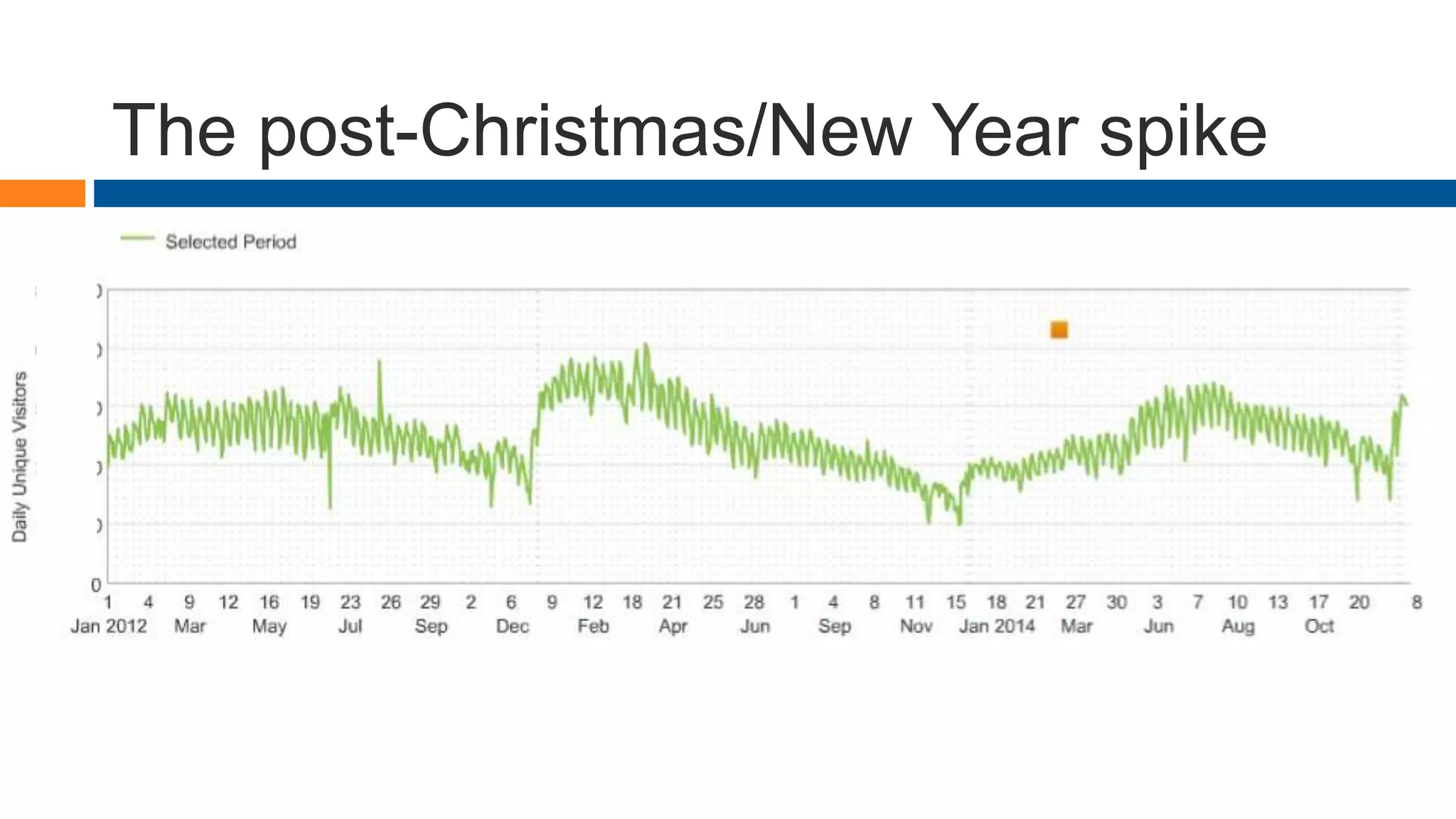
The post-Christmas/New Year spike
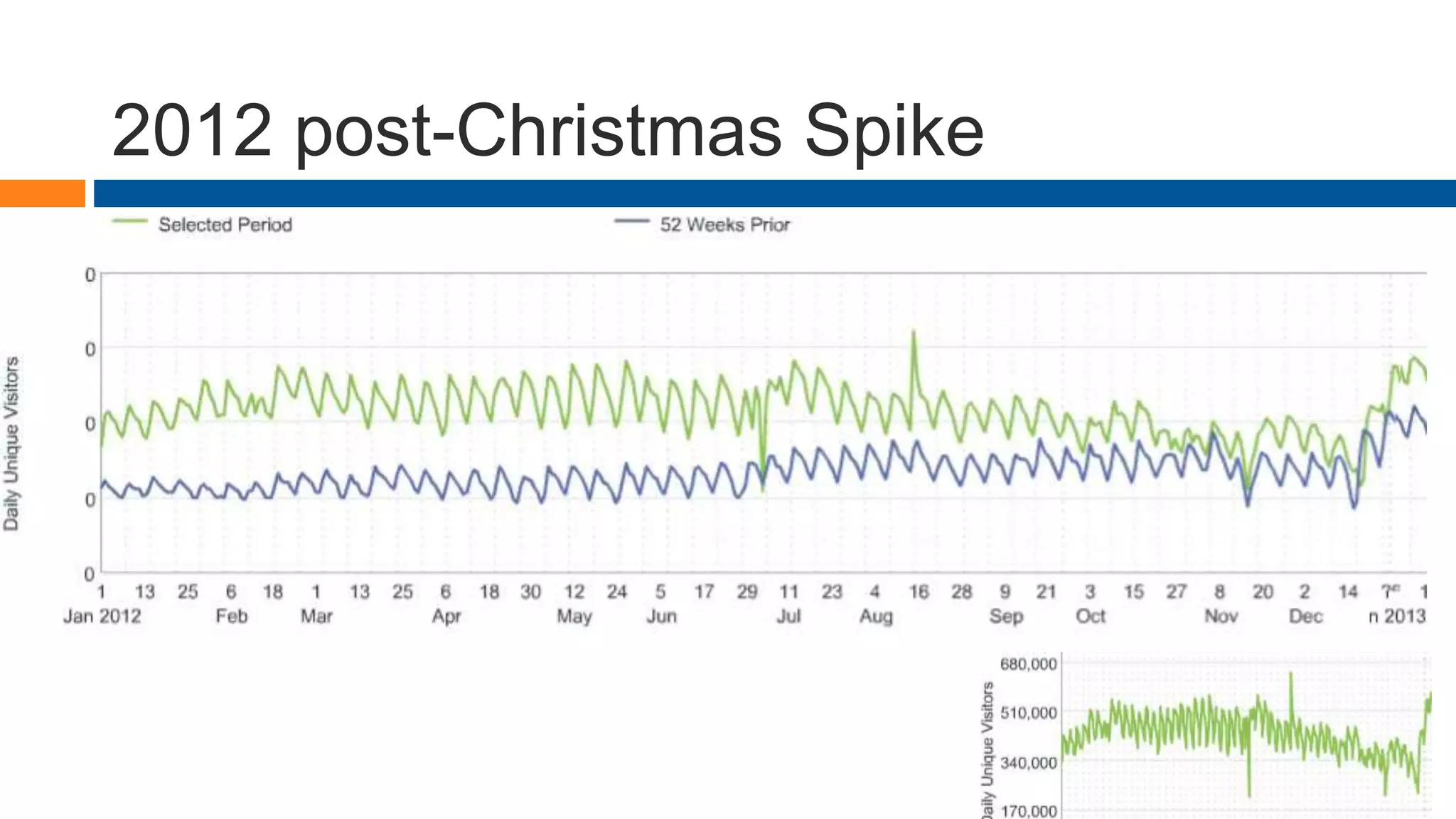
2012 post-Christmas Spike
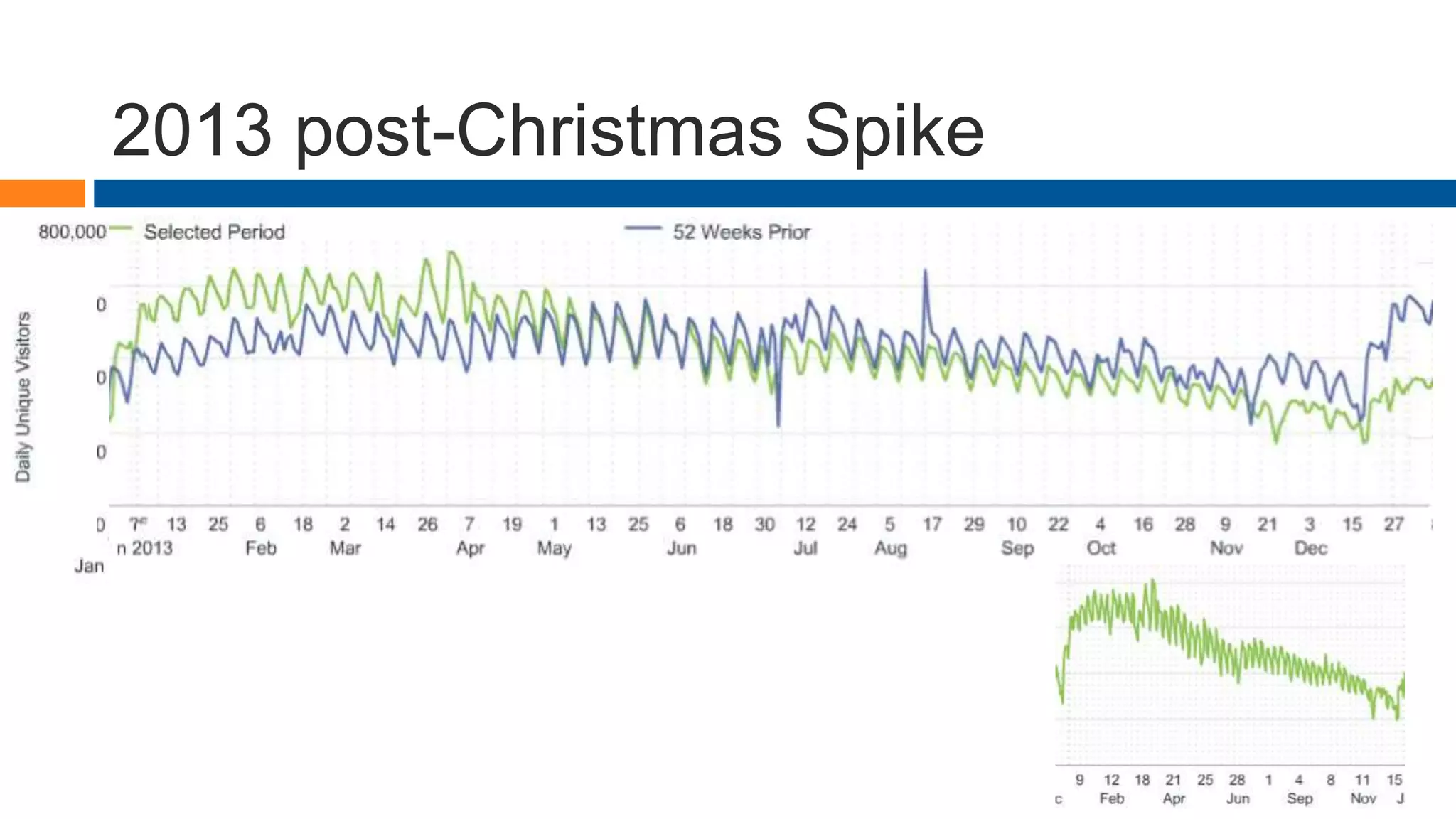
2013 post-Christmas Spike
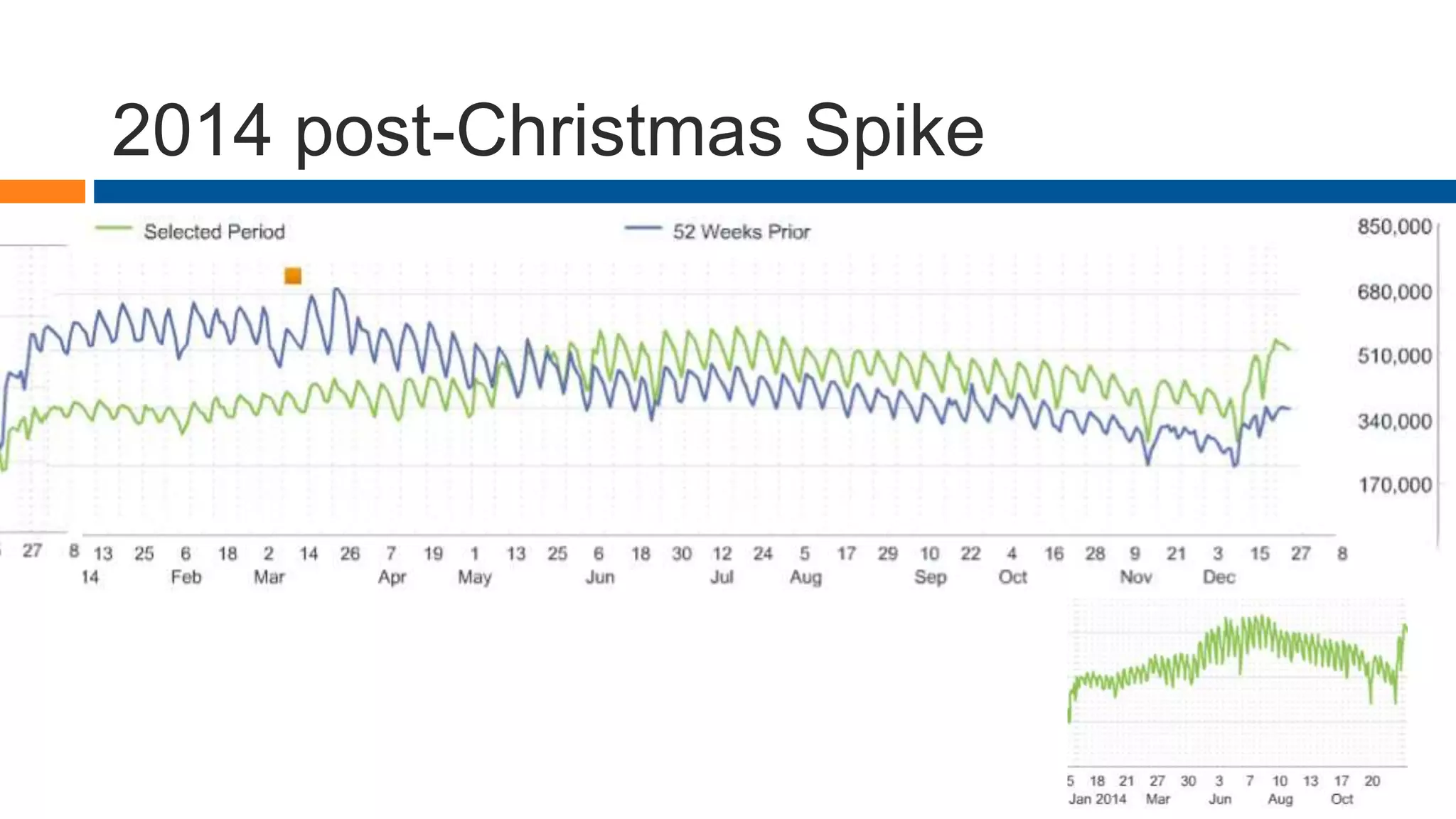
2014 post-Christmas Spike
Burning questions
Holiday traffic spike prompts the two
perennial questions:
1. Who is causing the increase in
traffic
2. Why does it happen on Christmas/
New Year and not Jan 14 or Feb
2?
Ask them: “Who are you?”
Overview
 Data reporting tells an incomplete picture
 Data analysis requires more than reporting
 In order to analyze data such as metrics, traffic
analytics, or conversion rates, we follow the
maxim: “Keep Calm and Take Data in Context”
 Buyers are liars; users often are too
So what do the numbers in our dashboard
tell us?
Reading our dashboard
Traffic patterns: a closer look
We looked at the meta-context: our yearly
business cycle and the Christmas/New Year
spike.
Next, we look more granularly at traffic and lead
conversion patterns at Christmas and New Year.
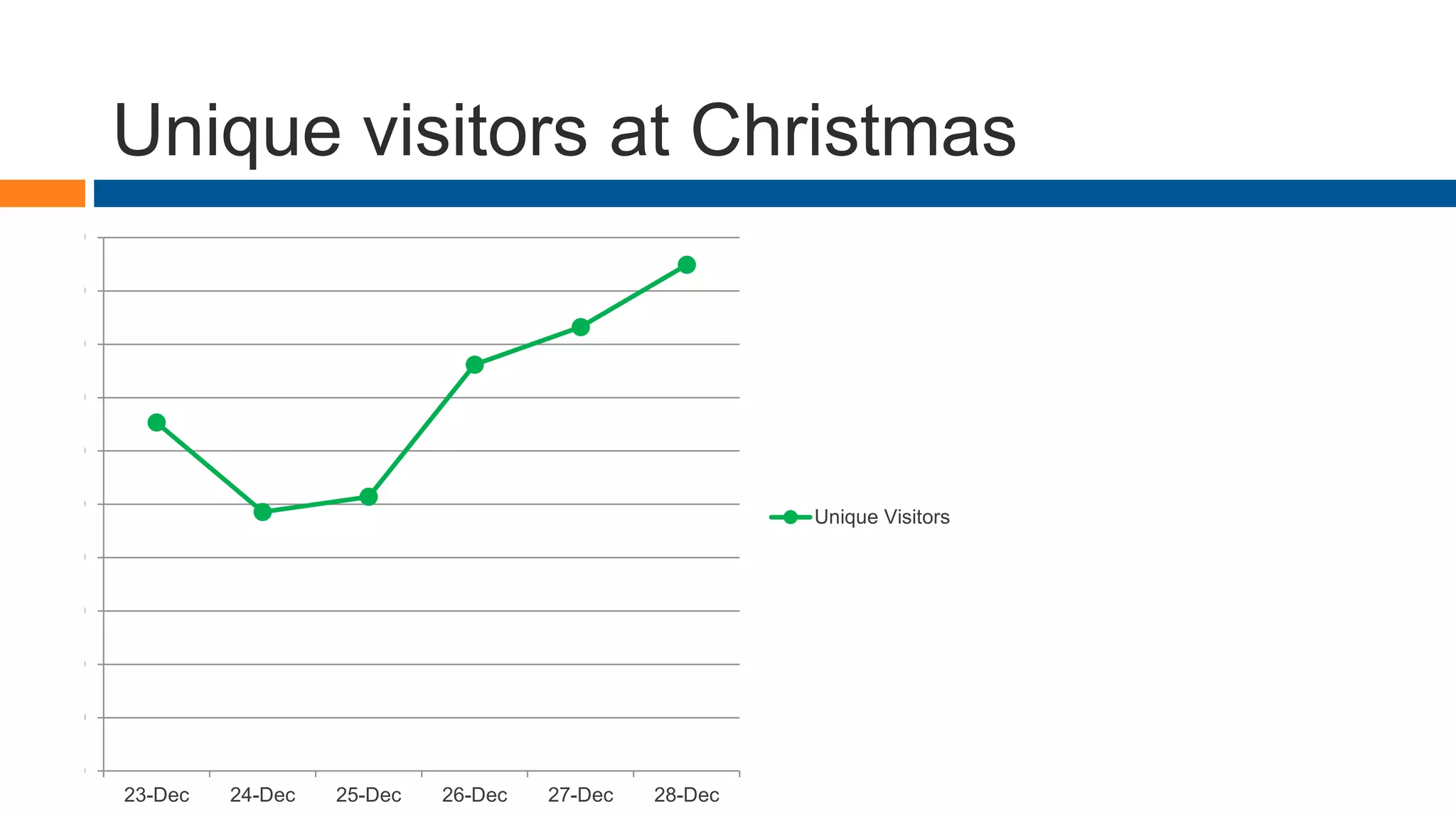
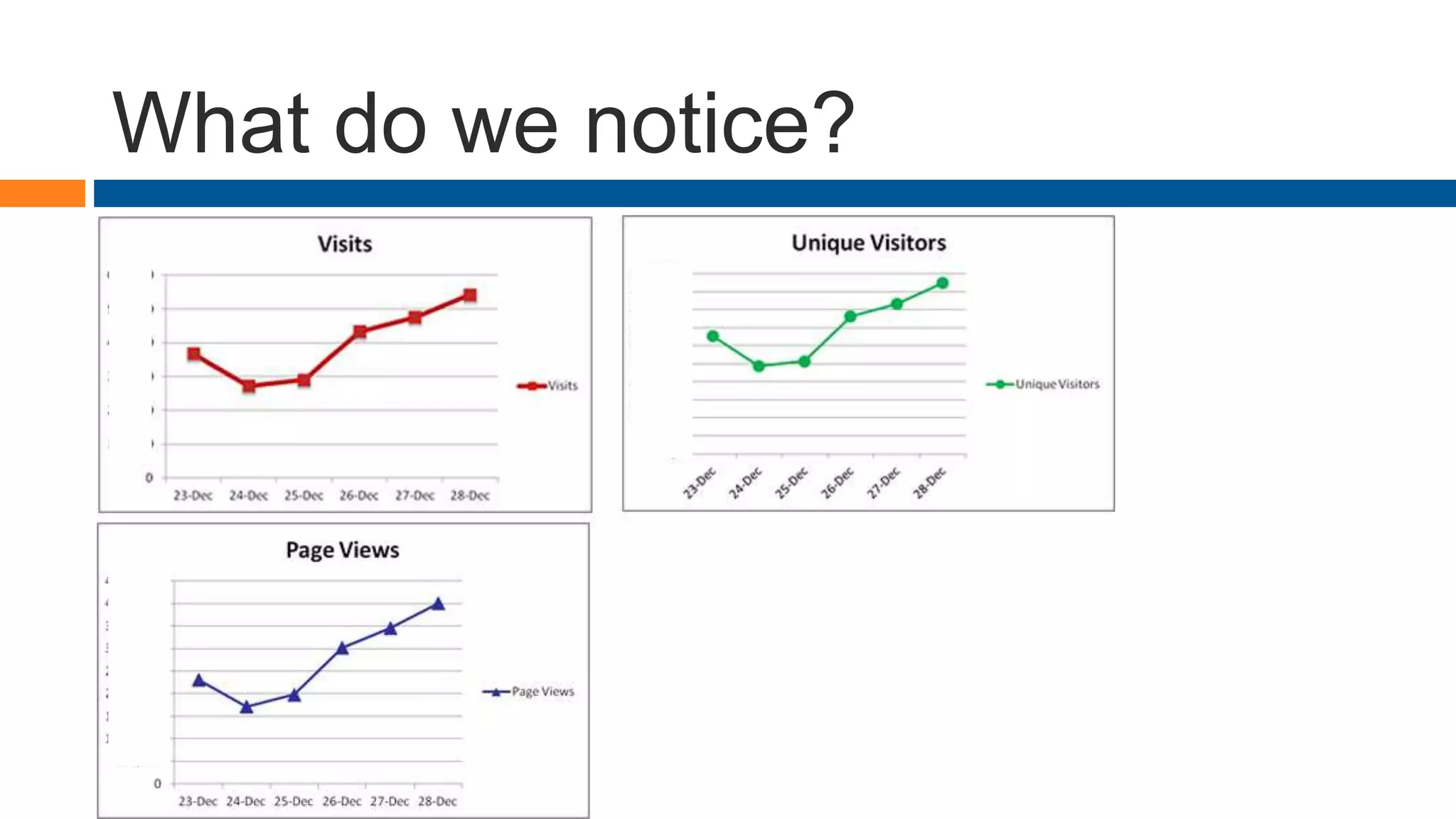
Unique visitors at Christmas
0
50,000
100,000
150,000
200,000
250,000
300,000
350,000
400,000
450,000
500,000
23-Dec 24-Dec 25-Dec 26-Dec 27-Dec 28-Dec
Unique Visitors
0
100,000
200,000
300,000
400,000
500,000
600,000
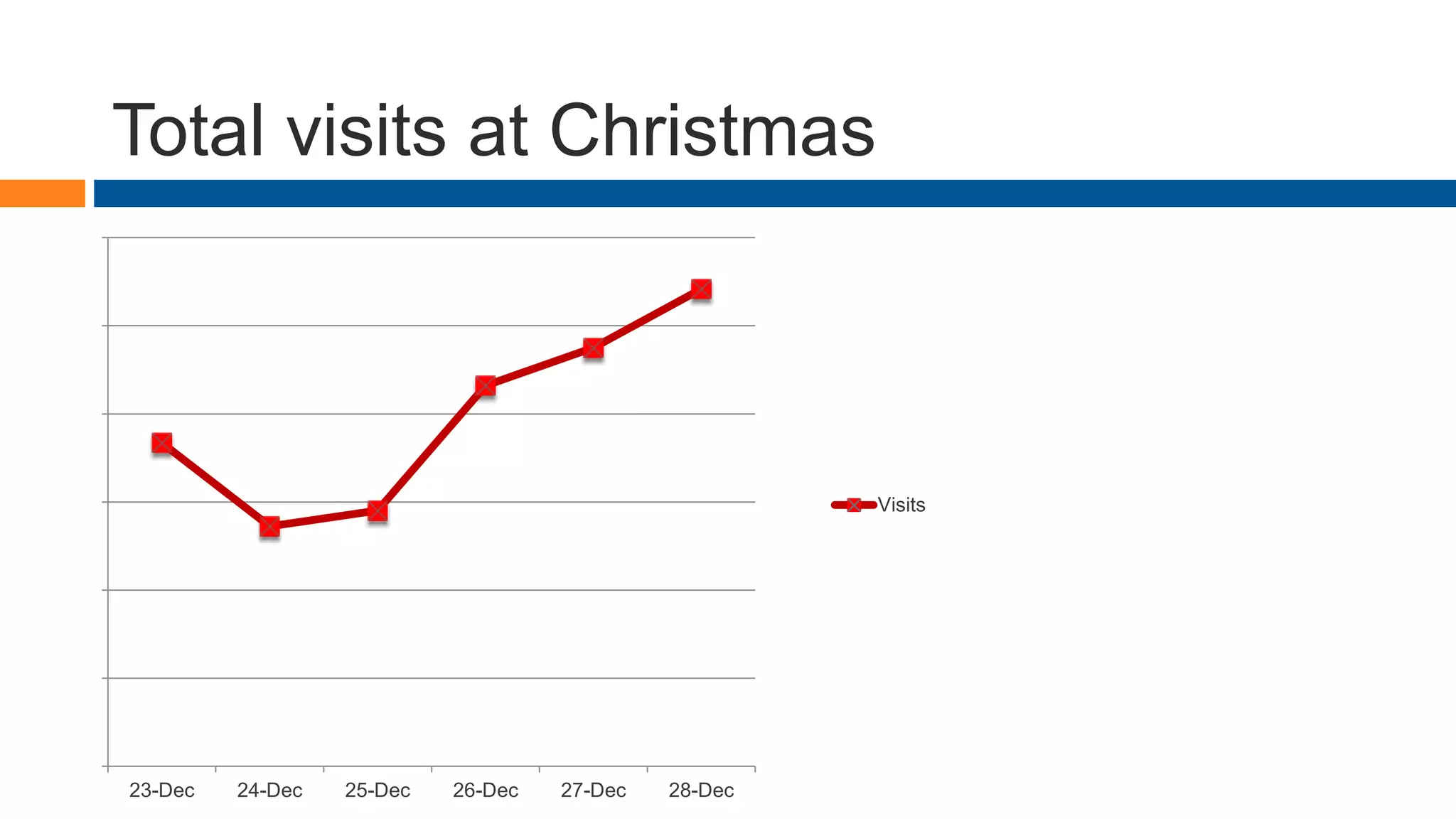
23-Dec 24-Dec 25-Dec 26-Dec 27-Dec 28-Dec
Visits
Total visits at Christmas
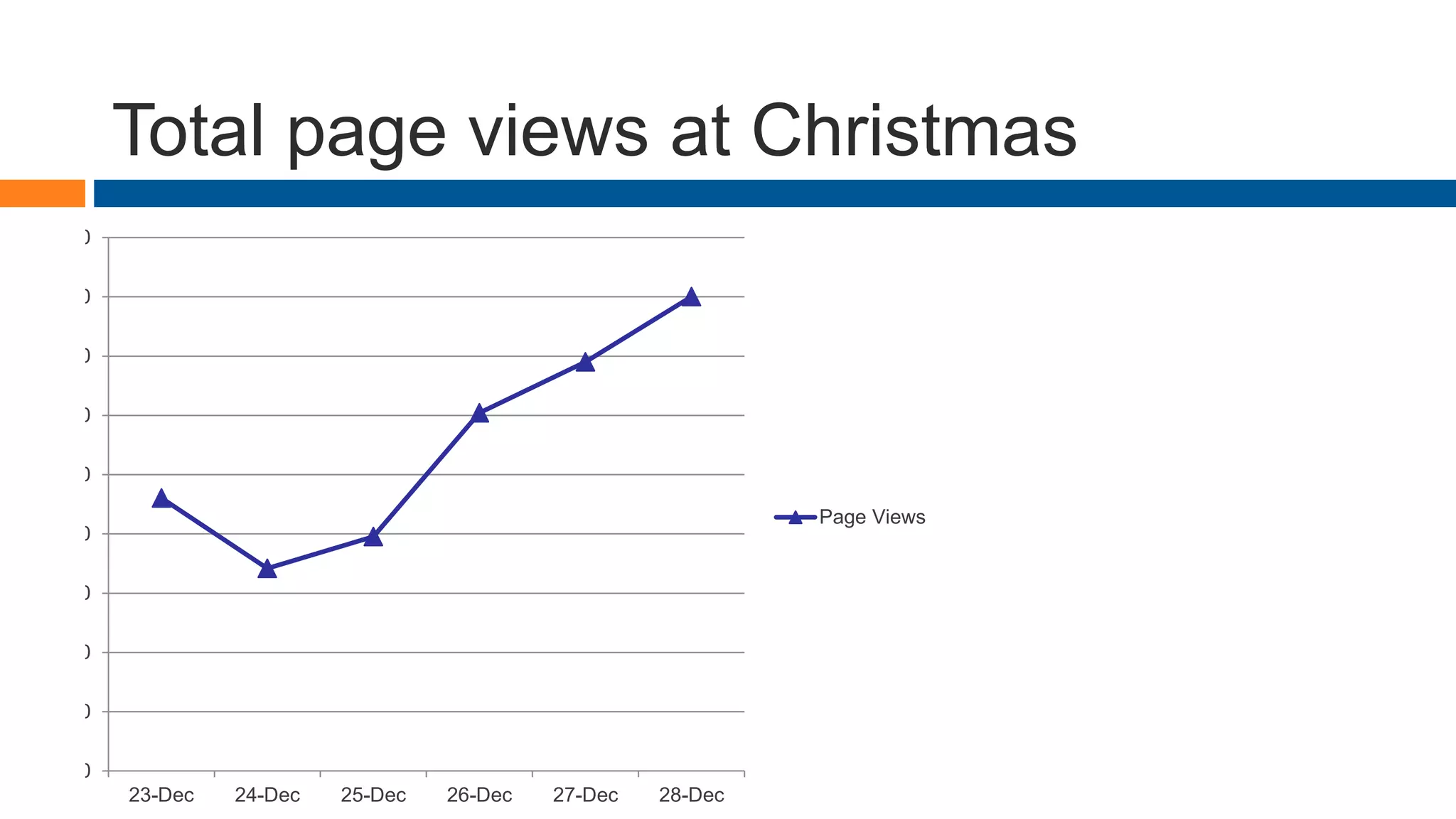
Total page views at Christmas
0
500,000
1,000,000
1,500,000
2,000,000
2,500,000
3,000,000
3,500,000
4,000,000
4,500,000
23-Dec 24-Dec 25-Dec 26-Dec 27-Dec 28-Dec
Page Views
What do we notice?
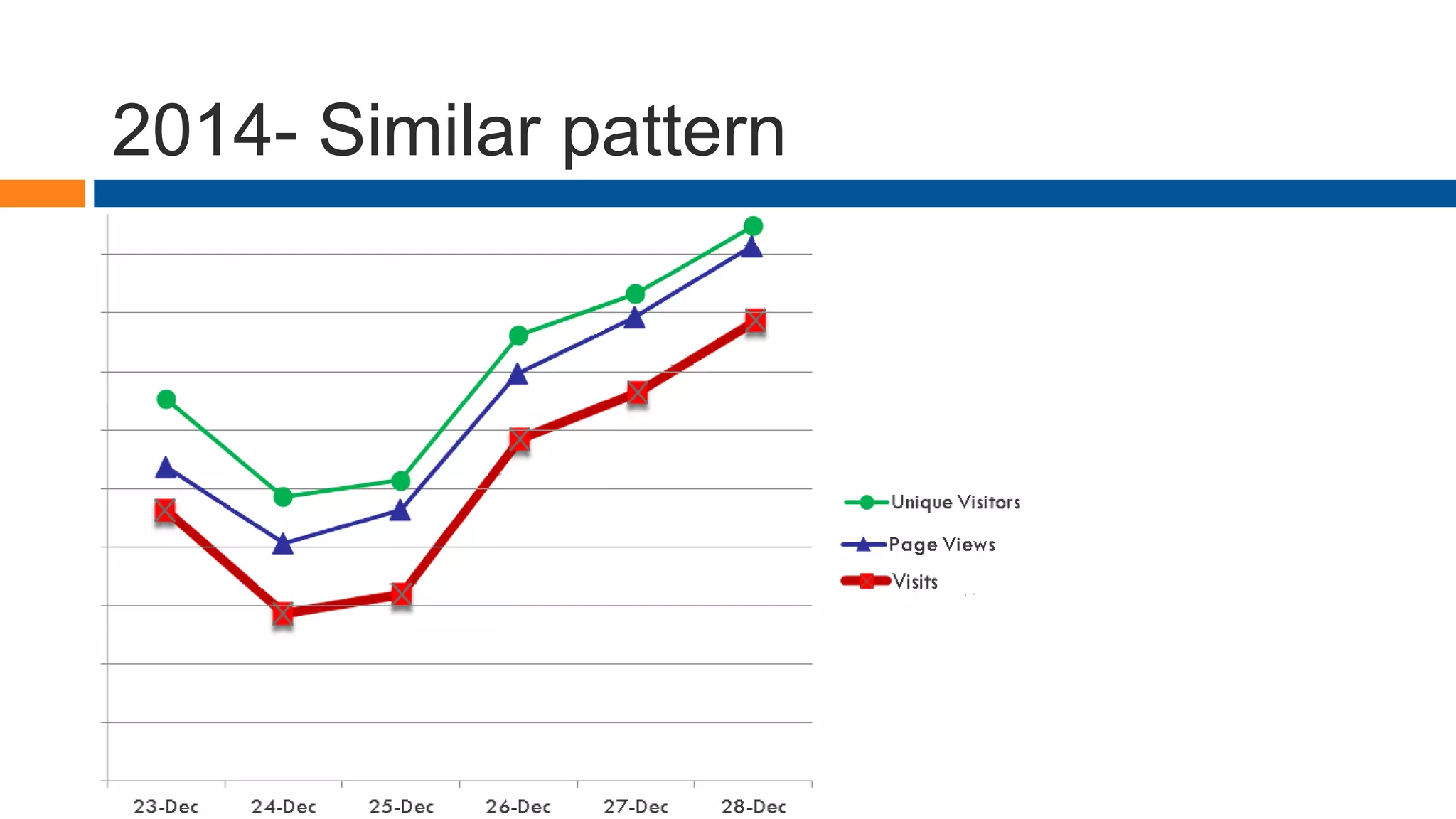
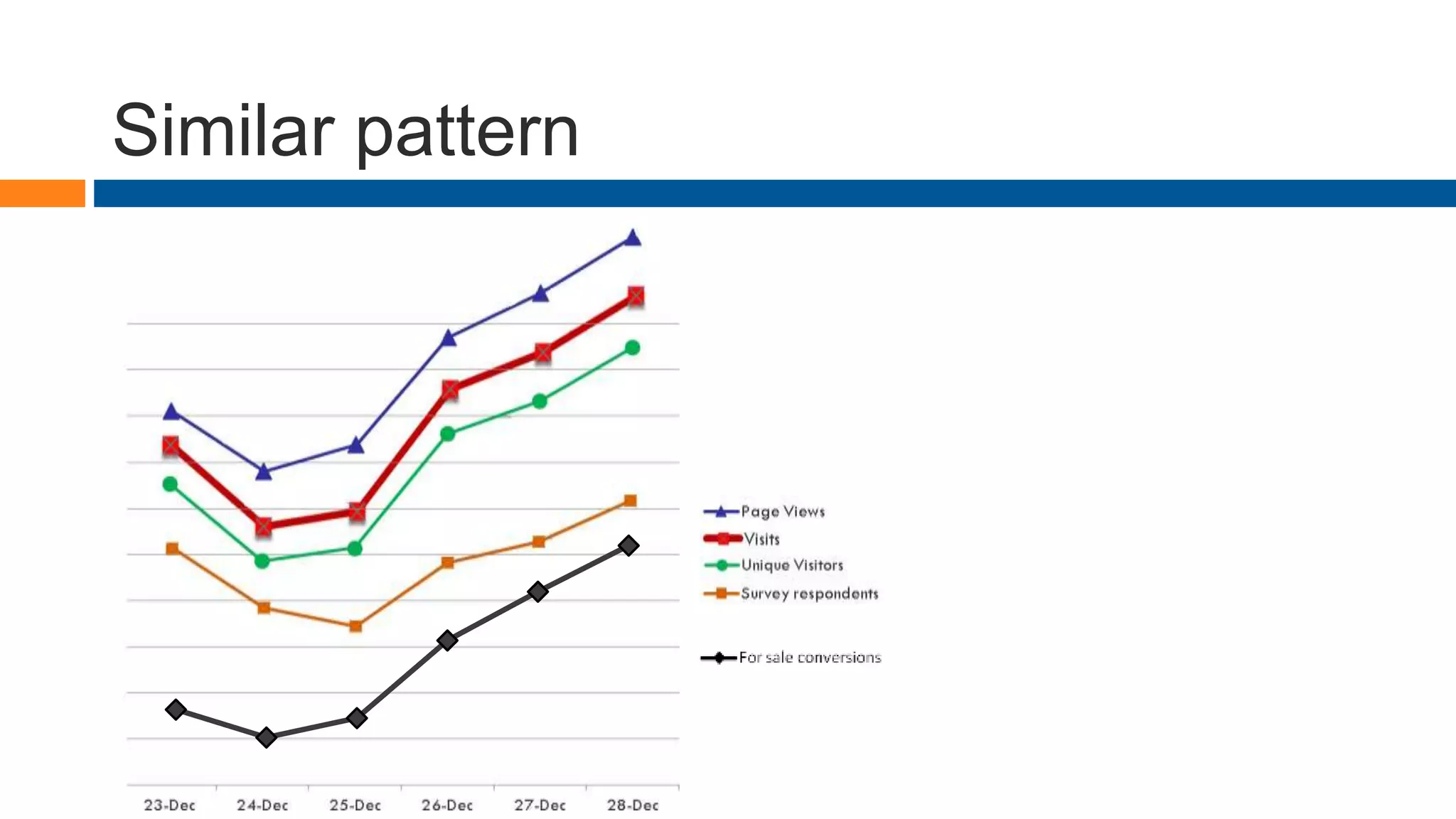
2014- Similar pattern
To answer that question, we need to look at
historical and comparative data
Is the pattern typical?
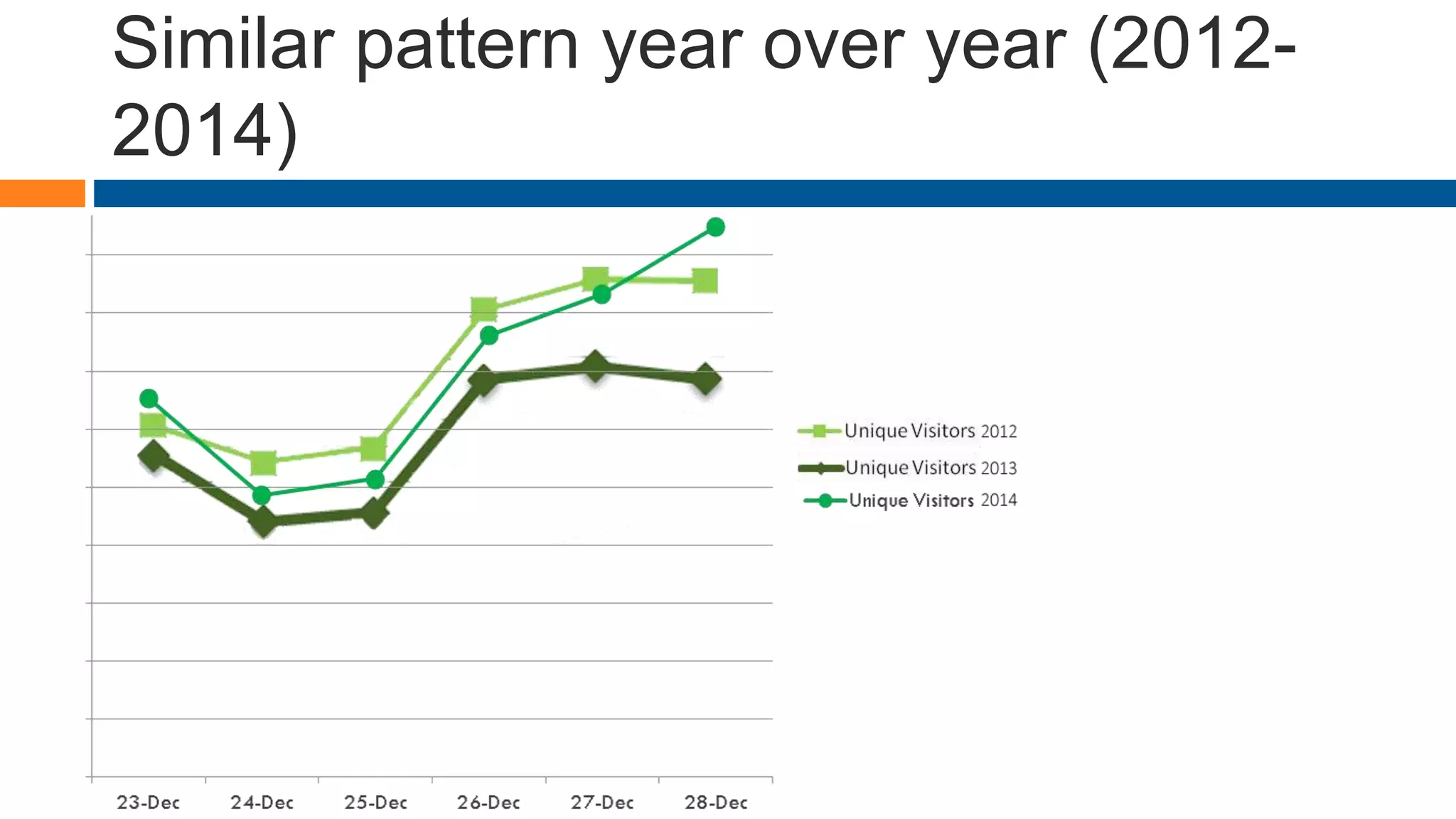
Similar pattern year over year (2012-
2014)
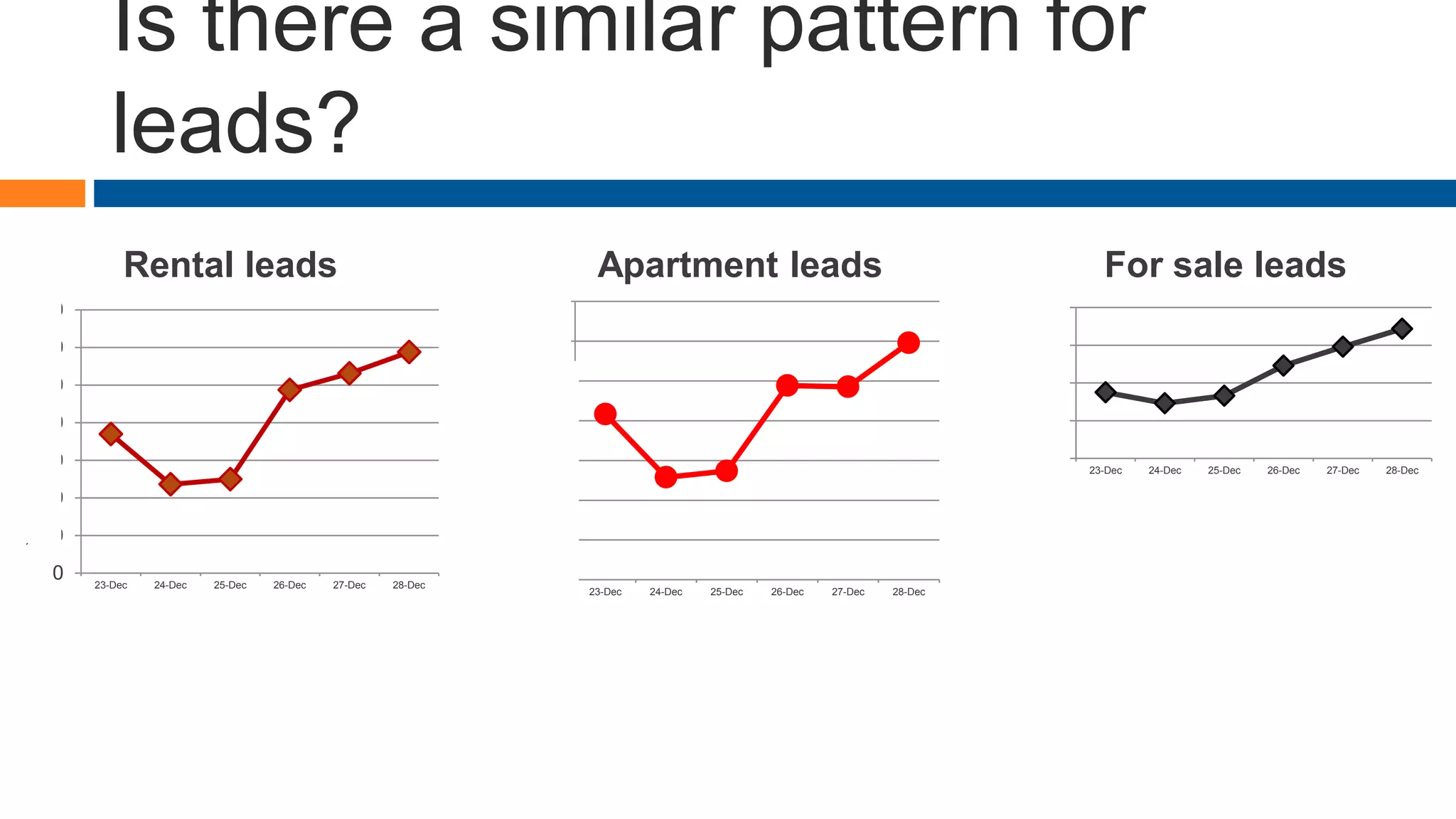
Is there a similar pattern for
leads?
0
1,000
2,000
3,000
4,000
5,000
6,000
7,000
23-Dec 24-Dec 25-Dec 26-Dec 27-Dec 28-Dec
Rental leads
0
200
400
600
800
1000
1200
1400
23-Dec 24-Dec 25-Dec 26-Dec 27-Dec 28-Dec
Apartment leads
0
500
1000
1500
2000
23-Dec 24-Dec 25-Dec 26-Dec 27-Dec 28-Dec
For sale leads
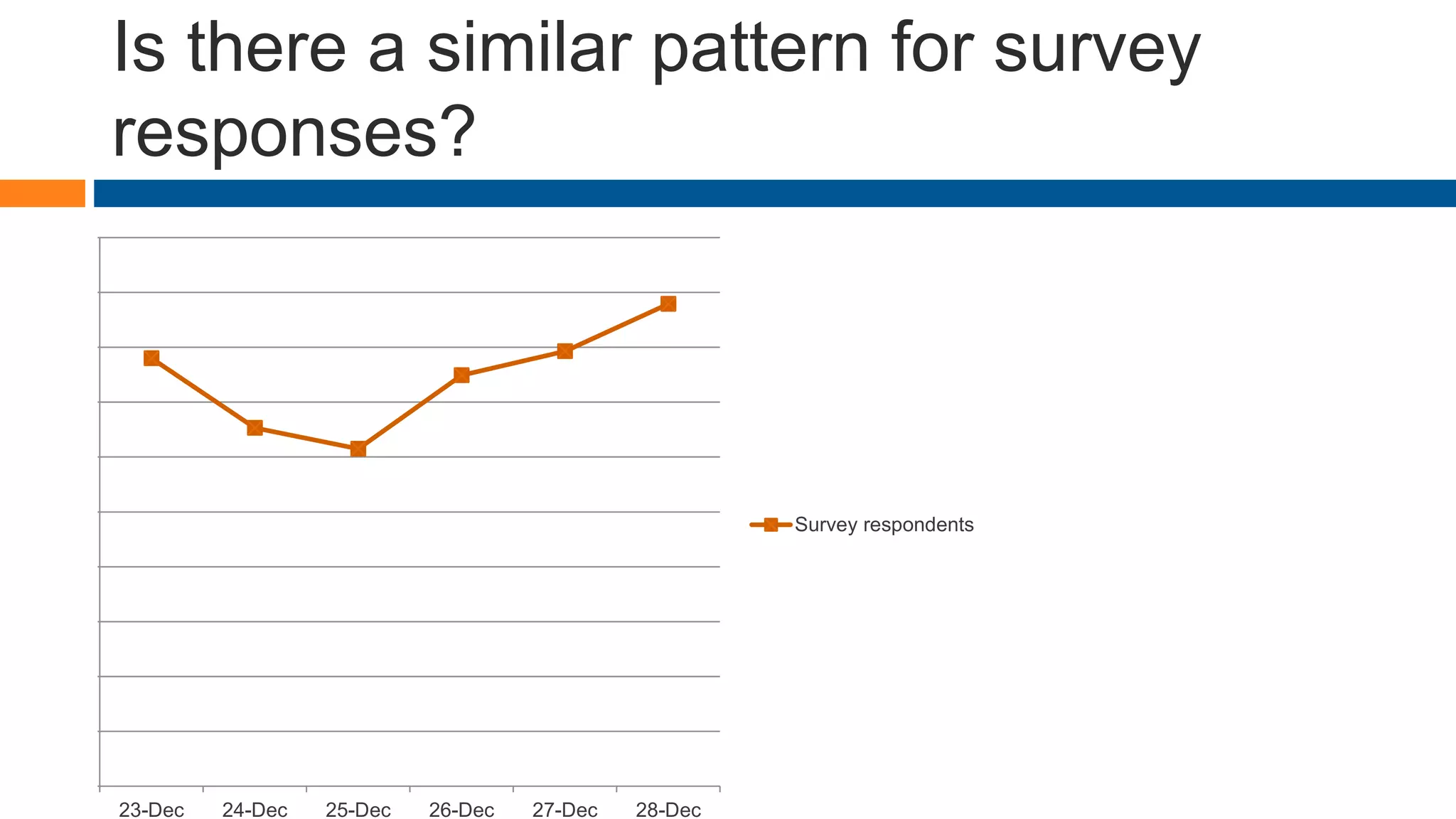
Is there a similar pattern for survey
responses?
0
100
200
300
400
500
600
700
800
900
1000
23-Dec 24-Dec 25-Dec 26-Dec 27-Dec 28-Dec
Survey respondents
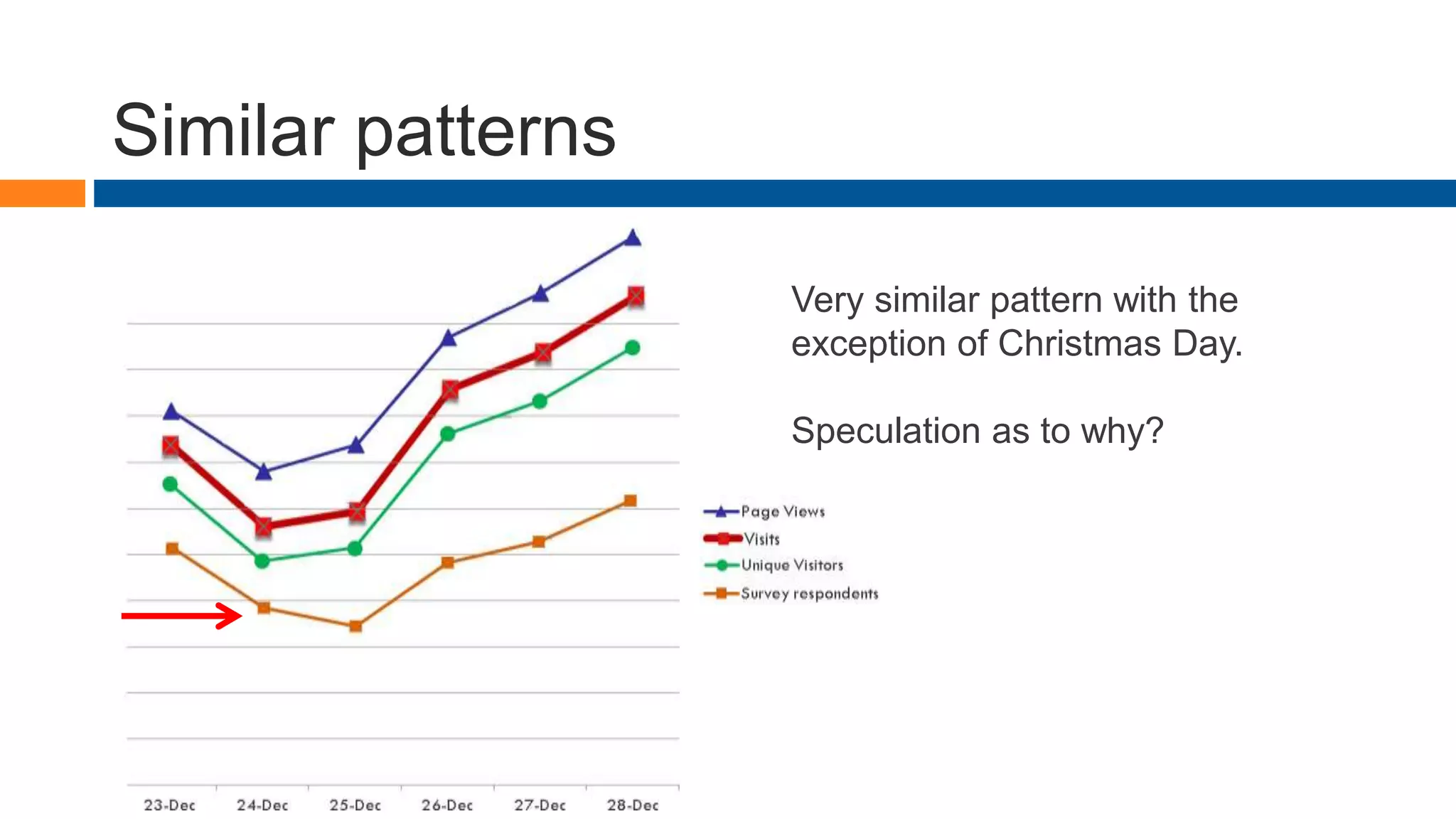
Similar patterns
Very similar pattern with the
exception of Christmas Day.
Speculation as to why?
Similar pattern
Conclusions
• Given this context, can we draw any
conclusions?
• Do the traffic patterns tell a story?
• What about conversion patterns?
Now that we’ve looked at total traffic
numbers, we need to look at ratios and
rates
Totals, ratios, and rates
Ratios
Quantitative relation between two amounts of the
same kind. Some examples:
 Aspect ratio: length of longest side/length of shortest
side (length :: length)
 Sex ratio: males/females (people :: people)
 Student/teacher ratio (people :: people)
Rate
As a type of ratio, it is a quantitative relation
between two amounts of a different kind.
Examples:
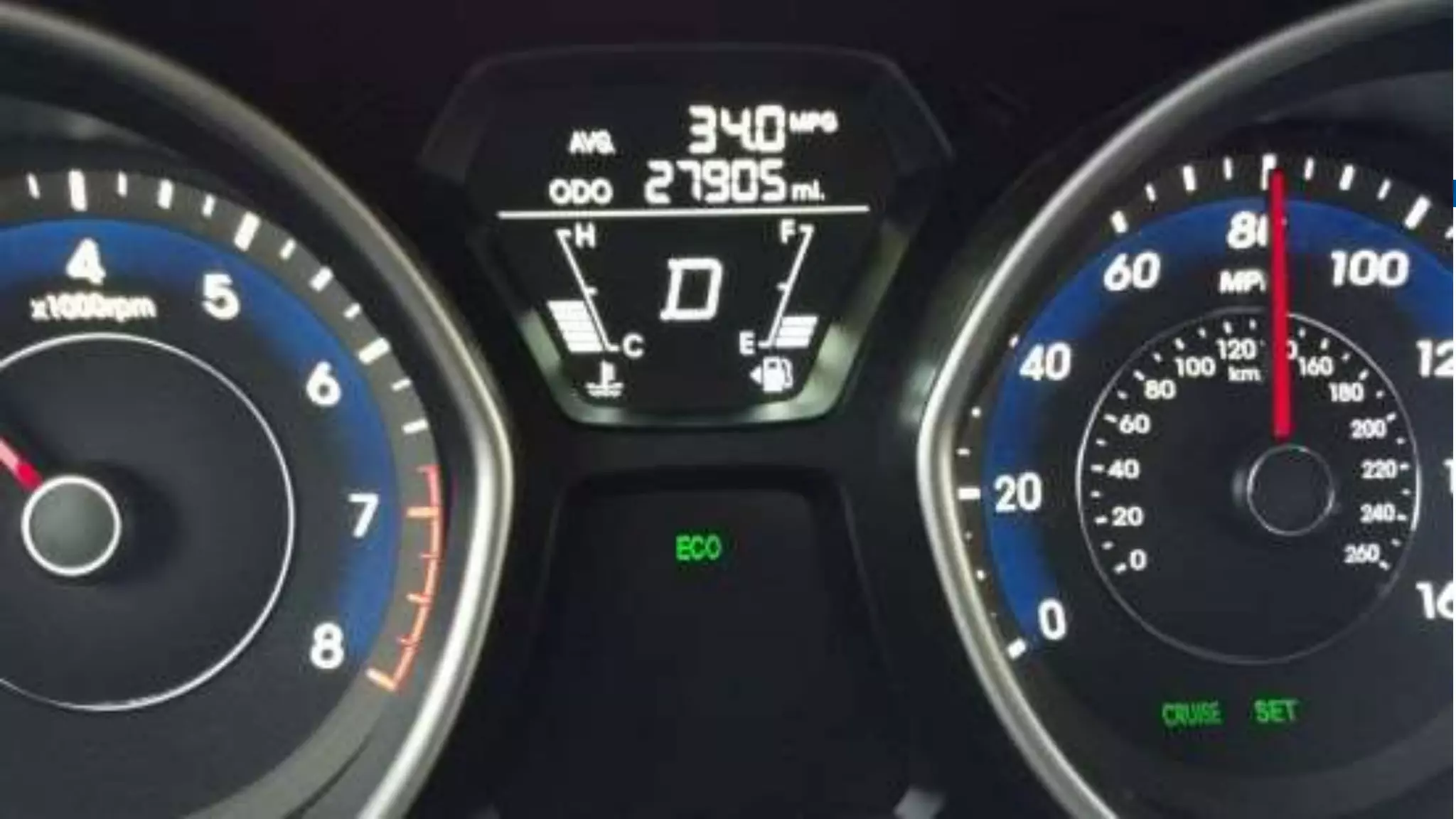
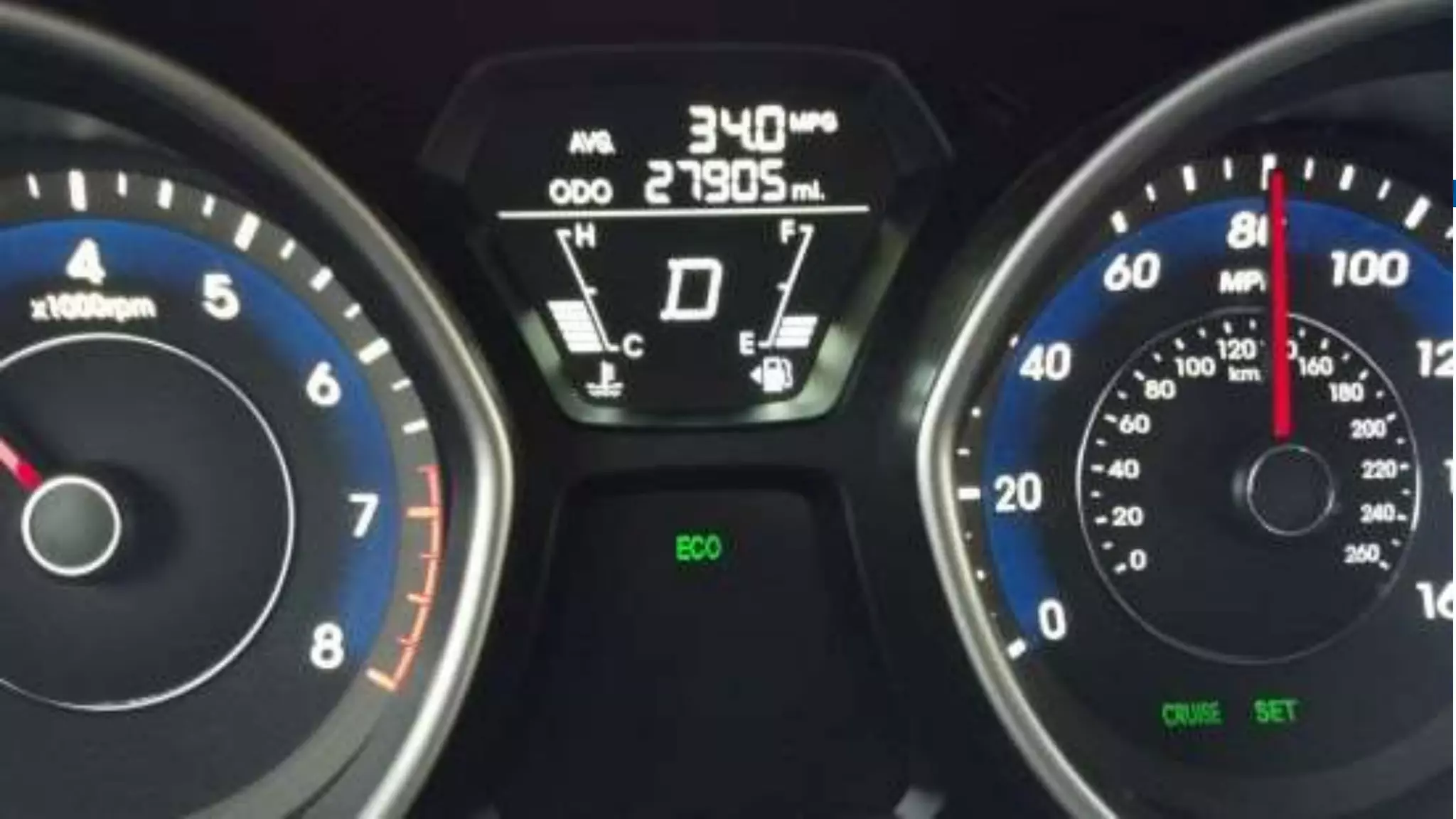
 MPG and MPH
 Crude Marriage Rate and General Marriage Rate
 Lead Conversion Rate and Bounce Rate
Conversions
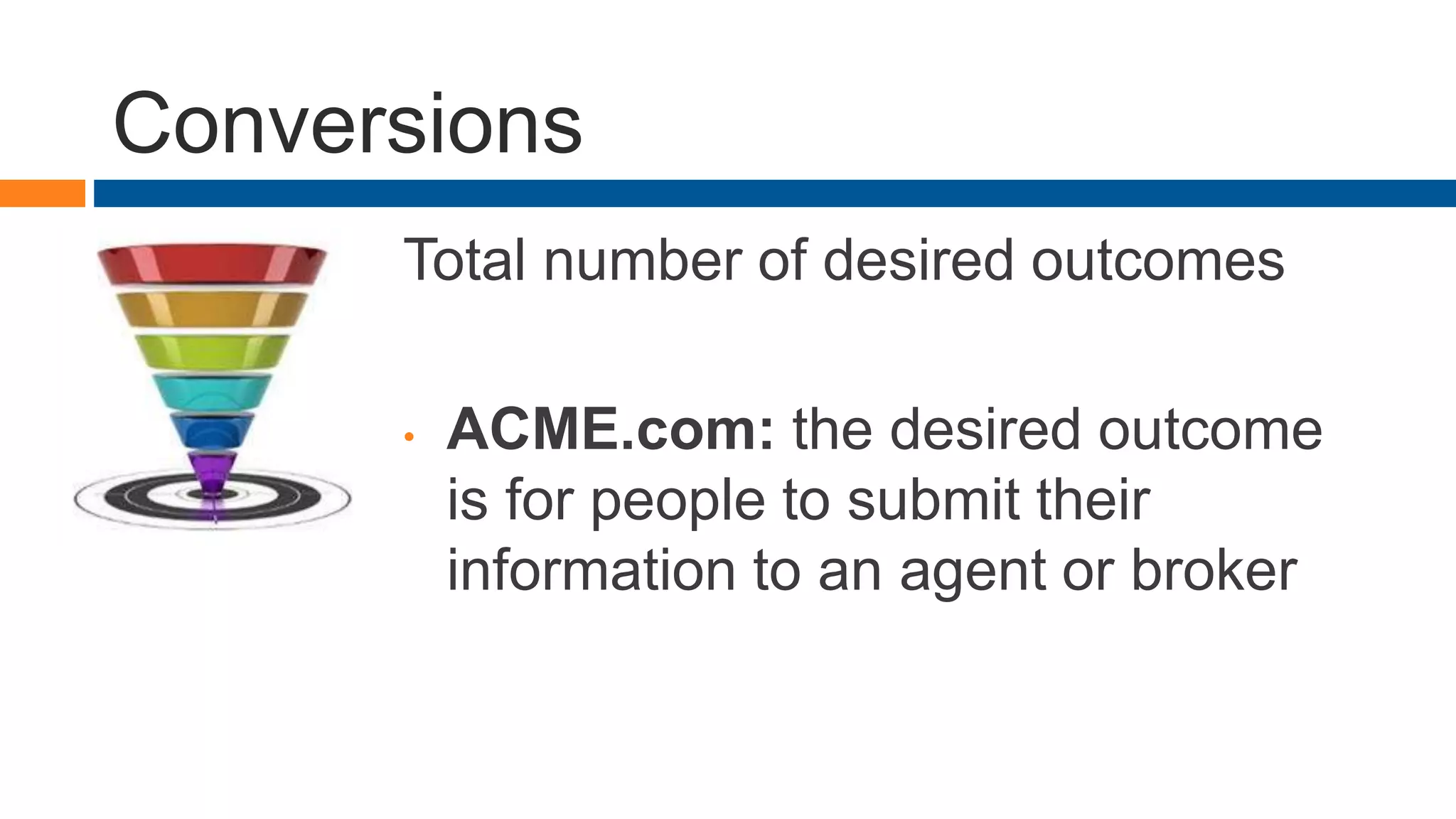
Total number of desired outcomes
• ACME.com: the desired outcome
is for people to submit their
information to an agent or broker
Conversions
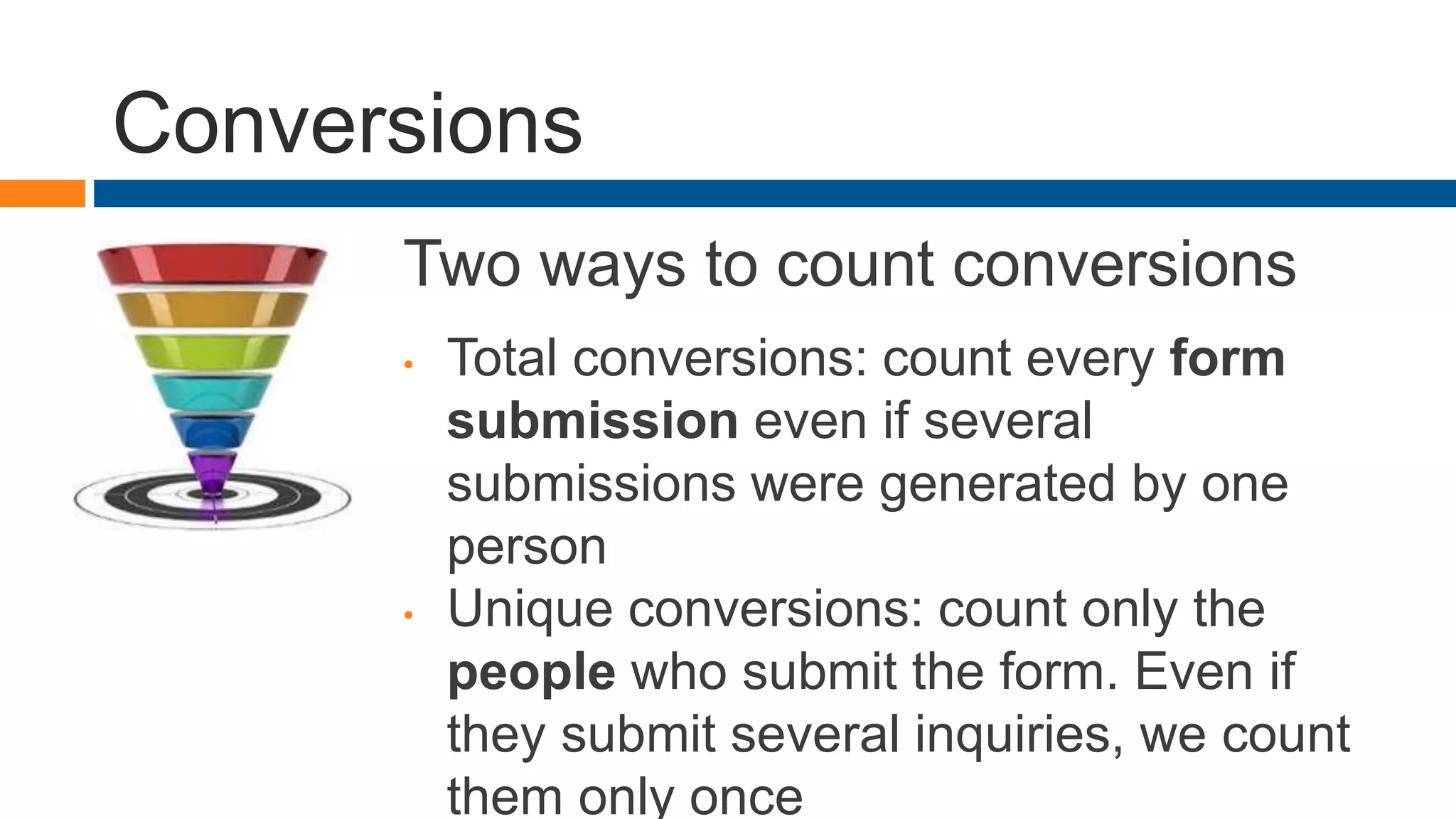
Two ways to count conversions
• Total conversions: count every form
submission even if several
submissions were generated by one
person
• Unique conversions: count only the
people who submit the form. Even if
they submit several inquiries, we count
them only once
Conversion rate
Number of desired outcomes divided
by unique visitors during a particular
time.
-
Conversion rate
Another way to measure:
 Number of unique desired
outcomes divided by unique
visitors during a particular time.
-
Lead conversion rate
Total number of lead form
submissions divided by unique
visitors during a particular time.
-OR-
Total number of single, unique
individuals making one or more lead
form submissions divided by unique
visitors during particular time.
-
What are our lead conversion
rates
Given the patterns we found with traffic, are
there any patterns we should expect for
conversion rates?
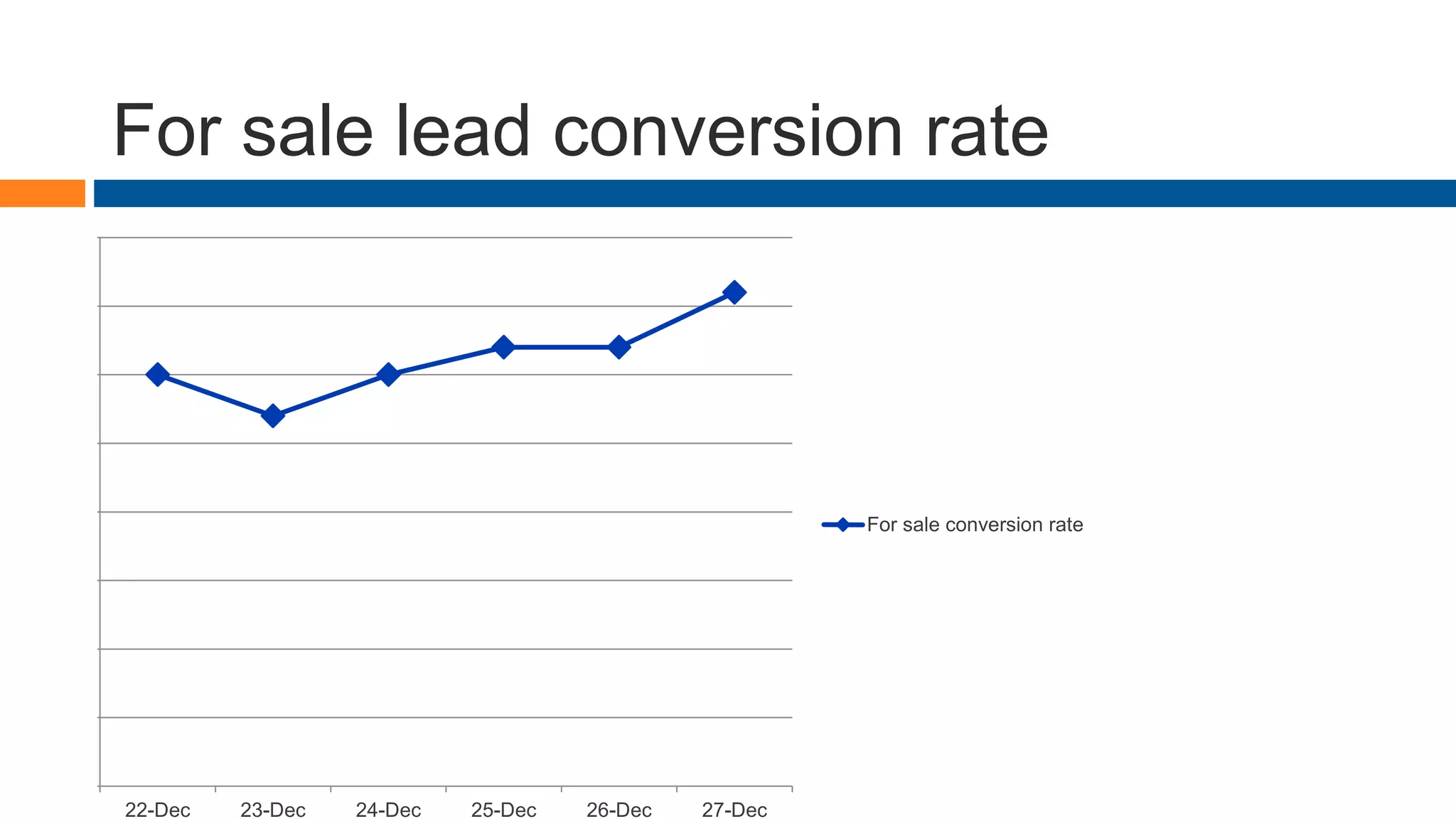
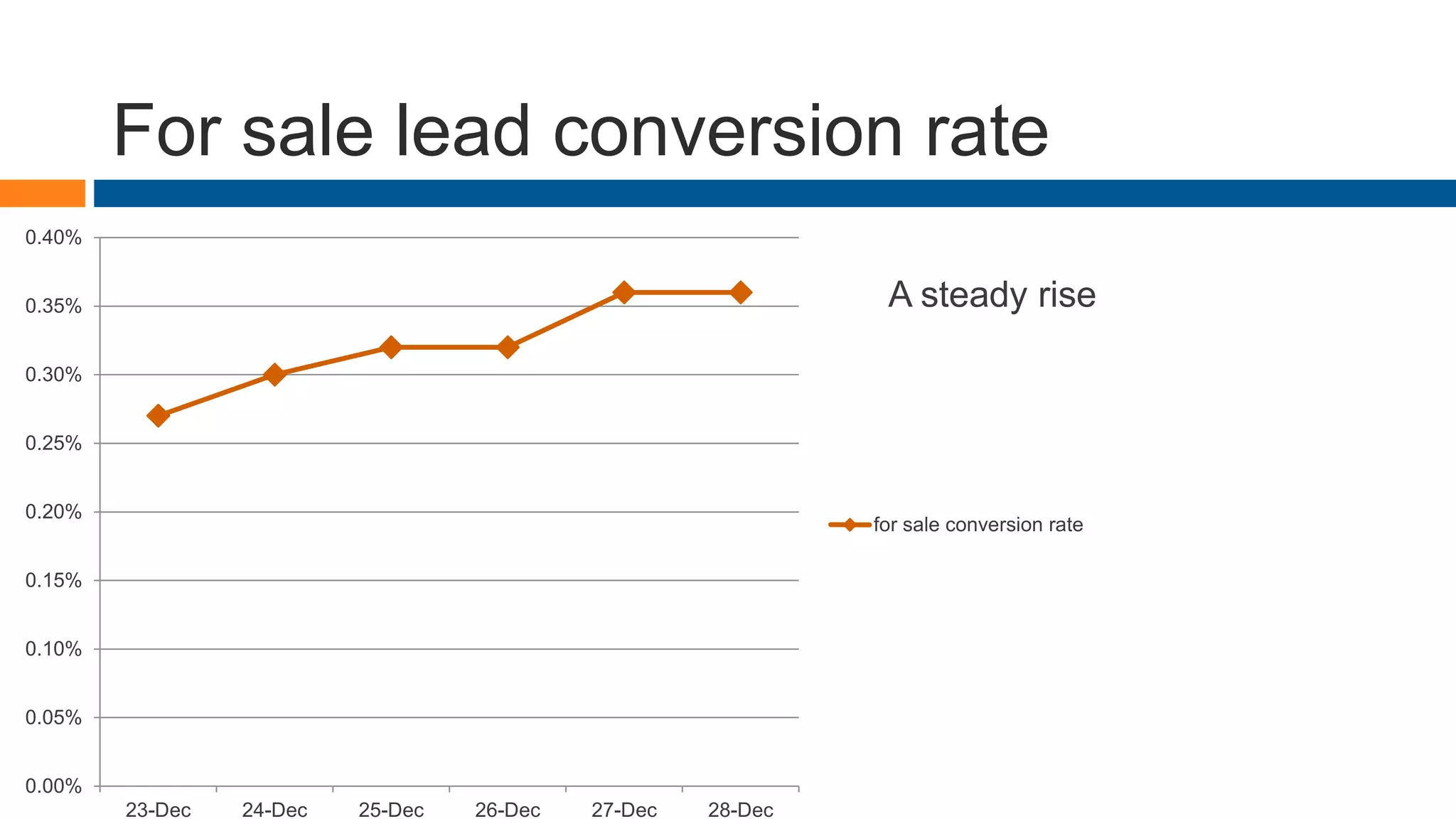
For sale lead conversion rate
0.00%
0.05%
0.10%
0.15%
0.20%
0.25%
0.30%
0.35%
0.40%
23-Dec 24-Dec 25-Dec 26-Dec 27-Dec 28-Dec
for sale conversion rate
A steady rise
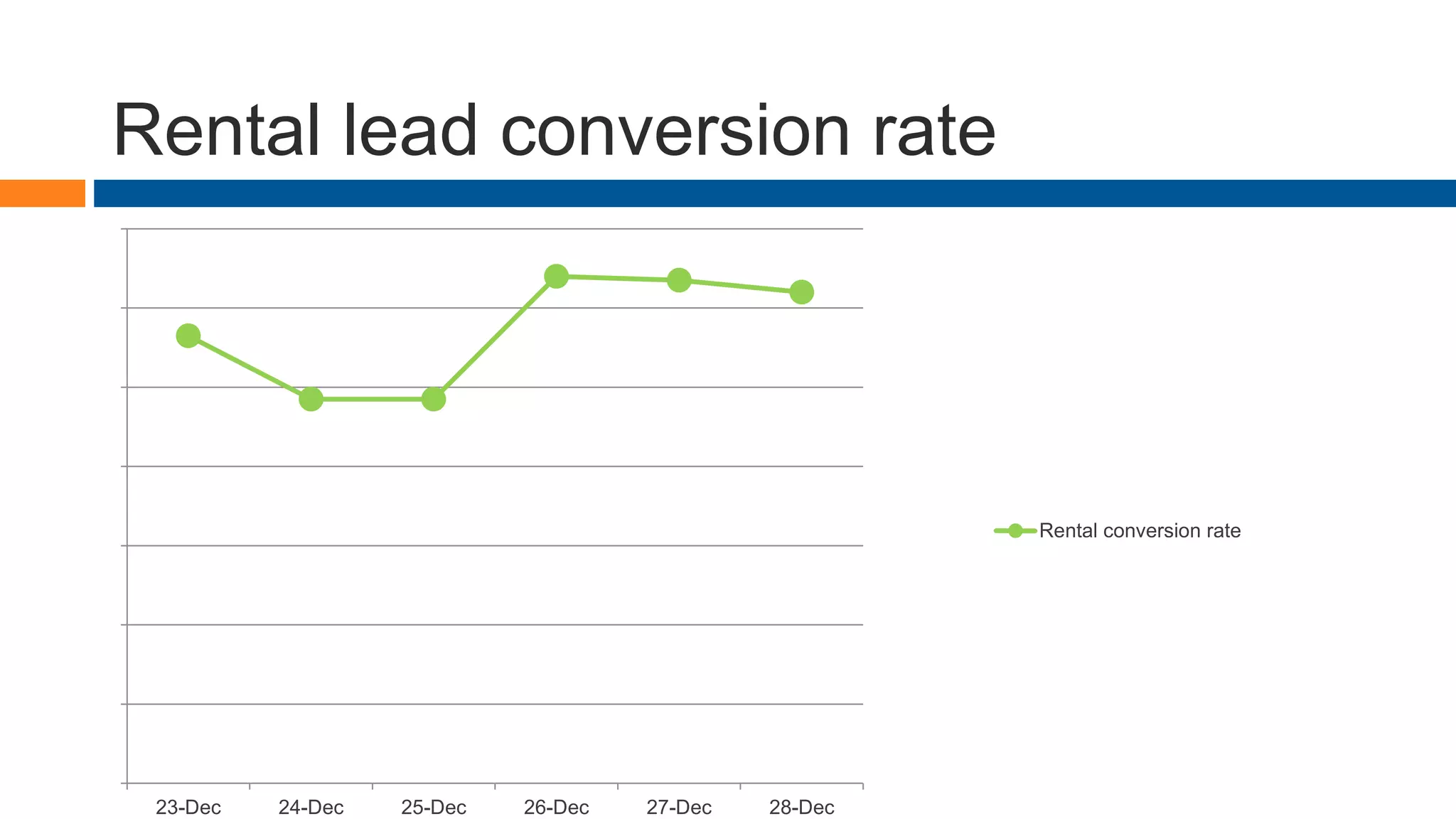
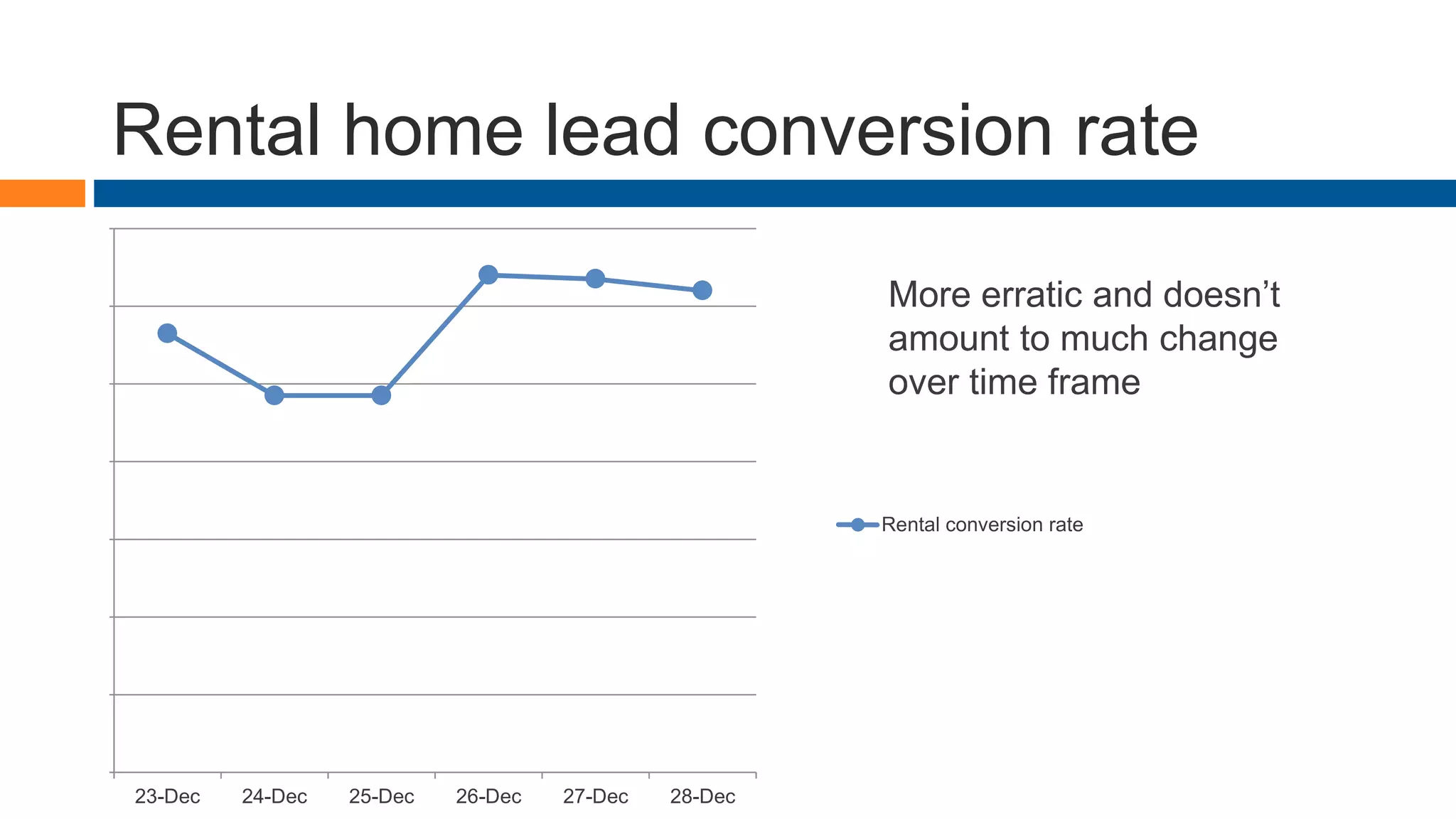
Rental home lead conversion rate
0.00%
0.20%
0.40%
0.60%
0.80%
1.00%
1.20%
1.40%
23-Dec 24-Dec 25-Dec 26-Dec 27-Dec 28-Dec
Rental conversion rate
More erratic and doesn’t
amount to much change
over time frame
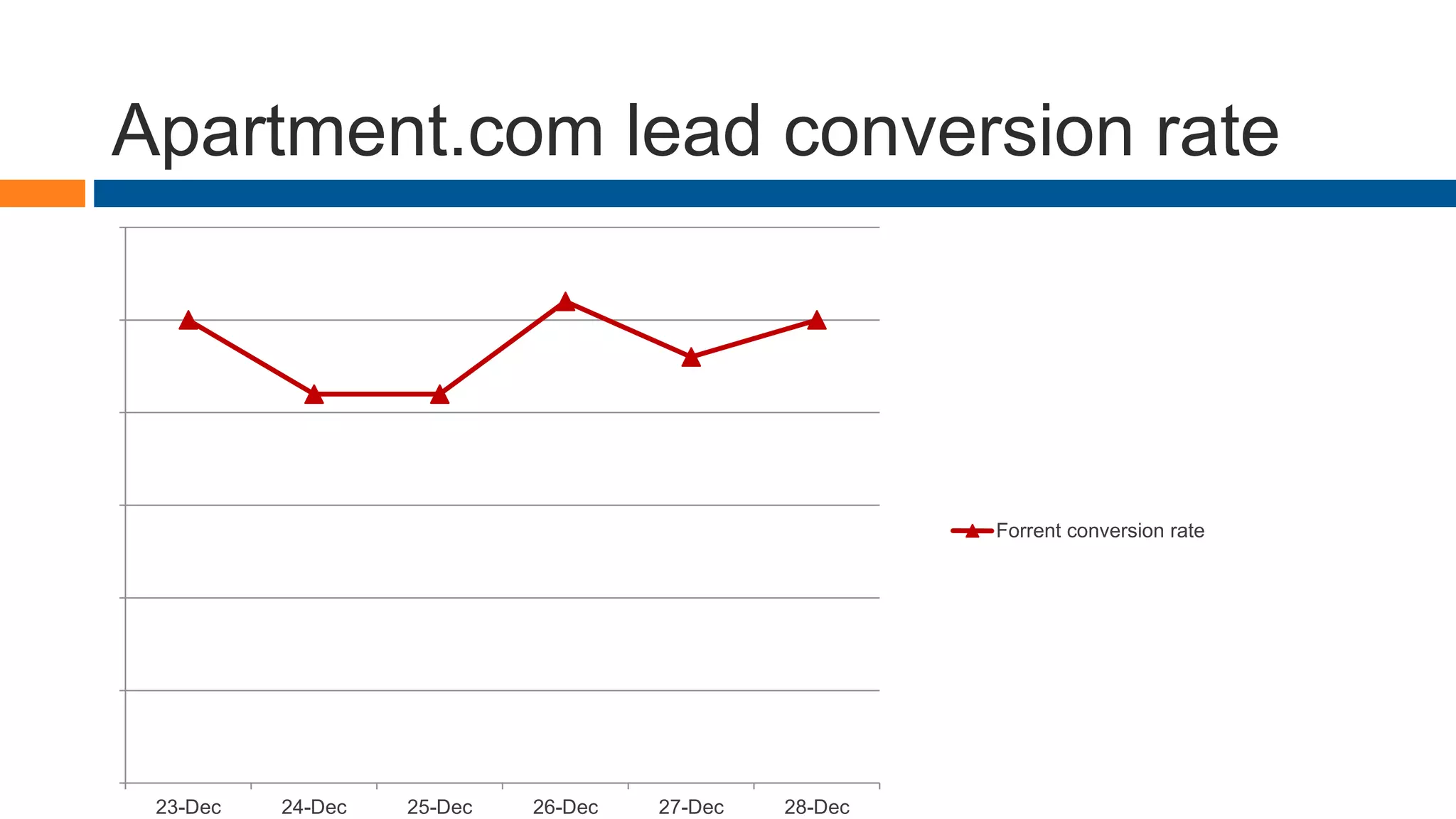
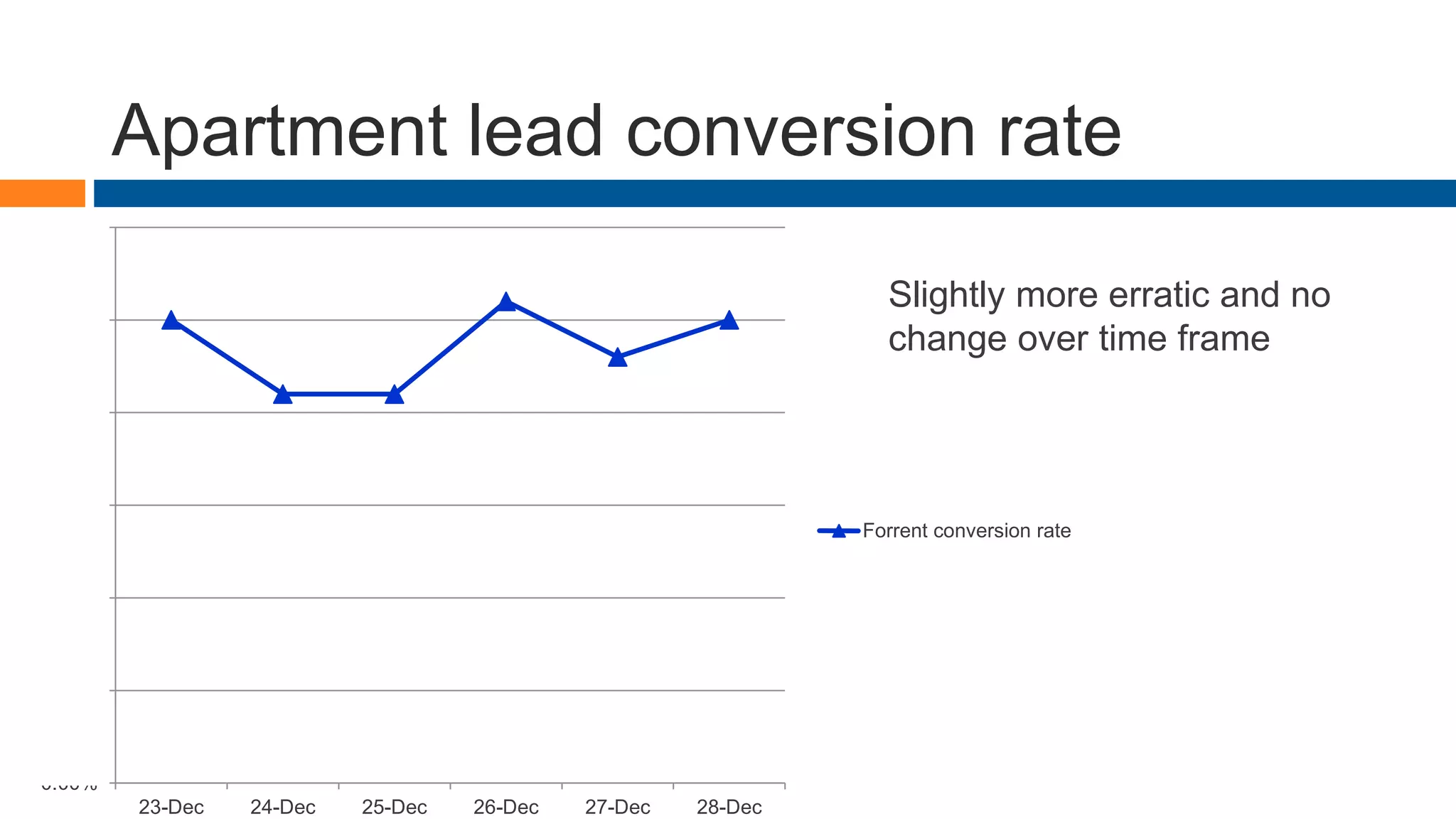
Apartment lead conversion rate
0.00%
0.05%
0.10%
0.15%
0.20%
0.25%
0.30%
23-Dec 24-Dec 25-Dec 26-Dec 27-Dec 28-Dec
Forrent conversion rate
Slightly more erratic and no
change over time frame
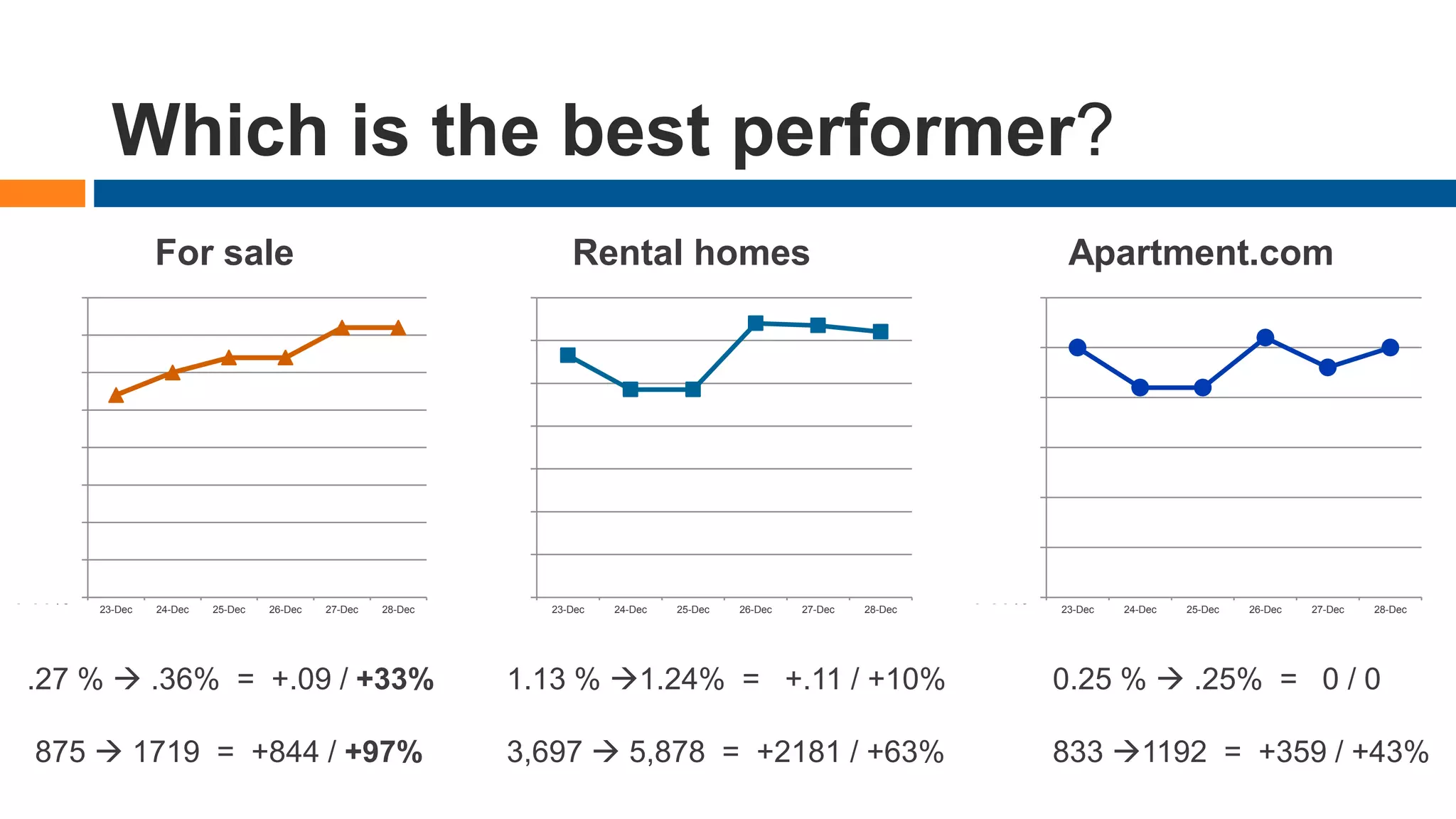
Which is the best performer?
0.00%
0.05%
0.10%
0.15%
0.20%
0.25%
0.30%
0.35%
0.40%
23-Dec 24-Dec 25-Dec 26-Dec 27-Dec 28-Dec
For sale
0.00%
0.20%
0.40%
0.60%
0.80%
1.00%
1.20%
1.40%
23-Dec 24-Dec 25-Dec 26-Dec 27-Dec 28-Dec
Rental homes
0.00%
0.05%
0.10%
0.15%
0.20%
0.25%
0.30%
23-Dec 24-Dec 25-Dec 26-Dec 27-Dec 28-Dec
Apartment.com
1.13 % 1.24% = +.11 / +10%
3,697  5,878 = +2181 / +63%
.27 %  .36% = +.09 / +33%
875  1719 = +844 / +97%
0.25 %  .25% = 0 / 0
833 1192 = +359 / +43%
For sale lead conversion rate
0.00%
0.05%
0.10%
0.15%
0.20%
0.25%
0.30%
0.35%
0.40%
22-Dec 23-Dec 24-Dec 25-Dec 26-Dec 27-Dec
For sale conversion rate
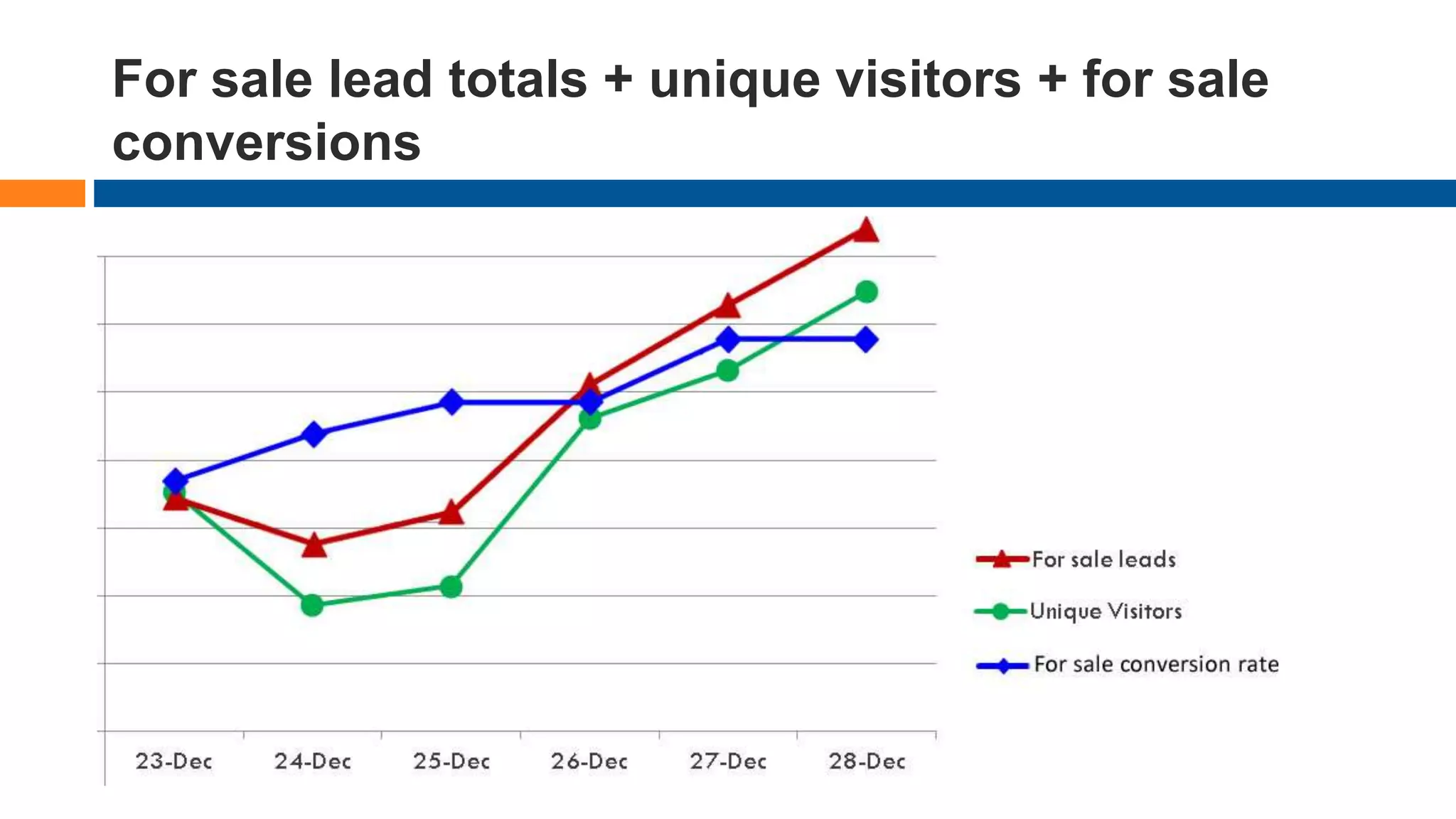
For sale lead totals + unique visitors + for sale
conversions
Rental lead conversion rate
0.00%
0.20%
0.40%
0.60%
0.80%
1.00%
1.20%
1.40%
23-Dec 24-Dec 25-Dec 26-Dec 27-Dec 28-Dec
Rental conversion rate
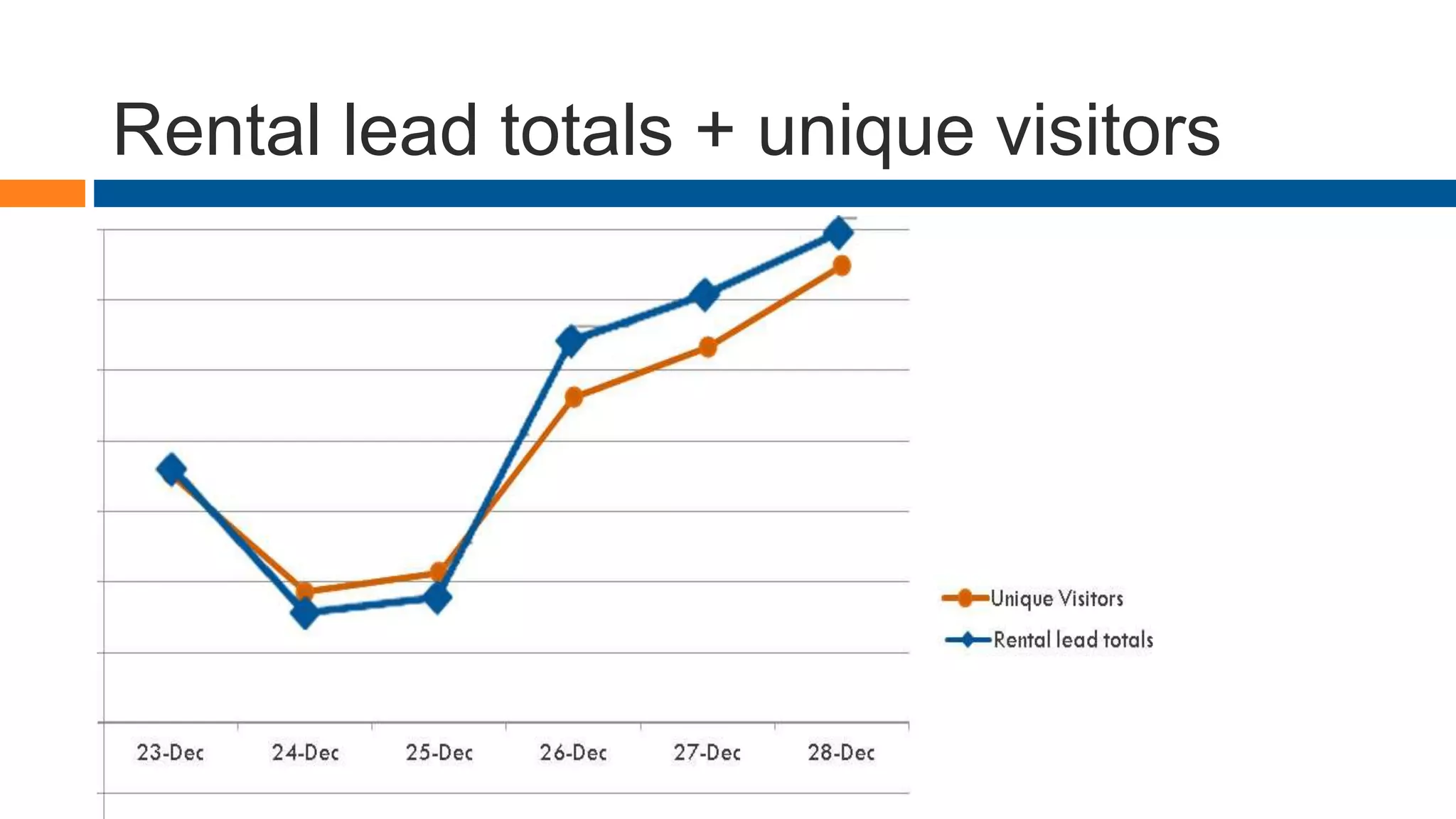
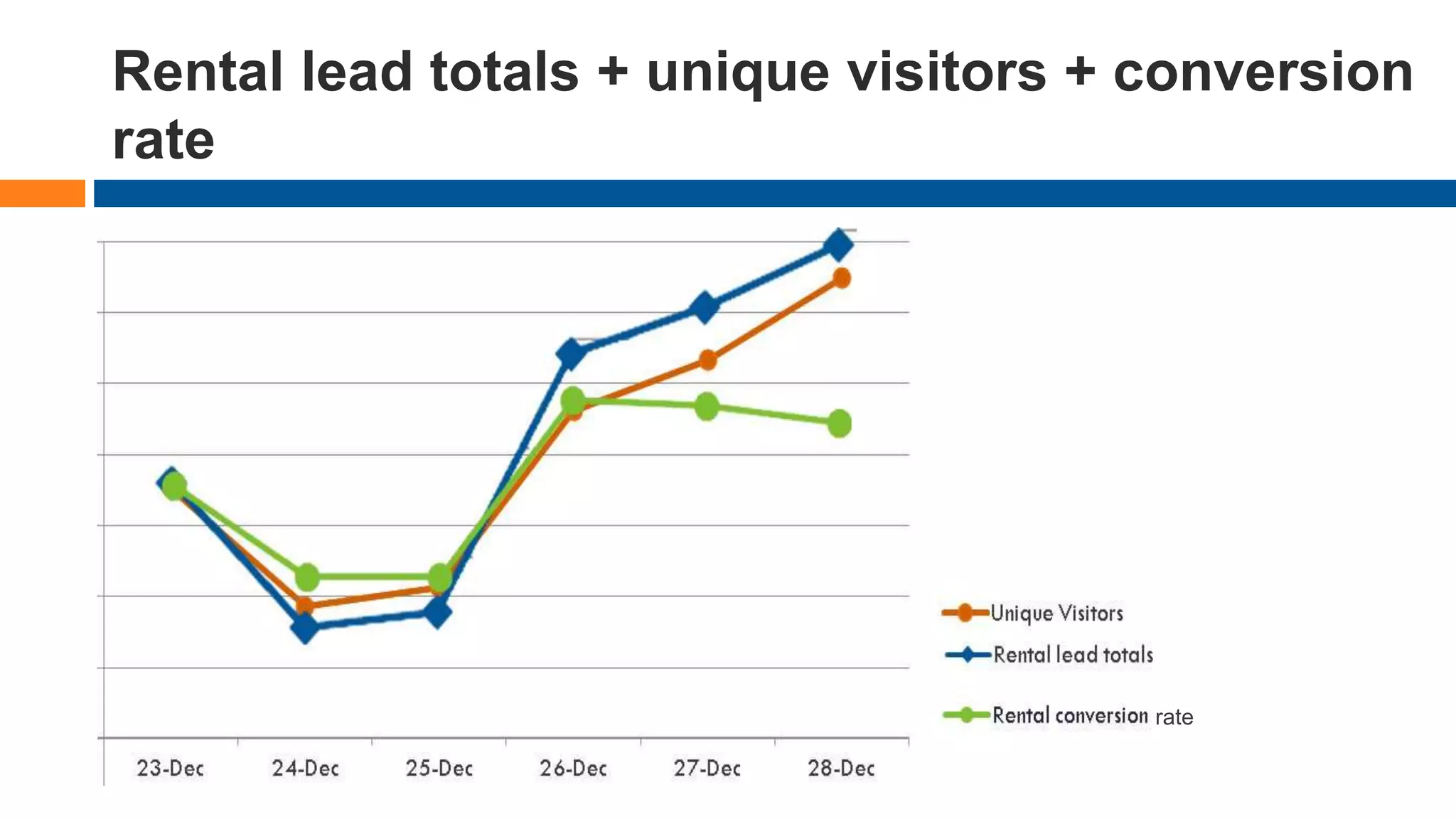
Rental lead totals + unique visitors
Rental lead totals + unique visitors + conversion
rate
rate
Apartment.com lead conversion rate
0.00%
0.05%
0.10%
0.15%
0.20%
0.25%
0.30%
23-Dec 24-Dec 25-Dec 26-Dec 27-Dec 28-Dec
Forrent conversion rate
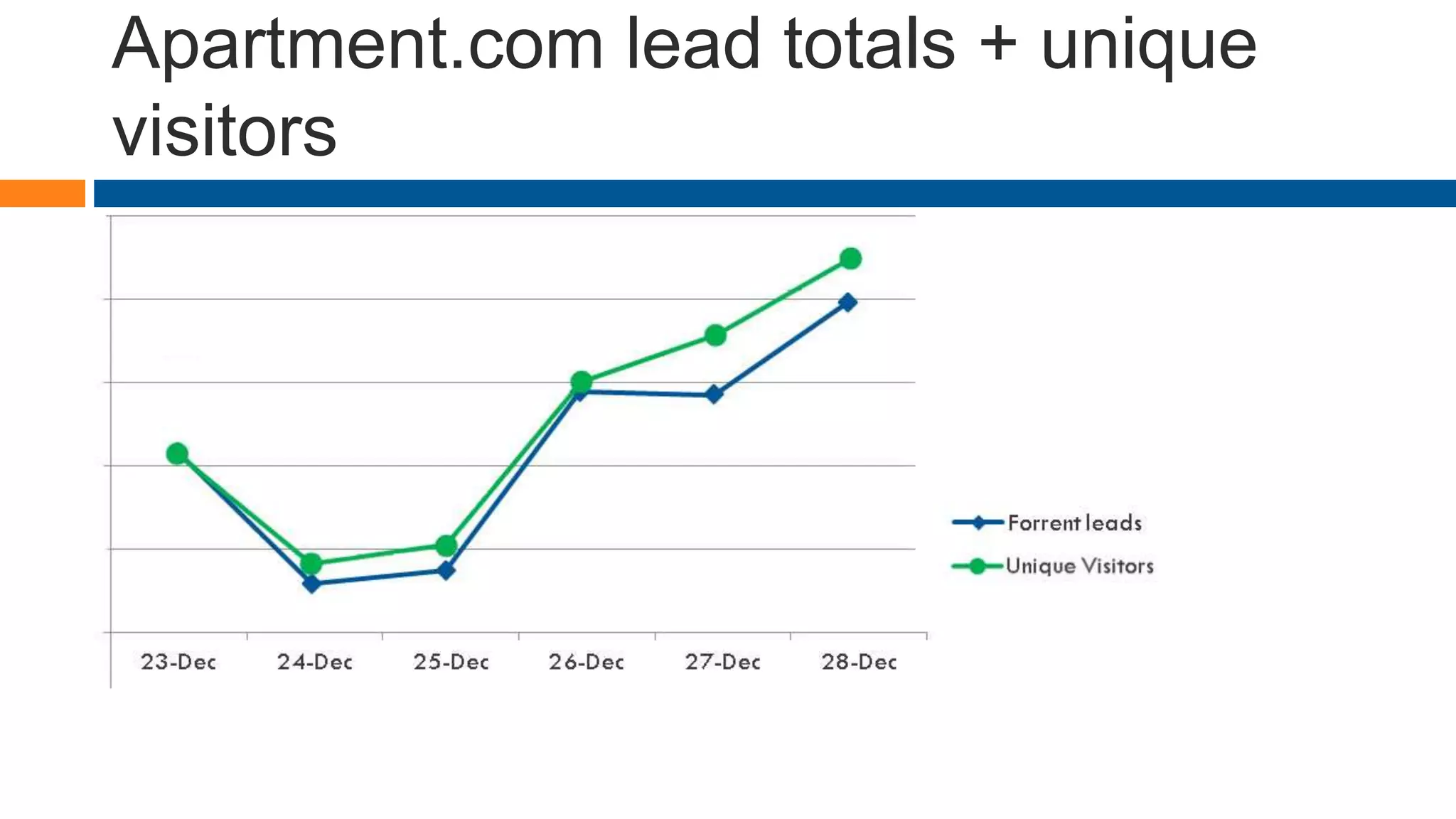
Apartment.com lead totals + unique
visitors
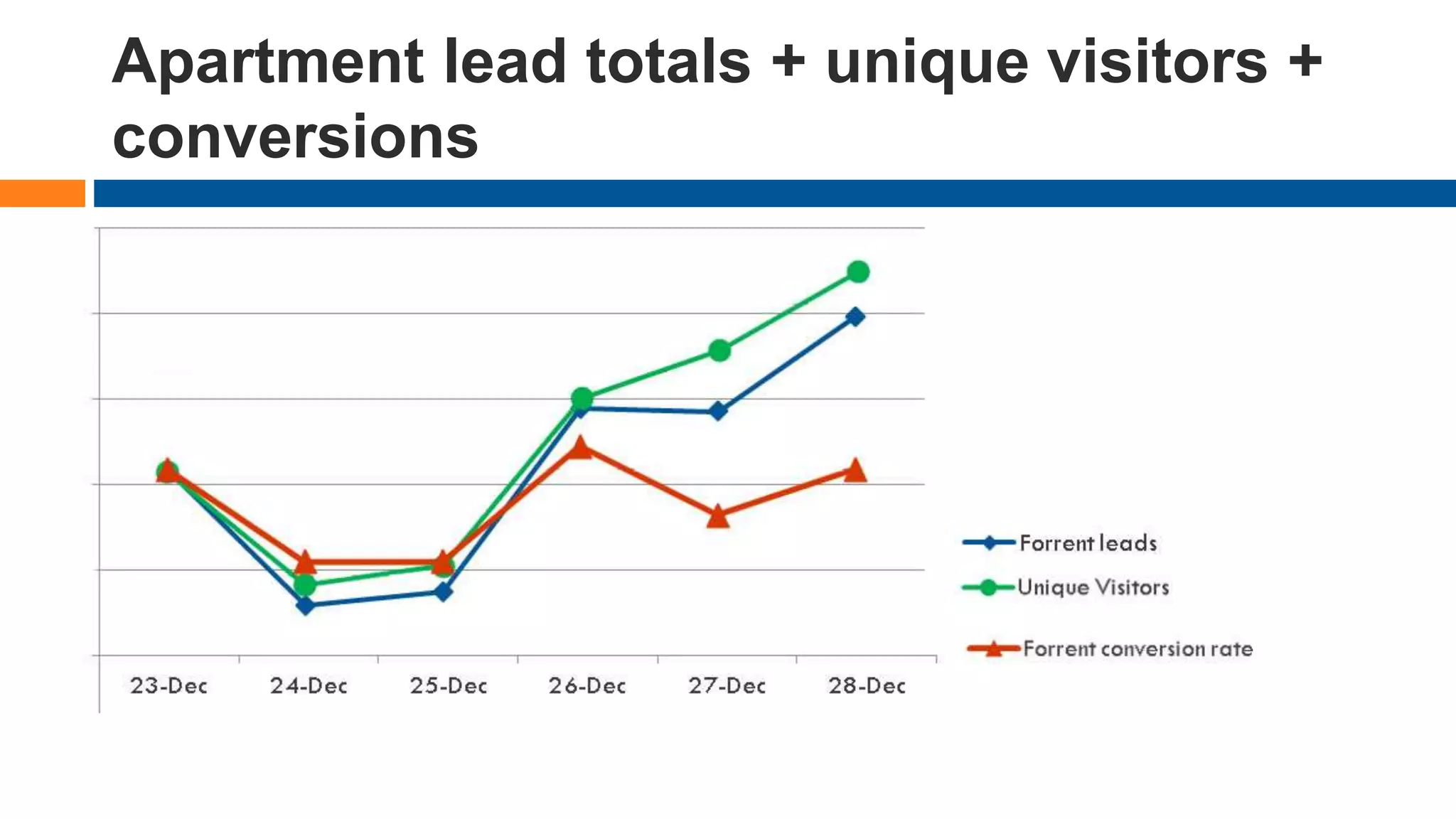
Apartment lead totals + unique visitors +
conversions
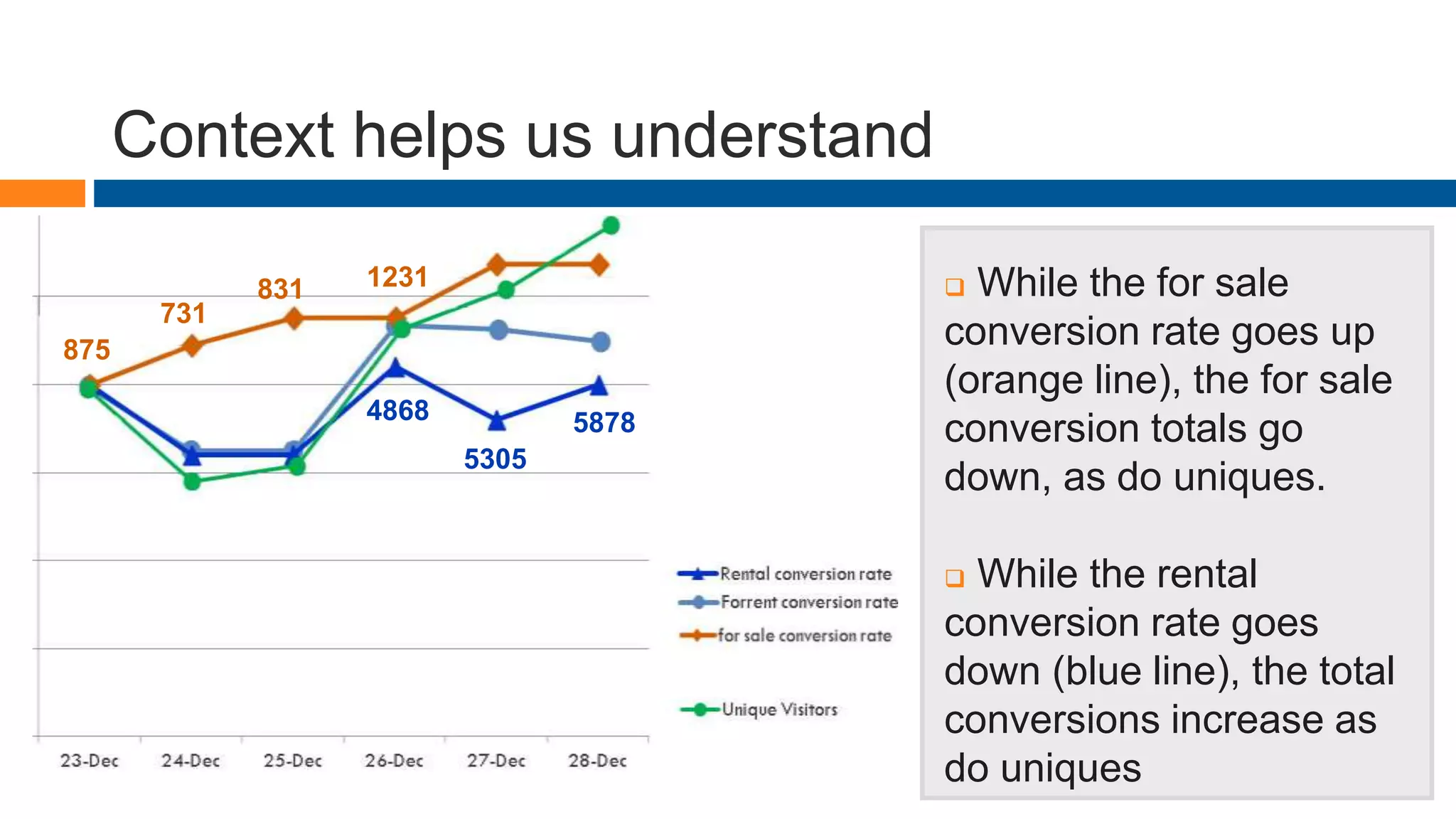
Context helps us understand
 While the for sale
conversion rate goes up
(orange line), the for sale
conversion totals go
down, as do uniques.
 While the rental
conversion rate goes
down (blue line), the total
conversions increase as
do uniques
875
731
831 1231
4868
5305
5878
• We know what ordinary traffic totals are
• We know what our rates are
• We see differences
• How do we explain them?
Who visited and took the poll
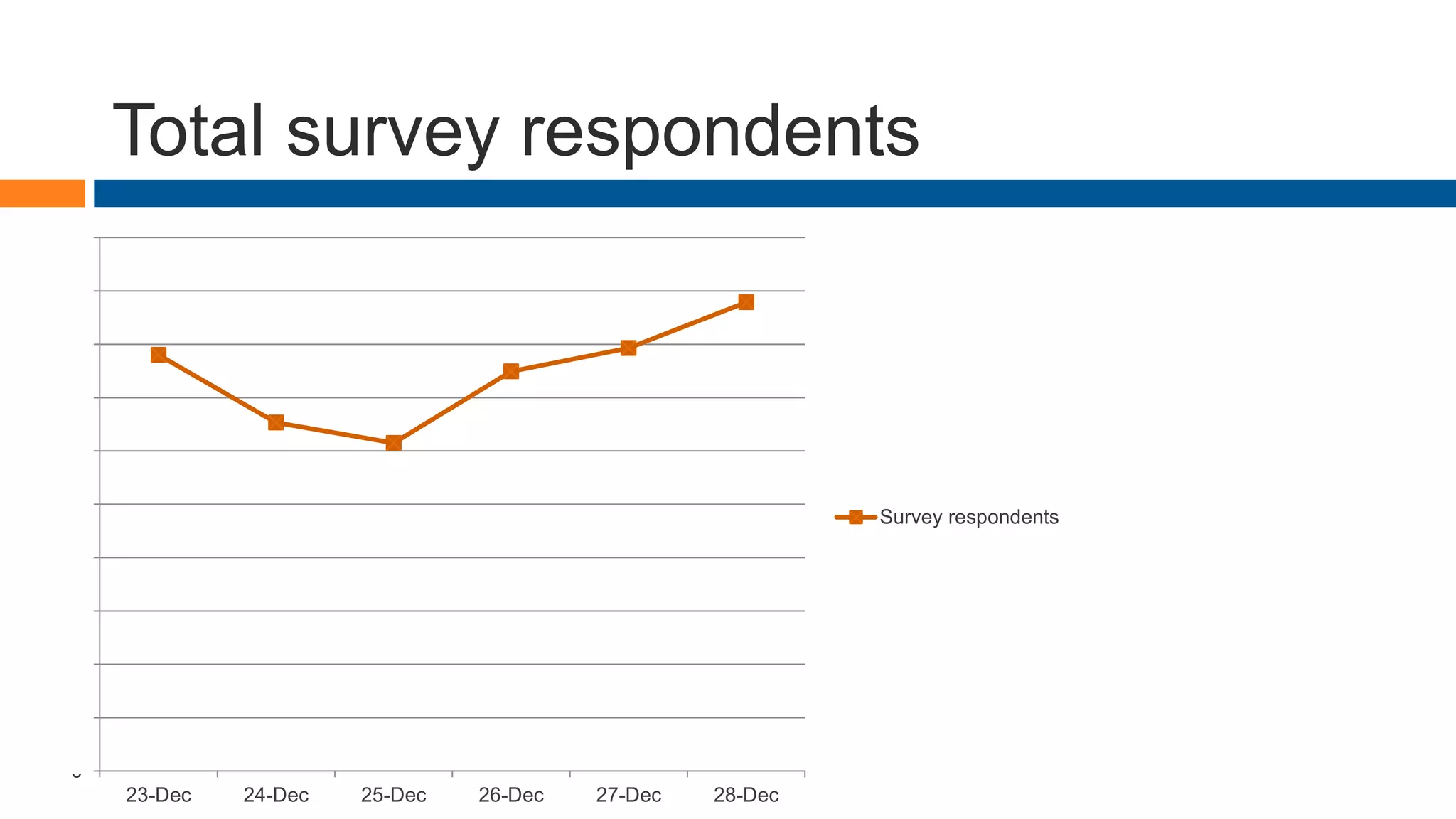
Total survey respondents
0
100
200
300
400
500
600
700
800
900
1000
23-Dec 24-Dec 25-Dec 26-Dec 27-Dec 28-Dec
Survey respondents
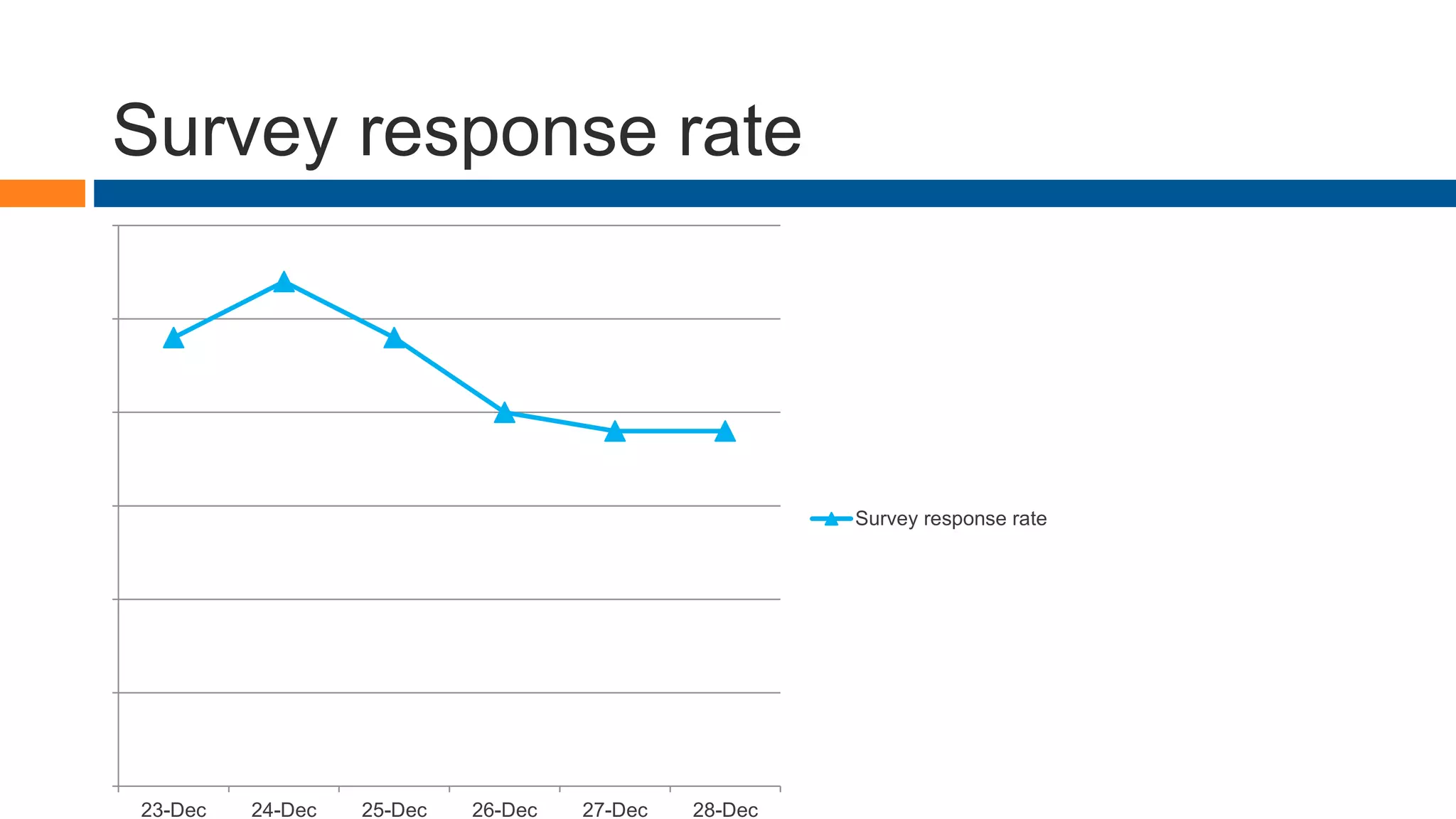
Survey response rate
0
0.05
0.1
0.15
0.2
0.25
0.3
23-Dec 24-Dec 25-Dec 26-Dec 27-Dec 28-Dec
Survey response rate
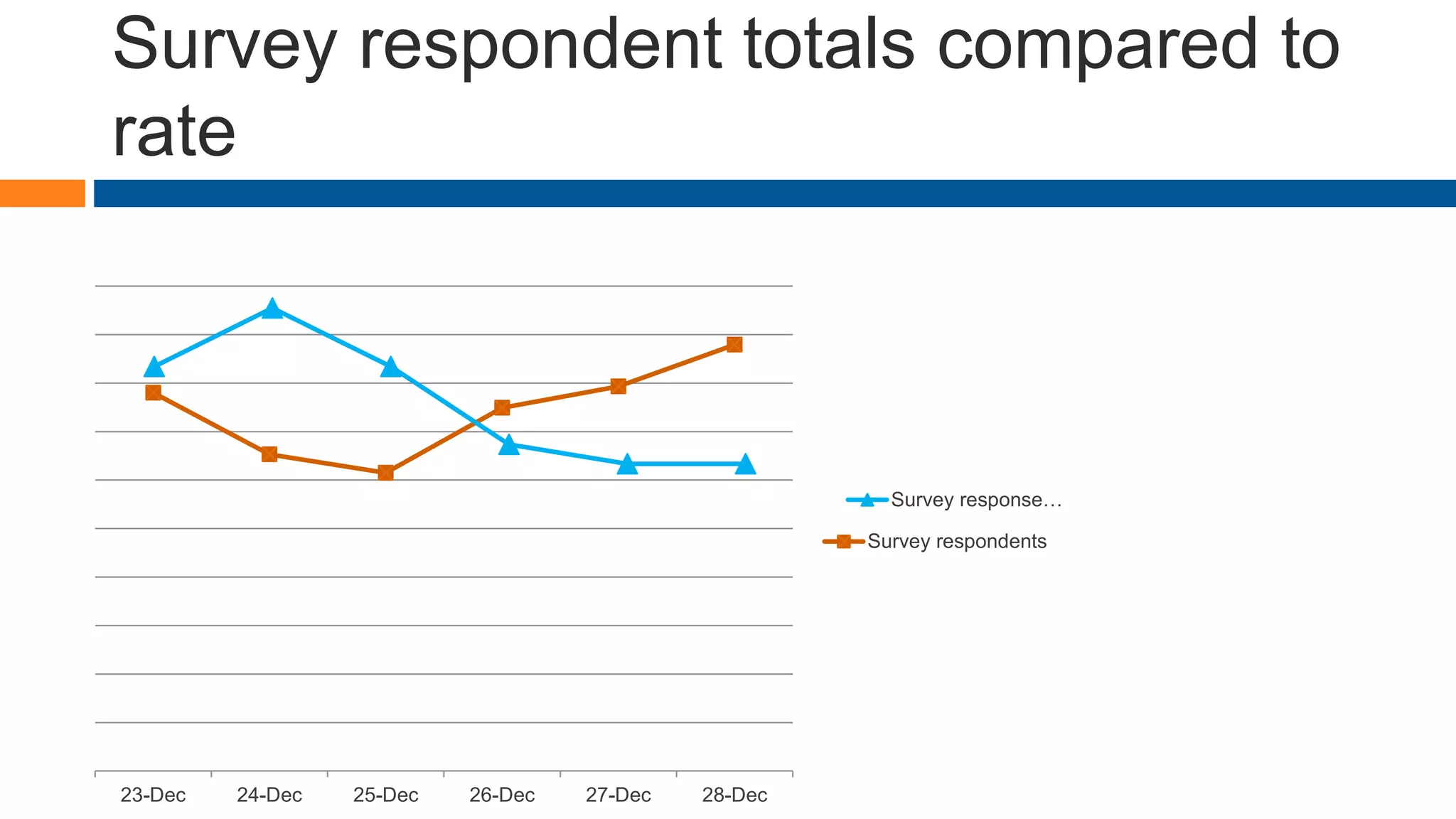
Survey respondent totals compared to
rate
23-Dec 24-Dec 25-Dec 26-Dec 27-Dec 28-Dec
Survey respondents
Survey response…
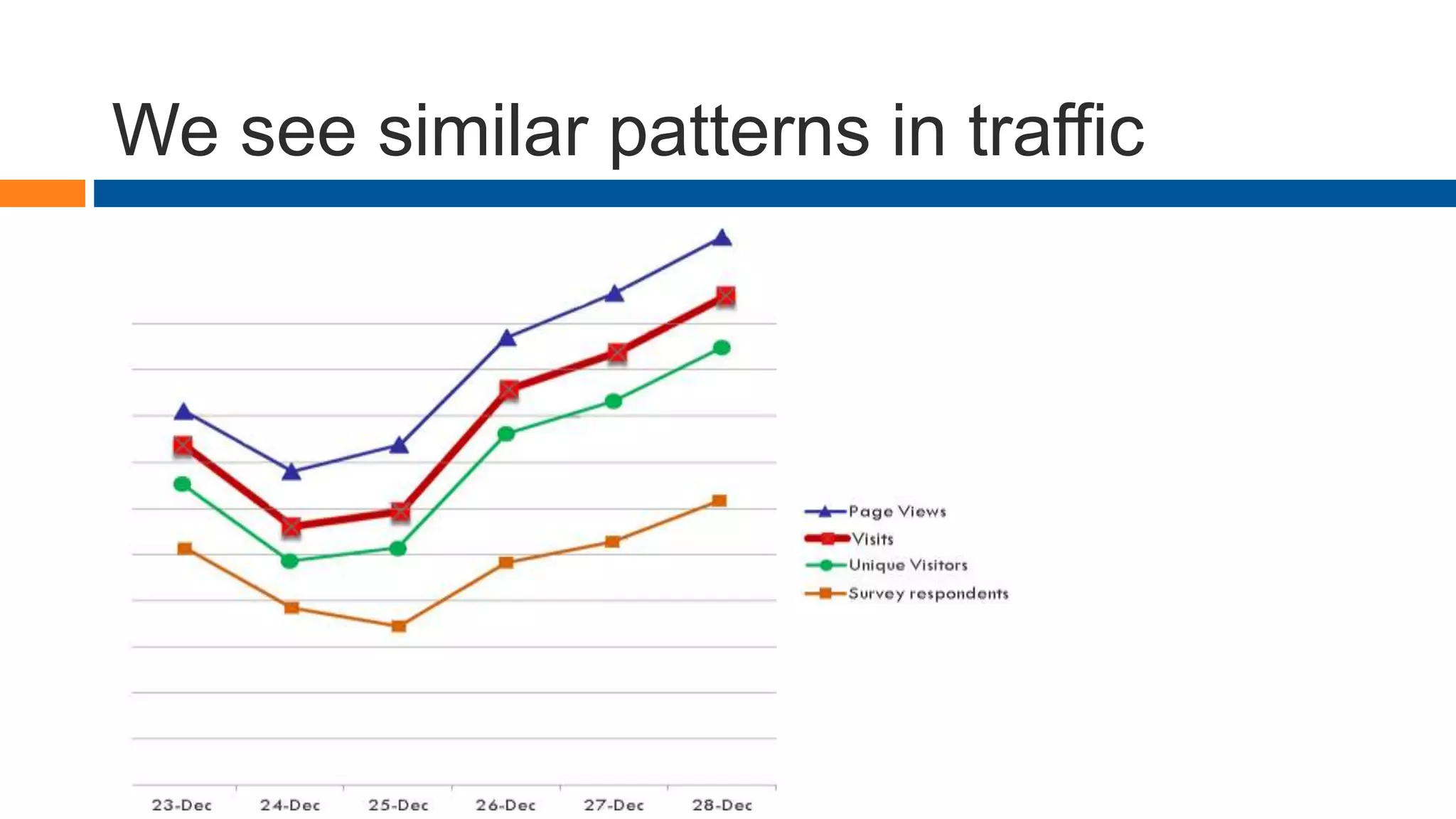
We see similar patterns in traffic
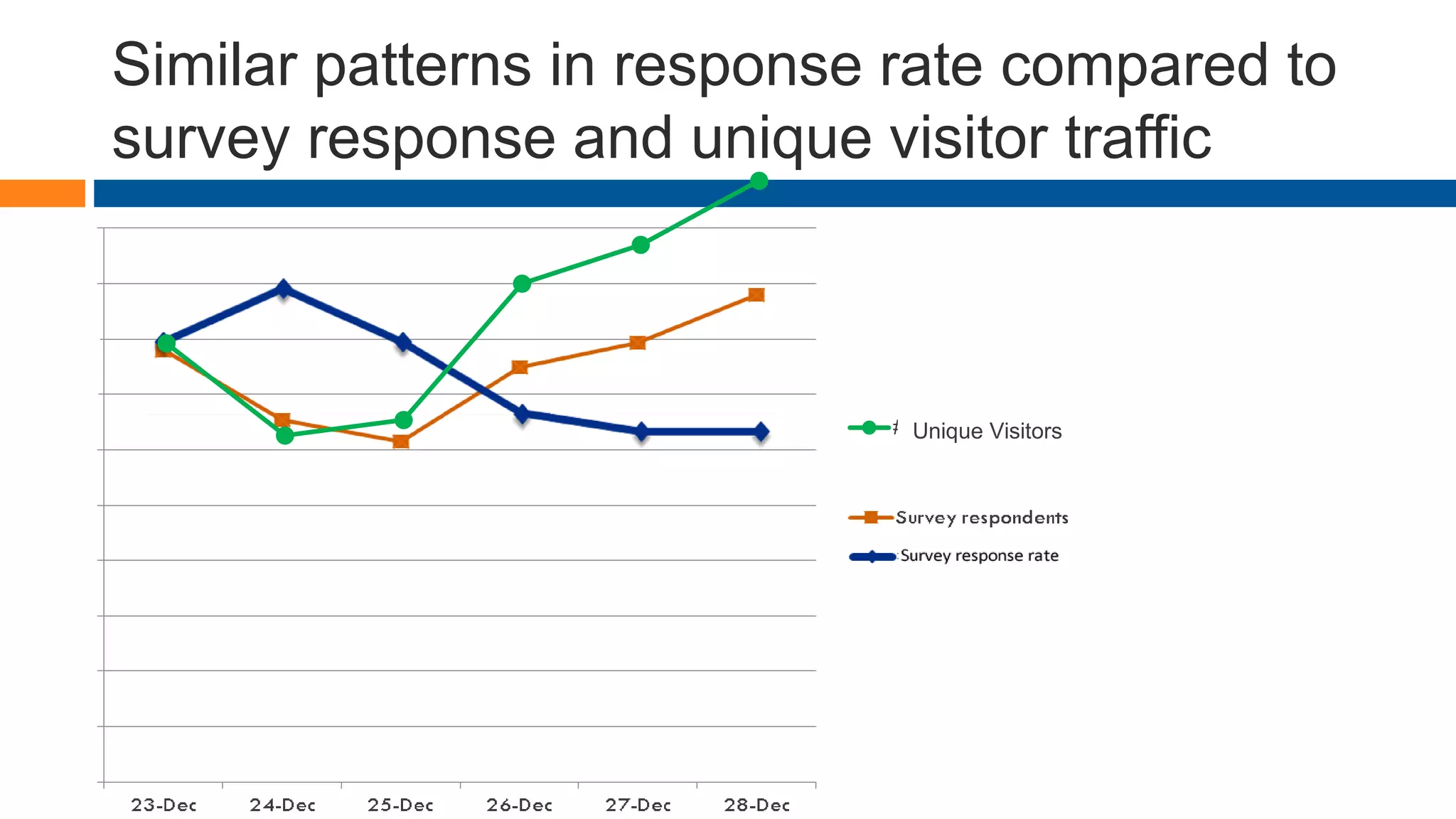
Similar patterns in response rate compared to
survey response and unique visitor traffic
#REF!Unique Visitors
 Given all this context, let’s look at the poll
 The context is like a sanity check, to
make sure it’s not telling an aberrant story
Who visited during the Christmas
holiday?
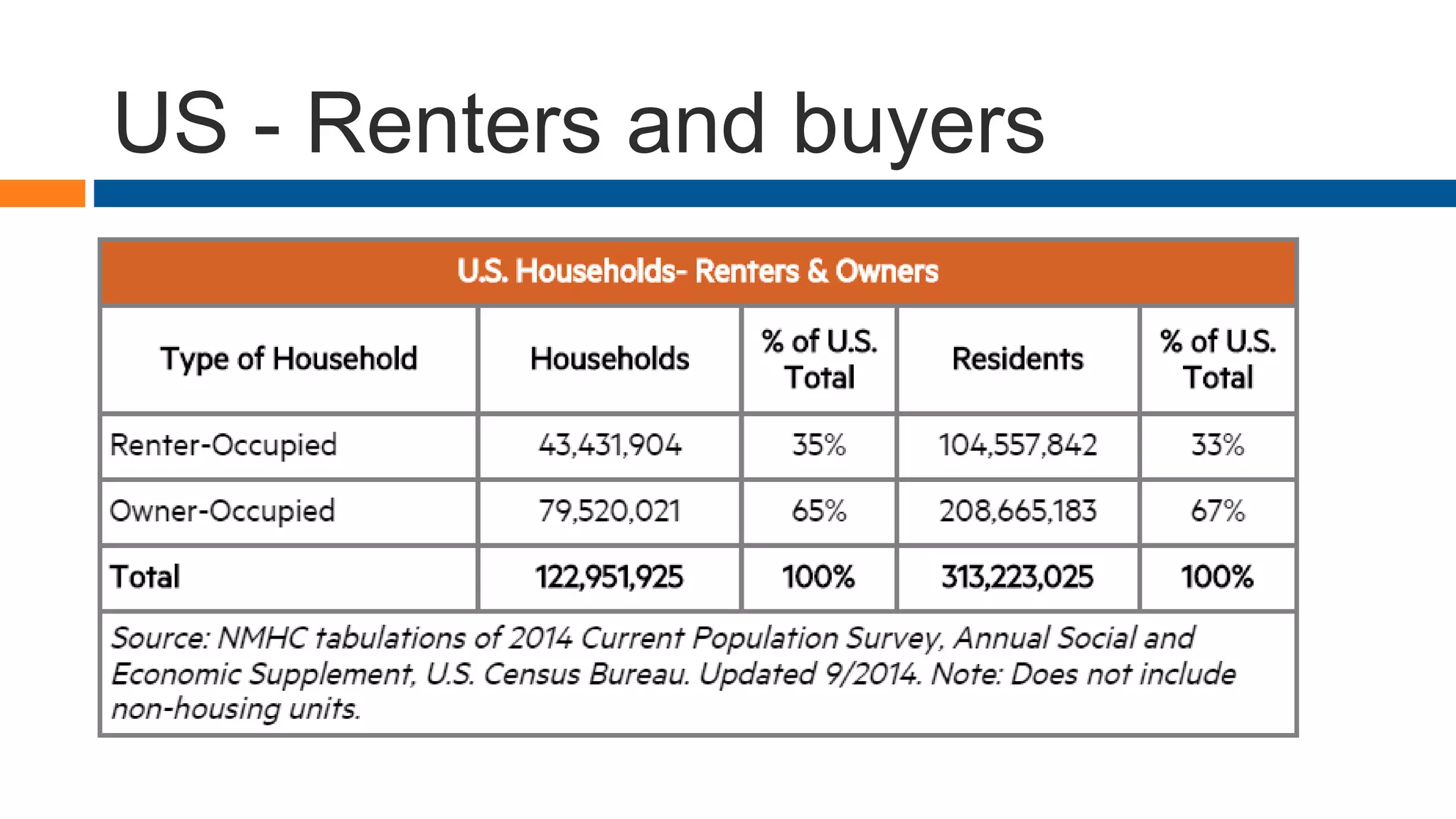
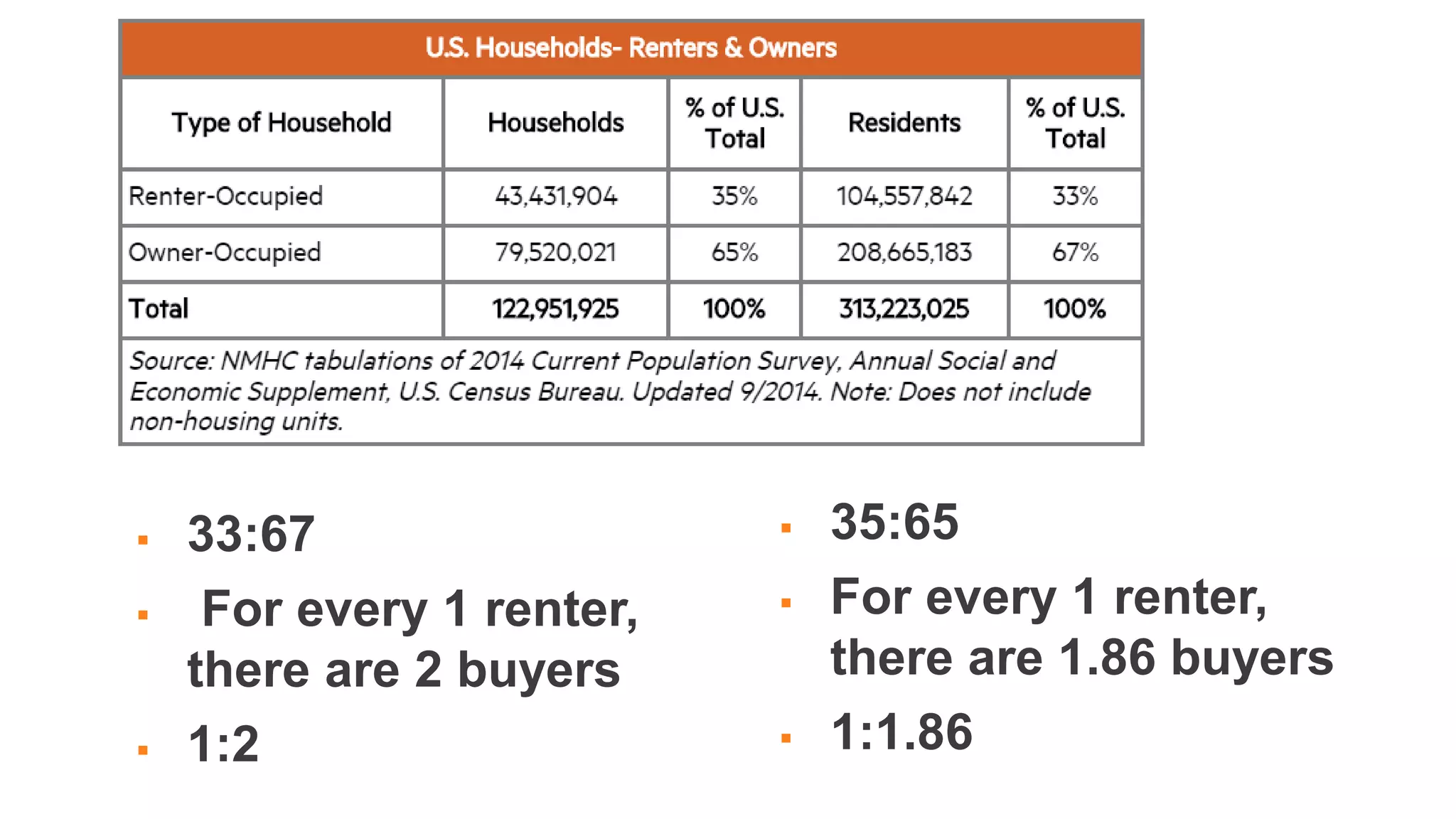
US - Renters and buyers
 33:67
 For every 1 renter,
there are 2 buyers
 1:2
 35:65
 For every 1 renter,
there are 1.86 buyers
 1:1.86
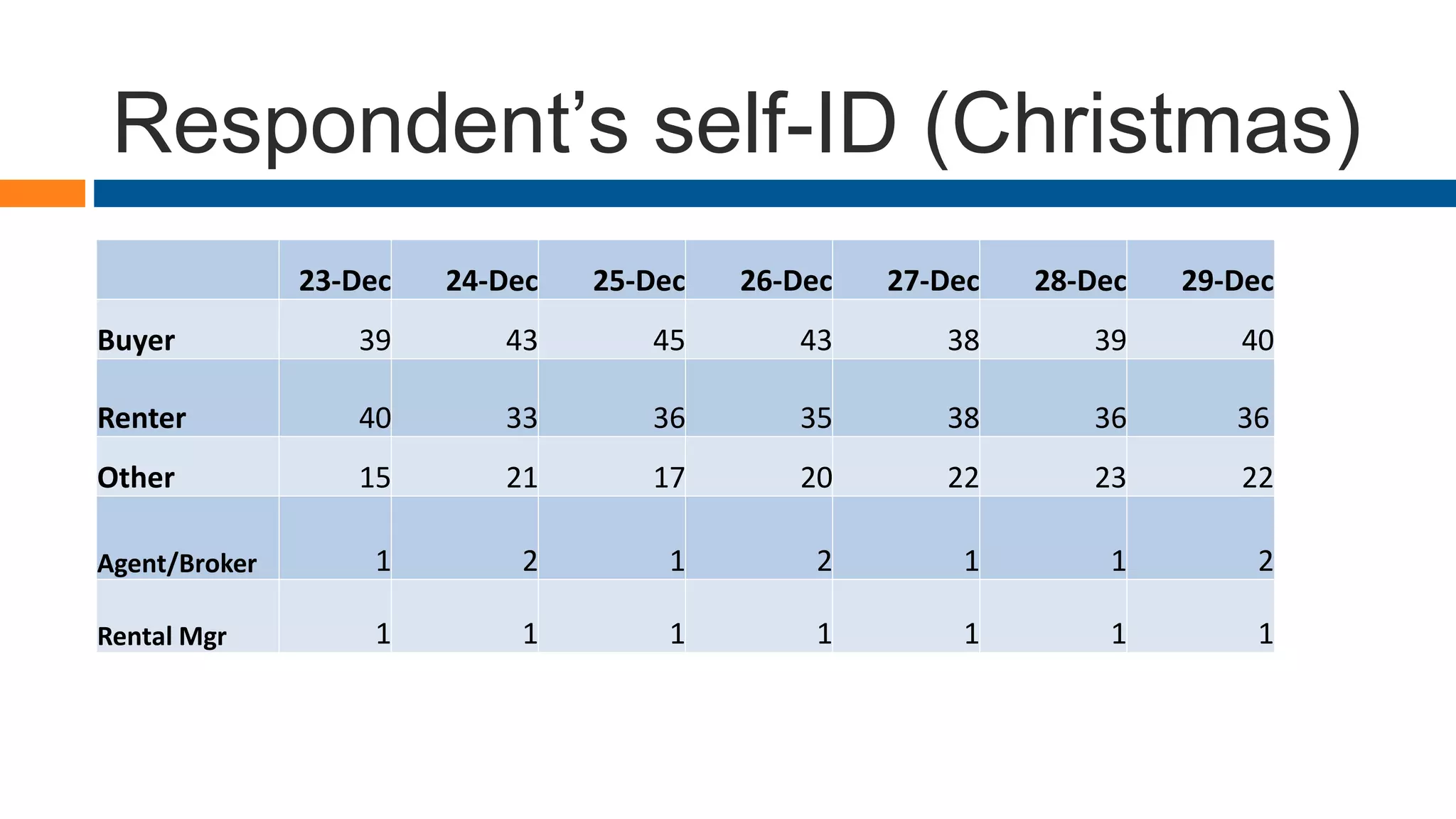
Respondent’s self-ID (Christmas)
23-Dec 24-Dec 25-Dec 26-Dec 27-Dec 28-Dec 29-Dec
Buyer 39 43 45 43 38 39 40
Renter 40 33 36 35 38 36 36
Other 15 21 17 20 22 23 22
Agent/Broker 1 2 1 2 1 1 2
Rental Mgr 1 1 1 1 1 1 1
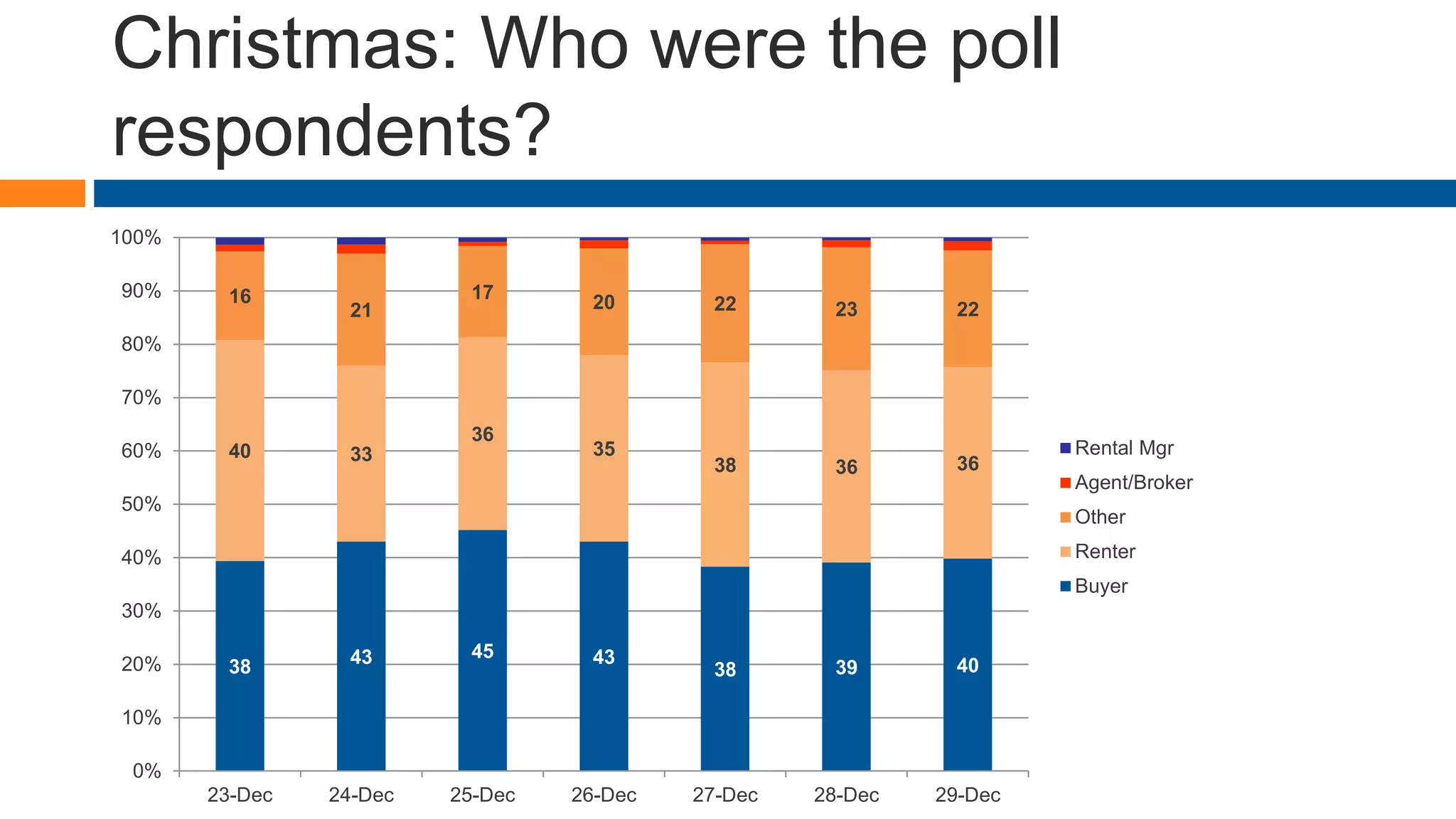
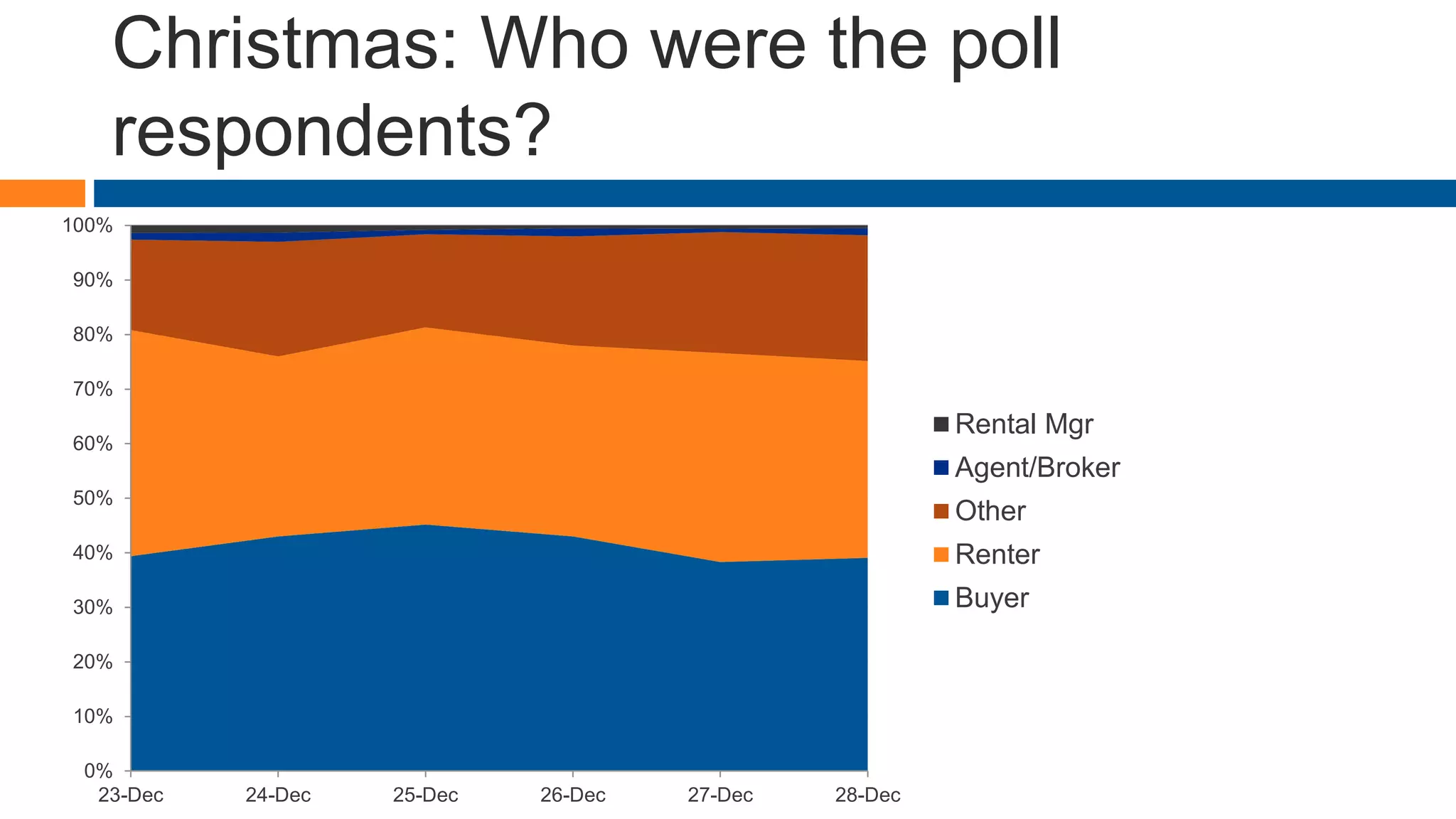
Christmas: Who were the poll
respondents?
38 43 45 43
38 39 40
40 33
36
35
38 36 36
16
21
17 20 22 23 22
0%
10%
20%
30%
40%
50%
60%
70%
80%
90%
100%
23-Dec 24-Dec 25-Dec 26-Dec 27-Dec 28-Dec 29-Dec
Rental Mgr
Agent/Broker
Other
Renter
Buyer
Christmas: Who were the poll
respondents?
0%
10%
20%
30%
40%
50%
60%
70%
80%
90%
100%
23-Dec 24-Dec 25-Dec 26-Dec 27-Dec 28-Dec
Rental Mgr
Agent/Broker
Other
Renter
Buyer
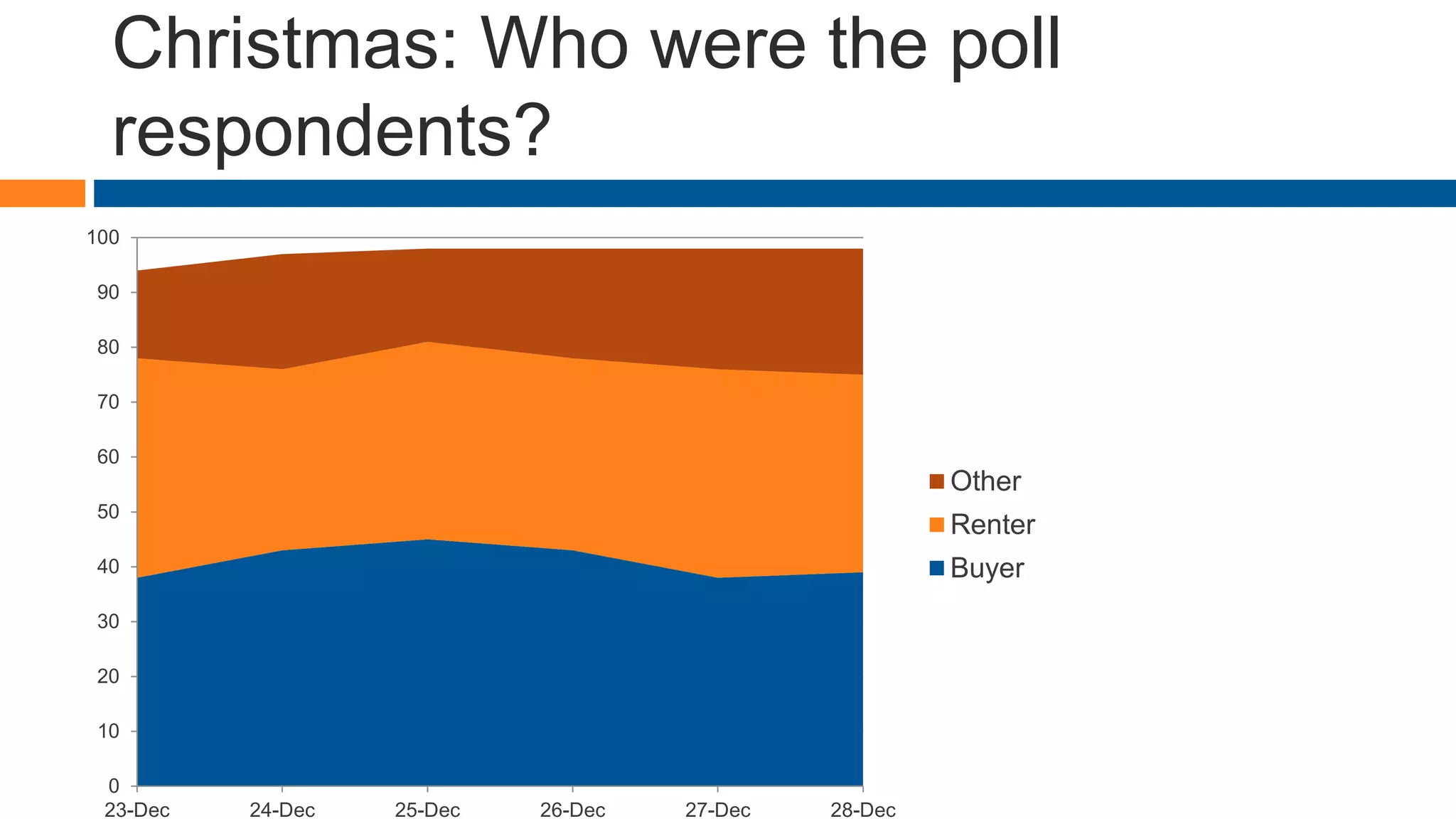
Christmas: Who were the poll
respondents?
0
10
20
30
40
50
60
70
80
90
100
23-Dec 24-Dec 25-Dec 26-Dec 27-Dec 28-Dec
Other
Renter
Buyer
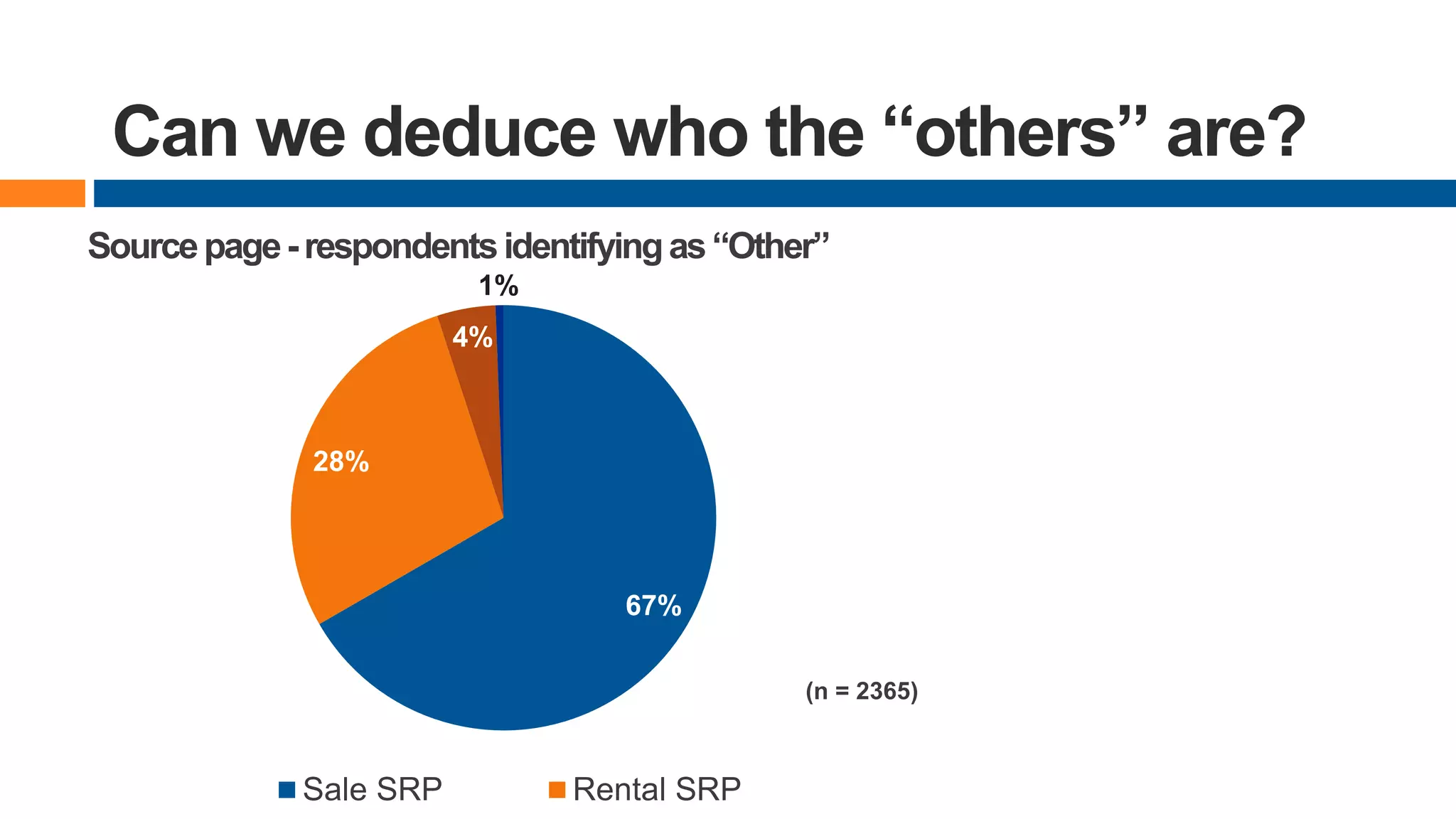
Can we deduce who the “others” are?
67%
28%
4%
1%
(n = 2365)
Sale SRP Rental SRP
Sourcepage-respondentsidentifyingas“Other”
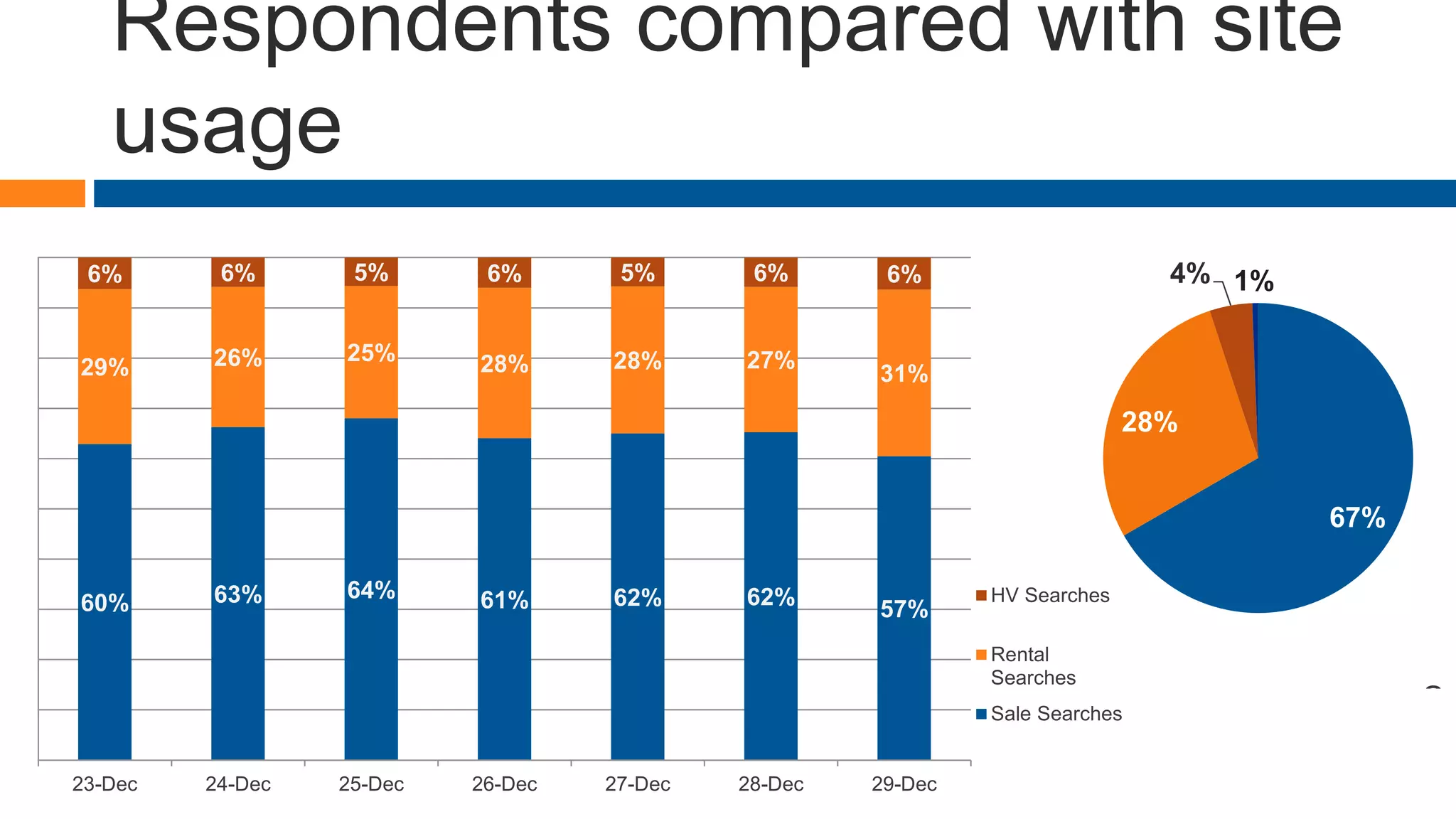
Respondents compared with site
usage
60% 63% 64% 61% 62% 62% 57%
29% 26% 25% 28% 28% 27%
31%
6% 6% 5% 6% 5% 6% 6%
0%
10%
20%
30%
40%
50%
60%
70%
80%
90%
100%
23-Dec 24-Dec 25-Dec 26-Dec 27-Dec 28-Dec 29-Dec
HV Searches
Rental
Searches
Sale Searches
67%
28%
4% 1%
S…
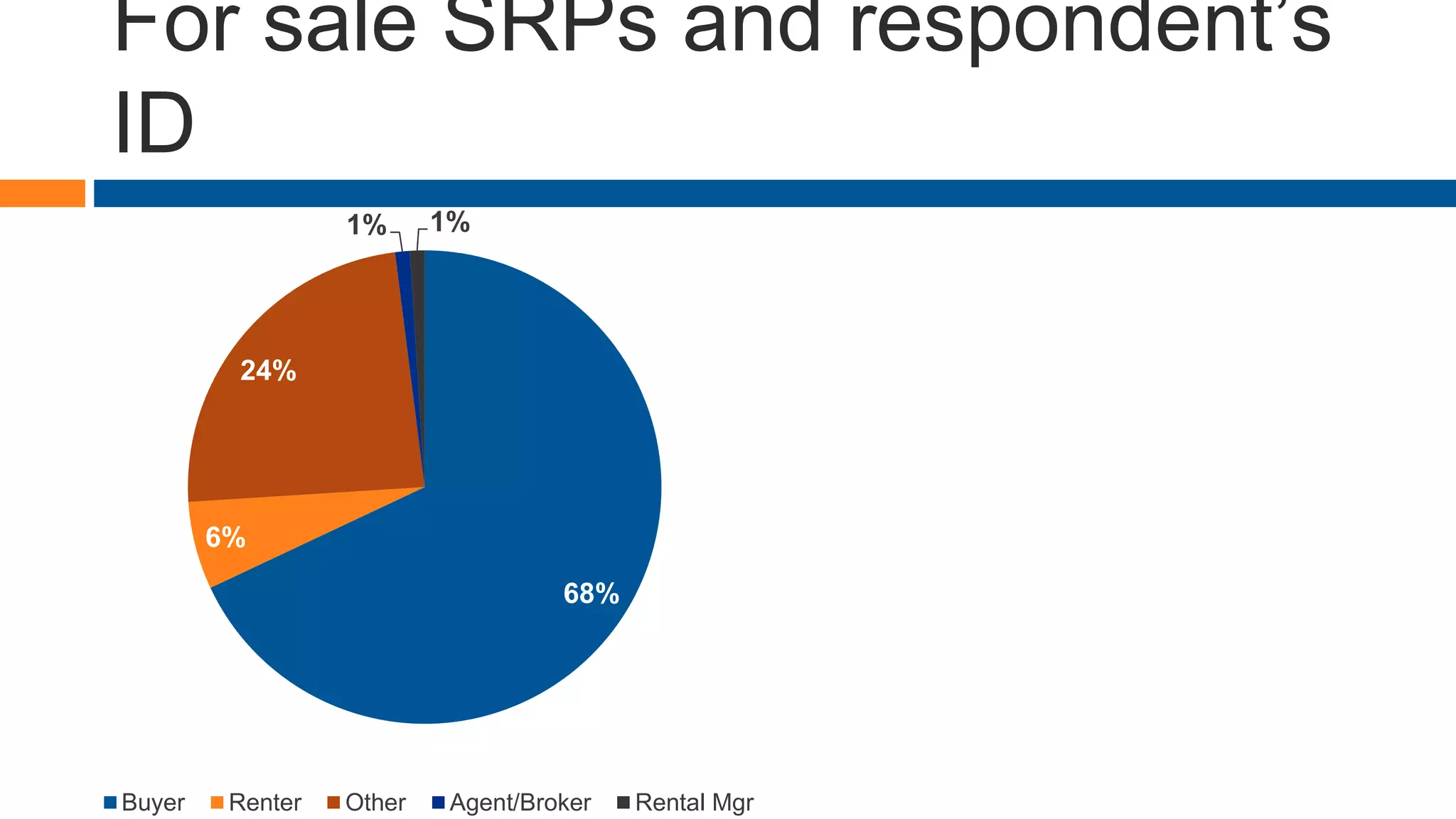
For sale SRPs and respondent’s
ID
68%
6%
24%
1% 1%
Buyer Renter Other Agent/Broker Rental Mgr
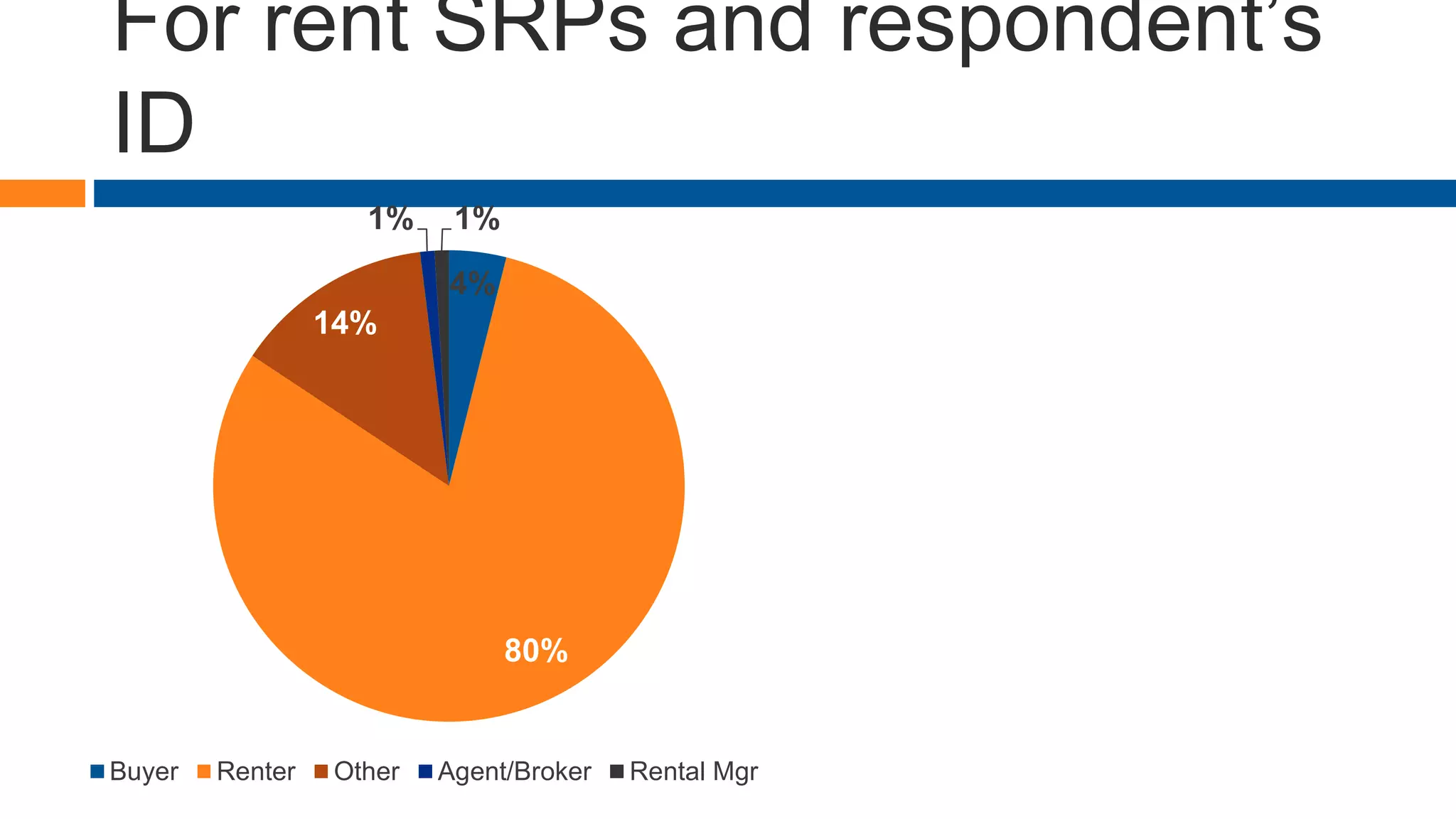
For rent SRPs and respondent’s
ID
4%
80%
14%
1% 1%
Buyer Renter Other Agent/Broker Rental Mgr
• If we just looked at the survey, looks like there are slightly
more buyers than renters.
• Might also think that the volatility in the other category can
help explain trends
• Looking at the data in context shows that there’s was a
strong surge in for sale traffic that probably accounts for the
bulk of the traffic.
• This comports with other data such as national surveys.
Conclusion
• Now we can look at what cause the NY
traffic spike
• First, look at traffic and conversion rate
patterns
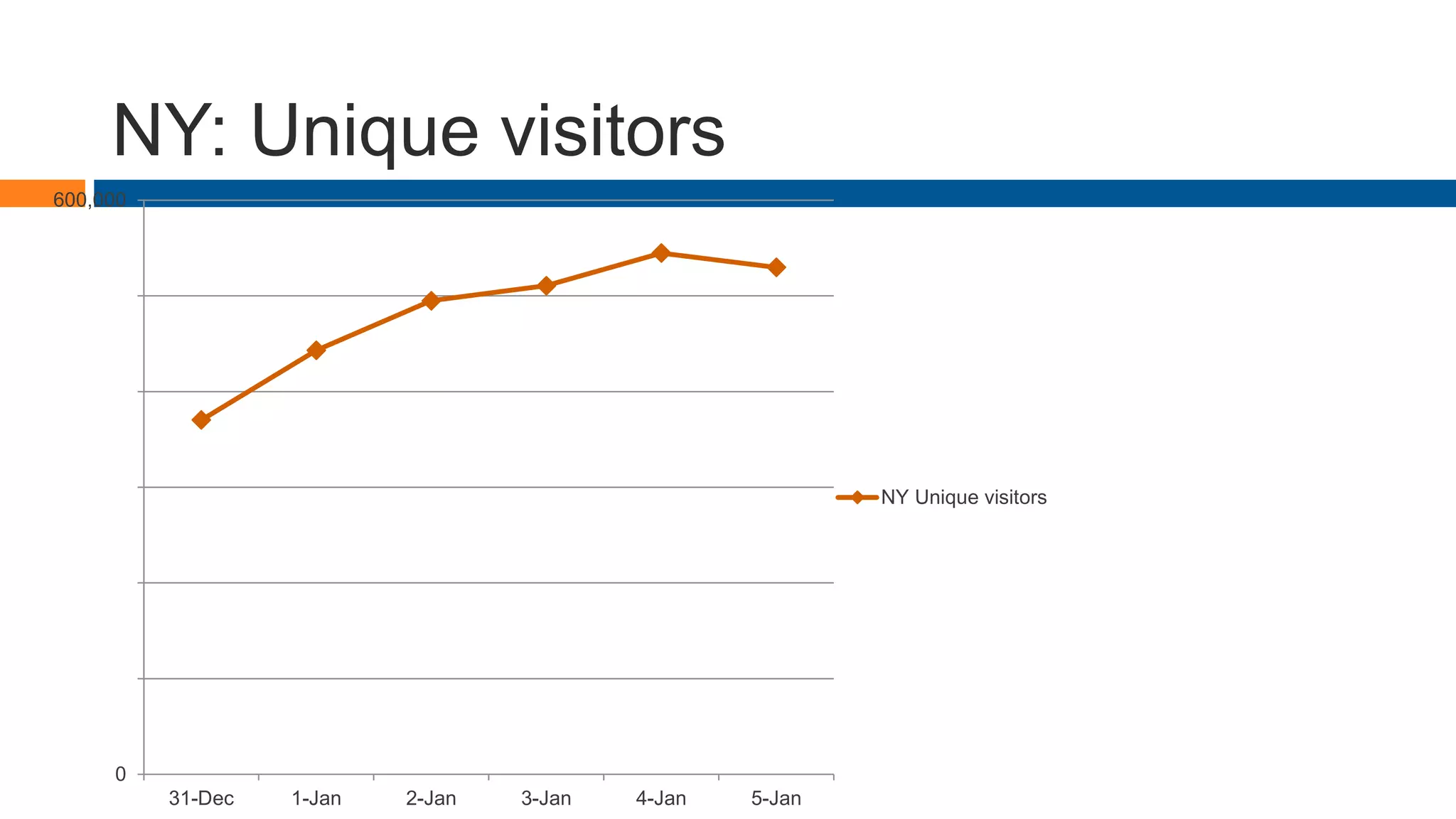
New Year Traffic spike
NY: Unique visitors
0
100,000
200,000
300,000
400,000
500,000
600,000
31-Dec 1-Jan 2-Jan 3-Jan 4-Jan 5-Jan
NY Unique visitors
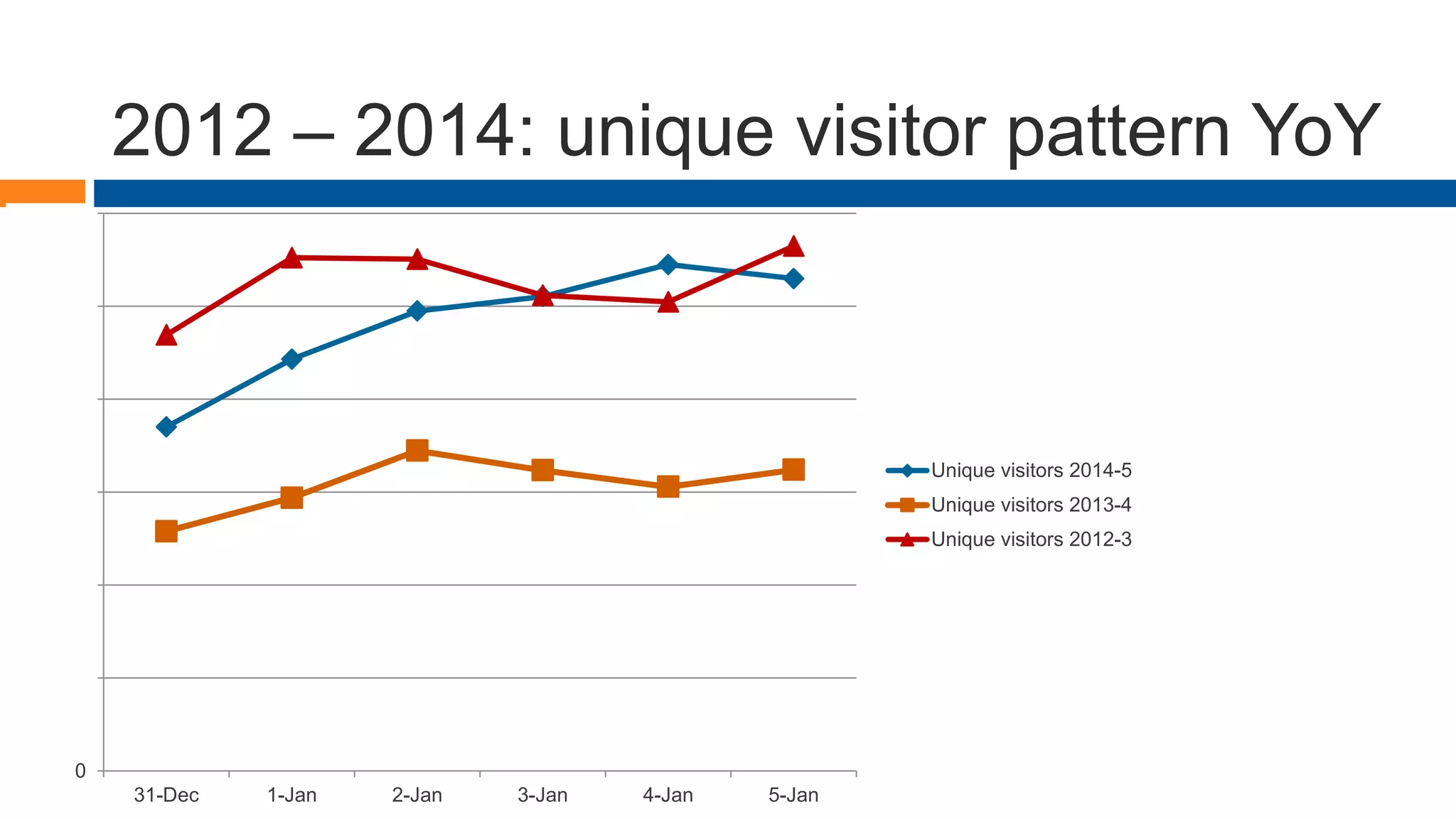
2012 – 2014: unique visitor pattern YoY
0
100,000
200,000
300,000
400,000
500,000
600,000
31-Dec 1-Jan 2-Jan 3-Jan 4-Jan 5-Jan
Unique visitors 2014-5
Unique visitors 2013-4
Unique visitors 2012-3
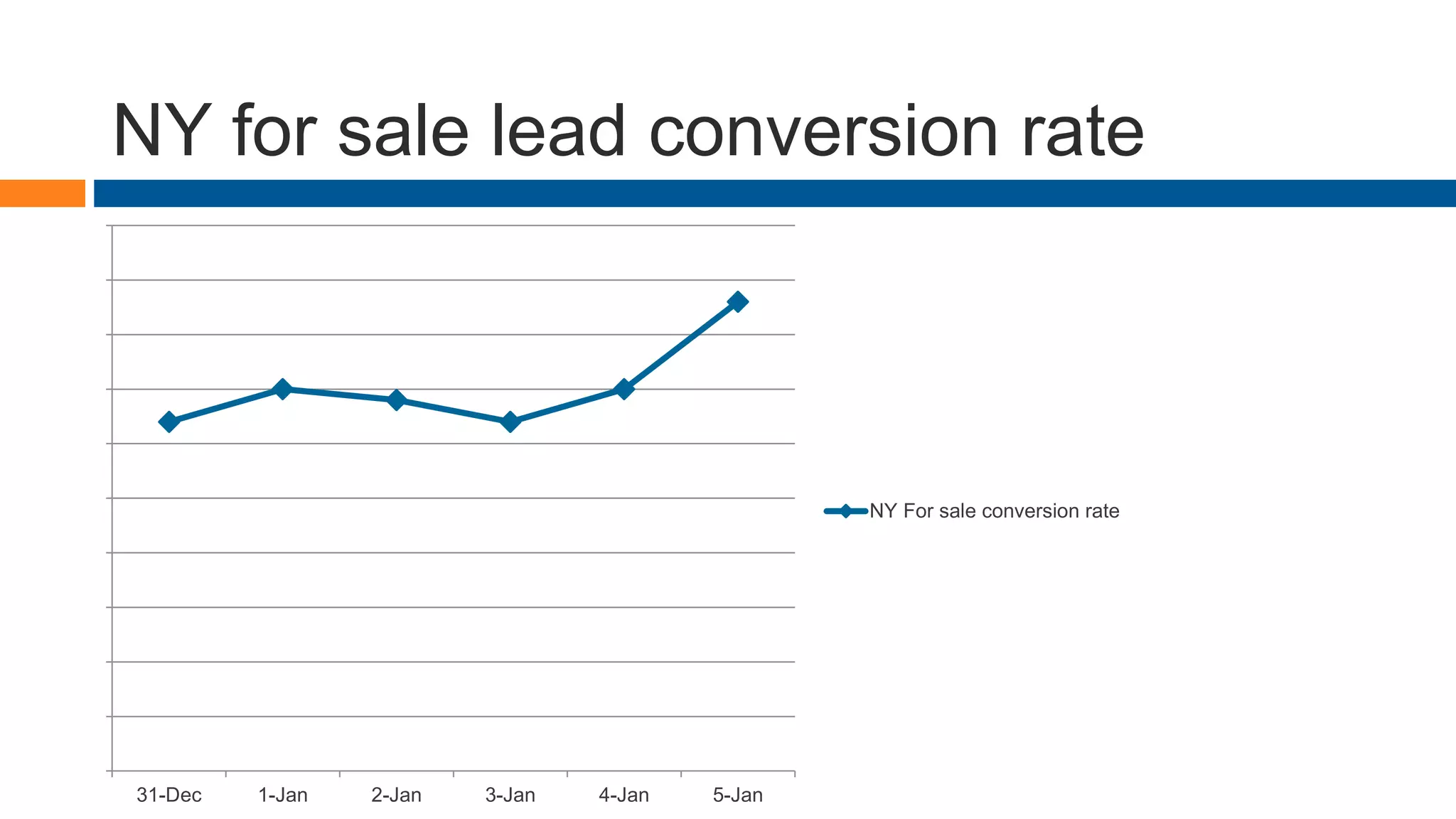
NY for sale lead conversion rate
0.00%
0.05%
0.10%
0.15%
0.20%
0.25%
0.30%
0.35%
0.40%
0.45%
0.50%
31-Dec 1-Jan 2-Jan 3-Jan 4-Jan 5-Jan
NY For sale conversion rate
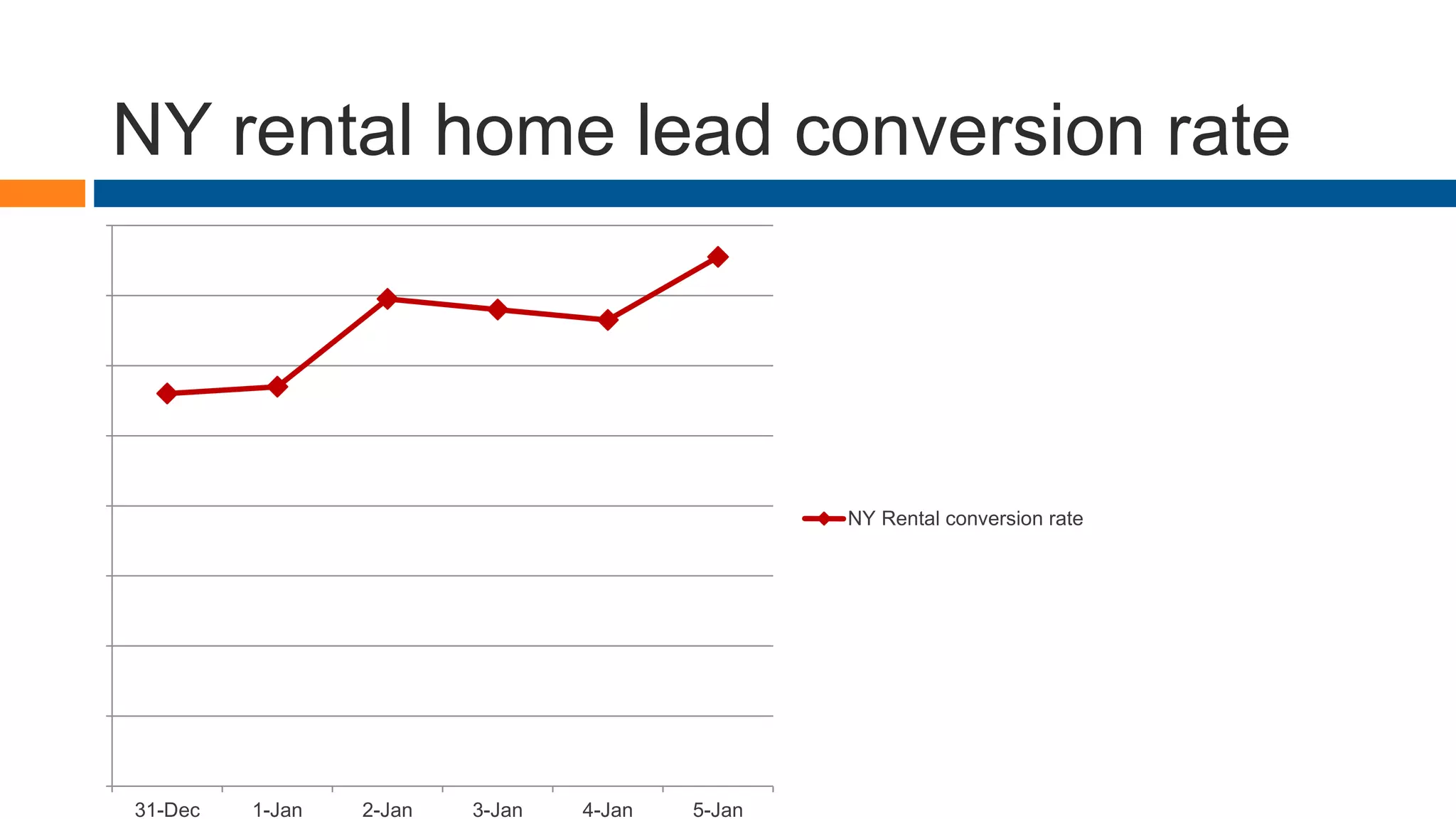
NY rental home lead conversion rate
0.00%
0.20%
0.40%
0.60%
0.80%
1.00%
1.20%
1.40%
1.60%
31-Dec 1-Jan 2-Jan 3-Jan 4-Jan 5-Jan
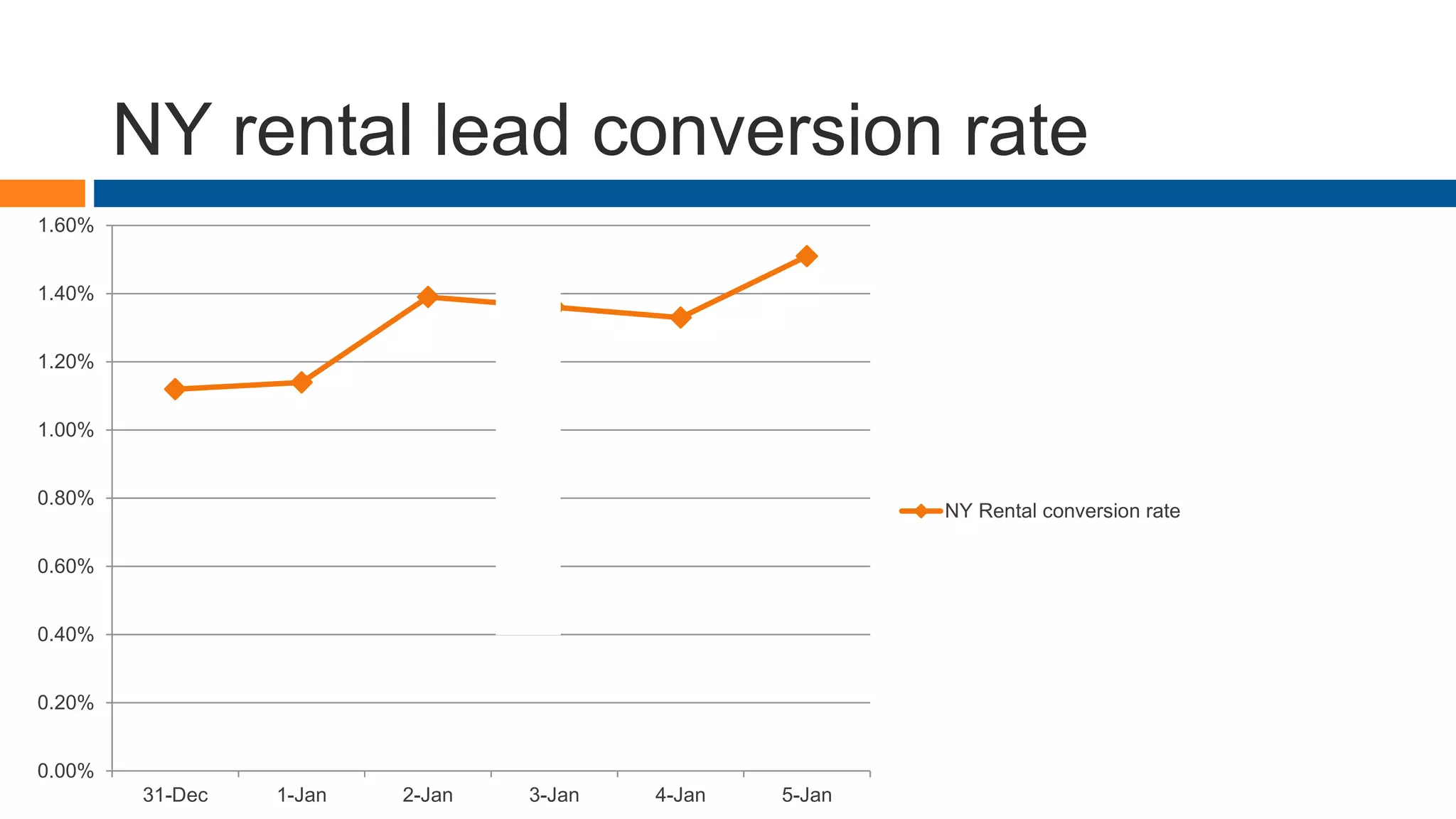
NY Rental conversion rate
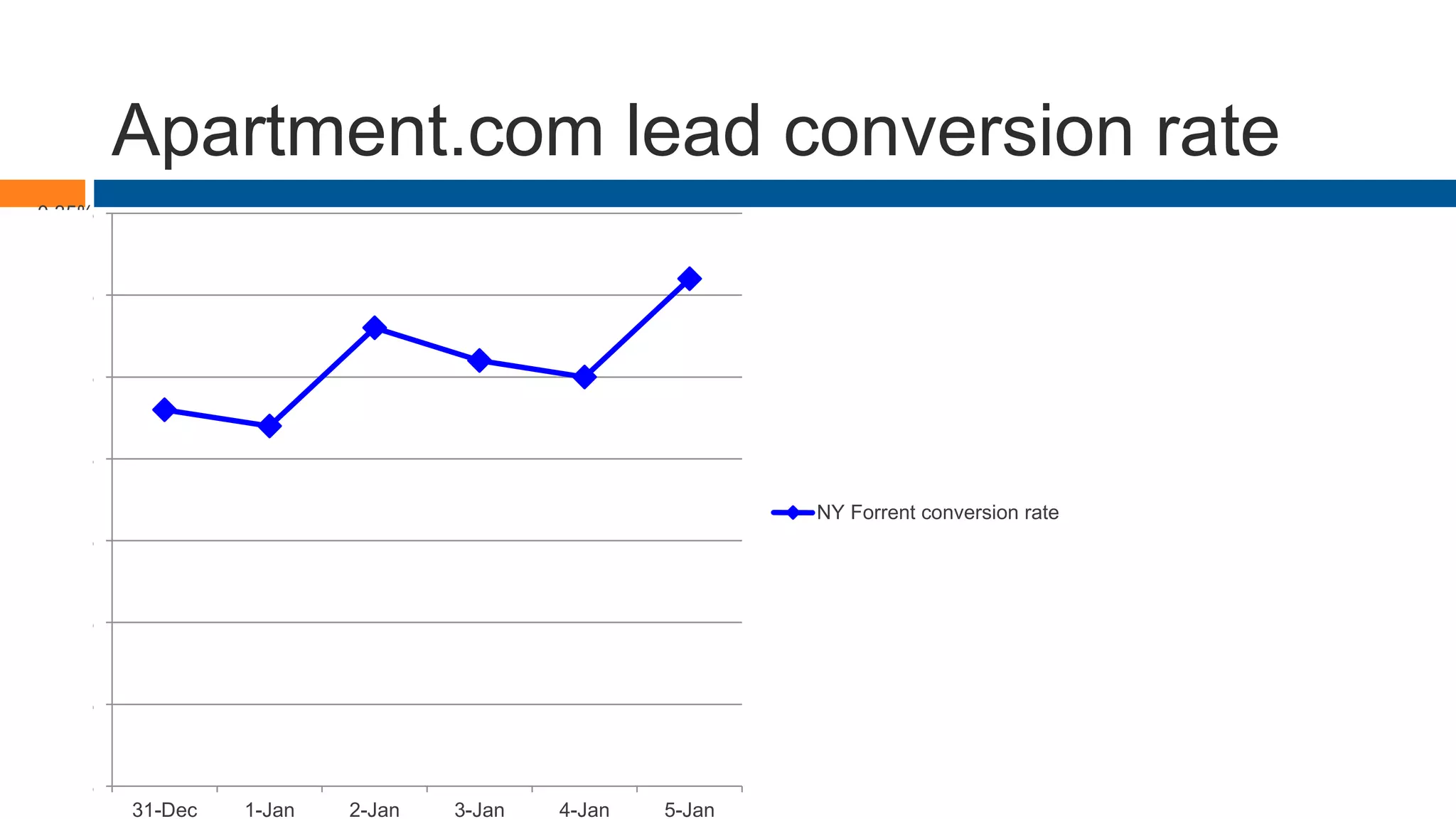
Apartment.com lead conversion rate
0.00%
0.05%
0.10%
0.15%
0.20%
0.25%
0.30%
0.35%
31-Dec 1-Jan 2-Jan 3-Jan 4-Jan 5-Jan
NY Forrent conversion rate
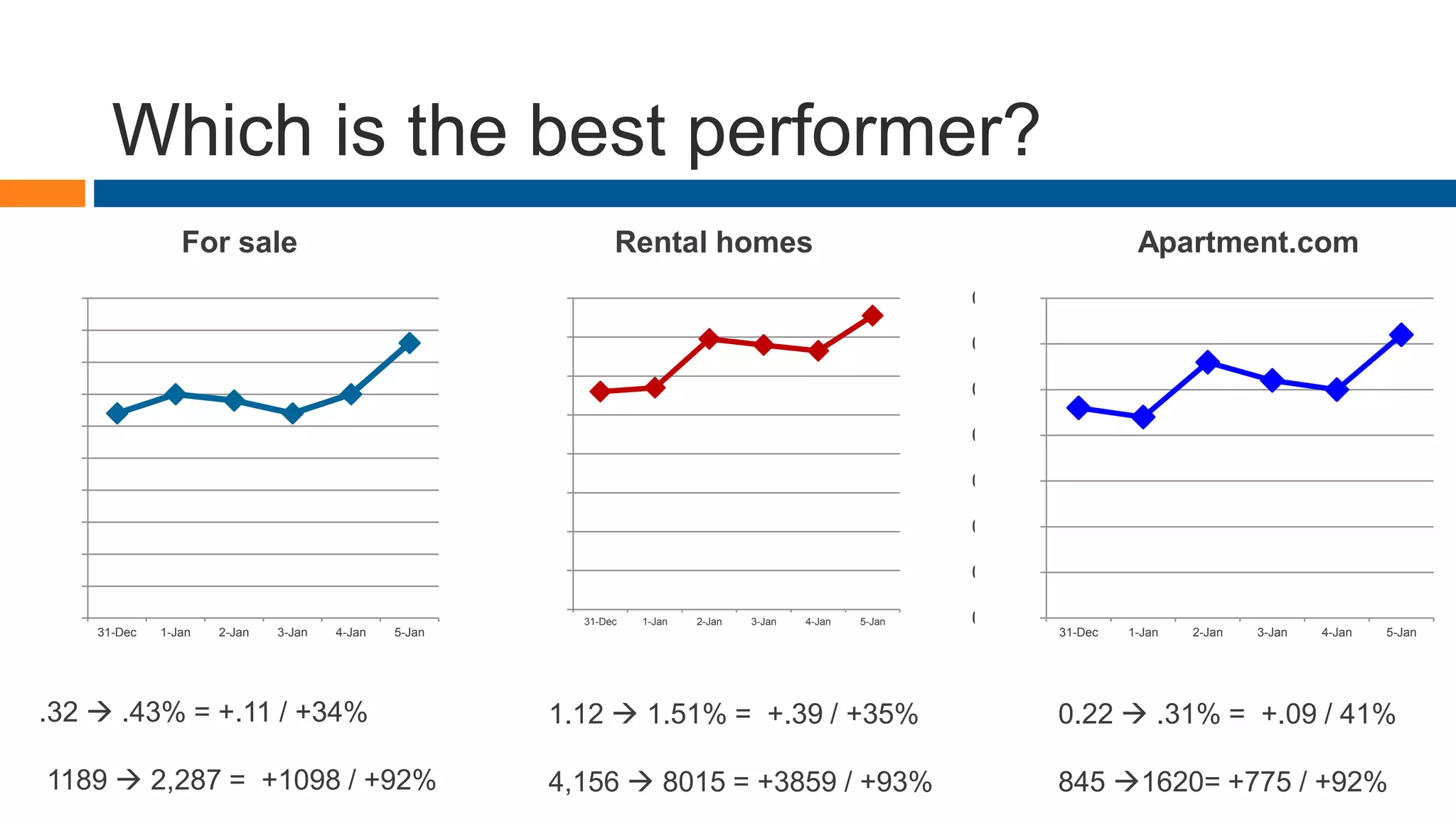
Which is the best performer?
1.12  1.51% = +.39 / +35%
4,156  8015 = +3859 / +93%
.32  .43% = +.11 / +34%
1189  2,287 = +1098 / +92%
0.22  .31% = +.09 / 41%
845 1620= +775 / +92%
0.00%
0.05%
0.10%
0.15%
0.20%
0.25%
0.30%
0.35%
0.40%
0.45%
0.50%
31-Dec 1-Jan 2-Jan 3-Jan 4-Jan 5-Jan
For sale Rental homes Apartment.com
0.00%
0.20%
0.40%
0.60%
0.80%
1.00%
1.20%
1.40%
1.60%
31-Dec 1-Jan 2-Jan 3-Jan 4-Jan 5-Jan 0.00%
0.05%
0.10%
0.15%
0.20%
0.25%
0.30%
0.35%
31-Dec 1-Jan 2-Jan 3-Jan 4-Jan 5-Jan
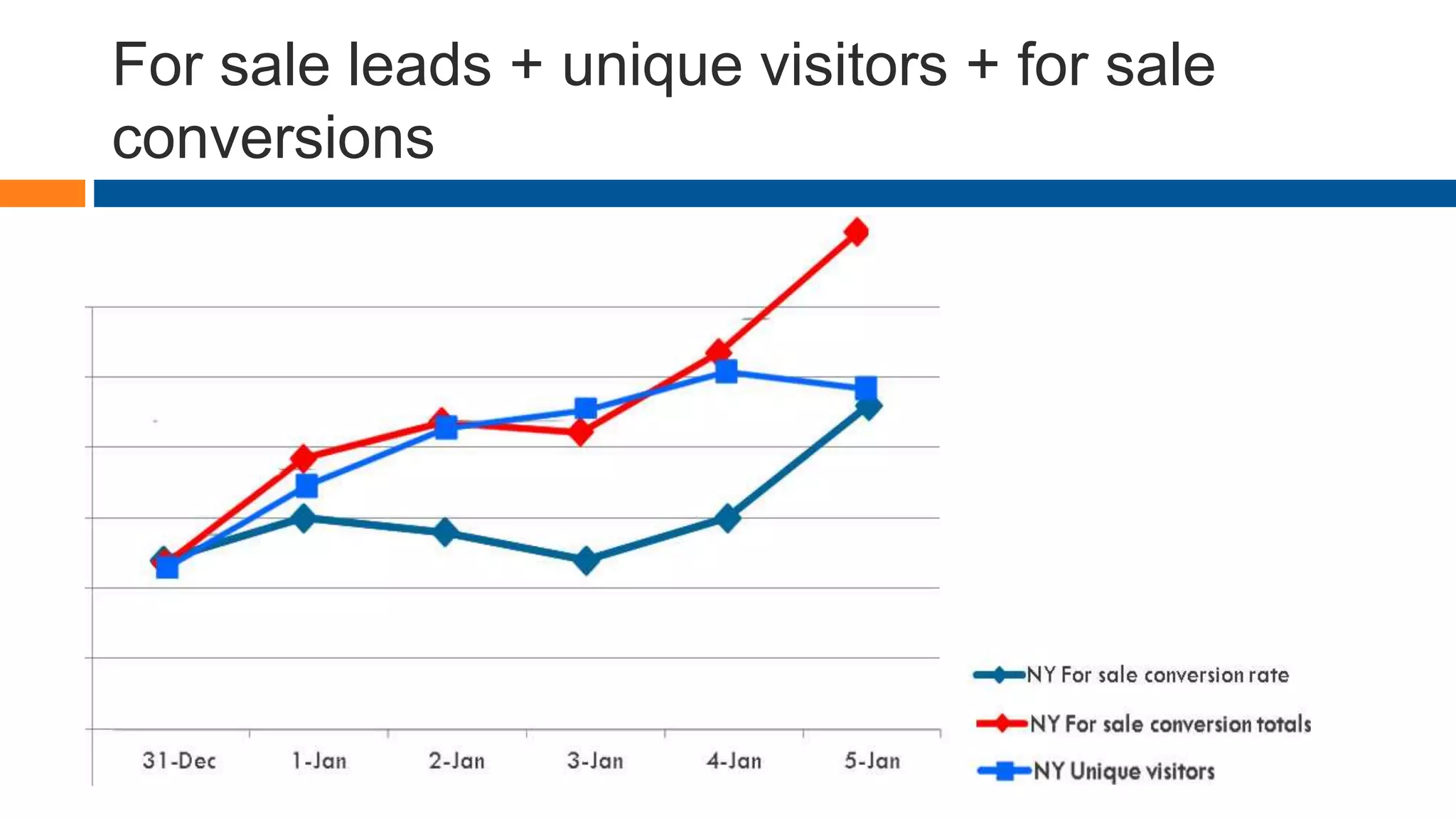
For sale leads + unique visitors + for sale
conversions
NY rental lead conversion rate
0.00%
0.20%
0.40%
0.60%
0.80%
1.00%
1.20%
1.40%
1.60%
31-Dec 1-Jan 2-Jan 3-Jan 4-Jan 5-Jan
NY Rental conversion rate
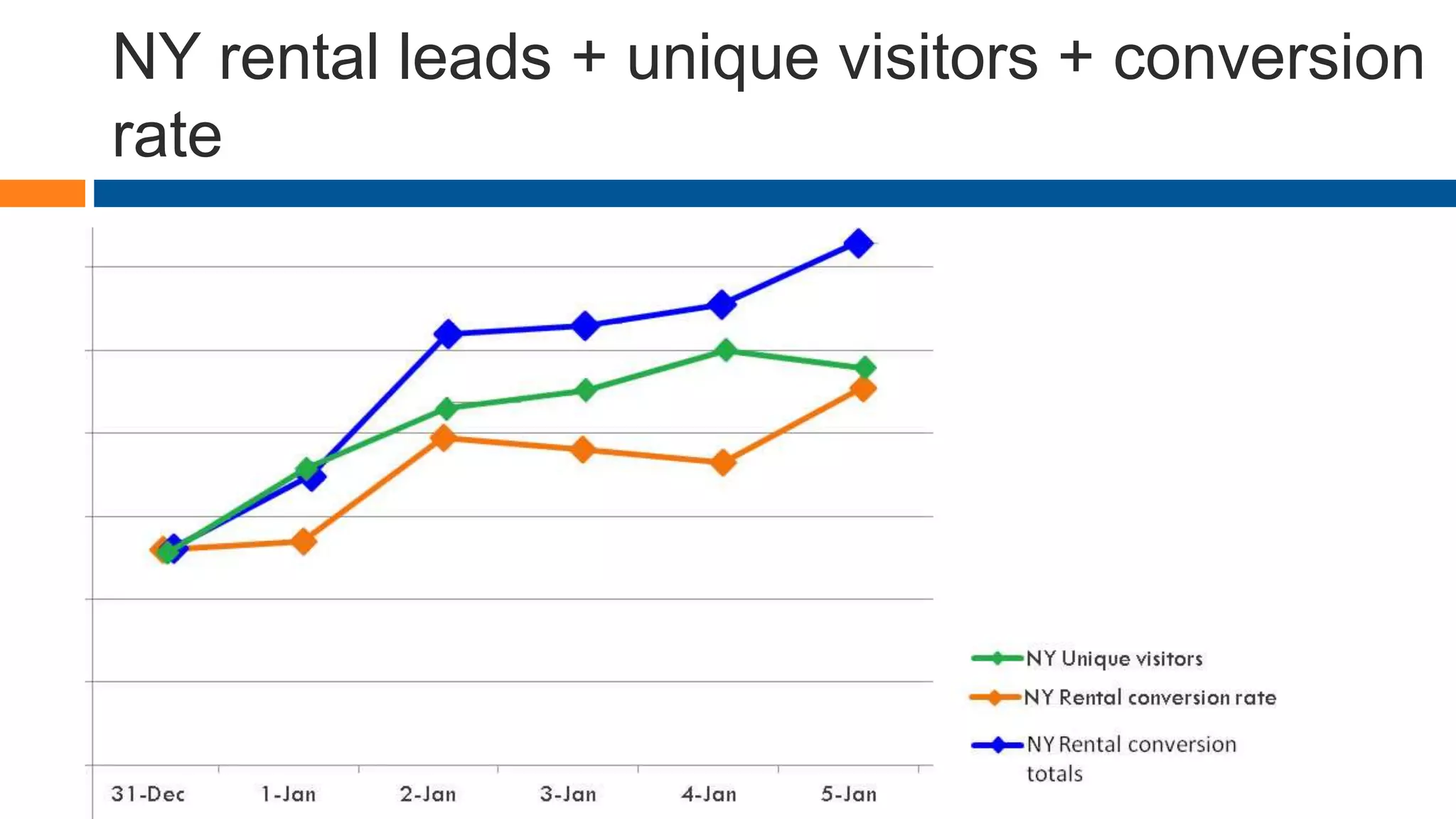
NY rental leads + unique visitors + conversion
rate
rate
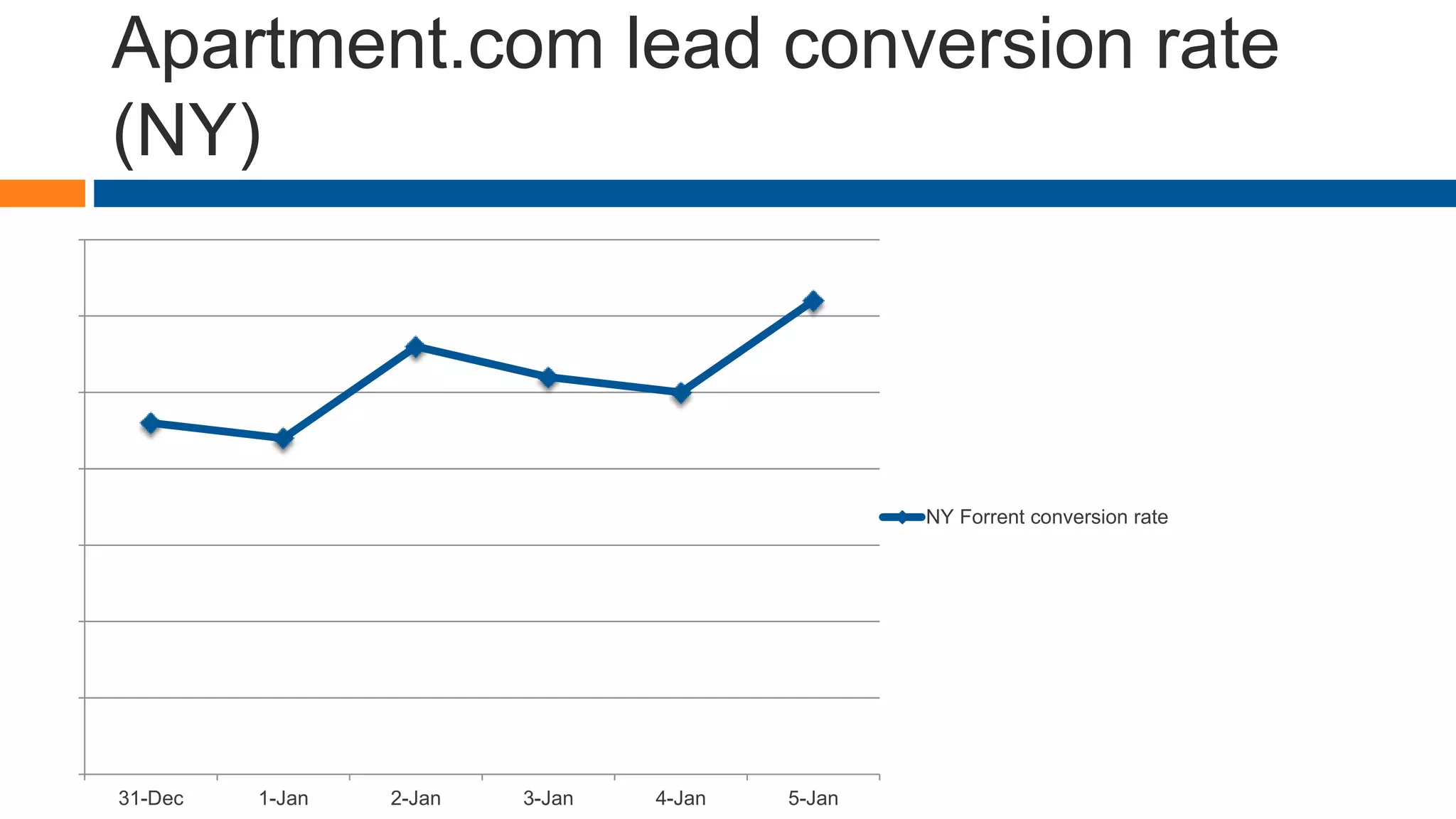
Apartment.com lead conversion rate
(NY)
0.00%
0.05%
0.10%
0.15%
0.20%
0.25%
0.30%
0.35%
31-Dec 1-Jan 2-Jan 3-Jan 4-Jan 5-Jan
NY Forrent conversion rate
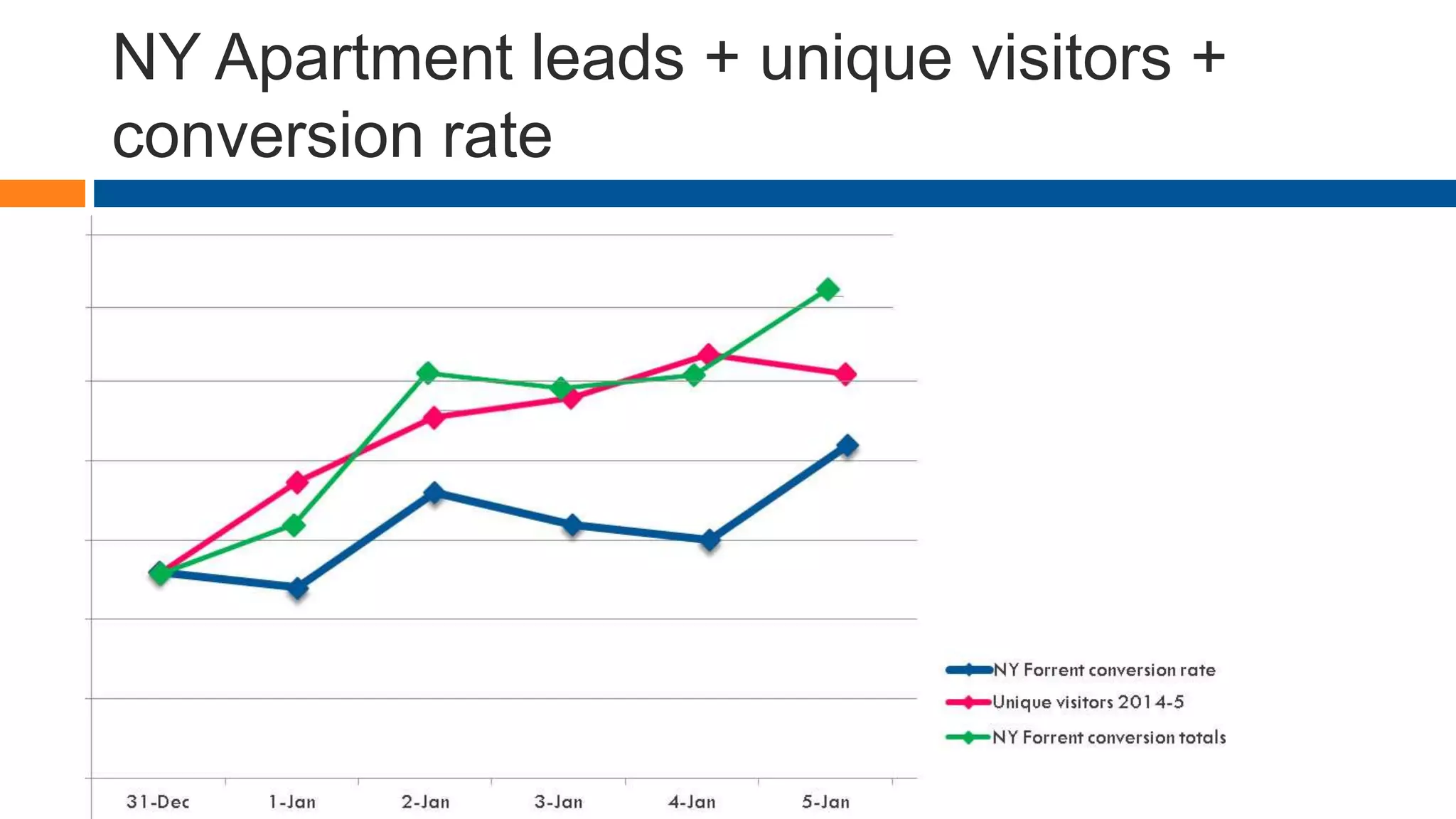
NY Apartment leads + unique visitors +
conversion rate
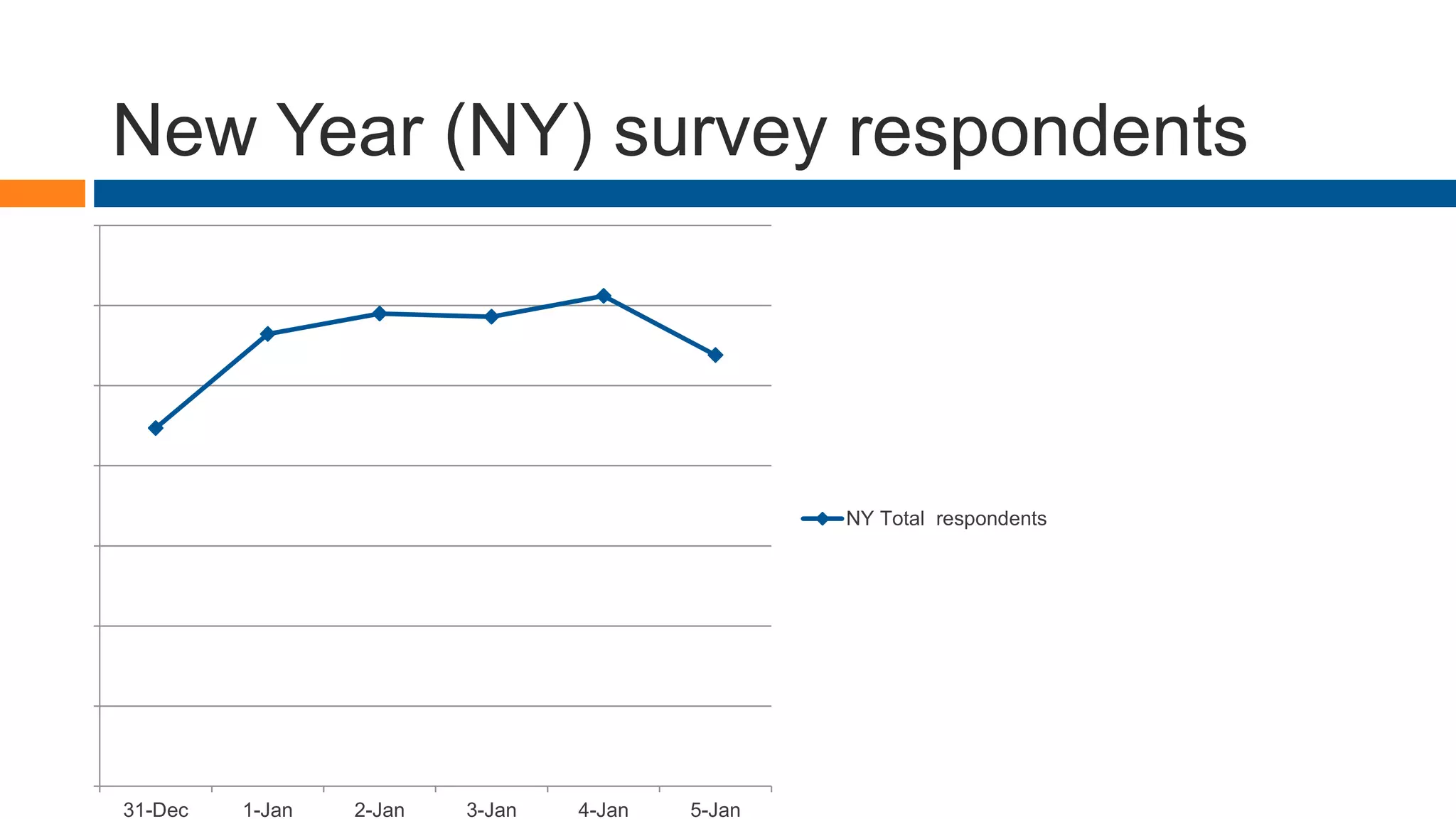
New Year (NY) survey respondents
0
200
400
600
800
1000
1200
1400
31-Dec 1-Jan 2-Jan 3-Jan 4-Jan 5-Jan
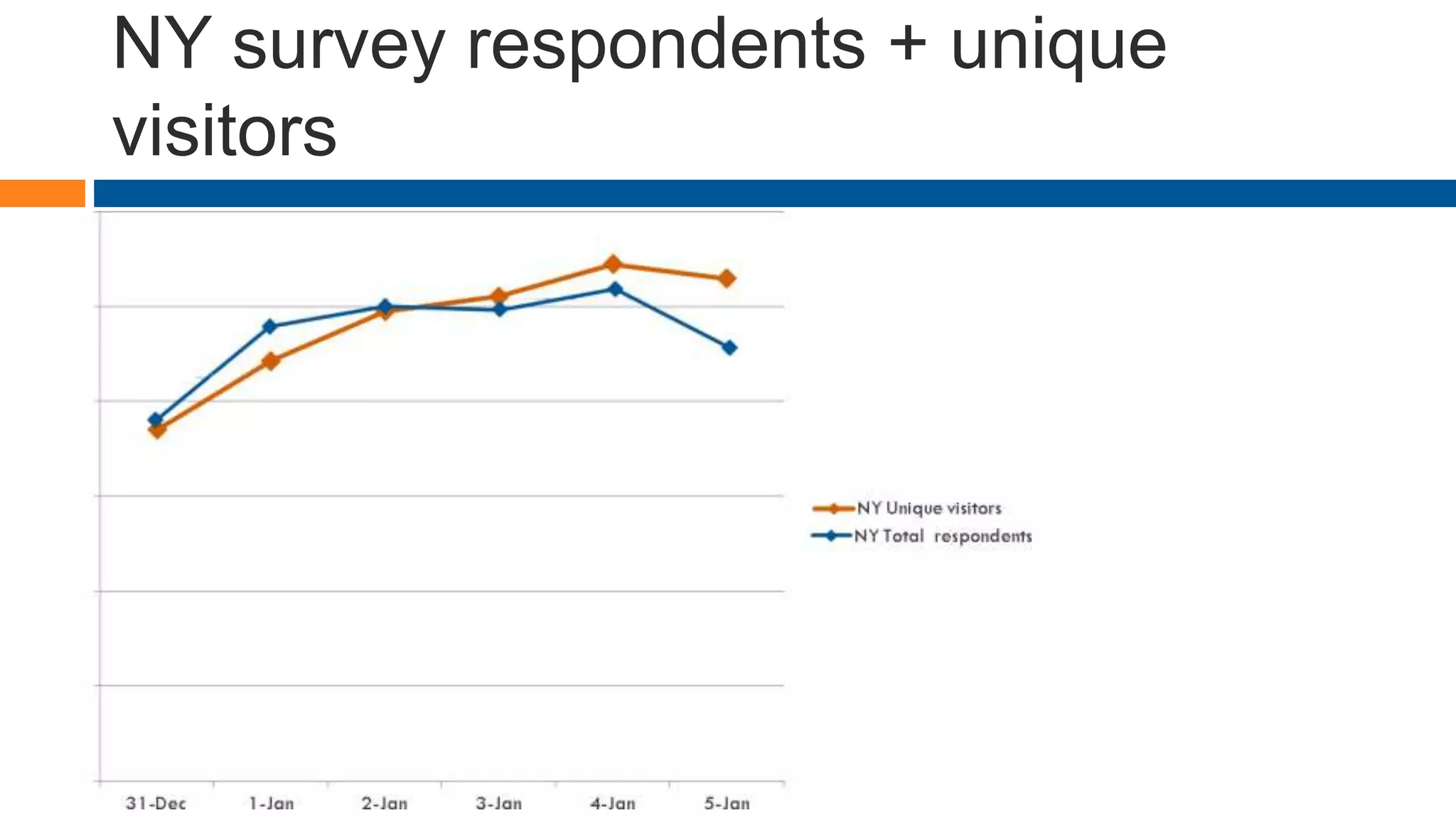
NY Total respondents
NY survey respondents + unique
visitors
 Given all this context, let’s look at the poll
Who visited during the New Year
holiday?
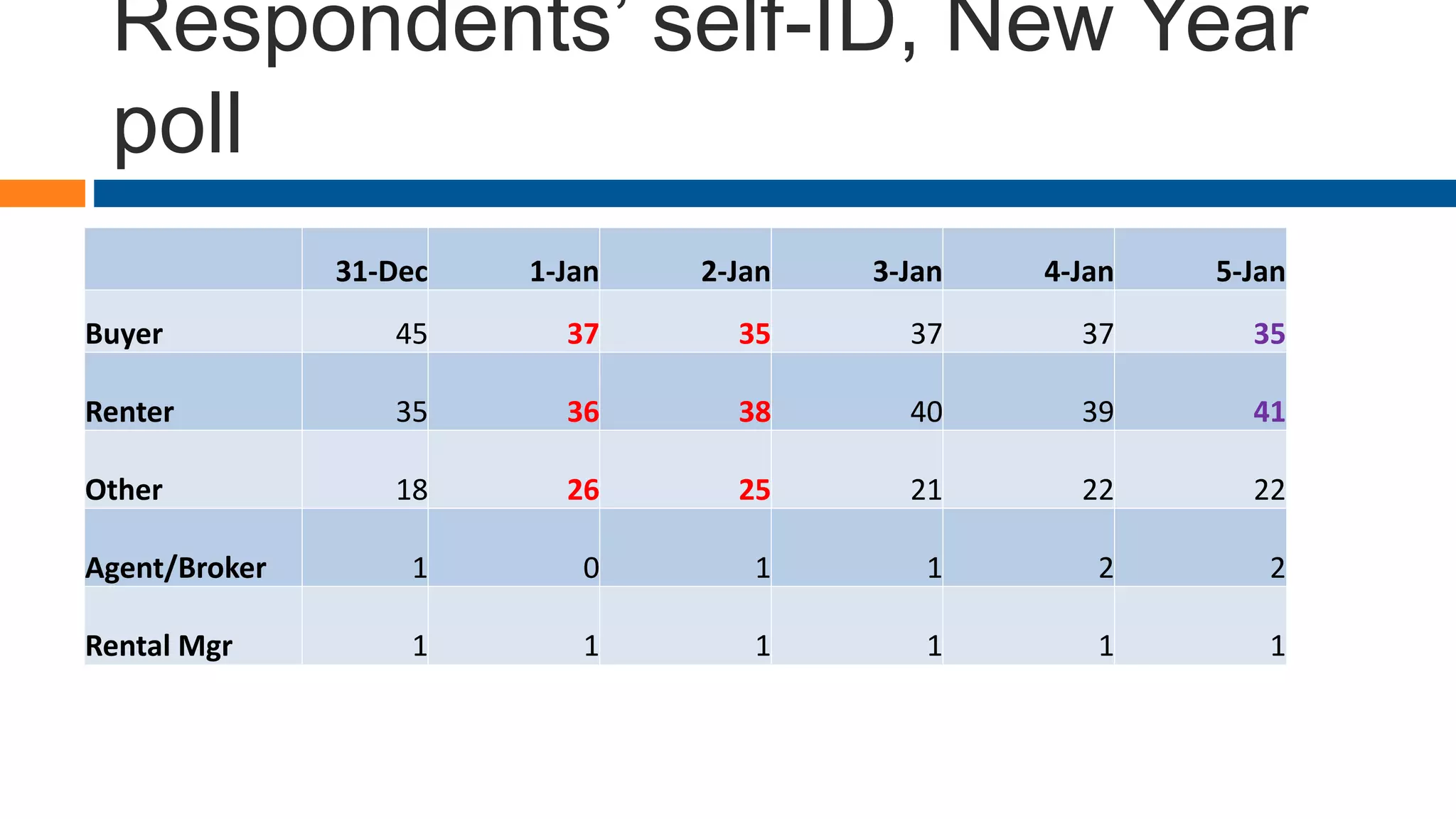
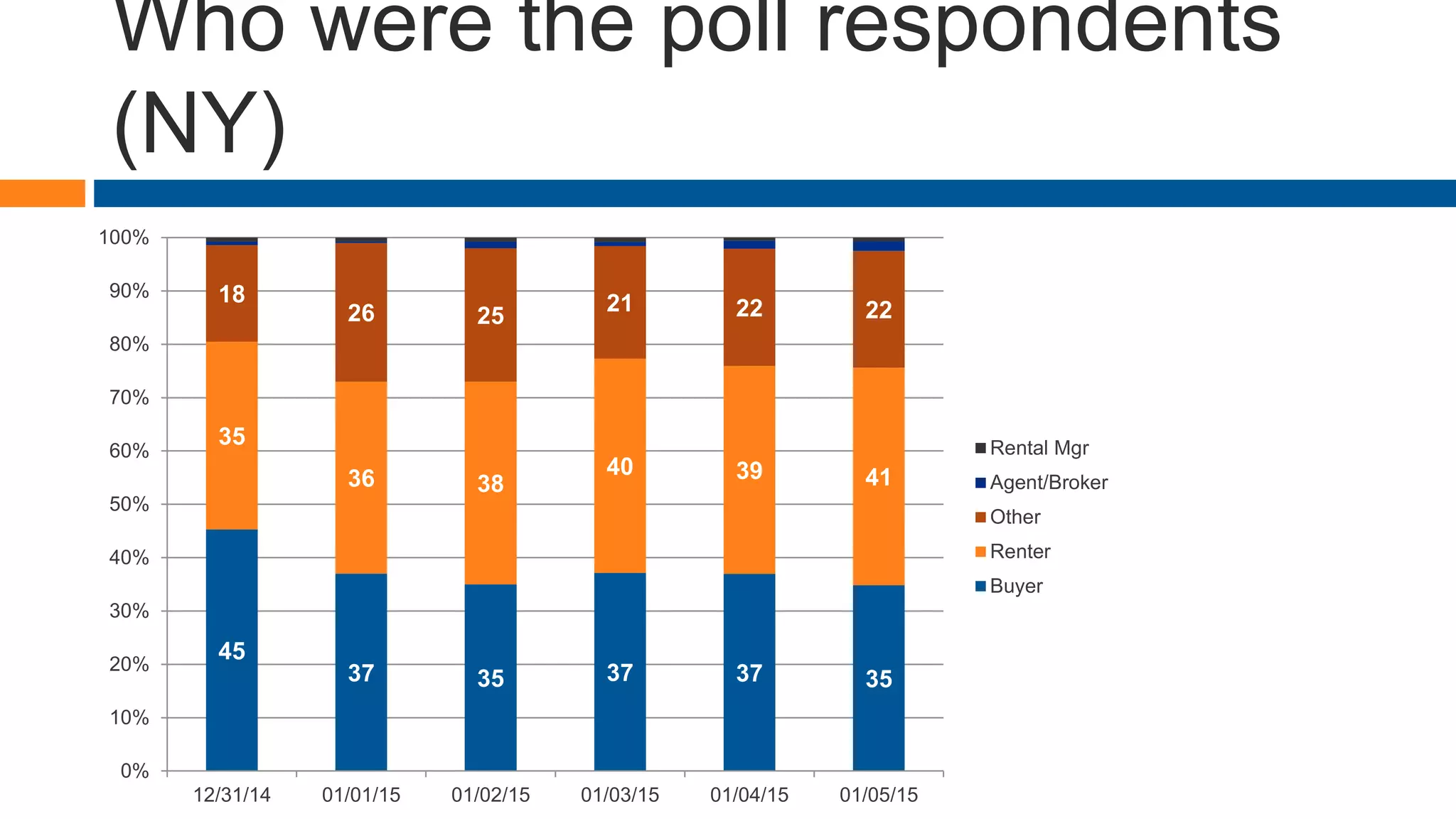
Respondents’ self-ID, New Year
poll
31-Dec 1-Jan 2-Jan 3-Jan 4-Jan 5-Jan
Buyer 45 37 35 37 37 35
Renter 35 36 38 40 39 41
Other 18 26 25 21 22 22
Agent/Broker 1 0 1 1 2 2
Rental Mgr 1 1 1 1 1 1
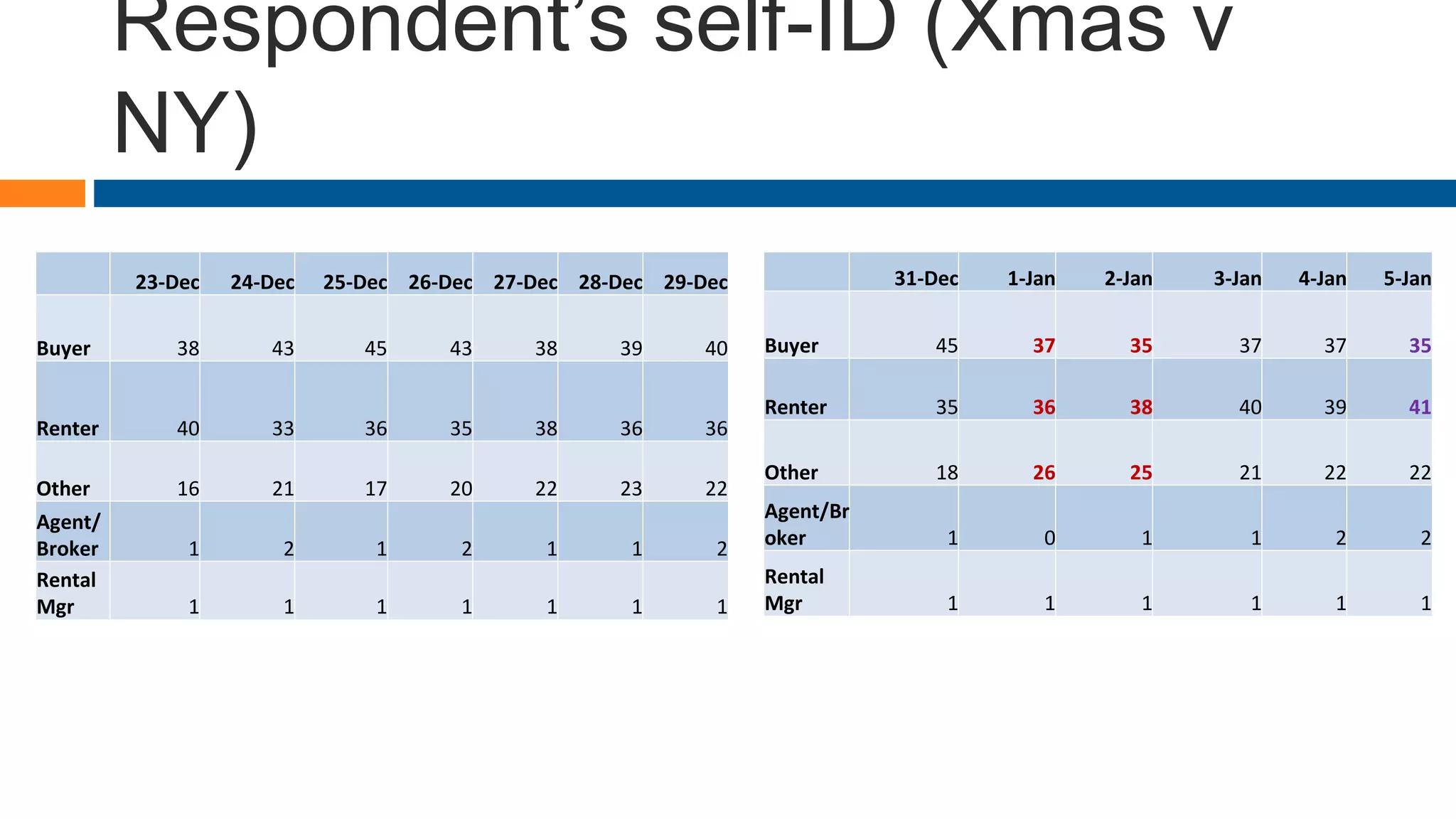
Respondent’s self-ID (Xmas v
NY)
23-Dec 24-Dec 25-Dec 26-Dec 27-Dec 28-Dec 29-Dec
Buyer 38 43 45 43 38 39 40
Renter 40 33 36 35 38 36 36
Other 16 21 17 20 22 23 22
Agent/
Broker 1 2 1 2 1 1 2
Rental
Mgr 1 1 1 1 1 1 1
31-Dec 1-Jan 2-Jan 3-Jan 4-Jan 5-Jan
Buyer 45 37 35 37 37 35
Renter 35 36 38 40 39 41
Other 18 26 25 21 22 22
Agent/Br
oker 1 0 1 1 2 2
Rental
Mgr 1 1 1 1 1 1
Who were the poll respondents
(NY)
45
37 35 37 37 35
35
36 38
40 39 41
18
26 25
21 22 22
0%
10%
20%
30%
40%
50%
60%
70%
80%
90%
100%
12/31/14 01/01/15 01/02/15 01/03/15 01/04/15 01/05/15
Rental Mgr
Agent/Broker
Other
Renter
Buyer
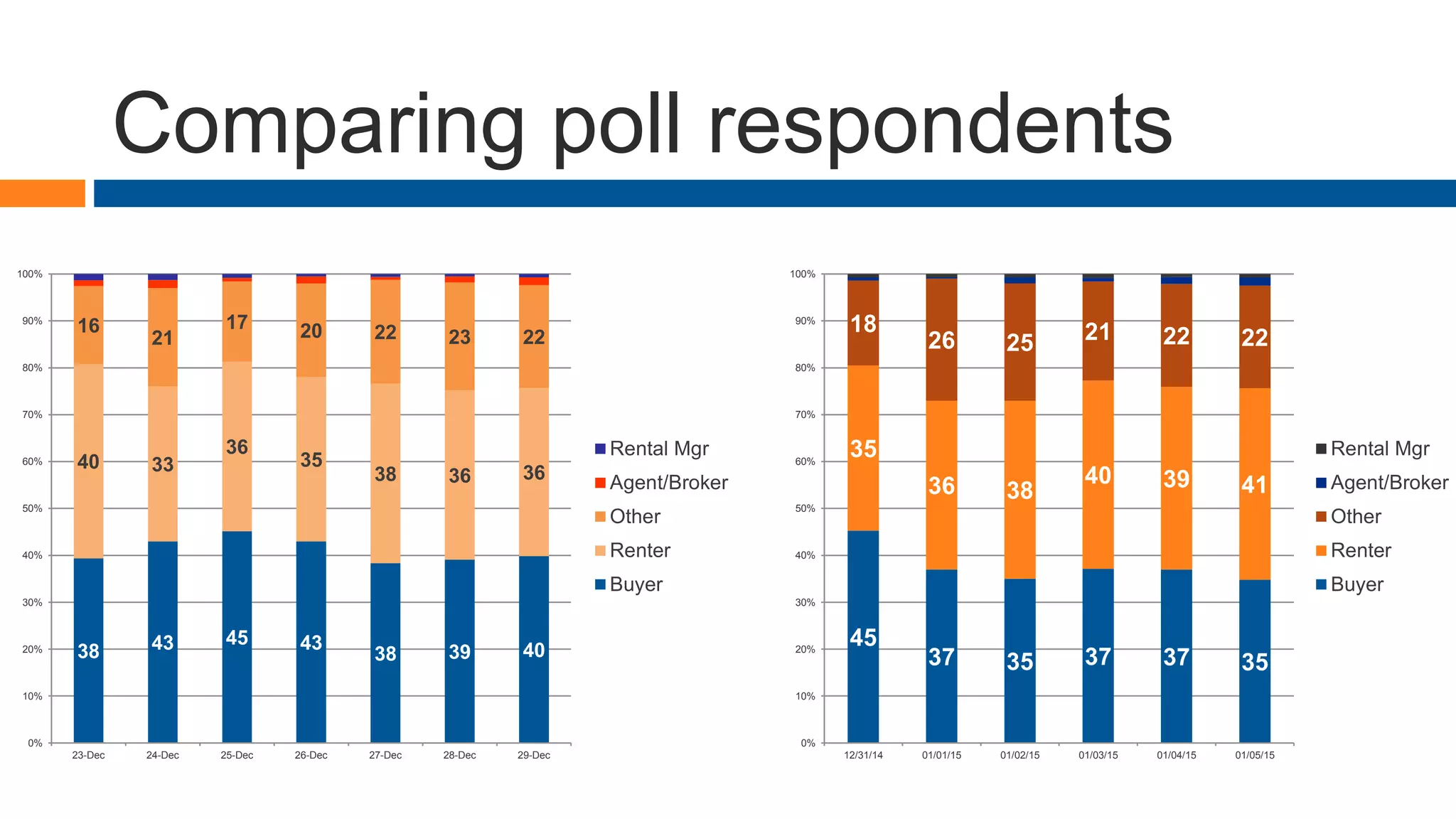
Comparing poll respondents
45
37 35 37 37 35
35
36 38
40 39 41
18
26 25 21 22 22
0%
10%
20%
30%
40%
50%
60%
70%
80%
90%
100%
12/31/14 01/01/15 01/02/15 01/03/15 01/04/15 01/05/15
Rental Mgr
Agent/Broker
Other
Renter
Buyer
38 43 45 43
38 39 40
40 33
36
35
38 36 36
16
21
17 20 22 23 22
0%
10%
20%
30%
40%
50%
60%
70%
80%
90%
100%
23-Dec 24-Dec 25-Dec 26-Dec 27-Dec 28-Dec 29-Dec
Rental Mgr
Agent/Broker
Other
Renter
Buyer
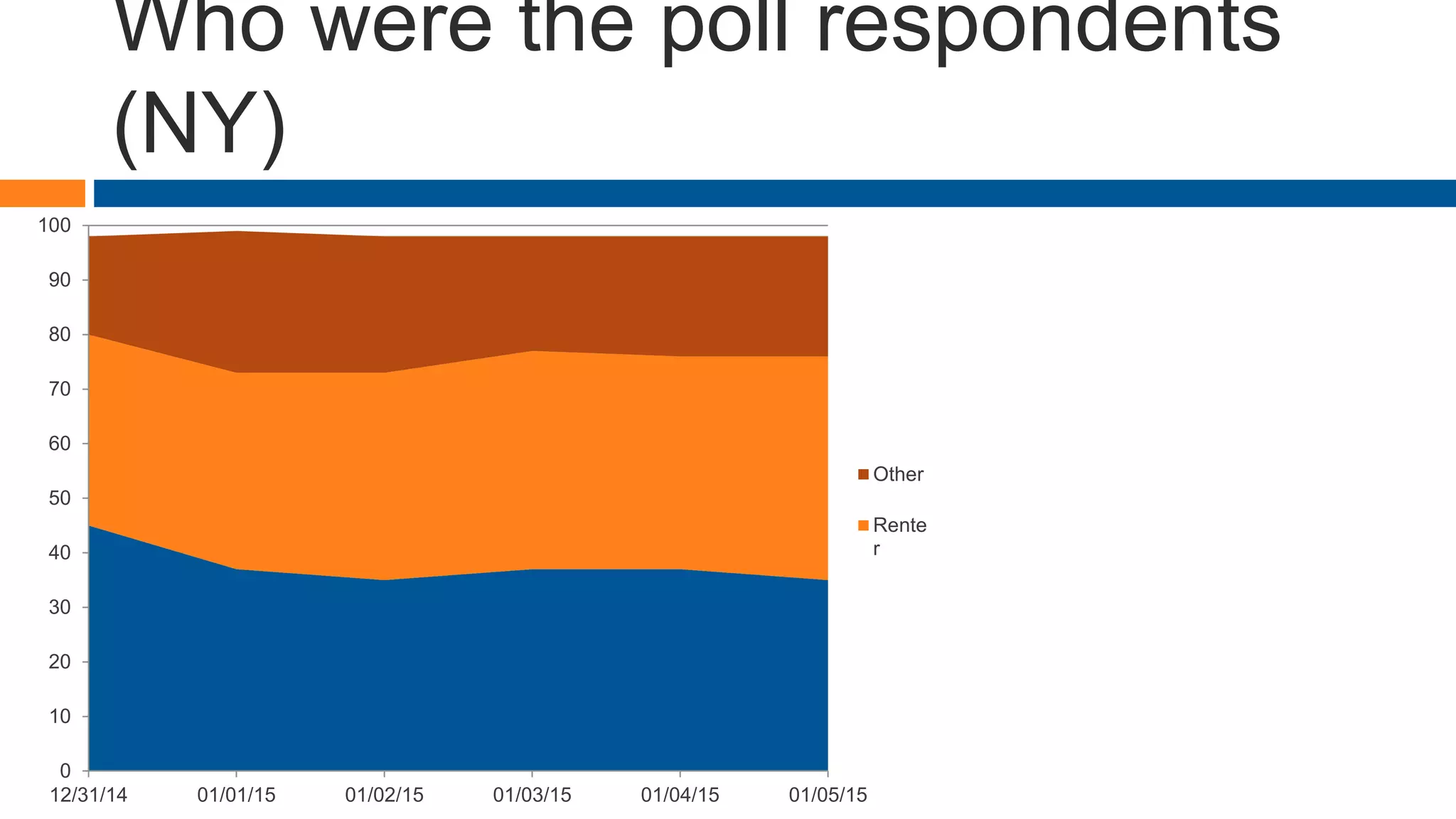
Who were the poll respondents
(NY)
0
10
20
30
40
50
60
70
80
90
100
12/31/14 01/01/15 01/02/15 01/03/15 01/04/15 01/05/15
Other
Rente
r
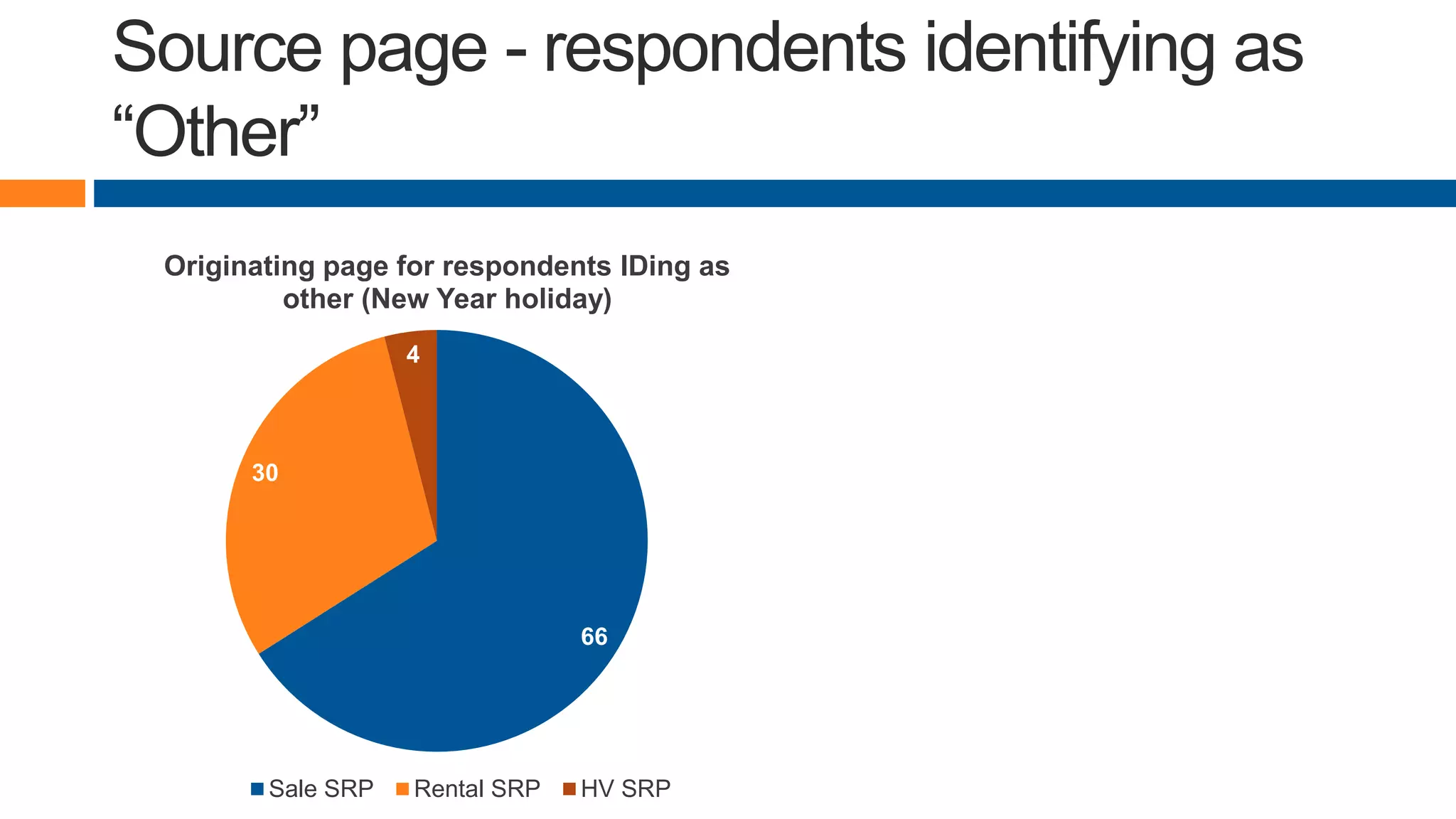
Source page - respondents identifying as
“Other”
66
30
4
Originating page for respondents IDing as
other (New Year holiday)
Sale SRP Rental SRP HV SRP
What users do
 Analytics is the discovery and communication
of meaningful patterns in data
 Analytics can tell us what is happening on a
web site or in an application
 Analytics are a form of descriptive statistics.
They tell us what visitors do.
What about who and why?
 Analytics: what users do, not who they are
 How can we know who they are?
 What about their motivations?
Understanding Users: Using metrics and surveys to understand our consumers

Understanding Users: Using metrics and surveys to understand our consumers

  • 1.
    UNDERSTANDING USERS: Who are theyand why do they use ACME.com? UX Research Team @ ACME.com
  • 2.
    Burning questions How toexplain the Christmas/New Year spike in traffic.
  • 3.
  • 4.
  • 5.
  • 6.
  • 7.
    Burning questions Holiday trafficspike prompts the two perennial questions: 1. Who is causing the increase in traffic 2. Why does it happen on Christmas/ New Year and not Jan 14 or Feb 2?
  • 8.
    Ask them: “Whoare you?”
  • 9.
    Overview  Data reportingtells an incomplete picture  Data analysis requires more than reporting  In order to analyze data such as metrics, traffic analytics, or conversion rates, we follow the maxim: “Keep Calm and Take Data in Context”  Buyers are liars; users often are too
  • 12.
    So what dothe numbers in our dashboard tell us? Reading our dashboard
  • 13.
    Traffic patterns: acloser look We looked at the meta-context: our yearly business cycle and the Christmas/New Year spike. Next, we look more granularly at traffic and lead conversion patterns at Christmas and New Year.
  • 14.
    Unique visitors atChristmas 0 50,000 100,000 150,000 200,000 250,000 300,000 350,000 400,000 450,000 500,000 23-Dec 24-Dec 25-Dec 26-Dec 27-Dec 28-Dec Unique Visitors
  • 15.
    0 100,000 200,000 300,000 400,000 500,000 600,000 23-Dec 24-Dec 25-Dec26-Dec 27-Dec 28-Dec Visits Total visits at Christmas
  • 16.
    Total page viewsat Christmas 0 500,000 1,000,000 1,500,000 2,000,000 2,500,000 3,000,000 3,500,000 4,000,000 4,500,000 23-Dec 24-Dec 25-Dec 26-Dec 27-Dec 28-Dec Page Views
  • 17.
    What do wenotice?
  • 18.
  • 19.
    To answer thatquestion, we need to look at historical and comparative data Is the pattern typical?
  • 20.
    Similar pattern yearover year (2012- 2014)
  • 21.
    Is there asimilar pattern for leads? 0 1,000 2,000 3,000 4,000 5,000 6,000 7,000 23-Dec 24-Dec 25-Dec 26-Dec 27-Dec 28-Dec Rental leads 0 200 400 600 800 1000 1200 1400 23-Dec 24-Dec 25-Dec 26-Dec 27-Dec 28-Dec Apartment leads 0 500 1000 1500 2000 23-Dec 24-Dec 25-Dec 26-Dec 27-Dec 28-Dec For sale leads
  • 22.
    Is there asimilar pattern for survey responses? 0 100 200 300 400 500 600 700 800 900 1000 23-Dec 24-Dec 25-Dec 26-Dec 27-Dec 28-Dec Survey respondents
  • 23.
    Similar patterns Very similarpattern with the exception of Christmas Day. Speculation as to why?
  • 24.
  • 25.
    Conclusions • Given thiscontext, can we draw any conclusions? • Do the traffic patterns tell a story? • What about conversion patterns?
  • 26.
    Now that we’velooked at total traffic numbers, we need to look at ratios and rates Totals, ratios, and rates
  • 28.
    Ratios Quantitative relation betweentwo amounts of the same kind. Some examples:  Aspect ratio: length of longest side/length of shortest side (length :: length)  Sex ratio: males/females (people :: people)  Student/teacher ratio (people :: people)
  • 29.
    Rate As a typeof ratio, it is a quantitative relation between two amounts of a different kind. Examples:  MPG and MPH  Crude Marriage Rate and General Marriage Rate  Lead Conversion Rate and Bounce Rate
  • 30.
    Conversions Total number ofdesired outcomes • ACME.com: the desired outcome is for people to submit their information to an agent or broker
  • 31.
    Conversions Two ways tocount conversions • Total conversions: count every form submission even if several submissions were generated by one person • Unique conversions: count only the people who submit the form. Even if they submit several inquiries, we count them only once
  • 32.
    Conversion rate Number ofdesired outcomes divided by unique visitors during a particular time. -
  • 33.
    Conversion rate Another wayto measure:  Number of unique desired outcomes divided by unique visitors during a particular time. -
  • 34.
    Lead conversion rate Totalnumber of lead form submissions divided by unique visitors during a particular time. -OR- Total number of single, unique individuals making one or more lead form submissions divided by unique visitors during particular time. -
  • 35.
    What are ourlead conversion rates Given the patterns we found with traffic, are there any patterns we should expect for conversion rates?
  • 36.
    For sale leadconversion rate 0.00% 0.05% 0.10% 0.15% 0.20% 0.25% 0.30% 0.35% 0.40% 23-Dec 24-Dec 25-Dec 26-Dec 27-Dec 28-Dec for sale conversion rate A steady rise
  • 37.
    Rental home leadconversion rate 0.00% 0.20% 0.40% 0.60% 0.80% 1.00% 1.20% 1.40% 23-Dec 24-Dec 25-Dec 26-Dec 27-Dec 28-Dec Rental conversion rate More erratic and doesn’t amount to much change over time frame
  • 38.
    Apartment lead conversionrate 0.00% 0.05% 0.10% 0.15% 0.20% 0.25% 0.30% 23-Dec 24-Dec 25-Dec 26-Dec 27-Dec 28-Dec Forrent conversion rate Slightly more erratic and no change over time frame
  • 39.
    Which is thebest performer? 0.00% 0.05% 0.10% 0.15% 0.20% 0.25% 0.30% 0.35% 0.40% 23-Dec 24-Dec 25-Dec 26-Dec 27-Dec 28-Dec For sale 0.00% 0.20% 0.40% 0.60% 0.80% 1.00% 1.20% 1.40% 23-Dec 24-Dec 25-Dec 26-Dec 27-Dec 28-Dec Rental homes 0.00% 0.05% 0.10% 0.15% 0.20% 0.25% 0.30% 23-Dec 24-Dec 25-Dec 26-Dec 27-Dec 28-Dec Apartment.com 1.13 % 1.24% = +.11 / +10% 3,697  5,878 = +2181 / +63% .27 %  .36% = +.09 / +33% 875  1719 = +844 / +97% 0.25 %  .25% = 0 / 0 833 1192 = +359 / +43%
  • 40.
    For sale leadconversion rate 0.00% 0.05% 0.10% 0.15% 0.20% 0.25% 0.30% 0.35% 0.40% 22-Dec 23-Dec 24-Dec 25-Dec 26-Dec 27-Dec For sale conversion rate
  • 41.
    For sale leadtotals + unique visitors + for sale conversions
  • 42.
    Rental lead conversionrate 0.00% 0.20% 0.40% 0.60% 0.80% 1.00% 1.20% 1.40% 23-Dec 24-Dec 25-Dec 26-Dec 27-Dec 28-Dec Rental conversion rate
  • 43.
    Rental lead totals+ unique visitors
  • 44.
    Rental lead totals+ unique visitors + conversion rate rate
  • 45.
    Apartment.com lead conversionrate 0.00% 0.05% 0.10% 0.15% 0.20% 0.25% 0.30% 23-Dec 24-Dec 25-Dec 26-Dec 27-Dec 28-Dec Forrent conversion rate
  • 46.
    Apartment.com lead totals+ unique visitors
  • 47.
    Apartment lead totals+ unique visitors + conversions
  • 48.
    Context helps usunderstand  While the for sale conversion rate goes up (orange line), the for sale conversion totals go down, as do uniques.  While the rental conversion rate goes down (blue line), the total conversions increase as do uniques 875 731 831 1231 4868 5305 5878
  • 49.
    • We knowwhat ordinary traffic totals are • We know what our rates are • We see differences • How do we explain them? Who visited and took the poll
  • 50.
    Total survey respondents 0 100 200 300 400 500 600 700 800 900 1000 23-Dec24-Dec 25-Dec 26-Dec 27-Dec 28-Dec Survey respondents
  • 51.
    Survey response rate 0 0.05 0.1 0.15 0.2 0.25 0.3 23-Dec24-Dec 25-Dec 26-Dec 27-Dec 28-Dec Survey response rate
  • 52.
    Survey respondent totalscompared to rate 23-Dec 24-Dec 25-Dec 26-Dec 27-Dec 28-Dec Survey respondents Survey response…
  • 53.
    We see similarpatterns in traffic
  • 54.
    Similar patterns inresponse rate compared to survey response and unique visitor traffic #REF!Unique Visitors
  • 55.
     Given allthis context, let’s look at the poll  The context is like a sanity check, to make sure it’s not telling an aberrant story Who visited during the Christmas holiday?
  • 57.
    US - Rentersand buyers
  • 58.
     33:67  Forevery 1 renter, there are 2 buyers  1:2  35:65  For every 1 renter, there are 1.86 buyers  1:1.86
  • 59.
    Respondent’s self-ID (Christmas) 23-Dec24-Dec 25-Dec 26-Dec 27-Dec 28-Dec 29-Dec Buyer 39 43 45 43 38 39 40 Renter 40 33 36 35 38 36 36 Other 15 21 17 20 22 23 22 Agent/Broker 1 2 1 2 1 1 2 Rental Mgr 1 1 1 1 1 1 1
  • 60.
    Christmas: Who werethe poll respondents? 38 43 45 43 38 39 40 40 33 36 35 38 36 36 16 21 17 20 22 23 22 0% 10% 20% 30% 40% 50% 60% 70% 80% 90% 100% 23-Dec 24-Dec 25-Dec 26-Dec 27-Dec 28-Dec 29-Dec Rental Mgr Agent/Broker Other Renter Buyer
  • 61.
    Christmas: Who werethe poll respondents? 0% 10% 20% 30% 40% 50% 60% 70% 80% 90% 100% 23-Dec 24-Dec 25-Dec 26-Dec 27-Dec 28-Dec Rental Mgr Agent/Broker Other Renter Buyer
  • 62.
    Christmas: Who werethe poll respondents? 0 10 20 30 40 50 60 70 80 90 100 23-Dec 24-Dec 25-Dec 26-Dec 27-Dec 28-Dec Other Renter Buyer
  • 63.
    Can we deducewho the “others” are? 67% 28% 4% 1% (n = 2365) Sale SRP Rental SRP Sourcepage-respondentsidentifyingas“Other”
  • 64.
    Respondents compared withsite usage 60% 63% 64% 61% 62% 62% 57% 29% 26% 25% 28% 28% 27% 31% 6% 6% 5% 6% 5% 6% 6% 0% 10% 20% 30% 40% 50% 60% 70% 80% 90% 100% 23-Dec 24-Dec 25-Dec 26-Dec 27-Dec 28-Dec 29-Dec HV Searches Rental Searches Sale Searches 67% 28% 4% 1% S…
  • 65.
    For sale SRPsand respondent’s ID 68% 6% 24% 1% 1% Buyer Renter Other Agent/Broker Rental Mgr
  • 66.
    For rent SRPsand respondent’s ID 4% 80% 14% 1% 1% Buyer Renter Other Agent/Broker Rental Mgr
  • 67.
    • If wejust looked at the survey, looks like there are slightly more buyers than renters. • Might also think that the volatility in the other category can help explain trends • Looking at the data in context shows that there’s was a strong surge in for sale traffic that probably accounts for the bulk of the traffic. • This comports with other data such as national surveys. Conclusion
  • 68.
    • Now wecan look at what cause the NY traffic spike • First, look at traffic and conversion rate patterns New Year Traffic spike
  • 69.
  • 70.
    2012 – 2014:unique visitor pattern YoY 0 100,000 200,000 300,000 400,000 500,000 600,000 31-Dec 1-Jan 2-Jan 3-Jan 4-Jan 5-Jan Unique visitors 2014-5 Unique visitors 2013-4 Unique visitors 2012-3
  • 71.
    NY for salelead conversion rate 0.00% 0.05% 0.10% 0.15% 0.20% 0.25% 0.30% 0.35% 0.40% 0.45% 0.50% 31-Dec 1-Jan 2-Jan 3-Jan 4-Jan 5-Jan NY For sale conversion rate
  • 72.
    NY rental homelead conversion rate 0.00% 0.20% 0.40% 0.60% 0.80% 1.00% 1.20% 1.40% 1.60% 31-Dec 1-Jan 2-Jan 3-Jan 4-Jan 5-Jan NY Rental conversion rate
  • 73.
    Apartment.com lead conversionrate 0.00% 0.05% 0.10% 0.15% 0.20% 0.25% 0.30% 0.35% 31-Dec 1-Jan 2-Jan 3-Jan 4-Jan 5-Jan NY Forrent conversion rate
  • 74.
    Which is thebest performer? 1.12  1.51% = +.39 / +35% 4,156  8015 = +3859 / +93% .32  .43% = +.11 / +34% 1189  2,287 = +1098 / +92% 0.22  .31% = +.09 / 41% 845 1620= +775 / +92% 0.00% 0.05% 0.10% 0.15% 0.20% 0.25% 0.30% 0.35% 0.40% 0.45% 0.50% 31-Dec 1-Jan 2-Jan 3-Jan 4-Jan 5-Jan For sale Rental homes Apartment.com 0.00% 0.20% 0.40% 0.60% 0.80% 1.00% 1.20% 1.40% 1.60% 31-Dec 1-Jan 2-Jan 3-Jan 4-Jan 5-Jan 0.00% 0.05% 0.10% 0.15% 0.20% 0.25% 0.30% 0.35% 31-Dec 1-Jan 2-Jan 3-Jan 4-Jan 5-Jan
  • 75.
    For sale leads+ unique visitors + for sale conversions
  • 76.
    NY rental leadconversion rate 0.00% 0.20% 0.40% 0.60% 0.80% 1.00% 1.20% 1.40% 1.60% 31-Dec 1-Jan 2-Jan 3-Jan 4-Jan 5-Jan NY Rental conversion rate
  • 77.
    NY rental leads+ unique visitors + conversion rate rate
  • 78.
    Apartment.com lead conversionrate (NY) 0.00% 0.05% 0.10% 0.15% 0.20% 0.25% 0.30% 0.35% 31-Dec 1-Jan 2-Jan 3-Jan 4-Jan 5-Jan NY Forrent conversion rate
  • 79.
    NY Apartment leads+ unique visitors + conversion rate
  • 80.
    New Year (NY)survey respondents 0 200 400 600 800 1000 1200 1400 31-Dec 1-Jan 2-Jan 3-Jan 4-Jan 5-Jan NY Total respondents
  • 81.
    NY survey respondents+ unique visitors
  • 82.
     Given allthis context, let’s look at the poll Who visited during the New Year holiday?
  • 83.
    Respondents’ self-ID, NewYear poll 31-Dec 1-Jan 2-Jan 3-Jan 4-Jan 5-Jan Buyer 45 37 35 37 37 35 Renter 35 36 38 40 39 41 Other 18 26 25 21 22 22 Agent/Broker 1 0 1 1 2 2 Rental Mgr 1 1 1 1 1 1
  • 84.
    Respondent’s self-ID (Xmasv NY) 23-Dec 24-Dec 25-Dec 26-Dec 27-Dec 28-Dec 29-Dec Buyer 38 43 45 43 38 39 40 Renter 40 33 36 35 38 36 36 Other 16 21 17 20 22 23 22 Agent/ Broker 1 2 1 2 1 1 2 Rental Mgr 1 1 1 1 1 1 1 31-Dec 1-Jan 2-Jan 3-Jan 4-Jan 5-Jan Buyer 45 37 35 37 37 35 Renter 35 36 38 40 39 41 Other 18 26 25 21 22 22 Agent/Br oker 1 0 1 1 2 2 Rental Mgr 1 1 1 1 1 1
  • 85.
    Who were thepoll respondents (NY) 45 37 35 37 37 35 35 36 38 40 39 41 18 26 25 21 22 22 0% 10% 20% 30% 40% 50% 60% 70% 80% 90% 100% 12/31/14 01/01/15 01/02/15 01/03/15 01/04/15 01/05/15 Rental Mgr Agent/Broker Other Renter Buyer
  • 86.
    Comparing poll respondents 45 3735 37 37 35 35 36 38 40 39 41 18 26 25 21 22 22 0% 10% 20% 30% 40% 50% 60% 70% 80% 90% 100% 12/31/14 01/01/15 01/02/15 01/03/15 01/04/15 01/05/15 Rental Mgr Agent/Broker Other Renter Buyer 38 43 45 43 38 39 40 40 33 36 35 38 36 36 16 21 17 20 22 23 22 0% 10% 20% 30% 40% 50% 60% 70% 80% 90% 100% 23-Dec 24-Dec 25-Dec 26-Dec 27-Dec 28-Dec 29-Dec Rental Mgr Agent/Broker Other Renter Buyer
  • 87.
    Who were thepoll respondents (NY) 0 10 20 30 40 50 60 70 80 90 100 12/31/14 01/01/15 01/02/15 01/03/15 01/04/15 01/05/15 Other Rente r
  • 88.
    Source page -respondents identifying as “Other” 66 30 4 Originating page for respondents IDing as other (New Year holiday) Sale SRP Rental SRP HV SRP
  • 89.
    What users do Analytics is the discovery and communication of meaningful patterns in data  Analytics can tell us what is happening on a web site or in an application  Analytics are a form of descriptive statistics. They tell us what visitors do.
  • 90.
    What about whoand why?  Analytics: what users do, not who they are  How can we know who they are?  What about their motivations?

Editor's Notes

  • #4 Our yearly business cycle. Traffic starts trending up ward at New Year, and it keep going up and peaks in the summer. From the summer, it continues on a downward trend until it troughs out around Christmas
  • #9 We used hotjar’s poll feature to ask who they are. But to really understand the answers we got, we had to look at those answers in context. During this presentation, you’ll learn about the context and how to use that context to understand incomplete user answers and data.
  • #11 One important rule that will come up over and over. Always put data in context.
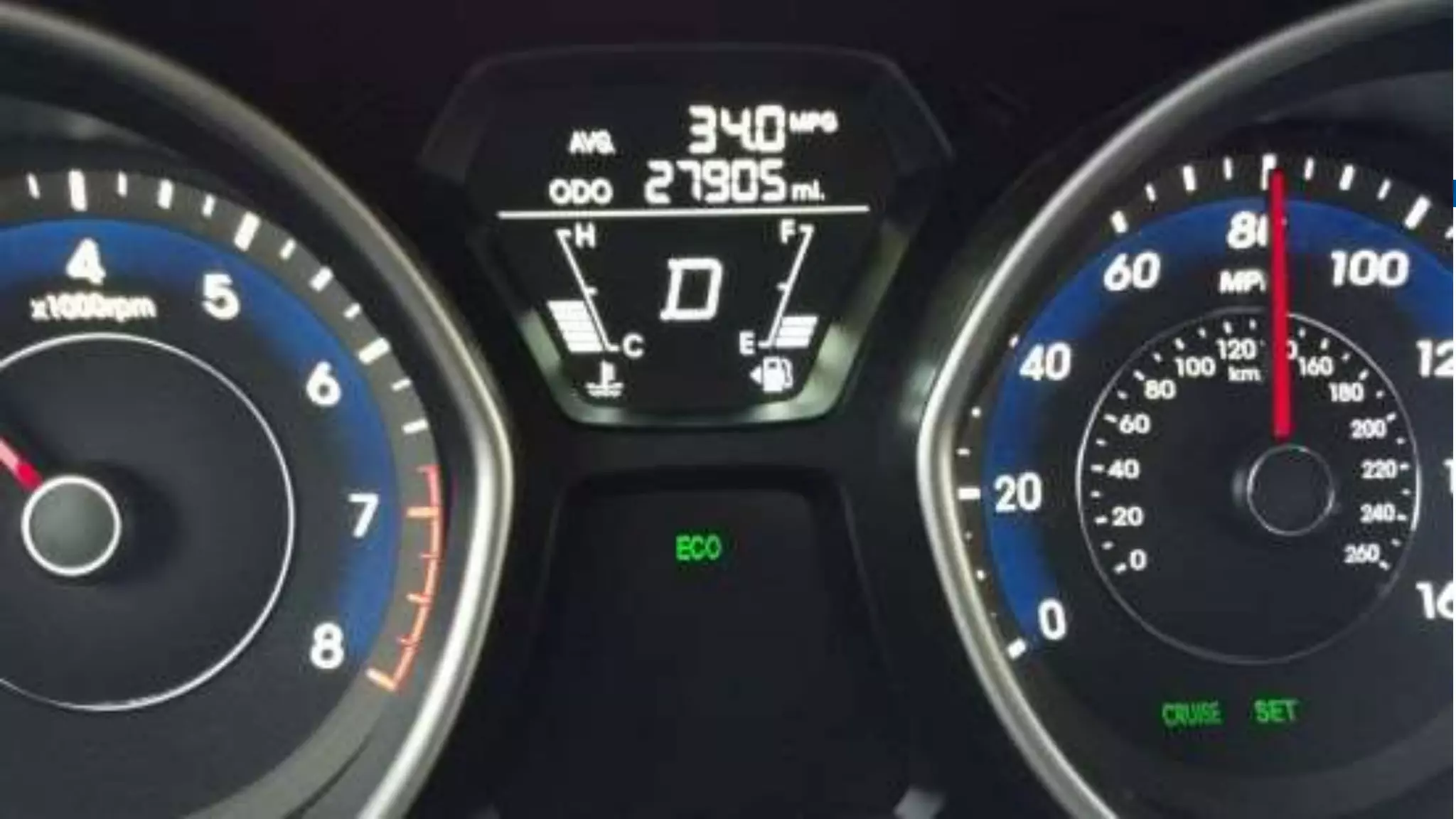
  • #12 To understand what we mean by context, we can look at a car’s dashboard. Each of these are readings of our car’s performance numbers. They don’t mean a lot by themselves. They are useful when compared to other readings or taken in a broader context. On the dashboard we have a number that indicates totals: total miles traveled since mile 0. Sometimes, it also display total miles traveled per trip: a trip odometer. The fuel guage is a measure of how much fuel is in the tank. The temperature indicator also tells us how hot or cold the engine is. Notice that it doesn’t provide a number to the user, though surely there is a number being read. It’s just that the number is shown in the interface. Why is that? The dashboard also displays ratios and rates. MPH, MPG, RPM, 1/3 of tank
  • #16 We tend to use the metric “unique visitors” instead of total visitors. Does anyone know why? Because we can see what looks like more traffic than we really get if we have a lot of loyal, repeat uses. Since businesses are often under the mandate, ‘grow or die,’ they usually care a lot about acquiring new business. What we can see here is that the traffic pattern for unique visitors is the same. This probably means that, at this point in the business cycle, we don’t have a large number of repeat visitors distorting the totals.
  • #17 We have a similar pattern with total page views.
  • #19 Here, I’ve abstracted the lines from the values on the Y axis. When we compare values that are dispate – very small double digit numbers versus 6 digits numbers – the graph tends to flatten out the trendline for the small numbers so we can see the variation as well. Here, I’m just abstracting the values so we look strictly at and compare the trend.
  • #21 When we compare this block of time, year over year, it looks like a similar pattern. We might get excited by the way the bright Irish green line, from 2014, seems to depart from the lime and dark green lines of previous years. It could be a blip or a genuine trend.
  • #22 The for sale conversions are not as volatile. They don’t decrease as sharply on Christmas eve and day. There desire to fill out lead forms remains steady and are not as sensitive to the ups and down of traffic. So for sale lead traffic is steady and less open to influence of things like holidays. The desire to find a home to buy, we can tentatively conclude is strong enough that people will come to the site
  • #23 So we have a general pattern When we look at the total number of survey respondents, we see that the pattern is very similar. Do we have any ideas as to why that would be? Why do the responses track along with the site traffic pattern, following the ups and downs. The reason is is because, ceteris paribus (all things being equal), people’s tendency to fill out a survey remains fairly stable over time. It’s not budged by much. You tend to be either the type of person who will fill out surveys, or you won’t.
  • #24 A dip at Christmas, when traffic is otherwise increasing slightly tells us that, while the people on our site are highly motivated to be there on a holiday, they aren’t as motivated to fill out a poll.
  • #25 A dip at Christmas, when traffic is otherwise increasing slightly tells us that, while the people on our site are highly motivated to be there on a holiday, they aren’t as motivated to fill out a poll.
  • #27 First, let’s take a little detour to talk about rates.
  • #28 Let’s return to our car dashboard analogy. On the dashboard we have a number that indicates totals: total miles traveled since mile 0. Sometimes, it also display total miles traveled per trip: a trip odometer. The fuel guage is a measure of how much fuel is in the tank. The temperature indicator also tells us how hot or cold the engine is. Notice that it doesn’t provide a number to the user, though surely there is a number being read. It’s just that the number is shown in the interface. Why is that? The dashboard also displays ratios and rates. MPH, MPG, RPM, 1/3 of tank
  • #49 The numbers on the graph represent that total conversion mapped against trends in the conversion rate. In this case, we have an orange line indicating a steady increase in the conversion rate over time. However, the conversion totals (numbers mapped on the line) indicate first a dip in the total number of conversions, then a large increase in total number of conversion – even though that large increase in total conversions maps to a DECREASE in the conversion rate. Similarly, where the rental conversion totals (royal blue line) are on the ride post Christmas, the conversion total actually increase.
  • #51 Between 600 and 900 visitors took the pole between December 23rd and the 28th. Since site traffic dipped on Christmas, we can expect that the number of people taking the poll also dipped.
  • #52 Between 600 and 900 visitors took the pole between December 23rd and the 28th. Since site traffic dipped on Christmas, we can expect that the number of people taking the poll also dipped.
  • #53 Between 600 and 900 visitors took the pole between December 23rd and the 28th. Since site traffic dipped on Christmas, we can expect that the number of people taking the poll also dipped.
  • #54 There’s a similar pattern across visits, page views, and uniques. Survey respondent totals mirror that pattern for the most part. However, respondents were slightly less likely to respond on the 24th and 25th. Can we draw any conclusions about that pattern?
  • #55 Can we draw conclusions about what’s going on by comparing the survey response rate to the total number of survey respondents?
  • #58 If we were to look at the break out of renter and owner occupied housing – the ratio of renters and owners – does that predict the composition of our site traffic? Might the people who go to our site have a similar ratio?
  • #61 Through Christmas -- anywhere from 38 – 45% of respondents identified as home buyers. -- the peak for identifying as a home buyer was on Christmas day – as a relative percentage compared to other types -- anywhere from 33 -40% identified as renters, with the peak being 40% on December 23rd and 38% on Dec 27 (Saturday) -- anywhere from 16-22% ID as other, with the peak being in the days post Christmas, 27th – 29th Through Christmas, the percentage of people who identify as buyers increases and peaks on Christmas, decreasing thereafter. Ther percentage of people identifying as a renter decreases by Christmas and then starts steady, with a slight increase on the 27th, a Friday. The percentage of respondents identifying as “other” decreases through Christmas day and then decreases through the 29th. This probably tells us that, on Christmas day, when traffic is in the trough, the site’s visitors are very dedicated to their home search – whether buying or renting. Buyers are slightly more persistent than renters. The post Christmasd day growth in traffic is probably due to an influx of people who are either visiting because they have more time on their hands and are curious so are just exploring. It may also be explained by an increase in people just starting to explore the market, not yet willing to ID as a buyer.
  • #62 Through Christmas -- anywhere from 38 – 45% of respondents identified as home buyers. -- the peak for identifying as a home buyer was on Christmas day – as a relative percentage compared to other types -- anywhere from 33 -40% identified as renters, with the peak being 40% on December 23rd and 38% on Dec 27 (Saturday) -- anywhere from 16-22% ID as other, with the peak being in the days post Christmas, 27th – 29th Through Christmas, the percentage of people who identify as buyers increases and peaks on Christmas, decreasing thereafter. Ther percentage of people identifying as a renter decreases by Christmas and then starts steady, with a slight increase on the 27th, a Friday. The percentage of respondents identifying as “other” decreases through Christmas day and then decreases through the 29th. This probably tells us that, on Christmas day, when traffic is in the trough, the site’s visitors are very dedicated to their home search – whether buying or renting. Buyers are slightly more persistent than renters. The post Christmasd day growth in traffic is probably due to an influx of people who are either visiting because they have more time on their hands and are curious so are just exploring. It may also be explained by an increase in people just starting to explore the market, not yet willing to ID as a buyer.
  • #63 Through Christmas -- anywhere from 38 – 45% of respondents identified as home buyers. -- the peak for identifying as a home buyer was on Christmas day – as a relative percentage compared to other types -- anywhere from 33 -40% identified as renters, with the peak being 40% on December 23rd and 38% on Dec 27 (Saturday) -- anywhere from 16-22% ID as other, with the peak being in the days post Christmas, 27th – 29th Through Christmas, the percentage of people who identify as buyers increases and peaks on Christmas, decreasing thereafter. Ther percentage of people identifying as a renter decreases by Christmas and then starts steady, with a slight increase on the 27th, a Friday. The percentage of respondents identifying as “other” decreases through Christmas day and then decreases through the 29th. This probably tells us that, on Christmas day, when traffic is in the trough, the site’s visitors are very dedicated to their home search – whether buying or renting. Buyers are slightly more persistent than renters. The post Christmasd day growth in traffic is probably due to an influx of people who are either visiting because they have more time on their hands and are curious so are just exploring. It may also be explained by an increase in people just starting to explore the market, not yet willing to ID as a buyer.
  • #64 So, who is “Other”? We can ask, So what part of the site were they on when they filled out the poll. We can assume that the page they were on will tell us a little about them. In spite of having the poll running on many types of page – home value, agent pages, feedback form page, etc. Most people were on a Sale SRP page (67%). The next highest concentration was Rental SRP (28%) Is this “normal”. We can double check by taking a look at what was happening on the rest of the site.
  • #65 The source page for the poll response was 67% Sale SRP to 28% Rent SRP. This comparison is somewhat similar to the actual site usage: anywhere from 57% to 64% of site visitors uses For Sale Search Pages. Anywhere from 25-31% used the Rental Search Pages. With between 5-6% using Home Value Search.
  • #84 Respondents over the New Year holiday identify as buyers more than they do as renters. Between 35 and 45% identify as buyers. The variation is by 10 points. Between 35 and 41% of respondents identify at renters, with the variation of 6 points. Respondents identifying at Other ranted from a low of 18% to a high of 26%.
  • #86 Respondents over the New Year holiday identify as buyers more than they do as renters. Between 35 and 45% identify as buyers. The variation is by 10 points. Between 35 and 41% of respondents identify at renters, with the variation of 6 points. Respondents identifying at Other ranted from a low of 18% to a high of 26%.
  • #87 Respondents over the New Year holiday identify as renters more than they do as buyers – as compared to Christmas, where they ID as buyers slightly more than they ID as renters. Similarly, respondents identifying as Other figure more prominently at the New Year than they did during Christmas
  • #88 During the 1st and 2nd, we see an increase in the number of people who identify as other.
  • #91 To figure out why with tools we have, used Hotjar to directly ask people: “who are you”. From there, we figured we could deduce why they are here based on what they said and what they were doing on the site.
  • #92 To understand what we mean by context, we can look at a car’s dashboard. Each of these are readings of our car’s performance numbers. They don’t mean a lot by themselves. They are useful when compared to other readings or taken in a broader context. On the dashboard we have a number that indicates totals: total miles traveled since mile 0. Sometimes, it also display total miles traveled per trip: a trip odometer. The fuel guage is a measure of how much fuel is in the tank. The temperature indicator also tells us how hot or cold the engine is. Notice that it doesn’t provide a number to the user, though surely there is a number being read. It’s just that the number is shown in the interface. Why is that? The dashboard also displays ratios and rates. MPH, MPG, RPM, 1/3 of tank