DIAGNOSTICS
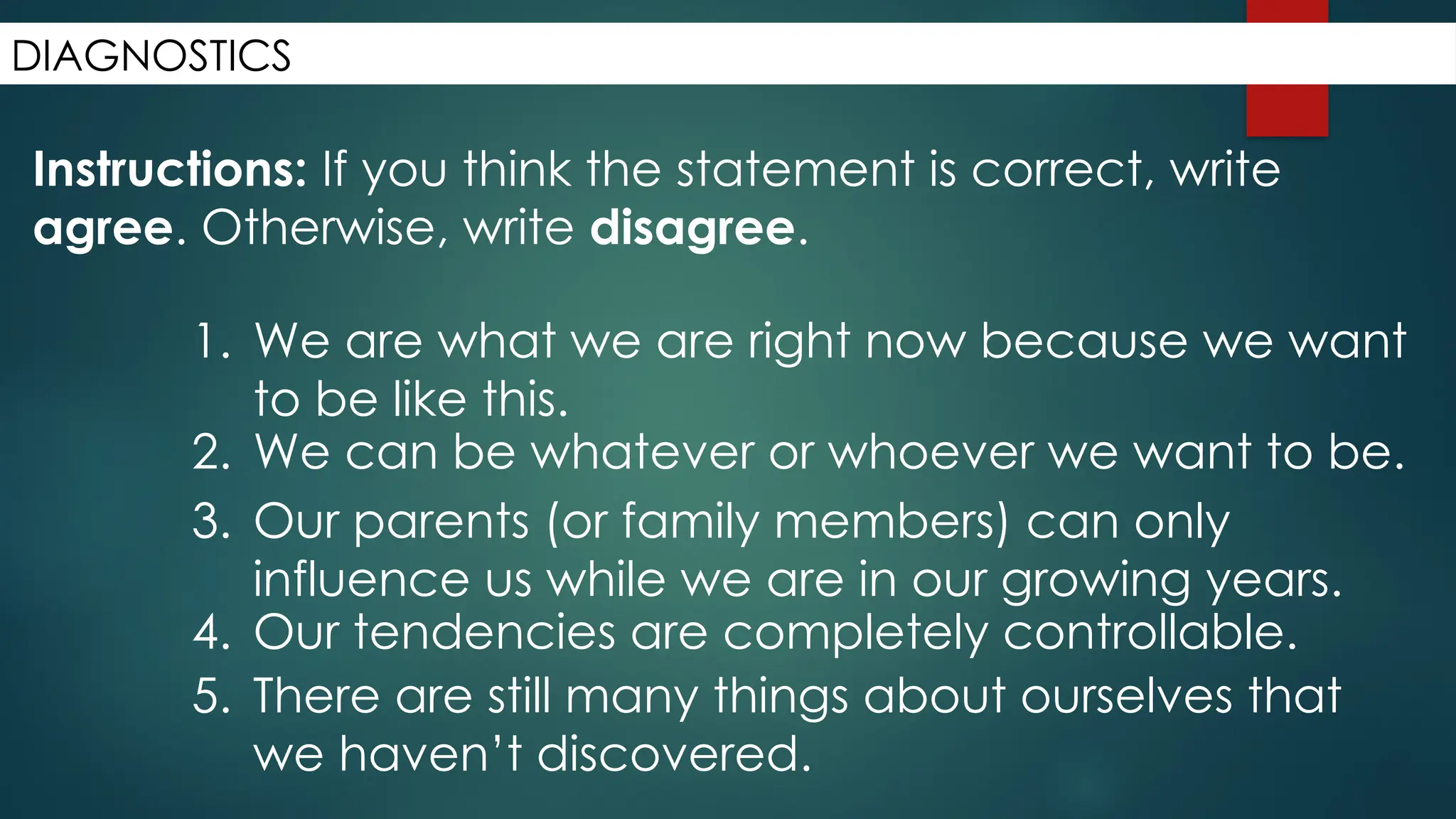
Instructions: If youthink the statement is correct, write
agree. Otherwise, write disagree.
1. We are what we are right now because we want
to be like this.
2. We can be whatever or whoever we want to be.
3. Our parents (or family members) can only
influence us while we are in our growing years.
4. Our tendencies are completely controllable.
5. There are still many things about ourselves that
we haven’t discovered.
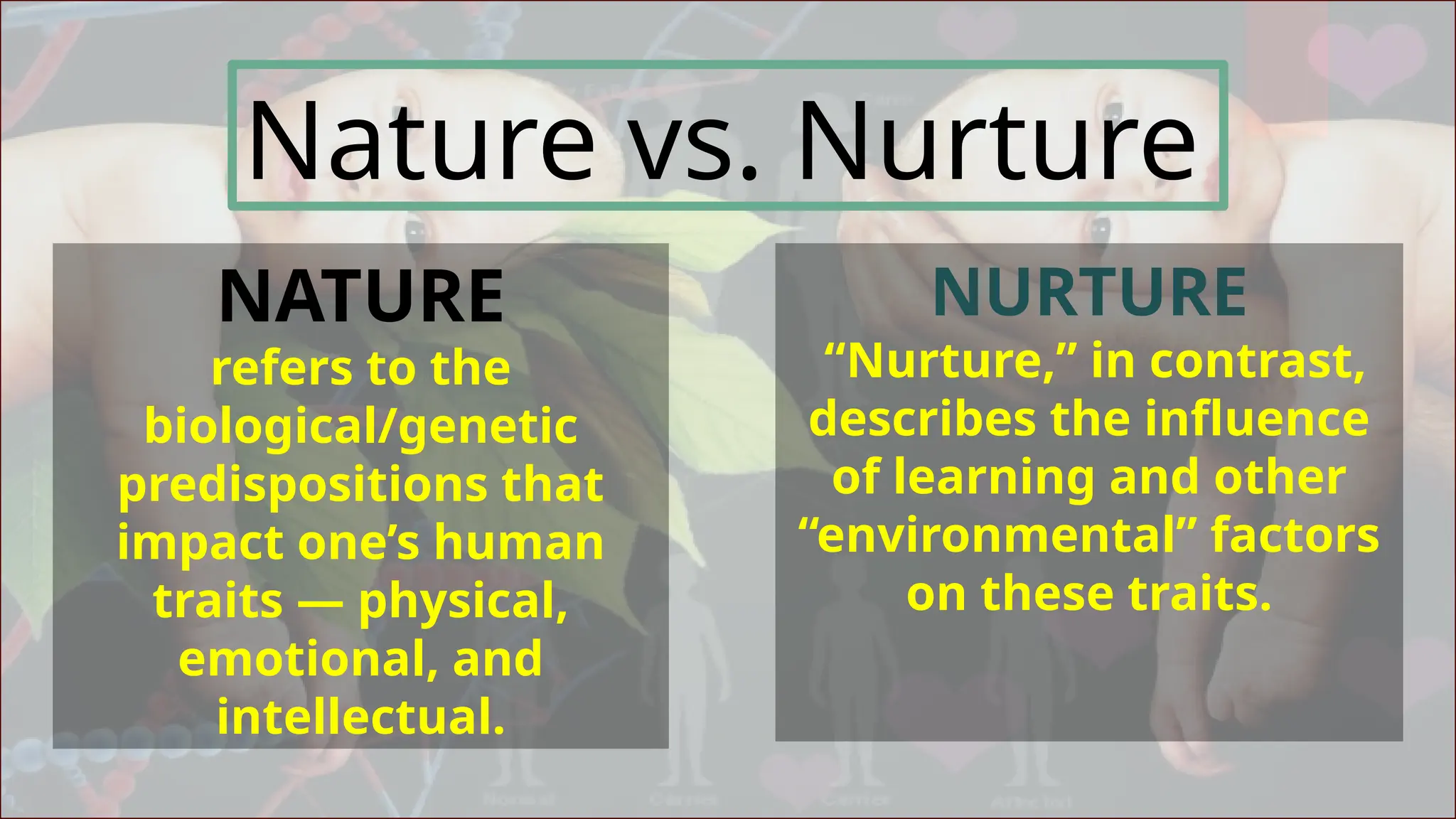
Nature vs. Nurture
NATURE
refersto the
biological/genetic
predispositions that
impact one’s human
traits — physical,
emotional, and
intellectual.
NURTURE
“Nurture,” in contrast,
describes the influence
of learning and other
“environmental” factors
on these traits.
7.
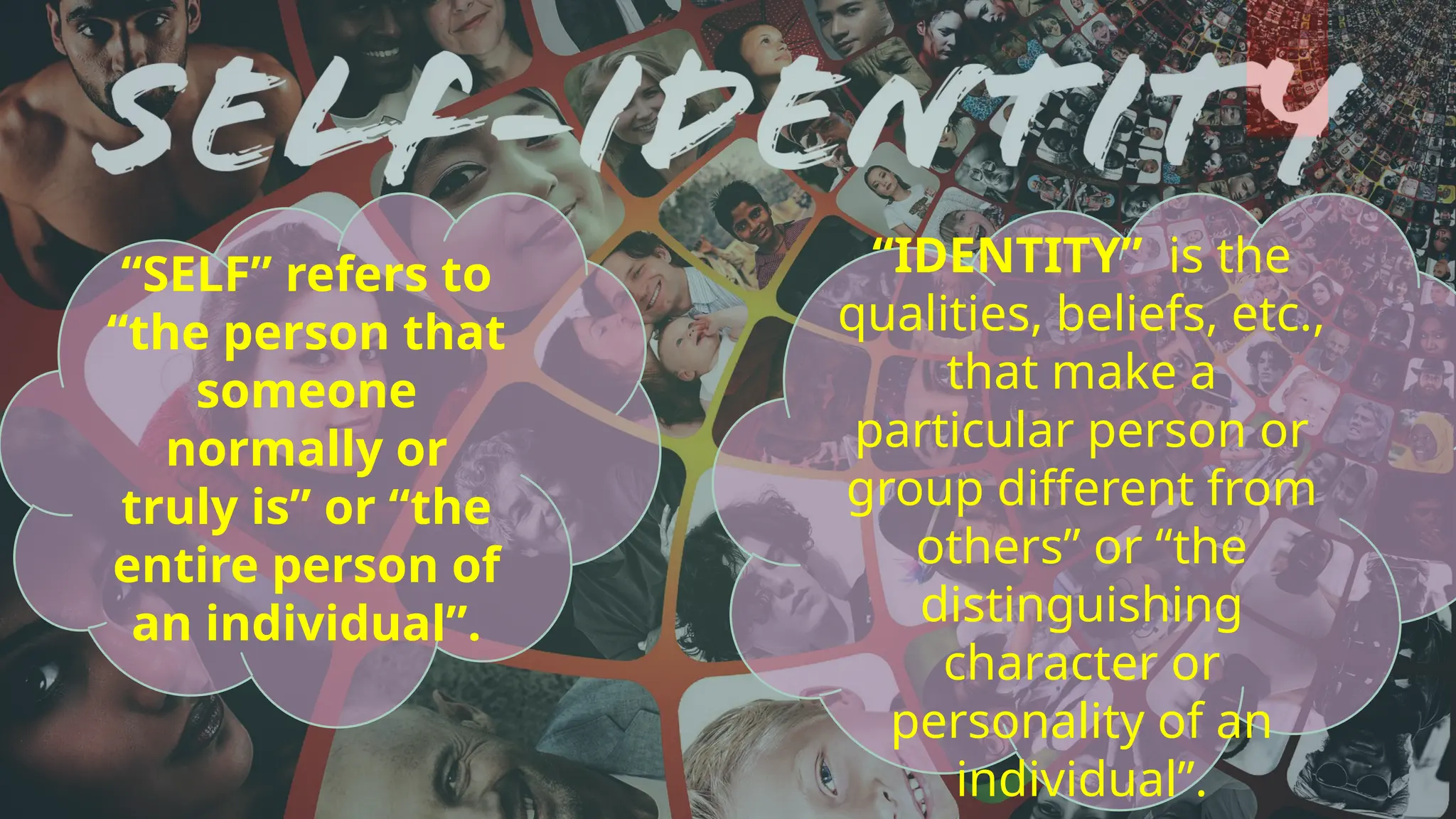
“SELF” refers to
“theperson that
someone
normally or
truly is” or “the
entire person of
an individual”.
“IDENTITY” is the
qualities, beliefs, etc.,
that make a
particular person or
group different from
others” or “the
distinguishing
character or
personality of an
individual”.
8.
INTENDED LEARNING OUTCOM
Atthe end of the session, students should be able to:
1.explain why it is essential to understand the self;
2.describe and discuss the different notions of the
self from points-of-view of the various philosophers
across time and place; and
3.compare and contrast how the self has been
represented in different philosophical schools; and
4.examine one’s self against the different views of
self that were discussed in class.
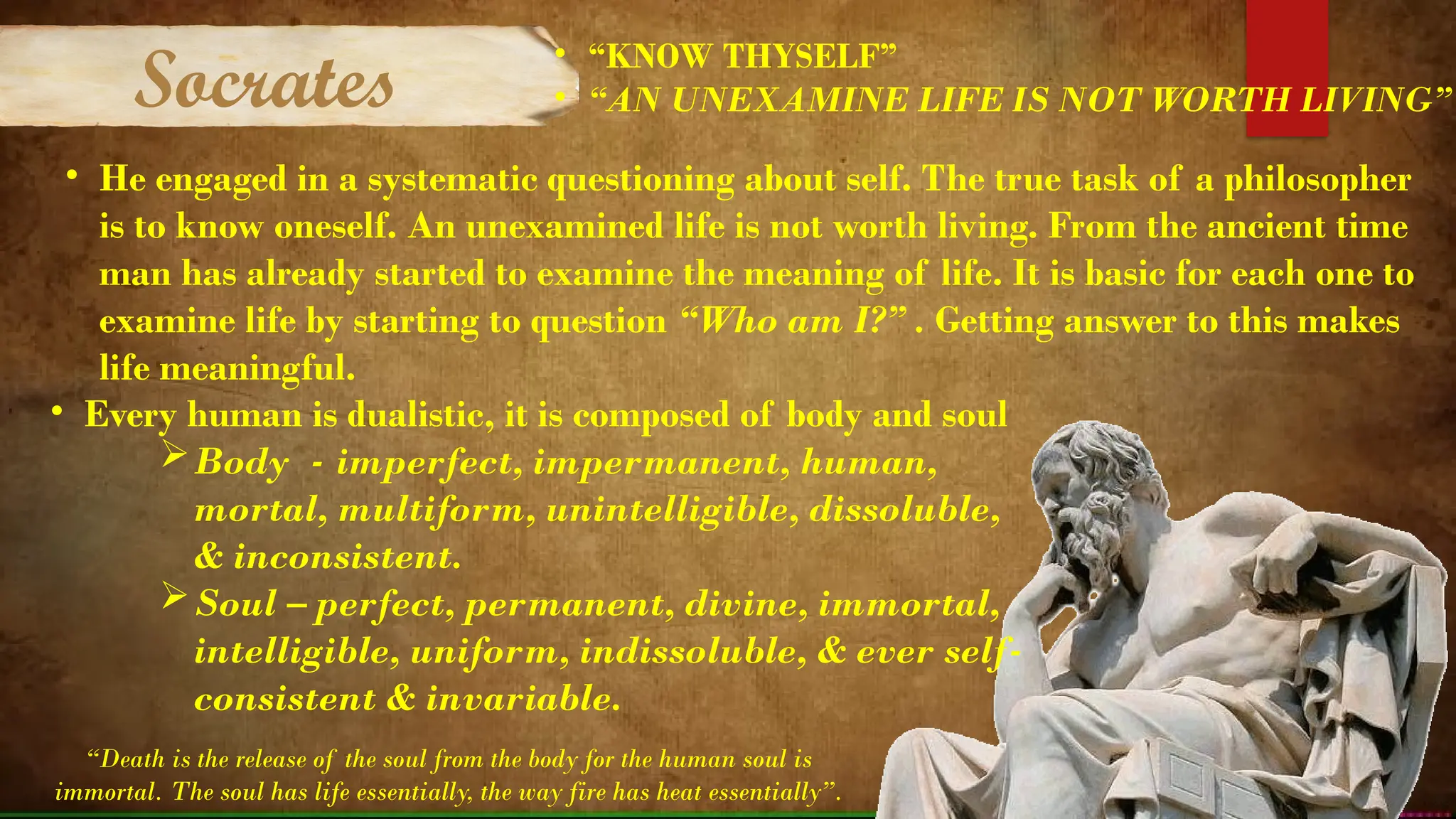
• He engagedin a systematic questioning about self. The true task of a philosopher
is to know oneself. An unexamined life is not worth living. From the ancient time
man has already started to examine the meaning of life. It is basic for each one to
examine life by starting to question “Who am I?” . Getting answer to this makes
life meaningful.
• Every human is dualistic, it is composed of body and soul
Body - imperfect, impermanent, human,
mortal, multiform, unintelligible, dissoluble,
& inconsistent.
Soul – perfect, permanent, divine, immortal,
intelligible, uniform, indissoluble, & ever self-
consistent & invariable.
“Death is the release of the soul from the body for the human soul is
immortal. The soul has life essentially, the way fire has heat essentially”.
Socrates
• “KNOW THYSELF”
• “AN UNEXAMINE LIFE IS NOT WORTH LIVING”
13.
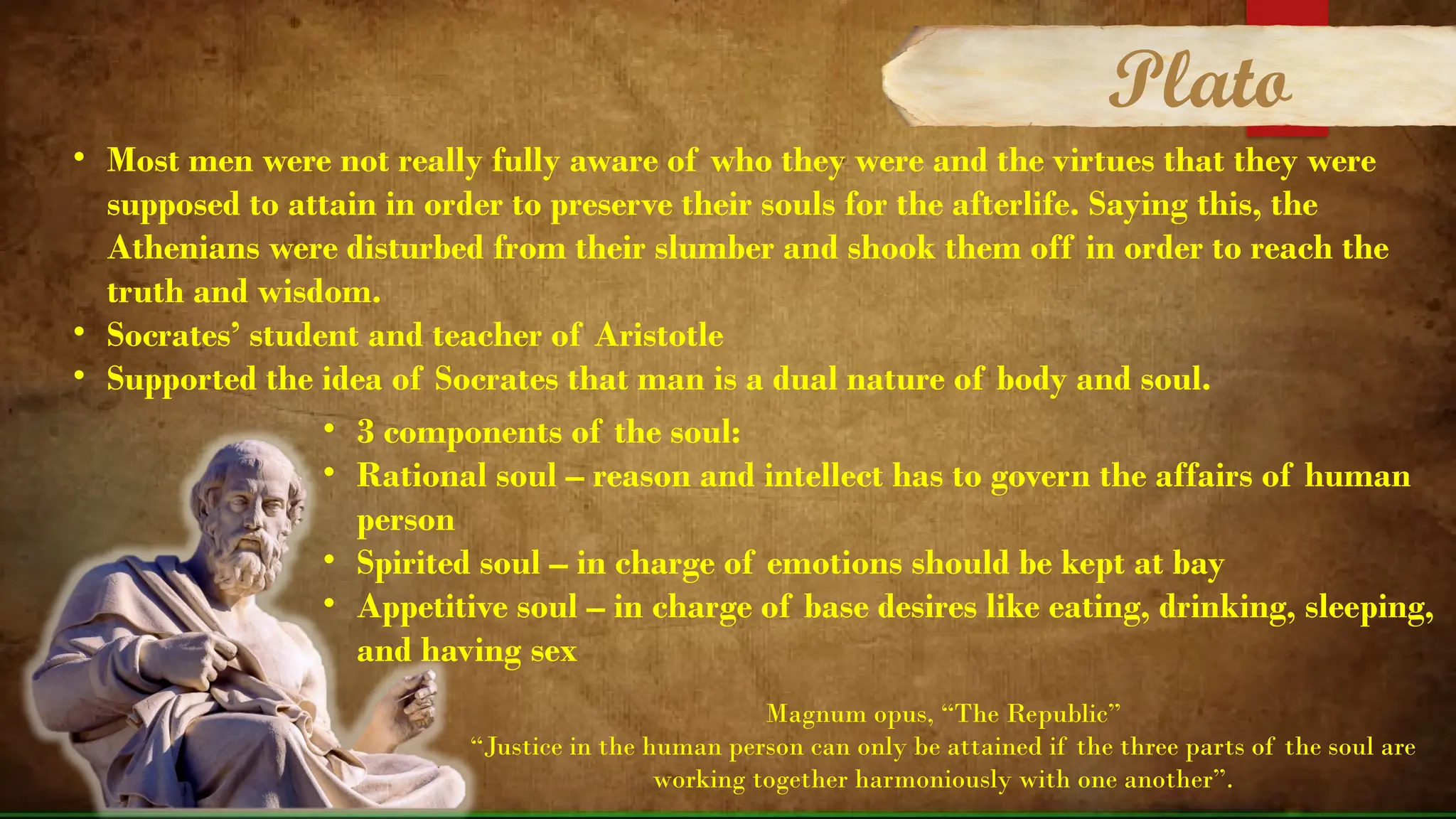
• Most menwere not really fully aware of who they were and the virtues that they were
supposed to attain in order to preserve their souls for the afterlife. Saying this, the
Athenians were disturbed from their slumber and shook them off in order to reach the
truth and wisdom.
• Socrates’ student and teacher of Aristotle
• Supported the idea of Socrates that man is a dual nature of body and soul.
• 3 components of the soul:
• Rational soul – reason and intellect has to govern the affairs of human
person
• Spirited soul – in charge of emotions should be kept at bay
• Appetitive soul – in charge of base desires like eating, drinking, sleeping,
and having sex
Magnum opus, “The Republic”
“Justice in the human person can only be attained if the three parts of the soul are
working together harmoniously with one another”.
Plato
14.
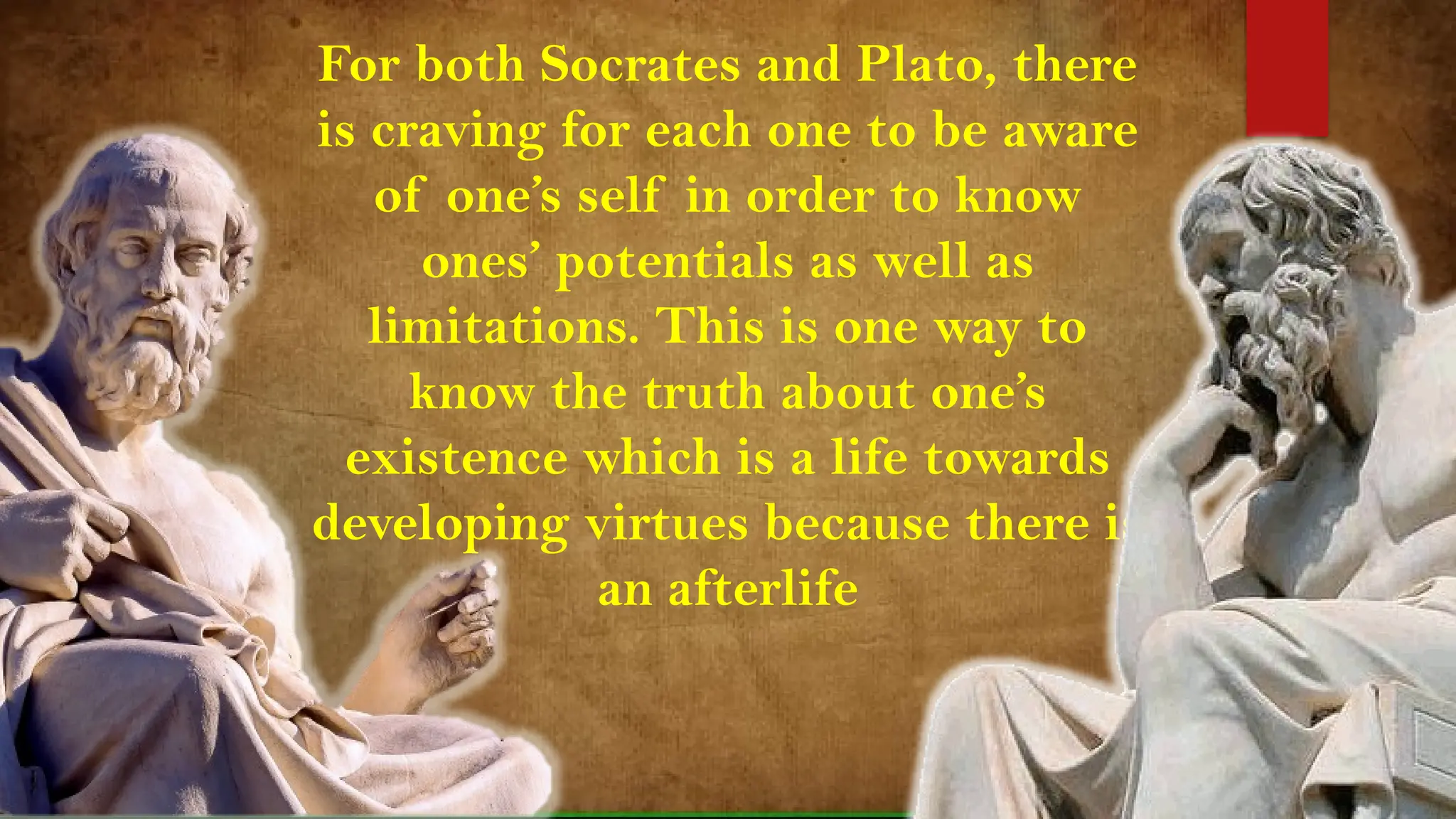
For both Socratesand Plato, there
is craving for each one to be aware
of one’s self in order to know
ones’ potentials as well as
limitations. This is one way to
know the truth about one’s
existence which is a life towards
developing virtues because there is
an afterlife
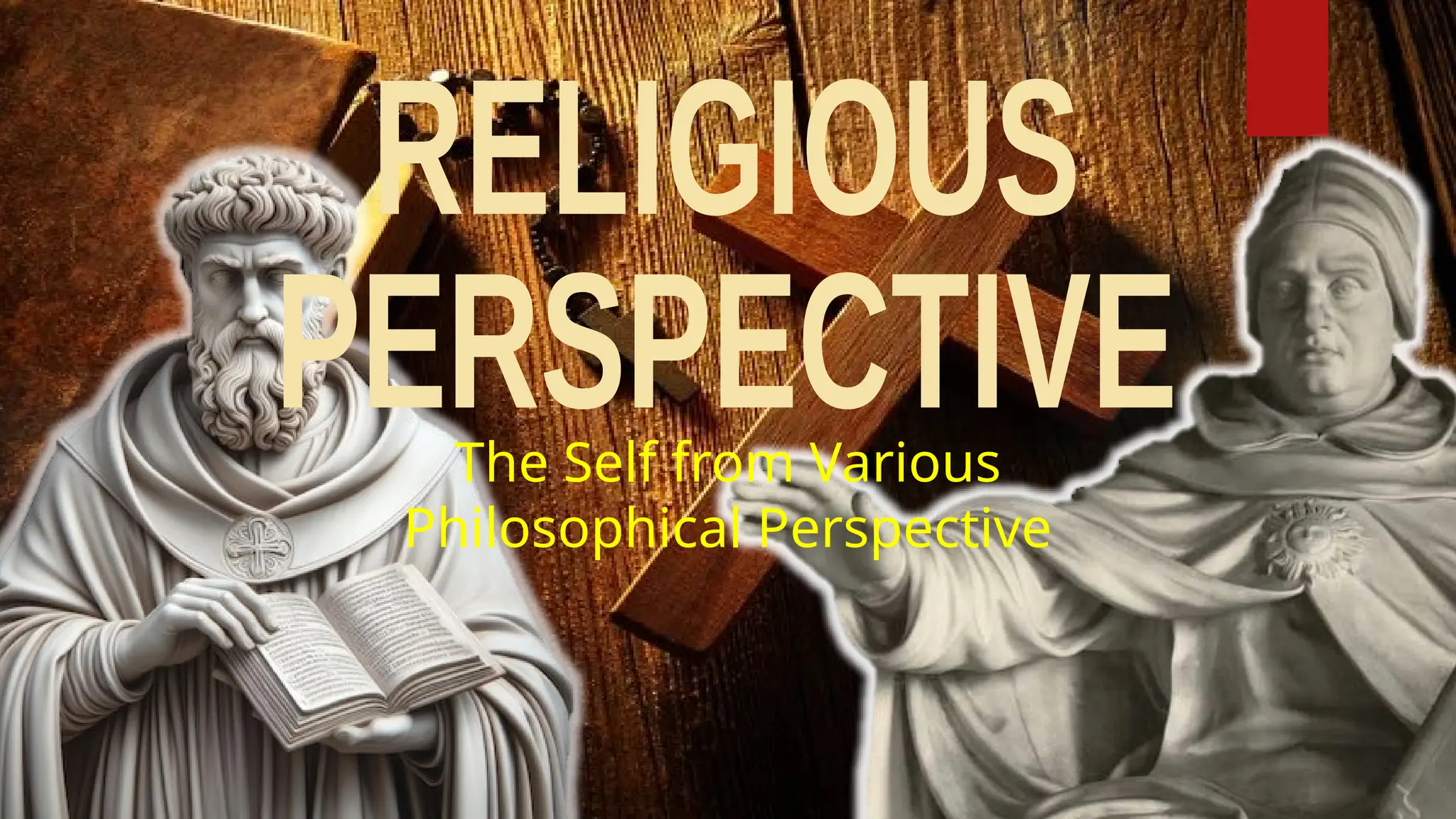
St. Thomas
Aquinas
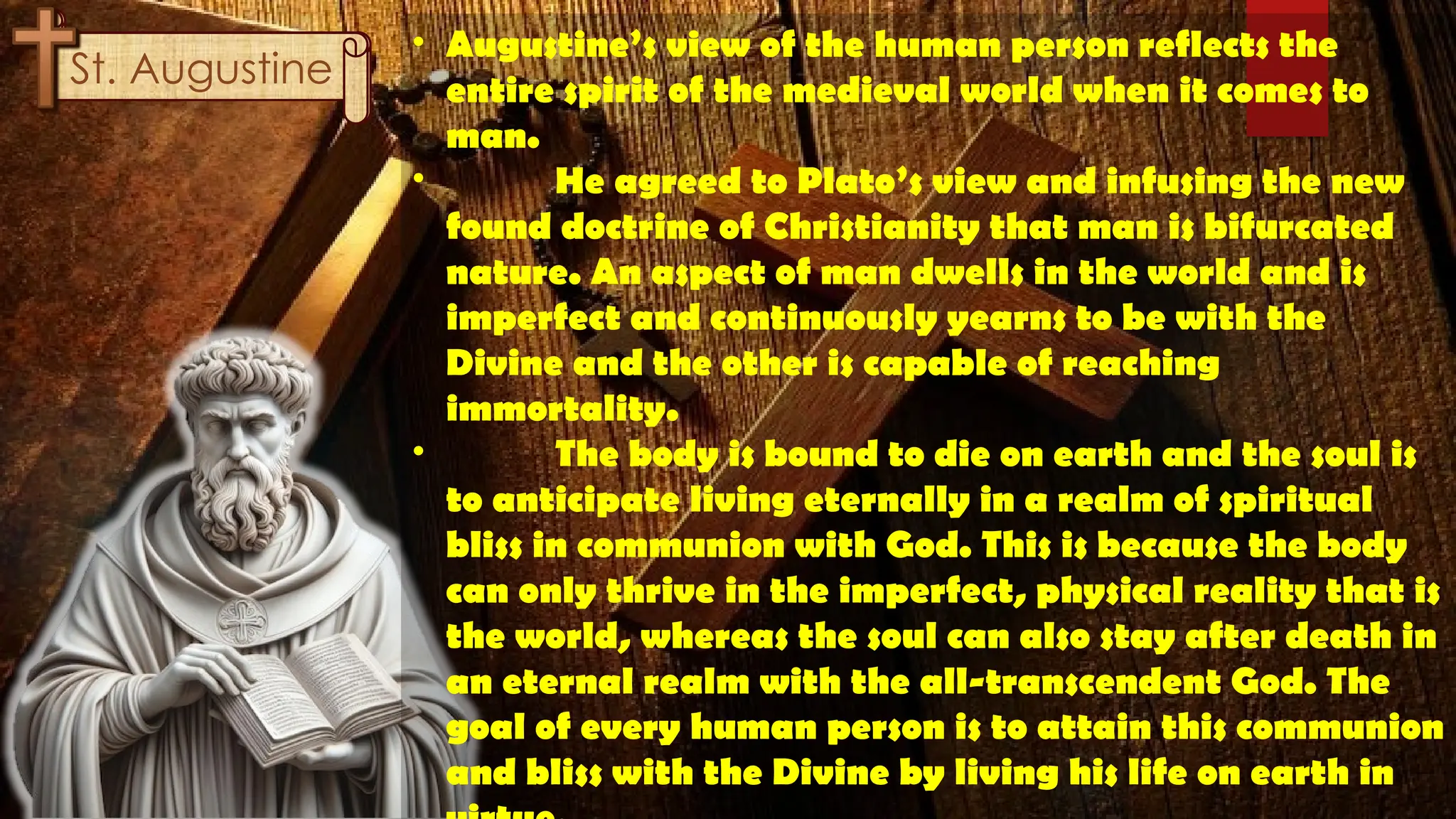
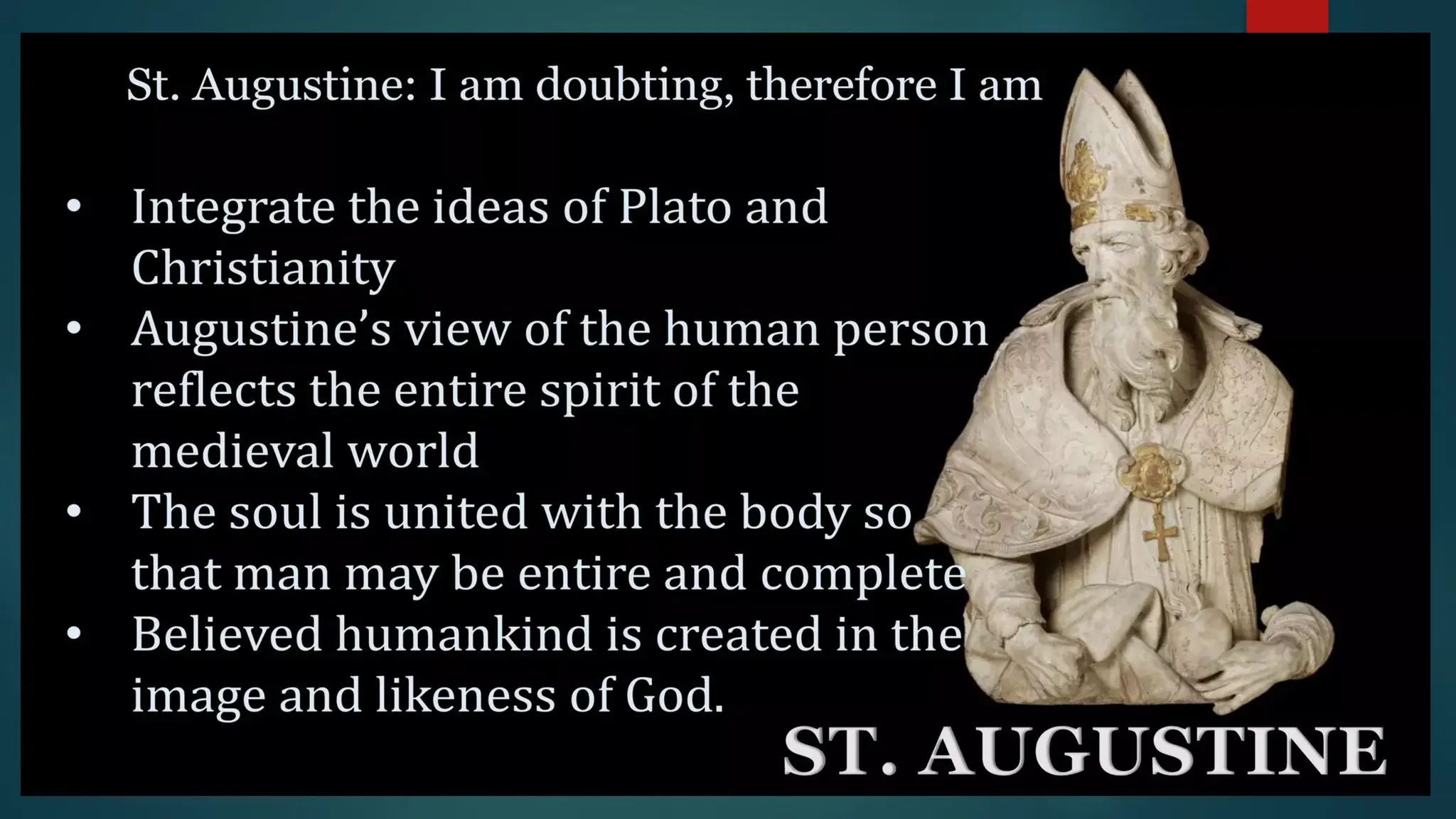
St. Augustine
•Augustine’s view of the human person reflects the
entire spirit of the medieval world when it comes to
man.
• He agreed to Plato’s view and infusing the new
found doctrine of Christianity that man is bifurcated
nature. An aspect of man dwells in the world and is
imperfect and continuously yearns to be with the
Divine and the other is capable of reaching
immortality.
• The body is bound to die on earth and the soul is
to anticipate living eternally in a realm of spiritual
bliss in communion with God. This is because the body
can only thrive in the imperfect, physical reality that is
the world, whereas the soul can also stay after death in
an eternal realm with the all-transcendent God. The
goal of every human person is to attain this communion
and bliss with the Divine by living his life on earth in
25.
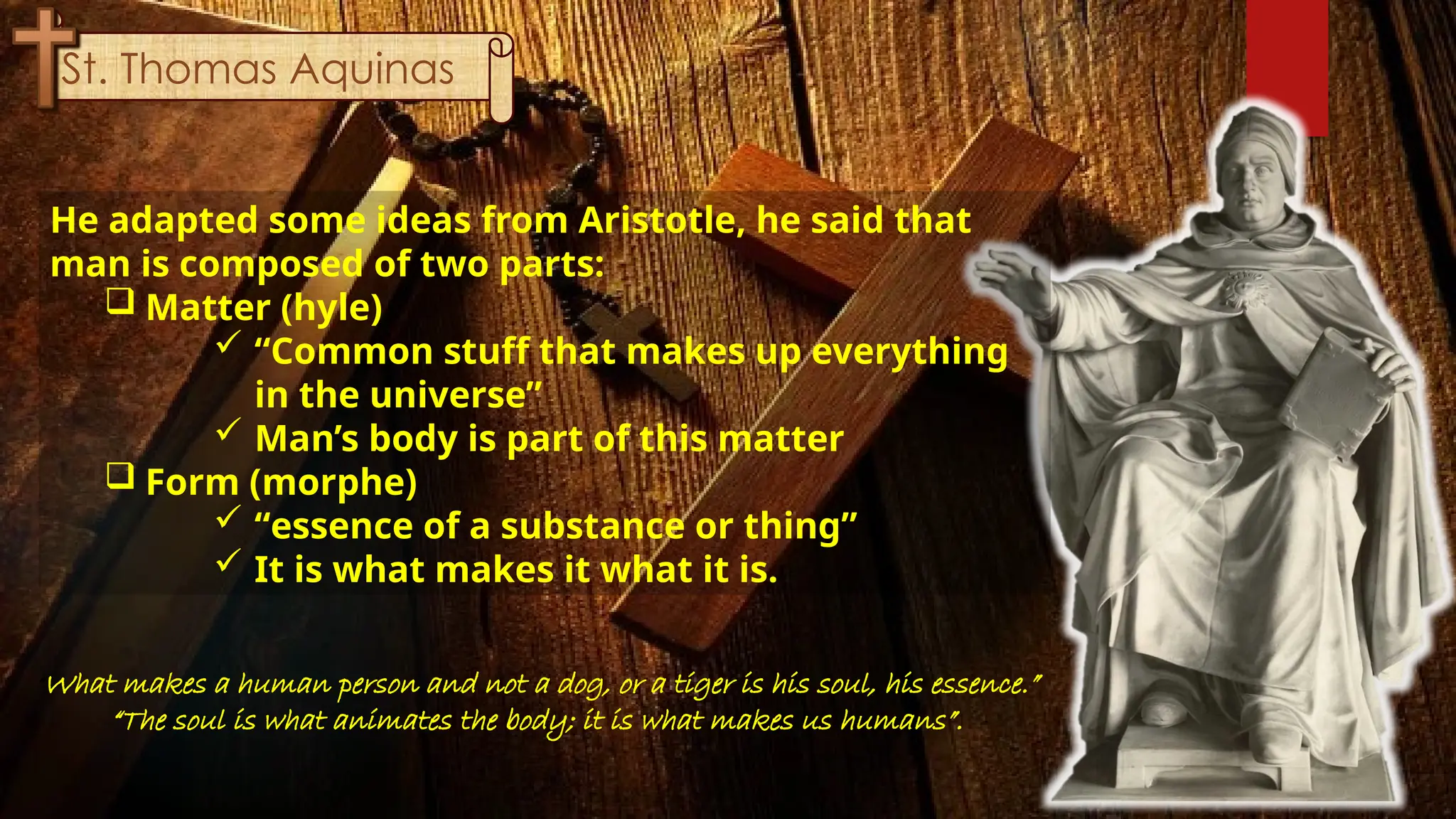
St. Thomas Aquinas
Headapted some ideas from Aristotle, he said that
man is composed of two parts:
Matter (hyle)
“Common stuff that makes up everything
in the universe”
Man’s body is part of this matter
Form (morphe)
“essence of a substance or thing”
It is what makes it what it is.
“What makes a human person and not a dog, or a tiger is his soul, his essence.”
“The soul is what animates the body; it is what makes us humans”.
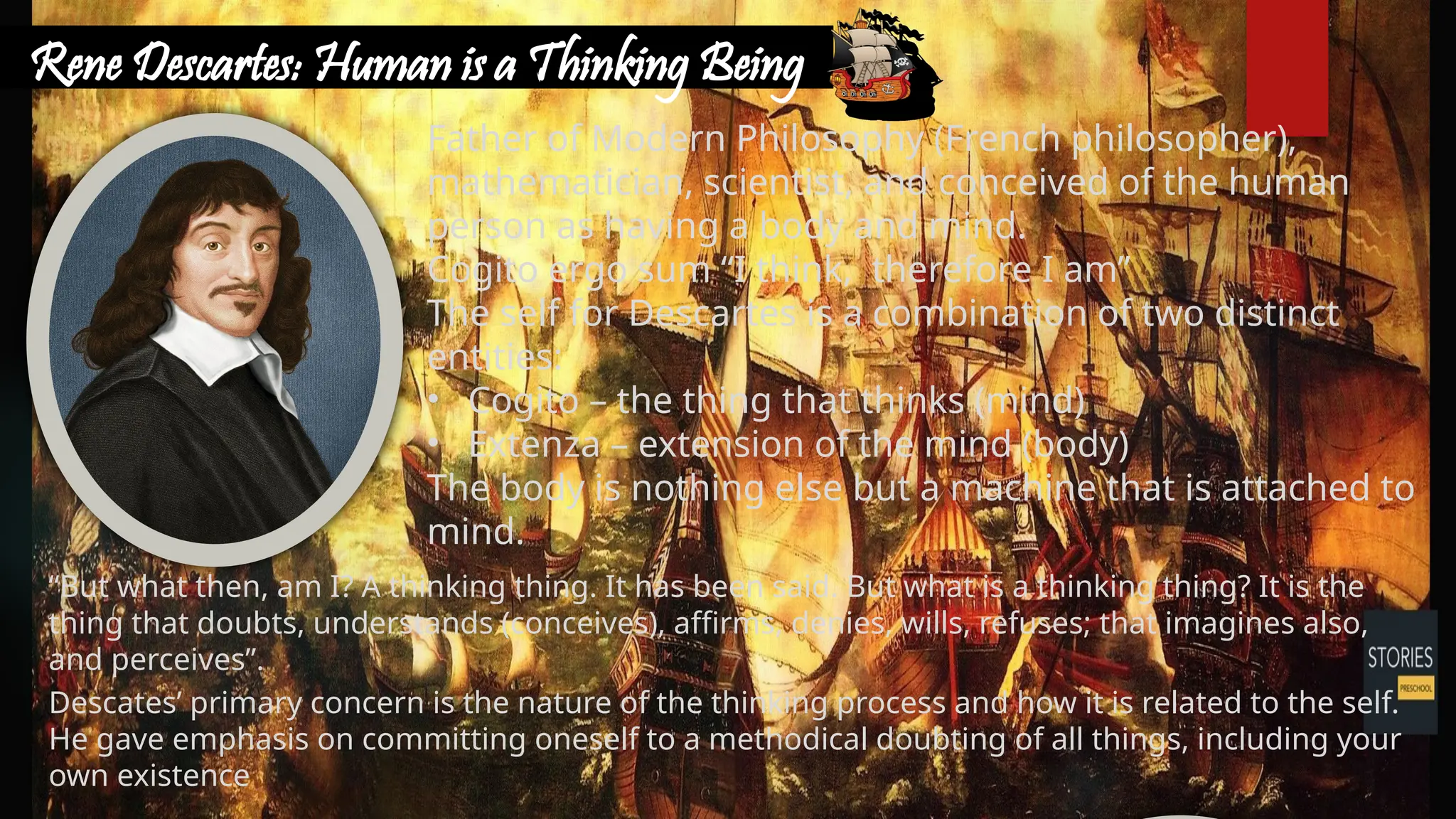
Rene Descartes: Humanis a Thinking Being
“But what then, am I? A thinking thing. It has been said. But what is a thinking thing? It is the
thing that doubts, understands (conceives), affirms, denies, wills, refuses; that imagines also,
and perceives”.
Descates’ primary concern is the nature of the thinking process and how it is related to the self.
He gave emphasis on committing oneself to a methodical doubting of all things, including your
own existence
Father of Modern Philosophy (French philosopher),
mathematician, scientist, and conceived of the human
person as having a body and mind.
Cogito ergo sum “I think, therefore I am”
The self for Descartes is a combination of two distinct
entities:
• Cogito – the thing that thinks (mind)
• Extenza – extension of the mind (body)
The body is nothing else but a machine that is attached to
mind.
28.
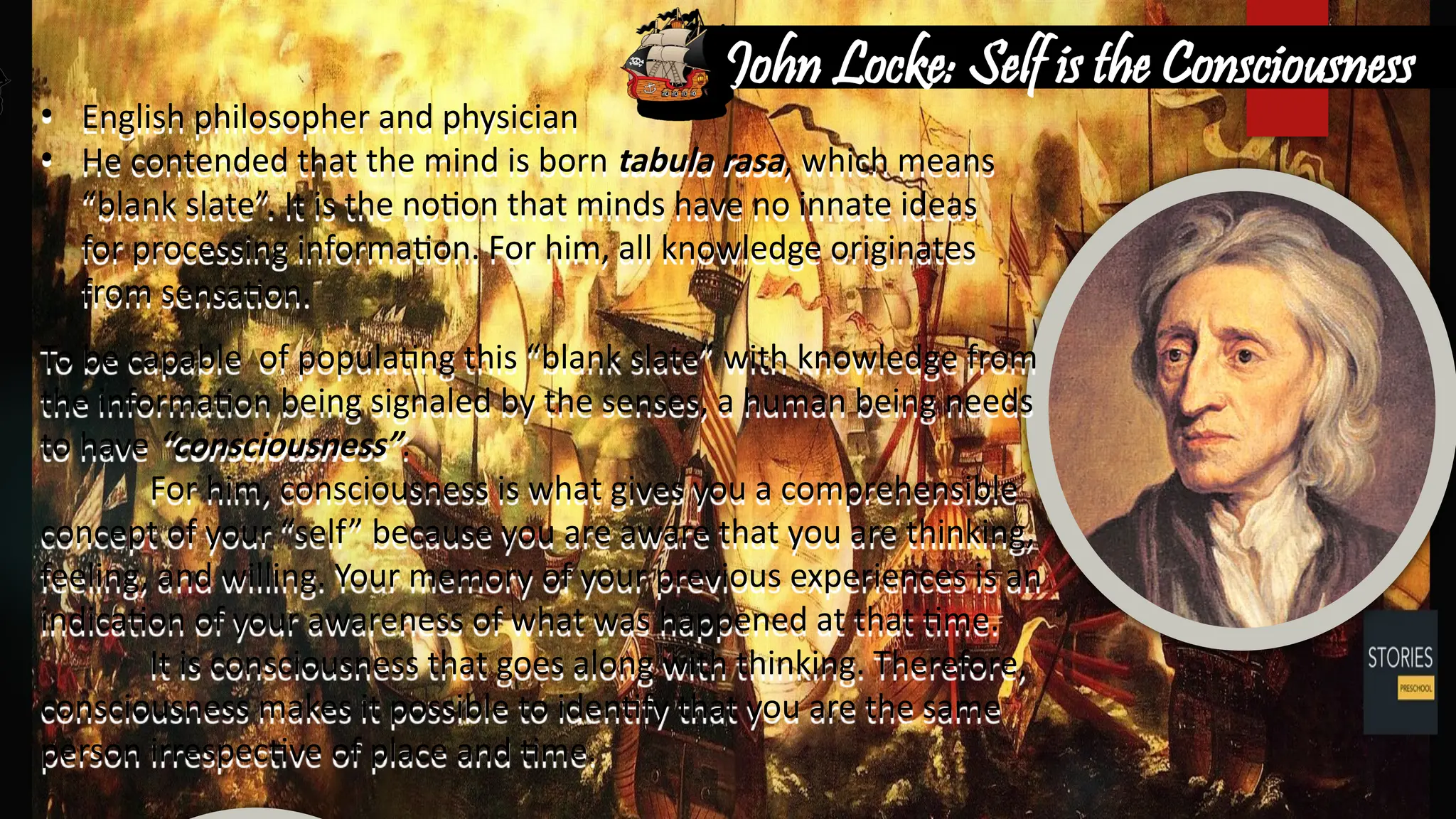
• English philosopherand physician
• He contended that the mind is born tabula rasa, which means
“blank slate”. It is the notion that minds have no innate ideas
for processing information. For him, all knowledge originates
from sensation.
To be capable of populating this “blank slate” with knowledge from
the information being signaled by the senses, a human being needs
to have “consciousness”.
For him, consciousness is what gives you a comprehensible
concept of your “self” because you are aware that you are thinking,
feeling, and willing. Your memory of your previous experiences is an
indication of your awareness of what was happened at that time.
It is consciousness that goes along with thinking. Therefore,
consciousness makes it possible to identify that you are the same
person irrespective of place and time.
John Locke: Self is the Consciousness
29.
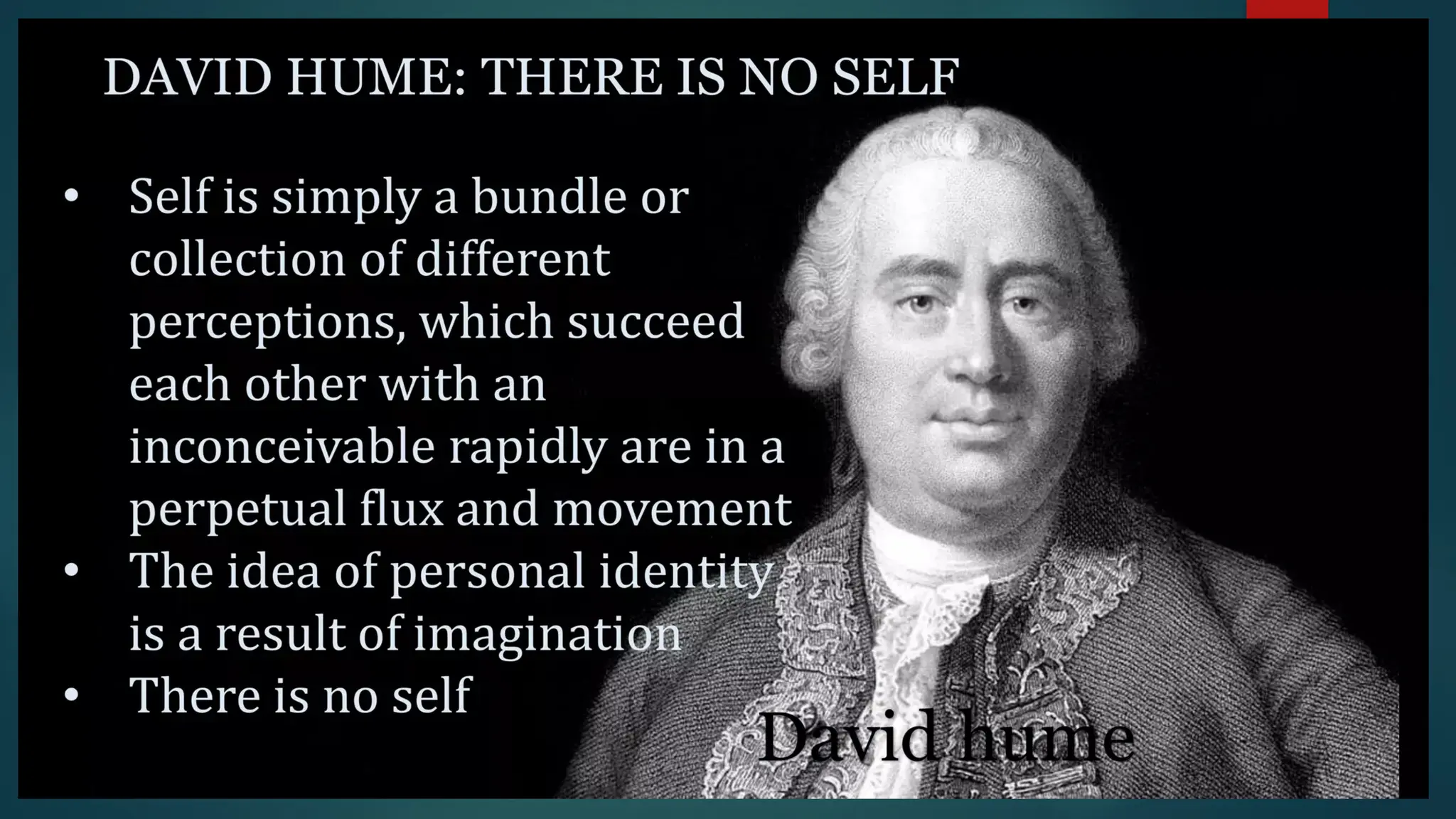
“Self is aconstant and persisting thing is obtained from impressions and
observations characterized by fluidity and variability. It is a collection of
experiences”.
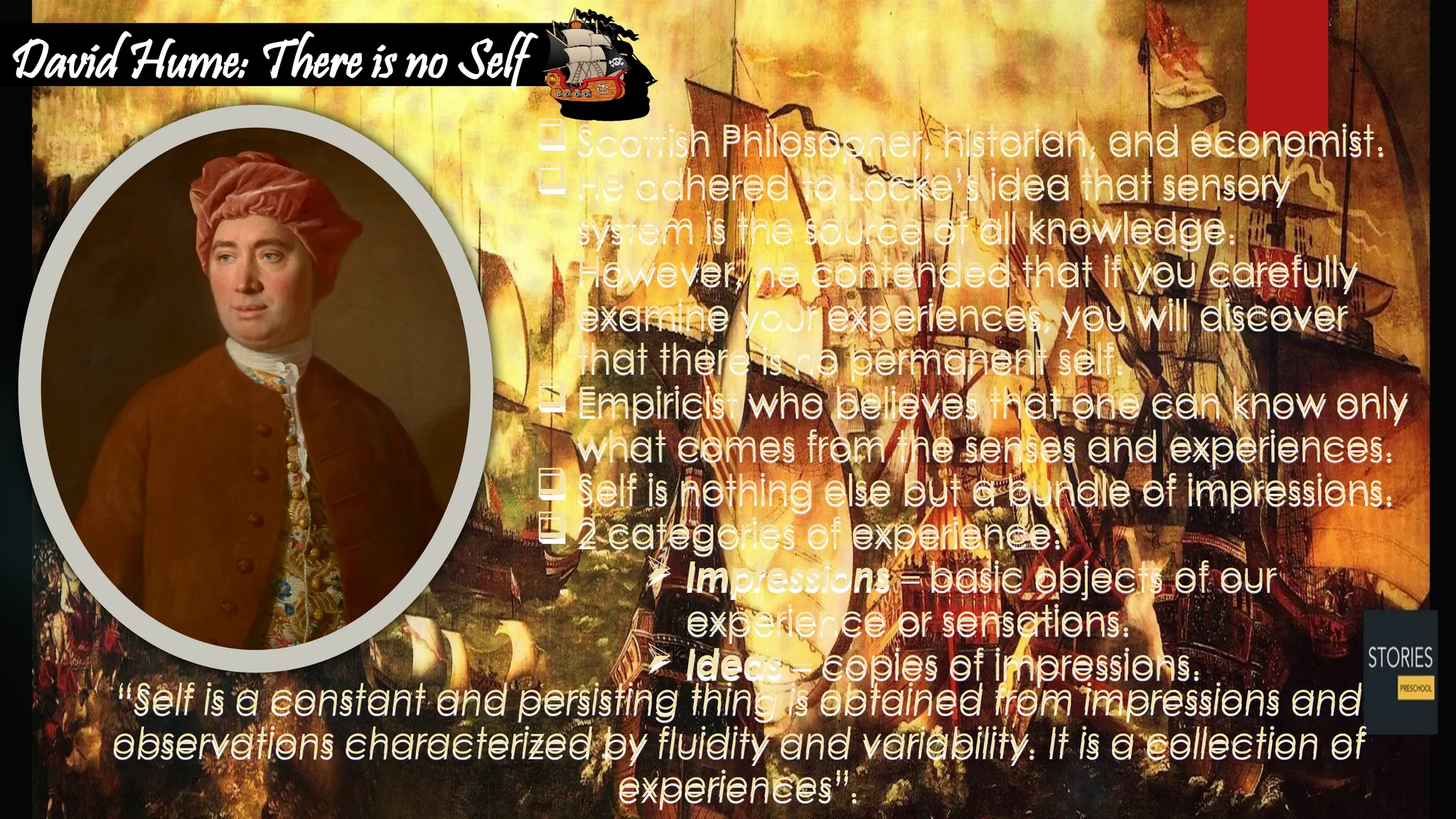
Scottish Philosopher, historian, and economist.
He adhered to Locke’s idea that sensory
system is the source of all knowledge.
However, he contended that if you carefully
examine your experiences, you will discover
that there is no permanent self.
Empiricist who believes that one can know only
what comes from the senses and experiences.
Self is nothing else but a bundle of impressions.
2 categories of experience:
Impressions – basic objects of our
experience or sensations.
Ideas – copies of impressions.
David Hume: There is no Self
31.
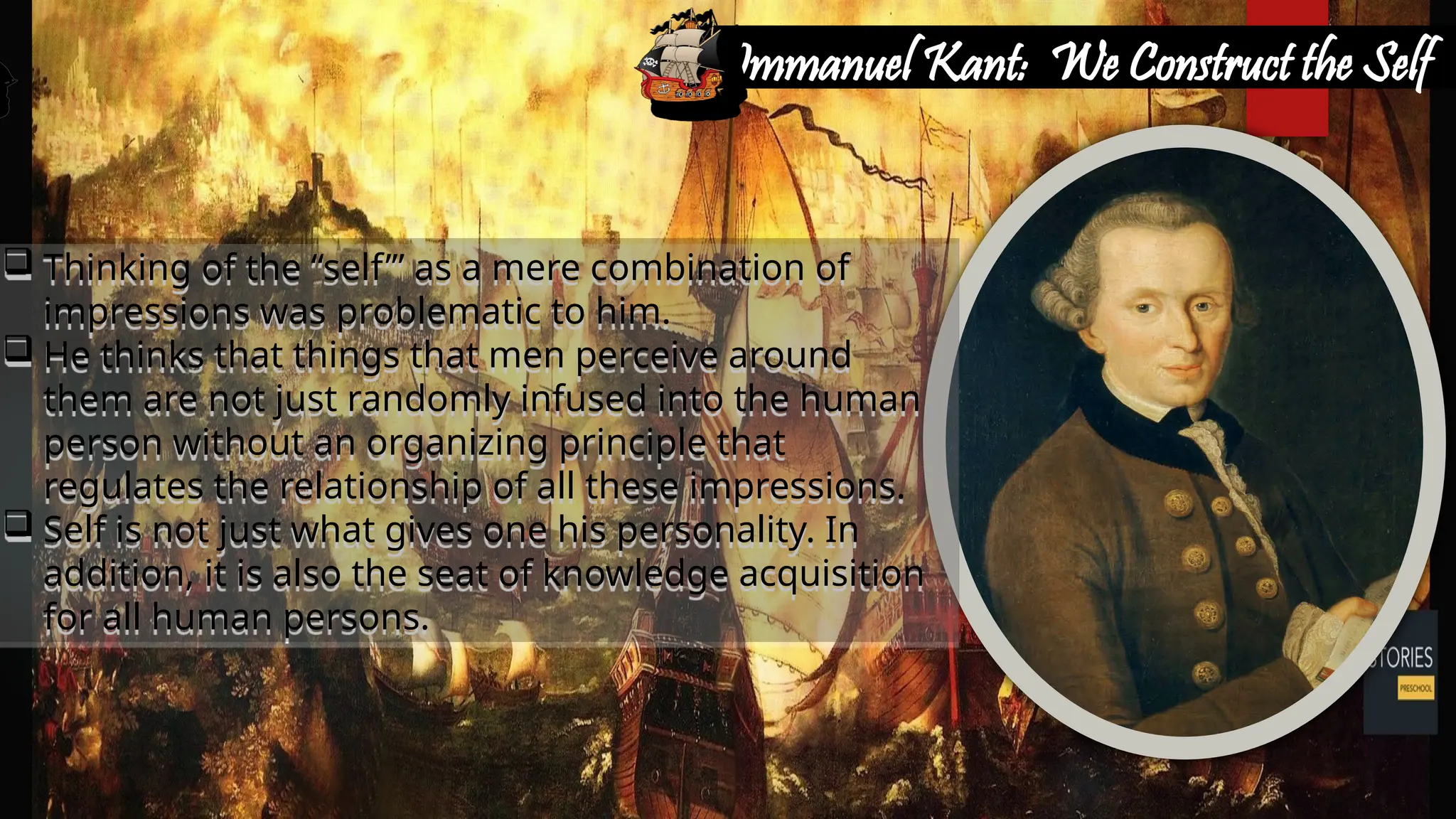
Thinking ofthe “self’” as a mere combination of
impressions was problematic to him.
He thinks that things that men perceive around
them are not just randomly infused into the human
person without an organizing principle that
regulates the relationship of all these impressions.
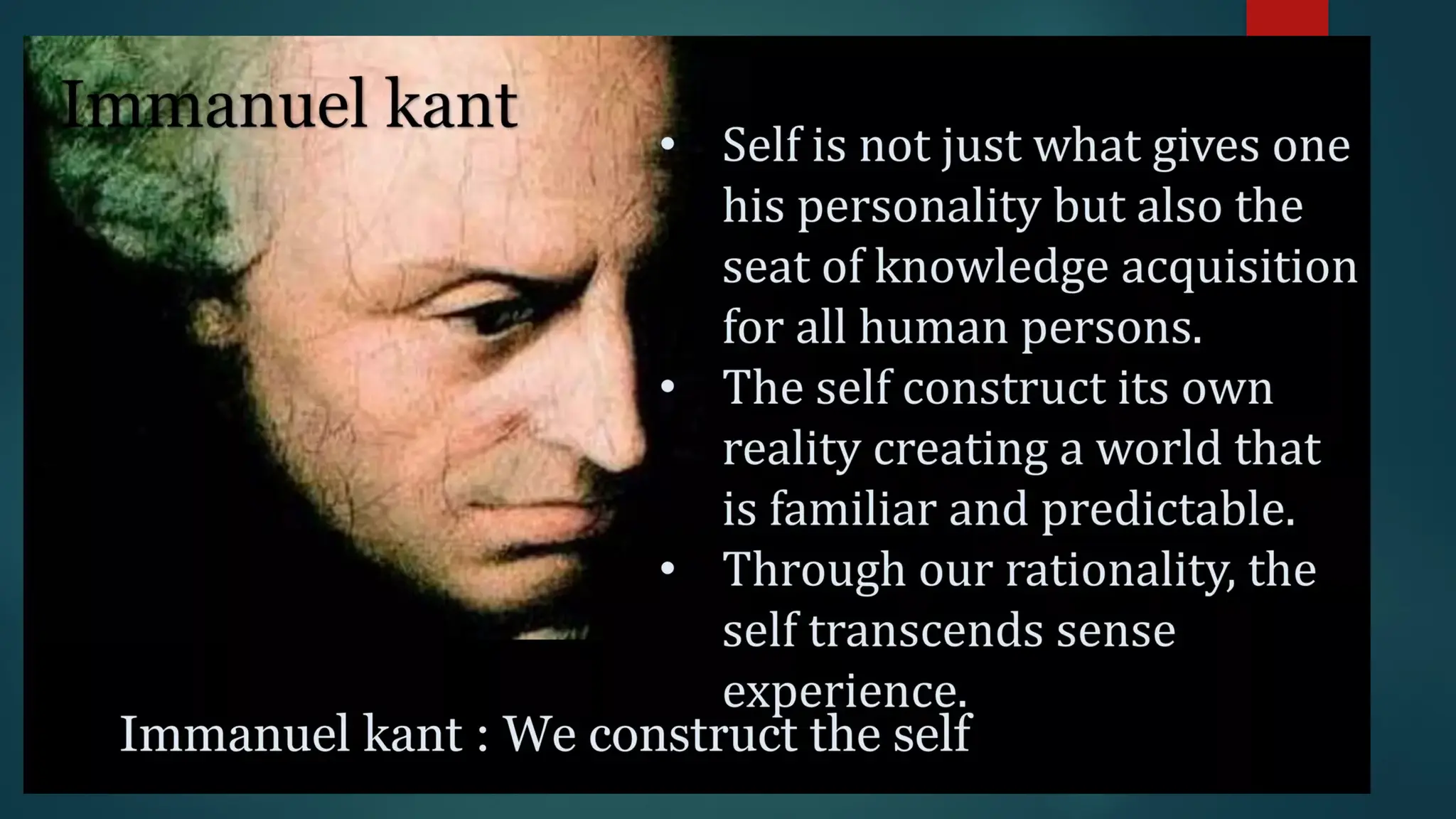
Self is not just what gives one his personality. In
addition, it is also the seat of knowledge acquisition
for all human persons.
Immanuel Kant: We Construct the Self
34.
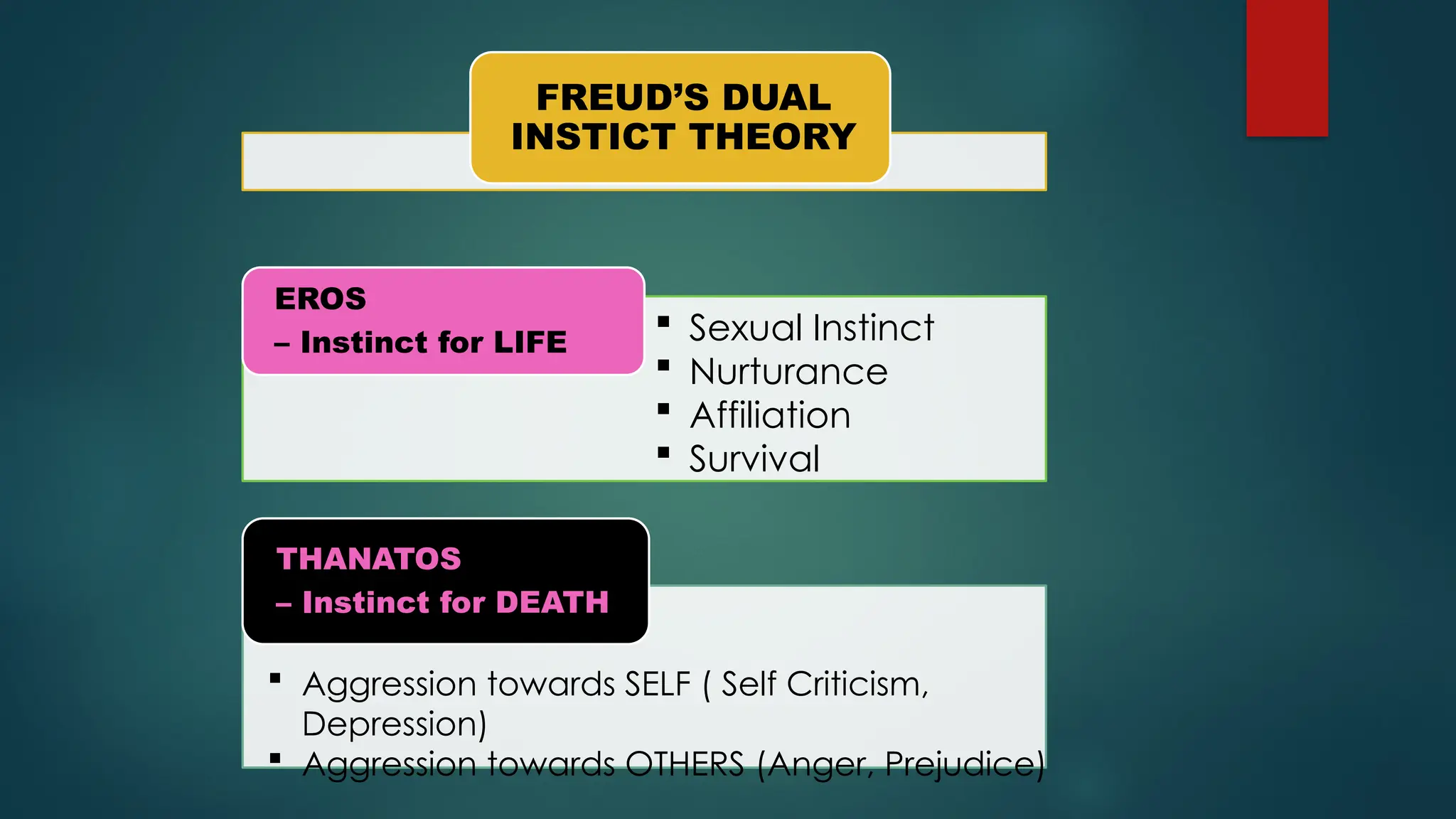
FREUD’S DUAL
INSTICT THEORY
EROS
–Instinct for LIFE
THANATOS
– Instinct for DEATH
Sexual Instinct
Nurturance
Affiliation
Survival
Aggression towards SELF ( Self Criticism,
Depression)
Aggression towards OTHERS (Anger, Prejudice)
Editor's Notes
#12 Human – representative of or susceptible to the sympathies & frailties of human nature
Multiform – having many forms or appearance
Unintelligible – unable to understood or comprehend
Dissoluble – capable of being dissolved
Inconsistent -
Self-consistent and Invariable – not changing or capable of change
#13 Rational – having reason or understanding
Spirited – emotions, full of energy, animation, or courage
Appetitive – any of the initiative desires necessary to keep up organic life especially the desires to eat
#21 Bifurcated – divided into 2 parts
Transcendent – exceeding usual limits
All-transcendent - (walang katapusan kakayanan)
#25 Essence – the individual, real, or ultimate nature of a thing especially as opposed to its existence.
#27 Descartes’ most famous line, “Cogito Ergo sum” which means “I think, therefore I am”.
#28 Sensation- a physical feeling or perception resulting from something that happens to or comes into contact with the body.
#29 Hume explained that impressions and ideas comprise our sensory experiences. Impressions form part of our basic sensations, such as hot, cold, love, hate, etc. impressions are fleeting and momentary. On the other hand, ideas are mere copies of impressions these include your thoughts and images as a result of your primary impressions. Ideas, therefore, are eventually derived from impressions.