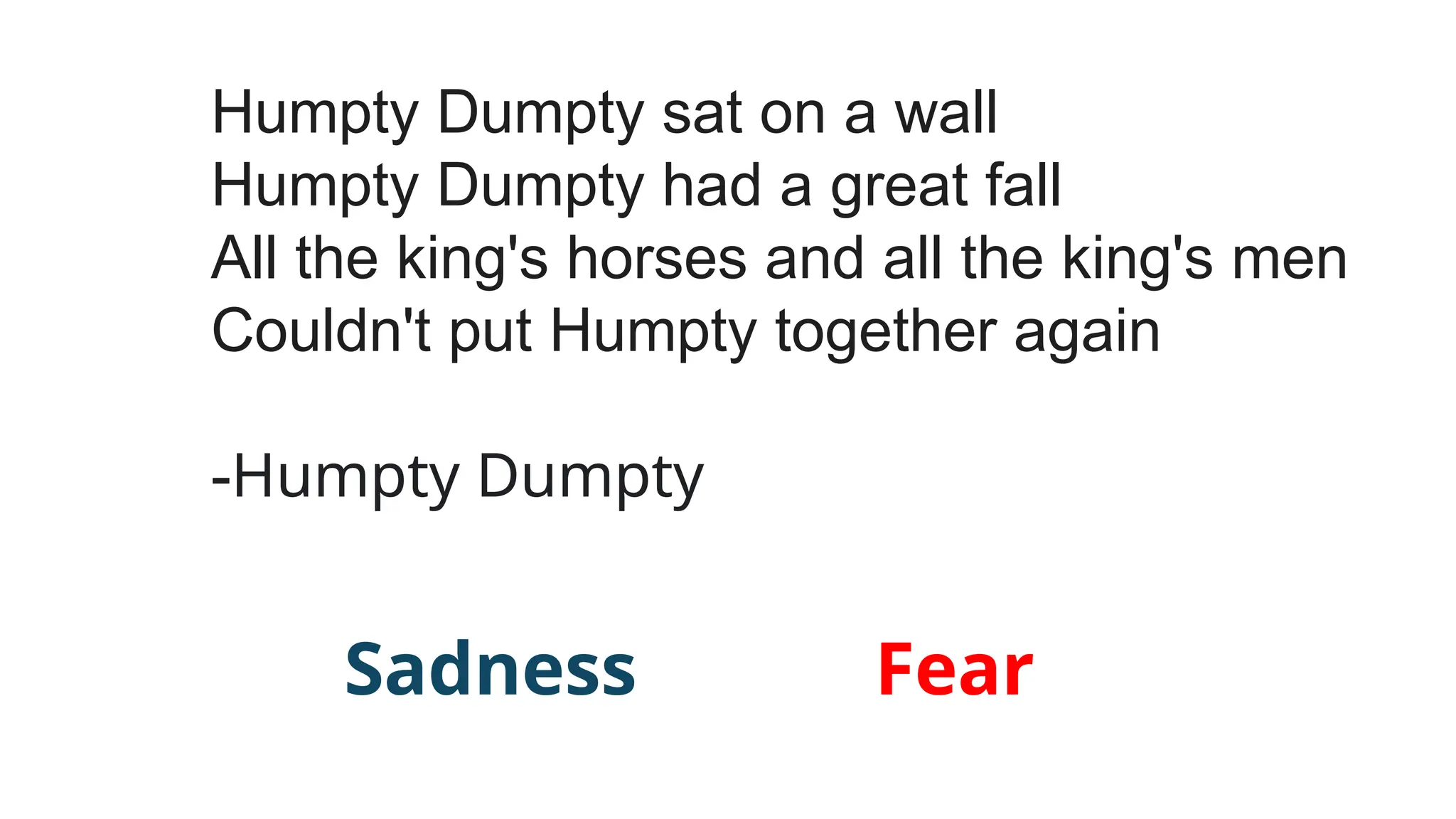
Humpty Dumpty saton a wall
Humpty Dumpty had a great fall
All the king's horses and all the king's men
Couldn't put Humpty together again
-Humpty Dumpty
Sadness Fear
3.
"Mahal mo baako dahil kailangan mo ako,
o kailangan mo ako kaya mahal mo ako?“
MILAN (2004)
Claudine Barreto as Jenny
Anger
4.
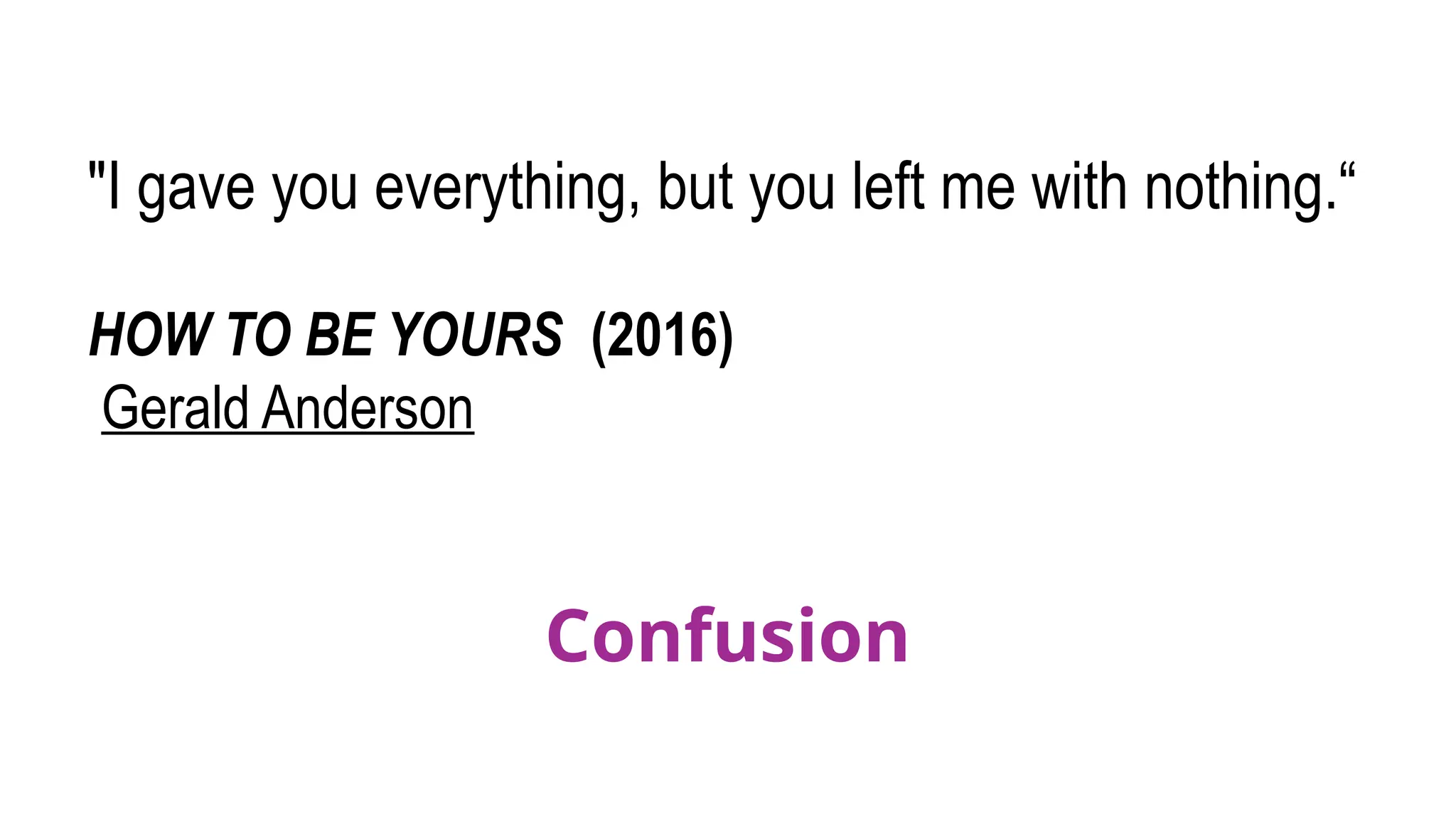
"I gave youeverything, but you left me with nothing.“
HOW TO BE YOURS (2016)
Gerald Anderson
Confusion
9.
"Can you thinkof a specific government
rule or regulation that was effectively
communicated to the public and how it
helped bring order or control?"
12.
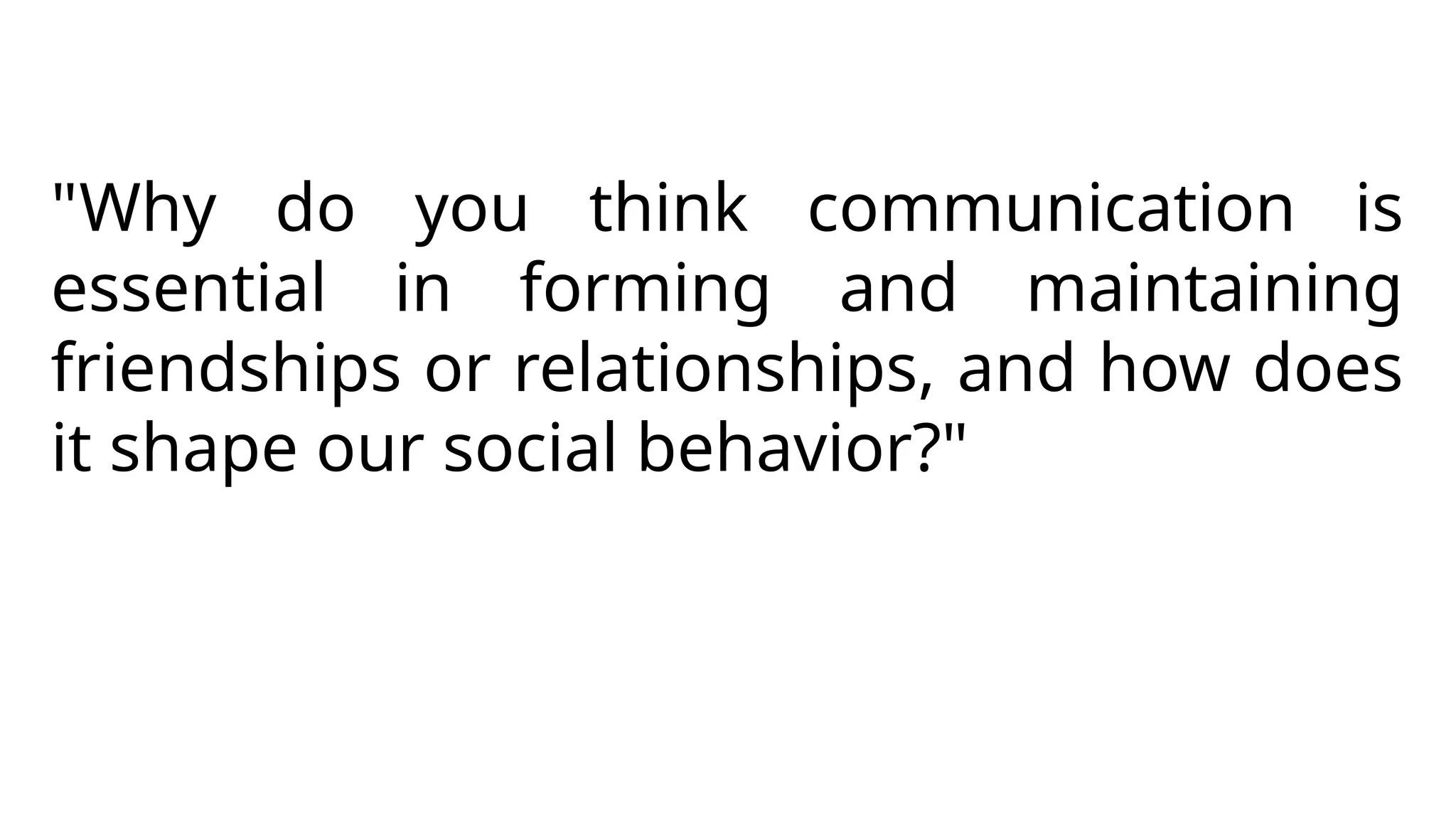
"Why do youthink communication is
essential in forming and maintaining
friendships or relationships, and how does
it shape our social behavior?"
17.
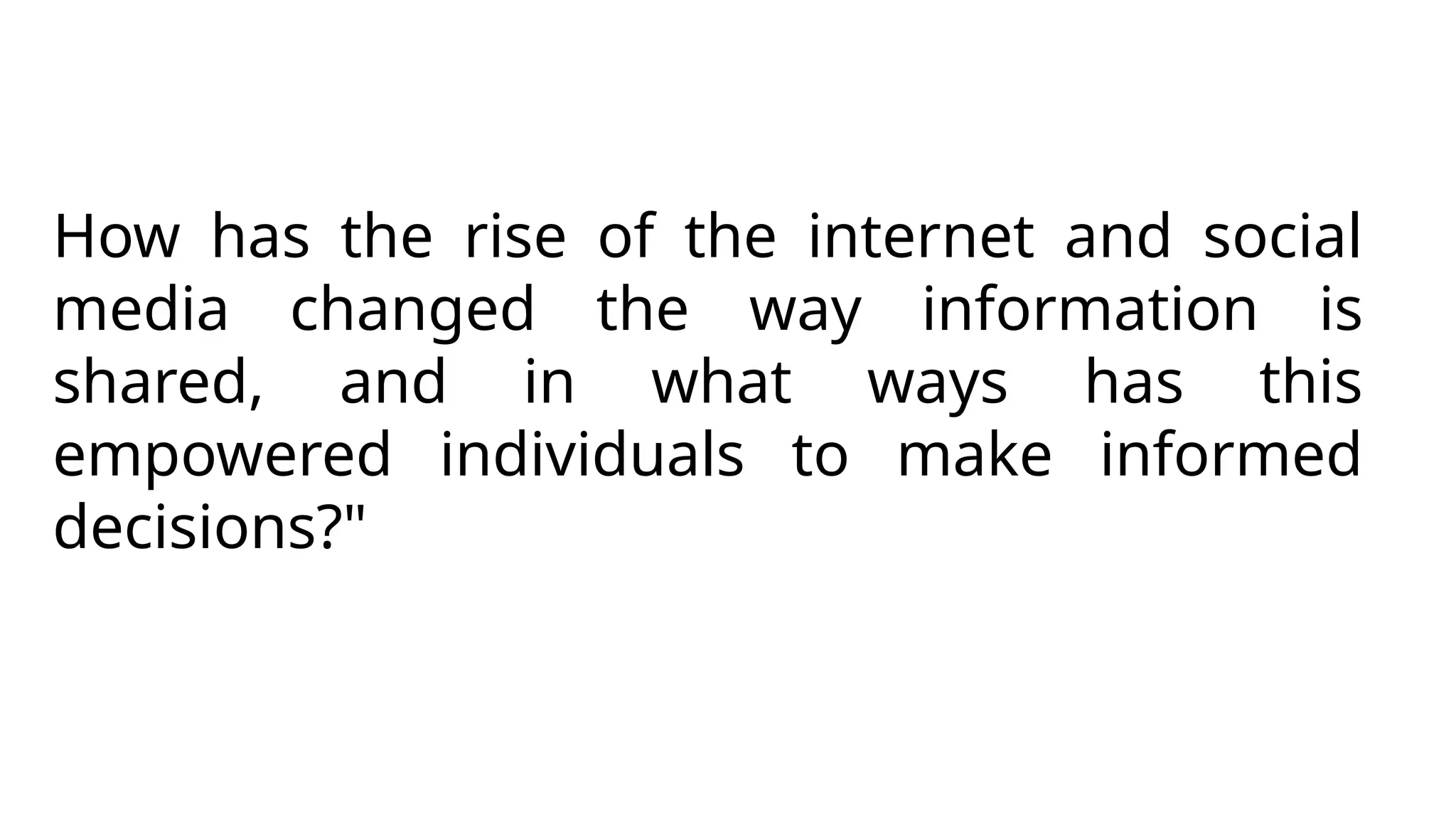
How has therise of the internet and social
media changed the way information is
shared, and in what ways has this
empowered individuals to make informed
decisions?"
21.
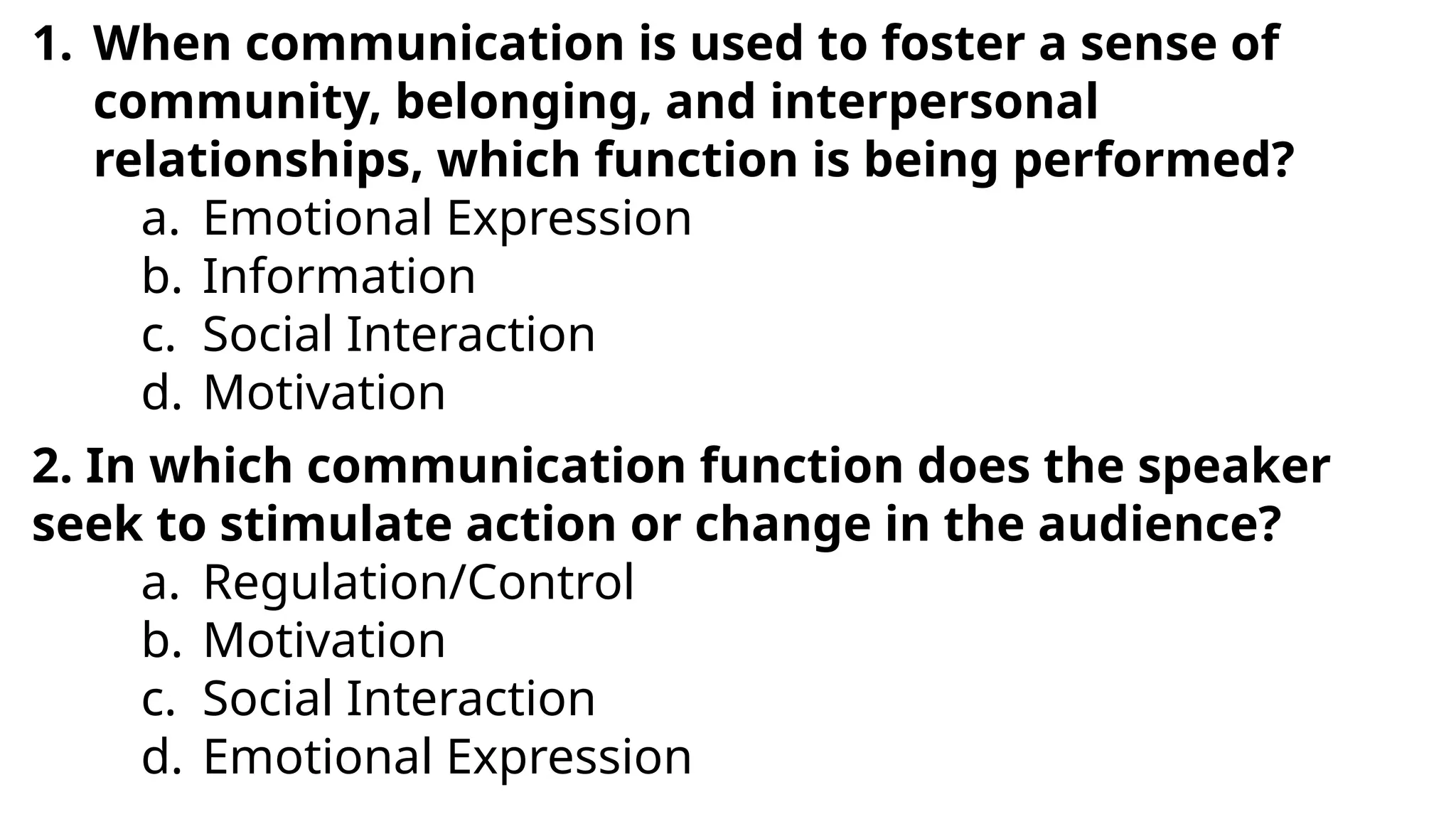
1. When communicationis used to foster a sense of
community, belonging, and interpersonal
relationships, which function is being performed?
a. Emotional Expression
b. Information
c. Social Interaction
d. Motivation
2. In which communication function does the speaker
seek to stimulate action or change in the audience?
a. Regulation/Control
b. Motivation
c. Social Interaction
d. Emotional Expression
22.
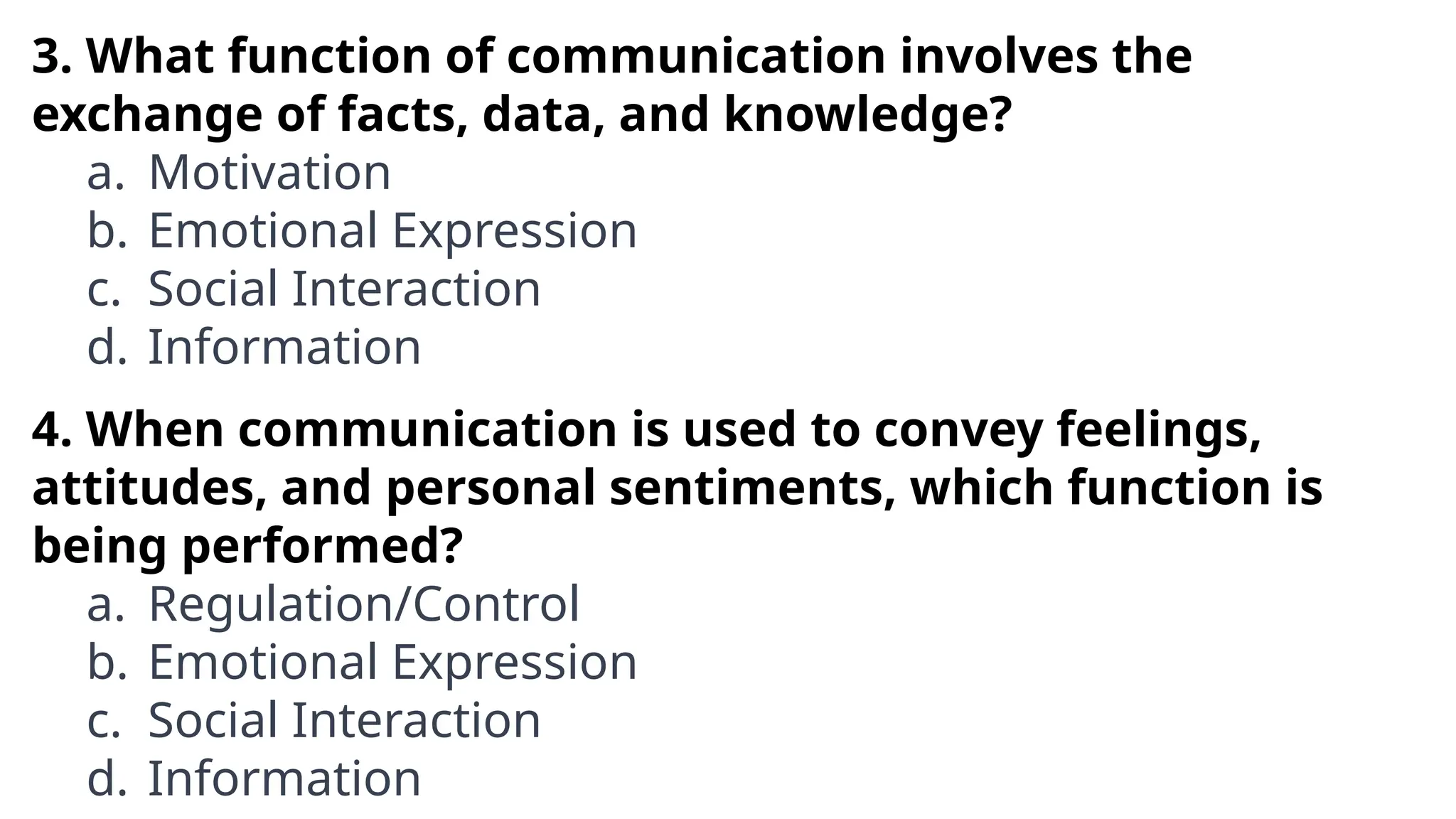
3. What functionof communication involves the
exchange of facts, data, and knowledge?
a. Motivation
b. Emotional Expression
c. Social Interaction
d. Information
4. When communication is used to convey feelings,
attitudes, and personal sentiments, which function is
being performed?
a. Regulation/Control
b. Emotional Expression
c. Social Interaction
d. Information
23.
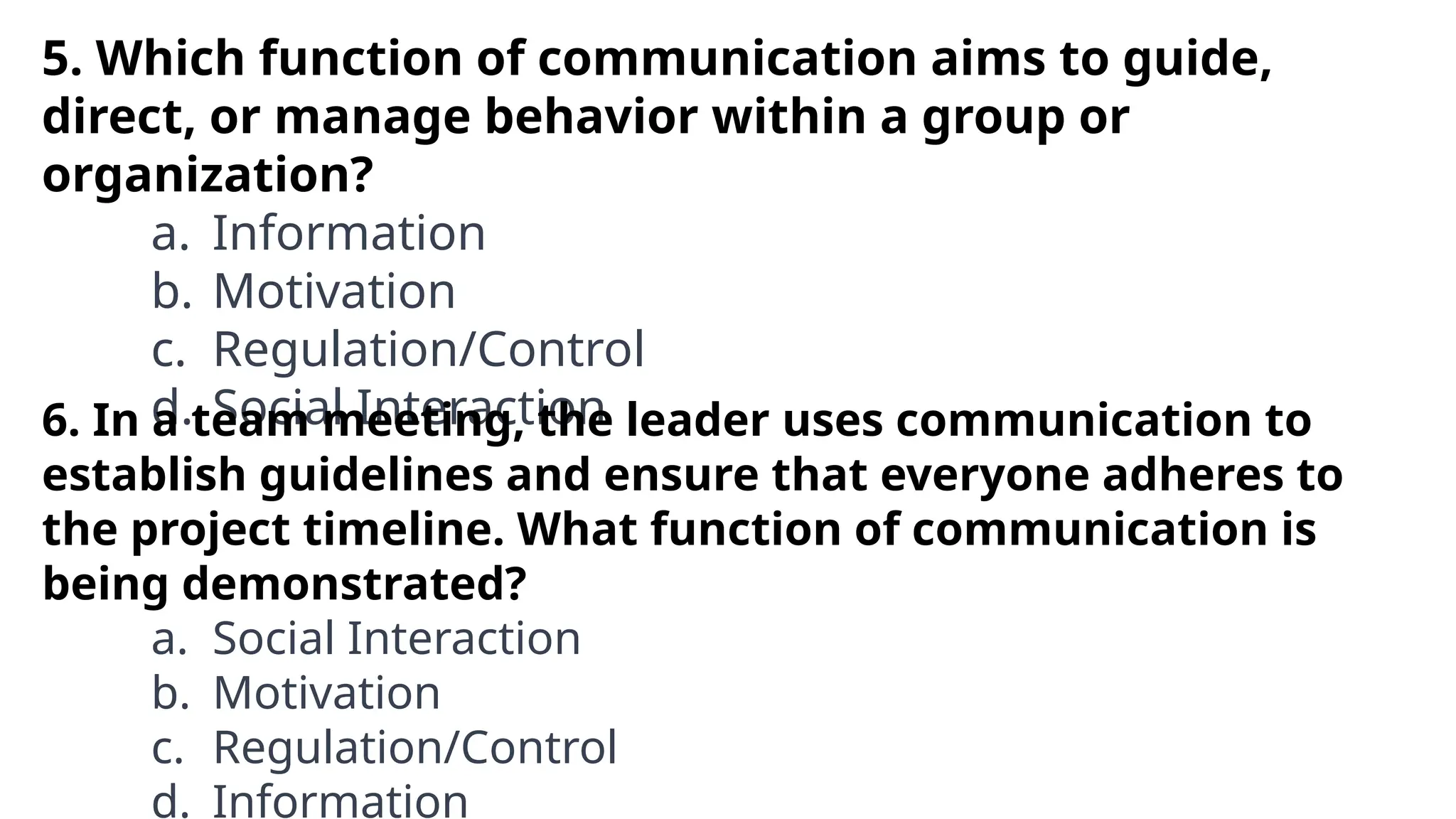
5. Which functionof communication aims to guide,
direct, or manage behavior within a group or
organization?
a. Information
b. Motivation
c. Regulation/Control
d. Social Interaction
6. In a team meeting, the leader uses communication to
establish guidelines and ensure that everyone adheres to
the project timeline. What function of communication is
being demonstrated?
a. Social Interaction
b. Motivation
c. Regulation/Control
d. Information
24.
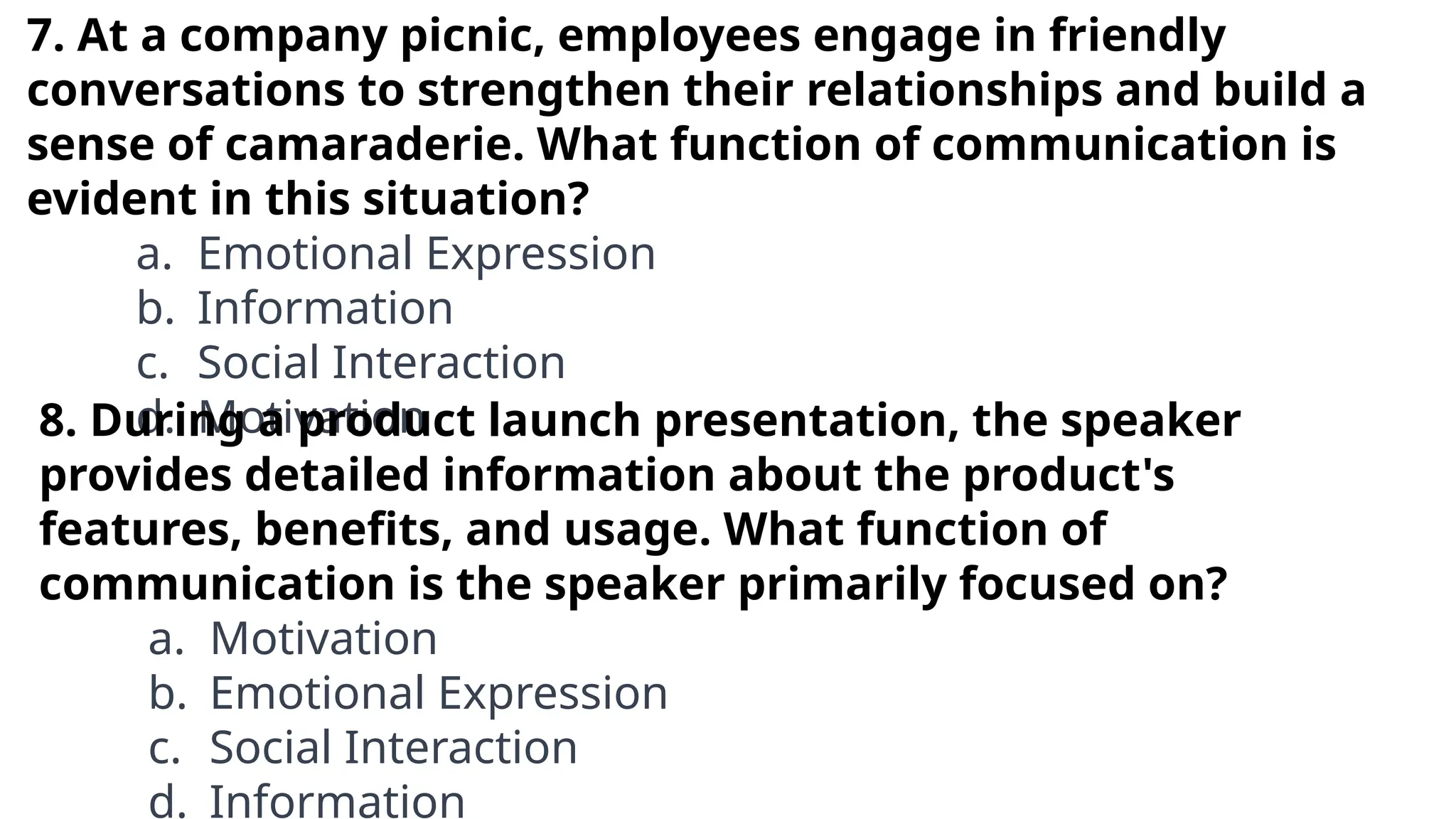
7. At acompany picnic, employees engage in friendly
conversations to strengthen their relationships and build a
sense of camaraderie. What function of communication is
evident in this situation?
a. Emotional Expression
b. Information
c. Social Interaction
d. Motivation
8. During a product launch presentation, the speaker
provides detailed information about the product's
features, benefits, and usage. What function of
communication is the speaker primarily focused on?
a. Motivation
b. Emotional Expression
c. Social Interaction
d. Information
25.
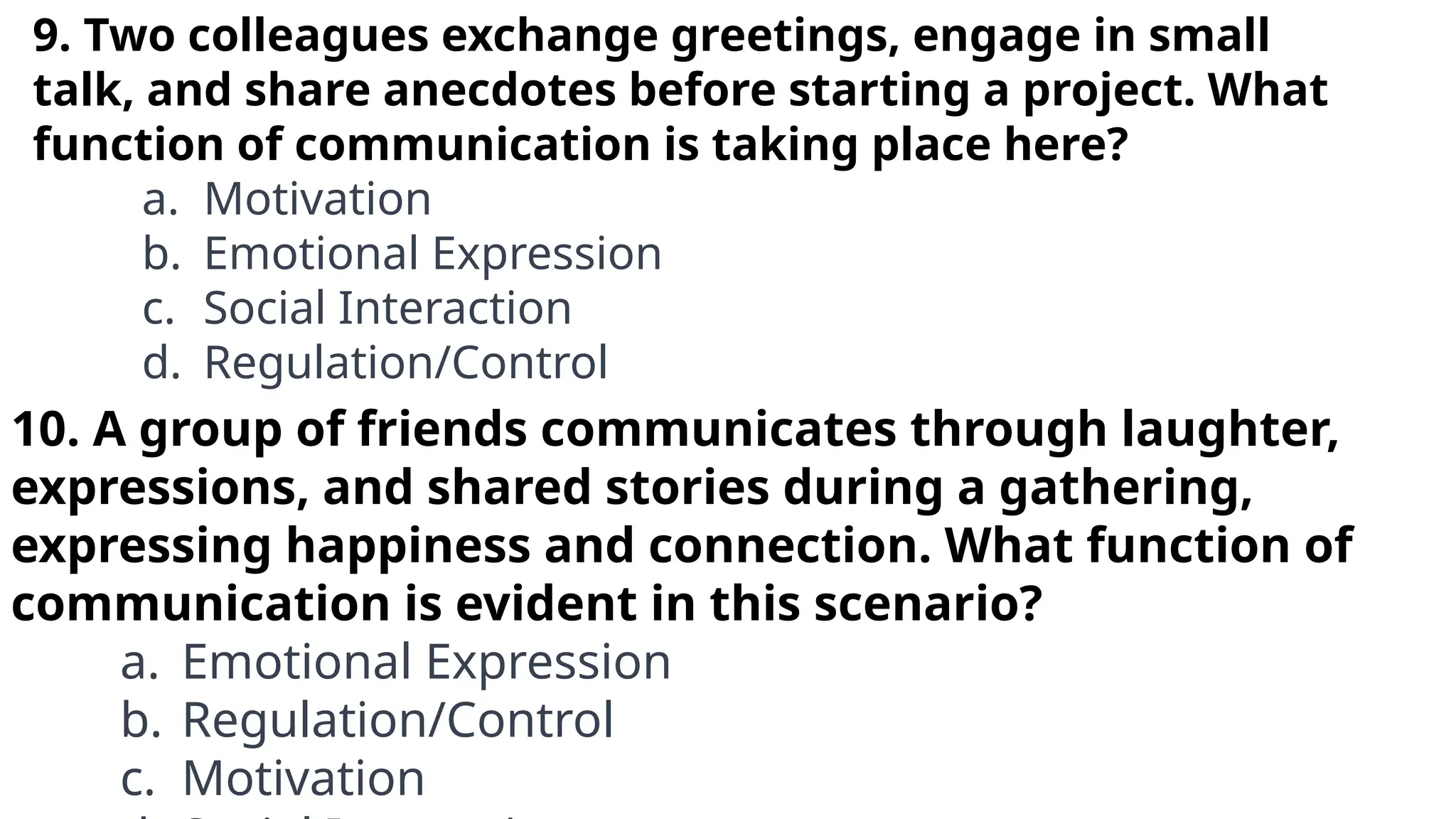
9. Two colleaguesexchange greetings, engage in small
talk, and share anecdotes before starting a project. What
function of communication is taking place here?
a. Motivation
b. Emotional Expression
c. Social Interaction
d. Regulation/Control
10. A group of friends communicates through laughter,
expressions, and shared stories during a gathering,
expressing happiness and connection. What function of
communication is evident in this scenario?
a. Emotional Expression
b. Regulation/Control
c. Motivation
Editor's Notes
#4 In communication, one of the primary functions is expressing emotion. Whether through words, tone of voice, or body language, our communication reflects how we feel, allowing us to connect with others on an emotional level. When we express emotions clearly and effectively, it creates empathy, understanding, and stronger interpersonal relationships.
This activity of reading famous song lines assigned with various emotions is designed to help students recognize how emotions shape communication and influence the message's interpretation.
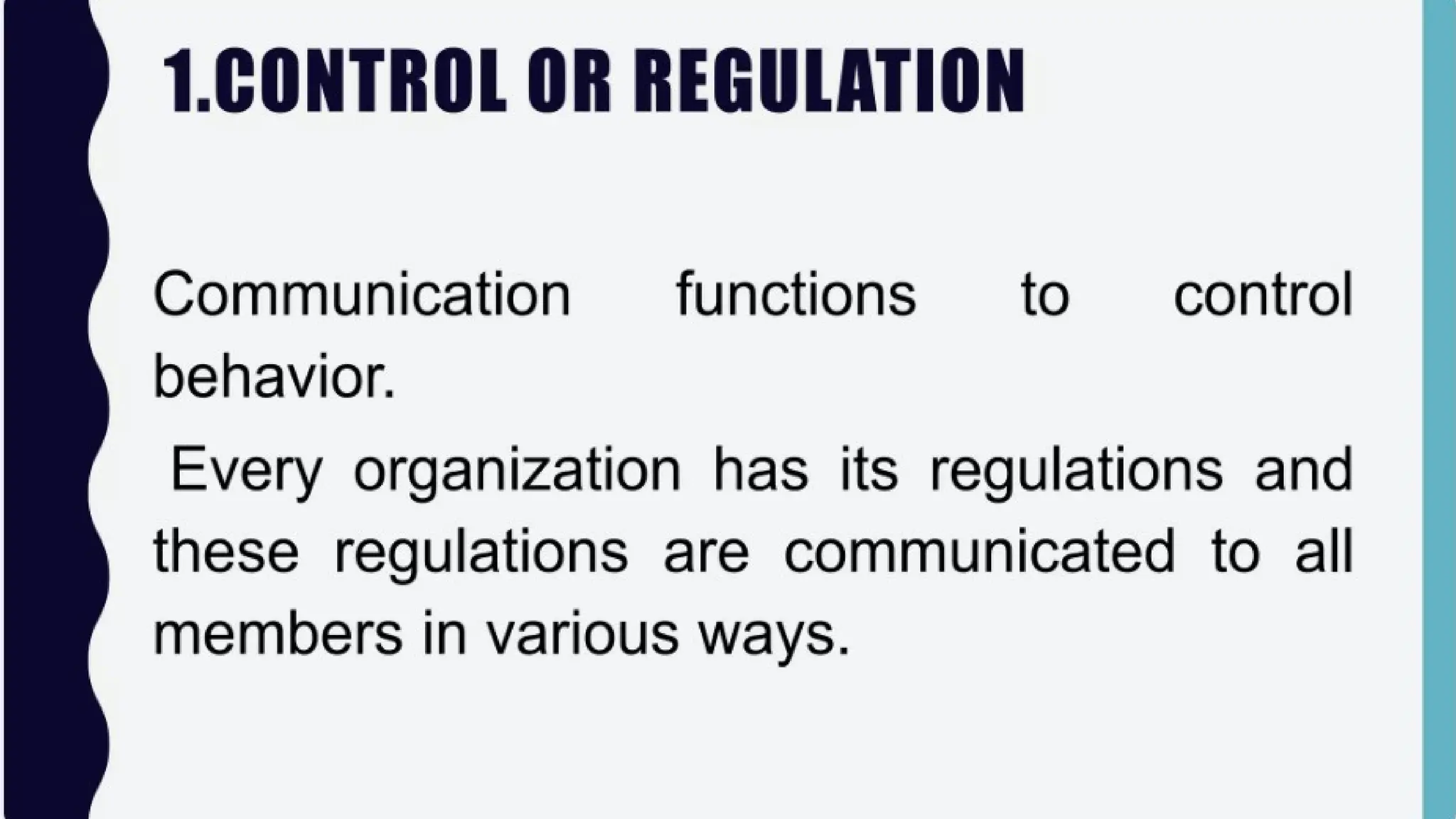
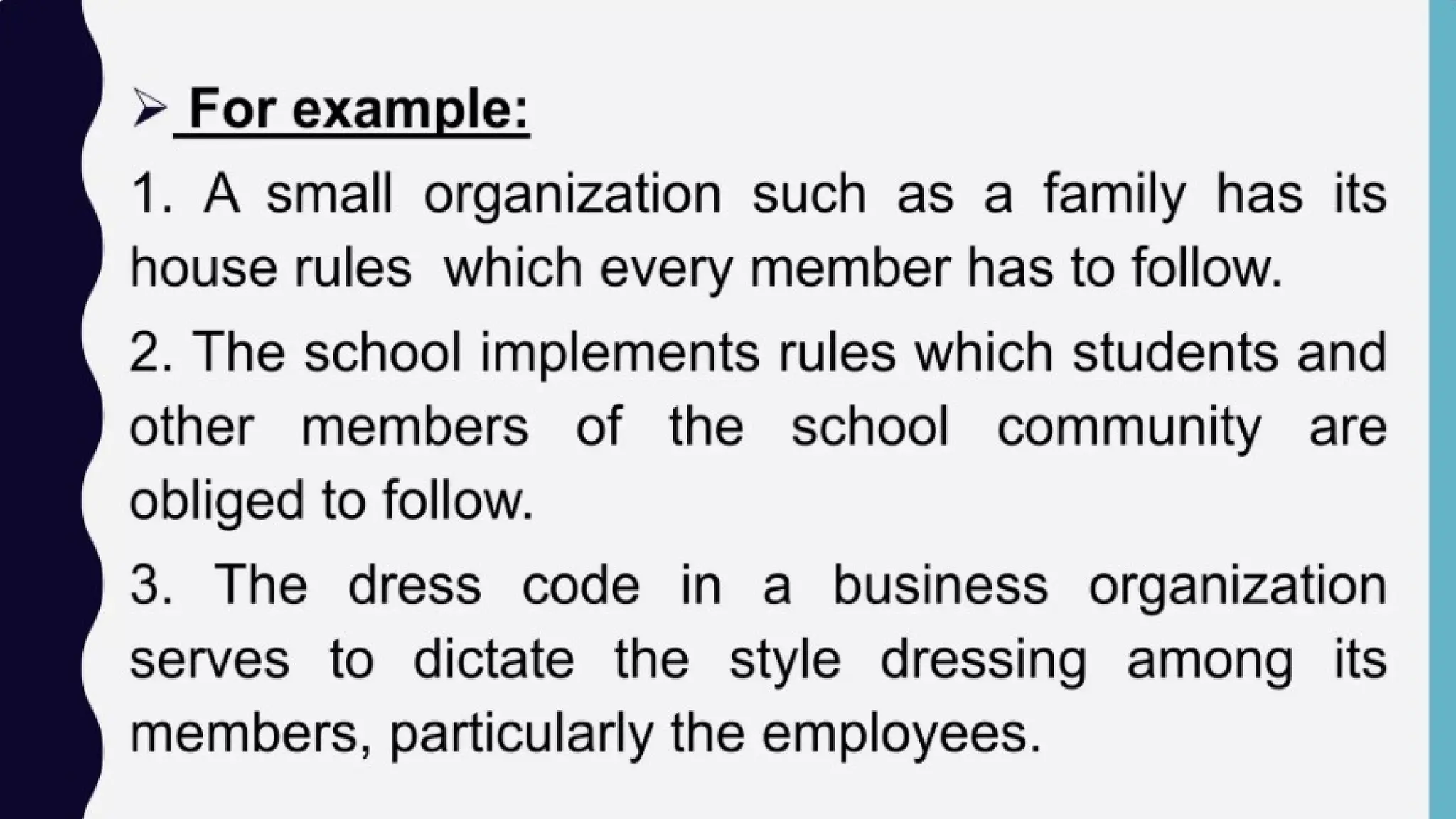
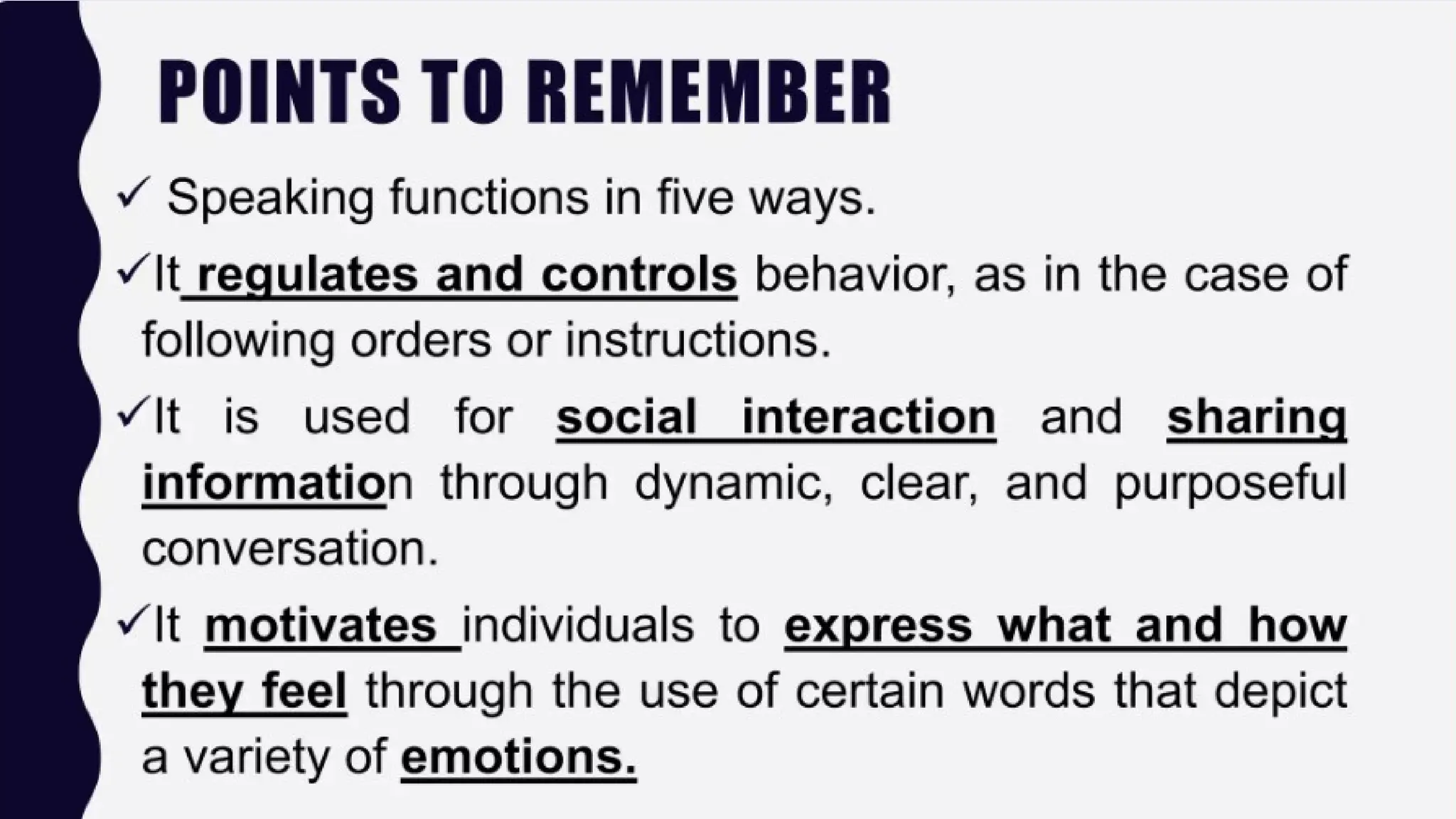
#7 1. Communication is the Soul of Government Regulations, Control, and Coordination
Governments rely heavily on communication to function effectively. Communication serves as the backbone for creating, implementing, and enforcing laws and regulations. Without clear communication, a government cannot inform citizens about rules or coordinate among its various branches and agencies.
Example:
Think about when the government announces a new law, such as a public smoking ban. Through public notices, press conferences, and social media posts, the government communicates the details of the law, ensuring people know where and when they can or cannot smoke. Additionally, government bodies like the police and local authorities work together using communication to enforce these regulations.
In essence, communication allows for regulation (making rules), control (ensuring those rules are followed), and coordination (allowing different agencies to work together efficiently). Without proper communication, there would be chaos, as citizens wouldn’t know what’s expected of them, and government agencies wouldn’t be able to collaborate.
#9 "The 'No Smoking in Public Places' law was well-communicated through signs, advertisements, and government announcements. This rule helped reduce smoking in public areas and improved public health and air quality."
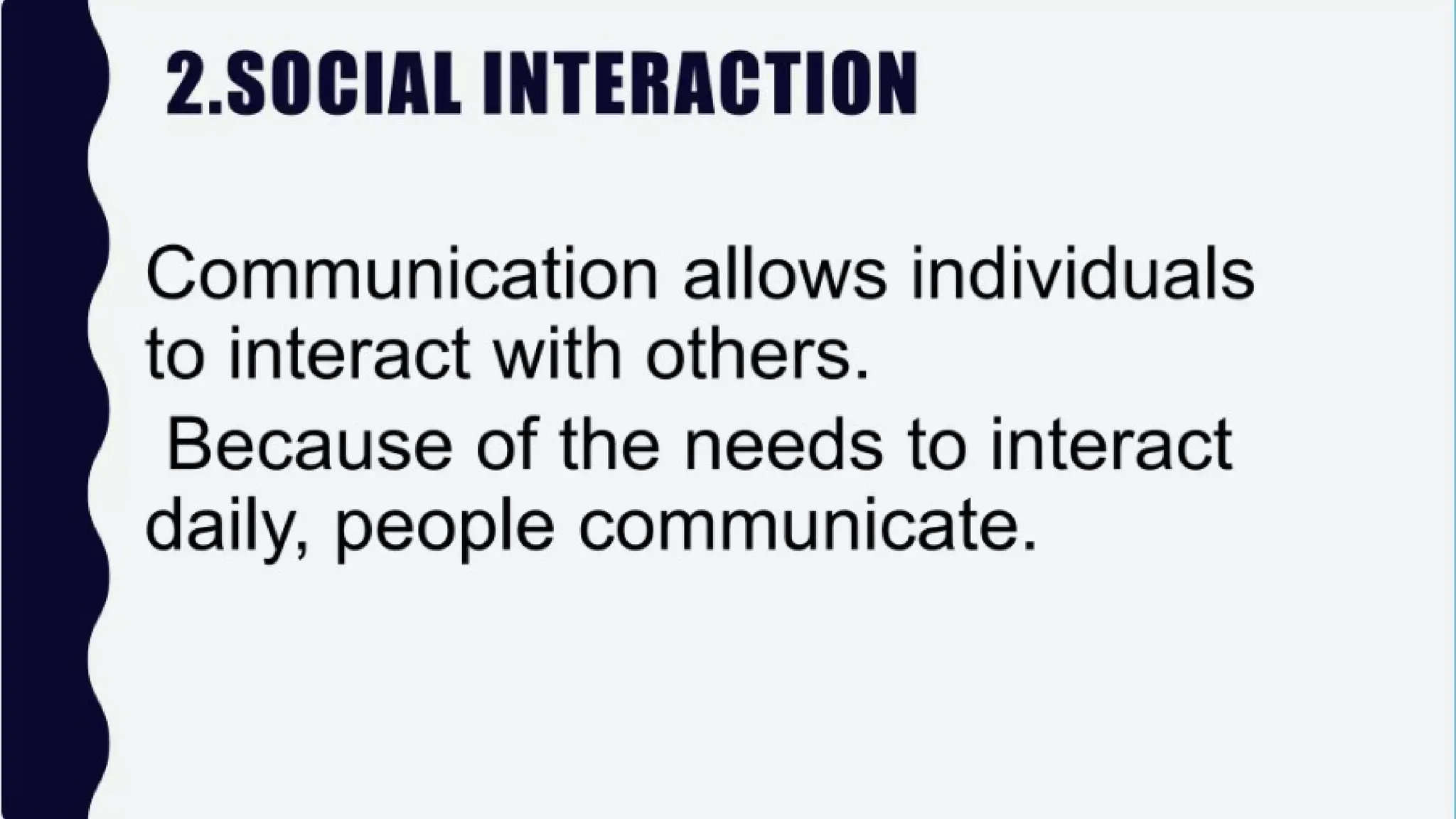
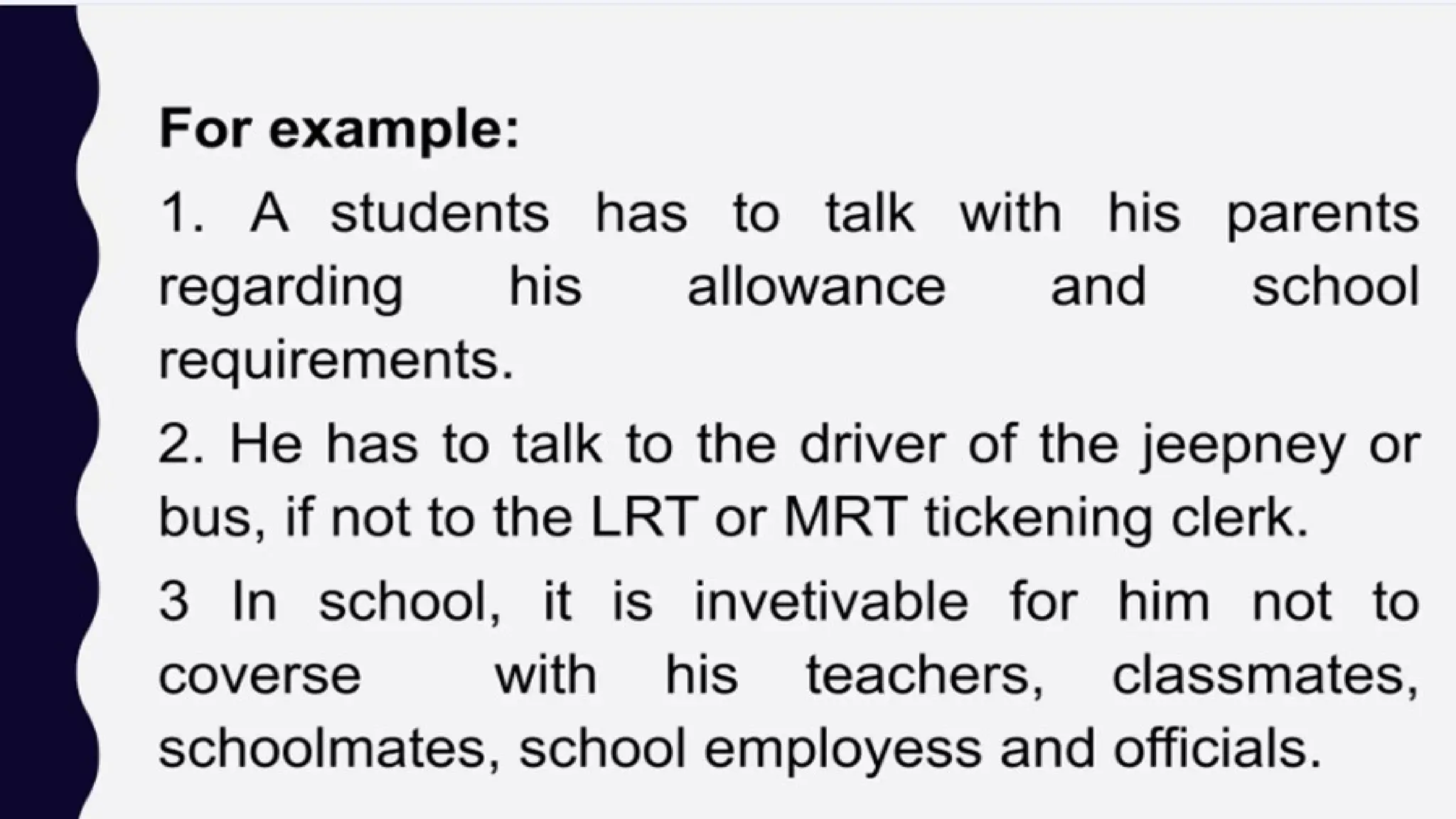
#10 Communication is the Most Basic Tool for Social Interaction
At the heart of human life is communication. Every day, we use communication to interact, build relationships, share ideas, and express our emotions. Whether we are speaking, writing, or using gestures, communication allows us to connect with others on a personal and social level.
Example:
Think about how you greet your friends when you meet them. A simple "Good morning" opens the door to a conversation, which might include sharing stories, giving advice, or discussing your plans for the day. Without communication, these social interactions wouldn’t exist, and we would feel disconnected from those around us.
Communication fosters relationships, builds trust, and creates a sense of community. It's the very foundation of our social lives.
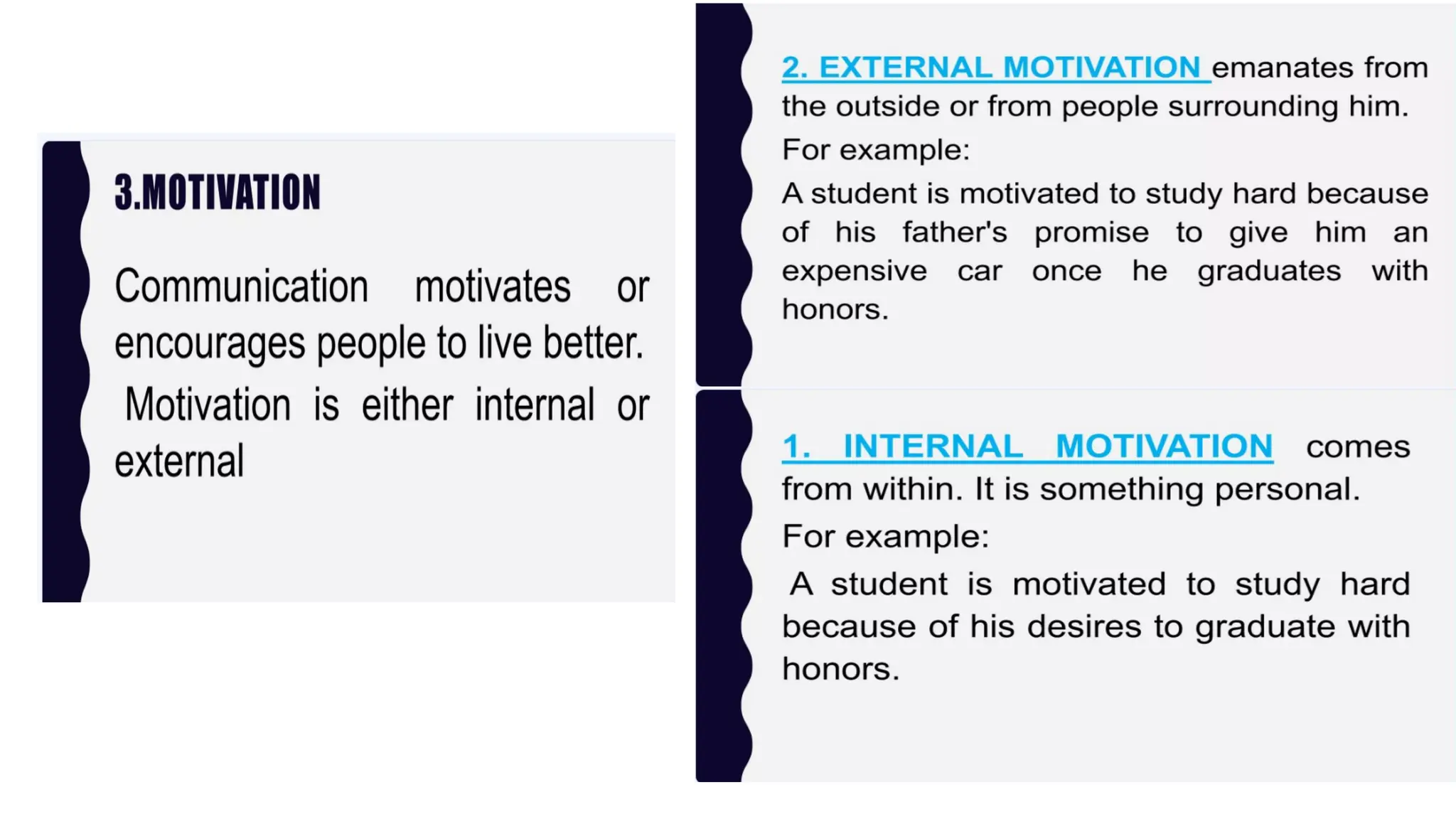
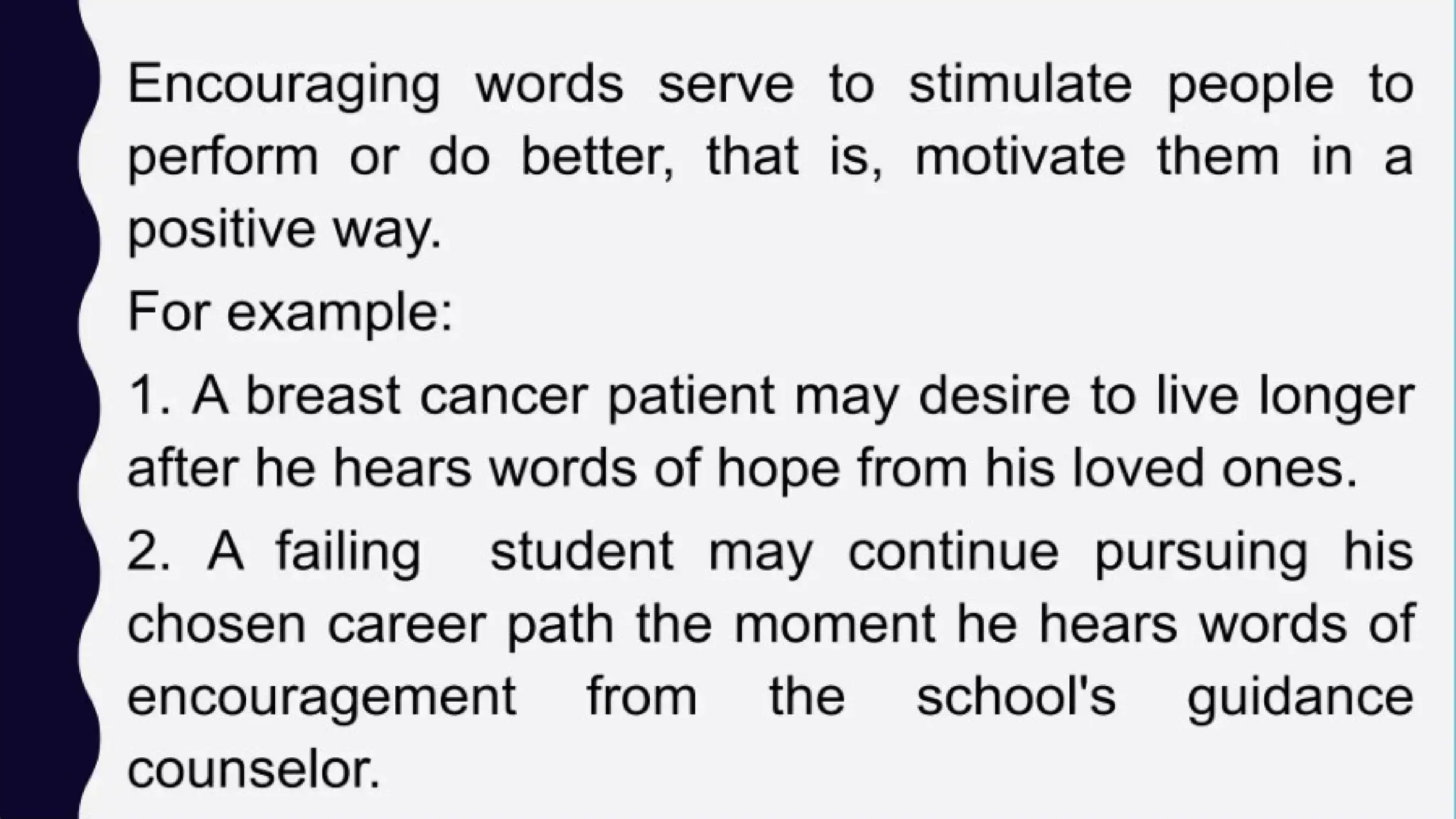
#13 Motivation is one of the essential functions of communication. In this context, communication is used to inspire, encourage, and drive individuals or groups to take action or perform specific tasks. It involves the exchange of messages that energize people to achieve goals, overcome challenges, and pursue improvement, whether in personal, professional, or social settings.
School Example:
A teacher motivates students by saying, "I know this subject is challenging, but with hard work and determination, I’m confident all of you can excel!" This kind of communication inspires students to persevere and aim for success.
Motivation is a crucial function of communication because it helps individuals and groups stay focused, energized, and committed to their goals. Through clear instructions, encouragement, and support, motivational communication leads to personal growth, team success, and societal progress.
#14 Communication Creates National Identity
National identity refers to a sense of belonging to a country or nation. Communication plays a vital role in shaping and preserving this identity through shared language, symbols, and traditions. By participating in national conversations and being exposed to national symbols like flags, anthems, and historical narratives, people develop a sense of pride and unity.
Example:
In the Philippines, national identity is communicated through things like the national anthem (Lupang Hinirang), historical accounts of key events like the 1986 People Power Revolution, and symbols such as the Philippine flag. These elements are communicated through education, media, and national events. When we sing the national anthem or celebrate Independence Day, we are participating in acts of communication that reinforce our shared identity as Filipinos.
Communication helps unite people by reinforcing national values, promoting shared experiences, and reminding citizens of their collective history.
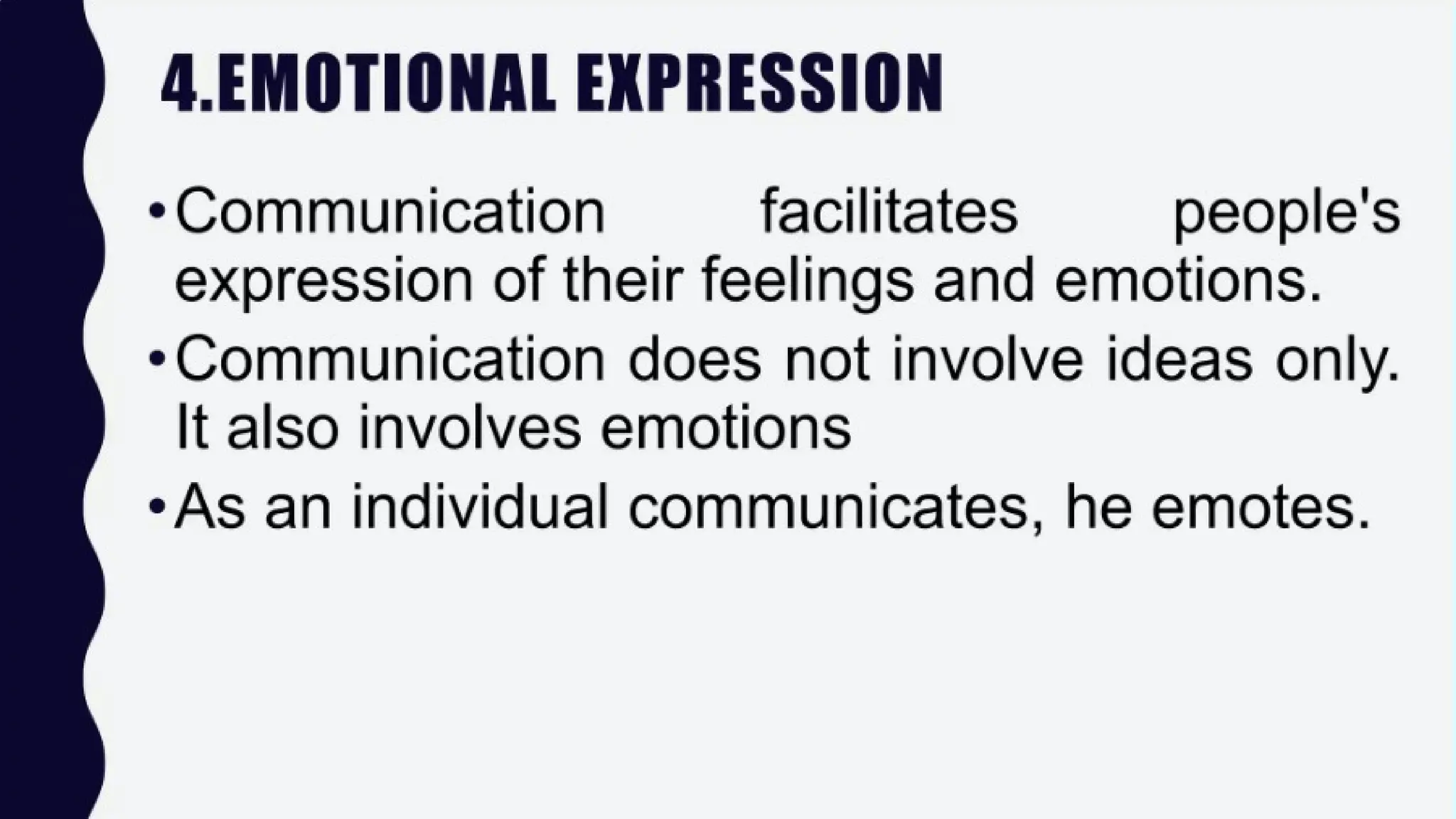
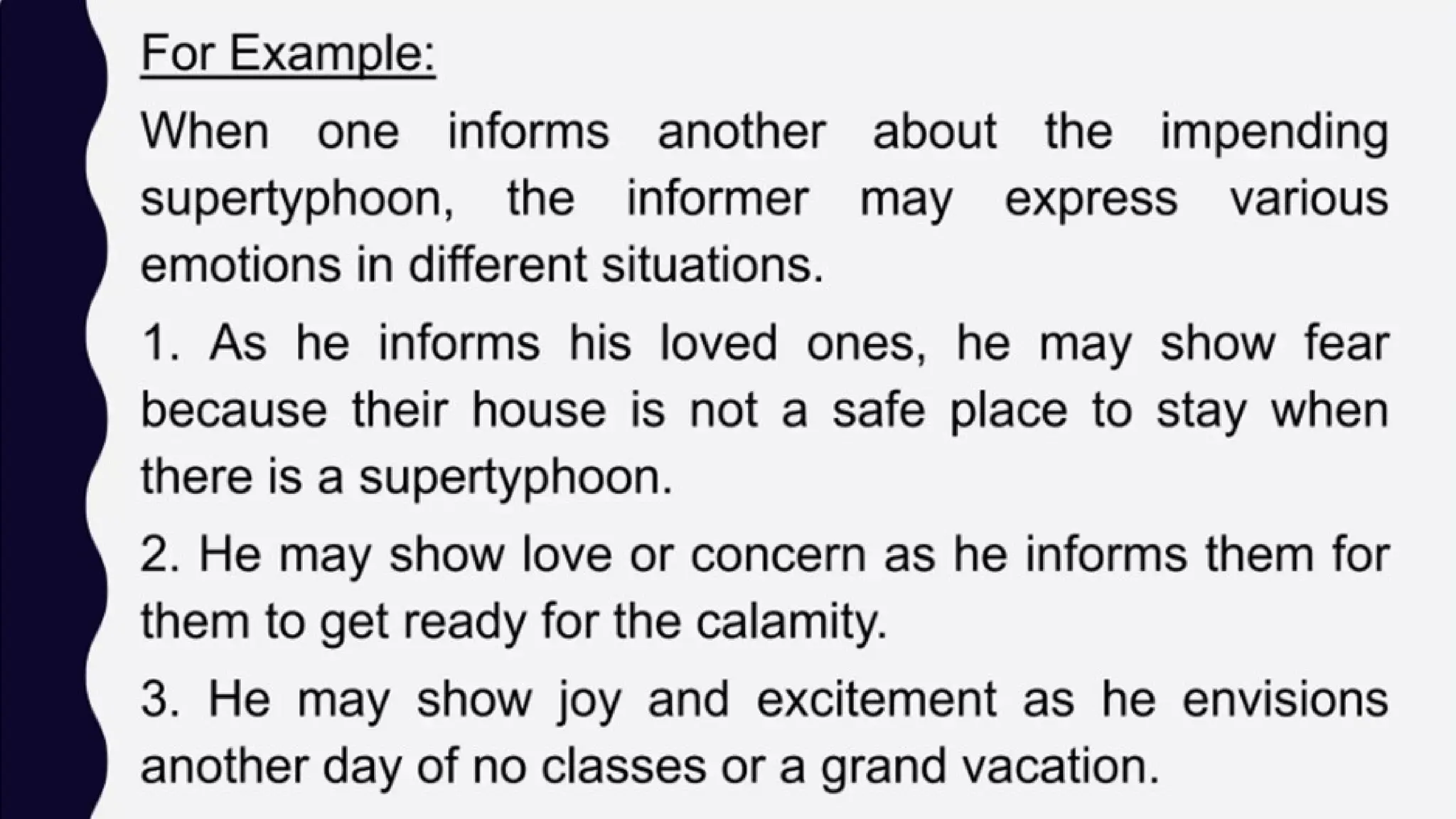
#15 Emotional expression is a crucial function of communication that allows individuals to convey their feelings, emotions, and moods to others. It involves the use of words, gestures, facial expressions, and body language to express joy, sadness, anger, love, frustration, and other emotions. Emotional expression helps people build connections, understand one another, and create emotional bonds in personal, social, and professional contexts.
Personal Relationships:
In relationships, people express emotions to show affection, resolve conflicts, or offer support. Saying "I love you" or offering a comforting hug helps in emotional bonding.
Social Media:
People often use platforms like Facebook, Instagram, or Twitter to express their emotions. Posting about an achievement, sharing a motivational quote, or expressing frustration publicly allows for emotional expression in a digital space.
Emotional expression in communication allows individuals to connect with one another on a deeper level, share experiences, and navigate both positive and negative emotions. It enriches relationships, helps manage stress, and fosters understanding between people. Whether through words, actions, or body language, emotional expression is a powerful tool in human communication.
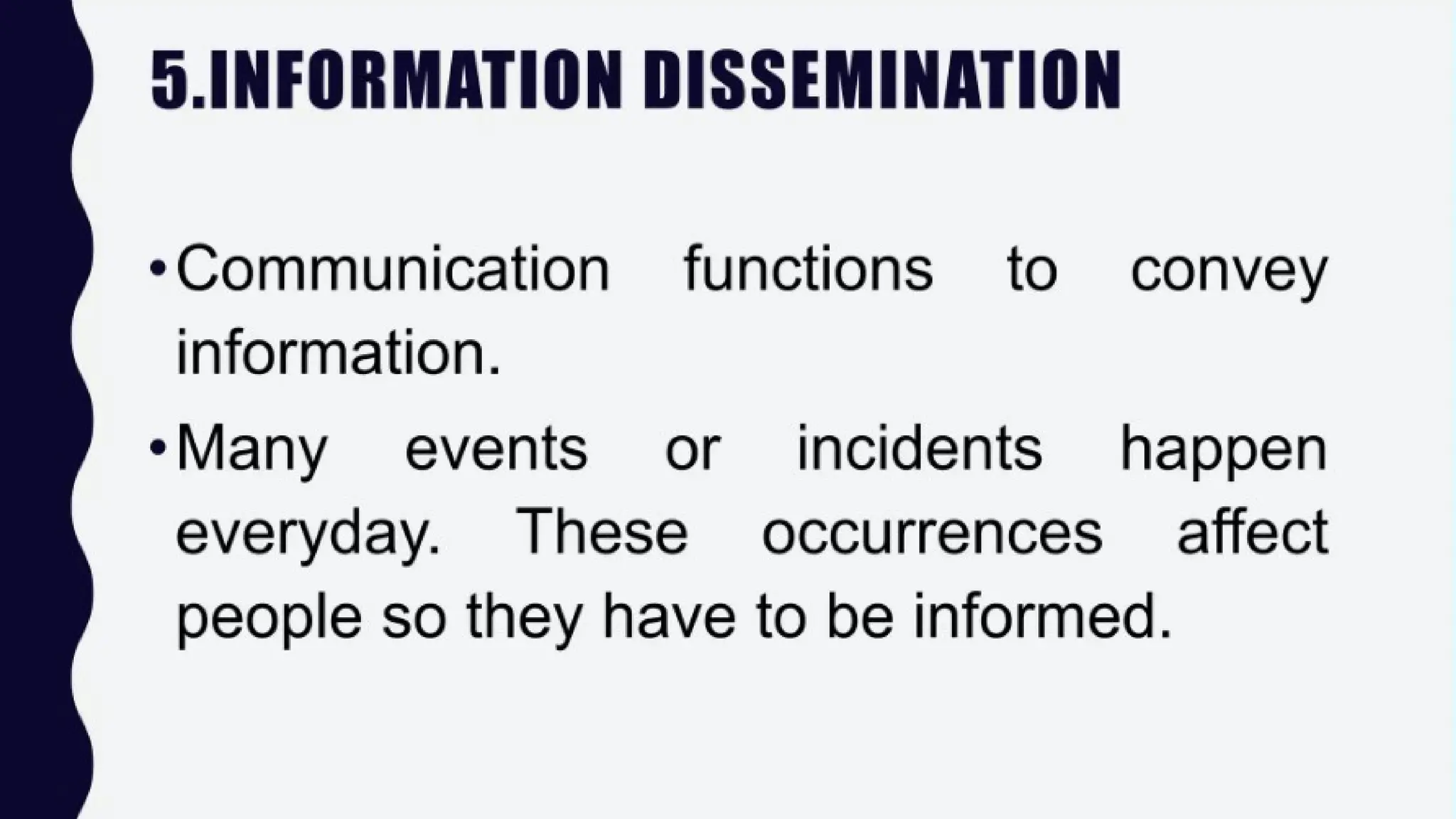
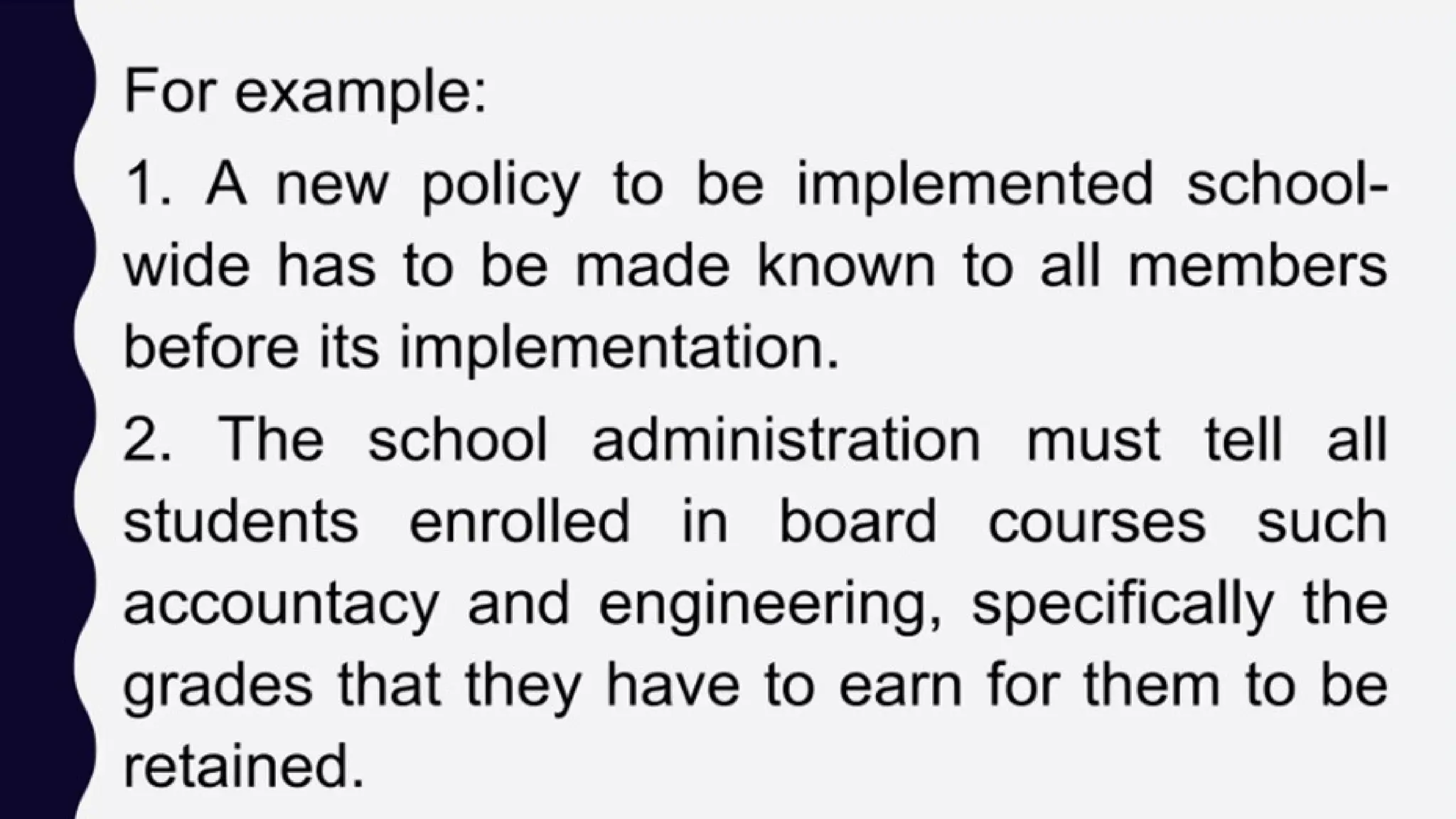
#18 Communication Democratizes Information, Thereby Empowering People
One of the most important roles of communication in today’s world is that it makes information available to everyone, not just the privileged few. This process is called the democratization of information. When communication is open and accessible, people are empowered because they have the knowledge they need to make informed decisions and participate in democratic processes.
Example:
Social media and the internet have transformed how information is shared. In the past, only a few people had access to important information. Today, with just a smartphone, anyone can access news, research, and educational resources. This flow of information enables individuals to understand issues affecting their lives, whether it’s about elections, environmental concerns, or social justice movements.
When people are informed, they are more likely to participate in discussions, advocate for their rights, and hold those in power accountable. Communication empowers people by providing them with knowledge, giving them the voice to express their opinions, and enabling participation in decision-making processes.
#20 Conclusion: The Power of Communication
In conclusion, communication is more than just talking or writing. It is a powerful tool that influences how governments function, how we interact socially, how we form national identities, and how we access information. Communication binds societies together and gives individuals the power to contribute to their communities and their nation.
As students, understanding the functions of communication helps you become better communicators, more informed citizens, and more engaged members of society. Let’s always remember that with effective communication, we can contribute to the growth, harmony, and empowerment of our society.



![Oral Com Diagnostic Test [Autosaved].pptx](https://cdn.slidesharecdn.com/ss_thumbnails/oralcomdiagnostictestautosaved-251017210620-071671fe-thumbnail.jpg?width=640&height=640&fit=bounds)


