Understanding Media SemioticsMarcel Danesi
download
https://ebookbell.com/product/understanding-media-semiotics-
marcel-danesi-2326956
Explore and download more ebooks at ebookbell.com
2.
Here are somerecommended products that we believe you will be
interested in. You can click the link to download.
Understanding Media Semiotics Second Edition Marcel Danesi
https://ebookbell.com/product/understanding-media-semiotics-second-
edition-marcel-danesi-50222342
Understanding Media And Society In The Age Of Digitalisation 1st Ed
Dennis Nguyen Ivonne Dekker Sergl Nguyen
https://ebookbell.com/product/understanding-media-and-society-in-the-
age-of-digitalisation-1st-ed-dennis-nguyen-ivonne-dekker-sergl-
nguyen-55561808
Understanding Media Culture Hodder Arnold Publication Jostein Gripsrud
https://ebookbell.com/product/understanding-media-culture-hodder-
arnold-publication-jostein-gripsrud-2160096
Understanding Media Cultures Social Theory And Mass Communication 2nd
Edition 1st Nicholas Stevenson
https://ebookbell.com/product/understanding-media-cultures-social-
theory-and-mass-communication-2nd-edition-1st-nicholas-
stevenson-2195652
3.
Understanding Media ProductionPaul Dwyer
https://ebookbell.com/product/understanding-media-production-paul-
dwyer-33607822
Understanding Media Psychology 1st Edition Gayle S Stever David C
Giles
https://ebookbell.com/product/understanding-media-psychology-1st-
edition-gayle-s-stever-david-c-giles-35891332
Understanding Media Policies A European Perspective 1st Edition
Evangelia Psychogiopoulou Eds
https://ebookbell.com/product/understanding-media-policies-a-european-
perspective-1st-edition-evangelia-psychogiopoulou-eds-5486716
Understanding Media Industries Second Edition Havens Timothy Lotz
https://ebookbell.com/product/understanding-media-industries-second-
edition-havens-timothy-lotz-12081908
Understanding Media Theory Kevin Williams
https://ebookbell.com/product/understanding-media-theory-kevin-
williams-1745998
Understanding
Media Semiotics
Marcel Danes!
Directorof the Program in Semiotics and
Communication Theory, University of Toronto
A member of the Hodder Headline Group
LONDON
Distributed in the United States of America by
Oxford University Press Inc., New York
Contents
Introduction vii
1 Themediated world 1
What is a medium? 2
Development of the mass media 7
Basic notions 17
Semiotic method 23
2 An outline of semiotic theory 28
Background and general notions 29
Narrative 45
Metaphor 48
3 Print media 54
The development of print media 55
Books 61
Newspapers 69
Magazines 74
4 Audio media 81
Recorded music 81
Rock music 88
The radio
5 Film
Motion pictures
Cinema and postmodernism
Cinema genres
6 Television
The advent of TV
The impact of TV
TV and socialchange
7 The computer and the Internet
Computer media
The Internet
The computer and the mind
8 Advertising
What is advertising?
Creating a signification system
Advertisingtextuality
11.
vi Contents
9 Socialimpacts of the media 201
Overview 202
Mediation 207
Concluding reflections 216
Glossary 218
Bibliography 230
Index 245
12.
Commercial jazz, soapopera, pulp fiction, comic strips, the movies set the
images, mannerisms, standards, and aims of the urban masses. In one wayor
another, everyone is equal before these cultural machines; like technology
itself, the mass media are nearly universalin their incidence and appeal.They
are a kind of common denominator, a kind of scheme for pre-scheduled,
mass emotions.
C. Wright Mills (1916-62)
In a 1997 James Bond movie entitled Tomorrow Never Dies, the evil villain,
unlike the villains of previous Bond movies, seeks control over the world, not
by means of brute force, but by gaining control of all mass communications
media. The movie recites the exploits of Elliott Carver, a 'Bill-Gates-look-
alike' scoundrel who, at the beginning of the movie, is on the verge of taking
over the minds of common people, by determining what they will see and
hear. Needless to say, the forces of good, spearheaded by the dauntless hero
James Bond, end up 'saving the world' from the ruthless domination of a
deranged and maniacal media mogul.
The transparent message of that movie, and of many others similar to it in
theme that have come out since 1997, is that we live in a world that is being
threatened more and more by those who hold the levers of'media power', i.e.
by those who control television networks, movie production studios, and
computer media. But the fear of media moguls is not something that is felt
exclusively by cineastes. Indeed, many are the volumes published in the last
decade decrying the serious dangers that the media pose to all facets of
contemporary society. Most of these scathingly criticize the individuals and
groups who control media institutions. Many others seek to give a rational
interpretation of the social conditions that have developed from the global
spread of media culture. However, very fewhave attempted to understand the
'meaning structures' that the media have helped to spread into the system of
everyday modern life. The purpose of this book is to do exactly that - to take
a close look at those structures within the conceptual framework of the science
called semiotics. The particular view taken here is that these structures seem
so 'natural' and 'meaningful' to us because, as the late Canadian
communications guru Marshall McLuhan (1911-80) aptly observed, the
13.
viii Introduction
media thatwe make are unconscious extensions of our inbuilt sensory and
cognitive processes.
Goal of the present volume
The academic study of the media traces its roots to America in the 1930s. It
was not until the late 1950s, however, that semiotics ventured into this
domain of investigation. That was the decade in which the French semiotician
Roland Barthes (1915-80) showed, for the first time, the importance of
studying media in terms of how they generate meanings. Semiotic method, as
Barthes argued in his 1957 masterpiece Mythologies, is fundamental because,
unlike other approaches to media, it focuses almost exclusively on hidden
meanings. Incredibly, very few treatments of 'media semiotics' a la Barthes
have come forward since the late 1950s. A large part of the reason for this is
the fact that semiotics has never really found a niche in the academic
landscape and, therefore, that very few'full-time' professionalpractitioners of
semiotics exist. Moreover, for some reason, in the decades following Barthes'
work, semiotics quickly gained the unseemly reputation of a field that was too
technical, laden with jargon, and highly abstruse. This book has been written,
in large part, to show that just the opposite is true. Semiotics consists of a
handful of basic notions that can be easily applied to the study of any kind of
human meaning system.
This text is thus intended as an introduction to media semiotics. I have
tailored it for students taking beginning courses in such fields as general
semiotics, psychology, linguistics, mythology, education, literary studies,
sociology, cultural anthropology, culture studies, communication studies,
and media analysis, so that they can have a practical manual at their disposal
to help them investigate and understand media from the particular
standpoint of semiotic theory. To facilitate its reading, I have avoided making
constant references to the relevant literature. The works that have informed
the various commentaries, descriptions, and analyses that I offer in this book
are listed at the back. Occasionally, I will put forward a critical assessment of
a certain type of media product. But criticism is not the primary goal of this
text. There are thousands of books on the market that critique media from all
kinds of ideological angles. Some of these are included in the bibliography at
the back of this book. My primary goal here is simply to demonstrate how
semiotics canbe applied to the study ofmedia - no more, no less.
Semiotic method is characterized by two main investigative procedures:
1 Historical inquiry Meaning systems must first be examined historically.
The reason for this is fairly obvious - to gain any true understanding of
what something means, it isnecessary to unravel how it came into existence
14.
Introduction ix
in thefirst place. Thus, in every chapter, the discussion will constantly be
informed by historical matters related to the origin and evolution of a
particular medium, as well as to the products and genres it has generated
over time.
2 Interpretation Semiotic inquiry aims to unravel the nature of the relation
X = Y.The X is something that exists materially.It could be a word, a novel,
a TV programme, or some other human artifact. The Y is what the artifact
means in all its dimensions (personal, social, historical). Figuringout what
the meanings of Y are constitutes the sum and substance of semiotic
method. This procedure is generally referred to as 'interpretation'.
To keep the proportions of this volume within the limits of a practical
introduction, I have had to limit my choice of topics and the degree to which
I would be able to treat each one.Nevertheless, I have tried to cast as wide a
net as possible, so as to gather within two covers the main themes, notions,
and techniques that can be assembled to show how semiotic inquiry can be a
truly effective form of media analysis.
Needless to say,what I have written about, and how I have gone about
writing it, are bound to reflect my own background and preferences.Having
issued this caveat, I wish to assure the reader that I have made every attempt
possible to emphasize method of analysis, rather than my personal views. It is
my sincere hope, therefore,that the reader will find my exposition of method
usable in various ways. To this end,I have used a simple style and have made
absolutely no assumptions about any prior technical knowledge on the part of
the reader. A convenient glossary of technical terms is also included at the
end. To get different, complementary, or supplementary views of the various
topics I have treated, the reader is advised to consult the relevant works listed
at the back of this book.
The opening chapter gives an overview of the various types of media and
their historical development. It also provides an initial explication of semiotic
axioms and notions. The second chapter introduces the main concepts and
techniques of semiotic method that can be used to conduct a systematic
examination of media representations and products. Then, in the third to
eighth chapters, print, audio, film, television, computer, and advertising
media and genres respectively are discussed from the viewpoint of semiotic
inquiry. SinceI live and teach in Canada, I have based most of the illustrations
and examples for discussion and analysis in these chapters on the North
American situation. However, whenever possible I have brought forth
examples of genres with which I am familiar from other countries. The final
chapter constitutes my own reflections on the relation between the media and
contemporary culture, and especially on the impacts that the media are
purported to have on the contemporary human psyche.
15.
x Introduction
Acknowledgments
I thankVictoria College of the University of Toronto for having allowed me
the privilege of teaching and coordinating its Program in Semiotics and
Communication Theory over many years. In that regard, I would especially
like to mention Dr Roseanne Runte, Dr EvaKushner,and Dr Paul Gooch, the
presidents under whom I have worked, as well as Dr Alexandra Johnston, Dr
William Callahan, Dr Brian Merrilees, and Dr David Cook, the Principalsof
the College with whom I have had the pleasure of coordinating the Program.
I am also thankful to Lynn Welsh, Julie Berger, Susan MacDonald, and Joe
Lumley for their constant help and support over the years. Another debt of
gratitude goes to the many students I have taught over three decades. Their
insights and enthusiasm have made my job simply wonderful! They are the
impetus for this book.
16.
1
The bosses ofour mass media, press, radio, film and television, succeed in
their aim of taking our minds off disaster. Thus, the distraction they offer
demands the antidote of maximum concentration on disaster.
Ernst Fischer (1899-1972)
In his often-emotional lectures, Marshall McLuhan (1911-80) would be wont
to warn his students at the University of Toronto in the 1960s and 1970s that
the media to which they were exposed on a daily basis constituted a blessing
and a curse at the same time. While they do indeed make information more
available and accessible to larger and larger groups of people, he argued, the
media also engender a general feeling of alienation and 'disembodiment' in
people. Since then, it has become obvious to virtually everyone that
McLuhan's caveat was well-founded. Our modern mediated world is indeed
a two-edged sword. The 'disembodiment' or 'de-personalization' that
McLuhan warned about just a few decades ago has, seemingly, become
widespread, at the same time that more and more people gain access to
information that was once the privilege of the few.
How did this come about? Do the media moguls of the world truly control
the minds and souls of common people (as intimated by the James Bond
movie mentioned in the introduction to this book), brainwashing them into
submission day in, day out with the resources of the 'distraction factory', as
the cultural critic Goodwin (1992) calls the global media entertainment
industry? Are the new 'robber barons' the CEOs of media empires such as the
Disney Corporation, General Electric, and Time Warner, who now own and
distribute most of what people see and hear? Clearly, these are important
social questions. But they can hardly be answered in a simplistic way. The
distraction factory was not built overnight. It is a product of cultural and
historical forces. So, the logical point of departure on the road to answering
such questions is to cast an initial glance at some of those forces. That is the
first of the two main objectives of this opening chapter. The second one is to
The mediated world
17.
Understanding Media Semiotics
delineatesome of the basic semiotic notions that will guide us on our journey
through our mediated world in subsequent chapters.
What is a medium?
Before the advent of alphabets, people communicated and passed on their
knowledge through the spoken word. But even in early 'oral cultures', tools
had been invented for recording and preserving ideas in 'durable' physical
forms. The forms were invariably pictographic - a pictograph is a picture
representing an idea. So intuitive and functional is pictography that it comes
as little surprise to find that it has not disappeared from our own world, even
though most of our written communication is based on the alphabet. The
figures designating 'male' and 'female' on washrooms and lavatories and the
'no smoking' signs found in public buildings, to mention but two common
examples, are modern-day pictographs.
Pictography is a perfect example of what a medium (from Latin medius
'middle or between') is- a means of recording ideas on some surface (a cave
wall, a piece of wood, papyrus) with appropriate technology (a carving tool,
pigment, a stylus). More generally, a medium can be defined as the physical
means by which some system of'signs' (pictographs, alphabet characters, etc.)
for recording ideas can be actualized.
Pictography did not alter the basic oral nature of daily communication,
nor did it alter the oral mode of transmitting knowledge of early societies.
That occurred after the invention of alphabetic writing around 1000 BC - an
event that brought about the first true radical change in the world's social
structure. The philosopher Thomas Kuhn (1922-96) called such radical
changes 'paradigm shifts' (1970). The move away from pictographic to
alphabetic writing was, to use Kuhn's appropriate term, the first great
paradigm shift of human history, since it constituted the initial step towards
the establishment of a worldwide civilization.Simply put, alphabeticwriting
made print the first viable global medium for storing and exchanging ideas
and knowledge.
The second step in the establishment of a worldwide civilization was taken
in thefifteenthcentury after the development of movable type technology -
an event that made it possible to print and duplicate books cheaply. McLuhan
designated the type of social order that ensued from that technological event
the Gutenberg Galaxy, after Johann Gutenberg (1400?-68), the German
printer who invented movable type in Europe. The Gutenberg Galaxy did
indeed, as McLuhanpointed out, establish printed books as the primary tools
for recording and preserving information and knowledge. But it did more
than that. It also established the book as the first true 'mass distraction' device
18.
The mediated world
ofhistory. And, indeed, to this day we read books not only for educational or
reference purposes, but also to while away our leisure hours.
The third step towards the founding of a worldwide civilization was taken
at the start of the twentieth century, after advancements in electronic
technology established sound recordings, cinema, radio, and (a little later)
television as new media for communicating information and,above all else,
for providing distraction to larger and larger masses of people. Since
electronic signals can cross borders virtually unimpeded, McLuhan
characterized the world that was being united by electronic media as the
'global village'. To paraphrase the perceptive Canadian scholar, that world can
be designated as the Electronic Galaxy. Near the end of the twentieth century,
the fourth step towards establishing a worldwide civilization was taken right
after computers became widely available and the Internet emerged as a truly
global medium. In line with the terminological style established byMcLuhan,
the current world can thus be called the Digital Galaxy.
Representation
The process of recording ideas, knowledge, or messages in some physical way
is called representation in semiotic theory. This can be defined more precisely
as the use of 'signs' (pictures, sounds, etc.) to relate, depict, portray, or
reproduce something perceived, sensed, imagined, or felt in some physical
form. It can be characterized as the process of constructing a form X to call
attention to something that exists either materiallyor conceptually, Y, in some
specific way, X = Y. Figuring out the meaning of X = Y is not, however, a
simple task. The intent ofthe form-maker, the historical and social contexts in
which the form was made, the purpose for which it was made, and so on and
so forth, are complex factors that enter into the picture. The purpose of
semiotics is to study those very factors. In order to carry out this task
systematically, it has established a distinct terminology. Aswill be discussed in
more detail in the next chapter, in semiotics the actual physical form of a
representation, X, is generally called the signifier, the meaning or meanings, Y,
that it generates (obvious or not) is called the signified, and the kinds of
meanings that can potentiallybe extracted from the representation (X = Y), in
a specific cultural ambiance, is called signification.
As an example of what representation entails, consider the notion of'sex'.
This issomething that exists in the world as abiological and emotional reality.
In semiotics, sexis called a referent, because it is something to which we desire
to refer in some way as it 'presents itself to our consciousness through our
senses, emotions, and intellect. Now,as a referent, it can be represented
(literally 'presented again') in some physical form constructed on purpose.
For example, in modern-day culture sex can be represented with such forms
19.
Understanding Media Semiotics
as:(1) a photograph of two people engaged in kissing romantically; (2) a
poem describing the various physical and emotional aspects of sex; or (3) an
erotic movie depicting the more physical aspects of sex. Each of these
constitutes a specific kind of signifier - something that has a particular
physical form. The meanings that each captures constitute its signifieds. Note
that these are built into each signifier not only by its maker, but also by certain
pre-existing notions relative to the culture in which the signifier was made.
Representations of sex in, say, London are vastly different from
representations of the same referent that tend to be made, for instance, in
Calcutta or SanFrancisco. Moreover, the medium used to portray the referent
also shapes the signified. Photographs can show fairly limited views of the
referent, whereas movies can provide much more graphic detail of sexual
activity. Finally, the ways in which people living in London, Calcutta, or San
Francisco will derive meaning from the above representations will vary
widely. This is because they have become accustomed in their specific cultures
to different signification systems that underlie perceptions of sex.
The process of representing sex can be summarized diagrammatically as
follows. To indicate the different kinds of signifiers and signifieds involved in
the three different representations, numerical subscripts are used. This isnot,
however, a standard practice in semiotics; it is employed here simply for the
sake of clarity (see Figure 1.1).
Figure 1.1
There is no way to pin down a signified or to predict what system of
signification will be employed for figuring out precisely what a particular
representation (X = Y)will mean to specific people. The process of deriving
meaning from some representation is not a completely open-ended process,
however. It is constrained by social conventions, by communal experiences,
and by many other contextualfactors that put limits on the range of meanings
that are possible in a given situation. A task of semiotic analysis is to figure out
what that range is. That aspect of semiotic methodology is known as
interpretation, as pointed out in the introduction.
Throughout this book little difference will be made between the medium
used to construct a representation and the representation itself. So, for
20.
The mediated world
instancewhen a term such as print medium is used in this text, it can refer
exclusively or jointly to: (1) the physical elements that are used to produce
print signifiers (pictographs, alphabet characters), (2) the types of signifieds
that these allow people to encode (words, texts, etc.), and (3) the physical
materials used (paper, papyri, etc.) to make print representations.
Transmission
Representation is to be differentiated from transmission. The former refers, as
we have just discussed, to the depiction of something in some specificway; the
latter refers instead to the delivery, broadcasting, or communication of the
message in some sensory-based way (see Table 1.1).
Table 1.1
Sensory
Modality
Examples
Auditory-vocal vocal speech, singing, whistling, crying
Visual pictography, sign languages for the hearing-impaired,
drawings
Tactile Braille for visually-impaired or sightless people (in which
varied arrangements of raised dots representing letters
and numerals are identified by touch), alphabetic toy
blocks used to impart familiarity with letter shapes through
touch
Olfactory perfumes and colognes, religious incense
Gustatory chemical ingredients in food that attempt to reproduce
certain natural tastes
At a purely biological level, a message can be received successfully (i.e.
recognized as a message) by another species only if it possesses the same kind
of sensory modality used to transmit it. Of these, the tactile faculty is the one
that seems to cut across human and animal sensory systems. There isno doubt
in my mind that my cat and I enter into a rudimentary form of tactile
communication on a daily basis. Sharing the same living space, and being co-
dependent on each other for affective exchanges, we do indeed transmit our
feeling-states to each other by sending out body signals and especially by
touching each other. However, even within the confines of this versatile
communicative mode, there is no way for me to convey a broader range of
21.
Understanding Media Semiotics
tactilefeeling-states to my cat that are implied by words such as 'embrace',
'guide', 'hold', 'kiss', 'tickle', etc. Clearly, interspecies communication is
realizable, but only in a very restricted sense. It can occur in some modalities,
partially or totally, to various degrees according to species. If the sensory
systems of the two species are vastly different, however, then virtually no
message transmission is possible.
Representations can also be transmitted through technology, i.e. through
some artifact or invention. Early societies developed simple tools for
transmitting messages, such as drums, fire and smoke signals, and lantern
beacons, so that they could be seen or heard over short distances. Messages
were also attached to the legs of carrier pigeons trained to navigate their way
to a destination and back home. In later societies, so-called 'semaphore'
systems of flags or flashing lights, for example, were employed to send
messages over relatively short but difficult-to-cross distances, such as from
hilltop to hilltop, or from one ship to another at sea.
A tool is an artifact that extends some sensory, physical, or intellectual
capacity. An axe extends the power of the human hand to break wood; the
wheel, of the human foot to cover great distances; and so on. For the sake of
scientific accuracy, it should be mentioned that tool-making is itself an
outgrowth of bipedalism - the capacity to walk with an erect posture ontwo
legs. Fossils discovered in Africa provide evidence that hominids walked erect
and had a bipedal stride even before the great increase in their brain size
millions of years ago. Complete bipedalism freed the human hand, allowingit
to become a supremely sensitive limb for precise manipulation and grasping.
The erect posture gave rise to the subsequent evolution of the physiological
apparatus for speech, since it brought about the lowering and positioning of
the larynx for controlled breathing.
McLuhan (1964) claimed that the type of technology developed to record
and transmit messages determines how people process and remember them.
Human beings are endowed by Nature to decipher information with all the
senses. Our sense ratios, as he called them, are equally calibrated at birth to
receive information. However, in social settings, it is unlikely that all the
senses will operate at the same ratio. One sense ratio or the other increases
according to the modality employed to record and transmit a message. In an
oral culture, the auditory sense ratio isthe one that largelyshapesinformation
processing and message interpretation; in a print culture, on the other hand,
the visual sense ratio is the crucialone. This raising or lowering of sense ratios
is not, however, preclusive. Indeed, in our own culture, we can have various
sense ratios activated in tandem. For example, if one were to hear the word
'cat' uttered by someone, the auditory sense ratio would be the operational
one in processing the meaning of the word. If, however, one were to see the
word written on a sheet of paper, then the visual sense ratio would be
22.
The mediated world
activatedinstead. Avisual depiction of the cat accompanied by an utterance of
the word would activate the auditory and visual sense ratios in tandem.
Types of media
Media can be divided into three basic categories:
• A natural medium is one by which ideas are transmitted in some
biologically-based way (through the voice, facial expressions, hand
gestures, etc.).
• An artifactual medium is one by which ideas are represented and
transmitted by means of some artifact (books, paintings, sculptures,
letters, etc.).
• A mechanical medium is one by which ideas are transmitted by means of
mechanical inventions such as telephones, radios, television sets,
computers, and so on.
Obviously there is much slippage between the artifactual and mechanical
media. Indeed, the former subsumes the latter, since mechanical media are
really particular kinds of artifactual media. The 'non-biological' media can
be subdivided into three broad categories: print, electronic, and digital.
Essentially, these differ in what has been called enunciative mode, i.e. in the
way in which they encode their messages. Print media allow people to
'enunciate' verbal messages on stone, murals, papyrus, paper, and other
print-retaining surfaces or materials. Electronic media allow people to
enunciate them instead through the electronic channel by means of such
devices as records, radio, and television. Records are objects that register
sound, such as audiocassettes and compact discs (CDs). Radio is an audio
system that allows for the sending and reception of radio signals
(electromagnetic waves) on devices known as radios. Television is a visual
system that allows for the sending of visual images, with accompanying
sound, as electromagnetic waves that are reconverted into visual images by
receiving devices known as television sets. Digital media are computer-based
systems such as the Internet-a. matrix of networks that connects computers
around theworld - andthe World Wide Web- an information server onthe
Internet composed of interconnected sites and files, accessible with a
program known as a browser.
Development of the mass media
One of the first civilizationsto institutionalizepictographic writing as a means
of recording ideas, keeping track of business transactions, and transmitting
23.
8 Understanding MediaSemiotics
knowledge was the ancient Chinese one. According to some archeological
estimates, Chinese pictography may date as far back as the fifteenth century
BC. It was, more specifically, logographic, since it employed pictorial symbols
to represent entire words (without reference to their pronunciation). Another
fully-developed ancient pictographic system, called cuneiform because it
consisted of wedge-shaped picture symbols, was the Sumerian-Babylonian
one that was developed nearly 5000 years ago. The Sumerians recorded their
representations on clay tablets, making cuneiform writing a very expensive
and impracticable means of communication. For this reason it was developed,
learned, and used primarily by rulers and clerics. From about 2700 to 2500 BC
another type of pictographic writing, called hieroglyphic, was invented in
Egypt. The Egyptians used papyrus (a type of early paper made from reeds) to
record their writings. The hieroglyphic system eventually developed
phonographic elements within it - phonographs are forms standing for parts
of words, such as syllables or individual sounds.
A complete phonographic system for representing single sounds is called
alphabetic. The first alphabetic system emerged in the Middle East, and was
transported by the Phoenicians (a people from a territory on the eastern coast
of the Mediterranean, located largely in modern-day Lebanon) to Greece. It
contained symbols for consonant sounds only. When it reached Greece,
symbols for vowel sounds were added to it, making the Greek system the first
full-fledged alphabetic one. The advent of alphabetic writing brought about,
as mentioned, a true paradigm shift, because it allowed societies to store and
preserve knowledge in a more stable manner.
Paper and Printing
The first lightweight material used to record writing was, as mentioned,
papyrus, made by the Egyptians from grasses called reeds. From as early as the
second century BC, Europeans wrote on thin layers of tanned and scraped
animal skins called parchment or vellum, with quill pens made from bird
feathers. Parchment was not as light as papyrus; but it was more durable. It
thus made it possible to store knowledge for longer periods of time. Many
parchment manuscripts and books from the Middle Ages still exist today. But
parchment was expensive, and thus literacy remained largely the privilege of
the few.
Paper was invented in the second century AD by the Chinese, who
developed it from silk fibres. It was the Arabs who took the Chinese
technology to Europe in the eleventh century AD.Paper was lighter than
parchment, and thus more portable. It was also relatively inexpensive. Paper
technology was, in effect, the first technological event that made it possible to
transform print into a mass medium.
24.
The mediated world
Untilthe 1400s, all paper documents were written by hand. Copyists
called scribes, many of whom were monks, made duplicates of manuscripts
and books. By the fifteenth century, however, the need arose for an easier
way to reproduce documents. In 1450, the German printer Johann
Gutenberg perfected movable metal type technology, introducing the first
mechanical device, the printing press, for printing and producing numerous
copies of paper documents. The Gutenberg Galaxyhad come, ipso facto, into
being. The number of printing shops grew dramatically over the next
century. Printers published books, newspapers, pamphlets, and many other
kinds of paper documents. Becausethey were cheap, they became extremely
popular.
As a result of the printing press, more books became available and more
people became literate. With literacy came exposure to new ideas and
independent thinking. And with independent thinking came many
revolutions of a religious, political, social, and scientific nature. Moreover,
since cheaply printed books could be sent all over the world, scientists,
philosophers, artists, educators, historians, poets, and story writers read and
translated each other's books. Ideas started crossing borders and vast spaces,
uniting the world more and more. Standardized ways of doing things in the
scientific and business domains emerged. In a phrase, the invention of the
printing press was the technological event that paved the way to the
establishment of a true global civilization.
In the twentieth century, printed documents became even more
inexpensive and available en masse. Photocopying, for instance, made
document duplication easier and more rapid. And in the mid-1980s,
computer typesetting and printing became so efficient and economical that it
largely replaced the typesetting technology that had been in place, virtually
unchanged, since the fifteenth century. Sophisticated word-processing and
graphics software are used today to set type and compose pages on the screen,
just as they will look in the final print version. Page layouts are also
transmitted digitally via fax machines, computer modems, telephone
networks, and satellite systems to other locations for editing, redesign, and
printing.
The spread of word-processing technology has led to the growth of so-
called desktop publishing. Today, almost anyone can prepare books,
newsletters, newspapers, or magazines on his or her computer, and then
transmit the publication almost anywhere at the speed of light. Early
advocates of business computers prophesied, in fact, the eventual coming of a
'paperless world'. But their predictions have proven so far to be wrong, or at
least premature. The ease of copying, printing, and transmitting print
documents made possible by digital technology has, ironically, led to more
demand for paper, not less.
25.
10 Understanding MediaSemiotics
Telegraphy
The first electrical device for the transmission of written messages was the
telegraph - a system that could send and receive electrical signals over long-
distance wires. The first commercial telegraph systems were developed in
Great Britain in the early nineteenth century. A little later, in 1844, the
American inventor Samuel F.B.Morse (1791-1872) introduced a code that
came to be adopted internationally. The code - known logically enough as
the Morse Code - utilized 'on' and 'off signals to represent individual letters
of the alphabet. The telegrapher at one end of the line would tap on an
electrical key,and the telegrapher at the other end would decode the tapping
as it came in, write down the message, and send it to the recipient by
messenger.
Telegraph cable was laid under the Atlantic Ocean in 1858, and regular
transatlantic service began in 1866. It was the first interconnected global
communications system. Telegraphy was gradually replaced by telex systems
in the early twentieth century. These gradually eliminated the need to use a
code such asthe Morse Code. Users could type in a message, and the identical
message would appear at the recipient's end, carried over telegraph and
telephone lines to telex machines anywhere in the world. As early as the 1930s
these lines were also used to transmit pictures, an event that introduced the
so-called 'Wirephoto' service in international communications.
The telephone
In 1876, the Scottish-born American inventor Alexander Graham Bell
(1847-1922) patented the first telephone, a device with the capacity to
transmit sound over wires. Originally, Bell believed his invention would be
used to transmit musical concerts, lectures, and sermons. But after founding
his own company, he quickly discovered that the appeal of the phone lay
much more in allowing ordinary people to talk to each other. So, in 1878 the
Bell Telephone Company established the first telephone exchange - a
switchboard connecting any member of a group of subscribers to any other
member. By 1894,roughly 260,000 Bell telephones were in use in the United
States, about one for every 250 people. By the 1960s the telephone was
perceived in many parts of the world as an 'essential service'. Near the end of
the twentieth century, the telephone played a critical role in ushering in the
Digital Galaxy, providing subscribers with access to the Internet and the
World Wide Web by means of devices called modems (modulator-
demodulators). And, needless to say, the cellular (cell) phone has greatly
enhanced the functionality and regularity of distance communication in our
system of everyday communal life.
26.
The mediated world11
Radio
The earliest system for sending electrical signals through the air without wire
(via electromagnetic waves) was at first called 'wireless', and a little later
'radiotelegraphy' (abbreviated to 'radio'). The background scientific
principles for its development were those elaborated by the British physicist
James Clerk Maxwell (1831-79). It was the Italian-born American electrical
engineer Guglielmo Marconi (1874-1937), however, who applied them to the
invention of the world's first true wireless radio device in 1895.His radio
system could send and receive a signal at a distance of close to 3 km.
In 1901,Marconi developed an alternator device that could send signals
much farther and with much less background noise. This led, about two
decades later, to the commercial technology that established the radio as the
"first electronic mass medium. In the United States, the first regularly
scheduled public radio broadcasts were made in 1920 from station KDKA in
Pittsburgh, Pennsylvania. Other stations sprung up shortly thereafter across
the country, and companies such as the Radio Corporation ofAmerica(RCA)
and Westinghouse established radio networks for producing and sharing
programming. By the mid-1920s radio had become, alongside film, a highly
popular mass medium, shaping trends in music, drama, advertising, and
verbal communication generally. Radio could reach many more people than
print, not only because it could span great distances instantly, but also because
its audiences did not necessarily have to be print literate. Programming could
thus be designed with mass appeal. As a consequence, radio spawned 'pop
culture' - a culture for all,not just the 'literati' and the 'cognoscenti'. Radio
thus ushered in the Electronic Galaxy, a Galaxy in which an increasingly
standard form of distraction became availableto virtually everybody, as radio
receivers became cheaper and thus highly affordable to the masses.
Television
The scientific principles underlying the technology leading to the invention of
television were established by John Logic Baird (1888-1946), a British
electrical engineer. A workable television camera was developed by the
Russian-born American engineer Vladimir K. Zworykin (1889-1982) in1923
and the American inventor Philo T. Farnsworth (1906-71) in 1927. The first
television sets for mass utilization became available in England in 1936 and in
the United States in 1938. After the Second World War, technical
improvements and prosperity led to a growing demand for these sets. In the
United States, six television stations were established at first, each one
broadcasting for only a few hours each day.By 1948, 34 all-day stations were
in operation in 21 major cities, and about one million television sets had been
sold. Bythe end of the 1950s national television networks were established in
27.
12 Understanding MediaSemiotics
most industrialized countries. TV had emerged, in effect, to replace radio as
the primary source of mass distraction virtually across the world. As the
twentieth century came to a close, TV entered the Digital Galaxy with the
advent of digital television - television that is transmitted in a digital
(computer-based) format.
With the widespread growth of cable television in the 1960s and then of
Direct-broadcast satellite (DBS)services in the 1990s, many new channels and
types of programming are now available to people across the globe. As a
consequence, debates about TV'simpact on children, world culture, politics,
and community life have become common and widespread. On the one side,
critics say that television feeds a constant stream of simplified ideas and
sensationalistic images to unwitting viewers, that it negatively influences
politics and voting patterns, that it destroys local cultures in favour of a bland
'Hollywood-oriented' distraction culture, and that it encourages passivity in
people. On the other side, defenders saythat television provides a great deal of
high-quality educational and cultural programming, and that it is the major
source of local, national and international news for many modern-day
citizens who would otherwise remain uninformed. Whatever the truth, one
thing isfor certain - TVhas turned out to be thetechnological invention that
has consolidated McLuhan's global village, because it has made the same
pattern and kind of distraction (the same TV sitcoms, adventure
programmes, and variety shows) available across the globe.
Computers
The British mathematician and inventor, Charles Babbage (1792-1871),
designed mechanical computing machines in the 1820s and 1830s on the basis
of principles that anticipated the modern electronic computer. In the 1890s
Babbage's ideas were applied to the building of calculating machines that
could be operated automatically with punched cards. In the 1930s,
electromechanical punched-card operating systems were developed. The
International Business Machines Company (IBM) in the United States
produced the first of these for widespread business usage. Incidentally, during
the Second World War, the British Secret Service used IBM'sdesign principles
to build ten electronic computers, called Colossus, to help it crack the
Germans' secret military codes. The first general-purpose computer in the
United States, called the Electronic Numerical Integrator and Computer
(ENIAC), was built shortly thereafter in 1946 at the University of
Pennsylvania.
As computer technology improved steadily after the war, smaller and
cheaper computers could be built for all kinds of purposes. By the 1970s, it
even became economically feasible to manufacture a personal computer (PC)
28.
The mediated world13
for mass consumption. The first PCs were mainly 'word processors'; i.e.they
added computer-processing capacities to typewriters so as to make writing
and changingprinted text significantly easier and more sophisticated. In 1975,
the first true microcomputer was introduced to the world. It had the power of
many larger machines, but could fit onto a desktop. This was accomplished
because of new miniaturization technologies that allowed manufacturers to
compress the memory and processing power of thousands of circuits onto
tiny chips of materials called semiconductors. The first word-processing
software appeared shortly thereafter in 1978.
At the same time that computers were becoming faster, more-powerful,
and smaller, networks were being developed for interconnecting them. In the
1960s, the Advanced Research Projects Agency(ARPA) of the US Department
of Defense, along with researchers working on military projects at research
centres and universities across the country, developed a network called the
ARPANET for sharing data and mainframe computer-processing time over
specially equipped telephone lines and satellite links. Used at first for military
purposes, the ARPANET became the first functional major electronic-mail
network right after the National Science Foundation connected universities
and non-military research sites to it. ARPANET wasrenamed the Internet - a
term conveying that it was designed as an 'interconnected' network serving
many different functions, not just military ones.
Today, the Internet is the largest and most prevalent computer network in
the world. Commercial online service providers - such as America Online,
CompuServe, and the Microsoft Network - sell Internet access to individual
computer users and companies. Smaller networks for specific utilization are
also available. Called local area networks (LANs), these can be installed in a
single building (or in several buildings) for the exclusive usage of a single
organization. Wide area networks (WANs), on the other hand, are
'organization-specific' networks that can be used over a large geographical
area. LANs and WANs require telephone lines, computer cables, and
microwave and laser beams to carry digital informationaround a smaller area,
such as a single university campus. In turn, they can interconnect users to the
Internet. Today, most computer networks can carry any type of digital signal,
including video images, sounds, graphics, animations, and text.
The PC has transformed business, education, and the distraction factory
radically. People can use computers to design graphics and full-motion video,
send electronic mail (e-mail), make airline or hotel reservations, search for all
kinds of information, play games, listen to the radio, watch some television
programmes, and even visit 'electronic rooms' to chat with other people over
the World Wide Web. In the history of human communications, no other
device has made it possible for so many people to interact with each other,
irrespective of the distance between them.
29.
14 Understanding MediaSemiotics
Media convergence
In the Digital Galaxy, it is no longer correct to talk about 'competing' media.
Advances in digital technology and in telecommunications networks have
led to a convergence of all media into one overall mediated system of
communications. This has led, in turn, to the emergence of new lifestyles and
careers, to the creation of new institutions, and to radical paradigm shifts in
all domains of social organization.
Convergence is manifest, first and foremost, in the digitization of all media
technologies and in the integration of different media into computer networks:
• Telephone
The first telecommunications medium to be digitized wasthe telephone in
1962, with the installation of high-speed lines in phone networks capable
of carrying dozens of conversations simultaneously. Phone equipment of
all kinds is now fully digitized. Moreover, the phone is the technological
device that permits people to gain access to the Internet. A new high-speed
phone technology, called digital subscriber line (DSL), is being currently
installed across the globe. It has the capacity to transmit audio, video, and
computer data over both conventional phone lines and satellite.
• Print Media
The digitization of print media started in 1967. Today, most major
newspapers are produced by means of digital technology and areavailable
in online versions.
• Film
The special effects created for the movie Star Wars in 1977 introduced
digital technology into filmmaking. The first computer-generated movie,
Toy Story, debuted in 1995. Such movies are now common. In the domain
of home video technology, the digital versatile disc (DVD) is gradually
supplanting the VHS tape.
• Recordings
The digitally-produced compact disc (CD) started replacingvinyl records
and audiocassette tapes in the mid-1980s, shortly after its introduction in
1982. The Internet has also become a source of music, not only for
listening purposes, but also increasingly as a means for recording it - a
process known as 'downloading'.
• Television
Cable TV went digital in 1998, allowing broadcasters to increase their
number of channel offerings. This technology was introduced primarily to
meet competition from the direct-broadcast satellite (DBS)industry,which
started producing digital multi-channel programming for reception by
30.
The mediated world15
home satellite dishes in 1995. TV broadcasting in general has also become
digitized. So-called high-definition television (HDTV), which consists of
transmitters and receivers using digital formats, became commercially
available in 1998.
• Radio
Digital audio broadcasting (DAB) is the corresponding technology in
radio broadcasting to television's DBS system. Radio stations now use
digital technology for creating their programmes.
Media convergence is a consequence of developments in computer
technology. The computer is to the movement of ideas today, what the
automobile was to the movement of people at the start of the twentieth
century. If the 'roads' on the digital 'highway' continue to converge, we may
well end up living in one global cyber-universe.
Overview
The above brief trek through the history of media holds a very important
lesson - namely, that anymajor change in howinformation isrepresented and
transmitted brings about a concomitant paradigm shift in cultural systems.
Ancient cuneiform writing, impressed indelibly into clay tablets, allowed the
Sumerians to develop a great civilization; papyrus and hieroglyphics
transformed Egyptian society into an advanced culture; the alphabet spurred
the ancient Greeks on to make extraordinary advances in science, technology,
and the arts; the alphabet also made it possible for the Romans to develop an
effective system of government; the printing press facilitated the
dissemination of knowledge broadly and widely, paving the way for the
European Renaissance, the Protestant Reformation, and the Enlightenment;
radio, movies, and television brought about the rise of a global pop culture in
the twentieth century; and the Internet and the World Wide Web ushered in
McLuhan's 'global village' as the twentieth century came to a close.
Our historical journey has also made it obvious that two events in
particular have transformed the course of human history. The first one was
the invention of writing and the spread of literacy. Reading and writing
activate linear thinking processes in the brain, because printed ideas are laid
out one at a time and can thus be connected to each other sequentially and
analysed logically in relation to each other. Orality, on the other hand, is not
conducive to such precise thinking, because spoken ideas are transmitted
through the emotional qualities of the human voice and are, thus, inextricable
from the 'subject' who transmits them. Literacy engenders the sense that
knowledge and information are disconnected from their human sources and
thus that they have 'objectivity'; orality does not. This perception is bolstered
31.
16 Understanding MediaSemiotics
by the fact that printed information can be easily categorized and preserved in
some durable material form such as books. Simply put, without the advent
and institutionalization of literacy, the spread of philosophy, science,
jurisprudence, and the many other human intellectual activities that we now
hold as critical to the progress of human civilization would simply not have
been possible in the first place.
But orality has not, of course, disappeared from human life. The spoken
word comes naturally; literacy does not. Through simple exposure to
everyday dialogue, children develop the ability to speak with little or no effort
and without any training or prompting whatsoever. Literacy, on the other
hand, does not emerge through simple exposure to printed texts. It is learned
through instruction, practice, and constant rehearsal. Schools were
established, in fact, to impart literacy and print-based knowledge.
The second event that changed the course of history occurred in the
twentieth century - millennia after theadvent ofalphabetic writing - withthe
emergence and diffusion of the electronic mass media. These not only
facilitated distance communications, but they also brought about a global
form of culture anchored in the 'distraction factory'. Known generally as pop
culture, it constitutes a system of everyday life that is implanted in movies,
television shows, detective novels, fast-food chains, musical styles, and the
like, blurring the line between what is meaningful and what is merely
entertainment. In turn, pop culture has generated two social phenomena ofits
own. One was called 'neomania' by Barthes (1957). Barthes defined it as a
constant craving for new objects of consumption and new forms of
entertainment inculcated into the modern psyche by media images, messages,
and spectacles of allkinds. The other phenomenon can be calledjuvenilization
- the widespread tendency of people to think of themselves as'forever young'
and attractive, both physically and socially, just like the actors and
personalities they seeevery day on television, in ads, and in movies. Of course,
juvenilization did not come about exclusively because of the media. Advances
in medicine and in health-care delivery, and a diffusion of affluence in society
at large, were primary factors in its emergence, given that they raised the
average life expectancy considerably. Since it became possible to live longer, it
also became possible to think of oneself as being 'young' for a longer period of
time. But it is accurate to say that the media have spread and ensconced
juvenilization into the social mindset through movies, television shows, and
advertisements that constantly privilege images of youth. At no other time in
history, consequently, have overall lifestyle trends been equated with trends in
the youth culture. In the late 1990s, for instance, the fashion trends of hip-hop
artists, Latin-Americanmusicians, and 'girl power' groups not only infiltrated
the world of adolescents, but also that of adults. Belly shirts, frosty lipstick,
wobbly footwear, and blue nail polish became part of the 'cool female look',
32.
The mediated world17
no matter what the age of the female. So, too, tattoos and earrings became
intrinsic to the 'cool male look', regardless of the age of the male. Today, a
parent could wear his or her 13-year-old's clothes without getting a second
look and, vice versa, the 13-year-old could wear his or her parent's clothes
without appearing in any way precocious.
Basic notions
The study of such phenomena as literacy, neomania, and juvenilization can
take one of three main directions. One could, for example, focus on the social
conditions that favoured the advent of a phenomenon. One could, also,
investigate the interconnection between technological innovation and social
phenomena. Finally, one could examine the ways in which a medium
represents ideas and how these tend to become part of cultural phenomena.
The latter direction is the one taken in this book. As such, it requires that
certain theoretical distinctions be made from the very outset. One of these is
the notion of representation, which was discussed and illustrated above. The
others will be examined briefly below.
Needless to say, the other two approaches cannot be excluded from any
serious analysis of the media. So, commentaries related to social conditions
and technology will be interspersed throughout the discussion to follow in
this and subsequent chapters. However, from the standpoint of semiotics,
these are secondary to the main issue at hand - probing howrepresentation
reflects the system of everyday life.
Mediation
Signs never really tell the whole truth. They mediatereality for us, because they
necessarily constitute convenient selections from the infinite realm of the
knowable. For instance, by calling some creature 'rabbit', we have in effect
singled out that creature as distinct from all other creatures. When we use the
word 'rabbit', consequently, we highlight a chosen portion of the animal
realm, in the same way that, by analogy, we highlight a chosen portion of an
on-screen document on our computers. Bydoing this regularly, we eventually
come to see that portion as having some necessary raison d'etre, rather than
constituting a convenient selection.
The representation of anything is, thus, a mediational process. Consider,
for example, how different TV programmes have represented gender in
different eras. The 1950s American TV sitcom called I Love Lucy, for instance,
portrayed the female gender through the character of Lucille Ball as a strong-
willed, independent female, in charge of her situation. On the other hand, the
1980s-l990s sitcom Married ... with Children depicted the same gender
33.
18 Understanding MediaSemiotics
mockingly through the character of Betty asa boorish, sex-starved female who
lived out her existence mindlessly day after dreary day.The two programmes
thus mediated the meaning of 'female gender' through differences in
character portrayal. Consider, moreover, how the death of Princess Dianawas
portrayed on British and American television as a great tragedy and a huge
loss to humanity, despite the fact that the majority of people did not know her
personally. The late princess affected people emotionally because of the 'TV-
mediated' representations in those countries. But in other parts of the world,
her death was portrayed in much less tragico-dramatic ways. And, in some
countries, it was ignored.
In sum, the waysomething isrepresented, and the medium chosen to do so,
can greatly influence how people perceive it. As the great twentieth century
philosopher Ernst Cassirer (1944: 25) once remarked, humans live no longer
only in a physical world, but also in a symbolic one.As their representational
activities advance, their direct contact with physical reality recedes in
proportion.
Messages
The terms message and meaningare often used interchangeablyby people. But
from a semiotic standpoint this is incorrect. To grasp the difference, consider
a simple greeting such as 'Nice day,today!' It is, of course, a simple message,
i.e. an oral transmission from one person to another. However, the meaning
of that message can be literal, whereby the speaker is acknowledging the kind
of day it is simply to make contact; on the other hand, it could be ironic, if
uttered on a rainy and miserable day. More will be said about this distinction
in the next chapter. Suffice it to say at this point that, as this example shows,
the notion of 'message' is not coincident with that of 'meaning' - a message
can have more than one meaning, and several messages can have the same
meaning. In the mass media, as in art,it is often the case that many layers of
meanings are built into the same message.
Semiotically-speaking, a message is a signifier; and its meanings are its
signifieds. A message is something that is transmitted physically from one
person or device to another. It can contain blocks of text as well as various
types of information (such as to whom or what it is destined, what the nature
of its content is, and so on).A message can be routed directly from sender to
receiver through a physical link, or it can be passed, either in whole or in part,
through intervening electronic, mechanical, or digital media.
The meaning that a message isdesigned to transmit can only be determined
in reference to other meanings. Needless to say, this creates problems of
interpretation and comprehension of various sorts. The dictionary definition
of'cat', for instance, as 'a small carnivorous mammal domesticated since early
34.
The mediated world19
times as a catcher of rats and mice' is said to be the meaning of the word. But
this is a problematic strategy because it employs the word 'mammal' to define
'cat', thus making the unwarranted assumption that 'mammal' somehow
explains what a cat is. Looking up this term in the dictionary is also of little
value because 'mammal' is defined as 'any of various warm-blooded
vertebrate animals of the class Mammalia' - a definition that leads to yet
another question: what is an animal? The dictionary defines an animal as an
organism, which it defines in another listing as 'an individual form of life',
which it defines further as 'the property that distinguishes living organisms'.
At that point, the dictionary has gone into a conceptual loop, since it has
employed an already-used word, 'organism', in the definitional process. To
avoid such looping problems, semioticians often employ the technique of
binary opposition to flesh out what something means in relation to something
else. This approach assumes that meaning is something that cannot be
determined in the absolute, but only in relation to other signs: e.g. 'cat' vs.
'dog'; 'cat' vs. 'bird'; etc. From such oppositions we can see, one or two
features at a time, what makes a 'cat' unique among animals. In effect, such
oppositions cumulatively allow us to pinpoint what 'cat' means by virtue of
how it is different from other animals.
Information
In psychology and communication science, the terms information and
meaning are often used as substitutes for each other. But, again, semiotically
speaking this is not correct. Information is data that can be received by
humans or machines. The amount of information in a message can be
'measured' in terms of its probability - a ringing alarm signal carries 'more'
information than one that is silent, because the latter is the 'expected state' of
the alarm system and the former its 'alerting state'. The one who developed
the mathematical aspects of information theory was the American
telecommunications engineer Claude Shannon (1916-2001). He showed,
essentially, that the information contained in a signal isinversely proportional
to its probability. The more probable a signal, the less information 'load' it
carries with it; the less likely, the more.
Information and meaning are, clearly, not the same thing. The former
refers to the probability that a certain messagewill occur in a certain situation;
the latter to the special kinds of nuances the messageentails, or is intended to
have, in the given situation. This applies to any message, from alarm signals to
sophisticated statements. Take, for instance, a coin-tossing game in which it is
decided that three heads in a row constitutes a win. If a certain player ends up
consistently with the desired outcome, defeating allwho challenge him or her,
then we tend to interpret the outcome either mythically as the work of
35.
20 Understanding MediaSemiotics
Fortune, or else as clever and undetectable cheating on the part of the winning
player.
Communication
Shannon devised his mathematical model of information in order to improve
the efficiency of telecommunication systems. But shortly after it was
formulated, psychologists started applying it en masse to the study of human
communication. Known as the 'bull's-eye model', it essentially depicts
information transfer between two humans as a mathematical process
dependent on probability factors, i.e.on the degree to which a message is to be
expected or not in a given situation. It is called the bull's-eye model because a
sender is defined as someone aiming a message at a receiver as if he or she were
in a bull's-eye target range (see Figure 1.2).
Figure 1.2 The bull's-eye model
Shannon also introduced several key terms into the general study of
communication: channel, noise, redundancy, and feedback. The channel is the
physical system carrying the transmitted signal. Vocally-produced sound
waves, for instance, can be transmitted through air or through an electronic
channel (e.g. radio). The term 'noise' refers to some interfering element
(physical or psychological) in the channel that distorts or partially effaces a
message. In radio and telephone transmissions, noise is equivalent to
electronic static; in voice transmissions, it can vary from any interfering
exterior sound (physical noise) to the speaker's lapses of memory
(psychological noise). However, as Shannon demonstrated, communication
systems have redundancy features built into them for counteracting noise.
These allow for a message to be decoded even if noise is present. For instance,
in verbal communication the high predictability of certain words in many
utterances ('Roses are red, violets are ...') and the patterned repetition of
elements ('Yes, yes,I'll do it; yes,I will') are redundant features of language
that greatly increase the likelihood that a verbal message will get decoded
successfully. Finally,Shannon used the term 'feedback' to refer to the fact that
senders have the capacity to monitor the messages they transmit and modify
them to enhance their decodability. Feedback in human verbal
communication includes, for instance, the physical reactions observable in
receivers (facial expressions, bodily movements, etc.)that indicate the effect
that a message is having as it is being communicated.
36.
The mediated world21
The bull's-eye model was expanded in the early 1980s by the American
communication theorist Wilbur Schramm (1982). Schramm broke down the
bull's-eye model into four major components:
1 a source (S) or originator of the communication
2 a message (M) and its information content
3 a channel through which the message is transmitted from one place to
another
4 a receiver to whom the message isdirected
Logically, it has come to be known as the source-message-channel-receiver
model, or SMCR model for short. Schramm also retained the feedback and
noise components of the original bull's-eye model. He defined the former as
any mechanism between the source and the receiver that regulates the flow of
the communication; and the latter as any distortion or errors that may be
introduced during the communication exchange. Schramm completed his
model with two other components: (1) the encoder, which converts the
message into a form that can be transmitted through an appropriate channel;
and (2) a decoder, which reversesthe encoding process so that the messagecan
be receivedsuccessfully.
The SMCR has been used extensively in media studies, because of its
simplicity and generalizability to all types of media. It can, for instance, be
used to portray the physical components of TV broadcasting simply, yet
revealingly, as shown in Figure 1.3.
Figure 1.3
37.
22 Understanding MediaSemiotics
In the case of oral verbal communication, the source and receiver are also
the encoder and decoder respectively. Encoding and decoding in this case
involves knowledge of the language code used, as well as facial expression,
gesture, and other non-verbal codes. The channel is the vocal apparatus that
transmits the message through the medium of air. The message is adjusted
according to the feedbackbehaviour observable in a receiver;noise in this case
can be of both a physical and psychological nature.
In recent work, the notion of delivery mode has been added to the basic
SMCR model. For example, the tone of voice with which the word 'Yes' is
uttered will carry different meanings. If one delivers it with a normal tone of
voice, it will be understood as a sign of affirmation ('Yes, you're right. I agree
with what you just said.'). If, however, one delivers it with a raised tone ('Yes?
You're kidding, no? I just can't believe it!'), it would be interpreted as
conveying doubt or incredulity instead.
The audience
In media studies, the receiver in the SMCR model is commonly called the
'audience'. The audience is defined as the type of reader, spectator, listener, or
viewer attracted by a certain media genre. In broadcasting theory, most
audiences are divisible into 'segments' defined by specific sociological and
lifestyle characteristics. The contemporary speciality radio stations and TV
channels in particular have taken this aspect of broadcasting seriously into
account by providing programming that is aimed at audiences with specific
kinds of interests tied to age, gender, class, and other kinds of socialvariables.
To describe this type of programming, the term narrowcasting, rather than
broadcasting, is now used.
Typically, specific audiences relate to certain types of media genres, rather
than to others. Some kinds of audiences perceive, say,a certain type of TV
programme as representing real life and thus tend to interpret it in terms of
personal life experiences; others may view the same programme more
critically, in terms of the assumptions that it makes. For example, a non-
religious viewer of a televangelism programme will tend to interpret it
critically and sceptically, whereas an audience of 'faithful' viewers will
perceive it as relevant directly to personal life experiences.
Media genres
The various types of books, movies, and TV programmes that are produced
for mass consumption are called 'genres'. The term originated within literary
criticism but was adopted by media studies in the 1960s.
Genres are identifiable by certain conventions, which audiences come to
recognize through regular exposure. A soap opera, for instance, is a serial
38.
The mediated world23
drama, involving stock characters and situations; a talk show involves an
announcer who interviews people, such as authorities in a particular field or
else common people with specific kinds of problems or issues that they wish
to discuss publicly; and so on. Since each media genre attracts a particular
kind of audience regularly, such programmes are produced by commercial
stations and are, thus, often sponsored by specific advertisers. Indeed, the
term soap opera comes from the fact that the genre was originally sponsored
by soap companies, and was designed to appeal to homemakers who stayed at
home to do house chores, such as washing dishes and clothes (which, of
course, requires the use of soap products).
Semiotic method
The study of media genres from the semiotic perspective was initiated, as
mentioned in the introduction to this book, by Roland Barthes in the 1950s.
Barthes applied basic sign theory, introduced briefly above, to the analysisof
all kinds of media spectacles and genres, showing how it can expose the
implicit meanings built into them. Recall that a sign is defined as something
physical (X) standing for something else (Y), material or conceptual, in some
particular way (X = Y). The sign can be a simple form such as a word, or a
complex form such as a novel or radio programme. The latter is designated
more specifically a text in semiotictheory. But a text is still a sign. That iswhy,
for instance, we read and remember a novel as a singular form (X), not as an
aggregate of its individual words, having a specific type of meaning or rangeof
meanings (Y), that we derive from it on the basis of personal, social, and other
kinds of experiences (X = Y).
Barthes' goal was to expose pop culture as a huge distraction factory, aimed
at uprooting the traditional forms of art and meaning-making. In so doing, he
showed that it constitutes an overarchingsystem of signs that recyclesdeeply-
embedded meanings within Western culture, subverting them to commercial
ends. These are called 'structures'. The primary goal of media semiotics is to
catalogue and analyse these structures as they manifest themselves in media
products.
In identifying and documenting media structures,the semiotician isguided
by three basic questions:
1 What does a certain structure (text, genre, etc.)mean?
2 How does it represent what it means?
3 Why does it mean what it means?
Figure 1.4 is a simple example of how semioticians would go about the
work of formulating answers to such questions.
39.
24 Understanding MediaSemiotics
Figure 1.4
In semiotic terminology, the figure is classified as a visual signifier, i.e. as a
form, X, constructed with elements that can be seen (rather than heard, felt,
smelt, etc.). The answer to the question of what it means, Y, is of course c
a
bright idea'. Asmentioned above, this is called the 'signified'. Now, the answer
to how it represents this meaning (X = Y) is by means of a bright light bulb in
a bubble (which is an analogue for the mind). Finally, looking for an answer
as to why it means 'bright idea' is where the real work of semiotic analysis
begins, since it involves delving into the origin and history of this specific
visual sign - something that need not be done here. Suffice it to say that
figuring out the signification system that underlies the X = Y relation in this
case involves knowing that: (1) light bulbs are sources of light; (2) light is a
metaphorical vehicle for knowledge; and (3) balloons in comic books encircle
words or thoughts which issue from the mouth or head of the character
speaking.
There are two general kinds of referents that signs encode, concrete and
abstract. A concrete referent, such as 'rabbit', is something that is physically
demonstrable and thus perceptible by the senses; an abstract referent, such as
the 'bright idea' concept designated by the light bulb figure above, is
something that is formed in the mind and is thus not demonstrable as such.
Now, as the semiotician Charles Morris (1938, 1946) suggested, the sign is a
powerful mental tool precisely because its X part can evoke any type of
referent, concrete or abstract, whether or not the referent is at hand for
demonstration or for explication. This is known technically as displacement,
and is defined as the ability of the human mind to conjure up the things to
40.
The mediated world25
which signs refer even though these might not be physically present for the
senses to perceive. The displacement property of signs has endowed the
human species with the ability to think about the world beyond the stimulus-
response realm to which most other species are constrained, and thus to
reflect upon it at any time and in any situation whatsoever within 'mind-
space'. Signs allow us, figuratively speaking,to carrythe world around with us
in our minds. But this is not the actual world; it is a mental world that has
been brought into being by the selected domains of reference that signs have
delineated.
As another concrete example of semiotic analysis, involving, however,
more sophisticated reasoning than the 'bright idea' example above, consider a
magazine ad for Airoldi men's watches that was common in Italian lifestyle
magazines published in the early 1990s. To answer the question of what it
means, we start by describing the signifier in terms of its constituent parts, in
much the same way that a physicist or chemist would describe the physical
properties of some substance or material. These are as follows:
• An Airoldi watch has apparently been 'stabbed' by a woman's hand
holding a dagger.
• Thewoman's fingernails arepainted with nail polish.
• She iswearing a man's ring on her thumb.
• Afinger-lessleather glove covers thewoman's palm.
• Adiamond-studded handcuff isdiscernible on herwrist.
In order to derive an overall meaning for the ad, it is best to consider first
what each one of these suggests in cultural terms:
• The stabbing suggests some form of violence, perhaps of the 'prey
hunting' variety.
• The woman's paintedfingernailssuggest sensuality.
• The man's ring is probably that of her lover; wearing it on the thumb
suggests that it is one of the spoils of the 'hunt'.
• Thefinger-lessleather glove issuggestiveof sadomasochism.
• Thediamond-studded handcuff reinforces the sadomasochism imagery,
implying 'capture' and 'captivity'.
The 'female-as-huntress' imagethat this ad generates has a mythic etiology
in Western culture. Asthe mythologist Joseph Campbell (1969: 59-60) aptly
put it, the fear of women has been 'for the male no less an impressive
imprinting force than the fears and mysteries of the world of nature itself.
The image of a fierce and sexually powerful female surfaces in all kinds of
popular narratives - from ancient myths such as that of the Greek goddess
41.
26 Understanding MediaSemiotics
Diana to contemporary female movie characters seen in Hollywood films
such as Fatal Attraction (1987). This image, therefore, seems to constitute the
signification system evoked by the ad (at least to the present observer).
The action implied by the ad suggests that the female is stabbing the centre,
or 'heart', of the watch. The watch is thus, by analogy, her male prey, who
cannot escape from her violent act, since the handcuff on the woman's wrist
will not allow the watch to 'slide' beyond it. The woman has, in effect, 'caught'
her man. The act is final and decisive. The female-as-huntress theme, with its
sadomasochistic connotations, is reinforced in print by the single word
sfidare, which means 'to dare'. The ad 'dares' female consumers to hunt down
and capture their lovers by buying them an Airoldi watch. Byimplication, this
will neutralize their lovers' potential sexual interests in other women.
In order to establish the above interpretation of the ad as a plausible one,
clearly, the context in which it has been fashioned is a key factor. The term
context in semiotics refers to the real-world conditions - physical,
psychological, historical, social, etc. - that ultimately determine how a sign is
made and what it means. The interpretation that I fleshed out of the Airoldi
ad was made possible by my own knowledge of the fact that it was directed
towards a female audience, and by my knowledge of the mythic themes that
were available to the ad-maker. In a phrase, contextual information provides
the semiotician with a frame of reference that allows him or her to determine
which meaning structures have been utilized in the construction of a specific
signifier.
The Airoldi ad is an example of what the semiotician Umberto Eco (1979,
1990) calls an open text - a representation that elicits interpretations other
than the one offered here. A closed text, on the other hand, is one that evokes
a singular meaning, or a very limited range of meanings. A map, for instance,
elicits a fairly straightforwardinterpretation of what it means. It is an example
of a closed text. A poem by a symbolist poet, conversely, evokes different
responses and different opinions on the part of readers. It is an example of an
open text. The more interpretations a text evokes, the greater seems to be its
psychological effectiveness.
Clearly, the semiotician must have knowledge of the culture in which a
representation is created in order to put forward an interpretation of it.
Rather than calling it 'culture' in this book, I will refer to it as signifying order
so as to highlight the fact that it constitutes a network of meaning structures.
Michel Foucault (1972) characterized this network as an 'interrelated fabric'
in which the boundaries of meanings are never clear-cut. Every signifier is
caught up in a system of references to other signifiers; it is a node within a
network of distributed signifieds - the actual meanings used. Assoon asone
questions its unity, it loses its self-evidence; it indicates itself. To extract
meaning from a text, therefore, one must have knowledge of this network and
42.
The mediated world27
of the meanings that constitute it. For instance, in the Western signifying
order, Biblical themes are interconnected with literary practices and with the
style and content of everyday discourse, even though Western society now
largely defines itself as secular (Frye 1981): e.g. the expression 'He fell into
disgrace' has its roots in the story of Adam and Eve (note as well that the word
'disgrace' is composed with the word 'grace', which refers to a state of being
protected or sanctified by the favour of God); similarly, the expression 'She
has just started out on her life journey' is based on Biblical journey stories
such as the one of Noah's Ark.
The network of interconnected meanings that constitute a signifying order
is configuredwith domains known as 'codes'. These are 'organizational grids'
within the network. As a concrete example of a code, take 1950s rock and roll
music. This constitutes a specific type of musical code because it provides a
system of musical structures that were developed over time from previous
musical sources. From this system, an infinite variety of songs were composed
that were easily recognizable as exemplars of the code. Differences in actual
songs are attributable to stylistic difference, i.e. to the specific way in which a
particular song has been composed. Thus, one can talk of an 'Elvis Presley
style' or a 'Little Richard style', which are characteristic actualizations of the
same musical code by particular artists. In addition, because of stylistic
variation, codes are constantly changing. This is why we can talk of a '1960s
rock code', a '1970s rock code', and so on. Nevertheless, all such codes retain
the essential structures of the code(s) from which they have been derived.
Only when the structures become radically transformed can one talk of a
totally 'new musical code' as having emerged.
43.
2 An outlineof
semiotic theory
A science that studies the life of signs within society is conceivable. It would
be part of social psychology and consequently of general psychology; I shall
call it semiology (from Greek semeion 'sign'). Semiology would show what
constitutes signs, what laws govern them.
Ferdinand de Saussure (1857-1913)
Human intellectual and social life is based on the production, use, and
exchange of signs. When we gesture, talk, write, read, watch a TV programme,
listen to music, or look at a painting, we are engaged in sign-based behaviour.
To study this behaviour, the nineteenth-century Swiss linguist Ferdinand de
Saussure and the American philosopher Charles Peirce proposed an
autonomous discipline. The former called it semiology, the latter 'semeiotics'
(as had the seventeenth-century British philosopher John Locke before him).
Today, Peirce's term - spelt 'semiotics' - is the preferred one, as is his
definition of semiotics as a 'system of principles' for the study of sign-based
behaviour. A clever, yet perceptive, definition of semiotics was put forward by
the contemporary writer and semiotician Umberto Eco (1932- ). Eco (1976:
12) defined it as 'the discipline studying everythingwhich can be used in order
to lie, because if something cannot be used to tell a lie, conversely it cannot be
used to tell the truth; it cannot, in fact, be used to tell at all'. This is, despite its
apparent facetiousness, a rather insightful definition, since it underlines the
fact that we have the capacity to represent the world in any way we desire
through signs, even in misleading and deceitful ways. This capacity for artifice
allows us to conjure up non-existent referents, or to refer to things without
any back-up empirical proof that what we are saying is true.
A large part of the increase in the popularity of semiotics in the late
twentieth century was brought about by the popular fictional writings of Eco
himself. The success of his best-sellingnovels (The Name of theRose,Foucault's
44.
An outline ofsemiotic theory 29
Pendulum, The Island of the Day Before) has stimulated considerablecuriosity
vis-a-vis semiotics in recent years among the public at large. The efforts of
Thomas A. Sebeok (1920-2001), who was a distinguished professor of
semiotics at Indiana University, were also instrumental in showing the
relevance of semiotics to large audiences. But, as mentioned in the
introduction, it was Roland Barthes who first introduced semioticmethod to
a generalpublic in the 1950s as a tool for gaininga discerning understanding
of our mediatedculture.The goalofthis chapter isto describethe basicaspects
of semiotic method, since these will inform and guide the remainder of our
journey through our mediated culture in subsequent chapters.
Background and general notions
As a matter of historical fact, it was Hippocrates (460-377 BC), the founderof
Western medical science, who coined the term 'semeiotics', defining it as a
branch of medicine for the study of symptoms - a symptom being, in effect, a
semeion: 'a mark or sign' that stands for something other than itself. The
physician's primary task, Hippocrates claimed, was to unravel what
symptoms indicate in bodily terms. The study of how 'things stand for other
things' became the prerogative of philosophers around the time of Plato
(c.428-c.347 BC), who suggested that signs were deceptive 'things' because
they did not 'stand for' reality directly, but as idealized mental
approximations of it. Plato's illustrious pupil Aristotle (384-322 BC) took it
upon himself to investigate the 'stands for' (X = Y) phenomenon more
closely, laying down a theory of the sign that has remained basic to this day.
He defined the sign as consisting of three dimensions: (1) the physical part of
the sign itself (e.g. the sounds that make up a word such as 'rabbit'); (2) the
referent to which it calls attention (a certain category of animal), (3) its
evocation of a meaning (what the referent entails psychologically and
socially). As we saw in the previous chapter, nowadays (1) is called the
'signifier', (2) the 'signified', and (3) 'signification'.
The next major step forward in the study of signs was the one taken by St
Augustine (AD 354-430), the philosopher and religious thinker who classified
signs as natural,conventional, and sacred. A natural sign is one that is found,
literally, in Nature. Bodily symptoms, the rustling of leaves, the colours of
plants, etc. are allnatural signs, asare the signals that animals emit in response
to physical and emotional states. Aconventional sign, on the other hand, is one
that is made by humans. Words, gestures, and symbols are examples of
conventional signs. In modern-day semiotic theory, these are classified as
verbal and non-verbal - words and other linguistic structures (expressions,
phrases, etc.) are examplesofverbal signs; drawingsand gesturesareexamples
45.
30 Understanding MediaSemiotics
of non-verbal signs. As St Augustine emphasized, conventional signs serve a
fundamental need - they allow humans to refer to and, thus, remember the
world. Without them we would have to experience things anew each time we
came across them or each time we imagined them. Signs make thinking and
recognition fluid and routine. Finally, St Augustine defined sacred signs as
those conveying messages from God. Miracles, for instance, are sacred signs
that can only be understood through faith.
St Augustine's views lay largely forgotten until the eleventh century, when
interest in the nature of human representation wasrekindled byArab scholars
who translated the works of Plato, Aristotle, and other Greek thinkers. The
result was the movement known as Scholasticism. Using classical Greek ideas
as their intellectual framework, the Scholastics wanted to show that the truth
of religious beliefs existed independently of the signs used to represent them.
But within this movement there were some - the nominalists - who argued
that 'truth' wasa matter of subjective opinion and that signs captured, at best,
only illusory and highly variable human versions of it. The French theologian
Peter Abelard (1079-C.1142) proposed an interesting compromise to the
debate, suggesting that the 'truth' that a sign purportedly captured existed in
a particular object as an observable property of the object itself, and outside it
as an ideal concept within the mind. The 'truth' of the matter, therefore, was
somewhere in-between.
It was the British philosopher John Locke (1632-1704) who introduced the
formal study of signs into philosophy in his Essay Concerning Human
Understanding (1690), anticipating that it would allow philosophers to
understand the interconnection between representation and knowledge. But
the task he laid out remained virtually unnoticed until, as mentioned above,
the ideas of the Swiss linguist Ferdinand de Saussure (1857-1913) and the
American philosopher Charles S. Peirce (1839-1914) became the basis for
circumscribing an autonomous field of inquiry.
Saussure suggested that the study of signs be divided into two branches -
the synchronic and the diachronic. The former refers to the study of signs at a
given point in time, normally the present, and the latter to the investigation of
how signs change in form and meaning over time. As a simple case-in-point
of what diachronic analysis entails, consider the word 'person'. In ancient
Greece, the word 'persona' referred to a 'mask' worn by an actor on stage.
Subsequently, it came to have the meaning of 'the character of the mask-
wearer'. This meaning persists to this day in the theatre term dramatis
personae 'cast of characters' (literally 'the persons of the drama'). Eventually,
the word came to have its present meaning of 'living human being'. This
diachronic analysis of 'person' explains, incidentally, why we continue to use
'theatrical' expressions such as 'to play a role in life', 'to interact', 'to act out
feelings', 'to put on a proper face', and so on, in everyday discourse.
46.
An outline ofsemiotic theory 31
Saussure saw the sign as a 'binary phenomenon', namely a form that
consisted oftwo interrelated parts - the signifier ('le signifiant' in French)and
the signified ('le signifie'). The relation between the two is conceptual and
determined by social convention. A word such as 'rabbit' evokes, Saussure
claimed, a 'mental sound image' that is tied to an 'idealized' social picture of
the animal in question.
At about the same time that Saussure was elaborating his version of sign
theory, Charles Peirce was doing virtually the same thing. He defined the sign
as consisting of a representamen (literally 'something that does the
representing'), referring to some object (whatever the representamen calls
attention to), eliciting a meaning, called the interpretant (whatever it means
to someone in some context). The relation among the three dimensions is
not a static one, but dynamic, whereby one suggests the other in a cyclical
manner. Peirce also provided a typology of 66 species of signs, classifying
them according to their function. For example, he defined a 'qualisign' as a
sign that draws attention to, or singles out, some quality of its referent. In
language, an adjective is a qualisign since it draws attention to the qualities
(colour, shape, size, etc.) of referents. In non-verbal domains, qualisigns
include the colours used by painters, the harmonies and tones used by
composers, etc.
In the twentieth century, semiotic theory was developed by a host of
semioticians, linguists, psychologists, and culture theorists. Among these, one
can mention, in addition to Barthes, Sebeok, and Eco, scholars such as Roman
Jakobson (1896-1982), Louis Hjelmslev (1899-1965), Jacques Lacan
(1901-81), Charles Morris (1901-79), Claude Levi-Strauss (1908- ), A.J.
Greimas (1917-92), Juri Lotman (1922-93), and Jacques Derrida (1930- ).
However, the basic Saussurean-Peircean paradigm, with its foundations in
the writings of Aristotle, St Augustine, the medieval Scholastic philosophers,
and John Locke has remained intact to this day.
In this book, Saussurean terminology will be used in the main, not because
of any partisanship towards that particular version of sign theory, but because:
(1) it is much more prevalent in the research literature related to media
semiotics, and (2) it can be complemented by Peircean notions if the
analytical situation should require it. I should say, however, that the
paradigms of Saussure and Peirce are not isomorphic, nor so transparent that
one can fill in the gaps to render them translatable. The 'cut and paste'
approach adopted here is envisioned simply to help the reader grasp the
essence of semiotic method in an unpartisan way. However, I should also say
that it is not inconsistent with the general conduct of semiotic analysis today.
Indeed, a perusal of the relevant literature shows a tendency within semiotics
to amalgamate Saussurean and Peircean notions, especially when it comes to
the analysis of cultural phenomena.
47.
32 Understanding MediaSemiotics
Signifying orders
It is truly amazing to ponder that, without any training whatsoever, infants
intuitively grasp what signs are and what functions they serve. When they hear
a string of sounds, such as those that constitute the word 'r-a-b-b-i-t', for
instance, they perceive them not as random noises, but rather as standing for
'a long-eared, short-tailed, burrowing mammal with soft fur'. Just as
remarkable is the fact that, well before the age of 2, children start using the
sound sequence purposefully and intelligently to refer not only to real rabbits,
but also to representations of rabbits, such as drawings of them in picture
books. In effect, every child is 'programmed' by Nature, so to speak, to
recognize and use signs and,in a short period of time, to acquire effortlessly
the system of signs - called the 'signifying order' - ofthe culture inwhich he
or she is being reared.
Signifying orders allow people to encode and store knowledge. But such
orders always leave gaps, offering up only a portion of what is potentially
knowable in the world. The great British writer of children's books Lewis
Carroll (1832-98) invented his own language,which he called 'Jabberwocky',
to show that the English language, as constituted, does not tell all there is to
tell about reality. Jabberwocky words such as 'brillig', 'slithy', 'tove', and
'wabe' (from Through the Looking Glass, 1871:126-9) were needed, Carroll
argued cleverly, to refer to common things, concepts, or events that would
otherwise goregularly unnoticed byspeakers ofEnglish: 'brillig' - 'the timeof
broiling dinner'; 'slithy' = 'smooth and active'; 'tove' = 'a species of badger,
with smooth white hair, long hind legs, and short horns'; 'wabe' = 'the side of
a hill'. Carroll's argument also shows, on the other hand, that even though
gaps exist in signifying orders, humans have the ability to fill them any time
they wish. They do so not only by creating new signs, as Carroll did, but also
by altering already-existing ones to meet new demands, by borrowing signs
from other signifying orders, and by many other means.
Signifying orders are 'organizational templates' that make a manageableset
of signs available for people to use and remember. Take, as an example, colour
terminology. The light spectrum consists of a continuous gradation of hues
from one end to the other. There are potentially 8 million gradations that the
human eyeis capable of distinguishing. If one were to put a finger at any point
on the spectrum, there would be only a negligible difference in gradation in
the hues immediately adjacent to the finger at either side. Yet, a speaker of
English describing the spectrum will list the gradations as falling under the
labels 'red', 'orange', 'yellow', 'green', 'blue', 'indigo', and 'violet'. This is
because the speaker has been conditioned by the specific lexical categories the
English language makes available to him or her for classifying the content of
the spectrum. Without this restricted set of categories, he or she would have to
48.
An outline ofsemiotic theory 33
refer to each perceived gradation in some way, thus needing millions of signs
to do so!
Note, however, that there is nothing inherently 'natural' about the
organizational scheme that English imposes on the spectrum. By contrast,
speakers of Shona, an indigenous African language, divide it up into cipswuka,
citema, cicena, and speakers of Bassa, a language of Liberia, divide it into hui
and ziza. When an English speaker refers to something as 'blue', a Shona
speaker might refer to it as either cipswuka or citema,and a Bassa speaker as
hui. Bassa speakers would refer both to purple and to green objects as hui. But
this does not stop them from seeing the difference in gradation encoded by
the two English terms. Bassaspeakers have many resources at their disposal to
do so, as do speakers of all languages. In English, for example, the words
'crimson', 'scarlet', and Vermilion' make it possible to refer to 'shades' or even
'types' of red, as do constructions such as 'bright red', 'dark red', and so on.
Bassa speakers have similar resources at their disposal to differentiate between
what we in English refer to as purple and green colours.
The object of media semiotics
As mentioned several times, it was the French semiotician Roland Barthes
(1915-80) who drew attention in the 1950s to the value of studying media and
pop culture with the theoretical tools of semiotics. After the publication of his
pivotal book Mythologies in 1957, semiotic theory became widely used within
the fields of critical analysis, a branch of cultural studies that examines the
relationship between audiences and media genres, and functional analysis, a
branch of sociology that studies media institutions and their effects on group
behaviour. Scholars from both these fields were attracted particularly by
Barthes' thesis that the meaning structures built into media products and
genres were derived from the ancient myths, bestowing upon media events
the same kind of significance that is traditionally reserved for religious rituals.
They also tended to side with Barthes' trenchant critique of this ploy as a
duplicitous and morally vacuous one that was ultimately subversive of true
cultural evolution.
As early as the 1960s, another well-known French semiotician, Jean
Baudrillard (1929- ), continued from where Barthes left off. Like his
compatriot, Baudrillard has scathingly attacked the entire consumerist pop
culture industry as one large distraction-producing factory intent on lulling
the masses into soporific stupor, so that they will acquire material objects
habitually and for no other purpose than to possess them (Genosko 1999).
However, it is my opinion that the critiques of Barthes and Baudrillard, as
well-meaning as they were, may have unintentionally 'politicized' semiotics
far too much, rendering it little more than a convenient tool of social critics.
49.
34 Understanding MediaSemiotics
Semiotics is, as we have seen, a discipline aiming to study sign-based
behaviour, not a tool for carrying out critiques of political and social systems.
So, while the truly brilliant insights of these two semioticians will certainly
be incorporated into the present treatment, their more acerbic critiques of
Western society will be largely ignored, unless they can be seen to inform the
discussion at hand. It was the political tone of Barthes' work, in my view, that
may have given semiotics the 'bad name' it has acquired in recent years, as a
field that is too esoteric and laden with political innuendo. Hopefully, this
book will show that this is hardly the case.
The primary object of media semiotics is to study how the mass media
create or recycle signs for their own ends. It does so, as we sawin the previous
chapter, by asking: (1) what something means or represents, (2) how it
exemplifies its meaning, and (3) why it has the meaning that ithas.
As a simple case-in-point, consider the comic book figure of Superman,
who was introduced in 1938by Action Comics, and published separately a
little later in Superman Comic Books. What or who does Supermanrepresent?
The answer is, of course, that he stands for 'a hero' in the tradition of mythic
superhuman heroes, such as Prometheus and Hercules. As a heroic figure
Superman has, of course, been updated and adapted culturally - he is an
'American' hero who stands for 'truth', 'justice', and 'the American way'. But
like the ancient heroes, Superman is indestructible, morally upright, and
devoted to saving humanity from itself. Moreover, like all mythic heroes, he
has a 'tragicflaw'- exposure to 'kryptonite', a substance that is found on the
planet where he wasborn, renders him devoid of his awesome powers.
Now, answering the question of why Superman (or any comic b&ok action
hero for that matter) appeals to modern-day audiences requires us to delve
into the origin and history of the archetypal heroic figure. In mythology and
legend, a hero is an individual, often of divine ancestry, who is endowed with
great courage and strength, celebrated for his bold exploits, and sent by the
gods to Earth to play a crucial role in human affairs. Heroes are character
abstractions, in short, who embody lofty human ideals for all to.admire -
truth, honesty, justice, fairness, moral strength, and so on. Modern-day
audiences feel this intuitively, as did the ancient ones who watched stage
performances of Aeschylus' (525?-456 BC)Prometheus Bound, Prometheus
Unbound, and Prometheusthe Fire-Bringer in Greece. Rather than being sent
by the gods from the afterworld to help humanity (something that would
hardly be appropriate in a secular society), Superman came to Earth instead
from a planet in another galaxy; he leads a 'double life', as promethean hero
and as Clark Kent, a 'mild-mannered' reporter for a daily newspaper; he is
adored by Lois Lane, a reporter for the same newspaper who suspects (from
time to time) that Clark Kent may be Superman; and he wears a distinctive
costume. This 'Superman code' was used from one issue to the next by the
50.
An outline ofsemiotic theory 35
creators, making Superman extremely popular. The character continues, in
fact, to be a favourite in our contemporary pop culture and has also appeared
on radio and television, as well as in motion pictures.
The gist of the semiotic story of Superman, therefore, is that he is a
'recycled' or 'mediated' hero. The 'signification system' that undergirds the
Superman figure can be summarized in Table 2.1.
7olb/e 2. 7
Mythic hero . . . Superman . . .
sent by the gods to Earth comes from another planet
helps humans run their affairs helps 'good' people in trouble and
defeats the 'bad guys'
has a tragic flaw is rendered powerless and
vulnerable by exposure to
kryptonite, a substance that is
found on his home planet
exemplifies virtue, honesty, and represents 'truth', 'justice', 'the
all the ideals that humanity American way', and all the virtues
looks up to, but which common that modern-day people aspire to
people rarely embody have, but often fail to manifest
As this concrete example shows, media representations are, more often
than not, recycled signifiers, dressed up in contemporary garb to appeal to
contemporary audiences. As Barthescorrectly observed throughout his many
writings on pop culture, this is precisely why media characters, such as movie
cowboys and detectives, and spectacles, such as hyped-up wrestling matches,
have enduring appeal. Like their ancestors, modern-day people need heroes
subconsciously to 'make things right' in human affairs, at least in the world of
fantasy.
Mediated meanings
The 'heroic figure' meaning associated with Superman is an example of a
'mediated meaning', i.e. of a signifler that has been recycled by the media.
This meaning is, of course, not derivable directly by someone who has never
been exposed to Superman, to action comic books, or to the notion of hero
- which is, of course, very unlikely. Assuming that such an uninformed
onlooker exists, then to that person Superman would appear to be a 'man in
51.
36 Understanding MediaSemiotics
tights and red cape, who has the unusual ability to fly, and who possesses
superior physical powers'. This 'literal' perception of Superman is known,
technically, as denotation. As the psychologist C.K. Ogden and the
philosopher and literary critic LA. Richards argued in their classic 1923
work, titled appropriately The Meaning of Meaning, like the axioms of
arithmetic or geometry, the notion of 'denotative meaning' is best left
undefined. Essentially, it is the 'face value' linkage established between a
sign and its referent. Ancient audiences probably believed that Prometheus
was a real being and, thus, would have interpreted his stage character
denotatively. Children, too, might tend to interpret Superman in this way
today. But modern-day adult audiences would not; they would know that
Superman represents an imaginary figure, not a real one. Incidentally, to use
Peircean theory, it can be said that the difference in meaning between
Prometheus and Superman occurs at the interpretant level of the sign.
Recall from above that the interpretant encompasses the specific
designations that a sign evokes for a person or group at a certain point in
time (Peirce 1931-58, II: 228).
Denotative meaning is not something that can be pinned down exactly. It
is a generalization. The comic book, television, and movie versions of the
Superman figure are similar, yet different. The details vary from one medium
to the other, but the general qualities associated with Superman remain
intact. So long as he is indestructible, wears the same suit, has the ability to
fly,etc. he will instantly be recognizable as Superman - no matter which
particular actor portrays him in a movie, and no matter which particular
artist draws him.
The interpretation of Superman as an 'imaginary heroic figure' is known
instead as connotation.This can be defined as a meaning that has a particular
'cultural history behind it' - i.e. it can only be understood in terms of some
signifying order. In connotative terms, everything about Superman has an
historical dimension to it (see Table 2.2).
Connotation is the operative mode in the production and deciphering of
creative texts such as poems, novels, musical compositions, and art works.
And, of course, all mass media texts and genres are grounded in
connotation, since they are designed to generate culturally-significant
meanings. Indeed, the whole mediated world in which we live can be
characterized as one huge connotative signifying order. Unless one watches
the weather channel simply to find out what the weather will be that day,
there is very little on TV that is designed to impart straightforward,
denotative meaning. And even weather forecasts are hardly ever completely
denotative events. TV announcers often line their forecast with connotative
remarks such as 'Mother Nature has not been very good to us this winter,'
'Where has the sun gone to?' and the like.
52.
An outline ofsemiotic theory 37
Table 2.2
Denotative features Connotative interpretations
He has unusual physical powers
(he can fly; he can see through
substances; he cannot be harmed
by human weapons; etc.).
He helps good people in trouble
and defeats the villains.
He is rendered powerless and
vulnerable by exposure to
kryptonite.
He wears an unusualcostume.
He acquired these powers by virtue
of the fact that he is not of
this world.
Heroes have been sent from
another world to help humans run
their affairs. They embody
human virtues.
Heroes have a tragic flaw, which
is an acknowledgement of the
belief that all things of this world
(including good things) are
ultimately imperfect.
Clothing sets heroes apart from
common folk. This is also why
military personnel and clerics, for
instance, wear different types of
clothing. Clothing sets leaders
apart from those who depend
on them.
Connotation is powerful because it evokes feelings and perceptions about
things. As the American philosopher Susanne Langer (1948) argued,artistic
forms are effective because we 'feel' that they have much to say to us, far
beyond what they at first appear to convey. Media messages are powerful too
because we react to them in terms of feeling. Superman is emotionally
appealing to many people, especially children, because he is a figure imbued
with mythic connotation. His actions in stories literally 'make sense' to us
because they are consistent with what heroic figures are wont to do.
To show that connotation evokes emotions and perceptions, the
psychologists Osgood, Suci, and Tannenbaum developed a technique which
they called the semantic differential in 1957. It consists of posing a series of
questions to subjects about a specific concept - 'Is it good or bad? weak or
strong?' etc. - asseven-point scales,with the opposing adjectives at each end.
The answers are then analysed statistically in order to sift out any general
pattern from them (seeTable2.3).
53.
38 Understanding MediaSemiotics
Table 2.3
Evaluate the concept of American President in terms of the following seven-
point scales:
modern _
1
young _
1
attractive _
1
practical _
1
friendly
1
2
2
2
2
2
3
3
3
3
3
4
4
4
4
4
5
5
5
5
5
6
6
6
6
6
7
7
7
7
7
traditional
old
bland-looking
idealistic
stem
An informant who feels that the President should be modern would place a
mark towards the modern end of the modern-traditional scale; one who feels
that the President should not be too young or old would place a mark near the
middle of the young-old scale; someone who feels that the President should
be bland-looking would place a mark towards the bland end of the
attractive-bland-looking scale; and so on. If a large number of people were to
be asked to rate the term 'President' in this way, then an ideal profile of the
presidency could be drawn in terms of the statistically-significant variations in
the connotations that the term evokes. Interestingly, research utilizing the
semantic differential has shown that the emotional connotations that
concepts evoke are not purely random, but tend instead to cluster around
culture-specific norms: e.g. the word 'noise' turns out to be a highly emotional
concept for the Japanese, who rate it consistently at the ends of the scales
presented to them; whereas it is a fairly neutral concept for Americans, who
place it in the mid range of the scales.
A technique also used in semiotics to flesh out the connotative meanings
built into signs is that of opposition. Take, as a simple example, the
connotative differences that are associated with the white-dark dichotomy in
Western culture. The colour 'white' connotes 'cleanliness', 'purity',
'innocence', etc., while its antonymic counterpart 'dark' connotes
'uncleanness', 'impurity', 'corruption', etc. This dichotomy is used with such
regularity by the mass media that it goes generally unnoticed. From early
cowboy movies, in which the heroes wore white hats and the villains black
ones, to contemporary advertisements, such as the Airoldi one discussed in
the previous chapter, in which such items as 'dark leather gloves' evoke
impressions of sadomasochism, the set of opposing connotations associated
54.
An outline ofsemiotic theory 39
with the white-dark dichotomy is being constantly recycled by the media's
distraction factory.
On the other hand, this same dichotomy could be utilized for the reverse
purpose: i.e. to link the connotations associated with darkness to heroes so
that they can be perceived as mysterious and dauntless, fighting Evil on its
own terms. This iswhy the Zorrocharacter of cinema fame wears black, as did
several Hollywood Western characters of the past (such as Lash Larue).
Incidentally, oppositions are called paradigmatic- a technical term which
indicates, essentially, that signs bear meaning in relation to other signs. We
recognize the qualities that Superman possesses as being distinctive and
meaningful because they contrast blatantly with those possessed by the
Villains' or 'opponents' he encounters during his many escapades (see Table
2.4).
Table 2.4
Superman . . . His opponent. . .
is actively friendly and is actively hostile and unscrupulous,
conscientious.
is benign. is malicious.
is selfless and considerate. is self-serving.
embodies Goodness. embodies Evil.
is honest, frank, and open. is cunning, insincere, and deceitful.
is brave. is a coward.
Note, moreover that the above 'paradigmatic features' are not preclusiveof
each other. Rather, they allow us to form a composite mental portrait of
Superman:
Superman = physically powerful, honest, selfless, considerate, brave, etc.
Technically, such compositions are said to be syntagmatic. This refers to
the fact that signs are put together in some consistent way. As a linguistic
example of syntagmatic structure, take the words 'pin', 'bin', 'fun', 'run',
'duck', and 'luck'. These are legitimate signifiers because the combination of
sounds with which they ar.e made is consistent with English syllable structure.
On the other hand, 'mpin', 'mbin', 'mfun', 'mrun', 'mduck', 'mluck' would
not qualify as legitimate verbal signifiers in English because they violate its
syllable structure.
[200]
“My child,” hesaid, taking her hand, in the most gentle
deference, and holding it in both of his, “tell me what has
unstrung you so completely—you who are always merry and serene.”
She gently freed her hand, and, gathering up the trailing ends of her
skirt, turned toward the Palace.
“If I tell you,” she said, “promise me that you won’t make a scene
nor try to punish him.”
“Him!” he exclaimed, stopping short, “him! God in Heaven, was it
that devil, Lotzen?”—he seized her arm—“where is he—where is
he?”
She smiled at him very sweetly, loving the anger that blazed his
face.
“I’ll tell you nothing,” she answered, “so long as you are in that
humor—your promise first.”
“No—no—I promised and forbore the other day; but now, with
that”—sweeping his hand at gown and hair—“I’ll forbear no longer.”
She moved on.
“Come, Elise, who was it?”
She gave him another smile, but shook her head.
“Was it Lotzen—tell me, was it?”
Again the smile, and the motion of refusal.
“Very well, if you won’t, I’ll find out for myself.”
“You cannot—the man won’t tell—and no one saw it.”
He laughed with quiet menace.
57.
[201]
[202]
“I’ll find him,”he said; “I’ll find him.”
Quick fear seized her. He would succeed, she knew; and
then, what would he do! Something, doubtless, to try to
force the Duke to fight; and which would result only in his own
disgrace and in being driven from the country. He must not suffer for
her misfortune—and Dornlitz, without her dear Irishman, would be
impossible; and she was not yet quite ready to go with him. She had
told him something—as much as she might with proper reserve—of
Lotzen’s behavior that other morning; and it had been difficult
enough to restrain him then. Now, with the dishevelled hair, and torn
gown, and blood on her face, only his own word would hold him.
“Promise me, Ralph, promise me,” she implored; “there is no reason
for punishment—see,” holding out her hand, “here is the only place
he touched me—only on the wrist—I swear it, Ralph—”
He took the hand, and looked at the soft, blue-veined flesh, chafed
and abraded with the pinch of iron fingers; and again the rage of
hate swept him, and he put the hand down sharply and turned away
his head, unwilling that she should see his face while passion
marked it.
She touched his arm, almost timidly.
“Promise me, dear,” she said—“please promise me.”
She did not realize what she had called him; nor, indeed, did he,
until days afterward, too late to turn it to account; though what he
answered worked far more to his profit, than had he used the
chance offered by an inadvertent endearment.
“I promise,” he said; “I ought not to; but because you wish
it, I promise—now will you tell me?”
She looked up at him gratefully—and such women as Elise d’Essoldé
can say much with their eyes. They had mounted the steps and
58.
[203]
were on theterrace; she pointed into the Park.
“It was in the japonica walk,” she said; “I was waiting for you, when
Lotzen came upon me, seemingly by accident——”
“There are no accidents with Lotzen,” Moore broke in.
“It may be, but he chose to treat it so;—I tried to pass—he stopped
me and begged forgiveness for his brutal rudeness of the other day;
I forgave him indifferently, hoping to escape quickly, and tried again
to pass. He caught my wrist, and demanded a kiss, and that I walk
with him to the lake. I was close against the hedge, and it was in my
struggles to get free from him that the sharp thorns tore my gown.
He let me thrash out my strength, holding me all the time by this
wrist; presently, when he was about to kiss me by main force, I bit
him in the hand, and escaped, running at top speed, and in fright
and exhaustion collapsing where you found me.... That was all,
Ralph,” she ended.
Moore’s intense repression found some relief in a long breath.
“All!” he said, rather huskily; “all! ... well, all I ask is, some
day, to have him against me, sword in hand.”
“Your promise!” she exclaimed.
He smiled down at her. “The promise holds, child, as you well know;
but this affair of the Book may work an opportunity.”
“If it does, take it,” said she instantly.
“Trust me, my lady,” he answered, as he left her at the small door
used only by the Princess and her privileged intimates.
“Your lady?” she echoed across the sill—her natural witchery
increased four-fold, in his eyes, by the tumbled hair—“your lady—
perhaps.”
59.
[204]
In the hallway,just at her own room, she met the Princess, who,
woman-like, marked at a glance every detail of her disordered attire.
“Good heaven, Elise,” she exclaimed, “what has that Adjutant of
mine been doing to you?”
“Practicing sword tricks on my skirt,” said she, holding it up to show
the rents, “and learning to be un coiffeur.”
“He seems to be as uncommonly proficient in the one as he is
deficient in the other,”—then looked at her questioningly; “but
seriously, Elise, what happened?—if you care to tell me.”
“The Duke of Lotzen found me alone in the japonica walk.”
The Princess struck her hands together angrily.
“Lotzen! oh, Lotzen!” she exclaimed; “some day—did Moore
come on him there? If he did, the some-day is already here.”
“Fortunately, no, since I escaped unharmed.”
“Unfortunately, you mean—it saved to the world another scoundrel.”
“And Ralph would be a fugitive in disgrace,” said Mlle. d’Essoldé.
“With the Lion and a Brigadier’s commission as a punishment,” the
Regent answered.
“He wanted to go back, and it was I that kept him.”
“It’s a misfortune—more than a misfortune; it’s almost a calamity—
my dear Elise, if ever again your Colonel get so proper an excuse to
kill that devil, pray don’t intervene.”
“I’m sorry—very sorry, I’m almost criminally stupid.”
60.
[205]
[206]
“Nonsense, dear,” saidthe Princess; “there will be other chances—
meanwhile, what happened?... Bit him! Oh, delightful, delightful!”
The other gave a shiver of repugnance.
“Disgusting, I should call it, now—I did it in the frenzy to be free. I
shall never forget the horrible thing.”
“Nor will he—you’ve marked him for life—the pity is it wasn’t his
face.—Go on; what happened then?”...
“The nasty brute,” said Dehra, when she had heard the last
detail—“and save for the punishment you yourself
administered, he, for the time, must go scatheless; you cannot
permit such a story to go through the Court and the Clubs; and you
may be quite sure he won’t tell it.” She struck her hands together
vehemently. “Lotzen! oh Lotzen!—Some day, Elise, your lover or
mine is going to be granted the blessed privilege of putting a sword
through his vile heart.” She sprang up. “Come, dear, you need
diversion—we will ride; and if I can get the Archduke, we’ll take your
Colonel, too.” She went to the telephone.... “Is that you, Armand?”—
when the recall bell rang.... “This is Dehra—Elise and I are off for a
ride; if you can go with us, I’ll have Moore go, too.... Bother your
important appointment; break it.... You can’t?... We can be back by
four o’clock.... Have matters to see to; will they occupy all the
afternoon?... They will?... And you need Moore, also?—all right, take
him—what is your appointment?... Can’t tell me over telephone?...
Tell me to-night—well, I suppose I can wait—come for dinner.... Yes,
stupid.... Good-bye, dear.”
She hung up the receiver. “You heard, Elise; neither of them can go.
I should hate to be a man and always busy. Come, we will go
ourselves, and make an afternoon of it—and stop at the Twisted
Pines for tea.”
61.
[207]
XIV
AN ENTICING RENDEZVOUS
Thefailure of Colonel Moore to keep promptly his appointment with
Mlle. d’Essoldé to meet her that morning in the japonica walk was
due to a letter that had come to him in the early post, and which
had sent him, without a moment’s delay, straight to Dornlitz and
Headquarters; nor did he even stop to telephone the Archduke, but
left it for one of the young officers in the outer office to do.
The Military Governor received him at once, and with a look of
questioning concern.
“Anything wrong at the Palace?” he asked.
“Nothing, Your Highness,” said Moore, with his graceful salute—so
unlike Bernheim’s stiff motion—“nothing; I brought this letter; it is
for you, though sent to me.”
The Archduke took it, without comment—he knew it must be of
peculiar importance to bring Moore in person at that hour. When he
had read it, he looked carefully at the envelope, and turning on his
desk lamp, he spread the letter under it and examined it very slowly
and critically; finally he re-read it aloud:—
“‘If His Royal Highness the Archduke Armand wish
to know the whereabouts of a certain Book, let him
be at the Inn of the Twisted Pines at four o’clock this
62.
[208]
afternoon. No harmis intended; and as a proof he is
privileged to bring as large an escort as he desires. If he
accept, let him stand in a window of his private office,
overlooking the Avenue, for five minutes at exactly noon to-
day. This is his only chance; there will be no second letter.
“‘One Who Knows.’”
“Well,” said he, “the writer at least knows how to put up a very
enticing bait—‘privileged to bring as large an escort as he desires—at
four o’clock this afternoon—at the Inn of the Twisted Pines’—surely,
there is nothing in them to suggest danger, daggers or death.... I
think we shall accept, Colonel; what’s your notion about it?”
“If it is a plant,” he said, “it’s a very clever one—and hence spells
Lotzen; but, for my part, I’ll be charmed to go with you, whatever it
is.”
The Archduke smiled. “Of course you will, you peaceful citizen, and
be sadly disappointed if there isn’t a head for you to hit. It’s just as
well I gave you to the Regent, you would be leading me into all sorts
of danger.”
“And Your Highness has established such a splendid reputation for
avoiding danger,” Moore laughed.
“How so?”
“Did it never occur to you, sir, that the man who would
deliberately force a sword fight with the Duke of Lotzen, has
won a name for reckless courage that he can never live down?”
“But I disarmed him, thanks to your defense to his coup.”
“Small good would my defense have been to one who hadn’t the
nerve and skill to use it; to fail means death, as you, of course,
appreciated.”
63.
[209]
The Archduke nodded.“But the public knew nothing of all that.”
“Just so, sir—all they know is that you, in sheer deviltry, took your
chances against one of the two best swordsmen in Valeria; that you
won, demonstrated your skill, but it didn’t disprove the
recklessness.”
“I did not intend it that way, Moore; I assure you I had no idea of
bringing on a fight that night at the Vierle Masque, when I went over
to him and the Spencer woman.”
A broad grin overspread the Irishman’s handsome face.
“You couldn’t make a single officer believe it,” he said; “and
seriously, sir. I wouldn’t try. It is just such a thing as your great
ancestor would have done, and it has caught the youngsters as
nothing else ever could; they swear by you—only last night, I heard
a dozen of them toast you uproariously as the next king.”
“Which brings us back to the Book and this letter,” Armand
remarked; “shall we take an escort?”
“I’m a rather incompetent adviser, you think; but the very provision
that you need not go alone, may be a trap to lull suspicion and bring
you there with only an Aide or an orderly. If the letter is honest, it
will be no harm to go well attended; if it isn’t honest, you will lose
nothing, and the escort may be very useful.”
“You are becoming a very Fabius in discretion,” the Archduke smiled;
“and we will take the escort.” He considered a moment. “Or, rather,
we will have it on hand for need. I’ll see to it that a troop of Lancers
shall be passing the Inn a little before four o’clock, and halt there,
while their captain discusses the weather with the landlord. And we
will ride up with a great show of confidence or contempt, whichever
way the One Who Knows may view it.”
64.
[210]
“Shall I tellHer Highness of the letter, and your purpose?” Moore
asked.
“Not on your life, man! She would send a Brigade with us, even if
she didn’t forbid our going. I’ll get you leave for the afternoon—and
not a word to Bernheim, either; he would have nervous prostration,
and load me down with a suit of plate-mail and a battle-axe. You
and I will just have this little adventure on the side.” He got up. “I
tell you what it is, Moore, the pair of us could make a brisk fight of it
if we had to—hey, man?”
The Irishman laughed joyously.
“And may we have to, sir!” he cried; “may we have to!”—and made
as though he were sending home a finishing thrust.
The Archduke shook his head. “There can’t be any doubt of it; you
would have a most dangerous influence over me; it is well you’re
with the Regent. But for this afternoon, I suggest that you select
your favorite sword, and see that it doesn’t drag in the scabbard—
and half-after-two at the Titian gate.”
Moore paused at the door.
“Of course,” said he, “Your Highness will wear the steel vest.”
“I’ll wear it,” was the answer; and the Colonel went out, wondering
at the ready acquiescence, where he had anticipated a curt refusal.
Before he had crossed the ante-room, the Archduke called him.
“I saw you were surprised,” said he. “I had a little adventure the
other night that you don’t know about. Sit down a minute, and I’ll
tell you of Bernheim’s and my visit to the De Saure house at two in
the morning.”...
“I always said Bernheim was the man for a close pinch,” Moore
remarked, at the end, “but he is even better than I imagined. The
65.
[211]
[212]
chest is simplydelicious.” He paused, in sudden thought. “And, now,
I reckon I understand why Count Bigler has his ear done up in
surgeon’s plaster. I noticed it at the Club yesterday, and
heard him explain it as a ‘sore.’ To-morrow, I’ll ask him if he
caught the ‘sore’ in the De Saure house.”
“And don’t tell Bernheim,” said Armand; “if he knows he had such a
good chance at Bigler, and then missed him, it will make him
miserable for days.”
“Days! It will sour him for life. Next to the Duke of Lotzen, the
Colonel hates Bigler most.”
When Moore had gone, the Archduke took up the letter and
envelope and again examined them; looked for a water mark—there
was none; went over the writing—man’s or woman’s he could not
decide; postmarked at the main office in Dornlitz at ten P.M. of
yesterday; not a scintilla any place to indicate the origin. Well, it did
not matter; he would accept the offer; and there was an end of it,
now—the solution could come this afternoon at four. So he put up
the letter, and pushed the button for his secretary, quite forgetting to
telephone the Princess as to borrowing her Adjutant. Then, after a
while, she, herself, called him; and as they finished their talk, the
bell sounded the first stroke of noon.
He arose, and hooking the frogs of his dark green jacket, the gold
braid of his marshal’s insignia heavy on the sleeve, he went over to
the large window, and raising the sash stood in full view of the
avenue.
It was the hour when it was busiest; on the sidewalks a
pushing, hurrying, good-natured crowd, at their mid-day
recreation; in the road-way, a tangled mass of vehicles—not of the
society folk, they came three hours later, but the wagons, and drays
and vans of trade and traffic. He recognized an occasional face in
the throng, usually some officer hurrying to Headquarters for the
66.
[213]
reception he alwaysheld for half an hour at noon. To-day it would
have to start five minutes late.
Presently some one caught sight of him, and saluted with raised hat;
others looked up, and did the same; and in a moment the crowd
was passing in review, the men uncovering, the women greeting him
with smiles. He answered with bows and hand-waves; and if a bit of
satisfied pride stirred his heart and warmed his face, small wonder.
He was still new in his royalty; and even if he were not, at this
critical period, such demonstration of esteem by the general
populace would have been very gratifying and particularly welcome.
And he stayed a trifle longer than the required time; then, with a
last bow and a wave of especial graciousness, he turned away, and
rang for the doors to be opened.
It was the Archduke’s rule that entire informality should be observed
at these affairs, and he emphasized it by sauntering around,
speaking to everyone, and not obliging them to go up to him, for a
stiff bow and a word. He laughed with this group, joked with
another, argued with a third, until not a man but had come
under his eye, at least for an instant, and he under theirs.
He had begun the receptions soon after he became Governor of
Dornlitz, more particularly for the purpose of getting acquainted with
the officers on duty under him; but it was not limited to them—any
one was welcome—and the result had been rather more satisfactory
than even he had hoped for. There was not an official in his district
to whom he had not given a hearty hand-shake and a pleasant
word; and as he happened to have a truly royal knack of
remembering faces, and the names that went with them, many a
young lieutenant—and indeed, not a few higher in rank—had gone
away with a flattered heart and an ardent enthusiasm, openly
proclaimed, for the Marshal-Prince who would condescend to
remember an unimportant subordinate, and seem glad to see him
again, and to tell him so. And the contrast it offered to the Duke of
Lotzen’s ungracious and domineering ways was little to the latter’s
67.
[214]
advantage; and thefruit of it had been ripening fast, within these
last few weeks.
So, to-day, the room was crowded, and the welcome the Archduke
received was such as might have made even Lotzen pause and
think, had he seen it. And this thought occurred to Armand; and he
ran his eyes over the many faces, wondering which of them
belonged, to-day, to the Duke’s spy; for that there usually was one
present he had no doubt.
And presently he found him; and, catching his eye,
motioned for him to approach.
“I am glad to see you, Monsieur le Comte,” he said, relieving himself
from offering his hand by readjusting his sword. “When was it I saw
you last?”
Count Bigler’s lips twitched with suppressed amusement.
“Here, Your Highness?” he answered, “I am ashamed to confess I
haven’t been here for many weeks.”
“Yet, surely, Count, I’ve seen you somewhere since then, and very
recently, too—where was it?”
Bigler feigned to think.—“One sees Your Highness so many times, it
is difficult to remember the last ... on the Field of Mars, last Monday,
wasn’t it?”
The Archduke shook his head. “No,” he said, “no; it was in the
evening—I recall that very distinctly.” Then he looked with deliberate
inference at the bandaged ear—“oh, I have it: it was at the De
Saure’s; you were there when I came, and you left first and—rather
hurriedly. It all comes back to me now. Surely, Count, you can’t have
forgot such a pleasant evening!”
Bigler assumed a look of guileless innocence.
68.
[215]
[216]
“It is notpermitted to contradict Your Highness,” he answered, “but
I may, I think, at least venture the truism:—what one has not
remembered, one cannot forget.”
“Or restated, my dear Count, to be quite in point:—what is
inconvenient to remember, is best denied.”
“Just as Your Highness will have it,” Bigler grinned, and impudently
fingered his ear.
“And confidentially, Count,” said Armand smilingly, “while we are
dealing in truisms, I give you these two:—‘every man’s patience has
its limit,’ and, ‘who plays with fire gets burnt’—fatally.”
Bigler’s grin broadened.
“Is Your Highness the man with the patience or the man with the
fire?” he asked.
“Study it out, sir,” said the Archduke, as he passed on; “and let your
master help you; the answer may concern you both.”
The last thing before leaving his office, that afternoon, he wrote a
note to the American Ambassador, enclosing the anonymous letter,
and telling him his intention in reference to it; and adding that if
Courtney had not heard from him by morning he should do whatever
he thought best. This he dispatched by an orderly; and then,
choosing a long, light sword, he rang for his horse.
Just outside his door, he met General Durand and stopped for a
word with him; as they separated he saw Ferdinand of Lotzen
coming down the corridor.
Between them it had long been a salute given and acknowledged,
but now the Duke halted, fingers at visor.
“May I have a word with Your Highness?” he said.
69.
[217]
Armand’s hand droppedslowly, and he only half paused in his walk.
“I’m in a particular hurry, cousin,” he replied, “won’t to-morrow do as
well?”
Lotzen’s eye-brows went up.
“Isn’t to-morrow rather uncertain for—both of us?” he asked.
“Yes,” said the Archduke instantly, “yes, it is; and hence what need
of talk between us, at least so late in the day. Wait until we have a
to-morrow.”
“What I wish to say has nothing to do with futures, cousin, only with
the past, with the De Saure house—oh! that surprises you, does it?”
“Not half as much as the amazing mess you made of it,” said
Armand.
“That, my dear cousin, is just what I came to explain,” said Lotzen
quickly. “I had nothing whatever to do with the silly affair; it was a
clever idea, but sadly bungled; I heard of it only the next day, and I
want to assure you it was not my work—though, as I say, it was a
clever idea—too clever, indeed, to be wasted so fruitlessly.”
The Archduke regarded him in speculative silence;—just what
manner of man was this; and what could be his ulterior purpose in
such an astonishing avowal!
“Will you tell me, cousin,” he asked, “why you should trouble
to disclaim participation in an outrage, whose only offense,
in your eyes, was its failure?”
Again Lotzen’s eye-brows went up. “I thought you would understand
that it is in justice to myself; I would not have you think me guilty of
so stupid a piece of work.”
70.
[218]
“Doubtless, then, itwill gratify you, monsieur, that I never doubted
your complicity, however much I may have marvelled at the unskilled
execution—you would have arranged it rather differently. Indeed, I
was sorry that you, yourself, were not in command. I left a message,
both upstairs and down, that I thought you might understand.”
Lotzen smiled, rather warmly for him.
“I understood,” he said; “your writing was exceedingly legible.”
“And I sent you another message, a little while ago, by the man with
the wounded ear,” said the Archduke, his eyes upon the other’s
bandaged hand. “I suppose you got it?”
The Duke laughed and held up his hand, the back and palm covered
with plaster.
“This wasn’t made by a bullet, cousin;” he replied; “I got it this
morning from a new pet I was trying to train.—No, I didn’t get your
last message.”
“Better get it to-day, cousin,” said the Archduke, as he turned away;
“to-morrow is rather uncertain.”
71.
[219]
XV
FOUR O’CLOCK ATTHE INN
Ten miles out, on the Titian Road, is the Inn of the Twisted Pines.
Something more than two centuries of storms and sunshine have left
its logs and plaster wrinkled and weather-beaten, yet the house
stands as stanch and strong as the day the last pin was driven, and
the painted sign and the bunch of furze hung above the entrance.
The old soldier who built it had lived long enough to marry a young
wife, and leave it to her and a sturdy boy; and, thereafter, there was
always a son to take the father’s place; and with the heirship
seemed to go the inherited obligation to maintain the house exactly
as received. No modernity showed itself within or without; the
cooking alone varied, as it reflected the skill or whim of the
particular mistress; and it chanced that the present one was of
unusual ability in that particular; and the knowledge of it coming to
the Capital, had brought not a little trade of riding parties and the
officers of the garrison.
And so Captain Hertz, of the Third Lancers, had not done quite the
usual growl, when he got the order to march at once with his troop,
selecting such a route as would bring him to the Inn a few
minutes before four o’clock, taking care to approach it from
the West; and to halt there and await further instructions.
72.
[220]
He had confidedto his subaltern that it was a crazy sort of
proceeding to be manœuvring against old Scartman’s Inn; but if it
had to be done, it was at least considerate to choose as the
objective point, a place where they could have a good meal to eat,
and the keeper’s pretty daughters to philander.
And between thinking of the victuals and the damsels, the Captain
so hurried the march that they reached the Inn unnecessarily early;
yet they had no reason to regret it, for the tap-room was cool and
pleasant, the food to their taste, and the girls’ cheeks prettier and
softer than ever—though it would seem that, lately, the last were
becoming much more difficult to taste.
“What’s got into the hussies?” Hertz demanded, rubbing his face, as
the Lieutenant and he went out into the courtyard; “They used to be
mild enough.”
“You’ve been falling off in looks the last year, my dear fellow,” Purkitz
laughed—“can’t say I much blame the girl—I’ve no finger marks on
my cheek, you see!”
“Huh!” grunted Hertz, “solid brass; wouldn’t show the kick of a mule.
—What in Heaven’s name are we sent here for any way!—‘await
further orders’—that may mean a week.”
“And why not,” the Lieutenant laughed; “the victuals are
delicious, and the girls——”
“Oh, go to the devil!”
“And even father, himself, will do for company in a pinch.”
The Captain laughed, too. “Not if I can get away—did you ever see
such a countenance? It positively makes me ill.”
“Poor old Scartman,” said Purkitz; “he’s a good man, but there is no
denying that ‘the Lord made him as ugly as He could and then hit
73.
[221]
him in theface.’”
From the eastward, came the sound of a galloping horse.
“Our orders, I hope,” Hertz exclaimed. He glanced at his watch. “A
quarter of four—I wonder what silly business we’re to be sent on,
now.”
The hoof-beats drew swiftly nearer, but from where the two officers
were standing, the high wall of the courtyard obscured the road, and
they sauntered slowly across toward the gateway. As they reached
it, a big black horse swept around the corner and was upon them
before the rider could draw rein.
Hertz gave a cry of warning and sprang aside, tripped on his spur,
and sprawled in the deep dust; while Purkitz’s wild jump landed him
with both feet on his superior’s back, whence he slid off and brought
up on Hertz’s head, thereby materially augmenting the fine flow of
super-heated language that was bubbling from the Captain’s
dirt-filled mouth—nor did the loud guffaw and the shrieks of
feminine laughter, that came from the house, serve to reduce either
the temperature or the volume.
Meanwhile, the cause of it all—a slender, sinuous woman, black
gowned and black veiled—sat the big horse motionless and silent,
waiting for the human tangle to unloose itself.
Coated with dust—his uniform unrecognizable, his face smeared and
dirty—Hertz scrambled up.
“What in hell do you——a woman!” he ended, and stood staring.
“Yes, my man, a woman,” said she, “and one very sorry for your fall
—you are the landlord, I presume.”
Lieutenant Purkitz gave a shout, and leaned against the gate.
74.
[222]
“Landlord!” he gasped,“landlord!—that face—oh, that face!” and
went off into a fit of suppressed mirth.
The woman looked at him and then at Hertz, and though the thick
veil hid her features completely, there was no doubt of her irritation.
The Captain bowed. “Madame will pardon the ill manners of my
clownish servant,” he said, indicating Purkitz; “I am Captain Hertz, of
Her Highness’ Third Lancers. Yonder is the landlord; permit me to
call him.”
She leaned down and offered him her hand.
“A thousand apologies, my dear Captain, for my reckless
riding and my awkward tongue—there is small excuse for
the former, I admit, but my veil may explain the latter.—You are not
hurt?”
A voice so soft and sweet must have a face to match it, and Hertz
went a step nearer.
“Madame can cure everything but my heart, if she but raise the veil,”
he said.
The voice laughed softly.
“Then, sir, I am afraid to raise it—your heart would not survive the
shock. Good-bye, and thank you,” and she spurred across to where
old Scartman was standing near the stables.
“I am to meet some one here at four o’clock,” she said; “has my
party come?”
Boniface’s shrewd little eyes had taken her in at a single glance.
“Gentleman, I suppose?” he asked.—“None of them?” jerking his
thumb toward the two lancers.—“No? then he’s not here yet.”
75.
[223]
She glided gracefullyout of saddle, and hooked up her skirt.
“Put my horse in the stall nearest the door,” she ordered; and herself
saw it done. “Now, I want a room—the big one on the lower floor—
for an hour or so.”
The inn-keeper bowed.
“Certainly, madame—and the gentleman?”
She considered.... “He is one high in rank, very high—
indeed, no one in Valeria is higher—tell him I’m here; and
admit him instantly; but don’t, do you hear me, don’t tell him I’m a
woman.”
Old Scartman coughed and hesitated.
“But please you, madame,” he ventured, “if I’m to tell him you’re
here, but not to tell him you’re a woman, how’s he to be sure you
are you?”
“True, O patron of rendezvous!” she laughed. “If he ask for proof,
you may tell him I’m the one who knows.”
“Now, that’s more to rule,” he said, with a nod and a chuckle.
They went into the house, and he opened the door into the big
room.
“This is what madame wishes?”
“Yes,” said she—“and remember, no interruptions, now nor later—
understand?”
He bowed with rather unusual grace, for one of his appearance and
calling.
“Perfectly, madame—does madame think I look so like a fool?”
76.
[224]
She surveyed himan instant.
“No, my good man, I don’t,” and closed the door; “but I wouldn’t
care to tell you what you do look like,” she ended.
Going over to the window, she fixed the curtain so as to permit her
to see in front of the house, and then, removing her veil, she drew
out a tiny mirror and deftly touched to place the hair that
was disarranged. As she finished, she heard horses
approaching, and she saw, through the open gateway, a sudden
commotion among the Lancers who were lounging at ease by the
roadside, their mounts picketed under the trees. She knew that her
man was coming.
A sergeant ran in and said a word to Hertz who, free now of his dust
and anger, was sitting on the steps with Purkitz, hoping to get a
glimpse of the face behind the veil, and staring at the windows with
calm persistency.
“My God!” she heard Hertz exclaim, as both sprang up, and,
frantically buttoning tunics and drawing on gloves, ran out into the
road and swung to horse. There was a snap of commands, a
stamping of hoofs, and the lances rose high above the wall in a line
of fluttering pennons; they dipped, and the next moment the
Archduke and the Regent’s Adjutant drew up before the gate.
The former raised his hand, and Hertz rode forward and saluted.
“How long have you been here, Captain Hertz?” he asked.
“Since a few minutes after three, sir.”
“Has any one come to the Inn in that time?”
Hertz’s spine went cold, and his voice trembled—she was the
Archduke’s, and he had dared to ogle her.
77.
[225]
[226]
“No one, YourHighness,” he answered—“no one but a
woman—only a few minutes ago—on horseback—alone.”
“Did you happen to look at her, Captain? If you did, you might
describe her.”
“I cannot, Your Highness; her face was covered with a thick, black
veil.”
The Archduke smiled. “You’re a good soldier, I see; a pretty face
comes first.”
“But her figure, sir—it’s wonderful, black habit and black horse—and
she can ride—and her voice—”
“At least, Captain, your inability to describe her isn’t due to lack of
observation,” the Archduke remarked dryly. “You have aroused my
curiosity; I must see this remarkable woman—and do you remain
here. I may have need of you presently; if you hear a whistle, come
to me instantly.”
“Very clever, my lord,” Hertz muttered; “but you can’t cozen this
bird; you’re here to meet her, and we are not expected. If the
Regent knew it—whew!” and dismounting, he nodded to the
sergeant.
“This looks about as harmless as a game of ping-pong,” said
Armand, as they went into the courtyard; then, suddenly, an
amazing idea flashed upon him; and he swung around, and
motioned Hertz to him.
“What color was the woman’s hair?” he asked.
“Black. Your Highness, black as her gown.”
He dismissed Hertz with a look.
78.
“Moore,” he said,and without moving on, “this plot is tangling fast.
Can you guess who this woman is?”
“‘The one who knows,’” said the Colonel promptly.
“Yes, and more—it is Madeline Spencer.”
“Impossible!”
“I hope so, God knows,” the Archduke answered; “I’ve had enough
of that devil—Scartman, is any one awaiting me?”
The old fellow had come up at a run.
“Your Highness’ pardon,” he cried, bowing almost into the dirt; “had
I known you were coming I would have been at the gate to receive
you——”
“Never mind the reception, my man, answer my question—is any
one awaiting me?”
“I think so, Your Highness—”
“Don’t you know—what name did she give for me?”
“‘The one who knows,’ sir—but I wasn’t to tell you, sir, she is a
woman—she was most particular as to that.”
The Archduke laughed. “Well, you didn’t; I knew it—where is she?”
“I will conduct your——”
“You’ll do nothing of the sort,” said Armand, dismounting and
flinging his rein to his orderly; “where is the lady?”
Old Scartman knew enough to palaver no longer.
“The large room on the right, Your Highness,” he answered promptly.
79.
[227]
[228]
“Come along, Moore,”said the Archduke, “let us have a look
at her—and pray heaven it isn’t Spencer.”
But the landlord shook his head dubiously.
“It’s queer doings, sure enough!” he muttered;—“leastwise, it’s no
love meeting they’re up to;” and he followed them as far as the hall,
to be within call if needed.
Shielded by the curtain, Madeline Spencer had watched the scene in
the courtyard, laughing quietly, the while, at Hertz’s confusion and at
what she knew was in his mind, as to the Archduke and herself; now
she flung the veil lightly around her head, and put her chair where
the sun would be behind her. Moore’s presence had surprised and
disappointed her; but, on the whole, she preferred him to Bernheim
—and particularly if one of them were to be at the interview. Though
she had rather counted upon Armand coming alone, if only to show
his contempt for the permission to bring an escort—that he had sent
the troop of Lancers she did not credit for a moment, though it
might do to twit him with it.
Cool player that she was, and skillful beyond most women, yet even
her heart beat a little faster, and her hand showed the trace of a
tremble, as she heard the rattle of swords and spurs in the hall-way,
followed by the sharp knock upon her door. And she let the
knock come a second time before she answered it. She had
not seen Armand since that night in her reception room in the Hotel
Metzen, when the King and he had surprised her and Lotzen
together, and, after tumbling the Duke’s schemes about his ears, had
sent him to Lotzenia in disgrace and her across the border; and,
now, the sight of him, and the sound of his voice, had stirred again
the old fondness that would not down. And though, to his face, she
might laugh at his anger and mock at his contempt, and feel it so
then, yet afterward, in the depression that in such natures always
follows periods of excitement, the recollection of it hurt her sadly,
80.
[229]
scorn it asshe might, despise it as she did—destroy him as she
meant to do, and would.
“Entrez!” she called, “entrez!” and with the words, the tremble
passed, and she was serene and undisturbed again.
“Your Royal Highness!” she said, very low, and swept him a quick
curtsy.
Instead of offering his hand to raise her, he answered with a slight
bow.
“Madame desired to see me?” he asked; and crossing over obliged
her to turn so that the light from the window fell upon her sideways.
And, despite the heavy veil, that gave him only a black mask of
crape instead of her face, he was satisfied he had surmised correctly.
Suddenly she caught the veil and flung it away.
“You know me, I see,” she laughed, “so we will dispense
with this covering—it is very warm.”
For a little while, he looked at her in forbidding silence.
“What ill wind blew you back to Dornlitz?” he asked presently; and
she almost cried out in surprise at the deliberate menace in his
voice. And Moore marvelled and was glad—the old Henry was being
aroused, at last.
“Ill wind?” she said—leaning carelessly against the window ledge
where the sun played through her wonderful hair, and tinged the
flawless face from dead-white to a faint, soft pink—“ill wind for
whom, Armand?—surely not for you; why am I here?”
The Archduke gave a sarcastic laugh. “That is precisely what I
should like to know.”
81.
[230]
“You doubt theletter?”
A shrug was his answer.
She leaned a bit toward him.
“If I show you the Book of Dalberg Laws, will you believe?” she
asked.
“That they are the Laws, yes.”
She smiled rather sadly.
“The facts will have to prove my honest motive, I see; and I came
from Paris, hoping that I could render you this service, as a small
requital for the injury I did you a little while ago.”
The Archduke laughed in her face.
“And for how much in gold coin of the realm, from some one
of my enemies?” he asked.
She put the words aside with another smile.
“I’ve been in Dornlitz for more than two weeks,” she went on; “can
you guess where?—yes, I see you can; the only place I could have
been, and you not know of it.”
“And you mean to say the Book is in Ferida Palace?” said Armand.
“I do.”
“And you are ready to restore it to the Regent?”
“No,” said she, “I’m not ready to restore it to the Regent; I’m ready
to give it to you if I were able, but I’m not—it will be for you to
recover it.”
82.
[231]
“How do youknow it is the Book of Laws—did the Duke tell you?”
She laughed her soft, sweet laugh. “Oh, no, he didn’t tell me—he
has no idea that I know he has it; I saw it by accident——”
“How could you recognize the Book?” he interrupted; “only three
people in the Kingdom have ever seen it.”
“By intuition, mainly; and by the secrecy with which the Duke
handles it—let me describe it:—a very old book; leather-covered,
brass-bound and brass-hinged; the pages, of parchment—those in
front illumined in colors with queer letters, and, further on, more
modern writing—it is the Book, isn’t it, Armand?”
“Or Lotzen has described it to you,” he answered.
She made a gesture of discouragement.
“You are hard to convince,” she said—“you will have to be shown—
will you take the trouble?”
The Archduke smiled. “Now we come to the kernel,” he remarked;
“the rest was only the shell. Quite candidly, madame, I’m not
inclined to play the spy in Ferida Palace; there are easier deaths to
die, though doubtless none that would be more sure.”
“You didn’t used to be so timid or careful, Armand,” she mocked;
“there are no dangers other than those of my boudoir—and if you
fear them you may send a substitute—even one of your friend
Courtney’s secret agents.—For the last few nights the Duke has been
going over this Book page by page; his apartments are across a
small court from mine, and his private cabinet is directly in view
from my boudoir. Send some one there this evening at eleven, and
with my field glass he can see everything the Duke does, and every
article on his desk. Surely, that should be enough to satisfy the most
suspicious.”
83.
[232]
[233]
“Rather too much,”said he; “it brings us back to the question of
motive:—why should you, who have had so much of my dear
cousin’s money, and have enjoyed his kind and courteous hospitality
for so long, suddenly turn against him, and betray him?—for
believe me, madame, I take no stock in your pretty story of
requiting injury, and coming all the way from Paris to help me find
the Book.”
“But, my dear Archduke, what matters my motive, if you recover the
Book—besides, now you can send the police this instant and search
the Palace and seize the Book, if it’s there, and they can find it—
doesn’t that in itself attest my honesty?”
“Not in the least. You know very well that I would not venture to
take such drastic action against the Duke unless I were sure, not
only that he had the Book, but that it would be found—hence it’s
safe to tell this story. And as your motive—it all comes back to that—
can’t be to assist me, it must be to assist the Duke; and so—” he
shrugged his shoulders.
It had never occurred to her that he would be so difficult to
convince; she had thought that her bait, and particularly the
privilege to send any one to verify it, and her description of the
Book, would capture him instantly. But she had failed to appreciate
how thoroughly Armand despised her, and how deeply he mistrusted
her, and, more than all, how intensely repugnant it would be to
accept a service from her, or to have any dealings with her except à
outrance.
She bent forward and looked him in the eyes.
“Why might it not be to assist myself?” she asked—“to
revenge myself, if you please, Armand.”
“Yes?” he said questioningly.
84.
[234]
“Ferdinand of Lotzenand I have come to the parting place,” she said
with quick bitterness—“the brute struck me yesterday; no man ever
did so twice—and none ever once, that I didn’t punish promptly. I
did come from Paris thinking I might aid you, for some how I was
sure he had that book; he was glad enough to have me; and then
he was so kind and liberal I—you won’t believe it I know, Armand,
but it’s true—I couldn’t bring myself to betray him; nor should I, but
for yesterday. Now I want revenge; and I can get it quickest and
best through you. There, you have my true motive; and even you
should not doubt it, for, God knows, a woman hates to confess that
a man has struck her.”
She turned away and looked through the window, her fingers playing
nervously on the sill; while the Archduke, doubtful, yet half
convinced, glanced at Moore uncertainly.
Instantly the Colonel motioned to accept, and that he would go to
the Ferida; and Armand smiled, and indicated that both would go—if
any went; then he crossed to the great fireplace and stood before it,
staring thoughtfully into the cinders. Suddenly he straightened his
shoulders, and faced around—and Moore knew that the decision was
made, and finally.
“Mrs. Spencer,” he said, “we will lay aside the questions of
motive and personality: You, an individual, come to me, the
Governor of Dornlitz, and offer information which, if true, will lead to
the recovery of an article of great value, that belongs to the
Government and has mysteriously disappeared. It is my duty, as
Governor, to investigate the story, and I will do it, either in person or
by subordinate. If the story be true, and the article in question be
recovered by your aid, then you will be entitled to the proper thanks
of the Government and a suitable recompense.—So much for that.
But I also wish to assure you that Armand Dalberg, himself, declines
your offer and your aid; and should your information result to his
personal profit and advancement, it will be a life-long regret.”
85.
[235]
She heard himwithout turning—and Moore thought he detected the
faintest shiver at the end; and, in truth, the words and tone were
enough to chill even a colder heart than hers.
But when she faced him, it was with one of the soft and caressing
smiles she could use with such fatal fascination, and which made
Moore catch his breath and stare, though it touched the Archduke
not at all.
“I thank His Royal Highness, the Governor of Dornlitz,” she
said, dropping him another curtsy, “for his consideration and
trust, and the promised reward; the latter I decline.... As for Armand
Dalberg, I can assure him he will owe me no obligation: it will give
me a life-long pleasure to be the means of causing him a life-long
regret.”
The Archduke smiled indifferently.
“To that extent, then, I shall feel less obligated,” he replied.
“Meanwhile, let us be seated, and receive madame’s instruction for
to-night. I shall want the Book seen by more than one person—how
many can you arrange to admit?”
“How many do you wish?”
“Three, possibly four.”
“You may bring half a dozen if you like,” she said, “though the fewer,
the less chance of failure.”
“Very good—how is it to be managed?”
She drew off her gauntlets, and from one of them took a sheet of
note paper—stamped with the Duke’s arms—on which she had
sketched roughly so much of the Ferida and its grounds as entered
into her plan. Spreading it out, she explained how they were to gain
entrance to her apartments; and that there might be no mistake,
86.
[236]
[237]
she went overit again, cautioning them that it must be followed with
the most careful precision. At the end, she gave the map to Moore.
“Of course, I shall not expect Your Highness to-night,” she said; “but
I hope you will send Colonel Moore; it will be well to have some one
who can, if necessary, use both head and sword—though I
don’t anticipate the remotest difficulty in your——”
A volley of cheers from without drowned her voice. It could only be
the soldiers, and yet it was such an extraordinary thing, and with the
Field-Marshal, himself, within sound, that the two men looked at
each other in puzzled surprise; and when the noise not only
continued but actually grew louder, the Archduke frowned and went
to the window.
And what he saw made him frown still more, and he swore softly to
himself, as a man does, sometimes, when unpleasantly surprised
and obliged to think quickly, and to act on the thinking, with a heavy
penalty awaiting a mistake.
Crossing the courtyard, with Hertz and Purkitz walking on either
side, were the Regent of Valeria and Mlle. d’Essoldé. And even as
Armand stood there, they were out of saddle and Dehra was running
lightly up the steps.
“Send Scartman to us in the big room, if you please, Captain,” she
called—then stopped, her eyes fixed on two horses standing a little
way off—a Field-Marshal’s insignia on the saddle cloth of one and a
Colonel’s of her Household on the other. So! so! and they were too
busy with appointments at four to ride with them. She caught Mlle.
d’Essoldé by the arm.
“Look, Elise!” she said, “look at those saddle cloths yonder.”
The Archduke followed her motion, and understood. It was a most
infernally unfortunate contretemps, but it would have to be met, and
at once.
87.
Welcome to ourwebsite – the perfect destination for book lovers and
knowledge seekers. We believe that every book holds a new world,
offering opportunities for learning, discovery, and personal growth.
That’s why we are dedicated to bringing you a diverse collection of
books, ranging from classic literature and specialized publications to
self-development guides and children's books.
More than just a book-buying platform, we strive to be a bridge
connecting you with timeless cultural and intellectual values. With an
elegant, user-friendly interface and a smart search system, you can
quickly find the books that best suit your interests. Additionally,
our special promotions and home delivery services help you save time
and fully enjoy the joy of reading.
Join us on a journey of knowledge exploration, passion nurturing, and
personal growth every day!
ebookbell.com





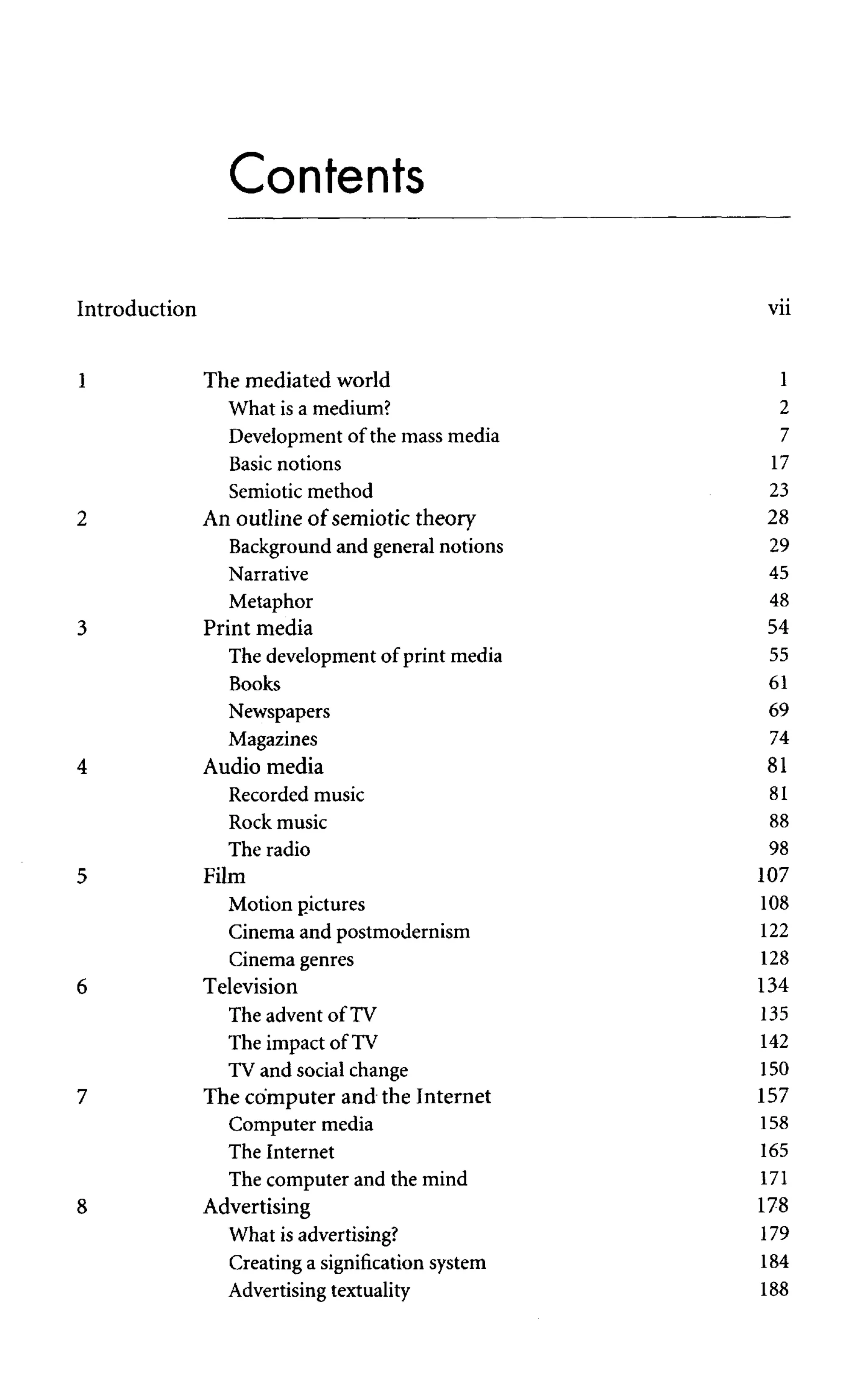









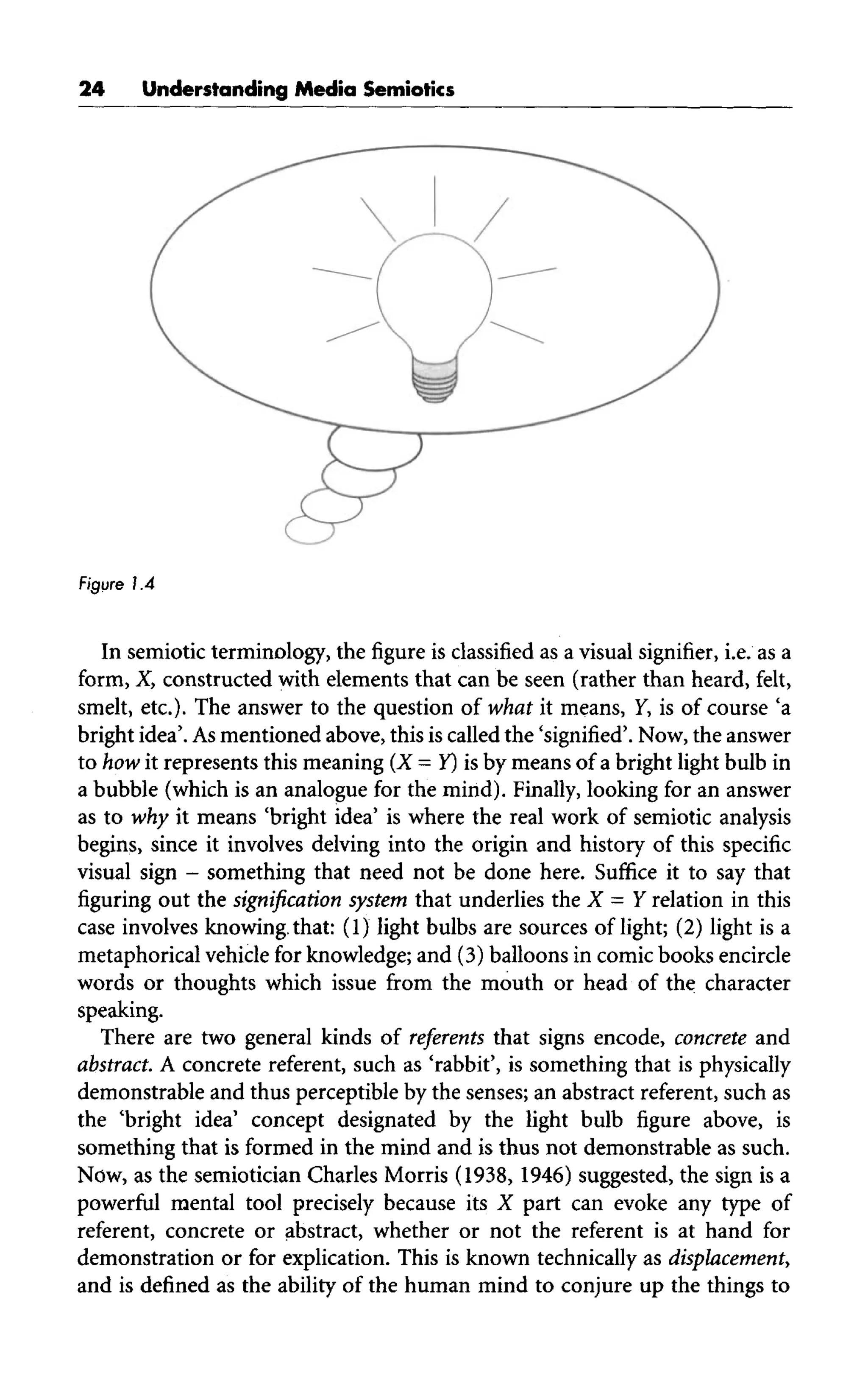





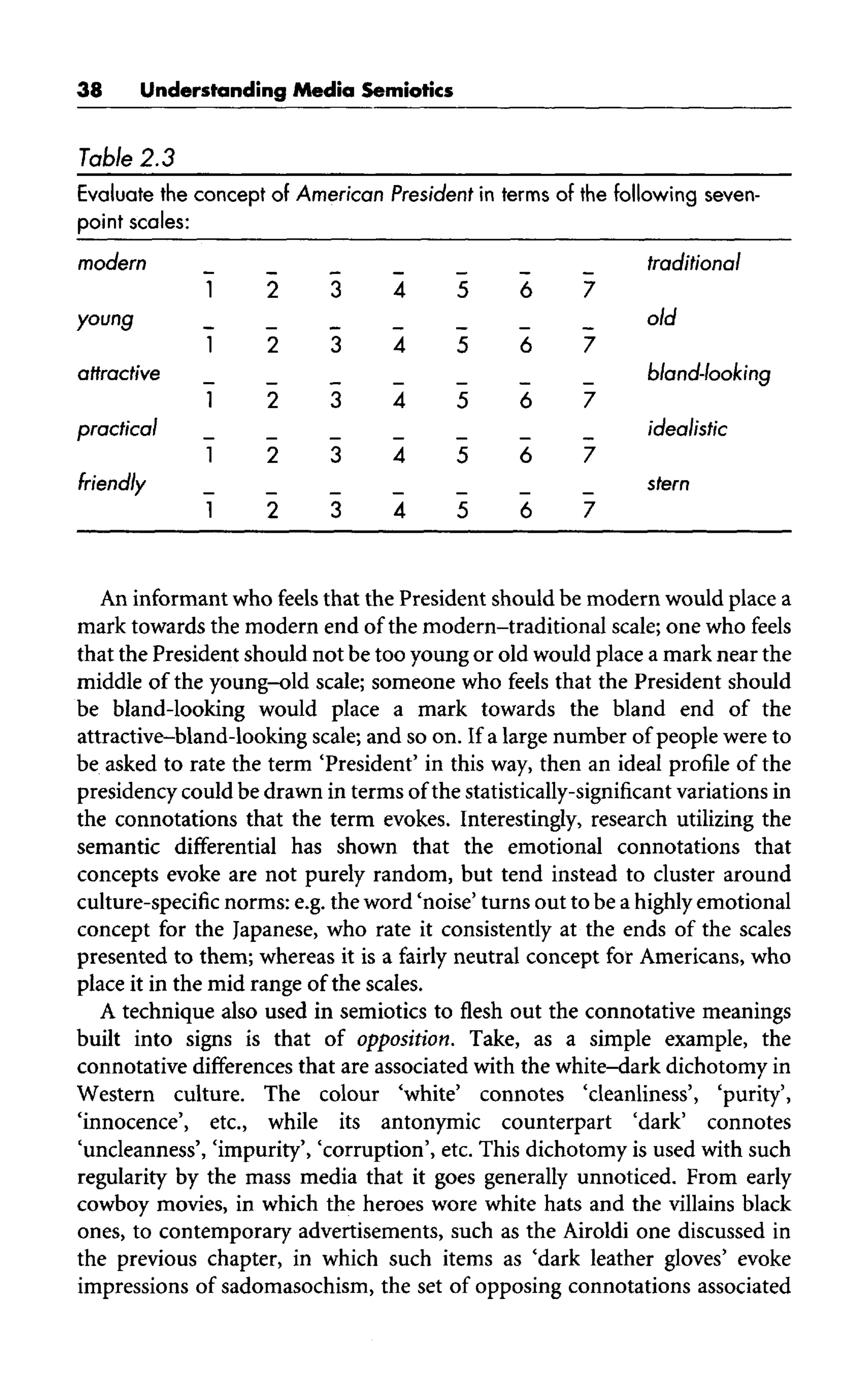


![[200]
“My child,” he said, taking her hand, in the most gentle
deference, and holding it in both of his, “tell me what has
unstrung you so completely—you who are always merry and serene.”
She gently freed her hand, and, gathering up the trailing ends of her
skirt, turned toward the Palace.
“If I tell you,” she said, “promise me that you won’t make a scene
nor try to punish him.”
“Him!” he exclaimed, stopping short, “him! God in Heaven, was it
that devil, Lotzen?”—he seized her arm—“where is he—where is
he?”
She smiled at him very sweetly, loving the anger that blazed his
face.
“I’ll tell you nothing,” she answered, “so long as you are in that
humor—your promise first.”
“No—no—I promised and forbore the other day; but now, with
that”—sweeping his hand at gown and hair—“I’ll forbear no longer.”
She moved on.
“Come, Elise, who was it?”
She gave him another smile, but shook her head.
“Was it Lotzen—tell me, was it?”
Again the smile, and the motion of refusal.
“Very well, if you won’t, I’ll find out for myself.”
“You cannot—the man won’t tell—and no one saw it.”
He laughed with quiet menace.](https://image.slidesharecdn.com/1163478-250529212850-abe4ec42/75/Understanding-Media-Semiotics-Marcel-Danesi-56-2048.jpg)
![[201]
[202]
“I’ll find him,” he said; “I’ll find him.”
Quick fear seized her. He would succeed, she knew; and
then, what would he do! Something, doubtless, to try to
force the Duke to fight; and which would result only in his own
disgrace and in being driven from the country. He must not suffer for
her misfortune—and Dornlitz, without her dear Irishman, would be
impossible; and she was not yet quite ready to go with him. She had
told him something—as much as she might with proper reserve—of
Lotzen’s behavior that other morning; and it had been difficult
enough to restrain him then. Now, with the dishevelled hair, and torn
gown, and blood on her face, only his own word would hold him.
“Promise me, Ralph, promise me,” she implored; “there is no reason
for punishment—see,” holding out her hand, “here is the only place
he touched me—only on the wrist—I swear it, Ralph—”
He took the hand, and looked at the soft, blue-veined flesh, chafed
and abraded with the pinch of iron fingers; and again the rage of
hate swept him, and he put the hand down sharply and turned away
his head, unwilling that she should see his face while passion
marked it.
She touched his arm, almost timidly.
“Promise me, dear,” she said—“please promise me.”
She did not realize what she had called him; nor, indeed, did he,
until days afterward, too late to turn it to account; though what he
answered worked far more to his profit, than had he used the
chance offered by an inadvertent endearment.
“I promise,” he said; “I ought not to; but because you wish
it, I promise—now will you tell me?”
She looked up at him gratefully—and such women as Elise d’Essoldé
can say much with their eyes. They had mounted the steps and](https://image.slidesharecdn.com/1163478-250529212850-abe4ec42/75/Understanding-Media-Semiotics-Marcel-Danesi-57-2048.jpg)
![[203]
were on the terrace; she pointed into the Park.
“It was in the japonica walk,” she said; “I was waiting for you, when
Lotzen came upon me, seemingly by accident——”
“There are no accidents with Lotzen,” Moore broke in.
“It may be, but he chose to treat it so;—I tried to pass—he stopped
me and begged forgiveness for his brutal rudeness of the other day;
I forgave him indifferently, hoping to escape quickly, and tried again
to pass. He caught my wrist, and demanded a kiss, and that I walk
with him to the lake. I was close against the hedge, and it was in my
struggles to get free from him that the sharp thorns tore my gown.
He let me thrash out my strength, holding me all the time by this
wrist; presently, when he was about to kiss me by main force, I bit
him in the hand, and escaped, running at top speed, and in fright
and exhaustion collapsing where you found me.... That was all,
Ralph,” she ended.
Moore’s intense repression found some relief in a long breath.
“All!” he said, rather huskily; “all! ... well, all I ask is, some
day, to have him against me, sword in hand.”
“Your promise!” she exclaimed.
He smiled down at her. “The promise holds, child, as you well know;
but this affair of the Book may work an opportunity.”
“If it does, take it,” said she instantly.
“Trust me, my lady,” he answered, as he left her at the small door
used only by the Princess and her privileged intimates.
“Your lady?” she echoed across the sill—her natural witchery
increased four-fold, in his eyes, by the tumbled hair—“your lady—
perhaps.”](https://image.slidesharecdn.com/1163478-250529212850-abe4ec42/75/Understanding-Media-Semiotics-Marcel-Danesi-58-2048.jpg)
![[204]
In the hallway, just at her own room, she met the Princess, who,
woman-like, marked at a glance every detail of her disordered attire.
“Good heaven, Elise,” she exclaimed, “what has that Adjutant of
mine been doing to you?”
“Practicing sword tricks on my skirt,” said she, holding it up to show
the rents, “and learning to be un coiffeur.”
“He seems to be as uncommonly proficient in the one as he is
deficient in the other,”—then looked at her questioningly; “but
seriously, Elise, what happened?—if you care to tell me.”
“The Duke of Lotzen found me alone in the japonica walk.”
The Princess struck her hands together angrily.
“Lotzen! oh, Lotzen!” she exclaimed; “some day—did Moore
come on him there? If he did, the some-day is already here.”
“Fortunately, no, since I escaped unharmed.”
“Unfortunately, you mean—it saved to the world another scoundrel.”
“And Ralph would be a fugitive in disgrace,” said Mlle. d’Essoldé.
“With the Lion and a Brigadier’s commission as a punishment,” the
Regent answered.
“He wanted to go back, and it was I that kept him.”
“It’s a misfortune—more than a misfortune; it’s almost a calamity—
my dear Elise, if ever again your Colonel get so proper an excuse to
kill that devil, pray don’t intervene.”
“I’m sorry—very sorry, I’m almost criminally stupid.”](https://image.slidesharecdn.com/1163478-250529212850-abe4ec42/75/Understanding-Media-Semiotics-Marcel-Danesi-59-2048.jpg)
![[205]
[206]
“Nonsense, dear,” said the Princess; “there will be other chances—
meanwhile, what happened?... Bit him! Oh, delightful, delightful!”
The other gave a shiver of repugnance.
“Disgusting, I should call it, now—I did it in the frenzy to be free. I
shall never forget the horrible thing.”
“Nor will he—you’ve marked him for life—the pity is it wasn’t his
face.—Go on; what happened then?”...
“The nasty brute,” said Dehra, when she had heard the last
detail—“and save for the punishment you yourself
administered, he, for the time, must go scatheless; you cannot
permit such a story to go through the Court and the Clubs; and you
may be quite sure he won’t tell it.” She struck her hands together
vehemently. “Lotzen! oh Lotzen!—Some day, Elise, your lover or
mine is going to be granted the blessed privilege of putting a sword
through his vile heart.” She sprang up. “Come, dear, you need
diversion—we will ride; and if I can get the Archduke, we’ll take your
Colonel, too.” She went to the telephone.... “Is that you, Armand?”—
when the recall bell rang.... “This is Dehra—Elise and I are off for a
ride; if you can go with us, I’ll have Moore go, too.... Bother your
important appointment; break it.... You can’t?... We can be back by
four o’clock.... Have matters to see to; will they occupy all the
afternoon?... They will?... And you need Moore, also?—all right, take
him—what is your appointment?... Can’t tell me over telephone?...
Tell me to-night—well, I suppose I can wait—come for dinner.... Yes,
stupid.... Good-bye, dear.”
She hung up the receiver. “You heard, Elise; neither of them can go.
I should hate to be a man and always busy. Come, we will go
ourselves, and make an afternoon of it—and stop at the Twisted
Pines for tea.”](https://image.slidesharecdn.com/1163478-250529212850-abe4ec42/75/Understanding-Media-Semiotics-Marcel-Danesi-60-2048.jpg)
![[207]
XIV
AN ENTICING RENDEZVOUS
The failure of Colonel Moore to keep promptly his appointment with
Mlle. d’Essoldé to meet her that morning in the japonica walk was
due to a letter that had come to him in the early post, and which
had sent him, without a moment’s delay, straight to Dornlitz and
Headquarters; nor did he even stop to telephone the Archduke, but
left it for one of the young officers in the outer office to do.
The Military Governor received him at once, and with a look of
questioning concern.
“Anything wrong at the Palace?” he asked.
“Nothing, Your Highness,” said Moore, with his graceful salute—so
unlike Bernheim’s stiff motion—“nothing; I brought this letter; it is
for you, though sent to me.”
The Archduke took it, without comment—he knew it must be of
peculiar importance to bring Moore in person at that hour. When he
had read it, he looked carefully at the envelope, and turning on his
desk lamp, he spread the letter under it and examined it very slowly
and critically; finally he re-read it aloud:—
“‘If His Royal Highness the Archduke Armand wish
to know the whereabouts of a certain Book, let him
be at the Inn of the Twisted Pines at four o’clock this](https://image.slidesharecdn.com/1163478-250529212850-abe4ec42/75/Understanding-Media-Semiotics-Marcel-Danesi-61-2048.jpg)
![[208]
afternoon. No harm is intended; and as a proof he is
privileged to bring as large an escort as he desires. If he
accept, let him stand in a window of his private office,
overlooking the Avenue, for five minutes at exactly noon to-
day. This is his only chance; there will be no second letter.
“‘One Who Knows.’”
“Well,” said he, “the writer at least knows how to put up a very
enticing bait—‘privileged to bring as large an escort as he desires—at
four o’clock this afternoon—at the Inn of the Twisted Pines’—surely,
there is nothing in them to suggest danger, daggers or death.... I
think we shall accept, Colonel; what’s your notion about it?”
“If it is a plant,” he said, “it’s a very clever one—and hence spells
Lotzen; but, for my part, I’ll be charmed to go with you, whatever it
is.”
The Archduke smiled. “Of course you will, you peaceful citizen, and
be sadly disappointed if there isn’t a head for you to hit. It’s just as
well I gave you to the Regent, you would be leading me into all sorts
of danger.”
“And Your Highness has established such a splendid reputation for
avoiding danger,” Moore laughed.
“How so?”
“Did it never occur to you, sir, that the man who would
deliberately force a sword fight with the Duke of Lotzen, has
won a name for reckless courage that he can never live down?”
“But I disarmed him, thanks to your defense to his coup.”
“Small good would my defense have been to one who hadn’t the
nerve and skill to use it; to fail means death, as you, of course,
appreciated.”](https://image.slidesharecdn.com/1163478-250529212850-abe4ec42/75/Understanding-Media-Semiotics-Marcel-Danesi-62-2048.jpg)
![[209]
The Archduke nodded. “But the public knew nothing of all that.”
“Just so, sir—all they know is that you, in sheer deviltry, took your
chances against one of the two best swordsmen in Valeria; that you
won, demonstrated your skill, but it didn’t disprove the
recklessness.”
“I did not intend it that way, Moore; I assure you I had no idea of
bringing on a fight that night at the Vierle Masque, when I went over
to him and the Spencer woman.”
A broad grin overspread the Irishman’s handsome face.
“You couldn’t make a single officer believe it,” he said; “and
seriously, sir. I wouldn’t try. It is just such a thing as your great
ancestor would have done, and it has caught the youngsters as
nothing else ever could; they swear by you—only last night, I heard
a dozen of them toast you uproariously as the next king.”
“Which brings us back to the Book and this letter,” Armand
remarked; “shall we take an escort?”
“I’m a rather incompetent adviser, you think; but the very provision
that you need not go alone, may be a trap to lull suspicion and bring
you there with only an Aide or an orderly. If the letter is honest, it
will be no harm to go well attended; if it isn’t honest, you will lose
nothing, and the escort may be very useful.”
“You are becoming a very Fabius in discretion,” the Archduke smiled;
“and we will take the escort.” He considered a moment. “Or, rather,
we will have it on hand for need. I’ll see to it that a troop of Lancers
shall be passing the Inn a little before four o’clock, and halt there,
while their captain discusses the weather with the landlord. And we
will ride up with a great show of confidence or contempt, whichever
way the One Who Knows may view it.”](https://image.slidesharecdn.com/1163478-250529212850-abe4ec42/75/Understanding-Media-Semiotics-Marcel-Danesi-63-2048.jpg)
![[210]
“Shall I tell Her Highness of the letter, and your purpose?” Moore
asked.
“Not on your life, man! She would send a Brigade with us, even if
she didn’t forbid our going. I’ll get you leave for the afternoon—and
not a word to Bernheim, either; he would have nervous prostration,
and load me down with a suit of plate-mail and a battle-axe. You
and I will just have this little adventure on the side.” He got up. “I
tell you what it is, Moore, the pair of us could make a brisk fight of it
if we had to—hey, man?”
The Irishman laughed joyously.
“And may we have to, sir!” he cried; “may we have to!”—and made
as though he were sending home a finishing thrust.
The Archduke shook his head. “There can’t be any doubt of it; you
would have a most dangerous influence over me; it is well you’re
with the Regent. But for this afternoon, I suggest that you select
your favorite sword, and see that it doesn’t drag in the scabbard—
and half-after-two at the Titian gate.”
Moore paused at the door.
“Of course,” said he, “Your Highness will wear the steel vest.”
“I’ll wear it,” was the answer; and the Colonel went out, wondering
at the ready acquiescence, where he had anticipated a curt refusal.
Before he had crossed the ante-room, the Archduke called him.
“I saw you were surprised,” said he. “I had a little adventure the
other night that you don’t know about. Sit down a minute, and I’ll
tell you of Bernheim’s and my visit to the De Saure house at two in
the morning.”...
“I always said Bernheim was the man for a close pinch,” Moore
remarked, at the end, “but he is even better than I imagined. The](https://image.slidesharecdn.com/1163478-250529212850-abe4ec42/75/Understanding-Media-Semiotics-Marcel-Danesi-64-2048.jpg)
![[211]
[212]
chest is simply delicious.” He paused, in sudden thought. “And, now,
I reckon I understand why Count Bigler has his ear done up in
surgeon’s plaster. I noticed it at the Club yesterday, and
heard him explain it as a ‘sore.’ To-morrow, I’ll ask him if he
caught the ‘sore’ in the De Saure house.”
“And don’t tell Bernheim,” said Armand; “if he knows he had such a
good chance at Bigler, and then missed him, it will make him
miserable for days.”
“Days! It will sour him for life. Next to the Duke of Lotzen, the
Colonel hates Bigler most.”
When Moore had gone, the Archduke took up the letter and
envelope and again examined them; looked for a water mark—there
was none; went over the writing—man’s or woman’s he could not
decide; postmarked at the main office in Dornlitz at ten P.M. of
yesterday; not a scintilla any place to indicate the origin. Well, it did
not matter; he would accept the offer; and there was an end of it,
now—the solution could come this afternoon at four. So he put up
the letter, and pushed the button for his secretary, quite forgetting to
telephone the Princess as to borrowing her Adjutant. Then, after a
while, she, herself, called him; and as they finished their talk, the
bell sounded the first stroke of noon.
He arose, and hooking the frogs of his dark green jacket, the gold
braid of his marshal’s insignia heavy on the sleeve, he went over to
the large window, and raising the sash stood in full view of the
avenue.
It was the hour when it was busiest; on the sidewalks a
pushing, hurrying, good-natured crowd, at their mid-day
recreation; in the road-way, a tangled mass of vehicles—not of the
society folk, they came three hours later, but the wagons, and drays
and vans of trade and traffic. He recognized an occasional face in
the throng, usually some officer hurrying to Headquarters for the](https://image.slidesharecdn.com/1163478-250529212850-abe4ec42/75/Understanding-Media-Semiotics-Marcel-Danesi-65-2048.jpg)
![[213]
reception he always held for half an hour at noon. To-day it would
have to start five minutes late.
Presently some one caught sight of him, and saluted with raised hat;
others looked up, and did the same; and in a moment the crowd
was passing in review, the men uncovering, the women greeting him
with smiles. He answered with bows and hand-waves; and if a bit of
satisfied pride stirred his heart and warmed his face, small wonder.
He was still new in his royalty; and even if he were not, at this
critical period, such demonstration of esteem by the general
populace would have been very gratifying and particularly welcome.
And he stayed a trifle longer than the required time; then, with a
last bow and a wave of especial graciousness, he turned away, and
rang for the doors to be opened.
It was the Archduke’s rule that entire informality should be observed
at these affairs, and he emphasized it by sauntering around,
speaking to everyone, and not obliging them to go up to him, for a
stiff bow and a word. He laughed with this group, joked with
another, argued with a third, until not a man but had come
under his eye, at least for an instant, and he under theirs.
He had begun the receptions soon after he became Governor of
Dornlitz, more particularly for the purpose of getting acquainted with
the officers on duty under him; but it was not limited to them—any
one was welcome—and the result had been rather more satisfactory
than even he had hoped for. There was not an official in his district
to whom he had not given a hearty hand-shake and a pleasant
word; and as he happened to have a truly royal knack of
remembering faces, and the names that went with them, many a
young lieutenant—and indeed, not a few higher in rank—had gone
away with a flattered heart and an ardent enthusiasm, openly
proclaimed, for the Marshal-Prince who would condescend to
remember an unimportant subordinate, and seem glad to see him
again, and to tell him so. And the contrast it offered to the Duke of
Lotzen’s ungracious and domineering ways was little to the latter’s](https://image.slidesharecdn.com/1163478-250529212850-abe4ec42/75/Understanding-Media-Semiotics-Marcel-Danesi-66-2048.jpg)
![[214]
advantage; and the fruit of it had been ripening fast, within these
last few weeks.
So, to-day, the room was crowded, and the welcome the Archduke
received was such as might have made even Lotzen pause and
think, had he seen it. And this thought occurred to Armand; and he
ran his eyes over the many faces, wondering which of them
belonged, to-day, to the Duke’s spy; for that there usually was one
present he had no doubt.
And presently he found him; and, catching his eye,
motioned for him to approach.
“I am glad to see you, Monsieur le Comte,” he said, relieving himself
from offering his hand by readjusting his sword. “When was it I saw
you last?”
Count Bigler’s lips twitched with suppressed amusement.
“Here, Your Highness?” he answered, “I am ashamed to confess I
haven’t been here for many weeks.”
“Yet, surely, Count, I’ve seen you somewhere since then, and very
recently, too—where was it?”
Bigler feigned to think.—“One sees Your Highness so many times, it
is difficult to remember the last ... on the Field of Mars, last Monday,
wasn’t it?”
The Archduke shook his head. “No,” he said, “no; it was in the
evening—I recall that very distinctly.” Then he looked with deliberate
inference at the bandaged ear—“oh, I have it: it was at the De
Saure’s; you were there when I came, and you left first and—rather
hurriedly. It all comes back to me now. Surely, Count, you can’t have
forgot such a pleasant evening!”
Bigler assumed a look of guileless innocence.](https://image.slidesharecdn.com/1163478-250529212850-abe4ec42/75/Understanding-Media-Semiotics-Marcel-Danesi-67-2048.jpg)
![[215]
[216]
“It is not permitted to contradict Your Highness,” he answered, “but
I may, I think, at least venture the truism:—what one has not
remembered, one cannot forget.”
“Or restated, my dear Count, to be quite in point:—what is
inconvenient to remember, is best denied.”
“Just as Your Highness will have it,” Bigler grinned, and impudently
fingered his ear.
“And confidentially, Count,” said Armand smilingly, “while we are
dealing in truisms, I give you these two:—‘every man’s patience has
its limit,’ and, ‘who plays with fire gets burnt’—fatally.”
Bigler’s grin broadened.
“Is Your Highness the man with the patience or the man with the
fire?” he asked.
“Study it out, sir,” said the Archduke, as he passed on; “and let your
master help you; the answer may concern you both.”
The last thing before leaving his office, that afternoon, he wrote a
note to the American Ambassador, enclosing the anonymous letter,
and telling him his intention in reference to it; and adding that if
Courtney had not heard from him by morning he should do whatever
he thought best. This he dispatched by an orderly; and then,
choosing a long, light sword, he rang for his horse.
Just outside his door, he met General Durand and stopped for a
word with him; as they separated he saw Ferdinand of Lotzen
coming down the corridor.
Between them it had long been a salute given and acknowledged,
but now the Duke halted, fingers at visor.
“May I have a word with Your Highness?” he said.](https://image.slidesharecdn.com/1163478-250529212850-abe4ec42/75/Understanding-Media-Semiotics-Marcel-Danesi-68-2048.jpg)
![[217]
Armand’s hand dropped slowly, and he only half paused in his walk.
“I’m in a particular hurry, cousin,” he replied, “won’t to-morrow do as
well?”
Lotzen’s eye-brows went up.
“Isn’t to-morrow rather uncertain for—both of us?” he asked.
“Yes,” said the Archduke instantly, “yes, it is; and hence what need
of talk between us, at least so late in the day. Wait until we have a
to-morrow.”
“What I wish to say has nothing to do with futures, cousin, only with
the past, with the De Saure house—oh! that surprises you, does it?”
“Not half as much as the amazing mess you made of it,” said
Armand.
“That, my dear cousin, is just what I came to explain,” said Lotzen
quickly. “I had nothing whatever to do with the silly affair; it was a
clever idea, but sadly bungled; I heard of it only the next day, and I
want to assure you it was not my work—though, as I say, it was a
clever idea—too clever, indeed, to be wasted so fruitlessly.”
The Archduke regarded him in speculative silence;—just what
manner of man was this; and what could be his ulterior purpose in
such an astonishing avowal!
“Will you tell me, cousin,” he asked, “why you should trouble
to disclaim participation in an outrage, whose only offense,
in your eyes, was its failure?”
Again Lotzen’s eye-brows went up. “I thought you would understand
that it is in justice to myself; I would not have you think me guilty of
so stupid a piece of work.”](https://image.slidesharecdn.com/1163478-250529212850-abe4ec42/75/Understanding-Media-Semiotics-Marcel-Danesi-69-2048.jpg)
![[218]
“Doubtless, then, it will gratify you, monsieur, that I never doubted
your complicity, however much I may have marvelled at the unskilled
execution—you would have arranged it rather differently. Indeed, I
was sorry that you, yourself, were not in command. I left a message,
both upstairs and down, that I thought you might understand.”
Lotzen smiled, rather warmly for him.
“I understood,” he said; “your writing was exceedingly legible.”
“And I sent you another message, a little while ago, by the man with
the wounded ear,” said the Archduke, his eyes upon the other’s
bandaged hand. “I suppose you got it?”
The Duke laughed and held up his hand, the back and palm covered
with plaster.
“This wasn’t made by a bullet, cousin;” he replied; “I got it this
morning from a new pet I was trying to train.—No, I didn’t get your
last message.”
“Better get it to-day, cousin,” said the Archduke, as he turned away;
“to-morrow is rather uncertain.”](https://image.slidesharecdn.com/1163478-250529212850-abe4ec42/75/Understanding-Media-Semiotics-Marcel-Danesi-70-2048.jpg)
![[219]
XV
FOUR O’CLOCK AT THE INN
Ten miles out, on the Titian Road, is the Inn of the Twisted Pines.
Something more than two centuries of storms and sunshine have left
its logs and plaster wrinkled and weather-beaten, yet the house
stands as stanch and strong as the day the last pin was driven, and
the painted sign and the bunch of furze hung above the entrance.
The old soldier who built it had lived long enough to marry a young
wife, and leave it to her and a sturdy boy; and, thereafter, there was
always a son to take the father’s place; and with the heirship
seemed to go the inherited obligation to maintain the house exactly
as received. No modernity showed itself within or without; the
cooking alone varied, as it reflected the skill or whim of the
particular mistress; and it chanced that the present one was of
unusual ability in that particular; and the knowledge of it coming to
the Capital, had brought not a little trade of riding parties and the
officers of the garrison.
And so Captain Hertz, of the Third Lancers, had not done quite the
usual growl, when he got the order to march at once with his troop,
selecting such a route as would bring him to the Inn a few
minutes before four o’clock, taking care to approach it from
the West; and to halt there and await further instructions.](https://image.slidesharecdn.com/1163478-250529212850-abe4ec42/75/Understanding-Media-Semiotics-Marcel-Danesi-71-2048.jpg)
![[220]
He had confided to his subaltern that it was a crazy sort of
proceeding to be manœuvring against old Scartman’s Inn; but if it
had to be done, it was at least considerate to choose as the
objective point, a place where they could have a good meal to eat,
and the keeper’s pretty daughters to philander.
And between thinking of the victuals and the damsels, the Captain
so hurried the march that they reached the Inn unnecessarily early;
yet they had no reason to regret it, for the tap-room was cool and
pleasant, the food to their taste, and the girls’ cheeks prettier and
softer than ever—though it would seem that, lately, the last were
becoming much more difficult to taste.
“What’s got into the hussies?” Hertz demanded, rubbing his face, as
the Lieutenant and he went out into the courtyard; “They used to be
mild enough.”
“You’ve been falling off in looks the last year, my dear fellow,” Purkitz
laughed—“can’t say I much blame the girl—I’ve no finger marks on
my cheek, you see!”
“Huh!” grunted Hertz, “solid brass; wouldn’t show the kick of a mule.
—What in Heaven’s name are we sent here for any way!—‘await
further orders’—that may mean a week.”
“And why not,” the Lieutenant laughed; “the victuals are
delicious, and the girls——”
“Oh, go to the devil!”
“And even father, himself, will do for company in a pinch.”
The Captain laughed, too. “Not if I can get away—did you ever see
such a countenance? It positively makes me ill.”
“Poor old Scartman,” said Purkitz; “he’s a good man, but there is no
denying that ‘the Lord made him as ugly as He could and then hit](https://image.slidesharecdn.com/1163478-250529212850-abe4ec42/75/Understanding-Media-Semiotics-Marcel-Danesi-72-2048.jpg)
![[221]
him in the face.’”
From the eastward, came the sound of a galloping horse.
“Our orders, I hope,” Hertz exclaimed. He glanced at his watch. “A
quarter of four—I wonder what silly business we’re to be sent on,
now.”
The hoof-beats drew swiftly nearer, but from where the two officers
were standing, the high wall of the courtyard obscured the road, and
they sauntered slowly across toward the gateway. As they reached
it, a big black horse swept around the corner and was upon them
before the rider could draw rein.
Hertz gave a cry of warning and sprang aside, tripped on his spur,
and sprawled in the deep dust; while Purkitz’s wild jump landed him
with both feet on his superior’s back, whence he slid off and brought
up on Hertz’s head, thereby materially augmenting the fine flow of
super-heated language that was bubbling from the Captain’s
dirt-filled mouth—nor did the loud guffaw and the shrieks of
feminine laughter, that came from the house, serve to reduce either
the temperature or the volume.
Meanwhile, the cause of it all—a slender, sinuous woman, black
gowned and black veiled—sat the big horse motionless and silent,
waiting for the human tangle to unloose itself.
Coated with dust—his uniform unrecognizable, his face smeared and
dirty—Hertz scrambled up.
“What in hell do you——a woman!” he ended, and stood staring.
“Yes, my man, a woman,” said she, “and one very sorry for your fall
—you are the landlord, I presume.”
Lieutenant Purkitz gave a shout, and leaned against the gate.](https://image.slidesharecdn.com/1163478-250529212850-abe4ec42/75/Understanding-Media-Semiotics-Marcel-Danesi-73-2048.jpg)
![[222]
“Landlord!” he gasped, “landlord!—that face—oh, that face!” and
went off into a fit of suppressed mirth.
The woman looked at him and then at Hertz, and though the thick
veil hid her features completely, there was no doubt of her irritation.
The Captain bowed. “Madame will pardon the ill manners of my
clownish servant,” he said, indicating Purkitz; “I am Captain Hertz, of
Her Highness’ Third Lancers. Yonder is the landlord; permit me to
call him.”
She leaned down and offered him her hand.
“A thousand apologies, my dear Captain, for my reckless
riding and my awkward tongue—there is small excuse for
the former, I admit, but my veil may explain the latter.—You are not
hurt?”
A voice so soft and sweet must have a face to match it, and Hertz
went a step nearer.
“Madame can cure everything but my heart, if she but raise the veil,”
he said.
The voice laughed softly.
“Then, sir, I am afraid to raise it—your heart would not survive the
shock. Good-bye, and thank you,” and she spurred across to where
old Scartman was standing near the stables.
“I am to meet some one here at four o’clock,” she said; “has my
party come?”
Boniface’s shrewd little eyes had taken her in at a single glance.
“Gentleman, I suppose?” he asked.—“None of them?” jerking his
thumb toward the two lancers.—“No? then he’s not here yet.”](https://image.slidesharecdn.com/1163478-250529212850-abe4ec42/75/Understanding-Media-Semiotics-Marcel-Danesi-74-2048.jpg)
![[223]
She glided gracefully out of saddle, and hooked up her skirt.
“Put my horse in the stall nearest the door,” she ordered; and herself
saw it done. “Now, I want a room—the big one on the lower floor—
for an hour or so.”
The inn-keeper bowed.
“Certainly, madame—and the gentleman?”
She considered.... “He is one high in rank, very high—
indeed, no one in Valeria is higher—tell him I’m here; and
admit him instantly; but don’t, do you hear me, don’t tell him I’m a
woman.”
Old Scartman coughed and hesitated.
“But please you, madame,” he ventured, “if I’m to tell him you’re
here, but not to tell him you’re a woman, how’s he to be sure you
are you?”
“True, O patron of rendezvous!” she laughed. “If he ask for proof,
you may tell him I’m the one who knows.”
“Now, that’s more to rule,” he said, with a nod and a chuckle.
They went into the house, and he opened the door into the big
room.
“This is what madame wishes?”
“Yes,” said she—“and remember, no interruptions, now nor later—
understand?”
He bowed with rather unusual grace, for one of his appearance and
calling.
“Perfectly, madame—does madame think I look so like a fool?”](https://image.slidesharecdn.com/1163478-250529212850-abe4ec42/75/Understanding-Media-Semiotics-Marcel-Danesi-75-2048.jpg)
![[224]
She surveyed him an instant.
“No, my good man, I don’t,” and closed the door; “but I wouldn’t
care to tell you what you do look like,” she ended.
Going over to the window, she fixed the curtain so as to permit her
to see in front of the house, and then, removing her veil, she drew
out a tiny mirror and deftly touched to place the hair that
was disarranged. As she finished, she heard horses
approaching, and she saw, through the open gateway, a sudden
commotion among the Lancers who were lounging at ease by the
roadside, their mounts picketed under the trees. She knew that her
man was coming.
A sergeant ran in and said a word to Hertz who, free now of his dust
and anger, was sitting on the steps with Purkitz, hoping to get a
glimpse of the face behind the veil, and staring at the windows with
calm persistency.
“My God!” she heard Hertz exclaim, as both sprang up, and,
frantically buttoning tunics and drawing on gloves, ran out into the
road and swung to horse. There was a snap of commands, a
stamping of hoofs, and the lances rose high above the wall in a line
of fluttering pennons; they dipped, and the next moment the
Archduke and the Regent’s Adjutant drew up before the gate.
The former raised his hand, and Hertz rode forward and saluted.
“How long have you been here, Captain Hertz?” he asked.
“Since a few minutes after three, sir.”
“Has any one come to the Inn in that time?”
Hertz’s spine went cold, and his voice trembled—she was the
Archduke’s, and he had dared to ogle her.](https://image.slidesharecdn.com/1163478-250529212850-abe4ec42/75/Understanding-Media-Semiotics-Marcel-Danesi-76-2048.jpg)
![[225]
[226]
“No one, Your Highness,” he answered—“no one but a
woman—only a few minutes ago—on horseback—alone.”
“Did you happen to look at her, Captain? If you did, you might
describe her.”
“I cannot, Your Highness; her face was covered with a thick, black
veil.”
The Archduke smiled. “You’re a good soldier, I see; a pretty face
comes first.”
“But her figure, sir—it’s wonderful, black habit and black horse—and
she can ride—and her voice—”
“At least, Captain, your inability to describe her isn’t due to lack of
observation,” the Archduke remarked dryly. “You have aroused my
curiosity; I must see this remarkable woman—and do you remain
here. I may have need of you presently; if you hear a whistle, come
to me instantly.”
“Very clever, my lord,” Hertz muttered; “but you can’t cozen this
bird; you’re here to meet her, and we are not expected. If the
Regent knew it—whew!” and dismounting, he nodded to the
sergeant.
“This looks about as harmless as a game of ping-pong,” said
Armand, as they went into the courtyard; then, suddenly, an
amazing idea flashed upon him; and he swung around, and
motioned Hertz to him.
“What color was the woman’s hair?” he asked.
“Black. Your Highness, black as her gown.”
He dismissed Hertz with a look.](https://image.slidesharecdn.com/1163478-250529212850-abe4ec42/75/Understanding-Media-Semiotics-Marcel-Danesi-77-2048.jpg)

![[227]
[228]
“Come along, Moore,” said the Archduke, “let us have a look
at her—and pray heaven it isn’t Spencer.”
But the landlord shook his head dubiously.
“It’s queer doings, sure enough!” he muttered;—“leastwise, it’s no
love meeting they’re up to;” and he followed them as far as the hall,
to be within call if needed.
Shielded by the curtain, Madeline Spencer had watched the scene in
the courtyard, laughing quietly, the while, at Hertz’s confusion and at
what she knew was in his mind, as to the Archduke and herself; now
she flung the veil lightly around her head, and put her chair where
the sun would be behind her. Moore’s presence had surprised and
disappointed her; but, on the whole, she preferred him to Bernheim
—and particularly if one of them were to be at the interview. Though
she had rather counted upon Armand coming alone, if only to show
his contempt for the permission to bring an escort—that he had sent
the troop of Lancers she did not credit for a moment, though it
might do to twit him with it.
Cool player that she was, and skillful beyond most women, yet even
her heart beat a little faster, and her hand showed the trace of a
tremble, as she heard the rattle of swords and spurs in the hall-way,
followed by the sharp knock upon her door. And she let the
knock come a second time before she answered it. She had
not seen Armand since that night in her reception room in the Hotel
Metzen, when the King and he had surprised her and Lotzen
together, and, after tumbling the Duke’s schemes about his ears, had
sent him to Lotzenia in disgrace and her across the border; and,
now, the sight of him, and the sound of his voice, had stirred again
the old fondness that would not down. And though, to his face, she
might laugh at his anger and mock at his contempt, and feel it so
then, yet afterward, in the depression that in such natures always
follows periods of excitement, the recollection of it hurt her sadly,](https://image.slidesharecdn.com/1163478-250529212850-abe4ec42/75/Understanding-Media-Semiotics-Marcel-Danesi-79-2048.jpg)
![[229]
scorn it as she might, despise it as she did—destroy him as she
meant to do, and would.
“Entrez!” she called, “entrez!” and with the words, the tremble
passed, and she was serene and undisturbed again.
“Your Royal Highness!” she said, very low, and swept him a quick
curtsy.
Instead of offering his hand to raise her, he answered with a slight
bow.
“Madame desired to see me?” he asked; and crossing over obliged
her to turn so that the light from the window fell upon her sideways.
And, despite the heavy veil, that gave him only a black mask of
crape instead of her face, he was satisfied he had surmised correctly.
Suddenly she caught the veil and flung it away.
“You know me, I see,” she laughed, “so we will dispense
with this covering—it is very warm.”
For a little while, he looked at her in forbidding silence.
“What ill wind blew you back to Dornlitz?” he asked presently; and
she almost cried out in surprise at the deliberate menace in his
voice. And Moore marvelled and was glad—the old Henry was being
aroused, at last.
“Ill wind?” she said—leaning carelessly against the window ledge
where the sun played through her wonderful hair, and tinged the
flawless face from dead-white to a faint, soft pink—“ill wind for
whom, Armand?—surely not for you; why am I here?”
The Archduke gave a sarcastic laugh. “That is precisely what I
should like to know.”](https://image.slidesharecdn.com/1163478-250529212850-abe4ec42/75/Understanding-Media-Semiotics-Marcel-Danesi-80-2048.jpg)
![[230]
“You doubt the letter?”
A shrug was his answer.
She leaned a bit toward him.
“If I show you the Book of Dalberg Laws, will you believe?” she
asked.
“That they are the Laws, yes.”
She smiled rather sadly.
“The facts will have to prove my honest motive, I see; and I came
from Paris, hoping that I could render you this service, as a small
requital for the injury I did you a little while ago.”
The Archduke laughed in her face.
“And for how much in gold coin of the realm, from some one
of my enemies?” he asked.
She put the words aside with another smile.
“I’ve been in Dornlitz for more than two weeks,” she went on; “can
you guess where?—yes, I see you can; the only place I could have
been, and you not know of it.”
“And you mean to say the Book is in Ferida Palace?” said Armand.
“I do.”
“And you are ready to restore it to the Regent?”
“No,” said she, “I’m not ready to restore it to the Regent; I’m ready
to give it to you if I were able, but I’m not—it will be for you to
recover it.”](https://image.slidesharecdn.com/1163478-250529212850-abe4ec42/75/Understanding-Media-Semiotics-Marcel-Danesi-81-2048.jpg)
![[231]
“How do you know it is the Book of Laws—did the Duke tell you?”
She laughed her soft, sweet laugh. “Oh, no, he didn’t tell me—he
has no idea that I know he has it; I saw it by accident——”
“How could you recognize the Book?” he interrupted; “only three
people in the Kingdom have ever seen it.”
“By intuition, mainly; and by the secrecy with which the Duke
handles it—let me describe it:—a very old book; leather-covered,
brass-bound and brass-hinged; the pages, of parchment—those in
front illumined in colors with queer letters, and, further on, more
modern writing—it is the Book, isn’t it, Armand?”
“Or Lotzen has described it to you,” he answered.
She made a gesture of discouragement.
“You are hard to convince,” she said—“you will have to be shown—
will you take the trouble?”
The Archduke smiled. “Now we come to the kernel,” he remarked;
“the rest was only the shell. Quite candidly, madame, I’m not
inclined to play the spy in Ferida Palace; there are easier deaths to
die, though doubtless none that would be more sure.”
“You didn’t used to be so timid or careful, Armand,” she mocked;
“there are no dangers other than those of my boudoir—and if you
fear them you may send a substitute—even one of your friend
Courtney’s secret agents.—For the last few nights the Duke has been
going over this Book page by page; his apartments are across a
small court from mine, and his private cabinet is directly in view
from my boudoir. Send some one there this evening at eleven, and
with my field glass he can see everything the Duke does, and every
article on his desk. Surely, that should be enough to satisfy the most
suspicious.”](https://image.slidesharecdn.com/1163478-250529212850-abe4ec42/75/Understanding-Media-Semiotics-Marcel-Danesi-82-2048.jpg)
![[232]
[233]
“Rather too much,” said he; “it brings us back to the question of
motive:—why should you, who have had so much of my dear
cousin’s money, and have enjoyed his kind and courteous hospitality
for so long, suddenly turn against him, and betray him?—for
believe me, madame, I take no stock in your pretty story of
requiting injury, and coming all the way from Paris to help me find
the Book.”
“But, my dear Archduke, what matters my motive, if you recover the
Book—besides, now you can send the police this instant and search
the Palace and seize the Book, if it’s there, and they can find it—
doesn’t that in itself attest my honesty?”
“Not in the least. You know very well that I would not venture to
take such drastic action against the Duke unless I were sure, not
only that he had the Book, but that it would be found—hence it’s
safe to tell this story. And as your motive—it all comes back to that—
can’t be to assist me, it must be to assist the Duke; and so—” he
shrugged his shoulders.
It had never occurred to her that he would be so difficult to
convince; she had thought that her bait, and particularly the
privilege to send any one to verify it, and her description of the
Book, would capture him instantly. But she had failed to appreciate
how thoroughly Armand despised her, and how deeply he mistrusted
her, and, more than all, how intensely repugnant it would be to
accept a service from her, or to have any dealings with her except à
outrance.
She bent forward and looked him in the eyes.
“Why might it not be to assist myself?” she asked—“to
revenge myself, if you please, Armand.”
“Yes?” he said questioningly.](https://image.slidesharecdn.com/1163478-250529212850-abe4ec42/75/Understanding-Media-Semiotics-Marcel-Danesi-83-2048.jpg)
![[234]
“Ferdinand of Lotzen and I have come to the parting place,” she said
with quick bitterness—“the brute struck me yesterday; no man ever
did so twice—and none ever once, that I didn’t punish promptly. I
did come from Paris thinking I might aid you, for some how I was
sure he had that book; he was glad enough to have me; and then
he was so kind and liberal I—you won’t believe it I know, Armand,
but it’s true—I couldn’t bring myself to betray him; nor should I, but
for yesterday. Now I want revenge; and I can get it quickest and
best through you. There, you have my true motive; and even you
should not doubt it, for, God knows, a woman hates to confess that
a man has struck her.”
She turned away and looked through the window, her fingers playing
nervously on the sill; while the Archduke, doubtful, yet half
convinced, glanced at Moore uncertainly.
Instantly the Colonel motioned to accept, and that he would go to
the Ferida; and Armand smiled, and indicated that both would go—if
any went; then he crossed to the great fireplace and stood before it,
staring thoughtfully into the cinders. Suddenly he straightened his
shoulders, and faced around—and Moore knew that the decision was
made, and finally.
“Mrs. Spencer,” he said, “we will lay aside the questions of
motive and personality: You, an individual, come to me, the
Governor of Dornlitz, and offer information which, if true, will lead to
the recovery of an article of great value, that belongs to the
Government and has mysteriously disappeared. It is my duty, as
Governor, to investigate the story, and I will do it, either in person or
by subordinate. If the story be true, and the article in question be
recovered by your aid, then you will be entitled to the proper thanks
of the Government and a suitable recompense.—So much for that.
But I also wish to assure you that Armand Dalberg, himself, declines
your offer and your aid; and should your information result to his
personal profit and advancement, it will be a life-long regret.”](https://image.slidesharecdn.com/1163478-250529212850-abe4ec42/75/Understanding-Media-Semiotics-Marcel-Danesi-84-2048.jpg)
![[235]
She heard him without turning—and Moore thought he detected the
faintest shiver at the end; and, in truth, the words and tone were
enough to chill even a colder heart than hers.
But when she faced him, it was with one of the soft and caressing
smiles she could use with such fatal fascination, and which made
Moore catch his breath and stare, though it touched the Archduke
not at all.
“I thank His Royal Highness, the Governor of Dornlitz,” she
said, dropping him another curtsy, “for his consideration and
trust, and the promised reward; the latter I decline.... As for Armand
Dalberg, I can assure him he will owe me no obligation: it will give
me a life-long pleasure to be the means of causing him a life-long
regret.”
The Archduke smiled indifferently.
“To that extent, then, I shall feel less obligated,” he replied.
“Meanwhile, let us be seated, and receive madame’s instruction for
to-night. I shall want the Book seen by more than one person—how
many can you arrange to admit?”
“How many do you wish?”
“Three, possibly four.”
“You may bring half a dozen if you like,” she said, “though the fewer,
the less chance of failure.”
“Very good—how is it to be managed?”
She drew off her gauntlets, and from one of them took a sheet of
note paper—stamped with the Duke’s arms—on which she had
sketched roughly so much of the Ferida and its grounds as entered
into her plan. Spreading it out, she explained how they were to gain
entrance to her apartments; and that there might be no mistake,](https://image.slidesharecdn.com/1163478-250529212850-abe4ec42/75/Understanding-Media-Semiotics-Marcel-Danesi-85-2048.jpg)
![[236]
[237]
she went over it again, cautioning them that it must be followed with
the most careful precision. At the end, she gave the map to Moore.
“Of course, I shall not expect Your Highness to-night,” she said; “but
I hope you will send Colonel Moore; it will be well to have some one
who can, if necessary, use both head and sword—though I
don’t anticipate the remotest difficulty in your——”
A volley of cheers from without drowned her voice. It could only be
the soldiers, and yet it was such an extraordinary thing, and with the
Field-Marshal, himself, within sound, that the two men looked at
each other in puzzled surprise; and when the noise not only
continued but actually grew louder, the Archduke frowned and went
to the window.
And what he saw made him frown still more, and he swore softly to
himself, as a man does, sometimes, when unpleasantly surprised
and obliged to think quickly, and to act on the thinking, with a heavy
penalty awaiting a mistake.
Crossing the courtyard, with Hertz and Purkitz walking on either
side, were the Regent of Valeria and Mlle. d’Essoldé. And even as
Armand stood there, they were out of saddle and Dehra was running
lightly up the steps.
“Send Scartman to us in the big room, if you please, Captain,” she
called—then stopped, her eyes fixed on two horses standing a little
way off—a Field-Marshal’s insignia on the saddle cloth of one and a
Colonel’s of her Household on the other. So! so! and they were too
busy with appointments at four to ride with them. She caught Mlle.
d’Essoldé by the arm.
“Look, Elise!” she said, “look at those saddle cloths yonder.”
The Archduke followed her motion, and understood. It was a most
infernally unfortunate contretemps, but it would have to be met, and
at once.](https://image.slidesharecdn.com/1163478-250529212850-abe4ec42/75/Understanding-Media-Semiotics-Marcel-Danesi-86-2048.jpg)


