Rahnia Agesti
(236310102)
2A
The Difference of Using Do,
Does, Did, Done
Pronunciation
Do & Does
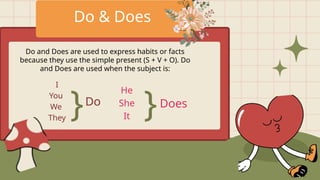
Do and Does are used to express habits or facts
because they use the simple present (S + V + O). Do
and Does are used when the subject is:
I
You
We
They
}Do
He
She
It }Does
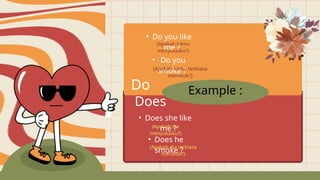
Example :
Do
Does
• Do you like
me ?
(Apakah kamu
menyukaiku?)
• Do you
smoke ?
(Apakah kamu terbiasa
merokok?)
• Does she like
me ?
(Apakah dia
menyukaiku?)
• Does he
smoke ?
(Apakah dia terbiasa
merokok?)
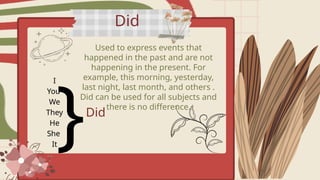
Did
Used to express events that
happened in the past and are not
happening in the present. For
example, this morning, yesterday,
last night, last month, and others .
Did can be used for all subjects and
there is no difference.
I
You
We
They
He
She
It
}Did
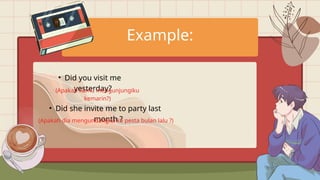
• Did she invite me to party last
month ?
(Apakah dia mengundangku ke pesta bulan lalu ?)
Example:
• Did you visit me
yesterday?
(Apakah kamu mengunjungiku
kemarin?)
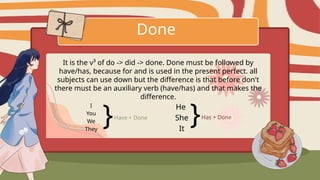
Done
It is the v³ of do -> did -> done. Done must be followed by
have/has, because for and is used in the present perfect. all
subjects can use down but the difference is that before don't
there must be an auxiliary verb (have/has) and that makes the
difference.
I
You
We
They
}Have + Done
}Has + Done
He
She
It
Example :
• I have done my homework
(Saya telah menyelesaikan pekerjaan rumah
saya)
• She has done her homework
(Dia telah menyelesaikan pekerjaan
rumahnya)
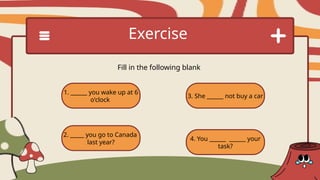
1. ______ you wake up at 6
o'clock
2. _____ you go to Canada
last year?
3. She ______ not buy a car
4. You ______ ______ your
task?
Exercise
Fill in the following blank
Conclusion
"Do" is for present tense in first and second person,
"does" for third person singular, and "did" for past tense
across all persons. "Done" serves as the past participle
form, employed in perfect tenses and passive voice.
This grasp of their differences facilitates precise
application within diverse English language contexts
and verb structures.
Thank You
I hope you can get useful knowledge from this
presentation. Good luck and have a nice day!

"Understanding Do, Does, Did in Grammar"

  • 1.
    Rahnia Agesti (236310102) 2A The Differenceof Using Do, Does, Did, Done Pronunciation
  • 2.
    Do & Does Doand Does are used to express habits or facts because they use the simple present (S + V + O). Do and Does are used when the subject is: I You We They }Do He She It }Does
  • 3.
    Example : Do Does • Doyou like me ? (Apakah kamu menyukaiku?) • Do you smoke ? (Apakah kamu terbiasa merokok?) • Does she like me ? (Apakah dia menyukaiku?) • Does he smoke ? (Apakah dia terbiasa merokok?)
  • 4.
    Did Used to expressevents that happened in the past and are not happening in the present. For example, this morning, yesterday, last night, last month, and others . Did can be used for all subjects and there is no difference. I You We They He She It }Did
  • 5.
    • Did sheinvite me to party last month ? (Apakah dia mengundangku ke pesta bulan lalu ?) Example: • Did you visit me yesterday? (Apakah kamu mengunjungiku kemarin?)
  • 6.
    Done It is thev³ of do -> did -> done. Done must be followed by have/has, because for and is used in the present perfect. all subjects can use down but the difference is that before don't there must be an auxiliary verb (have/has) and that makes the difference. I You We They }Have + Done }Has + Done He She It
  • 7.
    Example : • Ihave done my homework (Saya telah menyelesaikan pekerjaan rumah saya) • She has done her homework (Dia telah menyelesaikan pekerjaan rumahnya)
  • 8.
    1. ______ youwake up at 6 o'clock 2. _____ you go to Canada last year? 3. She ______ not buy a car 4. You ______ ______ your task? Exercise Fill in the following blank
  • 9.
    Conclusion "Do" is forpresent tense in first and second person, "does" for third person singular, and "did" for past tense across all persons. "Done" serves as the past participle form, employed in perfect tenses and passive voice. This grasp of their differences facilitates precise application within diverse English language contexts and verb structures.
  • 10.
    Thank You I hopeyou can get useful knowledge from this presentation. Good luck and have a nice day!