Introduction
1
 Ultrasonic machining (USM) is a non-traditional
machining process that utilizes high-frequency
mechanical vibrations to remove material from a
workpiece. It is a versatile and precise machining
method commonly used in various industries. Here
are the working principles and applications of
ultrasonic machining:
General working principles
2
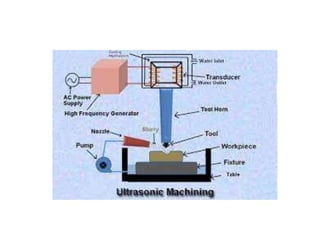
Transducer: The USM process begins with an ultrasonic
transducer that converts electrical energy into high-
frequency mechanical vibrations. These vibrations
typically range from 20 kHz to 50 kHz.
Tool and Workpiece: A tool, often made of a hard and
brittle material like tungsten carbide or diamond, is
brought into contact with the workpiece. The tool is
pressed against the workpiece with a controlled force.
Shaping Planning Broaching Sawing
3
Abrasive Slurry: An abrasive slurry, consisting of a mixture of
abrasive particles and a liquid medium (usually water or oil),
is introduced between the tool and the workpiece. The slurry
acts as a medium for transmitting the vibrations and helps in
the material removal process.
Material Removal: As the ultrasonic vibrations are
transmitted to the tool, the abrasive particles present in the
slurry impact the workpiece surface. These rapid impacts,
combined with the controlled force, cause the removal of
small particles from the workpiece, resulting in material
removal.
Continuous Flow: To maintain the effectiveness of the
process and prevent the accumulation of debris, the abrasive
slurry is continuously circulated or replenished.
General working principles
Ultrasonic machining
5
Applications:
Hard and Brittle Materials: Ultrasonic machining is
particularly suitable for machining hard and brittle
materials such as glass, ceramics, semiconductors, and
advanced engineering materials. These materials are
difficult to machine using conventional methods due to
their high hardness and brittleness.
Precision Machining: USM provides high precision and
surface finish. It can be used for producing intricate
shapes, micro-holes, and complex profiles with tight
tolerances. The process is commonly employed in the
fabrication of microelectromechanical systems (MEMS)
and precision molds.
6
Applications:
Aerospace and Medical Industries: USM finds applications in the
aerospace and medical industries, where the machining of advanced
materials and intricate components is often required. It is used for
manufacturing turbine blades, fuel injectors, dental implants, and
surgical instruments.
Tool and Die Making: Ultrasonic machining is utilized in the fabrication
of dies, molds, and cutting tools. It helps in the production of precise
features and intricate designs required in industries such as
automotive, electronics, and consumer goods.
Semiconductor Industry: USM is employed in the semiconductor
industry for various processes, including dicing silicon wafers, shaping
and contouring silicon substrates, and creating complex
microstructures for electronic components.
7
Applications:
Surface Texturing and Etching: AJM can create specific
surface textures and patterns on materials, such as
decorative designs or functional features for enhanced
performance. It is often used in applications where
aesthetics, grip, or frictional characteristics are important.
Aerospace and Automotive Industries: AJM finds
applications in aerospace and automotive industries for
precision machining of critical components, such as
turbine blades, fuel injection nozzles, and engine parts.
Medical and Dental Applications: AJM is used in the
medical and dental fields for manufacturing implants,
precision surgical tools, and intricate dental prosthetics.
Thank you

ultrasonic machining process and applications.pptx

  • 1.
    Introduction 1  Ultrasonic machining(USM) is a non-traditional machining process that utilizes high-frequency mechanical vibrations to remove material from a workpiece. It is a versatile and precise machining method commonly used in various industries. Here are the working principles and applications of ultrasonic machining:
  • 2.
    General working principles 2 Transducer:The USM process begins with an ultrasonic transducer that converts electrical energy into high- frequency mechanical vibrations. These vibrations typically range from 20 kHz to 50 kHz. Tool and Workpiece: A tool, often made of a hard and brittle material like tungsten carbide or diamond, is brought into contact with the workpiece. The tool is pressed against the workpiece with a controlled force.
  • 3.
    Shaping Planning BroachingSawing 3 Abrasive Slurry: An abrasive slurry, consisting of a mixture of abrasive particles and a liquid medium (usually water or oil), is introduced between the tool and the workpiece. The slurry acts as a medium for transmitting the vibrations and helps in the material removal process. Material Removal: As the ultrasonic vibrations are transmitted to the tool, the abrasive particles present in the slurry impact the workpiece surface. These rapid impacts, combined with the controlled force, cause the removal of small particles from the workpiece, resulting in material removal. Continuous Flow: To maintain the effectiveness of the process and prevent the accumulation of debris, the abrasive slurry is continuously circulated or replenished. General working principles
  • 4.
  • 5.
    5 Applications: Hard and BrittleMaterials: Ultrasonic machining is particularly suitable for machining hard and brittle materials such as glass, ceramics, semiconductors, and advanced engineering materials. These materials are difficult to machine using conventional methods due to their high hardness and brittleness. Precision Machining: USM provides high precision and surface finish. It can be used for producing intricate shapes, micro-holes, and complex profiles with tight tolerances. The process is commonly employed in the fabrication of microelectromechanical systems (MEMS) and precision molds.
  • 6.
    6 Applications: Aerospace and MedicalIndustries: USM finds applications in the aerospace and medical industries, where the machining of advanced materials and intricate components is often required. It is used for manufacturing turbine blades, fuel injectors, dental implants, and surgical instruments. Tool and Die Making: Ultrasonic machining is utilized in the fabrication of dies, molds, and cutting tools. It helps in the production of precise features and intricate designs required in industries such as automotive, electronics, and consumer goods. Semiconductor Industry: USM is employed in the semiconductor industry for various processes, including dicing silicon wafers, shaping and contouring silicon substrates, and creating complex microstructures for electronic components.
  • 7.
    7 Applications: Surface Texturing andEtching: AJM can create specific surface textures and patterns on materials, such as decorative designs or functional features for enhanced performance. It is often used in applications where aesthetics, grip, or frictional characteristics are important. Aerospace and Automotive Industries: AJM finds applications in aerospace and automotive industries for precision machining of critical components, such as turbine blades, fuel injection nozzles, and engine parts. Medical and Dental Applications: AJM is used in the medical and dental fields for manufacturing implants, precision surgical tools, and intricate dental prosthetics.
  • 8.