Human Variation
What makes us Unique?
Environment History
History
• Through constant practice, these sets of behavior form human
tradition, this traditions are passed from one generation to the other.
Environment
• as each human groups experience differing environmental conditions,
cultural variations are established.
• Example: Alaskan Eskimos have different clothing and culture
compared to the Maasais people of Kenya.
• Igorot from the highlands have different clothes from people in
lowlands
Quick Activity.
Form a group by row. For 10 minutes, share with one another the
following information.
1. Your parents cultural backgrund. (Ilokano, Visayan, Kapampangan)
2. The language and dialects you speak (house and going outside)
3. Your Nationality.
After the discussion, summarize your similarities and differences.
Cultural Differences
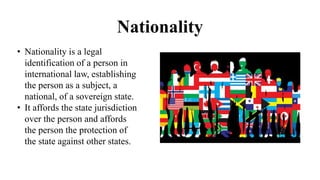
Nationality
• Nationality is a legal
identification of a person in
international law, establishing
the person as a subject, a
national, of a sovereign state.
• It affords the state jurisdiction
over the person and affords
the person the protection of
the state against other states.
How to be a Peenoise?
3 Steps to become a Pinoy.
Jus Soli/by Land
Jus Sanguinis/by Blood
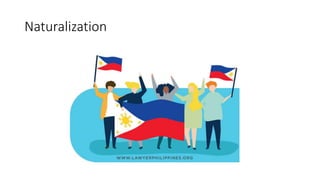
Naturalization
Ethnicity
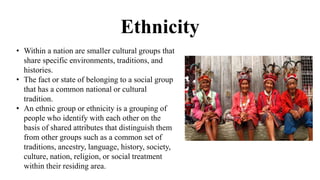
• Within a nation are smaller cultural groups that
share specific environments, traditions, and
histories.
• The fact or state of belonging to a social group
that has a common national or cultural
tradition.
• An ethnic group or ethnicity is a grouping of
people who identify with each other on the
basis of shared attributes that distinguish them
from other groups such as a common set of
traditions, ancestry, language, history, society,
culture, nation, religion, or social treatment
within their residing area.
Social Differences
Apart from varying cultural backgrounds and ethnicity, human
population also experience social differences, which include:
1. Gender
2. Socioeconomic class
3. Political Identity and
4. Religion
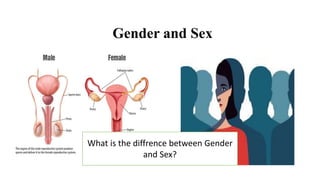
Gender and Sex
What is the diffrence between Gender
and Sex?
Gender
• According to the World Health Organization, gender “refers to the
socially constructed roles, behaviors, activities, and attributes that a
given society considers appropriate for men and women.”
• Sex refers to the biological characteristic of humans such as male or
female.
• In some societies, gender becomes a basis of one’s identity as social
norms allow for their acceptance or neglect by the majority of
population.
• In cases of neglect, they create their own communities where they
can articulate their thoughts and aspirations.
There are several types of gender based
on person’s orientation.
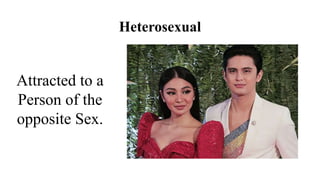
Heterosexual
Attracted to a
Person of the
opposite Sex.
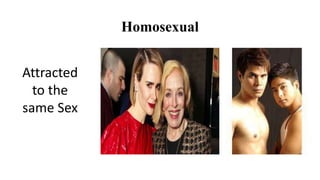
Homosexual
Attracted
to the
same Sex
LGBTQ
• Lesbian – woman who is romantically attracted to another woman
• Gay – men attracted to men
• Bisexual – attracted to two gender
• Transgender – psychological self differs from the social expectation
for the physical self
• Queer – attracted to multiple genders
Nowadays, many people are raising awareness for equal rights,
especially amongst the LGBTQ community.
• What are the most common misconception that people have
regarding people they consider as sexually different?
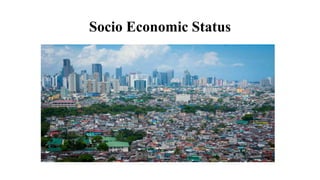
Socio Economic Status
• The Concept of socioeconomic class varies between societies as the
ideas associated with being poor or rich differ based on the collective
experience of individuals.
• Filipinos who are from a developing countries would perceive poverty
differently from countries that are developed/industrialized.
• People falling from social class are bound to experience life differently
in their daily lives. the typical determinants of one’s social status
include income, value of assets and savings, cultural interest and
hobbies, and the economic status of parents.
Social Class around the World
• The British have their 3 class system: Upper, Middle, and Working
classes.
• Indian have their Caste System: Brahmins, Kshatriyas, Vaishyas,
Shudras, and Dalits.
• The world uses the 7 class system: Elite, Established middle class,
Technical middle class, New affluent workers, traditional working
class, emergent service workers, and the precariat.
• Filipinos describe their class system as: Mahirap, medyo mayaman,
sakto lang, and mayaman.
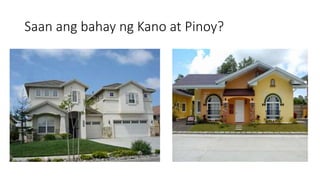
Saan ang bahay ng Kano at Pinoy?
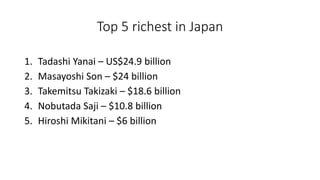
Top 5 richest in Japan
1. Tadashi Yanai – US$24.9 billion
2. Masayoshi Son – $24 billion
3. Takemitsu Takizaki – $18.6 billion
4. Nobutada Saji – $10.8 billion
5. Hiroshi Mikitani – $6 billion
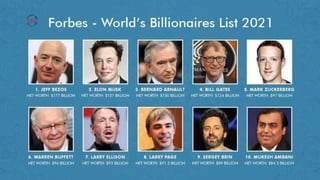
Richest in the World
• As Filipinos, do people from the city have more comfortable
lifestyle than people from the province?
Political Identity
• refers to the set of attitudes and
practices that an individual
adheres to in relation to the
political system and actors within
his/her society.
Political Identity
• Political parties in the Philippines such as
ang Ladlad negotiates for the welfare of
the LGBTQ. The Kabataan partylist
promotes youth empowerment. This
political parties are just some of the
examples of how sectors in our society
use their identities as political vehicles to
negotiates their needs.
• Religion can also offer Political identity
to its followers. Some religion promote
black voting and some religion can alter
some bill like the RH bill
Political Identity
• In a more negative context, an individual
can acquire political identity by
subscribing to a political belief that can
affect his/her lifestyle.
• in a more positive outlook, he/she can
discover political ideology that can
change his perspective on certain things.
• Why do you think Filipinos still elect Politicians that have court cases?
• Are you contented with our current administration? what are your
“what ifs” during, and after the election?
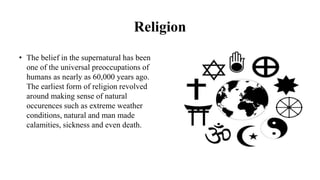
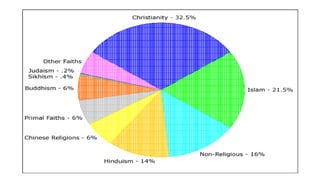
Religion
• The belief in the supernatural has been
one of the universal preoccupations of
humans as nearly as 60,000 years ago.
The earliest form of religion revolved
around making sense of natural
occurences such as extreme weather
conditions, natural and man made
calamities, sickness and even death.
Religion today
• Religion today has evolved to promote far more complex forms of
understanding human nature, the afterlife, and natural events. Some
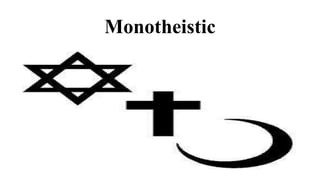
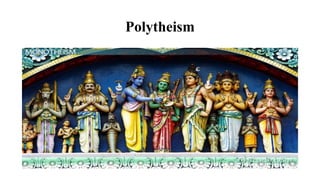
are monotheistic (believing in one God), and the other one is
polytheistic (believe in the existence of multiple Gods).
• Some religion have Gods arranged in hierarchy, while others are with
Gods that equally coexist. what must be noted is that religion is a
mirror of society that affiliates with it.
Monotheistic
Polytheism
• Why do you think people fight for their religion?
• What are your thoughts regarding the Jewish-Palestenian conflict?
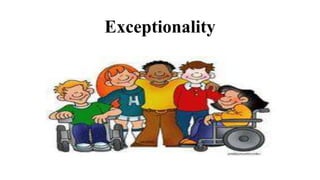
Exceptionality
Exceptionality
• Some individuals do not conform to behavioral or cognitive norms,
not because they intend to deviate from such, but because they are
exceptional.
• The concept of this can be understood in a spectrum of capabilities,
wherein you have geniuses in one extreme and you have disabled and
challenged in other extreme.
• Issues like this can range from having fewer employment
opportunities due to physically disabled to not reaching one’s full
due to lack of advanced mechanism to support and exceptional
talent.
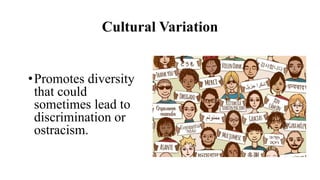
Cultural Variation
•Promotes diversity
that could
sometimes lead to
discrimination or
ostracism.
Ethnocentrism and Xenocentrism
Ethnocentrism
Xenocentrism
Ethnocentrism
• a perspective that promotes that promotes an individual’s culture as
the most efficient and superior; hence, theindividual who exhibits this
feels that his/her culture is the most appropriate as compared with
other cultures.
Xenocentrism
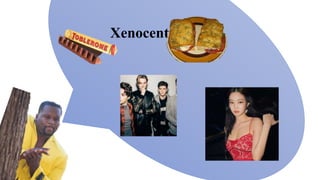
• the preference for the cultural practices of other cultures and
societies, such as how they lived and what they eat, rather than of
one’s social way of life.
• When face with Ethnocentrism and Xenocentrism, you may adapt the
conceptual tool of cultural relativism.
• Cultural relativism - promotes the perspective that cultures
understood in the context of their locality. using this perspective
makes you tolerant of the differeng attitudes and practices of others.
• Ferraro and Andretta advocate that to build emotional resilience we
must understand that other culture or action do not necessarily mean
to offend, but that their actions are guided by their own cultural
norm.
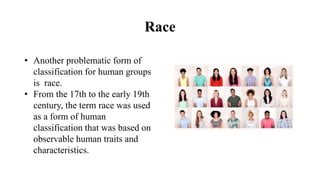
Race
• Another problematic form of
classification for human groups
is race.
• From the 17th to the early 19th
century, the term race was used
as a form of human
classification that was based on
observable human traits and
characteristics.
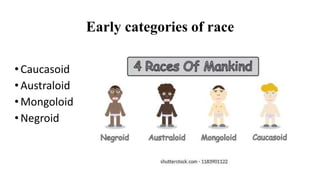
Early categories of race
•Caucasoid
•Australoid
•Mongoloid
•Negroid
Category of Race
• These categories merely reflect the differences in skin, color, size of
skull, height, body frame, and other physical characteristics.
• The clear delineation among these categories is blurred by the
constant intermarriages among people of various ethnic origins
producing offspring who possess mixed traits of the parents.
Examples are individual who have white parents and filipina mother
are sometimes called mestizo/mestiza.
• Due to social context associated with racial groups, discrimination
was further exacerbated. In countries that practice slavery of African
populations, racial discrimination against individuals of african
descent by colonizers became a highly observable phenomenon.
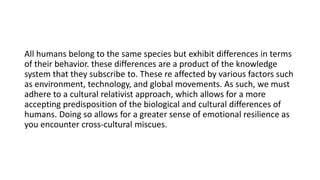
All humans belong to the same species but exhibit differences in terms
of their behavior. these differences are a product of the knowledge
system that they subscribe to. These re affected by various factors such
as environment, technology, and global movements. As such, we must
adhere to a cultural relativist approach, which allows for a more
accepting predisposition of the biological and cultural differences of
humans. Doing so allows for a greater sense of emotional resilience as
you encounter cross-cultural miscues.
Group Assignment
One of the lasting issues that multicultural countries face is racism.
Choose one of the issue below and explain what cause the racism,
what are the measurement done by their government to lessen this
issue, why is it still a prevalent issue around their country, and how
does this affect you as a student?
1. Israel and Palestinian
2. African-American living in the USA
3. Mexicans and the Americans
4. China and the Uygurs
5. Japanese and Foreigners

UCSP 1.pptx

  • 1.
  • 2.
  • 3.
  • 4.
    History • Through constantpractice, these sets of behavior form human tradition, this traditions are passed from one generation to the other.
  • 5.
    Environment • as eachhuman groups experience differing environmental conditions, cultural variations are established. • Example: Alaskan Eskimos have different clothing and culture compared to the Maasais people of Kenya. • Igorot from the highlands have different clothes from people in lowlands
  • 6.
    Quick Activity. Form agroup by row. For 10 minutes, share with one another the following information. 1. Your parents cultural backgrund. (Ilokano, Visayan, Kapampangan) 2. The language and dialects you speak (house and going outside) 3. Your Nationality. After the discussion, summarize your similarities and differences.
  • 7.
  • 8.
    Nationality • Nationality isa legal identification of a person in international law, establishing the person as a subject, a national, of a sovereign state. • It affords the state jurisdiction over the person and affords the person the protection of the state against other states.
  • 9.
    How to bea Peenoise? 3 Steps to become a Pinoy.
  • 10.
  • 11.
  • 12.
  • 13.
    Ethnicity • Within anation are smaller cultural groups that share specific environments, traditions, and histories. • The fact or state of belonging to a social group that has a common national or cultural tradition. • An ethnic group or ethnicity is a grouping of people who identify with each other on the basis of shared attributes that distinguish them from other groups such as a common set of traditions, ancestry, language, history, society, culture, nation, religion, or social treatment within their residing area.
  • 14.
    Social Differences Apart fromvarying cultural backgrounds and ethnicity, human population also experience social differences, which include: 1. Gender 2. Socioeconomic class 3. Political Identity and 4. Religion
  • 15.
    Gender and Sex Whatis the diffrence between Gender and Sex?
  • 16.
    Gender • According tothe World Health Organization, gender “refers to the socially constructed roles, behaviors, activities, and attributes that a given society considers appropriate for men and women.” • Sex refers to the biological characteristic of humans such as male or female. • In some societies, gender becomes a basis of one’s identity as social norms allow for their acceptance or neglect by the majority of population. • In cases of neglect, they create their own communities where they can articulate their thoughts and aspirations.
  • 17.
    There are severaltypes of gender based on person’s orientation.
  • 18.
  • 19.
  • 20.
    LGBTQ • Lesbian –woman who is romantically attracted to another woman • Gay – men attracted to men • Bisexual – attracted to two gender • Transgender – psychological self differs from the social expectation for the physical self • Queer – attracted to multiple genders Nowadays, many people are raising awareness for equal rights, especially amongst the LGBTQ community.
  • 21.
    • What arethe most common misconception that people have regarding people they consider as sexually different?
  • 22.
  • 23.
    Socio Economic Status •The Concept of socioeconomic class varies between societies as the ideas associated with being poor or rich differ based on the collective experience of individuals. • Filipinos who are from a developing countries would perceive poverty differently from countries that are developed/industrialized. • People falling from social class are bound to experience life differently in their daily lives. the typical determinants of one’s social status include income, value of assets and savings, cultural interest and hobbies, and the economic status of parents.
  • 24.
    Social Class aroundthe World • The British have their 3 class system: Upper, Middle, and Working classes. • Indian have their Caste System: Brahmins, Kshatriyas, Vaishyas, Shudras, and Dalits. • The world uses the 7 class system: Elite, Established middle class, Technical middle class, New affluent workers, traditional working class, emergent service workers, and the precariat. • Filipinos describe their class system as: Mahirap, medyo mayaman, sakto lang, and mayaman.
  • 25.
    Saan ang bahayng Kano at Pinoy?
  • 27.
    Top 5 richestin Japan 1. Tadashi Yanai – US$24.9 billion 2. Masayoshi Son – $24 billion 3. Takemitsu Takizaki – $18.6 billion 4. Nobutada Saji – $10.8 billion 5. Hiroshi Mikitani – $6 billion
  • 28.
  • 29.
    • As Filipinos,do people from the city have more comfortable lifestyle than people from the province?
  • 30.
    Political Identity • refersto the set of attitudes and practices that an individual adheres to in relation to the political system and actors within his/her society.
  • 31.
    Political Identity • Politicalparties in the Philippines such as ang Ladlad negotiates for the welfare of the LGBTQ. The Kabataan partylist promotes youth empowerment. This political parties are just some of the examples of how sectors in our society use their identities as political vehicles to negotiates their needs. • Religion can also offer Political identity to its followers. Some religion promote black voting and some religion can alter some bill like the RH bill
  • 32.
    Political Identity • Ina more negative context, an individual can acquire political identity by subscribing to a political belief that can affect his/her lifestyle. • in a more positive outlook, he/she can discover political ideology that can change his perspective on certain things.
  • 33.
    • Why doyou think Filipinos still elect Politicians that have court cases? • Are you contented with our current administration? what are your “what ifs” during, and after the election?
  • 34.
    Religion • The beliefin the supernatural has been one of the universal preoccupations of humans as nearly as 60,000 years ago. The earliest form of religion revolved around making sense of natural occurences such as extreme weather conditions, natural and man made calamities, sickness and even death.
  • 35.
    Religion today • Religiontoday has evolved to promote far more complex forms of understanding human nature, the afterlife, and natural events. Some are monotheistic (believing in one God), and the other one is polytheistic (believe in the existence of multiple Gods). • Some religion have Gods arranged in hierarchy, while others are with Gods that equally coexist. what must be noted is that religion is a mirror of society that affiliates with it.
  • 36.
  • 37.
  • 39.
    • Why doyou think people fight for their religion? • What are your thoughts regarding the Jewish-Palestenian conflict?
  • 40.
  • 41.
    Exceptionality • Some individualsdo not conform to behavioral or cognitive norms, not because they intend to deviate from such, but because they are exceptional. • The concept of this can be understood in a spectrum of capabilities, wherein you have geniuses in one extreme and you have disabled and challenged in other extreme. • Issues like this can range from having fewer employment opportunities due to physically disabled to not reaching one’s full due to lack of advanced mechanism to support and exceptional talent.
  • 42.
    Cultural Variation •Promotes diversity thatcould sometimes lead to discrimination or ostracism.
  • 43.
  • 44.
  • 45.
  • 46.
    Ethnocentrism • a perspectivethat promotes that promotes an individual’s culture as the most efficient and superior; hence, theindividual who exhibits this feels that his/her culture is the most appropriate as compared with other cultures.
  • 47.
    Xenocentrism • the preferencefor the cultural practices of other cultures and societies, such as how they lived and what they eat, rather than of one’s social way of life.
  • 48.
    • When facewith Ethnocentrism and Xenocentrism, you may adapt the conceptual tool of cultural relativism. • Cultural relativism - promotes the perspective that cultures understood in the context of their locality. using this perspective makes you tolerant of the differeng attitudes and practices of others. • Ferraro and Andretta advocate that to build emotional resilience we must understand that other culture or action do not necessarily mean to offend, but that their actions are guided by their own cultural norm.
  • 49.
    Race • Another problematicform of classification for human groups is race. • From the 17th to the early 19th century, the term race was used as a form of human classification that was based on observable human traits and characteristics.
  • 50.
    Early categories ofrace •Caucasoid •Australoid •Mongoloid •Negroid
  • 51.
    Category of Race •These categories merely reflect the differences in skin, color, size of skull, height, body frame, and other physical characteristics. • The clear delineation among these categories is blurred by the constant intermarriages among people of various ethnic origins producing offspring who possess mixed traits of the parents. Examples are individual who have white parents and filipina mother are sometimes called mestizo/mestiza. • Due to social context associated with racial groups, discrimination was further exacerbated. In countries that practice slavery of African populations, racial discrimination against individuals of african descent by colonizers became a highly observable phenomenon.
  • 52.
    All humans belongto the same species but exhibit differences in terms of their behavior. these differences are a product of the knowledge system that they subscribe to. These re affected by various factors such as environment, technology, and global movements. As such, we must adhere to a cultural relativist approach, which allows for a more accepting predisposition of the biological and cultural differences of humans. Doing so allows for a greater sense of emotional resilience as you encounter cross-cultural miscues.
  • 53.
    Group Assignment One ofthe lasting issues that multicultural countries face is racism. Choose one of the issue below and explain what cause the racism, what are the measurement done by their government to lessen this issue, why is it still a prevalent issue around their country, and how does this affect you as a student? 1. Israel and Palestinian 2. African-American living in the USA 3. Mexicans and the Americans 4. China and the Uygurs 5. Japanese and Foreigners

Editor's Notes

  • #3 Paano ba tayo naging unique?
  • #4 Ang dalawang factors na bumuo sa ating pagkatao ay ang lugar na ating kinalakihan at ang ating history ng lugar na iyon. Cultural at social differences Lets take for example:
  • #8 What makes us unique based on our Cultural Differences
  • #9 Is the legal relationship that binds people and its country Nationality can be acquired in two ways
  • #10 Pano nga ba maging isang mamayan ng ating bansa. Gusto mo man o hindi
  • #11 Soli or soil=lupa Dito ka pinanganak sa bansa natin. Nanay at tatay mo ay parehas na noypi
  • #12 Sanguin latin of = blood Naturalization. Or your parent decide what will be your nationality. Bumabagsak sa mga may tatay na kano, or mother na foreigner
  • #14 Sa isang bansa maroon pang mga ibat Ibang cultural groups. Ang tawag ditto ay ang mga ethnic goups Ang bansa natin ay may mahigit kumulang 180 indigenous ethnic groups. Ang mga karamihan dito ay ang mga Tagalog, Cebuano, Ilocano, Bicolano, Kapampangan, Maranao, Maguindanao, and Tausug. While ang mga minority naman ay ang mga Ifugao, Ibanag, Gaddang at madami pa
  • #15 Bukod sa Cultural difference, maroon din tayong Social Differences
  • #16 Perhaps ang isa sa pinakacontroversial na issue patubgkol sa social differences ay ang Gender. Tanong! Ano ang pagkakaiba ng Gender sa Sex? Bibgyan ko kayo ng isang minute. Sex = biological, kung etits ba yan or kepyang. Naka base sa human anatomy natin Gender= kung ano ba ang socially constructedna characteristic mo, or kung masculine or feminine ka ba regardless of external genitalia
  • #19 Sexually and romantically na attracted sa kanayang opposite sex. Ang pinaka common na type ng gender.
  • #20 If you are attracted to your same sex May consist of Yaoi or Yuri
  • #21 Lesbian – woman who is romantically attracted to another woman Gay – men attracted to men Bisexual – attracted to two gender Transgender – psychological self differs from the social expectation for the physical self Queer – attracted to multiple genders Before we continue, I will ask you whats your stand upon the Pemberton and Laude issue.
  • #23 Ang pag distinguish natin mayaman o mahirap ay nagiiba base kung saan ka lumaki or saan ka nakatira example
  • #24 Ang pag distinguish natin mayaman o mahirap ay nagiiba base kung saan ka lumaki or saan ka nakatira example
  • #26 1 minute to think kung ano ang bahay ng middle class na noypi at ng middle class na kano. Ibat ibang bansa may ibat ibang pagkakaibang pananaw kung ano ba ang experience nila sa kanilang socio economic status. Kung mayaman ka na sa third world country, tapos pumunta ka sa Japan or Amerika baka middle class ka nalang. Kagaya nalang neto.
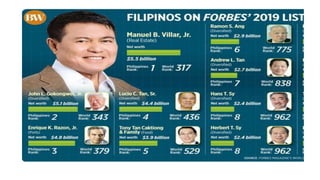
  • #27 Eto ang list ng pinakamayayaman na tao sa bansa natin. Hindi joke yang pera na yan, pwede mo nang gawin lahat ng gusto mo. Pero I compare natin sila sa mga big boiz sa japan at amerika
  • #28 Yanai = Owner of Uniqlo Son = CEO of Softbank Takizakaki = Keyence Corporation is a direct sales organization that develops and manufactures automation sensors, vision systems, barcode readers, laser markers, measuring instruments, and digital Saji = Suntory Beverage & Food Limited is a Japanese multinational brewing and distilling company group. Established in 1899, it is one of the oldest companies in the distribution of alcoholic beverages in Japan, and makes Japanese whisky. Ang pinkamayaman sa atin ay nasa pang anim na pwesto, hindi na masama. I check natin ang murica
  • #29 Bezos – amazon Musk – Tesla Arnault - French holding multinational corporation and conglomerate specializing in luxury goods, Louis Vuitton, Dior, Tiffany & Co Gates – Microsoft Mark – FB Buffet – company Berkshire Hathaway that runs Geico, Duracell, Dairy Queen and 60 more U.S company Elllison - Oracle do exactly? They make enterprise software, most notably a database management system, for UNIX, Linux, and Windows operating systems. Page – and Sergey Brin are the CEO and president of Google's parent company, Alphabet,  Ambani -  chairman and managing director of the Indian conglomerate Reliance Industries Limited Tanggalin lang natin si 4,5,6 Pati si Yanai-san ay malayo sa listahan. Pinapatunayan ng listahan na to na ibat iba ang form ng mahihirap at mayayaman sa bansa. Source neto ay forbes
  • #31 Kung ano ba ang pinapanigan mo na political stand sa ating society. Sa pilipinas kasalukuyan itong nahahati sa tatlo
  • #32 Kung ano ba ang pinapanigan mo na political stand sa ating society. Sa pilipinas kasalukuyan itong nahahati sa tatlo
  • #33 Kung ano ba ang pinapanigan mo na political stand sa ating society. Sa pilipinas kasalukuyan itong nahahati sa tatlo
  • #35 Bago pa nagkaroon ng catholic, protestant. Ang ating ninuno ay naniniwala sa mga misteryosong nakapalibot sa kanila, mga di maipaliwanag na sakuna kagaya ng malakas na bagyo, pagyanig sa lupa, mga salot na walang katapusan at pati na ang kamatayan. Kumidlat ng malakas, at umulan sila ay naniniwalang kagagawan ito ni zeus.
  • #37 Pero ngayon ang religion ay nahahati na sa dalawa ang Monotheistic at polytheistic Tanong!? Ano ang pagkakaiba ng motheistic sa polytheistic Monotheism is the belief in one god. A narrower definition of monotheism is the belief in the existence of only one god that created the world, is omnipotent, omnipresent and omniscient, and intervenes in the world.
  • #38 relating to or characterized by belief in or worship of more than one god. Some example of polytheistic religion are Hinduism and Buddhism
  • #41 Basically may mga tao na hindi nakakasabay sa uso, hindi dahil ayaw nila kundi sila ay exceptional. Pwede nating malaman kung exceptional ang isang tao kung masyado siyang matalino, and kung ang isang tao din ay mahina umintindi.
  • #42 Basically may mga tao na hindi nakakasabay sa uso, hindi dahil ayaw nila kundi sila ay exceptional. Pwede nating malaman kung exceptional ang isang tao kung masyado siyang matalino, and kung ang isang tao din ay mahina umintindi.
  • #43 Dahil masyado tayong pagkakaiba ay di maiiwasan na pag awayan natin ang mga bagay na hindi natin pagkakapareho.
  • #44 Stemming from the cultural variation we got ethno and xeno. Tanong! Ano ang main differences ng dalawa.
  • #45 Ethnocenrism naman kung tingin mo sa culture natin ay mas nakaka angat kesa sa ibang bansa. Na amaze ka sa Spolarium ng E-Heads kesa sa foreign singers Mas prefer mo ang ka sexyhan ni Ivana kesa kay Gal Gadot Tuwang tuwa ka kay hamerman pero hate mo Avengers
  • #46 Xenocentrism means mas gusto mo ang mga pagkain, culture, music, artist etc ng ibang bansa kesa sa sarili mong bansa. You prefer toblerone kesa barnuts Mas nagagndahan ka sa Cecelia ng the vamps kesa sa Pagtingin ng ben ben Ini Statn mo si Jennie ng blackpink pero hate na hate mo artistang pinoy Kung feeling mo ganyan ibig sabihin Xenocentric ka