HUMAN VARIATION
UCSP Lesson 1
NATIONALITY AND ETHNICITY
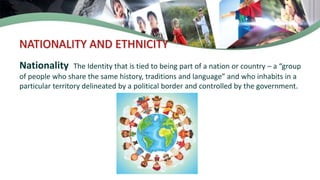
Nationality The Identity that is tied to being part of a nation or country – a “group
of people who share the same history, traditions and language” and who inhabits in a
particular territory delineated by a political border and controlled by the government.
Ethnic Groups
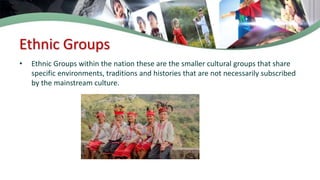
• Ethnic Groups within the nation these are the smaller cultural groups that share
specific environments, traditions and histories that are not necessarily subscribed
by the mainstream culture.
Social Differences
• Social differences are the differences and discriminations that occurs in the society.
• Gender, ethnicity, race, class, and age are differences we experience in our social
life.
Social Differences
• Gender refers to the socially constructed roles, behaviors, activities and attributes
that a given society considers appropriate form men and women. Sex biological
characteristics of human such as male or female.
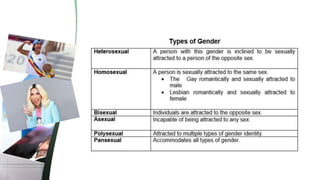
Gender Identities
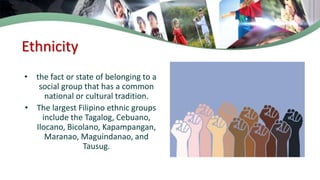
Ethnicity
• the fact or state of belonging to a
social group that has a common
national or cultural tradition.
• The largest Filipino ethnic groups
include the Tagalog, Cebuano,
Ilocano, Bicolano, Kapampangan,
Maranao, Maguindanao, and
Tausug.
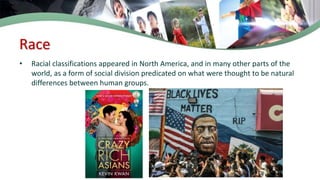
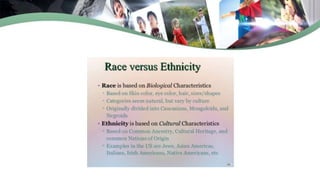
Race
• Racial classifications appeared in North America, and in many other parts of the
world, as a form of social division predicated on what were thought to be natural
differences between human groups.
Age differences
• Ageism
• prejudice or discrimination on the grounds of a person's age.
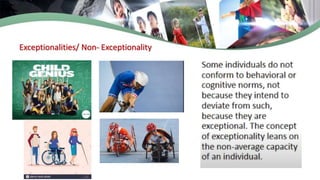
Exceptionalities/ Non- Exceptionality
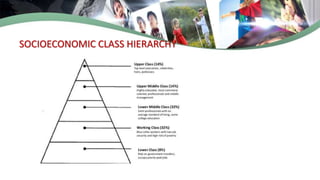
SOCIOECONOMIC CLASS
• the social standing or class of an individual or group. It is often measured as a
combination of education, income and occupation.
SOCIOECONOMIC CLASS HIERARCHY
Political Identity
• Political Identity refers to the set of attitudes and practices that an individual
adheres to in relation to the political systems and actors within his or her society.
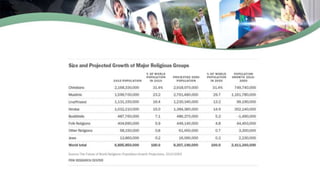
RELIGION
• Religion the belief in and worship of a superhuman controlling power especially a
personal God or Gods. Monotheistic believing in the existence of one God.
Polytheistic believing in the existence of multiple Gods.
CULTURAL VARIATION
• Cultural Variation The variation in human conditions promotes diversity and
plurality in cultural traditions. This could lead to discrimination and ostracism.
• Ethnocentrism Is perspective that promotes an individual’s culture as the most
efficient and superior hence the individual who exhibit ethnocentrism feels that his
or her culture is the most appropriate as compared to other culture
Cultural Relativism
• Promotes a perspective that cultures must be understood in the
context of their locality. Using this perspective makes you tolerant of
the differing attitudes and practices of others.
• For example, instead of thinking, “Fried crickets are disgusting! ” one
should instead ask, “Why do some cultures eat fried insects?”. You may
learn that fried crickets or grasshoppers are full of protein and in
Mexico, it is famous Oaxaca regional cuisine and have been eaten for
thousands of years as a healthy food source!

LESSON-1-HUMAN-VARIATION.pptx

  • 1.
  • 2.
    NATIONALITY AND ETHNICITY NationalityThe Identity that is tied to being part of a nation or country – a “group of people who share the same history, traditions and language” and who inhabits in a particular territory delineated by a political border and controlled by the government.
  • 3.
    Ethnic Groups • EthnicGroups within the nation these are the smaller cultural groups that share specific environments, traditions and histories that are not necessarily subscribed by the mainstream culture.
  • 4.
    Social Differences • Socialdifferences are the differences and discriminations that occurs in the society. • Gender, ethnicity, race, class, and age are differences we experience in our social life.
  • 5.
    Social Differences • Genderrefers to the socially constructed roles, behaviors, activities and attributes that a given society considers appropriate form men and women. Sex biological characteristics of human such as male or female.
  • 7.
  • 8.
    Ethnicity • the factor state of belonging to a social group that has a common national or cultural tradition. • The largest Filipino ethnic groups include the Tagalog, Cebuano, Ilocano, Bicolano, Kapampangan, Maranao, Maguindanao, and Tausug.
  • 9.
    Race • Racial classificationsappeared in North America, and in many other parts of the world, as a form of social division predicated on what were thought to be natural differences between human groups.
  • 11.
    Age differences • Ageism •prejudice or discrimination on the grounds of a person's age.
  • 12.
  • 13.
    SOCIOECONOMIC CLASS • thesocial standing or class of an individual or group. It is often measured as a combination of education, income and occupation.
  • 14.
  • 15.
    Political Identity • PoliticalIdentity refers to the set of attitudes and practices that an individual adheres to in relation to the political systems and actors within his or her society.
  • 16.
    RELIGION • Religion thebelief in and worship of a superhuman controlling power especially a personal God or Gods. Monotheistic believing in the existence of one God. Polytheistic believing in the existence of multiple Gods.
  • 19.
    CULTURAL VARIATION • CulturalVariation The variation in human conditions promotes diversity and plurality in cultural traditions. This could lead to discrimination and ostracism.
  • 20.
    • Ethnocentrism Isperspective that promotes an individual’s culture as the most efficient and superior hence the individual who exhibit ethnocentrism feels that his or her culture is the most appropriate as compared to other culture
  • 21.
    Cultural Relativism • Promotesa perspective that cultures must be understood in the context of their locality. Using this perspective makes you tolerant of the differing attitudes and practices of others. • For example, instead of thinking, “Fried crickets are disgusting! ” one should instead ask, “Why do some cultures eat fried insects?”. You may learn that fried crickets or grasshoppers are full of protein and in Mexico, it is famous Oaxaca regional cuisine and have been eaten for thousands of years as a healthy food source!