T Y P I C A L A N D
AT Y P I C A L
D E V E L O P M E N T
A M O N G C H I L D R E N
P RE SE N T E RS :
B A D I A N G O, S H A I N A M AY
DA D O R , C H E L S E A
I N S U M A J E O M A R
M AG N AT E , S U N N Y B O Y
M O R A L E S , C H E R I E S A N N
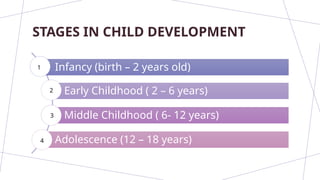
STAGES IN CHILD DEVELOPMENT
Infancy (birth – 2 years old)
Early Childhood ( 2 – 6 years)
Middle Childhood ( 6- 12 years)
Adolescence (12 – 18 years)
1
2
3
4
INFANCY (BIRTH – 2 YEARS OLD)
• Physical development: This includes the development of motor skills like crawling,
standing, and walking.
• Cognitive development: Infants start to develop basic cognitive functions such as
recognizing faces, understanding object permanence, and exploring their
environment.
• Emotional development: Infants begin to form attachments and express basic
emotions like joy, anger, and distress.
• Social development: Babies start to develop social bonds with their caregivers and
show preferences for familiar faces.
EARLY CHILDHOOD ( 2 – 6 YEARS)
• Physical development: Children continue to refine their motor skills and develop
more control over their movements.
• Cognitive development: They begin to engage in pretend play, language
development accelerates, and they start to understand basic concepts like numbers
and shapes.
• Emotional development: Children learn to identify and manage their emotions more
effectively, often through social interactions and guidance.
• Social development: They learn to interact with peers, share, take turns, and
develop early social skills such as empathy and cooperation.
MIDDLE CHILDHOOD ( 6- 12 YEARS)
• Physical development: They can dress, eat, and wash mostly independently, and
may start to develop interests in sports and other physical activities.
• Cognitive development: They develop more advanced thinking abilities, critical
reasoning, and problem-solving skills. Academic learning becomes more structured
and complex.
• Emotional development: Children begin to develop a stronger sense of self and self-
esteem.
• Social development: They establish more complex relationships with peers, learn to
navigate social hierarchies, and develop a better understanding of social rules and
expectations.
ADOLESCENCE (12 – 18 YEARS)
• Physical development: Adolescents undergo significant physical changes as they
enter puberty, including hormonal changes, and developing body hair.
• Cognitive development: They start to think more abstractly and critically, develop
their own values and beliefs, and begin planning.
• Emotional development: Adolescents experience intense emotional changes and
strive for independence, often leading to identity formation and exploration of
relationships.
• Social development: They establish more mature and complex relationships, develop
a stronger sense of identity, and seek to establish their place within peer groups and
society at large.

Typical and Atypical Development among Children.pptx

  • 1.
    T Y PI C A L A N D AT Y P I C A L D E V E L O P M E N T A M O N G C H I L D R E N P RE SE N T E RS : B A D I A N G O, S H A I N A M AY DA D O R , C H E L S E A I N S U M A J E O M A R M AG N AT E , S U N N Y B O Y M O R A L E S , C H E R I E S A N N
  • 2.
    STAGES IN CHILDDEVELOPMENT Infancy (birth – 2 years old) Early Childhood ( 2 – 6 years) Middle Childhood ( 6- 12 years) Adolescence (12 – 18 years) 1 2 3 4
  • 3.
    INFANCY (BIRTH –2 YEARS OLD) • Physical development: This includes the development of motor skills like crawling, standing, and walking. • Cognitive development: Infants start to develop basic cognitive functions such as recognizing faces, understanding object permanence, and exploring their environment. • Emotional development: Infants begin to form attachments and express basic emotions like joy, anger, and distress. • Social development: Babies start to develop social bonds with their caregivers and show preferences for familiar faces.
  • 4.
    EARLY CHILDHOOD (2 – 6 YEARS) • Physical development: Children continue to refine their motor skills and develop more control over their movements. • Cognitive development: They begin to engage in pretend play, language development accelerates, and they start to understand basic concepts like numbers and shapes. • Emotional development: Children learn to identify and manage their emotions more effectively, often through social interactions and guidance. • Social development: They learn to interact with peers, share, take turns, and develop early social skills such as empathy and cooperation.
  • 5.
    MIDDLE CHILDHOOD (6- 12 YEARS) • Physical development: They can dress, eat, and wash mostly independently, and may start to develop interests in sports and other physical activities. • Cognitive development: They develop more advanced thinking abilities, critical reasoning, and problem-solving skills. Academic learning becomes more structured and complex. • Emotional development: Children begin to develop a stronger sense of self and self- esteem. • Social development: They establish more complex relationships with peers, learn to navigate social hierarchies, and develop a better understanding of social rules and expectations.
  • 6.
    ADOLESCENCE (12 –18 YEARS) • Physical development: Adolescents undergo significant physical changes as they enter puberty, including hormonal changes, and developing body hair. • Cognitive development: They start to think more abstractly and critically, develop their own values and beliefs, and begin planning. • Emotional development: Adolescents experience intense emotional changes and strive for independence, often leading to identity formation and exploration of relationships. • Social development: They establish more mature and complex relationships, develop a stronger sense of identity, and seek to establish their place within peer groups and society at large.