J
Hydroelectric Dam
.mgOtftttifi

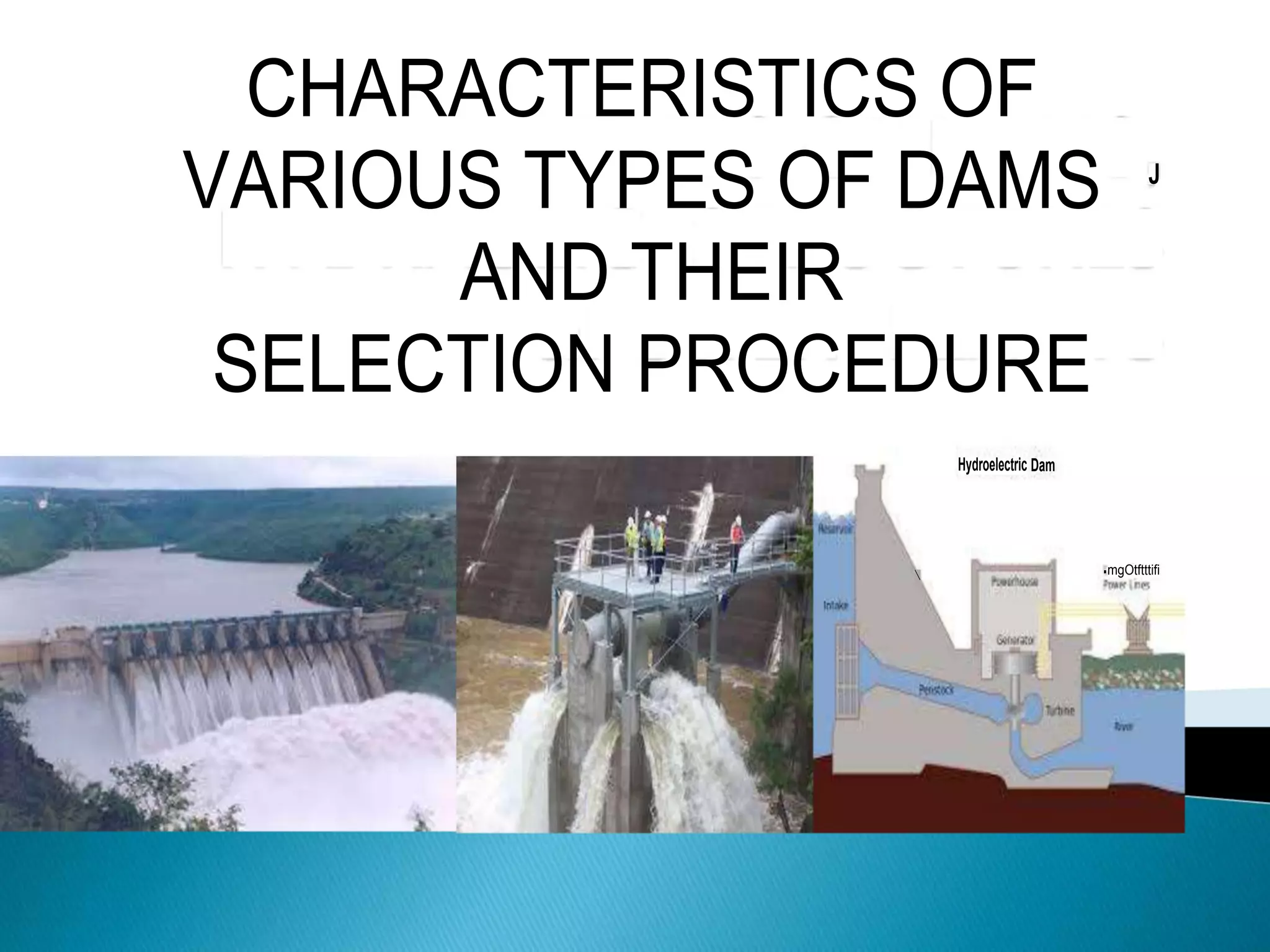
CHARACTERISTICS OF
VARIOUS TYPES OF DAMS
AND THEIR
SELECTION PROCEDURE
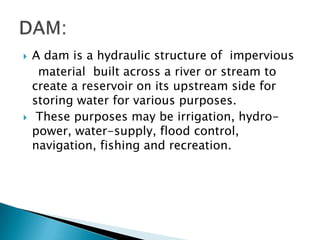
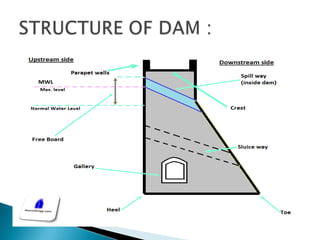
 A dam is a hydraulic structure of impervious
material built across a river or stream to
create a reservoir on its upstream side for
storing water for various purposes.
 These purposes may be irrigation, hydro-
power, water-supply, flood control,
navigation, fishing and recreation.
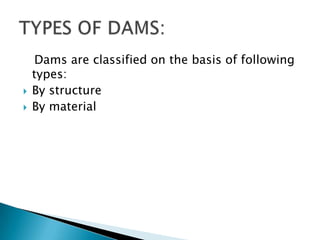
Dams are classified on the basis of following
types:
 By structure
 By material
 Arch dams
 Gravity dams
 Arch – Gravity dams
 Embankment dams
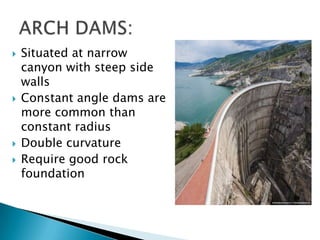
 Situated at narrow
canyon with steep side
walls
 Constant angle dams are
more common than
constant radius
 Double curvature
 Require good rock
foundation
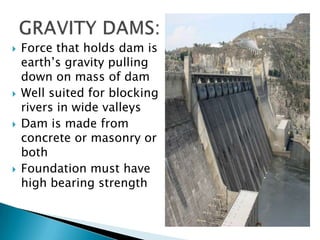
 Force that holds dam is
earth’s gravity pulling
down on mass of dam
 Well suited for blocking
rivers in wide valleys
 Dam is made from
concrete or masonry or
both
 Foundation must have
high bearing strength
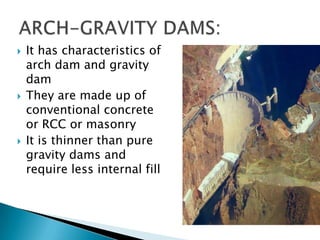
 It has characteristics of
arch dam and gravity
dam
 They are made up of
conventional concrete
or RCC or masonry
 It is thinner than pure
gravity dams and
require less internal fill
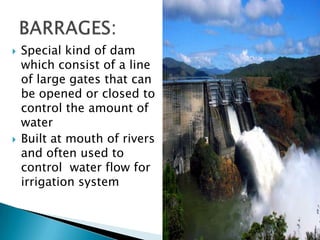
 Special kind of dam
which consist of a line
of large gates that can
be opened or closed to
control the amount of
water
 Built at mouth of rivers
and often used to
control water flow for
irrigation system
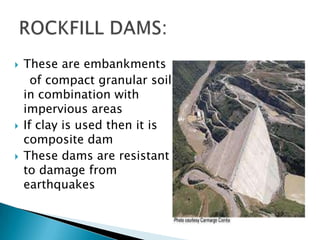
 These are embankments
of compact granular soil
in combination with
impervious areas
 If clay is used then it is
composite dam
 These dams are resistant
to damage from
earthquakes
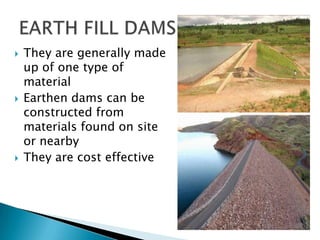
 They are generally made
up of one type of
material
 Earthen dams can be
constructed from
materials found on site
or nearby
 They are cost effective
 STEEL DAMS
 TIMBER DAMS
•Steel dam is a type of dam that is
made of steel, rather than common
masonry ,earthworks , concrete or
construction material
•Steel dams - an experiment which
failed
•Maintenance cost is high due to rust
and corrosion
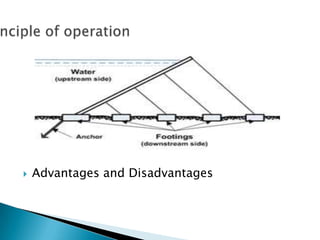
 Advantages and Disadvantages
 Timber dams were
widely used in early
part of industrial
revolution and rarely
used now
 Suitable location for
construction
 In order to maintain
water retension
property they must be
kept wet
 Cofferdam : a barrier usually temporary,
constructed to exclude water from area that
is normally submerged
 Natural dams : created by natural geological
forces. Volcanic dams are formed when
erupted lava intercept path of a stream.
Natural disasters like earthquake and
landslides frequently create landslide dams in
mountainous region. Eg. Usoi dam in
Tajikistan
Hydroelectricity
• Hydroelectricity is the term referring to
electricity generated by hydropower; the
production of electrical power through the
use of the gravitational force of falling or
flowing water.
• It is the most widely used form of renewable
energy, accounting for 16 percent of global
electricity generation 3,427 terawatt-hours
of electricity production in 2010.
• Hydropower is produced in 150 countries,
with the Asia-Pacific region generating 32
percent of global hydropower in 2010. China
is the largest hydroelectricity producer.
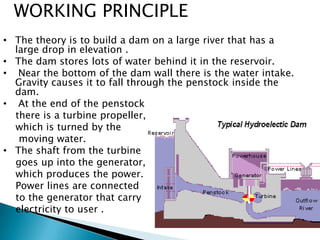
• The theory is to build a dam on a large river that has a
large drop in elevation .
• The dam stores lots of water behind it in the reservoir.
• Near the bottom of the dam wall there is the water intake.
Gravity causes it to fall through the penstock inside the
dam.
• At the end of the penstock
there is a turbine propeller,
which is turned by the
moving water.
• The shaft from the turbine
goes up into the generator,
which produces the power.
Power lines are connected
to the generator that carry
electricity to user .
WORKING PRINCIPLE
Pumped storage: Reusing
water for peak electricity
demand
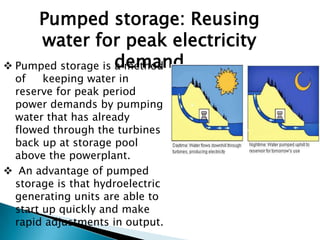
 Pumped storage is a method
of keeping water in
reserve for peak period
power demands by pumping
water that has already
flowed through the turbines
back up at storage pool
above the powerplant.
 An advantage of pumped
storage is that hydroelectric
generating units are able to
start up quickly and make
rapid adjustments in output.
Disadvantages of big Hydroelectricity
plant
• Ecosystem damage and
loss of land
• Siltation and flow shortage
• Relocation of local people
• Failure risks
THANK YOU

typesofdamsPPT

  • 1.
    J Hydroelectric Dam .mgOtftttifi CHARACTERISTICS OF VARIOUSTYPES OF DAMS AND THEIR SELECTION PROCEDURE
  • 2.
     A damis a hydraulic structure of impervious material built across a river or stream to create a reservoir on its upstream side for storing water for various purposes.  These purposes may be irrigation, hydro- power, water-supply, flood control, navigation, fishing and recreation.
  • 4.
    Dams are classifiedon the basis of following types:  By structure  By material
  • 5.
     Arch dams Gravity dams  Arch – Gravity dams  Embankment dams
  • 6.
     Situated atnarrow canyon with steep side walls  Constant angle dams are more common than constant radius  Double curvature  Require good rock foundation
  • 7.
     Force thatholds dam is earth’s gravity pulling down on mass of dam  Well suited for blocking rivers in wide valleys  Dam is made from concrete or masonry or both  Foundation must have high bearing strength
  • 8.
     It hascharacteristics of arch dam and gravity dam  They are made up of conventional concrete or RCC or masonry  It is thinner than pure gravity dams and require less internal fill
  • 9.
     Special kindof dam which consist of a line of large gates that can be opened or closed to control the amount of water  Built at mouth of rivers and often used to control water flow for irrigation system
  • 10.
     These areembankments of compact granular soil in combination with impervious areas  If clay is used then it is composite dam  These dams are resistant to damage from earthquakes
  • 11.
     They aregenerally made up of one type of material  Earthen dams can be constructed from materials found on site or nearby  They are cost effective
  • 12.
     STEEL DAMS TIMBER DAMS
  • 13.
    •Steel dam isa type of dam that is made of steel, rather than common masonry ,earthworks , concrete or construction material •Steel dams - an experiment which failed •Maintenance cost is high due to rust and corrosion
  • 14.
     Advantages andDisadvantages
  • 15.
     Timber damswere widely used in early part of industrial revolution and rarely used now  Suitable location for construction  In order to maintain water retension property they must be kept wet
  • 16.
     Cofferdam :a barrier usually temporary, constructed to exclude water from area that is normally submerged  Natural dams : created by natural geological forces. Volcanic dams are formed when erupted lava intercept path of a stream. Natural disasters like earthquake and landslides frequently create landslide dams in mountainous region. Eg. Usoi dam in Tajikistan
  • 17.
    Hydroelectricity • Hydroelectricity isthe term referring to electricity generated by hydropower; the production of electrical power through the use of the gravitational force of falling or flowing water. • It is the most widely used form of renewable energy, accounting for 16 percent of global electricity generation 3,427 terawatt-hours of electricity production in 2010. • Hydropower is produced in 150 countries, with the Asia-Pacific region generating 32 percent of global hydropower in 2010. China is the largest hydroelectricity producer.
  • 18.
    • The theoryis to build a dam on a large river that has a large drop in elevation . • The dam stores lots of water behind it in the reservoir. • Near the bottom of the dam wall there is the water intake. Gravity causes it to fall through the penstock inside the dam. • At the end of the penstock there is a turbine propeller, which is turned by the moving water. • The shaft from the turbine goes up into the generator, which produces the power. Power lines are connected to the generator that carry electricity to user . WORKING PRINCIPLE
  • 19.
    Pumped storage: Reusing waterfor peak electricity demand  Pumped storage is a method of keeping water in reserve for peak period power demands by pumping water that has already flowed through the turbines back up at storage pool above the powerplant.  An advantage of pumped storage is that hydroelectric generating units are able to start up quickly and make rapid adjustments in output.
  • 20.
    Disadvantages of bigHydroelectricity plant • Ecosystem damage and loss of land • Siltation and flow shortage • Relocation of local people • Failure risks
  • 21.