TYPESOF
SPEECH
STYLE
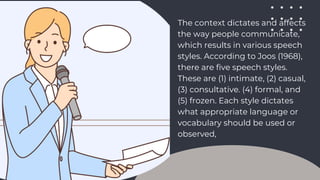
The context dictates and affects
the way people communicate,
which results in various speech
styles. According to Joos (1968),
there are five speech styles.
These are (1) intimate, (2) casual,
(3) consultative. (4) formal, and
(5) frozen. Each style dictates
what appropriate language or
vocabulary should be used or
observed,
Intimate
This style is private, which
occurs between or
among close family
members or individuals.
The language used in this
style may not be shared
in public.
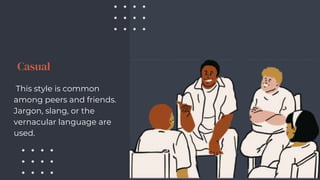
Casual
This style is common
among peers and friends.
Jargon, slang, or the
vernacular language are
used.
Consultative
This style is the standard one.
Professional or mutually acceptable
language is a must in this style.
Examples of situations are
communication between teachers
and students, employers and
employees, doctor and patient,
judge and lawyer, or President and
his/her constituents
Formal
This style is used in formal
settings. Unlike the
consultative style, this is one-
way. Examples are sermons by
priests and ministers, State of
the Nation Address of the
President. formal speeches, or
pronouncements by judges.
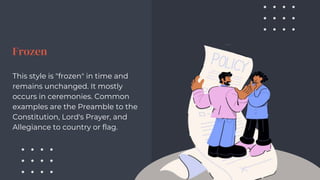
Frozen
This style is "frozen" in time and
remains unchanged. It mostly
occurs in ceremonies. Common
examples are the Preamble to the
Constitution, Lord's Prayer, and
Allegiance to country or flag.

Types of Speech Style

  • 1.
  • 2.
    The context dictatesand affects the way people communicate, which results in various speech styles. According to Joos (1968), there are five speech styles. These are (1) intimate, (2) casual, (3) consultative. (4) formal, and (5) frozen. Each style dictates what appropriate language or vocabulary should be used or observed,
  • 3.
    Intimate This style isprivate, which occurs between or among close family members or individuals. The language used in this style may not be shared in public.
  • 4.
    Casual This style iscommon among peers and friends. Jargon, slang, or the vernacular language are used.
  • 5.
    Consultative This style isthe standard one. Professional or mutually acceptable language is a must in this style. Examples of situations are communication between teachers and students, employers and employees, doctor and patient, judge and lawyer, or President and his/her constituents
  • 6.
    Formal This style isused in formal settings. Unlike the consultative style, this is one- way. Examples are sermons by priests and ministers, State of the Nation Address of the President. formal speeches, or pronouncements by judges.
  • 7.
    Frozen This style is"frozen" in time and remains unchanged. It mostly occurs in ceremonies. Common examples are the Preamble to the Constitution, Lord's Prayer, and Allegiance to country or flag.