Ramanand karwa
LLB 3rd
Types of Evidence
Evidence
The word ‘Evidence’ has been derived from
the Latin word ‘evidence’ which implies to
show distinctly, to make clear to view or sight,
to discover clearly, to make plainly certain, to
certain, to ascertain, to prove.
Different Forms of Evidence
(a) Oral Evidence–
Section 60 of the Indian Evidence Act, 1872 prescribed the
provision of recording oral evidence. All those statements
which the court permits or expects the witnesses to make in his
presence regarding the truth of the facts are called Oral
Evidence. Oral Evidence is that evidence which the witness has
personally seen or heard.
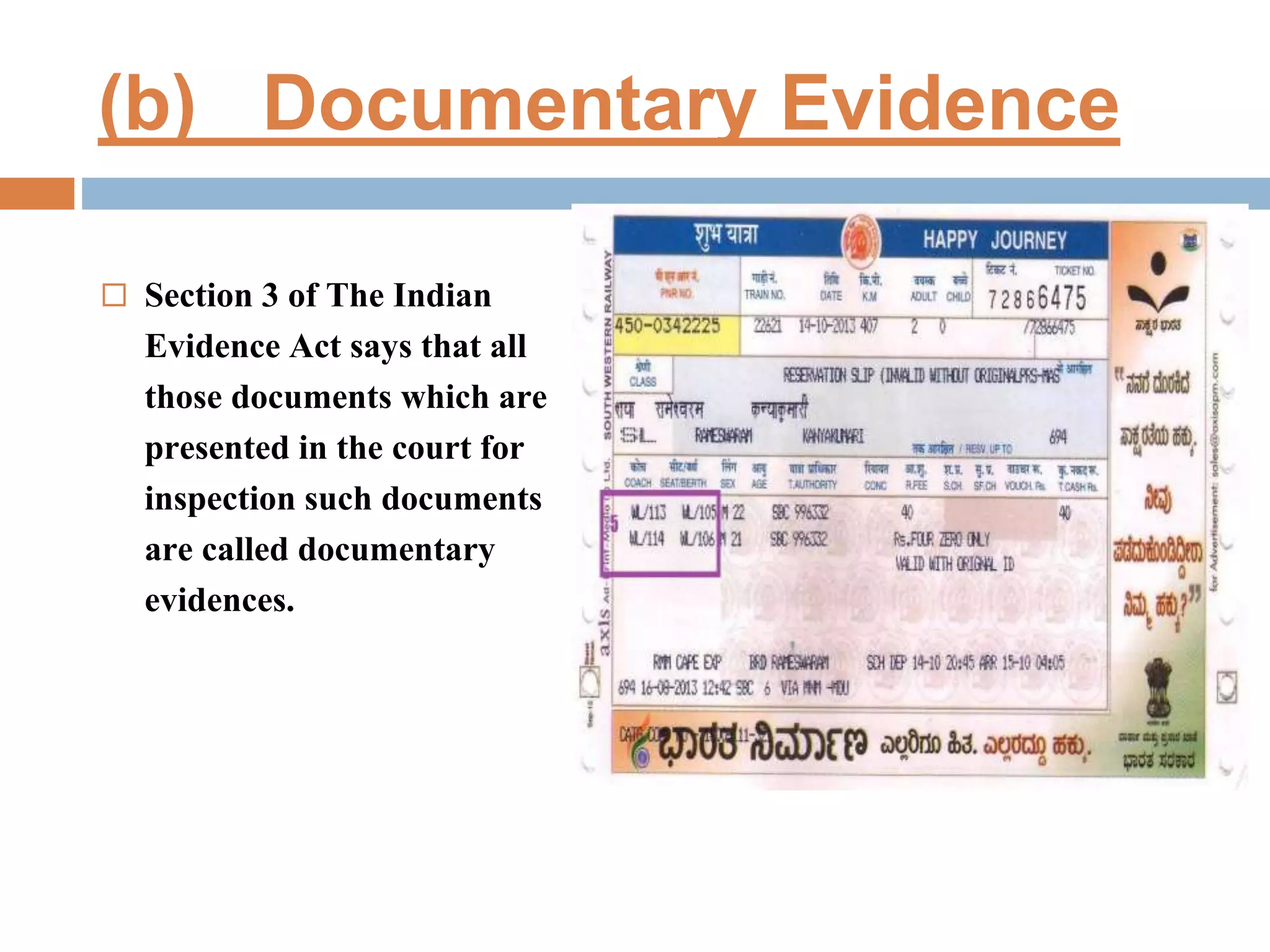
(b) Documentary Evidence
 Section 3 of The Indian
Evidence Act says that all
those documents which are
presented in the court for
inspection such documents
are called documentary
evidences.
(C) Circumstantial Evidence:
A form of evidence that allows a judge or jury to infer or accept a fact
based on a set of known circumstances. A fact that can be used to infer
another fact.
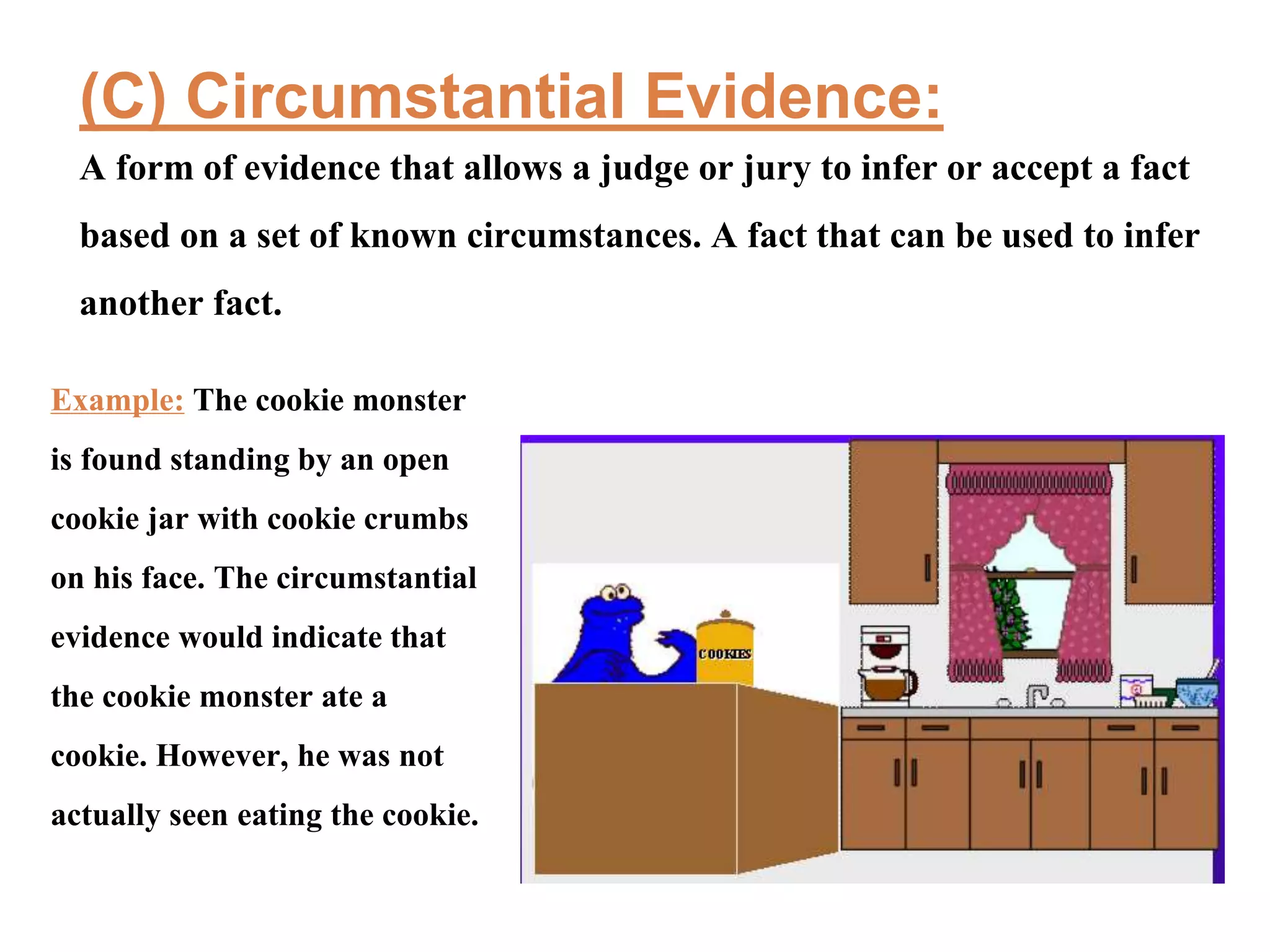
Example: The cookie monster
is found standing by an open
cookie jar with cookie crumbs
on his face. The circumstantial
evidence would indicate that
the cookie monster ate a
cookie. However, he was not
actually seen eating the cookie.
COOKIES
 (D) Direct Evidence:
An eyewitness has seen or heard the alleged events, or some real
evidence is provided which proves a fact in question. (The fact in
question must prove the guilt of the accused.)
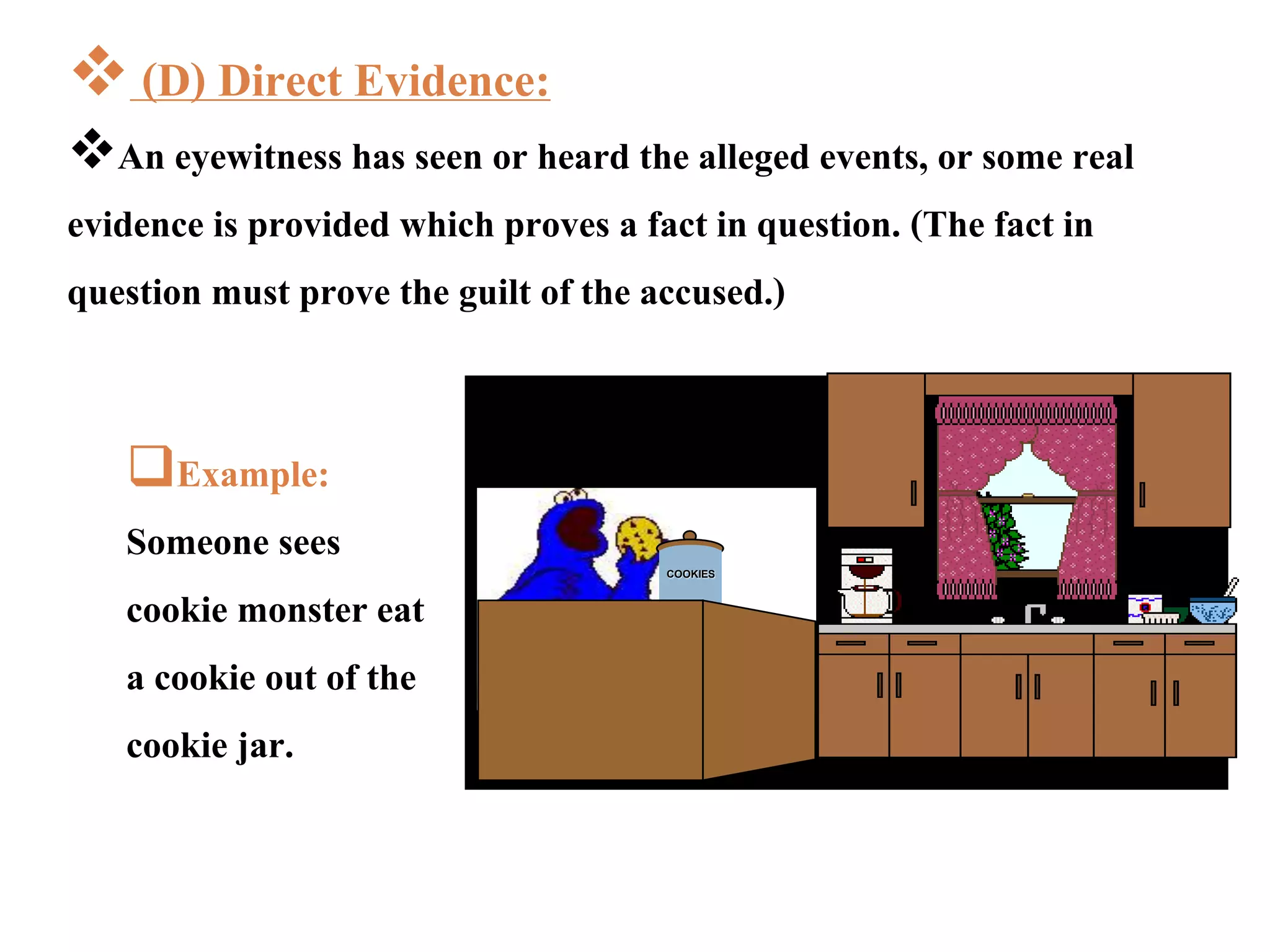
Example:
Someone sees
cookie monster eat
a cookie out of the
cookie jar.
 (E) Real Evidence (physical):
evidence that consists of physical objects that can be offered into evidence.
Real Evidence means real or material evidence. Real evidence of a fact is
brought to the knowledge of the court by inspection of a physical object and
not by information derived from a witness or a document.
Example: The cookie
jar with the cookie
monster’s fingerprints on
it.
Other typical examples…
weapons, tools, tool
markings, fingerprints,
blood, hair, skin samples
(F) Primary Evidence-
Section 62 of The Indian Evidence Act says Primary Evidence
is the Top-Most class of evidences. It is that proof which in
any possible condition gives the vital hint in a disputed fact
and establishes through documentary evidence on the
production of an originaldocument for inspection by the
court.
(G) Secondary Evidence–
 It is evidence that occupies a secondary position. It is
such evidence that on the presentation of which it is
felt that superior evidence yet remains to be produced.
 It is the evidencewhich is produced in the absence of
the primary evidence therefore it is known as
secondary evidence
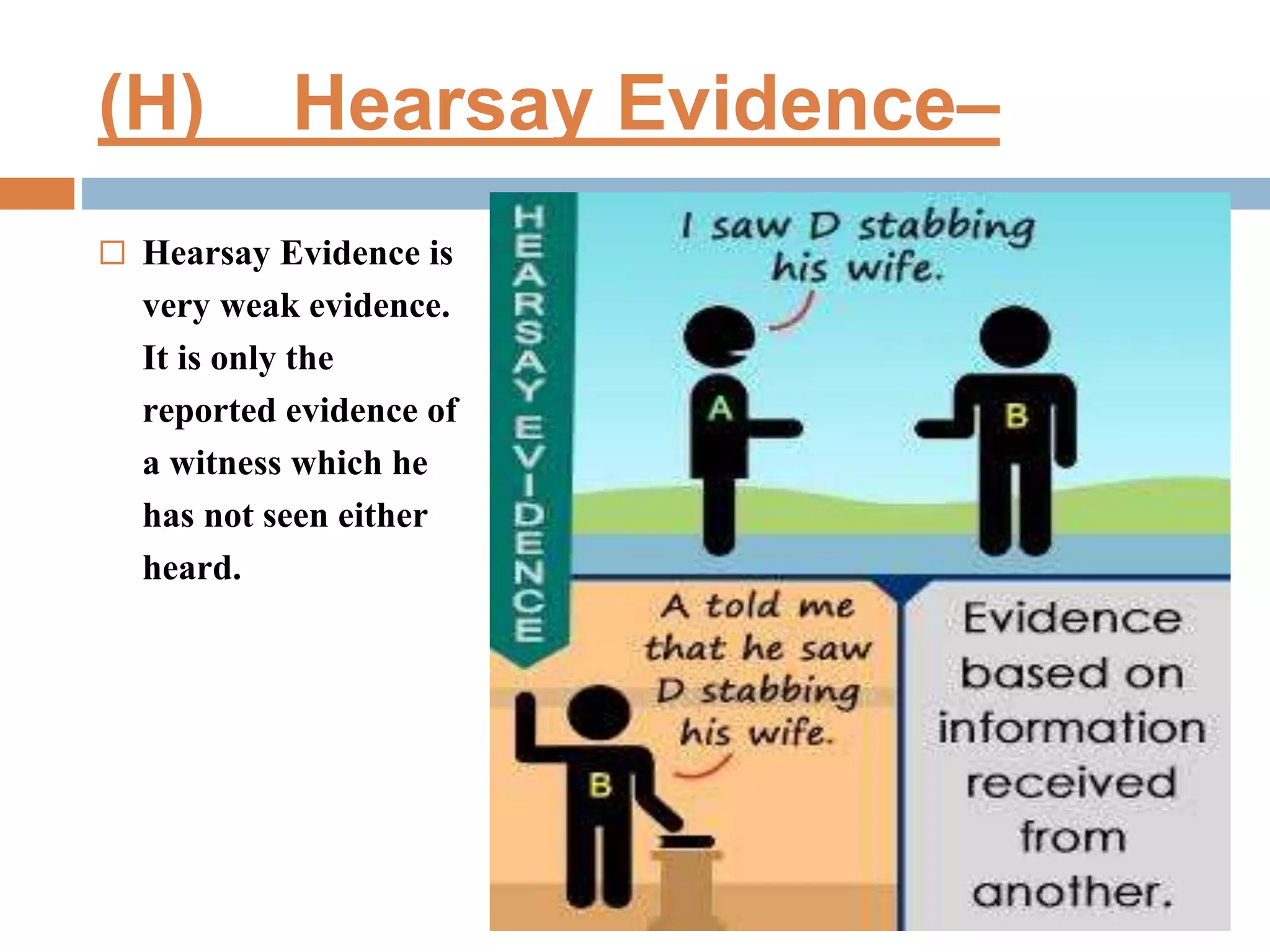
(H) Hearsay Evidence–
 Hearsay Evidence is
very weak evidence.
It is only the
reported evidence of
a witness which he
has not seen either
heard.
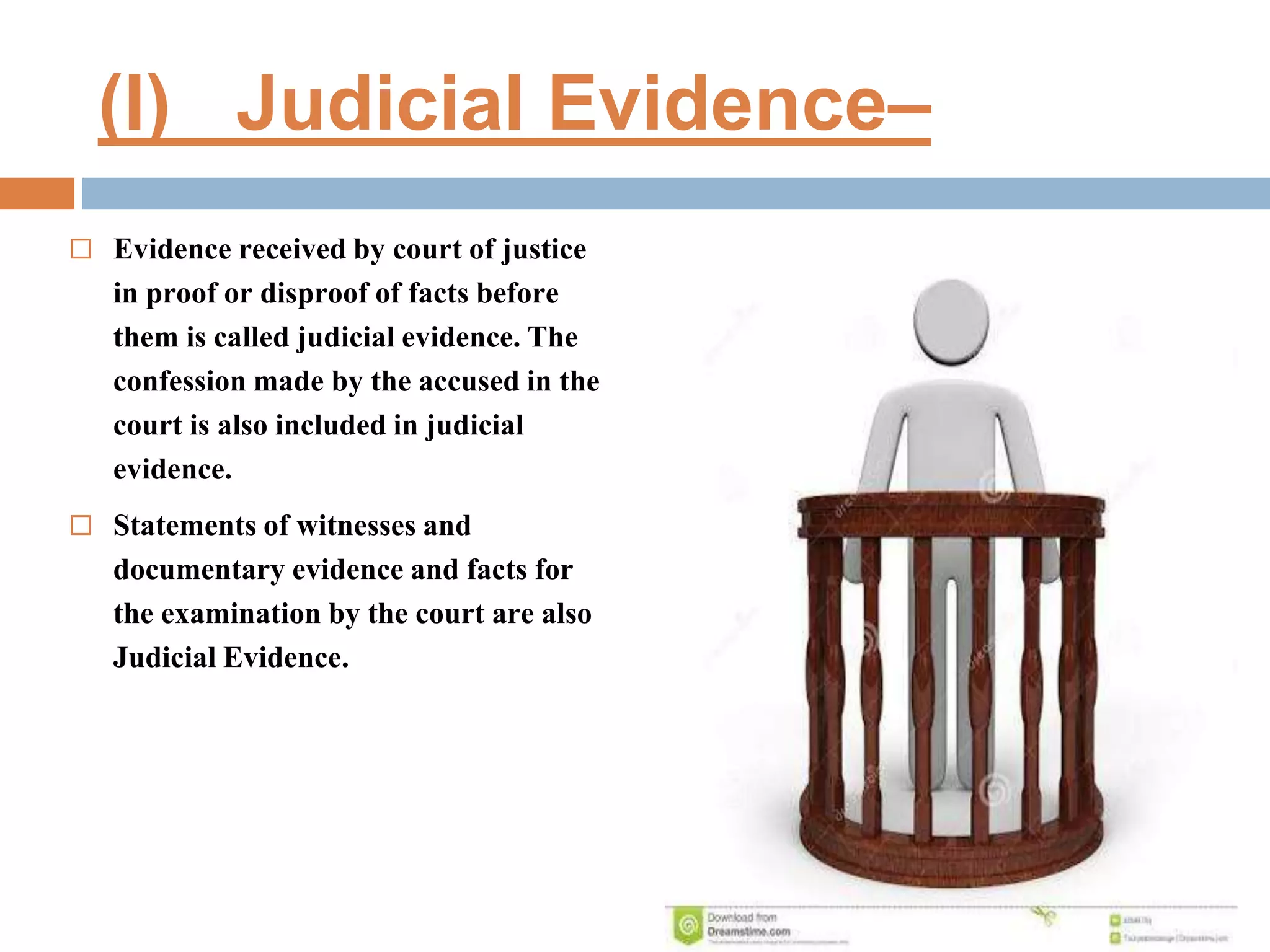
(I) Judicial Evidence–
 Evidence receivedby court of justice
in proof or disproof of facts before
them is called judicialevidence.The
confessionmade by the accusedin the
court is also includedin judicial
evidence.
 Statementsof witnessesand
documentary evidenceand facts for
the examination by the court are also
JudicialEvidence.
(J) Non-Judicial Evidence–
 Any confession made by the accused outside
the court in the presence of any person or the
admission of a party are called Non-Judicial
Evidence, if proved in the court in the form of
Judicial Evidence.
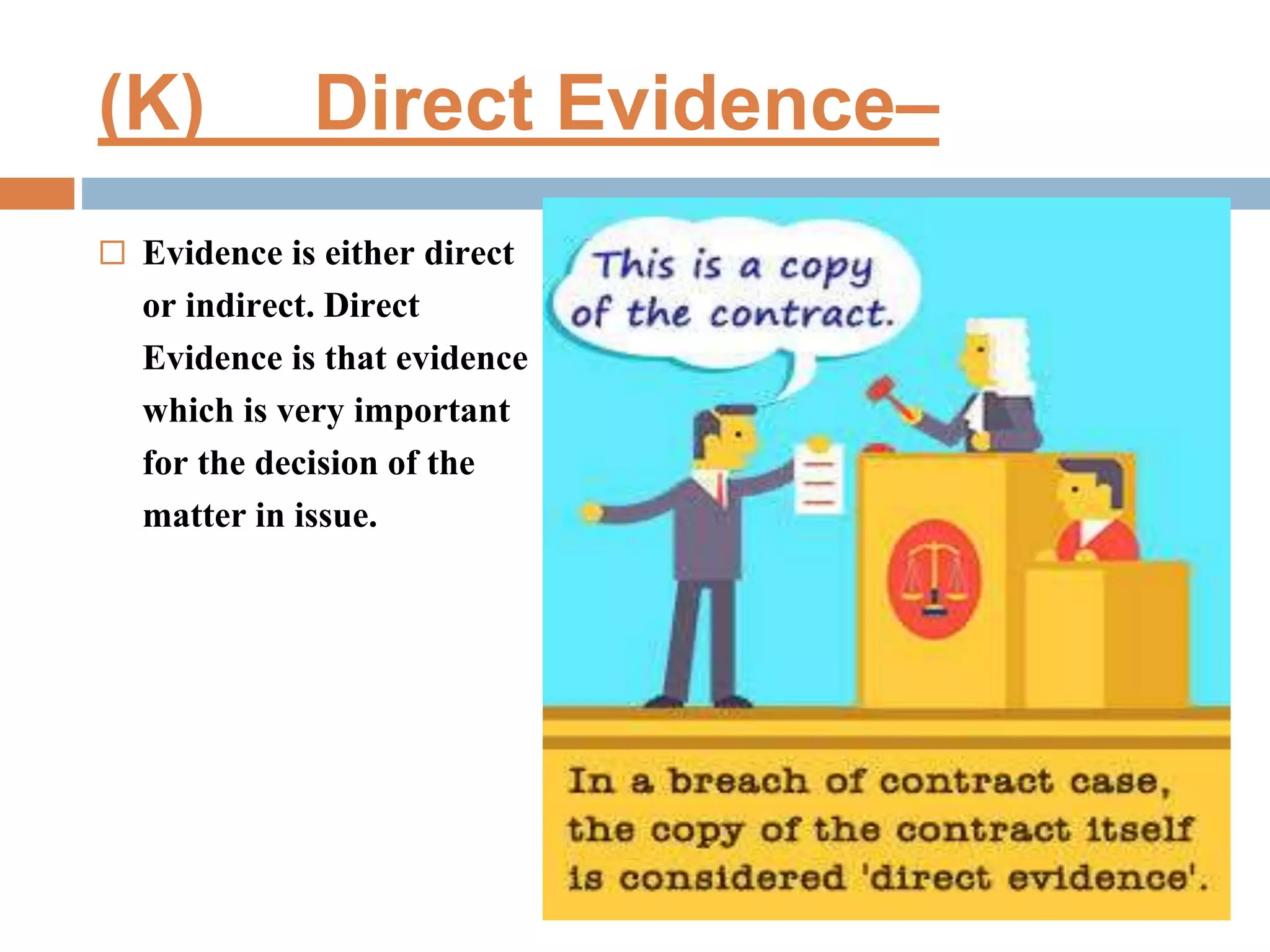
(K) Direct Evidence–
 Evidence is either direct
or indirect. Direct
Evidence is that evidence
which is very important
for the decision of the
matter in issue.
(L) Indirect evidence
Thank you

Types of Evidence

  • 1.
  • 2.
    Evidence The word ‘Evidence’has been derived from the Latin word ‘evidence’ which implies to show distinctly, to make clear to view or sight, to discover clearly, to make plainly certain, to certain, to ascertain, to prove.
  • 3.
    Different Forms ofEvidence (a) Oral Evidence– Section 60 of the Indian Evidence Act, 1872 prescribed the provision of recording oral evidence. All those statements which the court permits or expects the witnesses to make in his presence regarding the truth of the facts are called Oral Evidence. Oral Evidence is that evidence which the witness has personally seen or heard.
  • 5.
    (b) Documentary Evidence Section 3 of The Indian Evidence Act says that all those documents which are presented in the court for inspection such documents are called documentary evidences.
  • 6.
    (C) Circumstantial Evidence: Aform of evidence that allows a judge or jury to infer or accept a fact based on a set of known circumstances. A fact that can be used to infer another fact. Example: The cookie monster is found standing by an open cookie jar with cookie crumbs on his face. The circumstantial evidence would indicate that the cookie monster ate a cookie. However, he was not actually seen eating the cookie.
  • 7.
    COOKIES  (D) DirectEvidence: An eyewitness has seen or heard the alleged events, or some real evidence is provided which proves a fact in question. (The fact in question must prove the guilt of the accused.) Example: Someone sees cookie monster eat a cookie out of the cookie jar.
  • 8.
     (E) RealEvidence (physical): evidence that consists of physical objects that can be offered into evidence. Real Evidence means real or material evidence. Real evidence of a fact is brought to the knowledge of the court by inspection of a physical object and not by information derived from a witness or a document. Example: The cookie jar with the cookie monster’s fingerprints on it. Other typical examples… weapons, tools, tool markings, fingerprints, blood, hair, skin samples
  • 11.
    (F) Primary Evidence- Section62 of The Indian Evidence Act says Primary Evidence is the Top-Most class of evidences. It is that proof which in any possible condition gives the vital hint in a disputed fact and establishes through documentary evidence on the production of an originaldocument for inspection by the court.
  • 13.
    (G) Secondary Evidence– It is evidence that occupies a secondary position. It is such evidence that on the presentation of which it is felt that superior evidence yet remains to be produced.  It is the evidencewhich is produced in the absence of the primary evidence therefore it is known as secondary evidence
  • 14.
    (H) Hearsay Evidence– Hearsay Evidence is very weak evidence. It is only the reported evidence of a witness which he has not seen either heard.
  • 15.
    (I) Judicial Evidence– Evidence receivedby court of justice in proof or disproof of facts before them is called judicialevidence.The confessionmade by the accusedin the court is also includedin judicial evidence.  Statementsof witnessesand documentary evidenceand facts for the examination by the court are also JudicialEvidence.
  • 16.
    (J) Non-Judicial Evidence– Any confession made by the accused outside the court in the presence of any person or the admission of a party are called Non-Judicial Evidence, if proved in the court in the form of Judicial Evidence.
  • 17.
    (K) Direct Evidence– Evidence is either direct or indirect. Direct Evidence is that evidence which is very important for the decision of the matter in issue.
  • 18.
  • 19.