types of
CHEMICAL
REACTIONS
Khryzzia Emerald C. Tumbali
Chemical
Reaction
A process when one or
more substances are
changed into other
substances.
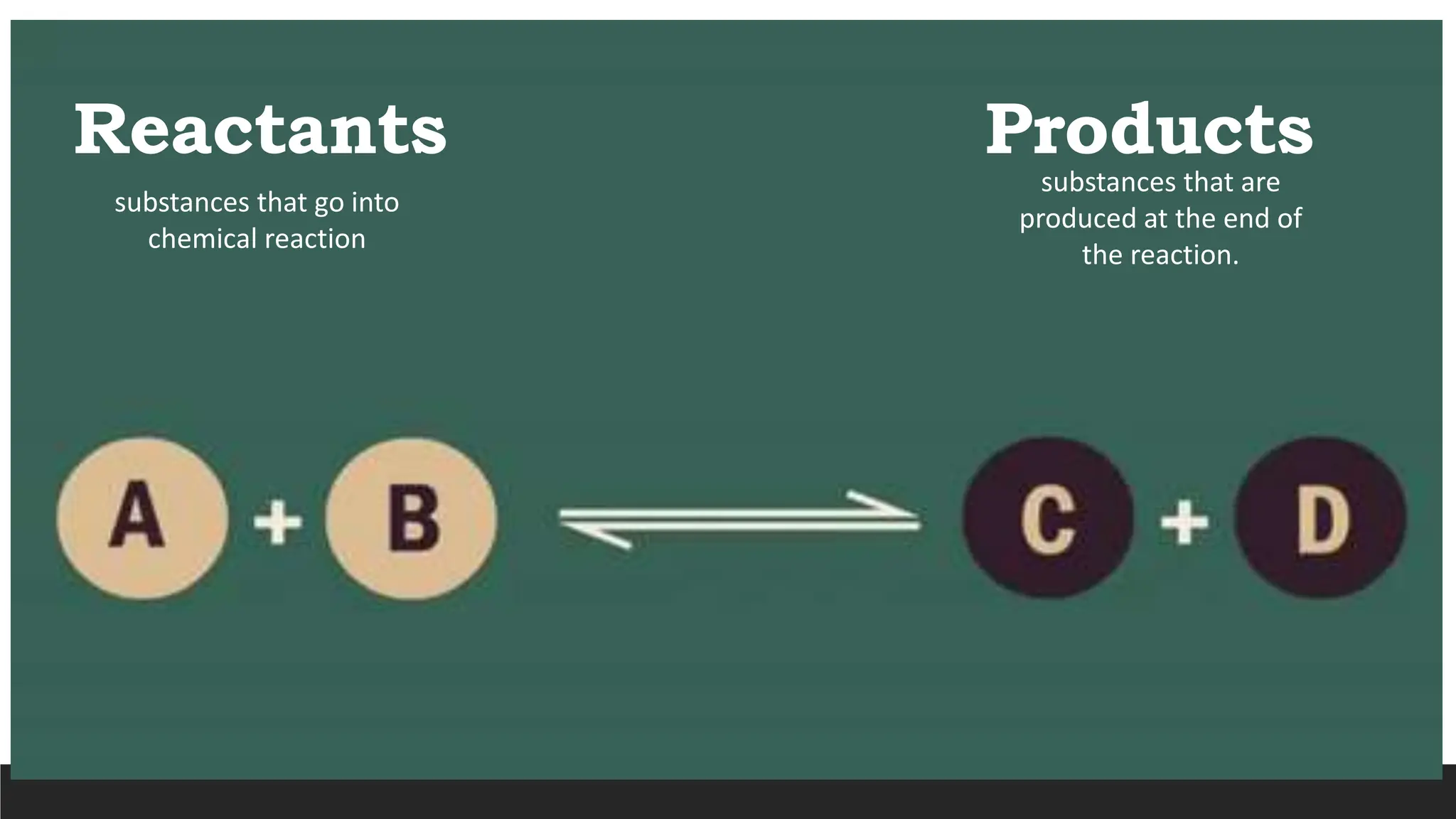
Reactants Products
substances that go into
chemical reaction
substances that are
produced at the end of
the reaction.
Chemical reaction involves two or more
atoms that are combined.
But not all reactions will lead to new substances, how is that?
There must be an effective collision between particles because if the
collision does not have enough energy, it will be ineffective and will not
form a new substance.
ACTIVATION ENERGY
Types of Chemical Reactions
Combination Reaction
Decomposition Reaction
Single Replacement
Double Replacement
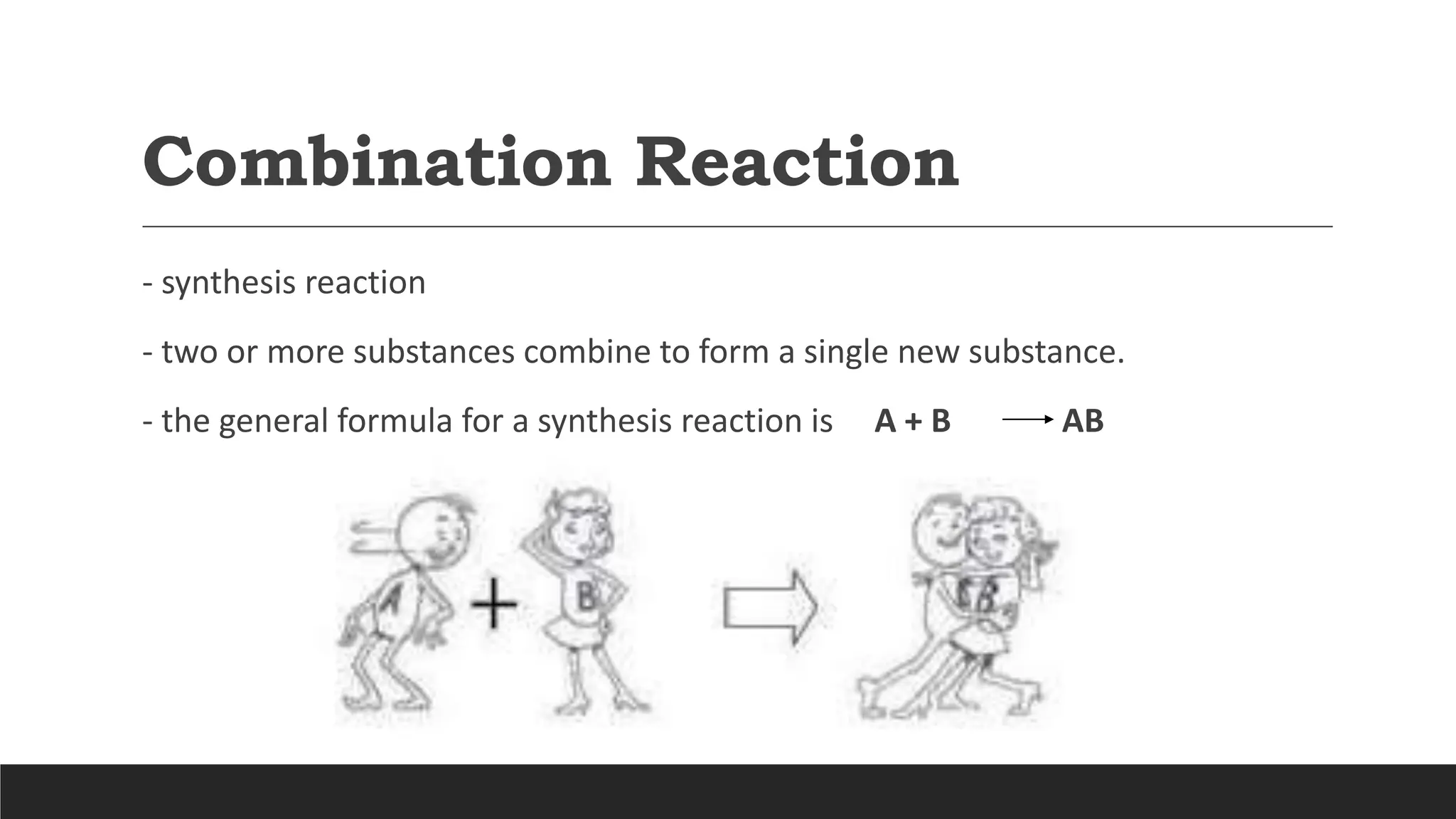
Combination Reaction
- synthesis reaction
- two or more substances combine to form a single new substance.
- the general formula for a synthesis reaction is A + B AB
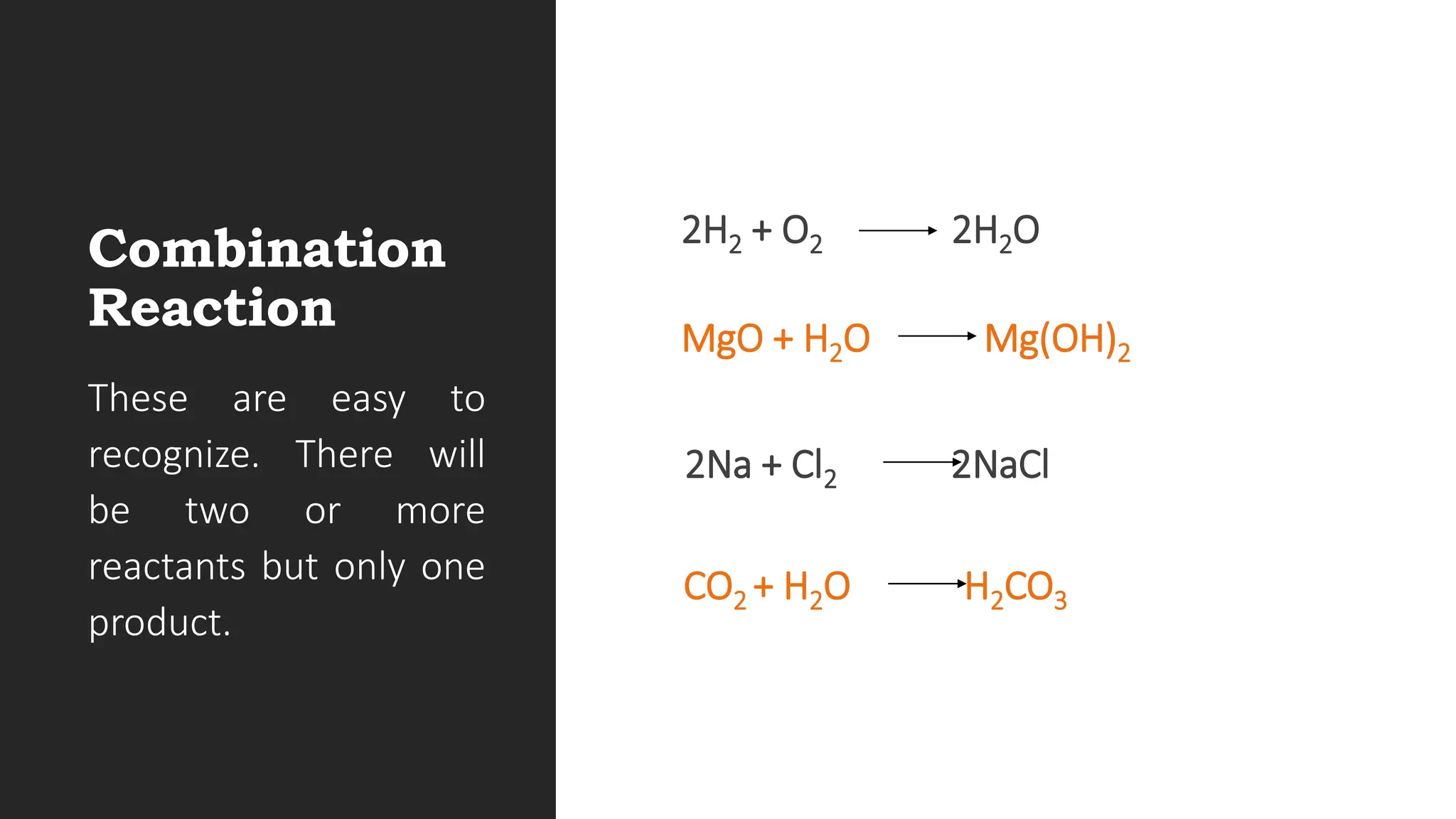
2H2 + O2 2H2O
Combination
Reaction MgO + H2O Mg(OH)2
These are easy to
recognize. There will
be two or more
reactants but only one
product.
2Na + Cl2 2NaCl
CO2 + H2O H2CO3
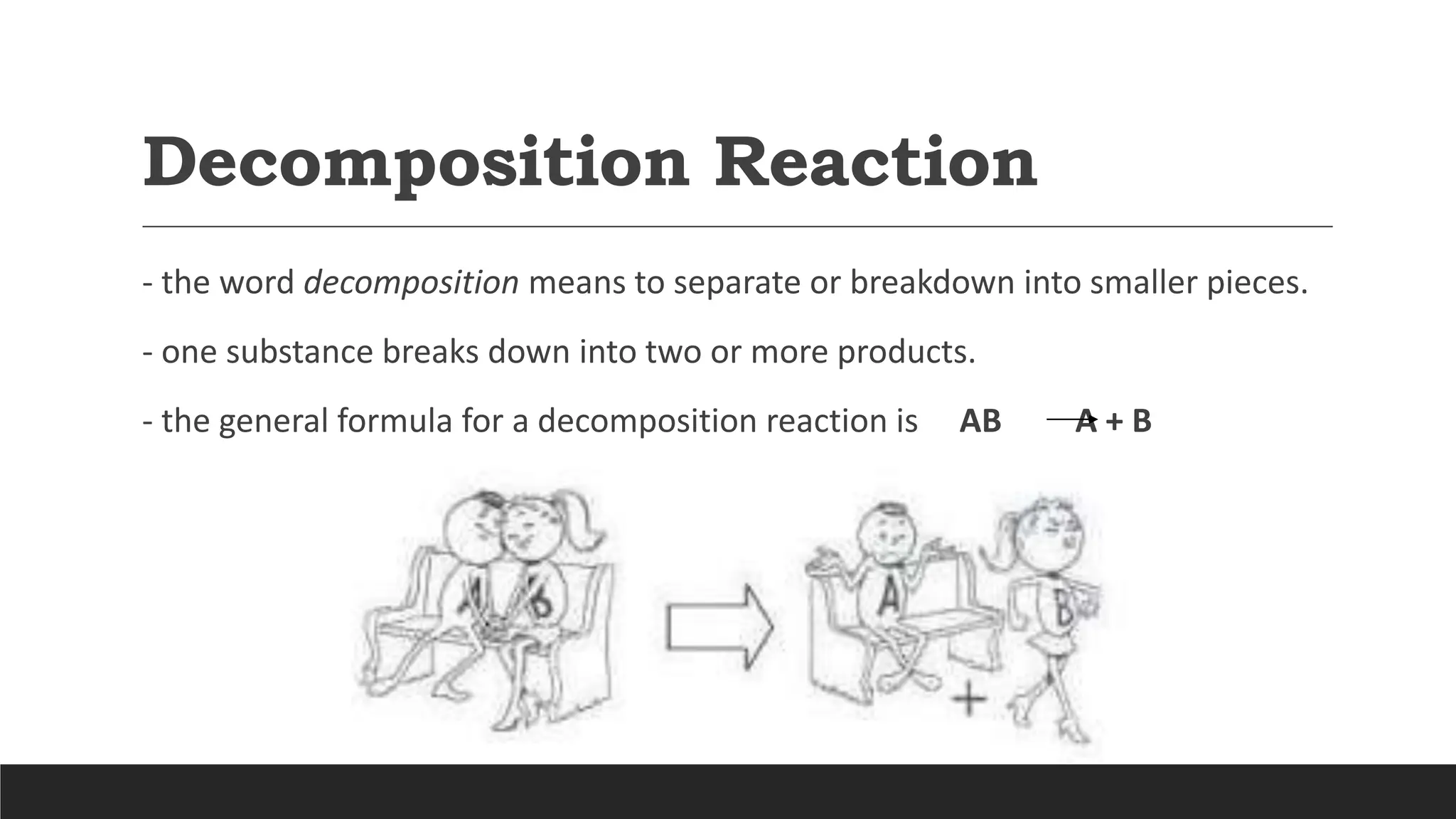
Decomposition Reaction
- the word decomposition means to separate or breakdown into smaller pieces.
- one substance breaks down into two or more products.
- the general formula for a decomposition reaction is AB A + B
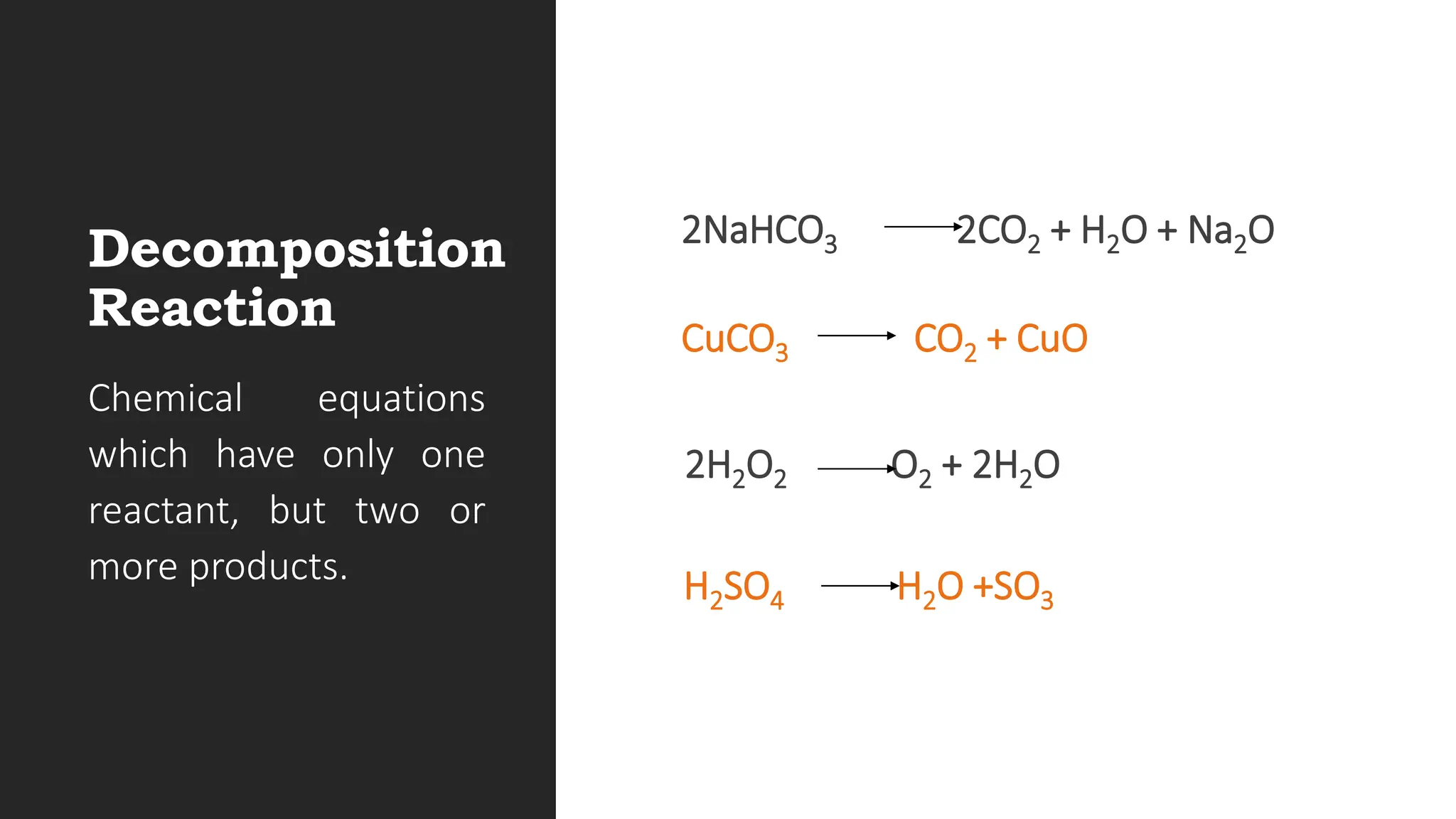
2NaHCO3 2CO2 + H2O + Na2O
Decomposition
Reaction CuCO3 CO2 + CuO
Chemical equations
which have only one
reactant, but two or
more products.
2H2O2 O2 + 2H2O
H2SO4 H2O +SO3
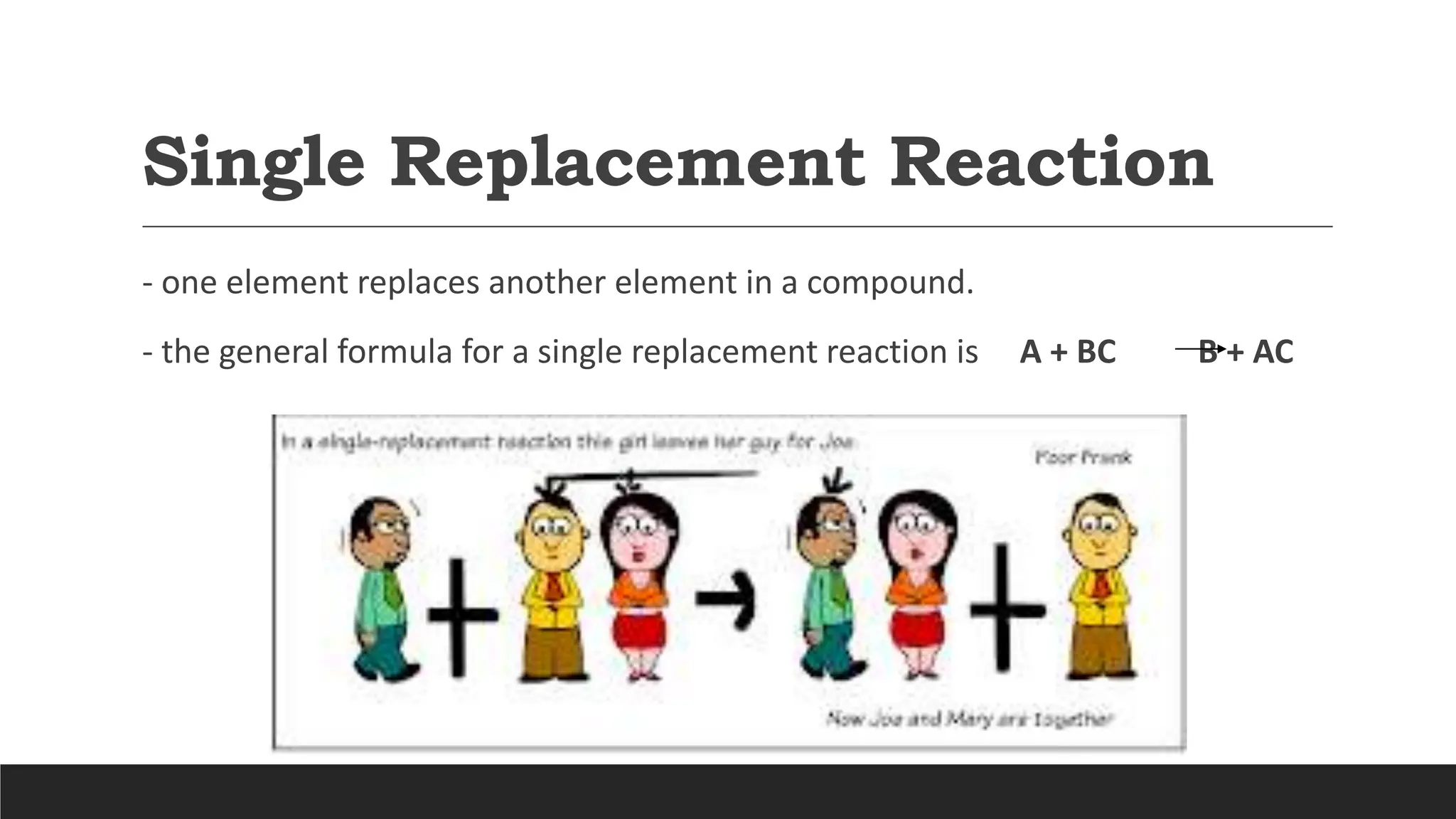
Single Replacement Reaction
- one element replaces another element in a compound.
- the general formula for a single replacement reaction is A + BC B + AC
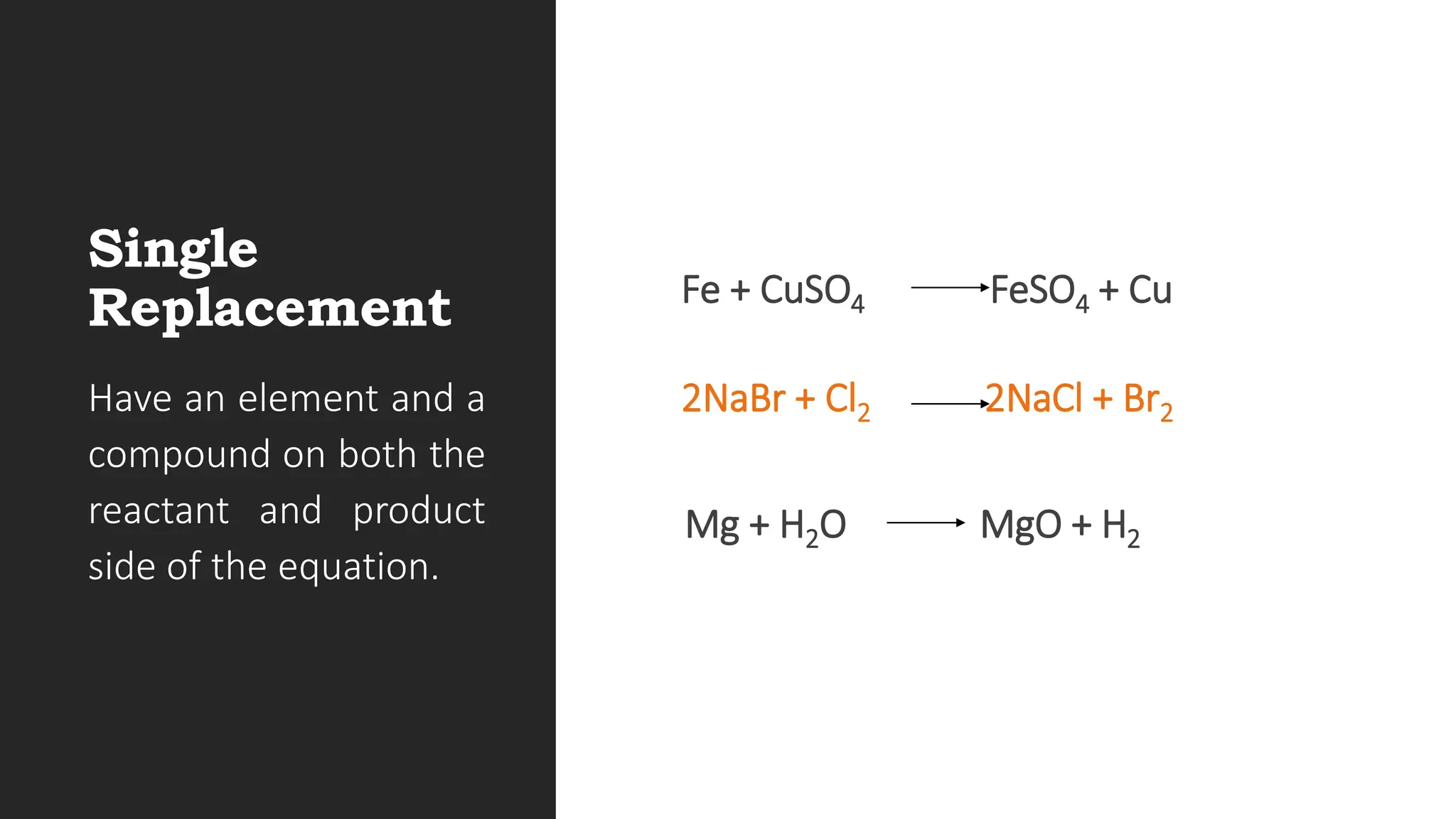
Fe + CuSO4 FeSO4 + Cu
Single
Replacement
2NaBr + Cl2 2NaCl + Br2
Have an element and a
compound on both the
reactant and product
side of the equation.
Mg + H2O MgO + H2
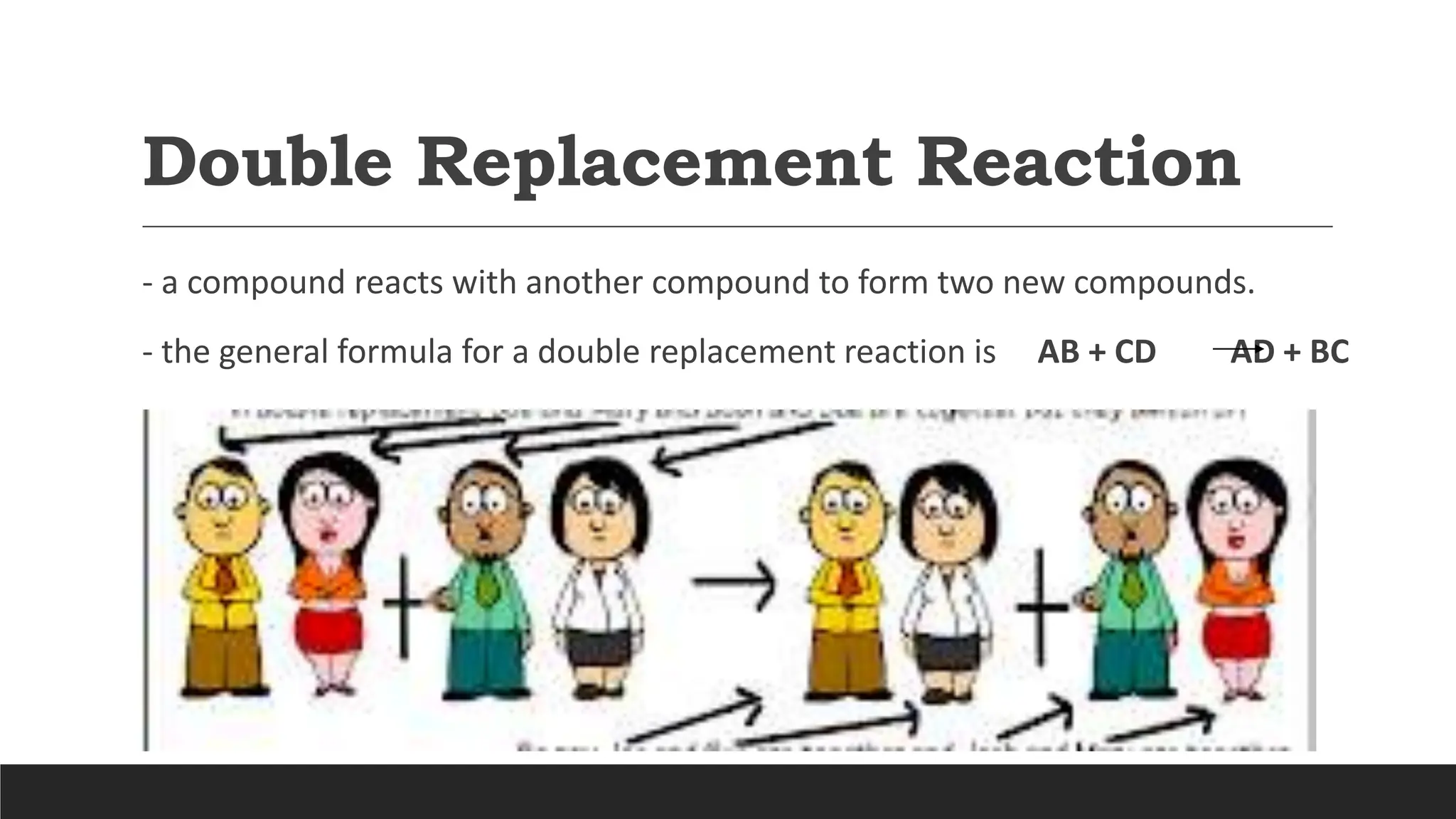
Double Replacement Reaction
- a compound reacts with another compound to form two new compounds.
- the general formula for a double replacement reaction is AB + CD AD + BC
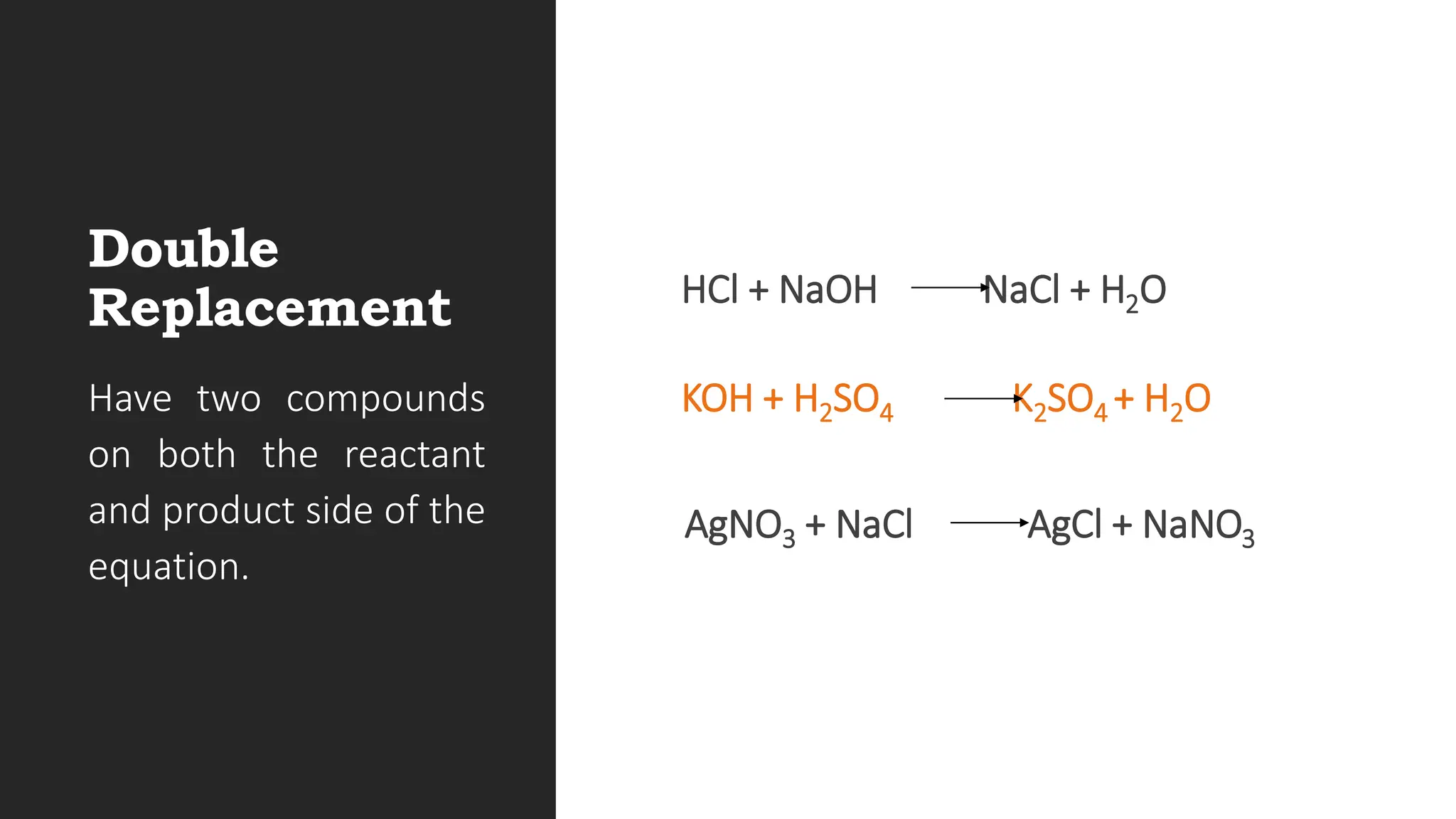
HCl + NaOH NaCl + H2O
Double
Replacement
KOH + H2SO4 K2SO4 + H2O
Have two compounds
on both the reactant
and product side of the
equation.
AgNO3 + NaCl AgCl + NaNO3
Types of Chemical Reactions (PPT presentation)

Types of Chemical Reactions (PPT presentation)

  • 1.
  • 2.
    Chemical Reaction A process whenone or more substances are changed into other substances.
  • 3.
    Reactants Products substances thatgo into chemical reaction substances that are produced at the end of the reaction.
  • 4.
    Chemical reaction involvestwo or more atoms that are combined. But not all reactions will lead to new substances, how is that? There must be an effective collision between particles because if the collision does not have enough energy, it will be ineffective and will not form a new substance. ACTIVATION ENERGY
  • 5.
    Types of ChemicalReactions Combination Reaction Decomposition Reaction Single Replacement Double Replacement
  • 6.
    Combination Reaction - synthesisreaction - two or more substances combine to form a single new substance. - the general formula for a synthesis reaction is A + B AB
  • 7.
    2H2 + O22H2O Combination Reaction MgO + H2O Mg(OH)2 These are easy to recognize. There will be two or more reactants but only one product. 2Na + Cl2 2NaCl CO2 + H2O H2CO3
  • 8.
    Decomposition Reaction - theword decomposition means to separate or breakdown into smaller pieces. - one substance breaks down into two or more products. - the general formula for a decomposition reaction is AB A + B
  • 9.
    2NaHCO3 2CO2 +H2O + Na2O Decomposition Reaction CuCO3 CO2 + CuO Chemical equations which have only one reactant, but two or more products. 2H2O2 O2 + 2H2O H2SO4 H2O +SO3
  • 10.
    Single Replacement Reaction -one element replaces another element in a compound. - the general formula for a single replacement reaction is A + BC B + AC
  • 11.
    Fe + CuSO4FeSO4 + Cu Single Replacement 2NaBr + Cl2 2NaCl + Br2 Have an element and a compound on both the reactant and product side of the equation. Mg + H2O MgO + H2
  • 12.
    Double Replacement Reaction -a compound reacts with another compound to form two new compounds. - the general formula for a double replacement reaction is AB + CD AD + BC
  • 13.
    HCl + NaOHNaCl + H2O Double Replacement KOH + H2SO4 K2SO4 + H2O Have two compounds on both the reactant and product side of the equation. AgNO3 + NaCl AgCl + NaNO3

Editor's Notes

  • #9 It is a combination reaction in reverse
  • #10 In order to identify decomposition reactions, look for read
  • #12 In order to identify decomposition reactions, look for read
  • #14 In order to identify decomposition reactions, look for read