MECHANICAL
BRAKES
Presented By:-Prabhu
WHAT IS A BRAKE?
 A brake is an appliance to apply frictional
resistance to a moving body to stop or retard it
by absorbing its energy.
 Clutch connects two moving members of a
machine whereas brake connects a moving
member to a stationary member.
TYPES OF BRAKES :-
 Block or shoe brake:-This brakes consist of
blocks which are pressed against the surface of a
rotating drum.
 Band brakes:- This brakes consists of rope, belt or
flexible steel band lined with frictional material which is
wrapped partly round the drum.
 Band and block brake:-A band and block
brake consist of number of wooden blocks fixed inside
a flexible steel band.
 Internal expanding shoe brake:-They
consist of two semicircular shoes pivoted at the fixed
fulcrum respectively.
I. BLOCK AND SHOE BRAKE:
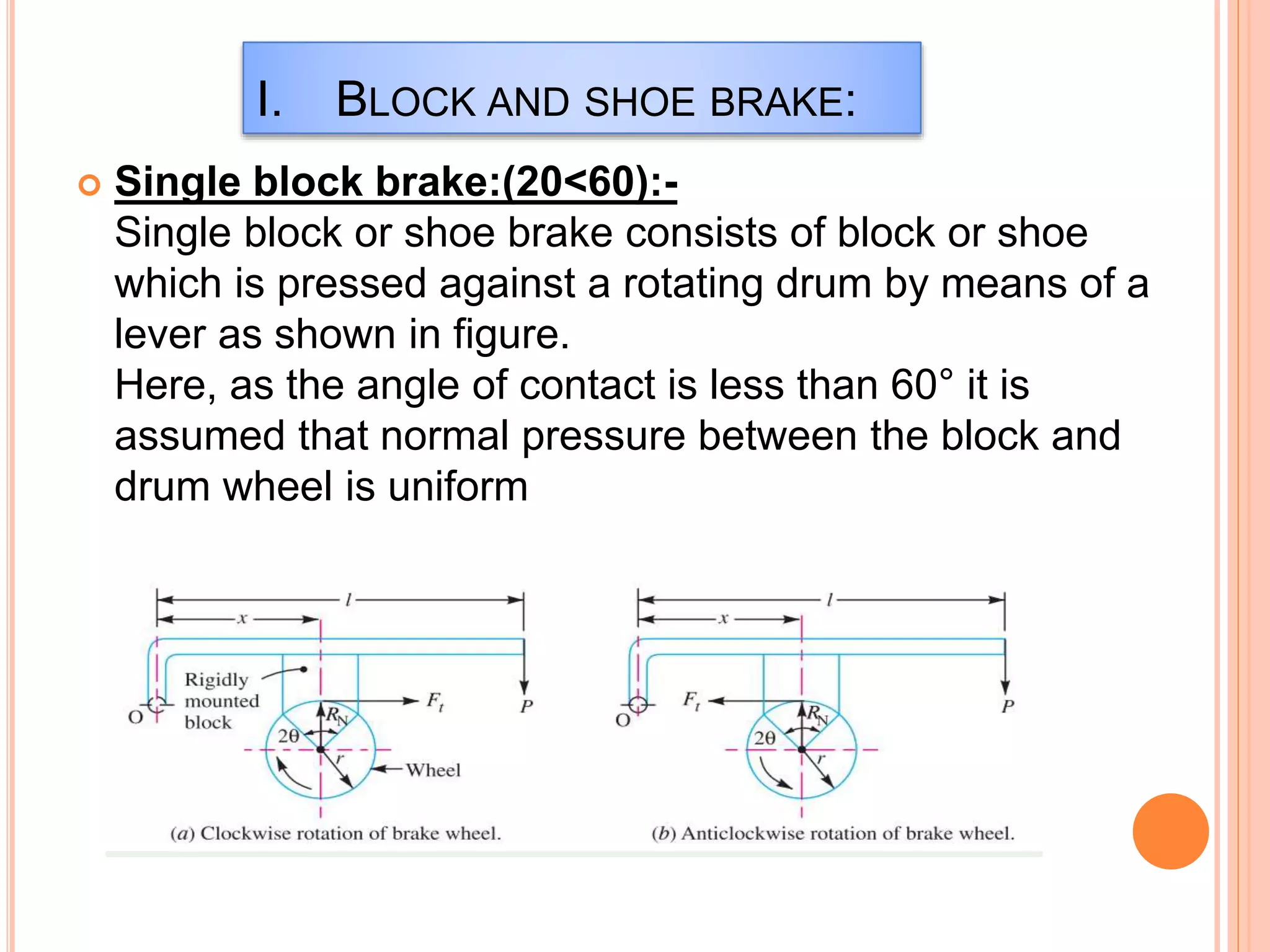
 Single block brake:(20<60):-
Single block or shoe brake consists of block or shoe
which is pressed against a rotating drum by means of a
lever as shown in figure.
Here, as the angle of contact is less than 60° it is
assumed that normal pressure between the block and
drum wheel is uniform
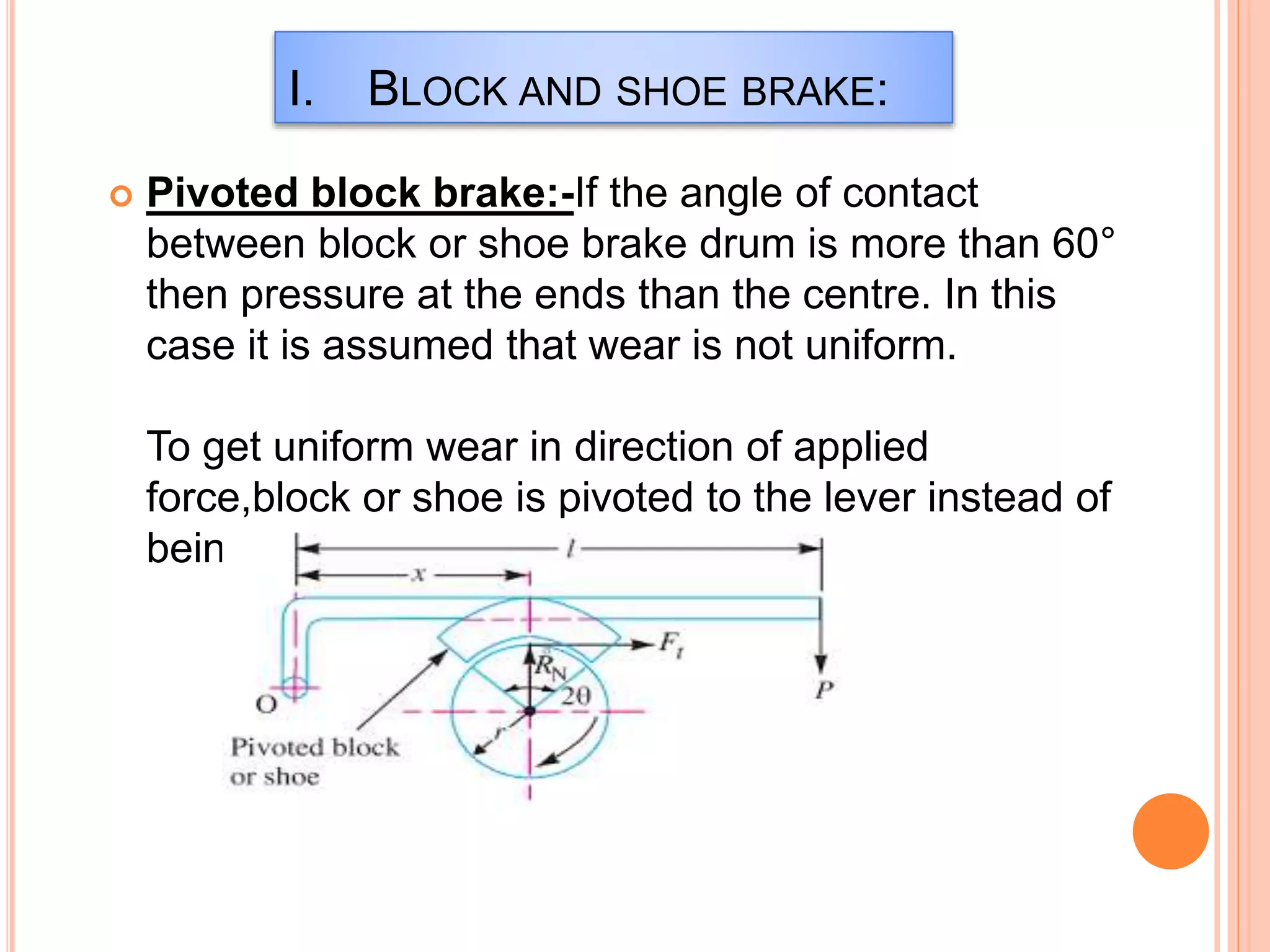
 Pivoted block brake:-If the angle of contact
between block or shoe brake drum is more than 60°
then pressure at the ends than the centre. In this
case it is assumed that wear is not uniform.
To get uniform wear in direction of applied
force,block or shoe is pivoted to the lever instead of
being rigidly attached as in figure.
I. BLOCK AND SHOE BRAKE:
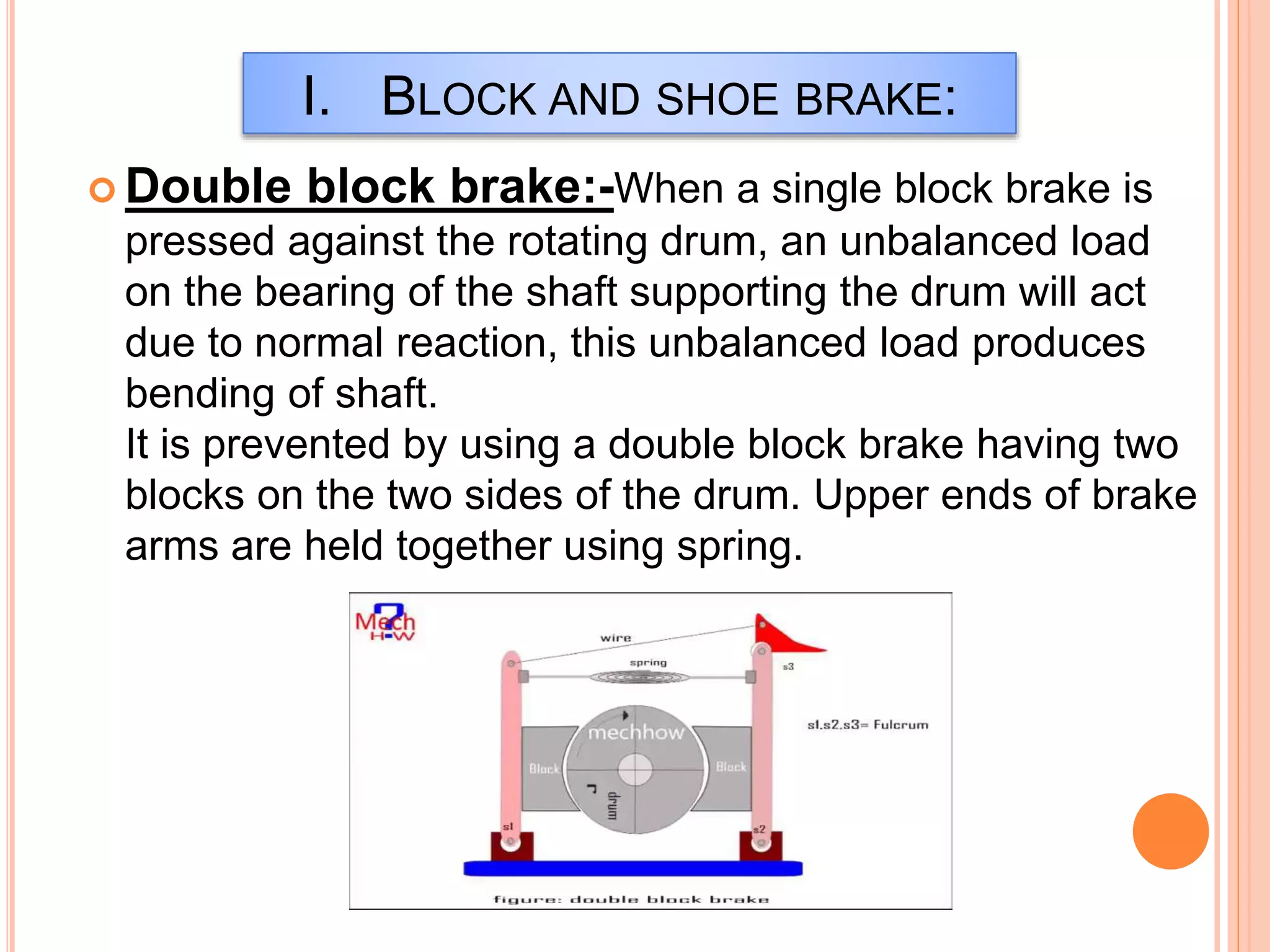
 Double block brake:-When a single block brake is
pressed against the rotating drum, an unbalanced load
on the bearing of the shaft supporting the drum will act
due to normal reaction, this unbalanced load produces
bending of shaft.
It is prevented by using a double block brake having two
blocks on the two sides of the drum. Upper ends of brake
arms are held together using spring.
I. BLOCK AND SHOE BRAKE:
II.BAND BRAKES:-
 They consists of a rope, belt or flexible steel band
lined with frictional material which is wrapped party
round the drum.
 When band is pressed against the external surface
of drum, the frictional force between drum and band
will induce braking torque on the drum.
 1. Simple band brake.
 2. Differential band brake.
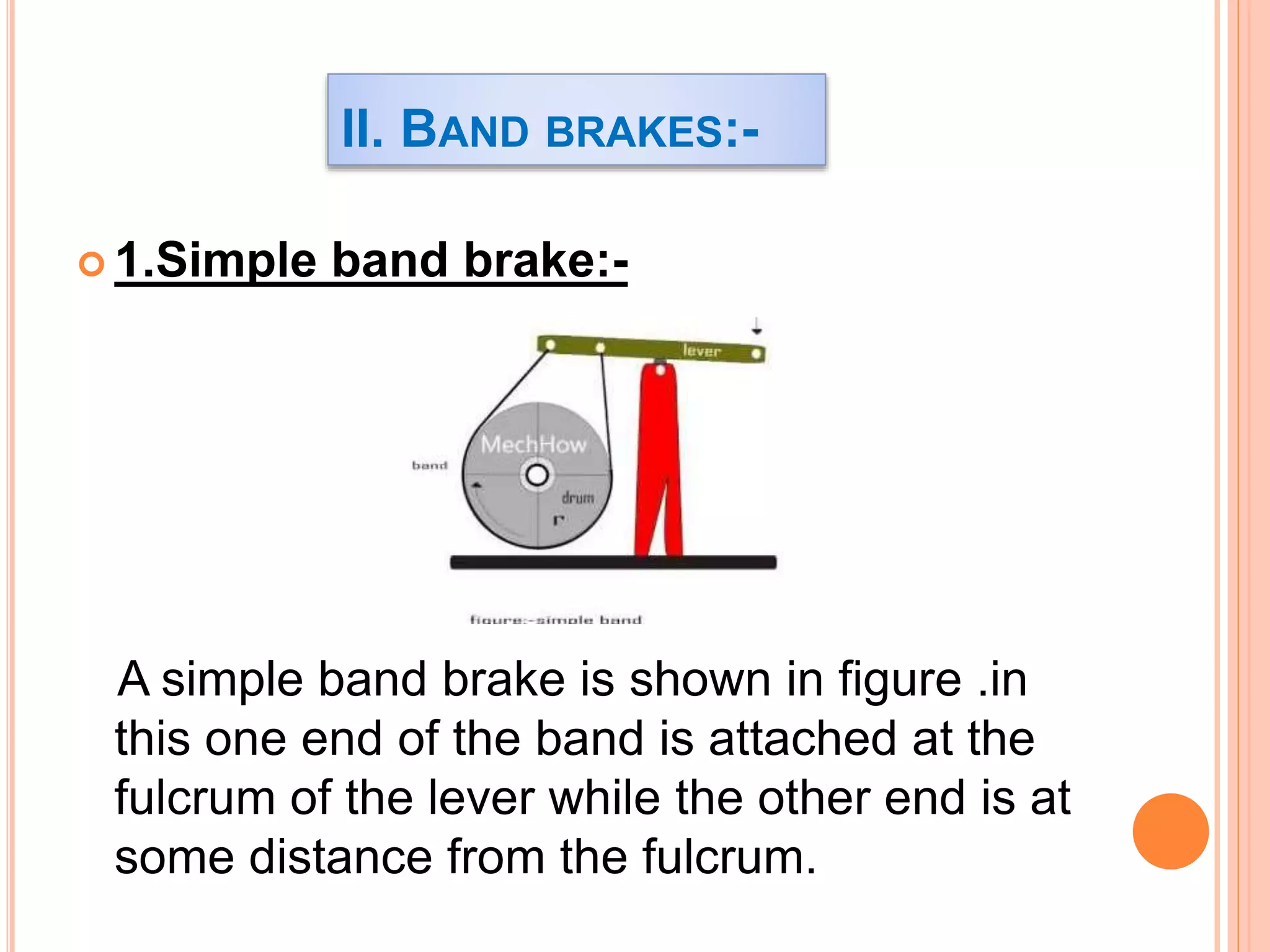
 1.Simple band brake:-
A simple band brake is shown in figure .in
this one end of the band is attached at the
fulcrum of the lever while the other end is at
some distance from the fulcrum.
II. BAND BRAKES:-
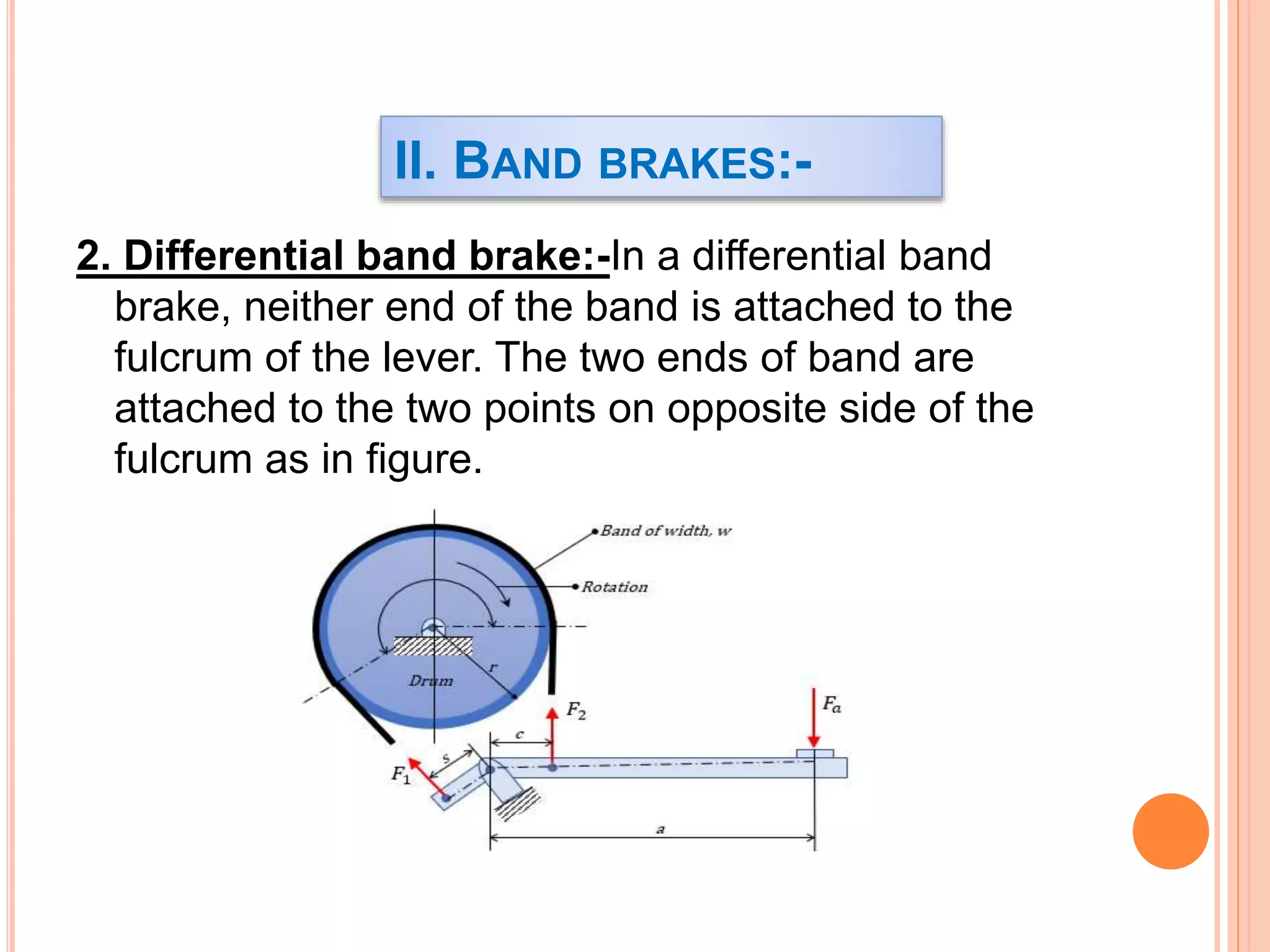
2. Differential band brake:-In a differential band
brake, neither end of the band is attached to the
fulcrum of the lever. The two ends of band are
attached to the two points on opposite side of the
fulcrum as in figure.
II. BAND BRAKES:-
II. BAND AND BLOCK BRAKE:-
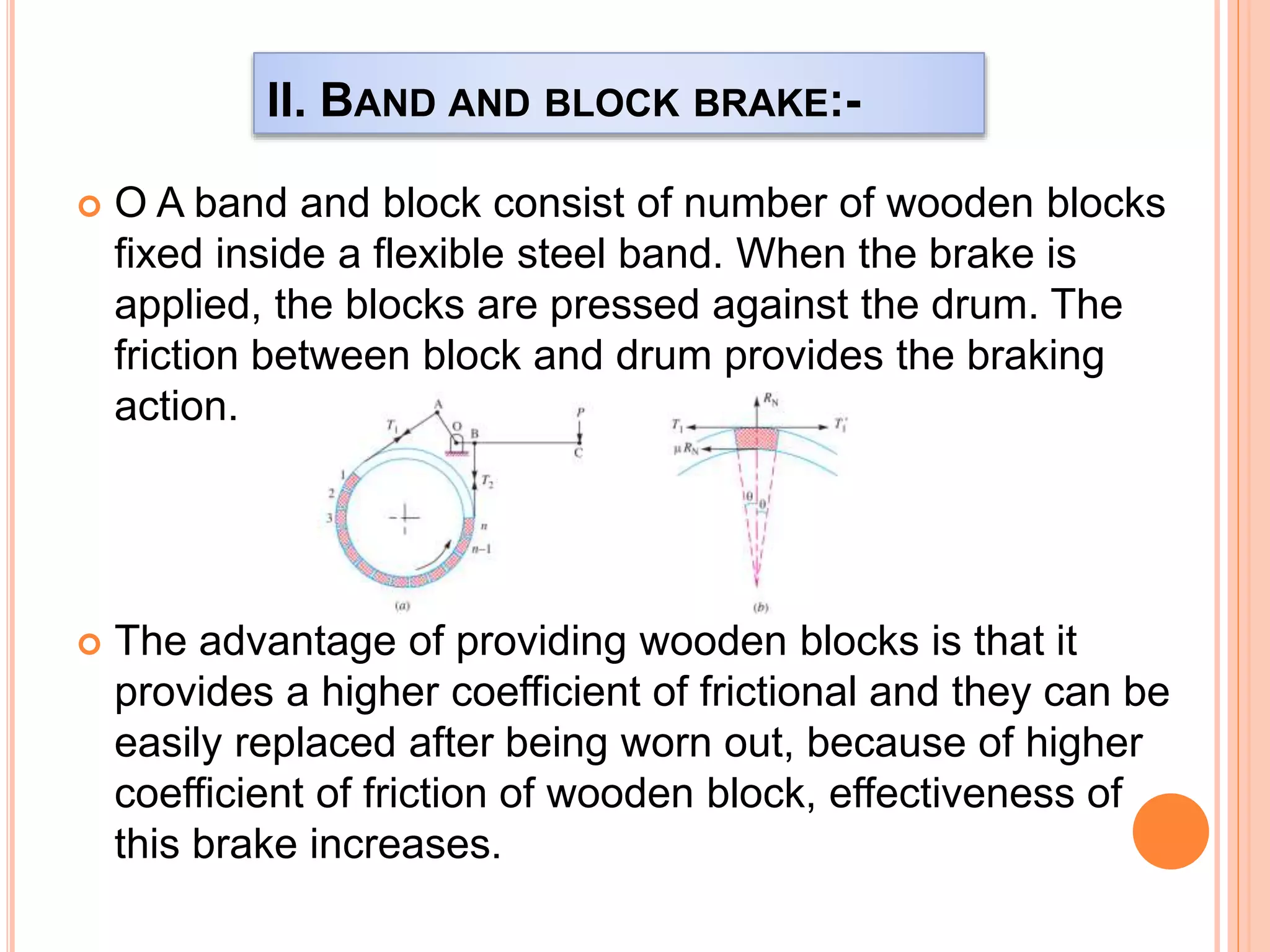
 O A band and block consist of number of wooden blocks
fixed inside a flexible steel band. When the brake is
applied, the blocks are pressed against the drum. The
friction between block and drum provides the braking
action.
 The advantage of providing wooden blocks is that it
provides a higher coefficient of frictional and they can be
easily replaced after being worn out, because of higher
coefficient of friction of wooden block, effectiveness of
this brake increases.
III. INTERNAL EXPANDING SHOE BRAKE:-
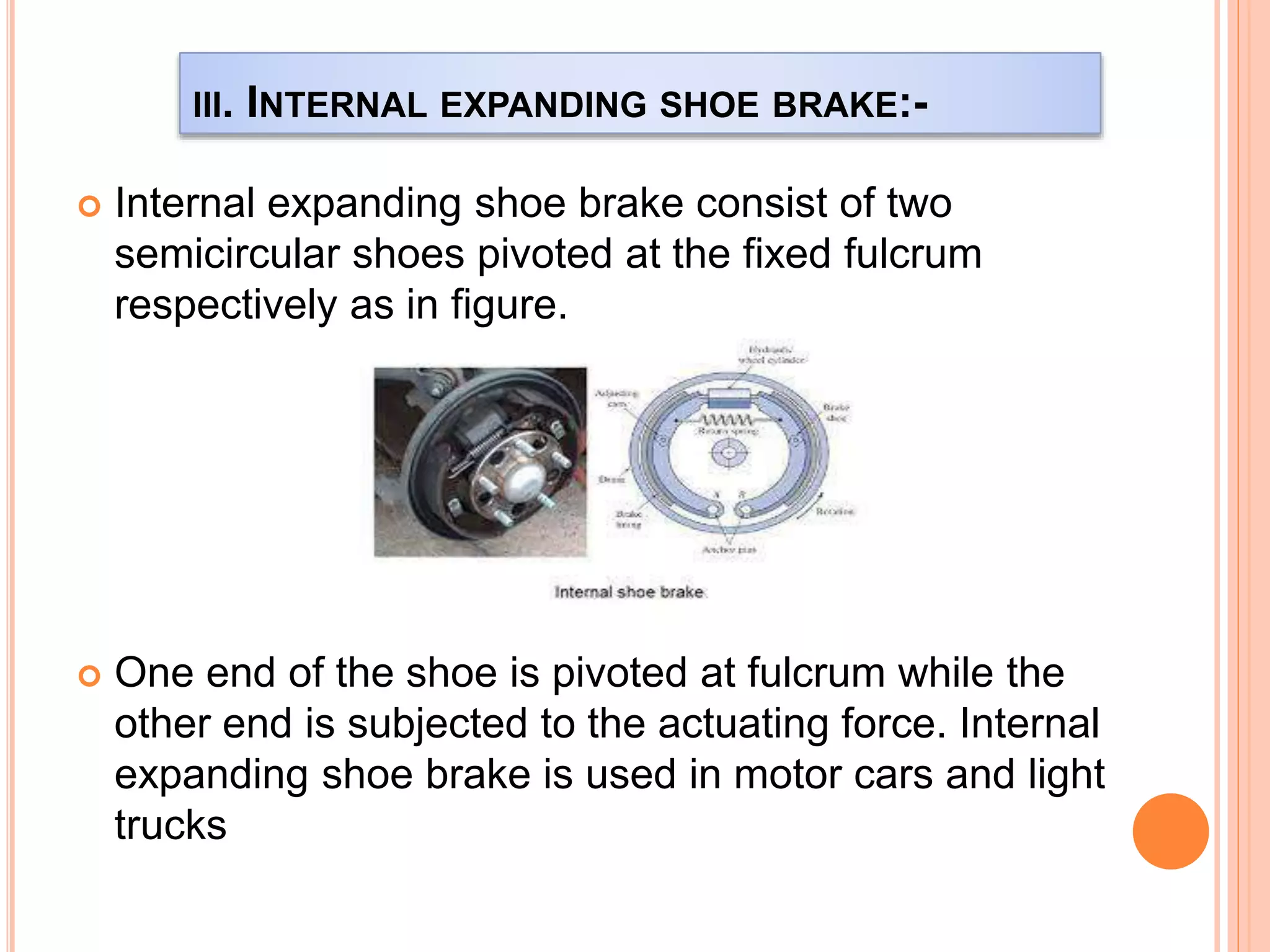
 Internal expanding shoe brake consist of two
semicircular shoes pivoted at the fixed fulcrum
respectively as in figure.
 One end of the shoe is pivoted at fulcrum while the
other end is subjected to the actuating force. Internal
expanding shoe brake is used in motor cars and light
trucks
Thank you

TYPES of break.pptx

  • 1.
  • 2.
    WHAT IS ABRAKE?  A brake is an appliance to apply frictional resistance to a moving body to stop or retard it by absorbing its energy.  Clutch connects two moving members of a machine whereas brake connects a moving member to a stationary member.
  • 3.
    TYPES OF BRAKES:-  Block or shoe brake:-This brakes consist of blocks which are pressed against the surface of a rotating drum.  Band brakes:- This brakes consists of rope, belt or flexible steel band lined with frictional material which is wrapped partly round the drum.  Band and block brake:-A band and block brake consist of number of wooden blocks fixed inside a flexible steel band.  Internal expanding shoe brake:-They consist of two semicircular shoes pivoted at the fixed fulcrum respectively.
  • 4.
    I. BLOCK ANDSHOE BRAKE:  Single block brake:(20<60):- Single block or shoe brake consists of block or shoe which is pressed against a rotating drum by means of a lever as shown in figure. Here, as the angle of contact is less than 60° it is assumed that normal pressure between the block and drum wheel is uniform
  • 5.
     Pivoted blockbrake:-If the angle of contact between block or shoe brake drum is more than 60° then pressure at the ends than the centre. In this case it is assumed that wear is not uniform. To get uniform wear in direction of applied force,block or shoe is pivoted to the lever instead of being rigidly attached as in figure. I. BLOCK AND SHOE BRAKE:
  • 6.
     Double blockbrake:-When a single block brake is pressed against the rotating drum, an unbalanced load on the bearing of the shaft supporting the drum will act due to normal reaction, this unbalanced load produces bending of shaft. It is prevented by using a double block brake having two blocks on the two sides of the drum. Upper ends of brake arms are held together using spring. I. BLOCK AND SHOE BRAKE:
  • 7.
    II.BAND BRAKES:-  Theyconsists of a rope, belt or flexible steel band lined with frictional material which is wrapped party round the drum.  When band is pressed against the external surface of drum, the frictional force between drum and band will induce braking torque on the drum.  1. Simple band brake.  2. Differential band brake.
  • 8.
     1.Simple bandbrake:- A simple band brake is shown in figure .in this one end of the band is attached at the fulcrum of the lever while the other end is at some distance from the fulcrum. II. BAND BRAKES:-
  • 9.
    2. Differential bandbrake:-In a differential band brake, neither end of the band is attached to the fulcrum of the lever. The two ends of band are attached to the two points on opposite side of the fulcrum as in figure. II. BAND BRAKES:-
  • 10.
    II. BAND ANDBLOCK BRAKE:-  O A band and block consist of number of wooden blocks fixed inside a flexible steel band. When the brake is applied, the blocks are pressed against the drum. The friction between block and drum provides the braking action.  The advantage of providing wooden blocks is that it provides a higher coefficient of frictional and they can be easily replaced after being worn out, because of higher coefficient of friction of wooden block, effectiveness of this brake increases.
  • 11.
    III. INTERNAL EXPANDINGSHOE BRAKE:-  Internal expanding shoe brake consist of two semicircular shoes pivoted at the fixed fulcrum respectively as in figure.  One end of the shoe is pivoted at fulcrum while the other end is subjected to the actuating force. Internal expanding shoe brake is used in motor cars and light trucks
  • 12.