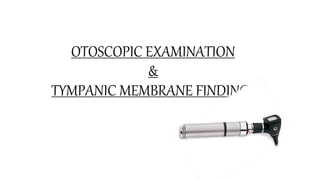
OTOSCOPIC EXAMINATION
&
TYMPANIC MEMBRANE FINDINGS
OTOSCOPIC EXAMINATION
• Definition: The evaluation of the ear canal and tympanic membrane
through the use of an otoscope;
• An Otoscope is a hand-held tool with a speculum and light source to
see into the ear canal.
• Purpose of the otoscopic exam is to ensure that the ear canals are
free of any obvious problems prior to fitting hearing protection,
performing tympanometry or administering hearing tests.
CONTD:-
• Preparation for Otoscopic Exam Select a speculum of proper size the
larger the better to ensure a good view
• Lock speculum into place Change/discard the speculum after each
patient
• Change speculum after each ear of any patient with draining ear(s)
Observe proper hygiene, as for any bodily fluid or secretion
EXAMINATION METHOD
• Grip the otoscope firmly and comfortably With the opposite hand,
grasp the helix of the ear and gently pull the pinna upward and back
to straighten the ear canal.
• Gently insert the lighted otoscope past the first canal bend, resting
your fingers against the patients head; if the patient turns or moves
suddenly, the otoscope will move in unison with the patients head -
avoiding injury.
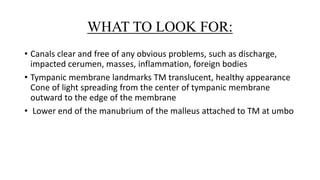
WHAT TO LOOK FOR:
• Canals clear and free of any obvious problems, such as discharge,
impacted cerumen, masses, inflammation, foreign bodies
• Tympanic membrane landmarks TM translucent, healthy appearance
Cone of light spreading from the center of tympanic membrane
outward to the edge of the membrane
• Lower end of the manubrium of the malleus attached to TM at umbo
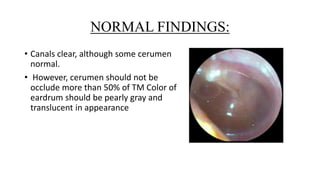
NORMAL FINDINGS:
• Canals clear, although some cerumen
normal.
• However, cerumen should not be
occlude more than 50% of TM Color of
eardrum should be pearly gray and
translucent in appearance
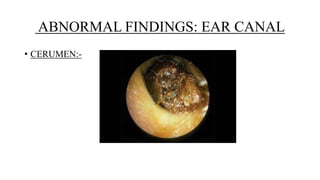
ABNORMAL FINDINGS: EAR CANAL
• CERUMEN:-
FOREIGN BODIES:-
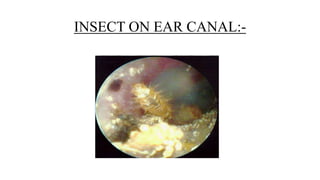
INSECT ON EAR CANAL:-
COTTON SWAB RESIDUE:-
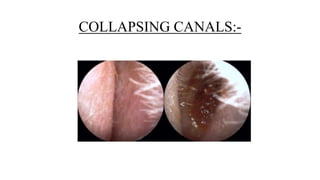
COLLAPSING CANALS:-
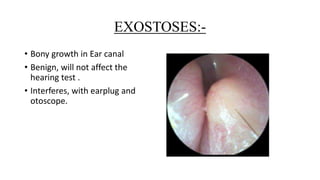
EXOSTOSES:-
• Bony growth in Ear canal
• Benign, will not affect the
hearing test .
• Interferes, with earplug and
otoscope.
ABNORMAL FINDINGS TYMPANIC
MEMBRANE:-
TM PERFORATIONS:-
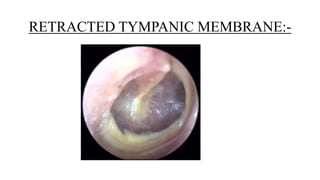
RETRACTED TYMPANIC MEMBRANE:-
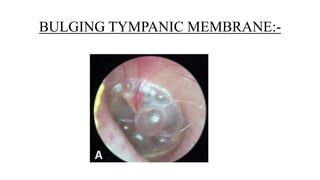
BULGING TYMPANIC MEMBRANE:-
CHOLESTEATOMA:-
WHEN TO DO AN OTOSCOPIC
EXAMINATION:-
• Before a reference audiogram Before testing, if
patient complains of an ENT problem.
• Before tympanometry Before earplug fitting
When an STS is discovered When a low
frequency or flat hearing loss is detected.
tympanic membrane.pptx

tympanic membrane.pptx

  • 1.
  • 2.
    OTOSCOPIC EXAMINATION • Definition:The evaluation of the ear canal and tympanic membrane through the use of an otoscope; • An Otoscope is a hand-held tool with a speculum and light source to see into the ear canal. • Purpose of the otoscopic exam is to ensure that the ear canals are free of any obvious problems prior to fitting hearing protection, performing tympanometry or administering hearing tests.
  • 3.
    CONTD:- • Preparation forOtoscopic Exam Select a speculum of proper size the larger the better to ensure a good view • Lock speculum into place Change/discard the speculum after each patient • Change speculum after each ear of any patient with draining ear(s) Observe proper hygiene, as for any bodily fluid or secretion
  • 4.
    EXAMINATION METHOD • Gripthe otoscope firmly and comfortably With the opposite hand, grasp the helix of the ear and gently pull the pinna upward and back to straighten the ear canal. • Gently insert the lighted otoscope past the first canal bend, resting your fingers against the patients head; if the patient turns or moves suddenly, the otoscope will move in unison with the patients head - avoiding injury.
  • 5.
    WHAT TO LOOKFOR: • Canals clear and free of any obvious problems, such as discharge, impacted cerumen, masses, inflammation, foreign bodies • Tympanic membrane landmarks TM translucent, healthy appearance Cone of light spreading from the center of tympanic membrane outward to the edge of the membrane • Lower end of the manubrium of the malleus attached to TM at umbo
  • 7.
    NORMAL FINDINGS: • Canalsclear, although some cerumen normal. • However, cerumen should not be occlude more than 50% of TM Color of eardrum should be pearly gray and translucent in appearance
  • 8.
    ABNORMAL FINDINGS: EARCANAL • CERUMEN:-
  • 9.
  • 10.
  • 11.
  • 12.
  • 13.
    EXOSTOSES:- • Bony growthin Ear canal • Benign, will not affect the hearing test . • Interferes, with earplug and otoscope.
  • 14.
  • 15.
  • 16.
  • 17.
  • 18.
  • 19.
    WHEN TO DOAN OTOSCOPIC EXAMINATION:- • Before a reference audiogram Before testing, if patient complains of an ENT problem. • Before tympanometry Before earplug fitting When an STS is discovered When a low frequency or flat hearing loss is detected.