The Two-Step Flow
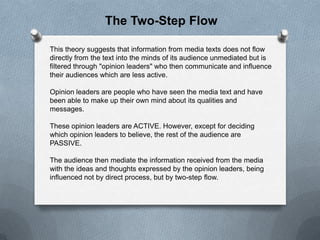
This theory suggests that information from media texts does not flow
directly from the text into the minds of its audience unmediated but is
filtered through "opinion leaders" who then communicate and influence
their audiences which are less active.
Opinion leaders are people who have seen the media text and have
been able to make up their own mind about its qualities and
messages.

These opinion leaders are ACTIVE. However, except for deciding
which opinion leaders to believe, the rest of the audience are
PASSIVE.
The audience then mediate the information received from the media
with the ideas and thoughts expressed by the opinion leaders, being
influenced not by direct process, but by two-step flow.
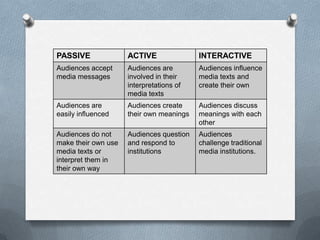
PASSIVE

ACTIVE

INTERACTIVE

Audiences accept
media messages

Audiences are
involved in their
interpretations of
media texts

Audiences influence
media texts and
create their own

Audiences are
easily influenced

Audiences create
their own meanings

Audiences discuss
meanings with each
other

Audiences do not
make their own use
media texts or
interpret them in
their own way

Audiences question
and respond to
institutions

Audiences
challenge traditional
media institutions.

Two-Step Flow

  • 1.
    The Two-Step Flow Thistheory suggests that information from media texts does not flow directly from the text into the minds of its audience unmediated but is filtered through "opinion leaders" who then communicate and influence their audiences which are less active. Opinion leaders are people who have seen the media text and have been able to make up their own mind about its qualities and messages. These opinion leaders are ACTIVE. However, except for deciding which opinion leaders to believe, the rest of the audience are PASSIVE. The audience then mediate the information received from the media with the ideas and thoughts expressed by the opinion leaders, being influenced not by direct process, but by two-step flow.
  • 2.
    PASSIVE ACTIVE INTERACTIVE Audiences accept media messages Audiencesare involved in their interpretations of media texts Audiences influence media texts and create their own Audiences are easily influenced Audiences create their own meanings Audiences discuss meanings with each other Audiences do not make their own use media texts or interpret them in their own way Audiences question and respond to institutions Audiences challenge traditional media institutions.