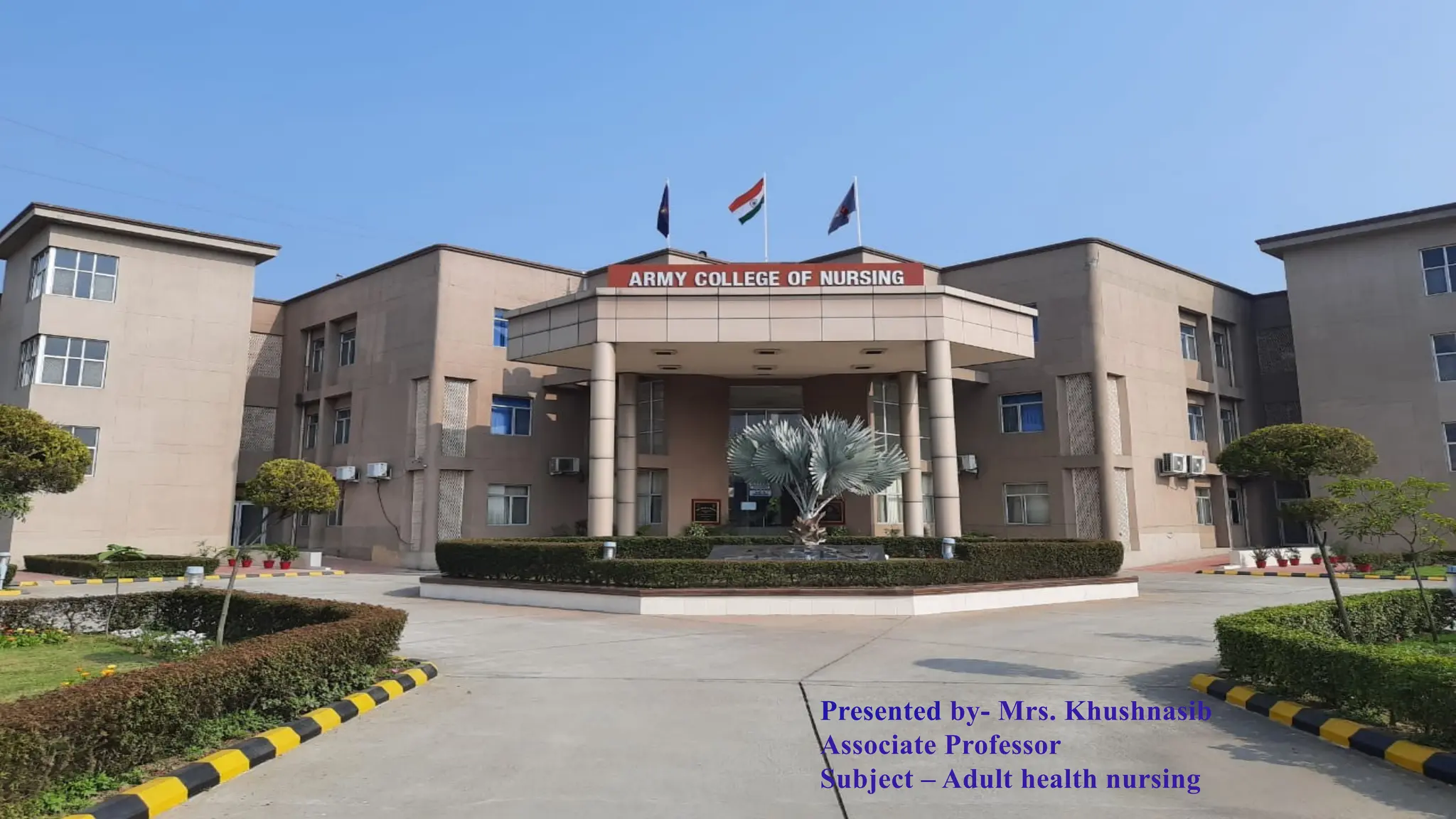
Presented by- Mrs. Khushnasib
Associate Professor
Subject – Adult health nursing
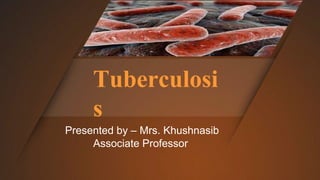
Tuberculosi
s
Presented by – Mrs. Khushnasib
Associate Professor
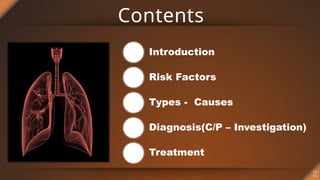
Contents
Introduction
Risk Factors
Types - Causes
Diagnosis(C/P – Investigation)
Treatment
INTRODUCTION
Definition
 Tuberculosis (TB) is a potentially fatal contagious
disease that can affect almost any part of the body
but is mainly an infection of the lungs.
 Neo-latin word :
o Tubercle = Round nodule/Swelling
o Osis = Condition
Global Status of TB
 Tuberculosis (TB) kills 1.6 million people a year
o 0.2 million people infected with HIV
o 98% of these deaths occur in the developing world.
 Close to 9 million new cases develop every year and about one
third of the world’s population is infected with Mycobacterium
tuberculosis.
 TB is a major cause of death among people with
HIV/AIDS and infection is the most potent risk factor for the
conversion of latent TBinfection to active
TB.
Global Status of TB
 Multidrug-resistant TB (MDR-TB) has emerged
in nearly every country of the world. Extensively
drug- resistant TB (XDR-TB) has been
identified in 17 countries and in all
geographical regions.
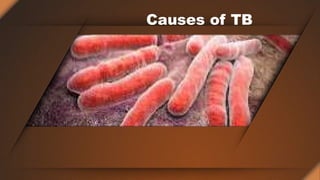
Causes of TB
Human
Animals
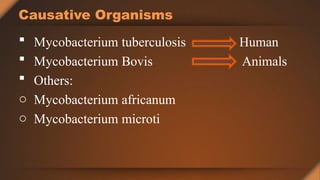
Causative Organisms
 Mycobacterium tuberculosis
 Mycobacterium Bovis
 Others:
o Mycobacterium africanum
o Mycobacterium microti
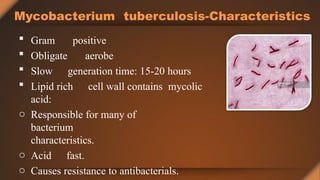
Mycobacterium tuberculosis-Characteristics
 Gram positive
 Obligate aerobe
 Slow generation time: 15-20 hours
 Lipid rich cell wall contains mycolic
acid:
o Responsible for many of
bacterium
characteristics.
o Acid fast.
o Causes resistance to antibacterials.
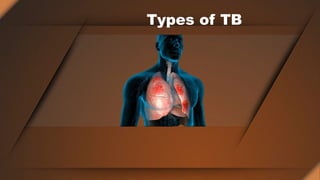
Types of TB
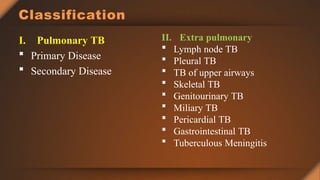
Classification
I. Pulmonary TB
 Primary Disease
 Secondary Disease
II. Extra pulmonary
 Lymph node TB
 Pleural TB
 TB of upper airways
 Skeletal TB
 Genitourinary TB
 Miliary TB
 Pericardial TB
 Gastrointestinal TB
 Tuberculous Meningitis
TYPES
I. Pulmonary TB
 Primary Tuberculosis :-
 The infection of an individual who has not
been previously infected or immunised
 Lesions forming after infection is peripheral
and accompanied by hilar which may not
be detectable on chestradiography.
TYPES
 Secondary Tuberculosis :
 The infection that individual who has been
previously infected or sensitized is
called secondary or postprimary or
reinfection or chronic tuberculosis.
TYPES
II. Extra-pulmonary TB
i. Lymph node TB ( tuberculuous lymphadenitis)
 Seen frequently in HIV infected patients.
 Symptoms :- Painless swelling of lymph nodes most commonly
at cervical and Supraclavical (Scrofula)
 Systemic systems are limited to HIV infected patients.
ii. Pleural TB
 Involvement of pleura is common in Primary TB
 and results from penetration of tubercle bacilli into pleural space.
TYPES
iii. TB of Upper airways
 Involvement of larynx, pharynx and epiglottis.
 Symptoms :- Dysphagia, chronic productive cough
iv. Genitourinary TB
• 15% of all Extra pulmonary cases.
• Any part of the genitourinary tract get infected.
• Symptoms :- Urinary frequency, Dysuria, Hematuria.
TYPES
v. Skeletal TB
 Involvement of weight bearing parts like spine, hip,
knee.
 Symptoms :- Pain in hip joints n knees, swelling of knees,
trauma.
vi. Gastrointestinal TB
 Involvement of any part of GI Tract.
 Symptoms :- Abdominal pain, diarrhea, weight loss
TYPES
vii. TB meningitis
 Results from Hematogenous spead of primary & secondary
TB.
viii.TB Pericarditis
 1- 8% of All Extra pulmonary TB cases.
 Spreads mainly in mediastinal or hilar nodes or from lungs.
TYPES
ix. Miliary or disseminated TB
 Results from Hematogenous spread of Tubercle Bacilli.
 Spread is due to entry of infection into pulmonary vein producing
lesions in different extra pulmonary sites.
x. Less common Extra Pulmonary TB
 uveitis, panophthalmitis, painful Hypersensitivity
related phlyctenular conjuctivis.
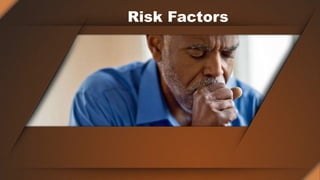
Risk Factors
Risk factors
 Elderly
 Infants
 Low socioeconomic status
 Crowded living conditions
 Disease that weakens immune system like HIV
 Alcoholism
 Recent Tubercular infection (within last 2 years)
and ect.
Diagnosis
Medical History
 HIV status
 Symptoms of disease
 History of TB exposure, infection, or disease
 Past TB treatment
 Demographic risk factors for TB
 Other medical conditions that increase risk for
TB disease (e.g., diabetes)
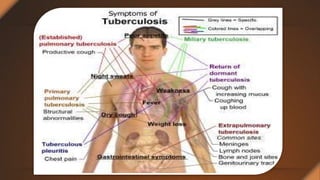
Systemic Symptoms
 Fever
 Chills
 Night sweats
 Appetite loss
 Weight loss
 Fatigue
Symptoms of Pulmonary TB
 Productive, prolonged cough (duration of
2-3 weeks)
 Chest pain
 Hemoptysis (bloody sputum)
 Symptoms may vary based on HIV status
Investigation
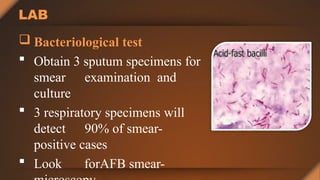
LAB
 Bacteriological test
 Obtain 3 sputum specimens for
smear examination and
culture
 3 respiratory specimens will
detect 90% of smear-
positive cases
 Look forAFB smear-
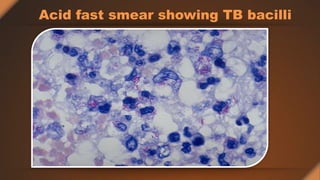
Acid fast smear showing TB bacilli
 PTB+ (Pulmonary TB smear-positive)
 One AFB-positive smear; i.e. any patient with at least
one positive smear result (irrespective of
quantity of AFBs seen on microscopy)
 PTB- (smear-negative)
iii.
i. Patients with three negative smear results and
radiological findings and doctor’s decision to treat for TB
ii. Patients with negative smear results and a positive
culture result for M. tuberculosis
Patients who are unable to produce sputum and with
highly suspicious radiological and clinical findings
and doctor's decision to treat for TB
LAB
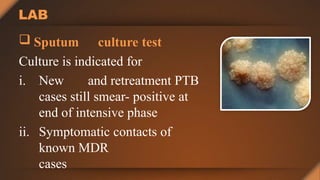
 Sputum culture test
Culture is indicated for
i. New and retreatment PTB
cases still smear- positive at
end of intensive phase
ii. Symptomatic contacts of
known MDR
cases
Radiography
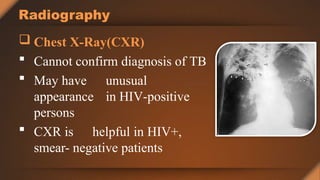
 Chest X-Ray(CXR)
 Cannot confirm diagnosis of TB
 May have unusual
appearance in HIV-positive
persons
 CXR is helpful in HIV+,
smear- negative patients
Tuberculin skin test (PPD)
 Injection of fluid into the skin of the lower
arm.
 48-72 hours later -checked for a reaction.
 Diagnosis is based on the size of the wheal:
o <6mm negative
o 6mm-15mm Hypersensitive to
tuberculin protein(Previous TB infection or BCG
– atypical mycobacteria)
o >15mm strongly Hypersensitive
to tuberculin protein(suggestive of TB
infection)
Other biological examinations
 Cell count(lymphocytes)
 Protein(Pandy and Rivalta tests) – Ascites,
pleural effusionand meningitis.
Treatment
Aims of TB Treatment
 Cure the patient of TB
 Prevent mortality from active TB or its latent
effects
 Prevent relapse of TB
 Decrease transmission of TB to others
 Prevent the development of acquired
resistance
Preventive measures
 Mask
 BCG vaccine
 Regular medical follow
up
 Isolation of Patient
 Ventilation
 Natural sunlight
BCG vaccine
 Only vaccine available today for protection
against tuberculosis.
 effective in protecting children from the disease.
 Given 0.1 ml intradermally.
 Duration of Protection 15 to 20 years
 Should be given to all healthy infants as soon as
possible after birth unless the child presented
with symptomatic HIV infection.
Basic Principles of Treatment
 Determine the patient’s HIV status- this could
save their
life!
 Provide safest, most effective therapy in shortest
time
 Multiple drugs to which the organisms
are susceptible
 Never add single drug to failing
regimen
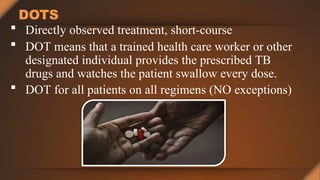
DOTS
 Directly observed treatment, short-course
 DOT means that a trained health care worker or other
designated individual provides the prescribed TB
drugs and watches the patient swallow every dose.
 DOT for all patients on all regimens (NO exceptions)
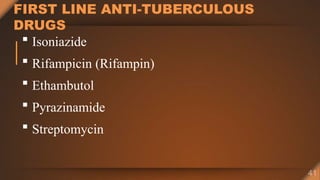
FIRST LINE ANTI-TUBERCULOUS
DRUGS
 Isoniazide
 Rifampicin (Rifampin)
 Ethambutol
 Pyrazinamide
 Streptomycin
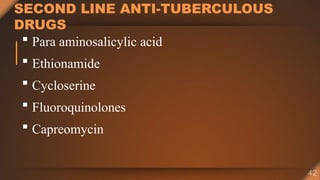
SECOND LINE ANTI-TUBERCULOUS
DRUGS
 Para aminosalicylic acid
 Ethionamide
 Cycloserine
 Fluoroquinolones
 Capreomycin
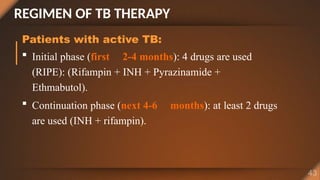
REGIMEN OF TB THERAPY
Patients with active TB:
 Initial phase (first 2-4 months): 4 drugs are used
(RIPE): (Rifampin + INH + Pyrazinamide +
Ethmabutol).
 Continuation phase (next 4-6 months): at least 2 drugs
are used (INH + rifampin).
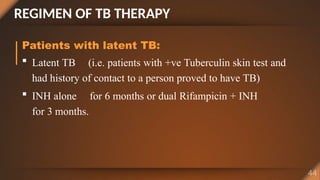
REGIMEN OF TB THERAPY
Patients with latent TB:
 Latent TB (i.e. patients with +ve Tuberculin skin test and
had history of contact to a person proved to have TB)
 INH alone for 6 months or dual Rifampicin + INH
for 3 months.
REGIMEN OF TB THERAPY
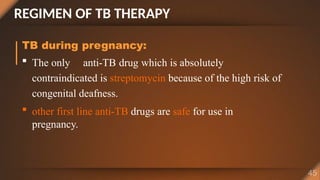
TB during pregnancy:
 The only anti-TB drug which is absolutely
contraindicated is streptomycin because of the high risk of
congenital deafness.
 other first line anti-TB drugs are safe for use in
pregnancy.
REGIMEN OF TB THERAPY
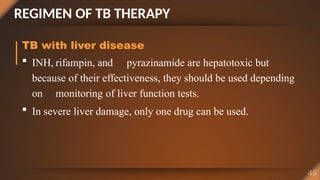
TB with liver disease
 INH, rifampin, and pyrazinamide are hepatotoxic but
because of their effectiveness, they should be used depending
on monitoring of liver function tests.
 In severe liver damage, only one drug can be used.
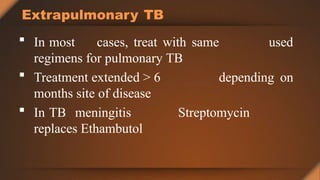
used
Extrapulmonary TB
 In most cases, treat with same
regimens for pulmonary TB
depending on
 Treatment extended > 6
months site of disease
 In TB meningitis Streptomycin
replaces Ethambutol
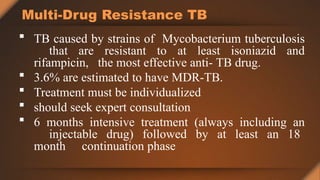
Multi-Drug Resistance TB
 TB caused by strains of Mycobacterium tuberculosis
that are resistant to at least isoniazid and
rifampicin, the most effective anti- TB drug.
 3.6% are estimated to have MDR-TB.
 Treatment must be individualized
 should seek expert consultation
 6 months intensive treatment (always including an
injectable drug) followed by at least an 18
month continuation phase
Extensively drug resistance TB
 is a form of TB caused by bacteria that are
resistant to isoniazid and rifampicin (i.e. MDR-
TB) as well as any fluoroquinolone and any of the
second-line anti-TB injectable drugs (amikacin,
kanamycin or capreomycin).
Tuberculosis and HIV
 HIV positive people with pulmonary TB may have a
higher frequency of having sputum negative smears.
 The tuberculin test often fails to work, because the
immune system has been damaged by HIV; It
may not even show a response even though the
person is infected with TB.
 Chest Xray will show less cavitation.
 Cases of Extra pulmonary TB are more common.
 Management of HIV-related TB is complex
Thank
you!
Any Questions?

tuberculosis AND NURSING MANAGEMNT .pptx

  • 1.
    Presented by- Mrs.Khushnasib Associate Professor Subject – Adult health nursing
  • 2.
    Tuberculosi s Presented by –Mrs. Khushnasib Associate Professor
  • 3.
    Contents Introduction Risk Factors Types -Causes Diagnosis(C/P – Investigation) Treatment
  • 4.
  • 5.
    Definition  Tuberculosis (TB)is a potentially fatal contagious disease that can affect almost any part of the body but is mainly an infection of the lungs.  Neo-latin word : o Tubercle = Round nodule/Swelling o Osis = Condition
  • 6.
    Global Status ofTB  Tuberculosis (TB) kills 1.6 million people a year o 0.2 million people infected with HIV o 98% of these deaths occur in the developing world.  Close to 9 million new cases develop every year and about one third of the world’s population is infected with Mycobacterium tuberculosis.  TB is a major cause of death among people with HIV/AIDS and infection is the most potent risk factor for the conversion of latent TBinfection to active TB.
  • 7.
    Global Status ofTB  Multidrug-resistant TB (MDR-TB) has emerged in nearly every country of the world. Extensively drug- resistant TB (XDR-TB) has been identified in 17 countries and in all geographical regions.
  • 8.
  • 9.
    Human Animals Causative Organisms  Mycobacteriumtuberculosis  Mycobacterium Bovis  Others: o Mycobacterium africanum o Mycobacterium microti
  • 10.
    Mycobacterium tuberculosis-Characteristics  Grampositive  Obligate aerobe  Slow generation time: 15-20 hours  Lipid rich cell wall contains mycolic acid: o Responsible for many of bacterium characteristics. o Acid fast. o Causes resistance to antibacterials.
  • 11.
  • 12.
    Classification I. Pulmonary TB Primary Disease  Secondary Disease II. Extra pulmonary  Lymph node TB  Pleural TB  TB of upper airways  Skeletal TB  Genitourinary TB  Miliary TB  Pericardial TB  Gastrointestinal TB  Tuberculous Meningitis
  • 13.
    TYPES I. Pulmonary TB Primary Tuberculosis :-  The infection of an individual who has not been previously infected or immunised  Lesions forming after infection is peripheral and accompanied by hilar which may not be detectable on chestradiography.
  • 14.
    TYPES  Secondary Tuberculosis:  The infection that individual who has been previously infected or sensitized is called secondary or postprimary or reinfection or chronic tuberculosis.
  • 15.
    TYPES II. Extra-pulmonary TB i.Lymph node TB ( tuberculuous lymphadenitis)  Seen frequently in HIV infected patients.  Symptoms :- Painless swelling of lymph nodes most commonly at cervical and Supraclavical (Scrofula)  Systemic systems are limited to HIV infected patients. ii. Pleural TB  Involvement of pleura is common in Primary TB  and results from penetration of tubercle bacilli into pleural space.
  • 16.
    TYPES iii. TB ofUpper airways  Involvement of larynx, pharynx and epiglottis.  Symptoms :- Dysphagia, chronic productive cough iv. Genitourinary TB • 15% of all Extra pulmonary cases. • Any part of the genitourinary tract get infected. • Symptoms :- Urinary frequency, Dysuria, Hematuria.
  • 17.
    TYPES v. Skeletal TB Involvement of weight bearing parts like spine, hip, knee.  Symptoms :- Pain in hip joints n knees, swelling of knees, trauma. vi. Gastrointestinal TB  Involvement of any part of GI Tract.  Symptoms :- Abdominal pain, diarrhea, weight loss
  • 18.
    TYPES vii. TB meningitis Results from Hematogenous spead of primary & secondary TB. viii.TB Pericarditis  1- 8% of All Extra pulmonary TB cases.  Spreads mainly in mediastinal or hilar nodes or from lungs.
  • 19.
    TYPES ix. Miliary ordisseminated TB  Results from Hematogenous spread of Tubercle Bacilli.  Spread is due to entry of infection into pulmonary vein producing lesions in different extra pulmonary sites. x. Less common Extra Pulmonary TB  uveitis, panophthalmitis, painful Hypersensitivity related phlyctenular conjuctivis.
  • 20.
  • 21.
    Risk factors  Elderly Infants  Low socioeconomic status  Crowded living conditions  Disease that weakens immune system like HIV  Alcoholism  Recent Tubercular infection (within last 2 years) and ect.
  • 22.
  • 23.
    Medical History  HIVstatus  Symptoms of disease  History of TB exposure, infection, or disease  Past TB treatment  Demographic risk factors for TB  Other medical conditions that increase risk for TB disease (e.g., diabetes)
  • 24.
    Systemic Symptoms  Fever Chills  Night sweats  Appetite loss  Weight loss  Fatigue
  • 25.
    Symptoms of PulmonaryTB  Productive, prolonged cough (duration of 2-3 weeks)  Chest pain  Hemoptysis (bloody sputum)  Symptoms may vary based on HIV status
  • 27.
  • 28.
    LAB  Bacteriological test Obtain 3 sputum specimens for smear examination and culture  3 respiratory specimens will detect 90% of smear- positive cases  Look forAFB smear-
  • 29.
    Acid fast smearshowing TB bacilli
  • 30.
     PTB+ (PulmonaryTB smear-positive)  One AFB-positive smear; i.e. any patient with at least one positive smear result (irrespective of quantity of AFBs seen on microscopy)  PTB- (smear-negative) iii. i. Patients with three negative smear results and radiological findings and doctor’s decision to treat for TB ii. Patients with negative smear results and a positive culture result for M. tuberculosis Patients who are unable to produce sputum and with highly suspicious radiological and clinical findings and doctor's decision to treat for TB
  • 31.
    LAB  Sputum culturetest Culture is indicated for i. New and retreatment PTB cases still smear- positive at end of intensive phase ii. Symptomatic contacts of known MDR cases
  • 32.
    Radiography  Chest X-Ray(CXR) Cannot confirm diagnosis of TB  May have unusual appearance in HIV-positive persons  CXR is helpful in HIV+, smear- negative patients
  • 33.
    Tuberculin skin test(PPD)  Injection of fluid into the skin of the lower arm.  48-72 hours later -checked for a reaction.  Diagnosis is based on the size of the wheal: o <6mm negative o 6mm-15mm Hypersensitive to tuberculin protein(Previous TB infection or BCG – atypical mycobacteria) o >15mm strongly Hypersensitive to tuberculin protein(suggestive of TB infection)
  • 35.
    Other biological examinations Cell count(lymphocytes)  Protein(Pandy and Rivalta tests) – Ascites, pleural effusionand meningitis.
  • 36.
  • 37.
    Aims of TBTreatment  Cure the patient of TB  Prevent mortality from active TB or its latent effects  Prevent relapse of TB  Decrease transmission of TB to others  Prevent the development of acquired resistance
  • 38.
    Preventive measures  Mask BCG vaccine  Regular medical follow up  Isolation of Patient  Ventilation  Natural sunlight
  • 39.
    BCG vaccine  Onlyvaccine available today for protection against tuberculosis.  effective in protecting children from the disease.  Given 0.1 ml intradermally.  Duration of Protection 15 to 20 years  Should be given to all healthy infants as soon as possible after birth unless the child presented with symptomatic HIV infection.
  • 40.
    Basic Principles ofTreatment  Determine the patient’s HIV status- this could save their life!  Provide safest, most effective therapy in shortest time  Multiple drugs to which the organisms are susceptible  Never add single drug to failing regimen
  • 41.
    DOTS  Directly observedtreatment, short-course  DOT means that a trained health care worker or other designated individual provides the prescribed TB drugs and watches the patient swallow every dose.  DOT for all patients on all regimens (NO exceptions)
  • 42.
    FIRST LINE ANTI-TUBERCULOUS DRUGS Isoniazide  Rifampicin (Rifampin)  Ethambutol  Pyrazinamide  Streptomycin
  • 43.
    SECOND LINE ANTI-TUBERCULOUS DRUGS Para aminosalicylic acid  Ethionamide  Cycloserine  Fluoroquinolones  Capreomycin
  • 44.
    REGIMEN OF TBTHERAPY Patients with active TB:  Initial phase (first 2-4 months): 4 drugs are used (RIPE): (Rifampin + INH + Pyrazinamide + Ethmabutol).  Continuation phase (next 4-6 months): at least 2 drugs are used (INH + rifampin).
  • 45.
    REGIMEN OF TBTHERAPY Patients with latent TB:  Latent TB (i.e. patients with +ve Tuberculin skin test and had history of contact to a person proved to have TB)  INH alone for 6 months or dual Rifampicin + INH for 3 months.
  • 46.
    REGIMEN OF TBTHERAPY TB during pregnancy:  The only anti-TB drug which is absolutely contraindicated is streptomycin because of the high risk of congenital deafness.  other first line anti-TB drugs are safe for use in pregnancy.
  • 47.
    REGIMEN OF TBTHERAPY TB with liver disease  INH, rifampin, and pyrazinamide are hepatotoxic but because of their effectiveness, they should be used depending on monitoring of liver function tests.  In severe liver damage, only one drug can be used.
  • 48.
    used Extrapulmonary TB  Inmost cases, treat with same regimens for pulmonary TB depending on  Treatment extended > 6 months site of disease  In TB meningitis Streptomycin replaces Ethambutol
  • 49.
    Multi-Drug Resistance TB TB caused by strains of Mycobacterium tuberculosis that are resistant to at least isoniazid and rifampicin, the most effective anti- TB drug.  3.6% are estimated to have MDR-TB.  Treatment must be individualized  should seek expert consultation  6 months intensive treatment (always including an injectable drug) followed by at least an 18 month continuation phase
  • 50.
    Extensively drug resistanceTB  is a form of TB caused by bacteria that are resistant to isoniazid and rifampicin (i.e. MDR- TB) as well as any fluoroquinolone and any of the second-line anti-TB injectable drugs (amikacin, kanamycin or capreomycin).
  • 51.
    Tuberculosis and HIV HIV positive people with pulmonary TB may have a higher frequency of having sputum negative smears.  The tuberculin test often fails to work, because the immune system has been damaged by HIV; It may not even show a response even though the person is infected with TB.  Chest Xray will show less cavitation.  Cases of Extra pulmonary TB are more common.  Management of HIV-related TB is complex
  • 52.