CHRISTU JYOTHI INSTITUTE OF
TECHNOLOGY AND SCIENCES
Colombonagar ,Jangaon
WHAT IS
TRANSPORT
LAYER?
Transport Layer
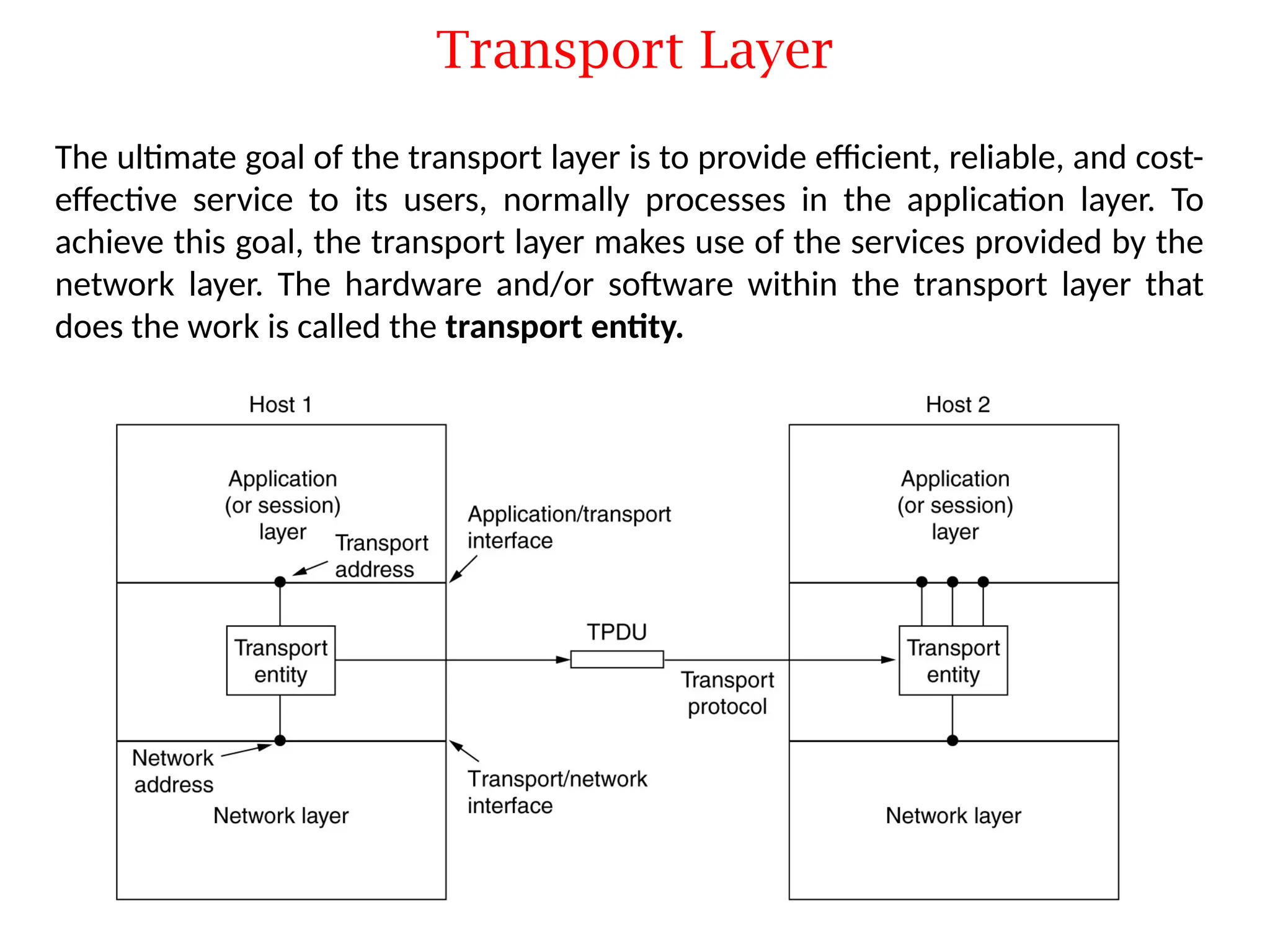
The ultimate goal of the transport layer is to provide efficient, reliable, and cost-
effective service to its users, normally processes in the application layer. To
achieve this goal, the transport layer makes use of the services provided by the
network layer. The hardware and/or software within the transport layer that
does the work is called the transport entity.
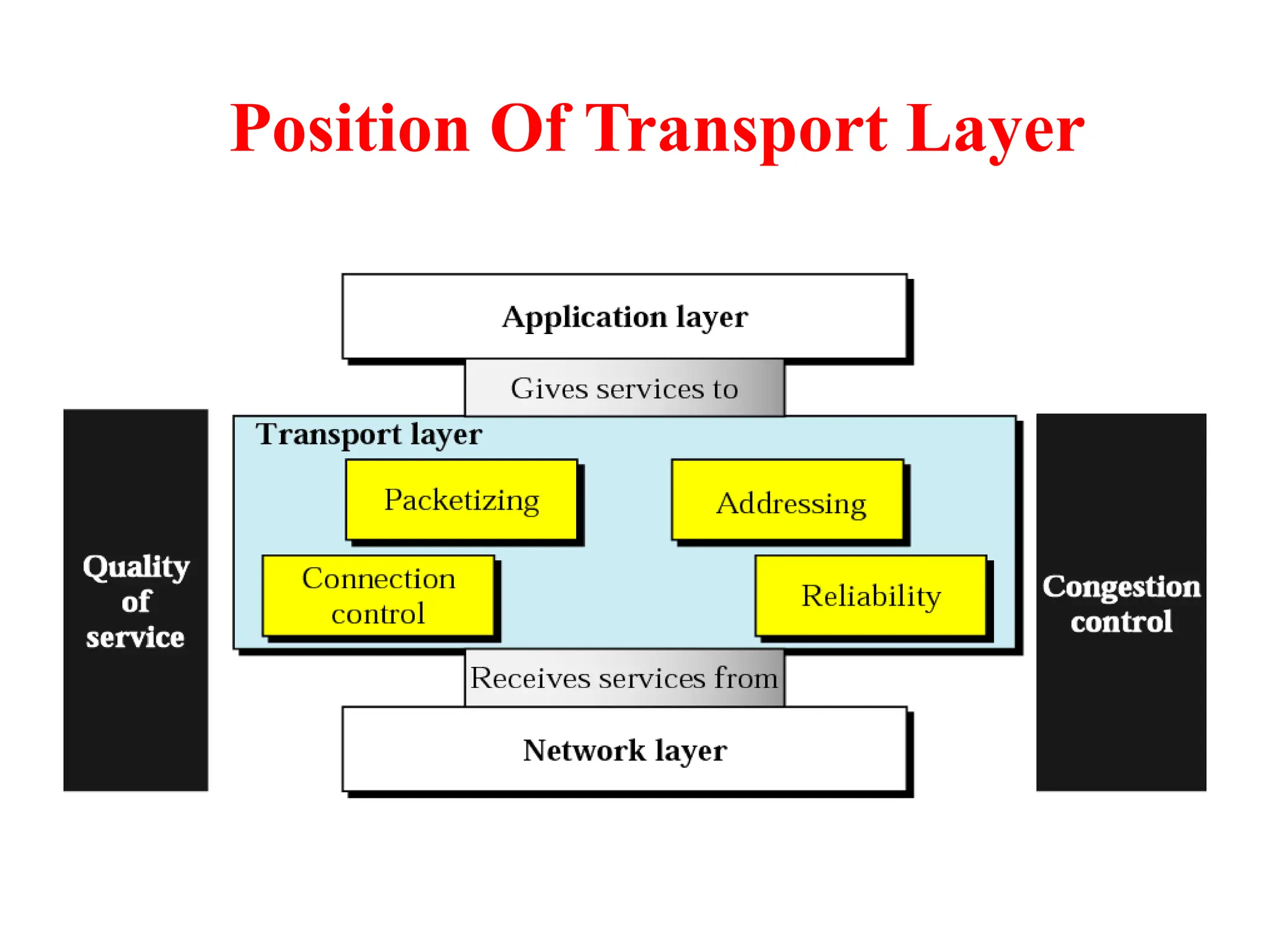
Position Of Transport Layer
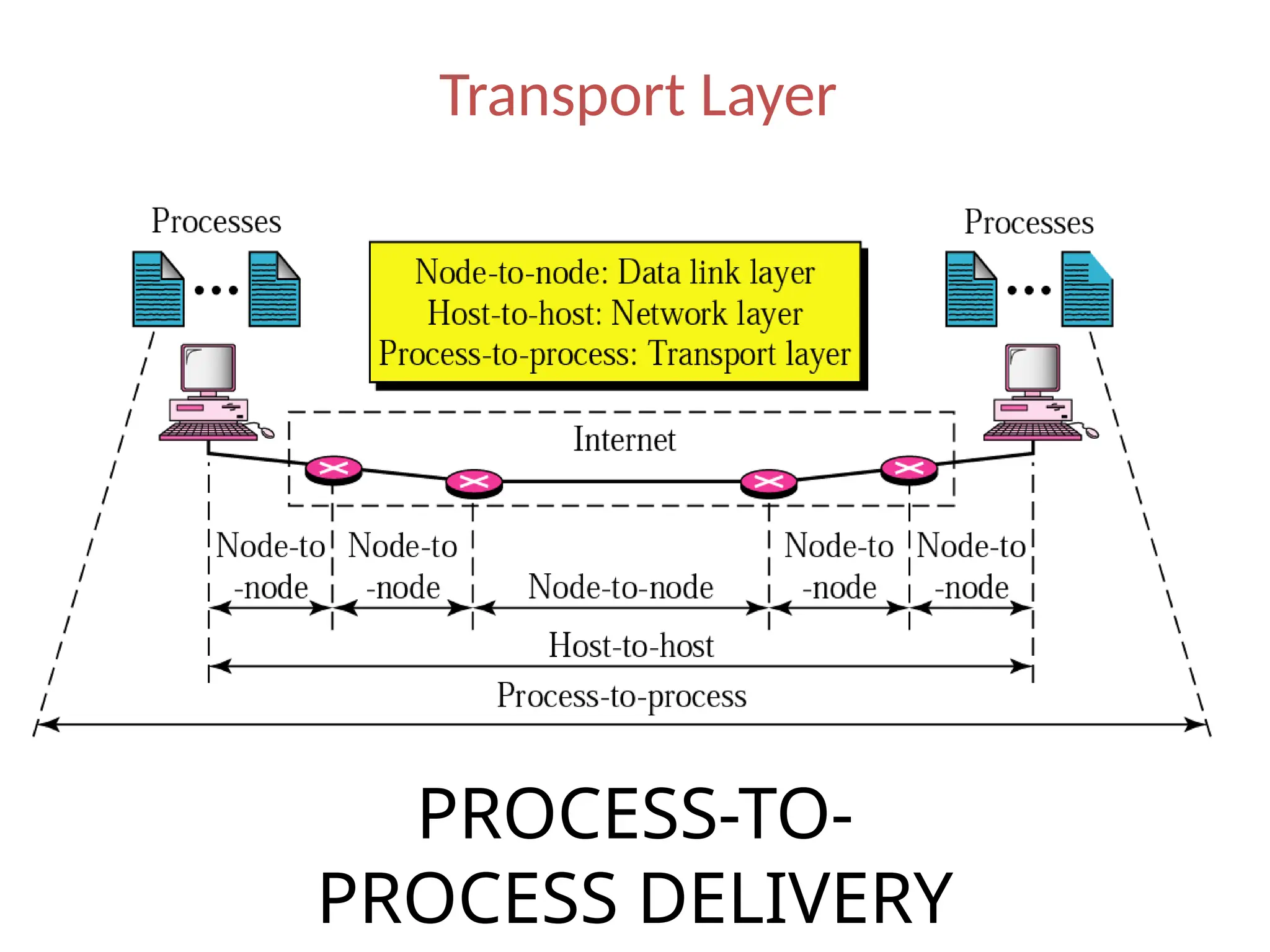
Transport Layer
PROCESS-TO-
PROCESS DELIVERY
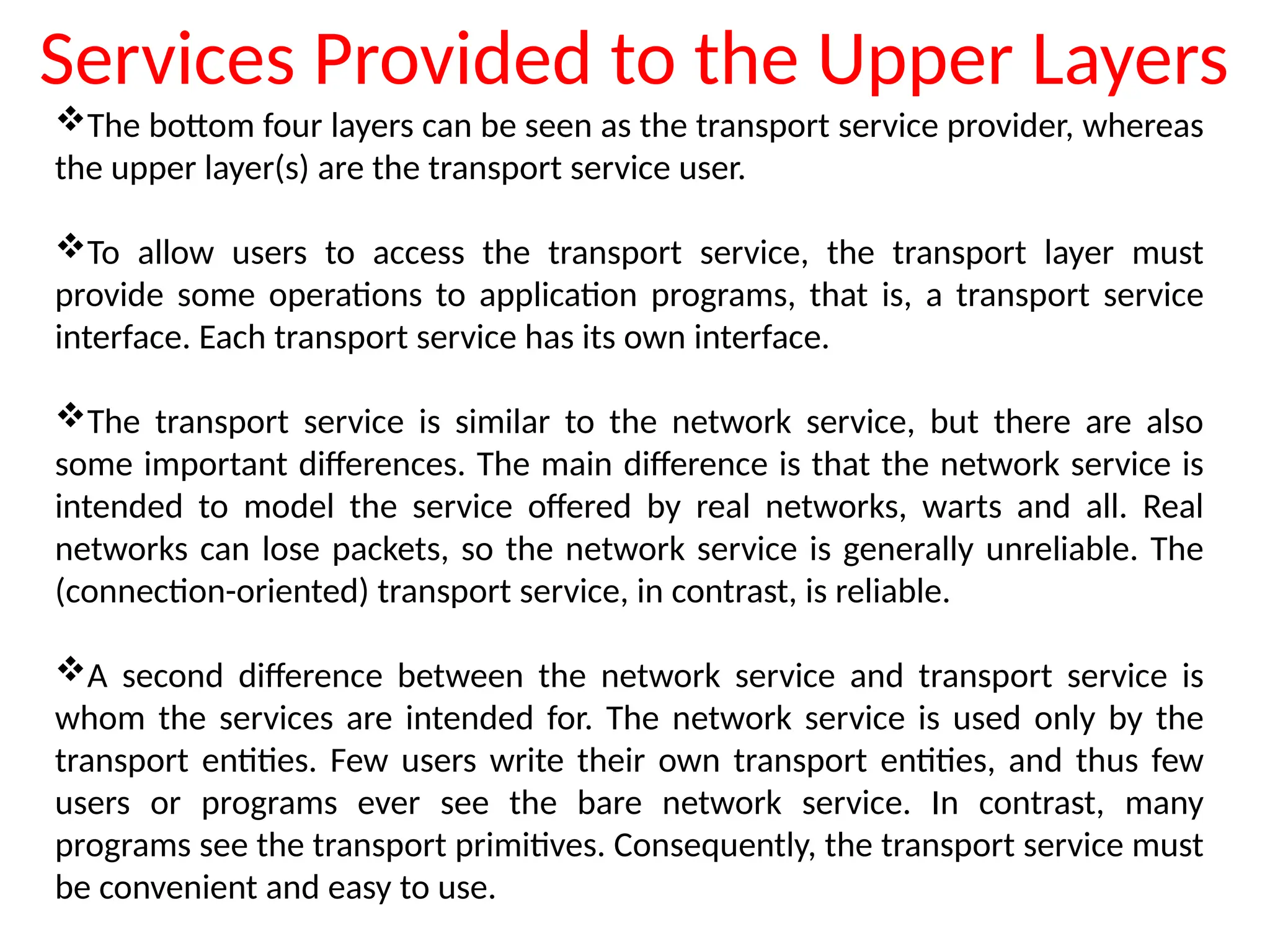
The bottom four layers can be seen as the transport service provider, whereas
the upper layer(s) are the transport service user.
To allow users to access the transport service, the transport layer must
provide some operations to application programs, that is, a transport service
interface. Each transport service has its own interface.
The transport service is similar to the network service, but there are also
some important differences. The main difference is that the network service is
intended to model the service offered by real networks, warts and all. Real
networks can lose packets, so the network service is generally unreliable. The
(connection-oriented) transport service, in contrast, is reliable.
A second difference between the network service and transport service is
whom the services are intended for. The network service is used only by the
transport entities. Few users write their own transport entities, and thus few
users or programs ever see the bare network service. In contrast, many
programs see the transport primitives. Consequently, the transport service must
be convenient and easy to use.
Services Provided to the Upper Layers
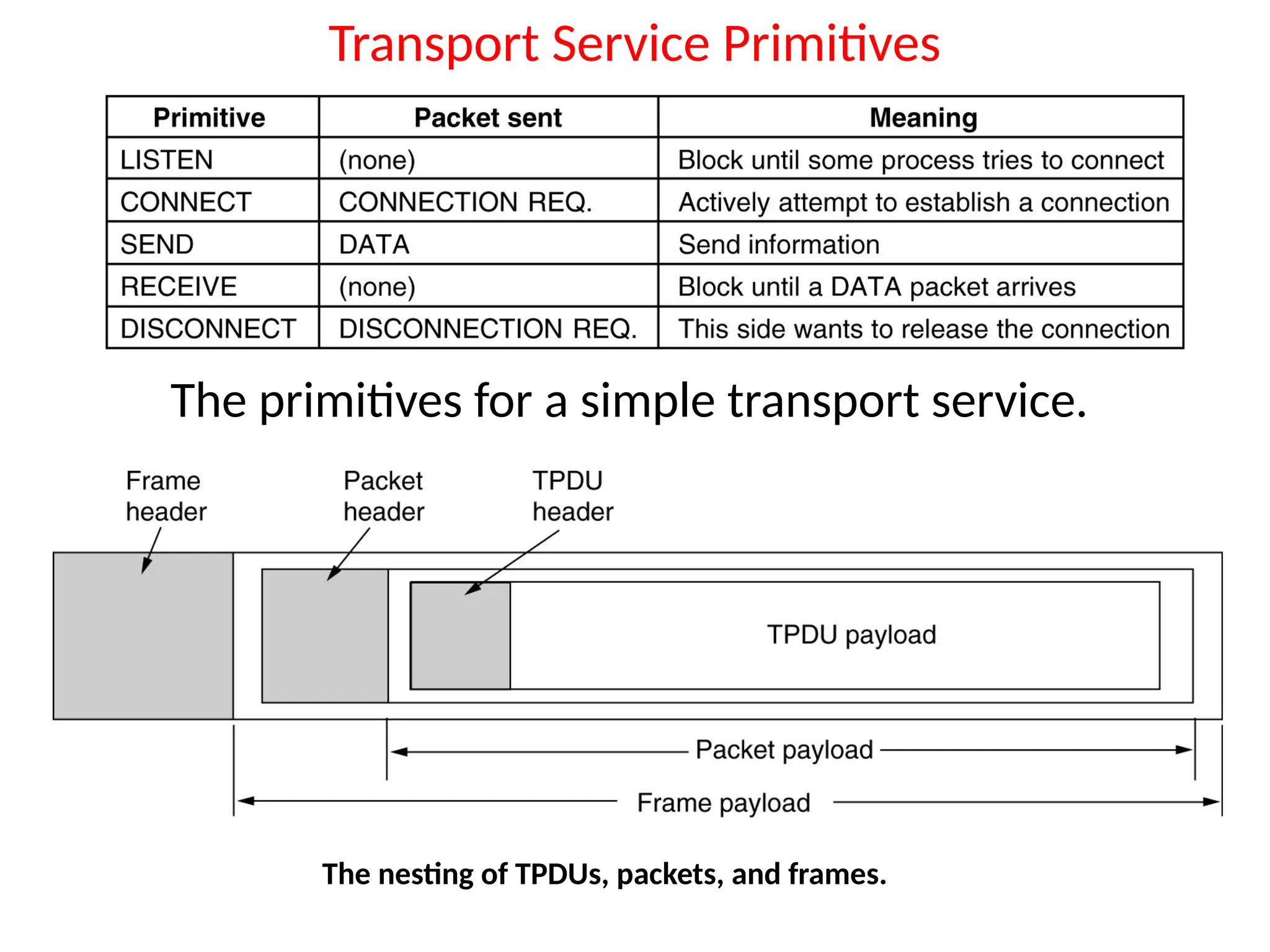
Transport Service Primitives
The primitives for a simple transport service.
The nesting of TPDUs, packets, and frames.
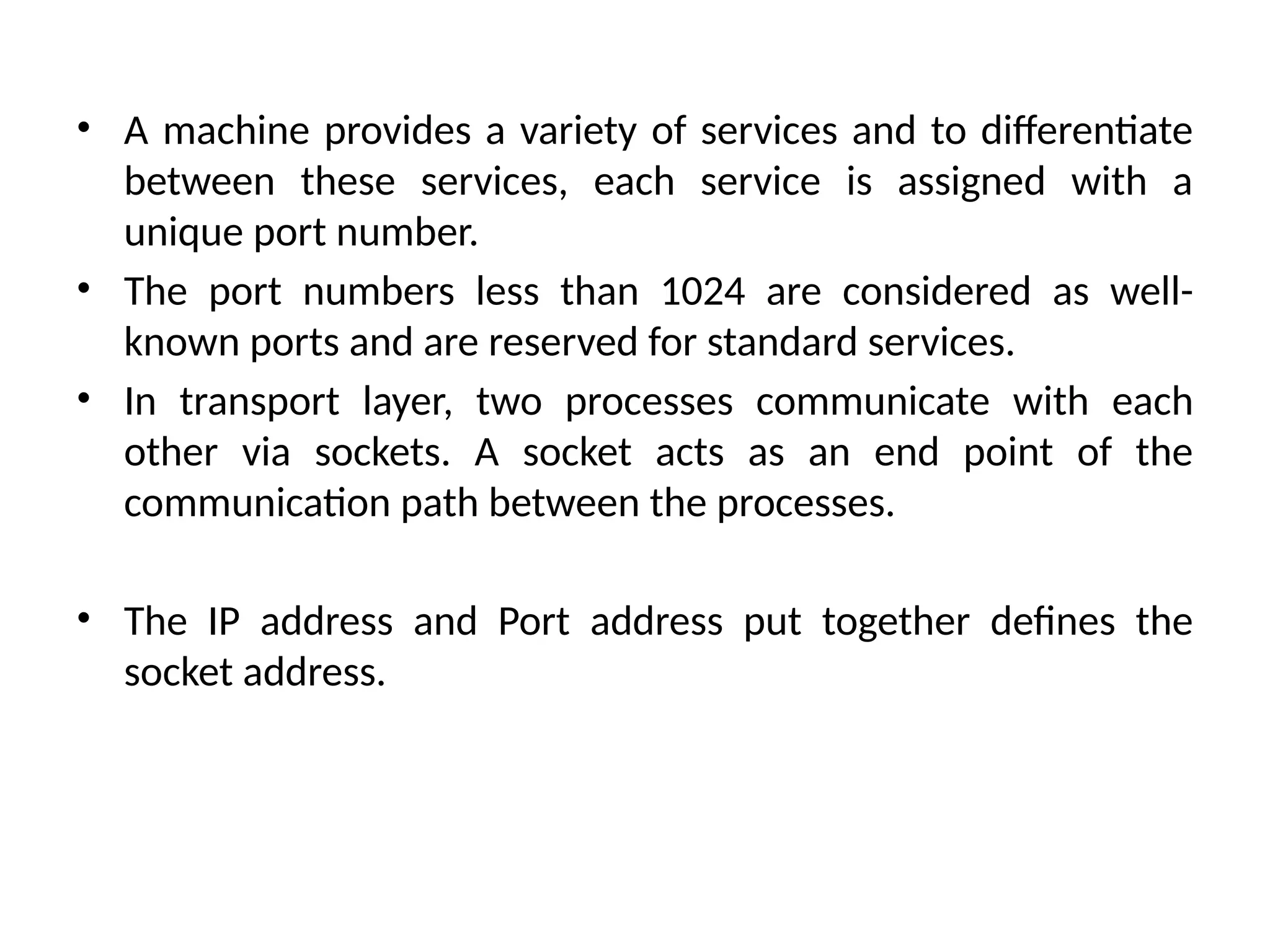
• A machine provides a variety of services and to differentiate
between these services, each service is assigned with a
unique port number.
• The port numbers less than 1024 are considered as well-
known ports and are reserved for standard services.
• In transport layer, two processes communicate with each
other via sockets. A socket acts as an end point of the
communication path between the processes.
• The IP address and Port address put together defines the
socket address.
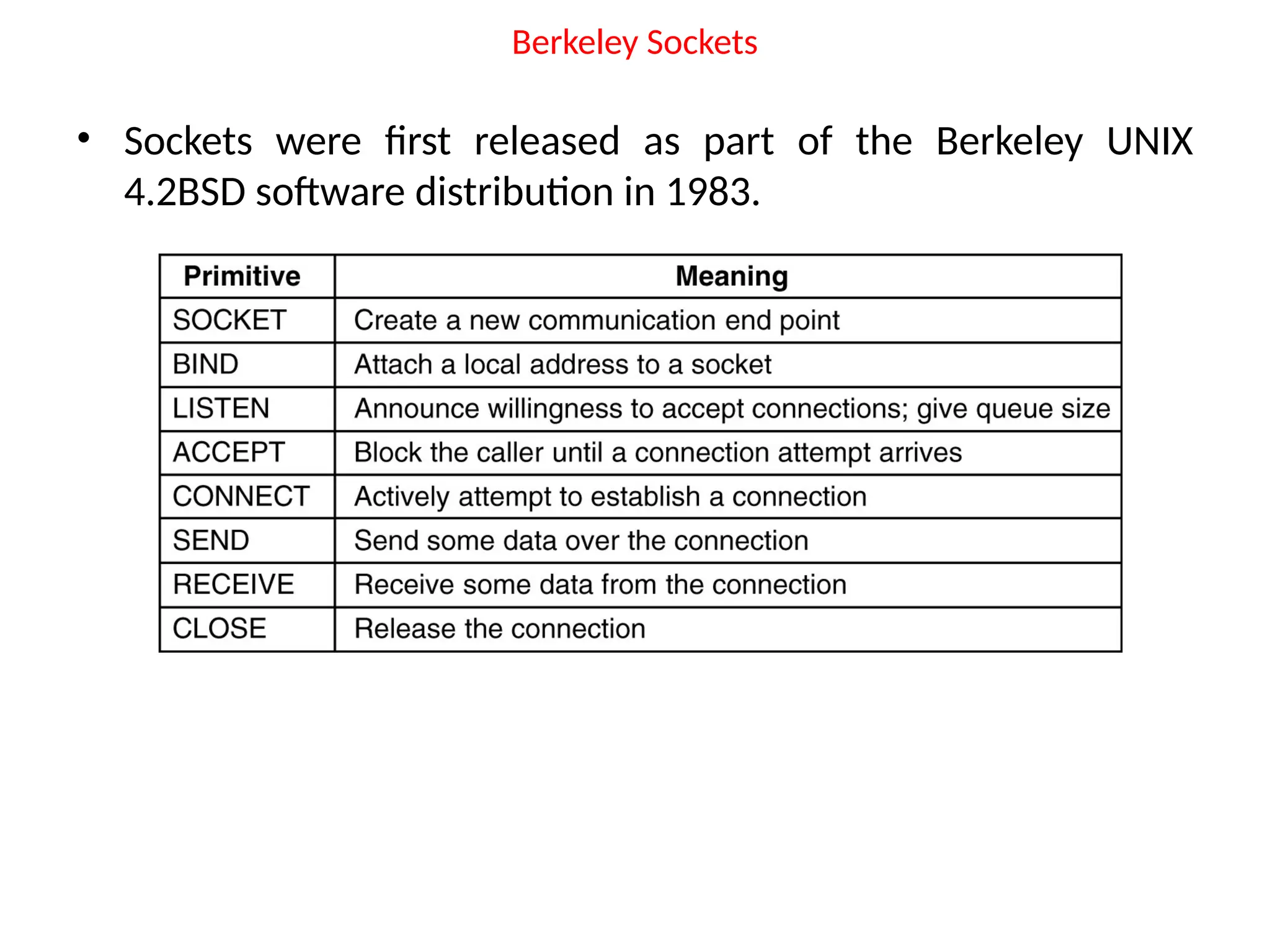
• Sockets were first released as part of the Berkeley UNIX
4.2BSD software distribution in 1983.
Berkeley Sockets
THANK YOU

transport Layer in Computer Networks Pptx

  • 1.
    CHRISTU JYOTHI INSTITUTEOF TECHNOLOGY AND SCIENCES Colombonagar ,Jangaon
  • 2.
  • 3.
    Transport Layer The ultimategoal of the transport layer is to provide efficient, reliable, and cost- effective service to its users, normally processes in the application layer. To achieve this goal, the transport layer makes use of the services provided by the network layer. The hardware and/or software within the transport layer that does the work is called the transport entity.
  • 4.
  • 5.
  • 6.
    The bottom fourlayers can be seen as the transport service provider, whereas the upper layer(s) are the transport service user. To allow users to access the transport service, the transport layer must provide some operations to application programs, that is, a transport service interface. Each transport service has its own interface. The transport service is similar to the network service, but there are also some important differences. The main difference is that the network service is intended to model the service offered by real networks, warts and all. Real networks can lose packets, so the network service is generally unreliable. The (connection-oriented) transport service, in contrast, is reliable. A second difference between the network service and transport service is whom the services are intended for. The network service is used only by the transport entities. Few users write their own transport entities, and thus few users or programs ever see the bare network service. In contrast, many programs see the transport primitives. Consequently, the transport service must be convenient and easy to use. Services Provided to the Upper Layers
  • 7.
    Transport Service Primitives Theprimitives for a simple transport service. The nesting of TPDUs, packets, and frames.
  • 8.
    • A machineprovides a variety of services and to differentiate between these services, each service is assigned with a unique port number. • The port numbers less than 1024 are considered as well- known ports and are reserved for standard services. • In transport layer, two processes communicate with each other via sockets. A socket acts as an end point of the communication path between the processes. • The IP address and Port address put together defines the socket address.
  • 9.
    • Sockets werefirst released as part of the Berkeley UNIX 4.2BSD software distribution in 1983. Berkeley Sockets
  • 10.