


Donal O’Leary
Sr. Advisor
Transparency International Secretariat
Berlin, GERMANY









Definition/Elements of Integrity Pacts (IPs)
Roles and responsibilities of stakeholders,
including civil society
Conditions for success
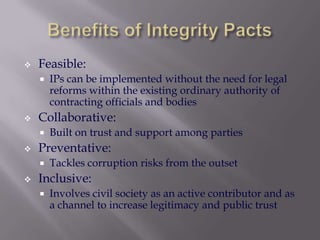
Benefits of Integrity Pacts
Limitations of Integrity Pacts
In what kinds of contracts can IPs be applied
Contracting Process and Corruption Risks at
Each Stage
Objectives:
 Enables companies/contractors to abstain from bribing
 Others will not bribe
 Government authority takes measures to prevent
corruption/extortion
 Enables governments to reduce high costs and
distorting impact of corruption
In addition, the IP seeks to contribute to
 Building up public confidence in the procurement
system
 Improving the investment climate


Formal Agreement between a Government Agency and Bidders for
Public Contracts
 Establishes rights and obligations between parties
 Provides for sanctions in case of violation
 Provides for Alternative Dispute Resolution



Process occurring during all stages of procurement
 Increased transparency
 External, independent monitoring
 Detection of risks/red flags, facilitating corrective measures



Applicable to all sectors & types of contracts



Frequently, IPs add value to other aspects of project
preparation/implementation








Political will of authority to reduce corruption
and promote integrity
Maximum transparency via public access to
relevant information

Third party independent monitoring to verify
fulfillment of obligations by the parties
Multi-Stakeholder Involvement by civil society
organizations (CSOs), government and private
companies


Feasible:




Collaborative:




Built on trust and support among parties

Preventative:




IPs can be implemented without the need for legal
reforms within the existing ordinary authority of
contracting officials and bodies

Tackles corruption risks from the outset

Inclusive:


Involves civil society as an active contributor and as
a channel to increase legitimacy and public trust
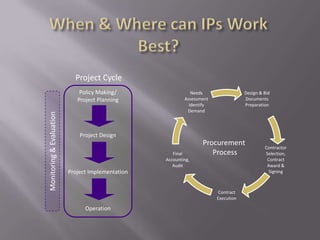
Project Cycle

Monitoring & Evaluation

Policy Making/
Project Planning

Needs
Assessment
Identify
Demand

Design & Bid
Documents
Preparation

Project Design
Final
Accounting,
Audit

Procurement
Process

Project Implementation
Contract
Execution

Operation

Contractor
Selection,
Contract
Award &
Signing
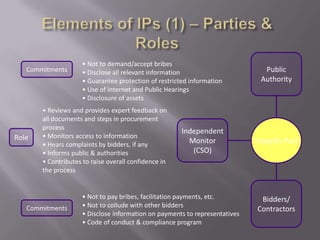
Commitments

Role

• Not to demand/accept bribes
• Disclose all relevant information
• Guarantee protection of restricted information
• Use of Internet and Public Hearings
• Disclosure of assets

• Reviews and provides expert feedback on
all documents and steps in procurement
process
• Monitors access to information
• Hears complaints by bidders, if any
• Informs public & authorities
• Contributes to raise overall confidence in
the process

Commitments

Independent
Monitor
(CSO)

• Not to pay bribes, facilitation payments, etc.
• Not to collude with other bidders
• Disclose information on payments to representatives
• Code of conduct & compliance program

Public
Authority

Integrity Pact

Bidders/
Contractors
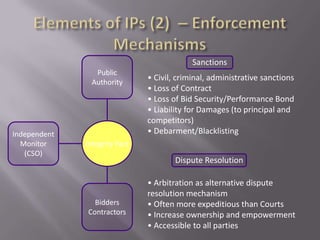
Sanctions
Public
Authority

Independent
Monitor
(CSO)

• Civil, criminal, administrative sanctions
• Loss of Contract
• Loss of Bid Security/Performance Bond
• Liability for Damages (to principal and
competitors)
• Debarment/Blacklisting

Integrity Pact

Dispute Resolution

Bidders
Contractors

• Arbitration as alternative dispute
resolution mechanism
• Often more expeditious than Courts
• Increase ownership and empowerment
• Accessible to all parties








They cannot rule out corruption 100%
Need proper monitoring and careful implementation
to be effective
Aimed at changing behavior during contracting
processes
Do not replace the role of control, oversight and
regulatory agencies = complements them
While increasing participation of different
stakeholders, they do not release Government from its
responsibility for managing the contracting process
While transparency and accountability is important in
the budgeting/planning process, this are not an area
where IPs can contribute


Will I scare away bidders in requiring an IP?






OECD Anti-bribery Convention, UNCAC
In many jurisdictions, corruption is a crime
Good outcome, if bidders not willing to sign an IP, do not
submit a bid

Why is an IP valuable, if there are good anticorruption laws in place?

Persistence of corruption indicates need for other
mechanisms to assure compliance
 Monitor’s job is to assure everybody’s commitment to the
IP
 Through increasing access to information and
accountability and ensuring the correct implementation of
procedures, increases trust in the law and Government.





IPs can be applied for any kind of contract and
for any kind of project
Examples
 The

buyer/recipient of state property as part of a
Government’s state asset privatization program
 Engineering, architectural and other consultants
 The beneficiary of a state license or concession
 Management contracts for an electricity/water
utility (and other service delivery contracts)
 Construction and supply contracts


Needs Assessment



Project Preparation



Contract Selection, Award and Signature



Contract Execution



Final Accounting & Decommissioning (When
Applicable)






Corruption is a continuing problem with
contracting
IPs are a ‘light ‘ effective approach towards
reducing corruption in contracting
However, IPs are not a panacea – we should be
aware of their limitations


Transparency International and Water Integrity
Network, 2010. Integrity Pacts in the Water Sector:
An Implementation Guide for Government Officials.
http://www.waterintegritynetwork.net/page/3456
THANK YOU
FOR

YOUR ATTENTION

Introduction to Integrity Pacts - A Tool for Countering Corruption in Public Contracting

  • 1.
    Donal O’Leary Sr. Advisor TransparencyInternational Secretariat Berlin, GERMANY
  • 2.
           Definition/Elements of IntegrityPacts (IPs) Roles and responsibilities of stakeholders, including civil society Conditions for success Benefits of Integrity Pacts Limitations of Integrity Pacts In what kinds of contracts can IPs be applied Contracting Process and Corruption Risks at Each Stage
  • 3.
    Objectives:  Enables companies/contractorsto abstain from bribing  Others will not bribe  Government authority takes measures to prevent corruption/extortion  Enables governments to reduce high costs and distorting impact of corruption In addition, the IP seeks to contribute to  Building up public confidence in the procurement system  Improving the investment climate
  • 4.
     Formal Agreement betweena Government Agency and Bidders for Public Contracts  Establishes rights and obligations between parties  Provides for sanctions in case of violation  Provides for Alternative Dispute Resolution  Process occurring during all stages of procurement  Increased transparency  External, independent monitoring  Detection of risks/red flags, facilitating corrective measures  Applicable to all sectors & types of contracts  Frequently, IPs add value to other aspects of project preparation/implementation
  • 5.
        Political will ofauthority to reduce corruption and promote integrity Maximum transparency via public access to relevant information Third party independent monitoring to verify fulfillment of obligations by the parties Multi-Stakeholder Involvement by civil society organizations (CSOs), government and private companies
  • 6.
     Feasible:   Collaborative:   Built on trustand support among parties Preventative:   IPs can be implemented without the need for legal reforms within the existing ordinary authority of contracting officials and bodies Tackles corruption risks from the outset Inclusive:  Involves civil society as an active contributor and as a channel to increase legitimacy and public trust
  • 7.
    Project Cycle Monitoring &Evaluation Policy Making/ Project Planning Needs Assessment Identify Demand Design & Bid Documents Preparation Project Design Final Accounting, Audit Procurement Process Project Implementation Contract Execution Operation Contractor Selection, Contract Award & Signing
  • 8.
    Commitments Role • Not todemand/accept bribes • Disclose all relevant information • Guarantee protection of restricted information • Use of Internet and Public Hearings • Disclosure of assets • Reviews and provides expert feedback on all documents and steps in procurement process • Monitors access to information • Hears complaints by bidders, if any • Informs public & authorities • Contributes to raise overall confidence in the process Commitments Independent Monitor (CSO) • Not to pay bribes, facilitation payments, etc. • Not to collude with other bidders • Disclose information on payments to representatives • Code of conduct & compliance program Public Authority Integrity Pact Bidders/ Contractors
  • 9.
    Sanctions Public Authority Independent Monitor (CSO) • Civil, criminal,administrative sanctions • Loss of Contract • Loss of Bid Security/Performance Bond • Liability for Damages (to principal and competitors) • Debarment/Blacklisting Integrity Pact Dispute Resolution Bidders Contractors • Arbitration as alternative dispute resolution mechanism • Often more expeditious than Courts • Increase ownership and empowerment • Accessible to all parties
  • 10.
          They cannot ruleout corruption 100% Need proper monitoring and careful implementation to be effective Aimed at changing behavior during contracting processes Do not replace the role of control, oversight and regulatory agencies = complements them While increasing participation of different stakeholders, they do not release Government from its responsibility for managing the contracting process While transparency and accountability is important in the budgeting/planning process, this are not an area where IPs can contribute
  • 11.
     Will I scareaway bidders in requiring an IP?     OECD Anti-bribery Convention, UNCAC In many jurisdictions, corruption is a crime Good outcome, if bidders not willing to sign an IP, do not submit a bid Why is an IP valuable, if there are good anticorruption laws in place? Persistence of corruption indicates need for other mechanisms to assure compliance  Monitor’s job is to assure everybody’s commitment to the IP  Through increasing access to information and accountability and ensuring the correct implementation of procedures, increases trust in the law and Government. 
  • 12.
      IPs can beapplied for any kind of contract and for any kind of project Examples  The buyer/recipient of state property as part of a Government’s state asset privatization program  Engineering, architectural and other consultants  The beneficiary of a state license or concession  Management contracts for an electricity/water utility (and other service delivery contracts)  Construction and supply contracts
  • 13.
     Needs Assessment  Project Preparation  ContractSelection, Award and Signature  Contract Execution  Final Accounting & Decommissioning (When Applicable)
  • 14.
       Corruption is acontinuing problem with contracting IPs are a ‘light ‘ effective approach towards reducing corruption in contracting However, IPs are not a panacea – we should be aware of their limitations
  • 15.
     Transparency International andWater Integrity Network, 2010. Integrity Pacts in the Water Sector: An Implementation Guide for Government Officials. http://www.waterintegritynetwork.net/page/3456
  • 16.

Editor's Notes

  • #3 IP benefits to the champion, benefits to Government; and benefits to private sector