Talent Enhancement
through
Training and Development
Prof. Sweta Singh
Training Versus Development
• Training is defined as any attempt to improve employee performance
on a currently held job or one related to it.
• Help to fix any current deficit in employee’s skills.
• Development refers to learning opportunities designed to help
employees grow.
• Long-term approach to help employees prepare for future work demands.
TMD 2024
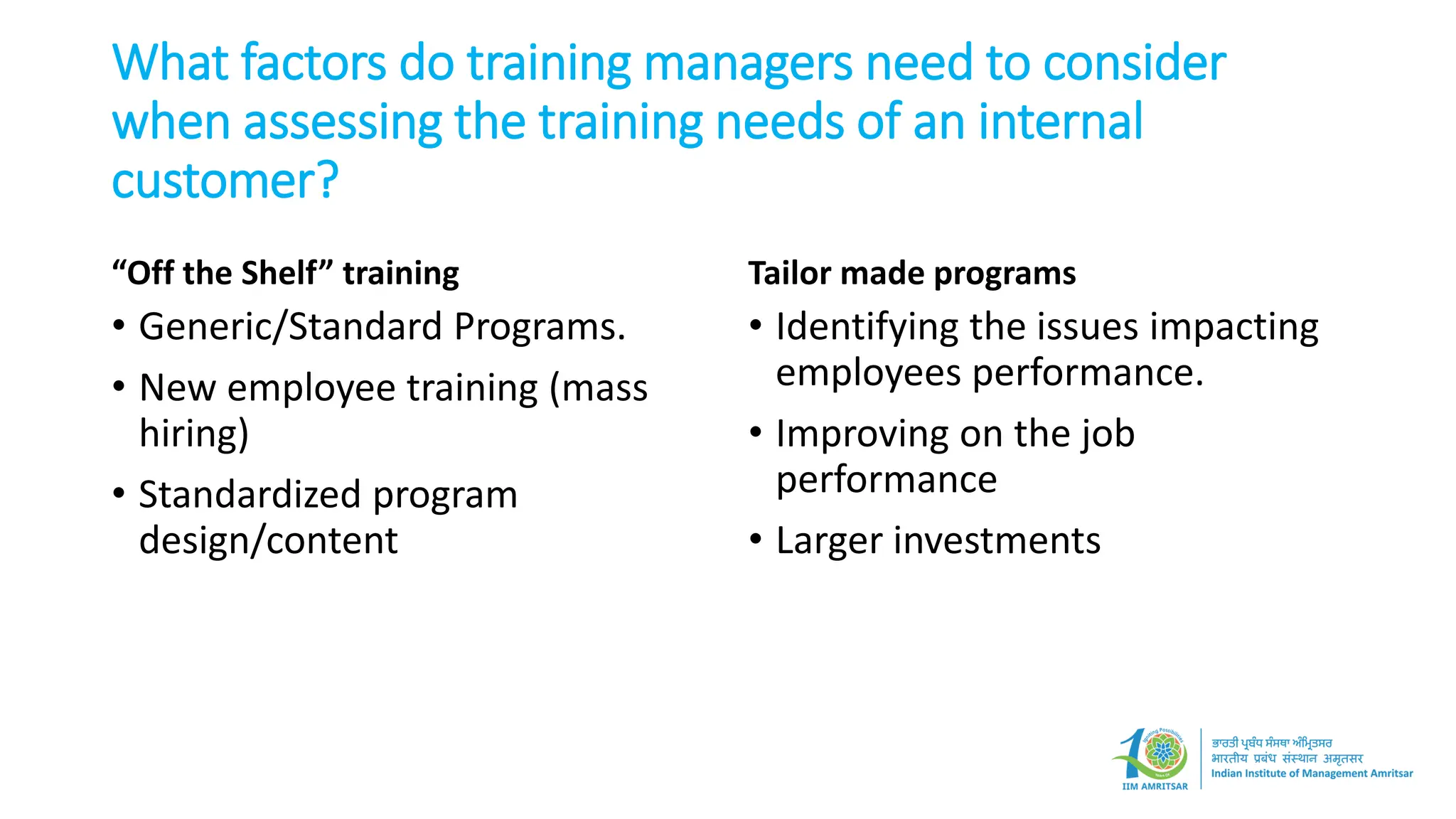
What factors do training managers need to consider
when assessing the training needs of an internal
customer?
“Off the Shelf” training
• Generic/Standard Programs.
• New employee training (mass
hiring)
• Standardized program
design/content
Tailor made programs
• Identifying the issues impacting
employees performance.
• Improving on the job
performance
• Larger investments
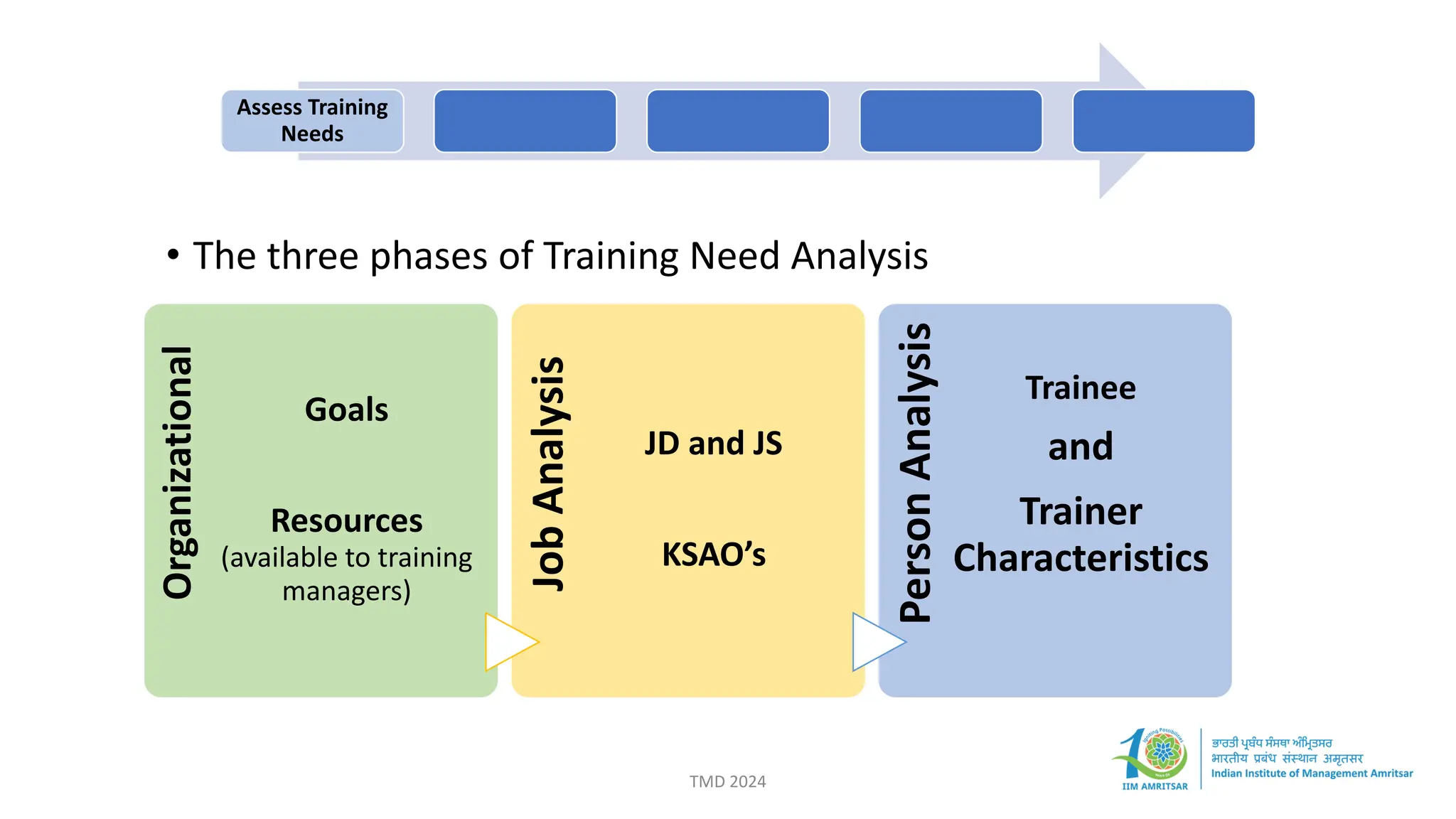
• The three phases of Training Need Analysis
Assess Training
Needs
Organizational
Goals
Resources
(available to training
managers)
Job
Analysis
JD and JS
KSAO’s
Person
Analysis
Trainee
and
Trainer
Characteristics
TMD 2024
Trainee Characteristics affecting success of training
program
• Trainee Motivation
• Self Efficacy
• Personality and Cognitive Ability
• Proactive personality, extraversion, openness to experience
TMD 2024
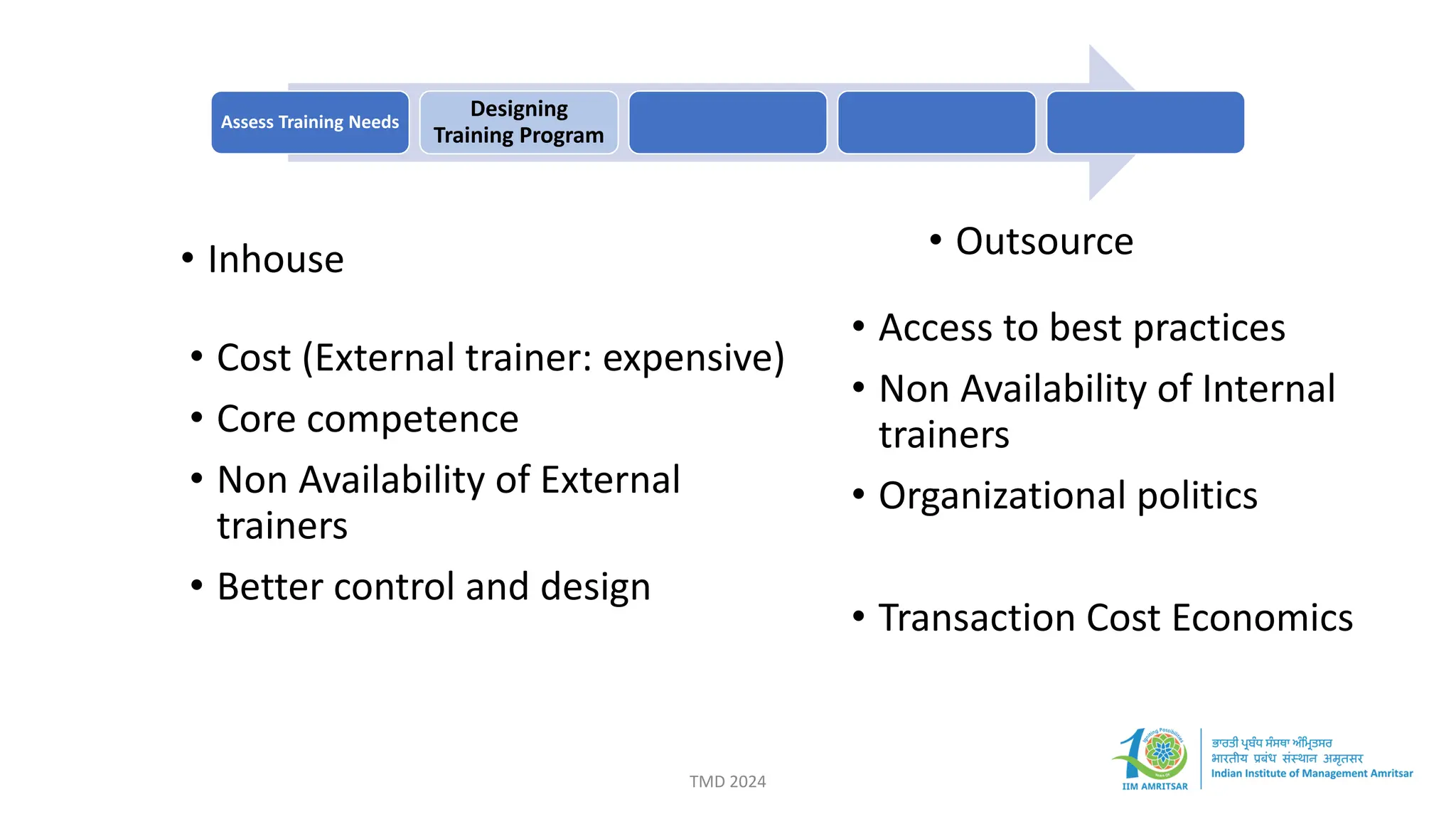
Assess Training Needs
Designing
Training Program
TMD 2024
• Outsource
• Access to best practices
• Non Availability of Internal
trainers
• Organizational politics
• Transaction Cost Economics
• Inhouse
• Cost (External trainer: expensive)
• Core competence
• Non Availability of External
trainers
• Better control and design
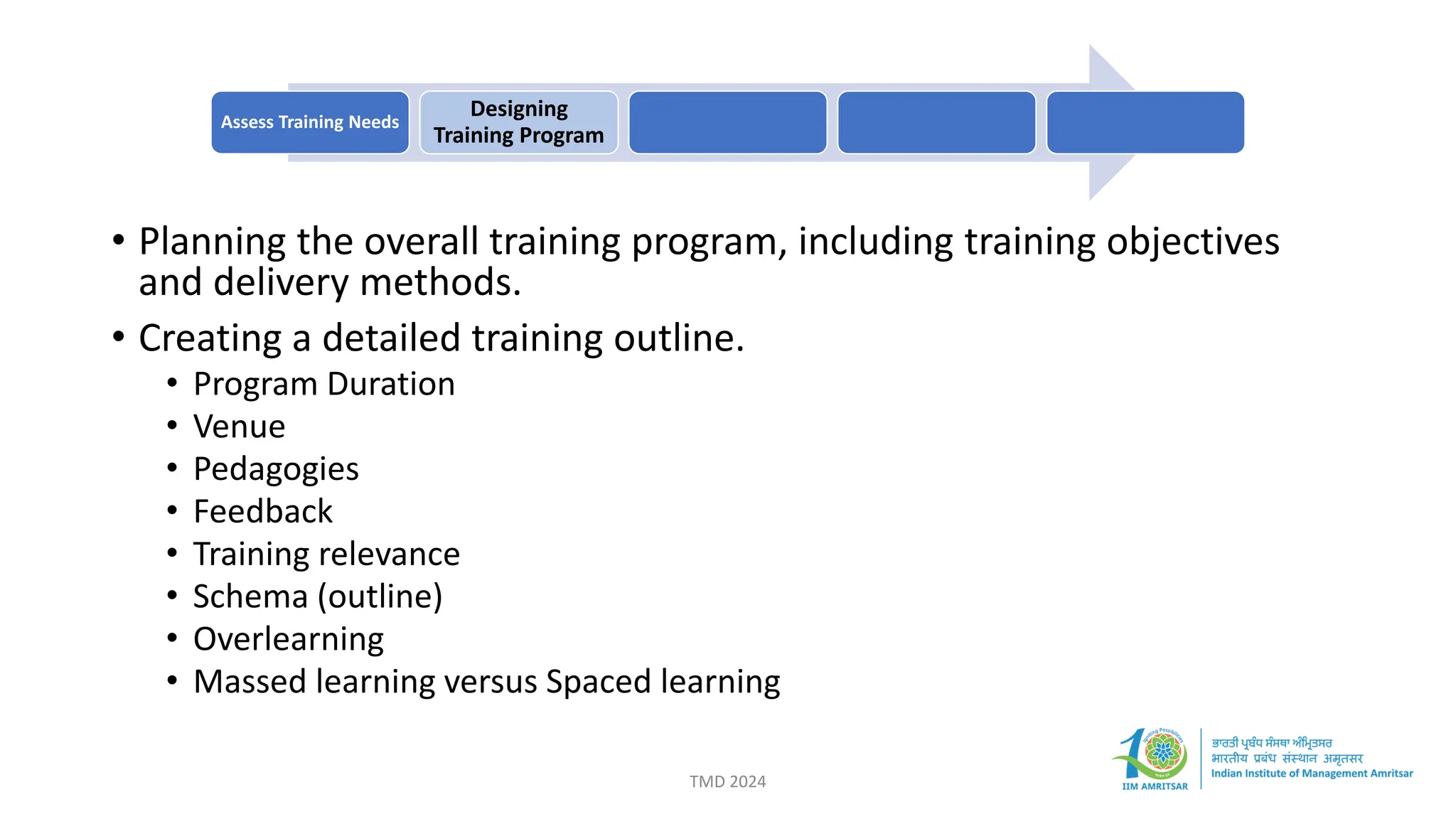
• Planning the overall training program, including training objectives
and delivery methods.
• Creating a detailed training outline.
• Program Duration
• Venue
• Pedagogies
• Feedback
• Training relevance
• Schema (outline)
• Overlearning
• Massed learning versus Spaced learning
Assess Training Needs
Designing
Training Program
TMD 2024
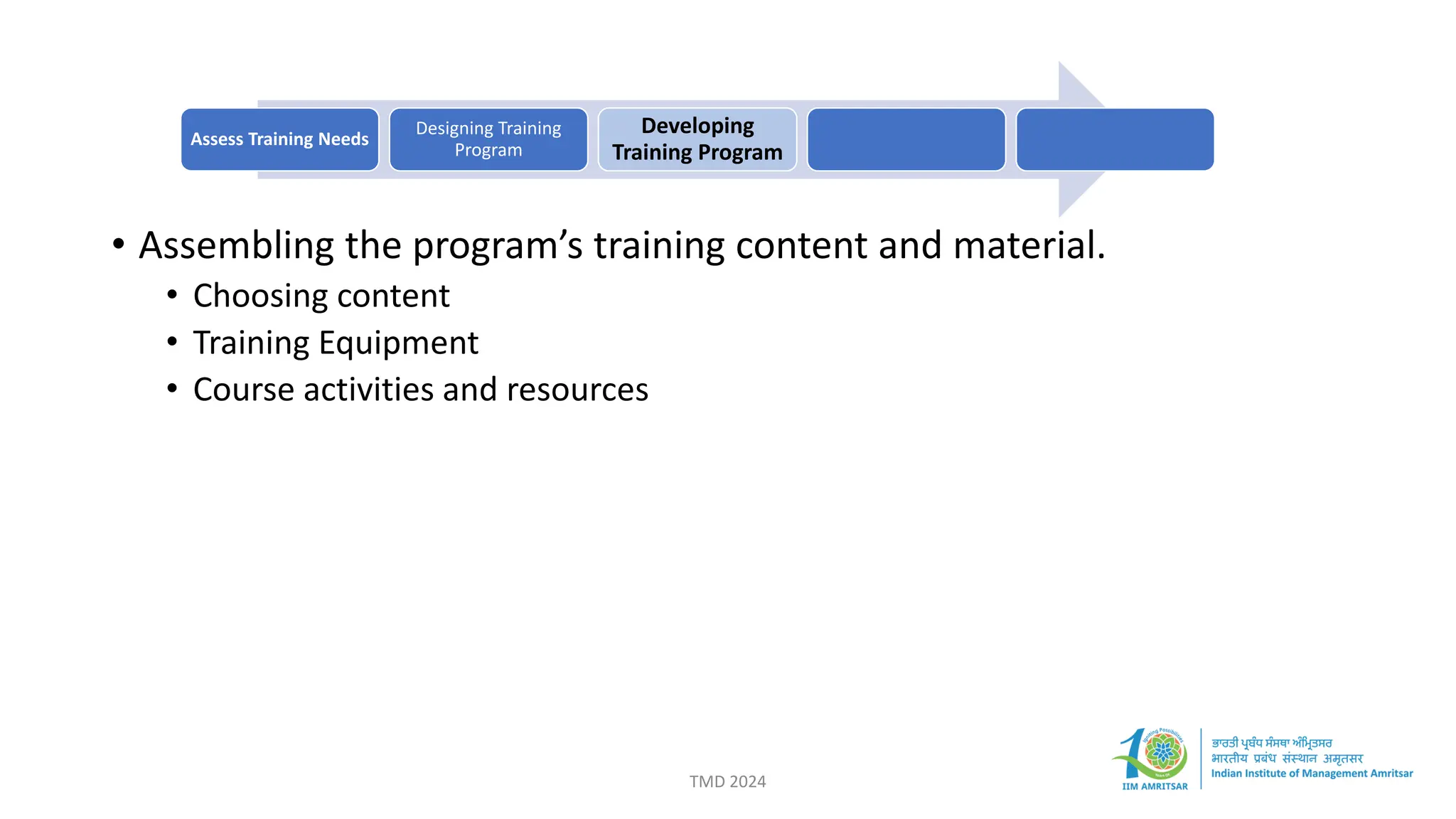
• Assembling the program’s training content and material.
• Choosing content
• Training Equipment
• Course activities and resources
Assess Training Needs
Designing Training
Program
Developing
Training Program
TMD 2024
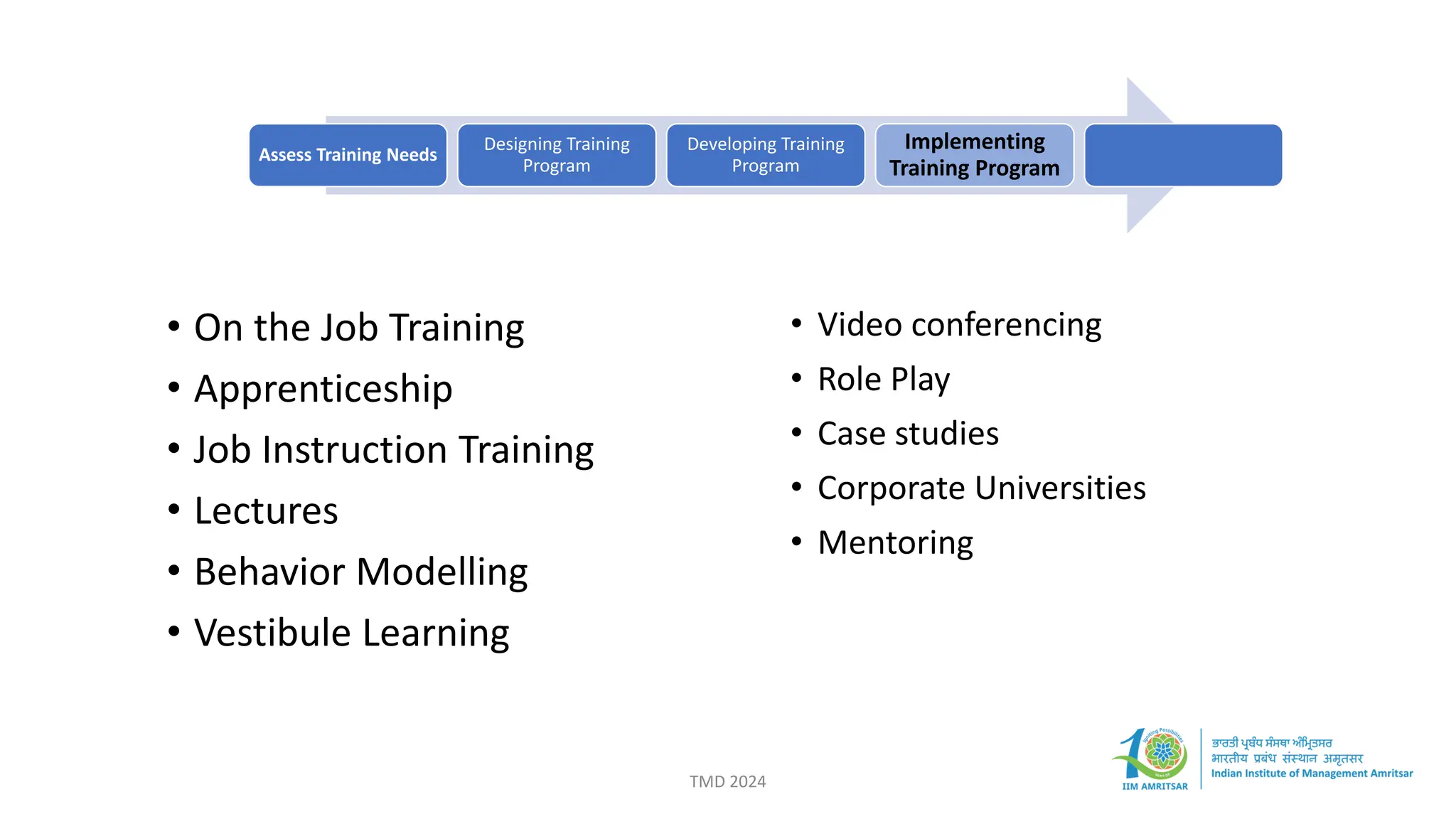
• On the Job Training
• Apprenticeship
• Job Instruction Training
• Lectures
• Behavior Modelling
• Vestibule Learning
Assess Training Needs
Designing Training
Program
Developing Training
Program
Implementing
Training Program
• Video conferencing
• Role Play
• Case studies
• Corporate Universities
• Mentoring
TMD 2024
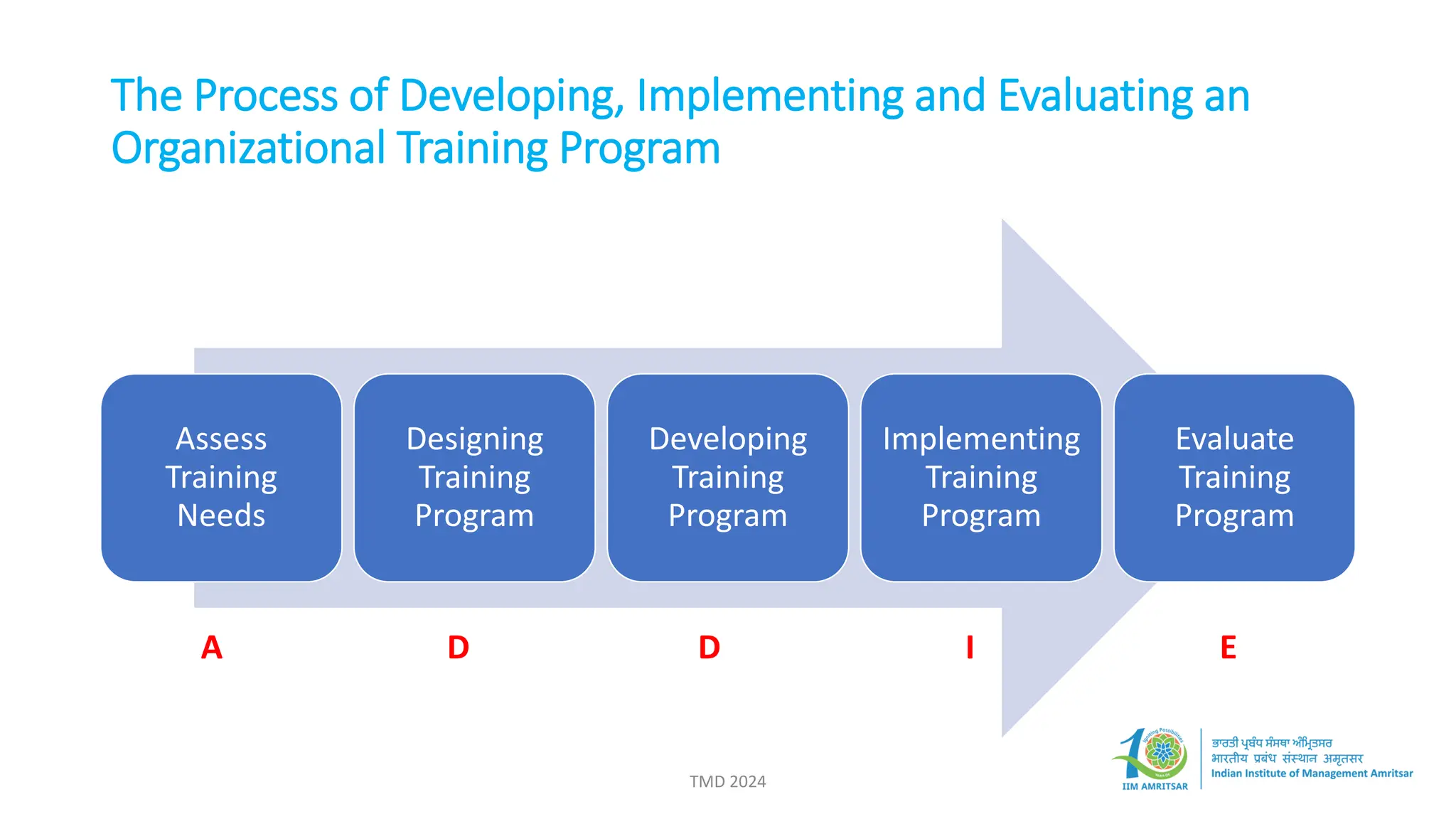
The Process of Developing, Implementing and Evaluating an
Organizational Training Program
Assess
Training
Needs
Designing
Training
Program
Developing
Training
Program
Implementing
Training
Program
Evaluate
Training
Program
A D D I E
TMD 2024
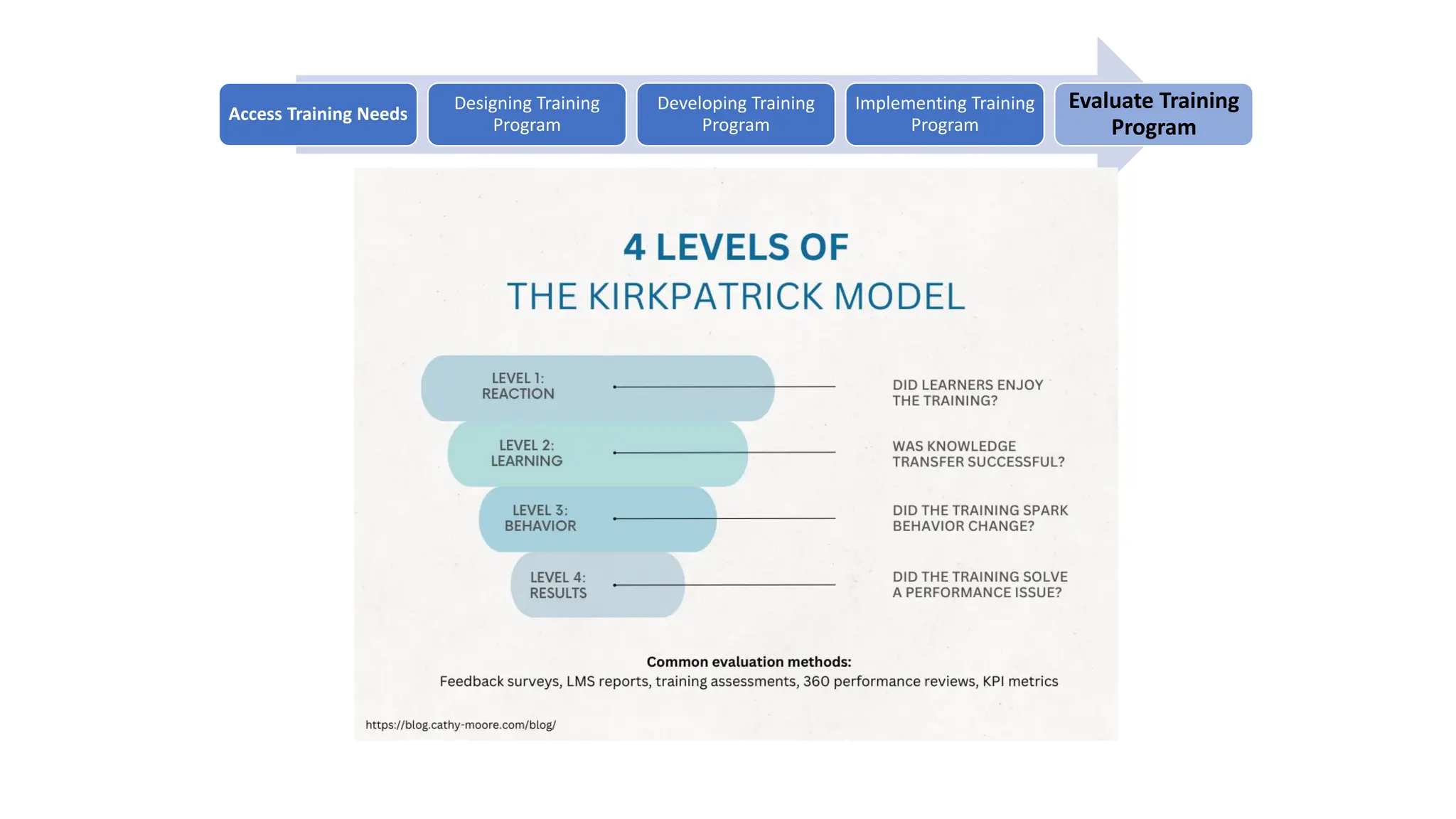
Access Training Needs
Designing Training
Program
Developing Training
Program
Implementing Training
Program
Evaluate Training
Program
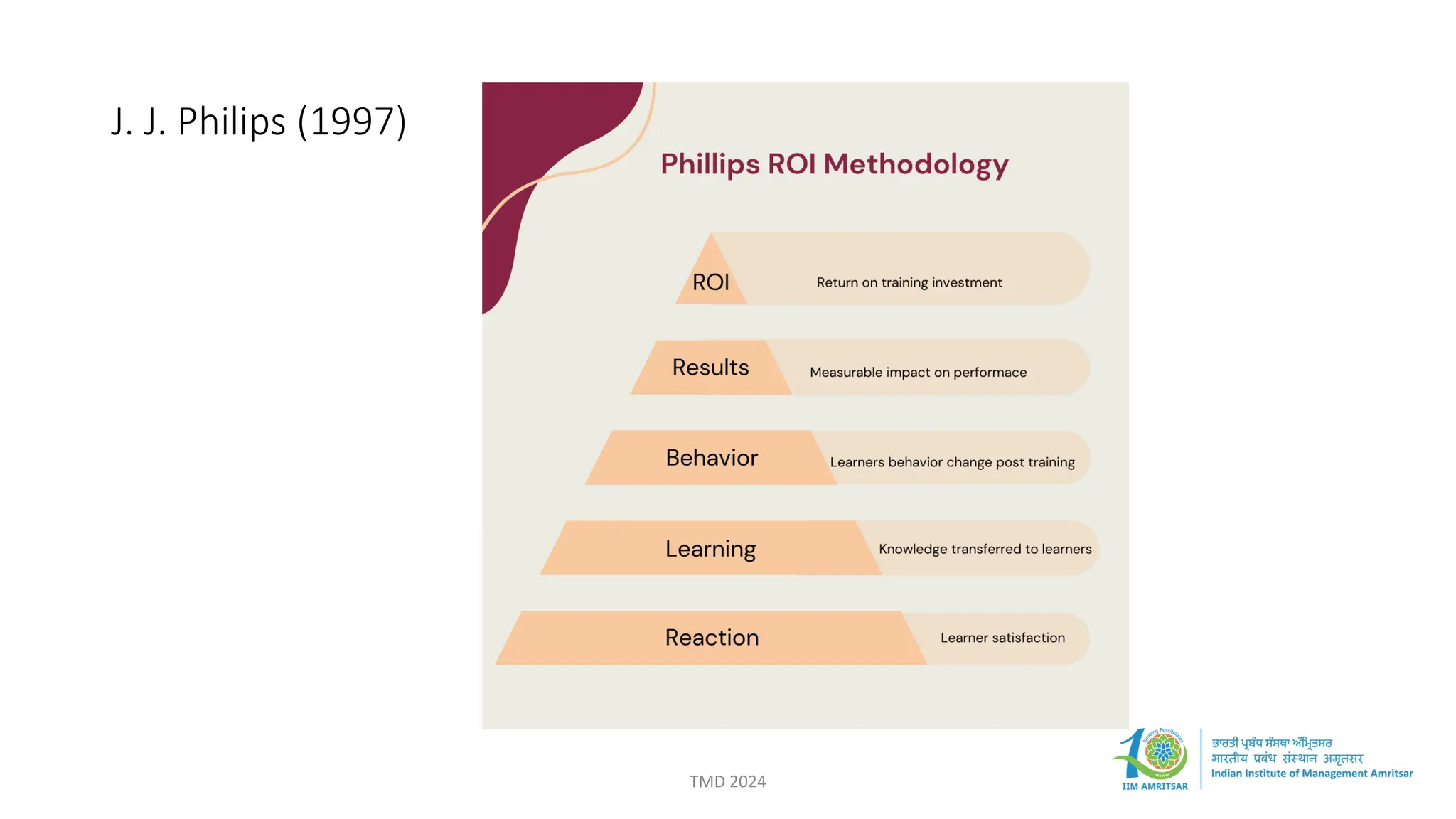
J. J. Philips (1997)
TMD 2024
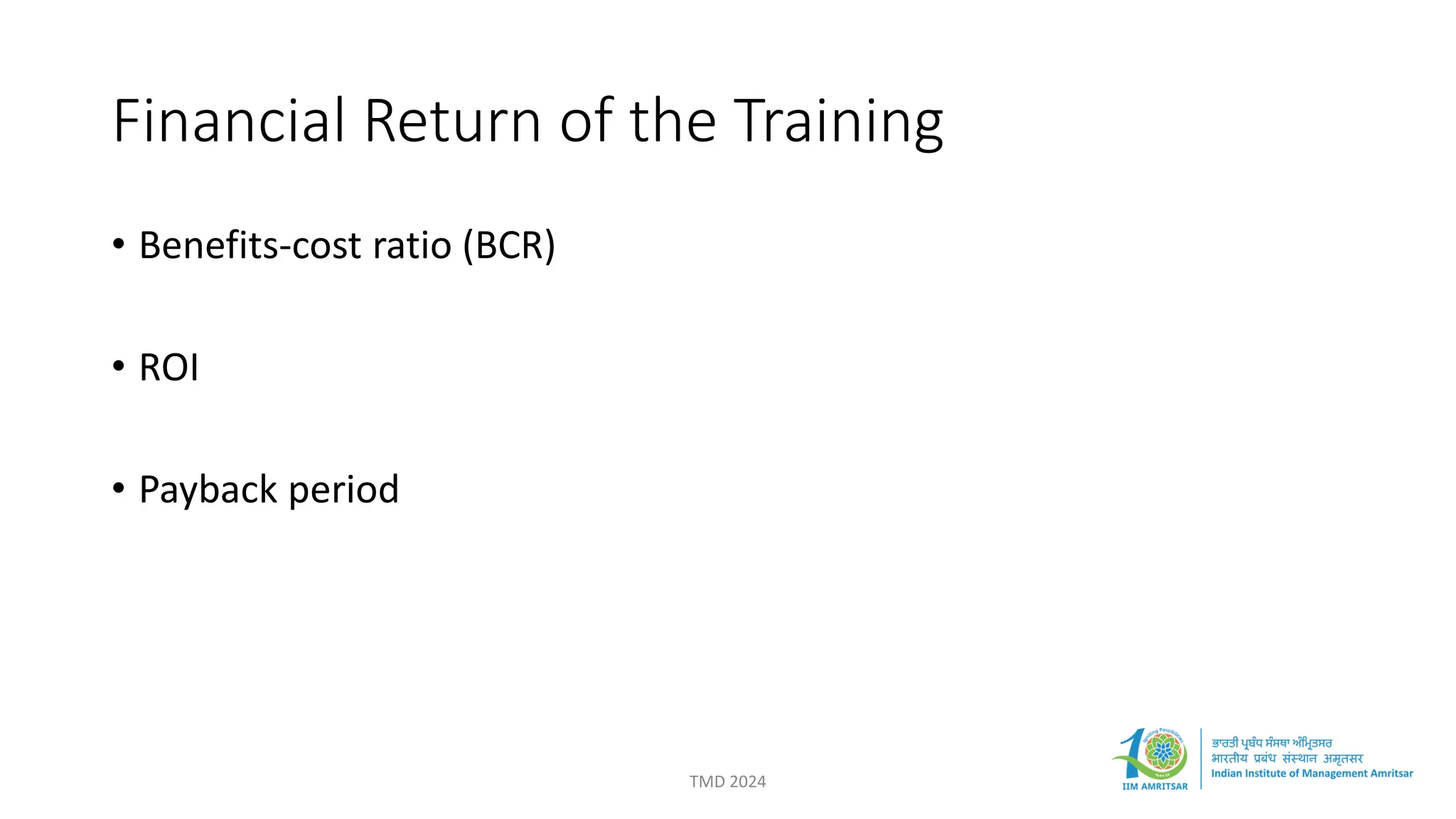
Financial Return of the Training
• Benefits-cost ratio (BCR)
• ROI
• Payback period
TMD 2024
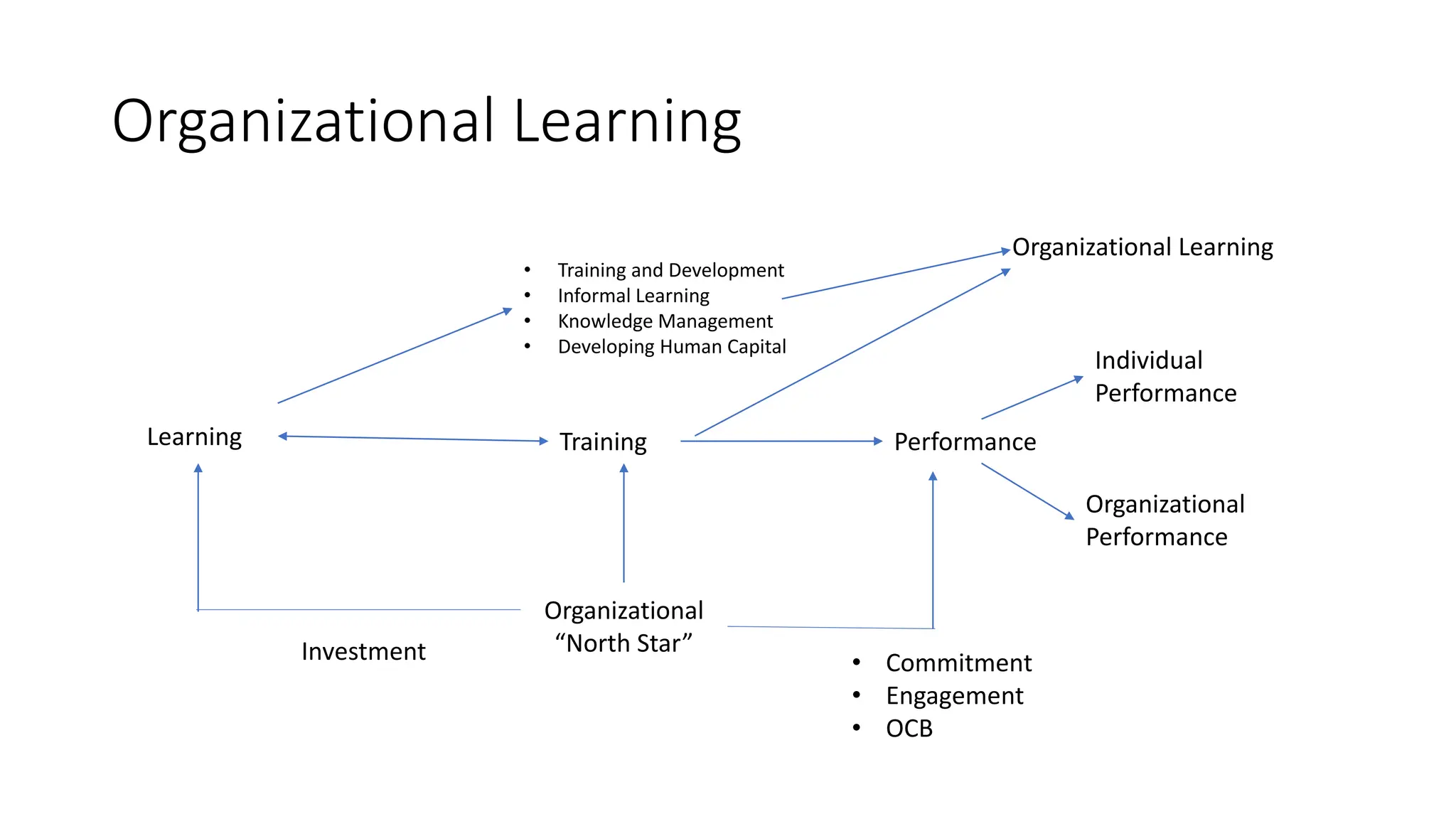
Organizational Learning
Training Performance
Organizational
Performance
Individual
Performance
Organizational
“North Star”
Learning
Investment • Commitment
• Engagement
• OCB
• Training and Development
• Informal Learning
• Knowledge Management
• Developing Human Capital
Organizational Learning
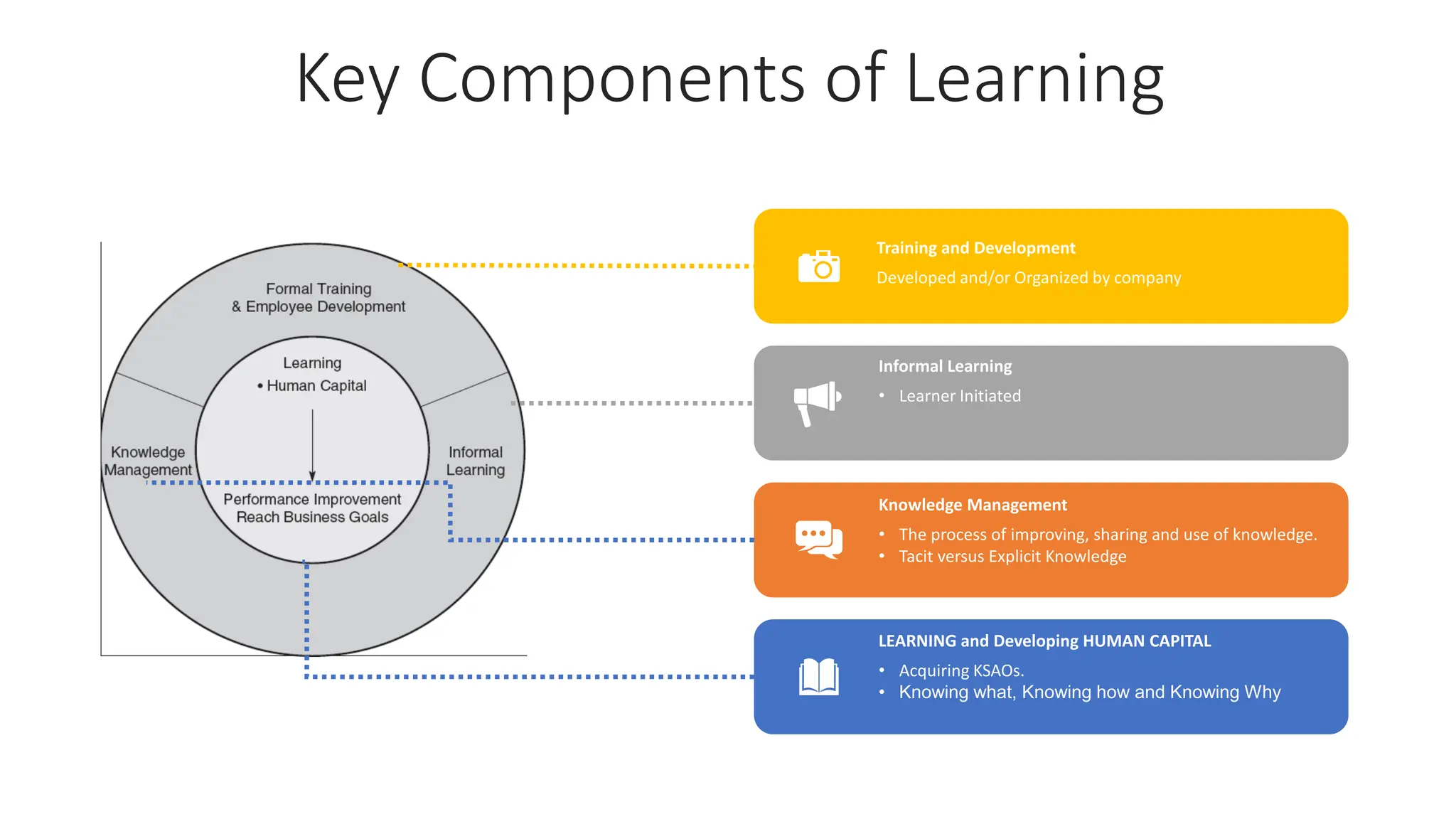
Key Components of Learning
Training and Development
Developed and/or Organized by company
Informal Learning
• Learner Initiated
Knowledge Management
• The process of improving, sharing and use of knowledge.
• Tacit versus Explicit Knowledge
LEARNING and Developing HUMAN CAPITAL
• Acquiring KSAOs.
• Knowing what, Knowing how and Knowing Why
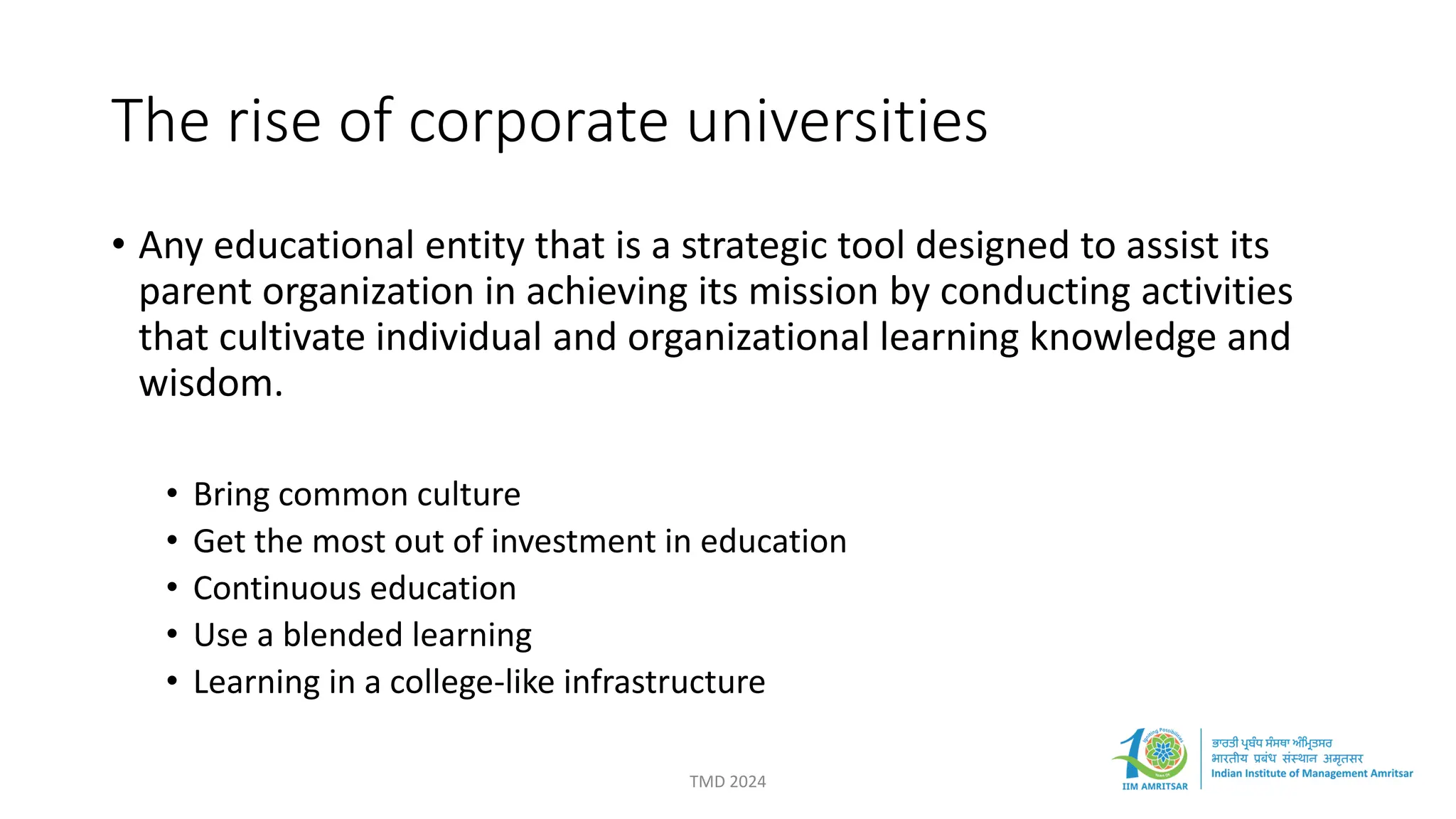
The rise of corporate universities
TMD 2024
• Any educational entity that is a strategic tool designed to assist its
parent organization in achieving its mission by conducting activities
that cultivate individual and organizational learning knowledge and
wisdom.
• Bring common culture
• Get the most out of investment in education
• Continuous education
• Use a blended learning
• Learning in a college-like infrastructure

Training and Development in HRM and Recruiment.pdf

  • 1.
    Talent Enhancement through Training andDevelopment Prof. Sweta Singh
  • 2.
    Training Versus Development •Training is defined as any attempt to improve employee performance on a currently held job or one related to it. • Help to fix any current deficit in employee’s skills. • Development refers to learning opportunities designed to help employees grow. • Long-term approach to help employees prepare for future work demands. TMD 2024
  • 3.
    What factors dotraining managers need to consider when assessing the training needs of an internal customer? “Off the Shelf” training • Generic/Standard Programs. • New employee training (mass hiring) • Standardized program design/content Tailor made programs • Identifying the issues impacting employees performance. • Improving on the job performance • Larger investments
  • 4.
    • The threephases of Training Need Analysis Assess Training Needs Organizational Goals Resources (available to training managers) Job Analysis JD and JS KSAO’s Person Analysis Trainee and Trainer Characteristics TMD 2024
  • 5.
    Trainee Characteristics affectingsuccess of training program • Trainee Motivation • Self Efficacy • Personality and Cognitive Ability • Proactive personality, extraversion, openness to experience TMD 2024
  • 6.
    Assess Training Needs Designing TrainingProgram TMD 2024 • Outsource • Access to best practices • Non Availability of Internal trainers • Organizational politics • Transaction Cost Economics • Inhouse • Cost (External trainer: expensive) • Core competence • Non Availability of External trainers • Better control and design
  • 7.
    • Planning theoverall training program, including training objectives and delivery methods. • Creating a detailed training outline. • Program Duration • Venue • Pedagogies • Feedback • Training relevance • Schema (outline) • Overlearning • Massed learning versus Spaced learning Assess Training Needs Designing Training Program TMD 2024
  • 8.
    • Assembling theprogram’s training content and material. • Choosing content • Training Equipment • Course activities and resources Assess Training Needs Designing Training Program Developing Training Program TMD 2024
  • 9.
    • On theJob Training • Apprenticeship • Job Instruction Training • Lectures • Behavior Modelling • Vestibule Learning Assess Training Needs Designing Training Program Developing Training Program Implementing Training Program • Video conferencing • Role Play • Case studies • Corporate Universities • Mentoring TMD 2024
  • 10.
    The Process ofDeveloping, Implementing and Evaluating an Organizational Training Program Assess Training Needs Designing Training Program Developing Training Program Implementing Training Program Evaluate Training Program A D D I E TMD 2024
  • 11.
    Access Training Needs DesigningTraining Program Developing Training Program Implementing Training Program Evaluate Training Program
  • 12.
    J. J. Philips(1997) TMD 2024
  • 13.
    Financial Return ofthe Training • Benefits-cost ratio (BCR) • ROI • Payback period TMD 2024
  • 14.
    Organizational Learning Training Performance Organizational Performance Individual Performance Organizational “NorthStar” Learning Investment • Commitment • Engagement • OCB • Training and Development • Informal Learning • Knowledge Management • Developing Human Capital Organizational Learning
  • 15.
    Key Components ofLearning Training and Development Developed and/or Organized by company Informal Learning • Learner Initiated Knowledge Management • The process of improving, sharing and use of knowledge. • Tacit versus Explicit Knowledge LEARNING and Developing HUMAN CAPITAL • Acquiring KSAOs. • Knowing what, Knowing how and Knowing Why
  • 16.
    The rise ofcorporate universities TMD 2024 • Any educational entity that is a strategic tool designed to assist its parent organization in achieving its mission by conducting activities that cultivate individual and organizational learning knowledge and wisdom. • Bring common culture • Get the most out of investment in education • Continuous education • Use a blended learning • Learning in a college-like infrastructure